Rick Mulready · Youtube · 14:40

Build This ONCE. Any AI You Use Will Get Smarter Forever.

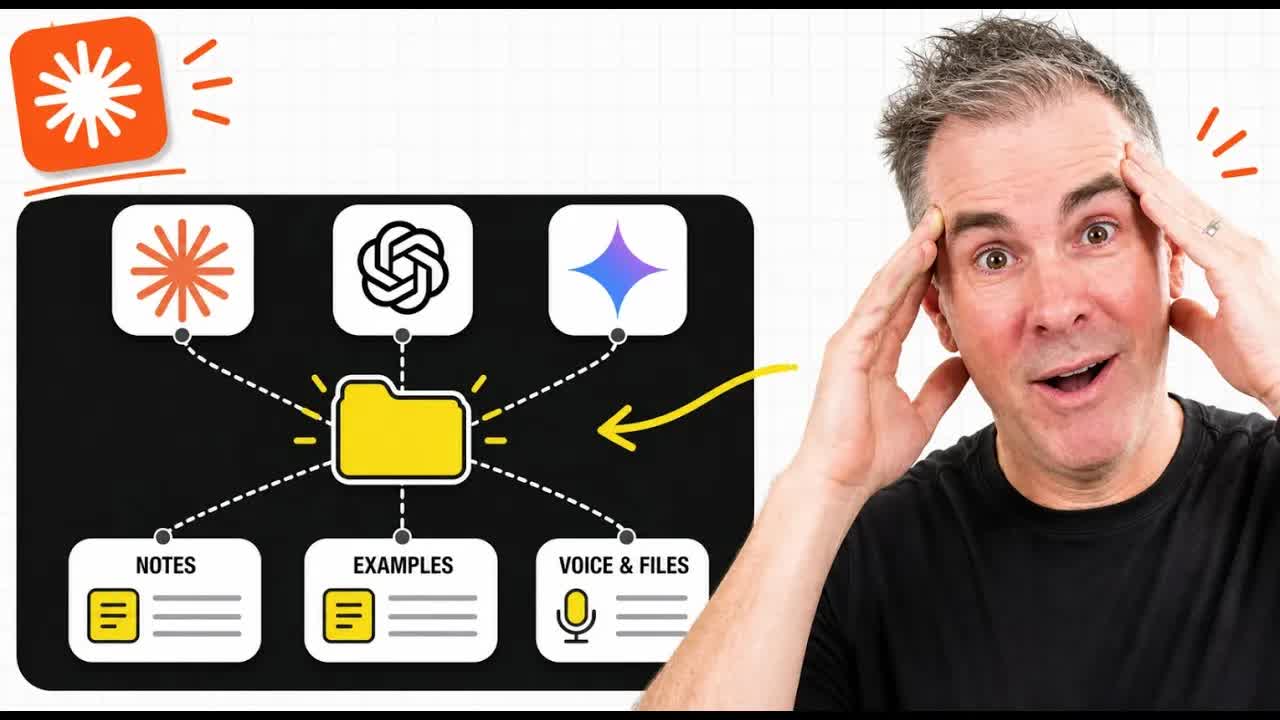
A 14-minute walkthrough of the Information Hierarchy — a portable, two-tier folder system that lets any AI instantly know your business, voice, and projects without re-explanation.

Posted
June 4th 2026
today
Duration
14:40
Format
Tutorial
educational
Channel
RM
Rick Mulready
§ 01 · The Hook

The bait, then the rug-pull.

Every AI session charges a hidden fee: re-explaining who you are, what you sell, how you write. Rick Mulready names it the friction tax and then spends fourteen minutes dismantling it with a single portable system you build once and never rebuild.

§ · Chapters

Where the time goes.

00:00 – 01:52

01 · The Hidden Friction Tax

Names the three types of AI friction: duct-taping tools together, re-explaining yourself every session, and subscription roulette. Establishes that better prompts and better tools do not fix the root problem.
01:52 – 03:54

02 · Meet the Information Hierarchy

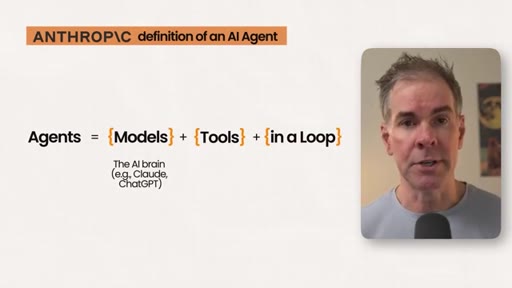
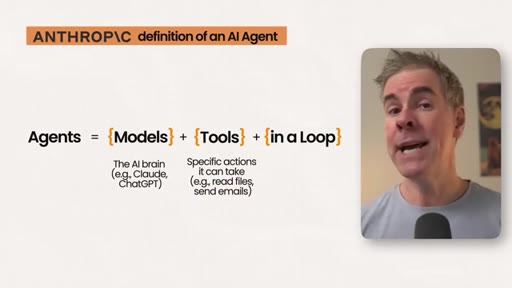
Demystifies the word agent using the eight-word Anthropic definition (models using tools in a loop), then reframes the real differentiator: not the AI itself but what it can read. Introduces the Information Hierarchy as the fix.
03:54 – 07:21

03 · Your Business as an AI-Ready Operating Manual

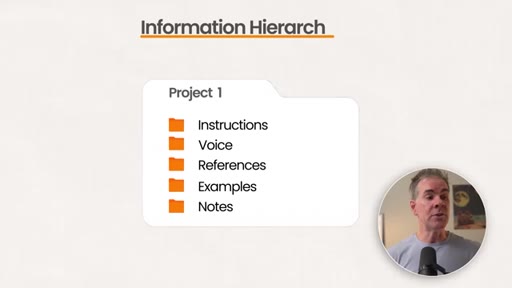
Walks through the two-tier structure: Tier 1 business folder and Tier 2 project folders (Instructions, Voice, References, Examples, Notes). Explains the purpose and content of each file.
07:21 – 11:18

04 · Claude Auto-Builds and Organizes Your Hierarchy

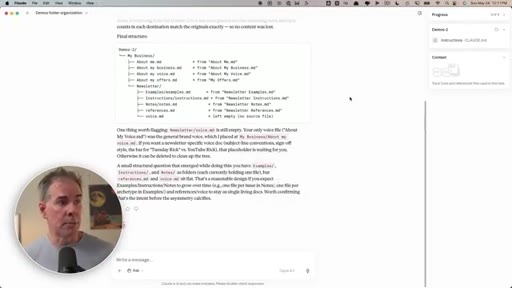
Live demo: use Claude Cowork to create the entire folder structure from a single prompt, fill files via voice interview, then have Claude organize pre-existing files into the correct locations automatically.
11:18 – 14:39

05 · Same Files, Any AI: The Asset That Never Expires

Proves portability with two live demos: Claude Cowork reads the hierarchy and generates newsletter topics in the right voice; Gemini reads the same attached files and produces equivalent output. Closes on the compounding nature of the Notes folder.

§ · Frameworks

Named ideas worth stealing.

03:26 model

The Information Hierarchy

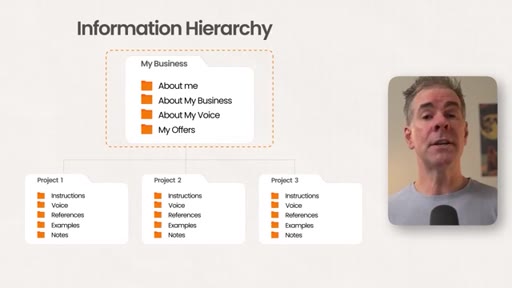
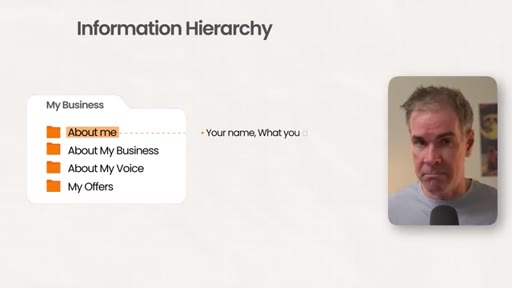
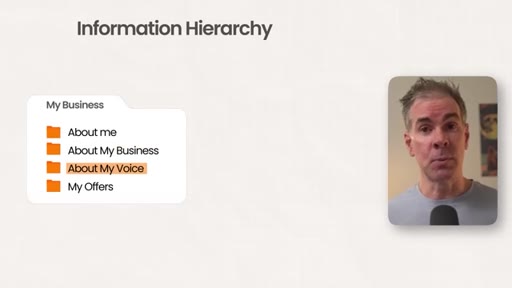
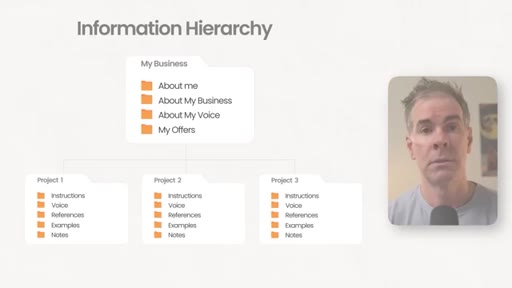
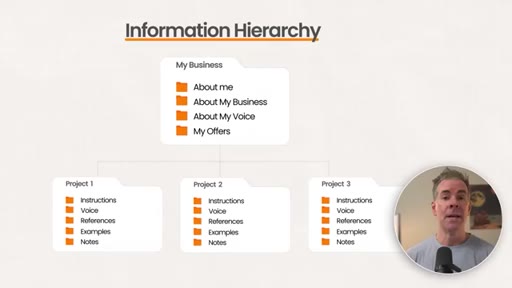
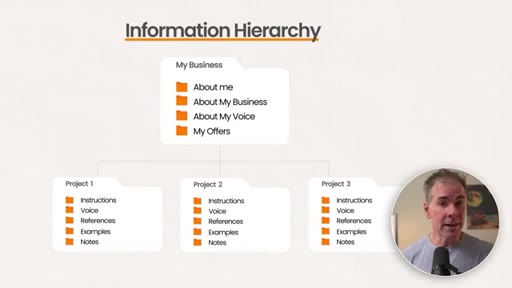
  1. My Business folder (about me, about my business, about my voice, my offers)
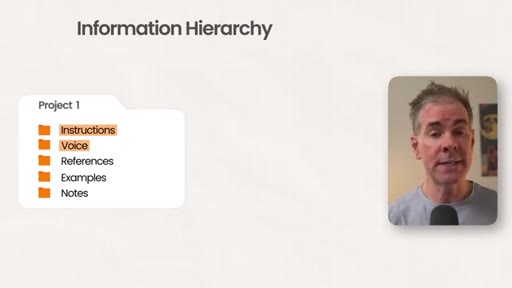
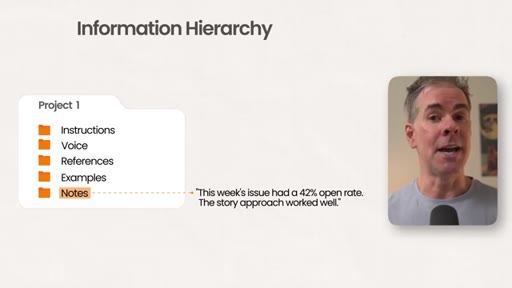
  2. Project folders: Instructions, Voice, References, Examples, Notes

Two-tier portable context system: a universal business folder with four identity/voice files, plus per-project folders each with five subfolders. Build once, point any AI at it.

Steal for Any AI-assisted business workflow where you want consistent voice and context across tools and sessions
01:04 list

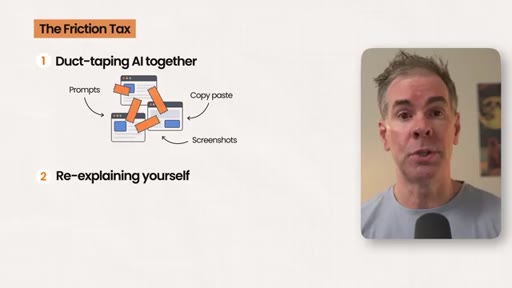
The Friction Tax (3 types)

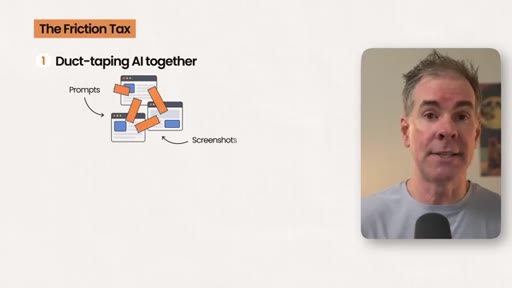
  1. Duct-taping AI together
  2. Re-explaining yourself every session
  3. Subscription roulette

Framework for diagnosing why AI output feels inconsistent — names the three failure modes before offering the fix.

Steal for Problem-framing in AI productivity content or sales pages
§ · Quotables

Lines you could clip.

04:08
"You don't build agents. You build the information that they read."
Counterintuitive reframe that lands in one sentence with no setup needed → TikTok hook
12:52
"The AI is the disposable part. The hierarchy is the part that lasts."
Punchy two-sentence summary of the entire video argument → IG reel cold open
03:22
"The fix isn't a better prompt or a new tool. It's writing your business down once in a way any AI can read."
Direct challenge to the dominant advice in AI productivity content → newsletter pull-quote
§ · Resources Mentioned

Things they pointed at.

§ 04 · The Script

Word for word.

00:00Every time you sit down to use AI, you're paying a tax that you don't even realize. You open a new chat, you re explain who you are, you re explain what your business does, how you like things written. You get something back that's almost right, spend twenty minutes fixing it, and the next day you do the whole thing over again.
00:17And sure, maybe the tool that you use already has some memory of you, but God forbid you ever wanna switch tools, total nightmare, you're starting completely from scratch. And here's the thing, a better prompt is not gonna fix this. A better tool isn't gonna fix this.
00:30Because the problem isn't your prompt and it's not your tool that you're using. It's that every AI that you use is starting from zero every single time essentially. So in this video, I'm gonna show you the one thing that I built that fixes this problem.
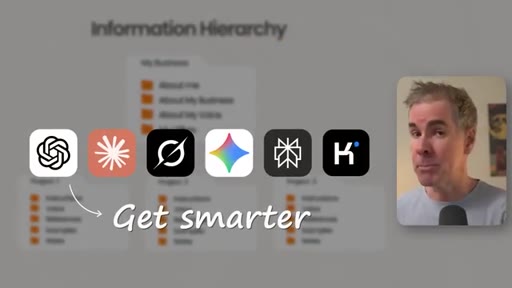
00:42I call it my information hierarchy. You build it once, and from that day forward, any AI that you ever use gets smarter because of it. So before I show you what the information hierarchy actually is, let me put a name on what it actually solves.
00:56I call it the friction tax. It's what you pay every single time you sit down to use AI and the friction eats your time and energy instead of saving it.
01:05And there are three types. The first one is you are duct taping AI together. You're stringing tools together with prompts and screenshots and copy paste and just hoping that it works.
01:16Second, you're re explaining yourself every single conversation. This one drives me nuts. Every new chat starts from zero.
01:23The AI doesn't know who you are, doesn't know what you sell, doesn't know your writing style, doesn't know your ICP. And like I said, even if your tool that you're using has memory, that memory is locked inside that one tool.
01:35You switch tools, you lose everything. And third is what I like to call subscription roulette.
01:40Five tools on your credit card. Right? Not sure which ones you actually need or maybe even using.
01:45Every week, somebody you respect is talking about a new tool, so now you feel behind on that too. So that's the tax that you're paying. Now the fix for all that is something I call the information hierarchy.
01:55But before I show it to you, I need to clear up one word first because the word agent gets thrown around constantly right now and most people frankly are overcomplicating it.
02:04Anthropic, the company behind Claude, defines an AI agent in eight words, and that is agents are models using tools in a loop.
02:13That's it. Models is just a fancy word for the AI itself. Claude, Chattypete, Gemini, whatever you're using.
02:20Tools doesn't mean the apps that you pay for, it means the things that the AI can actually do. Read a file, send an email, check your calendar, search the web. Every action the AI can take is a tool.
02:32And in a loop just means the AI keeps going. It action, reads what happened, takes the next action.
02:40It keeps going until that job is done. Now here's the part that matters. The thing that makes one agent better than another isn't the AI itself necessarily.
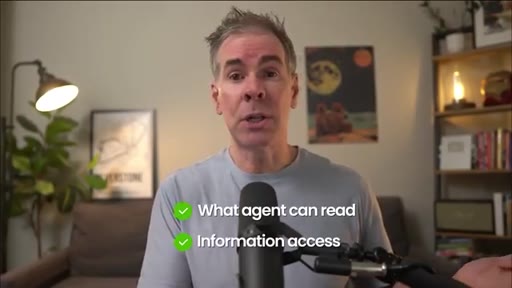
02:49It's what the agent can read, what information it has access to, and how clearly the job is described. Think about it this way. When you bring somebody new onto your team, you don't just say, go do the thing.
02:59Right? Well, some of us do. Right?
03:01I mean, you might, but it doesn't go very well. I certainly have done that in the past. You gotta tell them about the business.
03:07You show them what good looks like. You give them access to information and context that is helpful for whatever it is that you're asking them to do. We do none of that with AI.
03:15We just open a chat and we just start typing. And then we're surprised when the output is generic or completely off base. So here's what I realized.
03:22The fix isn't a better prompt or a new tool. It's writing your business down once in a way any AI can read. I call this your information hierarchy.
03:32It sounds simple, but here's why it's so powerful. Think about how a textbook teaches you something. It's not a wall of text.
03:39It's organized into chapters, sections, subheadings. It has a table of contents showing you where things are.
03:45Maybe it has an index showing you where things are. That's how humans learn best. And it turns out, it's exactly how AI learns best too.
03:52And here's the part that's really changed how I think about all this. You don't build agents. You build the information that they read.
03:58The agent is just whatever AI you point at your information hierarchy asking it to do whatever it is that you want it to do. Claude reads your hierarchy, Claude's your agent. Switch to ChatGPT tomorrow, ChatGPT is your agent.
04:09The AI is the disposable part. The hierarchy is the part that lasts.
04:13Now let me show you exactly what it looks like because the structure is actually super simple. Two tiers, that's the whole picture.
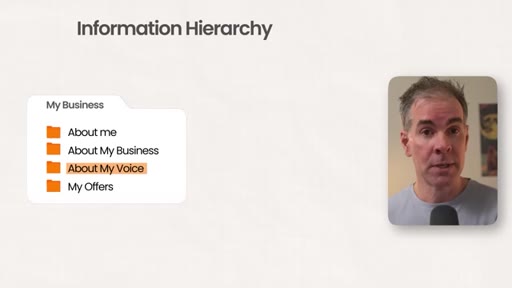
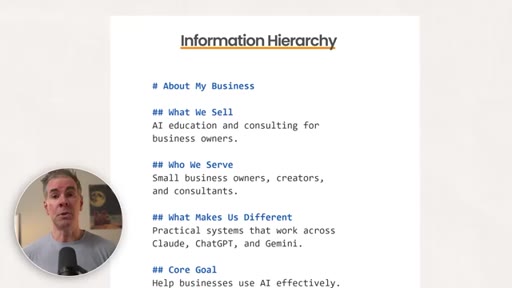
04:20The top tier is what I call my my business folder. This is your business written down once. There are four files inside.
04:26Maybe you wanna add an additional file. But I like to make sure that there's about me. This is, you know, your name, what you do, the one line version a stranger would understand at a dinner party.
04:36Then you've got about my business. This is what you sell, who you serve, what makes your approach different. Then you've got about my voice.
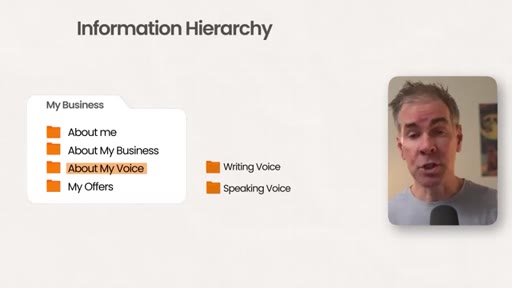
04:42And this one is the highest leverage file of the four. This is where you wanna include your writing style, your tone of voice, the words and phrases that you use a lot, the ones that you never use. Now here's a quick note on this.
04:51If you write like you talk, great. You can give it a video transcript, a podcast transcript.
04:57This took me a long time to sort of wrap my head around because I had a podcast for eleven years before selling it in 2023. Most of us don't write the way that we talk though. So give it writing examples, emails that you sent, newsletter issues, blog posts.
05:12So this is where you might wanna differentiate and have two different files. And then you've got my offers.
05:17What you currently sell with the pricing structure for your offers. You wanna be as detailed as possible here while also being succinct. So keep it brief.
05:26So this top tier here doesn't change every week unless you introduce a new offer every week, which I hope you don't. Okay. Now the second tier.
05:34Every project that you work on gets its own folder. Your newsletter, your client work, YouTube channel, your podcast. And every one of those project folders gets the same five subfolders.
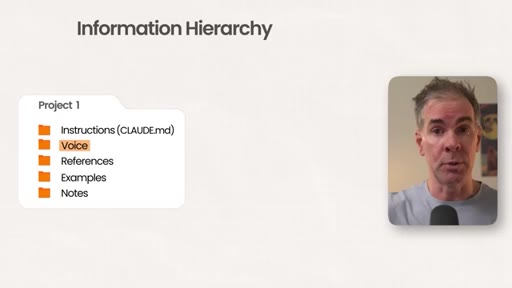
05:45Every time, same five. Instructions, voice, references,
05:49examples, notes. So let me break this down.
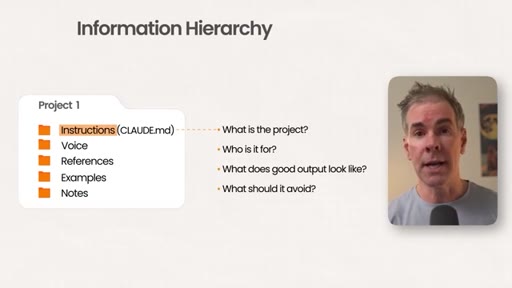
05:52Instructions is the master instructions for the project. Some people call it the Claude dot m d file for that project. What is the project?
05:59Who's it for? What does good output look like? What should it avoid, etcetera?
06:04And this is also where you point the AI to the other folders kind of like an index. For voice, this is if the project has a specific voice that's different from your general voice. This gets really important if you work with clients for example.
06:17Each client's gonna have their tone, their own words, their writing style, etcetera. For references, this is anything that AI should read when working on this project so you can give it context, any kind of research that you've done, transcripts,
06:30SOPs. And by the way, the fastest way to create SOPs, just record yourself doing the thing with Loom.
06:37Loom will turn the recording into an SOP automatically. It's super easy to do.
06:42And we've got examples. AI loves examples of what good looks like. If you're writing a newsletter, put your three to five best past issues in there.
06:50And notes is for your ongoing updates. This is where it gets really really cool. So let's say your newsletter did well last Sunday.
06:56You drop a note in there. This week's issue had a 42% open rate. The story approach worked well.
07:02And now the AI is getting smarter over time. It's learning what actually works for you based on the feedback that you're giving it. And by the way, I put together a complete template for this entire hierarchy for you.
07:13The folder structure, the starter prompts, everything you need to build your own. I'll link to it in the description below. Okay.
07:19So now you've seen the structure, you know the two tiers and the five sub folders. You might be thinking you're about to spend the next hour creating folders and typing things into files etcetera. You're not.
07:28Here's the thing about Claude Code or Claude Cowork, you tell it what you want. You give it the information and Claude Cowork or Claude Code creates everything for you. Folders,
07:36files, the contents inside, all of it. So watch this.
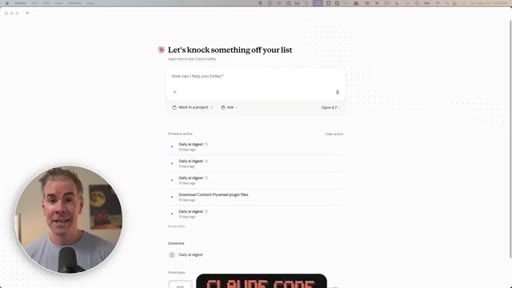
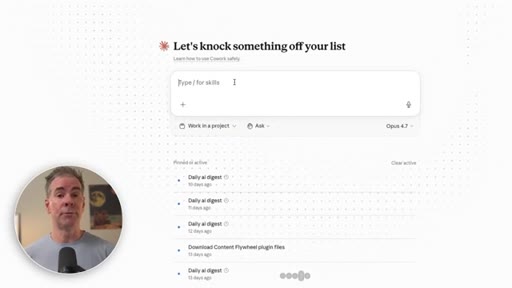
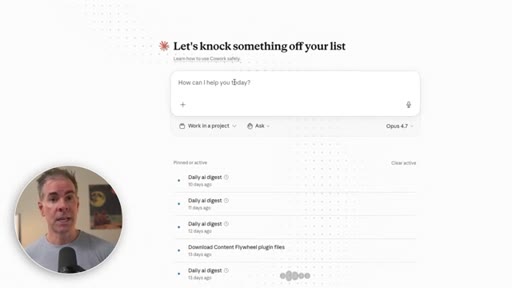
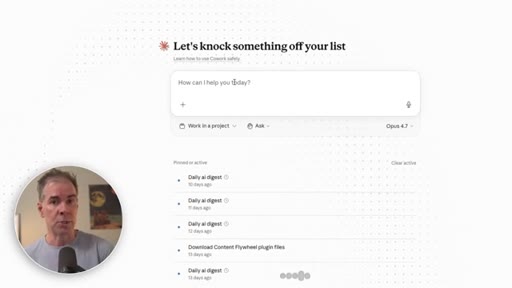
07:39I'm gonna talk to Claude. In this case here, I'm gonna talk to Claude and Claude Cowork and tell it exactly what I want.
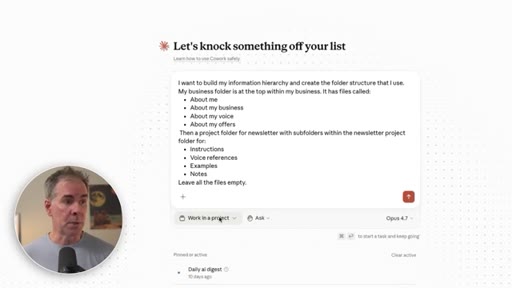
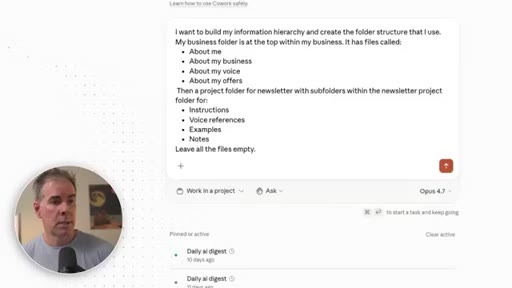
07:45I wanna build my information hierarchy. Create the folder structure that I use. My business folder
07:51is at the top. Within my business, it has files called about me, about my business,
07:58about my voice, about my offers. Then a project folder for
08:04newsletter with subfolders within the newsletter project folder for instructions,
08:11voice, references, examples, and
08:14note. Leave all the files empty. And then as you know in co work, you gotta tell it where you want things done.
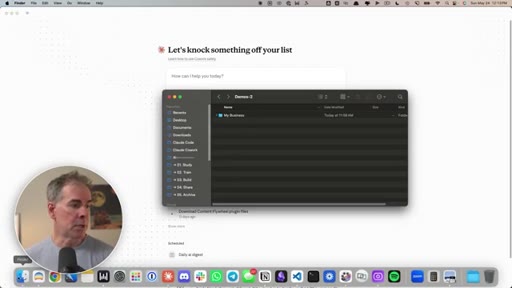
08:20So I'm gonna tell it to work in a specific project. So I'm gonna say choose a different folder and I'm gonna go to my co work and I'm gonna put it in my demos two and say open.
08:30I'm gonna click on allow and click go. Okay.
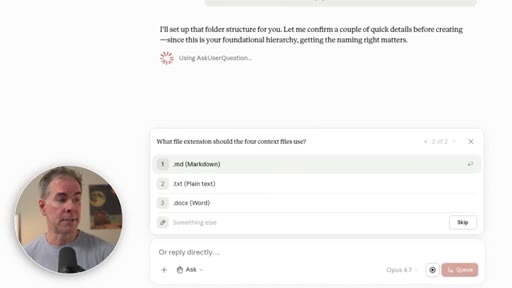
08:33So now it's asking me a few different questions here. What should the top level business folder be named? Just keep it called my business.
08:38Then it's asking me what file extension should the four context files use. I'm gonna say markdown. Alright.
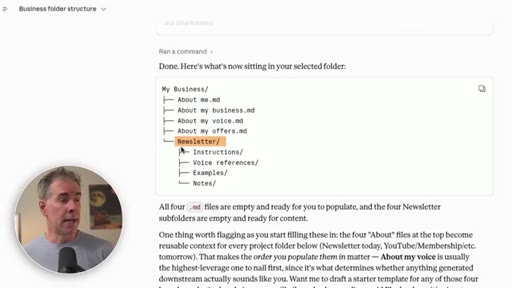
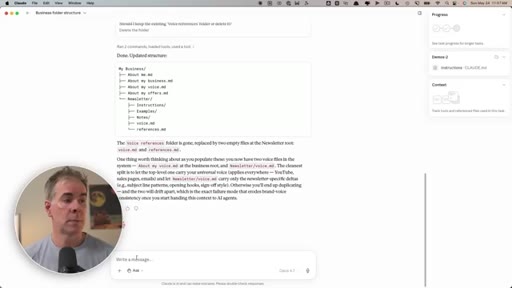
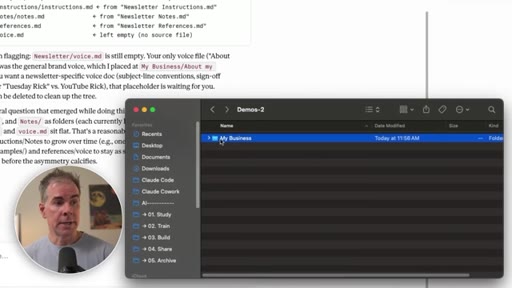
08:43So it just created exactly what I wanted to create. So here's my information hierarchy. Here's my business at the top about me, my business, my voice, my offers.
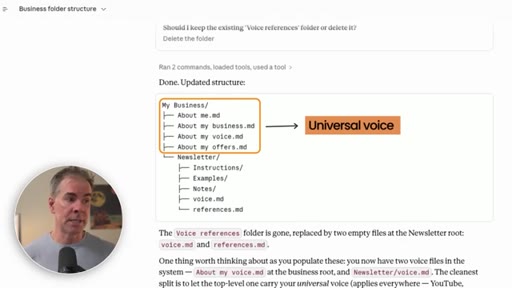
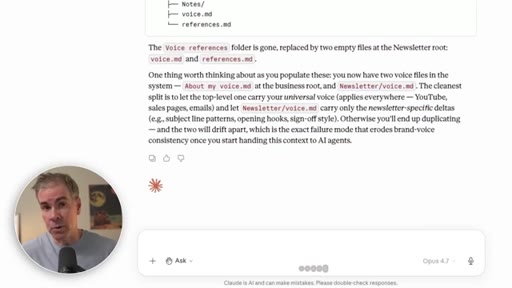
08:50Then it's got a subfolder called newsletter, instructions, voice references, examples, notes. So this is the cleanest split is to let the top level one carry your universal
09:00voice applies everywhere, YouTube, sales pages, emails, and let newsletter voice carry only the newsletter specific deltas.
09:08Okay. So now I'm just gonna check its work here. So it's telling me that it's updated the structure here.
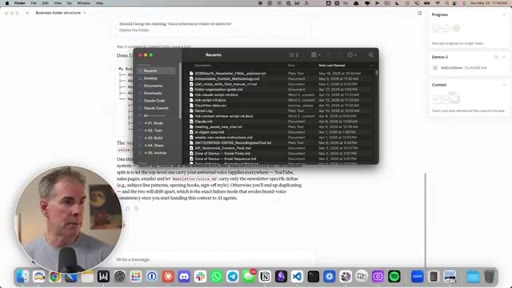
09:11I'm gonna go on my computer, go into where I have this, and here is the folder right here, my business, about me. Then we've got newsletter, the subfolder like we asked it to do, and then we've got the files and folders right here, examples, instructions, notes, references, and voice. Great.
09:26Now I'm gonna actually fill in the files. And again, I'm not opening them up and typing anything. And so what you can do is is you can just tell Claude, let's fill in my business files.
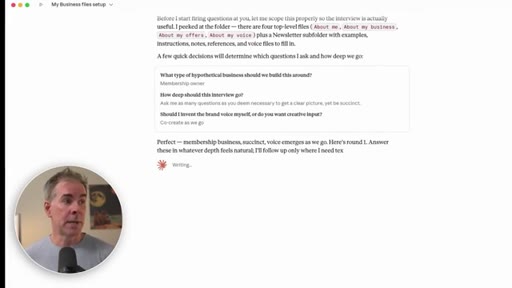
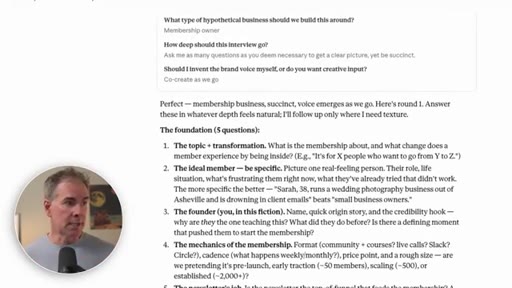
09:35What do you need from me? And you can ask it to interview you. So I'm just gonna use a hypothetical business.
09:40So I'm just gonna say, let's fill in the my business files. This is gonna be for a hypothetical business.
09:47What do you need from me? Please interview me. And again, I'm just showing you this because if you don't have this information already,
09:53you don't have to be typing it out yourself. You can just ask Claude to interview you. Okay.
09:57So it's just giving you five questions here. Again, I do not recommend typing them out. If you're not using WhisperFlow,
10:03highly recommend that you do it. That's where you're just speaking. It's voice to text.
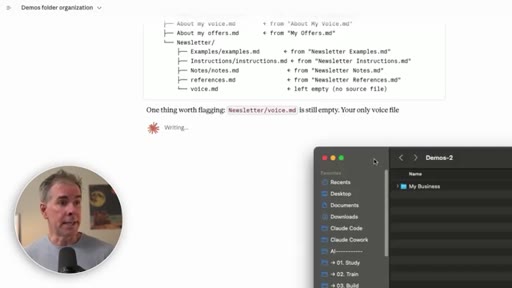
10:07So you can just say, number one, and you answer the question and you go through. And when it feels like it has the information that it needs, it will put the information within the my business folder structure. And again, the other way to do this, if you, again, if you have all these files already about your about your business and voice and offers and so forth, is I'm gonna give it access to I'm gonna point it to these files here, and I'm gonna have Claude organize the files automatically for me within my information hierarchy.
10:31So again, I'm gonna point it to where my information hierarchy is in the demos to folder. And so now I'm gonna say, I want you to organize all of the files that I have in my demos to folder
10:45appropriately into the my business
10:49file structure as well as the newsletter project files. Okay. And as you can see here, it's it's telling me what it has done.
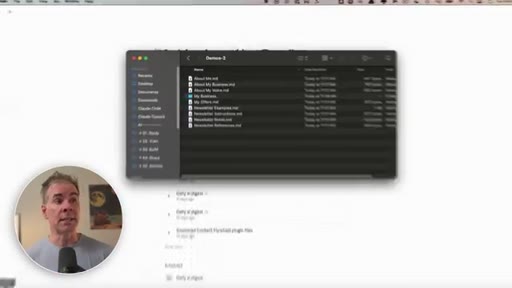
10:58And I can just look in my finder here and I can see here's my demos to folder. Here's my business. So I can look at there's the about me file.
11:04There's the about my business markdown. And then within that there's newsletter. So I click in here.
11:09Remember, these were all empty before. So then here's my examples folder. There's my examples file.
11:14So it organized everything for me. And then it gives you this nice image of telling you exactly what it did. Okay.
11:20So we've built the hierarchy with Claude Cowork here. We filled in the files. Now let me prove to you that it actually works.
11:26Right? And I'm gonna prove it twice. First, I'm gonna ask Claude here to do something for me.
11:31But I'm not gonna tell it who I am. I'm not gonna paste anything in. I'm just gonna point it at my hierarchy and give it a task.
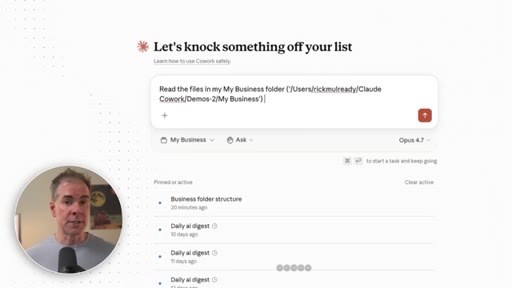
11:38So I'm gonna start a fresh co work session here. I'm gonna go over to my finder. I'm gonna copy the path name.
11:44I'm also gonna point it at the folder at the my business folder that we had to just create for us. So here's what I'm gonna tell Claude what it is that I want it to do based on my information hierarchy that I just created. Read the files in my my business folder.
11:58And based on what's in those files, suggest three newsletter topics my audience would actually care about. Write them in my voice, read all the files
12:09in that folder structure. And you can notice here over on the right hand side of Claude Cowork here, it's giving you a list of the files that it's working with. Okay.
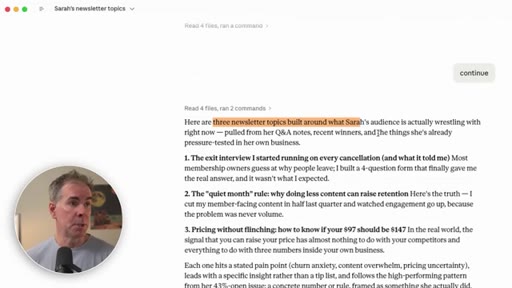
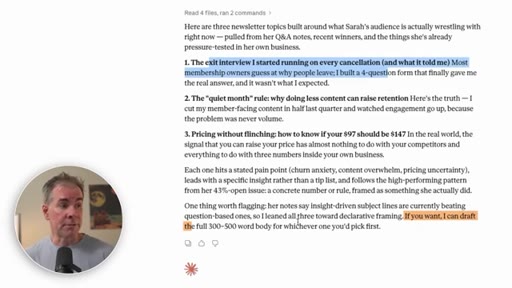
12:16And here is what it just gave me. Here are three newsletter topics built around Sarah's audience actually wrestling with right now. The exit interview.
12:23So it's given me three different topics with a one sentence description exactly what I asked it to do. And then it just says, if you want, I could draft the full three to 500 word body for whichever one that you'd pick first. And again, I didn't have to paste anything in.
12:36I just asked it what I wanted it to do. I didn't re explain who I am. I just pointed that at my hierarchy.
12:42It read it, and that's the whole game. But here's where it gets really interesting. Remember what I said earlier.
12:47The AI is the disposable part. The hierarchy is the part that lasts.
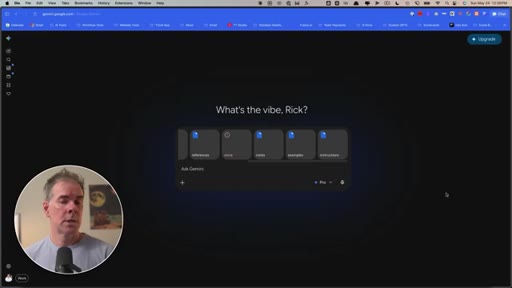
12:52So let me prove that right now. I'm gonna take this exact same hierarchy that I have on my computer, it's local, and I'm gonna point a completely different AI at them. One I've never used for my information hierarchy before.
13:02Okay. So what we're gonna do here is we're gonna go into Gemini, and Gemini works a little bit differently, right, than than Claude.
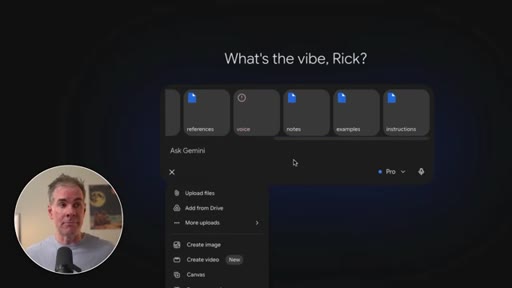
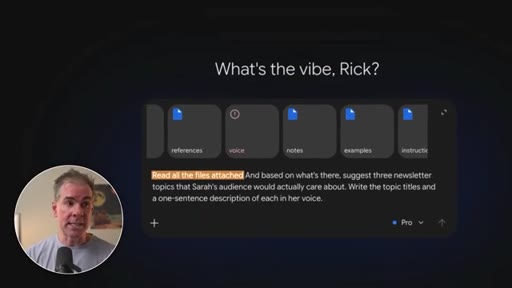
13:09So what I had to do was I just had to go in here and just attach the individual files to the chat. Again, I'm not rewriting them. I'm just pointing Gemini
13:18at my information hierarchy. And if you have this in Google Drive, for example, you can totally do it there as well. So I'm just gonna say read all the files attached and based on what's there, suggest three newsletter topics, exact same prompt that I gave to Claude.
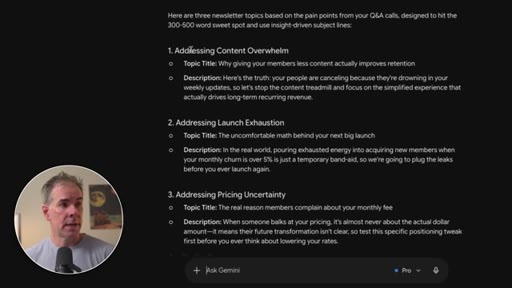
13:31And here are the newsletter topics that Gemini has generated. Here are three newsletter topics based on the pain points designed to hit the three to 500 word sweet spot. Addressing content overwhelm gives me the topic title.
13:41And so now I can just say, oh, let's go with number three and write the three to 500 words.
13:47Same files, different AI, and it just works. That right there is why I call this the only AI investment that doesn't expire. The AI doesn't matter.
13:57Whatever's best this month, next month, next year, two years, you point it at your hierarchy and it already knows your business, your context, your voice, etcetera. Three years from now, half the AI tools that exist right now will be gone. Right?
14:09New models, new tools, new names, that's just how this works. But the hierarchy that you build today, it's still gonna be there, still working and getting smarter and smarter and smarter because remember,
14:19as you evolve in your business, you evolve these files and you're giving it feedback in those notes files. So again, it's just getting smarter. And again, if you want the full setup, the folder structure, the prompts that I use, everything that you need to create your own information hierarchy, I've linked to it in the description below.
14:35You can grab it right there. Thanks so much as always for watching today's video. I appreciate it and I'll see you in the next one.
— full transcript
§ 05 · For Joe

One folder beats a thousand better prompts.

WHAT TO LEARN

Persistent AI quality is not a prompting skill — it is a systems problem solved by portable, structured context you write once and own forever.

  • The re-explanation loop is not unavoidable friction — it is a symptom of context living inside tools instead of in files you control.
  • Your voice file is the highest-leverage document in any AI context system: specific preferred phrases and explicit banned words outperform vague style descriptions.
  • AI learns from examples the same way humans learn from textbooks — organized structure with clear hierarchy beats a wall of continuous text every time.
  • Tool-native AI memory creates lock-in: the moment you switch models, platforms, or apps, you lose everything. Files you own travel with you.
  • The Notes subfolder turns a static context document into a learning system — logging what worked and what failed lets the AI improve on your actual results over time.
  • The fastest SOP you will ever write is a Loom recording of yourself doing the task: let the auto-transcription do the work, then drop it into your References folder.
  • Portability is the real test of any AI context system: if the same files produce equivalent output in two different AI tools with the same prompt, the system is working.
  • Building the hierarchy does not require manual typing — one conversation with Claude can scaffold the entire structure from a single spoken description.
§ 06 · Frame Gallery

Visual moments.