The Mindset Mentor Podcast · Youtube · 17:16

Feel Behind? (Do This For 30 Days)

A 17-minute neuroscience-backed case for why stopping complaints for 30 days rewires your brain faster than any positive-thinking exercise.

Posted
June 3rd 2026
yesterday
Duration
17:16
Format
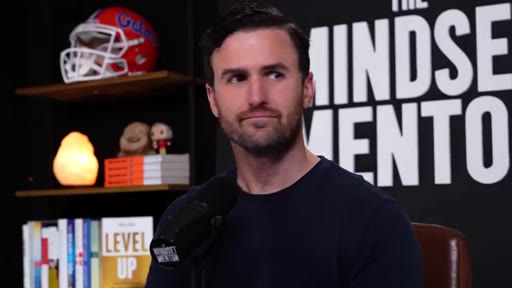
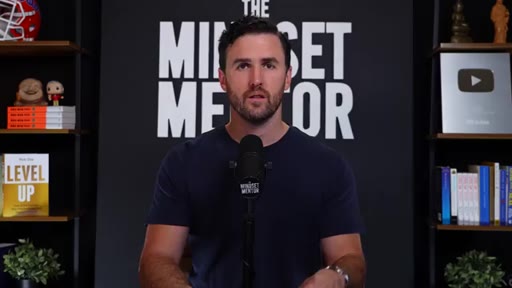
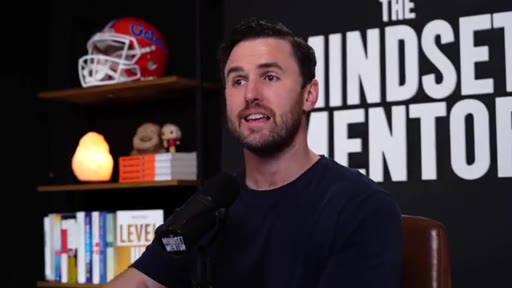
Talking Head
educational
Channel
TM
The Mindset Mentor Podcast
§ 01 · The Hook

The bait, then the rug-pull.

The promise sounds like every other motivational pitch — biggest jump of your life, thirty days, everything changes. What keeps it from collapsing under its own weight is that the challenge itself is structurally counter-intuitive: the one thing standing between you and momentum is not a new habit you need to add, but a reflex you need to stop.

§ · Chapters

Where the time goes.

00:00 – 00:37

01 · Biggest Life Change in 30 Days

Promise open: one shift in 30 days that changes how you think, feel, and carry yourself.
00:37 – 01:18

02 · The 30-Day No-Complaining Challenge

Reveals the challenge and defines its full scope — not just verbal complaints but internal, sarcastic, and passive-aggressive variants.
01:18 – 01:53

03 · How to Rewire Negative Thoughts

The daily mechanic: morning commitment, 24-hour window, redirect each complaint, reset at night.
01:53 – 02:12

04 · Why Your Brain Finds Problems

Evolutionary frame: the brain was designed to keep you alive, not to make you happy.
02:12 – 03:29

05 · The Negativity Bias Explained

Names the negativity bias as a studied neuroscience principle; without retraining, the brain drifts toward fear and complaint.
03:29 – 04:09

06 · Why Successful People Stay Miserable

Breaks the assumption that a good life produces happiness — trained negativity makes heaven feel like hell.
04:09 – 05:14

07 · Your Thoughts Create Your Reality

Reticular activating system explained — the brain's filter is trained by whatever you focus on most.
05:14 – 06:02

08 · Train Your Brain to Find Opportunities

Negative mind closes; grateful mind expands — the physiological difference between survival-mode and possibility-mode.
06:02 – 06:55

09 · How Gratitude Changes Your Life

Gratitude is not toxic positivity — it is practical retraining that changes you emotionally, financially, and relationally.
06:55 – 07:54

10 · Opportunities Hidden Inside Problems

Complaining about your job, being alone, or where you live each blinds you to the exact opportunity inside that situation.
07:54 – 08:26

11 · Mental Roadblocks Holding You Back

Roadblocks are brain-generated; seeing only obstacles means you will not even attempt the goal.
08:26 – 09:25

12 · The Perspective Shift That Changes Everything

Billions of people would trade places with you right now — perspective is calibration, not toxic positivity.
09:25 – 10:16

13 · Stop Complaining About Your Life

Three worked reframe examples: screaming kids, traffic, morning alarm — each one modeled in full.
10:16 – 11:40

14 · Turning Stress Into Gratitude

Same life, different lens — the lens must change before the life changes.
11:40 – 12:40

15 · How Complaining Rewires Your Brain

Stanford research on chronic stress; Hebb's Law applied — every complaint makes the next one more automatic.
12:40 – 13:40

16 · The Science of Gratitude and Happiness

UC Davis gratitude study: perception changes first, then behavior, then identity, then life.
13:40 – 15:27

17 · Break Free From Negative Thinking

Brain treats vividly imagined negative events as real — chronic imagination of negativity keeps you biologically inside it.
15:27 – 16:27

18 · Train Your Mind to Find Light

Binary: train for darkness or train for light — whichever you repeatedly choose becomes who you are.
16:27 – 17:16

19 · Create Peace by Ending Negativity

Final call to action: start today, 24-hour commitment, repeat 30 days, watch identity shift.

§ · Storyboard

Visual structure at a glance.

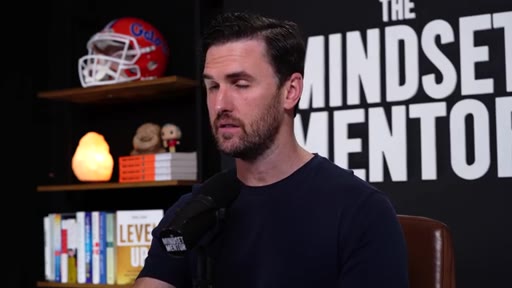
hook — biggest jump in 30 days
challenge reveal
negativity bias science
sponsor break
RAS filter explained
same life, different lens
suffering is interpretation
final CTA
§ · Frameworks

Named ideas worth stealing.

00:37 concept

The 30-Day No-Complaining Challenge

  1. No verbal complaints
  2. No internal complaints
  3. No sarcasm or passive aggression
  4. Morning commitment, 24-hour window, daily reset

A daily behavioral loop: wake, commit to 24 hours complaint-free, redirect each complaint to a reframe, sleep, repeat.

Steal for any habit-formation or mindset coaching offer
13:04 model

Perception to Behavior to Identity to Life

From the UC Davis gratitude study: circumstances do not have to change first; perception shifts first, which changes behavior, which changes identity, which eventually changes your life.

Steal for any coaching or course about mindset change
§ · Quotables

Lines you could clip.

00:49
"Do not complain at all for thirty days."
Instant clarity — states the entire challenge in one sentence → TikTok hook
04:24
"Your mind can make heaven out of hell or hell out of heaven."
Standalone aphorism, no context needed → IG reel cold open
07:31
"Complaining blinds people and it keeps you stuck."
Punchy two-beat sentence, quotable in isolation → newsletter pull-quote
11:31
"It's the same life. It's a different lens."
Maximum compression — entire argument in six words → IG reel cold open
15:09
"Most suffering was never life itself. It was unconscious interpretation of life."
The conceptual punchline of the whole video → TikTok hook
15:32
"You can either train your mind to look for darkness, or you can train your mind to find light."
Clean either/or framing that invites sharing → newsletter pull-quote
§ · Resources Mentioned

Things they pointed at.

§ · CTA Breakdown

How they asked for the click.

16:43 next-video
"Hey, thanks so much for watching this video. If you love this podcast, click this one right here."

Standard YouTube outro card with algorithm-generated next-video recommendation; clean and non-pushy

§ 04 · The Script

Word for word.

HOOK opening / re-engagementCTA the pitch metaphor analogy
00:00HOOKI wanna talk about how to have the biggest jump in your life in the next thirty days. I'm talking about one of those shifts where everything in your life changes. You start thinking differently, you feel differently, you carry yourself differently, the people around you can literally feel the difference in your energy,
00:17HOOKbecause right now, most people are unknowingly reinforcing the exact mindset
00:23HOOKand emotional state that they're trying to escape from. And once you finally see it, you can't unsee it.
00:30HOOKAnd so today, I'm gonna give you a challenge that sounds extremely simple on the surface, but it is challenging. But if you actually commit to it for thirty days, it will change your mind, your emotions, your nervous system, relationships,
00:43HOOKand honestly, probably the trajectory of your life. K? Here's the challenge.
00:49Do not complain at all for thirty days.
00:53That's it. Now stay with me because this is way more in-depth than it seems on the surface. No complaining means not out loud,
01:02not in your head, not through sarcasm, not through passive aggression, not through eye rolls, not through I'm just being realistic thoughts. I mean, every single day for the next thirty days,
01:15you wake up and you make some commitment to yourself in the morning, and that commitment is for the next twenty four hours, I will not complain. And every single time that you would normally complain, I want you to consciously find a way to switch your thoughts
01:31around that situation. And then you go to bed, and you wake up the next day, and you do it again.
01:38And you wake up the next day, and you do it again, and the next day, and you do it again for thirty days. And watch how your mind becomes different, watch how you feel different in your body, and watch how your life starts to actually shift. Because most people don't realize that they're not like stuck in circumstances.
01:56They're stuck because their brain has unconsciously been trained to find problems in everything,
02:04And finding problems will only keep you stuck because if you're only finding problems and your brain is only focusing on how to try to solve problems. But if you train your brain to constantly find what is wrong, it will. That's how the human brain works.
02:19There's actually a psychological principle that's called the negativity bias. It's one of the most studied concepts in neuroscience and psychology. It's basically this.
02:28Your brain is designed to find what is wrong as a way to protect you. Why? Because your brain was not designed to make you happy or successful or rich.
02:36Your brain was designed to keep you alive. Your ancestors survived because they noticed danger. They noticed threats.
02:43They predicted threats. They could notice what was going to go wrong. The human that ignored the rustling in the bushes usually got eaten by the tiger.
02:52And so biologically, your brain is wired to scan for problems and threats and rejection and danger. And now two hundred thousand years ago, that would be smart and it would be called being safe.
03:06Today, we call it finding the negative. Right?
03:08Because we don't have to worry about tigers. And if you don't consciously train your brain, it will naturally drift towards the negative, quote unquote, the fear, the scarcity,
03:20the complaints, the fake scenarios, the, uh, imagined arguments, the fearful futures,
03:27the possible failures in the future, and we will be right back. Hey, real quick.
03:33Let me interrupt you for something exciting. On June 10 at 7PM eastern, I'm doing a free live Zoom session called break the ceiling twenty twenty six. This is for anybody who knows that they're capable of more, but they just keep self sabotaging and hitting the same ceilings no matter what they try.
03:48I'm gonna teach you exactly why that keeps happening and how to finally change it so that your income, your relationships, your happiness, your mindset, your entire life is better. You can register for free by scanning that QR code right there or by going to breaktheceiling2026.com, and I will see you live on that session.
04:07And now back to the show. And that's why some people can have beautiful lives and still be miserable because they have trained their brain to only notice what is wrong.
04:19One of my favorite quotes, your mind can make heaven out of hell or hell out of heaven. Your mind can make heaven out of hell or hell out of heaven. It's not your circumstances,
04:30it's what you think about your circumstances. That's why I have a tattoo right here. My wife and I on our left wrist have a tattoo and it says this is heaven because I think that we we can create heaven on earth our version of it
04:42right here in this moment by the thoughts that we have. Most people think their thoughts are reality. They think the world is bad, people suck, nothing ever works out, I'm not lucky,
04:52every day is stressful, life is exhausting. No. That's not reality.
04:56That's your thoughts. That's your conditioning. That's your reticular activating system filtering reality through negativity.
05:03Your reticular activating system is part of the brain that decides what it wants to filter in and what it wants to filter out. So if you constantly complain, your brain becomes a professional problem finder.
05:14So when you look at it this way, like, what actually starts happening to you when you start training your brain to look for the good, to not complain, but to find the positive? You start noticing opportunities where you used to know then there's problems before.
05:28Most people are so focused on what is wrong that they completely miss what is possible. Their brain's constantly scanning for all of the problems, Why something won't work?
05:38Why life is unfair? Because that's what they focus on. That's what they see.
05:41But when you start consciously retraining your brain the same way that you would train a dog to stop complaining
05:48and to stop making yourself a victim, your mind starts to open up in a different way. You start seeing solutions
05:56faster. You start noticing opportunities that you never saw before. You start taking more action.
06:01You start to see people different. You start to talk to people differently. You start to carry yourself differently.
06:07You start to see opportunities where you used to see roadblocks, and that's huge in getting yourself out of a rut and really turning your life around quickly.
06:18Why is that? Because a negative mind closes. It closes.
06:22It doesn't allow you to see outside of the possibilities. An empowered mind that doesn't complain, that sees opportunities, it expands.
06:30It's able to see more outside of what it normally does. A stressed brain looks at survival. That's all that it pays attention to.
06:38A grateful brain that starts to see outside of it starts to see possibilities. And so this changes your life. It doesn't just change like, oh, I'm gonna be positive.
06:47Right? Like, that's stupid. No.
06:48It changes your life in many different ways. Emotionally, financially,
06:53relationally, every single way. Because opportunities
06:57are almost always hidden inside of the problems. So if you're only seeing problems, you're usually not training yourself to look for the opportunities in them.
07:07We need to train our brain to find those opportunities. The person complaining about their job misses the opportunity to learn the skills that they need to to be able to come better. Right?
07:18The person that's complaining about being alone misses the opportunity to build themselves while they are alone. The person that's complaining about where they live misses the opportunity to create a plan to leave.
07:31Complaining blinds people and it keeps you stuck.
07:37Actively searching for good and training your mind to find it, it sharpens your mind.
07:44And when you stop seeing life as something that's happening against you, and you start seeing it as something that's that has so many opportunities available to you, that's when you start getting ahead in life. It's not like life suddenly became easier, but your brain finally stopped looking for all of the mental roadblocks
08:01that were never there in the first place. Like, think about it. No matter how bad you want something
08:08to be rich or to be happy or to be build a successful business or to get into a relationship, if you're only seeing the roadblocks to getting to where you want to go,
08:20you won't even try to get to where you wanna go because you're only seeing the roadblocks. So you have to understand.
08:29You need to see a different perspective in some sort of way if you're gonna change your life. So much of our lives and what we complain about, people would love to have.
08:39Do you get that? Like, no matter where you are right now, there are millions if not billions of people who would trade with you right now. Like there's people in war torn countries that would love to have your life.
08:52People who didn't grow up with the same circumstance that you did. People who weren't given the opportunities that you've been given.
08:59And this is my opinion, a lot of us live in some people on Earth's version of heaven on Earth. And we sit there and complain about all of these.
09:08My my tea wasn't hot enough today. Get your shit together.
09:13Right? Like, have perspective on your life and how great this can actually be.
09:18I'm not saying you need be rich and successful and full of happiness in order to realize that we do have some pretty good lives. Let me give you a couple of examples of what I see with people like, your kids are screaming. They're freaking out and you're like, oh my god.
09:31Most people complain, oh my god these kids are driving me insane. Right? I get it.
09:36But then you can take a step back and go, can I see this from a different perspective? Like do you know how many people wish
09:43that they had a child like yours right now for whatever reason? Right? Like they can't conceive
09:48or maybe they lost a child or maybe their children are all grown up and they miss when they were inside of the house and young and full of energy, and when we notice and we see that and we take a step back and we see our circumstances differently of like, oh, man, many people love to have this moment that I'm in.
10:06You can look at it and go, oh my God. I am so damn grateful that I have healthy children. There are some people who would do anything
10:14to have what I have right now in this moment. I am so lucky. Right?
10:18Another example, like you're stuck in traffic. You could be like, oh my God, this is unbelievable. I'm gonna be late.
10:23I hate being late. My day is ruined blah blah blah blah blah. Instead you could be like, okay, I'm stuck in traffic.
10:30You know what? I've been actually needing some silence. I've been asking for some silence.
10:36I've been asking for some sort of a break. Maybe this is my moment to breathe. Maybe I should turn the music off.
10:43Maybe I should sit in silence for a minute. Maybe I should be with myself for five minutes. I've been asking for this.
10:49Maybe this is my opportunity. Not like, oh boo hoo. Right?
10:53Your alarm goes off in the morning and you're like, oh my god. I didn't sleep very well last night. Whatever.
10:59There was a thunderstorm that woke me up. I don't wanna get up. I wanna sleep in,
11:03you know, you could do that or you could go, you know what? My alarm went off. I hear it.
11:07That means I'm alive. A hundred and fifty thousand people died yesterday. They would all want to trade places with me I'm sure to have another day and I get another day.
11:18Maybe I should look at it a little bit differently. Like, do you understand how radically those realities like they're so radically different through the children, through the traffic, through the waking up, like it's the same life.
11:31It's a different lens. And so it's not your life that has to change. It's your lens that has to change first,
11:39and then your life will change. And so here's what starts happening when you do this type of stuff for thirty days. Your nervous system's gonna start to change because complaining keeps your body in like stress mode.
11:51Every complaint reinforces cortisol and stress and irritation and victim mentality and helplessness, and so your brain starts expecting bad things.
12:01There's actually research on this from Stanford showing that chronic stress and repetitive negative thinking strengthens the neural pathways associated
12:10with anxiety and emotional reactivity. Meaning the more you complain,
12:14the easier it becomes to complain. More negative that you are, the more automatic your negativity becomes. Your brain wires itself around repetition,
12:25not what you want, what you do, what you think. That's Heb's law in neuroscience. Neuroscience says neurons that fire together wired together.
12:33So every inconvenience that creates negativity,
12:38you wire negativity deeper into your personality. But gratitude works the exact same way. Like research at UC Davis actually shows they conducted one of the most famous gratitude studies that was ever done where participants who practice gratitude consistently experience
12:54greater optimism, better sleep, less stress,
12:58more happiness, improved energy, and just overall improved emotional well-being.
13:04And the important part is this, their lives didn't necessarily change first. Their perception changed first, and their perception
13:12changed their behavior, and their behavior changes their identity, and identity
13:18will change your life. So that's why this challenge matters so much. You're not just thinking positive.
13:24That's what I'm trying to have you do. You're not just like being toxically positive. You're rewiring the filtering system of your mind.
13:31You are retraining yourself to stop unconsciously rehearsing suffering. Because let's be honest,
13:38some people are addicted to their negative thoughts and the brain starts treating this.
13:45Imagine stress that their brain come like their mind comes up with like real stress, and your body literally responds chemically to your thoughts.
13:54That's why you can think about an argument and your heart rate increases. That's why you can imagine embarrassment
14:01and start to feel anxious. It's not reality. It's your thoughts.
14:05The brain does not distinguish between vividly imagined experiences and real ones, which means that if you constantly imagine negativity, you biologically live
14:16inside of that negativity, and then people wonder why they feel stuck.
14:21They wonder why it's so hard to get moving because your brain cannot create expansion while constantly rehearsing fear. And this is why this challenge actually matters.
14:32For thirty days, no complaining. Every complaint gets interrupted with gratitude. Every negative thought gets redirected.
14:41Every inconvenience becomes an opportunity to consciously choose who you want to become, and eventually if you do this something amazing starts to happen. You stop being
14:52emotionally controlled by these little tiny things. Traffic stops ruining your day. People stop ruining your mood.
15:00Delay stop ruining your peace. You don't get triggered near as much as you used to, and your thoughts stop controlling how you feel. And you realize most suffering was never life itself.
15:12It was unconscious interpretation of life. Our perception of life is our problem, not our life, and this is important.
15:20I'm not saying become delusional. I'm not saying have toxic positivity. I'm not saying ignore your pain.
15:25I'm not saying pretend things are not hard when they're hard. What I'm saying is that you can either train your mind to look for darkness, or you can train your mind to find light.
15:36Whichever one you repeatedly choose becomes who you are. That's why after thirty days, you won't just feel better.
15:44You will literally start to become a different person, because repetition rewires your brain.
15:50You're in control of that, and that repetition creates a different identity, and eventually a different life.
15:57So this challenge is simple. Interrupt the pattern, and decide who do I want to become from this moment forward? Do I wanna become somebody who constantly finds what's wrong or someone who can't consciously trains themself to see possibility,
16:11and gratitude, and beauty, and and growth, and goodness even when life is imperfect. Because your life is always gonna be imperfect, but your mind does not have to be at war with reality all of the time. And if you can master this,
16:25CTAyour life changes fast. So here's your challenge. For twenty four hours,
16:30CTAno complaining. Make a commitment to yourself to start it today, and then you make that commitment every single morning for the next thirty days. Watch how your relationships change.
16:41CTAWatch how your stress changes. Watch how your emotional baseline changes. Watch how much lighter your life feels.
16:48CTABecause when you stop feeding negativity, you stop strengthening it. And when you stop strengthening it, you finally create space for peace.
16:56CTAHey, thanks so much for watching this video. If you love this podcast, click this one right here. Based off of everything you've been watching recently, YouTube has searched all of my videos and your algorithm put them together, and this is its suggestion for what it thinks you would wanna watch right now.
17:09CTAAnd if you wanna make sure to never miss another video, click that button right there, subscribe, and I'll see you on the next one.
— full transcript
§ 05 · For Joe

Complaining trains the brain, not just the mood.

WHAT TO LEARN

Stopping complaints for 30 days is not about forced positivity — it is about breaking a neurological feedback loop that has been quietly narrowing what you can see and do.

  • The negativity bias is evolutionary, not personal — your brain scans for threats by default; you have to actively retrain it or it runs that default program forever.
  • Every complaint strengthens the neural pathway that produces the next complaint — Hebb's Law means repetition builds circuitry regardless of whether that circuitry helps you.
  • A stressed, complaint-running brain literally cannot see opportunities; the perceptual narrowing is physiological, not motivational.
  • The 30-day challenge works in 24-hour windows, not willpower marathons — each morning is a fresh commitment, which keeps the stakes small enough to actually sustain.
  • Perception changes before circumstances do — you do not need your life to get better before your lens gets better; the sequence runs the other way.
  • Reframing is a skill practiced in the moment: same situation, deliberate alternative interpretation, repeated until the alternative becomes the default.
  • The brain responds chemically to vividly imagined negative scenarios the same as to real ones — chronic mental complaint keeps your body in a physiological stress state even when nothing bad is actually happening.
§ 06 · Frame Gallery

Visual moments.