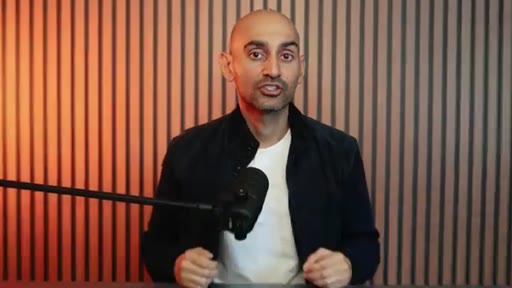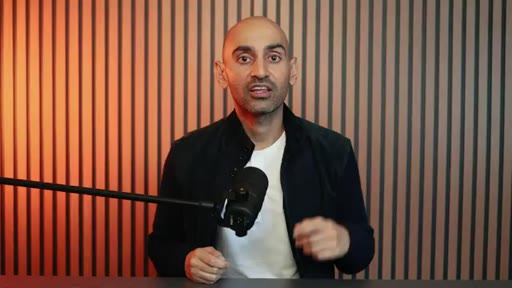
Neil Patel · Youtube · 11:27

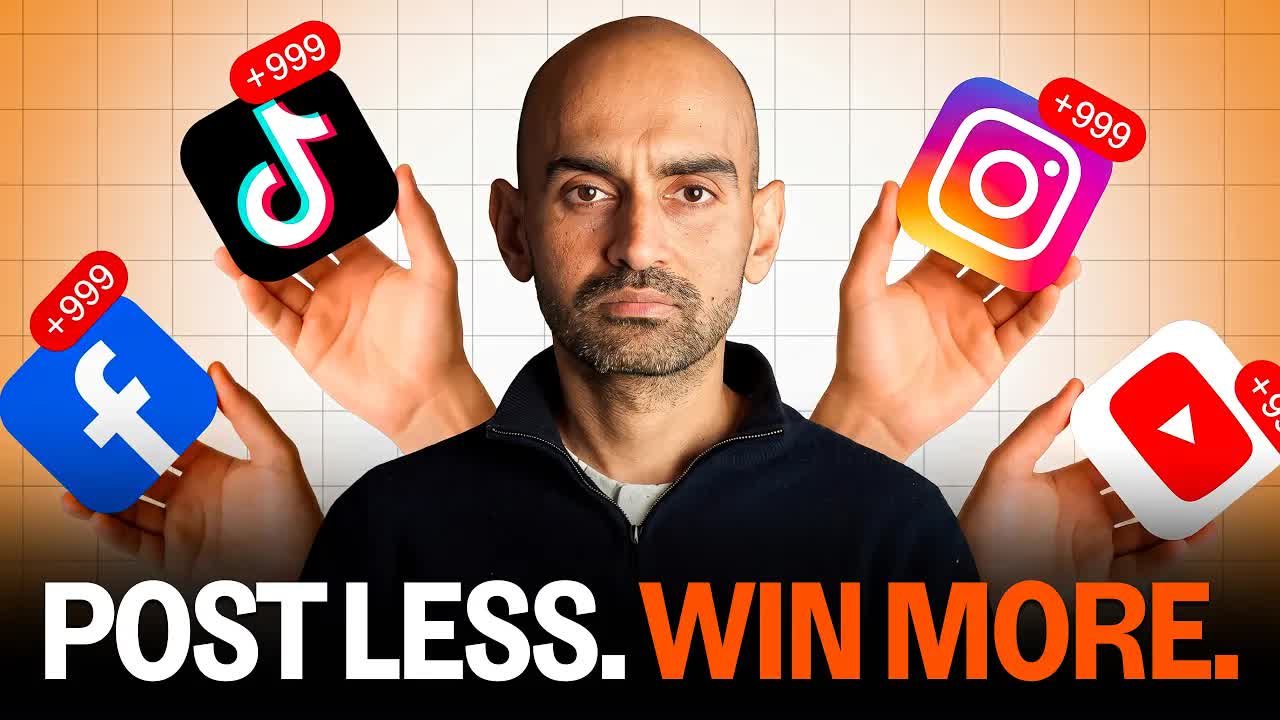
How I Would Master Social Media in 2026 (If Starting From Zero)

A four-move system for building authority-driven content without sitting down to record more than twice a month.

Posted
June 3rd 2026
yesterday
Duration
11:27
Format
Tutorial
educational
Channel
NP
Neil Patel
§ 01 · The Hook

The bait, then the rug-pull.

Forty to sixty pieces of content a month, recorded in two sittings. The opening claim sounds like a math error, but it is actually the clearest signal that the way most people think about social media is broken at the root, not the execution.

§ · Chapters

Where the time goes.

00:00 – 00:25

01 · Why I Do Less, Not More

Hook: 40-60 pieces per month from two recording sessions. Algorithms reward smart systems, not hard work.

00:25 – 01:21

02 · Most People's Strategy is Broken

Platform-hopping and fresh daily ideas are upstream mistakes. The post is not the unit, the idea is.
01:21 – 03:30

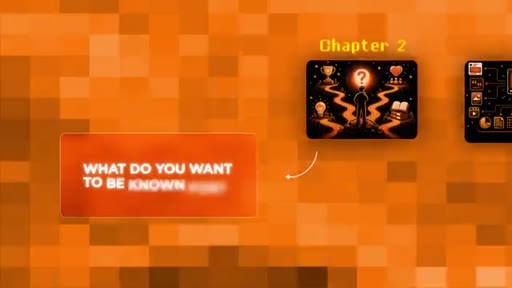
03 · What Do You Want to Be Known For?

Authority positioning: authority statement, content pillars, and 3-job content rotation (trust, reach, useful).
03:30 – 06:40

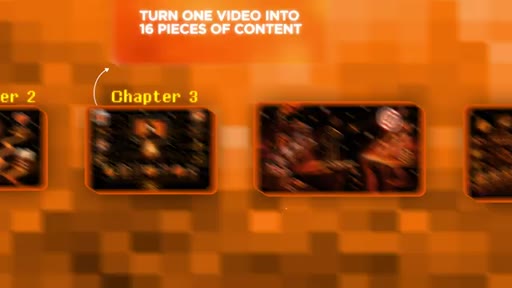
04 · Turn One Video into 16 Pieces of Content

The content flywheel: one anchor video becomes 10-16 pieces. GEO: multichannel presence drives AI search citations. Batching keeps production to four sittings a month.
06:40 – 09:36

05 · Producing Content Does Not Matter if It Does Not Move the Business

Conversion architecture: 3 authority paths, sales enablement, AI search, direct response. Virality is the wrong game for founders.
09:36 – 11:27

06 · Take Yourself Out of the System

Voice and tone guide plus approval workflow. Three staffing options: hire piece by piece, AI as team, or hire an agency.

§ · Storyboard

Visual structure at a glance.

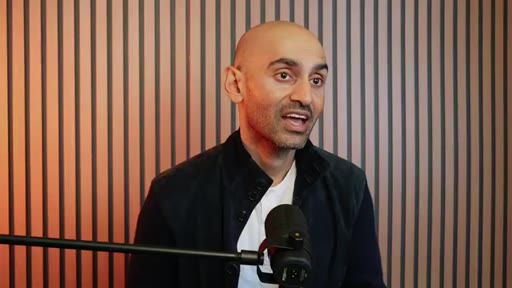
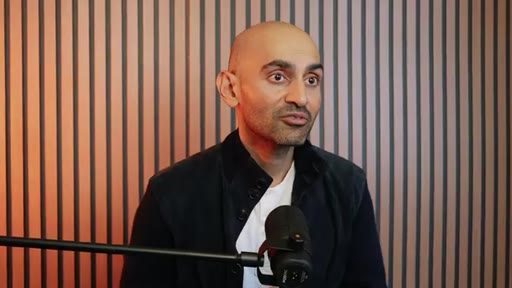
hook: do less not more
broken strategy illustrated
authority positioning
flywheel concept
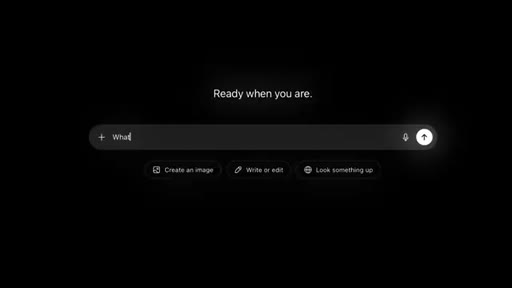
tools stack
conversion architecture
voice guide + approval workflow
CTA: watch next video
§ · Frameworks

Named ideas worth stealing.

01:21 list

Authority Positioning (3 Layers)

  1. Authority Statement: who you help, what you help them do, what makes your POV different
  2. Content Pillars: 3-5 topic buckets
  3. Content Job Rotation: trust-building, reach, useful

The foundation that must be locked before producing any content.

Steal for Positioning any brand, product, or personal authority play
03:30 model

Content Flywheel

  1. 1 anchor video (10-20 min)
  2. 10 short clips (60s each, cross-posted to Shorts, Reels, TikTok, LinkedIn)
  3. 3-4 graphics (chart, framework screenshot, standalone quote)
  4. 1 long-form article becoming newsletter, blog, SEO
  5. 1 LinkedIn text post (100-250 words)
  6. 1 X thread (8-12 tweets)

One anchor video becomes 10-16 pieces. Each piece cross-links to compound trust faster.

Steal for Any creator or founder who needs volume without daily production
07:00 list

3 Authority Conversion Paths

  1. Sales enablement: pre-sell prospects before the call
  2. AI search: same POV across every format means AI citations
  3. Direct response: one clear CTA, same for 90 days, in every video at minute 8

Authority-driven content converts through three distinct revenue channels, none of which require virality.

Steal for Any founder or executive measuring content by business impact
§ · Quotables

Lines you could clip.

00:43
"You're treating a post as a unit, but they're not. The actual unit is the idea."
Core reframe, self-contained, immediately actionable → TikTok hook
03:30
"Saying something once doesn't make you an authority, but saying the same thing 50 times across a year sure does."
Punchy, counterintuitive, no setup needed → IG reel cold open
08:35
"You can't shortcut authority. You can't outwork it in ninety days."
Tight two-line gut punch → newsletter pull-quote
09:55
"You stop being the writer. You become the editor."
Clean role-swap framing, instantly memorable → LinkedIn text post
10:28
"Business owns a system, not you. You're the face. You're the voice. The point of view. Everything else gets built around you."
Strong close-of-section statement, works standalone → IG reel cold open
§ · Resources Mentioned

Things they pointed at.

05:58toolRiverside ↗
05:58toolDescript ↗
05:58toolOpusClip ↗
05:58toolEddy AI
05:58toolCanva ↗
05:58toolBeehiiv ↗
09:36toolNotion ↗
09:36toolAsana ↗
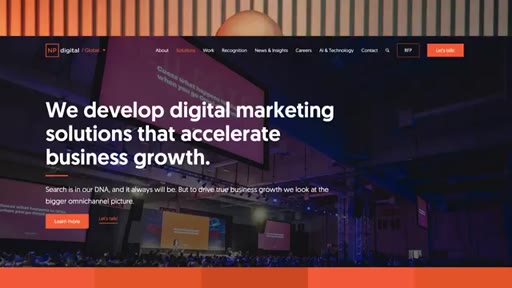
11:10productNP Digital ↗
§ · CTA Breakdown

How they asked for the click.

11:15 next-video
"There is a lot more to this, so I made a separate video that goes deeper into the social media side in AI search optimization. Watch it next."

Clean handoff at end. Agency CTA (npdigital.com) mentioned verbally mid-video during tools section, soft, not hard-pitched.

§ 04 · The Script

Word for word.

HOOK opening / re-engagementCTA the pitch metaphor analogy
00:00HOOKIf I had to start over on social media from scratch, I do less, not more. I still post 40 to 60 pieces of content a month, but I'd only sit down to record two times a month. That sounds backwards.
00:11HOOKI know. But after twenty years of building audiences online, I've learned that the algorithm in 2026 doesn't reward how hard you work.
00:18HOOKIt rewards how smart your system is. Mine comes down to only four moves. I'll show you, but first, you need to know why.
00:25Most people's social media strategy is broken. They'd sit down on Monday and ask, what should I post on LinkedIn today? On Tuesday, it's TikTok.
00:33Wednesday, it's Instagram. Five platforms generating three to four posts a week each. But every piece is a fresh idea written from scratch right in that moment.
00:41Nobody can keep up with that realistically. The mistake is upstream of this whole process. You're treating a post as a unit, but they're not.
00:49The actual unit is the idea. The post is just one of the format that the idea shows up in. Once you adopt that mindset, you stop trying to come up with 60 ideas a month.
00:59You start trying to come up with four good ones. But four ideas a month are only worth something if those ideas point in the same direction. If Monday is marketing automation, Tuesday is productivity, and Wednesday is a hot take on AI, an algorithm can't figure out who you are.
01:14So your audience can't either, and you're basically invisible. So before you make a single piece of content, you have to answer one question. What do you wanna be known for?
01:23This is your authority positioning, the part that most content creators skip, which is exactly why most stay invisible. And to help you understand better, I divided it into three layers. Layer one is your authority statement.
01:35One sentence containing who you help, what you help them do, and what makes your point of view different. Mine, I help business owners grow their brand visibility through digital marketing and create a positive ROI.
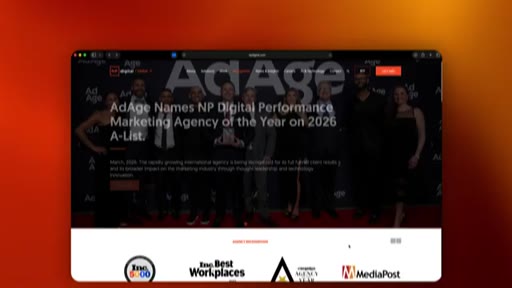
01:47It's so effective. We won performance marketing agency of the year by Ad Age. Now my audience, business leaders from small start ups to globally recognized enterprises.
01:56What makes my point of view different is I run a agency called NP Digital at scale. We're in over 28 countries. We see a lot of data for companies of all sizes, hence, we won a ton of awards, over 75 for the results.
02:08So that's me using my own self as an example. When you nail your authority statement, that line becomes your filter.
02:15Every piece of content has to reinforce it. If it doesn't, you need to revisit it. Layer two is your content pillars.
02:22Three to five subtopics under your authority statement. These are the buckets every piece has to fit into. Too few, and you run out of things to say.
02:31Too many, and you continue to confuse the audience. Layer three is what keeps your content from getting stale. Every video gets one of three jobs.
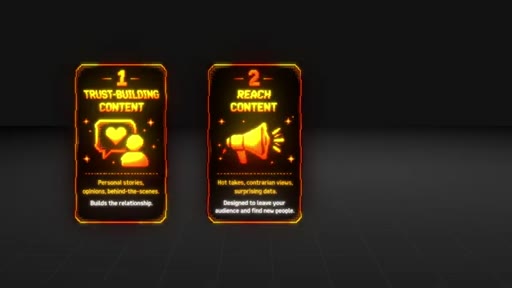
02:39Job one, trust building content. Personal stories, opinions, behind the scenes builds the relationship. Job two, reach content.
02:46Hot takes, contrarian views, surprising data, designed to leave your audience and find new people. Job three, useful content.
02:54How to, framework, step by step, the stuff people say. If any of the above is missing, the strategy doesn't perform to its full potential. In simpler terms, if you're only useful, you're basically a textbook.
03:05If you're only trust building, you're a personality nobody pays. Only reach, you go viral once, but you lose followers in a week. You still need all three.
03:13I too rotate them across the four videos a month. Once your statement, pillars, and rotation are locked, you know what you're making. The next problem is volume.
03:21See, saying something once doesn't make you an authority, but saying the same thing 50 times across a year sure does. So let me tell you how. Turn one video into 16 pieces of content.
03:33This is a content flywheel. One anchored video, ten to twenty minutes long, becoming 10 to 16 separate pieces. Run it four times a month, and you've got 40 to 60 pieces of content from four sittings.
03:45And if you're like me and you've been doing it for years, you can do it in one sitting, sometimes two max if you're just not into it. And in 2026, this kind of volume matters more than it ever has.
03:54YouTube is now GEO, generative engine optimization. When someone asks ChadGPT, Gemini, or Google's AI mode a question in your industry, the answer it generates is pulled from content scattered across web, blogs, news, forums, social media,
04:07even YouTube videos. My videos consistently show up in AI overviews and AI mode results, and it's not because YouTube is special. It's because the same point of view is showing up in every format these systems read.
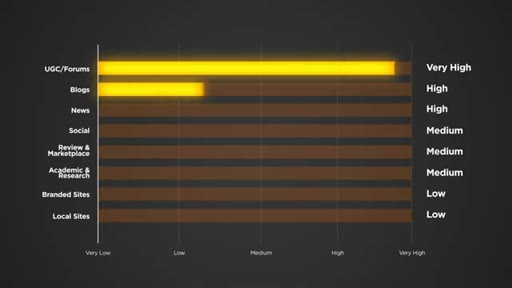
04:19We've done the research on this at NP Digital. Some of the top sources AI pulls from ranges from UDC, forums, blogs, news, social, and reviews. If your content only lives on one of those formats, you likely won't show up in AI search, but the flywheel solves that.
04:35From one anchor video, you pull 10 or so short clips, the sixty second moments where you said something punchy or can train, and you can plan this all out in your scripts. Each runs on YouTube shorts, Instagram reels, TikTok, and LinkedIn with a different caption. Three to four graphics.
04:51A chart, you walk through a framework with screenshotting a quote that lands on its own. One long form article, 800 to a 200 words becomes your newsletter, your LinkedIn newsletter, your sub stack, your blog content, your SEO. One LinkedIn text post, a 100 to 250 word version of one specific point.
05:08One x read, eight to 12 tweets. The argument is compressed. That's 11 to 15 pieces from one anchor.
05:16The flywheel only works when you wire pieces together. Shorts on YouTube point back to the anchor video. The article links to specific time stamps.
05:23The LinkedIn post sends people to the newsletter. And finally, the newsletter links it all. This way, when somebody catches one of your Shorts on Instagram, they won't just watch and scroll.
05:33They'll likely find your channel, read your article, land on your newsletter, same idea, three different formats, and they trust you faster than any single piece of content can earn on its own. The second thing that makes this work is batching. You don't film on Monday, edit on Tuesday, and post on Wednesday.
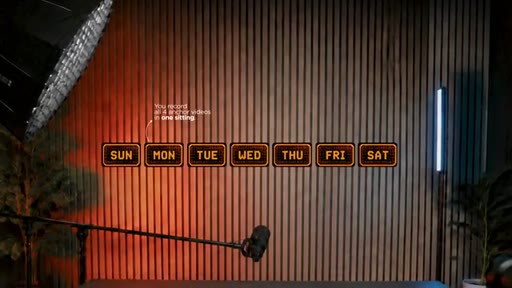
05:49Record all four videos in one city. You can wear the same outfit or change. I typically wear the same one.
05:55Use the same lighting and do three to four hours of work max. I can typically do it in an hour and a half. The next two days, your team cuts the long forms and pulls the clips.
06:04Day four, graphics. Day five, articles and social posts. By the end of the week, the entire month is built.
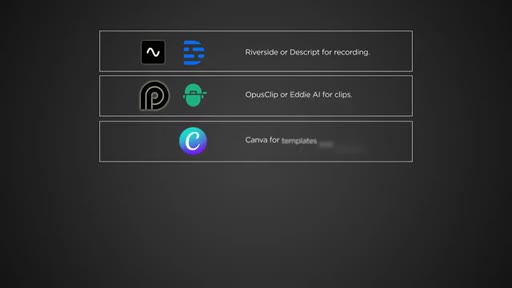
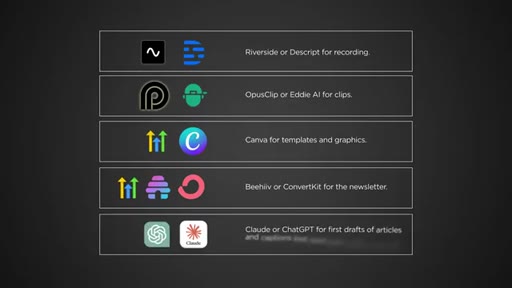
06:09There are many tools for this too that can help with production. Riverside or Descript for recording, OpusClip or Eddy AI for clips, Canva for templates and graphics, Beehive or ConvertKit for the newsletter. GoHighLevel
06:23for templates and graphics and even the newsletter. Claude or ChatGPT for first drafts of the article and captions that feed your video transcripts. To put in perspective, if you're solo with AI, it'll be twenty to thirty hours a month.
06:35HOOKAnd with the team or agency, only four to eight. Now the most important reality check, producing content doesn't matter if it doesn't move the business. This is your conversion architecture,
06:46HOOKthe path from a single piece of content to the actual revenue. Most content creators skip it because they think the scoreboard is views, but it's not. That's a version of social media strategy where the goal is just mainstream virality.
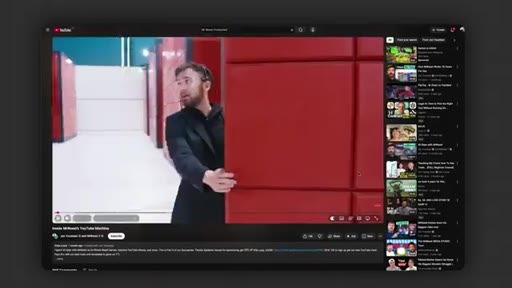
06:58Mister Breeze plays that game. He's incredible at it, but he also spends millions of dollars per video and has an army of producers. So not exactly your game.
07:06If you're the founder, executive, or business owner chasing virality, it's the worst thing you can do. If the followers don't trust you, they don't buy from you.
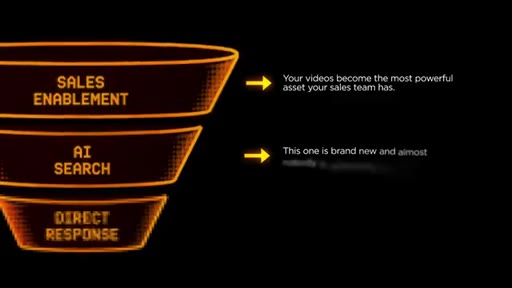
07:14They watched you for one shocking moment and forgot you exist by Wednesday. Authority is your game, and authority converts in three specific ways that most people don't know about. The first is sales enablement.
07:25Your videos become the most powerful asset your sales team has. A prospect on the fence watches a fifteen minute video where you break down exactly how you think about their problem. By the time the next call happens, they're already convinced.
07:39So your sales team starts every conversation already 80% close, thanks to your authoritative content. Same thing applies internally. Send a video to a stakeholder before a meeting, send it to a new hire during onboarding, send it to a board member who needs to understand where the company's headed.
07:54They watch you articulate the vision in your own words for twenty minutes, and they don't just understand what you're doing. They believe in it.
08:02That's what your content actually buys you. Confidence in the room that matters. The second path authority leads to is AI search.
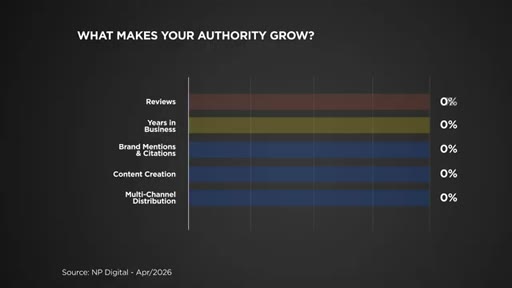
08:09This one is brand new and almost no one's optimizing for it yet. We actually did a study on what makes you get cited by LLMs. The top factor was reviews.
08:16The second was something that almost nobody talks about, years in business. The brand mentions the citations, the content creation, and multichannel distribution. The years in business piece is the one I want to sit with you.
08:26It means you can't shortcut authority. You can't outwork it in ninety days. The longer you've been around saying smart things about a topic, assuming the work behind is real, the more both humans and AI systems trust you.
08:38But patience is a moat almost no one is willing to build. But at the same time, content creation will definitely help you accelerate the process. The third path authority generates is direct response.
08:49At times, you must want a video to drive a specific action, a call, a free template, a wait list. So the way you do that is by mentioning one clear next step. At minute eight, in every video, in the description, in the article, in the newsletter.
09:02Now not every video needs a hard CTA. Some are pure trust building. Some are pure reach.
09:08But the ones that pitch should pitch one thing for at least ninety days before you change it. Let's recall, three paths, sales enablement, AI search, direct response. So don't make a mistake of thinking content has one purpose.
09:21It has at least three. There's still one problem with the whole system. You.
09:26If every video clip post and email comes out of your brain and your hands, you're the bottleneck. The whole machine breaks the second you get sick or busy. So you need to take yourself out of the system.
09:39This is your authority system, the layer most creators never get to. For this, you need two pieces. First, your voice and tone guide, a short document, five to 10 pages that captures how you actually sound, phrases you use, phrases you never use, and how to start a video, how you open a newsletter,
09:55and the opinions you hold. Once that document exists, anyone on your team can write in your voice. Your editor writes captions.
10:02Your assistant drafts a newsletter. Claude or Chad GPT pulls a LinkedIn post if you feed them the voice guide. You then review and approve.
10:09You stop being the writer. You become the editor. Second, your approval workflow, the idea log in Notion or Asana.
10:15First draft from your team or AI, you review. Final version goes to a scheduler. If you built it right, this is thirty minutes a week in review time.
10:25Now now who actually does the work? Well, you have three options. Hire piece by piece, start with the editor, then a writer, then a designer, and you build out the full content team.
10:34AI also has a team. Claude or ChatGPT for first drafts, Opus clips for clips, Canva for graphics. You're still on camera, but production load drops 70%.
10:42Or you can hire agency. That's actually one of the things my agency, NP Digital, does for clients. We run the entire flywheel end to end and show you how it can drive business and show you the results in ROI.
10:53The point is business owns a system, not you. You're the face. You're the voice.
10:58The point of view. Everything else gets built around you. There's a second thing that happens when this runs for a few months.
11:04You start to learn. Which clips get real comments? Which articles get shared?
11:07CTAWhich hooks made people stop scrolling? You figure out what your audience actually cares about, which is almost never what you assumed when you started. That feedback is product research and sales intelligence combined.
11:19CTABut there's a lot more to this, so I made a separate video that goes deeper into the social media side in AI search optimization. Watch it next.
— full transcript
§ 05 · For Joe

Build a system, not a posting habit.

WHAT TO LEARN

Volume without a system is just noise, and the shift from treating posts as units to treating ideas as units changes everything downstream.

  • Treating each piece of content as a fresh idea generation problem guarantees burnout; treating one idea as the raw material for 10-16 pieces is what makes consistent volume sustainable.
  • Authority positioning, a one-sentence statement of who you help, how, and what makes your view different, is the filter that keeps every piece of content pointing in the same direction.
  • Content that only teaches is a textbook; content that only builds trust is a personality without revenue; content that only chases reach goes viral once and is forgotten. Rotating across all three jobs is what makes a strategy perform.
  • The content flywheel works because cross-linking pieces compounds trust: a viewer who catches a short clip, reads the article, and lands on the newsletter trusts you faster than any single piece ever could.
  • Multichannel distribution is no longer just a reach play. It is the mechanism by which AI systems cite you when answering questions in your industry.
  • Chasing virality is the wrong game for founders and executives: followers who watched you for one shocking moment forget you by Wednesday, while authority-based audiences buy.
  • Authority converts through three concrete paths, pre-selling sales prospects before the call, getting cited in AI search results, and driving direct response, none of which require large audiences.
  • Removing yourself as the bottleneck requires two things: a voice and tone guide so others can write in your voice, and an approval workflow so you spend 30 minutes reviewing rather than producing.
  • The feedback that matters from a content system is not view counts. It is learning which ideas generate real conversation and sales, which is product research and sales intelligence combined.
§ 06 · Frame Gallery

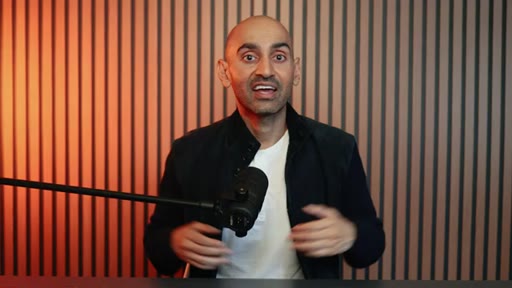
Visual moments.