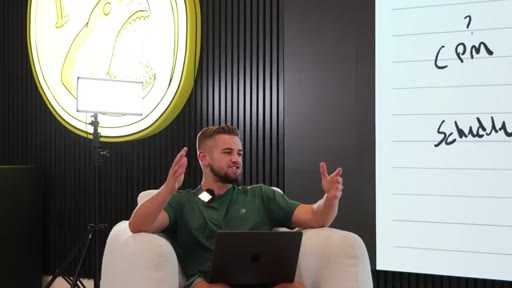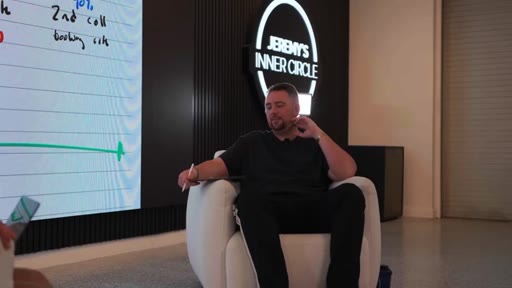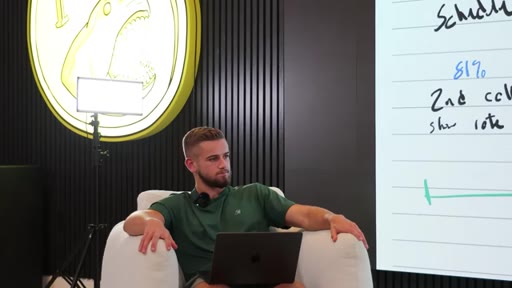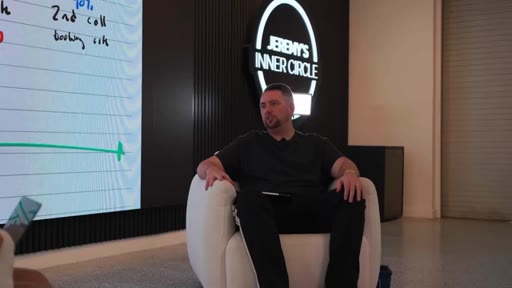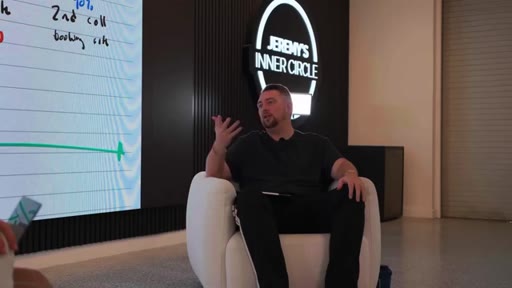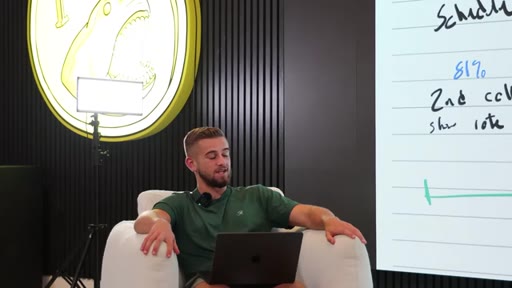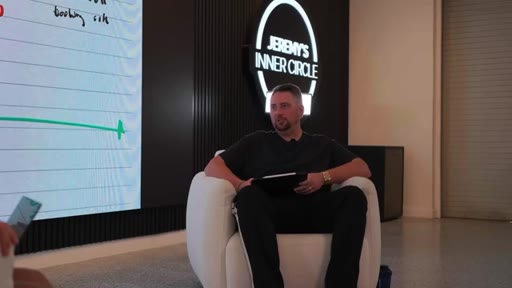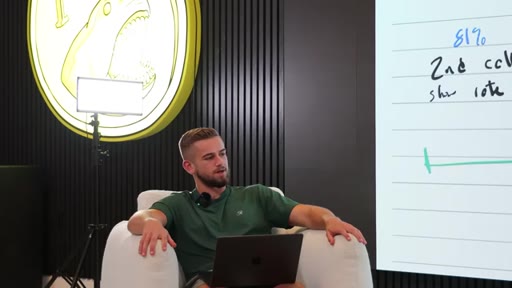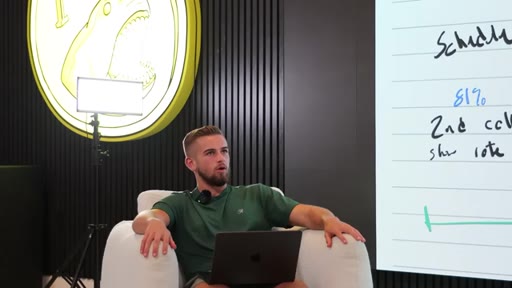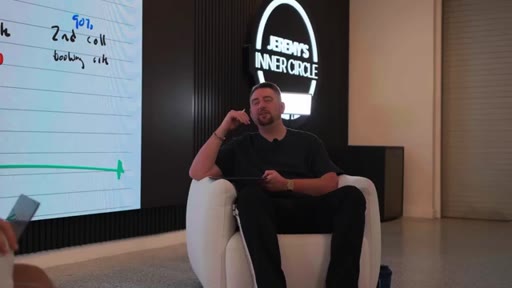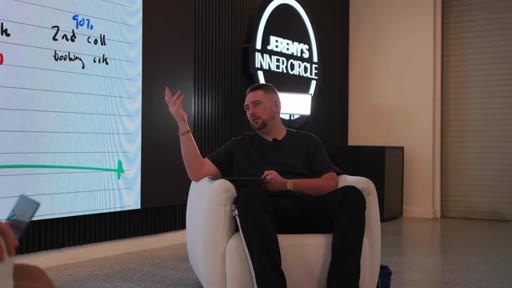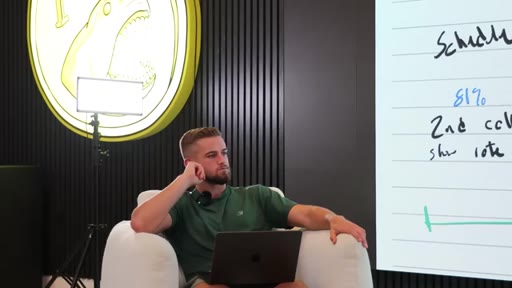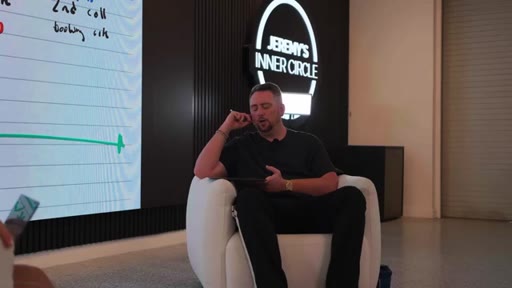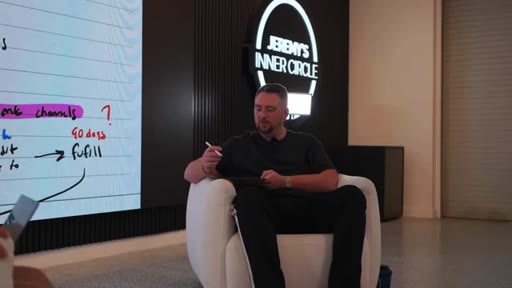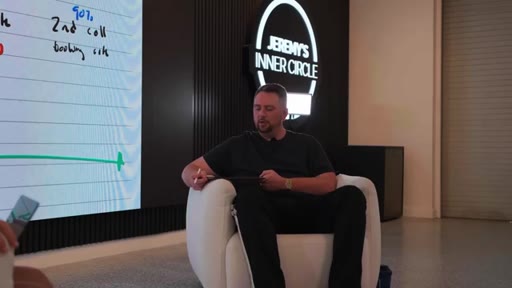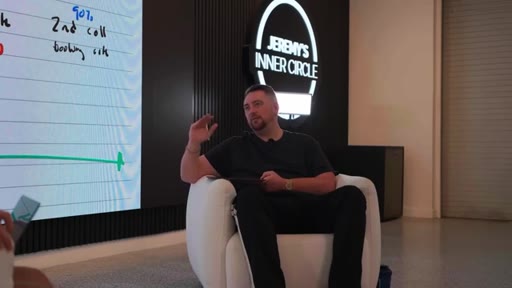
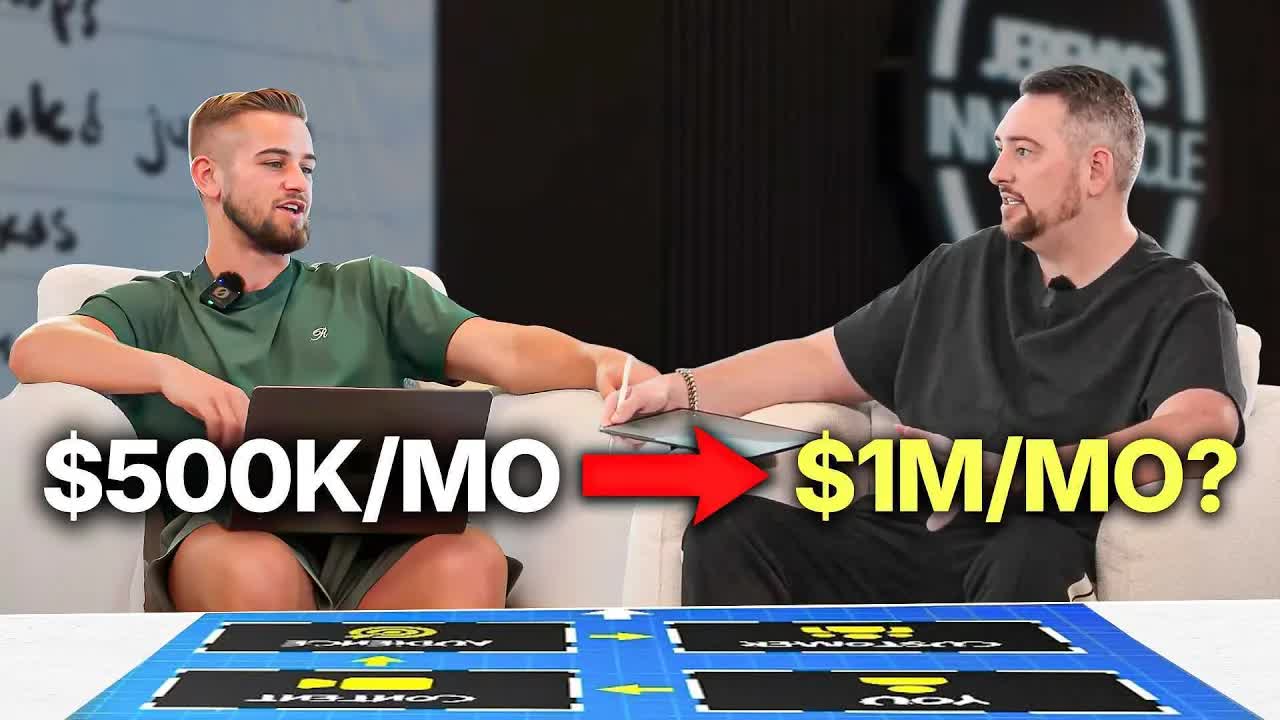
The bait, then the rug-pull.
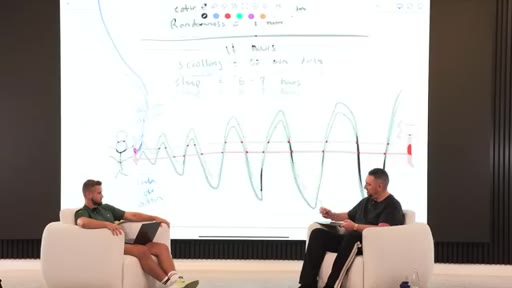
The number that breaks everything is almost never the one you are looking at. In a 69-minute live review, a $500K/month AI automation business is stripped down to its funnel math — and the number that surfaces first is so small the host says "wow" out loud: a 1.5% opt-in rate that nobody had thought to check.
Where the time goes.
01 · Cold open / tease
Pre-roll cut showing the whiteboard and setting up the review format.
02 · Business overview
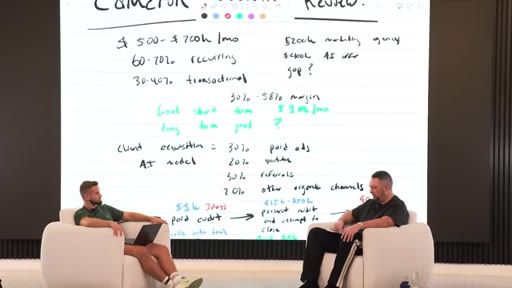
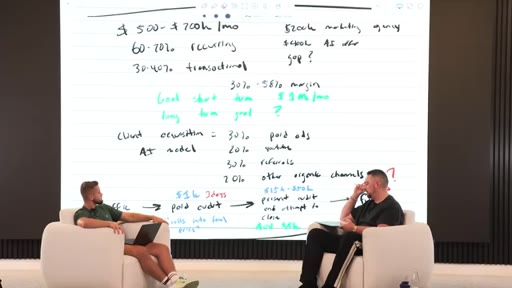
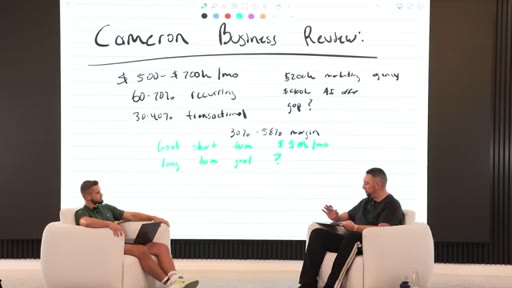
Cameron introduces himself: 20 years old, two offers (AI consulting + marketing agency), $500K–$700K/month, goal of $1M/month this month that didn't land.
03 · Revenue composition
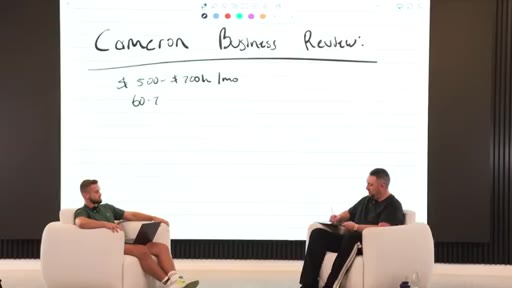
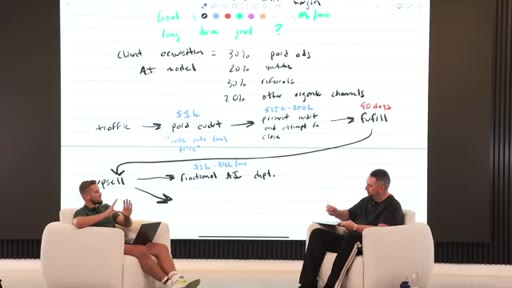
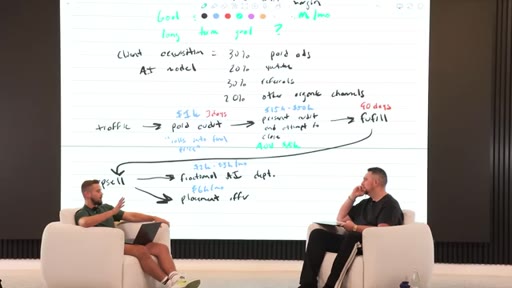
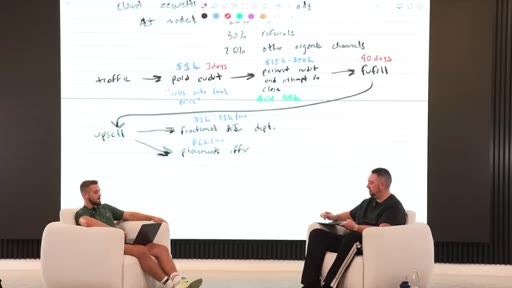
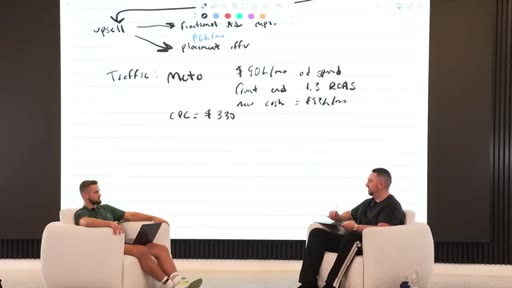
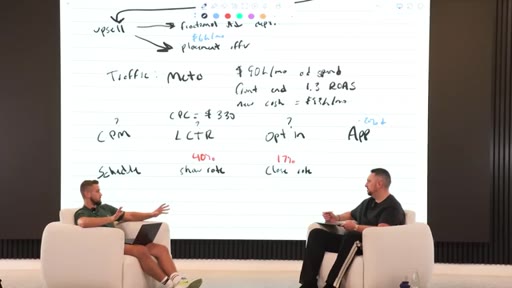
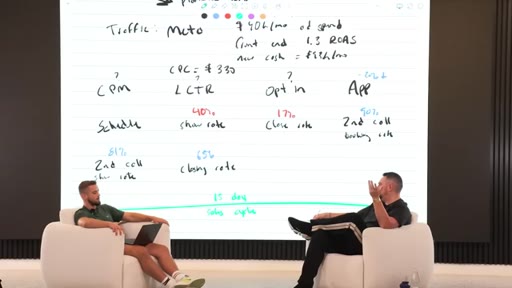
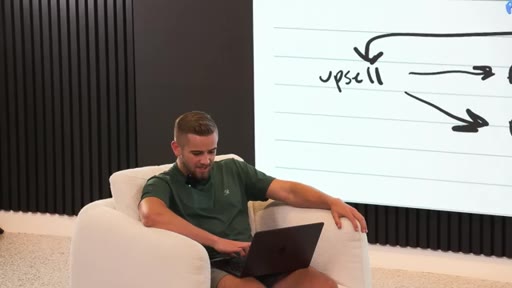
60–70% recurring/back-end (renewals, payment plans, upsells); 30–40% front-end new cash. AI offer $400K, agency $200K. Whiteboard: Cameron Business Review.
04 · Margins and revenue goal
30% margins this month vs. 58% last month. Long-term goal vague beyond $1M. Jeremy's Grand Theft Auto analogy for how money unlocks possibility.
05 · Acquisition sources breakdown
30% paid ads, 30% referral (inc. friends/family), 20% YouTube, 20% other organic (LinkedIn, Twitter, Instagram). Mix is heavily diversified.
06 · AI audit offer structure
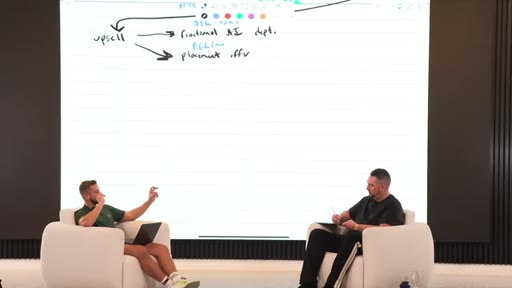
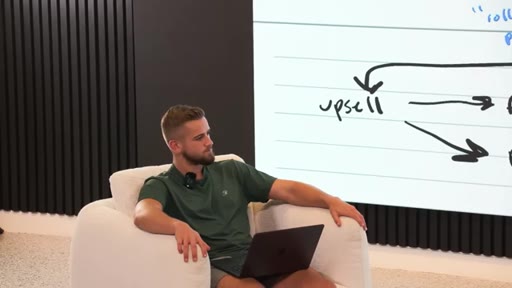
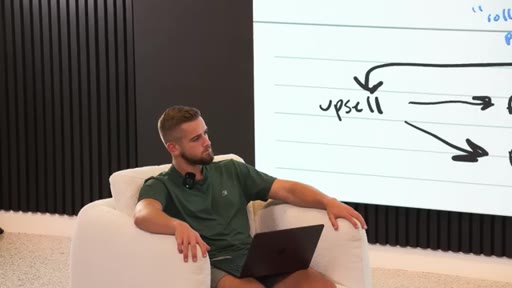
$1K paid audit → 3-day window → $15K–$50K custom build (90-day delivery) → fractional AI dept ($2K–$4K/mo) or placement upsell ($6K/mo). Jeremy probes margins, expectation-setting on ongoing LLM costs.
07 · Sales metrics and constraints
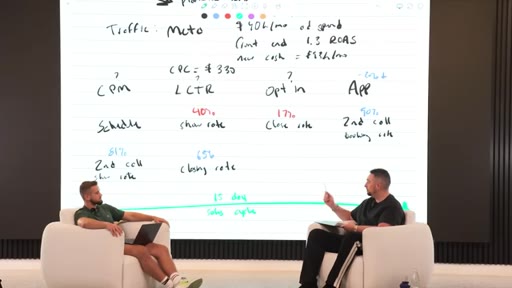
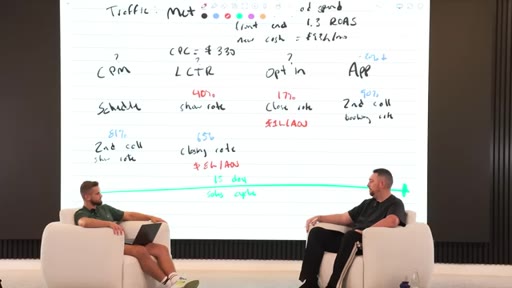
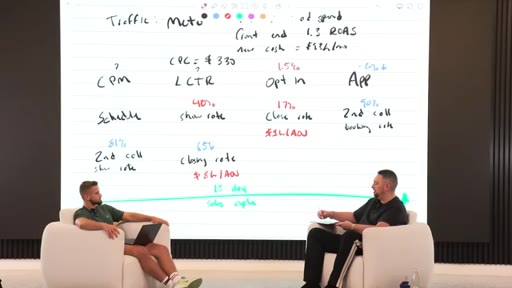
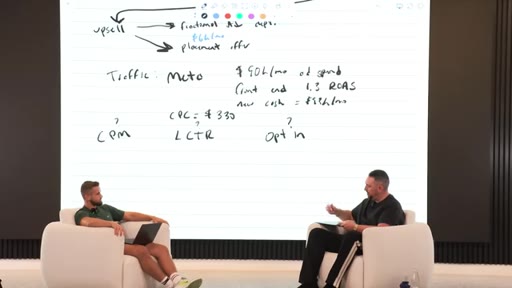
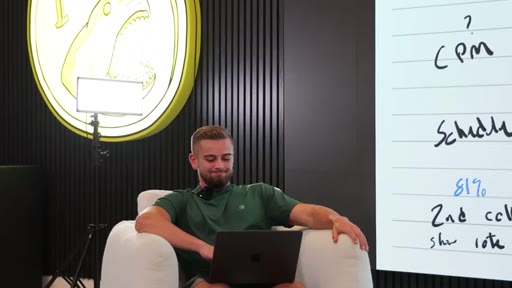
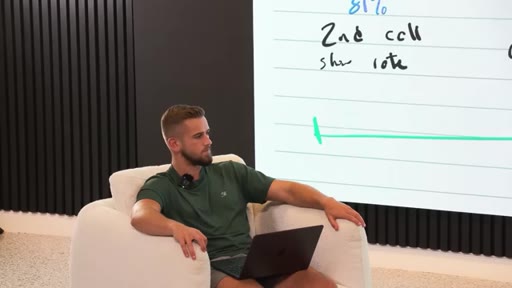
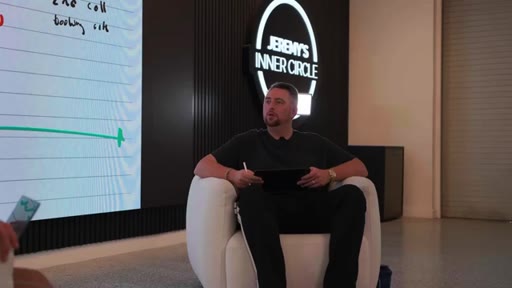
11 paid audits this month from ads; 7 full builds closed (65%). $330 cost per call. 40% show rate. 17% first-call close rate. 90% 2nd-call booking. 81% 2nd-call show rate. Sales cycle avg 15 days.
08 · Ad spend and ROAS analysis
$90K spent; $93K front-end new cash; 1.3 ROAS. $10K cost to acquire a full build. Net ROAS around breakeven after commissions. Jeremy identifies front-end economics as unsustainable at scale.
09 · Opt-in rate problem
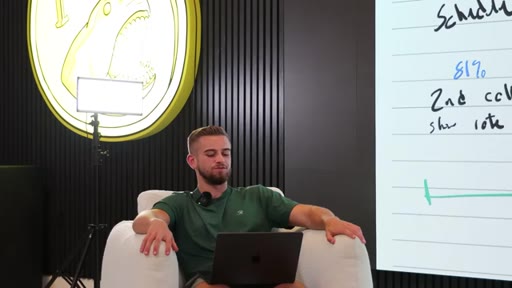
Live reveal: 1.5% opt-in rate. Jeremy diagnoses as root cause — not show rate, not close rate. Math: getting to 6% doubles results twice over. No CPMs, no link CTR tracked. Opt-in page likely unjustified.
10 · Messaging — aware vs. unaware
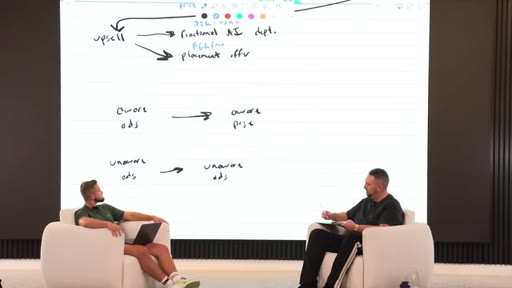
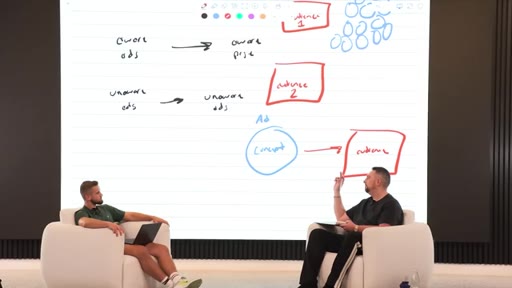
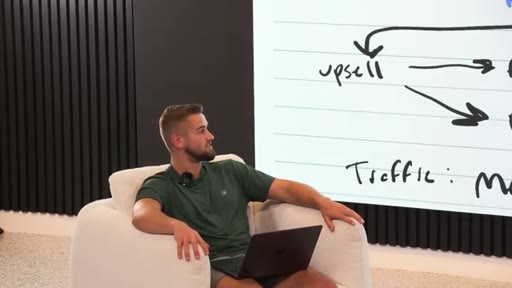
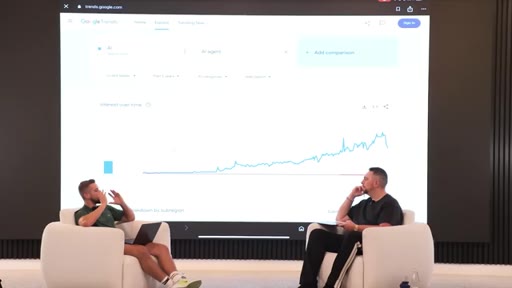
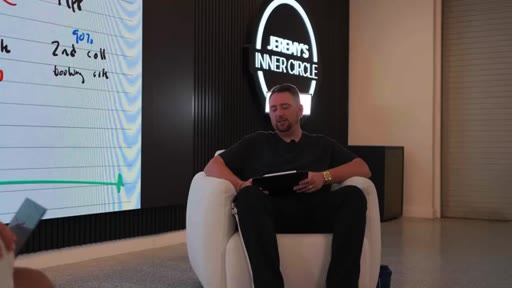
Google Trends live pull: 'AI agent' is still a niche term. Two campaigns needed: aware (use 'agent' language) and unaware (use 'AI' only, payroll savings / productivity angles). Concept-first targeting post-Andromeda.
11 · Funnel strategy and split testing
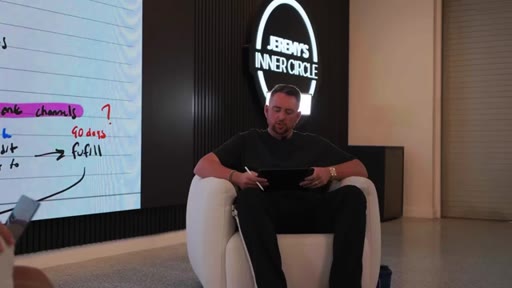
Three unaware ad concepts (payroll savings, productivity boost, revenue increase) feed one unaware page. Aware ads feed separate page. Back-end nurture, VSL, and sales team scripts all need congruency by audience type.
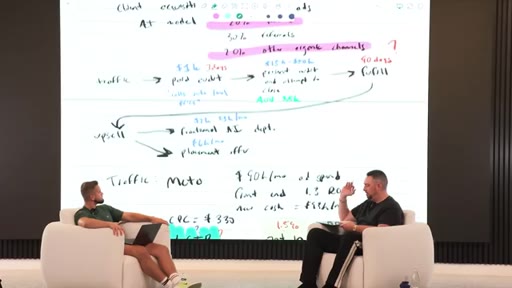
12 · Bottleneck analysis and hiring
Chad ramming concept. Proactive vs. reactive time (Cameron at 5–10 min/day vs. Jeremy's recommended 1–2 hrs). Hire someone to watch analytics. Closer scaling plan needed. 90-day fulfillment: could it be 30? Final encouragement + Inner Circle pitch.
Named ideas worth stealing.
Aware vs. Unaware Split-Funnel
- Aware campaign: uses 'agent' language, assumes implementation need
- Unaware campaign: uses 'AI' only, payroll savings / productivity / revenue angles
- Each gets own VSL, landing page, nurture sequence, and sales script
Two parallel Meta campaigns targeting the same broad audience but using concept-appropriate messaging. The creative concept — not the audience setting — self-selects who sees it.
Concept-First Targeting (post-Andromeda)
Since Meta's Andromeda update, the algorithm determines audience from the creative content itself. What the ad says is what determines who sees it — audience segments are replaced by concept angles within broad targeting.
Bottleneck Waterfall Analysis
- CPM
- Link CTR
- Opt-in Rate
- Application Rate
- Scheduler Rate
- Show Rate (1st call)
- Close Rate (audit)
- 2nd Call Booking Rate
- 2nd Call Show Rate
- Close Rate (full build)
- LTV / Upsell Rate
Map every funnel step. Fix the highest-leverage broken stat closest to the top — improvements compound through every step below.
Proactive Time Audit
- Daily proactive block: 1–2 hours minimum
- Reactive time: everything responding to what surfaces
- The audit: what am I personally doing that a hire could own?
As revenue scales, reactive demands grow faster than proactive capacity unless deliberate time is protected. The audit asks: what am I still doing that no longer matches my hourly value?
Lines you could clip.
"I would love to see the opt-in rate. It's 1.5%. Wow."
"You're willfully blindfolded on a lot of this. It's not like you're technically blind."
"If you took that opt-in rate to 6% and everything else held the same, you double everything twice over."
"The ad concept is what determines what audience it reaches — not the audience you picked."
"Everything you want is on the other side of exposure to people who've already done the thing you want to do."
Things they pointed at.
Word for word.
The stat closest to the top of the funnel wins.
Optimizing show rates and close rates is wasted effort when an invisible 1.5% opt-in rate is silently eliminating 98.5% of your paid traffic before a single call is booked.
- Fix the highest funnel stat first — a broken opt-in rate multiplies every downstream metric more than any close rate improvement ever will.
- An opt-in page in a high-ticket funnel is only justified if opted-in non-applicants are being converted by setters; most operators have never pulled that report.
- Messaging that assumes buyers are aware of your solution alienates everyone who has never heard the terminology, shrinking your effective audience to a tiny fraction of your paid reach.
- Since Meta's Andromeda update, the concept inside your creative determines who sees it — the right response is to structure ad sets by concept angle, not by audience parameters.
- Running aware and unaware audiences into the same funnel guarantees a compromised message for both; two campaigns with separate VSLs and back-end sequences is operationally simple at scale.
- A 40% show rate signals unenthusiastic leads arriving at the call stage — that is a front-end messaging problem, not a nurture sequence problem.
- Scaling ad spend faster than your analytics infrastructure compounds every unknown: you cannot fix what you cannot measure, and unmeasured problems grow with spend.
- At $500K/month in revenue, a single hire responsible for watching one top-of-funnel stat pays for itself many times over in prevented bad scaling decisions.
- Proactive thinking time — uninterrupted, non-reactive blocks daily — is the only mechanism that lets an operator catch the 1.5% opt-in rate before a coach has to point it out.
- The clients who are actually closing on a high-ticket AI offer are already users of the tools and want an implementer — that insight belongs in the front-end ad copy before the funnel is ever reached.