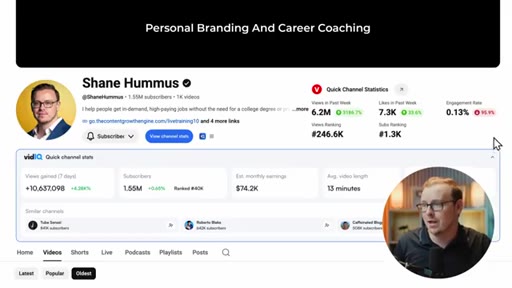
Shane Hummus · Youtube · 29:09

The Claude AI Workflow That Runs My $10M YouTube Channel

A 29-minute step-by-step breakdown of the exact six-skill Claude system behind a $10M YouTube channel — and the hidden audience-mining technique almost nobody is teaching.

Posted
June 2nd 2026
2 days ago
Duration
29:09
Format
Tutorial
educational
Channel
SH
Shane Hummus
§ 01 · The Hook

The bait, then the rug-pull.

Twenty years on YouTube, $10 million in AdSense, and a client roster that has collectively generated over $100 million in revenue — and the system behind all of it fits in a folder of markdown files. This is the workflow Shane Hummus runs, every step mapped, every Claude skill named, and the one technique at the end that almost nobody is teaching.

§ · Chapters

Where the time goes.

00:00 – 00:32

01 · Credential hook

Opens with the $10M claim and promises a no-BS step-by-step walkthrough — unlike guru content that teaches one thing and does another.
00:32 – 02:37

02 · The AI guru dirty secret

Argues that AI content creators are making asymmetric bets — building-in-public personal brands, not actually running AI-automated channels. Respect the bet but you can play a different game.
02:37 – 03:33

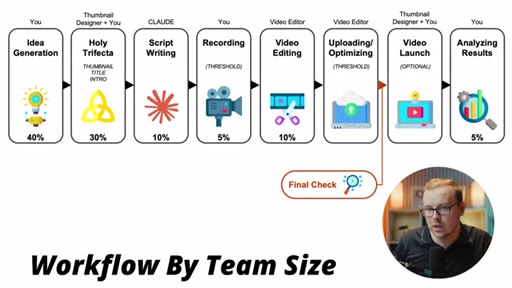
03 · The workflow blueprint

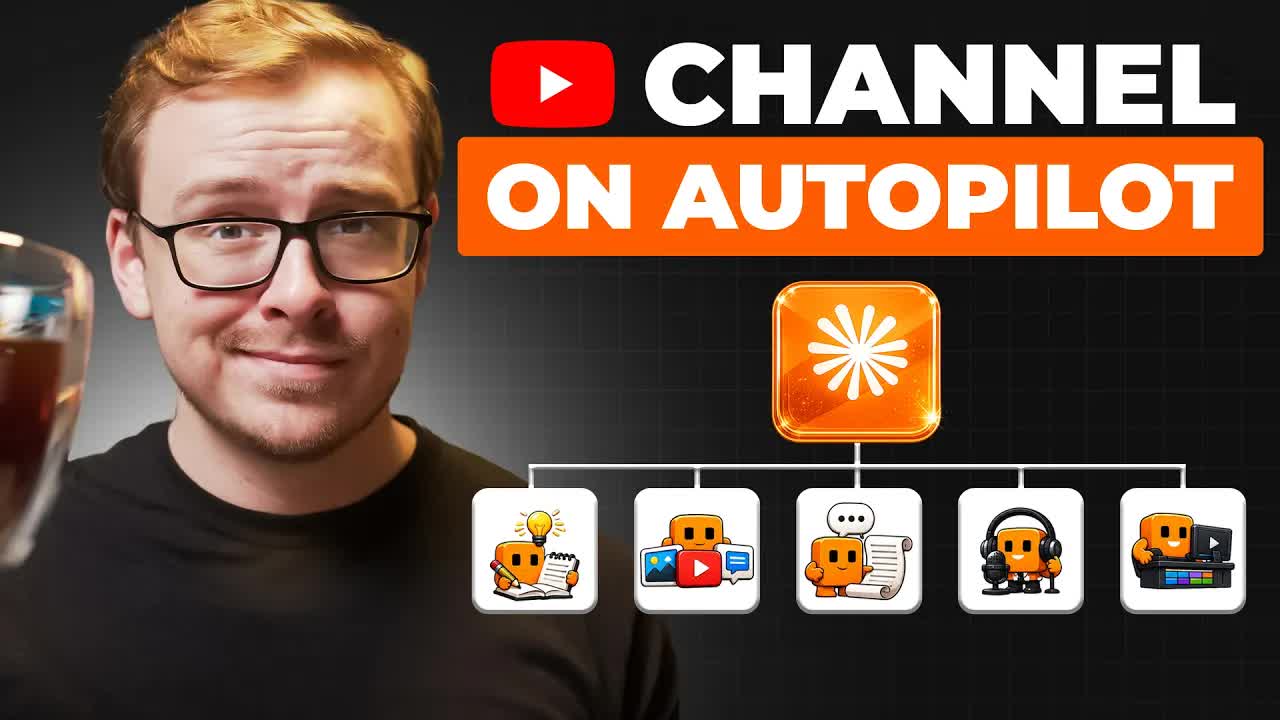
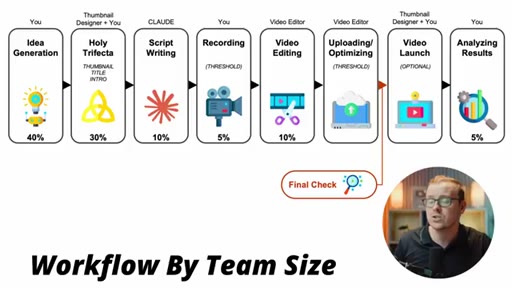
Reveals the 6-step content machine on screen: idea generation, holy trifecta, script, record, edit, launch and analyze.
03:33 – 07:18

04 · How to think about Claude

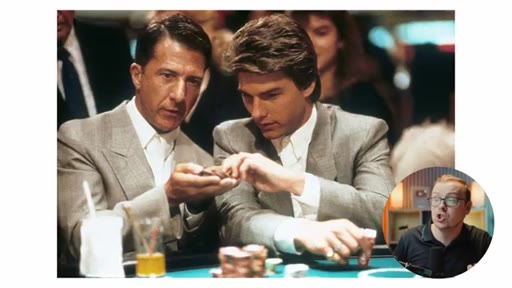
Rain Man savant metaphor: Claude has processing power but no direction. You are the director who decides which game to play and when to call it.
07:18 – 08:05

05 · Claude skills framework

Each skill is a markdown file with one job. No GitHub, no APIs — type /skill skill creator inside Claude and it builds you a custom skill.
08:05 – 09:48

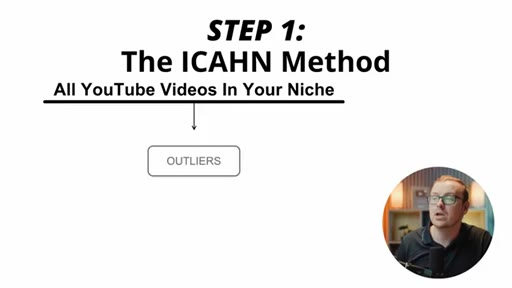
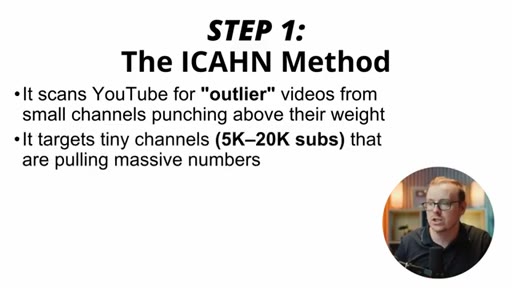
06 · Step 1: ICON Method

Outlier video hunting: find small channels with disproportionate views, specifically bad production with massive views. Bad production + big views = pure idea signal.
09:48 – 12:11

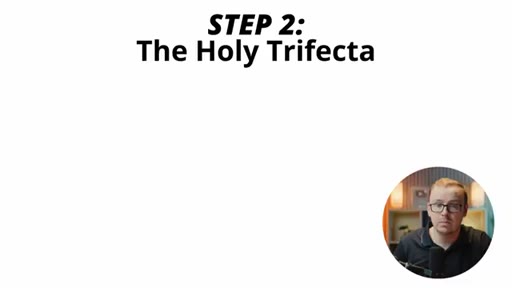
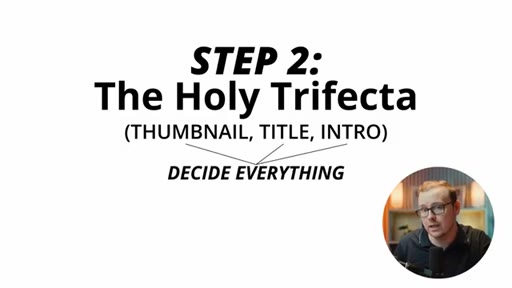
07 · Step 2: Holy Trifecta

Thumbnail, title, and intro treated as a congruent unit. Generate 5 variants of each with the skill. Congruence beats individual quality. Do this before scripting.
12:11 – 14:36

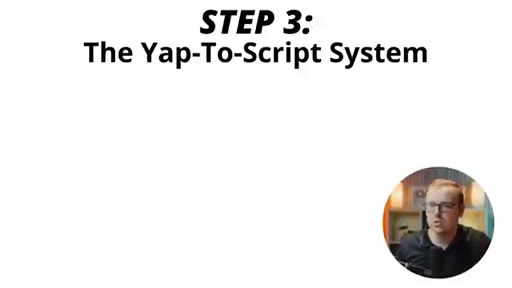
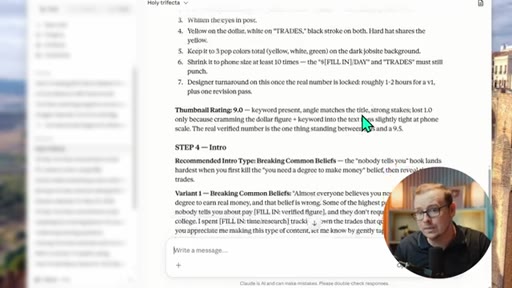
08 · Step 3: Yap-to-Script

Talk through the idea informally, let Claude interview you back and forth, then structure it. Skipping the yap is what makes scripts sound like AI.
14:36 – 18:01

09 · Step 4: Just Read It

Teleprompter, Google Doc, PowerPoint notes, sticky notes — any method works. Brother Zach proof: $214/day AdSense in 29 days reading from a teleprompter for the first time.
18:01 – 22:30

10 · Step 5: Pre-production principle

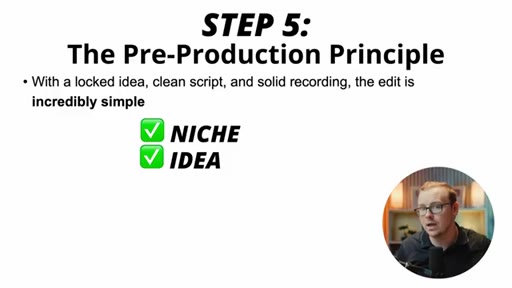
An ounce of pre-production is worth a pound of post. With a locked idea and clean script, editing is mechanical. Descript handles simple talking-head AI editing in 5 minutes. First hire is a creative director, not an editor.
22:30 – 22:25

11 · Step 6: Launch and loop

Track CTR, AVD, and revenue per video. Re-upload data into Claude to inform future ideas. The 1M-view/$6K vs 7K-view/$48K example is the proof.

22:25 – 24:32

12 · Niche is the soil

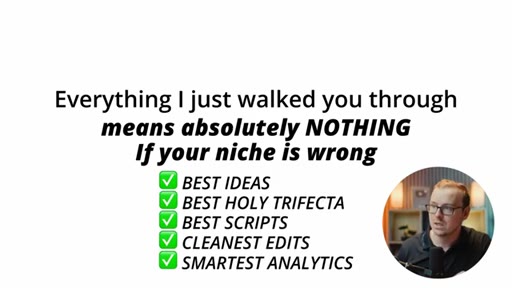
Everything in the workflow compounds only on the right niche. Nicole: 85 subs to $80K/month. Josh: $1K/month to $180K/month. Both with far fewer subscribers than typical success stories.
24:32 – 26:08

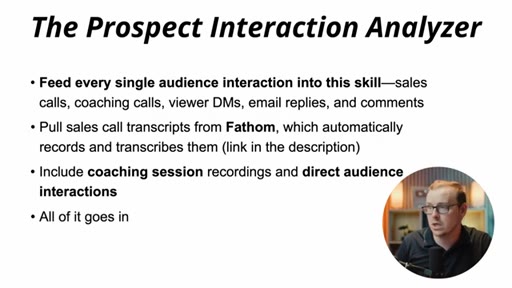
13 · Prospect Interaction Analyzer

Feed every sales call, DM, comment, and coaching session into this skill. It extracts verbatim audience language — not sentiment, exact words — which becomes all hook copy, thumbnail text, titles, and intros.
26:08 – 29:09

14 · Human brand proof + CTA

All successful AI-workflow creators still show their face because trust is the moat. AI cannot be a person. Closes with 1:1 coaching program pitch.

§ · Storyboard

Visual structure at a glance.

open
workflow diagram
ICON method slide
holy trifecta
pre-production principle
prospect analyzer
human brand proof
§ · Frameworks

Named ideas worth stealing.

08:05 concept

ICON Method

Outlier idea hunting: scan YouTube for small channels (under 100K subs) with disproportionate views, especially bad-production videos that still went big. The gap between production quality and view count is the idea signal.

Steal for Any niche research session before planning a new video series
09:48 model

Holy Trifecta

  1. Thumbnail
  2. Title
  3. Intro

Three packaging elements treated as a single congruent unit. Generate 5 variants of each simultaneously and ensure they align before scripting. Congruence among the three matters more than any individual element being exceptional.

Steal for Pre-production packaging pass before every video
12:11 model

Yap-to-Script System

Talk through the video idea informally before any structured writing. Claude conducts a back-and-forth interview and produces outline + full script. Rewrite just the intro by hand to keep the human voice.

Steal for Any scripted video format where AI-sounding output is a concern
24:32 concept

Prospect Interaction Analyzer

Ingest all audience touchpoints (sales call transcripts from Fathom, coaching recordings, DMs, YouTube comments) into a Claude skill that outputs verbatim audience phrases sorted by topic. Those phrases become the raw material for all hooks, thumbnails, titles, and intros.

Steal for Any creator or business operator with a library of sales calls or customer conversations
18:01 concept

Pre-Production Principle

An ounce of pre-production is worth a pound of post. When the idea is validated, the holy trifecta is locked, and the script is clean, editing becomes a mechanical task, not a creative rescue operation.

Steal for Any workflow where editing time feels disproportionate to content quality
§ · Quotables

Lines you could clip.

01:35
"If you are one of those people spending 80% of your time configuring Claude with APIs and terminals instead of actually creating content, you are just doing it wrong."
Punchy contrarian opener, no setup needed, lands without context → TikTok hook
09:48
"Packaging is 70 to 80% of YouTube success."
Standalone stat, provocative number, instantly quotable → IG reel cold open
21:37
"This video got over a million views and made about $6,000. This video got 7,000 views and made $48,000."
Counterintuitive revenue contrast, visceral and specific → newsletter pull-quote
27:00
"AI can mimic a niche, AI can mimic a process, but AI cannot mimic a person."
Clean tricolon, memorable structure, strong POV → IG reel cold open
23:10
"The niche is the soil. Everything else is the building."
Short metaphor, punchy, no context needed → TikTok hook
§ · Resources Mentioned

Things they pointed at.

08:05toolICON Method skill
10:31toolvidIQ ↗
14:36productElgato Teleprompter
19:57toolDescript ↗
24:55toolFathom ↗
§ · CTA Breakdown

How they asked for the click.

27:29 product
"If you are serious about growing and making money on YouTube, go ahead and click the second link in the description and schedule a one on one call with us."

Soft close after a philosophical section on trust and human brands. Preceded by testimonial stats (91% ROI survey, $100M client results). The call is framed as valuable regardless of whether they join — a classic two-way close.

§ 04 · The Script

Word for word.

HOOK opening / re-engagementCTA the pitch metaphor analogy
00:00HOOKAlright. So I'm about to show you the exact Claude AI workflow that runs my $10,000,000 YouTube channel, and this is the same workflow that I did over $1,000,000 in AdSense from.
00:09HOOKAnd across all my channels, I've made over $10,000,000 directly from YouTube, and my community members have made over a $100,000,000 in revenue.
00:16HOOKAnd I do it without an automated marketing department. I don't have an army of AI agents running 90% of my content. Right?
00:23HOOKI did not need to be some kind of genius to set up this AI. And you don't need to be some kind of AI genius to make this happen. This isn't gonna be another one of those guru videos where they tell you to do one thing and then the actual thing they do is completely different because that's like 99
00:37HOOKof the AI gurus on YouTube. Right? For instance, they'll tell you to make an AI avatar with Hey Jin, and then 99% of their videos are not AI avatars.
00:45HOOKThere's a reason for that. They're doing what actually works, and then they're telling you, in many cases, what you wanna hear. They're doing what actually works, and then they're telling you the marketing BS.
00:54HOOKAnd if you're one of those people spending 80% of your time configuring Claude with APIs and terminals instead of actually creating content, you're just doing it wrong. But no more because in this video, I'm gonna be walking you through this workflow step by step, what I automate, what I don't automate, what I have other people do, and I'm even gonna talk about what you should be doing at different levels of business.
01:15HOOKRight? And stick around to the end because I'm gonna be revealing one Claude skill that's responsible for almost every dollar of revenue that I've ever made from YouTube, and almost nobody is teaching it. Alright.
01:24HOOKSo let's jump in right now. And look. I have been making content on YouTube for almost twenty years at this point.
01:30HOOKRight? I have been doing this since 2008. My very first channel that I ever made on YouTube was on RuneScape.
01:36Yes. The video game RuneScape. Don't ask.
01:38And I've been a full time YouTuber for the past six or seven years on this channel, and I've made over $10,000,000 from YouTube directly. And on top of that, I run a portfolio of companies, including a coaching program where my clients have collectively generated over a $100,000,000 in results across pretty much every niche you can imagine.
01:53So I've seen what it takes to make a successful YouTube channel before AI, and I've seen what it takes after AI, and specifically after Claude. And let me tell you, the difference is astounding. It is absolutely insane how much easier content creation has gotten if you know what to use Cloud for, and just importantly,
02:10what not to use it for. Because what you shouldn't use it for is probably just as important as what you should use it for. So in this video, I'm gonna be literally walking you through step by step my entire content workflow,
02:22every single step, what I automate, what I have humans do, and what I personally do myself, and what I recommend that you do depending on what level of business that you're at. Now this can absolutely be done with a one person business. You do not need to hire anybody, and I actually have different levels for the different levels of business that you're at.
02:38Right? So this is what the basic workflow looks like. I'll put it up on the screen.
02:41We've got idea generation. Then we've got the holy trifecta, which is basically the thumbnail, the title, and the intro. I like to do all of those together, and I typically like to do them at the beginning.
02:50You don't need to create the entire thumbnail, but at least you need to do the thumbnail idea at the beginning. Then you've got script writing, then you've got recording, then you've got editing, then you've got uploading and optimizing, then a final check, and then launch. And then you analyze the results.
03:02So that is the whole content machine. Now we're gonna go through this step by step. I'm gonna show you where to use AI, how to use it in every single step, and what other things you should be doing.
03:10Now, most of you watching this are at stage one. So it's just you, and that's totally fine. Same machine, just done by one person.
03:17We're gonna walk through every step on how to do that. However, there are actually four different stages, and there's even a fifth stage you get to where you basically syndicate your content to every single platform. But we're gonna focus on stage one for now because that's where pretty much everybody should start.
03:29But before we get into the workflow, let me just tell you how to actually think about Claude. Claude is like the savant character from the movie Rain Man. Right?
03:36So if you've seen this movie, he is a genius at a certain narrow group of things. Right? Insane processing power, but left to his own devices, he doesn't really know what to do with it.
03:45In the movie, the main character is the one who decides where to go and how to use that gift. And together, they clean house in the casinos.
03:52But apart, neither of them wins. And that is Claude. Claude is kind of like the savant, and you are kind of like the director.
03:58Right? Without you telling Claude the game to play and when to call it, Claude just sits there doing nothing or worse, doing the wrong thing really, really well. And I know all the different AI gurus are out there saying that it's, you know, it's not like that and things are gonna change.
04:11But, you know, listen, I have talked to some of the smartest people when it comes to AI. I even hired some of them for my team. One of them is literally living right next to me right now.
04:18I literally paid for him to move to me. And let me tell you a little secret about all these AI gurus that you've been watching. Most of them are not actually good content creators.
04:28And I'm not making this up. Right? I've scoured the entire AI niche on YouTube.
04:31I've watched probably hundreds of these videos, and here's what I noticed. If you took their content machine and applied it to literally any niche outside of AI, they would not get views. Right?
04:41They would not get clients, and they would not grow. So how are they popping off? Well, it's because they're making what's known as an asymmetric bet.
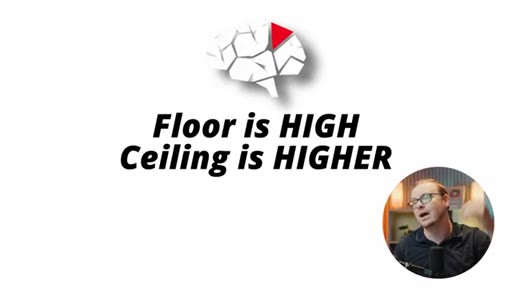
04:47A really, really smart bet actually. Right? So basically, what this means is the floor is high and the ceiling is even higher.
04:53If their business actually works, which they're promoting their business from YouTube, they're building in public, great. They'll probably have a 10,000,000, 100,000,000, maybe even a billion dollar exit. If it doesn't, they still built a massive personal brand by documenting the journey, and they literally cannot lose.
05:09So look at Alex Ramosy. The guy runs an entire investment company, and his biggest source of deal flow is YouTube. The personal brand is his moat.
05:17And you can sell anything if you have a YouTube channel because YouTube is the most potent form of traffic in the entire world. Long form video outperforms anything else, and really nothing else even comes close. So literally any type of business works if you have a YouTube channel.
05:31And these AI guys, they're basically spending maybe an hour a day on their channels because the content is just a daily diary, kind of like a video diary about what they're already doing, and that's why the content is mid. They're not pouring thirty hours a week into it. Now you might be thinking, wait, Shane, are you bashing AI gurus?
05:48No. It's actually a smart bet. I respect it.
05:51But you don't need to play their game to win. You can actually be good at content, which is exactly what I'm about to show you. Alright.
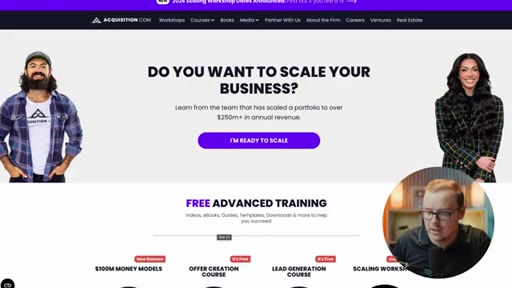
05:57Quick break. This week, I'm doing a one time only workshop where I talk about how to finally make money from youtube.com in 2026. And you can check it out down in the description and the pinned comment below.
06:08At this workshop, I'm gonna be giving away the Niche Validator Pro completely free. This is a GPT powered by a piece of software that I've been working on for a long time now, and it's been trained on thousands of hours of my teaching, coaching sessions, and more, so you don't have to spend years to pick a profitable niche.
06:22You can do it in a matter of minutes. Heck, it's even possible to do it in seconds sometimes. I'm gonna be giving this away at the workshop.
06:29So make sure you click the link in the description and then show up to the workshop. And the best way to do that is to make sure you add it to your calendar once you've signed up for it. So you basically just click add this to your calendar once you're on the thank you page after you've registered.
06:41And it'll show up as either Google, Apple, or Outlook calendar, whatever calendar you have, so you can make sure you won't miss the chance to grab the Niche Validator Pro completely free. And you'll also be able to ask me questions live. So I look forward to meeting you.
06:54Can't wait to see you there. I'm gonna be showing you this new opportunity. It's completely free and it's amazing whether you basically want to use it to get a better job, use it to network, use it to make some passive income, start a side hustle, make a full time income, or even start a full on business.
07:08It works incredibly well with all of those, and it's completely free. So make sure you click the link in the description and then show up to the workshop. And now back to your regularly scheduled content.
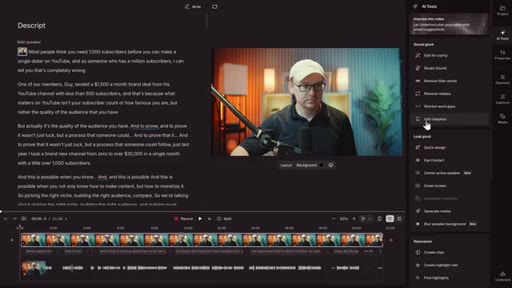
07:18So before we go through each step of the workflow, let me explain how we're going to use Claude. The most powerful way to use Claude, especially if you're not technical, is something called Claude skills. Now think about Claude skills like this.
07:29Each skill is like hiring a specialist employee with one job. So you wouldn't hire your accountant to design your logo. You wouldn't hire your barber to fix your car, and you wouldn't hire your dentist to manage your investment portfolio.
07:41Same logic with Claude. One skill, one job done really well. And each skill is just a markdown file or a dot m d file.
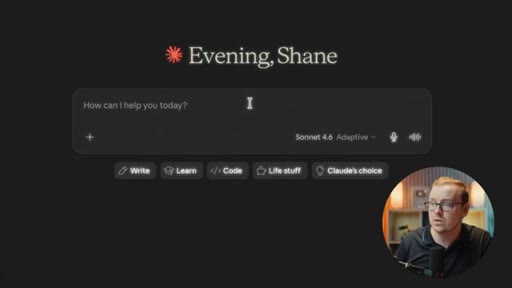
07:47You don't need to download skills from GitHub or anything else. You can just type slash skill skill creator inside Claude, and it'll build you a custom skill for whatever you need. And I have one for every step in my workflow, and I'm about to walk you through each one of them.
07:59So step one of the workflow is idea generation, and the skill I use for this is what's called the icon method. And here's what it does.
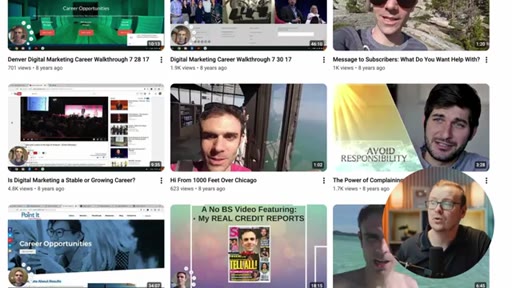
08:05It scans YouTube for outlier videos, specifically videos from smaller channels. We're talking less than a 100,000 subscriber channels that are punching way above their weight. So a channel with 5,000 subs, for instance, getting a million views on a video, or a channel with 20,000 subs getting 300,000 views on a video.
08:21That's where the gold is. And then it does something that most people don't think to do. It specifically hunts for videos that are mediocre or preferably bad that still got massive views.
08:30So think of it like being a talent scout in baseball. You're not looking for the LeBron of YouTube. That's already been done.
08:34You're looking for the player that nobody has drafted who's putting up monster stats in a tiny league that nobody's watching. So bad production, massive views, that's a pure signal that the idea is what the people want, not the polish.
08:47Because if the video did well despite the video itself being mediocre and despite coming from a small channel, aka there's no huge audience that's just gonna watch anything you put out, then it almost certainly has to be the idea that's doing the heavy lifting. And here's where it gets meta.
09:01The idea for this video was generated by this exact skill. Okay? So I basically ran the icon method on Cloud AI content.
09:08I found a few outlier videos, saw the pattern, and that's what we're building right now. By the way, there's multiple different versions of the icon method. There's some that you do for views.
09:17There's some that you do where it'll actually predict the revenue you're gonna make from the video. And there's some you can do off of YouTube as well. So this is a simplified version of the icon method.
09:24And we are giving away a free simplified version of this skill at the live workshop this week. So click that link in the description in the pinned comment below. It takes about thirty seconds to install, and you can run it in your niche before you make another video.
09:35And it's an absolute game changer. Now I'm gonna give a super simplified version of this in the description in the pinned comment below. You can check it out down there so you can follow along.
09:42Alright. Step two is the holy trifecta, which is the thumbnail, the title, and the intro. Now, these three things are incredibly important, and they basically decide everything, and I highly recommend that you do them at the beginning before you actually create the video.
09:56Now, it's not only important that you have a good thumbnail, title, and intro, but more important, it's important that they are actually congruent with each other. This is a mistake that I see people make all the time. They might have a 10 out of 10 thumbnail, title, and intro separately, but they're not actually congruent with each other.
10:10And so it just confuses people, and they click off the video. But really, if a thumbnail doesn't get the click, nothing else matters. If the title doesn't match the thumbnail, nothing else matters.
10:18And if the intro doesn't hold the viewer for the first thirty seconds, then nothing else matters. So packaging is 70 to 80% of YouTube success. So think of it like a restaurant.
10:27Right? The sign on the building is the thumbnail, the menu is the title, and the first sip of water when you sit down is the intro. But you wanna get all of these right.
10:35And if you do that, the customer's gonna order the entire meal, get anything wrong, and they walk out before they ever see the food. Right? If somebody comes in and nobody serves them within ten minutes, they're probably gonna walk right out.
10:44And let me give you an example. So my brother Zach, 50 years old, technologically challenged, never made a video in his life, started his channel from absolute zero, no background, no following, nothing. Totally anonymous as well before.
10:55But within twenty nine days, he was hitting AdSense numbers of $214 in a single day. And a few months in, was making 400 to $500 per day.
11:04Why? Because his holy trifecta was dialed. Right?
11:07We obsessed over it on every video. The ideas, the titles, the thumbnails were solid, and most importantly, they were congruent with each other. So here's an example, for instance, of the video that did really well.
11:16We'll show the original video that we found, and we'll show the video that did really well. So the way to start is you would use the holy trifecta skill. Right?
11:22So the holy trifecta skill generates five variants of each, five thumbnails, five titles, five intros. And with the thumbnails, it's obviously thumbnail ideas. Now another thing is you want to make sure to actually put in the icon method video idea that you had before.
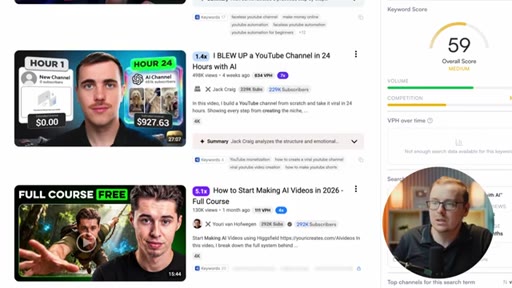
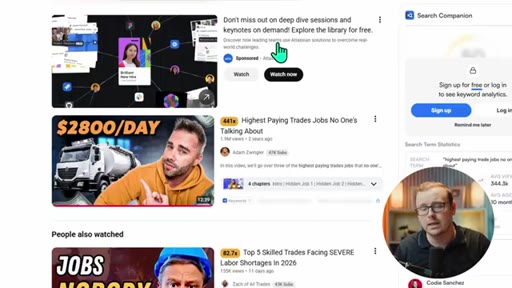
11:37The easiest way to do this is to install something like vidIQ, the free version, so that it shows you the amount of subscribers they have. And then just screenshot the entire thumbnail and the title along with the subscribers, and then throw that into this skill. And it'll give you a bunch of different options for the thumbnail idea, the title, and the intro.
11:52And the important thing is all of these are going to be congruent with each other. And then you just pick whichever one is your favorite, and you don't have to make the thumbnail at this point, but you can if you want to. And then you line up a thumbnail, a title, and an intro.
12:03And that is exactly what we did with my brother as well when we went through this process. Alright. So step three is the script, and this is where a lot of creators get destroyed because they just spend way too much time.
12:11And most people sit in front of a blank document and they try to write a script word for word, and it takes hours, sometimes days, and then it sounds like a robot because, well, they basically just force themselves to write like one. Right? So here's what I do instead.
12:23I call this the yap to script system. And by the way, I have tried just about every script writing system out there known to mankind, and this is by far the best. Best.
12:32Okay? So what you wanna do is you want to open up some sort of thing where you're recording yourself. So it could be voice memos on a phone.
12:40You could be recording directly into an AI. A lot of them, you have the ability to do that. But you wanna open up something to record your voice.
12:46And then just talk through the video idea that you have. Now luckily, with the Claude skill, it will actually interview you back and forth. Right?
12:53So it's even better because you can just talk to the Claude skill, and then it'll just interview you back and forth. And you can talk to it for five minutes just really quickly, or you can just go on and on. And basically, just wanna yap.
13:03Right? So you can pretend like you're just talking to a friend or a partner or a business buddy or one of your coworkers or whatever. Right?
13:09But basically, they just go over what you want to talk about in the video and the major things that you wanna hit on. And then you drop it into the script writer skill, and what it's gonna do it's gonna give you an outline, and then it's gonna give you a full script. Now at this point, you can obviously modify anything that you want.
13:22You can go back and forth on it, but sometimes it'll nail it on the first shot. And at this point, you also have the ability to choose whether you just wanna go off of the outline. Some people prefer that.
13:30They just look at the outline and then they kinda just talk off the top of their head. Or if you wanna go word for word off of the script. Or there's kind of an in between where you'd sometimes choose to use the script and go word for word, then sometimes you just kinda talk off the top of your head.
13:42That's sort of what I do to be completely honest with you. But sometimes I'll just use an outline and it really just depends on the type of video I'm making. Some people also prefer to make like a PowerPoint and then just talk off of PowerPoint.
13:52But the important thing is if you tell the Claude skill what you wanna do, it'll do it for you. So you can kinda think of it like cooking. Right?
13:57You're the chef. You know the flavors, but you're terrible at writing recipes down so that anyone else can follow Claude is the recipe writer. You taste, you direct, Claude organizes.
14:06And here's another meta moment. The information you're reading on this video came from a yap session. Now to be fair, I do go off the cuff.
14:12I kinda talk about other stuff. Anything that pops into my head. I'm a bit ADHD, so honestly, I like to do that.
14:16But for the most part, there is a outline, and I'm following it right now. And it was all made from Claude. Now you might be thinking, well, Shane, won't the script sound like AI?
14:26Well, only if you skip the yap session. Right? If you do the yap session, this skill is designed for it to not sound like AI.
14:33It's designed to sound like the way you talk. So take the structure that Claude gives you and rewrite it by hand. Just the intro, that's the one that keeps the whole script human.
14:41Now by the way, another pro tip on reading scripts, I have in front of me what's known as the El Gato teleprompter. And this is something that a lot of people really love using. And you do have to be a little bit careful with teleprompters because it's easy to just kinda like read the teleprompter and you sort of just sound like a robot, and it's just not very engaging for the audience, and they can sort of just tell that you're reading a teleprompter.
15:01But if you use it the right way, it can be really useful. And again, you could just put a PowerPoint on the teleprompter. You could put outline on a teleprompter with bullet points, or you could put the entire script on the teleprompter as well.
15:11You do not have to use a teleprompter, but I really do like using it. I highly recommend it to people. The Elgato teleprompter is my favorite because you can actually drag stuff over to it because it acts like a second screen.
15:21But you don't have to. For instance, you could just use a PowerPoint and then you can just like look at the PowerPoint and then just talk off the top of your head. You can even use a PowerPoint and then have in the notes section an exact script.
15:30And that way you don't actually have to look at the camera. You can just have your, you know, the PowerPoint on your computer off to the side, and then you just wanna situate the video to where it kind of like looks like you're looking at the computer, if that makes sense, like it does right now. This is something that my brother did.
15:43I showed this to him. He used our AI script writer on Claude, and he wrote his very first video script. And this is what it looked like.
15:51Back in the office today, but we're not getting our hands dirty, at least not yet. Look. I've been in the trades for twenty nine years now.
15:59He absolutely loved it. He read it. He did sound a little bit monotone because he was reading it off of a teleprompter, but it didn't matter because you'll see the results here in a moment.
16:07And that brings us to step four, which is the just read it method. Okay? When it comes to recording, honestly, most of you are massively over thinking this.
16:14Right? You don't need a $5,000 camera. You don't need a studio.
16:17You don't need lighting that costs more than your rent. You just need a camera or a phone or even just a screen recorder like a laptop. Right?
16:24That is it. So think about the best teachers you had in school. Right?
16:26The ones that you actually remember years later. They weren't the ones with the fancy smart boards or the laser pointers. They were the ones who read from the textbook and made the ideas come alive.
16:35The classroom didn't really matter. It's the ideas that did.
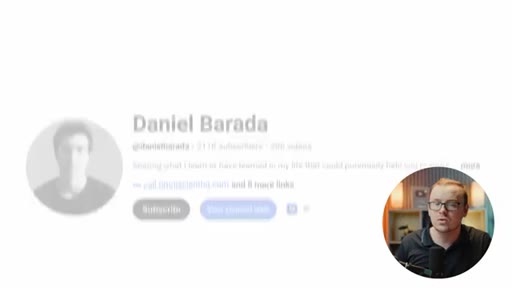
16:39So Daniel Barata, for instance, literally just looks at Google Docs on his screen and then he reads them. That is his entire content style. Like, he's not trying to hide the fact that he's reading it word for word from a script.
16:48And he just shows the Google Doc on his screen while he's reading it. Mark Builds Brands kinda does the same thing. He just makes these Loom style videos where he's talking about whatever is on the screen.
16:56And they are both crushing it. Right? Both of them.
16:58Because the ideas are good and they got out of their own way. Or you can make a third style of video, which is very similar to Charlie Morgan, where you're kinda just talking with an iPhone. Maybe you're drawing on a whiteboard, and that also works really well.
17:10So I guarantee you that you are overthinking how to make content. Now you can use an Elgato teleprompter. Right?
17:16That's great. I love it. You can read from PowerPoint notes.
17:18You can literally just have a Google Doc open on a second monitor and read from it. But whatever it is, just pick whatever method works for you and get started. Right?
17:26Hit record. You're never gonna know which method you prefer until you do it. Right?
17:29I have clients who love using a flashcard and they'll just literally write out their most important points that they wanna go over on a flashcard. I have clients who like using sticky notes and they just put the sticky notes above the camera, and they just look up at whatever the next point is. I have clients who love using PowerPoints.
17:44Some of them just go off the cuff on a PowerPoint. Others will literally put their script word for word in the notes section. I have clients who just read from the screen, and they go off the cuff.
17:51I have clients who read from teleprompters and they do word for word. Either way, just do it. Right?
17:56You are overthinking it and there's so many different ways to do it. Alright. The next step is editing.
18:01And here's the principle that changes everything. An ounce of preproduction is worth a pound of postproduction. So if your idea is locked in, right, so you got a good niche, a good idea, then you've got a good holy trifecta and your script is really clean and your recording is solid, the edit is basically nothing.
18:17Right? The editor just has to add visuals, on screen text, and cut out dead air. That's about it.
18:22You don't need to have some kind of world class editor that takes like eighty hours to edit the video into some sort of Michael Bay film. Alright? You do not need that.
18:29People do not come on YouTube to watch insanely good production quality videos for the most part. There are a few people that do, but the vast majority of people don't. If they wanted that, they would have turned on Netflix or they would have turned on the TV, but they didn't.
18:41They turned on YouTube for a reason. They want to connect with other people. And if you overly edit a video, it actually takes away from the connection that you have with the other person.
18:49So I have found time and time again that generally speaking, minimalist style editing does tend to do better. So you can kinda think of it like construction. If you pour the foundation right, the framing goes up easy, the plumbing works, the electrical lines up.
19:01Every step after the foundation is multiplied by how well you poured it. If you skip the foundation or you do a really bad job with the foundation, every later step is gonna cost you 10 times more in time, money, and patience. Now you might be thinking, Shane, I don't have money to hire anyone yet.
19:15And that's totally fine. You do not need to hire anybody. That's where it goes back to just making minimalist style content.
19:21I highly recommend you just keep your content very simple, and then you can use something like Descript. So Descript has an AI editing feature that handles simple talking head and screen share style content surprisingly well. You can edit a twenty minute video in about five minutes.
19:33So it has AI features that will take out all the silences. You can actually edit with just the words alone. So if you accidentally said a sentence twice, you can literally just delete that sentence and it just edits that sentence out.
19:43You can also optimize the audio automatically. It just AI optimizes the audio and it sounds really good. And it has some other AI editing features that are super fast, and it's the only one that's good.
19:53Almost every other AI editor that I've used, it will sort of cut stuff in a way where it just seems too choppy and it just does not look good. But the script actually looks good when it cuts stuff together. And by the way, even when you scale, my advice is don't hire a video editor right away.
20:07Just go ahead and hire a creative director. Somebody who can edit, but also somebody who can support script, help with thumbnails, upload, optimize, all of it. Don't hire single task people early.
20:17Hire generalists who can grow with you. So this is the first position that we hire for our clients. It's the creative director position, and they can basically help with everything.
20:24Right? And we'll get into that here in a moment. And by the way, you can hire creative directors from places like The Philippines for a very reasonable price.
20:30So this is not something where you're gonna have to spend like 6 figures a year on it. But step six is to launch and loop. So this is upload plus optimize plus analyze.
20:38And then close the loop with analytics. So most creators upload a video and never look at the data again, and that is how you stay stuck. So the analytics are telling you exactly what worked and what didn't.
20:47Things like click through rate, the average view duration, etcetera. These are important things. So think of it like flying a plane.
20:52You don't just land it and walk away. You check the gauges, you know what the weather did, and every flight teaches you something for the next flight. And let me give you a real example.
21:00Right? My client Seth, this guy was on YouTube for eight years without any meaningful growth. In eight years, he never had a single video get to a 100,000 views.
21:07Then he started actually running the feedback loop, looking at the data and iterating on the holy trifecta. And one of his first videos after working with us got to a 100,000 views. And then another video got to 300,000
21:18views. Right? Same guy, same idea,
21:21just started actually paying attention to the data. So you can launch in loop here and after every upload, track the CTR and the AVD in YouTube Studio and track the views, etcetera, etcetera, and then adjust the next video accordingly. So really the two things we're looking for are views, but we also look for actual revenue generated.
21:36And then we re upload that information back into the system so it can tell us what other videos we should be making in the future. And you would be really surprised. There are videos, for instance, that get a ton of views, but they don't actually generate that much revenue.
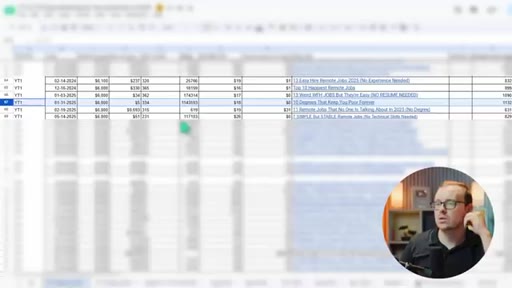
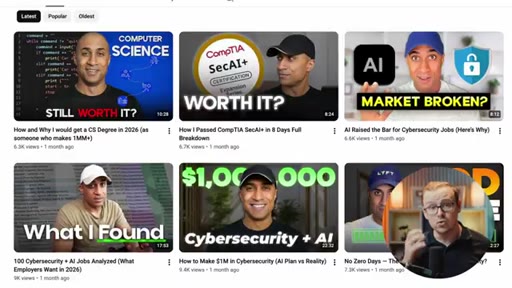
21:49So just as an example, this video right here on our channel, uh, got over a million views and made about $6,000. This video right here got 7,000 views and made $48,000.
22:02And there's no way I ever would have known this unless I actually reviewed the videos. Right? So obviously, I would have made the video again that got a million views because I would have been like, oh, it gets a lot of views, so I should make that video.
22:14When in reality, that would have been a bad choice. It actually makes more sense to make the video that got 7,000 views. But now I'm gonna tell you something that might frustrate you a little bit because everything I just walked you through, it actually means nothing if your niche is wrong.
22:29I'm serious. You can have the best ideas, the best holy trifecta, the best scripts, the cleanest edits, the smartest analytics loops. You can still have all of that and get nowhere if you pick the wrong niche.
22:39Okay? So think of it like building. Right?
22:40You can have flawless architecture, premium materials, incredible interior design, beautiful finishes. But if it's built on bad soil, the whole thing is gonna sink.
22:50The niche is the soil. Everything else is the building. Right?
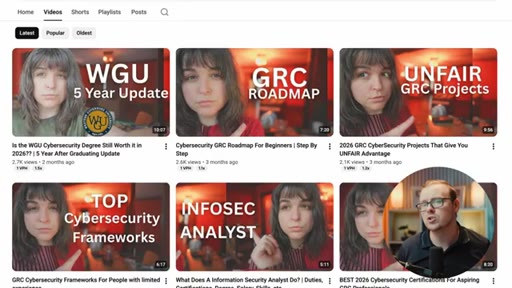
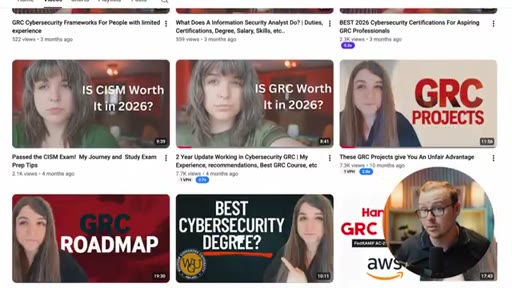
22:53The niche is the foundation for everything else. So let me show you what right looks like. My client Nicole runs a channel called GRC for mere mortals.
23:01It's about governance, risk, and compliance. Yes. That is a real name, and, yes, it's as niche as it sounds.
23:05So she basically helps people get into cybersecurity careers, and a lot of the people she helps are women. And I helped her grow her channel from 85 subscribers and getting absolutely nowhere on YouTube to making over $80,000 in a single month.
23:16And why is that? It's because the niche is dialed. Now let's compare that to my client, Josh.
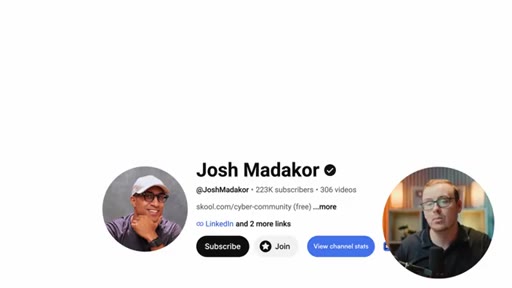
23:22Josh used this system and started a side hustle while he was still working a full time job, and he went from making less than $1,000 a month, almost nothing, to 3 to 5,000 a month, then 10,000 a month, then 30,000 a month. Right? So at that point, was a full time business making more than his job.
23:34And one of the coolest things is he actually used his YouTube channel to land his dream job. Right? So people were literally reaching out to him, and he used his YouTube channel to land that dream job.
23:44And that's one thing that a lot of people don't talk about is the intangible benefits of making content in a personal brand in a YouTube channel. Insane benefits when it comes to networking, getting jobs, like meeting people, getting investors, etcetera, etcetera, all that stuff.
23:56So the indirect benefits you get from a YouTube channel are probably even better than the direct benefits. But either way, he started making so much from the YouTube channel that he actually quit his dream job, and then he scaled his channel to over a $180,000 in a single month.
24:10And this is all from picking the right niche and running this workflow correctly. And both Nicole and Josh did this with way fewer subscribers than most successful YouTubers have. So it's the niche.
24:19Right? This is exactly why we built the niche validator skill, and it's why we're giving it away free at this week's live workshop. And of course, along with the monetization AI and a bunch of these other different skills.
24:28HOOKSo link is in the description. Don't make another video until you've validated the niche. Alright.
24:32HOOKSo if you've made it this far, this is the one that I promised you at the beginning, and this might be one of the most important Claude skills I use, and almost nobody is teaching this. It's called the prospect interaction analyzer.
24:44HOOKAnd here's what it does. Every single conversation that I have with my audience, whether it's a sales call, coaching call, viewer DMs, email replies, comments, etcetera. Uh, and these could be comments on my YouTube channel, but they could be also comments on my live trainings or comments on different posts in social media, etcetera, etcetera.
24:59HOOKThey all get fed into this skill. For instance, sales call transcripts are pulled from Fathom, which records and transcribes calls automatically, plus coaching session recordings, audience interactions, all of it.
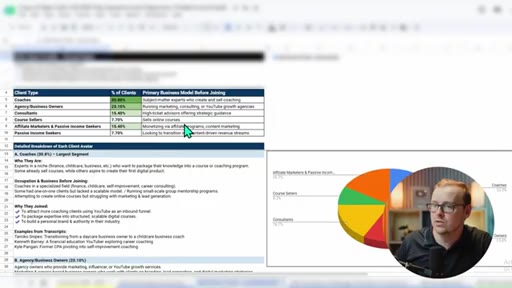
25:09HOOKAnd the skill extracts the exact language that they use, not just the pains, not just the desires, but the actual words that they use and the way they describe what they want. And that language becomes my hook copy, my thumbnail text, my video titles, my intro lines, everything. This is what it looks like by the way.
25:25HOOKRight? Like real sales call data. I know exactly
25:28HOOKwho is buying for me. I know exactly what background they have. I know exactly the problems that they have.
25:33HOOKSo for instance, I know with my b to c clients, one of their biggest problems is time and commitment. I know another one is niche and direction uncertainty. And of course, there's always financial constraints as well.
25:43HOOKBut for my b to b clients, time constraints are actually much more important. And by the way, these are literally exact quotes.
25:51HOOKThese are literally the exact words that they said. And then I can feed this information back into Claude, and it produces even better content. So I will be making this available at my live training this week as well, so definitely attend it.
26:04HOOKCTADo not miss out on the live training. So one thing I wanna say is here's the proof that every AI guru secretly knows is true. Look at them.
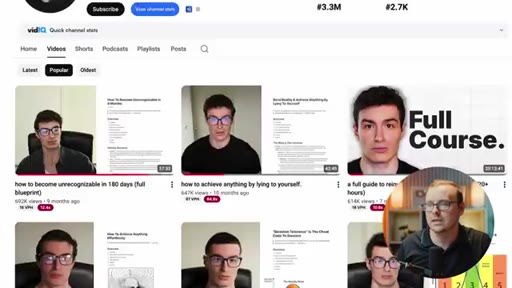
26:11CTAJust just look at all those channels. They all build personal brands. Not faceless AI channels, not AI clones reading scripts and robotic voices.
26:19CTAIt's themselves on camera talking to you. And a few of them tried the AI clone thing and the fake AI version of themselves reading scripts, it didn't work, so they stopped.
26:27CTAAnd now they're on camera like everybody else because they know what actually works on YouTube. And what YouTube is all about is trust. Okay?
26:34CTATrust is your moat, and you're not going to trust a fake AI avatar, and you're not gonna trust some faceless entity. Right? But you do trust other people.
26:43CTARight? That is what YouTube is all about, is the person to person interaction. So AI can mimic a niche, AI can mimic a process, but AI cannot mimic a person.
26:51CTARight? It cannot be a person. That's why the hybrid personal brand method wins.
26:55CTAYou're not building a channel around a niche. You're building a channel around human, specifically you. And that human can outlast any niche shift, any algorithm change, and any AI evolution as long as you are at the center of it.
27:06CTAAnd by the way, another great thing about the hybrid personal brand method is you can pivot to other things down the line. For instance, I've changed my niche probably times here on YouTube because I have different interests, I like to talk about different things. So you wanna become the king of a puddle first, but you do wanna start niche, but then you can expand from there.
27:21CTABecome the king of a pond, then a lake, then a river, then the sea, then the ocean. And look. If you've watched this entire video and you're serious about building this for yourself using Claude the right way, building a personal brand that actually attracts high paying clients, not just creating AI slop, we work with about three to five people at a time.
27:36CTAAnd this is a one on one coaching program, and we do guarantee results. So we will help you figure out which skills to monetize, how to use AI to deliver them, and how to build a personal brand that turns content into ideas. Now we are very picky about who we work with, which is why we can guarantee results, and it's why we get unbelievable
27:53CTAamounts of testimonials. We've literally helped generate over a $100,000,000 in revenue for our clients. We also sent out a survey to our clients asking them if they thought they got an ROI, and 91% of them said yes, which is absurdly high.
28:04CTAAnd we have a super low refund rate for the program. But the reason we have all those things is because of the fact that we're very picky about who we work with. So the typical type of people we work with are business owners who wanna grow and make money on YouTube.
28:14CTAYouTubers who are getting views but they're struggling with monetization. YouTubers who are crushing it but they wanna crush it even harder. Or professionals or very serious people who want to treat YouTube like a business.
28:24CTARight? So you might be a beginner at YouTube, you haven't started yet, but you wanna treat it like a business. Alright.
28:28CTASo you're very serious about it and you don't wanna take like five years to grow your channel. You wanna grow fast. So if that is you, go ahead and click the second link in the description of the pinned comment below and schedule a one on one call with us.
28:38CTAOn this call, we'll figure out where you are right now, where you wanna be. We'll make a plan to get there, and we'll see if we're a good fit to work together or not. The call will be valuable whether we end up working together or not, but like I said, only schedule if you're very serious about growing and making money on YouTube.
28:50CTAAnd also check out this video right here of one of our clients, Sean, who we helped become literally number one in his niche. And we interview in this video and talked about exactly how we're able to do that and exactly how we helped him get to over $500,000 in a single month.
— full transcript
§ 05 · For Joe

One skill per step beats one prompt for everything.

WHAT TO LEARN

The reason most AI-assisted content sounds generic is that a single prompt is doing the work of a team — specializing Claude by step is what changes the output quality.

  • Treat each step in your content process as a separate job and write a dedicated Claude skill for it — a markdown file with one function produces far better output than an all-in-one mega-prompt.
  • Packaging — thumbnail, title, and intro in alignment — is responsible for the majority of a video's performance before production begins; doing them together as a congruent unit matters more than perfecting any one element.
  • Bad production quality paired with high view counts on a small channel is the most reliable signal that an idea has traction independent of execution — hunting for that gap is a more useful research method than chasing trending topics.
  • Optimizing YouTube for views and optimizing for revenue require different strategies; a video with 7,000 views can generate eight times the income of a video with 1,000,000 views depending on audience intent.
  • Talking through an idea informally before writing preserves the natural cadence that AI-structured scripts lose — the conversation is the raw material, the script is just the organized version of it.
  • Every audience conversation is a copywriting asset: sales calls, DMs, and comments contain verbatim phrases that will outperform anything written from scratch because they are the words the audience already uses.
  • Niche selection is not a launch decision — it is a compounding multiplier on every downstream effort; the same workflow on the wrong niche produces no growth regardless of execution quality.
  • Pre-production thoroughness directly reduces post-production labor; the editing step is mechanically simple when the idea, packaging, and script are locked before recording begins.
§ 06 · Frame Gallery

Visual moments.