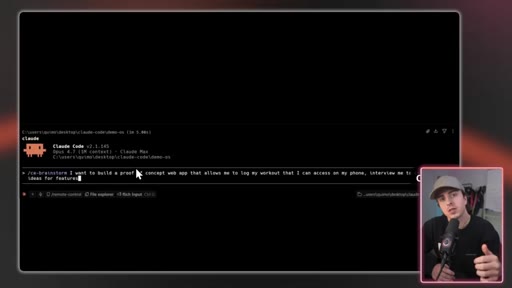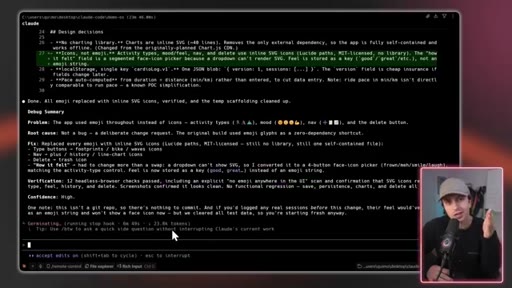

The bait, then the rug-pull.
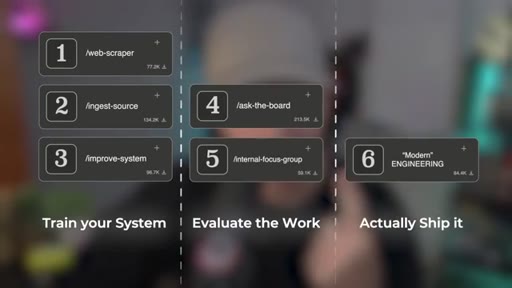
The title promises six skills. The video delivers something more useful than a list: a three-layer system where each skill feeds the next, built live around a personal trainer example you can swap for any domain.
Where the time goes.
01 · Skill 1: Web Scraping
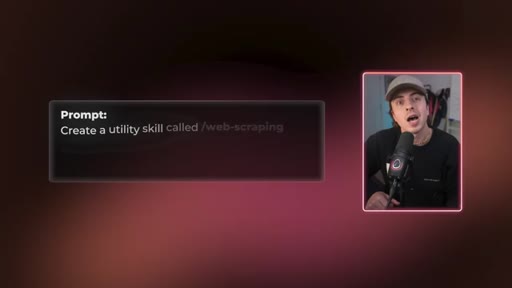
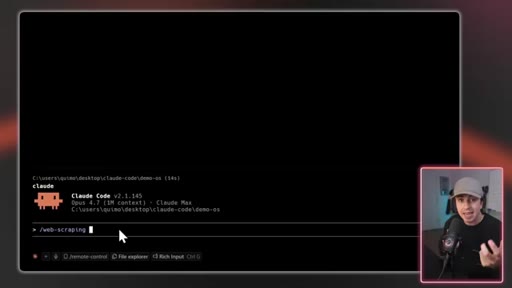
Introduces the two core problems with Claude web search (no JS support, keyword-only) and presents /web-scraping as a utility skill using Fire + Exa plugins.

02 · Skill 2: Ingest Source
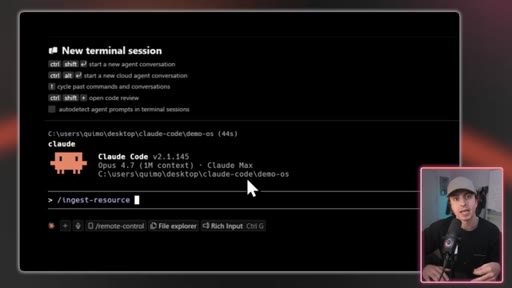
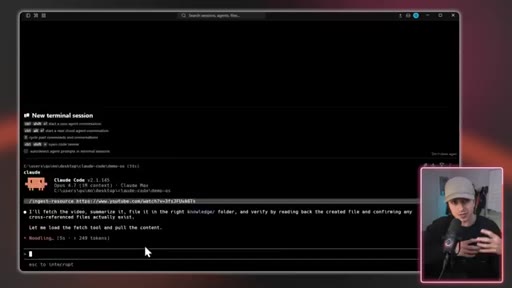
Explains why raw data ingestion is not enough — pre-analyzing data creates a table-of-contents structure so Claude knows exactly where to look in future sessions.
03 · Sponsor: Cantina
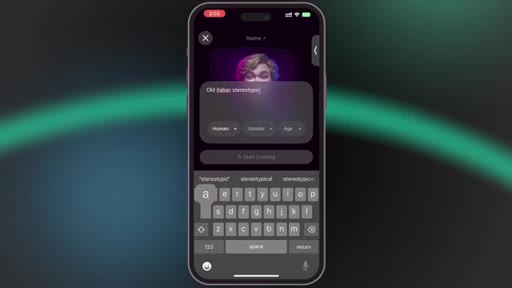
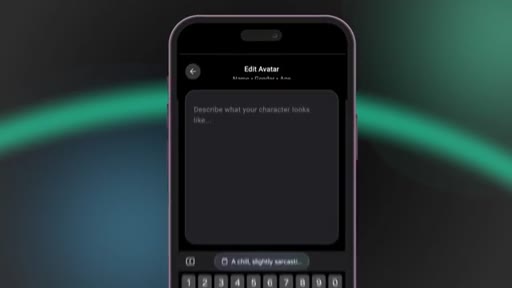
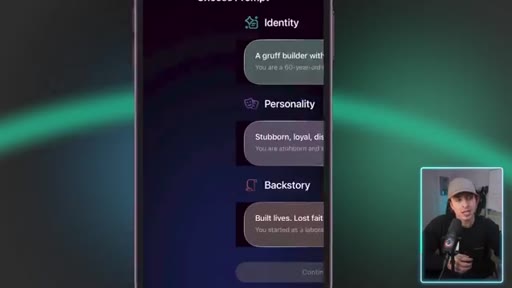
Mid-roll sponsor for Cantina, an AI character creation platform built by Sean Parker. Framed around inside-joke personalized content rather than viral reach.
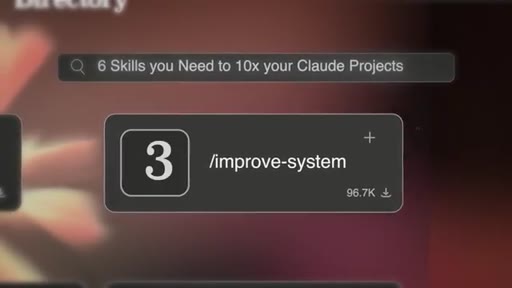
04 · Skill 3: Improve System
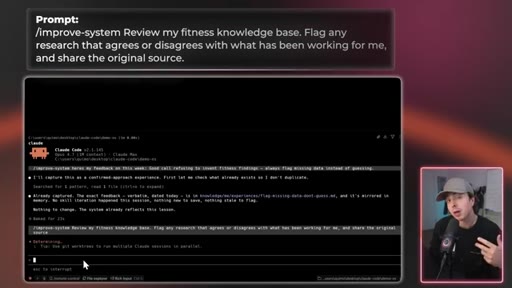
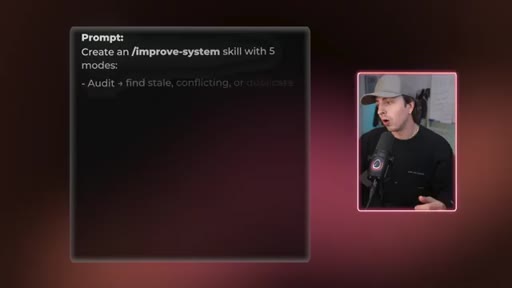
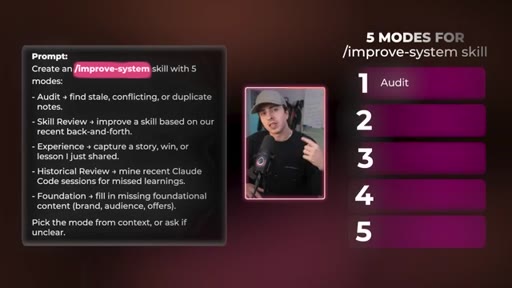
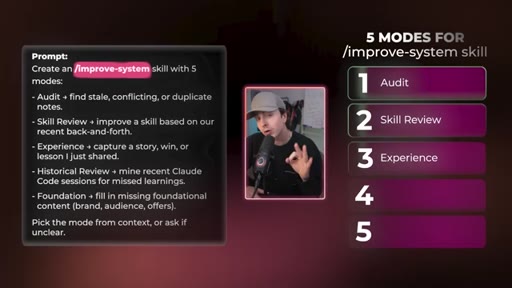
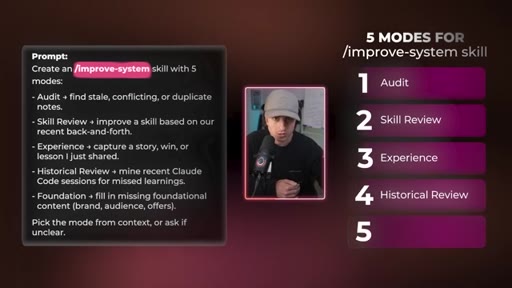
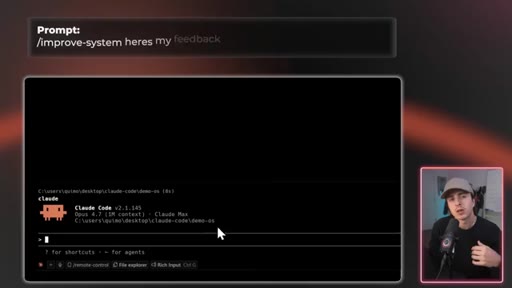
Five-mode self-improvement skill: Audit (stale info), Skill Review (optimize from history), Experience (capture lived feedback), Historical Review (mine past sessions), Foundation (interview for gaps).

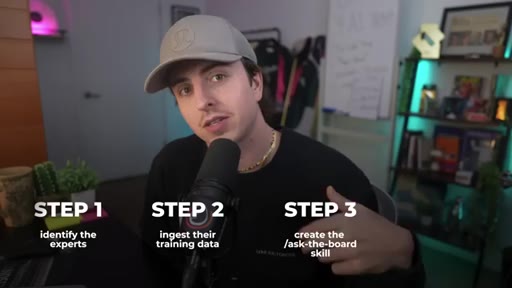
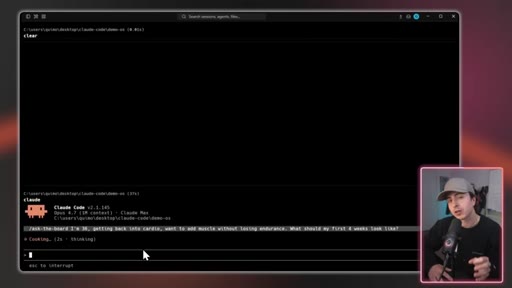
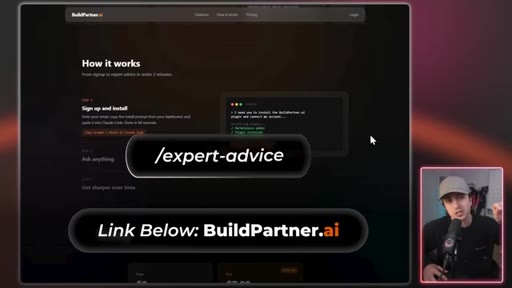
05 · Skill 4: Ask the Board
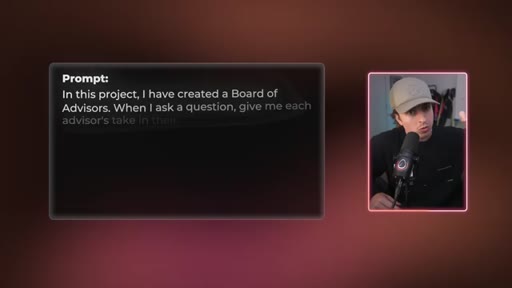
Clone professional experts by ingesting their public profiles; create an advisory council. BuildPartner.ai mentioned as pre-built alternative.

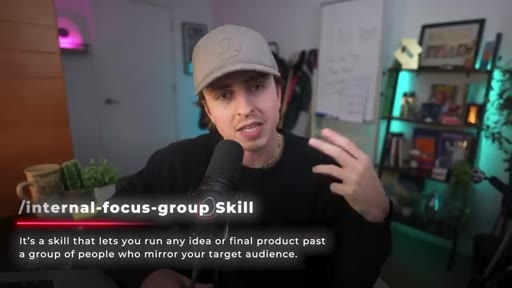
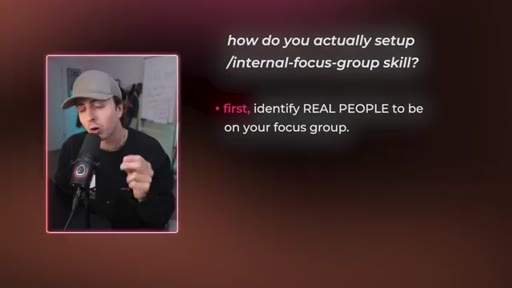
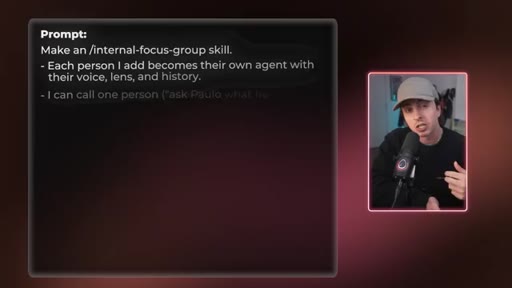
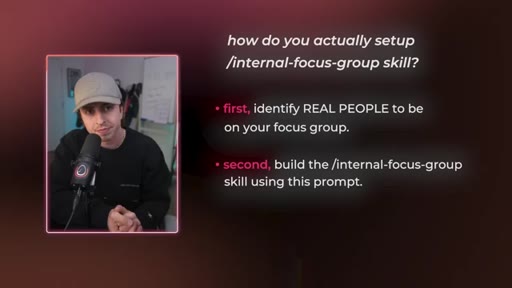
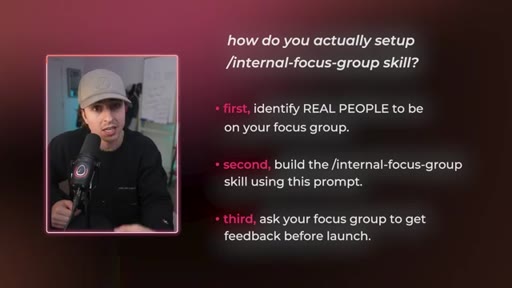
06 · Skill 5: Internal Focus Group
Clone real named people from your target audience as individual agents. The side effect: building this skill forces you to define exactly who you are building for.

07 · Skill 6: Modern Engineering
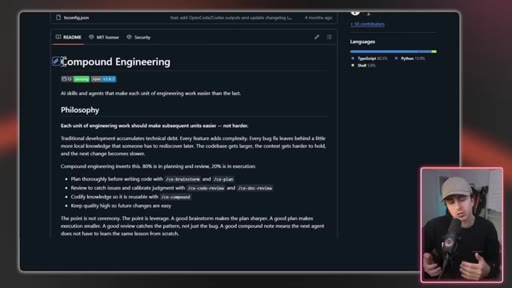
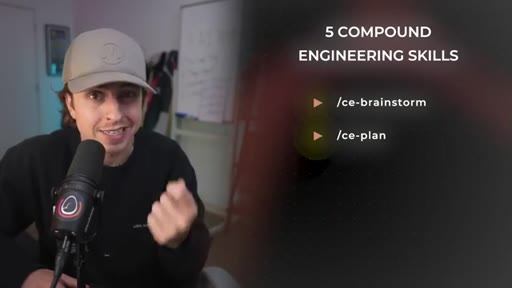
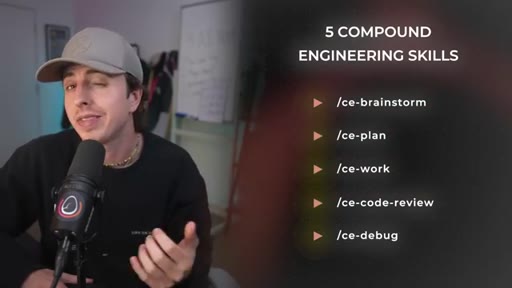
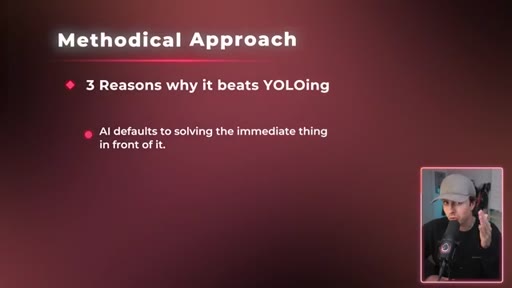
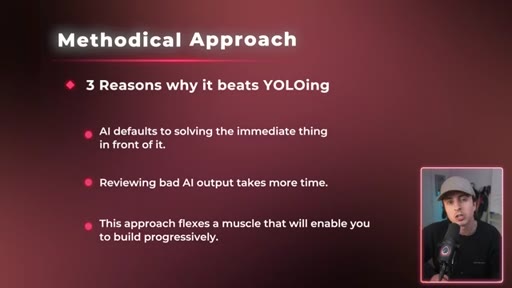
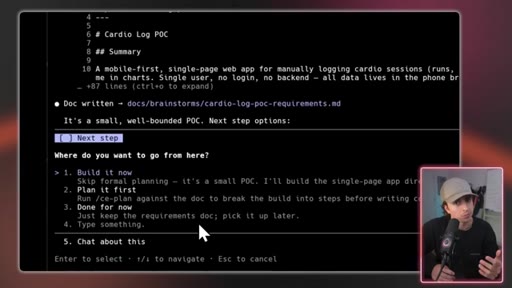
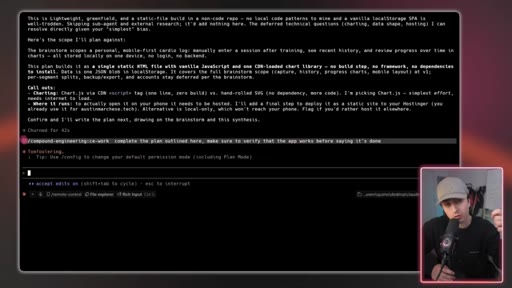
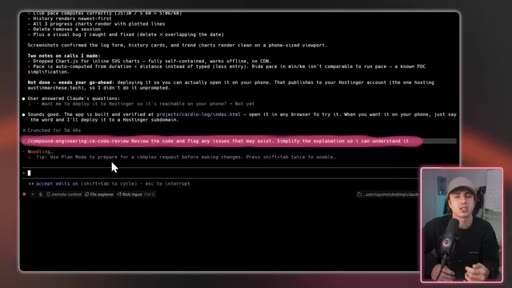
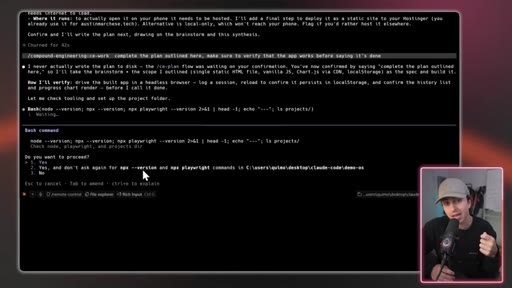
Five-step engineering process (brainstorm, plan, work, code review, debug) via Compound Engineering plugin. Three reasons it beats YOLOing: AI ignores big picture, bad output review costs more than planning, and the habit compounds.
Visual structure at a glance.
Named ideas worth stealing.
Three-Layer Claude System
- Layer 1: Train your system (Skills 1-3)
- Layer 2: Evaluate the work (Skills 4-5)
- Layer 3: Ship it (Skill 6)
The six skills stack into three functional layers: data foundation, quality evaluation, and structured execution.
Five Modes of improve-system
- Audit
- Skill Review
- Experience
- Historical Review
- Foundation
A structured self-improvement skill with five distinct modes, each targeting a different type of system debt.
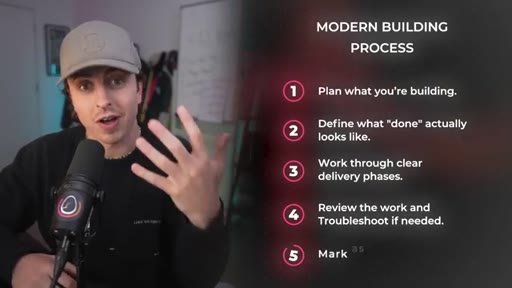
Modern Building Process
- Plan what you are building
- Define what done actually looks like
- Work through clear delivery phases
- Review the work and troubleshoot if needed
- Mark as done and move to the next thing
A universal five-step engineering process applied to AI-assisted work to prevent the AI from optimizing for the immediate task at the expense of the goal.
Lines you could clip.
"You should never fix a problem more than twice. If it happens once, okay, it might be a one-off issue. But if it happens twice, it is time to fix it."
"We are not just ingesting raw data because that is not very useful to Claude. We are preanalyzing data so that it makes it really easy to find specific information. Think of it like creating a table of contents."
"In order to create the skill, it forces you to identify who you are actually building for. You cannot create your focus group unless you know who is in the focus group."
"Reviewing bad AI output takes more time than creating a proper plan would have ever taken."
"AI defaults to solving the immediate thing in front of it as efficiently as possible. And this means that it does not care about the big picture, which is something you do."
Things they pointed at.
How they asked for the click.
"If you like this video you will love this video about the nine Claude code plugins that will enhance your Claude code setup to build 10 times faster."
Clean end-card pivot to a related video. Subscribe ask embedded in the mid-video anti-slob segment rather than tacked on at the close.
Word for word.
Six skills that turn Claude into a system, not a chat.
Every Claude session that starts from scratch is wasted — the six-skill stack here turns a stateless chat tool into a compounding system that learns from your data and pressure-tests your work before it ships.
- Raw data ingestion is not enough — pre-analyzing sources into structured metadata is what lets Claude retrieve the right information instead of scanning everything.
- If you are fixing the same problem more than twice in Claude, it is a signal to build a skill, not adjust a prompt.
- The five-mode improve-system skill addresses five distinct types of knowledge debt: stale facts, underperforming skills, uncaptured lived experience, missed learnings, and missing foundational context about your goals.
- Cloning experts works best when the expert has an extensive public profile — their writing and interviews are the training data that makes the simulation useful.
- Building an internal focus group skill forces you to name the real people in your target audience, which is the thing most builders skip and the thing that determines whether the product lands.
- AI optimizes for the immediate task in front of it, not your larger goal — the engineering layer (brainstorm, plan, work, review, debug) is how you supply that context before the AI runs.
- Reviewing bad AI output is more expensive in time than a structured plan would have been — the cost of skipping planning is paid during debugging, not before it.