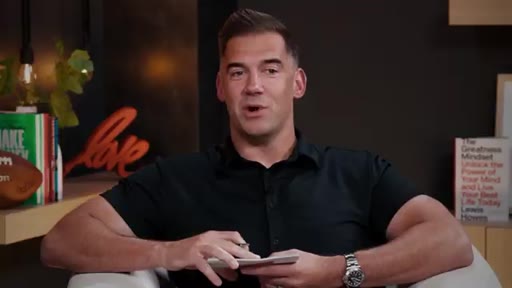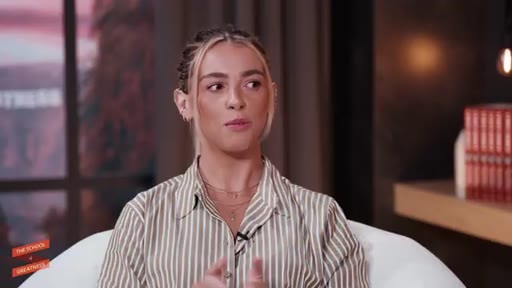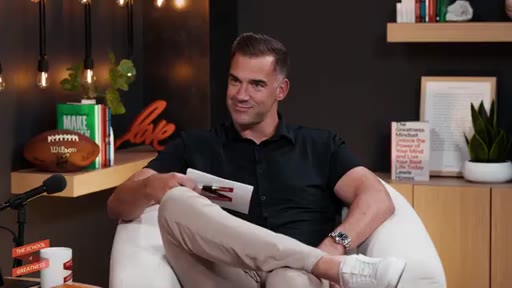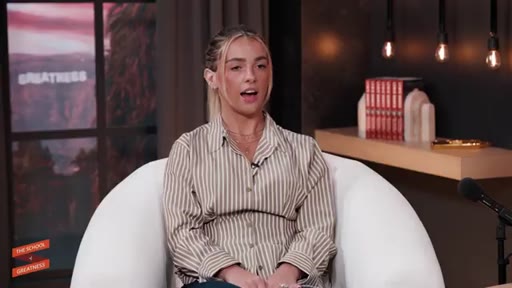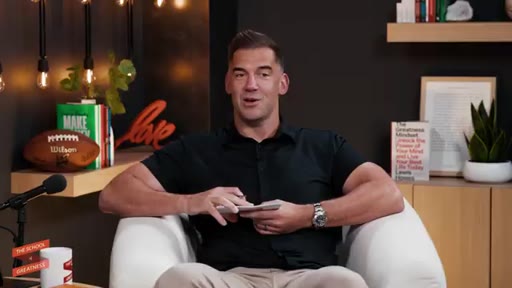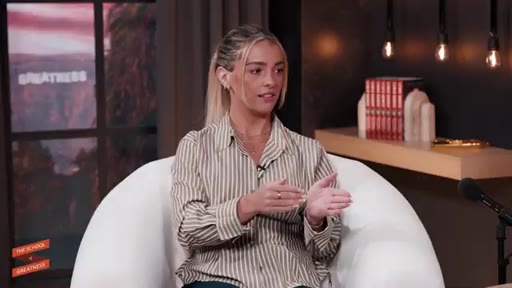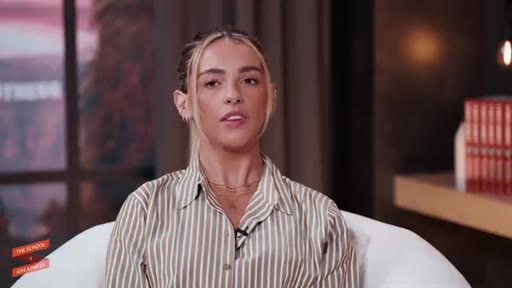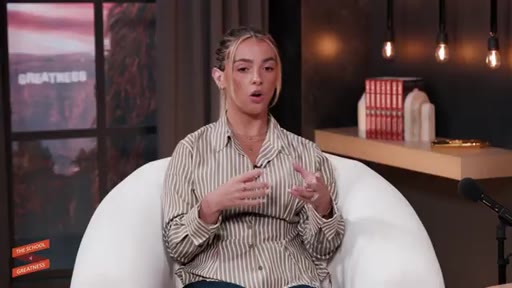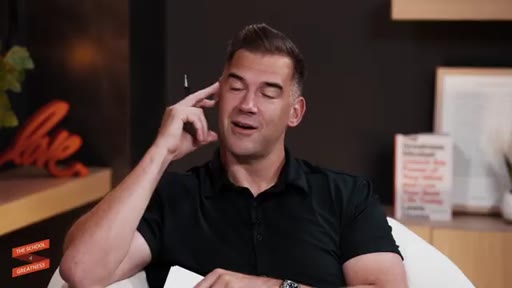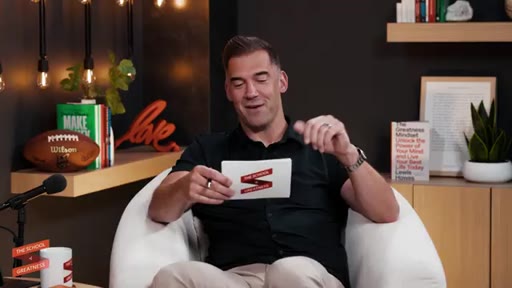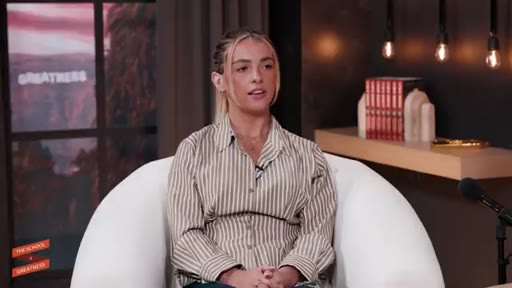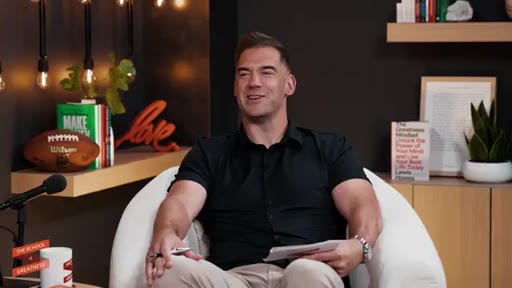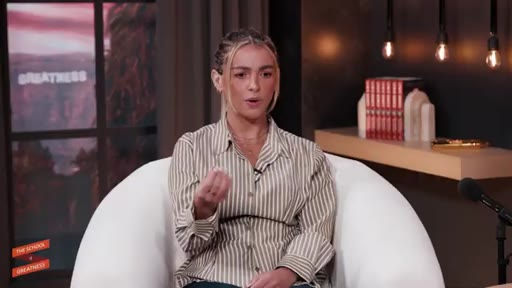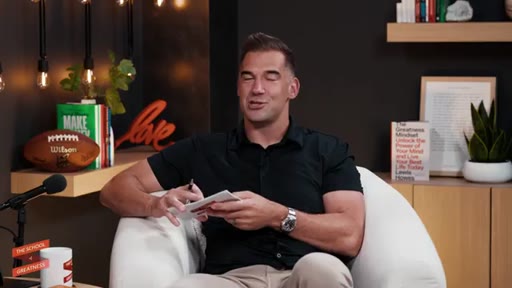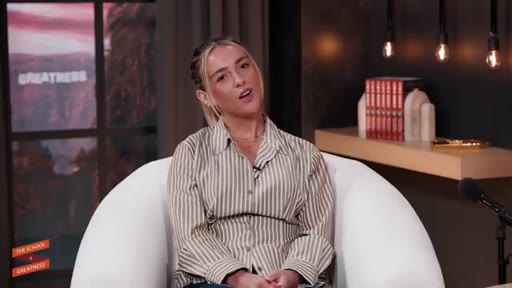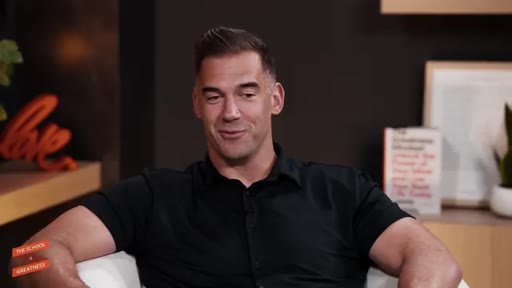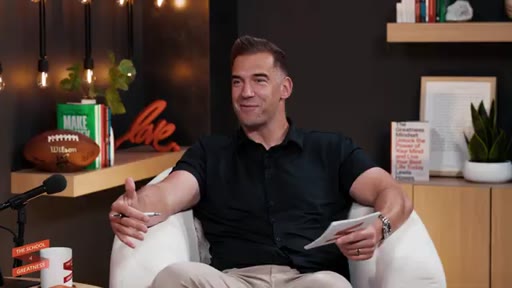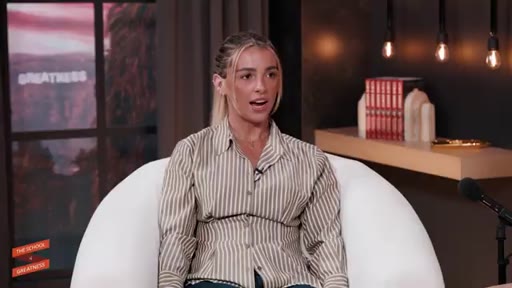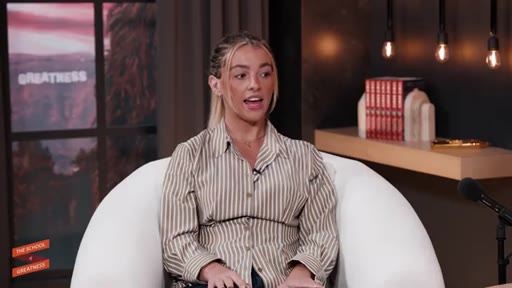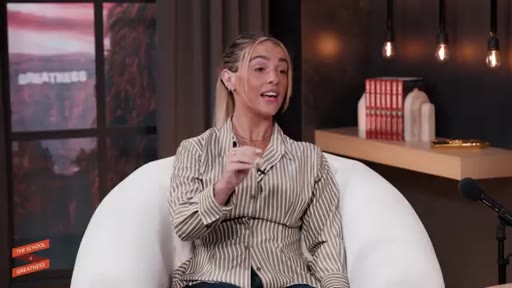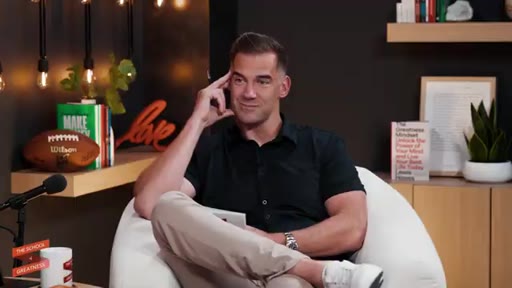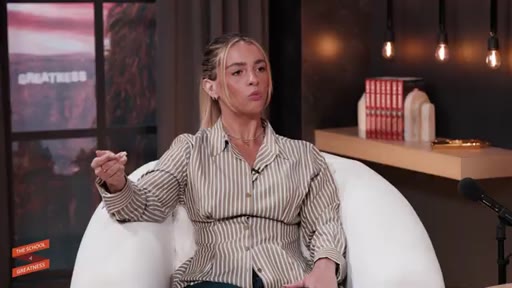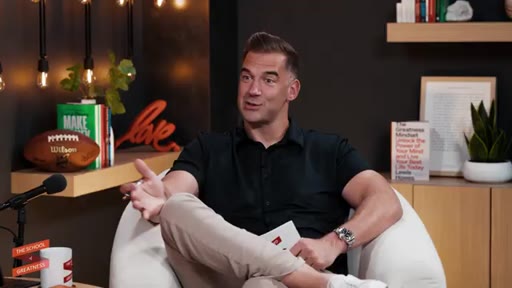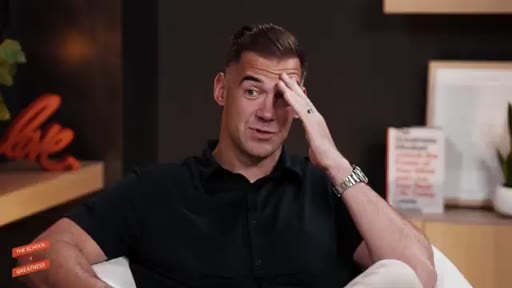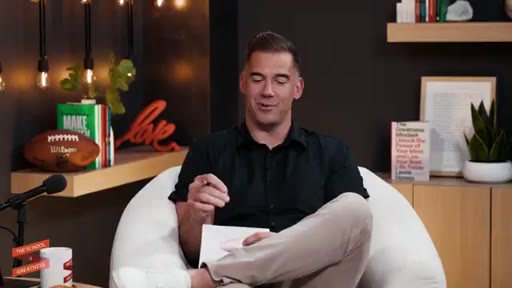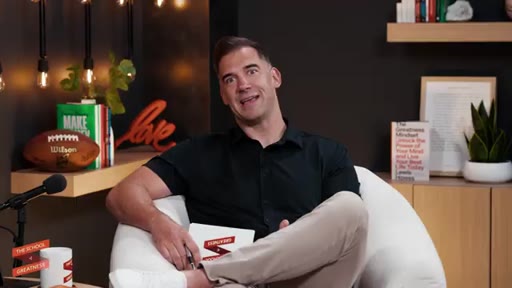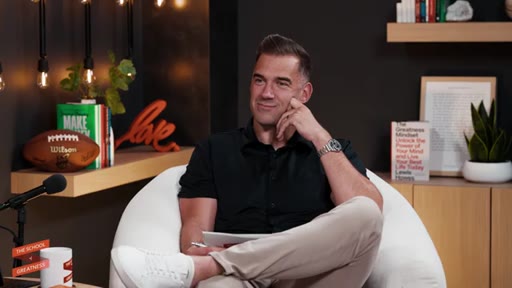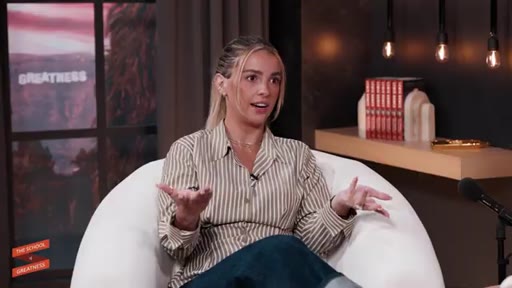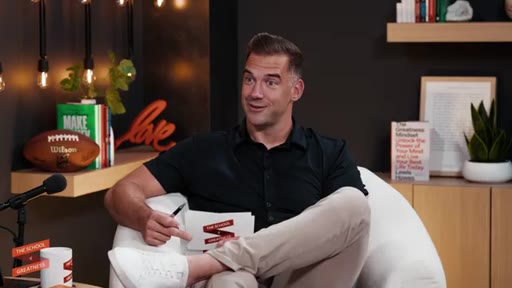
Lewis Howes · Youtube · 78:09

The Neuroscience of Manifestation: How Your Mind Is Creating Your Reality

A 78-minute conversation where a neuroscientist explains why manifestation is not mystical — it is how the brain works.

Posted
June 1st 2026
yesterday
Duration
78:09
Format
Interview
educational
Channel
LH
Lewis Howes
§ 01 · The Hook

The bait, then the rug-pull.

When you are always saying you are going to do one thing and not doing it, your brain is on a swivel with you — and that is dysregulating. That single observation, offered in the cold open before the introduction even rolls, is the premise this entire 78-minute conversation is built on: alignment between nervous system and identity is not spiritual theory, it is neuroscience.

§ · Voices

Who's talking.

00:30hostLewis Howes
00:30guestEmily McDonald
§ · Topics

Where the time goes.

00:00 – 00:30

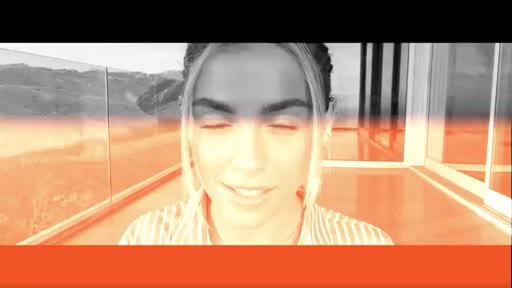
01 · Aligning Your Nervous System for Manifestation

Cold open: Emily's thesis that nervous system alignment is the most important factor in manifestation.
00:30 – 02:11

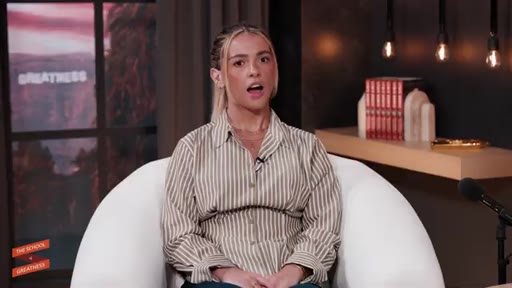
02 · Meet Emily McDonald

Introduction of Emily as neuroscientist and mindset expert. Full-circle moment — she found the School of Greatness podcast before being a guest on it.
02:11 – 05:38

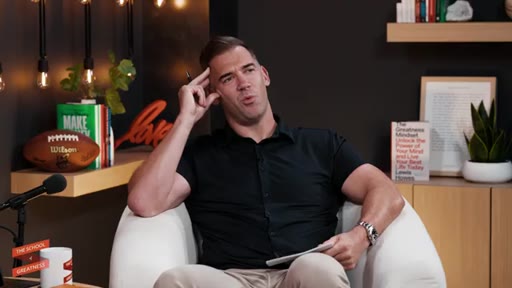
03 · The Science of Shifting Your Identity

The default mode network holds a model of your identity and uses it to predict choices before conscious awareness. Nervous system is often choosing, not you.
05:38 – 07:33

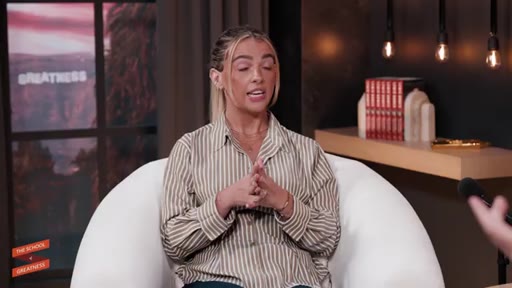
04 · How to Clear Your Future Vision

To-do list vs to-be list. Visualizing the future identity. Hero's journey framing — you achieve as the person you become, not the person you started as.
07:33 – 09:55

05 · Overcoming Environment and Identity Anchors

Habits, environment, people, and foods are identity anchors. Moving cities as a brain-reset tool. Following through on your word as the evidence your brain needs.
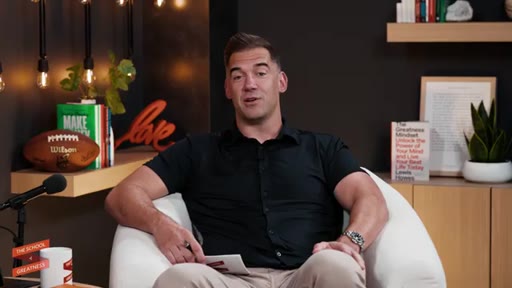
09:55 – 11:44

06 · Why Discipline Regulates the Nervous System

Breaking your own word is dysregulating — your brain cannot trust you and operates in a braced, anxious state. Discipline = self-trust = nervous system safety.
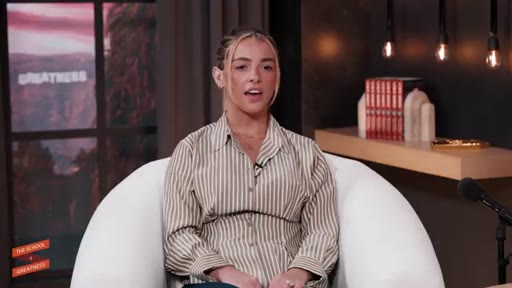
11:44 – 14:40

07 · How to Fix an Identity Mismatch

Diagnosing the gap between current and target identity. The label you use to describe yourself shapes behavior. Practical identity switching example.
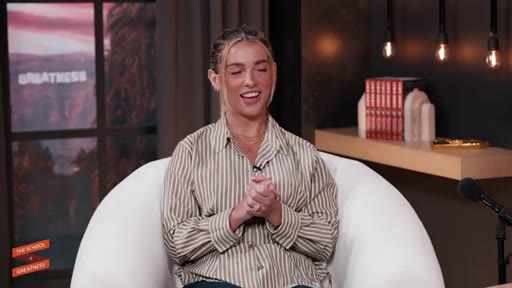
14:40 – 17:11

08 · The Kitten Study and Brain Reprogramming

Kittens raised to see only horizontal stripes cannot perceive vertical bars. Humans are the same — opportunities can be invisible if the brain is not wired to see them.
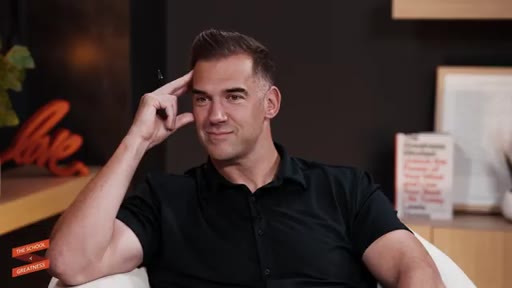
17:11 – 21:14

09 · Breaking the Belief System of Logic

Emily's biggest limiting belief was being realistic. Starting small — feathers, $20 on railroad tracks — to build the belief muscle.
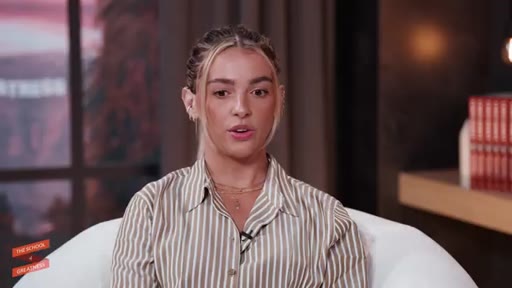
21:14 – 24:59

10 · Stepping Out of a Victim Mindset

Emily's childhood illness, family disability, scarcity conditioning, and money limiting beliefs. Shift from things happen to me to things happen for me.
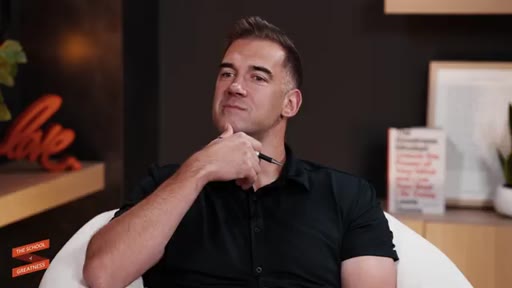
24:59 – 27:59

11 · Discovering Hope Through Neuroplasticity

Emily's origin story: pre-med to neuroscience, lab research on learning and memory. Neuroplasticity gave her the first hope for change she had never been offered.
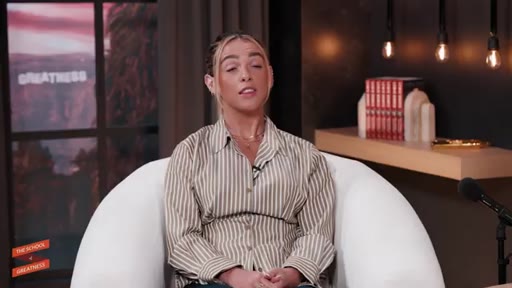
27:59 – 39:25

12 · Bridging the Gap Between Science and Spirituality

Catholic school to atheism during depression, then to spirituality in PhD. Solfeggio frequencies research, The Untethered Soul. Neuroscience as the bridge to woo woo.
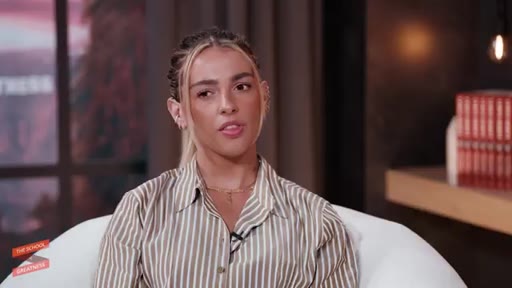
39:25 – 44:41

13 · The Neuroscience Behind How Affirmations Work

Hebb's law: neurons that fire together wire together. Affirmations boost dopamine and drive neuroplasticity simultaneously. Forward movement and play lower resistance.
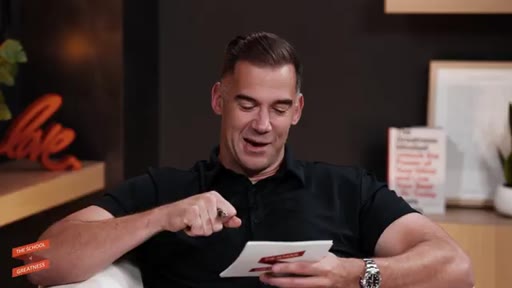
44:41 – 50:10

14 · The True Law of Attraction Explained Neurologically

Electromagnetic fields from the nervous system, the kittens again, subconscious fears blocking goals. You do not attract what you want — you attract what your brain is wired for.
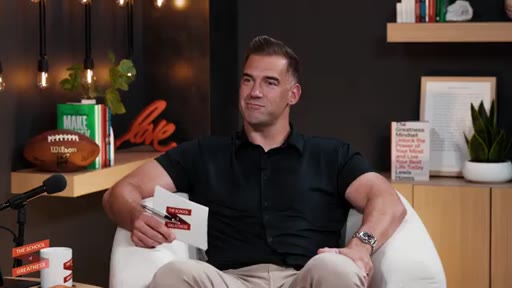
50:10 – 54:46

15 · Delusional Belief as a Biological Advantage

Doubt destroys dopamine. Believing without evidence is required to build the motivation to create evidence. Emily at 30K followers with no reason to expect 2 million.
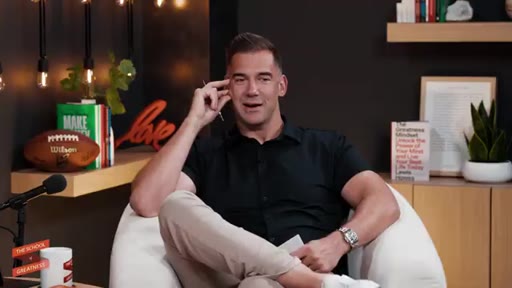
54:46 – 60:02

16 · What Happens to Your Body When You Doubt Yourself

Amygdala hijacks perception under self-doubt. Confirmation bias rewards negative beliefs with dopamine. Resiliency plan for doubt: what to do before the moment hits.
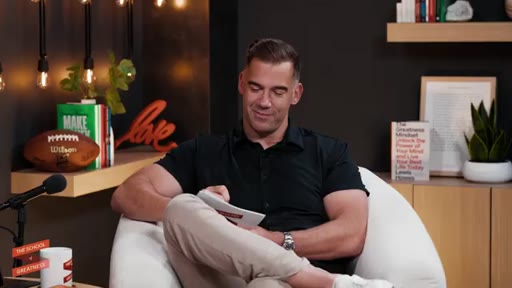
60:02 – 66:26

17 · Overcoming ADHD Without Medication

Adderall as chronic fight-or-flight. Dependency created by dopamine downregulation. Transition via caffeine and green tea, supplement stack, building executive function.

66:26 – 72:19

18 · Rewiring Through Meditation

First sign meditation worked: sitting in silence during a PhD interview rather than immediately reacting. Responding vs reacting as the gateway to acting as a new identity.
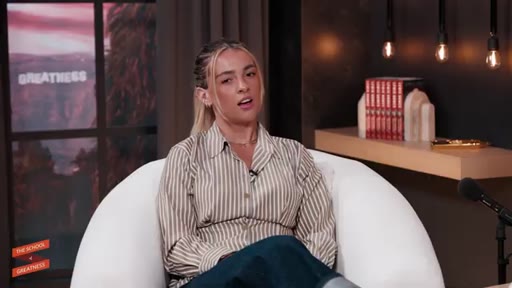
72:19 – 78:09

19 · Three Truths and Definition of Greatness

Live in your joy. You are the creator of your life. Never forget how powerful you are. Greatness = living as your favorite version of yourself.

§ · Quotables

Lines you could clip.

09:55
"Discipline is nervous system regulation."
Single-sentence reframe, no context needed, punchy → TikTok hook
50:10
"Doubt is a dopamine destroyer."
Alliterative, scientific, instantly memorable → TikTok hook
44:41
"You do not attract what you want, you attract what your brain is wired for."
Core thesis restatement, clean standalone → IG reel cold open
04:09
"You are always doing one of two things: reinforcing your current reality or creating a new one."
Binary framing, makes the listener check themselves → newsletter pull-quote
51:00
"Being delusional is just living outside of the illusion."
Quotable reframe of a loaded word, shareable → IG reel cold open
11:40
"When you're always saying you're gonna do one thing and you're not doing it, your brain is on a swivel with you, and that's dysregulating."
Visceral metaphor, connects self-discipline to physiological safety → TikTok hook
§ · Resources Mentioned

Things they pointed at.

32:10bookThe Untethered Soul
40:00linkBob Baker affirmation track (YouTube)
57:00bookThe Artist's Way
21:14productApple Card ↗
§ 04 · The Script

Word for word.

HOOK opening / re-engagementCTA the pitch metaphor analogy
00:00HOOKHow important is it to make sure your nervous system is in alignment with what you think and believe in order to manifest what you want in life? You wouldn't really be able to trust somebody that was always saying one thing and doing another.
00:14HOOKYou'd probably have your head on a swivel around those people. When you're always saying you're gonna do one thing and you're not doing it, your brain is on a swivel with you,
00:24HOOKand that's dysregulating. And then when your nervous system is dysregulated, well then that's the energy flowing through you and that's the energy you're putting out. She's a neuroscientist and mindset expert
00:33who's been featured in the New York Times and has reached millions of people across social media. And today, she's gonna break down the neuroscience backed methods to help you rewire your brain. Emily McDonald in the house.
00:43Your brain is always filtering your reality to confirm the beliefs you already have. You actually get dopamine too when your brain confirms the belief you hold. And so Even if it's negative.
00:53Even if it's negative. So if we are constantly doubting ourselves and having this negative mindset, then our amygdala is gonna hijack our perception, and we're not even gonna be able to notice the opportunities or the things that we want.
01:05What is the thing then that keeps people falling back into their familiar patterns and way of being, rather than fully shifting into the newer greater identity. So I think there are kind of two components to this, which is
01:21We were just talking about right beforehand, now you were mentioned that you really got into manifestation and you started to learn more about it from the school of greatness. So I'm I'm grateful for this full circle moment Yeah. That you you have gone on and crushed it and went to get, you know, study neuroscience and
01:38really have built your own thing and it's been really cool to watch what you've done, so congrats on everything. Thank you. It's been amazing and thanks for your podcast because I don't I mean, it was a huge
01:47player in my journey and developing, learning about manifestation and developing into my spirituality and getting to this point where now I'm getting invited on your podcast. That's great. That's great.
01:57One of the things I wanted to start with is about nervous system and the brain. How important is it to make sure your nervous system is in alignment with what you think and believe
02:08within your brain in order to manifest what you want in life? I think it is the most important thing. I would truly think it's the most important thing.
02:16I mean, I think of your nervous system being in alignment with what you want, I think of your thoughts, your beliefs, but not only that, but also your habits and the way that you show up in the world because your brain doesn't just listen to your thoughts, it also listens to who you're being.
02:32Right? And that's such a key player and something that I love talking about is identity because, you know, your identity is your destiny in this life.
02:40And I love talking about that and it's so huge. I mean, every single time I shift my identity, my reality shifts like pretty quickly. Um, and so
02:49that's because your brain holds a model of who you are. Right? And the default mode network
02:53is a key component in that. But your brain holds a model of who you are and then it uses that model to predict your thoughts, feelings, behaviors, and choices without your conscious awareness. So a lot of the time we think we're choosing, but really it's our identity and our nervous system that's choosing for us and they've shown that in studies that a lot of time the neural representation of the choice that you've made, um, shows up in a brain scan before you're even consciously aware of the choice you're making and so that really is the importance of making sure your nervous system is in alignment with where you're trying to go because if it's not then you're going to have you know those moments where you're like why did I not do the thing I know I should be doing why did I make that choice or maybe you don't even know what to choose or you're confused or you're feeling stuck, you're lacking motivation,
03:35and getting your nervous system into alignment really is the first step. Interesting. So would you say that our nervous system
03:42is actually making decisions for us rather than what we truly want or desire? That happens a lot of the time without our awareness.
03:50Our brain is making choices for us. When I think of the brain, that's a part of the nervous system. They all kind of work hand in hand.
03:55Right? Like the brain is a part of the central nervous system. We've got the peripheral nervous system as well.
04:00So these two work hand in hand. Um, but I think that you know through processes like meditation and practicing mindfulness meditation we can start to become aware
04:09of these patterns and build the awareness of them and actually begin to heal these things so that we maybe have more agency over these choices and in those moments where you're waking up or maybe for example you have this habit of eating unhealthy foods and you're always doing that. If you're opening up the fridge and you're really hungry and you're really stressed, so your impulse control is not as strong when you're stressed or tired, and you're opening the fridge and there's a dessert or there's a salad, it's like your nervous system, if if that's a part of your identity to always be eating unhealthy foods, then your nervous system probably would subconsciously motivate you to go and eat that dessert or the unhealthy
04:46snack or whatever it is. But when you kind of practice mindfulness and you kind of expand that gap where you feel the desire and the motivation but you can actually kind of override it Mhmm. That's when you can start to choose differently.
04:59And I always say you're always doing one of two things, reinforcing your current reality or creating a new one. Mhmm. And just from the kind of neuroplasticity perspective, right, like you're always either strengthening the pathways you've always strengthened in your brain or
05:12lighting up new ones and strengthening new pathways in your brain that can then help you build a new reality. So yeah, I think that we are always kind of being subconsciously motivated and we're always moving direction of our focus.
05:24We're always moving in the direction of our identity because our identity is our destiny. Mhmm. But So yeah.
05:30I I think to answer your question, yes. But we do have agency to kind of change what those subconscious motivations and desires are. Why is it so much harder to create
05:41decisions based on a future reality than a current reality? I think it's only harder if you don't have a super clear vision Mhmm.
05:49Of the future reality. And this is where I think practicing the art of I call it identity shifting, but sort of constructing
06:00that version of you that has it all, I think is the most important thing. Like, everybody has a to do list, but how many people have a to be list?
06:08Mhmm. Like, do you know who you're being called to become? And I always think, you know, in every great movie or book there's this hero's journey.
06:16It's like they don't achieve the goal as the version of them who started, they achieve the goal as the version of them they had to become to achieve it. And that was, I mean, in my own journey, in my own life, like I knew if I had this big dream, was gonna have to become a better version of myself.
06:29And so knowing that if I wanna live in a better quote unquote better reality, different reality, then I'm going to have to become a different version of myself. And I think that can be confusing if you don't know who that version of yourself is.
06:44But I like to sit down. I mean, I I always take my people that I coach through and even myself through a practice where I visualize
06:53that version of me who has it all. Like who is that version of you who has it all? What are their habits?
06:58What's their energy like? What's their mindset like? How do they carry themselves?
07:02What do they do every day? What are their beliefs, you know? And I think once you get clear on that, it becomes a lot easier to act as that version of you.
07:11So yeah, I think it's only harder if you don't have that super clear picture. What is the thing then that keeps people falling back into their familiar patterns and way of being rather than fully shifting into the newer, greater identity
07:26that has the direction of the version they wanna be. When you've lived for twenty plus years or thirty years with an old identity.
07:34Yeah. So I think there are kind of two components to this, which is literally just identifying
07:41as someone different, like adopting that label, and a lot of the time that can feel like a lie. Right?
07:46It can feel It is a lie until it's not. Right. And I had I had someone, a client that I coached, he struggled with this habit that for his entire life, and I told him, was like He's like, I don't know why I keep falling back to this.
07:57I was like, well, that's it right there. You have this story that you always fall back to this. Your brain is just confirming the story and the belief that you already have.
08:07I said, just tell a different story. And he said, he came back two weeks later and he had this whole transformation already and he's like, yeah, just went up to my friend.
08:16I was like, I'm just not that type of person anymore. And he's like, my friend laughed at me but this but it's true. And so I think that kind of is one component to it.
08:24But then there's the other component which there are things that are identity anchors. So things like habits, your environment, the people around you, um, even the foods that you eat. I mean, the brain is an association machine, so it always is making associations or connections
08:41with everything, especially in an environment, which is why I mean, like, moving is such a crazy way to level up in life because you're taking your brain out of an environment, putting it into a brand new one where there are no prior associations. There's no old identity, so you kind of your brain kind of just has to like build this new construction
08:59of who you are in this new space, and you know, environment is huge for that and the people around you are huge for that, But also your habits and your behaviors, your behaviors are identity anchors as well. And so,
09:12you know, if you're trying to shift your identity to someone that is, you know, likes to go to the gym and exercise frequently, you also need to be acting like that.
09:22Right? You gotta You also have to follow through on your word, which is huge. Um, and I always say,
09:28you know, what do you trust? Like, if someone came to you every single day and was like, oh, I'm gonna do this, I'm gonna do this, and they never do it. Like, what would you believe?
09:36Their actions or their words? Yeah. Like, we trust people's actions.
09:39And it's like, you don't feel you don't yeah. You wouldn't be able to trust them.
09:44And your brain is no different, you know. Like when you're constantly doing the affirmations or the visualizations and you can do that all day long, but if You're not acting on it. But if you're not acting on it, then what do you think your brain is gonna believe?
09:56You're gonna feel like you're a fraud probably also. It's gonna hurt your identity. Right?
09:59If you're saying, I am doing this, but then you're actually physically not following through, what happens to your brain or your nervous system when you constantly break your own word? You lose self trust and self confidence, and also that's very disregulating to your nervous system.
10:13Very. I always say, um, like discipline is nervous system regulation. And that's that's because, you know, going back to this example of you wouldn't really be able to trust somebody that was always saying one thing and doing another.
10:27In fact, you'd probably have your head on a swivel around those people. You're not Constantly.
10:32Right. Checking your bag constantly. Yeah.
10:34And so when you're always saying you're gonna do one thing and you're not doing it, your brain is on a swivel with you, and that's dysregulating. Mhmm.
10:42That's that's, you know, you feel unsafe in your own body because you can't trust yourself. Wow. And then when your nervous system is dysregulated, well, then that's the energy flowing through you, and that's the energy you're putting out.
10:53And other people can feel the state of your nervous system. The environment can feel that. Everything around you can feel that.
10:59That's energy put out, and then, you know, you're not manifesting the life that you want from that state. Well, you're draining your energy,
11:05and you're exhausting yourself. Your nervous system is weakening. Your health is weakening.
11:10You're not vibrating and emitting the energy at the highest level that you could. And I think it's important to
11:18and listen. We're all gonna make mistakes, and we're never gonna be a perfect 100% in integrity with our word a 100% of the time. Like, we're gonna
11:26make mistakes, but it's if you can the more consistent you can be, the more empowered you will be as well. Something you talked about a number of times is identity so far. What is an identity mismatch?
11:37And how does someone know that's the real reason their goals, their relationship, or success keeps falling apart no matter what they try? I think the way you can maybe discover if you have one is by asking that question of whatever it is that you want, whether it be the relationship, the job, who is the version of me that has that?
11:56And getting really clear on that, and then asking yourself, okay, am I in alignment with that or am I out of alignment with that? And I think Mhmm. I think it's fair
12:06to notice though that there is always going to be a gap, but I think that that gap is beautiful because that's you know, the work is never done, um, but that means that there's always more to become
12:20and there's always more to grow into, and I think that's beautiful. I think actually having the ability to identify where that gap is, it kind of moves you from feeling like, oh, I'm stuck and I don't know what to do next, to I know exactly what I need to do next.
12:35That's empowering. It's not about labeling, oh, this is where I'm out of alignment with my version of me who has it all, and that's why I'm not getting it. It's like, no.
12:44It's like, okay, cool. Now I have clarity. Like, I know exactly what I need to do.
12:47Yeah. So I think that's that's that identity mismatch, and if if someone is, you know, really wanting to achieve something, do something, and they find themselves just continuing to fall back to old patterns, I mean, they can check-in with themselves and be like, okay, where, you know, where am I acting out of alignment?
13:03Maybe my beliefs, my habits, my routines, maybe, you know, even my thought patterns. Or it could be as simple as just the label that I'm using to identify myself. Like, what is the label that I'm using?
13:16When I was first starting the process of writing my book, I had that like I mean, we and I think it's such a great point to say that no one's a 100% perfect all the time. In the beginning, I was just procrastinating writing.
13:27I would sit down and then I'd be like, oh, maybe I could go record a video. Yeah. Maybe I could go record this.
13:32Or like, do those dishes need cleaning? Like, don't know. I I could go do that instead.
13:36I was like, why am I procrastinating this? I know I really want it, but I'm not, you know, doing it. And I finally like kinda sat down with myself and I was oh, like, it's a part of my identity to be a content creator.
13:47Like that's a part of who I am now. I've been doing it for so long. And so it's very normal and familiar to me to go and do that.
13:53It's just part of who I am. It's like maybe like being an author needs to just be a part of who I am and writing. And so I literally just decided I'm an author now.
14:00That's who I am. Mhmm. And when I decided that, I was like, okay, what does an author do?
14:05Well, they write. They write frequently. Whether it be for thirty minutes or hours.
14:10And shifting my identity in just that simple little way of just literally choosing to identify myself as that and then asking myself, okay, well what does that version of me do? Well, she writes and I think I've without
14:22knowing how this works been doing this for a long time because when I was in college I would go through kind of week spans where I'd just be having so much fun. Like, I would be having so much fun with my friends and, you know, going out, whatever, hanging out with them. And then, you know, exam season would come around, and I'd have, like, week or two straight of multiple exams and, like, oh, it's responsible girl Emily time.
14:42Like responsible girl Emily. And literally like that was what I would do. Would and and all of a sudden now responsible girl Emily, she says no to plans.
14:49She's staying in. She's studying all night. And that's it really worked for me.
14:53That's what I would do. You shift into that different identity. Yeah.
14:56And then you step into it and you create boundaries to not go out and not party or not be distracted. Yeah. You'd shift into that identity.
15:03Mhmm. It's interesting. I've heard you say this before.
15:06You said that we don't attract what we want, we attract what our brain is wired for. So before someone can manifest the change they want in their life, what has to change first at the identity level? At the identity level, I think, I mean everything that the category we've kind of mentioned thus far,
15:22the labels, the habits, beliefs, thoughts, energy. Um, so I think all of that. But I think a huge component to why I say that is in that we don't attract what we want.
15:34We attract what our brain is wired for is is deeper than just identity. I think it's it's also our programming because, you know, from as we grow up when we were first born, our brain is a sponge. We're born with the most connections we will ever have in our brain.
15:48And then as we learn and grow, our brain actually starts to prune away these connections, and the pathways that are left is our programming or our conditioning. And I love this study that they did with the kittens
16:01where they took these newborn kittens and they raised them in complete darkness except for only a couple hours a day where they would put one group or they would put them individually into cylinders painted with either only horizontal black and white stripes or only vertical black and white stripes.
16:16And then after the kind of critical period of the of development, they put these kittens into a normal environment and they like, for example, the kittens that were only ever raised to see the horizontal black and white stripes, they would, like, have a vertical bar and they'd wave it in front of these kittens.
16:30They wouldn't react to it. And so this is I find that this is so like true for us in our lives and so many people.
16:39It's like the things that we want a lot of the time are like they're around. Like Opportunities are there, but our brains are not wired to perceive them.
16:48And I remember when I learned about that kitten study, was like, damn, where am I a kitten in my own life? Where am a kitten in my own life? And we're all kittens
16:55in our own lives. Where are you right now? Somewhere.
16:58Honestly, I feel like this next level for me, I feel like I've had this very full circle moment. I mean, just being here, also like I finished writing my book.
17:07Um, I've grown my platform tremendously. I have a really successful business. I'm engaged in my dream relationship, like, driving my dream car.
17:14I bought my dream house. Like, have all the things. And then I realized kind of, okay, like,
17:19great, but what's next? Because joy I mean, happiness, like, to me, like, one of my values is growth. And so it's not all about what I have, it's about feeling like I am growing as a person,
17:30um, but just in other areas of my life. I think my next level is okay, it's time to write in some new beliefs. Um, because years ago, when I decided that this was the journey that I wanted to go on,
17:42I was a mad woman. Like in my, you know, affirmations, with my visualization, with just the way that I carried myself, and very strict about the energy of the people that I keep around me, and all of those things.
17:54And I mean, I can confidently say now that I'm pretty sure everything I ever wrote down has come true. And so now I'm kind of like, okay, well what do I want to write down next? Like what is like, okay, like I think now I am the kitten in my programming is the life I'm currently living,
18:10and I know that I foresee even greater levels for myself. And so now it's time to kind of wire in some new stripes to see. Oh.
18:19So that's where I'm the kitten. If you if you could go back, you know, three years ago to
18:25the version of Emily you were three years ago, what is one belief system that you had to completely rip out of your brain to make this life possible?
18:35I think being realistic and logical,
18:41That's probably the belief system I That's the belief system you had? That I had to rip out. Yeah.
18:46Yeah. That yeah. That that was yeah.
18:48So I grew up just very, you know, parents in finance, like very logical mathematical structure. But then also, you know, in my own life and belief systems, like I always like math, science, and it's all very logical and just the people around me as well is just very logical and rational.
19:05Um, and so I kind of had to really on purpose
19:11train into my brain. There are things that could happen that are outside of what you could ever imagine
19:19and you have no idea what's gonna happen today. And I think the first time I ever heard it was from Wayne Dyer, but he says no one knows enough to be a pessimist. Like, we have no idea what's gonna happen.
19:29And there's even days where I'm driving to the gym in the morning and I'm like, oh, I got so much to do today. I'm doing like this, this, that, whatever. And then I pause
19:37and I remind myself, wait, like, I have no idea what's gonna happen today. Why am I having this mindset that I know how today is gonna go? Like, I have no idea how today is gonna go.
19:45For all I know, some unexpected blessing or opportunity could come. Like, I have no idea.
19:50This specific day that I'm remembering, that's exactly what happened. Like, a couple hours later, I'm in a meeting and I get like amazing news that So, makes like my yeah, it was it it's little moments like that that I had to open myself up to.
20:04And so, I think for me, kind of having this Honestly, I I did not used to believe I mean, I was the opposite of what I believe now. I had a friend my senior year of high school and he would always be like, you could do anything you set your mind to.
20:18Like, shut up. I would get mad. No.
20:20I would actually get mad and be like, don't say that. That's not true. Wow.
20:24I I had just so I had so much conditioning. I mean, I grew up like with so many different like mental illness and physical illnesses and, you know, doctors just not knowing what's wrong with me. And so I had all of these reasons to
20:36just believe that life sucked and that you don't have agency in your life and that you can't create the life that you want. And so that was really the mindset that I had, and so there were a lot of beliefs that I had to rewire. Yeah.
20:48I mean, around scarcity as well and like living in abundance and like making money. I I had so many limiting beliefs around money and I had to kind of wire in like, oh no, like there are an infinite number of ways that money can come and really wire I mean, so every different area honestly.
21:06CTAI talked to you about the relationship that I'm in before this and I mean that was a big thing that I had to rewire as well. And so I was a kitten in a lot of different areas of my life and when I identified, okay, these are the things that I'm wanting, I'm like, okay, well, what are my limiting beliefs that I have around that?
21:22CTAAnd then, you know, I kind of have a I kind of have a little bit of a process for
21:29CTAkind of overcoming limiting beliefs, and one of those is by looking for evidence of the opposite. And, you know, a lot of times we think that our beliefs are objectively true, and I always say, no, like go look for the evidence of the opposite, you know. There are plenty of people that opportunities just come to them, money just comes to them, they are abundant, it's not that hard for them, and, um, I think looking for evidence of the opposite and and recognizing like, that might be true based on my past experience, but it's not objectively true, and it just opens you up a little bit to be like, okay, maybe maybe I could shift a little bit here and just being open to it I think is the most important thing.
22:03CTAAnd then, you know, starting small with just little tweaks. Mhmm. And I remember I would Yeah.
22:08CTAI would start to start very small like, oh, like I'm gonna see a feather today. Like just little things to kind of build that Yes. Belief muscle
22:16CTAof, oh, wow. Like I saw that feather. Okay.
22:19CTAMaybe this works. And then, oh, you know, money can come to me in expected and unexpected ways. Then I'm walking my dog and there's a $20 bill on the railroad tracks outside of my apartment.
22:27I'm like, woah. That's crazy because I just wrote that down. So just little things like that were kind of the beginning steps for me to kind of show me, okay, um, maybe maybe this does work and then that allowed me grow into bigger things.
22:40This message is brought to you by Apple Card. Now Spring always feels like a reset, clearing things out, simplifying what you don't need, and Apple Card is built with that same idea in mind. There's no annual fee, no late fees, and no foreign transaction fees.
22:56No fees, period. Get started and apply in the Wallet app on your iPhone today. Subject to credit approval, variable APRs for Apple Card range from 17.49%
23:08to 27.74% based on credit worthiness. Rates as of 01/01/2026,
23:15existing customers can view their variable APR in the Wallet app or at card.apple.com. Apple Card issued by Goldman Sachs Bank USA Salt Lake City branch. Terms and more at applecard.com.
23:30Would you say then you lived more of a victim or scarcity mindset most of your life? Absolutely. Really?
23:35Absolutely. Yeah. Is that surprising to you?
23:38No. I mean, it's just like with the content you've created, it doesn't seem like it. You know, it seems like you've always had this mindset, but you would say that you grew up
23:45more as a victim. I maybe you didn't identify it as I'm a victim, but you lived with that language,
23:52that belief system that, nah, life is harder. Nah, I got sick. Nah, money doesn't come to me easily.
23:58But you said these things identified as a victim, correct? A 100%.
24:02I didn't know what a victim mentality was at the time, but that was absolutely the mindset that I had. So you were living in victimhood and scarcity, you would say, right?
24:11Absolutely. Why do you think your belief system was built that way to think that life was hard or life was
24:19scarce or there wasn't abundance? Why do you think you your brain and your nervous system believed that? The way that I grew up and just
24:27yeah. I mean, my own illnesses and also, you know, close family members growing up like getting sick and becoming disabled from a young age like very young I was just a kid and so just seeing that around me and then that also being my own personal experience I was diagnosed with like I had clinical depression at one point I didn't even want to live
24:47and so anxiety, I mean I was diagnosed with ADHD, also I had kind of hormonal imbalances and physical health issues that ran deep within me and at one point I was in and out of doctor's offices every two weeks getting my blood drawn because they didn't know what was wrong with me.
25:01So it was that it was exactly that. Like what's wrong with me sort of mindset. I don't I don't know what's wrong with me.
25:08And then I think really I mean I went to college as a biology major. I didn't start out like pursuing neuroscience at all. I didn't.
25:14This was before neuroscience was a popular thing. I feel like now it's very popular, but at the time like I didn't when I switched my major to it, didn't even really know what it was. And so I went as a biology major
25:25and I kind of was gonna be pre med just because I saw doctors not be able to help the people that I loved, and I saw doctors not really be able to help me, like, and so I I wanted to be able to help people in a way that no one couldn't, could help me, and the people that I loved, and that's why I initially went pre med, and I hated it.
25:43I absolutely hated biology. I hated studying like photosynthesis and the Krebs cycle.
25:48It just wasn't my thing. And I actually went up to someone I knew in the pre health organization that I was in. I told them my situation and they were like, well, why don't you try neuroscience?
25:57And it sounded cool to me. Literally, it just sounded cool, so I switched my major to it, took the first class, got a 100 on the first exam, and my professor reached out to me and was like, congratulations, you couldn't have done better, and I responded back and I said, I love this. Get me in the lab.
26:11And so I started doing research super early on, working in the lab, studying learning and memory and the perception of time and scanning brains doing fMRI, and learning about the brain and neuroplasticity just kind of gave me hope for change that I didn't know was even an option.
26:28You know, in my experience it was this is what's wrong with you, this is your diagnosis, your sucks to suck that you're just gonna have to deal with this for the Yeah.
26:35Rest of your And I had no one had ever told me your brain is changeable.
26:41You can change the wiring and you know, I still have ADHD for sure, but I don't struggle with all of the things that I used to struggle with. And now I'm able to, you know, direct my focus sustain that, and I understand how my brain and nervous system works so that I can actually use that knowledge to my advantage.
27:01And so, yeah, I think just learning about the brain, it made me so passionate, but that's you know, when you say, I could never tell by your content, I think that's why I am so passionate about sharing all of this on social media and just
27:14to everyone that will listen because it at least back in the day was not popular knowledge that, hey, yes, this might be something you're struggling with, but you do have the power to change, and no one had ever told me that.
27:28And if someone would have told me that earlier, maybe I wouldn't have struggled for so long. Um, but everything that I talk about, that everything that I talk about online, here, on social media is is everything that I've personally done to change Interesting.
27:41My So you were sharing before that like your belief systems have changed also around your perception of faith, God.
27:49You said you grew up in the church, then you became an atheist, and now you're spiritual. Yeah. So how are these beliefs
27:56God changed and evolved? And which belief system supports you in becoming the best version of yourself?
28:04The belief system that supports me in becoming the best version of myself, I think is a combination of belief in myself, and belief in my capabilities, and the power of my mind,
28:16which I've built over practice and those small reps of just showing myself, hey you can do this, and writing things down, and then going and doing it, proving myself right.
28:28And I think also my spirituality has been huge.
28:32I don't know if I would have been able to, you know, manifest the life that I want without this belief that there is this, you know, higher power or energy that exists that connects all things, that flows through me, that I can channel, that I can call upon. For me that developed probably late undergrad,
28:51so started studying neuroscience and then, you know, the power of the mind, the brain, all that, and sort of started meditating and opening myself up to that. I remember when I actually went into my PhD when I first moved moved to Arizona, didn't know a single person and where I had moved to.
29:07And I had sticky notes that said trust and surrender all over like on my door Wow. Handles, on the mirrors, like everywhere.
29:15Because I just had no idea like what was gonna happen. And it was just such an uncertain and unknown thing that I was stepping into, but it was that belief in the higher power that I believe in, which I don't know, think my personal
29:30opinion on that is just like you can use whatever word that you want to describe it. I don't think that really matters. Um, like what matters is that you do believe in something and and for me that's,
29:40I know, just the the honestly the word doesn't even matter. It's like God, the universe, the collective consciousness, energy, the divine.
29:48I like divine personally. Mhmm. But but yeah, I think that that belief system has really been a huge player in getting where I am today.
29:56I'm assuming you grew up believing in God, but then you said you were an atheist. How long were you an atheist for? I don't know if I ever really believed in God growing up.
30:04Like, I was a little kid. I went to Catholic school. When I think back on those times, it really was just doing what I was told.
30:09Sure. So I don't know if I ever really had that belief. Okay.
30:12It was kind of just practicing the tradition. When did you say, you know what, I don't believe in God, or I'm an atheist and I'm not sure. It was a thing probably when I was in high school.
30:22Yeah. I probably just didn't think about it at all in middle school. I moved across the country with my family, stopped going to Catholic school.
30:28That was, you know, the first thing that happened. And then I was in high school when I was diagnosed with depression,
30:35I truly didn't want to live. And at one point, like, attempted to not live.
30:41And so I I think at that point, like, it was just a combination of depression that actually had me being an atheist, like, oh, life sucks, like, there is no, you know I mean, and everything I was struggling in so many different areas of my life that I had mentioned this previously that I my mindset was if God is real, then God must be evil because how could God do this?
31:02Mhmm. And so that was my mindset. And now I don't have that mindset at all.
31:06Like, I have a completely different mindset, but the that's mindset that I started out with. Why did the mindset shift to not thinking,
31:14you know, if something bad is happening to me or someone I love, then God doesn't exist or God is bad or whatever. What shifted for you to think a different thought?
31:23I think it's exactly what you had mentioned earlier. I shifted out of this victim mindset, and I realized maybe things don't happen to you, and maybe they happen for you, and I fully am so grateful
31:34for everything that I went through because I wouldn't be able to help people Mhmm. In the way that I'm helping them now. You know, so many like everything, like my my program that I have is like I help people rewire their habits.
31:46I help people with their identity, with their beliefs, with with focus, learning, memory, stress, anxiety, and the the reason why I have so much of this kind of targeted knowledge is because these are all things that I personally struggled with. Mhmm. And I used my neuroscience degrees and my understanding of the way the brain works and my spirituality to change my own life in all these different areas, and so now I can take all of this and give it to other people, and I wouldn't be able to do that if I hadn't gone through all of these things.
32:17And so I think it really was that mindset shift out of like a victim and realizing, I mean, also developing into my, you know I would say once I kind of became aware of spirituality, I don't even think I knew it was a thing until later in life and realizing, oh, hey, maybe my soul signed up for this, and maybe I signed up for this before I came, and maybe this was maybe curriculum.
32:37And I absolutely believe that it was the curriculum for me. What if it was God saying this is everything you need to overcome to become the greatest version of yourself to impact other people? Absolutely.
32:47And I think that I couldn't have that mindset back then. Otherwise, I wouldn't have been able to overcome that mindset to get to where I am to now be helping people other people through it. So I had to have that mindset of, you know, God is evil and life sucks and you just can't control what happens to you at all.
33:04Like, life you're you're just leaf in the wind, whatever happens happens, you know? Uh, I had to have that mindset at one point in order to get to this point. Interesting.
33:14Isn't that fascinating? Yeah. When did you come to that realization that maybe that was the curriculum
33:19for you to become who you are now? Late
33:23undergrad when I was in maybe my senior year, had birthed this dream of, you know, going I I took a class on the neurobiology of drug addiction, and we read a paper about why the current treatments don't work.
33:36And immediately, light bulb goes off in my head because the current treatments, at least at this point, didn't work because they were Ending drug addiction or to Preventing relapse to drug addiction. Okay.
33:48The reason why they didn't work was because they were only putting band aids on symptoms rather than actually targeting the real problem. And healing the root. Right.
33:56And so that immediately resonated with me because all of the illnesses that I had had and everything that I was dealing with, it was things that we don't know the root, we can only treat your symptoms. And so immediately this dream was born within me of, oh, I'm gonna go to my PhD and I'm going to study drug addiction and I'm gonna I'm gonna cure drug addiction and I'm gonna win a Nobel Prize.
34:17And I don't know. Mean, I've always been a little crazy, so that was that was the dream. And then after that, realizing that, okay, I need to go on this journey and do the work on myself to be able to get into that position because obviously that's a huge dream, and if I'm going to make that happen I'm going to need to be the best version of myself.
34:34And so I started, you know, I would say I started meditating and doing those things more with the mindset of training my brain for focus,
34:45and developing this mindfulness practice to like become aware and just be the best version of myself. Mhmm.
34:51And then kind of on that journey opened this other door that I maybe didn't realize was there, And I also met people. So I met these two people that I became really close friends with when I was an undergrad, and they were huge in my journey of introducing me to spirituality. And I remember them one of them telling me to read The Untethered Soul.
35:10Mhmm. And I read that book. And it very much resonated with what I was learning in my neuroscience classes of, oh, hey, like, yeah, it's like when you're going to a movie and you plug in and you're watching it.
35:19It's like, that's exactly how your brain constructs reality. That's how your visual system works actually. Like you don't even see movie in your brain and you're like Well, you don't even see the world with your eyes at all.
35:29Right? Your eyes just take in light signals and then those light signals travel through your brain where your thoughts, emotions, beliefs, memories, programming are all incorporated before the image is even constructed that you see. Mhmm.
35:39And so We could see the same image but have a different perspective Completely different. Of what we're seeing. Yeah.
35:44And I remember learning even in one of my neuroscience classes about how they're they've actually found differences in brain activity along this pathway in people that have body dysmorphia for example. So they their brain is literally constructing the image differently. Um, and so it's not just like all in their head and they just need to you know, it's like their brain is actually constructing the image that they see differently.
36:05So when I it kind of all connected, I was like, okay, yeah, this is a different world. Then these people that I was meeting and that were very spiritual, and I remember they actually were manifesting moving to Hawaii, and they had images of like Hawaii all over their apartment and that was sort of when I was first introduced to it and in the beginning I definitely didn't you know think anything of it.
36:27I remember my one friend was would write affirmations and I just thought that was I don't know, I didn't think anything of it. I was like, oh, affirmations, that's interesting.
36:34I didn't think they worked. I didn't understand them. But then once I understood sort of the neuroscience
36:39behind these things, oh, hey, maybe this And then I actually remember, you know, as I started to study these different spiritual things, um, like solfegio frequencies came up and that's a very popular thing in the spiritual spaces which are just different frequencies of music like 528 hertz, 432.
36:55And I started listening to four thirty two to sleep because they've shown in studies that it actually can help with sleep. And
37:03I remember lying in bed one night and I was like, maybe these frequencies actually like do change the state of your brain and that's why they work. And literally, I sat up in bed, went over my phone, went on to like
37:16Google to look for research papers, found them that they already existed. I was like, oh, hey, maybe, you know, this spirituality thing isn't so crazy. Maybe there's
37:27actually something to this. And so I think in the beginning for me, it was very much seeing how neuroscience
37:34very much explained a lot of the things that my friends and people in books and on YouTube videos were talking about and in your podcast were talking about. I was like, oh, hey, like and I, you know, neuroscience to me was something I was already studying and so it kind of helped me make spirituality make sense and that was really the bridge for me.
37:53Was and that's why I love doing what I do in bridging neuroscience and spirituality because for me in the beginning that was the bridge that allowed me to walk over that and go into this fully woo woo state where if you would have told me you talked to an alien on the phone yesterday, I believe you. Because now, I've had so many experiences.
38:10And actually, with that being said, I also had personal experiences kind of at the same time.
38:17Like Mhmm. I remember I was meditating and literally like the crown of my head started burning,
38:23like burning. And I had no idea like what the chakras were or any of that. And my friend was like, oh, was your crown chakra opening up.
38:29I said, what? And I looked into it, I was like, maybe that was that.
38:34And kind of little experiences like that and then being in meditation and just seeing visuals and things coming to me and, you know, different signs to the point where it was like, okay, yeah, I fully believe in all of the woo woo stuff now. Interesting. It's funny.
38:47I had Nir Eyal on the show recently. He's a researcher, and he just wrote a New York Times bestseller around the power of belief.
38:57And he did not believe in God before or prayer, but then he started to research prayer and now he prays because the research proves that you are healthier and happier when you pray. So he's like, I'm still not a 100% of why it works, but I know it works.
39:14And so I just do it because it helps my brain. And I think it sounds like you were learning different techniques and strategies that made you feel better. Mhmm.
39:21You're linking them to spirituality and other things that were happening in your life, and and you just continued on that path. And you mentioned
39:29affirmations for a second. What is the neuroscience behind affirmations? And do they actually work?
39:37I think they can absolutely work. So the neuroscience behind them is, I mean, it's sort of the power of neuroplasticity, right?
39:43So anything that you repeat in your brain, those pathways become stronger. Like neurons that fire together wire together, that's Heb's law. Like we learned that in our very first neuroscience classes, like it's Heb's law.
39:53Um, and what that means is, you know, neurons that fire together meaning that you have neurons that are wired into pathways all throughout your brain, and when these pathways light up or activate together every time they do that, and when they do that frequently they become stronger, and then that can become your more dominant way of thinking and feeling.
40:10And so affirmations actually work to kind of strengthen the pathways that represent maybe that thought or feeling, And so over time it could become your dominant way of thinking. Um, and they also have been shown to activate the reward centers in the brain and boost dopamine as well, they can make us feel good.
40:28And dopamine actually drives neuroplasticity as well. Dopamine drives learning.
40:32You So kind of get this double whammy of boosted dopamine in the moment feeling good, but then also driving neuroplasticity to remember it better.
40:41I think with that being said, it makes it even more important that the affirmations are done the right way. I get asked all the time like, oh, I do affirmations and I have these limiting beliefs come up and you know, the my my my other thoughts pop in and they're like, but that's not true.
40:58That's wrong. And if that's happening, then it might actually be working against you.
41:03And I've actually had people that I coach. I remember I had this one person, he had that happen to him where he would practice affirmations, they just didn't work for him. They just didn't make him feel good.
41:12He just didn't really believe them, but you know, he actually unlocked something where he started to He fixed up this old jet ski, and he started to go out on the little like pond or something or lake next to his house every morning, And he listened to my affirmations on a speaker on his jet ski, and he found that he they became all of a sudden so much more believable.
41:34And we'd really do I mean, resistance lowers in our mind of the logical mind when we're moving forward, like forward movement. That's why walking is so helpful for processing information. So that's actually how I started.
41:45Mhmm. Was I would go out in the morning, every single morning on a walk and listen to affirmations in my headphones while I walked every morning.
41:53And so that can actually lower resistance to sort of absorbing these affirmations.
42:00But then also I think he unlocked another component which was that he was already boosting dopamine from being on his jet ski. Right? Like he was like he was having fun.
42:08But also, right, it's so much easier to believe in the good when you're having fun. Yes. Play.
42:12Right. Exactly. And play is so good for your brain.
42:15That's why I always say like activating your whimsy is a pro level brain hack and just doing everything for with fun. That's something that I do all the time, um, like especially when I was writing my book where I would be like, how can I make this more fun? Because it makes it so much easier Yeah.
42:29Easier. To start. So, yeah.
42:31I think also, you know, that's where dancing and doing affirmations or listening to There's this one YouTube track that I really like and it's like a song with this funky beat, but it's like funny. It's hilarious.
42:42I think it's Bob Baker. Right. But it's it's a funky beat.
42:45It's like, it's it's just hilarious and it's hard to take seriously, that's the point. And the affirmations, it all of a sudden becomes fun and it becomes way easier to absorb.
42:55What are the greatest affirmations someone could say to themselves every morning? I think that depends on who you're trying to become.
43:03I think the greatest affirmations are the ones that you write for yourself depending on exactly what it is that you're working on. What was the affirmations you would listen to when you were creator affirmations. They were tracks on basically
43:15It's funny. This is all coming full circle now. But these were affirmations that I didn't realize it at the time that shift you out of victim mindset.
43:23Oh. Um, so they were affirmations like, I am the creator of my life. Like, I like, I have the power to change and choose and create the life that I want.
43:34And so that yeah. I was shifting out of victim mindset. So I think More ownership
43:39affirmations. Yeah. Am capable of doing this.
43:42I am. I am. Right.
43:44Like, I I am creator of my life. And, yeah, that those were the affirmations that really, really changed.
43:52And I actually have all I have a playlist of affirmations on my YouTube. And I literally made it public for like all my for anyone because these are all the videos that I listened to when I first started out. All these I am creator videos are on there.
44:04That's cool. Yeah. And it's it never was meant for anybody else, right, when I made it.
44:08That's It was for me, and now I just made it public. So, hey, this worked for me. That's cool.
44:11But yeah, so they were I am creator affirmations and really just allowing me to believe that I could create the life that I want. And then after that,
44:21it became, okay, I have limiting beliefs around money. I think that it's scarce and that it's hard. That because I grew up hearing money doesn't grow on trees, you know.
44:30And that's a limiting belief if you believe that. And I had to I started like, money does grow on trees. Money can come to me in unexpected ways.
44:36So, you know, that was a goal that I had. So I started to kind of rewrite my beliefs around that. How much of our current struggle in life is actually a physical truth or a fact versus how much of it is just poorly wired perception in our brains?
44:51I don't know if I could put a number on it, but they've actually shown in studies, I can't remember the exact number of seconds, but it's seconds that when we have an emotional response to something whether positive or negative, that that kind of chemical representation of that emotion only exists in our brain for seconds, like less than a minute.
45:11Or maybe it's ninety seconds or something like that. And anything after that is us reinforcing that feeling with our thoughts.
45:18It's really quite interesting when you think about it that way, and again, we all get caught up in the emotions for longer, but I think, you know, I remember I heard the saying that life is 10% what happens to you, 90% what you do about it, and after learning that, was like, okay, yeah. Things are going to happen.
45:33Things happen to everyone, everyone. Even the super successful people that we see and the people that we assumed, oh, they just had it easy.
45:41Life is hard for everyone. Life is not easy for anyone. Um, but I think what makes it quote unquote easier is having that mindset and that belief in yourself and also that faith in whatever you believe in.
45:54Belief in yourself and belief in the divine, the creator, um, because when you have that belief it it I mean, it lowers stress cortisol. Right?
46:02And you have that self trust that, okay, like, I can overcome this. So even when things do suck and the things do happen, it's like, it's okay. And I remember when I was studying the difference between, like, optimistic and pessimistic mindsets.
46:15It's like bad things like quote unquote bad things happen to everyone, but an optimist doesn't make that
46:22like doesn't take a bad situation and apply it to their whole life and mean apply it to their whole world. Whereas a pessimist might, you know, trip over a wire and be like, oh, I'm so clumsy.
46:33Like, there's this this this always happens Like, to you know, different little things like that. You take one situation and you apply it to everything.
46:40Whereas an optimist might just be like, okay, like that happened, but that doesn't mean that it's gonna happen again. Mhmm. And from your experience of studying neuroscience,
46:50can you explain then the law of attraction neurologically? Yeah.
46:56So to me, the law of attraction really is that you don't get what you want, you get what your brain is wired for, you get what you are. Right?
47:04You get what you are. From a nervous system perspective and a programming perspective, I mean, I remember learning about, you know, just the way that neurons work, right?
47:14And neurons fire and communicate with each other using electrical impulses. I remember I had to take calculus physics actually in college to understand this.
47:22It was so annoying. But current when current flows through a wire, a magnetic electromagnetic force created perpendicular to that wire. And our nervous system is a bunch of wires, and so current is flowing through us all the time, and absolutely there is a magnetic field created perpendicular to that flow of energy.
47:39Right? And so there's that, and that energy is felt. I think we we have that, like we know that scientifically now that nervous systems co regulate.
47:47Like that's why Mhmm. If you're next to somebody who's all of a sudden getting super anxious, you feel that.
47:52And so if we can feel other people's nervous systems, you don't think that the universe can feel your nervous system? Like, I think that we can.
48:00I mean, obviously we can't show that. Like, oh yeah, the universe felt our nervous system. Um, but I mean, I can extrapolate that and believe that for in my for myself.
48:07But then there's also the other component which is just that your brain can only construct your reality based on the programming we have like the kittens. And I've seen it so many times, I remember I had someone come to my master class where I talked about identity shifting and reprogramming, and he said he had been trying to get a job for two years.
48:24And after two weeks after that class, he got his dream job. And it's like, do we think the dream job just magically appeared after two years of searching, or was it that his brain and nervous system shifted into a state to where he could actually perceive it Mhmm.
48:38And get that job. Right? And so when I think of the law of attraction,
48:43it's really about changing our internal state and rewiring our brain so that we are actually able to perceive the things that we want and go after them as well. Because a lot of us subconsciously
48:56block ourselves from our goals or the success that we desire Mhmm. Because we have, whether it be limiting beliefs or subconscious fears even around success.
49:06And I think a lot of our procrastination stems from that as well. I mean, I remember back when I was trying to start a podcast,
49:13before I started, I wanted to start one for so long and I was like, why am I procrastinating on this? And then I realized that I had a subconscious fear of being seen in a more vulnerable way because long form content is just so much more vulnerable. Like, I'm over here, everyone could just judge me right now listening to It's got a one minute clip.
49:30Exactly. Like, so you're just so much more vulnerable and I hadn't become aware of that, right? And so I wasn't aware of that fear
49:37and it was keeping me from the success that I desired. It was keeping me from the thing that I wanted to manifest which was having a podcast. Like I wanna have a successful long form content and it was keeping me from doing that because of this subconscious fear, right?
49:50And as soon as I identified that I was like, okay, Now I can, you know, just give myself a little hug like it's gonna be alright. Like it's okay. And then I was able to go and do it right after that.
50:00And just I just as easy as identifying it. Right? And so I think when I think of the law of attraction,
50:06it really is just about like we don't get what we want in life, we get what our brain is wired for. You mentioned this idea of being delusional.
50:15Is being delusional a legitimate neuroscience brain hack for success or is it hurting us? I personally think that and I'll talk about the science as well, but I personally think that it's a requirement.
50:28If you want to achieve the unimaginable, you have to believe in the unimaginable. Right?
50:32And Mhmm. The unimaginable does feel delusional. And I remember when I first started out.
50:37Right? Like, I am creator didn't feel true at the in the beginning.
50:42I was like, what? No. Like like And so it the things that feel delusional a lot of the time, maybe they're not delusional to someone like you, you know, me five years ago would have thought the things that you're doing were delusional.
50:53Right? But it just depends on the person. But it's only quote unquote delusional until it works.
50:57And I always say, I have this kind of mindset of, you know, being delusional really is just living outside of the illusion, which is the reality of the norm. Mhmm.
51:06And I personally knew that I wanted to live a reality of the unimaginable, a reality that no one around me that I had ever seen around me was doing. And if in order to believe in that, it did feel delusional. It absolutely felt like what like what are you doing?
51:18That's crazy. And I had people around me tell me that's illogical, that's crazy, like how are you gonna do that?
51:24I'm in my PhD having, you know, neuroscientists like you're making the wrong decision. What are you doing?
51:30And people in my personal life as well being like who told you you could do that? And all of those were honestly motivators for me to prove them wrong.
51:39Um, but but yeah, I think, you know, being delusional was kind of a requirement for me because everything that I wanted was something that I had never seen done before. Um, and then from just kind of like the neuroscience standpoint, right, like, doubt is a dopamine destroyer.
51:54Doubt is a dopamine destroyer. And so if you have doubt in your dreams, I mean, you're not gonna have the dopamine to go and motivate you to do the thing that you know you need to do.
52:05When I graduated early for my PhD with my masters and moved across the country, I had 30,000 Instagram followers. I had no reason to believe I was gonna have almost 2,000,000 now.
52:15I just did it, and I was like I was delusional. I was like I'm just gonna do this, but but it was that delusional level of belief that motivated me to do it. And I actually remember
52:27when I was first starting out, I had I had met someone and this person told me, I know that you're gonna make it because of the belief that you have. I know now that all of the successful people when when you hear them speak, what what do they all have in common?
52:40It's the belief that they have in themselves and and in their dreams. And I so I think that sometimes it is delusional
52:48because your reality, your current reality isn't reflecting to you what it is that you're going after. And some kind of mindset that I've been, you know, living in recently is like, ignore reality, move like it's already yours.
53:01And that that can seem delusional to a lot of people, um, but I think it it's necessary because if you allow, you know, present setbacks or your present circumstances
53:12to deter you or discourage you, then you'll never make it. And so in those moments where things aren't going your way and maybe you're not getting the results that you want, maybe your videos aren't going viral, like I had all these videos not doing whatever and I still believed.
53:27Like I It was crazy. Like looking back, I really was delusional. But it's really so important because I think a lot of us have this experience where in the beginning we face just so many challenges like Most people don't just immediately pop off into immediate success.
53:41So many of us face all of these challenges along the way and have to believe through all of this. And and so I think that being delusional absolutely is a pro level brain hack. Mean, it it it helps you unlock the power of belief, and belief is a biological advantage.
53:55Mean, they've shown in studies that it improves performance, boosts confidence, um, makes you more likely to succeed and get the thing that you want, and then it also boosts dopamine.
54:05Right? And dopamine motivates you to actually go and do it. Right?
54:07If I didn't if I'm sitting here and I don't believe that I'm gonna be able to grow my, for example, social media platform or I don't believe I'm gonna be able to write a good book, why would my brain motivate me to go and write write this book? Why would my brain motivate me to go and do that?
54:20It wouldn't. It wants to conserve energy. And if there's no reward, perceived reward or perceived outcome there,
54:26my brain is not gonna motivate me to go and do it. So I mean having that delusional belief of just like, yeah, it's gonna work out, it's gonna be great. And you know, believing in that
54:37delusionally, right, without that not needing evidence. Because I think at first we don't have evidence. And I think that's kind of what I mean when I'm talking about being delusional is believing without evidence.
54:46Um, and and I think a lot of times in the beginning you might not have that evidence and so it's kind of required. I write about a lot of my work that self doubt is the biggest killer of dreams, and you're kind of backing this.
54:58I'm curious. It sounds like belief is required
55:02in order to become the greatest version and accomplish your dreams. What does neuroscience say
55:09when you doubt yourself? When you say negative things, when you say, I'm not sure if this is gonna work out or you doubt it's possible. What is neuroscience saying
55:18is happening in your brain and your body when you doubt? I think there are multiple levels here. I mean, just the first part of doubting yourself.
55:27I mean, I I just said doubt is a dopamine destroyer. So you're not gonna have the dopamine to go and do the things. So you're not gonna have the motivation to go and do the things that you need to do.
55:36But also, I like to give this analogy of imagine you are walking around just day to day life with somebody next to you twenty four seven, constantly telling you you can't.
55:48Constantly telling you, oh, you're not gonna do that well. You're gonna do a bad job. What would that you'd be you'd be constantly braced.
55:55You would always be braced because this person is just constantly tearing you down and doubting you. You would always be braced. You would never be able to relax.
56:03And so that's kind of what happens in your nervous system as well. You're always kind of braced. That dysregulates you when you're always really it's just negative thoughts in general.
56:11If you're always beating yourself up, tearing yourself down, doubting yourself, then you're always going to be in that braced state. Mean that boosts cortisol, which boosts stress.
56:19If you're dysregulated, we haven't touched on this yet, but if you are dysregulated, if you are very stressed, then you're going to see increased activity in the amygdala. And the amygdala is often associated with fear, and really being kind of the fear and stress centers in the brain.
56:35And when the amygdala is highly active, it hijacks your perception as well, which I've experienced in my life so many times in my past where maybe I'm really nervous, maybe I'm really stressed, and I walk away from a conversation. I'm like, I said all these things wrong.
56:52I I didn't do well enough. You know, what did I do wrong? I have people around me like, oh no, like you did great.
56:57You did amazing. What are you talking about?
56:59And my perception of the situation was literally inaccurate
57:04because I was stressed and my amygdala was scanning my reality for potential threats to keep me safe.
57:11So if we are constantly doubting ourselves and having this negative mindset or or we just aren't stressed in general, then our amygdala is going to hijack our perception and we're not even going to be able to notice the opportunities or the things that we want or the blessings or the manifestations.
57:27We literally like, the thing that you want could walk in the door, but your brain is filtering for potential things that could go wrong to keep you safe because that's the state that your nervous system is in. And and if you're always doubting yourself and you're saying, oh, like I'm not sure this is gonna work out, well well your brain is gonna filter for reasons why that is true.
57:45It's gonna filter your reality to confirm that belief, that's confirmation bias. Your brain is always filtering your reality to confirm the beliefs you already have, and I remember learning that you actually get dopamine too when your brain confirms a belief you hold. And so Even it's negative.
58:02Even if it's negative. And so your brain reinforces itself
58:06for being negative and being believing in the wrong thing. And that's where, you know, we're like, oh, I knew that was gonna happen. Like, when something goes wrong and you're like, oh, I just feel like, you know, it's not gonna work out, then it doesn't, you actually get a mini dopamine hit from being right even when it's not really the thing that you want.
58:24And so, yeah, mean doubt impacts us in so many different ways. I mean, think we all at times
58:30have little moments of self doubt creep in, but I like to I like to do something called a resiliency plan for those moments and like having that developed before it happens. And this is so many different areas of my life now I have a resiliency plan for, uh, lots of different things.
58:47But you know, for example, I like to do my morning pages every morning. I learned that from The Artist's Way. It's very helpful.
58:52I'm a huge fan of them. There was one time where it brought up something and it kind of made me feel anxious. And I kind of stopped doing them for a while because
59:01I didn't want to ruin a bad day. I didn't want to ruin a bad day. Don't want to feel anxious.
59:05Like, I don't want to start my day off like that. But then what I kind of realized and even worked through with my coach was, no, you you need to just have a resiliency plan for when those moments do happen.
59:14Like, what are you gonna do? And I decided, I'm just gonna move my body. I'm gonna move my body.
59:17I'm gonna go exercise because that always gets helps me reset. And so having that plan as well for what are what am I gonna do in moments of doubt? And I actually have a resiliency plan for that.
59:27I have my friend actually, she's still in her PhD. It's where we met. And she has been just
59:33my biggest believer, biggest supporter since day one. Like she was telling me that I would be where I am when I didn't believe that I would be where I am. Wow.
59:40And she is just she's incredible. She's my sister to me. And in those moments, know, a lot sometimes when I doubt, like, she's the one that I call because she's the one to smack me in the face and be like, what are you doing?
59:52Questioning yourself. And so, you know, knowing what to do and having that plan for what are you gonna do when you doubt yourself? Maybe it's affirmations, maybe it's exercise and doing things that make you feel more confident.
60:02Um, I have a kind of a collection of things that I Yeah. Do You mentioned about your ADHD journey.
60:08Did I read that you didn't take any medication when you had ADHD and you like just learned how to rewire your brain? So I took it in the beginning. Uh-huh.
60:17And then I went to my PhD and I studied drug addiction. So I actually did, you know, have this dream of studying drug addiction, preventing relapse, and I actually went and did that. So I was working in a in a research lab studying drug addiction, working on identifying new ways to treat and prevent relapse.
60:32So I was doing exactly what I said I wanted to do, which Yeah. People were like, I don't know.
60:37I know I went and did just that. Like within, you know, anyway. And so But with that being said, when I was studying drug addiction, my minor was medical pharmacology because I had to study drugs Uh-huh.
60:47And how they work in the brain and the nervous system. And I just remember learning about, you know, how they actually work and Drugs.
60:57ADHD medication. Okay.
60:59Adderall, Vyvanse Uh-huh. In particular. And when I learned about how they actually work and about, you know, side effects are really actually just off target effects, and they're real effects, they're not side effects.
61:10They're They're effects. They're effects. Yeah.
61:11They're effects. They happen. Yeah.
61:13And so They're going to happen. Right. Right.
61:16And so the goal of any drug, right, is to mitigate off target effects while still you know, the the therapy that they're meant to provide. How do these ADHD drugs
61:26affect the brain? There are different types, but Adderall in particular, it is a nervous system stimulant, and so it essentially puts you into fight or flight.
61:33Really? And you're just constantly into fight or flight. And and and That can't be good.
61:37Right. And so I mean it's it's it's just like a chronic elevated cortisol, norepinephrine,
61:43and I mean, and they're they've come out now, and I saw recently a study where they're saying, oh, we've we've figured out that, you know, this medication, it actually doesn't really boost focus, it boost alertness, wakefulness. And so that's really how they work is like they make you super alert,
62:00um, and and that's why at least in my experience and the experience of many people that I work with, they don't necessarily help you focus on the thing you need to focus on. They just help you feel super motivated and alert, and whatever you do after that is your choice. Jeez.
62:14And so medication would hit for me, and I'm on an hour long hours long rabbit hole scrolling, um, like online shopping or whatever because it's like whatever you're doing when they hit is whatever you get locked in doing. And so I realized, okay, I still need to develop agency and train my ability to direct my focus because without that, I mean, the medications weren't helping me necessarily direct it.
62:35Towards something productive. Right. Empowering.
62:38So when I learned that though, when I learned how they work and just how they impact the nervous system and I I just just made the personal decision to stop. They're not good for the nervous system. I I stopped taking Or the brain.
62:48I that's saying not good, think, depends. I mean, I I don't wanna be like, oh, they're bad and because they they they helped me and they were sort of a crutch that allowed me to transition. A crutch is not a long term long
62:59term strategy. And if you get addicted to a crutch long term, that's not good. Like when do get off the crutch?
63:05It's like how long should they be allowed to be used for until they say, alright, we gotta get to the root, not just Right. Through the band aid. Similar to depression and anxiety.
63:13Right? You don't wanna be on depression medication your entire life. Right?
63:16You take it you take it for it to be kind of that bridge to allow you to do do you think actually make the leap off the bridge into deeper healing work from either ADHD or
63:29depression medication? How many people actually go deeper and get off of it?
63:34I don't think many people do, but I also don't think it's their fault because it's not something that doctors tell you to do. Well, it's not profitable to be off of drugs.
63:45Right. So when I was diagnosed with ADHD it was like, okay, you have ADHD. Here's the medication.
63:50Ever told me, you should also train your executive function.
63:55Now, it takes a simple Google search now that I know the term. Yeah. Yeah.
63:58If you search executive function training in ADHD, it's like, yes, people should be doing this, especially now with social media and like cheap dopamine everywhere.
64:07But especially in people with ADHD, it's something that should be done. And so and then, yeah, I also, you know, learning studying drug addiction. And I on days I wouldn't take the Adderall, I was depressed because my brain became dependent on the dopamine from the medication.
64:19That can't be good. There Right. Exactly.
64:22And it wasn't good. So then you have to stay on it because Exactly. Now you're depressed, and then you have to take depression medication
64:28to go off of it. I didn't want to be dependent on this for the rest of my life. So how did you learn how to not use medication
64:34while having ADHD and depressive thoughts? I actually
64:39used my knowledge of just how stimulants work and I was like, alright, well if I'm gonna stop taking this, I am going to supplement with caffeine for a little bit.
64:48So I actually kind of transitioned using caffeine and at first it was like, yeah. And I really discovered also that green tea just unlocked a whole new level for me that coffee never did. Coffee never really made me feel any sort of way.
65:02And I know a lot of people have ADHD that feel similarly, coffee just doesn't do it. I would drink so many shots of espresso, take stimulants, take Adderall, like altogether.
65:10Man. Yeah. I know.
65:11No wonder why I was like so stressed, so anxious, so easily triggered. Wow.
65:16Yeah. And you know, I had like skin issues, I had rashes, I had so many different things going on because of all of that. And so anyway,
65:24also I was addicted to nicotine, which I don't think I had mentioned to you, but it was a big reason why I also wanted to study drug addiction. But what I also realized was that the Adderall and the stimulants, they can kind of increase
65:36stereotypic behavior. Um, and that's just like a science term for compulsive,
65:42like repeated behaviors, like stereotype behaviors. I found that that was leading me to hit the vape a lot. And so when I found that when I stopped taking the Adderall, I stopped craving nicotine as much.
65:55And so it allowed me to just stop all of it, but what I did was, yeah, replaced with I replaced with supplements and green tea, and over time now, I mean, I haven't even really had caffeine today.
66:07So I I now am at this point where I don't even take supplements for focus, but in the beginning I did. So I took a lot of different supplements for focus. I would do like the lion's mane, rhodiola, rosea, cordyceps,
66:17you know, ginseng, bacopa monnieri, like all ginkgo, all the different things. I was on it all. And it helped and it really did and it allowed me to continue to train my brain.
66:26I really do think that meditation was huge. You know, I You can rely on all the external stuff, but I remember the first time I noticed meditation changing me was I started I think the fall of my senior year of undergrad and then that winter like three months later, I had my first PhD interview.
66:44And I was sitting in that interview and I remember the person asking me a question and I was able to sit and really think about the question that she had asked me and then respond mindfully. And that might just sound normal to a lot of people, but to me it wasn't because the old version of me was super reactive, super like as soon as you say something, I gotta immediately blurt out a response to get it out of my head.
67:08I would be super like interrupt you and all the different things. And I was like, woah. I just was comfortable in the silence there for a second.
67:16And I was actually able to develop a response and really truly respond rather than react to situations. And it's that skill that allows you to create the life that you want. You have to be able to respond because if you're reacting,
67:28it's always based on your programming. It's always gonna be based on the old version of you. You're you're never reacting as a new version of you, um, because like reactions
67:37are that kind of immediate impulsive behavior. And so it really is developing that ability to respond that allows you to act as a new version of you. And so that was the first time I had noticed meditation
67:49changing my mind and my brain, and now I just see it in so many different areas of my life.
67:55Like if I don't know where my keys are I'm able to just pause and and literally backtrack and oh this is where my keys are. I have two phones because one of them I used to create content and yesterday I couldn't find the phone.
68:06So where's the phone? And I paused and I remember it was in a bag that I threw it into when I was in my car earlier that day because I didn't want it to be on the seat, people to see in the window. That's where it is.
68:17It's in that random bag that's in the hallway over there. And just little things like that I noticed now, I'm like, oh, wow. Like I'm just able unlock this different level of my mind.
68:25What do you think is the root cause of bad addictions in life?
68:32Like alcohol, drugs, you know, I don't know, porn, vaping. Like, what do you think is the root cause? What does neuroscience say is the root cause of a bad addiction?
68:40I don't wanna say that I know what the root cause is for everyone because for me when I started vaping nicotine, there wasn't really a cause.
68:48It was just all my friends are doing it and so I'm gonna do it. Everyone around me was doing it so I'm gonna do it. I wasn't necessarily trying to fill any void or like, yeah.
68:56It was just, oh, hey, I was just a silly little teenager, you know. You said you had ADHD, you had depressive thoughts, you thought about taking you on your life, so there was something underneath. Right.
69:04You weren't like, I'm a happy person. Right. And I'm gonna do this addiction.
69:07So it's sort of seeking out something outside of you to give you dopamine to make you feel better. Exactly. Right.
69:14So yes, pressured. Right.
69:17Did Why I continue to do it? Because I like I'm like, oh I liked it but also I had all these other maladaptive behaviors of partying and drinking and doing all those things.
69:25Your environment, sure, that was the drug of choice because your friends were vaping but And maybe it would've been alcohol if it was You were older or whatever. I don't know.
69:32But underneath, what is the neuroscience underneath an addiction? Is it trauma?
69:38Right. It's kind of seeking out something outside of you to make you feel better. Uh-huh.
69:43Because that's what addiction that's what drug all drugs of abuse boost dopamine in the reward centers of the brain. All of them.
69:50They make you feel better. Yeah. When you don't feel good.
69:52Inside of you feels off. But what's so interesting about drugs, especially addictive drugs, is that it's only in the beginning that they make you feel good and then over time your dopamine system actually shifts to where you don't even necessarily get that pleasure from doing it anymore.
70:09You're actually just doing it to avoid discomfort. Mhmm. And that's when, you know, addiction really sets in is, you know, over time it's not I'm hitting the vape because it feels good and I'm getting dopamine.
70:18It's I'm hitting it because I'm anxious if I don't. And that sort of starts to happen right when our brain becomes dependent and our neurochemistry actually
70:27adapts to using this drug because that's what it does. It adapts.
70:31Over time, your receptors learn this new behavior. It's like, okay, if we're always getting dopamine from this, let me down regulate dopamine receptors and that way we're less sensitive to it. Now like you literally need the drug to get that pleasurable
70:46experience and then you start to yeah, so your brain literally becomes dependent on that thing in order to maintain a baseline homeostatic state. And then that's why that's where withdrawal happens when you don't have it.
70:57So it only really feels good in the beginning, and like for something as simple that maybe most people can relate to is social media. Um, in the beginning, I remember when I first went on like Facebook when I was younger, in the beginning you went on because it was cool and fun, you get to see your friends and talk, and and then it gets to this point where you're on your phone and you're on social media and you don't even know how you got there.
71:17It's like you're it's like an automatic behavior, and it becomes a stimulus response behavior where initially when we do things that like drugs or social
71:26media or any sort of gambling, whatever it is, you do it because it's it's a goal directed behavior. Like you're doing it for a reason, whether it be to feel better Yeah. Get dopamine,
71:37you know, maybe it could even be as simple as, you know, I'm I I wanna stay stay close in with people in this friend group, whatever it is. Yep. And then over time, it develops into a stimulus response relationship
71:49where you see it, you do it, and it becomes saved into like the habit centers of your brain. So Don't get addicted to drugs.
71:57Yeah. Don't do do drugs. It's gonna be hard to get off.
72:01You've accomplished a lot of your dreams that you envisioned years ago for yourself. You know, you you overcame the limiting beliefs that you had in a lot of areas.
72:10You overcame a victim mindset, a scarcity mindset. And to have what you said, like all these amazing things in your life, this business, the relationship, the house, the car, all these things that you imagined having.
72:24If you could go three to five years in the future, what is the limiting belief you'll need to let go of in order to be the human you wanna be at the highest version then? I think just the first belief that comes to mind maybe is that I need to do more Mhmm.
72:41To get more. Mhmm. It's definitely something that I have experienced in the past where it's not always about doing more, it is always about though
72:52getting your energy right and having your energy in alignment, um, and just really just being in your joy and and just feeling your best. I have had so many times where
73:03I'm maybe having a stressful week, and there are a couple of days where I'm taking life super seriously, and I'm, you know, got that grip on the wheel of life, and then I make a plan to go see my best friend, and I'm in the car, and I immediately just feel better. I'm like, wow, like this about to be so fun.
73:20I'm so excited. And then all of sudden I get an email about an opportunity and then the thing comes and it's just like, wow, it really does come to you when you feel good. Yeah, when you're living in joy.
73:29Right. And so I think for me, you know, just getting to this like next level and this other thing, it maybe isn't always about doing more, but how can I feel my best and making that the number one priority?
73:41That's great. That's great. We've a couple final questions for you, uh, before we get to the the last couple ones.
73:47I wanted people to check out everything you're up to. You got great social media content. They can go to your website, monthebrain
73:53on social media, monthebrain.com. You've got a coaching program called Minecraft as well. A lot of other cool stuff.
74:00You got a book coming out in the future. Love to have you come back on when that book's coming out. Uh, but people can sign up for your newsletter and subscribe everyone on social media.
74:08M on the brain if you guys want more great content. This is a question I ask everyone towards the end. It's called the three truths.
74:14You're what? 27? Is that how you are?
74:16So imagine you get to live, you know, past 100. And imagine the next, you know, seventy plus years that you get to design and live exactly where you you want it to be.
74:30Every dream happens. Everything you want comes true.
74:35But at the end of the day, the last day on earth for you, you have to take all of your work with you. Everything you've ever created, written,
74:43spoken, videos, they all have to go to the next place. They're not here in this world anymore. But you get to leave behind three truths to the world.
74:50Three things you feel like you know to be true as lessons that you would leave behind. What would those truths be? First is to live in your joy.
74:59Mhmm. Live in your joy. As long as you're living in your joy, then you're enjoying life.
75:05And life is about the journey. If it were about the destination, it'd be called death. So I
75:11I I think that it's like if you're living in your joy, then it doesn't really matter what you achieve. It it's you're happy. And I think living in your joy as often as you possibly can is so important.
75:20Um, and also like like joy is a performance enhancer. So I mean, you'll do better, you'll be better, and you'll have more fun doing it. So living your joy would be number one.
75:29Number two is that you are the creator of your life. You are the creator of your life.
75:36CTAAnd I think, you know, anyone could take that and extrapolate it and, you know, apply it to themselves and it's not meant to be, you know, you need to do this, but more of just like, you are the creator of your life and you can do anything. I guess that's number three, is you can do anything you set your mind to.
75:52CTALike, you really can. Like, never forget how powerful you are. Maybe that's four, but I think that, you know,
75:58CTAwe it's so easy to forget how powerful we are. And it comes down to just something as simple as literally driving in the car and remembering, oh, wait. I'm extremely powerful.
76:08CTAI can just be like, an unexpected blessing or opportunity is gonna come to me today. And all of a sudden my brain shifts.
76:14CTANow all of a sudden my energy shifts. Then all of a sudden I'm laying in bed that night and I'm like, woah, that thing happened today.
76:20CTAOr maybe I notice it during the day, I'm like, woah. But it's little moments like that that just remind you, yeah, I'm so powerful.
76:28CTAIt's like, why? It's so easy to forget because I think it's just not common and everybody out there isn't talking about it. You don't walk around and then it's actually one of the reasons why I love Arizona is just because it's super common there, like everybody is very spiritual.
76:40CTABut it's just not common when we walk around. People aren't like, you're so powerful, like, you could do anything. And they're just like, oh, yeah, the power of the mind.
76:48CTAAnd it's just so easy to forget that. And every time I remember it, it just immediately relieves so much stress as well and just allows me to relax into life. So those would be my things.
76:59CTALiving the dream, Emily. I wanna acknowledge you for everything you've created. You're making a big impact in the world.
77:04CTAYou're constantly showing up in your joy. And there's a lot of people that aren't as consistent as you. And I think
77:11CTAtaking what you've learned from neuroscience in school and starting to apply it by sharing it while in the practice, a lot of people wait and say, let me wait till I get my degree. Let me wait till I have all these credentials
77:24CTAto start sharing. And you just said, I'm gonna share what I'm learning personally and what I'm learning in school and put it out there. So I wanna acknowledge you for being on that journey and being of service
77:33CTAand not waiting to share your gifts with the world. It's really cool what you're up to. So congrats on everything.
77:38CTAThank you. Congrats on the engagement, the everything you're up to is really cool.
77:42CTAFinal question, what's your definition of greatness? Living as your favorite version of yourself.
77:48CTAThere you go. Emily McDonnell, thank you. Appreciate it.
77:51CTABut when dopamine is released in our brain, we first of all, it tends to orient us towards
77:57CTAgoals in the outside environment. It's the it's the molecule not just of reward, but of motivation. And when we release dopamine, we tend to see the world in terms of external goals.
— full transcript
§ 05 · For Joe

Your nervous system chooses before your mind does.

WHAT TO LEARN

Changing what you attract is not about wanting harder — it is about rewiring the identity your brain uses to filter every decision before you are aware you are deciding.

  • The brain holds a neural model of your identity and uses it to predict choices before conscious awareness kicks in — you are often not the one choosing, your programming is.
  • You are always doing one of two things in any moment: reinforcing your current reality or creating a new one through the pathways you are strengthening.
  • Discipline is nervous system regulation — breaking your word to yourself signals the same distrust your nervous system would feel around an unreliable person, causing chronic dysregulation.
  • Affirmations are most effective when combined with physical forward movement and a playful state, because movement lowers the logical mind's resistance and dopamine makes new neural pathways stickier.
  • Doubt destroys dopamine — without dopamine, your brain has no motivation to pursue the goal you are doubting, and your amygdala starts scanning for threats instead of opportunities.
  • Your brain rewards you with dopamine for confirming any belief you hold, including negative ones — pessimism is neurologically self-reinforcing unless you deliberately interrupt the loop.
  • Opportunities you cannot perceive may not be absent — like kittens wired for horizontal stripes, your brain may simply be unequipped to detect the vertical bars right in front of you.
  • Believing without evidence is the only available starting point for most meaningful goals — the evidence only appears after the early-stage belief generates the motivation to act.
  • ADHD stimulant medications operate by inducing chronic fight-or-flight alertness, not targeted focus — without training executive function directly, focus cannot be directed regardless of medication state.
  • The first measurable sign of meditation rewiring is the gap that opens between stimulus and response — reacting becomes a choice rather than an automatic behavior, which is when new identity can actually express itself.
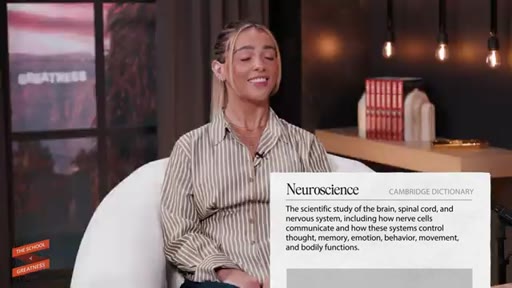
§ 06 · Frame Gallery

Visual moments.