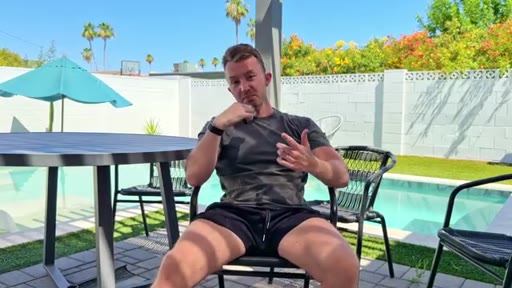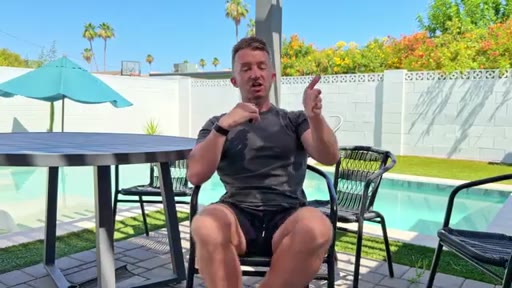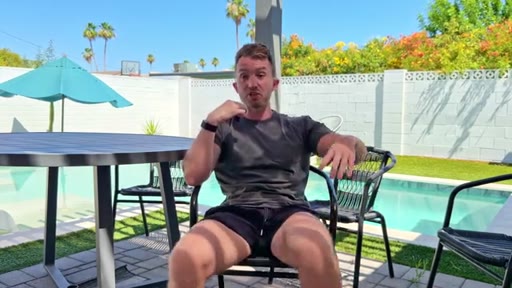

The bait, then the rug-pull.
Eighteen months after hitting a million dollars a month, the number on the scoreboard had moved only forty percent. By every surface metric, that is a failure. The math underneath told a different story: take-home income had tripled.
Where the time goes.
01 · The revenue vs. profit distinction
Opens with the 40% revenue growth / 3x take-home income reveal. Frames the central argument: revenue and take-home are two distinct things that frequently move in opposite directions.
02 · LTVmaxxing
Customers cost money to acquire. Additional products sold to existing customers cost nothing to acquire. Going from 1 to 10 products tracked nearly 1:1 with revenue. References Ready Fire Aim. Publix analogy for ecosystem stickiness.
03 · Brandmaxxing
Two valid paths to revenue: cold traffic offer with guarantee, or warm audience via content volume. Alex Hormozi as archetype for the brand-max path. Content output increase credited with tripling take-home.
04 · HighTicketmaxxing
ListKit cold calling at $6k/month vs. cold email at $600/month. Same CAC, dramatically different ROAS. 10-30 day sales cycle requires patience. Launching Olympia mastermind immediately doubled Client Ascension profit.
05 · SlowAndSteadymaxxing + CTA
Rejects blitzscaling. 30% YoY growth is exceptional. Real metric is take-home profit on tax return. Refutes the build-to-exit thesis for service businesses. Closes with tiered offer CTA.
Visual structure at a glance.
Named ideas worth stealing.
The Four Maxxing Levers
- LTVmaxxing
- Brandmaxxing
- HighTicketmaxxing
- SlowAndSteadymaxxing
Four compounding profit levers that together constitute cash flow maximization. Each addresses a different failure mode of revenue-chasing without profit.
Cold vs. Warm Traffic Offer Architecture
- Cold: new money, done-for-you, low commitment, de-risked, guaranteed result
- Warm: high-price, relationship-dependent, no guarantee required
Two distinct offer architectures with different conversion requirements. Cold needs a tight promise and a guarantee. Warm needs existing trust.
Horizontal vs. Vertical Scaling
Vertical: push one product to more people. Horizontal: launch more products. For most service businesses horizontal is less volatile and more profitable.
Lines you could clip.
"I have more than tripled my take home income in that time. Who is the retard here?"
"A buyer is a buyer is a buyer is a buyer. Somebody who buys something buys everything."
"Just charge more money for higher priced people. I am a retard for not doing this so much earlier."
"Just become rich really slow and for sure."
Things they pointed at.
How they asked for the click.
"If you are below 30k a month, like, you should probably just join AI Assisted Agency."
Tiered offer stack keyed to viewer revenue level. Below $30k/mo gets coaching program, above gets mastermind. One-on-one calls and email list as fallback. Clear, specific, not pushy.
Word for word.
Revenue is the scoreboard nobody should be watching.
Take-home profit and revenue are two separate numbers that frequently move in opposite directions, and conflating them is the most common way service-business owners stay broke while looking successful.
- Acquiring a new customer is the expensive part of the equation; every additional product sold to that customer arrives with near-zero acquisition cost, making product breadth the highest-leverage growth move for any established business.
- Content is not free marketing -- time and editing have real costs -- so every creator has a CAC even without running ads; the question is whether that CAC is acknowledged and optimized.
- Cold traffic offers and warm traffic offers are structurally different products requiring different architectures: cold needs a tight, refundable promise; warm needs existing trust built over time.
- A higher-priced offer and a lower-priced offer in the same category frequently carry identical acquisition costs, meaning the ROAS difference is entirely a function of the price you chose to charge.
- High-ticket sales cycles of 10-30 days produce ROAS numbers that look catastrophic at day 7 and excellent by day 60 -- most operators abandon the test before the data is valid.
- 30% year-over-year revenue growth paired with increasing profit margins is a better business outcome than 200% revenue growth with declining margins, regardless of what headline metrics suggest.
- The decision to scale ad spend faster than your LTV, brand equity, and high-ticket infrastructure are ready destroys the profit that slower growth would have preserved.
- Service businesses are almost never sold; optimizing for enterprise value at the expense of current profitability trades a real compounding benefit for a highly unlikely future event.