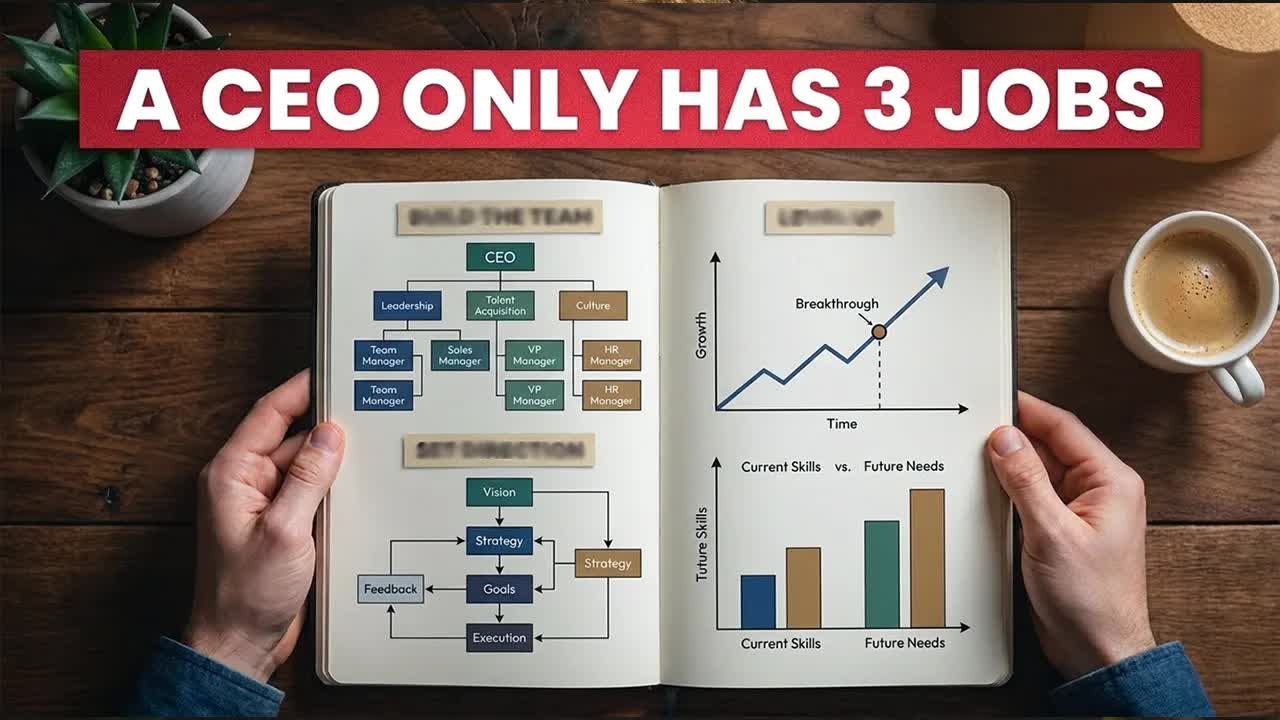
The bait, then the rug-pull.
Twenty jobs, one person, no leverage — that is the trap most business owners never name. The video opens with the diagnosis bluntly: the overwhelm is not a time problem, it is a role confusion problem. The whole video is a reframe from employee-in-your-own-business to owner of a machine that runs without you.
Where the time goes.

01 · Hook and promise
Pain state established: 20 jobs vs 3. Promise to show what the 3 are, why they move the needle, and how to use them to scale faster while working less.
02 · Owner vs employee mindset
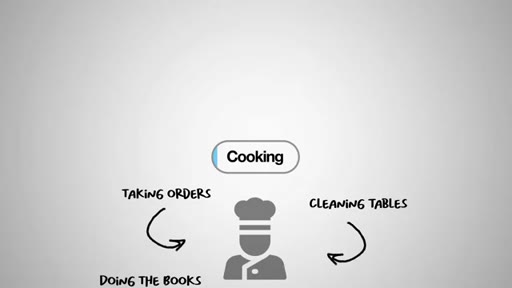
You are not an employee in your business. Restaurant/chef analogy: a chef who does everything produces bad food. Delegate anything not growing the business.

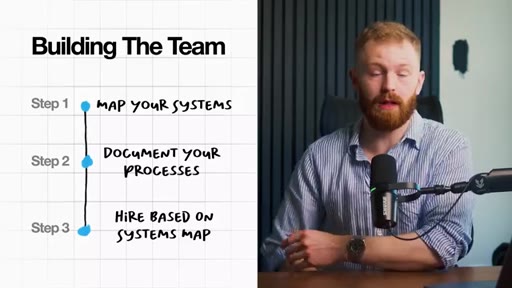
03 · Job 1: Build your team
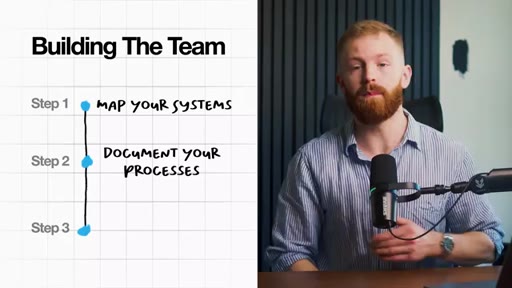
Map systems, document processes, then hire based on the map. Hiring without systems creates failure — the new person has no path to follow.

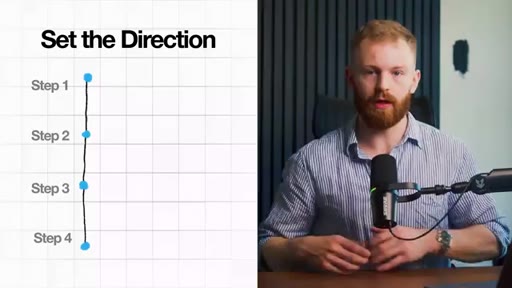
04 · Job 2: Set the direction
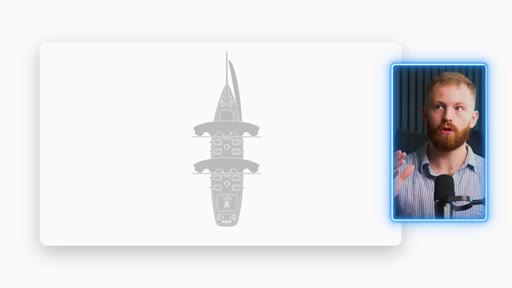
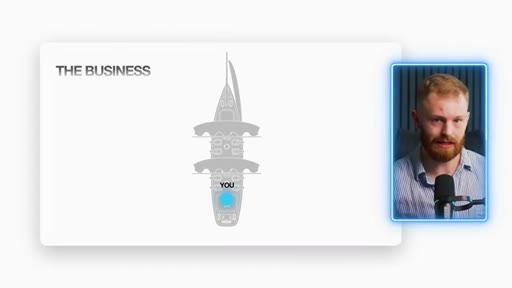
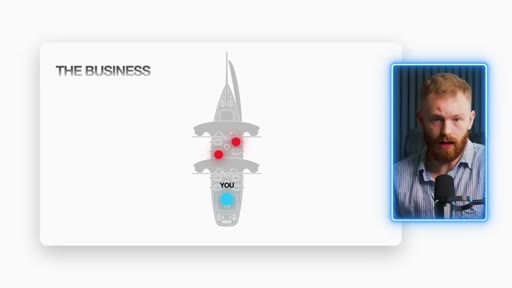
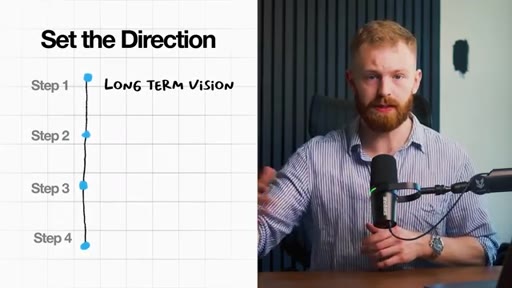
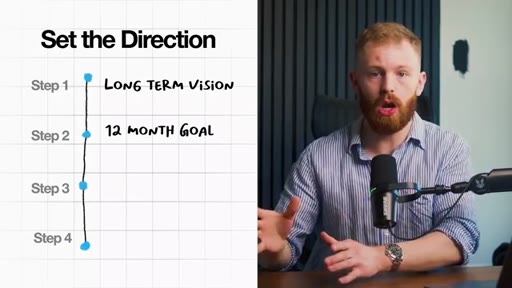
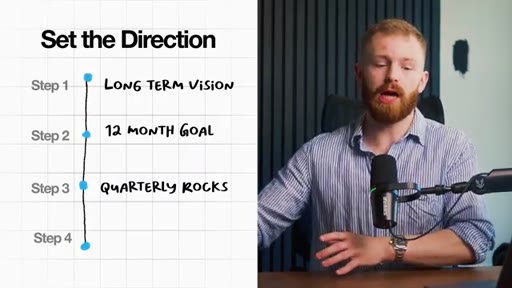
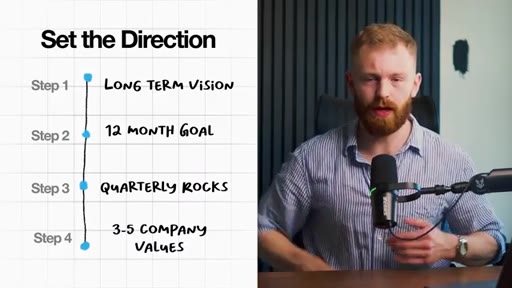
Pirate ship analogy. Four-layer goal stack: long-term vision, 12-month goal, quarterly rocks, 3-5 core values. Team can make decisions without the owner when direction is clear.
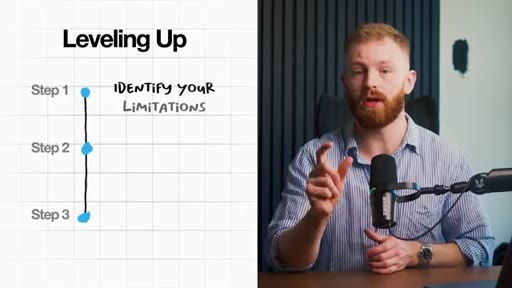
05 · Job 3: Level up
The most important job. Skills to reach 1M are not the same as skills to reach 10M. Continuous self-improvement is the compounding lever.

06 · What leveling up looks like
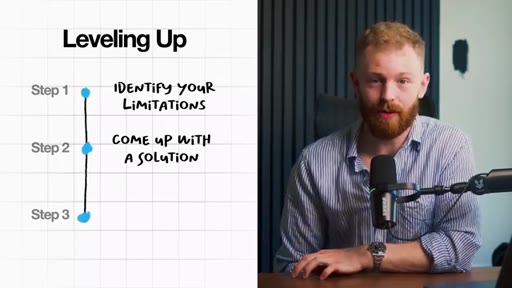
Diagnose your specific limitation (focus, prioritization, limiting beliefs, systems) and fix it. Personal improvement must run alongside business systems.

07 · CTA and tease
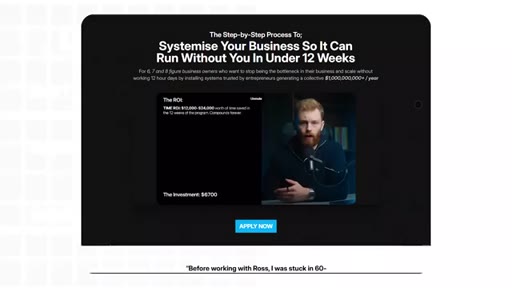
Pitches MOS coaching program. Teases a fourth job and directs viewer to a follow-on video.
Visual structure at a glance.



Named ideas worth stealing.
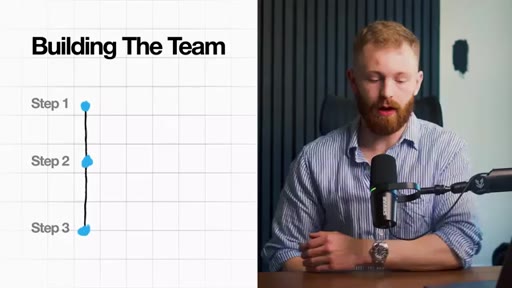
Build Your Team (3-step)
- Map your systems
- Document your processes
- Hire based on the systems map
Systems documentation before headcount. The map tells you what to delegate first and gives hires a clear operating path.
Goal Stack (Set the Direction)
- Long-term vision (5-10 years)
- 12-month goal
- Quarterly rocks (3 per quarter)
- 3-5 company values
Cascading goal hierarchy that lets team members make aligned decisions without the owner. Values serve as tie-breaker criteria for ambiguous choices.
Level Up (3-step)
- Identify your limitations
- Come up with a solution
- Implement and improve
Treat self-improvement as a structured business process. Diagnose the specific bottleneck, prescribe a fix, execute.
Lines you could clip.
"What makes business hard is spending all your time on things that do not fucking matter."
"You just threw them into Gordon Ramsay Hell Kitchen and said cook."
"The most important job you have as a business owner is to be in a constant, never ending state of forward leaning positive upward progress."
"These skills and abilities that get you to 1 million a year are not the same skills and abilities that get you to 10 million a year."
Things they pointed at.
How they asked for the click.
"If you want my help, click the link in the description below for more info."
Soft CTA with a tease — the fourth job is withheld and used to drive a click to a follow-on video, creating a loop back into the content funnel rather than exiting to an offer cold.
Word for word.
Three jobs only the owner can do.
Business stays hard when owners act like employees — the work that actually moves a company forward comes down to three protected jobs that cannot be delegated.
- Building a team requires documenting systems before hiring, not after — a new employee with no process to follow will underperform through no fault of their own.
- Hiring based on a systems map tells you which role to fill first and gives each person a clear operating path from day one.
- A team without shared direction pulls in different directions; a four-layer goal stack (long-term vision, annual goal, quarterly rocks, core values) lets team members make aligned decisions without asking the owner.
- Core values function as decision-making criteria — when a client problem arises, a team with clear values knows what to do without escalating every call.
- The skills that reach 1M in revenue are not the same skills that reach 10M; deliberate self-improvement is the compounding lever between levels, not just working harder.
- Self-improvement as an owner means diagnosing the specific bottleneck (focus, prioritization, limiting beliefs, systems fluency) and fixing it deliberately, not making a vague commitment to growth.
- If you cannot execute or stick with systems, building them is pointless — personal discipline and operational capability have to improve in parallel with the business itself.