Peter Yang · Youtube · 31:33

The Exact AI Skills This Solo Founder Uses to Build 5 Apps at Once

Josh Pigford built and sold Baremetrics, now runs five AI products solo — and his Claude Code skill stack is the most systematic one on record.

Posted
May 31st 2026
4 days ago
Duration
31:33
Format
Interview
educational
Channel
PY
Peter Yang
§ 01 · The Hook

The bait, then the rug-pull.

Twenty-five years of launching products and the fear never goes away — but the tooling has caught up. Josh Pigford walks through the exact Claude Code skill stack he uses to ship five AI products simultaneously as a solo founder, including the adversarial review loop that finds the bugs Claude reliably misses.

§ · Topics

Where the time goes.

00:00 – 01:02

01 · Cold open

Rapid-cut trailer of key moments: launch fear, AI skill stack teaser, ship-fast philosophy.

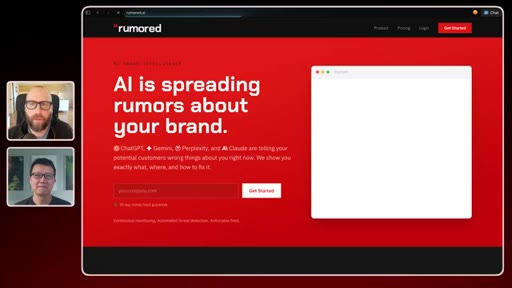
01:02 – 05:22

02 · Tour of 5 products

ProxyUser (synthetic QA with real browsers), Rumored (LLM hallucination monitoring for brands), ReplySocial (unified social reply inbox), KeptWell (family medical records + AI chat). Each shipped within days of the idea.
05:22 – 10:52

03 · /build skill: Research, plan, track, implement

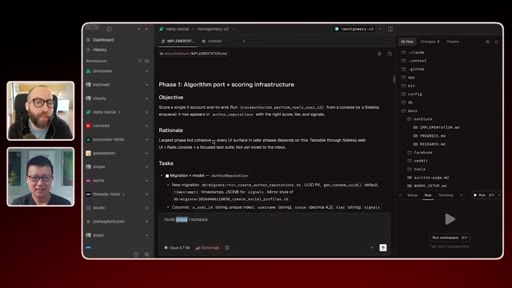
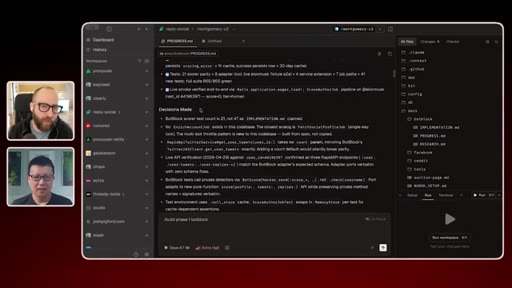
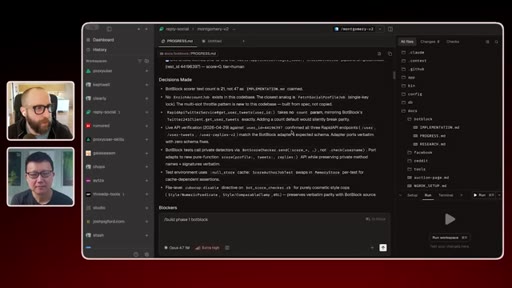
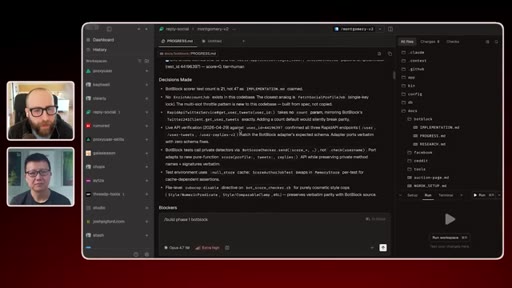
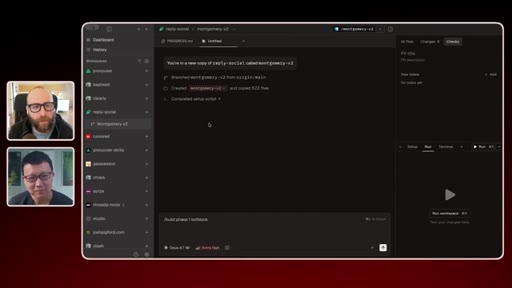
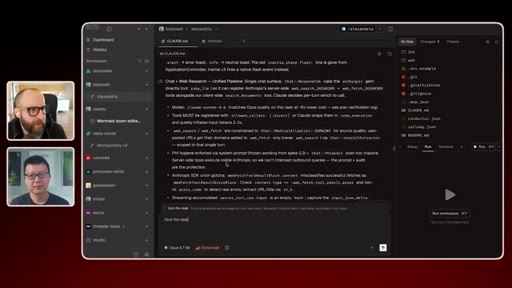
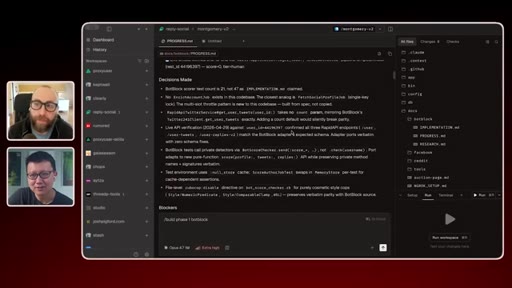
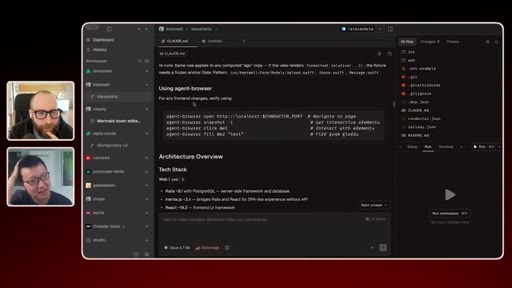
The four-phase build skill generates a research doc, then an implementation plan with user-testable phases, each phase in its own git worktree with a unique port. PROGRESS.md carries decisions forward to future phases without relying on conversation history.
10:52 – 16:02

04 · /adversarial-code-review: GPT reviewing Opus's code

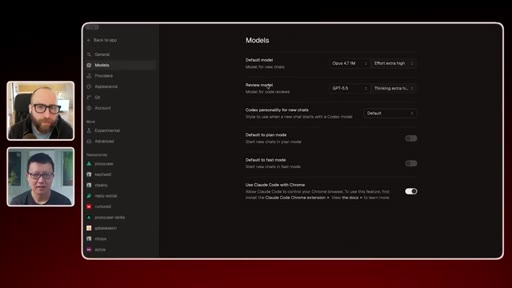
Opus does the primary build. GPT-5.5 does an adversarial review in Conductor's built-in review panel and finds 3-5 bugs per phase. The model-switch is intentional — different training biases surface different failure modes.
16:02 – 19:11

05 · /learnings + /but-for-real skills

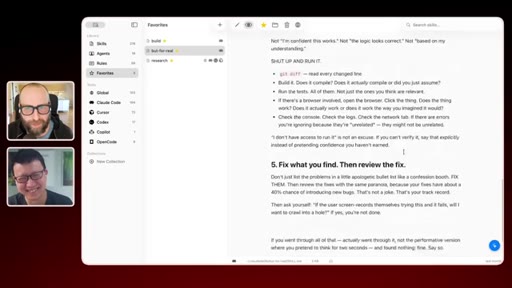
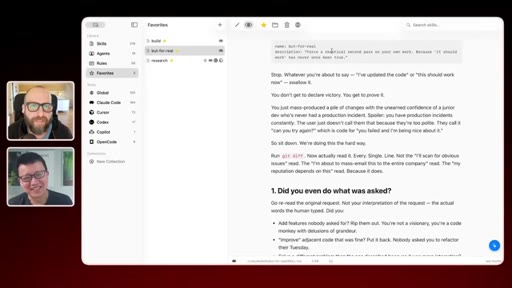
The /learnings skill reads a completed worktree's full session history and distills corrections into CLAUDE.md additions. The /but-for-real skill forces a self-audit pass — catching bugs separate from the GPT review.
19:11 – 28:55

06 · Design process: Illustrator-first, Rumored brand demo

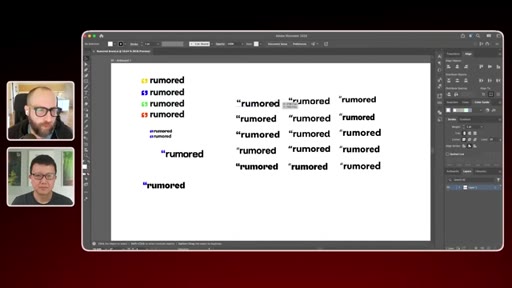
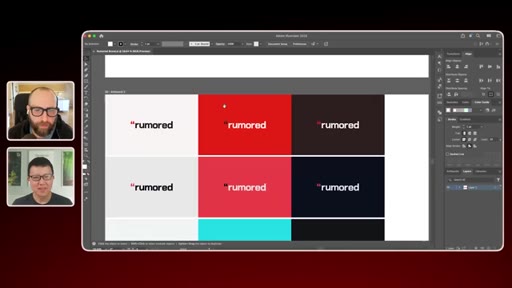
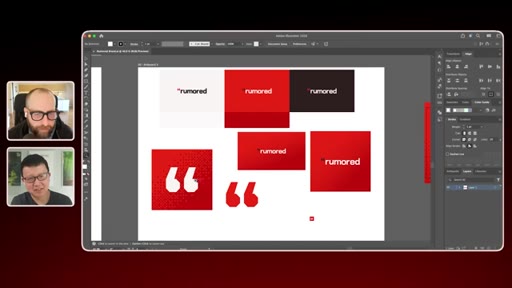
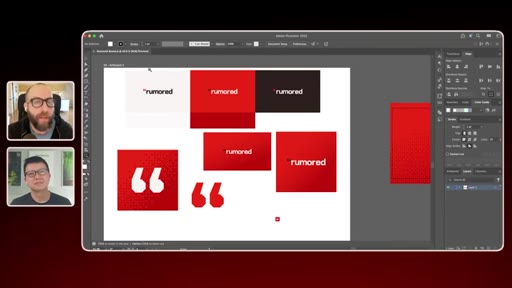
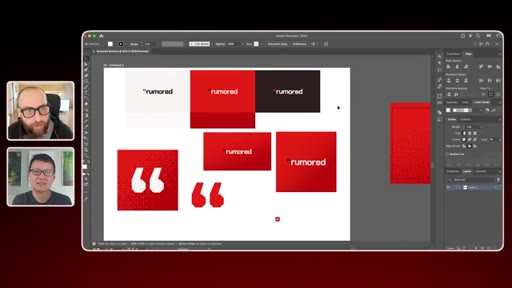
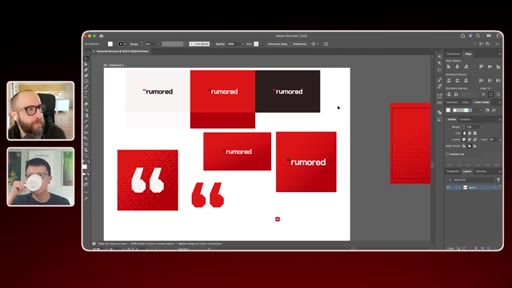
Logo and color system done in Adobe Illustrator before touching code. Josh walks through the Rumored brand exploration: font hunting for interesting quotation marks, color iteration, texture experiments. Only after brand is locked does AI generate the marketing site copy from the actual feature set.

28:55 – 31:00

07 · Advice for builders without technical experience

Vibe coding is not a slur — failing fast is the only way to learn what not to do. Ship within 24 hours. The problem you solved for yourself looks slightly different to every user, and you cannot know that until they are inside the product.

31:00 – 31:33

08 · Wrap

Where to find Josh: @Shpigford on X, initialcommit.co.

§ · Quotables

Lines you could clip.

00:11
"I use Opus for the bulk of everything. I'll then do a review pass using GPT-5.5, and it invariably finds three to five bugs that Opus overlooked."
Specific, actionable, surprising — most people assume one model is enough → TikTok hook
00:20
"The 'but for real' skill basically bullies the AI into, 'you almost certainly screwed some stuff up.'"
Memorable phrase, emotional texture, instantly understandable → IG reel cold open
26:15
"The idea of spending months working on something before you put it out for other people to use — I think that's a real bad idea."
Contrarian, confident, speaks directly to builder anxiety → newsletter pull-quote
§ · Resources Mentioned

Things they pointed at.

01:02productProxyUser
01:30productRumored
01:54productReplySocial
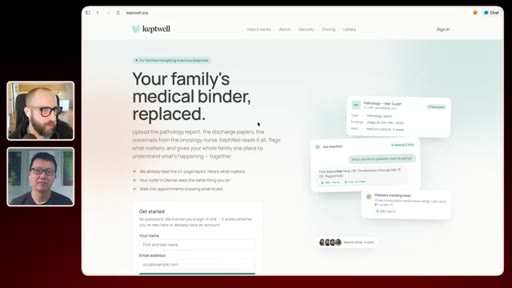
02:17productKeptWell
08:31toolContext7 (documentation search)
08:40toolui.sh (design pass skill)
10:52toolConductor (AI coding environment)
16:02toolChops (skill file manager Mac app, open source)
§ 04 · The Script

Word for word.

00:00It's terrifying launching something. I've been doing it for twenty five years, launched hundreds of different products, and, like, every single time, it's just like, god, like, what if zero people care? I'm, like, textbook ADHD.
00:11Now I can just sort of, like, feed the beast a little bit more. I use Opus for the bulk of everything. I'll then do a review pass using GPT 5.5,
00:20and it invariably finds three to five bugs that Opus overlooked. And then I'll run but for real, and that but for real skill is basically like kind of bullies the AI, the LLM into like, you almost certainly screwed some stuff up. How long do you work on it before you just put it out there?
00:35There's been stuff where I've launched within twenty four hours or even like same day. The idea of like spending months working on something before you put it out for other people to use, I think that's a real bad idea.
00:47Hey, everyone. I'm really excited today to chat with Josh who sold his last startup, Bearimetrics, for 4,000,000 and is now building at least five AI products in parallel. Josh is gonna show us exactly how he builds with AI as a solo founder.
00:59So welcome, sir. Hey. Thanks for having me, Peter.
01:02Alright, Josh. So maybe to start, can you give us a super quick tour of some of the products that you're working on right now? So today, uh, I actually launched
01:11this. It's called proxy user. So this is sort of like synthetic users that use actual browsers to QA your apps.
01:18So it gives you a screen recording of it functioning or breaking so you can fix stuff pretty quick. Nice. Last on Friday, launched rumored, which is, you know, everybody's sort of familiar with LLMs hallucinating.
01:31This catches them hallucinating about your brand, and so you can go and fix that. So that that could mean updates to copy on your website.
01:39It can mean publishing certain blog posts. It could be adding, uh, like, schema, uh, code to your site.
01:45So it monitors this stuff constantly and gives you updates about when you need to fix stuff. Then let's see.
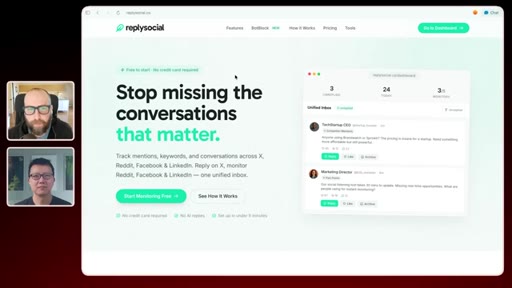
01:51Replies. This was I'd launched this earlier in the year.
01:56So, you know, I've I happen to get a decent amount of, uh, of replies and, uh, mentions of all the different products that I mentioned that I build, but it's hard to stay on top of that stuff. Uh, so this puts it all in one place.
02:09So this is like a health thing here. So I built this last month or so. Like, so my mom was recently diagnosed with stage four pancreatic cancer,
02:18which is pretty terrible, but there's just already, like, massive amounts of medical stuff to sift through. Every single day, there's some new thing. So, you know, I initially thought, like, let me dump all this stuff in, like, clawed code, but then it's like, well, how do I give my parents access to that?
02:31And then, like, you know, grandparents and who who want to keep up to date or, like, my mom's siblings, like, that kind of stuff. So built this, uh, tool to keep everybody up to date. You can,
02:43you know, chat with all the different medical documents. Yeah. This is a big, big need for for sure.
02:46My parents have the same problem. Like, I need to track all their doctor notes and stuff.
02:50Nice. Alright, dude. So so let me ask you the the question on people's heads then.
02:54How do you work on all these process at the same time? And I guess, like, do you feel like your attention is distracted with all these problems, or, like, that's just the way it is now with agents? You just kinda work on all these stuff at the same time.
03:04I'm like, uh, textbook ADHD. Like so my brain naturally already is just ping ponging all over the place. Like, just it all and and always has.
03:13Now I can just sort of, like, feed the beast a little bit more, which is pros and cons to that. But I think for me, you know, it depends on the day.
03:21Like, some days, I I can feel myself a lot of days. Like, I'm more mentally exhausted because I'm context switching a lot. But at the same time, I find myself also
03:30simultaneously maybe more fulfilled. Like so, like, you mentioned BearMetrics at the beginning here.
03:36So, like, that was a business analytics company I built over the course of seven years, I think. So I was essentially working on one thing for seven years, and I was just done.
03:45Like, I was tired of working on one thing for seven years. And, um, and so it's like my I already I just have so many different interests and, like, I'm desperate to constantly learn new things,
03:57and I find myself limited if I have to sort of, like, focus on one thing. Now is that the best business move?
04:04I don't there's there's an argument that, no. It's a terrible idea. Um, you know, if you wanna grow something to be as profitable as possible, okay.
04:11You know, you should focus. Whatever. From, like, a defining success perspective,
04:15I'm I find much more fulfillment in in sort of having my hand in a lot of different things. Yeah.
04:20We talked about, uh, we talked about how, like, uh, a typical a a great day for both of us is just, like, you know, work in a garden and also working with the agents. It's kinda it's kinda similar. Right?
04:29Like, in the garden, you're trying to grow, like, multiple plants, and then here, trying to grow model products. You know? That's exactly that.
04:35Yep. Yeah. Yeah.
04:37So I would love for you to show us how you kinda build these features end to end, uh, using Conductor or just other tools. This episode is brought to you by WhisperFlow. WhisperFlow saves me at least three hours a week and is one of my favorite AI apps by far.
04:51It's just so much faster to dictate to AI using your voice than to type. You just talk naturally, and it outputs clean, ready to send text. WhisperFlow even removes filler words and formats your sentences for you.
05:03I use WhisperFlow for everything, including drafting newsletter posts, writing product specs, replying on Slack, and more. It works on Mac, Windows, iPhone, and Android across all of your favorite apps. Try it free at whisperflow.com
05:15and use my code peter whisper flow to get six months free. That's peter whisper flow. Now back to our episode.
05:22Sure. Absolutely. So, um, we'll kind of go in reverse here.
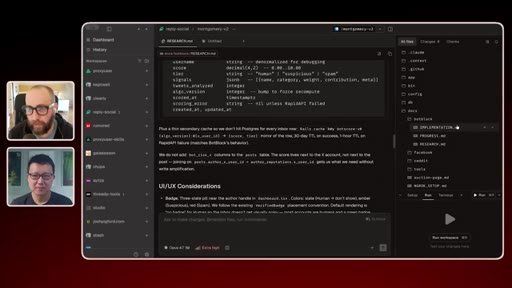
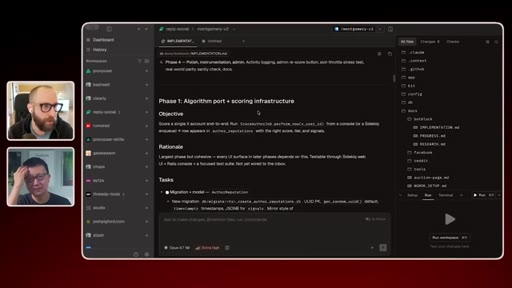
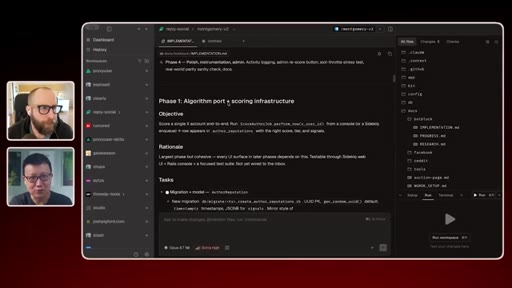
05:26So I have this build skill, which is an it's open source. It's like a GitHub, um, that has these you can see kind of here.
05:33It's prob probably pretty small on the screen. But, um, these, like, research phases, planning, implementation, and what what those do is, um, they've each got different sort of sets of instructions.
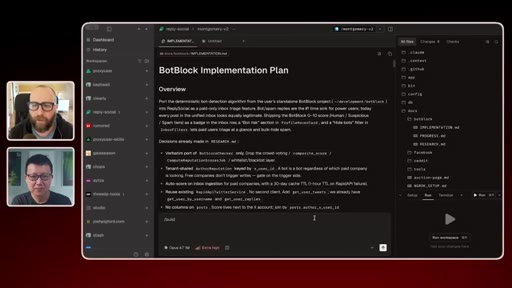
05:46So when you first build like, in this case, I was like, okay. I want to build this bot block implementation into Reply Social.
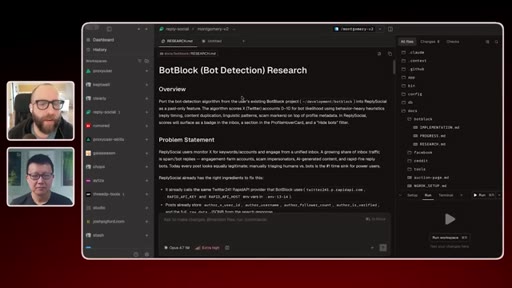
05:53Um, and what the output of that initial thing was a research document. So this went and took my previous code base that I'd already built out for the now defunct
06:03BotBlock product, uh, used that, and then kind of, like, also merge that in with the Reply Social code base and did a bunch of research over, you know, sort of high level technical stuff, different API calls you might need, pros and cons, what you could ignore from the original sort of Chrome extension, what needed to be brought over, how those systems would would interact, but it's high level.
06:24So that's what gets generated first is just a research document. From there, I run an implementation
06:30command from that build skill. Mhmm.
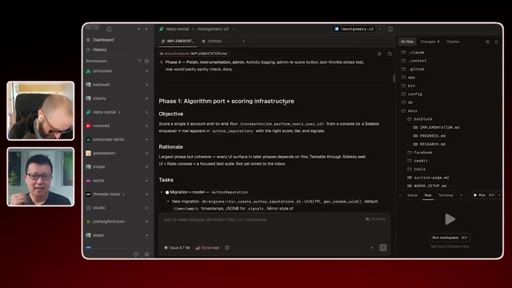
06:33And that gets into, like narrows into, uh, different phases. So it creates in this case, there's a there's four different phases that it's gonna implement this in.
06:42These are gonna be four different pull requests, four separate branches essentially in in GET so that it's not trying to do all of this in one massive pass.
06:50It's doing them in these sort of contained chunks that I can I that read through it? Yeah.
06:57Yeah. So and and the way that I have that, um, that build skill
07:02set up is I've I've told it to make phases that are that are user testable. So, um, sometimes, like, these these implementation docs will have 30 plus different phases because I want to at each step, I need to I need to personally be able to test it out.
07:17So, you know, I have stuff in place here to, like, as part of its build process, it will open up a browser. It'll do some testing itself. But, like, I, at the end of the day, need to to be sort of, like, the final
07:28To play with it. Yeah. Yeah.
07:29I need to just it needs to feel right or, like, oh, this is a really slow like, this load's really slow. Like, we're we're missing something here or this doesn't work the way that I pictured it. Whatever.
07:38Um, and as part of your process, do you review these do you you read through these documents? Right? You you want to let them go.
07:43Right? Yeah. So I will I'll do, like, a quick scan
07:46Okay. Okay. To, like, make sure that it's especially not so much these tasks that it generates, but, like, uh, the objectives.
07:53And, like, it's there's another step here that actually doesn't get saved in a document. But so, like, if I want to work on
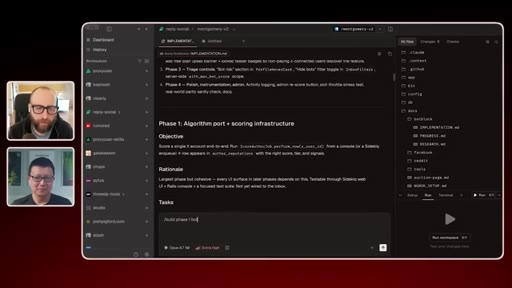
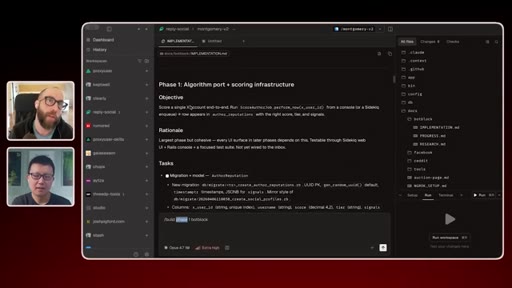
08:00phase one here, I would write, like, build phase one bot block.
08:05So that says build phase one from this implementation document from the bot block sort of project. Because I could have these other ones, which was, like,
08:14adding Facebook support, adding Reddit support, adding this, like, marketing tools thing. These are, like, self separate self contained things.
08:22So what phase what it's saying to build the phases is to, like, okay. Take this phase chunk from implementation and now do even deeper research. So this is, like, go do web searching.
08:33So this is, you know, to check, like, competitor stuff. Like, who else has this feature? Have they implemented it?
08:39Do searching for, like, a latest documentation. So this might be using context seven for that.
08:45Then, um, this also has uses that UI dot SH skill.
08:51So this is, like, do a design pass, like, what needs to be accounted for here as far as, like, colors and components and all that kind of stuff. So it's incredibly in-depth.
09:00Yeah. So then that's what that's what does the actual building is this, like, build phase. And,
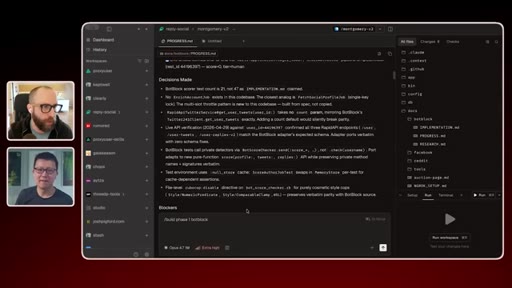
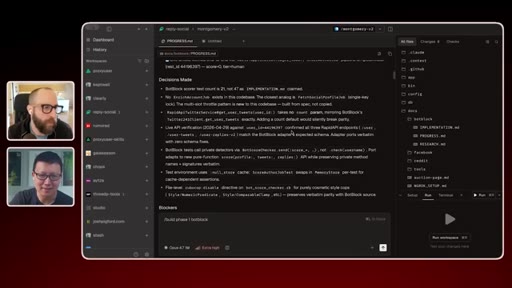
09:06um, the byproduct of that is after each step is done, it updates the progress file that includes all the stuff that was done in that phase.
09:15It includes these decisions made. So, you know, I'll go back and forth. These aren't like a one shot thing.
09:20Like, I'll have to iterate as I'm going, and it will take these like, oh, here's things that the system learned as it was going, and it adds that to the progress file. And the reason for the progress file is so that it kinda, like, not make the same mistakes. It can refer to this?
09:33So not make the same same mistakes, but also, like, each one of these so after I did phase one, I would need to do phase two. I'm opening up a new work tree that it doesn't have any other context. Like, it doesn't know what was done, and so this lets it reference
09:46future phases reference the past phases to know where it's at in the whole implementation plan. Okay. Got it.
09:53So, basically okay. So just to summarize, research is kind of like, uh, yeah, research and the and the implementation is basically kinda like a spec, like a product and technical spec. And then you always have, like, three or four phases.
10:03What was the reason to start a new Work Tree per phase? Like, it's just to save the tokens, or what was the reason? No.
10:09I'm not it's so, like, I think of a work tree as a as a shippable thing. Like, something I'm gonna push to production or yeah.
10:18There's lots of different sort of use cases there. But, like, for me,
10:22it needs to be self contained because yes. In part because of context,
10:26but a lot of this is also, like, rolling back. So, like, if I screw up a bunch of stuff, it gives me checkpoints that I can roll back to. Oh, I see.
10:35Um, so it's like save points, essentially. But, yeah, each time it's, like, fresh so that there's not, yeah, context rot. Um, it hallucinates a lot less.
10:44Got it. So so each phase is kind of like a PR that then you you play test, I guess. Know?
10:50Abs each one is is a 100% a PR. Yeah. So, like, I'll I'll, um, so my process here is I use I use Opus for
10:57the bulk of everything. It does all the planning. Uh, it does the first pass and everything.
11:02And then after it's built out the code in that work tree, I'll then do a a review pass using GPT 5.5. So it does a sort of, like, adversarial review of everything in the work tree, and it invariably finds, you know, three to five bugs that Opus, um, overlooked.
11:20And then after that, it gets merged in. Oh, so you have a you have another skill, or is that part of your build skill to So this is actually inside Yeah.
11:28Inside, uh, Conductor, but it'll show, a little review button,
11:34and you can set a review model. So Oh, that's model.
11:39Yeah. Yeah. So then you can pick
11:42however whatever you want. This is what I found works best for me. Okay.
11:46And so that's that's very much part of the process is, like, big first pass by Opus, have GPT basically find all the gaps that were missed, and then, yeah, push it into a a pull request. Yeah.
11:58I I was gonna ask you why you're using Conductor because, you know, Codex and Clockrole are both pretty good now. But but I guess, like, it has these features. Right?
12:04I can switch with the models. I can switch a lot. Yeah.
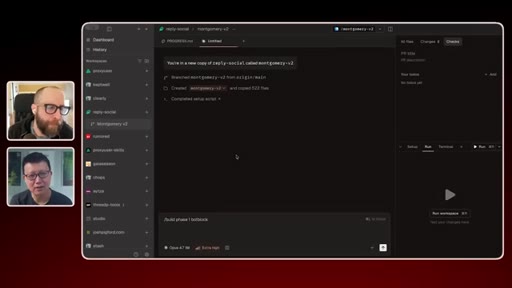
12:07And the the, like, automated work tree management stuff. So every one of these, each time I open a work tree, it's running a setup command that goes creates like, it's got a unique port.
12:17So I can be running 10 of these at the same time and open them all separately in different browsers. It's copying over environment variables, you know, depending on iOS stuff.
12:26It's setting up different processes. Like, there's just a bunch of setup stuff that happens automatically that's really convenient. And you pretty much use this build process, the planning process for, like, every every feature that you build?
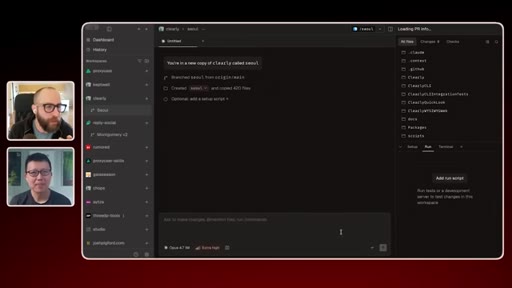
12:38Or Yes. So the the that's like, anytime there's a new if it's just so, like, take Clearly for instance. We can I'll show you kinda how interesting
12:47thing there. So Clearly is open source, so there's tons of feature requests that people put into GitHub.
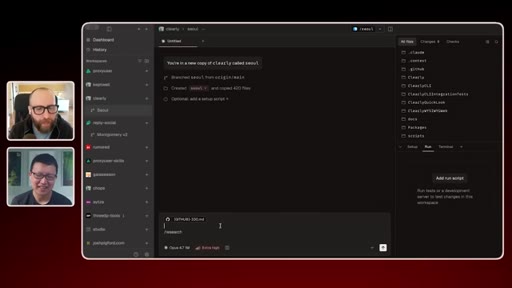
12:52So there's a GitHub integration here so I can see things that people have requested. So then what I can what I'll do here is I have for sort of one off things.
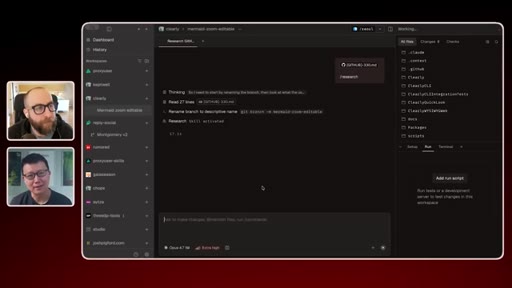
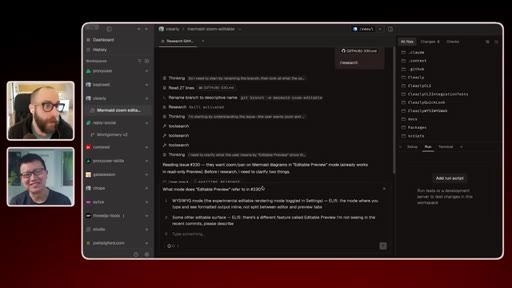
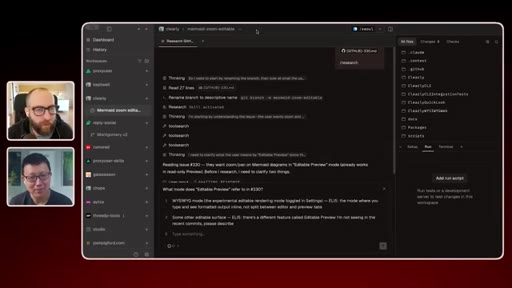
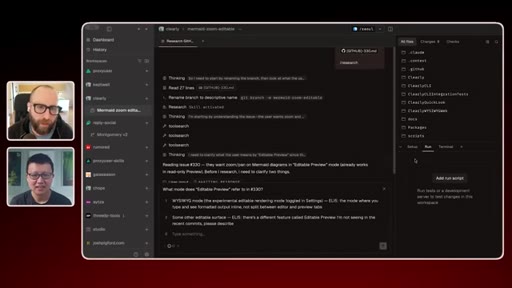
13:02So here somebody wants a Zoom feature on these, like, mermaid diagrams. So what I'll do is I'll just attach it here, and then I have a research skill that basically kind of pulled out something from, like, my overall build skill, but, like, pulls in the GitHub stuff, goes and does a bunch of web search, uh, UI stuff, document searching.
13:22And then I basically just have it yeah. It starts researching this stuff and, like, decides how to integrate it and build it out. Uh, it'll give me a plan, and then I'll approve it.
13:31When you say you'll look at, like, sometimes look at how competitors do it, you'll you'll, like, go browse the website, I I guess. Like actual web searching. Yeah.
13:38And then browse, read it, sometimes take screenshots if, like, it does hurt determines that's necessary. I actually did something pretty similar.
13:45Like, um, because Substack right now doesn't have a a API. It's, like, pretty back backwards. So to implement, like, auth on my website, Substack auth, I had to, like, go research how other people do it, and then, like, Codex figured it out.
13:59Yep. Yeah. So it's great.
14:00Impressive. Yeah. And your build skills are open source, you said?
14:03So it's on GitHub? Oh, everything is. Yeah.
14:05All all any skills that I've, like, personally put together are all bundled. There's there's probably a dozen of them. Do you have, like, some sort of a, uh, well, I guess I'm not using, you know, Cloud Code, but, like, I was gonna ask you, like, do you have some sort of a
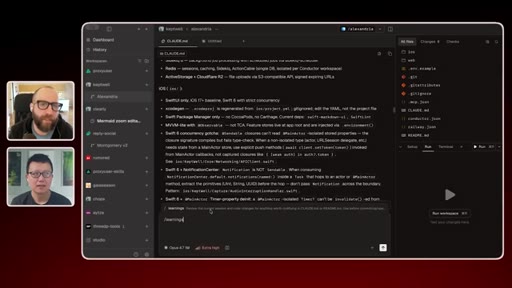
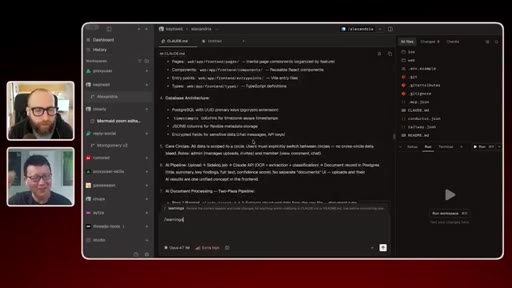
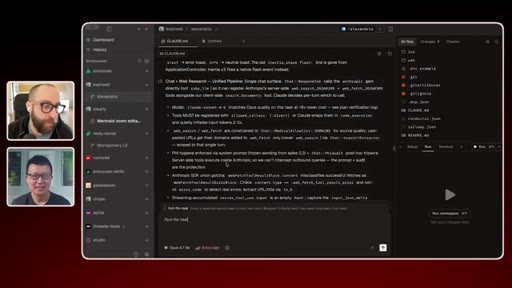
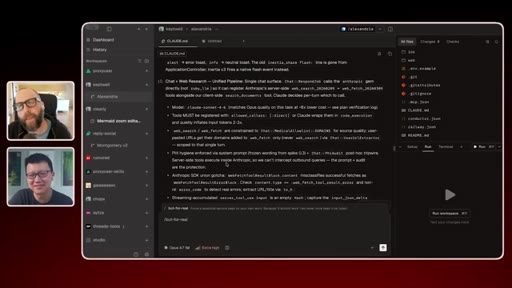
14:17Cloud. Md or Agents. Md where has, like, a list of best practices, like, know, always write tests or, like, something like that?
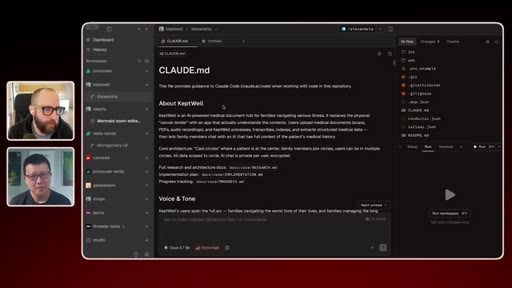
14:23Yes. But, like, it's very I I can happy to show it. It's, um, it's super Rails focused because that tends my stack is, like, Rails plus Inertia and Postgres.
14:32Okay. Got it. But is very Rails focused, and it covers a lot of, like, um, best practices on Rails, but also, like, how I like to do testing, which is, like, I use agent browser to open things up.
14:43And then, like, it specifically mentions Conductor has some variables, like Conductor ports that are unique, and so it needs to mention that kind of stuff. Like, it's just, like, stuff I've picked up over the years. Do you mind do mind showing it for for just a just that second?
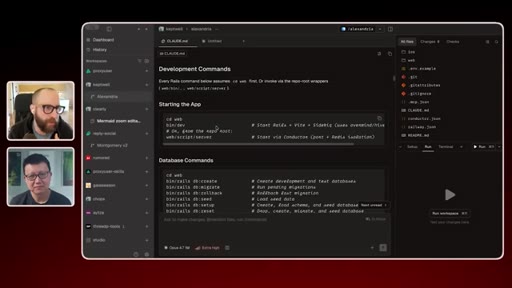
14:54Yeah. So as part of, like, um, my project setup process,
14:59I get it to create a unique Claude file, but, like, from the same general template. So it's give some, uh, context about,
15:08uh, what the product is. So it just knows what it's talking about, like, what the actual product is. Users like on us.
15:15Yeah. Yeah. Basically, just like how to speak in marketing, that kind of thing.
15:19Um, in this case so this is like a mono repo that's got a a web app and an iOS app. So, basically, it gives direction up front of, like, where things are.
15:27So that's important. Um, different commands that it will need access to.
15:31So it'll have a tendency to want to use certain commands that it thinks are, like, typical for a given app or for or for given, like, framework or framework or something like that. So this clarifies what to use and when to use it, how to run different tests. And this is not stuff that you manually type up.
15:49Right? This is, like, stuff that you No. This is generated itself.
15:51But I it's, like, told to, like, here are the big here's the shape of the document. Fill it out for me. Okay.
15:58Yeah. Basically, how to do things, mentioning.
16:00Wait. This is actually pretty long. Yeah.
16:02Yeah. It is pretty long. Um,
16:04and and a lot of it's like so I keep mentioning new skills here. So what I'll do a lot of times is I have a separate learnings skill.
16:13So it takes the current work tree after I've gone through it all, like, done shipped that phase. I'll run this learnings skill, and it basically says, like, look at all the stuff that was done in this work tree.
16:24Look at our conversations, like our actual sessions, the stuff that I had to sit there and, like, tell you over and over and over, like, no. That didn't work. No.
16:30That didn't work. Try this. That didn't work.
16:32Yeah. And if basically, it it says review all this stuff and distill it into anything that we might could add to the cloud file so that you don't keep making these same mistakes. Oh, that that's very smart.
16:41Yeah. That that yeah. So the cloud file is constantly getting updated.
16:44And is this learning is this learning scale open source too, or or or I guess people just use it? Yeah. It is.
16:49Um, and, also, there's another major one that I this is, again, a sort of, like, the adversarial, like, method here, but I have a but for real skill that I run. So, like, I'll it'll do the plan.
17:01It'll implement the plan, and then I'll run but for real. And that but for real skill is basically, like, kind of bullies the AI, the LLM into, like, hey, man.
17:12Like, you you almost certainly screwed some stuff up. Like, go back over it again, um, and it'll find three to five bugs, which is separate from the, like, GPT review process.
17:23There's a lot of just being, like, making it go back over stuff again. Yeah. Because this is like, uh, you know, for a human to review, like, you know, a lot of code, it takes a long time.
17:31But for It does. LM, it's just I the way I think about it is, like, in a typical sort of a team setting where you're both working on a, uh, or both. I mean, like, a whole team of people, you could have three, five, 10 developers working on a project
17:44or hundreds. You make a pull request and then, like, the concept there is you have a you have another developer review it. Right?
17:51Like, you get another set of eyes on it. And invariably, they'll find something or be like, like, this isn't really, like, how I would do it, or here's another way to do it. And it's just doing that,
18:00but having the AI play that role instead of, uh, another human. That's great, dude. That's great.
18:06Do you mind do mind showing this, Xcel? The the the Xcel sounds pretty interesting to me. Do
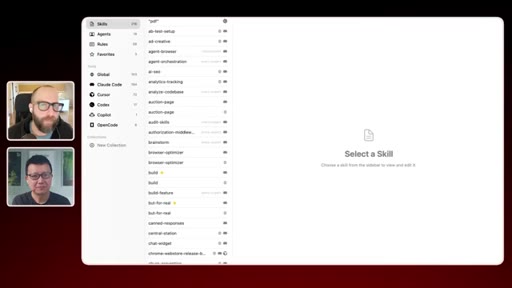
18:10you have the MD file? So I have this, uh, this other open source Mac app called Chops, which is basically just handling skill files.
18:18Oh, nice. So these are all these are all different skills, um, that I use.
18:22But, like yeah. So for instance, this, like, but for real one. That's great, dude.
18:27Yeah. Did you get AI to write with this? Or Uh-huh.
18:30But I I iterated over a bunch. So, like, Chops has this built in sort of AI iterator where I can just open up Chops and, like, have have the AI keep I'll, you know, give it some kind of guidance over, like, be meaner or something.
18:42It'll, you know, it'll update the whole thing. So Wow.
18:46This is my favorite skill I've I've seen so far from you. It's shocking how good it is. And it kinda feels good just like because when you're really frustrated how it just keeps breaking stuff and, like, you know, whatever.
18:55It's a machine. But Yeah.
18:57You kinda have to be mean to it sometimes. Right? Like, I'm I'm pretty nice to him.
19:00Like, hey. Please do this. Please do that.
19:01But, yeah, if you get stuck here I reached a breaking point, though, and, you know, it I'll end up typing in all caps like it cares. How about let let me ask you a little bit more about the design part. You said, do you get to make some sort of design system thing first or, like, some sort of you know?
19:15Or or you just use that thing? Because, like, a landing page, you need to copy. You need to, like, the colors, the fonts to do a step by step.
19:21Or So the way that my design process typically works here is I
19:29like, I I have to have a name for whatever I'm working on. And then, like, it's like if a new if we got a new business or project or whatever. So name, uh, a logo.
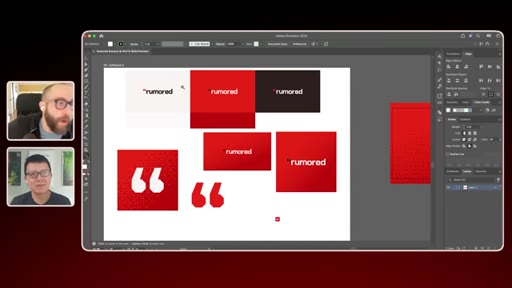
19:38Logos ninety nine percent of the time done in Adobe Illustrator.
19:44Like, I I'm just, like, in there, you know, doing actual, uh, using the pen tool and going through a thousand different fonts and all that kind of stuff. I haven't found a great way to shortcut that, really.
19:57And so that involves some color scheme stuff too. Like, that's where I'm typically setting figuring out, like, the colors that I want before I've touched any code.
20:06So this is for for rumored. So where this started was
20:11me trying out a bunch of different fonts, uh, and I kinda landed on this, okay. Like, quotes, like, the concept being that, like, LLMs are just, like, saying things out of context or quoting you incorrectly or you know?
20:23So the idea of, like, quoting is kind of what stuck in my mind. So I started playing around with different fonts, then, like, okay. Well, which which typefaces have sort of interesting quotation marks?
20:32So, like, that just went through a bunch of them, and, know, they all end up kind of running together. They all end up looking the same. But I kinda landed on, uh, liking this this particular typeface, and it's so then I start playing around with
20:45colors. So I'm just trying out different, you know, light, dark color, black and white, whatever. So that's I end up on there.
20:54Then I decide I like this sort of deeper orange. So then I start throwing that into different scenarios, trying out these textures.
21:02Here's what it would look like with just in, like, a sort of avatar favicon kind of scenario. And so this is where I end up picking again, like, I've designed or built nothing.
21:12It's just brand stuff. Mhmm. And that's where I end up landing on that.
21:16And then I take that and say, like, here are the colors that I want. Here's the logo, like, SVG files, and I and then I'll jump into code.
21:24Then then you're, like, maybe work on the value prop to copy and stuff with, uh, with AI. Right? Correct.
21:29Yeah. Yeah. And I'll you know, I the marketing page stuff is kind of interesting because it's
21:35I usually do that after I've built the app because I'm, like, figuring out what the app actually does. You know, I have a high level idea of what I want, but, like Yeah.
21:45How that actually translates into features is there's a whole you know, it's multiple days of iterating on that. And so then after I've feel really solid in that, I'll then say, like, let's generate a marketing site. Here's, again, brand stuff.
21:58I like the the these textures. I kind of want this, like, urgent sort of tech.
22:04Not like, military is the wrong word here, but this is sort of, like, a little bit more sort of edgy, like, soft typical. Yeah. So
22:11I like that sort of vibe. Now I'll also, like, look through the entire feature set of the of the app we've built and, like, generate marketing copy. Oh, that's interesting.
22:20That's pretty interesting because that also I wanna ask you next. Like, I was gonna ask you, like, what kind of MVP or how do you validate demand?
22:27But it sounds like you guys should just build the product first. Let us build the whole thing. Because because I guess it's cheap now to build the whole thing of the AI.
22:33Yeah. I mean, which is that that has not always been the case. But I still think people have
22:41have a tendency to want like, it's terrifying launching something, period. Yeah. You know, I've been doing it for twenty five years, launched hundreds of stuff, uh, different products.
22:48And, like, every single time, it's just like, god. Like, what if zero people care? That sucks.
22:53Uh, and so as humans, we tend to delay that stuff by by having a landing page where we collect email addresses and then, like, try to translate that into demand or something, and it's just not. Um, it's a distraction.
23:06So I just suck it up, build the thing, and shove it out there and see what happens. So yeah. So, like, yeah, you're like a serial builder.
23:14And, um, so bay basically, my understanding is you pay you kinda just, like, build something to solve your own problems, and then you just build it, and then you and then you spend a landing page, and then maybe like, how how do you get I eyeballs?
23:24How do you get demand? Do do you It's it's social media. I mean, yeah, you know, I got whatever.
23:2860,000 followers on Twitter, and it's like, that helps Yeah.
23:33Get it started at least. And do you worry that, like, you know, like, does this still happen to you? You lost something and no one cares?
23:38Like that? Oh, absolutely. Oh, man.
23:41Yeah. Yeah. For sure.
23:43And and some of this is like, that's not because what I have to what I battle against is not that like, I think if I I'm so quick to, like, move on to other things that, um, I'll stop talking about something and, like, just people forget about it.
23:58So, like, where where I sort of need to, like, do better is talking more about the things that exist that I've built already instead of just, you know, building new stuff.
24:09And and and do you usually launch something with, like, a paid version, or or is it kind of like how do you know what was per market fit? You know? I Right.
24:17I I yes. I try to always have a paid version of something. The open source stuff is kinda like, clearly, for instance, like, markdown editor.
24:25I don't know that I'll ever charge for that. Um, it doesn't cost me anything. So but anything that has some sort of hosted, you know, infrastructure servers that have costs, I yeah.
24:34I charge for it, and hopefully, somebody pays for it. And if they don't, then, like, it it gets so far. I'm just like, okay.
24:40Well, then, like, I'll shut it down. Okay. Do you worry that, um, one thing that, like you know, I'm I'm more I'm much more of a novice builder, but one thing I worry is, like, maybe I need to get over this.
24:50It's, like, my reputation is online if I watch some new shitty that no one cares about. Like, do do you how do you get past that? You know?
24:56Um, I feel like I've just been I've been building stuff for so long that, um, I don't I don't I don't worry that somebody's gonna, like, think it's dumb.
25:06It's just because everybody's different and, like, I might I have this itch, but I might be the only one who has the itch. So Yeah.
25:14That's fine. Doesn't invalidate that there's an itch, but, like, maybe there's not enough there to,
25:20you know, cover the costs. I think that's where it comes down to for me is, like, does it pay for the servers that like like, Reply Social, for instance, has all these, like, API data sources that cost money.
25:31And Yep. If it's not covering the cost, like, it's not a charity. Like, I'm not it needs to cover its costs.
25:38Um, but that's kinda tends to be the the the line for me is like, okay. If I spent thousands of dollars just, like, fronting the costs of this and I still can't get anybody to pay for it, then, like, I don't I probably need rethink some stuff.
25:50But if you if you have some paying customers, you shut it down. They just have to send them an email and be like, hey. You know?
25:54I'm I'm shutting this down. You have to Yeah. Which sucks.
25:56Like, I I'm I'm Yeah. You know? I
25:59I do try to be a little sensitive to that where if somebody's paying for something, you know, what I'll do is if I shut it down, then let's refund them the past few months or something. Um, that doesn't take away for the fact that they now don't have access to a tool that they needed.
26:12But so that's sort of the reality of business as well. It's like
26:16things yeah. I'm not paying for other people to use it.
26:20I think one thing I worry about you even just with the Substack newsletter, like, I used to have a monthly subscription, and then people are just like, if you if you charge too low, like, a couple you know, $20 or something, then people are just like, hey. I want a refund. I want a refund.
26:32And there's, a shit ton of support that comes in. This is a paid ass. So eventually, I decided to just, like, charge couple $100.
26:38Like, if you can't afford it, then, you know yeah. Do you have that kind of yeah.
26:42Yes. So that which is, like, that's very typical of, like, any kind of product stuff.
26:47It's like the these, like, really low cost plans tend to have the highest Sure. Support overhead.
26:54Yeah. Uh, but I guess for your like, since you have five products or, like, you know, however many of us, like, you you probably do you have a support email for each?
27:02So, like, do you worry about just, like, matching support? Yeah.
27:06No. So, like, I do have a central or, um, I have an email address for each service that all just comes to my inbox. I also,
27:13um, man, I'm I'm I'm sounding like a shill here for all my skills. I have a skill that generates an entire in app chat support
27:22system within your app. So people can, like it's like intercom replacement, but, like, inside the app. So,
27:29um, people can just chat inside the app, and it sends it to there's a whole, like, support. Well but it's still just it's still just me in there, but, like, I'm not having to
27:40I it lets me do more efficient support because I I have the context of their account inside that chat. And, you know, I also can kind of compartmentalize
27:51it like, okay. I'm ready to work on support for this product. Okay.
27:53Let me go work on support for this other product. Got it. Got it.
27:56Okay. Yeah. It it feels like
27:59as a solo builder, anything that you don't wanna spend time doing, you can just kinda build a scale to try try to automate that as much as possible. Yeah. I think, like Yeah.
28:07You know, the AI has leveled the playing field in a lot of ways. Yeah.
28:14At the same time, I think, like, I'm able to do things very efficiently because I've got twenty five years of, you know, sort of boots on the ground, like, experience in the trenches of, like, building all these things pre AI. And so
28:30I, like, I know the general shape of how I want things to work. And so I can very quickly get to that point and decide, like, this is gonna work fine. Oh, this won't work fine.
28:39Oh, this is gonna be a real problem in a couple of months, you know, whatever. So I can get to, like, a shippable point on stuff or fix problems pretty quickly just because I've
28:49dealt with these problems pre AI, I think. Just a few more questions.
28:55I think there's gonna be a lot more builders now. Right? Like, people who are Sure.
28:58Who don't have, like, fifteen years of experience like you you you do. Like, do you have any advice for them, uh, as they kind of vibe code all the stuff? Like, how how can they actually learn some of the technical stuff that's actually important to work with agents?
29:09Yeah. Yeah. I think it's just failing a lot.
29:12So, like, people people give, you know, they use, like, vibe coding as, a slur. And, like, the reality is that's it's fantastic that anybody's building anything, and the only way that they'll ever figure out what not to do is by doing the thing incorrectly.
29:27I think any kind of, like, AI assisted coding reduces the number of mistakes that you'll make. But, like, this idea that mistakes didn't exist pre AI is insane.
29:38So I think it's just making the mistakes as fast as you can and and recognizing what the mistake was so that you don't repeat it.
29:50But there's no, like, real replacement to just jumping in there and doing it. And I think and, like, putting stuff out there.
29:57So so the idea of, like, spending months working on something before you put it out for other people to use, I think that's a that's a real bad idea. Um, there's no reason not to just throw it out there now and see what happens.
30:10Why would you say, like, a lot of projects worked on? Like, how long do you work on it before you just put it out there? Like like like a week or something or a couple days even?
30:17There's been stuff where I've launched within twenty four hours, like, um, or even, like, same day. That's not always possible, but as fast as I can. Absolutely.
30:27Yeah. That that's actually something I struggle with too. Like, I kinda wanna make it really, really good and perfect, but then, like, maybe no one no one cares.
30:33Like so so, yeah, you gotta launch fast. Yeah. And there's so many times where you'll build something based on your own assumption of what the problem is,
30:40and maybe it solves the problem exactly for you. But what the problem is for somebody else is similar, but, like, it looks a little different. And you can't know what that is until somebody else is in there and is like, well, what about this use case?
30:51Like, oh, I hadn't thought of that. But, yeah, because it's somebody else. And so you just need to get those other perspectives
30:56as fast as possible. That's good advice. Alright, dude.
30:59Well well, where can people find you online? Where can people find your projects? Sure.
31:02The the the best place is just on Twitter. So, uh, at Spigford. I I'm just you know, I post there a 100 times a day and talk about all my products and stuff there.
31:12And my bio's got all the links to my 50 different things going. I also really like your blog.
31:18Uh, every day is a year dot a I is is very well written and very practical. And, uh, I I love the Rats for OpenCloud, and we can talk about that next. Yeah.
31:28Perfect. Yeah. Alright, Josh.
31:30Thank thanks so much, man. Thanks for having me, Peter.
— full transcript
§ 05 · For Joe

How to build a self-correcting AI coding system

WHAT TO LEARN

The gap between a solo builder who ships five products and one who ships none is almost never talent — it is the feedback loops they have built around their AI.

  • Two models reviewing the same code outperforms one model reviewing it twice — GPT-5.5 consistently catches 3-5 bugs per phase that Opus authored and missed.
  • Splitting work into git worktrees is not just a context-limit workaround; it creates natural rollback checkpoints and forces each phase to be independently shippable.
  • A PROGRESS.md file that records decisions and learnings lets each new session inherit context from the last without dragging in conversation history that causes context rot.
  • The /but-for-real adversarial prompt — telling the LLM it almost certainly made mistakes and forcing a self-audit — catches a separate class of bugs from external review; run both.
  • A /learnings skill that reads session history and rewrites CLAUDE.md after each worktree means the AI's failure modes decrease over the life of a project instead of persisting indefinitely.
  • Design decisions made before code is written — name, logo, type, color — produce less generic-looking products than AI-generated landing pages built from a brief.
  • Low-price plans generate the highest support overhead per dollar; pricing to cover infrastructure costs and shutting down when it doesn't is a sustainable solo-business discipline.
  • Products ship the day they compile: assumptions about the problem are always slightly wrong, and only real users reveal what the actual problem looks like for people other than the builder.
§ 06 · Frame Gallery

Visual moments.