Mike and Matty · Youtube · 15:14

How to turn any skill into a $1M business

A 15-minute roadmap from zero to $80K/month: get 3 results, build YouTube and email, then replace your bottleneck with an AI tutor.

Posted
May 29th 2026
5 days ago
Duration
15:14
Format
Tutorial
educational
Channel
MA
Mike and Matty
§ 01 · The Hook

The bait, then the rug-pull.

Three revenue ceilings stand between any skill and a million-dollar business, and almost everyone hits them in the same order. This video strips the roadmap to its skeleton: proof, distribution, leverage — and names exactly which mistake kills most builders at each stage before they ever see the next one.

§ · Chapters

Where the time goes.

00:00 – 00:25

01 · Cold open: the three walls

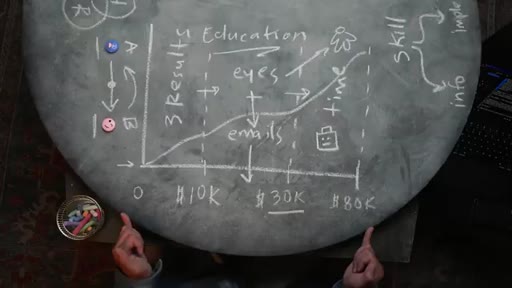
Frames three revenue walls ($10K, $30K, $80K/mo) every education business hits and promises a compressed roadmap.

00:25 – 01:24

02 · What is an education business?

Definition: teaching a skill to someone else. Zero startup cost, no team needed, the knowledge itself is the product.

01:24 – 02:07

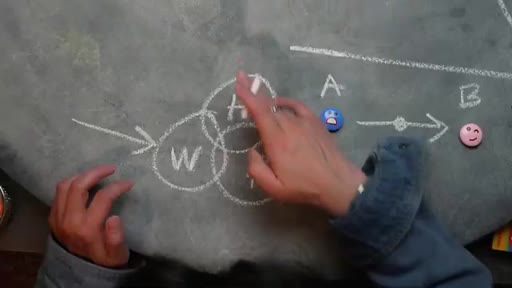
03 · The 3 pillars: Health, Wealth, Relationships

Every monetizable skill must map to one of three categories. Reframe it until it does.
02:07 – 03:36

04 · Finding your skill and the learn-teach loop

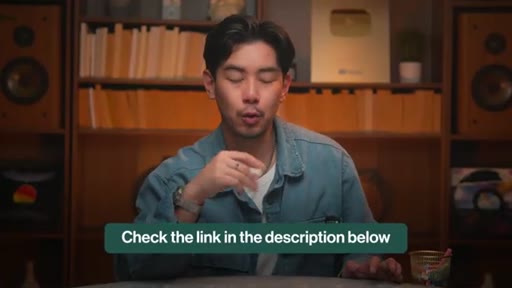
Teach the former version of yourself. The cycle: learn, teach, learn, teach. Free AI niche tool offered.
03:36 – 06:43

05 · Phase 1: 0 to $10K/mo — get 3 results

Do not build a course. Work 1:1, overdeliver, document everything. Get 3 people a result via warm network. $2,500 x 4 clients = $10K/mo.

06:43 – 09:23

06 · Phase 2: $10K to $30K/mo — eyeballs + emails

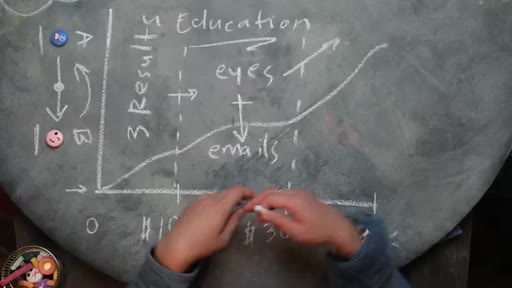
YouTube is the platform: longer videos sell deeper, learning intent is built in, algorithm favors education. Convert viewers to owned email list.
09:23 – 10:46

07 · Why email ownership matters

Platform risk is real. An 8-month posting break survived because of email. Social media audiences are rented; email is owned.

10:46 – 14:35

08 · Phase 3: $30K to $80K+ — the AI tutor

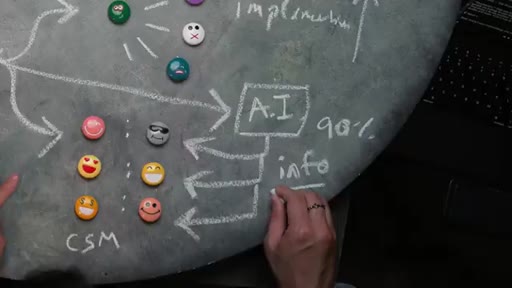
Two broken scaling paths (group coaching, hiring CSMs) both hurt clients. Third path: train an AI agent on your knowledge. AI handles informational 90%; expert handles implementation.
14:35 – 15:14

09 · CTA and closing

Points to 3-hour YouTube masterclass on content creation.

§ · Storyboard

Visual structure at a glance.

open
definition slide
chalkboard diagram
phase 1 setup
smartest platform
eyeballs + emails diagram
phase 3 setup
AI tutor reveal
CTA
§ · Frameworks

Named ideas worth stealing.

01:24 list

The 3 Pillars

  1. Health
  2. Wealth
  3. Relationships

Every skill that commands real money maps to one of these three outcome categories.

Steal for Positioning any knowledge offer — if it does not obviously improve health, wealth, or relationships, the price ceiling is low
04:20 concept

The 3 Results Rule

Get 3 people a repeatable result before scaling. One = fluke, two = coincidence, three = repeatable process.

Steal for Validating any offer before investing in marketing or courses
07:03 model

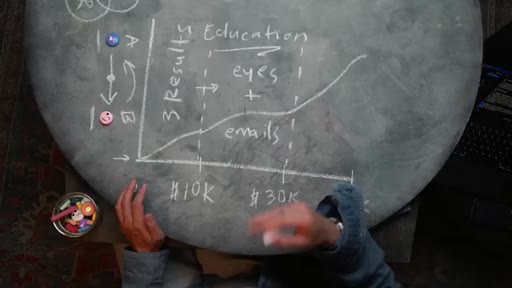
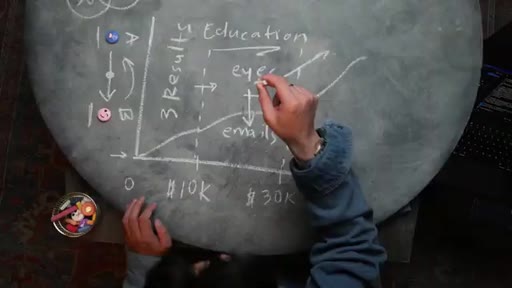
Eyeballs + Emails Formula

  1. Eyeballs (YouTube / attention from strangers)
  2. Emails (owned distribution list)

Two-part lead system. Eyeballs get you discovered; emails cannot be taken away. Both required because platform reach is rented.

Steal for Any creator-led business that wants durable distribution
13:30 model

Info vs. Implementation

  1. Info: facts, rules, technical knowledge — AI handles 90% better
  2. Implementation: hands-on practice, real-world execution — human edge

Skill acquisition has two components. AI has surpassed humans on informational transfer. Expert time is most valuable on implementation.

Steal for Designing an AI-augmented coaching product that keeps the human in the highest-leverage role
03:03 concept

The Learn-Teach Loop

Learn a thing, teach it, learn the next thing, teach that. Your offer evolves with your skill stack.

Steal for Justifying iteration in an education offer; personal brand positioning over time
§ · Quotables

Lines you could clip.

04:01
"Having a skill and teaching the skill are not the same thing."
Self-contained, counterintuitive, zero setup needed → TikTok hook
03:03
"The easiest things you can do is just teach the former version of yourself."
Universal applicability, sounds like a timeless principle → IG reel cold open
12:57
"Duplicate your brain into an AI agent."
Visceral, concrete, no setup needed → TikTok hook
14:04
"AI is probably 90% better at filling in the info part than a person is."
Specific number makes it immediately quotable → Newsletter pull-quote
07:03
"You need eyeballs and you need emails."
Clean two-word formula, easy to remember and repeat → IG reel cold open
§ · Resources Mentioned

Things they pointed at.

07:34channelIn Creator Company YouTube channel
13:00toolClaude Code
13:00toolGemini
§ · CTA Breakdown

How they asked for the click.

14:35 next-video
"We actually made this video right here. It's our three hour master class video for how to get started with YouTube."

Soft and helpful — references content mentioned earlier. Three CTAs in description (strategy call, niche tool, playbook) but none aggressive.

§ 04 · The Script

Word for word.

HOOK opening / re-engagementCTA the pitch metaphor analogy story
00:00HOOKThere's a new business model where regular people can build million dollar businesses faster than any point in history. And because of technology and AI, you can operate it without building a massive team or working hundred plus hours week. Once you start, everyone is gonna hit the same three walls.
00:16HOOKGoing from zero to 10 k per month, scale from 10 k to 30 k per month, and going from 30 k to 80 k per month because each one of these phases has a crucial constraint that keeps you stuck.
00:28So in this video, I wanna give you the clearest road map possible. I'm gonna try to compress everything that I've learned, the millions of mistakes I made along the way so you can build a million dollar business in half the time. But first, I need to explain what is this business model and why right now is it the smartest kind of business that you can build.
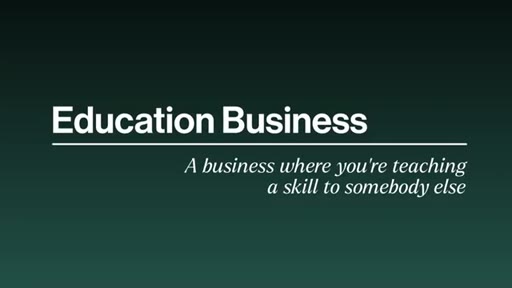
00:44So the business that I'm talking about here is an education business. Very simply, an education business is a business where you're teaching a skill to somebody else. To start an education business, you need $0.
00:55The education and your ability to teach someone is the product that you're selling. And with the tools that we have right now, social medias, AI, you don't really need a team to get started. There's literally no overhead, and most of that revenue stays with you.
01:07Now the next question becomes, what skills should you actually teach? If you wanna charge meaningful dollars for the skill that you're selling, it must cleanly fit into one of the three
01:18core pillars that everyone will pay for. Health, wealth,
01:22or relationships. You always wanna think about the problem that your skill actually bridges the gap to.
01:29So helping someone go from point a where they can't do something and b, be able to do that thing, and your skill fits right here. Now the problem with my first business was I was helping students get better grades. Doesn't really help you improve your health, doesn't really help you improve your relationships, and it doesn't really help you make more money.
01:45And so selling that skill has a pretty low ceiling. Compare that to our current business where we help brands and business owners build YouTube channels to get more leads and customers, and so it's really clear what they're investing into. If you're unsure of which one of these three skills you wanna help people with, I would highly recommend going for the wealth one if because it's the clearest and easiest one.
02:04If your skill doesn't touch health, wealth, or relationships, reframe it until it does. And I promise you, whatever skill you're trying to teach, you probably can relate it to one of these three.
02:14Right? Instead of just teaching the skill of studying to get better grades, I would think a layer deeper. Why do students actually want to get better grades?
02:21Well, they probably wanna get a better job. Well, I got into medical school, so a much smarter approach would have been I would teach pre med students how to get into medical school so that they can get a job as a doctor and increase their earning potential. That is a much more specific skill that I could teach.
02:36Now the most common reason I hear people push back is they say, I don't really have any skills. Bullshit. One of the smartest places to look if you're not sure what kind of skill you have, just look at your past.
02:47Look at the last five or six years, right, and what kind of obstacles or problems have you learned. Those are the skills that you can teach because there are people who are very similar to you who are in that position who wanna get to where you are now. The easiest things you can do is just teach the former
03:03version of yourself. This is the exact stepping stones that I've taken as I've evolved my business over the years. I got really good at studying.
03:10I taught that skill. Now I've grown YouTube channel. I help other people grow YouTube channels as well.
03:14I have grown a successful business with YouTube. Now I help business owners do the same. It's really the cycle of learn something, teach something, learn something, teach something.
03:22CTANow if you do have a lot of skills, you don't know how to frame it like I just did into health, wealth, or relationships, then I actually built a free AI tool, which you can access in the description below. You can chat with this tool.
03:33CTATen minutes or so, it's gonna give you a very clear path to what you wanna position your education business around and then get started helping people solve problems. So knowing your skill and knowing what business model we're going into will naturally kick start you into this first phase of going from 0 to 10 k per month.
03:49Probably one of the biggest reasons why these people fail going from zero to 10 k is because they just make a course. And I totally get the temptation because I've made this mistake so many times. For some reason, the moment that we think we have proof of results,
04:01our brain immediately jumps to, oh, let's just scale this thing. Trying to sell it to as many people as possible. Trying to scale too soon is one of the main reasons why these businesses just fail within the first year.
04:11It's not because you don't have the skill. It's because, fundamentally, having a skill and teaching the skill are not the same thing. The fastest and the smartest way to go from zero to 10 k per month is to help three people get a result using the skill that you're teaching.
04:24Now that doesn't necessarily mean that you're gonna work with just three people. That just means you have to get three people a result. The smartest thing you can do here is work one on one with them, overdeliver on getting them that results.
04:36Because when you work one on one with people, you really get to, like, intimately understand what are the main problems that get in the way.
04:43What are the issues with motivation? What are the right conditions in their life or the guidance that they need to actually get that result? And if you have that, like, intimate, high touch,
04:53close relationship, you really get to understand what does it take to get someone from a to b. So, obviously, the next question is where are you gonna find those first people that you can help?
05:01Start with people that you already know. We call this looking into, like, your warm network, friends, family members, coworkers, family friends.
05:09Reach into the people that you already know, and then just start to put some feelers out. Try to see if you can just help anybody get that result that you're looking for. If you've never helped someone with the skill and the problem you're trying to to teach, you might have to do a few of those reps upfront for free.
05:23And this is actually something that I did a lot when I was starting my first business. I would volunteer on my grad school as a tutor for these students that were coming in. I did it for free for a while until I started getting students who got better grades.
05:35And then I was like, okay. Now that I'm better at this, it's gonna be easier to charge for it because you actually have results and proof that you can do it. Now you're also probably wondering why three.
05:45I think three is a magic number because if you do it once, maybe it was a fluke. If you do it twice, it might be a coincidence. But three times generally means a pattern that you can repeatedly do this while you're working one on one to get these results for people.
05:56You, like, meticulously document everything that you do. You know, I recorded all of my Zoom calls.
06:02We had a collaborative workspace. All of our notes were in there, and the whole goal here is to figure out what is your actual process for delivering these results.
06:11Now you might think, yeah, this is a lot of freaking work, and I'm not gonna lie. It is hard work to work with people to help them get a result, but at the same time, that work is going to be rewarded in a different way. The two benefits of working one on one is it's easier to get them results because you're more involved in the process, but also you can charge way higher prices.
06:29And when I say higher prices, I highly recommend that you don't go any cheaper than at least a thousand dollars. If you charge $2,500, you just need to work with four people pretty closely for a month,
06:43and right there is your 10 k per month. The more people you work with, the better you're gonna get at it, and you can keep upping your prices until people stop paying for your stuff. Now that you have a few people who can vouch for you, you can graduate and move on to the next phase, which is scaling from 10 k per month to 30 k per month.
06:58This is where a lot of education businesses completely plateau install. You know, they have a great offer. They have some happy clients.
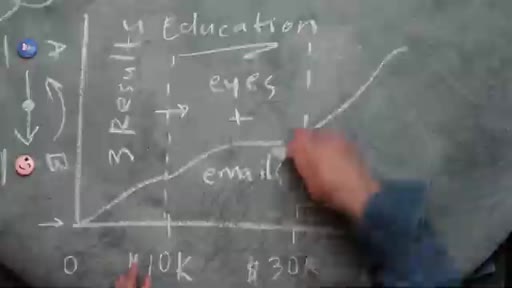
07:04They have real proof, but they just don't know how to get their product in front of new people. In the business world, they call these leads. And so to break down exactly how to get leads into your business, it's a two step formula.
07:16You need eyeballs and you need emails. From eyeballs, I mean, how do you get attention from strangers? And by emails, I mean, how do you get a buy in from these strangers?
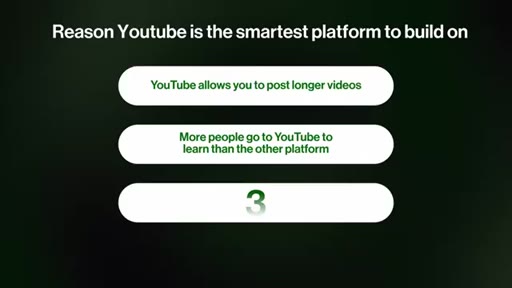
07:25Maybe I'm little bit biased and probably where you're watching this video from. I believe right now that for an education business, the smartest platform to build on is YouTube. And there's so many reasons why I'll give you three really good ones.
07:35Number one, YouTube allows you to post longer videos. A few months ago, we launched a brand new YouTube channel called in Creator Company. The very first video that Mike and I made for that channel was a three hour master class video, and we just dumped everything that we learned from working with clients over the years into that video.
07:51That three hour video, even though it only got, like, 20,000 eyeballs, converted more emails and sales for my business than any other video I've ever made. Because the person watching that video got to spend so much time with us watching us teach and watching us show how we think about YouTube that they were just getting sold and convinced on that video.
08:10They're like, oh, these are the guys that I'd wanna work with because I can see how they teach. I can see how they they solve problems, and maybe they'd be able to help me do the same thing.
08:19Delivering that same feeling on another social media platform, it's just a lot harder. Right? You can even make, like, 600, 700 short form videos and hope people watch all of them and piece together
08:28the actual structure and systems that you're teaching. The second reason being more people go to YouTube to learn than any other social media platform. People go to YouTube with the intention of I need to learn how to do something.
08:39And more often than not, since YouTube long form videos we're talking about are horizontal, when someone flips their screen horizontal, it blocks out distractions.
08:49And lastly, YouTube as a platform in the last year or so has had a big and fundamental push towards educational content. And so if you wanna scale from 10 to 30 k, you need to build a personal brand on YouTube around the problem that you solve. And if you can make really good educational content, the algorithm is going to push your content to more and more people who are similar to the ones that you wanna reach.
09:12And then from those videos that people watch, you can set up in your descriptions links for people to get your email using things like lead magnets, using things like, you know, AI tools, using things like free downloadables. And once they're in your email list, now you own them.
09:26Now you're also probably wondering, why do I need eyeballs and emails? Why can't I just get eyeballs? If you post content to a social media platform, you don't actually own that audience.
09:34Anytime, if they felt like it, YouTube can shadow ban you. YouTube can delete all its data. It can get hacked by somebody, and then all that work you've done is just gone.
09:43If you get someone's email or their phone number, then you can contact them directly. For example, on this channel, we do have more than a million subscribers. We even took a long break from posting on this channel for, like, eight months.
09:54HOOKBut even though we stopped posting content, we had a lot of emails. And those emails were people who still were interested potentially working with us down the line, and we didn't have to rely on continuing to post content because we had already built up our own internal distribution. The seed that you're planting here, starting your own personal brand, building a content library, building your own, like, IP and brand content, that is going to serve you for years and years down the line.
10:17HOOKNow I also fully understand that starting content creation or getting into YouTube with something, it's not an easy lift. And so if you wanna shortcut that process and learn how to, you know, create content that gets the right eyeballs and emails into your business or into whatever you're building, then you can also check links in the description below.
10:32HOOKWe're opening up some spots soon to work one on one with ambitious people to help them get there faster. So the machine is now running contents, bringing eyeballs. Eyeballs become emails, and emails become clients or the people that you work with.
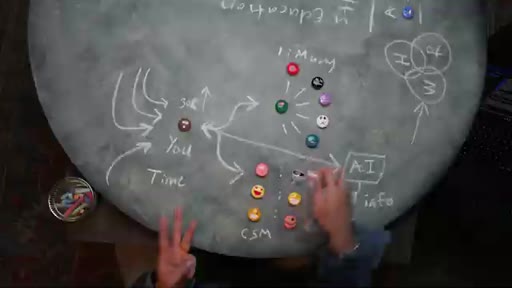
10:43HOOKYou can probably easily get to 10 to 30 k per month. And then you're gonna hit another wall. This is you.
10:49You're at the happy 30 k per month mark. You're making good content, and more and more people are joining your funnel and joining your business. And the main thing that's holding you back here is time.
11:00You literally just cannot work with more people because your calendar is full, and you can't charge any higher prices because, you know, at a certain point, it's not worth it for someone to pay that much money for you to help them. To solve the issue of time, there are really two different paths that most education businesses go, and I think both of them have some pretty big flaws.
11:17First thing that most businesses do is work one to many. So instead of spending an hour for each person, you can spend one hour and coach five people at the same time. Seems like a good option except for the fact that it kinda sucks for your clients.
11:27I know this because I've been one of these clients before. I've bought into very expensive group coaching programs. I hop on a call.
11:34There's, forty, fifty people on that call, and it takes an hour for them to get to my question, which I get, like, two minutes to to ask my question to, you know, my coach, and then they move on to the next person. I didn't really get a good answer. And so this kinda sucks for clients.
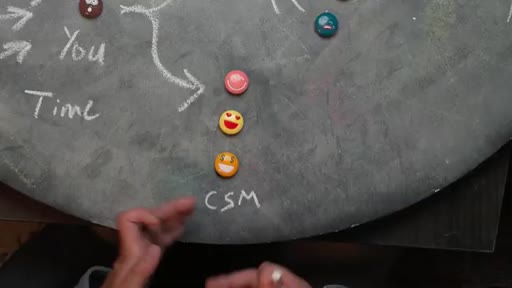
11:48It's not really a good option. And now the other option is to hire some customer success managers. Right?
11:53You can hire some people to teach for you and go one on one with your clients. This also kinda sucks for your clients too. Odds are you've spent years developing the skills.
12:02You're the one who got the results. You're the one who built the frameworks. You are the most capable person of helping people get results.
12:09What a lot of businesses do is they hire CSMs, and they just kinda throw bodies at the problem. But those guys are not as good as you, and they don't get as good results, so it also kinda sucks for your clients. There is a new path you can do, a third path, let's say, that completely changes
12:25this paradigm. And as you can probably guess, along with all the other bajillion headlines in the world, this has to do with adding AI into the mix. This is my prediction.
12:34Every education business that has stalled between 30 to 80 k is easily going to blow past that point if they implement this AI system. And so what you're actually gonna do, because you've been, you know, documenting all the way in the processes that you do things, and you've been making a lot of content to teach and practice teaching those things, instead of hiring someone and trying to teach them what to do, what you're gonna do is duplicate
12:57your brain into an AI agent. With tools like Claude Code or, you know, Gemini, you can build AI
13:05educators that then work one on one with your clients. I call this building an AI tutor because AI has completely revolutionized the way that we transfer knowledge and information into somebody else.
13:18It's available twenty four seven, and it's probably a lot smarter than some of the people you can initially hire because it's trained on your brain and your knowledge. And to understand the role of AI, we need to understand what does it mean
13:30to learn a skill. Skills can be broken down into two pieces. You have the info of a skill, which is a actual, like, facts, which is, the technical knowledge.
13:38It's like push this button. It's like, what does this thing do? And you actually have the implementation, actually using the skill.
13:44So for example, if the skill was learning how to play basketball, on the info side, it's like learning the rules of the game, learning what a dribble is, learning what a crossover is. Implementation is actually how you dribble the ball, how you shoot the ball.
13:58Right? You need both of these in order to acquire a skill. And now where that fits in with AI at the current moment in 2026?
14:04Probably, like, 90% better at filling in the info part than a person is.
14:10AI can be personalized, so all of these clients can upload, you know, information about themself into the AI's knowledge, and it will have full context about them every single time. And the best part, AI is trained in your brain. You don't need to spend hours every week doing, like, lectures,
14:26topic deep dives, uh, office hours. All of those things can be handled by the AI.
14:31CTAIt can be a personalized educator, which allows you to spend your time on the implementation, helping people execute and actually get to the next stage. Guys, if I had to start over, this is the exact road map I would follow if you wanna build an education business, and it always all comes back down to content.
14:48CTAAnd so if you are ambitious, you see yourself building an education business to help transform people's lives and using YouTube as the platform of choice, then making content is probably one of the highest leverage skills and activities that you can learn. And luckily for you guys, we actually made this video right here.
15:04CTAIt's our three hour master class video for how to get started with YouTube, the one I talked about earlier. I would definitely check it out. Bookmark it.
15:11CTAIt's pretty long. It's gonna give you a ton of value to get start
— full transcript
§ 05 · For Joe

Three constraints, three phases, one playbook.

WHAT TO LEARN

Every education business stalls at the same three revenue ceilings, and the mistake that kills most builders is applying the wrong solution to each one.

  • The first ceiling is proof: you need three people with documented results before anything else scales, because one result is a fluke and two is coincidence.
  • Do not build a course until you have those three results — scaling a method you do not fully understand yet is the most common reason knowledge businesses fail in year one.
  • The second ceiling is distribution: YouTube earns you strangers attention, but an email list is the only part of that audience you actually own if the platform changes or disappears.
  • A single long-form video that earns deep watch time can convert more revenue than hundreds of short-form clips, because extended exposure is what creates the trust that leads to a purchase.
  • The third ceiling is time: both group coaching and hiring staff are flawed solutions because they reduce result quality for clients rather than preserving it.
  • Splitting skill transfer into informational knowledge where AI is already 90% more efficient and hands-on implementation where human expertise is irreplaceable allows a single expert to serve far more clients without diluting outcomes.
  • Building an AI agent trained on your documented processes, content, and frameworks is the current path to breaking the $30K to $80K bottleneck without sacrificing client results.

§ 06 · Frame Gallery

Visual moments.