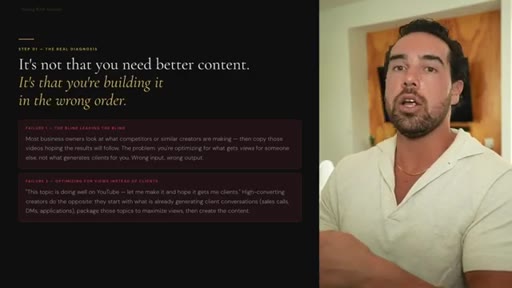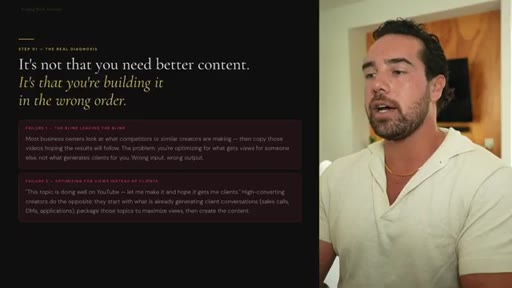
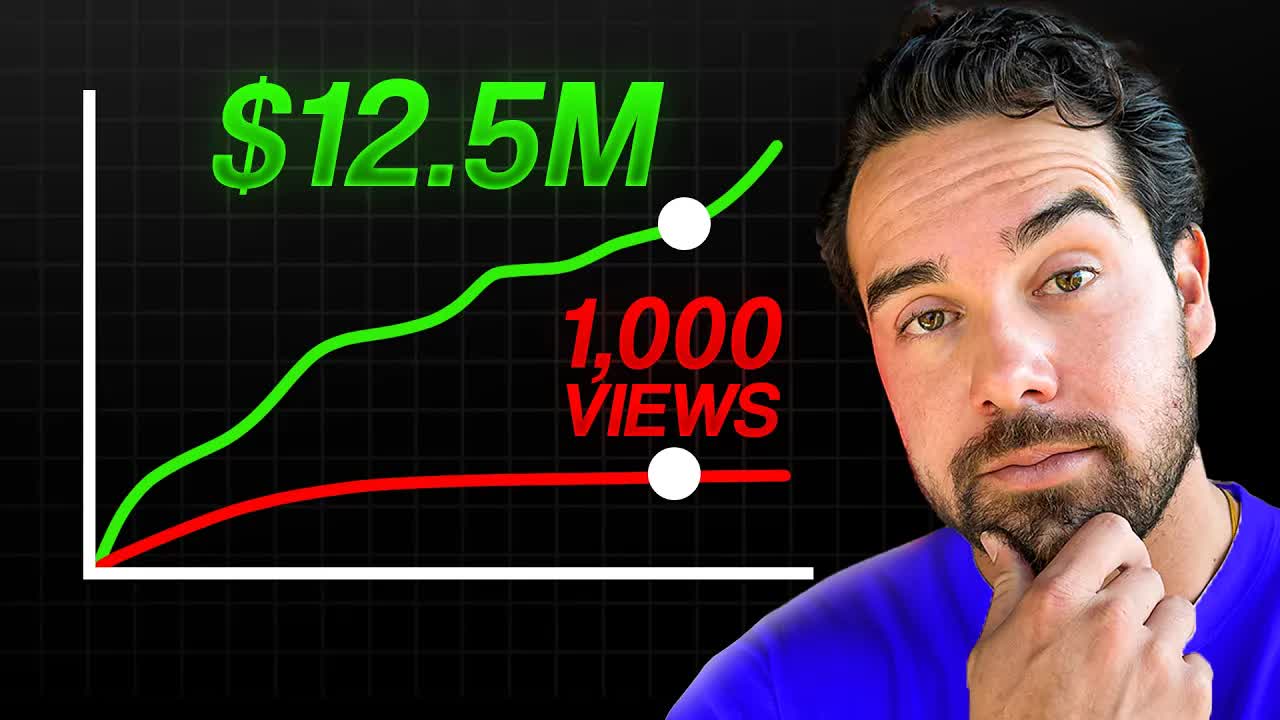
The bait, then the rug-pull.
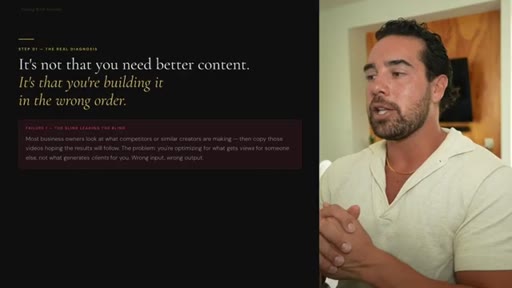
The bold claim arrives before the first breath: $12.5M in revenue directly attributed to a YouTube channel where most videos never crack 1,000 views. What follows is a methodical dismantling of every assumption most business owners carry into their YouTube strategy.
Where the time goes.
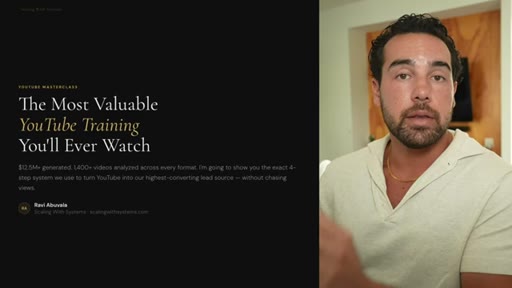
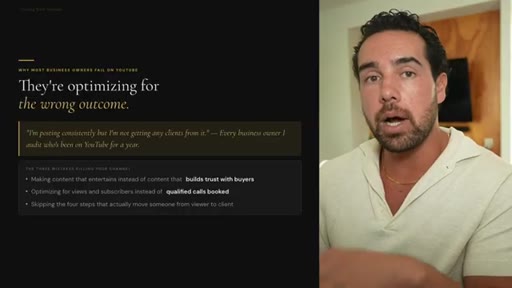
01 · The Wrong Outcome Problem
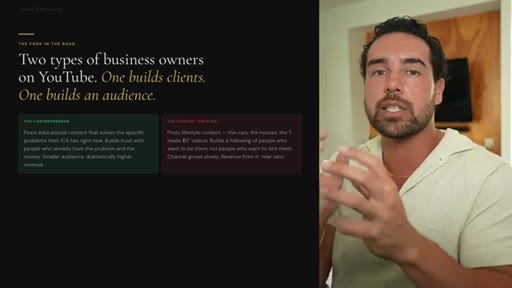
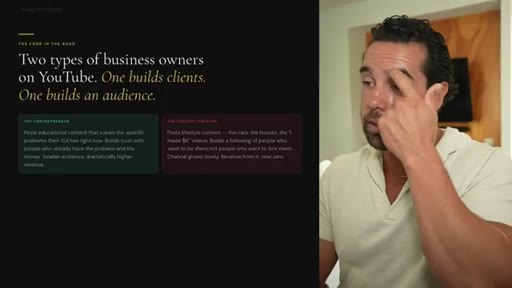
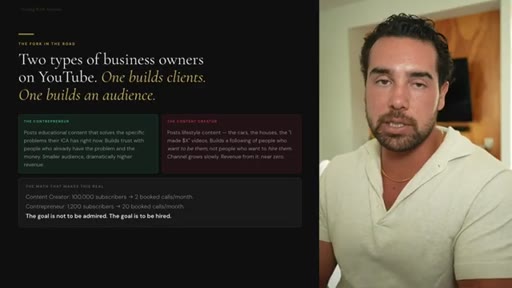
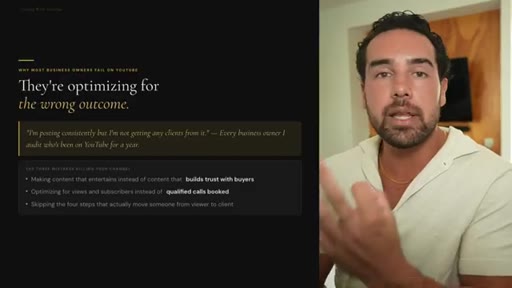
Three mistakes business owners make on YouTube; the entrepreneur vs. content creator split; the goal is to be hired, not admired.
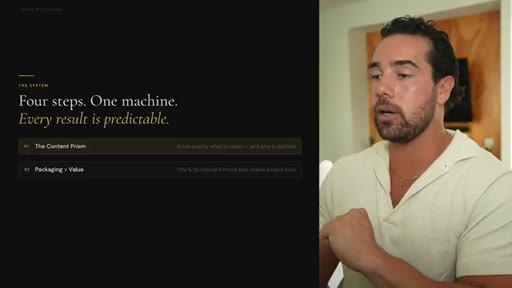
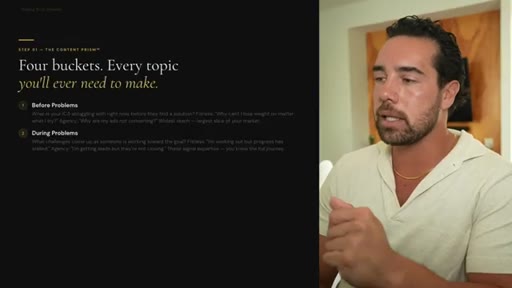
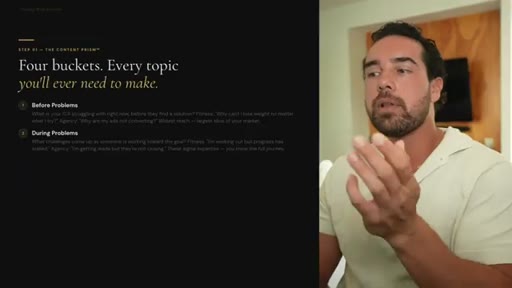
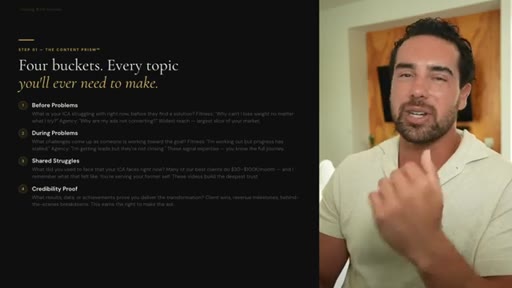
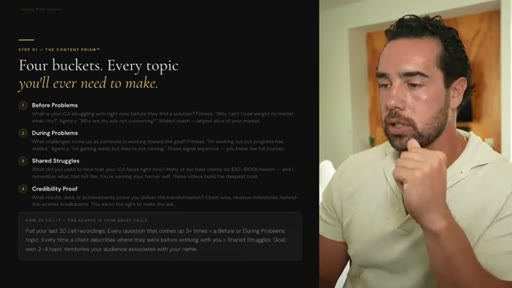
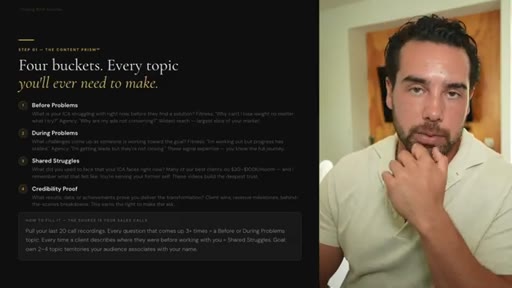
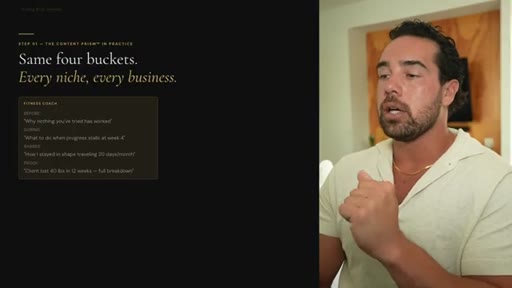
02 · Step 1: Content Prism
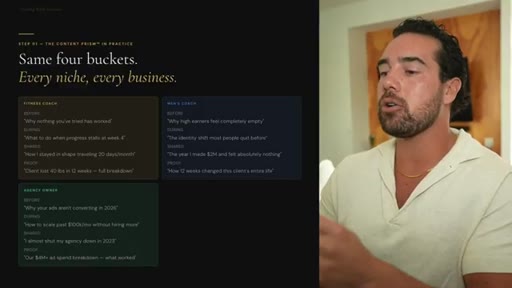
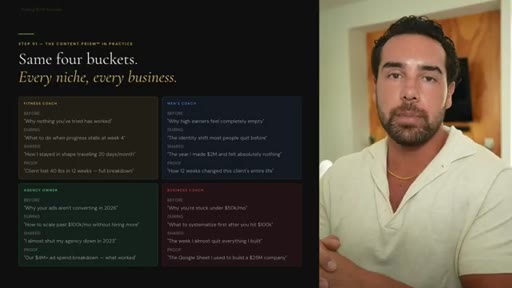
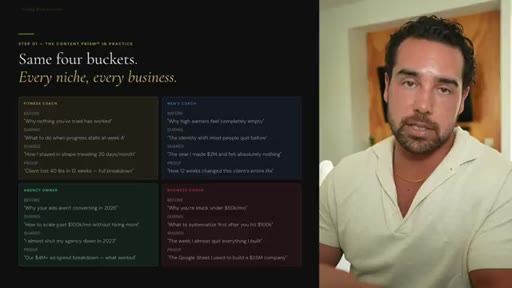
Four content buckets derived from sales call transcripts; why copying competitor topics produces wrong output; practical topic examples across fitness, agency, and coaching niches.
03 · Step 2: Packaging
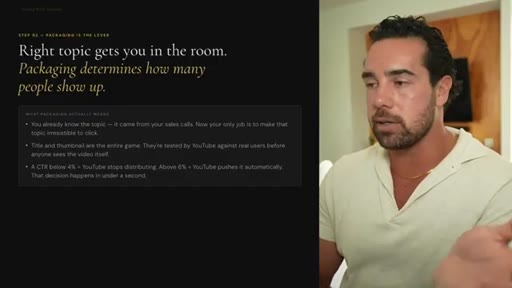
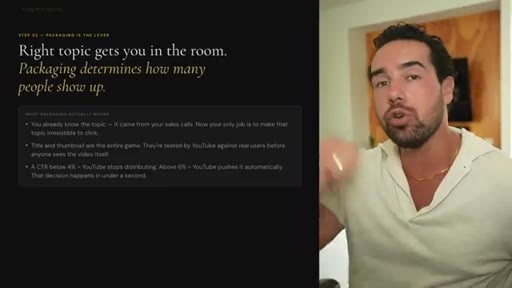
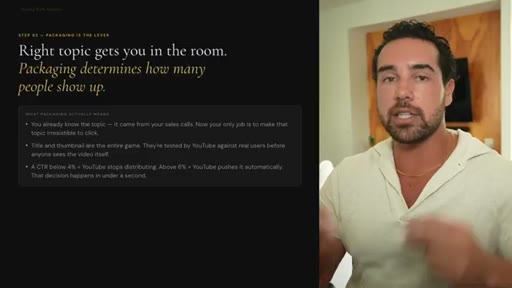
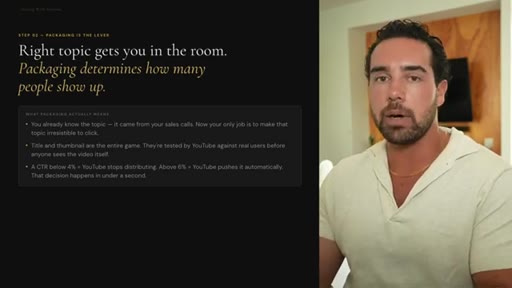
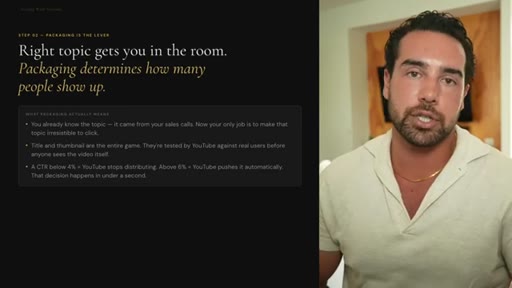
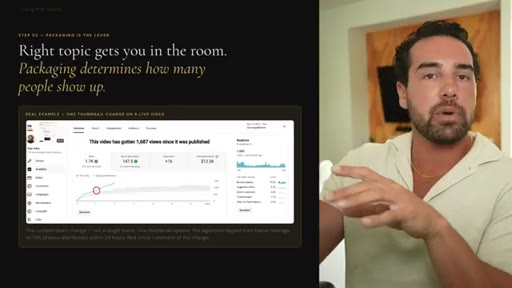
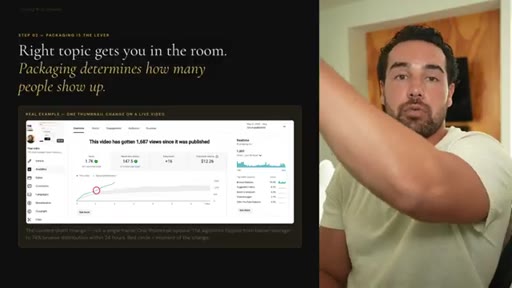
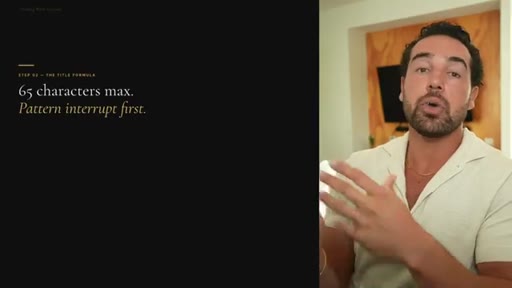
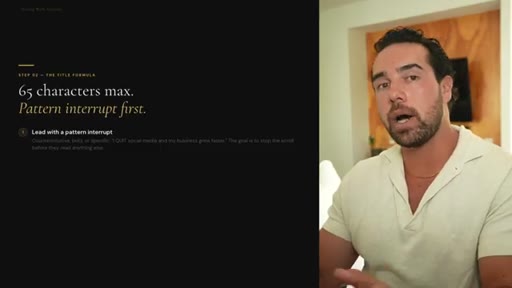
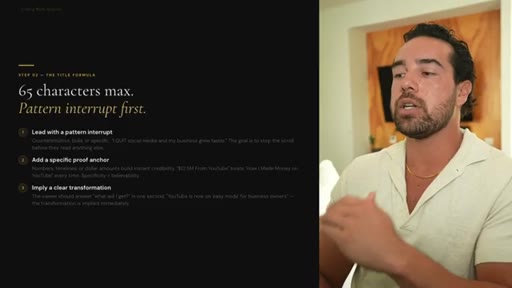
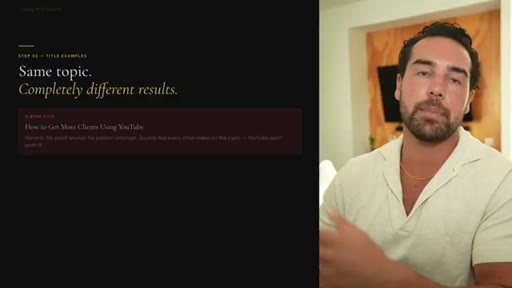
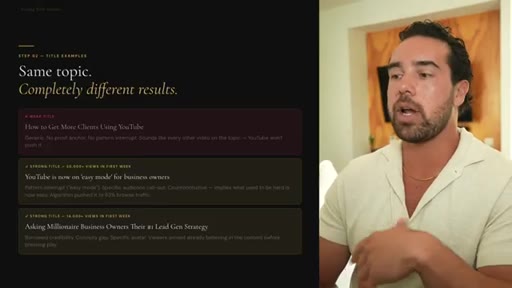
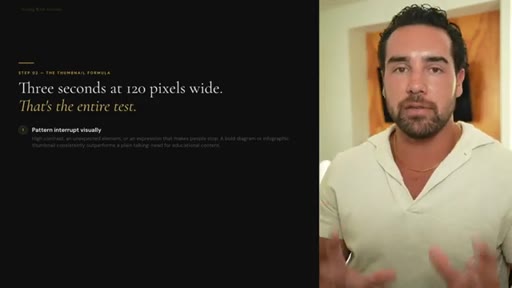
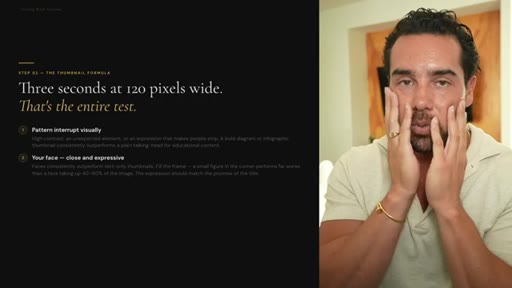
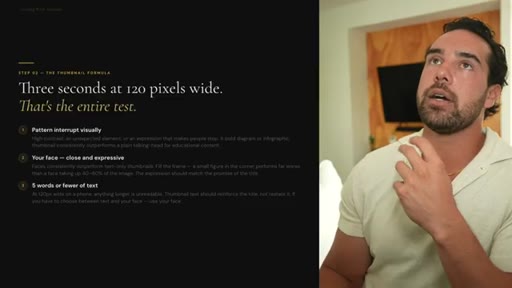
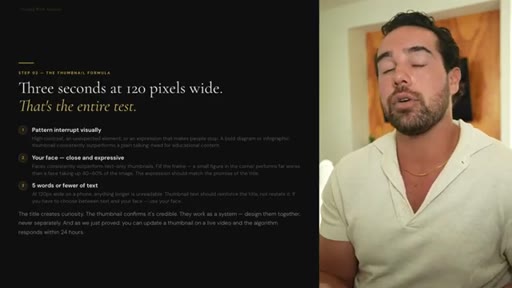
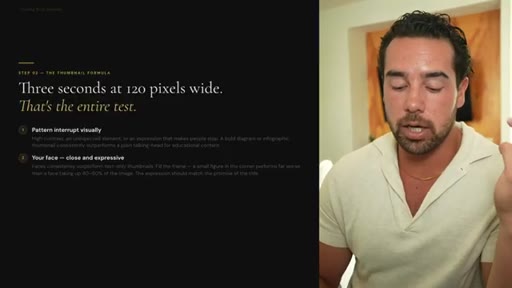
Title formula (65 chars, pattern interrupt, proof anchor, first-person); thumbnail formula (pattern interrupt visually, expressive face, 5 words max); CTR thresholds; live thumbnail-swap case study.
04 · Step 3: Strategic Video Types
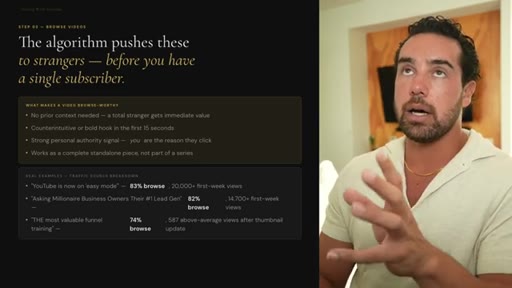
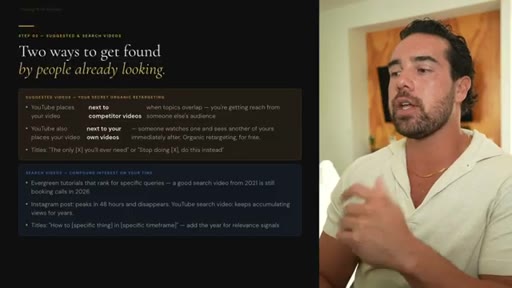
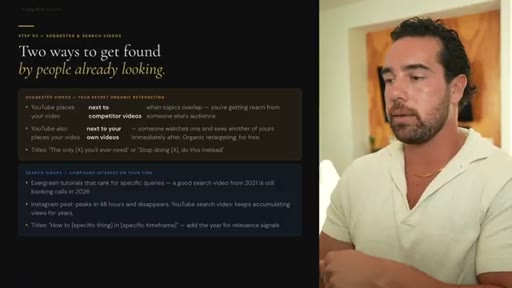
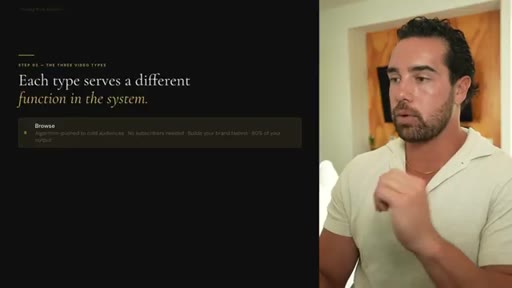
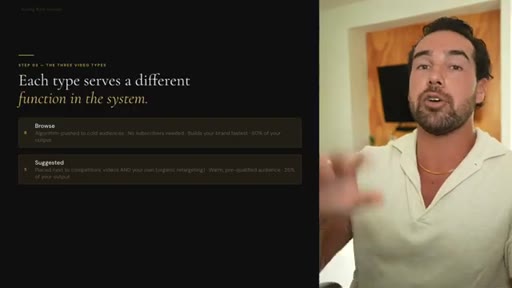
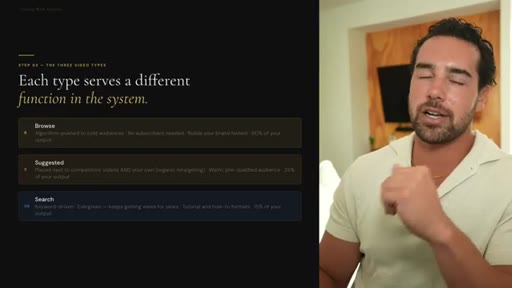
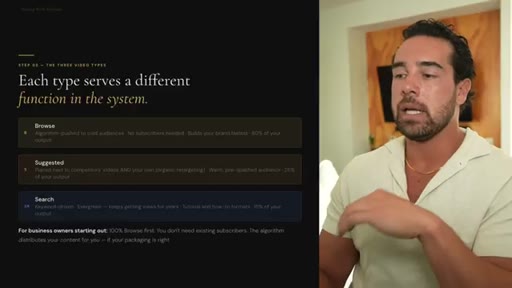
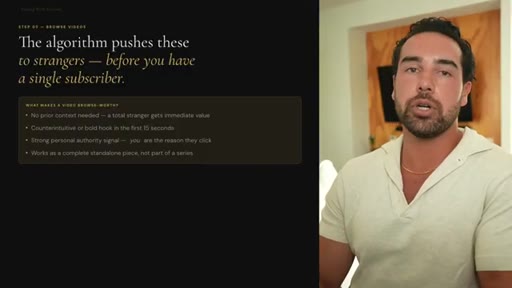
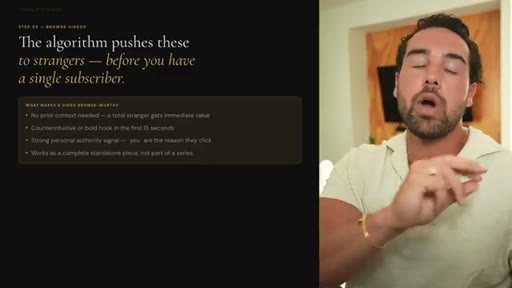
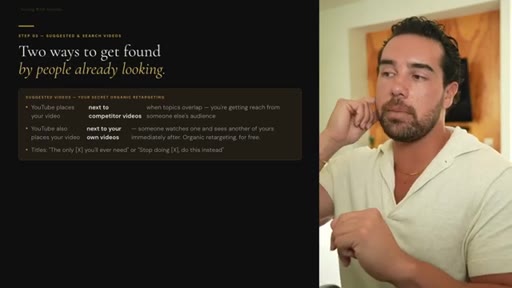
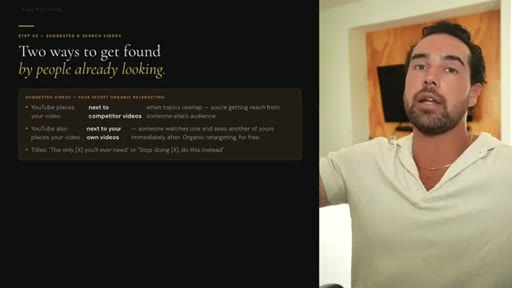
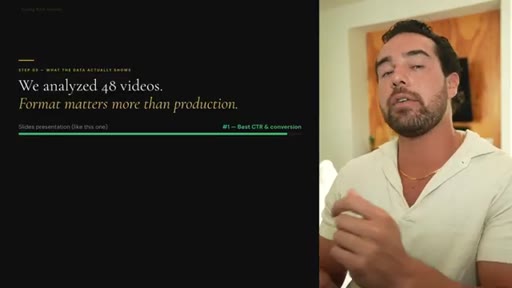
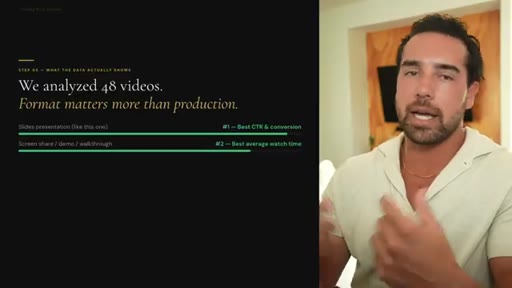
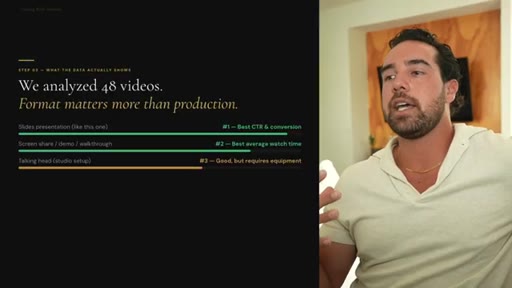
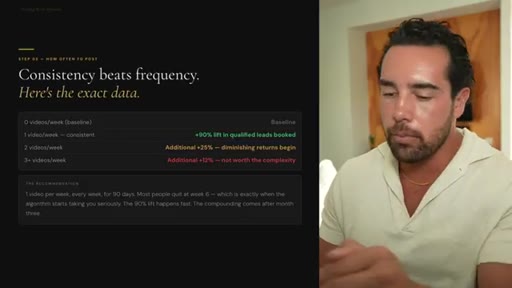
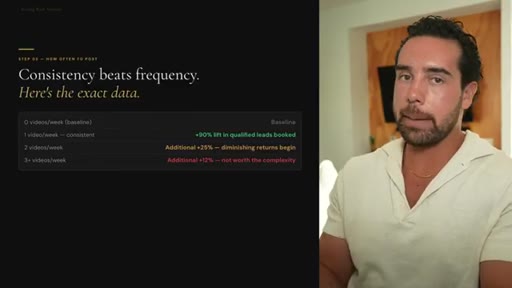
Browse (60%), Suggested (25%), Search (15%); when to use each; format data from 48 videos; posting frequency data.
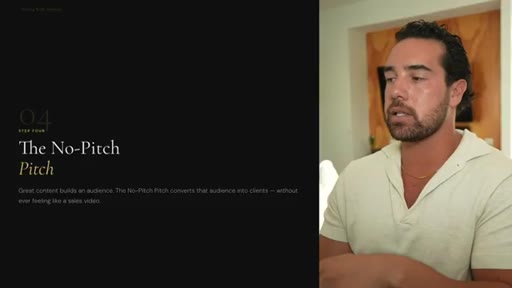
05 · Step 4: No Pitch Pitch
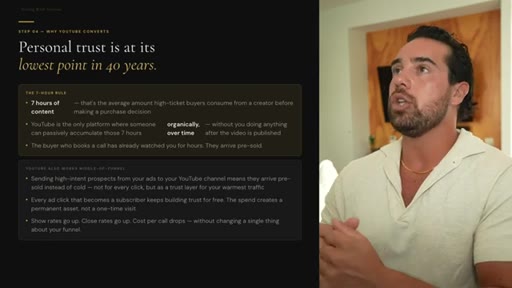
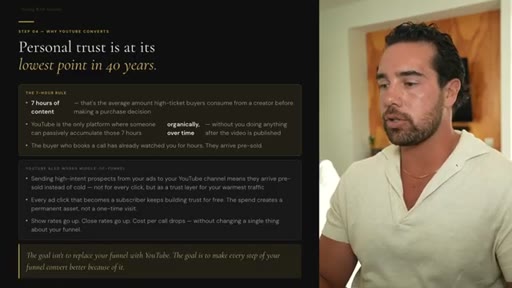
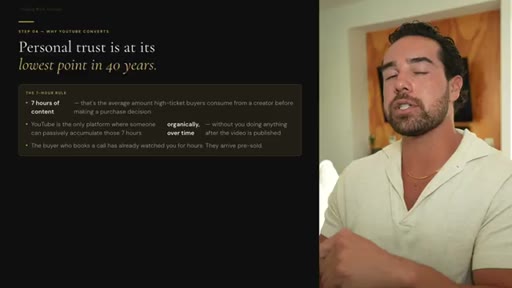
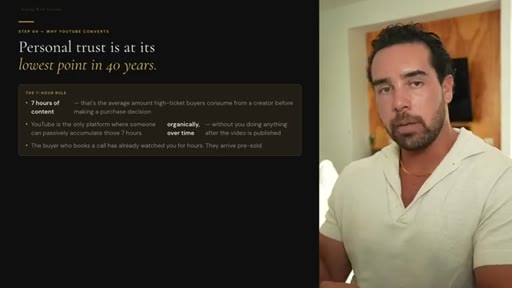
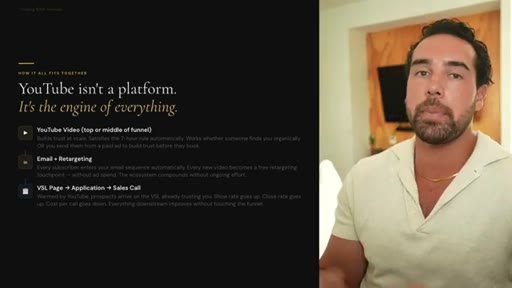
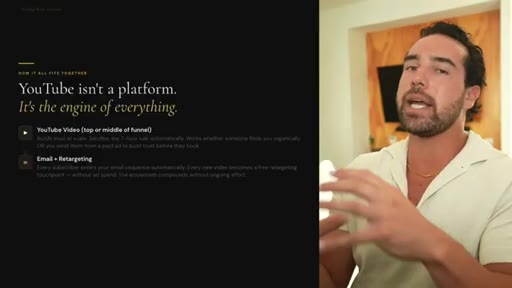
Why YouTube converts better than any other platform (7-hour rule); five in-video conversion moves; CTA placement data; YouTube as middle-of-funnel for paid ads.
06 · System Recap + CTA
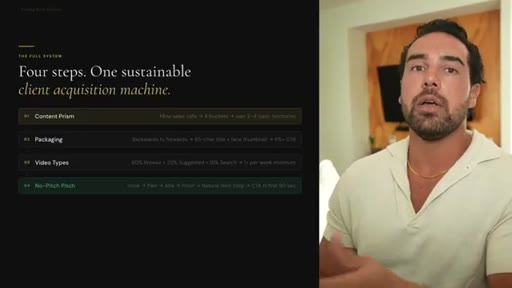
Four-step summary; posting frequency recap; revenue system diagnostic offer.
Visual structure at a glance.
Named ideas worth stealing.
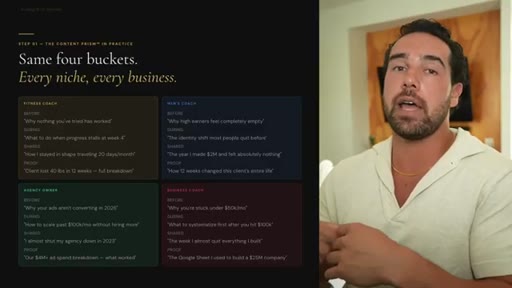
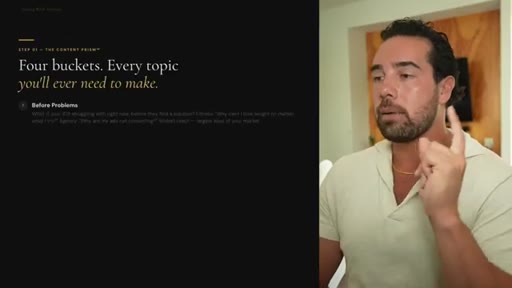
Content Prism
- Before Problems
- During Problems
- Shared Struggles
- Credibility Proof
Four content buckets, each mapped to a buyer awareness stage, sourced from sales call transcripts rather than competitor research.
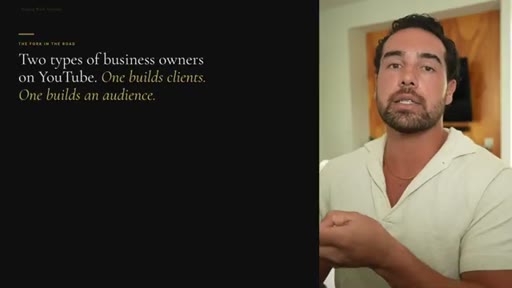
Entrepreneur vs. Content Creator
Two archetypes: the Entrepreneur makes content for people who have the problem and the money; the Content Creator makes content for people who want to emulate them.
Browse / Suggested / Search allocation
- 60% Browse
- 25% Suggested
- 15% Search
Traffic source strategy for a business channel optimized for booked calls, not general viewership.
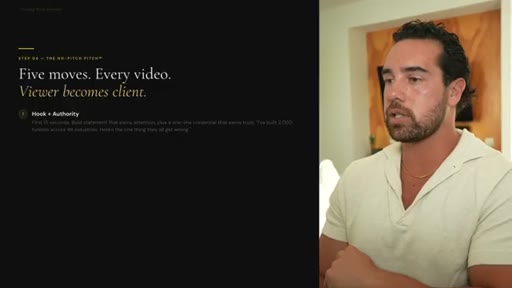
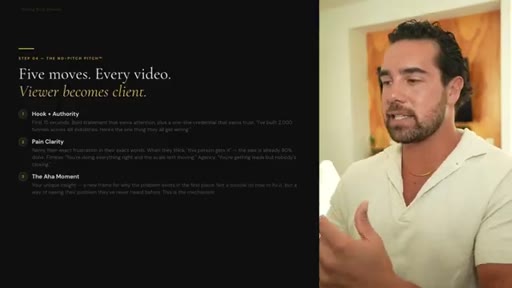
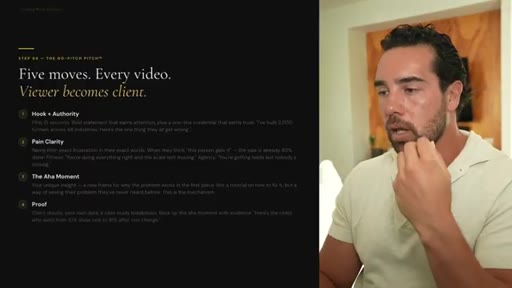
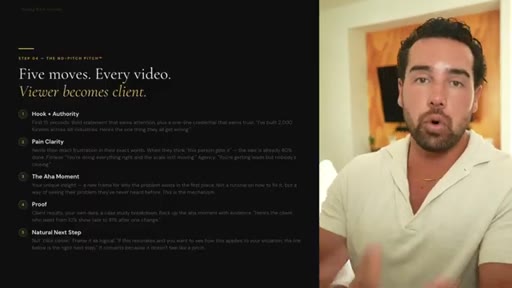
No Pitch Pitch (Five Moves)
- Hook + authority in first 15 seconds
- Pain clarity in their own words
- Unique mechanism or reframe
- Proof (data, case study, or live demo)
- Natural next step (not a hard sell)
In-video conversion sequence that moves viewers toward booking a call without triggering sales resistance.
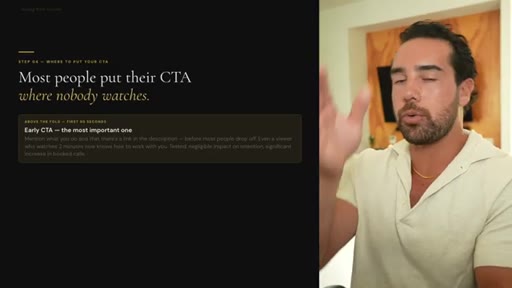
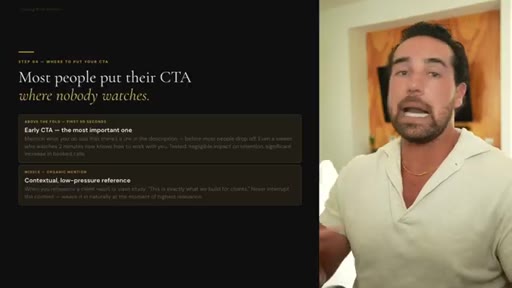
CTA Three-Part Placement
- Early CTA: first 90 seconds
- Organic mention: mid-video when referencing client result
- Full pitch: end of video for highest-intent viewers
Data-tested CTA placement that increased booked calls with negligible drop in retention.
Lines you could clip.
"The goal is not to be admired. The goal is to be hired."
"You do not earn views with good content. You earn views with good packaging. And then you keep them with good content."
"Every Instagram post you make today is gone by Thursday. YouTube videos I made in 2021 still generate 2,000 to 3,000 views every single day."
"A B-minus video published every week beats an A-plus video sitting in your drafts forever."
"Just because somebody is making these videos and getting a lot of views from it does not mean they are getting a lot of clients from it."
Things they pointed at.
How they asked for the click.
"Go down below and book a free revenue system diagnostic with me or my team."
Soft sell framed as a free audit with no obligation. Demonstrated three times per the framework being taught: at 90 seconds, organically mid-video, and as a full 45-second pitch at the end.
Word for word.
YouTube earns clients when built backward from a sale.
View count is a vanity metric for business channels; the number that matters is qualified calls booked, and the entire content and distribution strategy should be reverse-engineered from that.
- The most reliable source of YouTube topic ideas is your own sales call recordings, not competitor videos or trending topics — start there before opening YouTube.
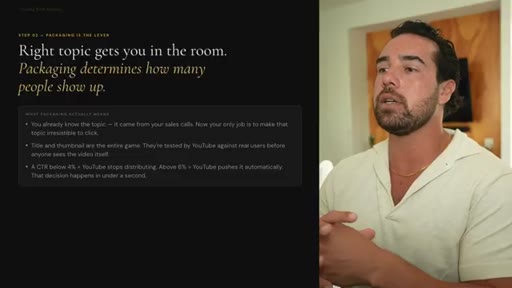
- The YouTube algorithm decides whether to distribute your video in under one second based on click-through rate; packaging (title and thumbnail) is therefore more leveraged than content quality.
- Titles should be under 65 characters, lead with a counterintuitive statement, include a specific number or dollar proof anchor, and be written in first person — each rule has a distinct mechanical reason.
- A diagram or infographic thumbnail outperforms a talking-head thumbnail for educational content, and it is the simplest type to produce — a screenshot of the slide is enough.
- For a service business, browse-targeted videos should be 60% of output; optimizing for search from the start attracts how-to seekers rather than buyers.
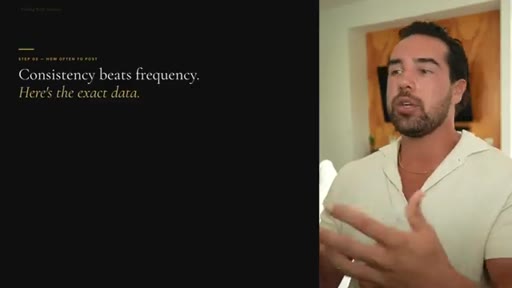
- One video per week doubles qualified call volume from YouTube; the incremental return on a second and third video diminishes sharply — consistency beats frequency.
- The audience gets tired of your core message much later than you do; the same four to six themes repeated across dozens of videos is the mechanism, not a limitation.
- YouTube converts better than other platforms at the bottom of the funnel because viewers accumulate 7 hours of passive exposure before they ever reach a sales call — they arrive presold.
- A call-to-action placed in the first 90 seconds of a video produces more booked calls with negligible drop in retention; waiting until the end to pitch leaves most of the audience un-pitched.
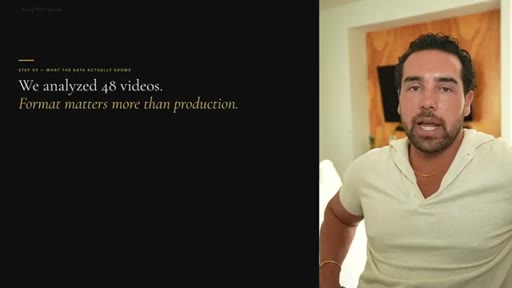
- Slide-presentation format outperformed talking-head, screen share, and repurposed clips on every measured metric across 48 videos — and it is also the easiest format to produce.