Ed Lawrence · Youtube · 17:29

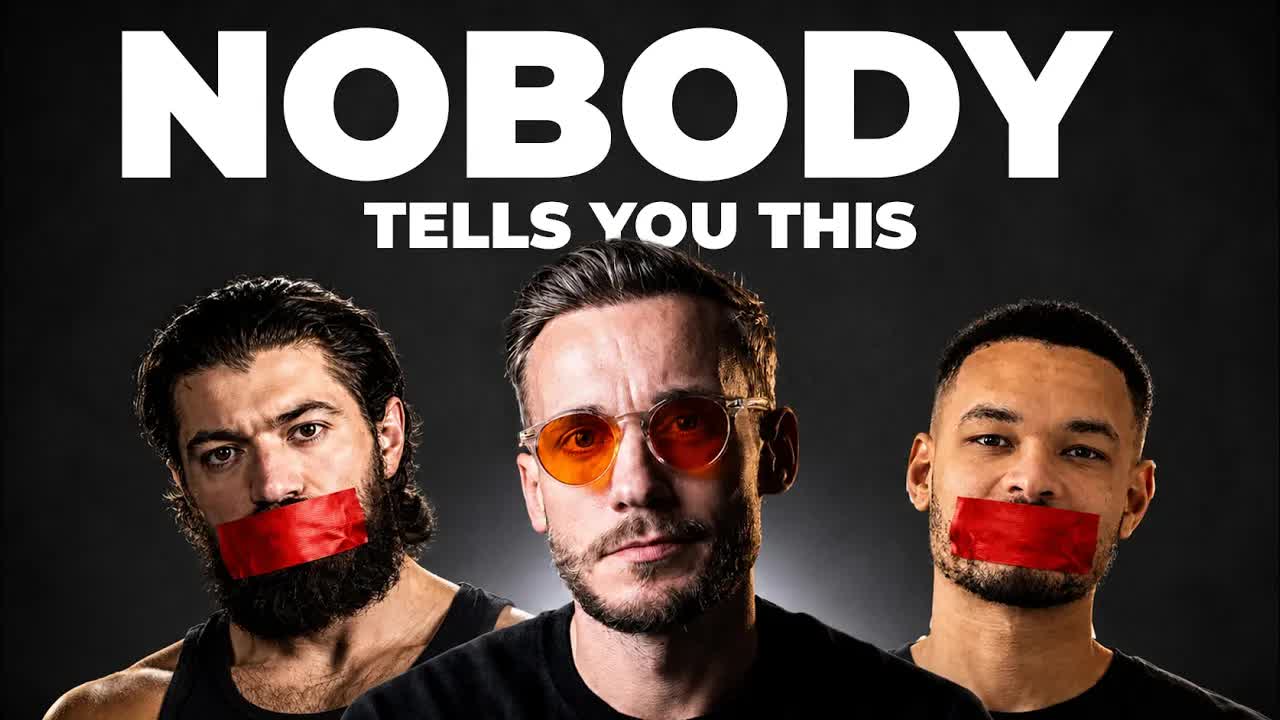
Why Growing A Personal Brand Is An AWFUL Idea

A 17-minute case against the freedom myth — and the one framework for doing it anyway.

Posted
May 28th 2026
today
Duration
17:29
Format
Essay
educational
Channel
EL
Ed Lawrence
§ 01 · The Hook

The bait, then the rug-pull.

If the people who have already made it cannot stop posting, is a personal brand actually freedom — or one of the most demanding business models ever invented? That is the premise Ed Lawrence tests across 17 minutes, drawing on his own multimillion-dollar brand, its subsequent fall-off, and the income that doubled afterward.

§ · Chapters

Where the time goes.

00:00 – 00:24

01 · Hook

Hormozi and Diary of a CEO still grinding despite massive wealth — raises the core question about whether personal brands deliver freedom.
00:24 – 02:25

02 · Reason 1: You become the marketing

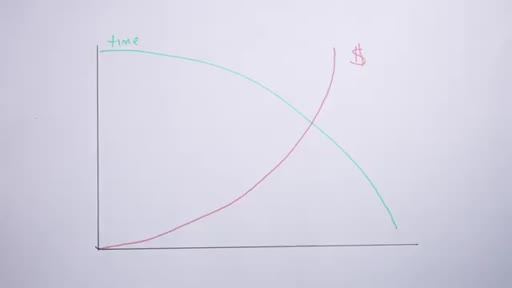
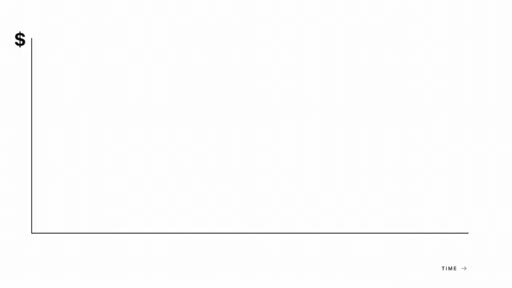
The lifestyle business dream vs. reality chart. Income rises but time never drops. You cannot remove yourself from the machine the way a traditional business owner can.
02:25 – 03:45

03 · Reason 2: It builds a second full-time job

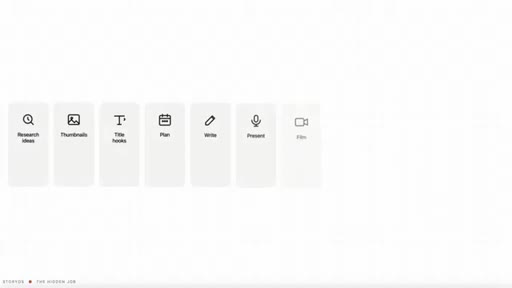
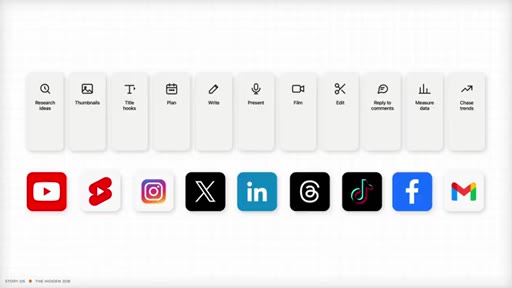
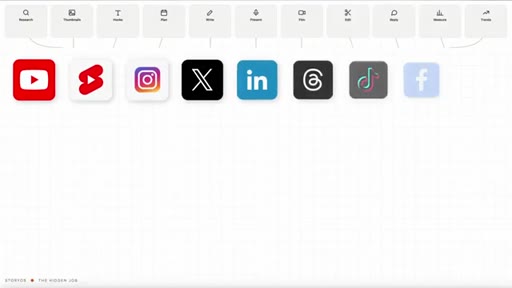
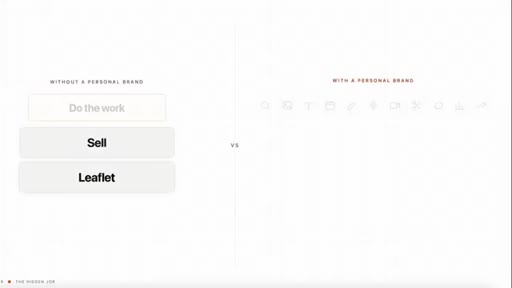
Compares the gardening business (delegatable from day one) with content creation (research, film, edit, trends, comments — all non-delegatable at the start). Multi-platform makes it worse.
03:45 – 05:50

04 · Reason 3: Scaling costs a fortune

Top YouTube strategists charge $25K/month. Full-stack team runs $30-50K/month. The workaround is becoming the strategist yourself first — but that takes years.
05:50 – 07:40

05 · Reason 4: Attention always falls off

Hedonic adaptation, format copying, and trend cycles mean very few maintain peak reach for more than a few years. Examples: MrBeast, Andrew Tate, Tim Ferriss.
07:40 – 09:15

06 · Reason 5: It colonizes your thinking

The Maldives villa moment. Every experience becomes potential content. Sam Ovens quit YouTube because he did not want to lie in bed editing videos in his head.
09:15 – 10:40

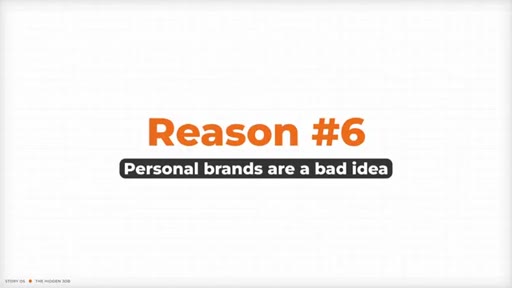
07 · Reason 6: It can damage your real business

Case study: a business owner making hundreds of thousands per month who started chasing personal brand content — business performance declined in direct proportion to content time.

10:40 – 12:55

08 · Should YOU do it? The trust argument

Pivot: the right person still wants to after hearing all of this. The fall-off does not kill you if you built trust. Income doubled when views declined because he monetized the audience already built.
12:55 – 14:08

09 · Solving the time/lifestyle problem

Sam Ovens as the rare clean exit: used personal brand to launch Skool, then empowered other creators to promote it so his face is no longer required.
14:08 – 17:29

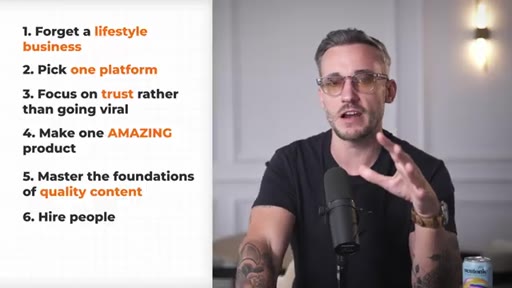
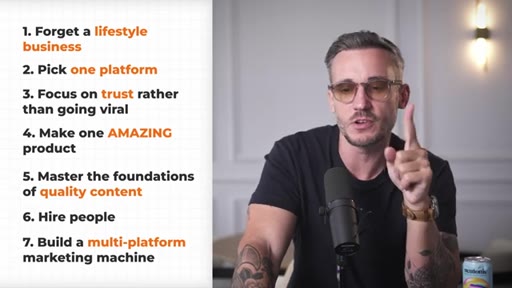
10 · How to start from zero — 7-step playbook

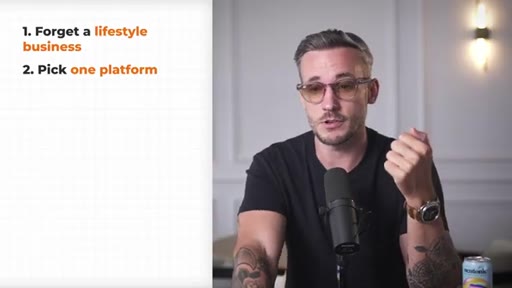
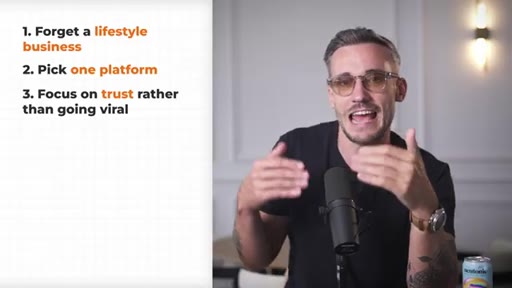
Forget lifestyle business, think media company. One platform. Trust over virality. One great product. Content foundations. Hire once traction exists. Build multiplatform machine last.

§ · Storyboard

Visual structure at a glance.

hook
reason 1 — lifestyle myth
reason 2 — second job
reason 3 — cost
reason 4 — fall-off
reason 5 — brain colonization
reason 6 — business damage
pivot — trust argument
lifestyle exit model
7-step playbook
CTA — watch next video
§ · Frameworks

Named ideas worth stealing.

14:08 list

7-Step Personal Brand Playbook

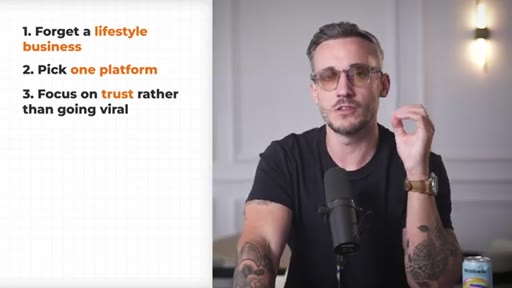
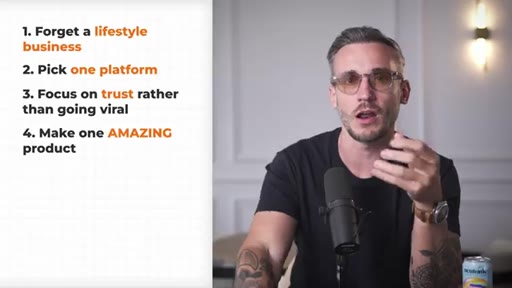
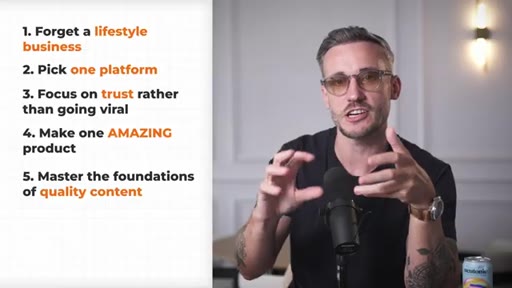
  1. Forget lifestyle business — think media company
  2. Pick one platform (YouTube recommended)
  3. Focus on trust over virality
  4. Make one amazing product people recommend
  5. Master content foundations (hooks, storytelling, frameworks, simplification)
  6. Hire people once the system is working
  7. Build multiplatform machine last

A sequenced framework for building a personal brand without the common traps. The key insight is that multiplatform expansion comes last, not first.

Steal for Any creator planning their next 12-24 months of content infrastructure
11:00 model

Trust vs. Attention arc

Attention peaks and falls off for every personal brand. Trust does not. The creator who survives the fall-off built trust during the peak instead of only optimizing for views.

Steal for Content strategy presentations, audience relationship frameworks
§ · Quotables

Lines you could clip.

01:17
"You become the marketing."
Three words that land the whole thesis — no setup needed. → TikTok hook
03:30
"Most people don't fail at personal branding because they are bad at making content. They fail because they accidentally build themselves a second full time job."
Reframes failure in a way that hits immediately — every creator has felt this. → IG reel cold open
07:43
"Your entire business depends on something incredibly unstable — human attention."
Clean declarative punch; works as a standalone statement. → newsletter pull-quote
12:52
"Trust compounds far longer than attention."
Aphorism-length, tweetable, contrarian to the views-obsessed creator world. → Twitter/X post
12:04
"The goal of building a personal brand is not permanent virality that consumes you. The goal is to build trust and reputation that continues to pay you long after your peak attention phase."
Full-sentence thesis that reframes the whole game. → IG reel cold open
§ · Resources Mentioned

Things they pointed at.

§ · CTA Breakdown

How they asked for the click.

17:09 next-video
"If you wanna learn how to actually build a YouTube channel properly, one that gets you into the top 1% of your niche so you could generate views, sales and leads, watch this video next."

Clean bridge to a follow-up video. No hard sell — the CTA earns trust by only targeting people who made it to the end, which the host explicitly calls out as the qualification test.

§ 04 · The Script

Word for word.

HOOK opening / re-engagementCTA the pitch metaphor analogy story
00:00HOOKThe Diary of a CEO host Stephen Barley and Alex Hormozi are worth hundreds of millions of dollars, yet they still publish thousands of pieces of content every single month and spend an insane amount of time planning and producing it, which raises an interesting question. If the people who have already made it can't stop posting online,
00:16HOOKis building a personal brand actually freedom, or is it one of the most demanding business models of all time? So in this video, I wanna show you the truth about what it actually takes to grow a personal brand now, and these are all based on having grown my own multimillion dollar personal brand, as well as helping hundreds of others do the same too.
00:32I'm also gonna help you work out if you should actually grow one, as well as reveal why it could be hurting your business if you're already trying. So let's start with the first reason I think personal brands are a dangerous business model for many people, and it all comes down to this chart. When I first started building a personal brand, this is what I thought would happen.
00:50You post content and your audience grows and you start making money, and eventually, you are working four hours a week sipping pina coladas on the beach somewhere. So income goes up, and then the time you have to work goes down significantly. That is the dream.
01:04Right? But for me, and most personal brands I know, it looked more like this. So the income, it did go up.
01:09However, the amount of time I had to spend working never really came down. Because with a personal brand,
01:17you become the marketing. Now, this also just so happens to be the exact same thing that makes personal branding so powerful, but the downside is growth is heavily tied to your personality
01:29getting attention and always trying to keep it. So if you disappear for too long, your business growth could slow down because you're no longer bringing new attention into your ecosystem.
01:39And that means you can't ever really fully remove yourself from the machine in the same way that traditional businesses eventually can. And it's why a lot of personal brands work very hard long after becoming very successful. Meanwhile, I know people that have a traditional business, and these guys are worth millions,
01:55they and could disappear for weeks or months, and their company just keeps running because 100% of it is run by other people. Their face isn't required, and that's the first reason a personal brand is an awful idea for so many people because it is often sold to you as a lifestyle business.
02:10In reality, most personal brands never become true lifestyle businesses because the founder usually has to stay involved in some meaningful way. But why else does the amount of time personal brands have to work never really seem to drop to that lifestyle vision that many of us imagine?
02:25Well, think about how traditional businesses that are not led by personal brands work. I'm gonna use my first business, a gardening business, as an example. So this is what I had to do to create freedom.
02:36First, I needed to get clients, so I just put a leaflet. When I had no money, I delivered them myself.
02:42And then when I had money, I hired someone to do it for me. That grew the business year after year. And by my early twenties, it allowed me to buy a property, and I had a nice Mercedes a and pretty good lifestyle.
02:53Then once I had enough clients, I could just pay someone else to do the work. Now, you compare that to when I started to build my own personal brand.
03:00So I sold my gardening business, and I decided that I was gonna try and be internet famous. And now what I had to do was research ideas, I had to write content, I had to film, I had to edit, I had to study analytics, I had to respond to comments, I had to keep up with trends, and I was just on one platform.
03:17If I had then tried to post content everywhere, like the strategy that's often pushed, I would have needed to manage all of that stuff multiple times across Instagram, TikTok, LinkedIn, Twitter, and email too.
03:29Can you see the problem? Right? Most people don't fail at personal branding because they are bad at making content.
03:35They fail because they accidentally build themselves a second full time job. Now you might be thinking, alright, Ed. There's an easy solution here.
03:42Just hire people to help you. And you're right. That is the solution.
03:45But this creates another problem people massively underestimate when it comes to growing a personal brand. So let's say you wanna do the multiplatform strategy that everyone recommends online, where you post content to YouTube and Instagram, TikTok, Facebook, everywhere.
04:00To pull that off, the first thing you're probably gonna need is to hire someone to oversee this giant system. And this person will probably think about things like strategy content, what gets posted where and when, what gets repurposed, what's working, what isn't, and then how this strategy evolves over time.
04:16The thing is, there just aren't that many people who are genuinely elite at growing these kind of creator led businesses because it's such a new industry still. And the people who are very good are either famous personal brands themselves or they know how valuable they are.
04:31So experienced strategists and operators can get expensive very quickly.
04:36Just to give you an example, top YouTube strategists charge about $25,000 a month, and they're not even managing the whole system. Then what you're gonna need is some video editors, because if you are serious about video, you're gonna have to cut up a lot of content.
04:49And on top of this, you're gonna want a VA to post things and look after email and just take a lot of this work off your hands. On top of that, we've also got software and tools that you need to pay for to keep the system running.
05:01So before long, what looked like just posting stuff online starts to resemble a full blown media And the reality is hiring a team who's actually good enough to help is probably gonna set you back about 30 to $50,000 a month now, and it's why Cody Sanchez and the top personal brands are spending millions
05:18every year growing theirs. Now, let's be fair. Some people absolutely build personal brands for far less than that, but usually,
05:26that's because they became the strategist first. So they learned what works. They learned how to structure content.
05:31They learned how to measure. They learned how to get attention and keep it. And then what they've done is trained cheaper people to execute their own system, which is a very viable route.
05:41But no matter which way you go, it usually means learning the game yourself before things will become much easier to scale. So either way, the cost of growing a personal brand usually gets paid through a large time investment or a large financial investment or both. And then there's the next issue, which most people forget to mention, and that is that
05:58even once you've grown a personal brand, spent a ton of time and effort on it, it will eventually slow down a lot. And I think the best example of this is how it happens in Hollywood in the music industry.
06:09So you remember Taylor Lautner, right? This guy. He was like the biggest heartthrob in the world for years.
06:15Where is he now? And then you think about the band LMFAO. You couldn't escape him, like, twenty years ago.
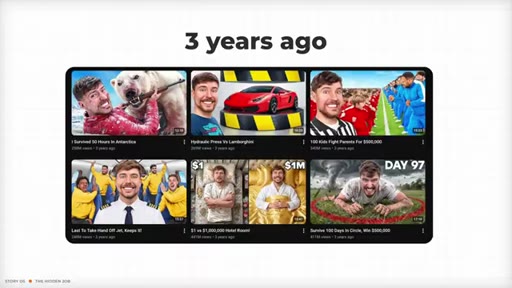
06:20Musicians, actors, movie stars, people who were once household names, they peak and they fall off, and this is true for many personal brands. So we look at MrBeast. His views are now coming down, and they're maybe half of what they once were.
06:30Andrew Tate's public interest, look at this on Google Trends, it's massively in decline. Tim Ferriss too. The truth is very few people managed to maintain the exact level of reach and attention that originally blew them up for more than just a few years.
06:44And this is incredibly hard to avoid because of something called hedonic adaptation. What that means is, people quickly normalize what once felt special to them.
06:53So your content can go from the most exciting thing in the world to, just another post from that person I used to watch, simply because audience have consumed it so much, it no longer feels special. But also, when someone blows up their personal brand with a new format or style, everybody copies them.
07:09So that which made you internet famous soon becomes cliche, and people move on to the next new hot thing or format, as the one they used to love slowly dies out.
07:18In 2022, YouTube was all about b roll and fast paced editing. Then in 2024, it became about stripped back authentic content.
07:25And now in 2026, it's starting to change again. And the only real way you can fight this is by constantly reinventing yourself, which is what Madonna was famous for doing, and it kept her culturally relevant for many years.
07:38So this is the danger of personal brands. Your entire business depends on something incredibly unstable,
07:44human attention. And human attention constantly chases novelty. Bringing us on to the next problem, which does something very weird, and it actually changes the way you will see the entire world day to day if you attempt this.
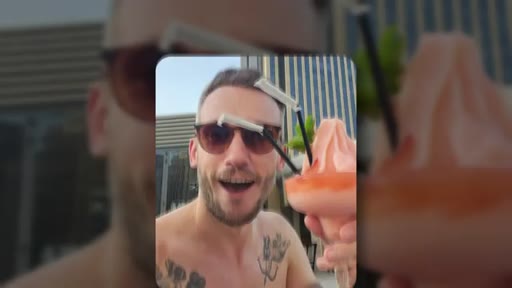
07:58Now, if you've experienced this, please let me know in the comments because almost everyone I know has says the same thing happens to them. So let me give you an example. I recently went to The Maldives and I walked into the villa and I went, wow,
08:09this would make such a great background for a video. And then I went to an event in London and I thought, this would make a really interesting vlog. And then you're chatting to someone and they say something interesting and deep down you're thinking, that would be a good tweet.
08:20What happens is over time, growing a personal brand stops becoming marketing, and it starts becoming deeply tied to how you experience your day to day life, which is why so many creators eventually burn out. Because growing a personal brand lives up here rent free.
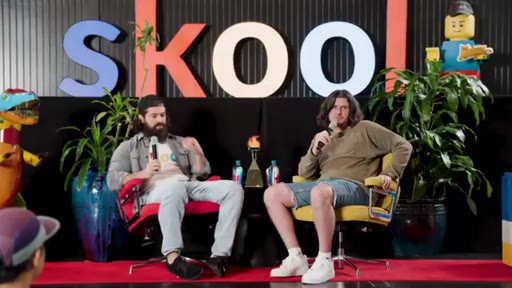
08:35And years ago, I asked Sam Ovens, the founder of school, if he would ever go back to making YouTube videos, and he said no, because he didn't wanna lie in bed at night thinking about how he could have made a video better when his attention should have been focused on building the actual business itself. The truth is when you start to grow a personal brand, you will catch yourself thinking about how any experience or any moment or any conversation could become content rather than actually being present in it, and it can take over your entire life.
09:00So much so, this can actually then start to damage your business. And I have seen this happen many times. So one example was someone making hundreds of thousands of dollars a month, but they didn't really have a personal brand.
09:12And they've seen all these podcast clips and creators online saying, you need a personal brand. Attention's the new oil. You're running out of time.
09:19So they started thinking, I need to do this too. So instead of focusing on the business, they spent three days every week doing hooks, planning content, filming videos, looking at analytics.
09:28And ironically, the more attention they gave to growing the personal brand, the worse their business started performing. And this is where personal brands can become dangerous for some business owners because a lot of people have been made to feel like attention itself is the solution to all of their problems, where really the highest leverage thing they could do is fix and improve their business first.
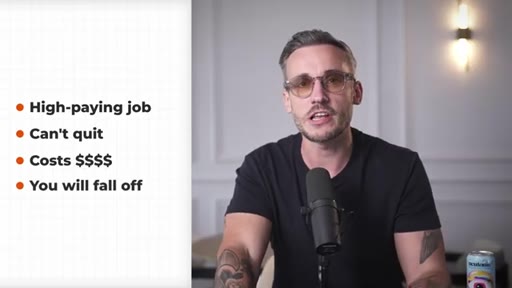
09:47So if personal branding is just a high paying job that you can never really quit, it costs a fortune to scale, and eventually your attention will fall off, is it actually worth it? Well, here is my honest answer after doing this for the last five to six years, and having helped a lot of other people do it too. For most people, I think the day to day reality
10:08is it would make them completely miserable, especially if you don't actually enjoy making content because it's the job. A traditional business would probably make most people happier. But for a very specific person, I think growing a personal brand is gonna be one of the best things they ever do because if it does work for you, there are very few business models where one person can build so much leverage in a niche so quickly.
10:32HOOKBut who is that right person? Well, I think if you can get to the end of this video, hear out what I'm about to show you, and you still think to yourself, you know what? I wanna do this, then it's you.
10:41HOOKSo now let's look at why personal brands are a great idea in spite of everything I've just shown you so you can make that choice for yourself. Starting with the elephant in the room, and that is that personal brands nearly always fall off. The thing is, you actually want that to happen because falling off only kills your business if all you built was attention instead of trust.
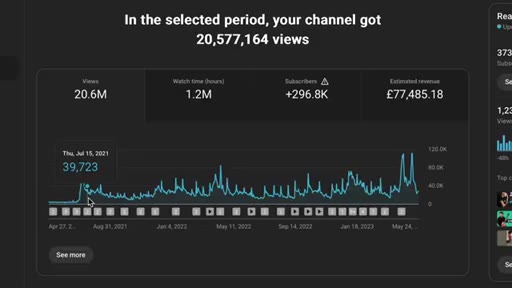
11:00So let me show you what I mean. So back in 2022, I had this big breakout moment. I was getting millions of views a month, and then eventually, felt the platform changing, and my views, they felt harder to get because the style that I'd kinda come up with became cliche, and everyone was copying it.
11:15So I shifted my attention towards the actual business and providing more value and helping the audience that I'd already built rather than obsessing over continually to increase the amount of attention I got. And weirdly, my income doubled, and then it doubled again.
11:29Because the fall off phase is often where personal brands and even musicians can make a heck of a lot of money. Say, for example, Blink one eight two, they can still sell out a great big stadium even though they're no longer culturally dominant.
11:42And that's the same with people like Simon Snake or Tim Ferriss. You might not have consumed a single piece of content from them for years, but you still trust them and you still value their ideas, and you would probably be very excited to work with them because the goal of building a personal brand is not permanent virality that consumes you.
12:01The goal is to build trust and reputation that continues to pay you long after your peak attention phase. And when you reach that point, you unlock the real benefits of a personal brand.
12:13Because thanks to the trust you once built, you get invited onto podcasts, and all the listeners will be your ideal buyers, meaning other people make content for you and distribute it for you, and you make money that way. People then invite you to invest in things like this delicious new tonic
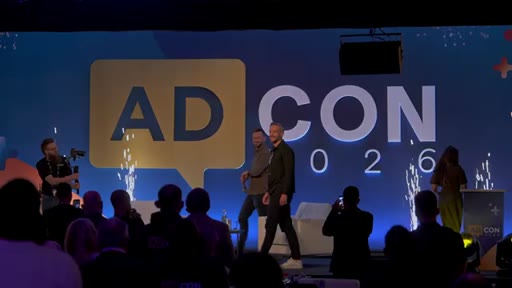
12:27that I was asked to invest in along with much bigger names. You get invited to speak at events, and most people, I believe, earn more in the fall off phase because they can finally focus on monetizing the audience they build rather than focus on always trying to get attention. In fact, I've had loads of people buy my products after not watching anything from me for years based on value I gave them in 2023
12:50because trust compounds far longer than attention. So that sounds good.
12:54Right? But what about the fact this takes just so much of your time and you can never really create a 100% non dependent on new lifestyle? Well, there's ways around it.
13:03So if we look at Sam Ovens, the founder of school, I think he's one of the very few people that's actually pulled this off. And I believe that if he never appeared online again, school would continue to grow for a very long time because all he did was he used the trust and reputation he built years ago through making YouTube videos to launch something that no longer requires
13:23his face or his visibility. In fact, what he did was smart. He used his personal brand and network to attract and empower other creators to promote it for him, so he's using their face instead.
13:32And that is something you can do when you are very well respected in a niche. It's actually crazy. I spent a while trying to find examples of other people who have done it as well as him, and honestly, there are just not that many people who have stopped making content even though they could.
13:45Tony Robbins, Russell Brunson, Alex Hall, Moses, Steven Barlow, they could all disappear tomorrow, and they'd be fine. But I also think a lot of people at that level, they enjoy this game, and they like building and creating and staying culturally relevant. So they keep playing, and they keep putting all their time into it because that is the lifestyle they want.
14:02HOOKBut you probably don't wanna do that. I don't think many people do. So what if you wanna do this in a way that it won't consume your life forever?
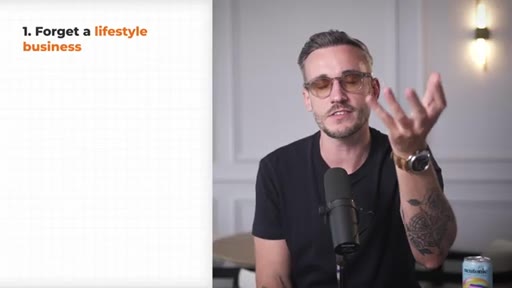
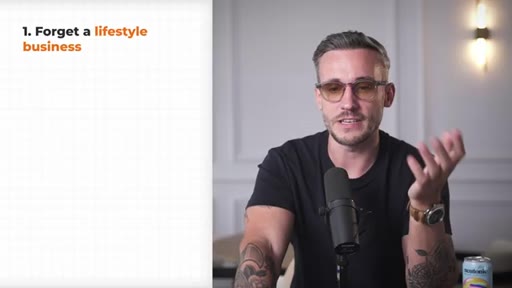
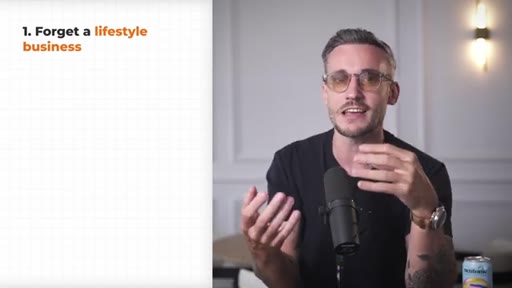
14:08HOOKWell, if I was starting again from zero, this is exactly how I'd do it to avoid many of the problems we've talked about. So first, I would just stop thinking of this as trying to build a lifestyle business. Because honestly, lifestyle businesses via a personal brand, they exist after you've made it, when you can switch off.
14:24HOOKTo get to that point, it's a huge amount of work. And I honestly believe there's hardly any real lifestyle businesses on this planet. It's just a nice thing to sell people.
14:31But instead, what I would do is I would think of it as this. I would set out to say, I am going to build a media company.
14:38Because the the moment you start thinking of it like that, you instantly think about building a team to help you scale your personality instead of focusing on this whole kind of, like, solopreneur idea where you do it all yourself, and that is a very time intensive trap you will fall into.
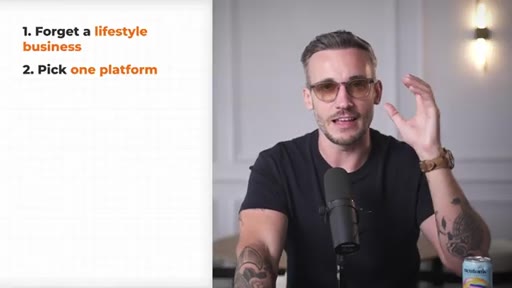
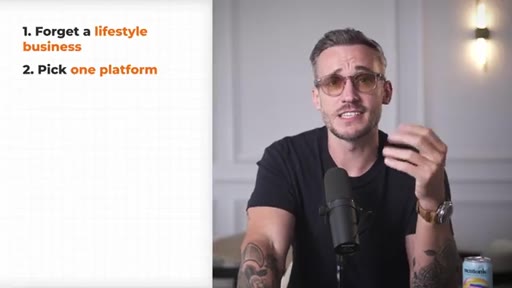
14:53Then I would only focus on one platform at the beginning, because trying to post absolutely everywhere is great in theory, and it's the advice people like Gary Vee will give all the time, but it's not for beginners.
15:04He's giving advice to people with loads of money to invest in that system. Really, most beginners don't have money, experience, or the systems to pull it off.
15:13So instead of spreading yourself way too thin, I would master one platform first. Now, personally, I would choose YouTube because, one, I'm biased. My service that you pay for helps grow YouTube channel.
15:25But secondly, because long form video, it builds trust better than anything else online, as well as the other benefits I'm gonna show you in a second. Then I would focus far more on building trust than chasing virality.
15:37Because attention gets you noticed, and the views are gonna feel really good. But leaning into it too heavily, it won't save you when that fall off does happen.
15:45So focus on trust because that's gonna pay you for decades. So I'd be thinking about always trying to make the most genuinely useful content, not just trying to trick people to click or trick them to watch for longer. And then I would make one really good product people recommend to their friends, so that when I was ready to scale, it wouldn't crumble under the pressure.
16:04And then I would master the foundations of what makes amazing content. Pretty much hooks, storytelling, creating frameworks, simplification,
16:12and build some kind of system that got me a result. Then once I had started to get some traction on a platform and the system was working well, I would hire people to help run that system with me or for me. If I had a ton of cash at that stage, I'd pay someone really good.
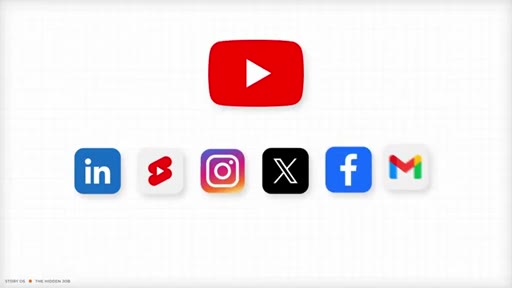
16:25If I didn't, I would train someone up to do things the way that I was doing them. And then once I had enough money, that's when I'd start building the big omnipresent, multiplatform social media marketing machine that puts you everywhere online.
16:36And I would outsource as much as I possibly could so that I was only left with the one thing I could obsess over and focus over that I genuinely love doing so I could finally become world class at it. And if you can do this, your earnings will go up, the amount of time you work will go down. And this is why YouTube's so powerful, powerful, because you can build one video into LinkedIn posts, shorts, clips, reels, tweets, emails, Instagram carousels, and now the cool thing is
17:01CTAAI can help so much with that process. You might only need one or two team members to help you build and manage this system, whereas before, it took a heck of a lot more. So if you watched this entire video and thought, I still wanna do this, then you are probably the exact type of person who should.
17:15CTAAnd if you wanna learn how to actually build a YouTube channel properly, one that gets you into the top 1% of your niche so you could generate view sales and leads, watch this video next. I'm gonna show you exactly how I've done it and helped hundreds of other businesses do it too.
— full transcript
§ 05 · For Joe

Trust is the asset; attention is just the acquisition channel.

WHAT TO LEARN

Personal brands do not fail because of bad content — they fail because founders treat attention as the goal instead of the mechanism for building something that outlasts the peak.

  • When you build a personal brand, you become the marketing department — which means you cannot delegate your way out of it the way a traditional business owner can.
  • Most personal brand failures are really disguised burnout: the creator built a second full-time job without realizing it, then ran out of fuel.
  • Scaling a content operation to multiple platforms costs $30-50K per month in skilled labor — the only cheap alternative is becoming the strategist yourself first, which takes years.
  • Hedonic adaptation is structural, not personal: no matter how good your content is, audiences normalize it over time, and the format that made you famous will eventually become cliche.
  • The fall-off phase often generates more revenue than the peak phase, because you finally shift focus from getting attention to monetizing the trust already built.
  • Trust outlasts virality by years — people buy based on value received at peak, long after they stopped watching regularly.
  • For a profitable business owner, chasing a personal brand can actively reduce business performance if it steals focus from the highest-leverage lever: the existing business.
  • The sequencing matters: master one platform, build one product, build the team, then expand to multiplatform — doing it in reverse burns money and people.
  • A media company mindset changes the core question from how do I do all of this to who does each part.
§ 06 · Frame Gallery

Visual moments.