
Brock Mesarich | AI for Non Techies · Youtube · 08:00

Anthropic Just Dropped Claude Opus 4.8 (Full Breakdown)

An 8-minute, no-hype explainer that walks a non-technical audience through Anthropic's Opus 4.8 release post.

Posted
May 28th 2026
today
Duration
08:00
Format
Explainer
educational
Channel
BM
Brock Mesarich | AI for Non Techies
§ 01 · The Hook

The bait, then the rug-pull.

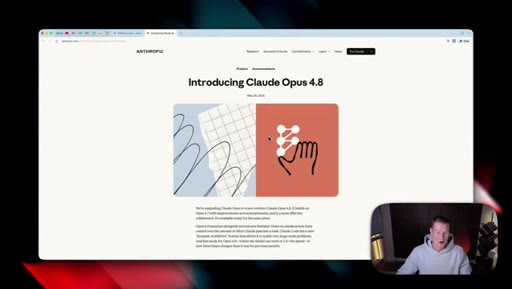
Anthropic shipped Opus 4.8 the same day, and most creator videos turned it into hype. This one does the opposite - reads the announcement aloud, dismisses the benchmarks, and treats the release as a tell about what is actually coming next from Anthropic.

§ · Chapters

Where the time goes.

00:00 – 00:24

01 · Cold open and no-BS promise

Names the release, promises no benchmark talk, frames the video as honest analysis instead of hype.
00:24 – 01:14

02 · Benchmarks, dismissed

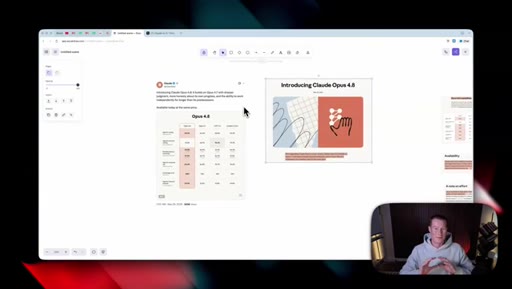
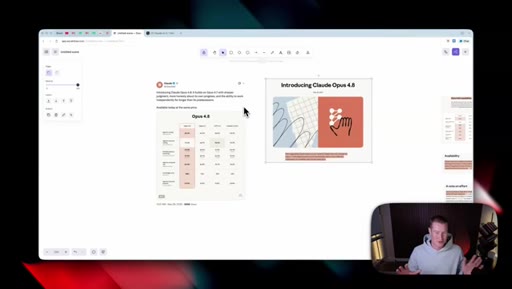
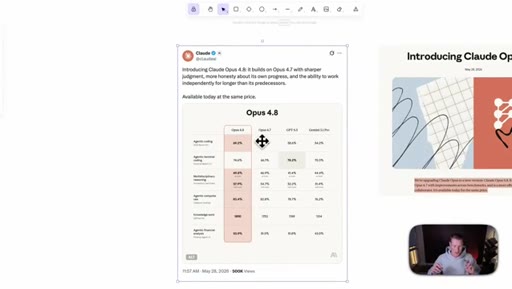
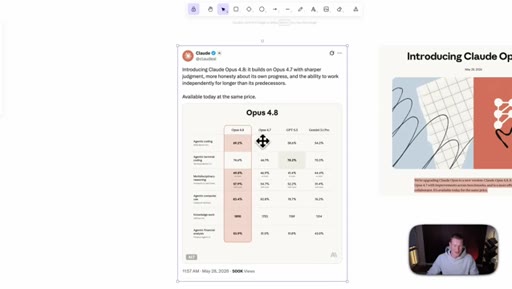
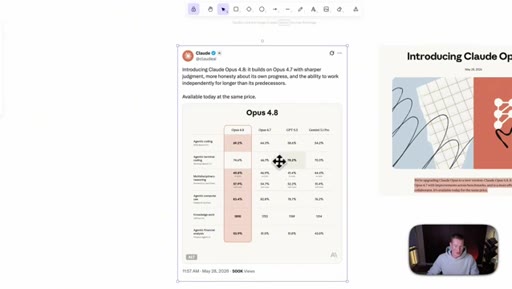
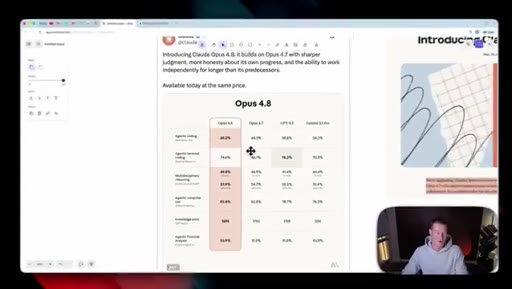
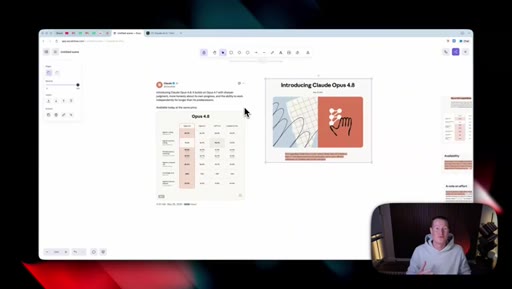
Shows the benchmark table and waves it off; only surviving claim is that Opus 4.8 beats GPT-5.5 and Gemini 3.1 Pro everywhere except agentic terminal coding.
01:14 – 01:45

03 · Availability and pricing

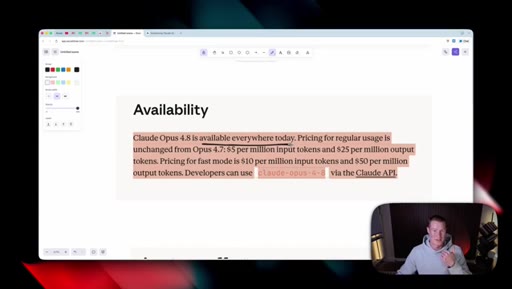
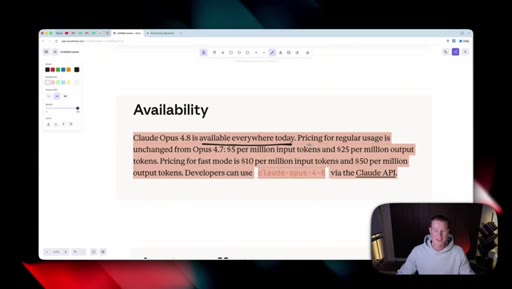
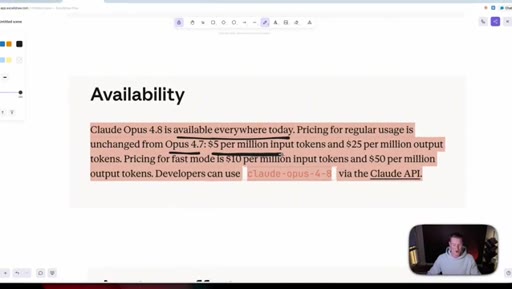
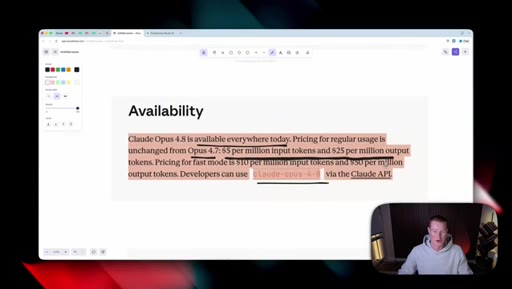
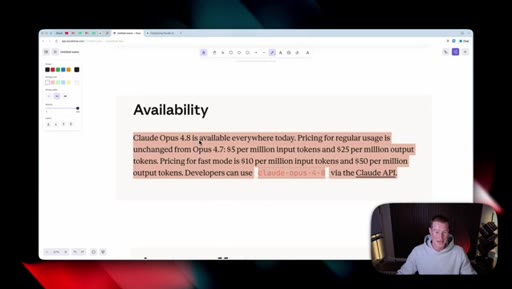
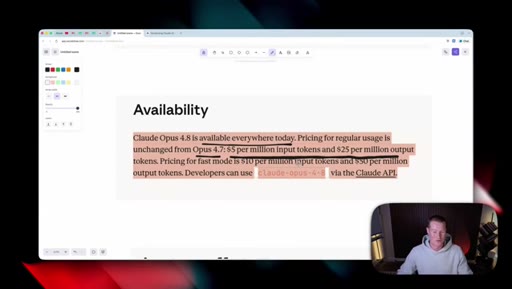
Same price as 4.7 ($5/M input, $25/M output). Available in claude.ai, Claude Code, Cowork, and via the API.
01:45 – 03:14

04 · The new effort mode

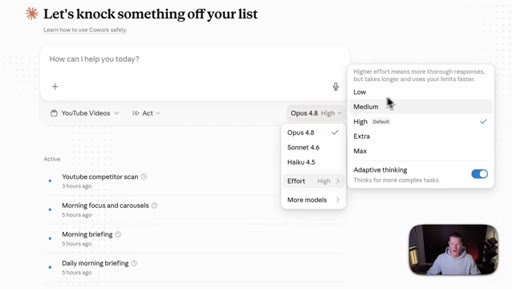
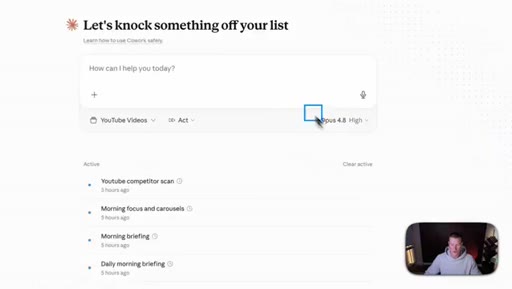
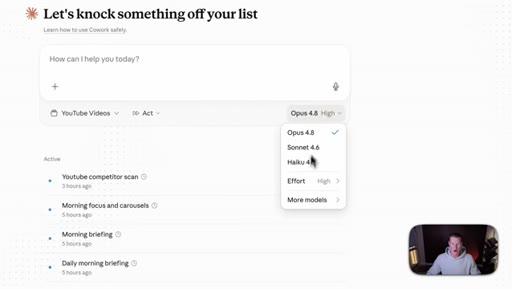
Effort selector (Low / Medium / High / Extra / Max) now lives inside the consumer Claude apps. Opus 4.8 defaults to High. Live demo of the dropdown in Cowork.
03:14 – 04:43

05 · Honesty as headline feature

Anthropic claims Opus 4.8 is roughly four times less likely to fake-pass coding tasks. Host stays skeptical and reserves judgement until he can test it himself.
04:43 – 06:03

06 · What is coming next: Claude Mythos

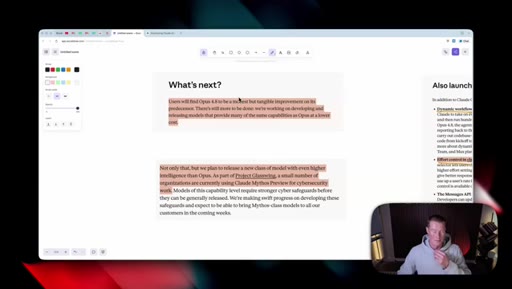
Reads Anthropic's own framing (modest but tangible) as the tell. Project Glassuiing is staging Claude Mythos with Fortune 500 cybersecurity testers; expected in claude.ai in the coming weeks.
06:03 – 06:51

07 · Also launching today

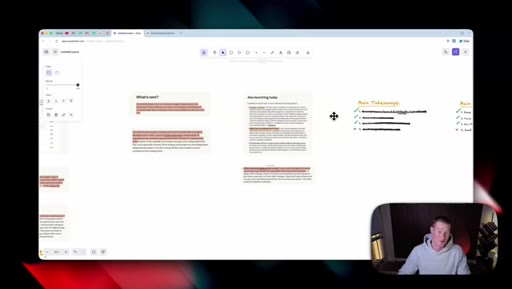
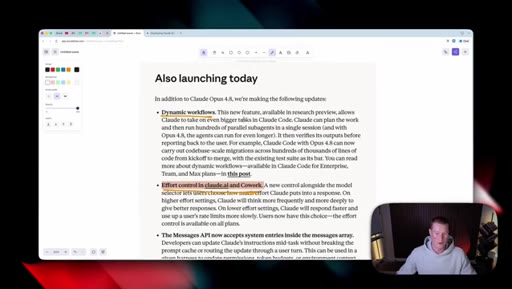
Dynamic workflows in Claude Code (hundreds of parallel sub-agents, can run longer on 4.8). Messages API gains system entries inside the messages array for developers.
06:51 – 08:00

08 · Four-takeaway recap

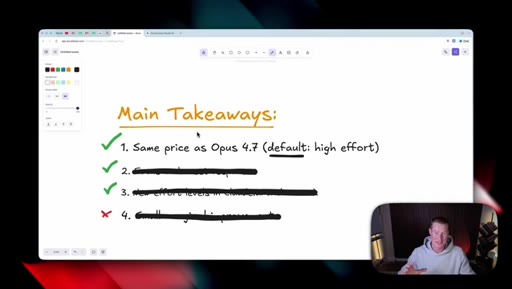
Same price, focus on honest responses, new effort levels, but ultimately small marginal improvements. The real story is Mythos.

§ · Storyboard

Visual structure at a glance.
open
announcement
availability
effort note
cowork demo
effort dropdown
honesty
what is next
claude mythos
also launching
takeaways recap
four checkmarks
cta
§ · Frameworks

Named ideas worth stealing.

06:55 list

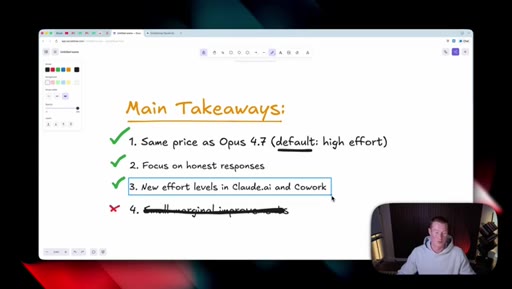
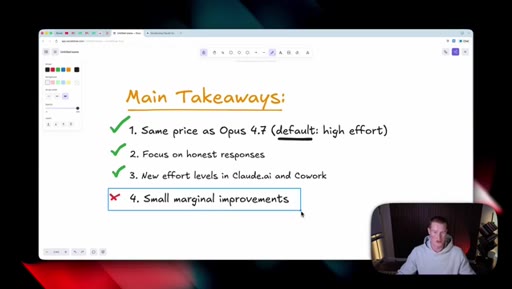
Four Takeaways

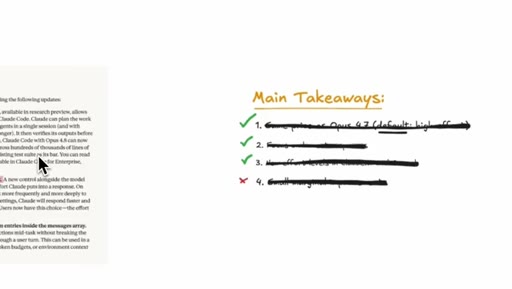
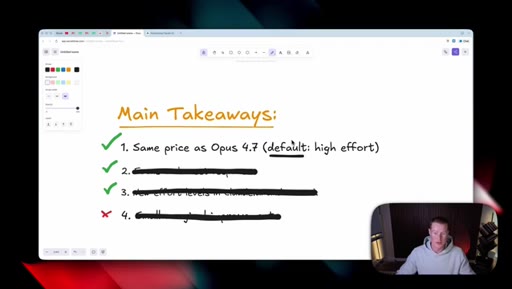
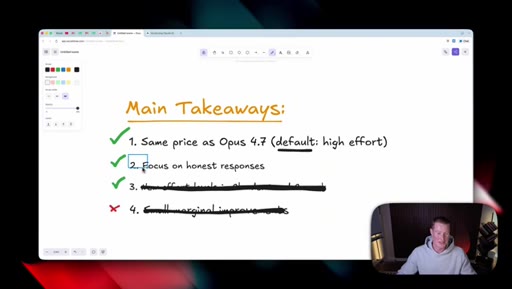
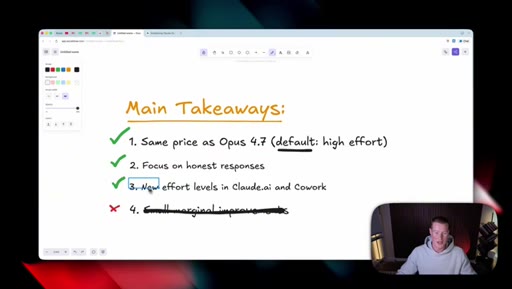
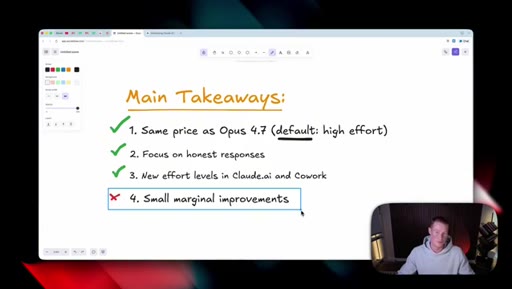
  1. Same price as Opus 4.7 (default high effort)
  2. Focus on honest responses
  3. New effort levels in claude.ai and Cowork
  4. Small marginal improvements - this release is groundwork, not the milestone

The host's own whiteboard distillation, used as the through-line in both the intro and the recap.

Steal for any 'read the release post for me' explainer that needs a memorable spine
03:15 list

Effort Levels (Cowork / claude.ai)

  1. Low
  2. Medium
  3. High (default for Opus 4.8)
  4. Extra
  5. Max

The five effort tiers exposed in the consumer Claude apps for Opus 4.8.

Steal for any tutorial recommending a smart default plus an escape hatch
§ · Quotables

Lines you could clip.

00:14
"I'm not gonna talk benchmarks and complicate this. I'm just gonna talk about tangibly what is different."
self-positioning hook that frames the channel as anti-hype → channel intro reel
03:46
"One of the most prominent improvements inside of Opus 4.8 is its honesty, which to me, honestly, sounds like a no brainer. You want AI to give you honest responses."
punchy reaction-to-Anthropic line that sets up the editorial skepticism → TikTok hook over the Anthropic page
04:55
"When they are coming out and saying this is just a modest update, I'm not expecting this to be a huge leap in capabilities."
names the reader's actual question in plain English → newsletter pull-quote
05:22
"Claude Mythos - this is the AI model that apparently is too good for them to release to the public, so they've actually given this to some of the Fortune 500 companies to run internal testing."
the contrarian piece of news most viewers will not have noticed in the post → IG reel cold open
07:26
"This is definitely not a game changing release. Of course, it is a new level up from Claude Opus 4.7, but I think this is kind of laying the groundwork for a bigger model release in the Claude Mythos preview."
thesis sentence that lands the entire video → closing card on a short
§ · Resources Mentioned

Things they pointed at.

02:58productClaude Cowork ↗
05:22productClaude Mythos Preview (Project Glassuiing)
§ · CTA Breakdown

How they asked for the click.

07:45 subscribe
"If you guys got some value from this video, leave a like, subscribe to this channel for more AI content for nontechnical people."

soft, 10-second outro with no funnel mention; relies on watch-time and topic affinity rather than a lead magnet

§ 04 · The Script

Word for word.

HOOK opening / re-engagementCTA the pitch metaphor
00:00HOOKAnthropic just released Claude Opus 4.8. I dissected the entire article breaking down the new features as well as I've been testing it out myself. So I'm gonna make a no BS breakdown on exactly what's different.
00:12HOOKIf you're nontechnical, I'm not gonna talk benchmarks and complicate this. I'm just gonna talk about tangibly
00:18HOOKwhat is different, what you can expect from this, and if this is a real game changer that I could almost guarantee many YouTubers out there are gonna say, I'm not gonna sit here and hype this up. So without further ado, let's dive into a real breakdown on this.
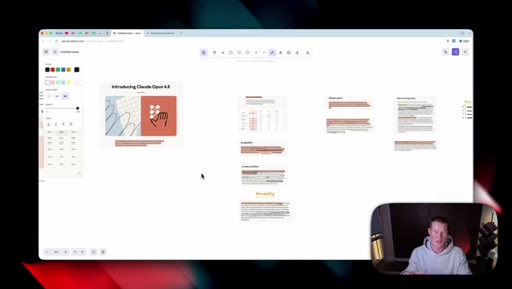
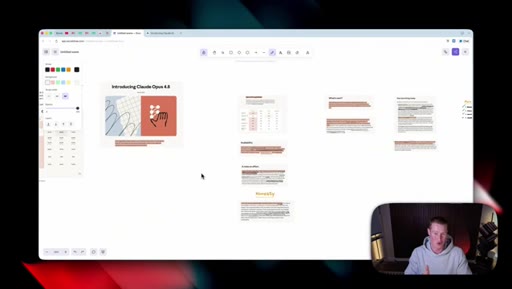
00:31First of all, I read this entire article right here by Anthropic, and I turned it into bite sized breakdowns on the main things and the four main takeaways from this. If you guys want to see the full article, there will be a link in the description so you could just dissect it yourself, but I wanted to condense this for you here.
00:47So first things first, here is a breakdown on the benchmarks. We're not gonna talk about this. Basically, all we need to know is, yes, this is better than Claude Opus 4.7 as well as GPT 5.5 and Gemini 3.1 Pro on basically everything here.
01:02The only thing that any of these other models are better at than OPUS 4.8 is GPT 5.5 for AgenTic terminal coding, but if you're not using Claude code, this doesn't necessarily pertain to you. Alright. So first of all, let's talk about availability.
01:15As of right now, Cloud Opus 4.8 is available everywhere today, so we could use this on the desktop app inside of Cloud Code, Cloud Cowork, all these different places we could use it. And then let's talk about pricing as well. So pricing for regular usage is unchanged from OPUS 4.7,
01:31which is great. That is $5 per million input tokens and $25 per million output tokens.
01:37So in terms of pricing, we don't need to worry about anything upgraded from the OPUS 4.7 model. It's gonna be exactly the same, as well as developers can now use Claude OPUS 4.8 via the Claude API.
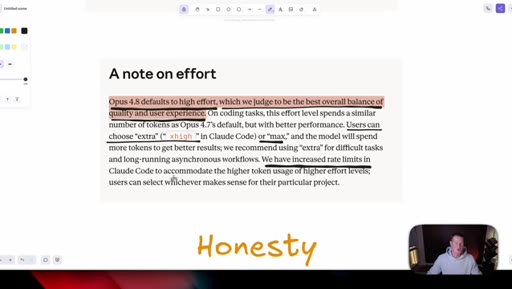
01:50So if you're using Claude code or you're using it as a developer, that's available right now as well. Next up, this is one of the bigger things inside of this release. There is a new effort mode that's inside of the Claude dot a I and the Claude desktop app, meaning that if you've ever used Claude code, you can select which effort level Claude Opus 4.7
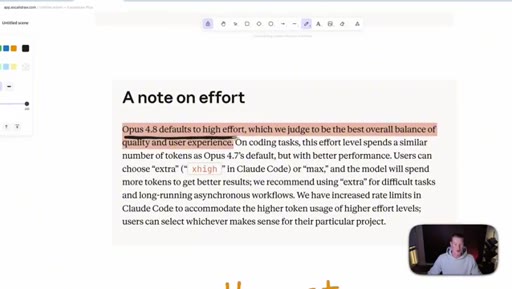
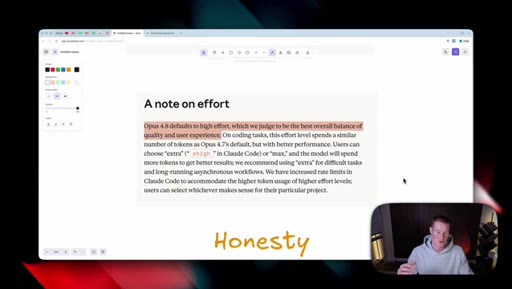
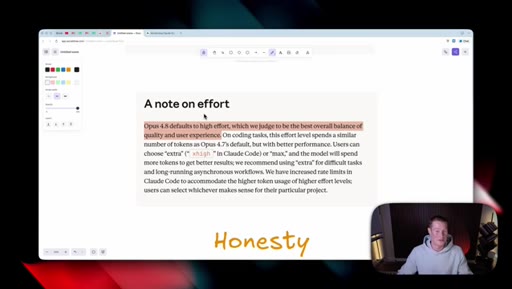
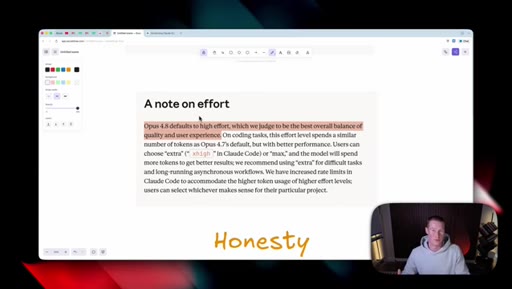
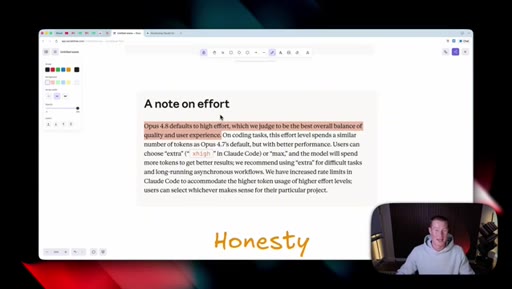
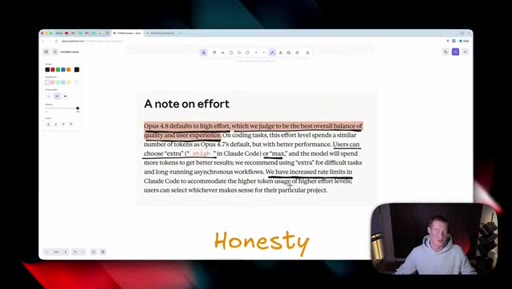
02:09was gonna perform tasks for you. So if you're doing something a bit higher, you could put it on max or high mode, and you can now do this directly inside of the normal Claude app. It does it does say that OPUS 4.8 defaults to high effort,
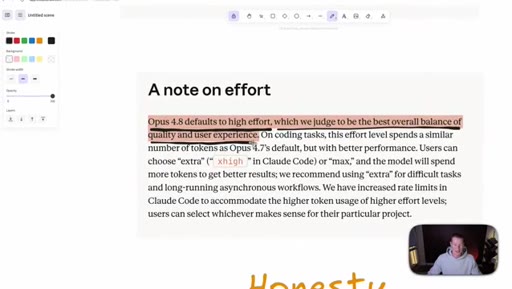
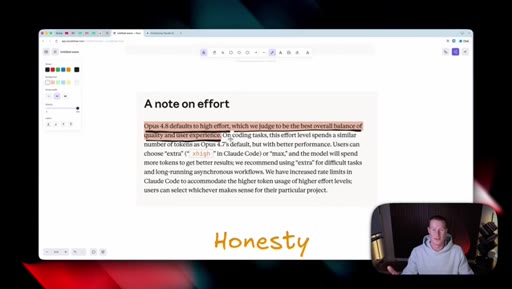
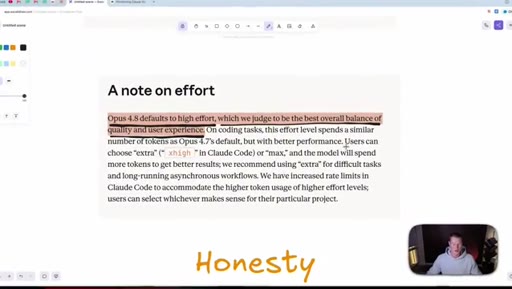
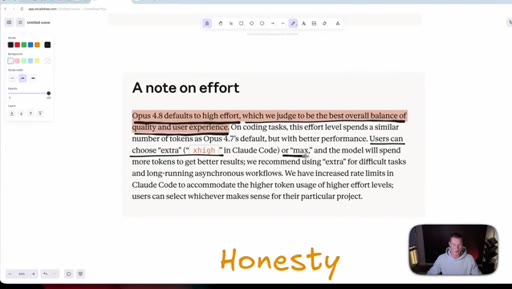
02:22which we judge to be the best overall balance of quality and user experience. So, again, it's gonna automatically default to this. If you have specific tasks that are a bit easier for it to do, you could always toggle it down to a lower mode so you're not spending as much on your tokens.
02:36It also looks like if you are using Claude code, users can now choose extra high mode inside of Claude Code, or you could use the normal max mode that, you know, you already could use. Then it also looks like there is increased rate limits inside of Claude Code to accommodate the higher token usage of higher effort levels.
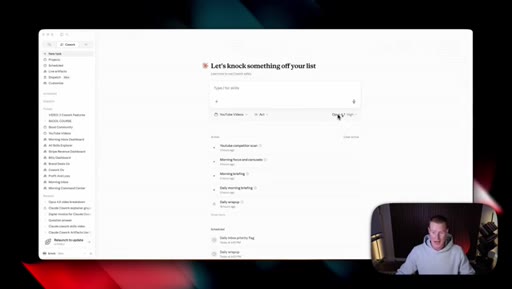
02:54Um, and, again, users can just select whatever they want for a particular project. In order to show you this live in action, here is Claude Cowork. As you could see, I have Opus 4.7 high selected here,
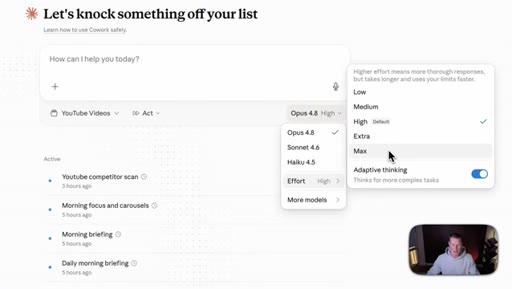
03:06and now I can go ahead and click on Opus 4.8. It automatically defaults to the high mode like I just mentioned before. And if we click,
03:14uh, on Opus 4.8, we can now see this little effort level, and we can just go and preselect what we want. So we could turn it on low, medium, high, extra, or max, as well as we can, you know, toggle on adaptive thinking. This was already there, but all of these new effort levels that we could see right here is new.
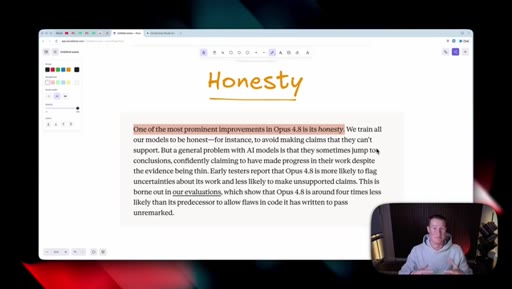
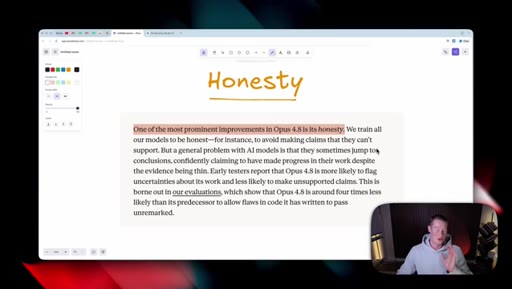
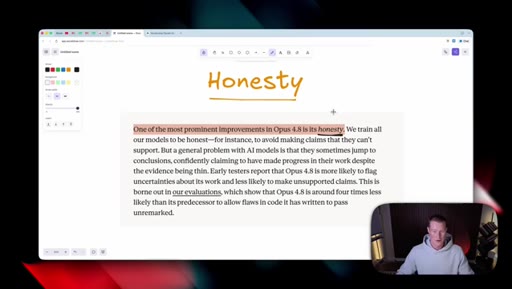
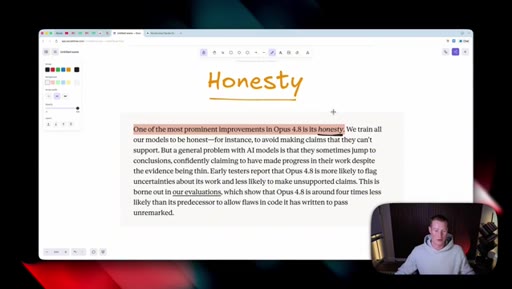
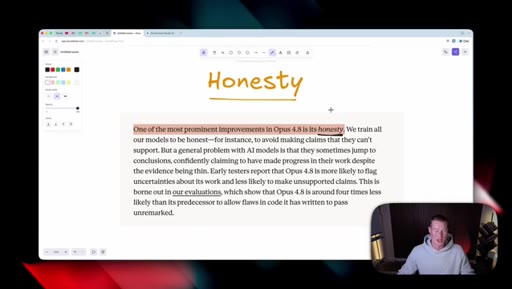
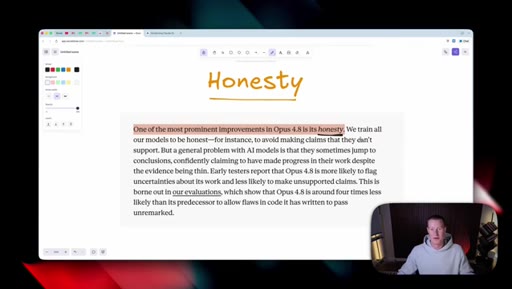
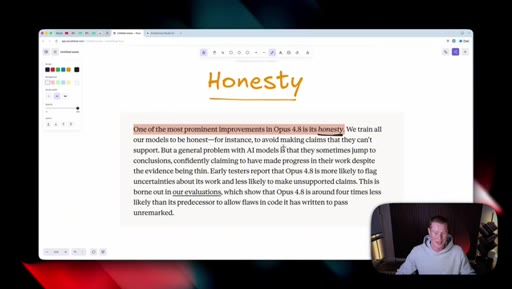
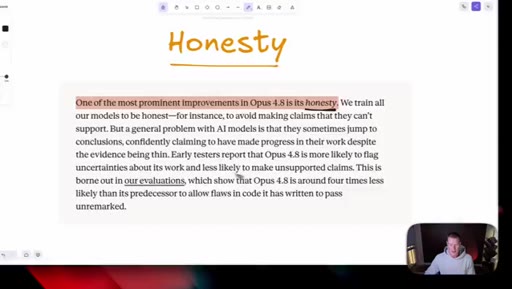
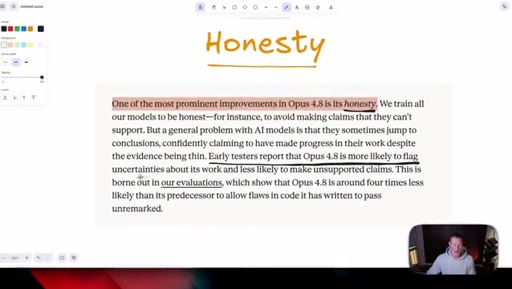
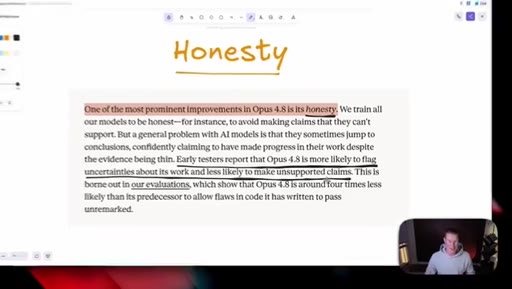
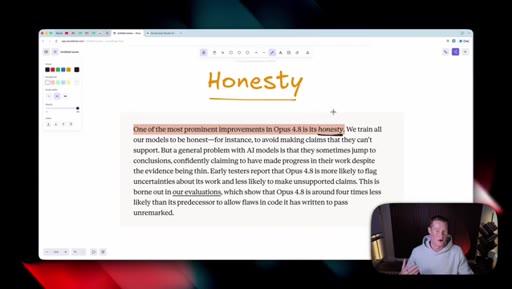
03:32HOOKSo after dissecting this article, one of the main things that I've seen and one of the things that Anthropocos is saying, like, is the biggest part of this release is that one of the most prominent improvements inside of OPUS 4.8 is its honesty, which to me, honestly, sounds like a no brainer.
03:49HOOKYou want AI to give you honest responses. And for me, personally, this is something I ran into with Opus 4.7 and any AI model for that matter. But a lot of the times, the information that it would give me just wouldn't be correct, and I'd always have to say, hey.
04:02Can you make sure that this is honest and this is the correct information? So, apparently, this is gonna be a bit more honest of a model, which I would hope so. It said that we train all of our models to be honest, for instance, to avoid making claims that they can't support,
04:17which, again, I've had this countless amount of times using other OPUS models before and any Claude model. They did mention that early testers report that OPUS 4.8 is more likely to flag uncertainties about its work and less likely to make unsupported claims. Obviously, we're gonna have to see this in practice, if it actually is more honest, them saying this on paper really doesn't mean much until we test it out.
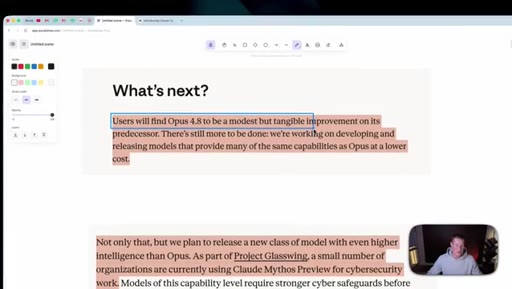
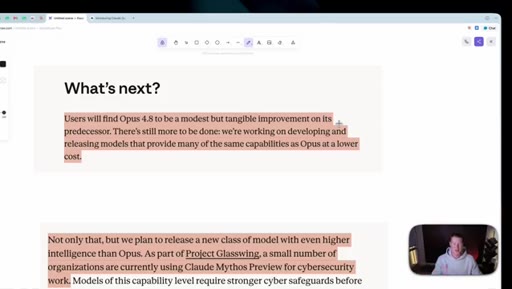
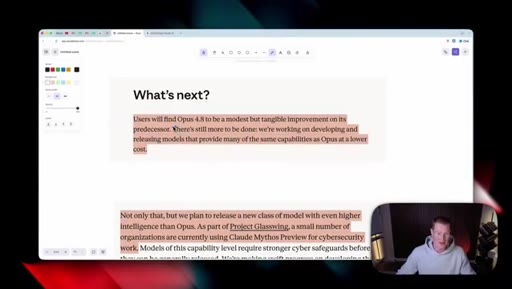
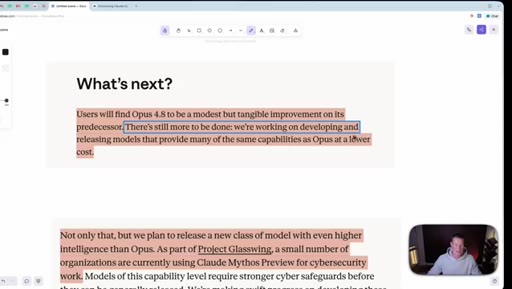
04:38HOOKThere are a couple of other things that are being released alongside this, so I'm gonna talk about that here in a second. But first of all, let's talk about what Anthropic is saying is what's coming next. So in their own words, they're saying users will find Opus 4.8 to be a modest but tangible improvements on its predecessor.
04:54HOOKSo when they are coming out and saying this is just a modest update, you know, I'm not expecting this to be a huge leap in capabilities. We're probably gonna notice a little upgrade, probably just a marginal one.
05:05It's not gonna be anything game changing like I said. Hopefully, it is more honest. You know, as they said, this is, like, a big part of their release.
05:12They wanna make this more honest. And they did come out and say that there is still a lot more work to be done. We're working on developing and releasing models that provide many of the same capabilities as Opus at a lower cost, and that is what's coming next.
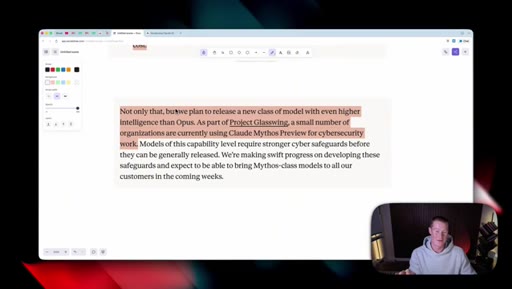
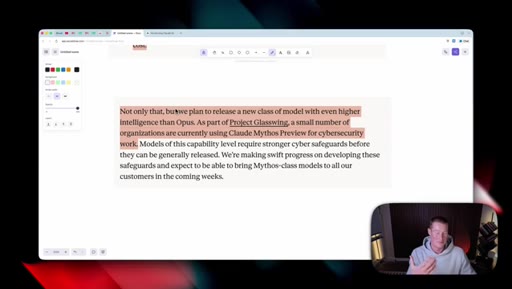
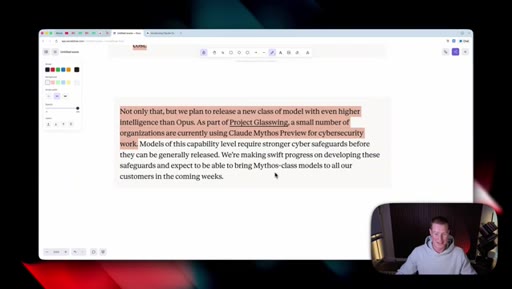
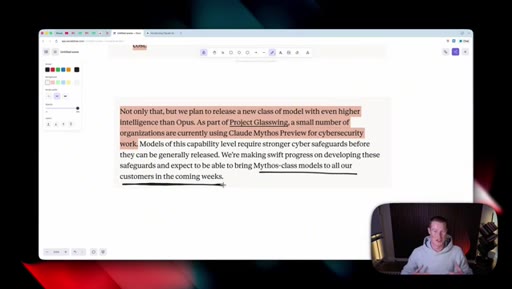
05:25And if you've never heard of Claude Mythos, this is the AI model that apparently is too good for them to release to the public, so they've actually given this to some of the Fortune 500 companies to run internal testing to make sure this is actually safe to give to the public. They came out and said that not only that, but we plan to release a new class of models with even higher intelligence than Opus, and this is the new Claude Mythos preview model.
05:49Right here inside of the article, it says that we can expect this inside of Claude in the next coming weeks. It didn't really give an exact date, but just know that this is something that could be coming out in the next two, three, four weeks. Alright.
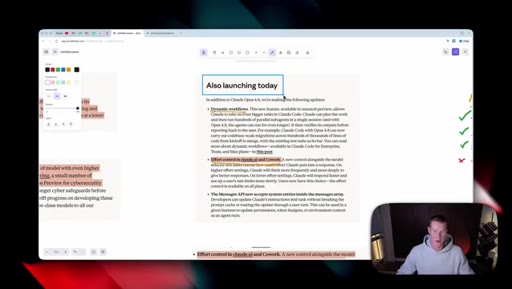
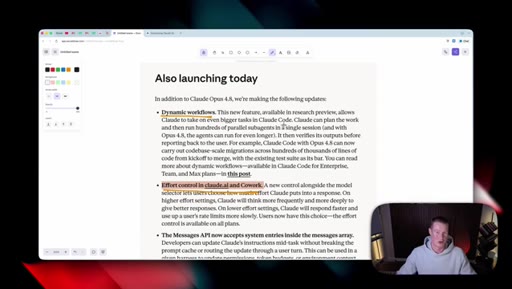
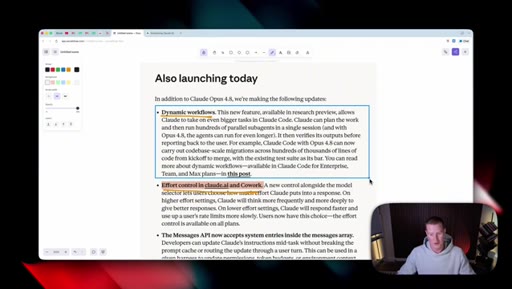
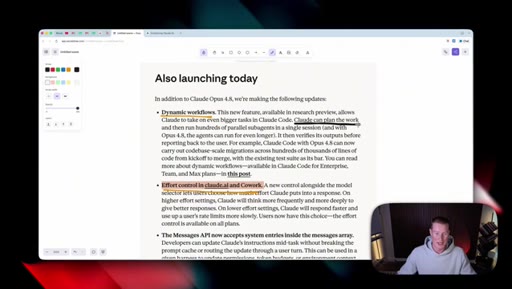
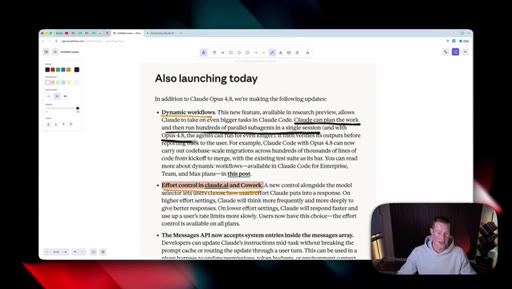
06:01So next up, we have dynamic workflows. This is a new feature available in research preview, allows Claude to take on even bigger tasks inside of Claude code. So if you don't use Claude code so let's say you're just an everyday Claude chat and Claude CoWork user, this won't necessarily pertain to you, but let me break it down just a little bit here.
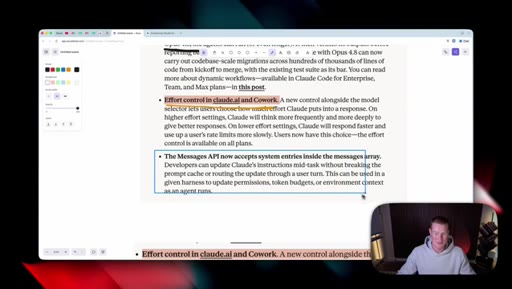
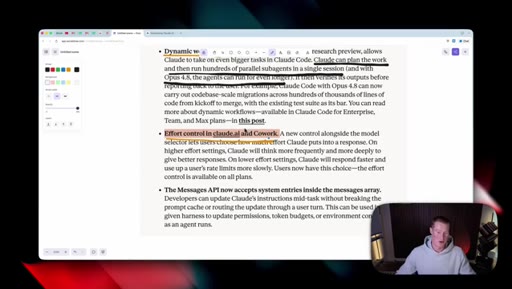
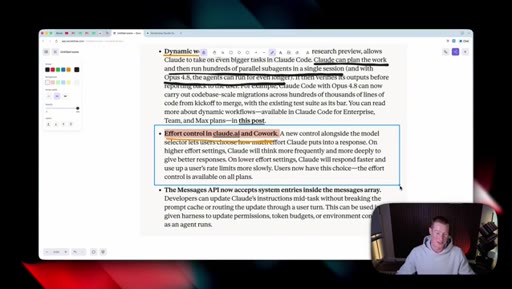
06:19They are claiming that Claude can now plan the work and run hundreds of parallel sub agents in a single session, and it says that with OPUS 4.8, the agents can run for even longer. So, again, that only matters if you are using Claude code. Next up, one of the other changes that we did mention is the effort control inside of claude.ai
06:37and Claude Cowork, which is something I'm personally happy about. And then this is another small one, but the messages API now accepts system entries inside the messages array, and this only matters if you are a developer.
06:49Alright. So my main takeaways after reading this article is that this is the same price as OPUS 4.7. It's automatically gonna use the new default high effort mode, and so that is great that this isn't a more expensive model.
07:01Next, a big part of this release is focused on honest responses, which is a no brainer. Obviously, they should be focusing on that. Then we have the new effort levels.
07:10Again, I'm actually pretty excited for this. It's a very small feature, but I think this will be, you know, pretty practical for a lot of people. And then lastly, my main takeaway from this is that these are all just small marginal improvements.
07:22CTAThis is definitely not a game changing release. Of course, it is a new level up from Claude Opus 4.7, but I think this is kind of laying the groundwork for a bigger model release in the Claude Mythos preview that should be coming out over the coming weeks.
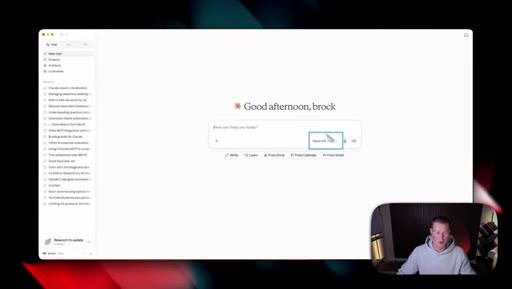
07:35CTASo if you guys do wanna test it out, it's available right now in the Claude desktop app as you can see right here. We could see it inside of Cowork. We could see it inside of normal Claude chat mode, as well as this is available inside of auto code as well.
07:48CTAAnd there we have it. That's a quick breakdown. If you guys got some value from this video, leave a like, subscribe to this channel for more AI content for nontechnical people.
07:55CTAI wanna make this video short and to the point, so hope you have a good day, I'll see you in the next video.
— full transcript
§ 05 · For Joe

Read the model card like a release strategist.

WHAT TO LEARN

Opus 4.8 is the same price and a modest jump - and the most useful thing in the post is the next-model tell Anthropic buried under a headline upgrade.

  • Treat Opus 4.8 as a free upgrade: identical pricing to 4.7 ($5/M input, $25/M output) means there is no reason to keep prompting against the older model.
  • Use the new effort selector inside claude.ai and Cowork to spend tokens on hard problems and save them on easy ones; High is the safe default Anthropic ships.
  • When a model card calls its own release 'modest but tangible' and names a stronger model held back for cybersecurity review, the strategic move is to plan around the next release window, not this one.
  • Anthropic's four-times-fewer-fake-passes honesty claim is unverified until you stress-test the model on the kind of code-review or research task that previously hallucinated; do not adopt the claim on faith.
  • If you live in Claude Code, dynamic workflows and the new Extra-High effort tier are the only items that materially change your day; everything else is a UX polish.
  • Watch the Claude Mythos preview as the real next inflection - Anthropic stating it requires stronger cybersecurity safeguards is a signal it will land with usage limits and access friction, not a clean rollout.
§ 06 · Frame Gallery

Visual moments.