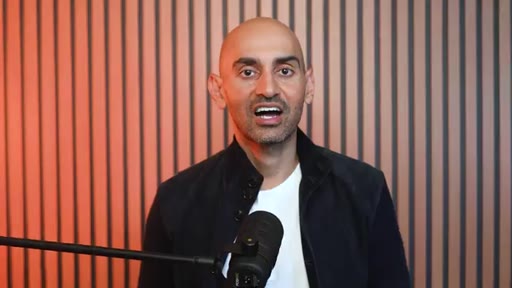
Neil Patel · Youtube · 13:15

5 Signs Your AI SEO Strategy Is About to Take Off

A 13-minute diagnostic framework for reading AI search signals before revenue numbers confirm them.

Posted
May 27th 2026
today
Duration
13:15
Format
Tutorial
educational
Channel
NP
Neil Patel
§ 01 · The Hook

The bait, then the rug-pull.

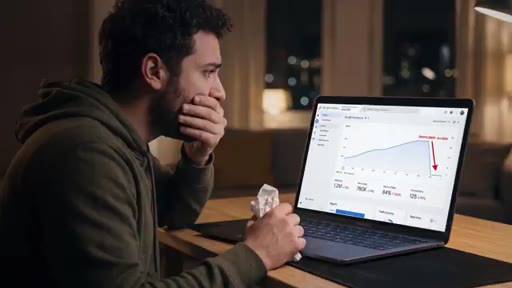
The setup is deliberately disorienting: traffic is down, rankings look fine, and nothing makes sense. That tension between competent work and invisible results is exactly what this video resolves by replacing the scoreboard, not the strategy.

§ · Chapters

Where the time goes.

00:00 – 02:43

01 · Your Dashboard Is Lying to You

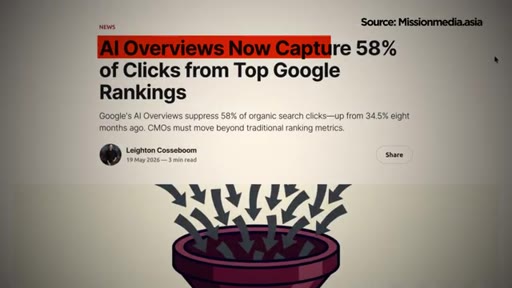
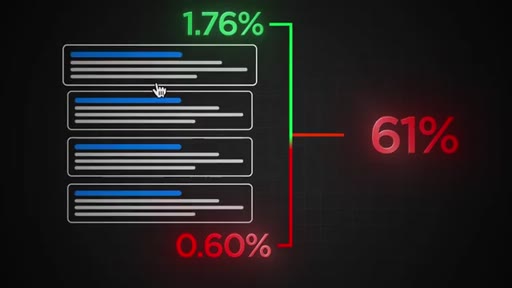
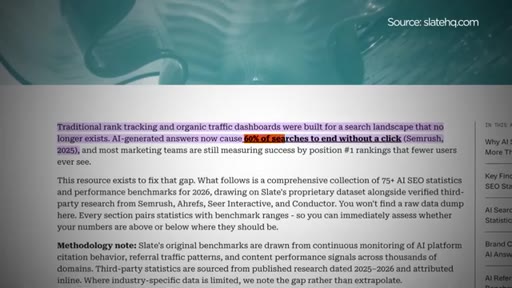
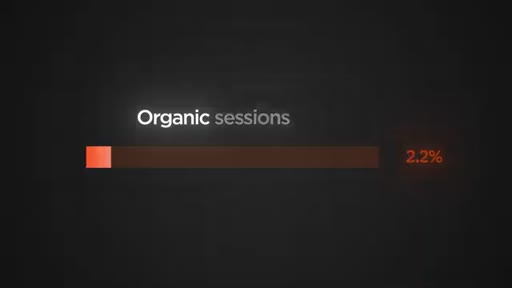
60% of Google searches end without a click. AI overviews suppress 58% of clicks to top-ranked pages. Organic CTR dropped 65%. AI referral traffic grew 527% from 2024 to 2025.
02:43 – 05:42

02 · Sign 1: Rising AI Citations

Check citation rate via Ubersuggest. Top brands 20-30%; average 5-12%; below 3% is invisible. Ranking number 1 gives only 31% chance of AI citation. 75% of citations go to sources outside Google top 10.
05:42 – 07:01

03 · Sign 2: Brand Search Surge

The brand search search pattern: AI recommends you, user Googles your name later with zero AI attribution. SMBs seeing AI gains show 25-50% branded search growth even when total traffic is flat.
07:01 – 09:27

04 · Sign 3: Predictive Traffic Growth

AI prequalifies buyers before they land. AI traffic converts at 9%, highest of all channels, 2x SMS, 3x paid search. Segment GA4 by ChatGPT, Perplexity, Claude, Gemini referral sources.

09:27 – 10:40

05 · Sign 4: Improved GEO Metrics

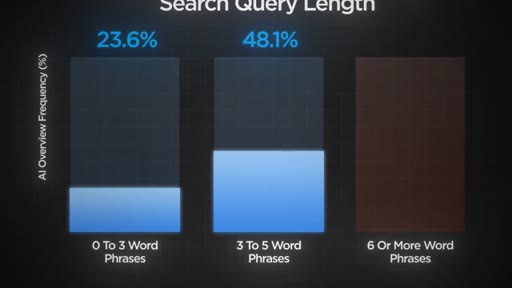
6-plus word queries trigger AI overviews 77% of the time vs. 48% medium and 23% short queries. Absent from long-tail AI answers means invisible at the buying-decision moment.
10:40 – 13:15

06 · Sign 5: Conversion Lift

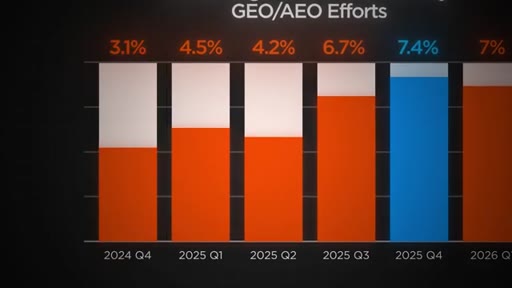
AI-optimized content shows 70% higher ROI per Semrush. AI-sourced leads grew 3.1% to 7.4% across 22 NP Digital clients in one year. Freshness plus topical depth compounds citation authority.

§ · Storyboard

Visual structure at a glance.
open
zero-click data
58% click suppression
CTR decline chart
citation rate benchmarks
GPT citation jump chart
brand search 90-day check
AI traffic 9% conversion
sign 4 transition card
query length vs AI frequency
GEO/AEO efforts chart
weekly action plan
§ · Frameworks

Named ideas worth stealing.

02:43 list

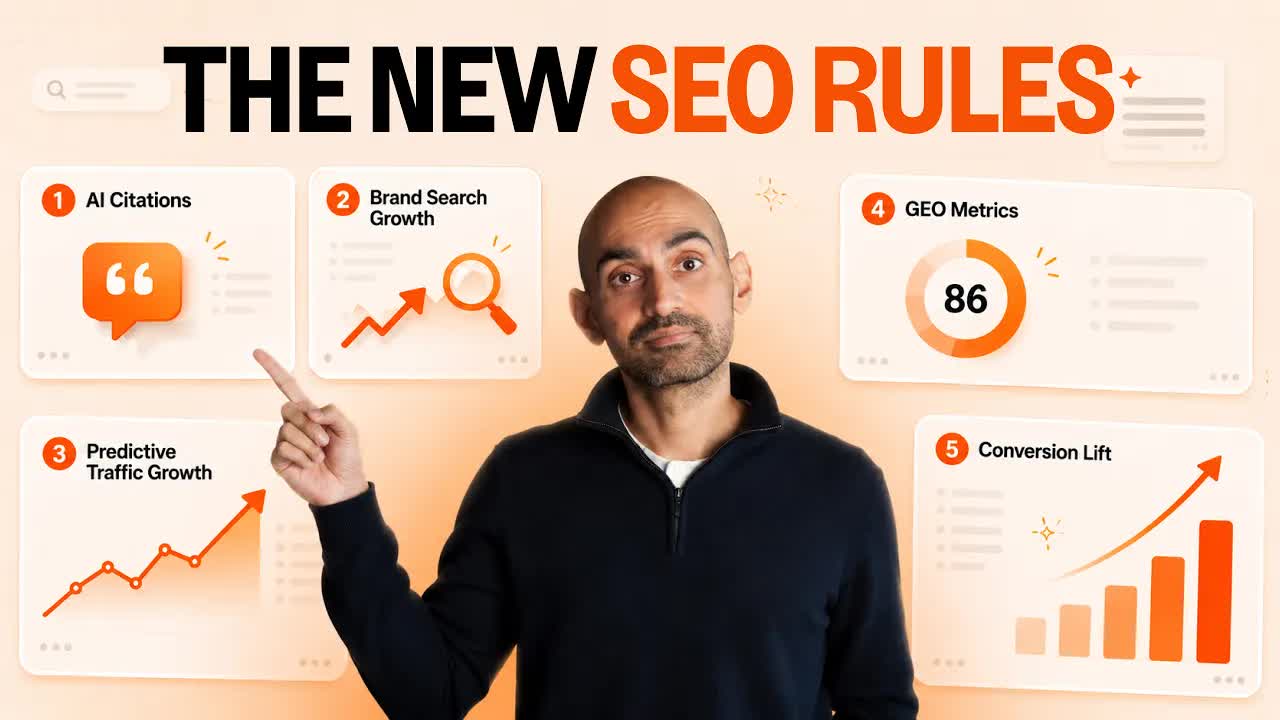
The 5-Signal Diagnostic

  1. Rising AI citations
  2. Brand search surge
  3. Predictive traffic growth
  4. Improved GEO metrics
  5. Conversion lift

Five measurable signals that replace clicks, rankings, and organic sessions as proof of AI SEO progress.

Steal for any SEO reporting deck where traffic looks flat
12:36 model

Entity Authority Timeline

1 year of consistent marketing equals 0.6% brand recognition; 3 years equals 3.1%; 5 years equals 7.2%. AI models learn brand entities on the same curve.

Steal for client pitches on long-term GEO investment
§ · Quotables

Lines you could clip.

04:09
"Ranking number one on Google only gives you a 31% chance of appearing in AI answers."
Counterintuitive stat, no setup needed → TikTok hook
04:15
"75% of all AI citations go to sources that do not even appear in Google top 10 results."
Single sentence, specific number, reframes the game → IG reel cold open
04:21
"Your Google rank and your AI citation rate are two completely separate scores now."
Tight thesis, quotable without context → newsletter pull-quote
07:27
"Less traffic, higher revenue. This is the pattern we keep seeing."
Counterintuitive claim delivered as a data punchline → TikTok hook
08:12
"AI traffic converts more than two times higher than SMS."
Specific comparison, immediately credible → IG reel cold open
§ · Resources Mentioned

Things they pointed at.

§ · CTA Breakdown

How they asked for the click.

12:51 product
"If you just want someone to do this all for you, check out our ad agency, NP Digital."

Soft single mention after all tactical content. Ubersuggest also soft-sold in Sign 1 as a free citation-rate checker, creating a dual-CTA structure.

§ 04 · The Script

Word for word.

HOOK opening / re-engagementCTA the pitch
00:00HOOKYou've been doing everything right, but your traffic report still looks terrible. Yeah. I know the feeling.
00:06HOOKBut here's what twenty five years of SEO experience taught me. In 2026, a flat traffic number can actually mean your strategy is working.
00:13HOOKIt sounds crazy, but when I show you these five signs, you'll never look at your SEO reports the same way again. I'm Neil Patel, cofounder of NP Digital, and let me start by helping you understand what I mean. Your dashboard is lying to you.
00:30Because if you don't understand this part, the five signs won't make sense, and you'll keep misreading your results for the next twelve months. The metrics SEO built its entire identity around, clicks, rankings, organic sessions, were designed for a world with 10 blue links and a user who scrolls and clicks. But that world is gone, and I've got something right here that makes it impossible to argue with.
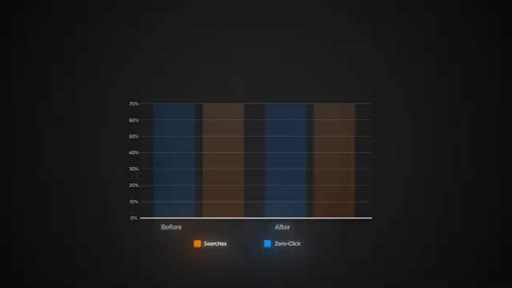
00:54Take a look at this. Before Google rolled out AI overviews broadly, 57% of all searches already ended without a single click.
01:05After that rollout, 59%, and it's still climbing. And now 60% of Google searches now end without anyone visiting any website.
01:14And it gets worse. When an AI overview appears above results, the number one ranked page loses 58% of its clicks.
01:22It's almost insulting. Right? You did the work.
01:26You climbed to the top, and then AI just absorbed the traffic before anyone could reach you. I felt this with my own sites. It's frustrating at first until you understand what's actually happened.
01:37On top of that, organic click through rates dropped from 1.76% to point 61% for queries where AI overviews appear.
01:46That's about a 65% decline. So when your boss sees traffic down 10%
01:52and you look like you're losing, here's what actually happened. Your content gets cited in the AI answer that hundreds and thousands of people just read. You just had no way to prove it.
02:02Yeah. That's a gut punch. But here's the flip side of the same coin.
02:07AI referral traffic grew 527% between 2024 and 2025,
02:13which means that channel isn't dying, it's migrating. And the marketers who know where it's migrating to are building advantages right now that their competitors won't catch up to for years. So the wins are already happening.
02:27HOOKThey're just invisible to the tools that you've been using for the last decade. These five specific signals tell you the real story, and the first one is hiding in plain sight inside your Google Search Console right now. Sign number one,
02:42HOOKrising AI citations. Did you know that you can test whether AI is recommending your brand right now for free, and it barely takes ten minutes. Are you ready?
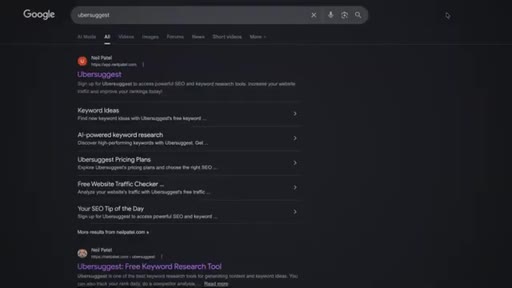
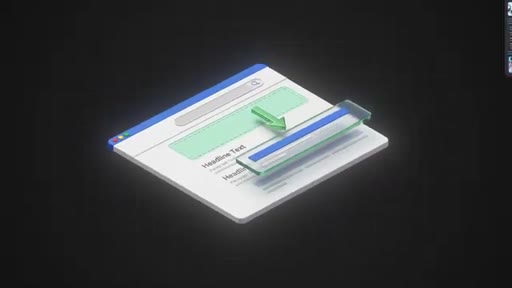
02:53Let me show you how to check it right now. Go to ubersuggest.com. Put in your URL.
02:58Load up the AI visibility report. Type in your core topics. It'll also provide you with some suggestions,
03:04and it'll create a screenshot for Google, ChatGPT, and all the other major LLMs. And you can see your progress each and every single week to see if it's growing or decreasing.
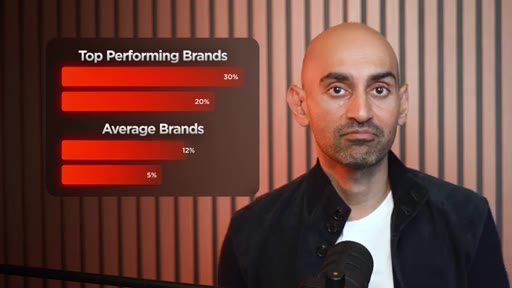
03:14The goal is, of course, to get cited more. Top performing brands right now are getting cited 20 to 30% of relevant queries in their topic cluster.
03:25Average brands are somewhere between 512%. Below 3%? Look.
03:29I'll be direct with you. You're essentially invisible. It doesn't matter how strong your Google rankings are.
03:36You're just not in the conversation. And if your brand is appearing in ChatGPT, Perplexity, or Google AI overviews or even Gemini for your core topics,
03:45that is not luck. That is your content architecture working.
03:50At NP Digital, we studied 500 commercial keywords and ran 4,300 related prompts through multiple LLFs. What we found genuinely
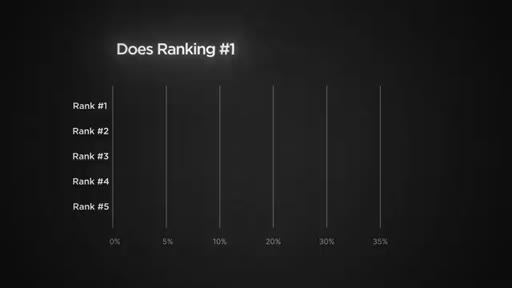
04:00surprised me. Ranking number one on Google, which is harder and more expensive to achieve than ever, only gives you a 31% chance of appearing in AI answers. By rank four, that drops to 2.6%.
04:13And the most shocking part is that 75% of all AI citations go to sources that don't even appear in Google's top 10 results.
04:21That's not a bug. That's the whole new game. Your Google rank and your AI citation rate are two completely separate scores now.
04:30You can rank number one and totally be invisible in AI, or you can sit outside the top 10 and get cited constantly. Have a look at this chart.
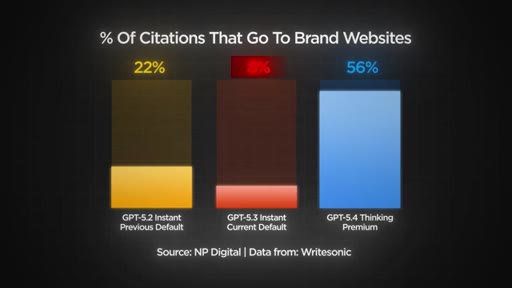
04:39In one single model version upgrade, g p t 5.3 to 5.4, the percentage of branded citations jumped from 8% to 56%.
04:49That's a seven times jump in a single model release. Your website matters more right now than it did six months ago, but only if it's structured so AI can actually extract a clean answer from you. Clear headings, FAQ sections with schema, fresh data, comprehensive depth on your core topics.
05:08HOOKWhen those things are in place, citation shares climb above that 20 to 30% threshold. And that's when you know sign number one is confirmed. Let me show you how to check it right now.
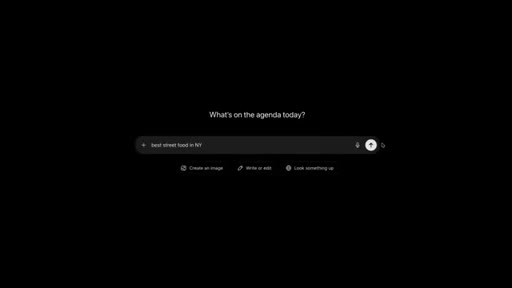
05:20HOOKOpen chat GBT, type your core topic, screenshot the result. Same with Perplexity and Google AI mode, and do it again next week.
05:28HOOKOr you can just automatically do this through Ubersuggest AI visibility report where it keeps track of what's happening not just each week, but also each day. Now the next sign shows you something even more powerful.
05:40HOOKSign number two, brand search search. I've had this call with clients more times than I can count. Traffic's flat, rankings look fine, brand searches are climbing week after week, and they're asking me, Neil, what's going on?
05:54Here's what I tell them. When AI recommends you, the user usually doesn't click the citation link. They close the app, think about it, and twenty minutes later, they opened a new tab and Google your name directly.
06:07Your analytics recorded as branded organic search. Zero attribution to ChatGPT, no record of a AI recommendation anywhere in your data.
06:16But it happened and your branded search went up because of it.
06:21Pretty well. Right? This is what researchers are calling the brand search search.
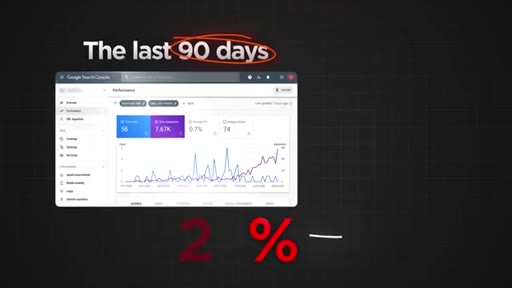
06:26Open Google Search Console right now, filter your queries by your brand name, and look at the last ninety days. If your AI SEO is working, direct branded searches are jumping 25 to 50% of the time for SMBs even when total traffic looks flat or down.
06:42Now, of course, if you're an enterprise business doing billions of revenue, you're not gonna see a 25 to 50% growth, but you should still see growth. Now signs one and two are about awareness, people learning you exist.
06:54Sign three is where it starts showing up on your bottom line. Sign three, predictive traffic growth. This is what happens when people actually show up on your site,
07:07and this is where the business impact becomes impossible to ignore. Let me tell you about a client conversation I had last quarter. Traffic was down 12%.
07:15And if you just looked at the dashboard, you would have thought something was broken too. But I dug in a little deeper, and what I found completely changed how I think about success in 2026. Let me show you.
07:25Less traffic, higher revenue. This is the pattern we keep seeing cross client accounts right now. You ask why?
07:32It happens because AI prequalifies your buyer before they ever land on your page. They ask this specific question. They evaluated
07:40every source on the Internet and said, this brand has the answer. By the time that person arrives on your site, they already trust you, and they've already made their decision. And here's where the data really hit me.
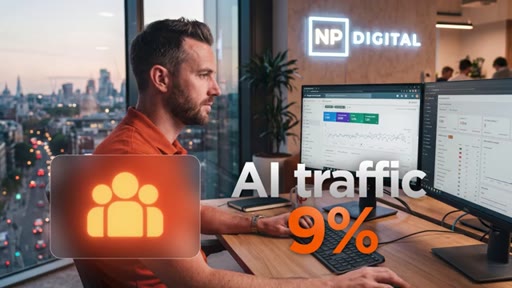
07:51My team at NP Digital compared how different traffic from different platforms convert. Can you guess what the highest converting traffic channel is? AI traffic at roughly 9%.
08:02Can you guess what the second highest traffic is? SMS traffic, then email, then paid search traffic.
08:08And you know what? If you just look at it compared to SMS, AI traffic converts more than two times higher.
08:14When you try looking at other channels like paid search, more than three times higher. Even higher than that if you look at and compare it to SEO traffic. That's the power of AI traffic.
08:23You don't need as much, but when you get those visitors, they convert. There's also documented case studies showing how organic sessions from AI referral traffics are growing a 102%
08:33after structured generative engine optimization implementation. That's the pattern we're seeing across multiple client categories.
08:41The key is knowing what to look for. In Google Analytics four, segment your traffic by sessions where the referral source contains ChatGPT, Perplexity, Claude, or Gemini.
08:51Compare that conversion rate to your overall organic traffic. The gap is your third sign.
08:57And here's the thing I love about this sign. Because AI tools can now analyze your content performance patterns, they can also start flagging which of your pages are decaying, losing citation relevance before your traffic number is even short. That's predictive in the truest sense.
09:11You're not reacting to a drop in traffic, you're getting ahead of it. Four is a little more technical, but stick with me because this is honestly one that gives you the most warning of what's coming.
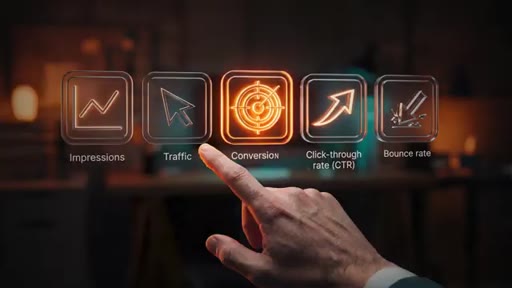
09:25Sign four, improve GEO metrics. It's actually the most sophisticated signal on the entire list because it requires you to start tracking things that aren't in your current report stack. Here's the treat.
09:38If you're only running traditional SEO reports in 2026, you're flying completely blind on the metrics that actually predict where your revenue is going.
09:47Let me show you exactly what to start measuring and why it changes everything. Traditional SEO metrics haven't become useless. They've become incomplete.
09:56Domain authority, backlinks, core web vitals, they still matter. But they now tell you only part of the story, and the part that you're missing is the part that's actually driving revenue. Short queries trigger AI overviews 23%
10:11of the time. Medium queries, 48% of the time. But six word queries, those detailed specific high intent questions that actually drive buying decisions,
10:19trigger AI reviews 77% of the time.
10:23Look at that jump. That means that searches that matter the most for revenue are almost always going through AI. And if you're not in those AI answers, you're invisible at that exact moment it counts.
10:37Sign five, conversion lift. This is the one you show your boss, the one that ends the conversation about whether AI SEO is even worth the investment or not. Here's what the conversion lift actually looks like when your AI SEO strategy is taking off.
10:53Qualified leads converting at 20 to 35% higher from AI sources than from your regular organic traffic. Overall, according to SEM Rust's research, ROI from AI optimized content is up 70% compared to traditional SEO content, and the revenue numbers tell a completely different story from the traffic numbers.
11:12I want to show you something from inside NP Digital's own data. Across 22 companies we tracked at NP Digital, leads coming from AI powered search grew from 3.1% of total leads in q one twenty twenty four to 7.4%
11:26by q four of twenty twenty five, doubled in one year. Here's what's important about that chart. Geometrics
11:34started improving well before the number of leads confirmed. The companies that were watching those scores knew that the growth was coming, but everyone else was surprised by it.
11:45Now what actually creates conditions for sign number five? AI models have measurable freshness bias. Content older than eighteen months without updates show declining citation rates even if it used to rank well and has strong backlinks.
12:00But freshness alone is enough. What compounds your brand is topical depth combined with freshness.
12:06People usually ask me how long it takes to build recognizable brand within industry. Well, it takes one year of consistent marketing to build a point 6% brand recognition, three years to reach 3.1%,
12:18five years to reach 7.2%. AI models learn your entity the same way. The brand showing up in the top three AI mentions today built that entity authority over years of consistent presence.
12:31Most of your competitors haven't started yet, so that window is open, but it closes a little more every month. So what can you start doing this week? Pull your 10 highest value pages.
12:41CTABuild quarterly refresh calendar, even Google Sheets work. For each page, update any outdated stats, add on a new FAQ section, and refresh the published date.
12:51CTAOr if you just want someone to do this all for you, check out our ad agency, NP Digital. But look, that alone can move you back into the citation rotation. Sometimes you have to do more like digital PR, but that's a start.
13:05CTASo which of these five signs are you already seeing in your data, and which one surprised you the most? Let me know in the comments below. And if you wanna learn more, watch this video.
— full transcript
§ 05 · For Joe

Five metrics that replace clicks as your SEO scoreboard

WHAT TO TRACK

The measurements that used to prove SEO was working were built for a search landscape that no longer exists, and these five replace them.

  • AI citation rate and Google ranking are now independent scores; a page can rank number one and still be invisible in AI answers, or sit outside the top 10 and get cited constantly.
  • When AI tools recommend a brand, users often do not click the citation but later Google the brand name directly, generating a branded organic session with no AI attribution in analytics.
  • AI referral traffic converts at roughly 9%, higher than email, SMS, or paid search, so a smaller volume of AI-sourced visitors can outperform a much larger stream of traditional organic traffic.
  • Six-word-plus queries trigger AI overviews 77% of the time; being absent from AI answers on long-tail, high-intent searches means being invisible exactly when buying decisions happen.
  • Content older than 18 months without updates shows declining citation rates even with strong backlinks; adding updated stats, a FAQ section with schema, and a refreshed publish date can move a page back into citation rotation.
  • GEO metrics improve months before revenue numbers confirm the gains, so tracking citation scores provides advance warning of growth or decay before it shows in traffic or leads.
§ 06 · Frame Gallery

Visual moments.