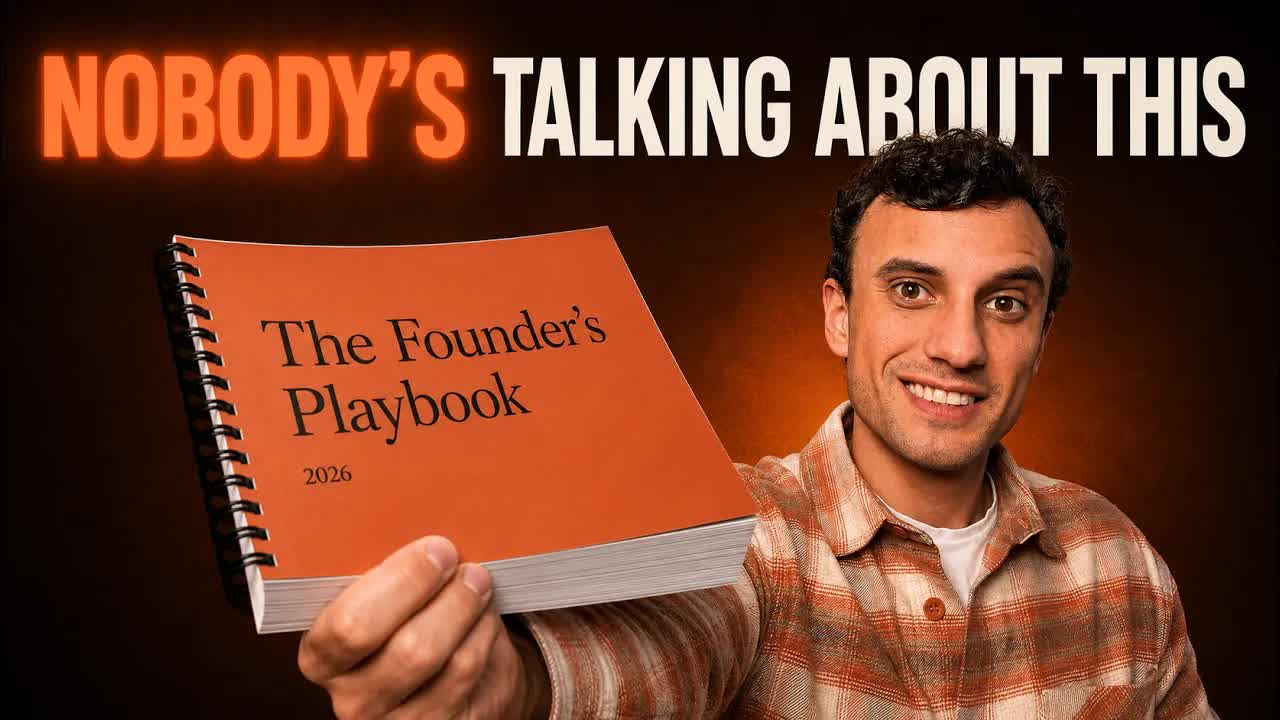
The bait, then the rug-pull.
Anthropic published a 36-page founder's guide the day after launching Claude for Small Business, and almost no one has broken it down straight. This breakdown does — including the parts that are clearly a product advertisement, and the parts that are genuinely surprising because Anthropic had every commercial incentive not to say them.
Where the time goes.
01 · Cold open + promise
Pattern interrupt hook, tease of the third universal pitfall as the payoff, context on who Anthropic is and when the playbook dropped.
02 · The founder's role has changed
The old job was individual contribution. The new job is orchestrating AI agents. Domain expertise — not technical skill — is now the scarce resource because judgment cannot be automated.
03 · Stage 1: Idea — validate before you build
The four-stage framework introduced. Idea stage goal: qualitative evidence from real humans before committing resources. Two traps: cheap building masks the need to validate, and AI is a confirmation-bias engine.
04 · Disprove your own idea
The antidote to AI confirmation bias: ask Claude to argue against your idea, find evidence you're wrong, and make the strongest case for a competitor's success. Weak counter-arguments are a good signal; strong ones are an honest one.

05 · Stage 2: MVP — three traps
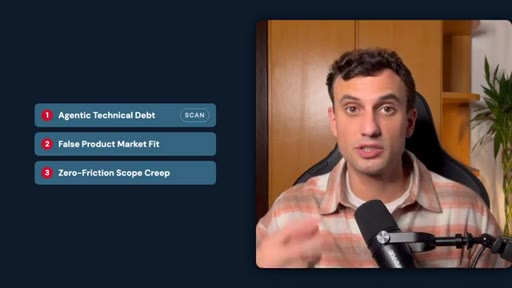
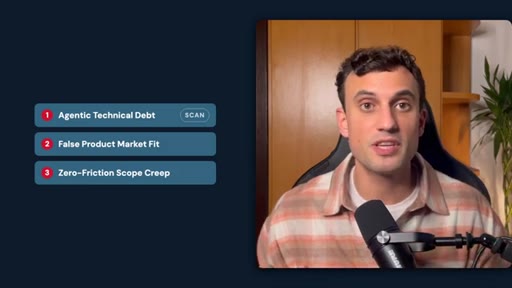
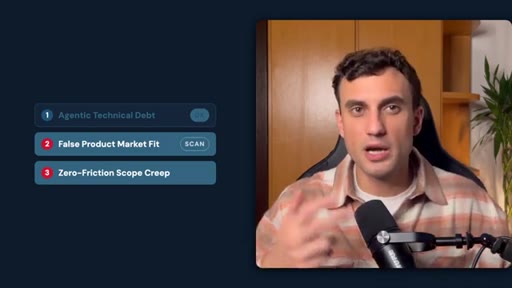
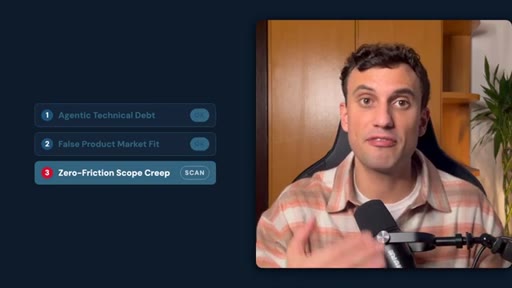
Agentic technical debt, false product-market fit, and zero-friction scope creep. All three share a root cause: building is now effortless, so you do too much of it too fast. Fix: CLAUDE.md, pre-defined retention benchmarks, written scope document.
06 · Stage 3: Launch — the founder becomes the bottleneck
The failure mode at launch is the founder staying in builder mode past the point where it helps. Three symptoms named. Fix: audit everything personally handled, then categorize as automate / delegate / judge.
07 · Stage 4: Scale — accumulated depth as moat
Speed is not the defensibility. The three moats are encoded domain edge cases, deep integrations, and the proprietary data flywheel. A competitor can copy features but cannot buy years of behavioral data.
08 · Three universal pitfalls
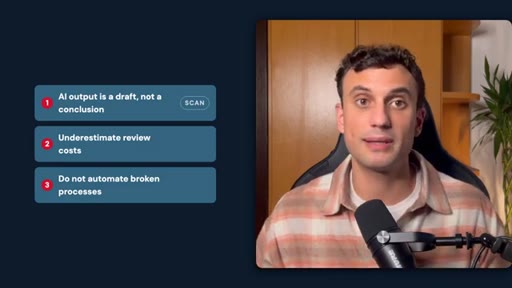
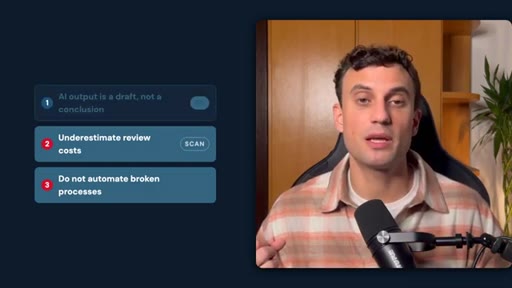
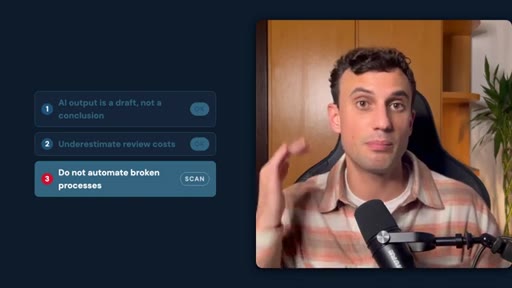
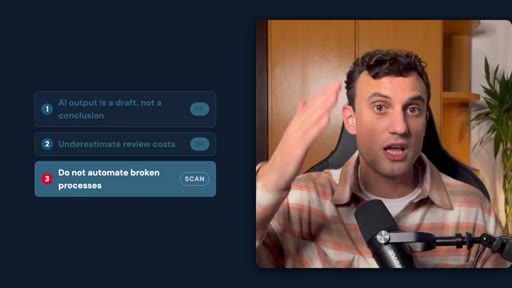
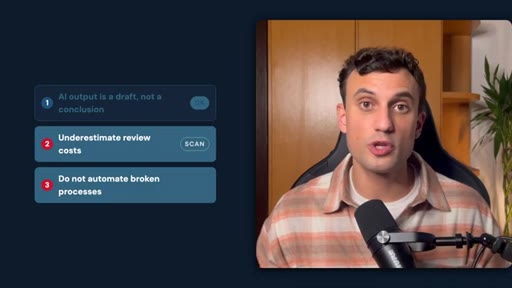
Applies to any business owner implementing AI. AI output is a draft not a conclusion. Review cost is real. Do not automate a broken process — the third one is the advice Anthropic had the most to lose by including.
09 · The honesty beat
The playbook is partly a Claude advertisement. But the advice hardest to follow — validate harder, automate later — cuts against Anthropic's commercial interest, which is exactly why it is the most credible thing in the document.
10 · The bottleneck is what you choose to build
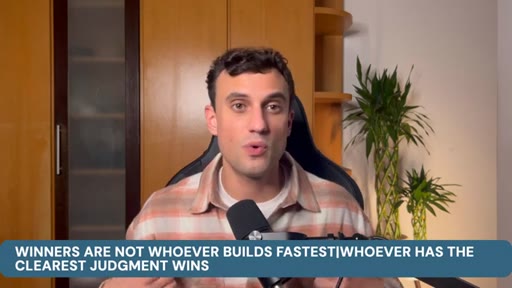
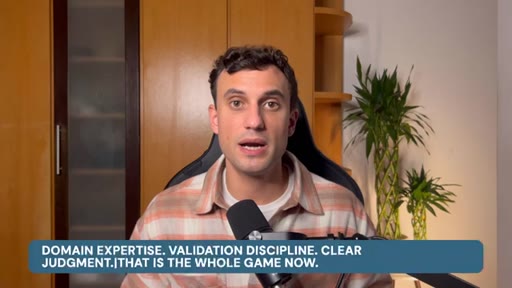
The technical barrier to building is essentially gone. The winners are whoever has the clearest judgment. Domain expertise, validation discipline, and clear judgment — that is the whole game now.
Visual structure at a glance.
Named ideas worth stealing.
Four-Stage Startup Journey
- Idea
- MVP
- Launch
- Scale
Anthropic's framework remapping the startup lifecycle. Each stage has one core shift and one specific trap. The through-line across all four: you orchestrate, AI executes, judgment stays with you.
Three Universal AI Pitfalls
- Treating AI output as a conclusion instead of a draft
- Underestimating review cost
- Automating a broken process instead of fixing it first
Applies to any business owner using AI, not just startup founders. The third is the most credible because it cost Anthropic the most to say.
Three Moats at Scale
- Encoded domain edge cases
- Deep integrations into tools users depend on
- Proprietary behavioral data flywheel
Defensibility comes from accumulated depth, not speed. These three moats are what a well-funded copycat could not recreate in under two years.
Automate / Delegate / Judge Audit
At the launch stage, list everything the founder personally handles, then categorize each as something that can be automated, delegated, or that genuinely still requires founder judgment. Build systems around the first two to free attention for the third.
Lines you could clip.
"A working prototype is just a prop that makes your conversations with potential users more concrete — and the conversations themselves are the real evidence."
"Confirmation bias now has a research engine behind it."
"You don't fix chaos by scaling it. You fix the process first and then you build the automation on top of it."
"The advice that is bad for the person giving it is usually the advice worth keeping for yourself."
"The bottleneck is no longer what you can build — it's what you choose to build."
Things they pointed at.
How they asked for the click.
"DM me the word Cowork on Instagram and I'll send you the complete guide to setting up your first automation in Cowork in about twenty minutes."
Mid-video placement, product-adjacent (Claude Cowork), clear DM mechanic. End CTA is agency services pitch.
Word for word.
The judgment gap is the only gap that matters now.
When building is nearly free and nearly instant, the question shifts from whether you can build something to whether you have the judgment to know if you should.
- A prototype proves you can build, not that anyone wants what you built — the evidence that matters comes from real human conversations held before you commit resources.
- AI will validate whatever you ask it to validate, so the discipline of asking it to argue against your idea is not optional — it is the only honest signal available.
- Agentic tools create a new failure mode: each session starts fresh, and without a written context file the architectural decisions drift session to session until the codebase no longer has a coherent model behind it.
- A launch spike is not product-market fit — the only meaningful measure is what retention looks like at week six and week twelve when the initial boost is gone.
- Scope creep becomes invisible when each individual feature is cheap enough to feel completely defensible; the bloat happens in aggregate, not in any single decision.
- The transition from doing the work to designing the systems that do the work has no clear moment — which means the risk is missing it entirely and staying stuck in builder mode while the business stalls.
- A competitor can copy your features and outspend you on marketing; the behavioral fingerprint of users who have refined their workflows inside your product for years is the one thing that cannot be bought.
- The three moats that compound over time are encoded edge cases, deep integrations into tools users already depend on, and the proprietary data flywheel that makes the product harder to leave.
- Treating AI output as a conclusion rather than a draft is the most common implementation error — confidence of format is not the same as accuracy of content.
- Automating a broken process does not fix it; it scales the chaos. The process has to work manually first.
- The advice an AI company has the least commercial incentive to give you — validate harder before you build, automate later rather than sooner — is the advice most worth keeping.