The bait, then the rug-pull.
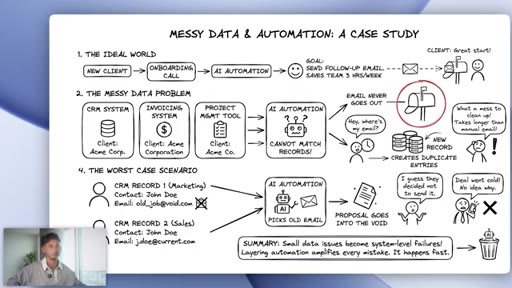
By the time most business owners realize their AI stack is broken, they have already paid for it twice — once in software subscriptions and once in the hours their team spends being the human bridge between tools that were never wired together. This playbook starts where most tutorials skip: not with a cool demo, but with a diagnosis.
Where the time goes.
01 · Cold open and client proof
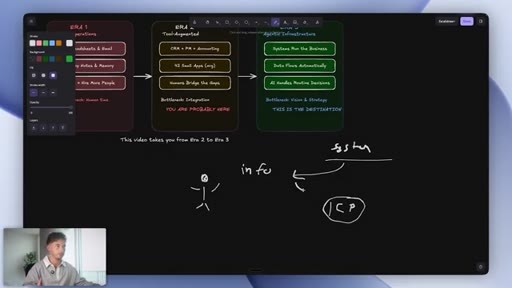
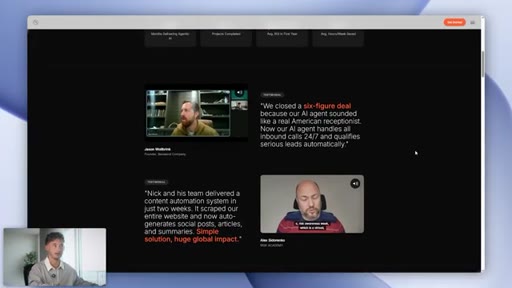
Promise + $3M client case study: lead response 47h to 60s, close rate +35%, 12h/week data entry eliminated.
02 · Why most businesses use AI backwards
Frankenstein stacks, 42-tool average, data silos, team as human bridge. McKinsey: 88% adopt AI, only 1% make it work across the business.
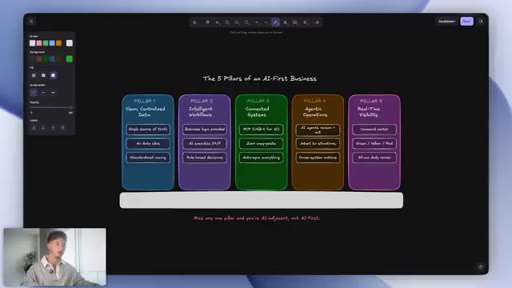
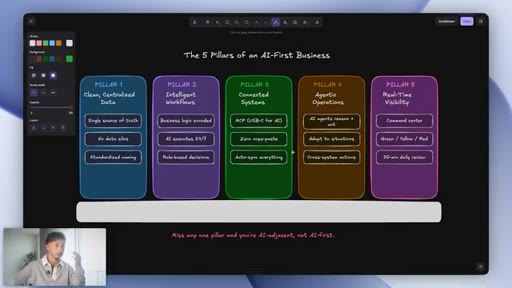
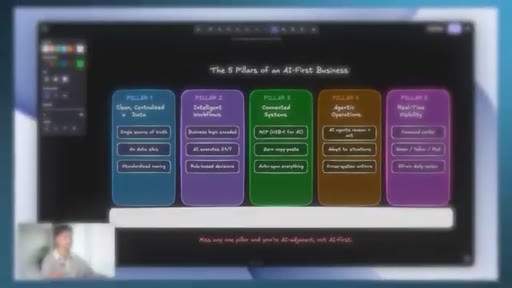
03 · The 5 Pillars of an AI-First Business
Clean data, intelligent workflows, connected systems, agentic operations, real-time visibility. Miss one, it wobbles.
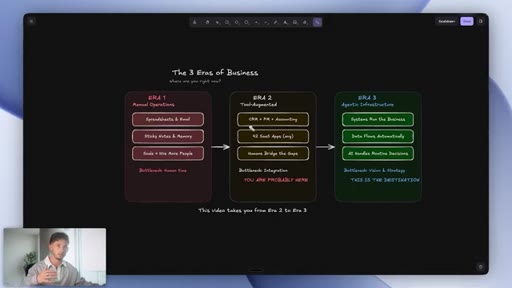
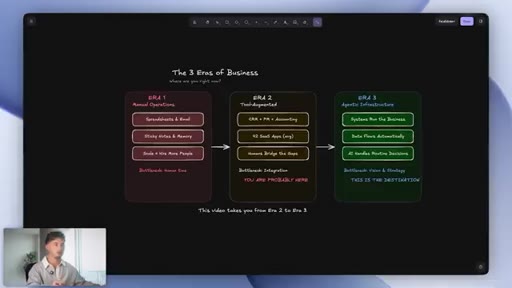
04 · The 3 Eras framework
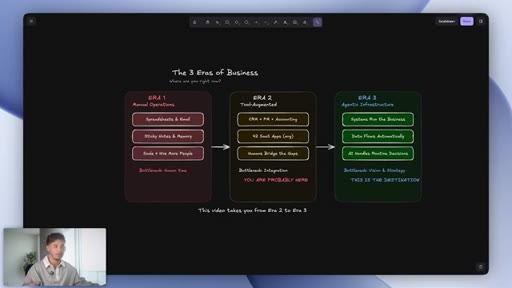
Era 1 (manual), Era 2 (siloed tools — where most businesses are), Era 3 (agentic infrastructure — the destination).
05 · Operator-to-owner shift
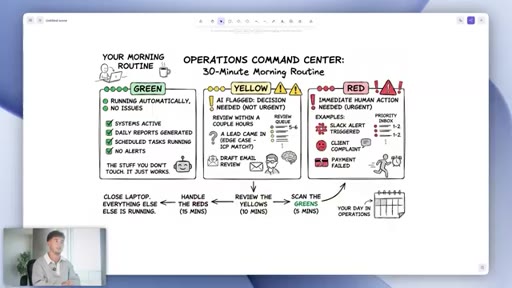
Era 3 = 30-minute morning strategic review instead of 8-hour catch-up. Systems run without you.

06 · Why 80% of AI projects fail
Rand: 80% never reach production. MIT: 95% of generative AI pilots show no measurable bottom-line impact. Root causes: doing too much at once, wrong sequence.
07 · BCG's 10-20-70 rule
10% algorithm, 20% tech, 70% people and process. Most teams optimize the 10%.
08 · The correct sequence
Understand then clean then choose tools then build. Most people start at step 3.

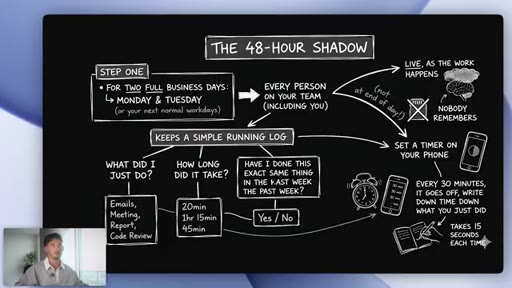
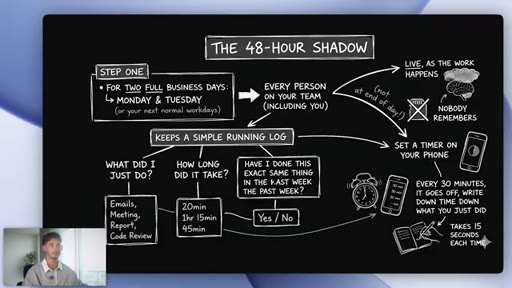
09 · 48-Hour Shadow Audit
Every person tracks tasks live every 30 minutes for 2 business days. 3 columns: what, how long, done before this week?
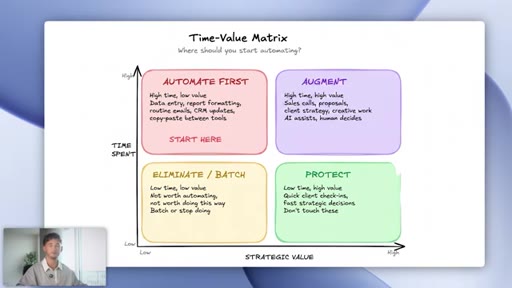
10 · Time-Value Matrix
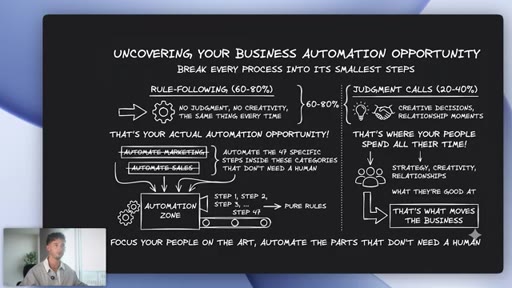
2x2 grid. High time / low value = automate. High time / high value = augment. Low time / low value = batch or stop. Low time / high value = protect.
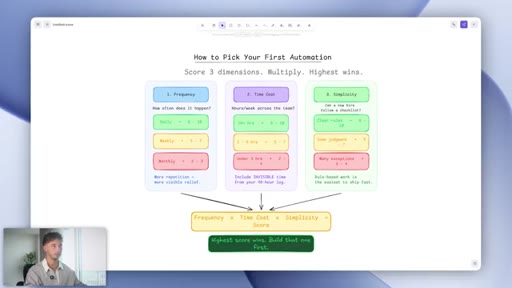
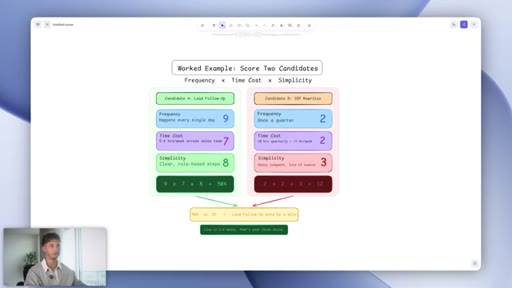
11 · Scoring automation candidates
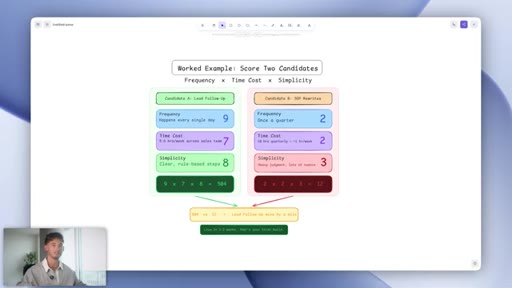
Multiply frequency x time cost x simplicity. Lead follow-up scores 504; rewriting SOPs scores 12. Build the 504 first.
12 · Clean data: the foundation
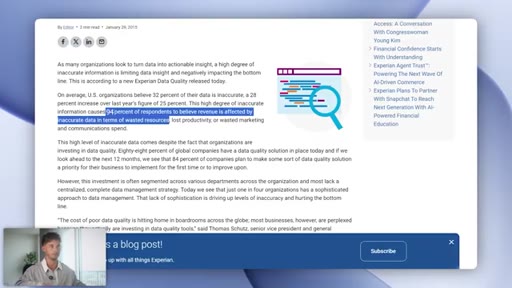
60-second client status test. Experian: 94% of businesses have inaccurate customer data. Gartner: poor data quality costs $13M/year average.
13 · Source of truth by revenue tier
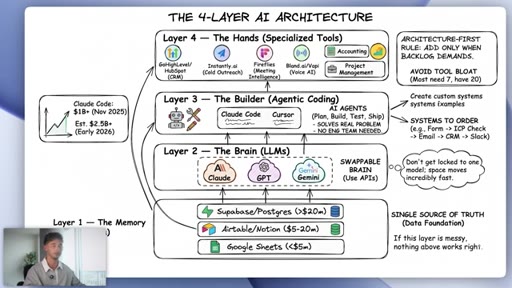
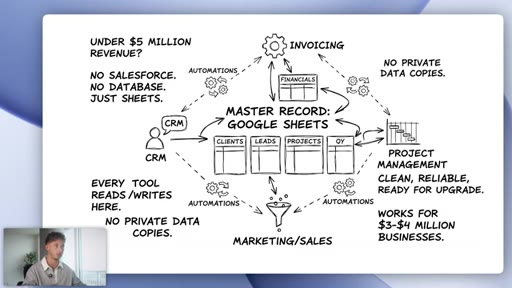
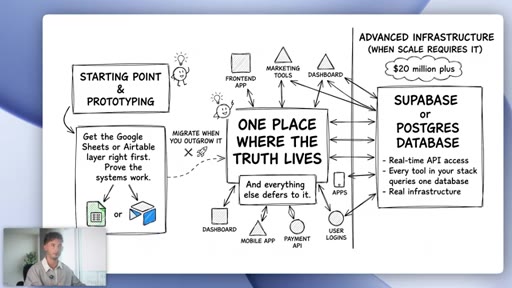
Google Sheets under $5M, Airtable/Notion relational for $5-20M, Supabase/Postgres for $20M+. One place where the truth lives.
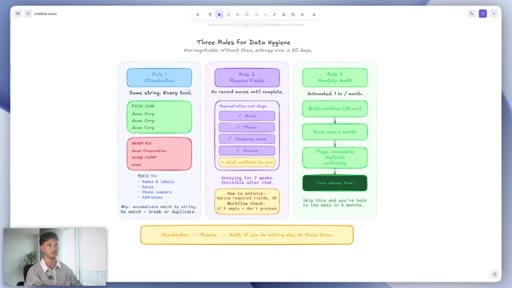
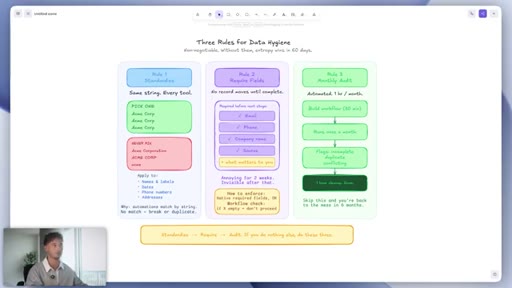
14 · Three rules for data hygiene
Standardize everything, mandatory fields, automated monthly audit. Without the audit, entropy wins in 60 days.
15 · The four-layer AI stack
Layer 1: Memory (data). Layer 2: Brain (LLMs swappable via API). Layer 3: Builder (Claude Code). Layer 4: Hands (specialized tools added only when backlog demands).
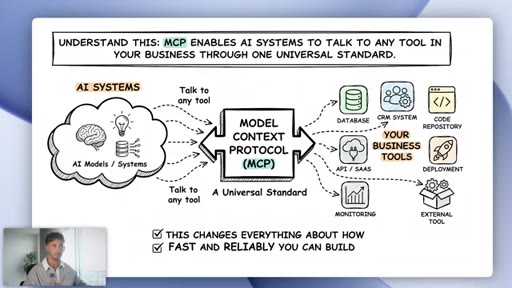
16 · MCP: the USB-C for your AI stack
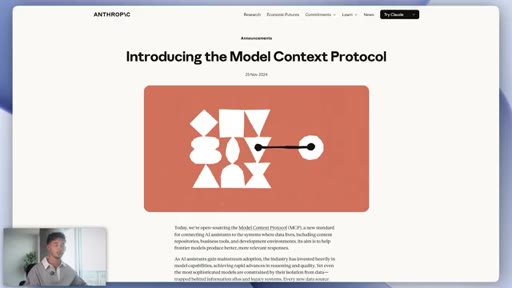
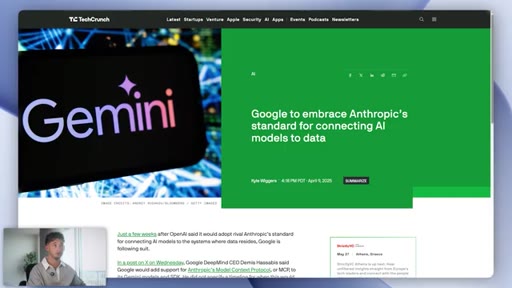
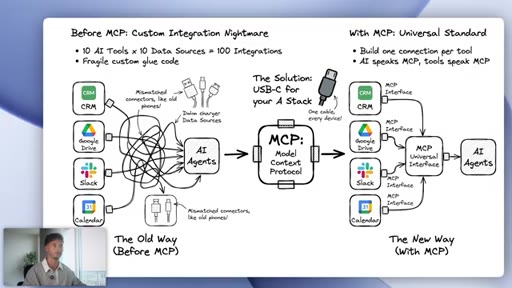
Before MCP: 10 tools x 10 data sources = 100 custom integrations. With MCP: one connection per tool. Open-sourced Nov 2024, adopted by OpenAI and Google by March 2025. 97M monthly SDK downloads.
17 · Tool selection framework
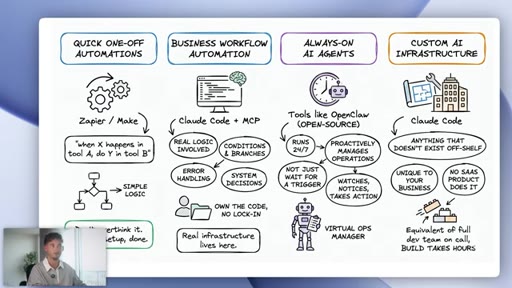
Zapier/Make for simple one-off automations. Claude Code + MCP for real business logic. Always-on agents for proactive operations. Claude Code for custom anything that does not exist off shelf.
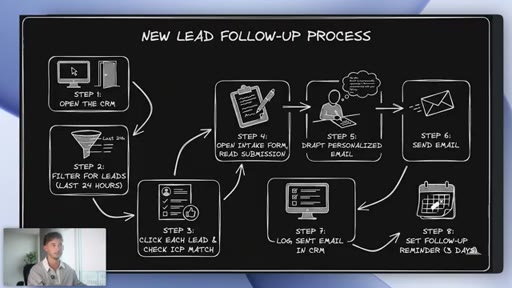
18 · Build 1: Lead response system
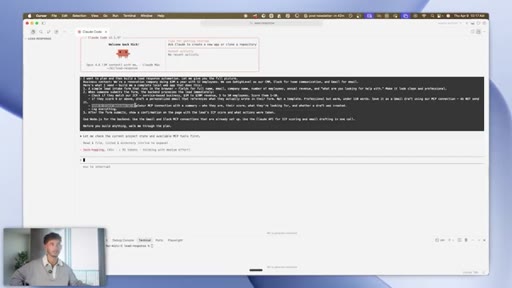
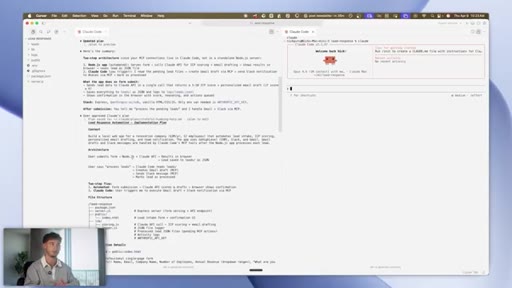
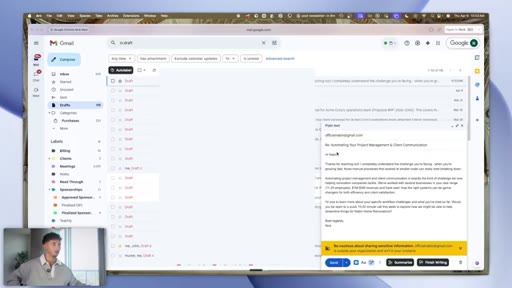
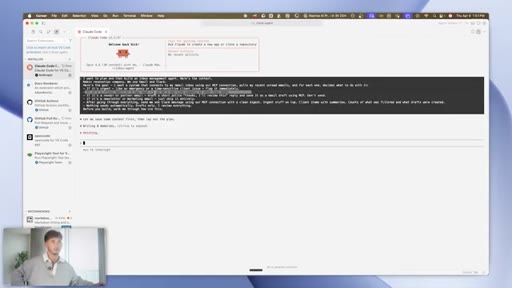
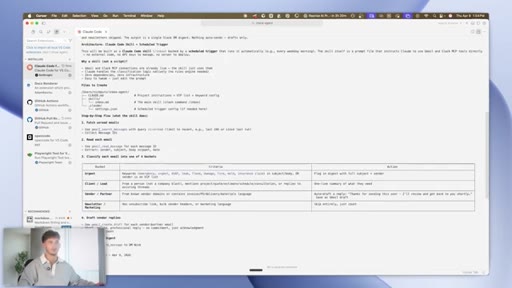
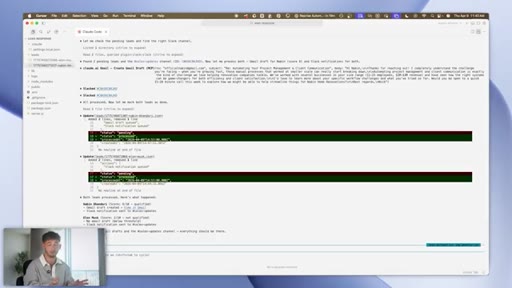
Claude Code in Cursor. Node.js backend. ICP scoring via Claude API. Gmail draft + Slack notification via MCP. Form demo with two test leads — one scored 2, one scored 8. Deployed to Railway.
19 · Deploying to Railway
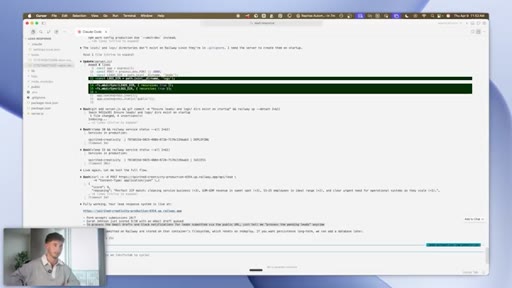
Railway MCP server lets Claude Code push to cloud in one prompt. Public URL, 24/7 uptime, form submissions hit it directly.

20 · Build 2: Inbox triage agent
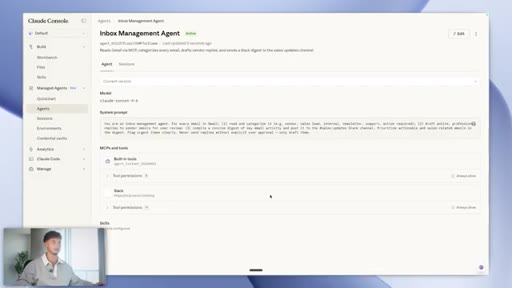
Classifies emails into urgent / client-lead / vendor-partner / newsletter. Drafts vendor replies. Sends one Slack digest. Scheduled daily. Human reviews all drafts.

21 · Managed Agents
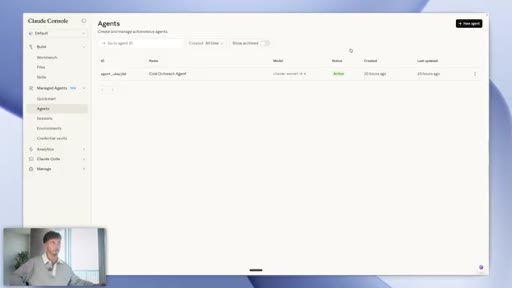
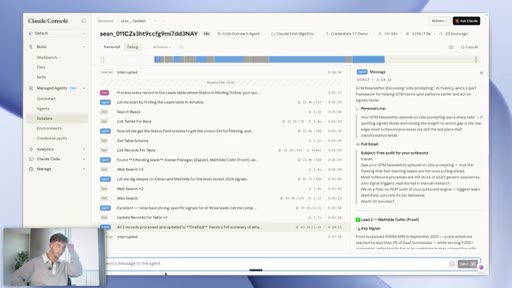
Anthropic platform for production-grade agent hosting: credential vault, automatic error recovery, session transcripts, scheduled runs. Scheduler = phone reminder; managed agents = operations manager.
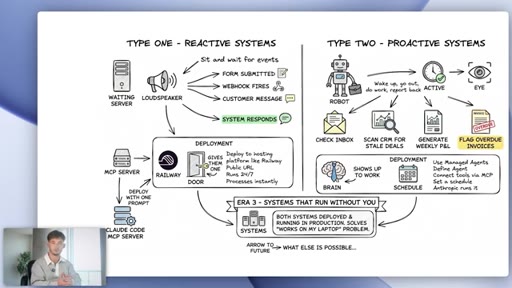
22 · Reactive vs. proactive systems
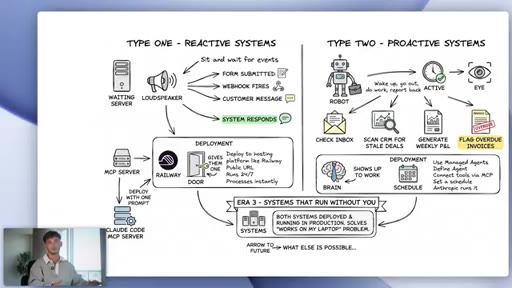
Reactive systems wait for triggers — deploy to Railway. Proactive systems initiate work on a schedule — deploy to Managed Agents.
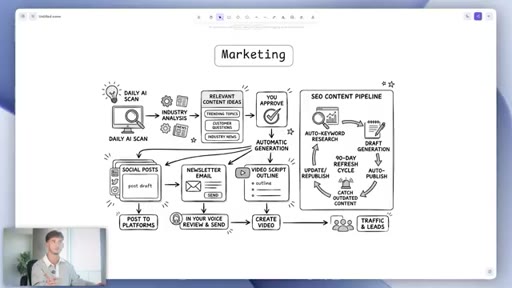
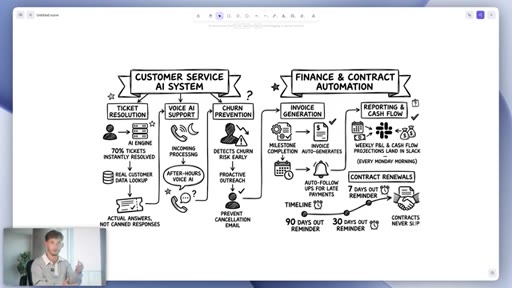
23 · What else is buildable
Marketing content pipeline, sales enrichment with hiring signals, voice AI for after-hours calls, customer service handling 70% of tickets.

24 · Command center wrap-up
Green/yellow/red dashboard. 30-minute morning routine. Operator-to-owner shift made concrete.
Visual structure at a glance.
Named ideas worth stealing.
The 3 Eras of Business Operations
- Era 1: Manual (humans do everything, headcount scales revenue)
- Era 2: Tool-Augmented (siloed SaaS, team bridges the gaps)
- Era 3: Agentic Infrastructure (systems run the business, humans govern strategy)
A diagnostic model for identifying where a business currently sits and what the upgrade path looks like.
The 5 Pillars of an AI-First Business
- Clean centralized data
- Intelligent workflows
- Connected systems
- Agentic operations
- Real-time visibility
The five components that must all be in place; missing any one means the business is AI-adjacent, not AI-first.
BCG 10-20-70 Rule
- 10% = the algorithm / AI model
- 20% = technology and infrastructure
- 70% = people and process
Most AI implementations fail because teams obsess over the 10% and ignore the 70%.
48-Hour Shadow Audit
Every team member logs tasks live every 30 minutes for two business days using three columns: what, how long, done before this week. Makes invisible repetitive work visible so automation targets become obvious.
Time-Value Matrix
- High time / Low value = Automate first
- High time / High value = Augment (AI handles prep, humans handle judgment)
- Low time / Low value = Batch or eliminate
- Low time / High value = Protect, do not touch
A 2x2 prioritization grid for deciding which processes to automate, augment, eliminate, or protect.
Automation Scoring Formula
Score each candidate on frequency (1-10), time cost (1-10), and simplicity (1-10). Multiply. Build the highest-scoring process first. Lead follow-up typically scores 500+; quarterly SOP rewrites score about 12.
Four-Layer AI Stack
- Layer 1: Memory — single source of truth
- Layer 2: Brain — LLMs via API, swappable
- Layer 3: Builder — Claude Code
- Layer 4: Hands — specialized tools added only when backlog demands
Architectural framework for building a composable AI stack. Each layer has a distinct role and strict sequence.
Reactive vs. Proactive Deployment
- Reactive: sits and waits for a trigger, deploy to a hosting platform like Railway
- Proactive: wakes up on a schedule, initiates work, deploy to Managed Agents
Determines the right deployment architecture for any automation based on whether it responds to external events or initiates its own work.
Lines you could clip.
"The gap is not adoption. Everyone has adopted. The gap is architecture."
"It is not about using AI tools. It is about redesigning how your business actually runs."
"You cannot fix plumbing by just adding more faucets."
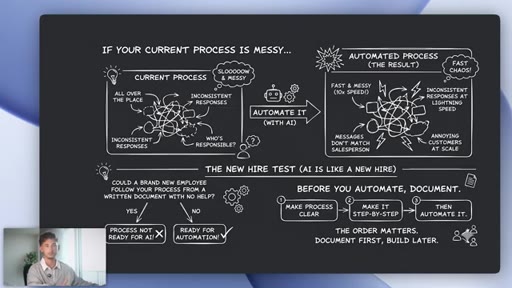
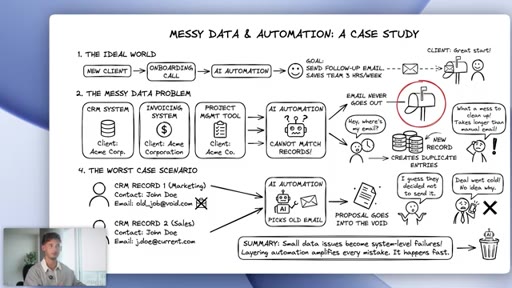
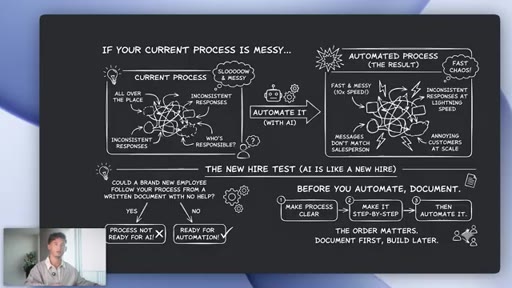
"If your current process is messy, automating it just makes it messy at 10x the speed."
"Google Sheets — I am dead serious. You do not need Salesforce. You do not need a database."
"The point is not which tool you use. The point is that there is one place where the truth lives and everything else refers back to it."
How they asked for the click.
"If you are interested in getting a more hands-on approach, we have over 18,000 people building this stuff together in our free School community."
Multiple soft CTAs throughout. Webinar at 3:33 is the hardest pitch — unrecorded, gated scorecard bonus. Community links, newsletter, and agency booking link at end.
Word for word.
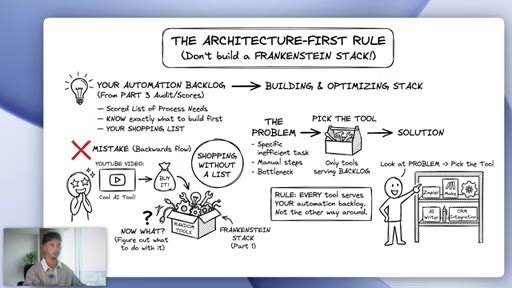
The correct order for AI implementation is audit, data, tools, build.
Most AI projects fail not because of the model or the tool but because teams start with the tool — the correct sequence runs the opposite direction, and reversing it changes everything.
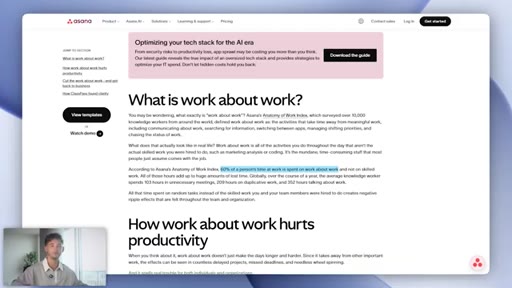
- Audit your processes before buying anything: two days of live task logging reveals the invisible repetitive work consuming 50-60% of most workdays that never appears on any dashboard.
- Score automation candidates by multiplying frequency, time cost, and simplicity — the highest-scoring process is your first build, not the most exciting one.
- Automating a broken process produces broken results faster: document the process clearly enough that a new hire could follow it before you hand it to an AI.
- Data hygiene is not a one-time cleanup — three standing rules (standardize naming, mandatory fields, monthly audit) keep entropy from undoing the work within 60 days.
- The correct data layer depends on revenue scale: Google Sheets works up to $5M; relational structures like Airtable or Notion serve $5–20M; Supabase or Postgres for larger operations.
- The four layers of an AI stack have a strict order: single source of truth at the foundation, then LLMs as a swappable brain, then an agentic builder like Claude Code, then specialized tools added only when the backlog demands them.
- MCP eliminates the custom integration problem — one connection per tool means any AI agent can talk to any tool through one universal standard without glue code.
- Reactive automations (respond to triggers) deploy to a cloud host; proactive automations (wake up and do work on a schedule) deploy to a managed agent platform that handles uptime and error recovery.
- The business case for fast lead response is not intuitive: responding within one minute produces a 391% increase in conversion rates, while the average B2B company takes 47 hours.
- BCG research shows 70% of AI implementation success comes from people and process changes, not from picking the right algorithm — most teams do the inverse.