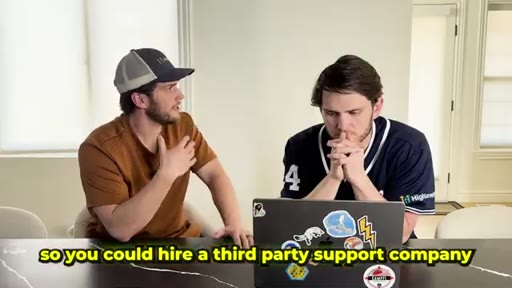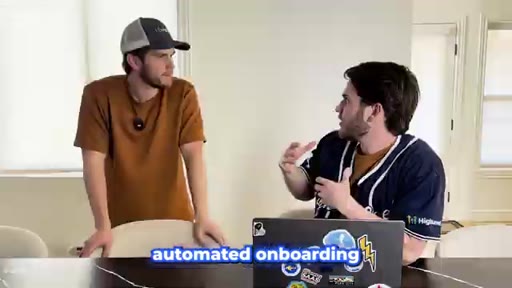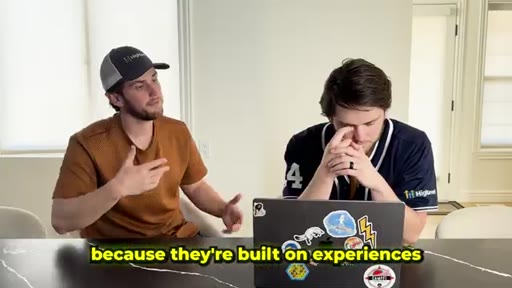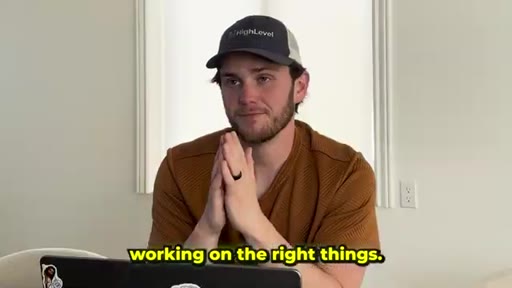
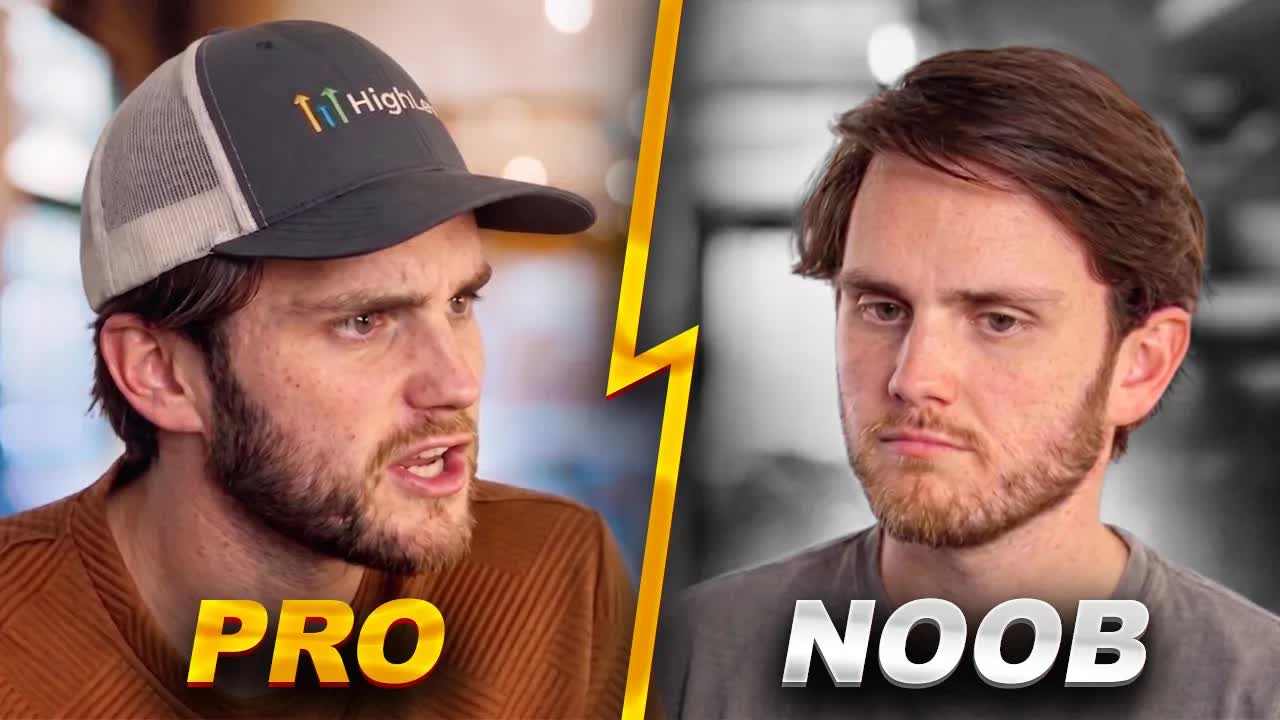
The bait, then the rug-pull.
Three weeks in and the logo is almost done. The Noob has workflows, an automated onboarding tour, and a vision -- the only thing missing is clients. The Pro asks one question that collapses the whole plan.
Where the time goes.

01 · The Setup
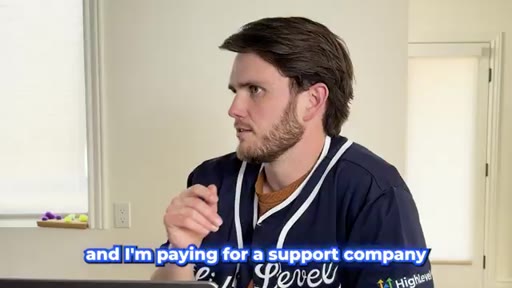
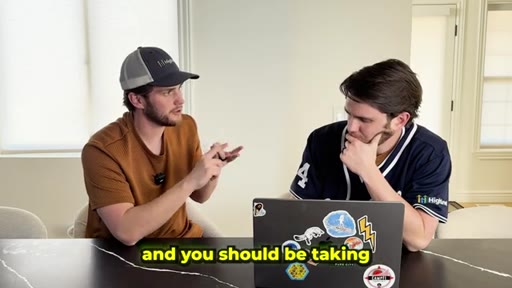
Noob reveals he has been building for three weeks with zero clients. Pro asks the one question that frames the whole video.

02 · The Three Levels
Pro introduces the framework: Level 1 DFY, Level 2 DWY, Level 3 self-serve SaaS. Noob is starting at Level 3 while technically at Level 0.
03 · Level 1 -- Done For You
DFY explained with home services as the example. Client never logs in. Simple problem-solution sale. Build one, get a case study, sell the second.
04 · The SaaS Fantasy
Noob pushes back -- he sees people with hundreds of SaaS clients. Pro points out nearly all of them built an audience first.
05 · Level 2 -- Done With You
DWY explained through the dental office example. Third-party support only makes sense at 30-50 clients, not at five.
06 · Level 3 -- The Dream
The self-serve SaaS model. Three qualifying questions: audience? proven offer? proof? Noob answers no to all three. The desert convenience store analogy.

07 · What Actually Happens
Most Level 3 starters end up doing DFY anyway -- but at DIY pricing, paying for unused tools. The cosplay CEO line.
08 · The Move
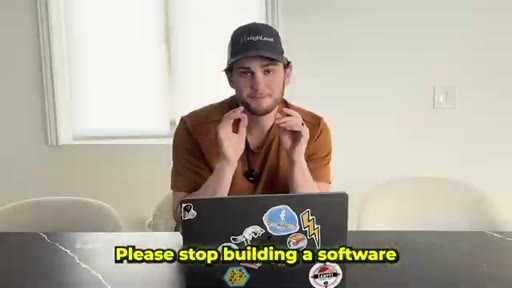
Stop building. Start selling. If selling feels scary, do research -- Google Maps, Facebook Messenger, real conversations.
09 · The Progression
Level 1 teaches you what you need for Level 2. Level 2 teaches you what you need for Level 3. You cannot skip it.

10 · CTA -- HighLevel Guild
Plug for the HighLevel Guild community. Free via affiliate HighLevel signup. Final line: ditch the SaaS, go get your first client.
Visual structure at a glance.

Named ideas worth stealing.
The Three Levels of HighLevel
- Level 1: Done For You
- Level 2: Done With You
- Level 3: Self-Serve SaaS
A progression model for GoHighLevel businesses. Each level requires skills and proof built in the previous one. Most beginners skip to Level 3, which is why most fail.
The Problem-Solution-Result Sale
The done-for-you sales conversation in three sentences: problem is X, solution is Y, together we make that equal Z. Simplicity is the point -- no features, no software pitch.
Lines you could clip.
"Stop building. Start selling."
"You trying to figure out what color to make your website and your app and which third party support company to hire is just procrastination disguised as work."
"You've basically built an automated amazing convenience store in the middle of the desert and you're wondering why nobody is walking in."
"It's literally cosplay. Like, you're dressing up like a CEO when you have zero clients."
Things they pointed at.
How they asked for the click.
"We cover all of that in my community, the HighLevel Guild, which you can join 100% for free by signing up for or upgrading to the next level of HighLevel with my link."
Soft and well-earned -- lands after 13+ minutes of genuine value. Affiliate angle disclosed implicitly; direct pay option also offered.
Word for word.
Start where clients are easiest to close.
The sequence matters more than the model -- done-for-you is not a consolation prize, it is the only path that builds the proof and experience that makes everything else possible.
- Clients pay for results, not software -- a business owner who wants more phone calls does not care which platform you used to make that happen.
- The done-for-you sales conversation is short because it is about one problem, not a product demo -- that simplicity is why it closes faster.
- Giving clients access to more of the platform creates more support problems, not more value -- limit access to what they actually need.
- Third-party support and white-label infrastructure are Level 3 investments; bringing them in at Level 1 is paying to look like a business before you have one.
- Every real client engagement teaches you what the market actually needs -- months of building a self-serve product with no users teaches you nothing.
- Distribution is the hard part of self-serve SaaS, and it cannot be bypassed by a better onboarding flow or a cleaner logo.
- The natural progression from DFY to DWY to self-serve is not a ladder you climb -- it is evidence you accumulate, and each level requires the one before it.
- When selling feels uncomfortable, research conversations with real business owners are a productive substitute -- they reveal what to build before you build it.
- Most people who skip to Level 3 end up doing Level 1 work anyway, but at Level 3 pricing and overhead -- the shortcut costs more than the long way.
- A case study from one client is the asset that gets the second client -- the software build is not the asset.