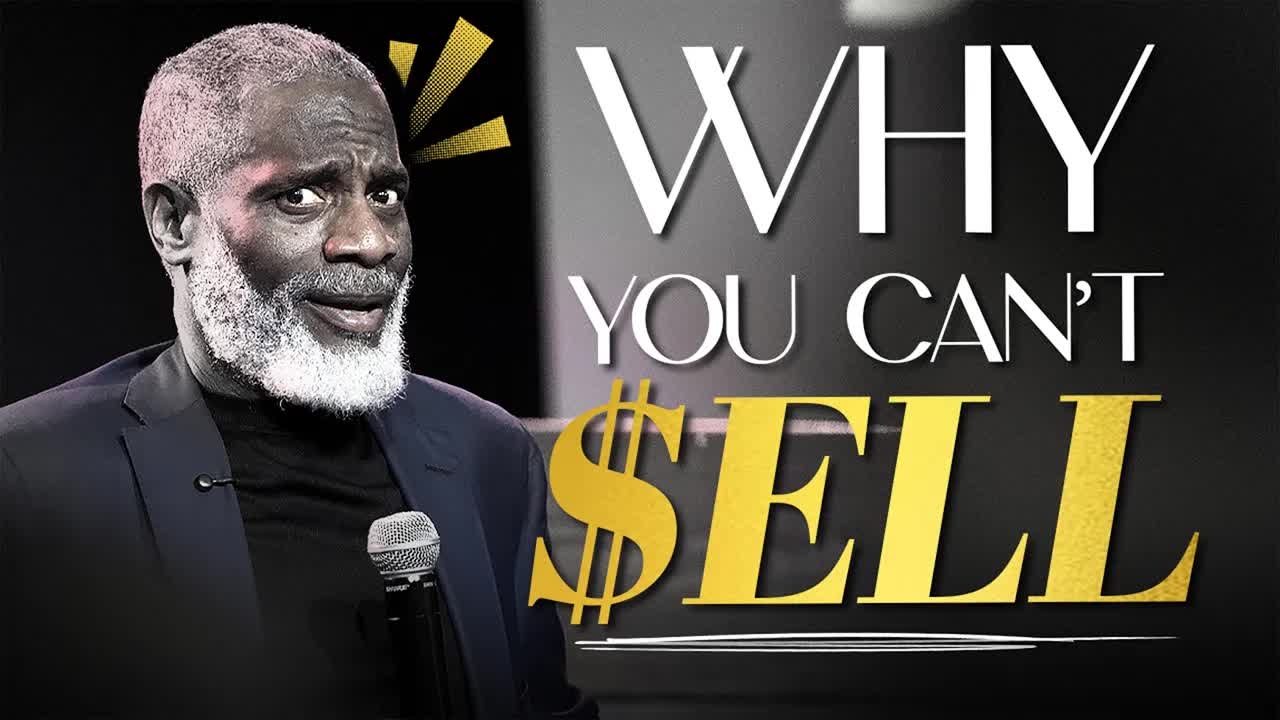
The bait, then the rug-pull.
The premise lands before the title card does: why are you leaving money behind that other people seem to scoop up effortlessly? Myron Golden's answer isn't a script — it's a mirror. The problem is what you believe about buying, time, and what selling actually is.
Where the time goes.

01 · Hook + promise
States the problem: you can't sell, and other people are charging 10x more. Frames the session as three root causes.
02 · Everything reproduces after its own kind
You attract the buyer you are. Internal resistance to buying creates external resistance to selling.
03 · Becoming a generous buyer
Tipping story ($500 to a suicidal server), law of the farm, sowing money as seed. Every dollar spent is a seed in the garden of your future.

04 · Bridge to second principle
Transitions from buyer mindset to the time/money relationship as root cause two.
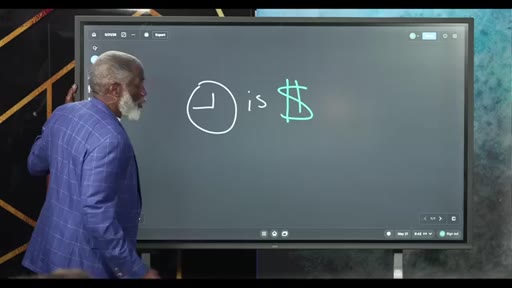
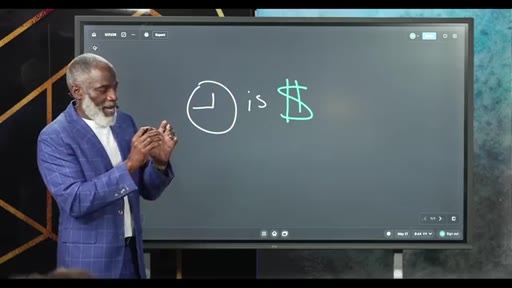
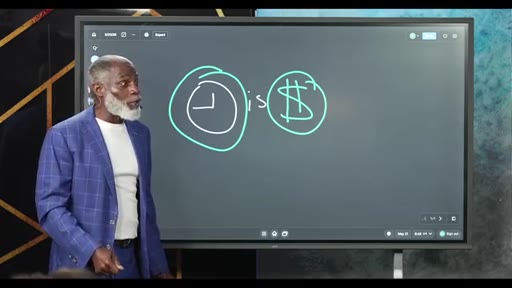
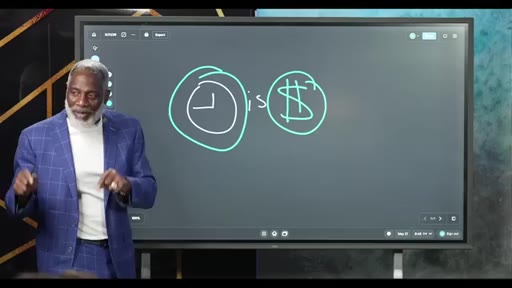
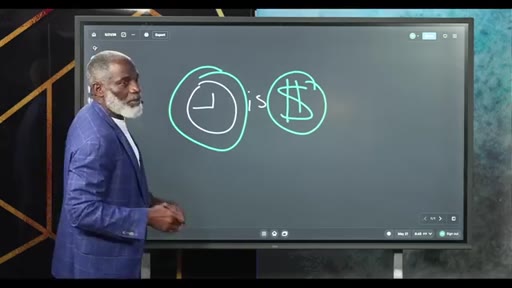
05 · Destroying 'time is money'
Proof by elimination: lose all your money, you can get more. Lose all your time — it's over. The cultural lie that equates them keeps people poor.
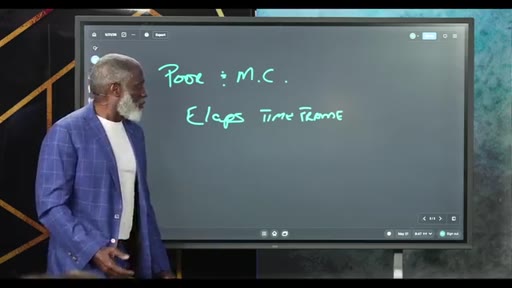
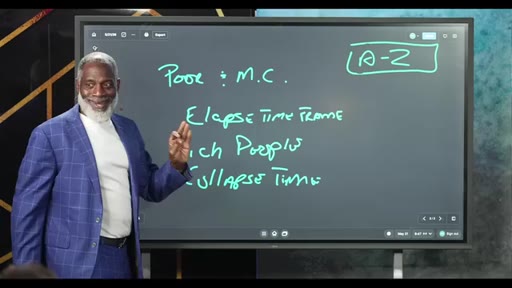
06 · Elapse vs. collapse time frames
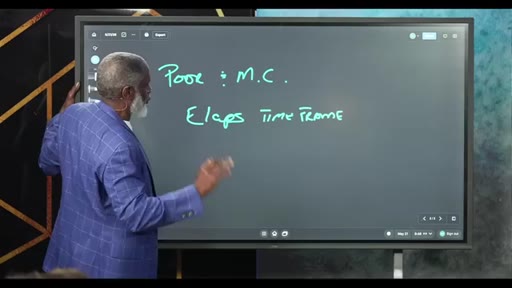
Whiteboard: Poor/MC elapse time frames, rich people collapse them. Get more done in less time by recognizing time's superiority.
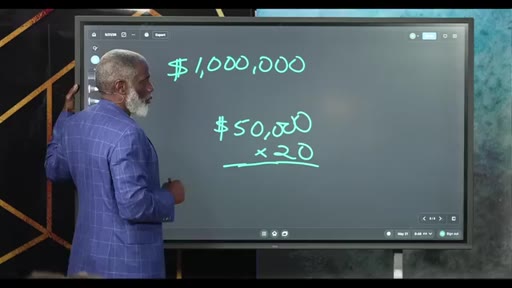
07 · Wealth = speed
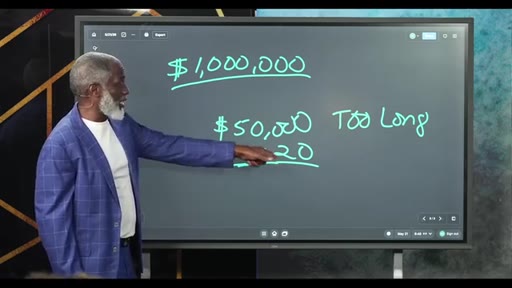
Whiteboard: $1M in 20 years (not rich) vs. $1M in 1 year (rich) vs. $1M/month (240x richer). Same money, different velocity.

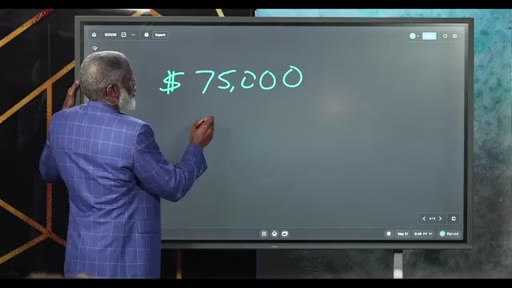
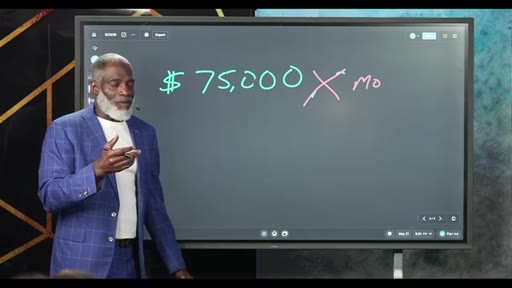
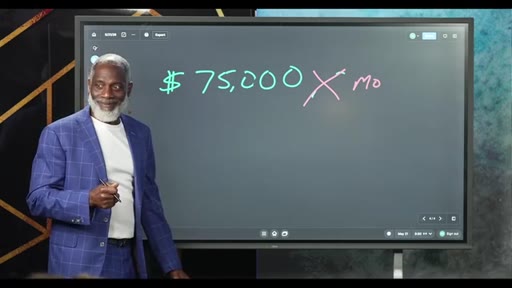
08 · $75K/year → $75K/month
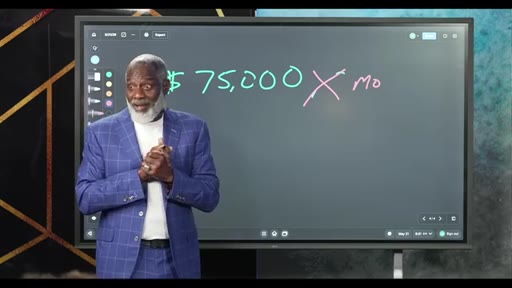
Whiteboard: the exercise of taking annual income and making it monthly. Most people have never even intended this. Intention precedes the shift.

09 · Law of averages — say less to more people
Detachment from outcome. SWSWSWSWN. 18/100 close rate means volume is the only variable. A fast no beats a forever maybe.

10 · Selling vs. convincing
People love to buy and love to be sold — they hate to be convinced. Distinction: convincing = your reasons; selling = their reasons.

11 · Law of large numbers + obsess over their transformation
Multiply averages by scale. Hyper-obsess over solving their problem more than they do. Objections = questions that festered. Remove resistance before the price.

12 · Commission breath and close
The more you need them, the less they believe they need you. Detachment from outcome is the mechanism — not a trick, but a law practiced for 40 years.
Visual structure at a glance.


Named ideas worth stealing.
Everything Reproduces After Its Own Kind
You attract the kind of buyer you are. Reluctant buyers create reluctant prospects. Becoming a generous, enthusiastic buyer draws the same energy back.
Elapse vs. Collapse Time Frames
- Poor/MC: elapse (waste time, stretch timelines)
- Rich: collapse (use money to compress experience and income velocity)
Wealth is measured in the speed of money acquisition, not just the amount. Use money to buy back time rather than trading time for money.
SWSWSWSWN
- Some will
- Some won't
- So what
- Someone's waiting next
A detachment mantra for sales volume. Eliminates emotional investment in any single outcome and keeps you moving to the next conversation.
Selling vs. Convincing
- Convincing: get them to act for your reasons
- Selling: help them decide for their own reasons
True selling is outcome-agnostic from the seller's perspective and outcome-focused from the buyer's perspective. When it works, the buyer thinks it was their idea.
Law of Averages x Law of Large Numbers
- Know your close rate
- Multiply volume to hit any sales target
- 18/100 → talk to 200 → close 36
Combine a stable close rate with increasing prospect volume to make any income target a math problem rather than a luck problem.
Objection Elimination Framework
An objection is a question that wasn't answered in the presentation and festered. Eliminate objections by anticipating resistance and removing it before the price reveal.
Lines you could clip.
"You're gonna sell like you buy."
"A fast no is 100 times better than a forever maybe."
"Tell me yes or tell me no, but tell me now I gotta go."
"People love to buy and they love to be sold. They just hate to be convinced."
"An objection is a question that did not get answered in the presentation, and it got infected and festered into an objection."
"The more I make you feel like I need you, the less you believe you need me. That's called commission breath."
"You already make enough money to be rich. You just make it too slowly."
How they asked for the click.
"Stay blessed by the best. We'll see you in the next video. Bye for now."
Low-key sign-off with no explicit CTA — audience is already in a live event context
Word for word.
Three beliefs that make selling feel like pushing uphill.
The sales struggle most people experience isn't about tactics — it's about three inherited beliefs that silently sabotage every conversation before it starts.
- Your relationship with buying determines your ability to sell: internal resistance to paying full price, tipping generously, or buying eagerly bleeds directly into how you present offers to others.
- Believing time equals money keeps you selling time cheaply and saving money obsessively — two behaviors that guarantee slow income growth regardless of your work ethic.
- Wealth is a speed measurement, not an amount: the same million dollars earned in one year versus twenty years represents a 20x difference in real financial position.
- Every objection at the close is a question you failed to answer earlier in the conversation — not a negotiation to win, but a gap in your presentation to close.
- Selling and convincing are opposites: convincing uses your reasons, selling surfaces theirs. A buyer who thinks the decision was their own idea will never feel sold to.
- Detachment from any individual outcome is not emotional indifference — it's statistical confidence in a law that says volume produces results regardless of any single no.