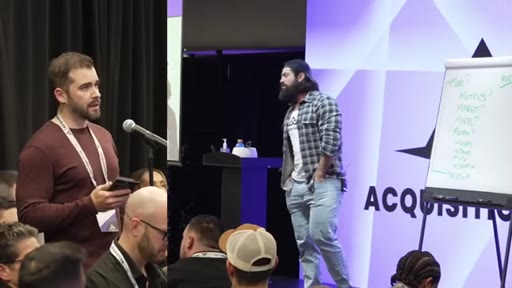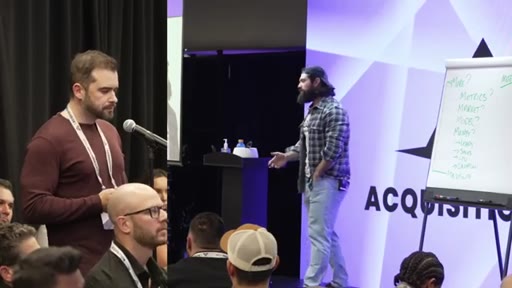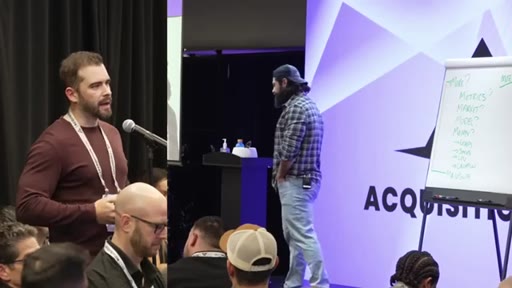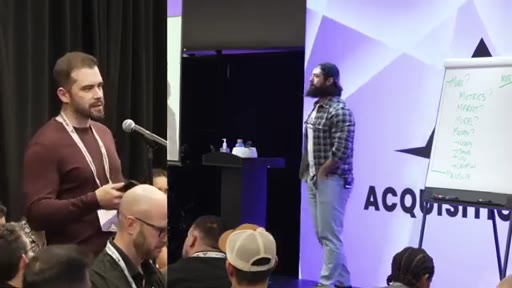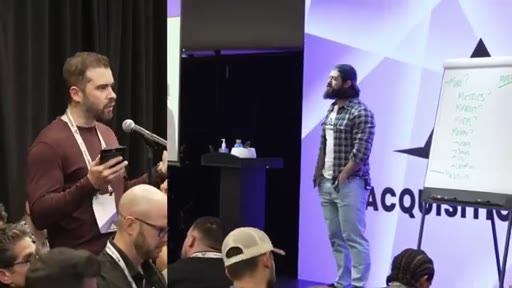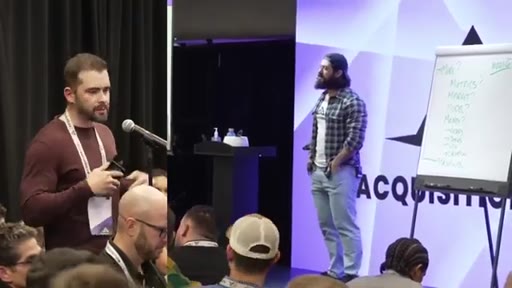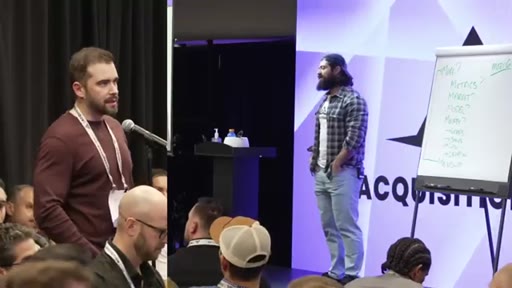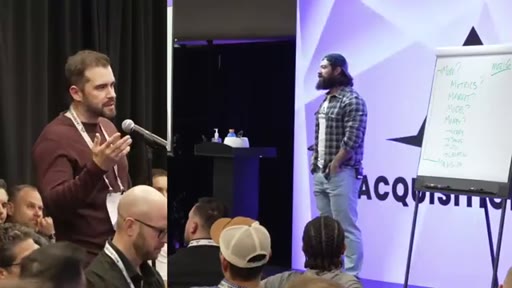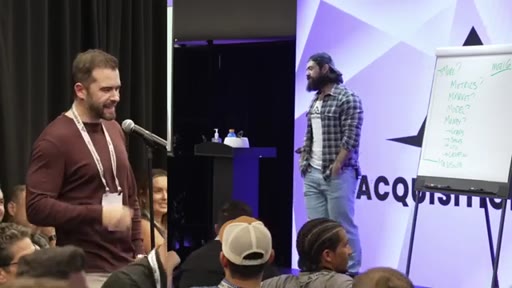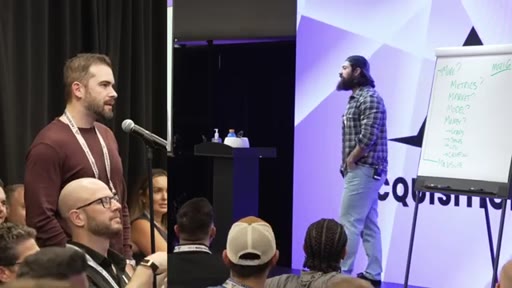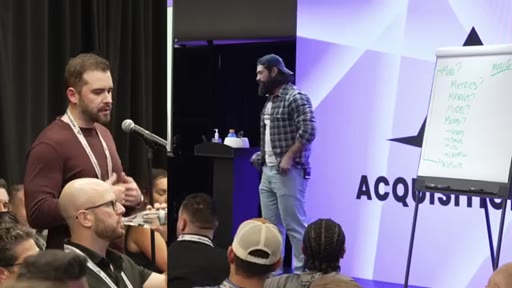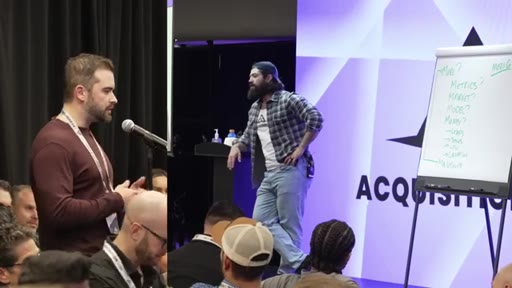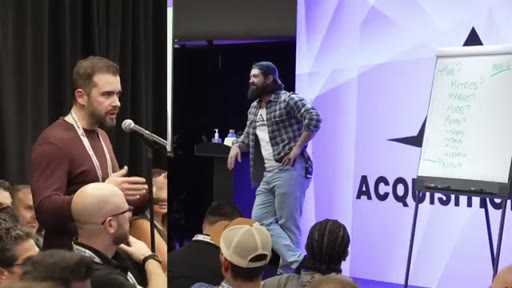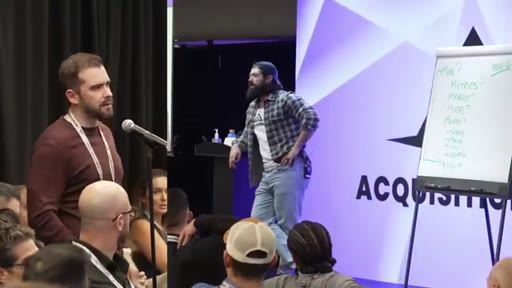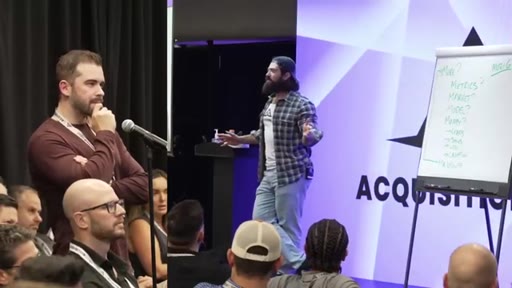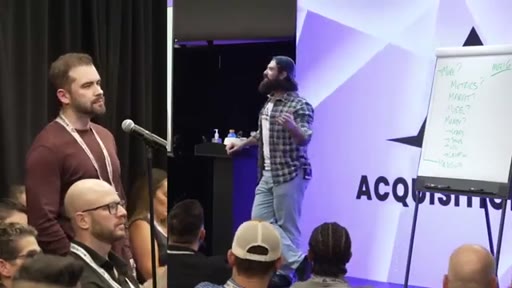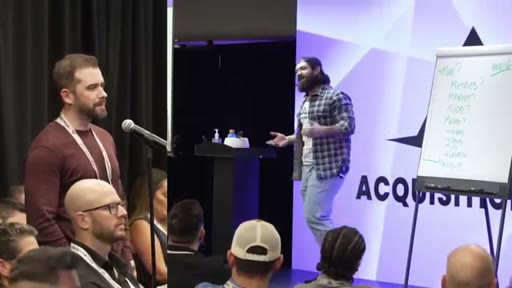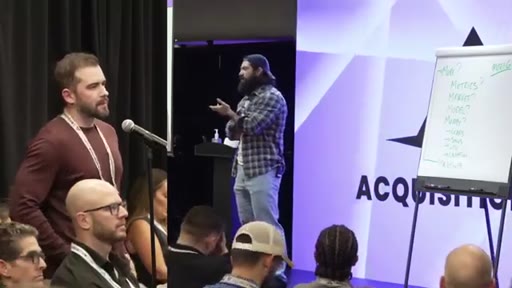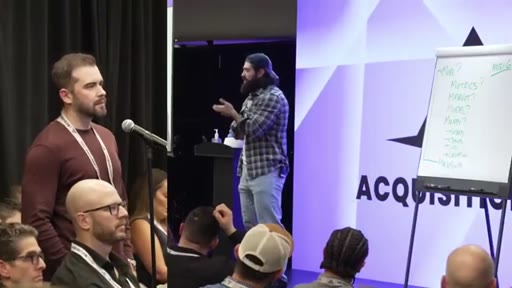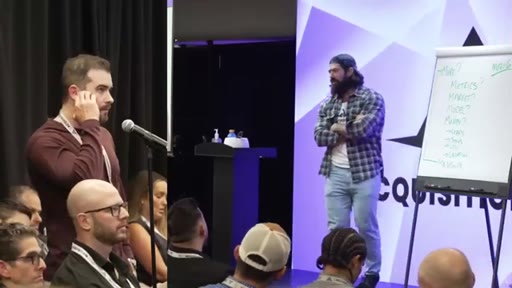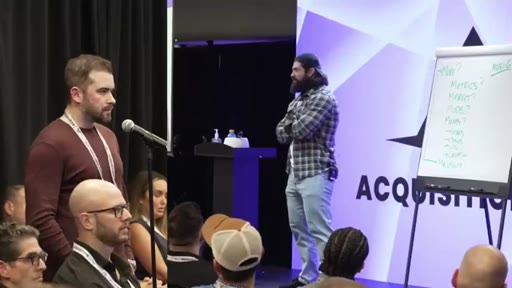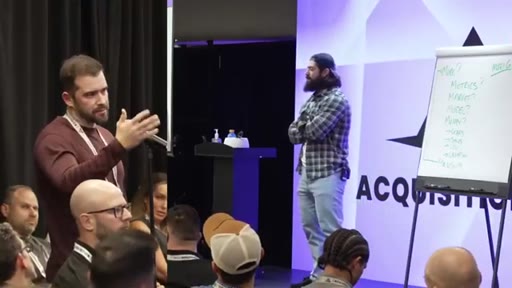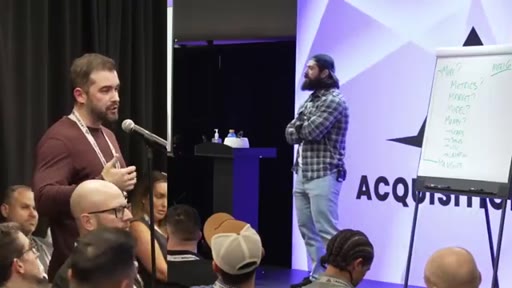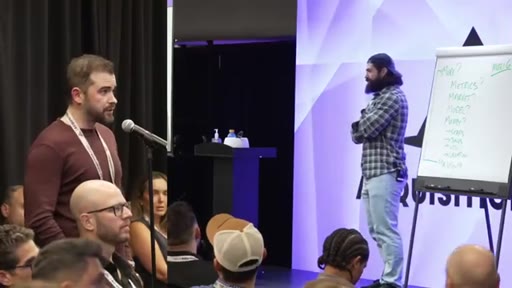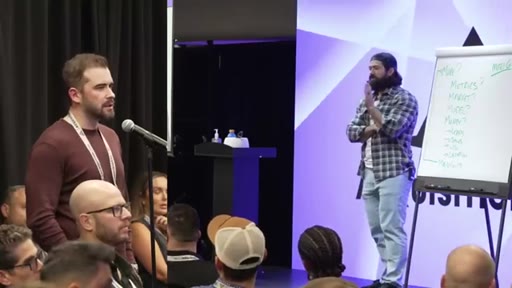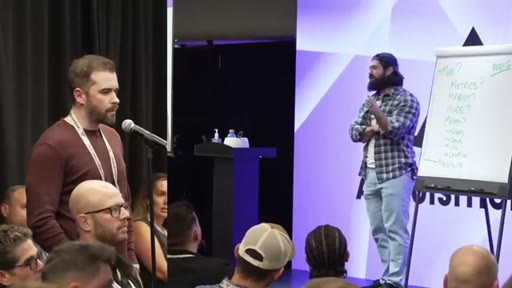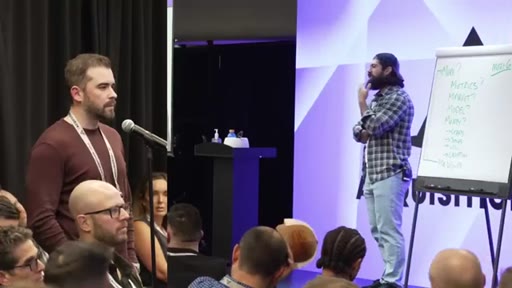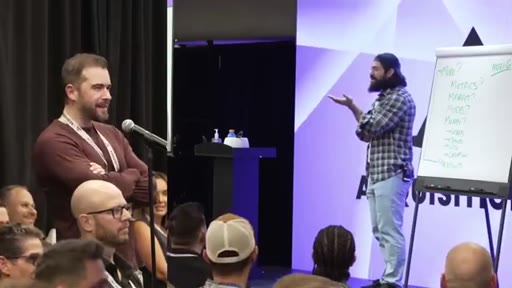
The bait, then the rug-pull.
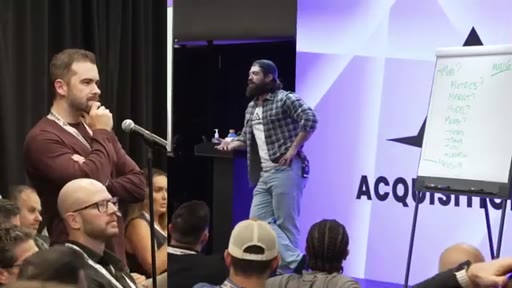
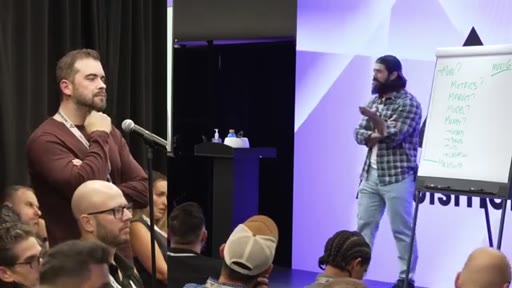
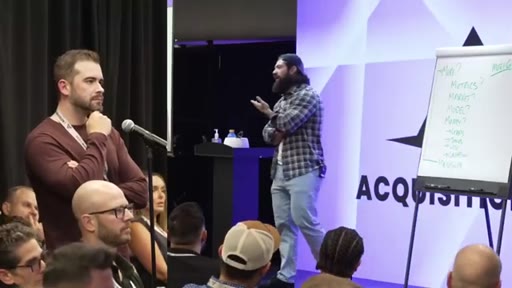
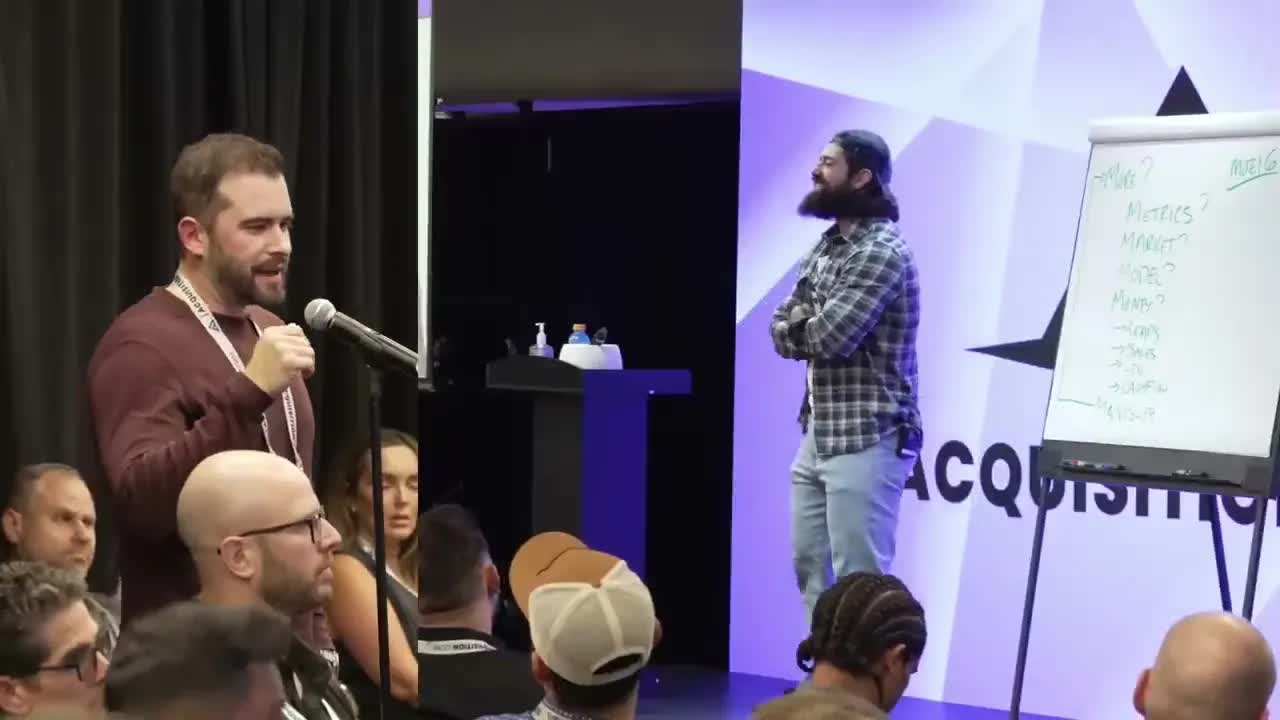
A $20M website-as-a-service founder walks up to the microphone at a live event and asks the question keeping him up at night. The answer he gets isn't about AI at all.
Where the time goes.
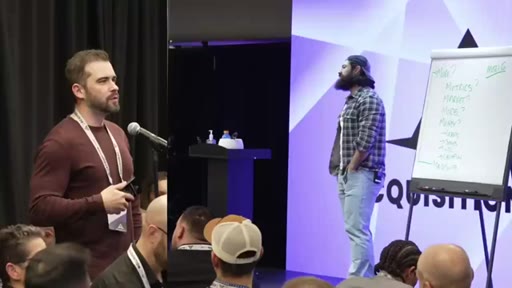
01 · Business context
Owner introduces WaaS model, $450/month per customer, $20M ARR, 100% outbound cold calling, goal of $80M in 3 years.
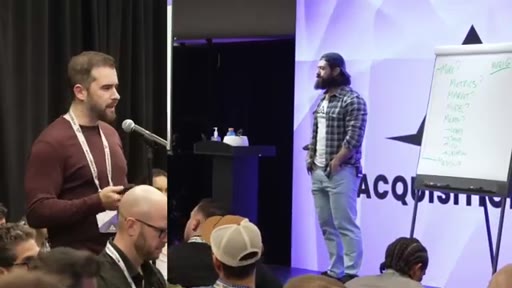
02 · The AI fear
Owner states the core anxiety: AI is decaying the industry, churn ticking up, unsure whether to innovate the product or build inbound.
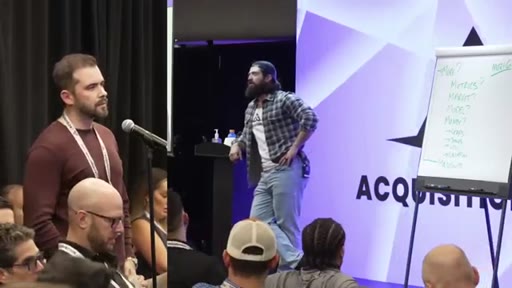
03 · Reframe: you're solving a problem that doesn't exist
Advisor challenges the narrative — churn isn't materially elevated; AI-enthusiastic customers never bought WaaS to begin with.
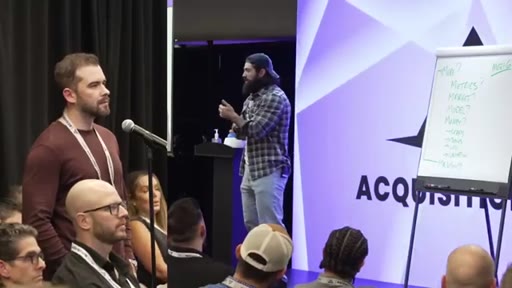
04 · Prescription: double down on inbound
Advisor recommends inbound/paid ads, prepay-for-quarter to offset rising CAC, and benchmarks 29-month LTV as healthy.
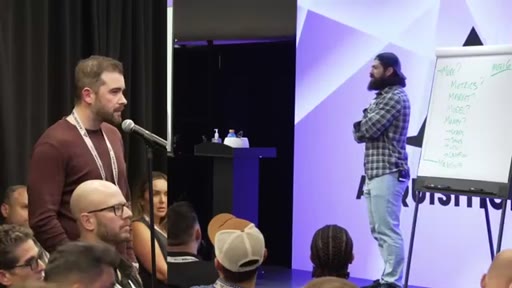
05 · The real problem: margin
EBITDA of 3.6/20M flagged as lowish. Owner admits heavy headcount. Advisor: 'You're worried about them doing it — you're not even doing it.'
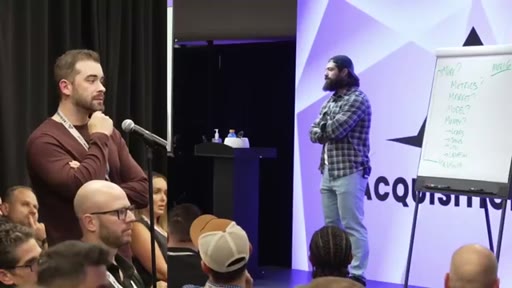
06 · The actual prescription
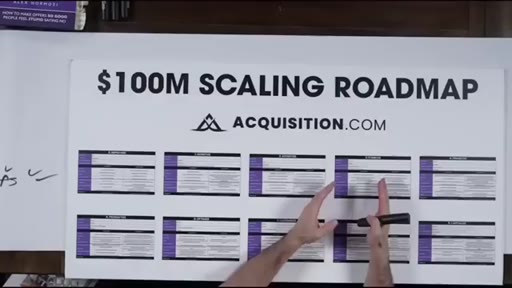
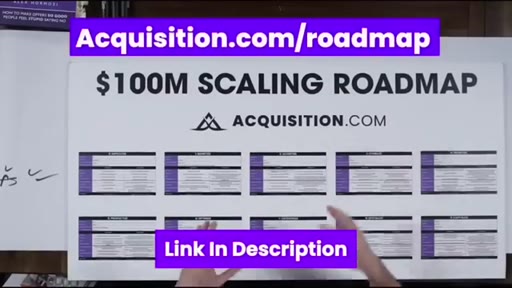
Spend 6 months using AI to cut headcount 50%, raise EBITDA to 7+, then go negative on acquisition knowing LTV covers it. CTA to acquisition.com/roadmap.
Visual structure at a glance.
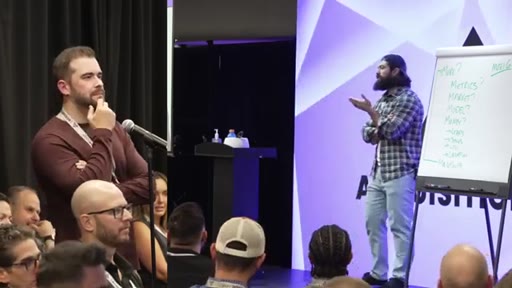
Named ideas worth stealing.
Narrative vs. Metric test
Before acting on a competitive fear, separate the story you're telling yourself from the business metric that would actually justify action. If churn isn't showing up in the numbers, the threat is narrative, not real.
Fix margin before scaling acquisition
- Cut headcount 50% with AI workflows
- Double EBITDA margin
- Fund aggressive paid inbound from new margin
- Accept negative CAC quarters against known LTV
The sequence for a people-heavy service business facing margin pressure: automate internally first, then use the freed cash flow to fund acquisition at a loss, backed by LTV math.
Lines you could clip.
"You have a narrative. You have a story around AI is decaying the business. But all I hear is that you have customers and your job just got way easier."
"It's like you're worried about them doing it. You're not even doing it."
"Reduce head count by 50% using AI workflows... increase the margin from 3.6 to, like, seven... you'd be willing to go negative for a quarter in the acquisition knowing you're gonna get 29 on the back."
How they asked for the click.
"Go to acquisition.com/roadmap, plug in your business information."
Delivered as a spoken offer after the Q&A wraps, with an on-screen slide reinforcing the URL. Natural transition — doesn't feel forced after the substantive exchange.
Word for word.
Fix your own operations before fearing the competitor.
A business threatened by a technology it hasn't adopted is exposed on two fronts at once — and the internal front is the one it can actually control.
- Separate narrative from metric before acting on competitive fear: if churn isn't materially elevated, the threat is a story, not a business problem.
- Customers who are early AI adopters were unlikely buyers of your service regardless — the actual at-risk market is smaller than the anxiety suggests.
- A service business with sub-20% EBITDA and heavy headcount has a margin problem, not a product problem — that's the first fire to fight.
- AI-driven internal automation can cut operational headcount significantly without touching the customer-facing product, turning a cost center into a funding source for growth.
- When LTV is long (25–35 months), you can accept a negative acquisition quarter — but only if your margins are strong enough to absorb the cash flow dip.
- Single-channel acquisition risk is real, but the answer is adding a channel with funded CAC, not switching channels — switching before you can fund the new channel just creates a different single-channel dependency.