
The bait, then the rug-pull.
Eight seconds to make the promise: know seven principles, get rich. Then a cut to a grainy flashback of a younger host at a conference, and the origin story earns the claim before a single formula is written.
Where the time goes.

01 · The promise and origin story
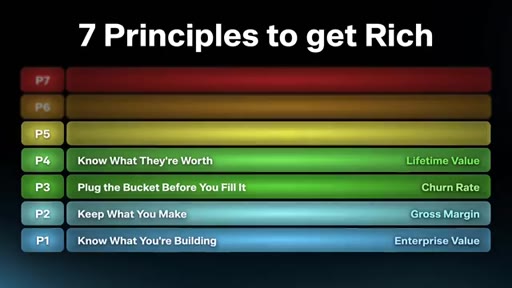
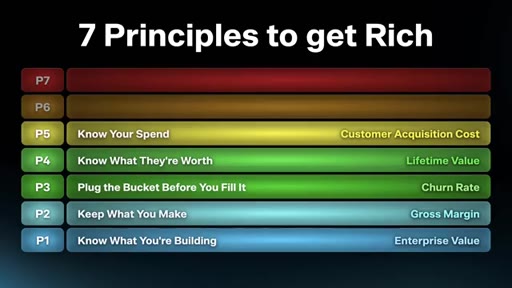
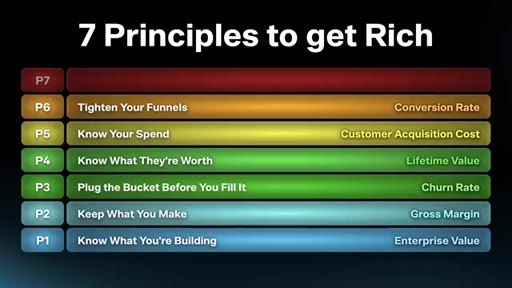
Hook: seven principles equals rich. Flashback to being broke at 24, multimillionaire by 28. The 7-principle color-coded bar chart appears as a visual anchor.

02 · P1: Know What You Are Building - Enterprise Value
Build a business you could sell. EV = Profit x Industry Multiple. Example: $500K profit at 3x = $1.5M enterprise value.

03 · P2: Keep What You Make - Gross Margin
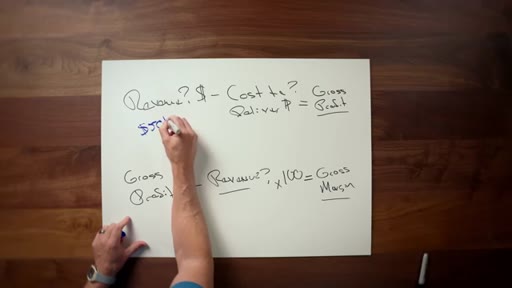
Revenue is vanity. Gross Margin = (Revenue minus Cost to Deliver) / Revenue x 100. Target: 70%+. Example: $50K rev, $10K cost = 80% gross margin.

04 · P3: Plug the Holes Before You Fill the Bucket - Churn Rate
Fixing retention is cheaper than acquiring new customers. Churn = Clients Lost / Clients at Month Start x 100. Target: 3% monthly or below.

05 · P4: Know What They Are Worth - Lifetime Value
LTV = Avg Revenue per Client / Monthly Churn Percent. Example: $100/month client at 2% churn = $5,000 LTV. Cutting churn in half doubles LTV.

06 · P5: Know Your Spend - Customer Acquisition Cost
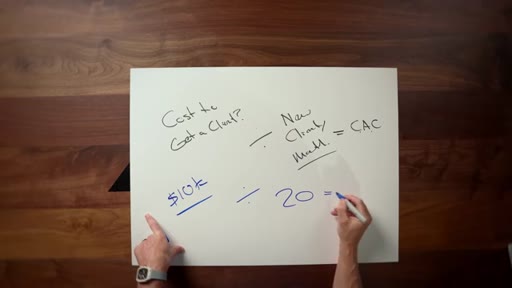
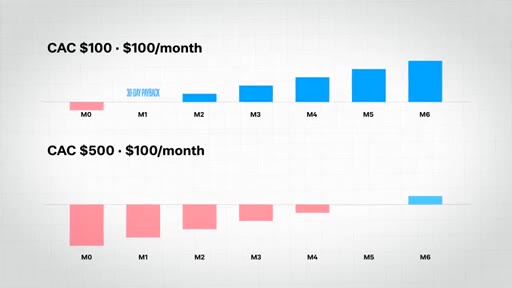
CAC = Total Acquisition Spend / New Clients Added. Example: $10K / 20 clients = $500 CAC. Introduces CAC payback period.
07 · P6: Tighten Your Funnels - Conversion Rate
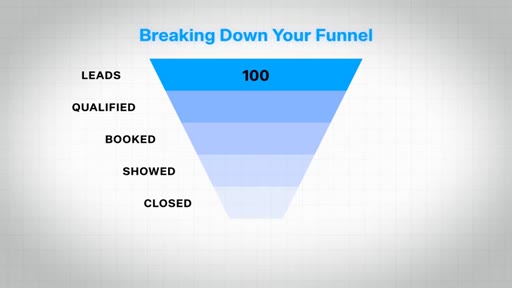
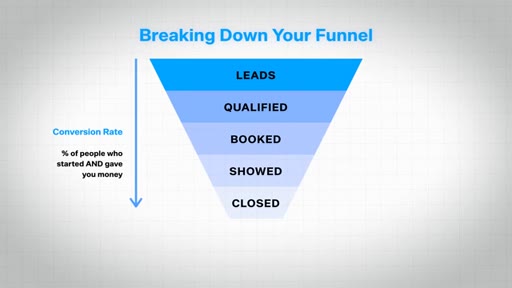
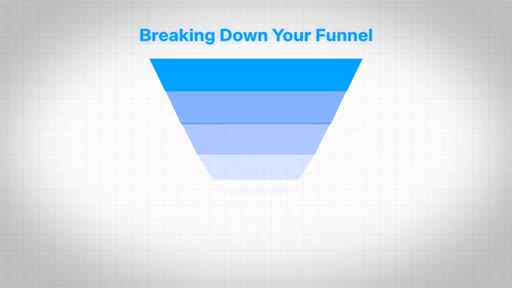
Break funnel into Leads, Qualified, Booked, Showed, Closed. Measure each stage. Fix the biggest drop first.

08 · P7: Know How Long You Can Go - Burn Rate and Runway
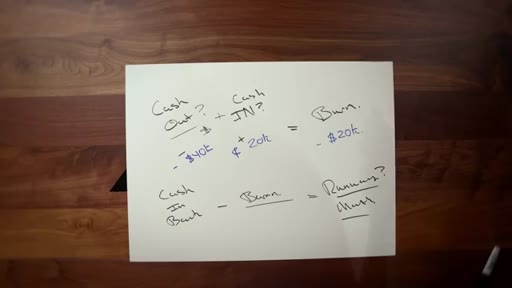
Burn = Cash Out + Cash In. Runway = Cash in Bank / Monthly Burn. If runway is 2-3 months, take massive action. Daily cash report recommended.

09 · Recap and CTA
All 7 principles on color-coded summary bar chart. Workbook DM pitch repeated. Link to zero-to-million video.
Visual structure at a glance.






Named ideas worth stealing.
7 Principles to Get Rich
- P1: Know What You Are Building (Enterprise Value)
- P2: Keep What You Make (Gross Margin)
- P3: Plug the Bucket Before You Fill It (Churn Rate)
- P4: Know What They Are Worth (Lifetime Value)
- P5: Know Your Spend (Customer Acquisition Cost)
- P6: Tighten Your Funnels (Conversion Rate)
- P7: Know How Long You Can Go (Burn Rate and Runway)
Seven financial and operational metrics that together give a complete picture of business health and wealth creation potential.
Lines you could clip.
"You can hit ten million in revenue and still wake up broke."
"If you just pour water into a bucket with massive holes in it, you cannot pour enough water fast enough to fill that bucket up."
"Same price, twice the value."
"Your P and L is an autopsy after the fact, not a diagnosis."
"If you cannot price the yes, you cannot price growth."
Things they pointed at.
How they asked for the click.
"DM me the word YouTube workbook on Instagram and I will send it right over."
Mid-video soft pitch for a free workbook. Used twice: at 4:48 and in the close. DM-based delivery avoids email friction. Workbook cover shown as full-screen graphic in final seconds.
Word for word.
Seven numbers that decide whether you build wealth or busy revenue.
Most business owners feel the gap between revenue and wealth but cannot name the metric causing it - these seven formulas close that gap.
- Enterprise value is the only metric that connects daily operating decisions to long-term wealth - building toward a sellable company forces better decisions even if you never sell.
- Gross margin is the structural ceiling most service businesses ignore; thin margins cap your wealth potential no matter how fast you grow revenue.
- Retention is almost always a cheaper lever than acquisition: fixing churn by half doubles LTV for every customer you already have without spending a dollar on ads.
- Customer acquisition cost is meaningless without the CAC payback period - a low CAC that takes 12 months to recover still destroys cash when you scale fast.
- Funnel conversion rates should be measured stage by stage; the step with the biggest drop is the only one worth fixing first.
- Burn rate and runway are not accounting outputs - they are operating inputs that should be reviewed daily so you always know how many months you have to act.
- The hardest financial habit to build is separating gross profit from net profit; conflating them leads to pricing and hiring decisions made on the wrong number.