The bait, then the rug-pull.
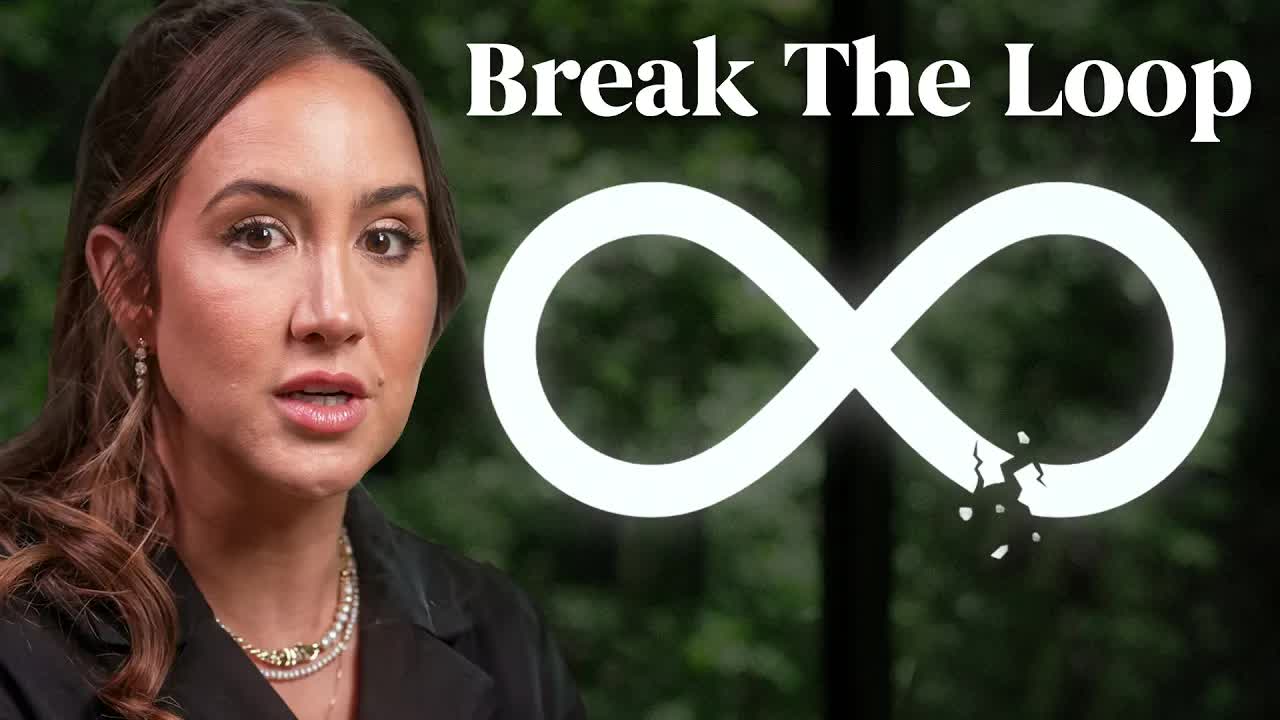
The question lands before the intro music fades: have you ever planned something big and done nothing about it? The answer for most people watching is yes, and the follow-up reframe is the entire premise. You are not lazy. You are running a neurological loop, and this episode is designed to break it.
Where the time goes.

01 · Hook and three-point promise
Pattern interrupt then three deliverables: the equation, the four traps, the three-move protocol.

02 · The Procrastination Equation
Piers Steel's formula: expectancy times value divided by impulsiveness times delay. Coaching-business example maps to all four failure modes simultaneously.

03 · Your brain is wired to avoid
2019 fMRI study showing reduced anterior cingulate cortex and DLPFC activity in high procrastinators. Every avoided task deepens the default avoidance pattern.

04 · Trap 1: Planning theater
Artifacts are not customers. Phil Knight sold shoes out of a station wagon before Nike had a name. Test: have you made an uncomfortable ask of a real human?

05 · Trap 2: Research mode
Information consumption burns execution dopamine. Six months of PDFs equals zero businesses bought. Naval Ravikant prefers 100 great books over 1,000 new ones.

06 · Trap 3: Waiting to feel ready
Motivation is biologically impossible before action. Border journalism story: crossing into Mexico without a fixer, without readiness, without waiting.

07 · Trap 4: The future self illusion
Hal Hirschfield's UCLA study on future self emotional connection. Saying 'I'll start Monday' passes the work to a stranger who does not want to do it either.

08 · Move 1: Shrink
BJ Fogg behavior design: behavior equals motivation times ability times prompt. Under two minutes produces much higher continuation rates than full-scope framing.

09 · Move 2: Specify
Peter Gollwitzer implementation intentions: 94 studies, 8,000 people, two to three times higher completion. Pre-decide when/where/how. Use if-then format.

10 · Move 3: Stack
Anchor new behavior onto an existing habit. The existing habit is the trigger, the new behavior rides along with no remembering tax.

11 · Real example: one sentence to NYT bestseller
Main Street Millionaire started with a five-minute timer, one sentence, at 5AM in the kitchen. Coffee was the anchor. Forty minutes and a couple of pages followed uninvited.

12 · The missed-day rule and refusal to stay stopped
Never compensate with a bigger action. James Dyson: 5,127 prototypes over 15 years. 51 cold calls to buy the first business. The only skill: do not stay stopped.

13 · Close and CTA
Every action is a vote for who you become. CTA for Main Street Millionaire Live at msm.live, framed using the episode's Shrink vocabulary.
Visual structure at a glance.

Named ideas worth stealing.
The Procrastination Equation
- Expectancy: belief you will succeed
- Value: task feels meaningful
- Impulsiveness: resistance to cheap dopamine alternatives
- Delay: proximity of payoff
Piers Steel's formula compressing two decades of procrastination research. All four variables can be changed; willpower cannot reliably be scaled.
Shrink, Specify, Stack
- Shrink: make the task so small the avoidance reflex does not fire
- Specify: pre-decide exact when/where/how using if-then implementation intentions
- Stack: anchor to an existing daily habit so no remembering tax applies
Three-move daily protocol combining BJ Fogg behavior design with Gollwitzer implementation intentions and habit stacking. Designed to bypass the avoidance response rather than overpower it.
Four Traps of Procrastination
- Planning Theater
- Research Mode
- Waiting to Feel Ready
- Future Self Illusion
Four disguises procrastination wears to look like legitimate activity. Each produces real-seeming outputs while producing zero traction.
Lines you could clip.
"You don't have a willpower problem. You have an equation problem. Willpower is really hard to scale. Equations, though, they can be solved."
"Motivation is not a prerequisite for action. Motivation is a byproduct of action."
"When you start to say I'll start Monday, you're actually passing the responsibility to a stranger who doesn't want to do it any more today than you do."
"You don't need a perfect streak. You need a refusal to stay stopped."
Things they pointed at.
How they asked for the click.
"Get your ticket to Main Street Millionaire Live at msm.live."
Well-executed: framed using the episode's Shrink vocabulary ('let's shrink the action -- grab the ticket'). On-screen logo, lower-third URL, and QR code appear simultaneously. CTA is positioned as the logical next step for someone who resonated with the business-buying examples throughout.
Word for word.
Four names for the same avoidance loop.
The brain does not distinguish between productive-feeling delay and actual work, which is why planning, researching, waiting, and deferring all feel like progress while preventing any.
- The procrastination equation shows that motivation collapses predictably when any one of four variables tips the wrong way, and most stuck people have all four working against them simultaneously.
- Planning theater is not a discipline failure. It is a substitute behavior the brain accepts because it produces real artifacts that feel indistinguishable from progress until you check for customers.
- Information consumption burns the same dopamine reserve that execution requires. Reading one more book before you start does not fill the tank, it empties it.
- Motivation arriving before action is biologically impossible. The neurochemical reward for starting fires only after movement begins, which means waiting to feel ready is waiting for a signal that will never come first.
- The future self illusion works because the brain treats a distant version of you like a stranger, and you feel no more obligation to hand that stranger a finished project than you would to someone you have never met.
- Shrinking an action below the avoidance threshold produces continuation rates many times higher than framing the full task, because the reflex that causes avoidance does not fire when the ask is small enough.
- Pre-specifying when, where, and how you will do something in if-then format removes the decision from the moment it is hardest to make. The 94-study meta-analysis showing two to three times higher completion is one of the most replicated findings in behavioral psychology.
- Stacking a new behavior onto an existing habit removes the remembering tax entirely. The existing habit is the trigger and the new one rides along without requiring additional activation energy.
- Missing a day does not reset a streak, but making up for it with a larger action does, because the enlarged task triggers the same avoidance reflex that caused the miss. The protocol is to run the smallest possible version again the next day.
- Every avoided task trains the avoidance pattern deeper into the brain's default wiring. Every completed micro-action trains the opposite. The vote is cast either way.