The bait, then the rug-pull.
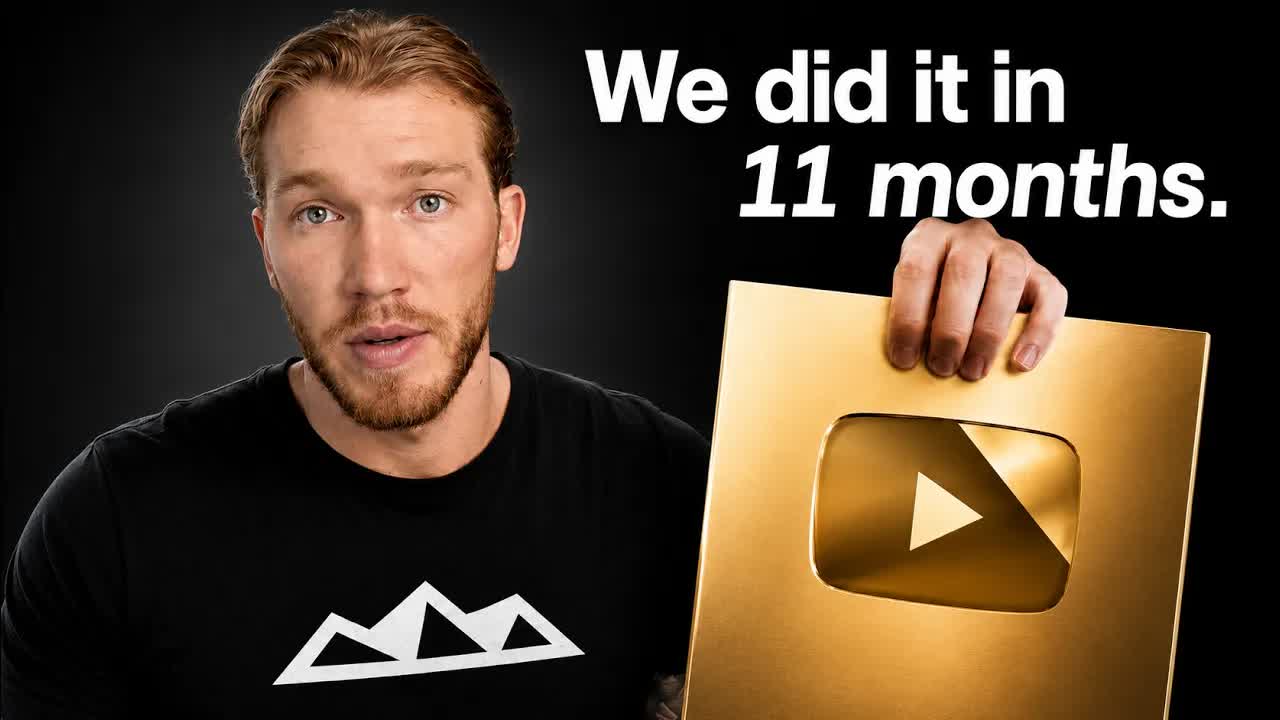
A creative director who took a personal brand from 10K to 2.7M subscribers opens with a single promise — no fluff, no gear talk, just a four-part system — then spends 22 minutes delivering exactly that.
Where the time goes.
01 · Intro: credentials and Four Cs preview
Sam establishes authority via Dan Martell growth stats (10K to 2.7M, 10M plus total audience), previews the Four Cs and a free scripting template CTA.
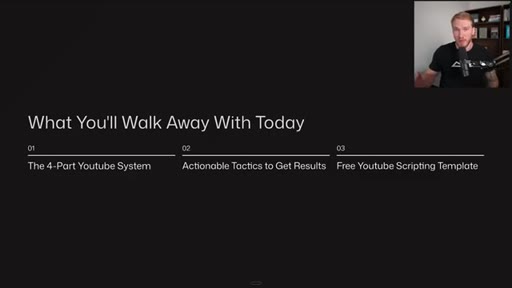
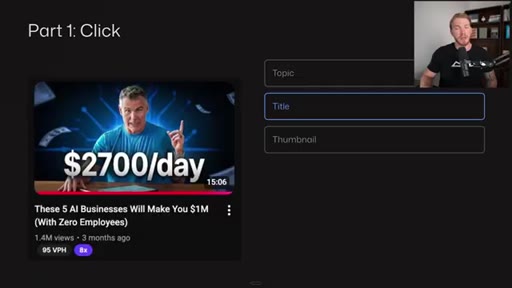
02 · C1 Click: Topic selection — Demand
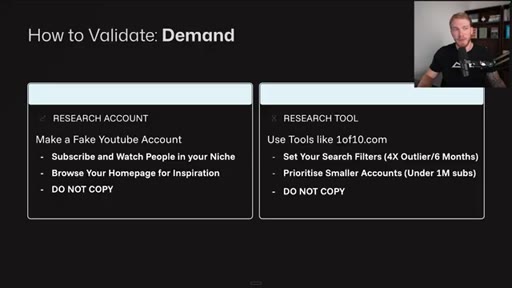
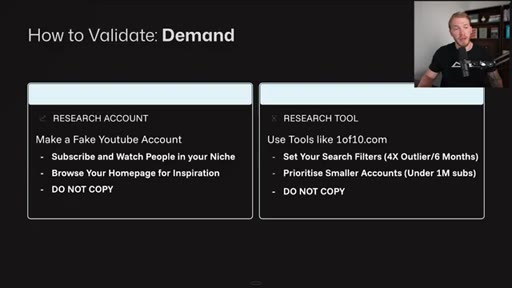
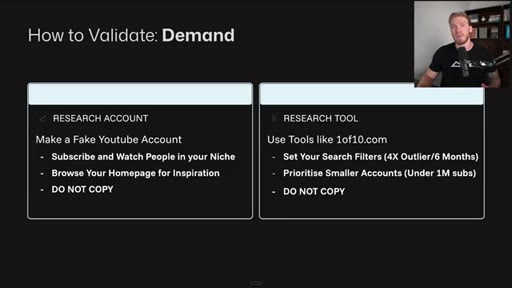
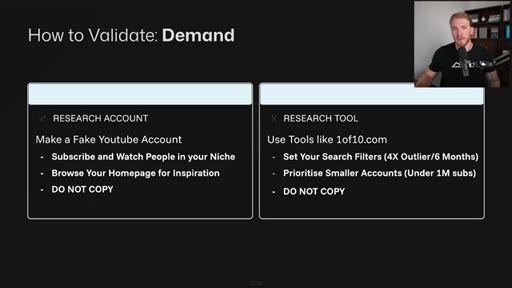
TAM as the core topic filter. Two validation methods: fake research account on YouTube, and outlier analysis on 1of10.com (4x outlier, last 6 months, accounts under 1M subs).
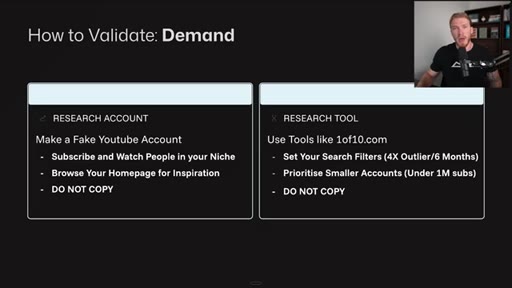
03 · C1 Click: Topic selection — CCN Fit
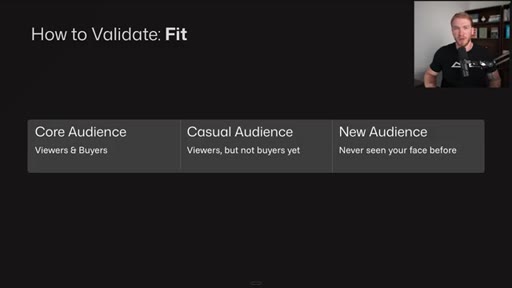
Paddy Galloway CCN framework. Meetings example from Dan channel: wide topic that hooks new viewers and progressively overloads to serve core buyers.
04 · C1 Click: Topic selection — Interest
Personal interest as the third filter. Chasing trends you do not care about produces content viewers can sense is inauthentic.
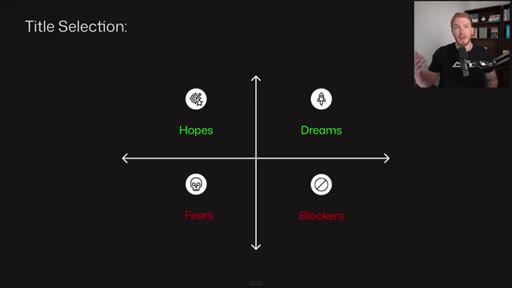
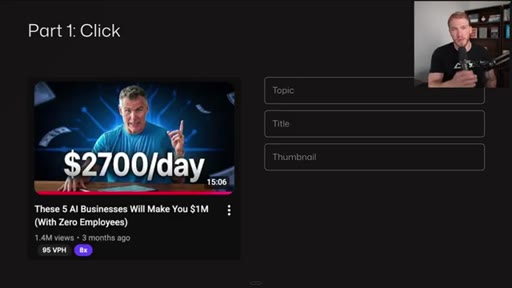
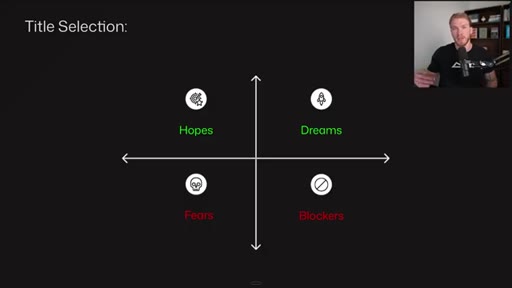
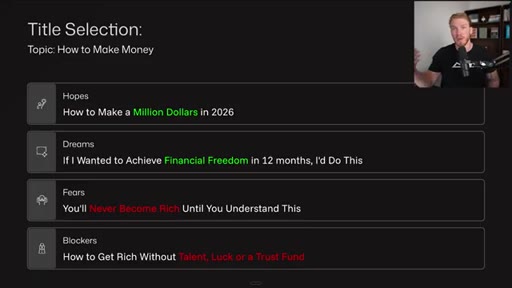
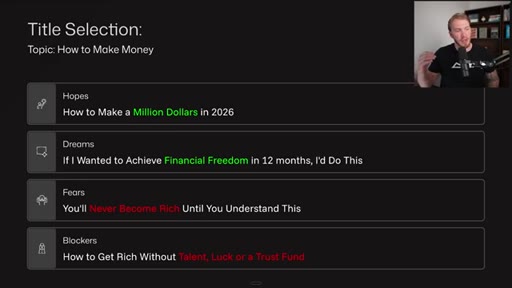
05 · C1 Click: Titles — 4 emotional angles
Hopes (short-term), Dreams (long-term), Fears (what they might lose), Blockers (limiting beliefs). Same topic shown through all four angles.
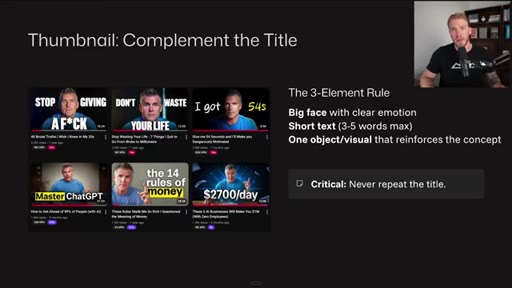
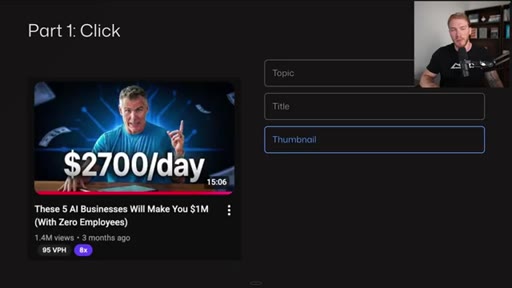
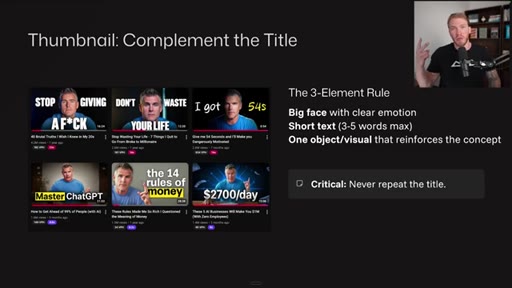
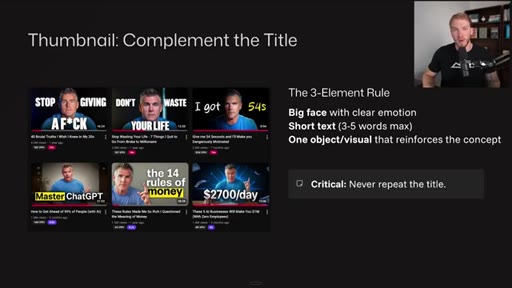
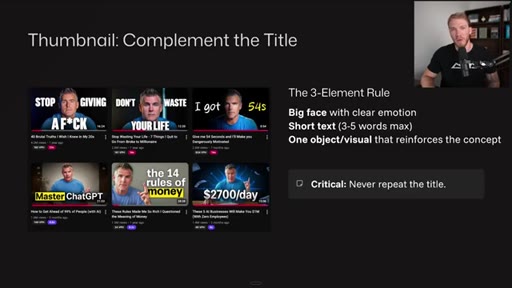
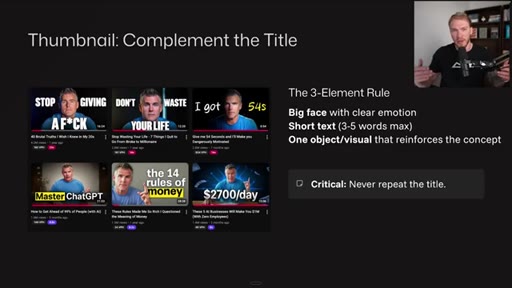
06 · C1 Click: Thumbnails — 3-Element Rule
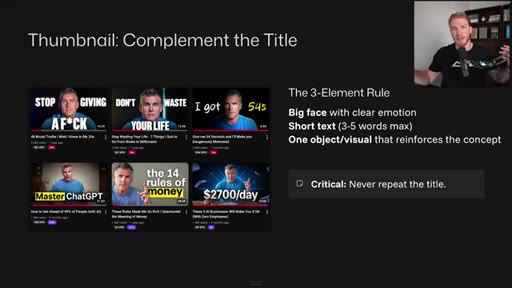
Big face with clear emotion, short text 3-5 words, one concept visual. Facial expression must match the title emotional angle. Never repeat the title.
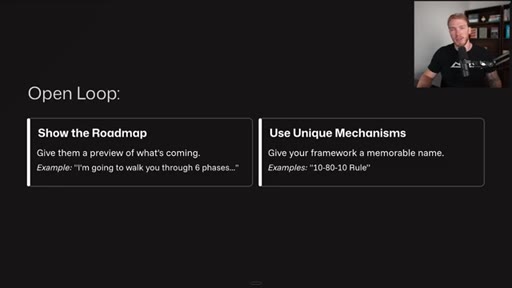
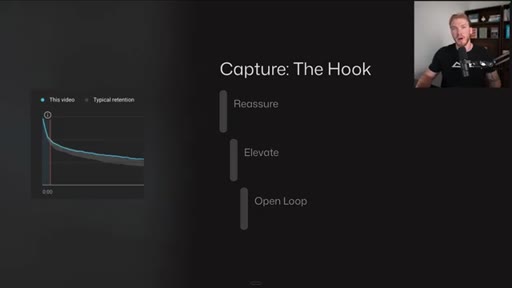
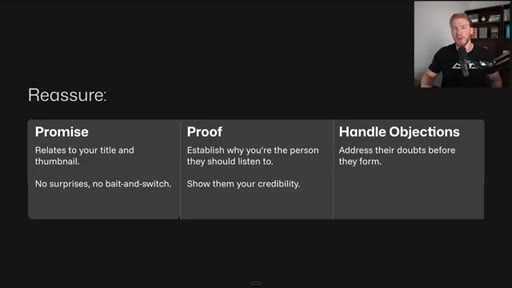
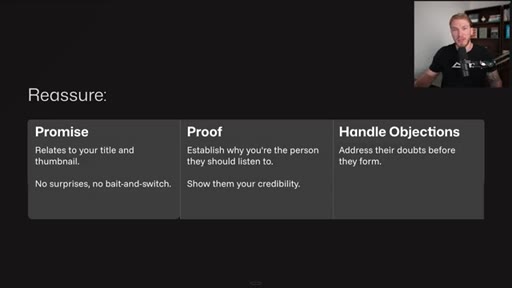
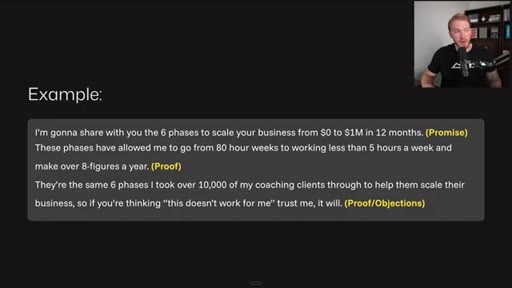
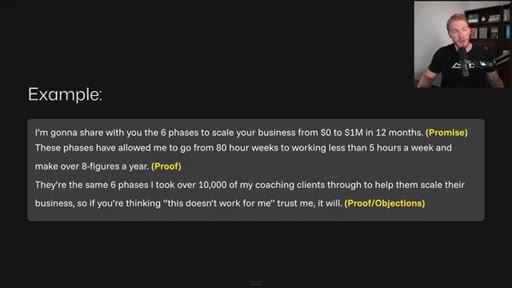
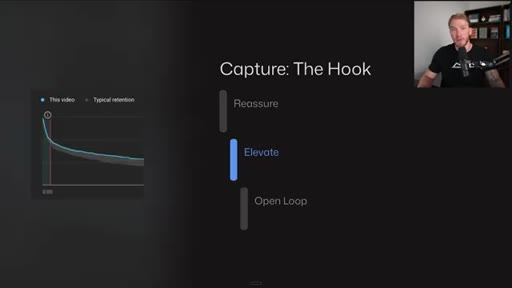
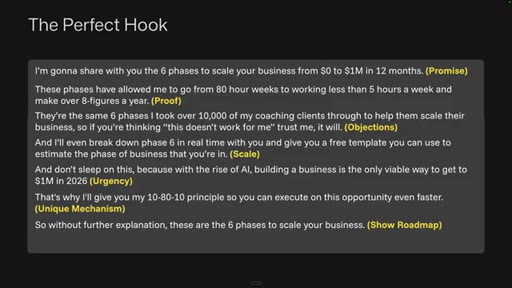
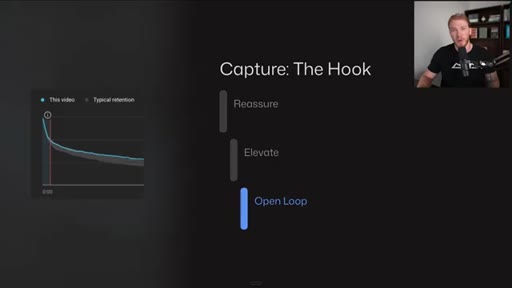
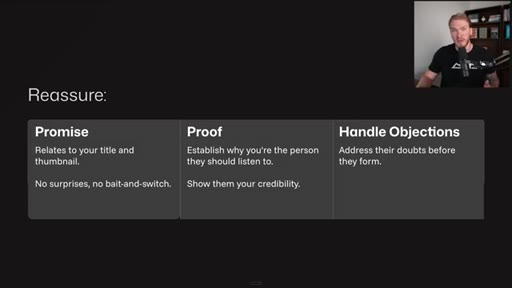
07 · C2 Capture: Hook — Reassure, Elevate, Open Loop
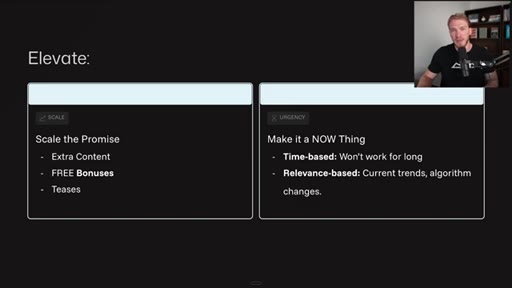
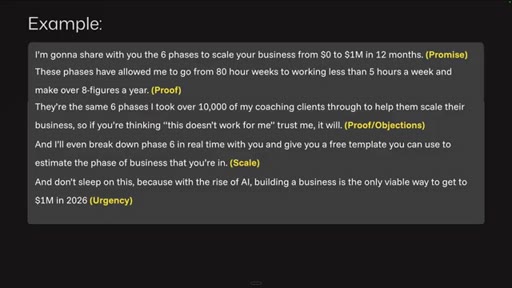
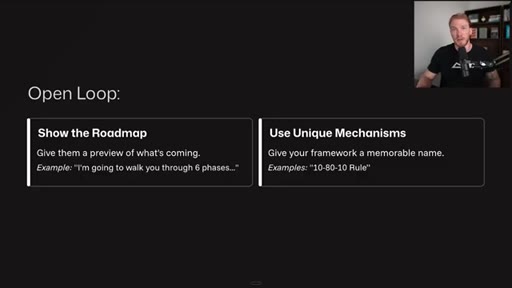
Three-part hook formula with annotated example script: promise, proof, objection handling, bonus scale, urgency, blurred roadmap, unique mechanism name.
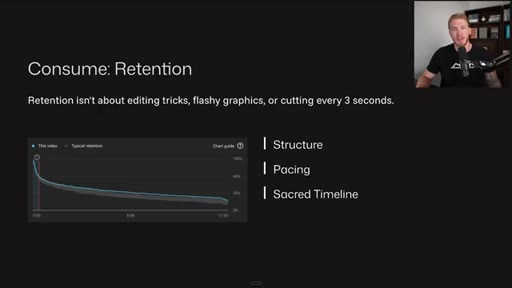
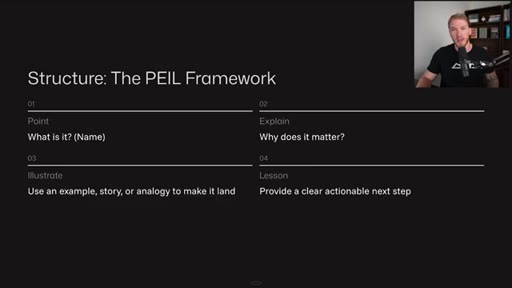
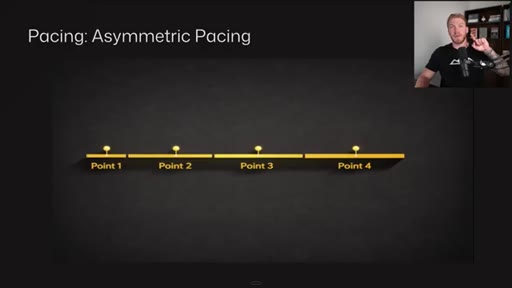
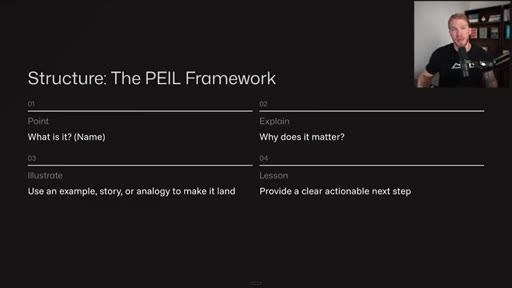
08 · C3 Consume: Retention — PEIL, Asymmetric Pacing, Sacred Timeline
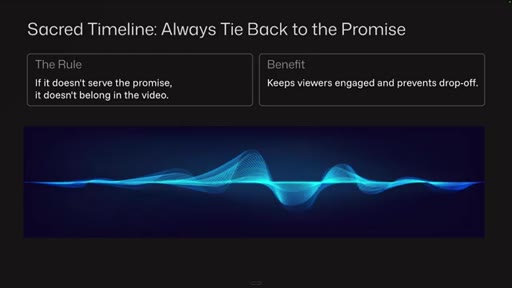
PEIL as the repeatable value unit. Asymmetric pacing illusion. Sacred timeline: cut anything that does not serve the promise, re-anchor every 30 to 60 seconds.
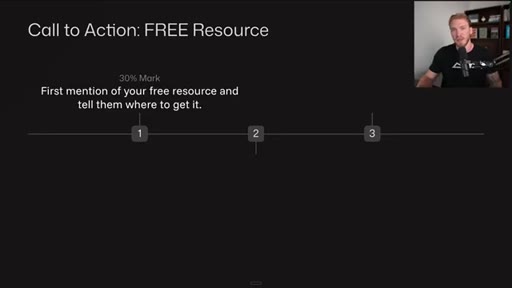
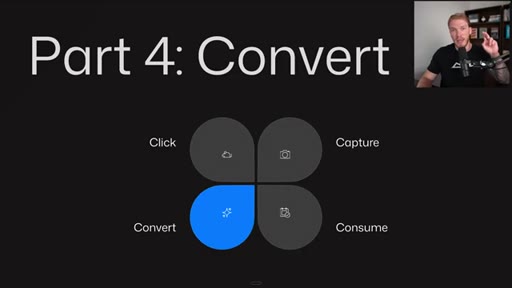
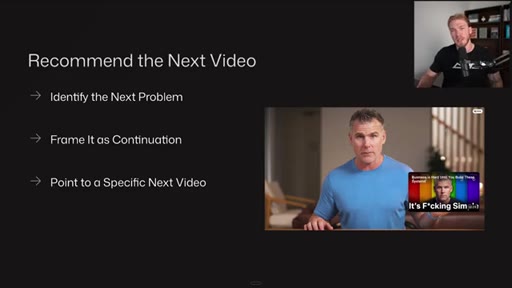
09 · C4 Convert: CTA placement and next-video recommendation
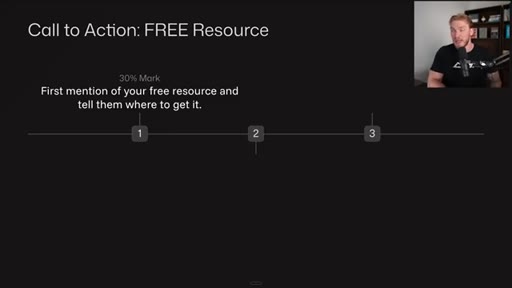
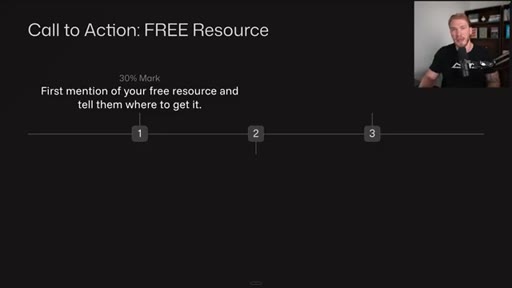
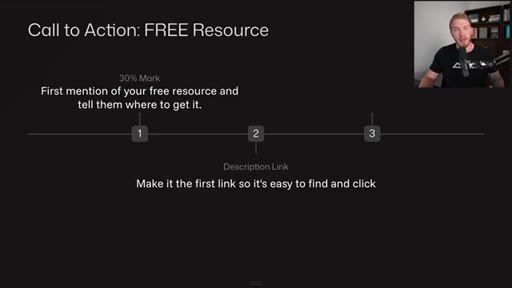
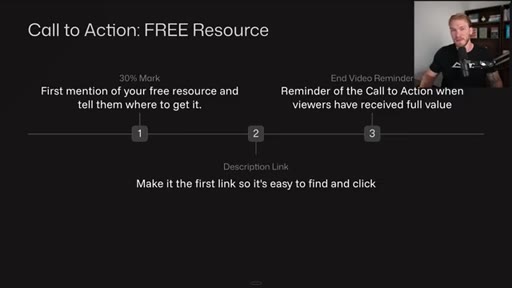
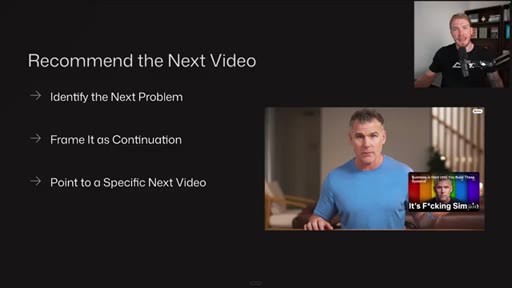
Free resource at 30 percent mark doubles opt-ins. First link in description. Remind at the end. One specific next-video framed as the next logical step.
Visual structure at a glance.
Named ideas worth stealing.
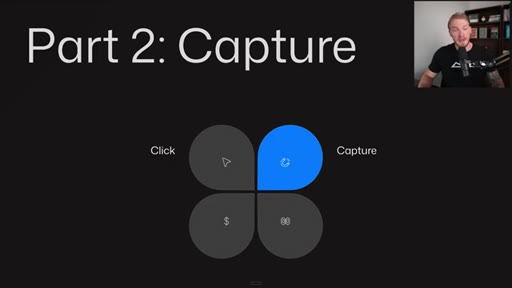
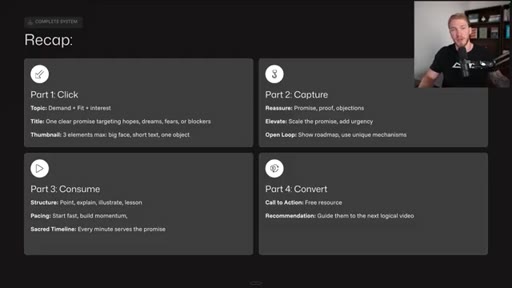
The Four Cs of YouTube
- Click
- Capture
- Consume
- Convert
Four sequential problems every YouTube video must solve in order. Each C has its own sub-framework.
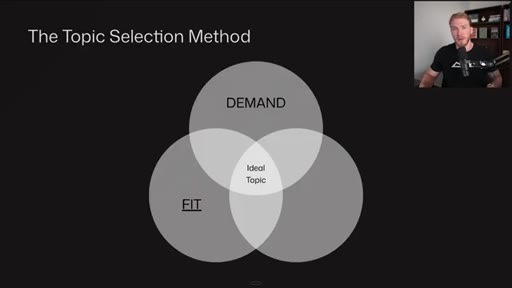
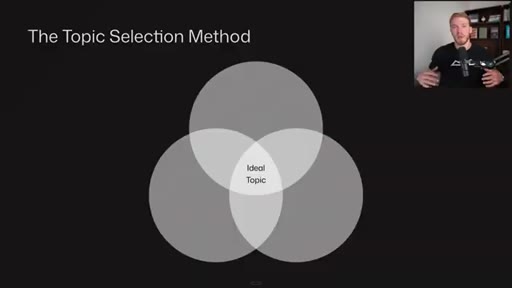
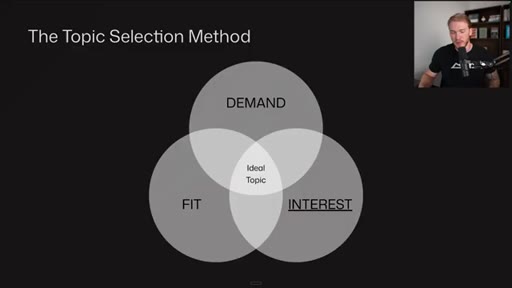
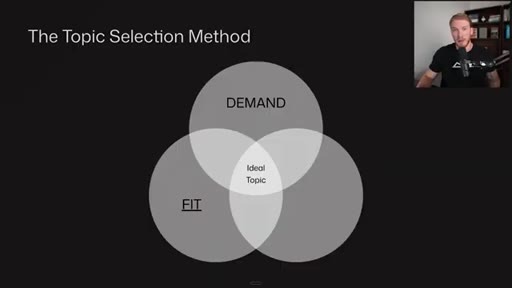
Topic Validation Filter
- Demand (TAM)
- Fit (CCN)
- Interest (creator)
All three must be present. Missing any one leads to low views, no audience fit, or unsustainable content.
CCN Fit
- Core audience
- Casual audience
- New audience
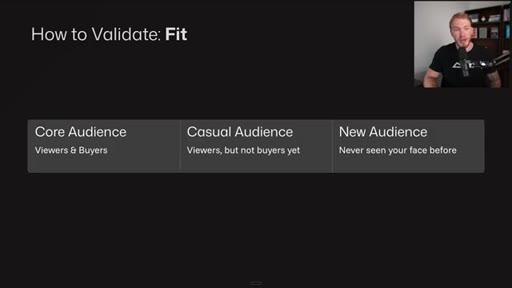
Attributed to Paddy Galloway. Topic must serve all three tiers simultaneously to earn loyal viewers and viral reach.
4 Emotional Title Angles
- Hopes
- Dreams
- Fears
- Blockers
Each angle packages the same topic differently. Know which your audience responds to best before defaulting to aspirational.
Thumbnail 3-Element Rule
- Big face with clear emotion
- Short text 3-5 words
- One concept visual
Never repeat the title on the thumbnail. Use both as independent emotional hooks.
Hook REO Formula
- Reassure
- Elevate
- Open Loop
First 30 seconds must do all three: promise plus proof plus objections, scale with bonus and urgency, blurred roadmap plus unique mechanism name.
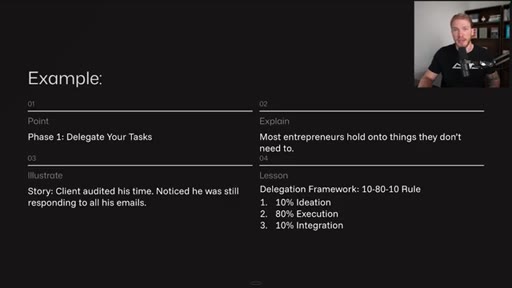
PEIL Framework
- Point
- Explain
- Illustrate
- Lesson
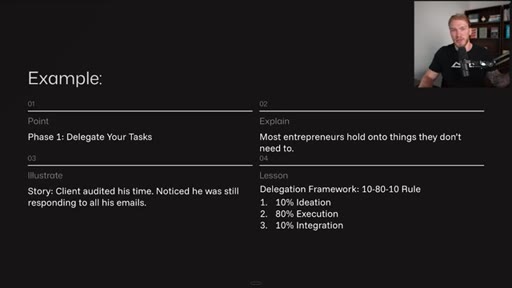
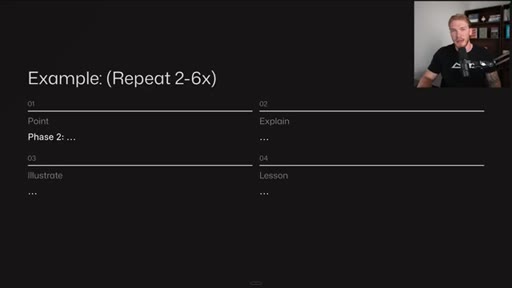
The unit of value delivery inside a video. Repeat 2 to 6 times. Each cycle is one teachable point with story or analogy and an actionable step.
Asymmetric Pacing
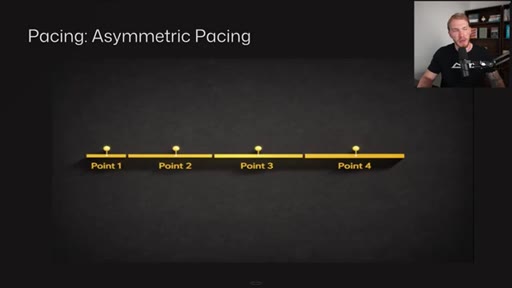
Points get progressively longer. Creates early sense of momentum that holds viewers through deeper, slower content later.
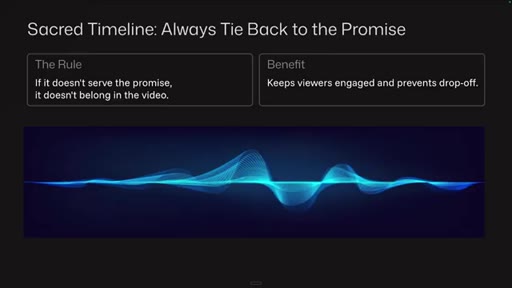
Sacred Timeline
Cut anything that does not serve the stated promise. Re-anchor to the promise every 30 to 60 seconds.
Lines you could clip.
"YouTube is not about looks, not about timing, not about fancy equipment. It is about following a simple system."
"I can make a video about getting abs in ninety days and I can make a video about how to grow a B2B SaaS company — same everything — the abs video is gonna perform a lot better. Why? Because of TAM."
"If it does not serve the promise of the video, it does not belong in the video."
"The average retention on a YouTube video is around 30 percent. That means 60 to 75 percent of people never see your CTA if you only put it at the end."
Things they pointed at.
How they asked for the click.
"If you want my free YouTube scripting template, find me on Instagram, message me the word YouTube, and I will send you the free resource."
Teased in the hook at 0:22, mentioned again at 13:13, delivered at 22:16. Classic open-loop CTA — the free resource is the loop opened in the first 30 seconds.
Word for word.
Four problems, four systems, one repeatable playbook.
YouTube growth stalls not from bad production but from skipping the four sequential problems every video must solve before a viewer becomes a subscriber or a buyer.
- Topic selection is the highest-leverage variable in YouTube — total addressable market, not editing quality, is why one video outperforms another with identical production.
- Validate every topic against three filters before filming: enough demand through outlier research, fit with all three audience tiers (core, casual, new), and genuine creator interest.
- A title and a thumbnail are two independent emotional levers — using one to repeat the other wastes half the click-through opportunity.
- Match the facial expression on your thumbnail to the emotional angle of your title — a fearful title with a smiling face disconnects viewers before they click.
- The first 30 seconds of a video must do three distinct jobs: reassure the viewer they are in the right place, establish why they should trust you, and open a curiosity loop that pulls them to the end.
- Blurring a step-list on screen is a proven retention device — visible but unread steps create completion anxiety that keeps viewers watching.
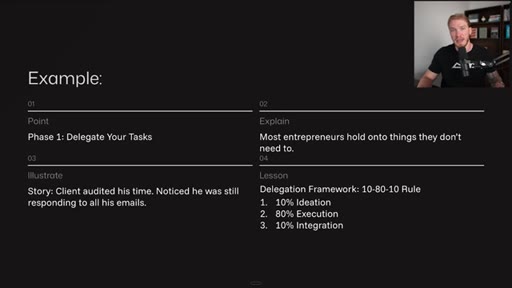
- PEIL (Point, Explain, Illustrate, Lesson) is the unit of value delivery: name the idea, explain why it matters, illustrate with story or analogy, give an actionable step, and repeat 2 to 6 times.
- Asymmetric pacing — short first point, progressively longer subsequent points — creates an illusion of fast early progress that holds retention through slower, deeper content later.
- Moving a free-resource CTA from the end of a video to the 30 percent mark doubles opt-ins because average retention rarely gets viewers to the final segment.
- A next-video recommendation only converts binge-watchers when it is framed as the next logical step in the viewer journey — one specific video, not a menu of options.