The bait, then the rug-pull.
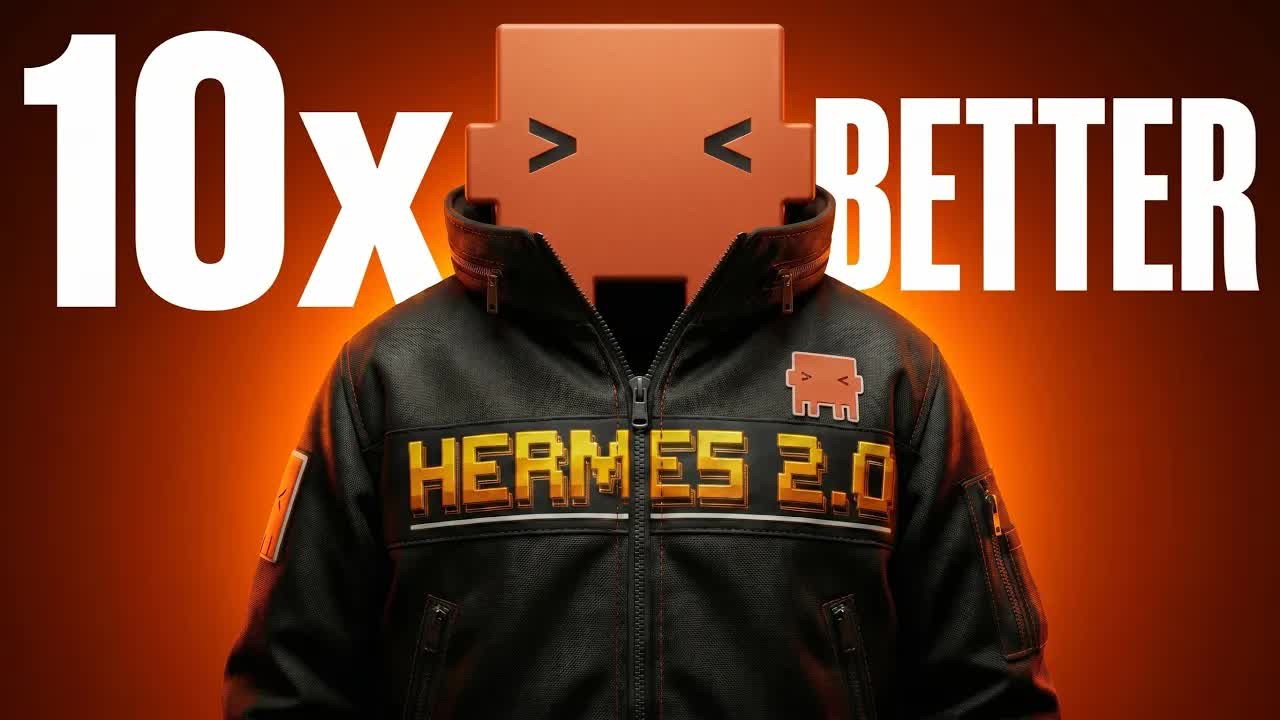
Forty thousand GitHub stars in forty-six days. Before Simon Scrapes installed a single line of Hermes, he did something most people skip: he read through the issues. What he found convinced him to rebuild the parts he wanted instead — and the result turned out ridiculously good, not because it beats Hermes, but because he owns every layer of it.
What the video promised.
stated at 00:46 "I'm gonna show you the exact Hermes features I rebuilt inside Claude Code and the parts I deliberately skipped and why understanding the architecture underneath gives you way more leverage long term" delivered at 11:00
Where the time goes.
01 · Cold open + promise
Hermes velocity stat → 'I read through the issues' → thesis: rebuild don't install → what this video covers
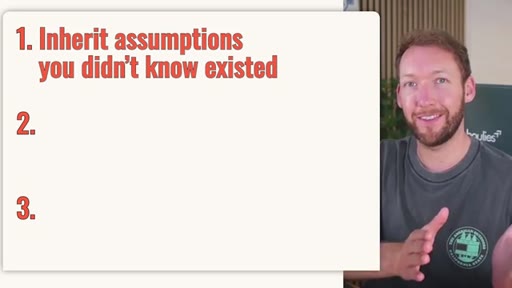
02 · Cost #1 — Inherited assumptions
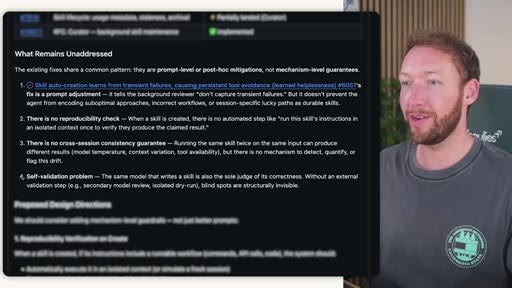
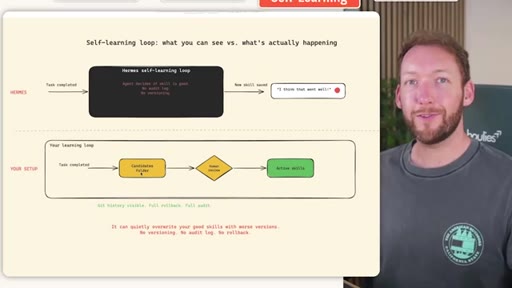
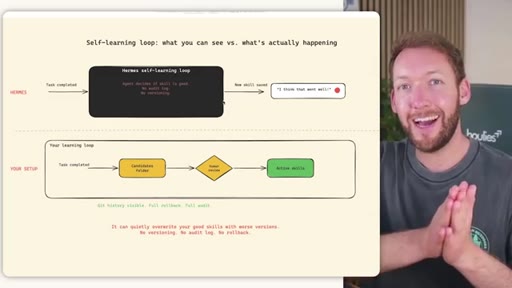
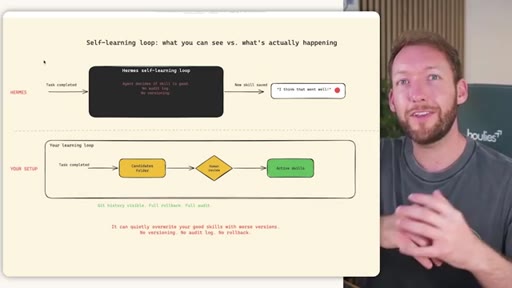
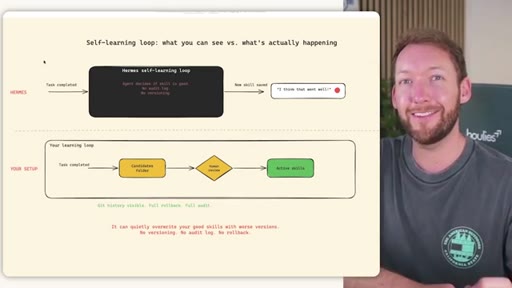
The self-learning loop grades its own homework. No external validation. Can silently overwrite your good work with no audit log.
03 · Cost #2 — Can't fix what you don't own
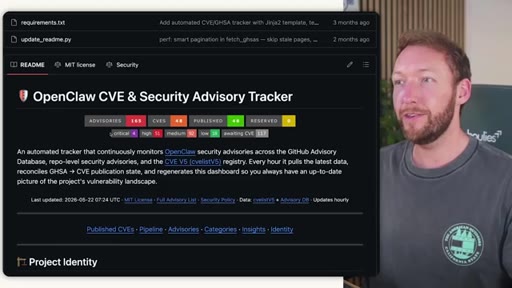
OpenClaw: 200+ CVEs filed since February, 386 malicious packages from one threat actor. You're debugging someone else's code.
04 · Cost #3 — Doesn't scale across clients
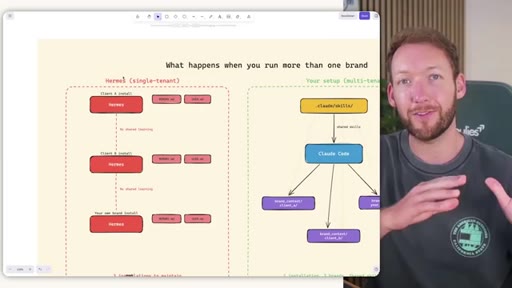
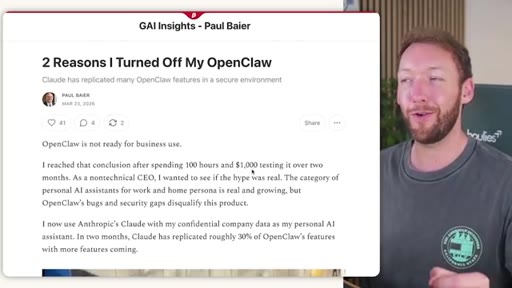
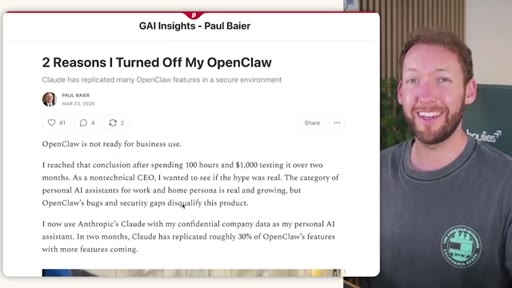
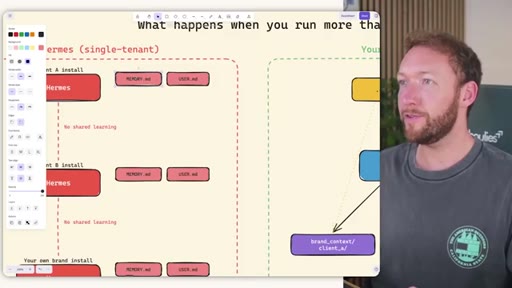
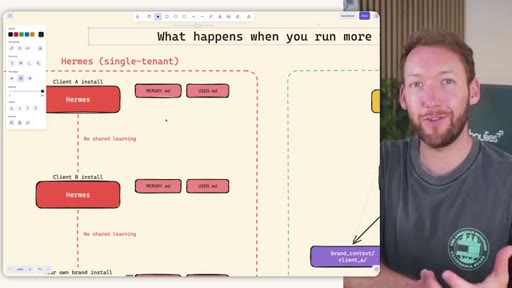
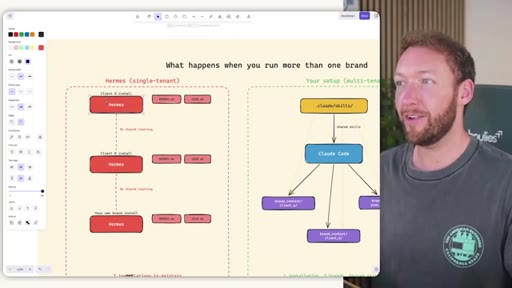
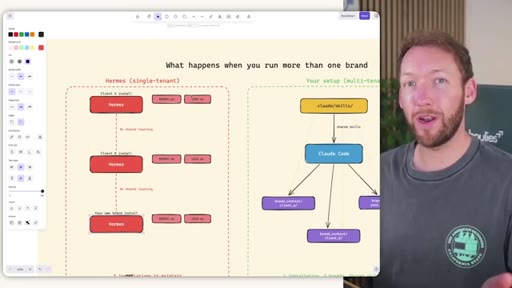
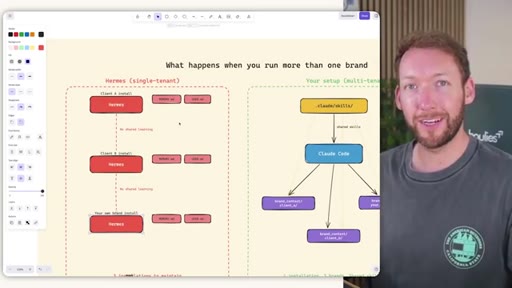
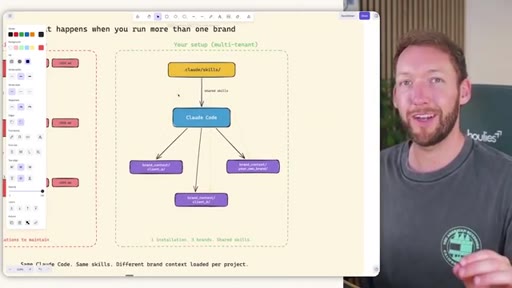
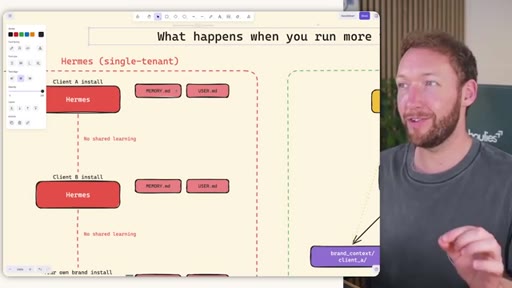
Paul Baier (nontechnical CEO) spent 100+ hours and $1,000+ testing OpenClaw. Hermes is single-tenant by design — separate install per client.
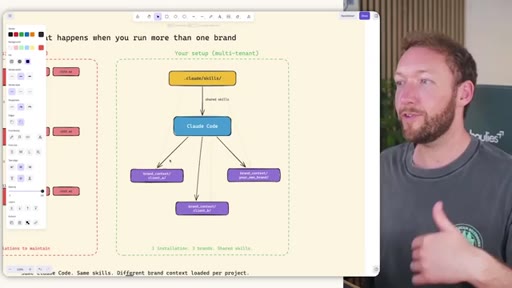
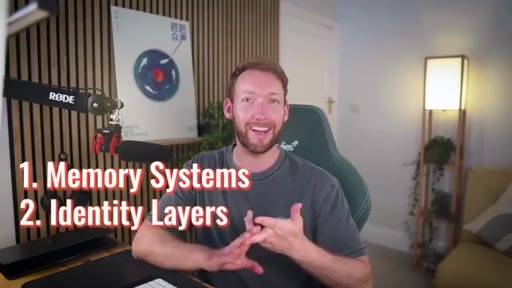
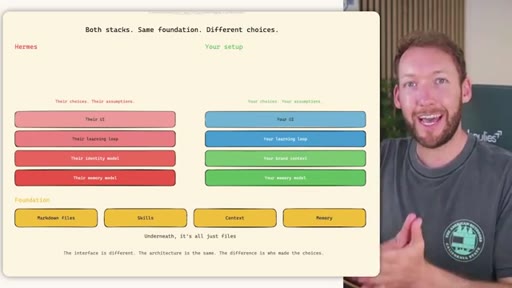
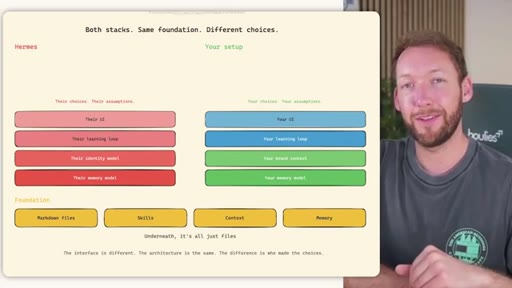
05 · What he rebuilt: Identity layer
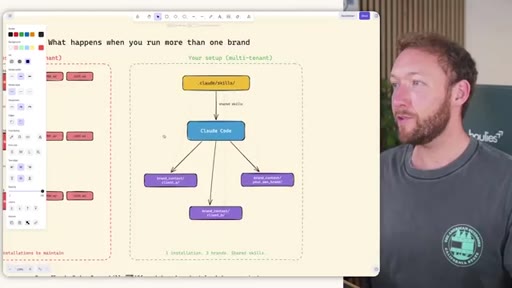
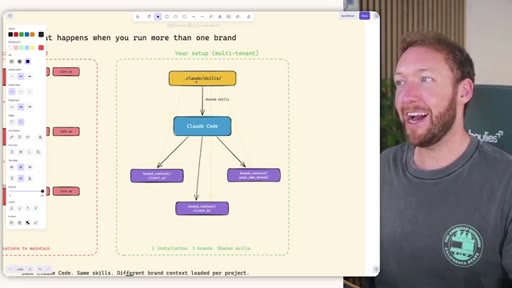
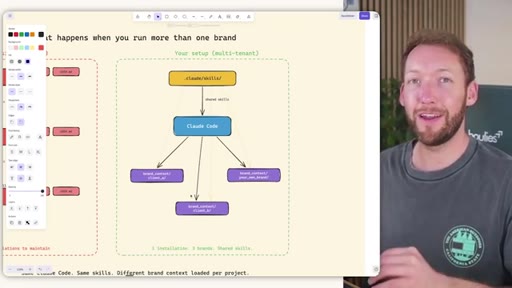
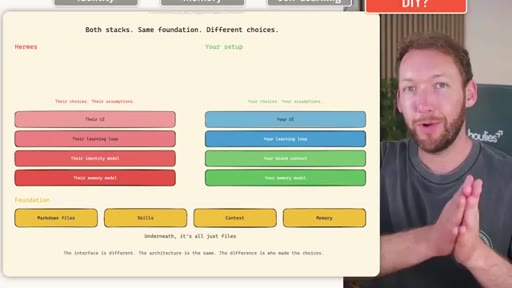
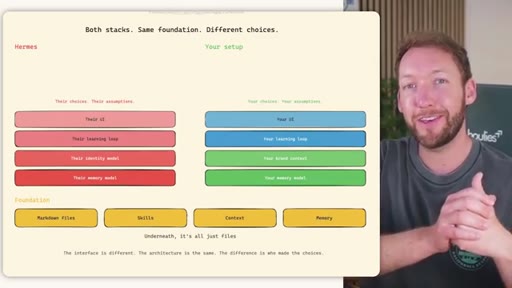
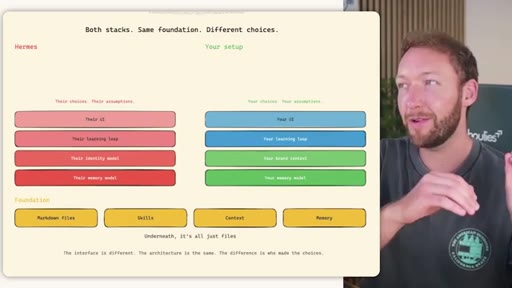
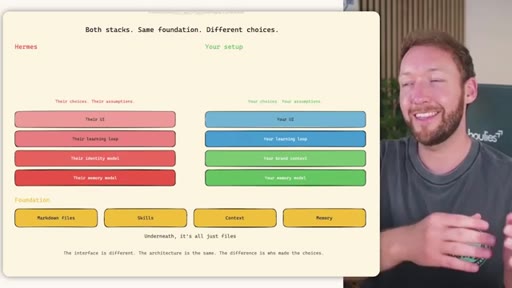
Keeps user.md + memory.md from Hermes but adds per-client brand context folders — voice, ICP, positioning, visual identity — that share procedures across clients.
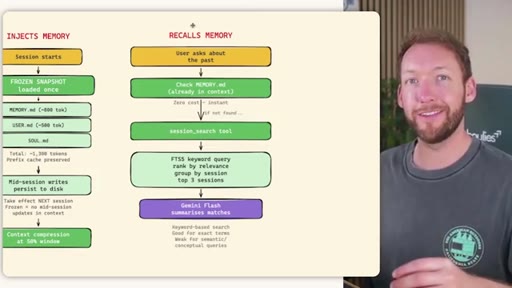
06 · Memory system
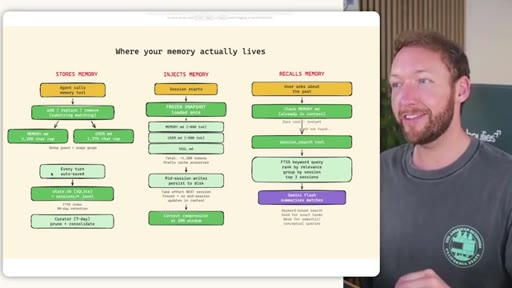
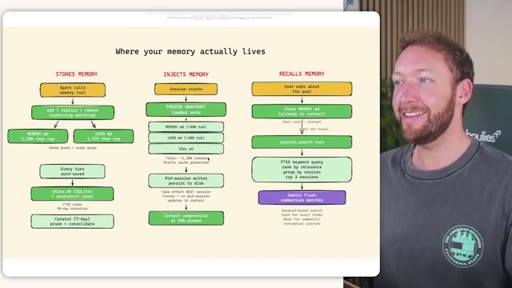
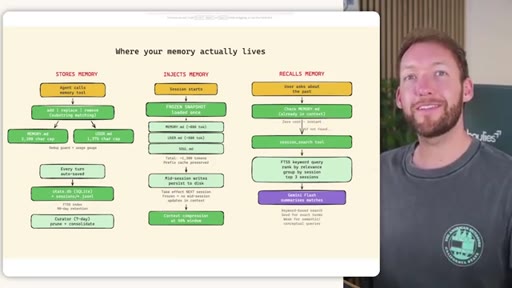
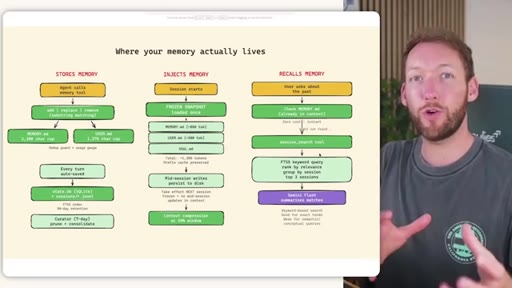
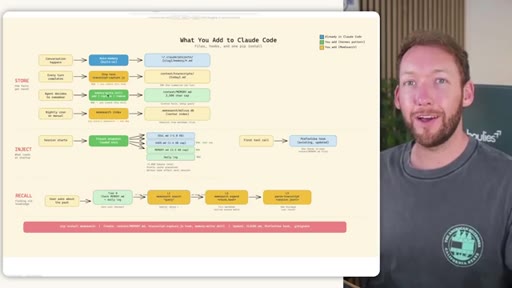
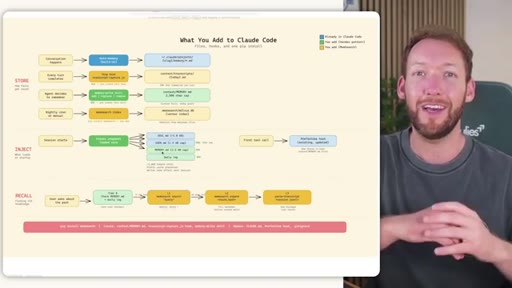
Keeps Hermes's capped injection (~1,300 char memory.md) but replaces keyword long-term search with MemSearch (semantic/meaning-based recall).
07 · Self-learning loop critique + skill systems
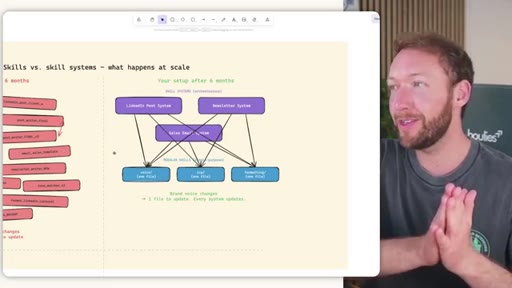
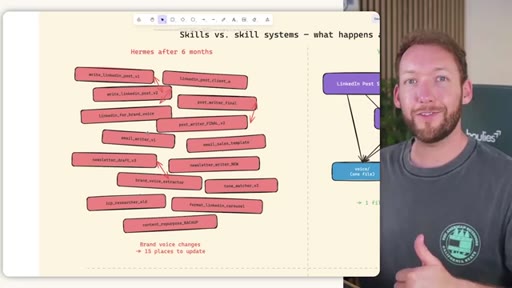
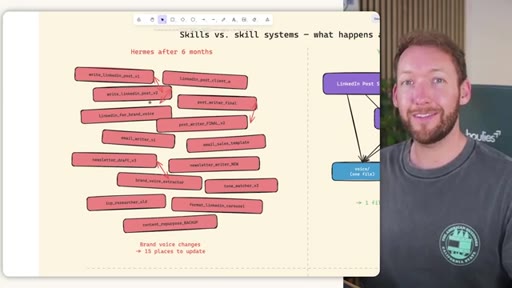
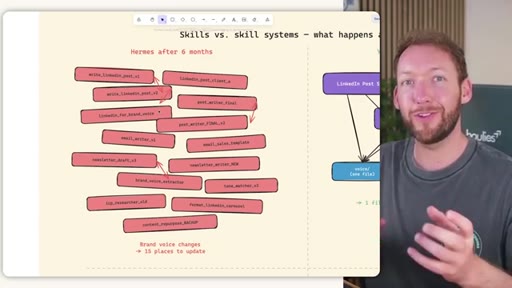
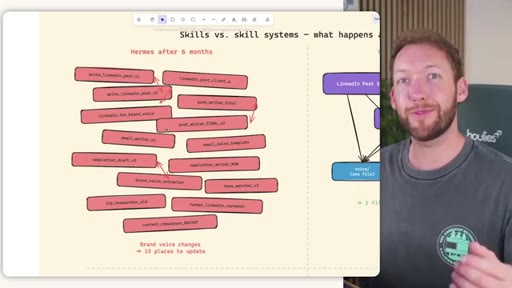
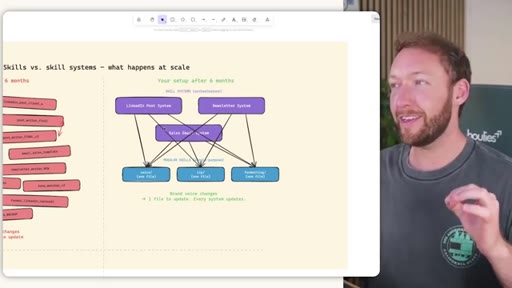
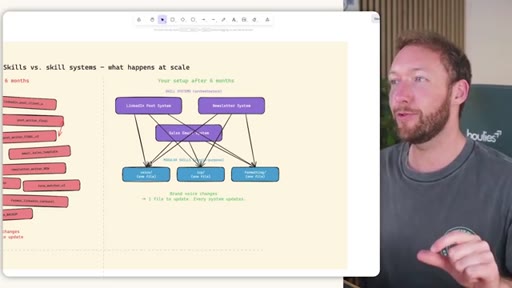
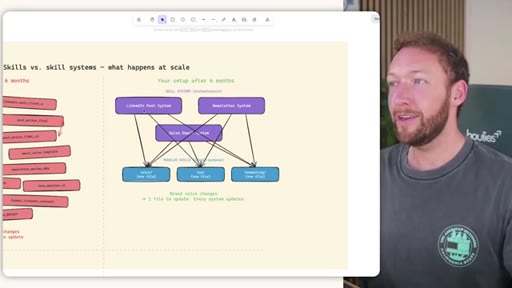
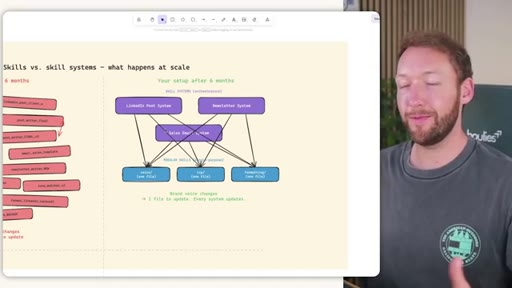
Hermes auto-generates new skills but ends up with 15 near-duplicate LinkedIn skills with no deduplication or version control. Solution: modular skill components that chain together.
08 · Build vs. buy trade-off + CTA
Honest framing: faster to start with Hermes, faster to scale with your own. Neither is right for everyone. CTA to AgenTek Academy.
Visual structure at a glance.
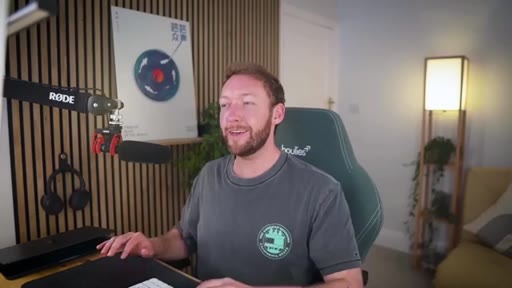
Named ideas worth stealing.
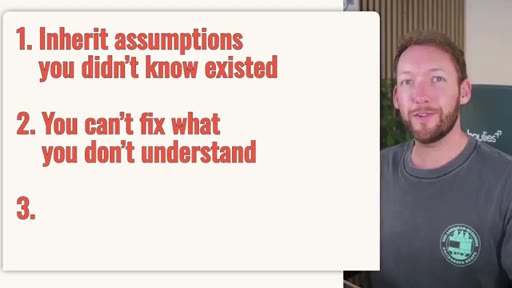
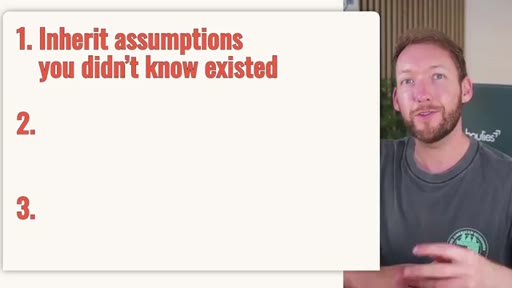
Three Hidden Costs of Off-the-Shelf Agentic OS
- Inherit assumptions you didn't know existed (self-validation problem)
- Can't fix what you don't understand (debugging someone else's code)
- Doesn't scale across your business (single-tenant architecture)
Structured argument for why OpenClaw/Hermes have fundamental architectural issues that only surface once you're committed.
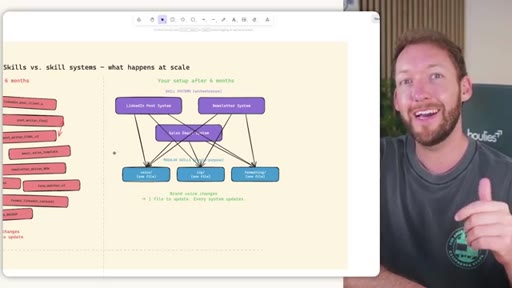
Skill Systems (modular composition)
- Voice lives in one file
- ICP lives in one file
- Formatting lives in one file
- Skill system chains them together in the right order
Each skill is a modular component that feeds into a skill system. One update propagates everywhere. Contrasts with Hermes's auto-generated skills that accumulate as near-duplicates.
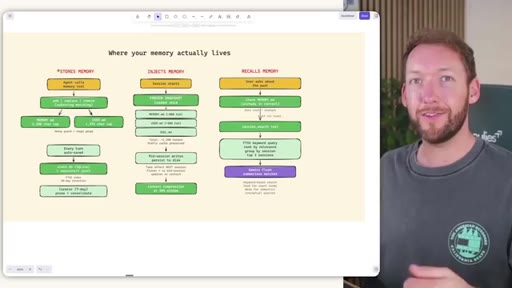
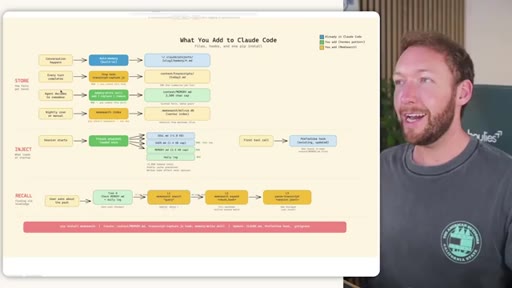
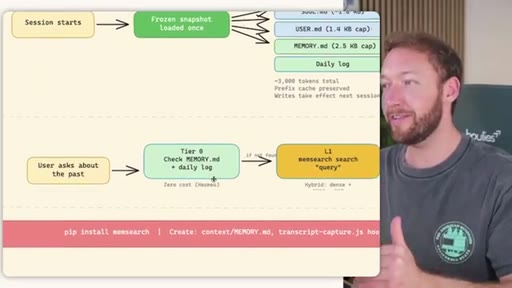
Memory Hierarchy (Hermes-compatible)
- Storage: auto-save + summarize every conversation
- Injection: memory.md capped at ~1,300-2,500 chars per session
- Short-term recall: injected context checked first
- Long-term recall: MemSearch (semantic) not keyword search
Keep what Hermes gets right (capped injection) and replace what it gets wrong (keyword-only long-term recall).
Lines you could clip.
"You inherit somebody else's architecture, their assumptions, and therefore their problems too. You can't fix what you don't understand underneath."
"The same model that writes the skill is also the sole judge of its correctness."
"Hermes may be faster to start, but your own setup is actually gonna be faster to scale."
"A skill is a modular component that feeds into a skill system. Each one does one job. It lives in one place."
"When your brand voice does shift, you just have one file to update and then every skill system that uses that is gonna pull from that single file. So it's infinitely maintainable and scalable."
How they spent the runtime.
How they asked for the click.
"if you want my exact Agentic OS, it's inside the AgenTek Academy in the description below. And it's basically installed in one line, get it up and running today."
Soft sell, earns the right with a full teardown before pitching. No hard close. Immediately pivots to 'watch the next video' as a secondary CTA.
Word for word.
The modular OS beats the installed one.
Hermes is faster to start; your own setup is faster to scale — and the hidden costs of someone else's architecture only surface once you're already committed.
- Use Simon's three-hidden-costs structure verbatim for any 'why I stopped using X SaaS' video — it works for any AI tool critique.
- The self-validation problem ('grading your own homework') is a clean, quotable metaphor for any content about AI blind spots.
- The modular skill system idea directly maps to Joe's own setup: voice.md, ICP.md, format.md as separate source-of-truth files that compose into skill systems.
- Simon's multi-client identity layer (per-client brand context folders sharing procedures) is worth shipping inside JoeFlow's Sessions panel as a named feature.
- The MemSearch upgrade (semantic vs. keyword recall) is a concrete next step for any memory system — worth researching for the JoeFlow stack.
When to build your own vs. install someone else's.
Before installing any off-the-shelf AI system, read through the issues first — the architecture you inherit is harder to escape than the features you gain.
- Any system that auto-generates its own rules without external validation will quietly degrade over time — look for that pattern before committing.
- If you run multiple projects or clients, check whether the tool is single-tenant by design; the migration cost surfaces late.
- Start with the simplest version you can understand end-to-end, then add complexity from systems you've reviewed — not from marketplaces you haven't.
- Keyword-search long-term memory is a real limitation in most current AI memory systems; prefer tools that offer semantic recall for anything older than a few sessions.