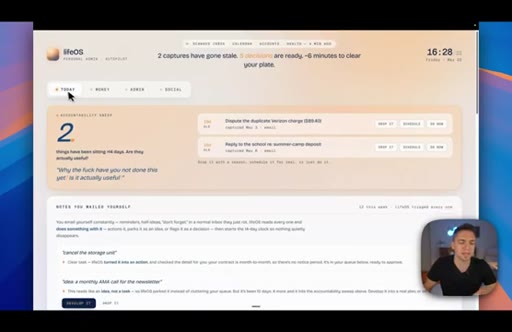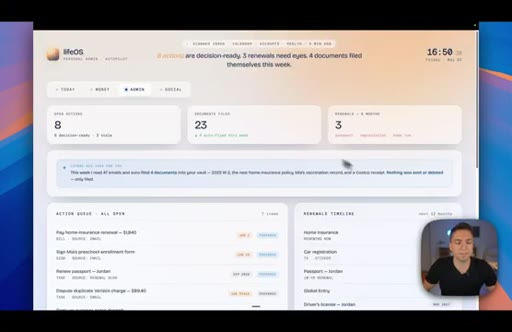

The bait, then the rug-pull.
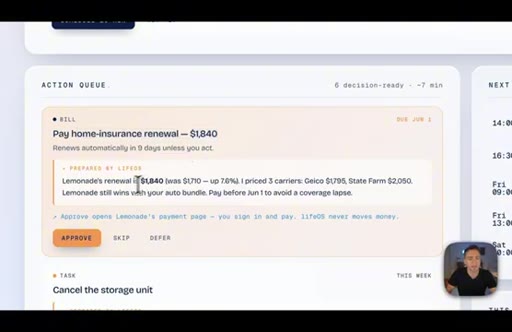
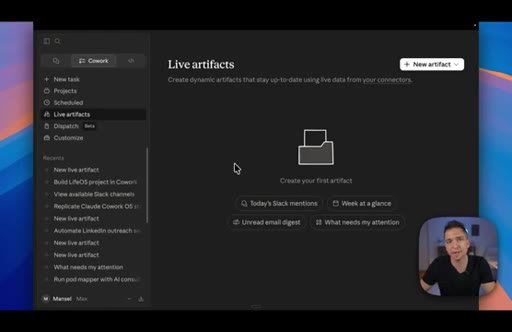
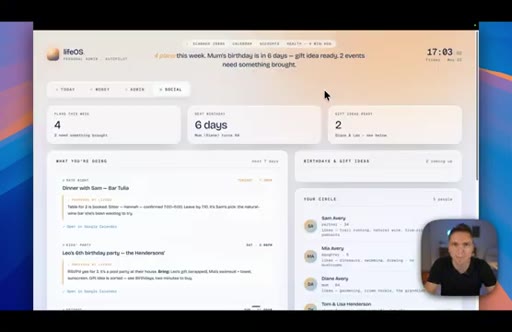
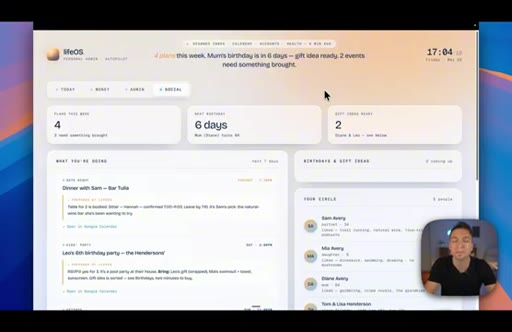
Most productivity systems tell you what to do. This one does the research, drafts the emails, compares the insurance quotes, and finds the birthday gift — then hands you a tray of approvals. Built entirely inside Claude Code with MCP connectors and a handful of custom skills, the LifeOS dashboard turns a scattered inbox into a five-minute morning ritual.
Where the time goes.

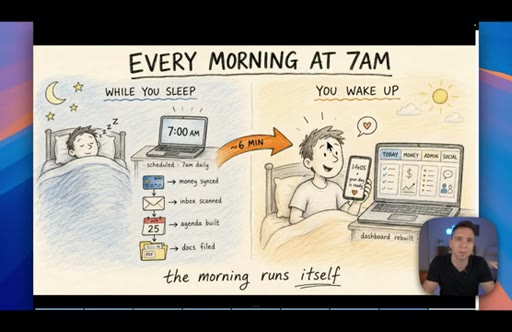
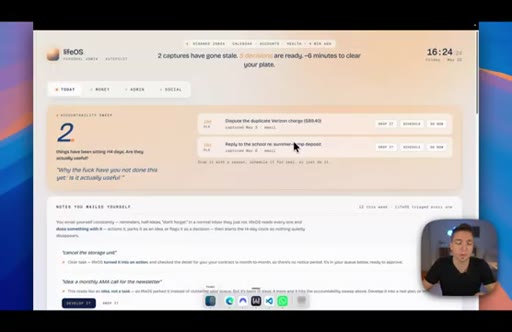
01 · The morning-brief promise
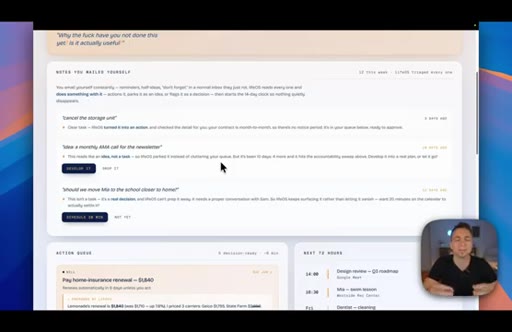
Hook: all admin pre-handled, one clean list of approvals waiting at login.
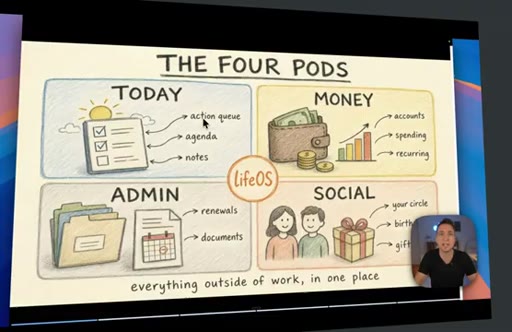
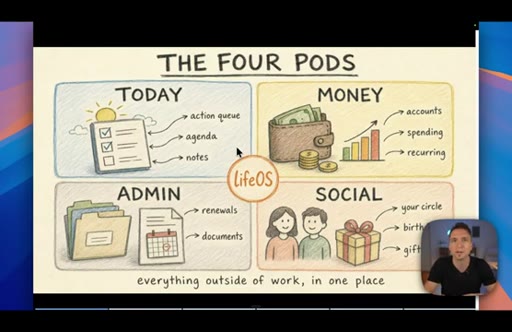
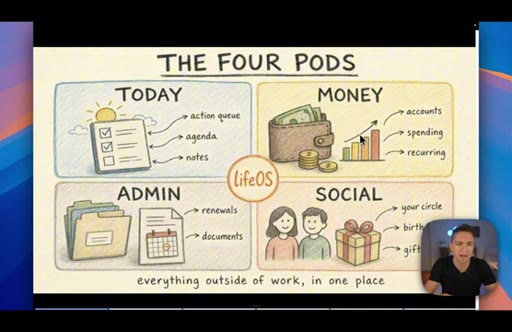
02 · The 4-pod concept
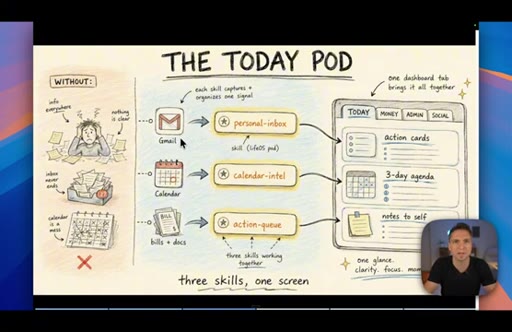
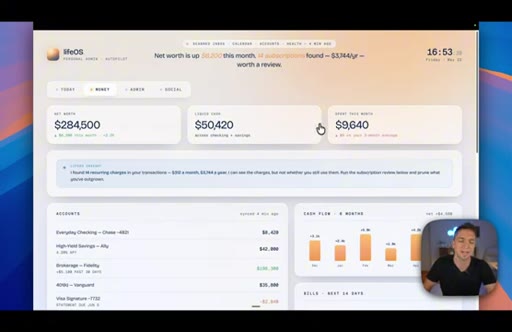
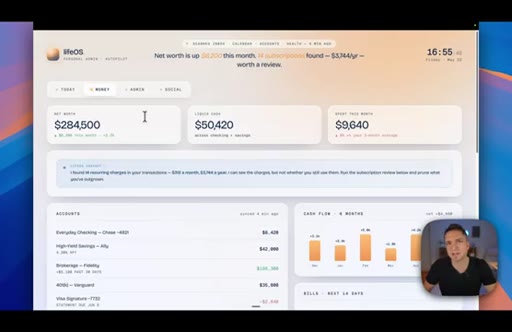
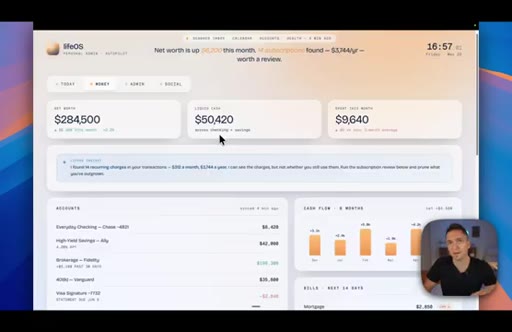
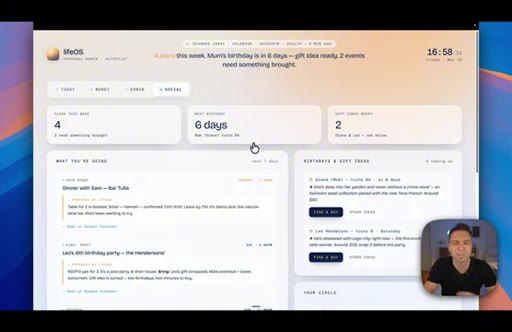
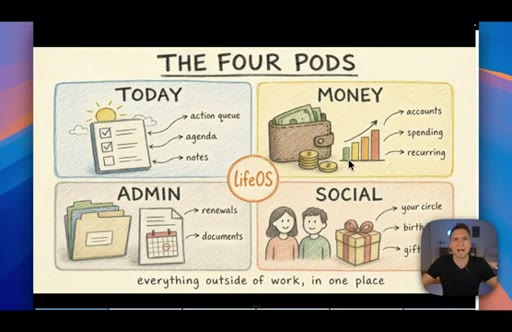
Today, Money, Admin, Social — four lanes that cover everything outside the workplace.
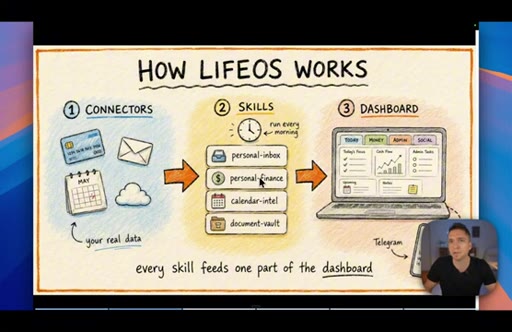
03 · How LifeOS actually works
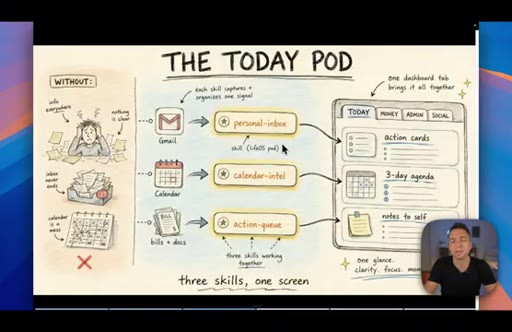
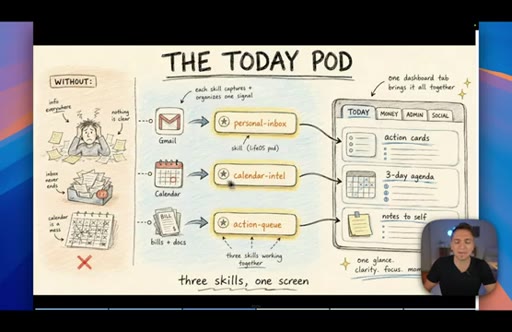
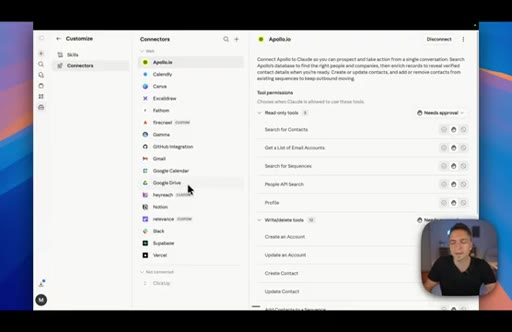
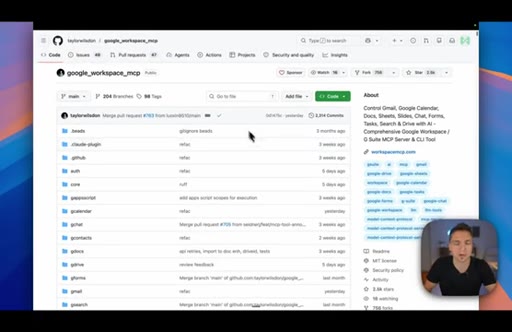
MCP connectors feed skills; skills feed the dashboard; dashboard pushes to Telegram.
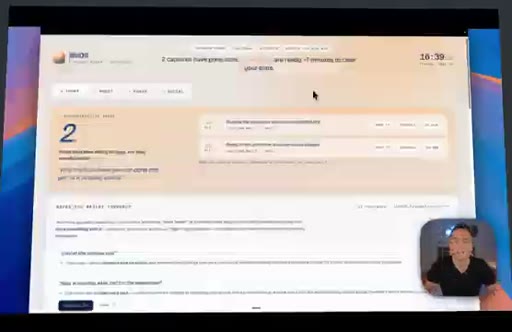
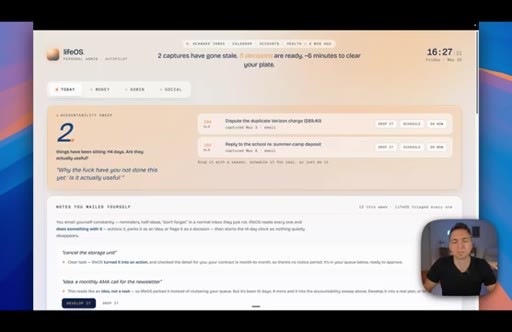
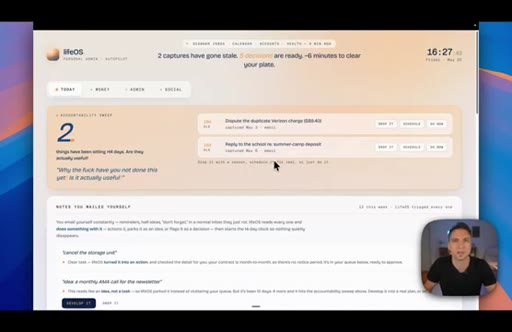
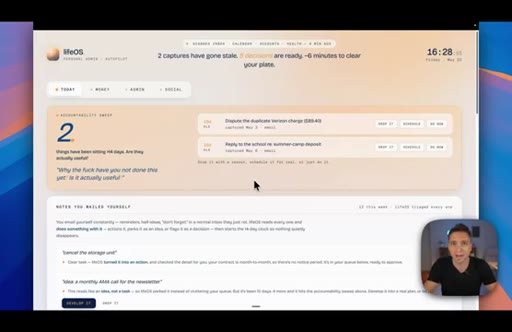
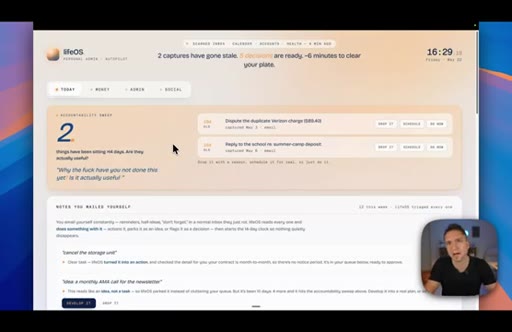
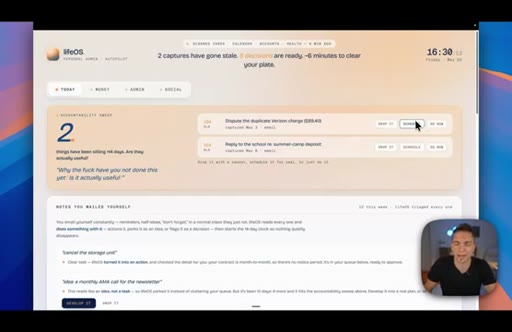
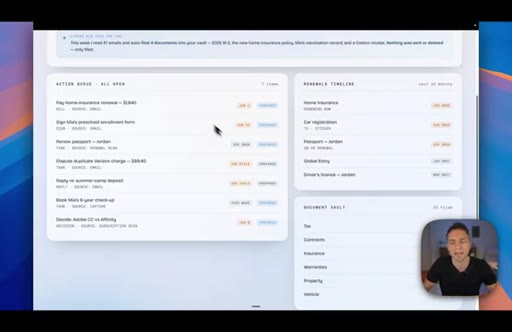
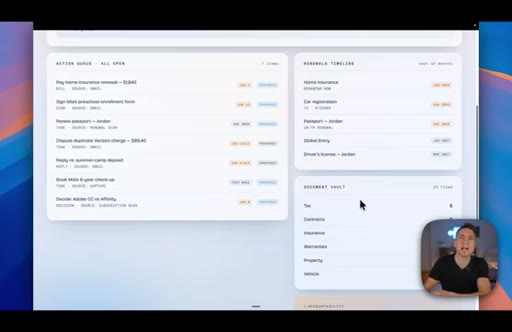
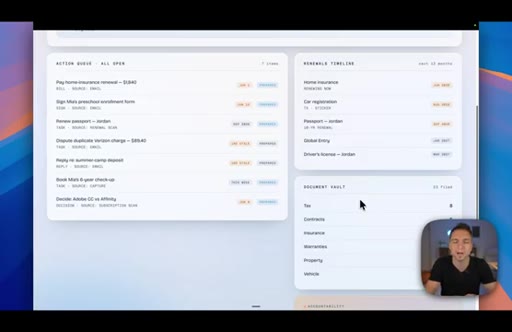
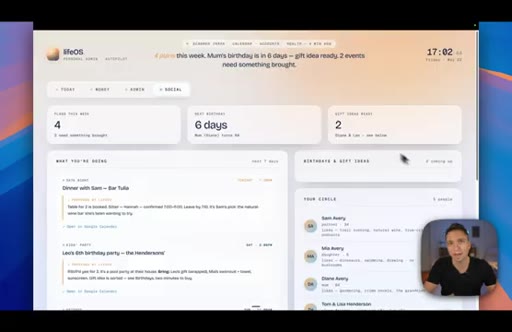
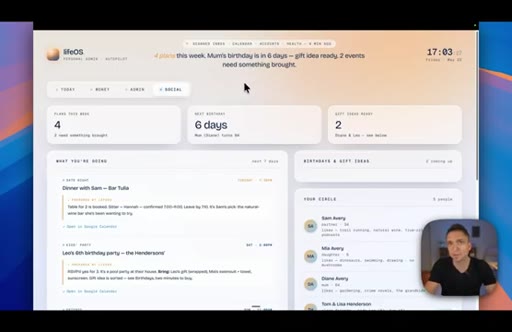
04 · Dashboard walkthrough: Today tab
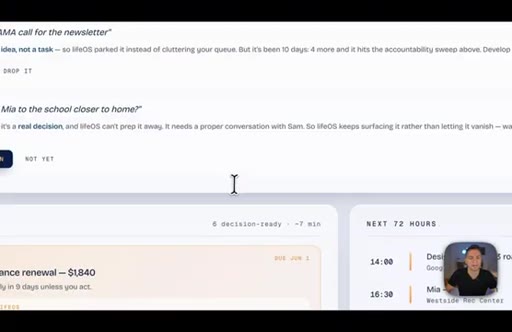
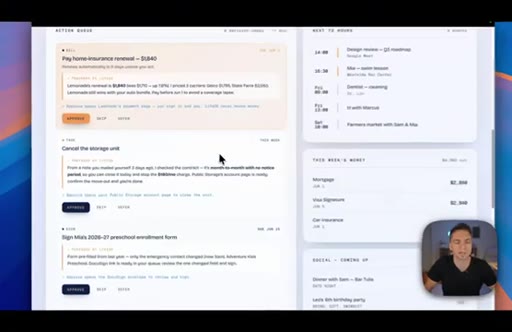
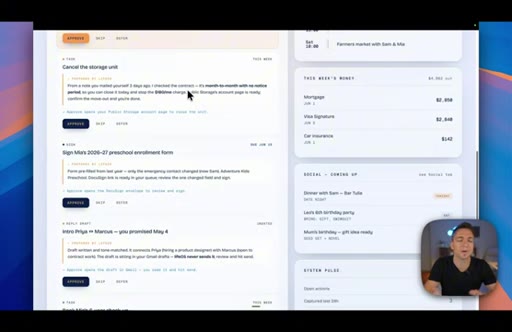
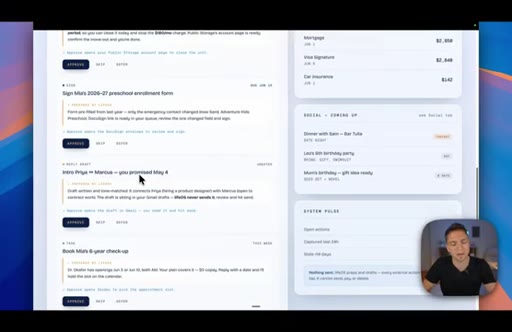
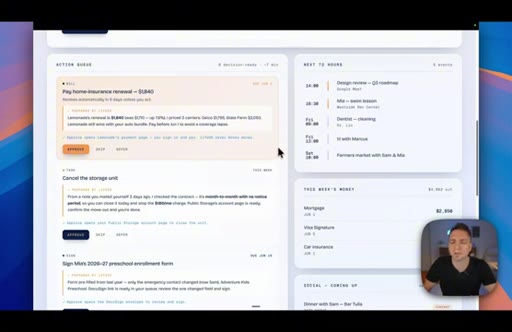
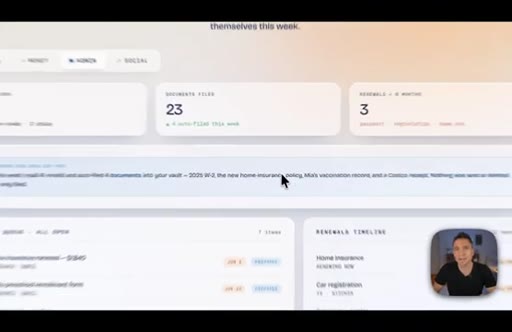
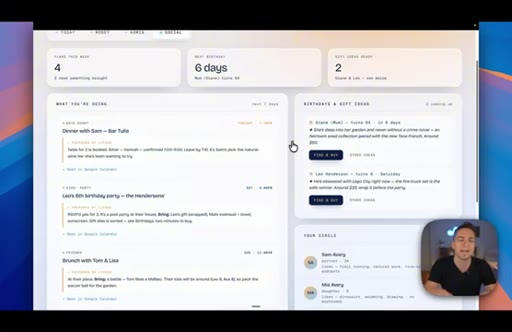
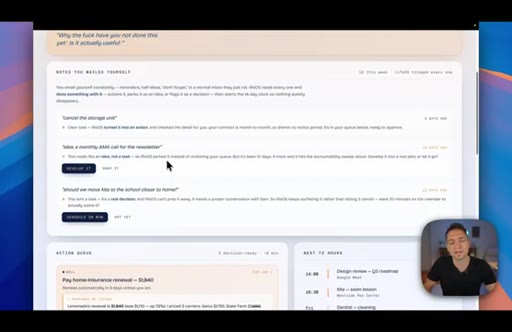
Email reminders converted to actions, action queue with Approve/Skip/Defer, 72-hour calendar view.
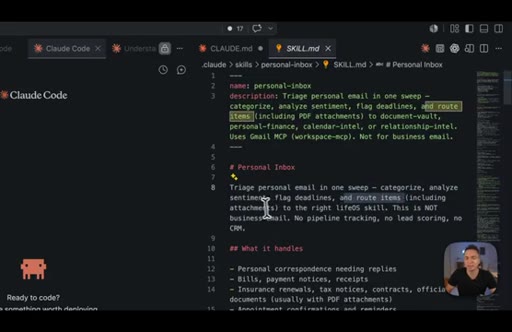
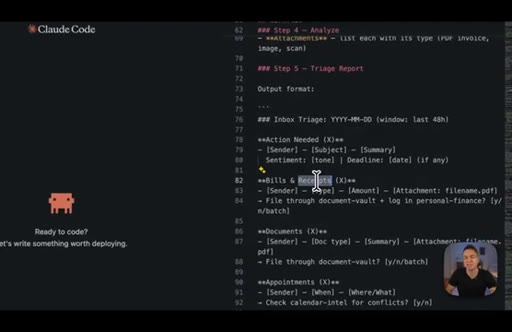
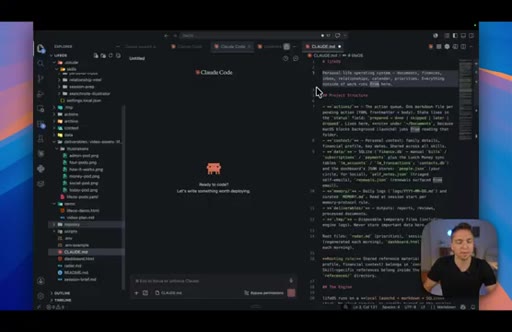
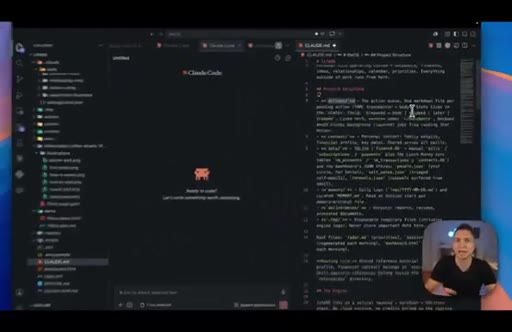
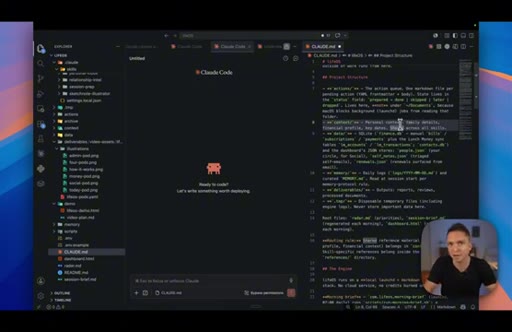
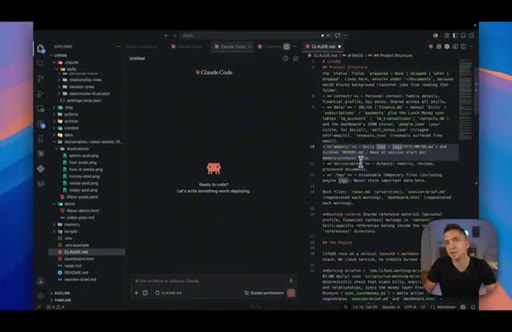
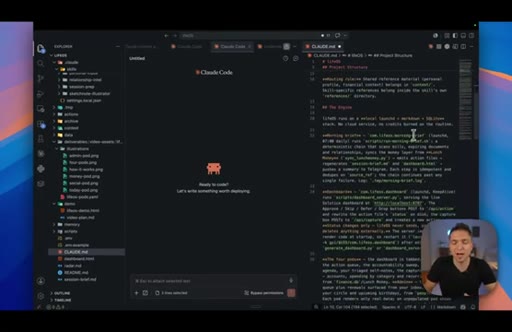
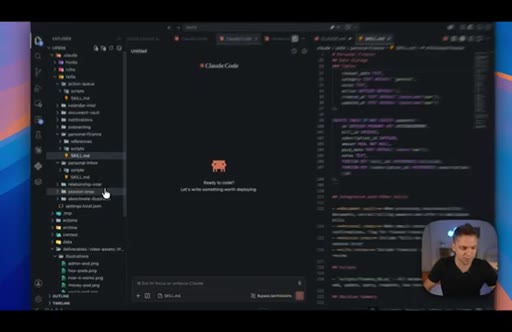
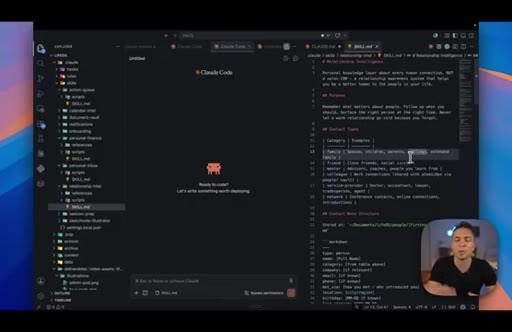
05 · Under the hood: CLAUDE.md and the personal-inbox skill
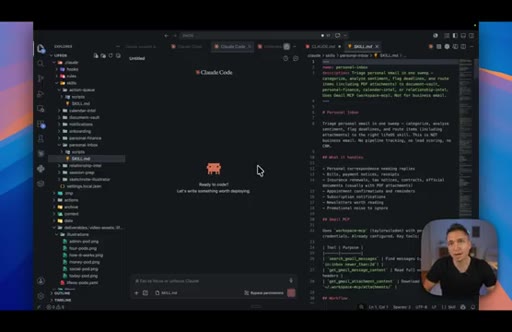
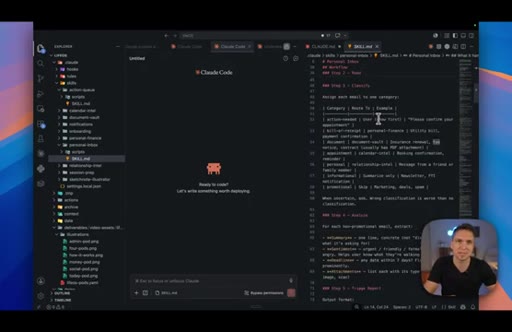
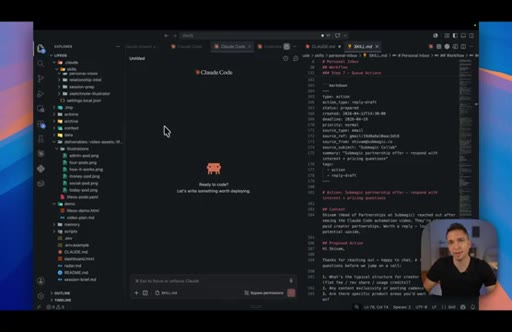
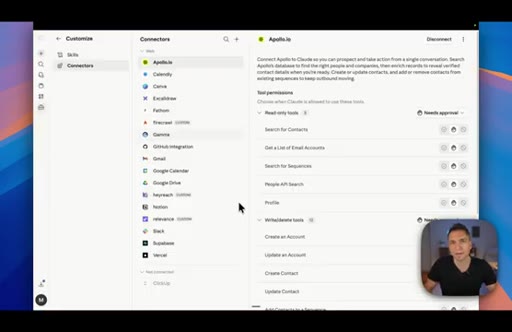
Project structure, context file, the triage skill that classifies every email and routes items by pod.
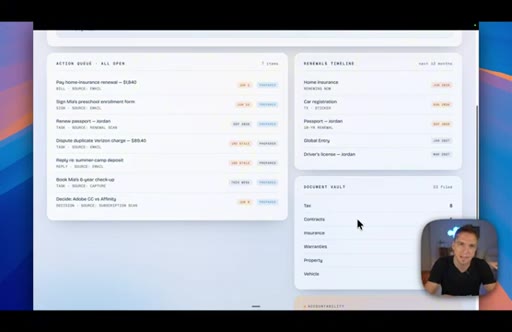
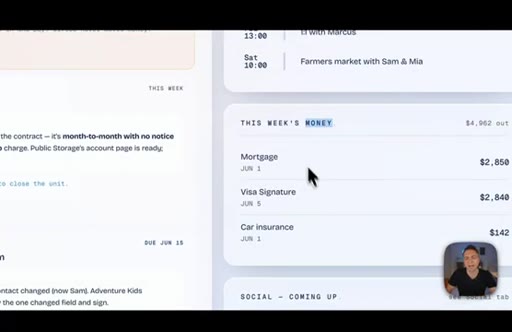
06 · Money, Admin, and Social pods
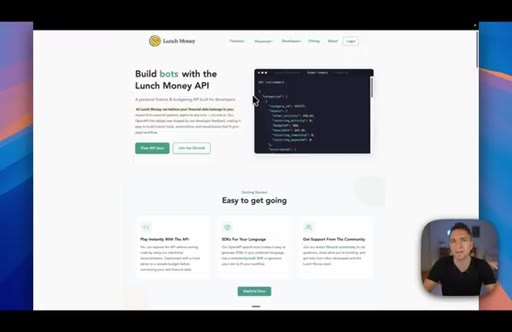
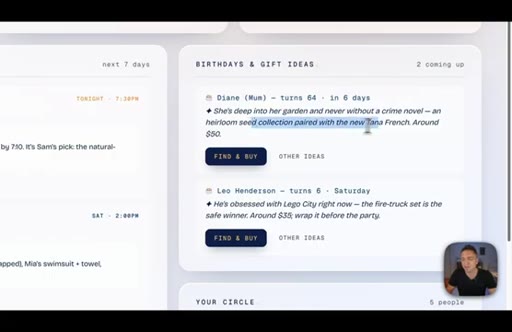
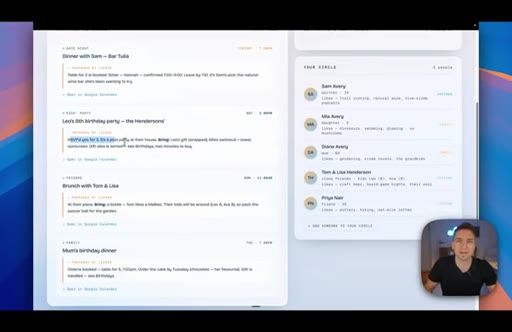
Lunch Money API for finances, document harvest for accounting, relationship-intel skill for birthdays and social events.
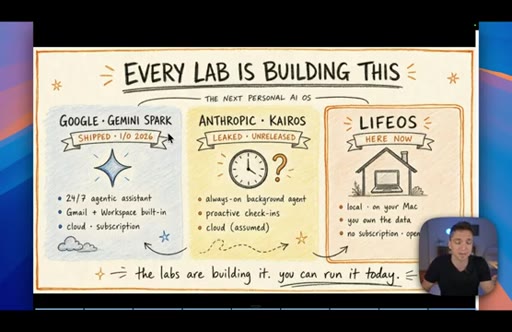
07 · The commodity argument
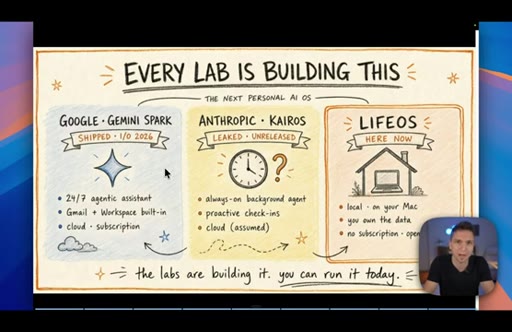
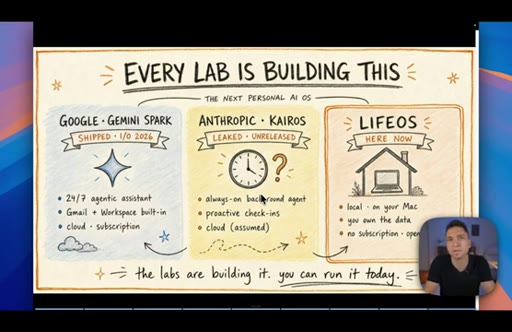
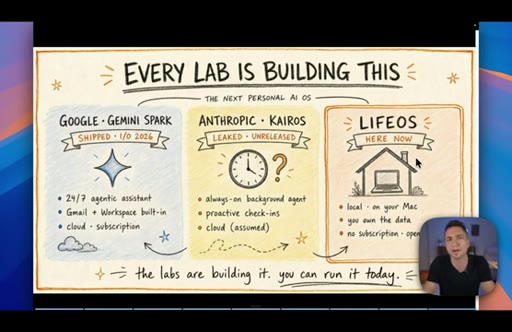
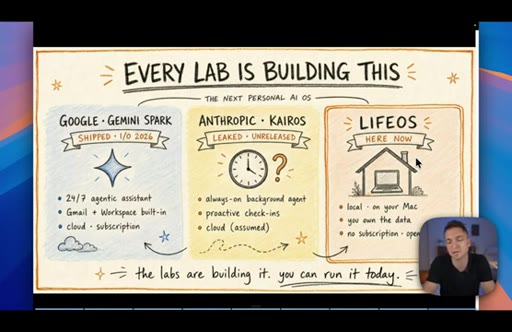
Gemini Spark and Anthropic Kairos are coming. The tool is already a commodity; domain expertise is the only durable edge.
Named ideas worth stealing.
The 4-Pod Model
- Today
- Money
- Admin
- Social
Maps all personal life admin to four non-overlapping functional lanes, each with its own data sources and skills.
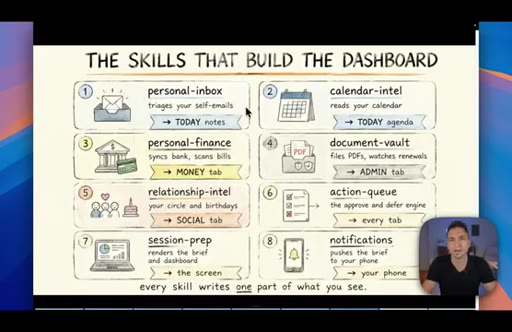
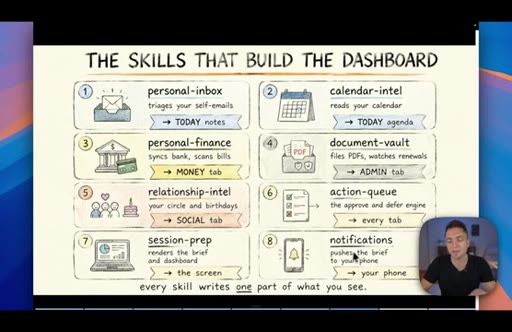
Skills-to-Dashboard Architecture
- personal-inbox
- calendar-intel
- personal-finance
- document-vault
- relationship-intel
- action-queue
- session-prep
- notifications
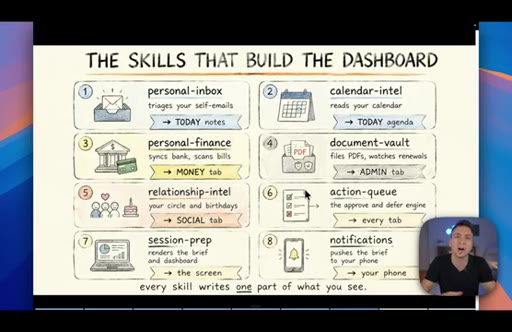
Each of the 8 skills writes to exactly one section of the dashboard; separation of concerns prevents skill conflicts.
Human-in-the-Loop Approval Model
Agent prepares and researches every action but never executes on money or communications autonomously. User sees Approve / Skip / Defer for every item.
Lines you could clip.
"I want to have a human in the loop for all of this kind of stuff. I don't trust it with anything to do with money or handling my emails. You will never write a complete email on my behalf."
"The AI operating system as itself is a commodity. Anyone can build one. That is not where your value lies."
"The value comes in your experience within a specific domain, something that makes you more valuable than the person next to you who can just talk to Claude and get this thing to build anything."
Things they pointed at.
Word for word.
Build the system that does the research, not the reminder.
An AI agent that only shows you information is just a fancier notification; the one worth building stages a decision and hands you an approve button.
- Design around a real constraint first — a pile of 33 unread Gmail reminders is the right starting point, not a feature wish-list.
- Make Gmail the single intake point for everything: invoices, bills, calendar invites, and task reminders all flow to one place so one MCP connection covers the whole system.
- Separate your skills by pod and give each one a single output destination — this is what keeps a multi-skill system debuggable when one piece breaks.
- Never let the agent act unilaterally on money or communications — staging an action for human approval is a feature, not a limitation, especially in a system you trust with financial data.
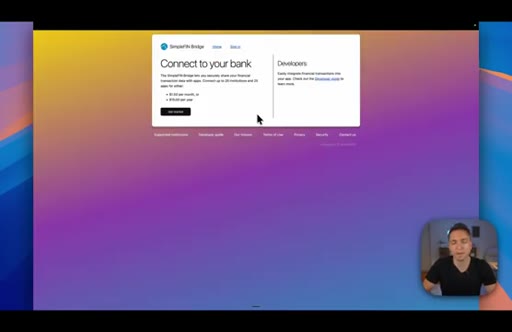
- A financial intermediary (Lunch Money, SimpleFin) is the practical path to live bank data; direct bank API access requires vetting most solo builders will not pass.
- The social pod is underrated: a skill that reads your calendar, stores relationship context, and researches birthday gifts outperforms any reminder app for the people you actually care about.
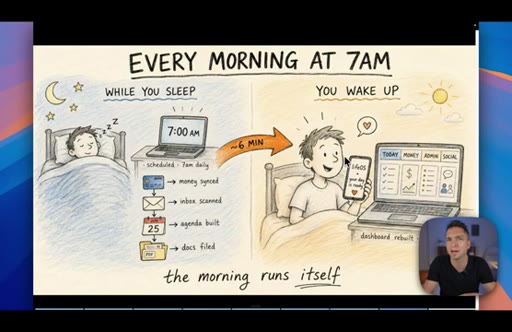
- Schedule the morning run locally at a fixed time rather than burning cloud-agent credits — five minutes on a 24/7 machine covers the same ground for free.
- The commodity warning applies to every AI tool you consider productizing: by the time you have shipped it, a well-funded lab will have shipped a native version. The defensible version is built for a specific domain you know deeply.