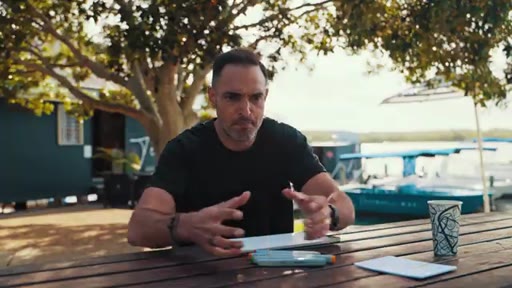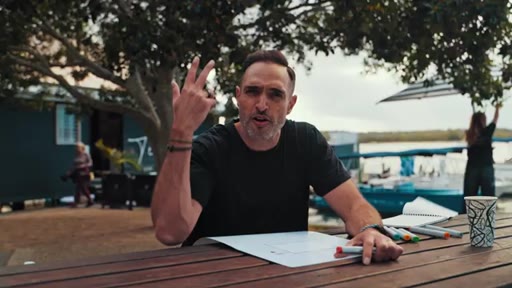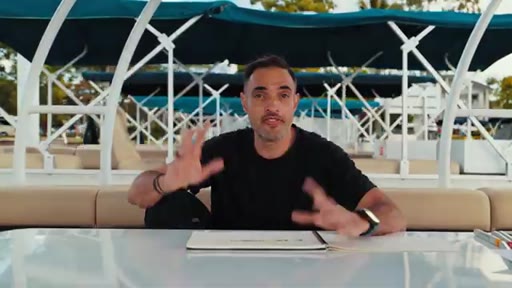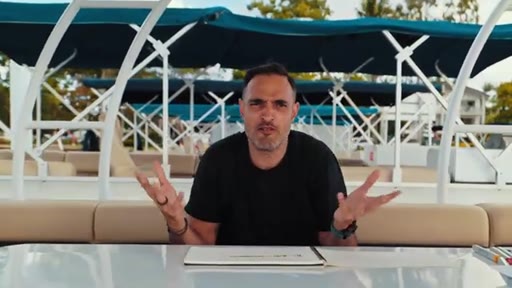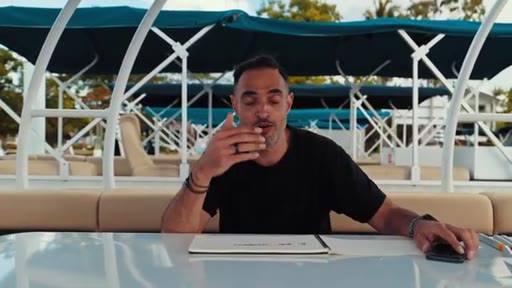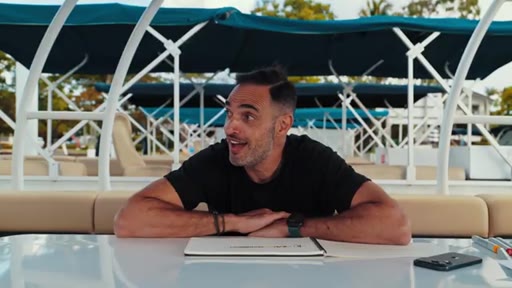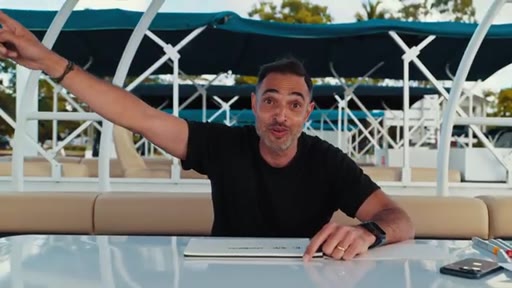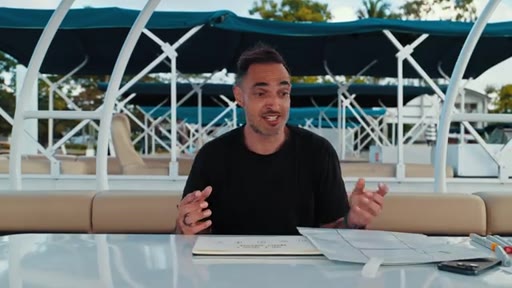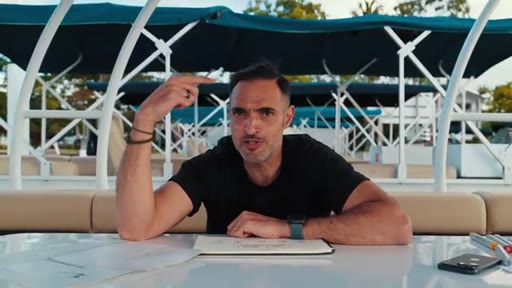
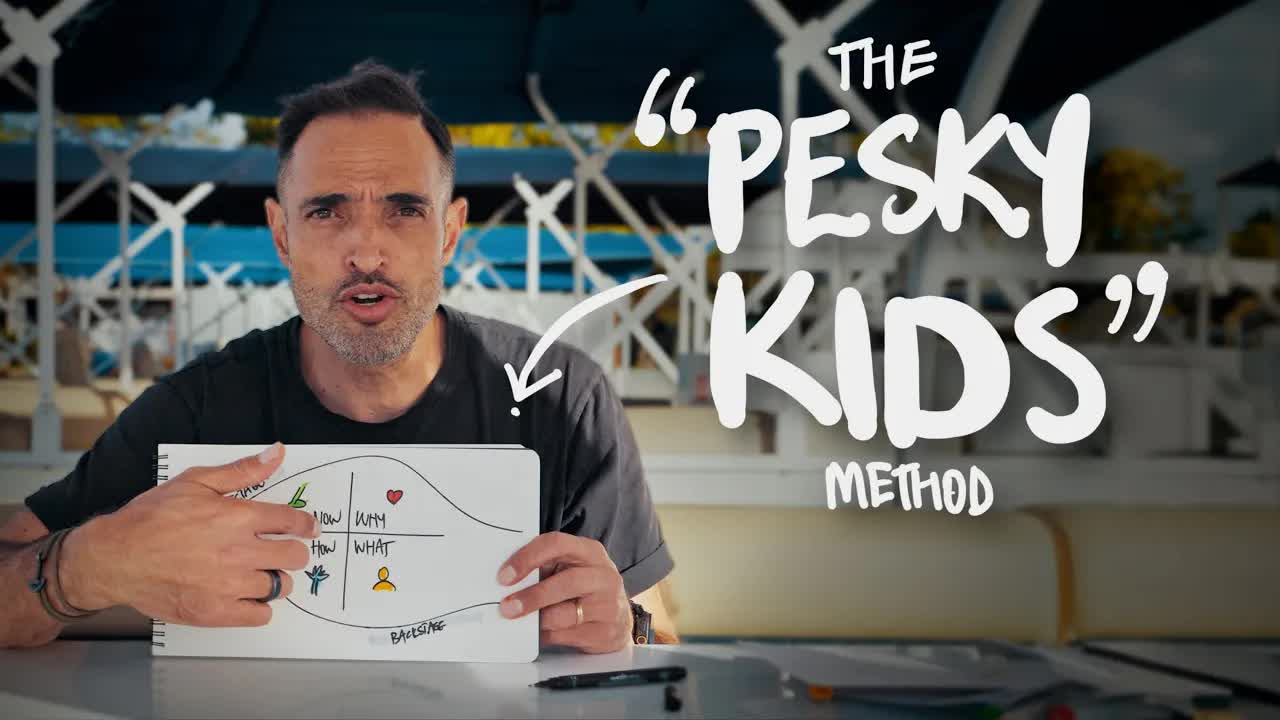
Taki Moore · Youtube · 26:26

How To Build A Client Workshop in 22 Minutes

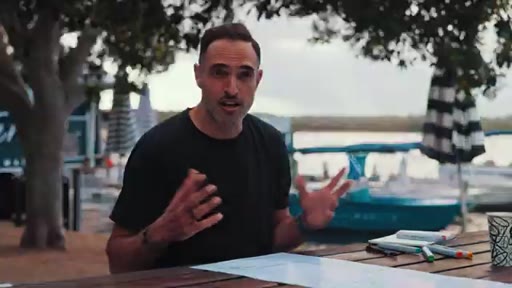
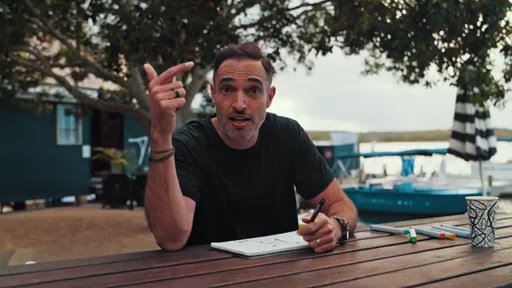
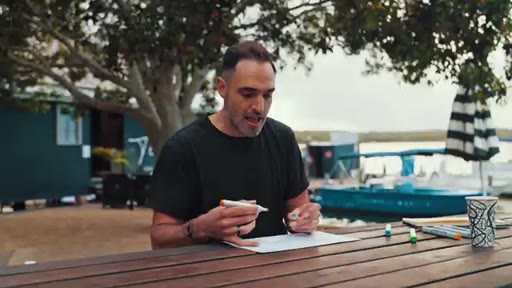
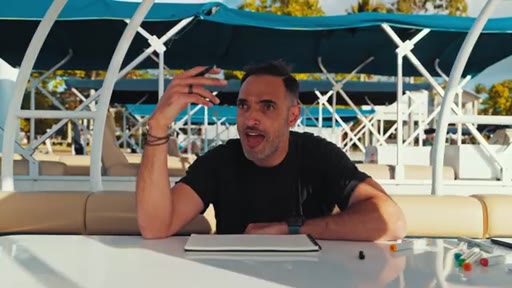
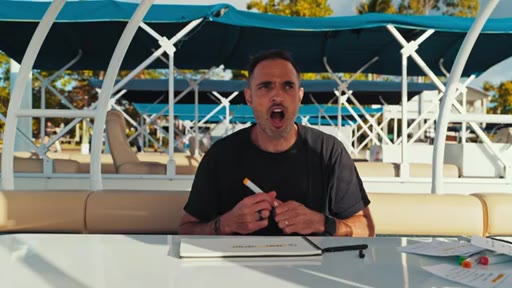
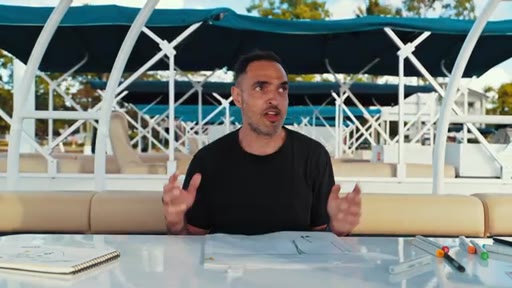
Taki Moore's 5-step assembly-line framework for building repeatable client workshops — shot across a marina and a borrowed pontoon boat in increasingly dramatic Queensland weather.

Posted
May 22nd 2026
yesterday
Duration
26:26
Format
Tutorial
educational
Channel
TM
Taki Moore
§ 01 · The Hook

The bait, then the rug-pull.

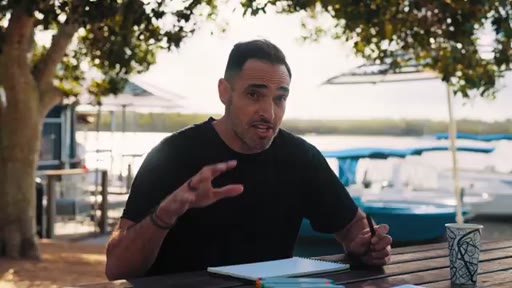
Twenty-two minutes. That's how long Taki Moore says it takes him to build a workshop his clients get value from every week — compared to the six hours his client was spending on a single Zoom call. That gap is either a system or a lie. This video is proof it's a system.

§ · Stated Promise

What the video promised.

stated at 00:12 "I want to show you the easiest way I know to build a killer client workshop that gets them engaged, it's fun, it's light for you." delivered at 23:00
§ · Chapters

Where the time goes.

00:00 – 02:10

01 · The hook: 22 minutes vs 6 hours

Client anecdote establishes the credibility gap. Promise: Taki will walk through the exact worksheet he uses. Scooby-Doo metaphor introduced — every episode identical, only the content changes.
02:10 – 07:00

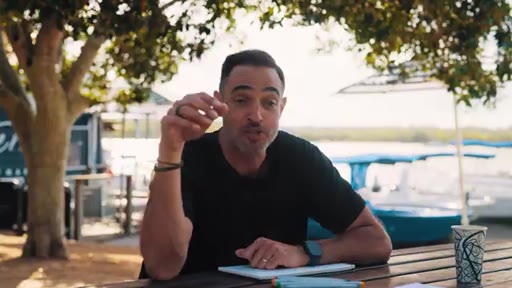
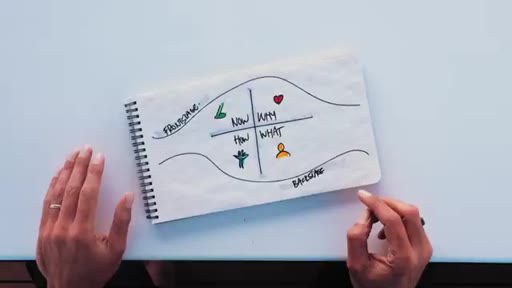
02 · Step 1 — Assemble Your Art (4MAT framework)

The Why/What/How/Now structure. Why = emotional investment (salt lick metaphor). What = 3–5 big ideas teaching their head. How = worksheets/templates for their hands. Now = first live action steps for their feet. Color-coded on the physical worksheet.
07:00 – 08:10

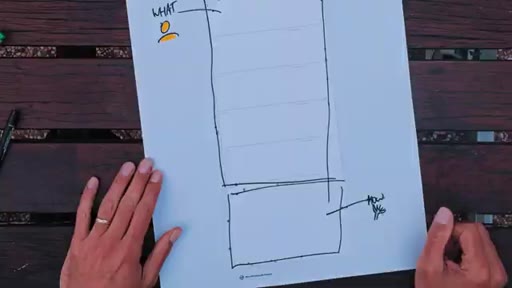
03 · Worksheet walkthrough + backstage notes

Taki shows the physical builder sheet — front-stage delivery notes and backstage production notes for the team (slide titles, portal placement, asset types). Rain interrupts; location moves to the marina.

08:10 – 12:20

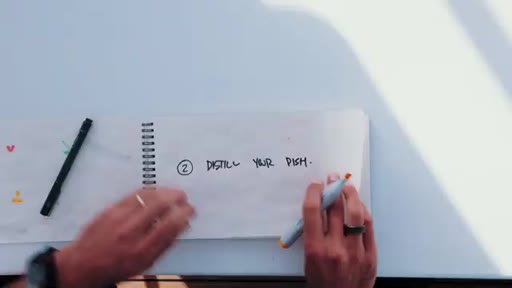
04 · Step 2 — Distill Your Dish

Now on the pontoon boat. The temptation is over-teaching. Cut everything to 3–5 key points like a chef plating a dish. Mind-map first, group and sequence, then name each point with a 'Verb Your Noun' formula.
12:20 – 14:20

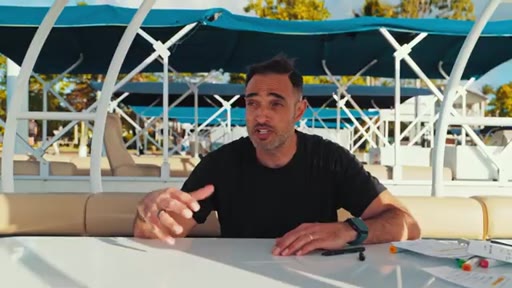
05 · Step 2 recap + transition

Quick summary of steps 1 and 2. Bridge into visual models — words alone leave people retaining only 'one squifteenth' of what was taught.
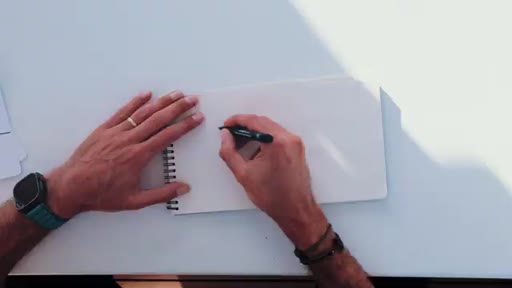
14:20 – 17:00

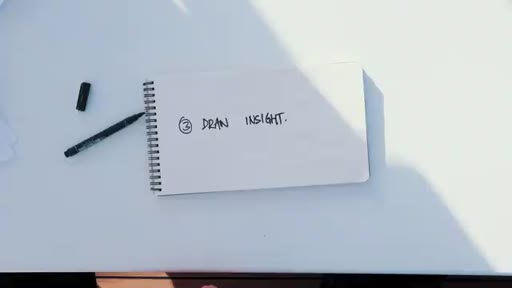
06 · Step 3 — Draw Insight (visual models)

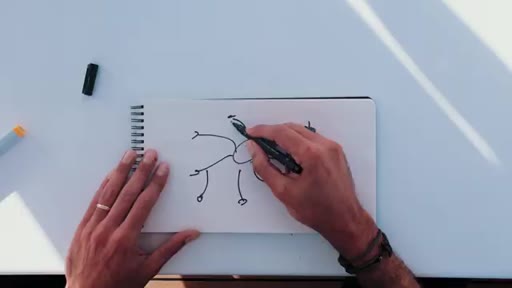
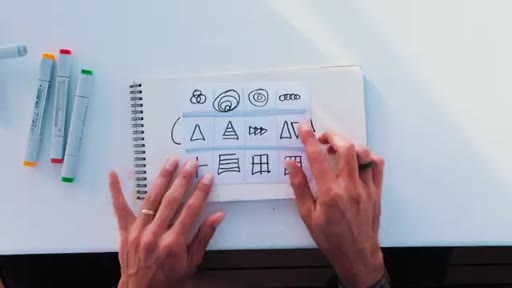
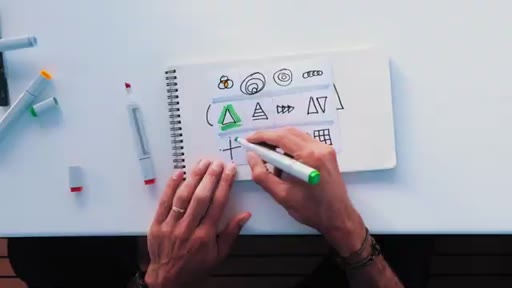
One core visual model per workshop using circles, triangles, or squares. Uluru rock painting analogy for wordless meaning-making. Demo: three circles (Venn), triangle (3 points), quadrant (axes model for result vs method).
17:00 – 19:10

07 · Step 4 — Plan Spontaneity

Breathing metaphor: if you only blow knowledge at the audience, both sides run out. Every 7–8 minutes, install a deliberate pause point (question, chat activity, breakout). The worksheet forces this — question slots at every transition.
19:10 – 23:00

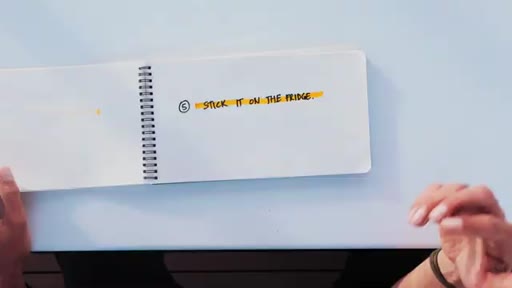
08 · Step 5 — Stick It on the Fridge

Goal is not comprehension — it's output. Send participants home with something their hands made. Navy SEAL metaphor: sweat in training. Live example: short-form video workshop where participants shoot an Instagram Reel inside the Zoom call.
23:00 – 26:00

09 · Daughter story + wrap

Daughter Aroha's homework story as proof that homework never gets done — reinforce the 'do it live' principle. CTA: download blank worksheet and see the filled-out version for this exact YouTube video.

§ · Storyboard

Visual structure at a glance.

open — marina walkup
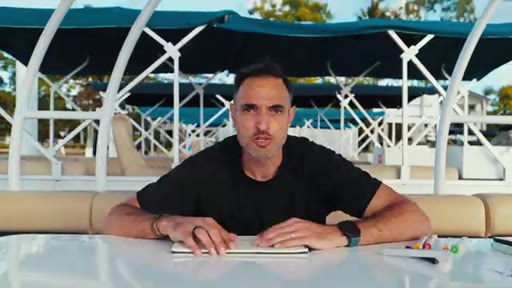
hook delivered at table
framework intro
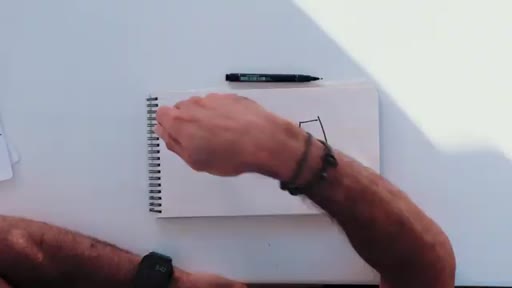
drawing 4MAT on worksheet
boat — distill your dish
boat — draw insight intro
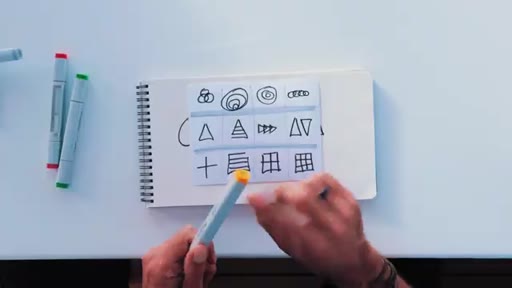
shapes reference sheet
plan spontaneity — breathing metaphor
stick it on the fridge
CTA — download worksheet
§ · Frameworks

Named ideas worth stealing.

02:42 model

4MAT (Why / What / How / Now)

  1. Why — emotional investment (heart)
  2. What — 3–5 key ideas (head)
  3. How — template or worksheet (hands)
  4. Now — first action steps (feet)

Bernice McCarthy's primary school lesson planning framework, adapted by Taki for client workshops. Every workshop follows the same four phases; only the content inside them changes.

Steal for Any recurring content product — YouTube series, mastermind sessions, onboarding workshops, email course structure
18:33 concept

Verb Your Noun point-naming formula

  1. Distill Your Dish
  2. Assemble Your Art
  3. Draw Insight
  4. Plan Spontaneity
  5. Stick It on the Fridge

Name each teaching point as a verb + noun pair. Makes points feel active and memorable without being cute or vague.

Steal for Naming workshop modules, course chapters, or any 3–5 point framework you're publishing
14:17 model

Three Shapes Visual Model System

  1. Circle — togetherness, community, cycles
  2. Triangle — hierarchy, three required elements
  3. Square/Quadrant — result vs method axes

Every visual model in a workshop reduces to circles, triangles, or squares. Pick the shape that intuitively fits the topic's energy, then choose the variant (Venn, stacked triangle, quadrant, etc.).

Steal for Anytime Joe needs a one-diagram explanation of a framework — works for ModBoard, Sessions, or MCN+ positioning
04:00 tool

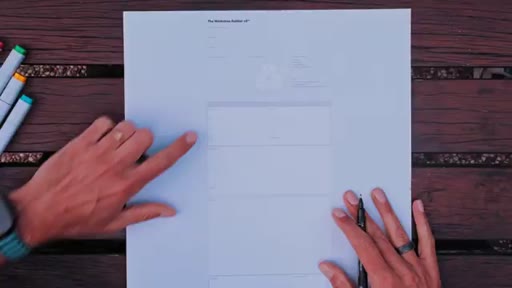
The Workshop Builder Worksheet

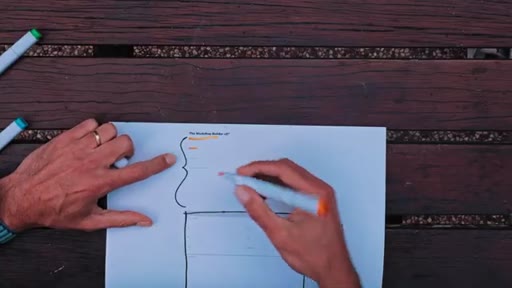
A single physical page that walks through Why stack → What (5 key points) → How (worksheet layouts) → Now (insights + 3 actions). Also includes backstage fields for the production team. Referenced as 'the world's longest workshop building worksheet.'

Steal for Building a JoeFlow or MCN+ onboarding workshop, or templating any repeatable live session
§ · Quotables

Lines you could clip.

00:00
"One of my clients asked me, how long does it take to build one of these workshops you run every week? And I told him the truth. It's twenty-two minutes. He said, oh, it's taken me six hours to create a one hour Zoom call. Well, clearly, he's doing it wrong."
Perfect cold-open credibility gap with immediate self-deprecating resolution → TikTok hook
20:08
"I want them to run home like a metaphorical kindergartner with something they've just made to be able to go, 'Mommy, mommy, look what I made!' and stick it on their fridge."
Highly visual, emotionally resonant statement of workshop philosophy → IG reel cold open
20:54
"Sweat in training so we don't bleed in battle. That's the goal."
Tight standalone punchline, Navy SEAL authority → TikTok hook
10:21
"They don't need to know much at all. They need to understand it at a high level and know what to do. It's just like a light switch. I don't know how electricity works, I know when I click that button, the lights come on. That's enough for me."
Clean analogy for over-teaching problem — clippable standalone → IG reel cold open
19:50
"My number one goal when I run a workshop is that people don't leave smarter or cleverer. I want them to run home like a kindergartner with something they made."
Contrarian thesis that reframes the entire purpose of teaching → newsletter pull-quote
§ · Pacing

How they spent the runtime.

Hook length22s
Info densityhigh
Filler8%
§ · Resources Mentioned

Things they pointed at.

02:25toolBernice McCarthy 4MAT framework
10:53channelMatt Church (point unpacking model)
26:00productWorkshop Builder Worksheet (downloadable)
26:00productFilled-out worksheet for this video (downloadable)
§ · CTA Breakdown

How they asked for the click.

25:40 link
"If you want a blank one, just grab it. There's a link in the description below. As well as I actually filled one of these out for this exact YouTube and you can see the filled out one."

Double CTA — blank template for DIY + filled example for learning. Then secondary CTA for 'million dollar plan' video. Well-executed, no hard sell.

§ 04 · The Script

Word for word.

HOOK opening / re-engagementCTA the pitch metaphor analogy story
00:00HOOKOne of my clients asked me the other day, how long does it take to build one of these workshops you run every week in Black Belt? And I told him the truth. It's twenty two minutes.
00:07HOOKHe said, oh, it's taken me six hours to create a one hour Zoom call. Well, clearly, he's doing it wrong.
00:13HOOKSo today, what I wanna do is show you the easiest way I know to build a killer client workshop that gets them engaged, it's fun, it's light for you. They implement the strategies and tactics, and I learned it all from a primary school teacher called Bernice and from Scooby Doo.
00:25Together, they helped me build this worksheet, the world's longest workshop building worksheet that we're gonna work through together. I'm gonna show you exactly how I build a weekly workshop. Oh, by the way, if you wanna get a copy of this, just download it below and you can scroll along, build yours as we go.
00:38Most coaches struggle to create workshops because every time they do a new one, have to create new content. Fine. But because they don't have a a system for how a workshop runs, a framework for it, they have to create a new workshop every time.
00:49So they're doing two news. I'm only doing one new. Every
00:52workshop I run, if you clock it almost to the minute over sixteen years, if you go, what's happening in sixteen minutes? I can tell you exactly what's happening. At thirty two minutes, I can tell exactly.
01:00Because every episode, every workshop is exactly the same. What changes? The content, the topic.
01:06Just like every episode of Scooby Doo is identical. For sixty years and 500 plus episodes, every episode's exactly the same. The only thing that changes is the bad guy's different, and they're in a different scary location.
01:16You know, the mystery machine's driving along late at night. They break down somewhere. They find somewhere to stay.
01:20It's kinda scary. A local tells them to leave, and they don't. The The monster's always got some kind of glowing eyes, red or or green.
01:26At some stage, they decide to split up to investigate. They get lost.
01:31There's a chase scene. Shaggy jumps into Scooby's lap. Yikes.
01:34All of the stuff. Velma gets kidnapped. And
01:37at the end, at the crescendo, they find the bad guy. They unmask him, and he would have got away with it too if it wasn't for those pesky kids. It's identical.
01:45You want your workshops to be just like that. And even though every episode was the same, I watched every episode. You know why?
01:51Cause it's fun. It doesn't matter. You look forward to the inside gags.
01:55The framework is not just easy for the creators to create, but it makes it calm and safe for your participants as well. So the first thing we're gonna do is we're gonna architect out a Scooby Doo episode.
02:05So how do we build a workshop like Scooby Doo? Well, there's five steps. Here's the first one.
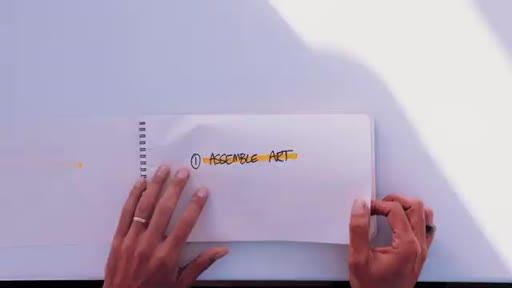
02:09HOOKI want you to assemble your art. Here's the thing. When your clients experience a workshop like this, it feels like art, but it's built like an assembly line.
02:17HOOKIt's step by step by step. Uh, there's a simple framework that every episode, every workshop follows, and all we're doing is we're freestyling
02:24HOOKin a framework. So the first thing we need to know is, like, what's the framework? So I wanna be super clear.
02:28HOOKI didn't invent this framework at all. I learnt it from a woman called Bernice McCarthy. She was a primary school teacher.
02:33HOOKShe helped other primary school teachers develop lesson plans that rocked. She called it format. Number four, MAT.
02:39HOOKI don't know why. She just did. I kind of mostly use it the way she does it, and I've added a little bit of Taki Coach workshop spice that I think will really help.
02:47So when you're teaching someone something new, there's four things, four phases we need to go through. The first piece we need to teach them is why it matters. They say you can lead a horse to water, you can't make it drink.
02:56That's just not true. You can give the horse a salt cube, a salt lick. It gets really thirsty and it wants to drink.
03:02The why is the salt cube for your content. So the first thing we do is we teach people, you know, we're here to do this. Here's why it matters.
03:07Next, we teach them what they need to know. It's three or five big ideas.
03:11It always is. It's never four or two or seven. It's 3 or five.
03:14Trust me. Third, we show them how to do it.
03:17And then finally, we tell them what to do now. What's the very first steps they can do to take these new skills and put them into practice? The why is where you connect with their heart.
03:24You get them emotionally engaged. The what? We're teaching their head how to think.
03:28The how? We show them what to do with their hands, and at the end, we tell their feet to march. Heart, heads, hands, feet.
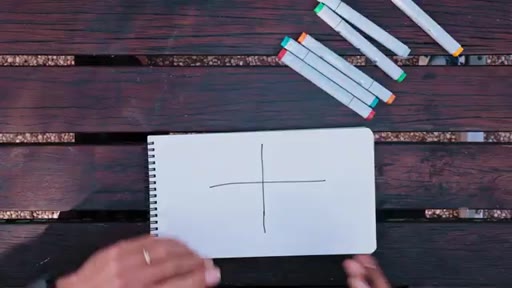
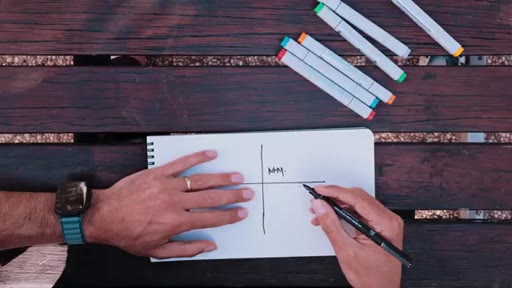
03:34So just to make this easy to remember, just think. We can start with white matters. I'll mark that red.
03:39What they need to know, yellow for a bright idea. We're just gonna teach their head what they need to know.
03:47Blue, how to like blueprints or a plan.
03:52And then green, tell their feet to go. Okay?
03:57So that's the big idea. I'm gonna show you how it maps to this build up. There's a lot going on here.
04:02I just wanna call out some of the key pieces. Also, I'm the idiot who decided, no, Sean.
04:09I don't wanna shoot at home. I wanna shoot outside. It's gonna be great.
04:12So far, we've dealt with rain and wind. This thing nearly blew into the river and got eaten by a pelican.
04:20Sean was right, I was wrong. Okay. So there's a few things happening on this build out.
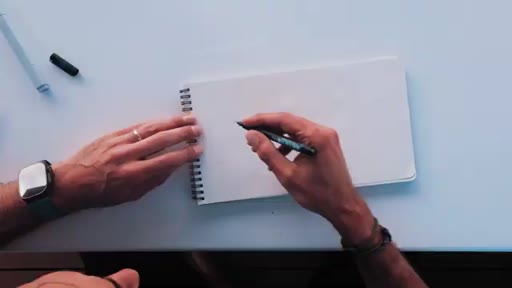
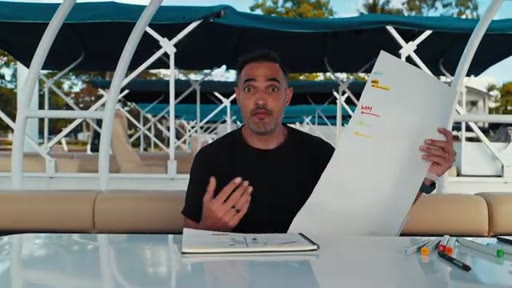
04:22And so my workflow goes like this. Have an idea for a workshop I wanna run. I grab one of these, usually on my iPad, but I printed it out here for you.
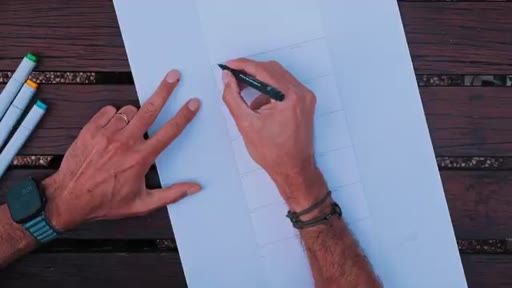
04:29And then I scribble on it from top to bottom. It takes me maybe twenty minutes. Then this goes off to someone on my team.
04:35Even if you're doing it yourself, take the time to scribble this out. It makes everything else faster.
04:40This builds the slides, the worksheets, the anything else you might need as assets for your clients.
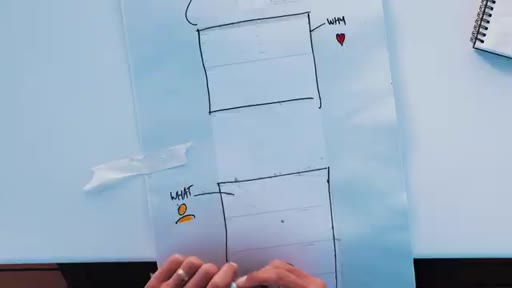
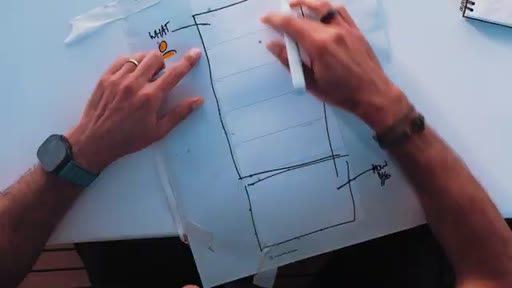
04:45A few things going on here. The first bit, this top chunk right here,
04:52is the why that we just talked about before. This is the bit that gets people emotionally invested. There's
04:59three things going on. There's a little Y stack at the top three frustrations and a fear. If you don't do this, here's the bad thing that happens.
05:05If you do this, here's the good thing that happens. A case study like a client story for me, I told you about that guy Steve, he's my case study for this one. Um, that's the Y piece.
05:14And those together, you take you just take a minute and you go, if they get this wrong and they don't do it, what are the three frustrations they have and what's the fear that happens if they don't fix it? If they get this right, what are the three things that they get instead? Short term wants and then long term, what's the dream?
05:27And then a client story that you can tell. That's the why piece. Next we've got the what, and the what is three or five key points.
05:34If you're doing like a short teach, it's like fifteen or twenty minutes, three is great. If it's longer, like an hour, I like five quickly, and then a lot of time to do the work and implement.
05:44So this is our five key points. Each one's got room for the point and a metaphor. The point is the words which go on the slide.
05:50The metaphor is the picture that goes on the slide. We'll talk about that maybe another time. This is the what
05:56they need to know, and we're teaching their head how to think about it. So we've got the first two components done. The next is how do you do it?
06:02That's usually worksheets for me, and I just scribble out worksheets on a little page like this, and I just add extra pages down the bottom where I'm scribbling out whatever the layouts might be. So let's call this
06:12the I'm sorry, the how. And the how is like, okay, show me what to do. It's either the script or the template or the
06:19checklist to follow, whatever the procedure is you want them to learn so they can install it into their life, their business, world. And the last piece, the now, is the last page of the workbook and it's the last thing we do in the workshop.
06:30This is where we tell them, uh, we collect their insights, your best things, what have they learned, and their next three actions. First step, something super easy they can do in two or less without really trying, step after that maybe a little bit more, and a stretch after that just to get them into motion. So why, what, how, and the now usually happens at the end.
06:48Sometimes it's written. Often it's like, uh, we tell them what to do, give them clear instructions, make sure they understand the instructions, and then we set a timer and get them to do it right now live
06:58on the corp. So that's the outline. What's that?
07:01Hear you say, but you didn't use the whole sheet. I know. That's because I've only shown you point number one.
07:05Before we go to point number two, let me give you one extra thing that's on the sheet that the clients never see. I add two layers.
07:12Uh, one is some notes for me for how to deliver it front stage, so when I'm on stage or on Zoom with clients, what are we going to do to make sure it's interactive and fun? And then backstage, I have some notes as well so that the team can
07:27produce the slides, the worksheets and even simple things like they know where to stick it in the website and how to categorise it afterwards, stuff for the portal.
07:35So that's this that backstage stuff lives up the top here. It's got the name of the session so they know what to put on the front cover, the tagline, you know, the
07:44benefit like the sub headline, uh, what's the image or metaphor on the front page, Where does it fit in our model so they know where to put it in the portal? Is it for clients, black belt, boardroom or for the company as a whole?
07:55We just tick that. And do they need slides and worksheets or what's the framework? That's all backstage stuff that the clients never see.
08:02Just makes my team's job easier. We're getting rained on. We're gonna move.
08:06I apologize. Stay with me. Alright.
08:08I think I found the spot. Sean, check this out. Terrace Marina.
08:12These boats are unoccupied. I think there's one with the table, maybe one of the big ones at the end. Should we check it out?
08:20Look at that. That's us right there. This
08:26is perfect. Well, this worked out great. We found a little boat thanks to Terrace Marina.
08:30Shout out to Terrace Marina if you're ever in New Smyrna and you want a nice boat. Terrace Marina. They let us have this boat.
08:36And, uh, we're gonna call it the HMS Studio. We were talking about how the best workshops feel like art, but they're assembled like a manufacturing process.
08:44And we do why, what, how and now. Showed you the sheet, which is now soggy. We need to teach three to five key points, and I wanna show you how to find them and how to make them great.
08:54So the second big thing that we wanna do is to distill your dish. The biggest temptation
08:59that we all fall into is we put too much content into our workshops. We try to pack everything we know instead of what they need to know. And they don't need to know much at all.
09:09They need to understand it at a high level and know what to do. It's just like a light switch. I don't know how electricity works, I know when I click that button, the lights come on.
09:15That's enough for me. Your clients are kind of the same. So the problem is you know
09:20know too much. And if you try to teach that old, people's brains just explode. They get overwhelmed.
09:26So we want to distill this thing down three
09:31or five key points like a chef plating a dish at a restaurant. You ever done that? If you ever go out with a group to a restaurant and you all order the same dish or it's one of those, like,
09:39you know, formal things where it's a set menu and everyone gets the same dish, if you look at the plates, they're all identical. There's three potatoes and this many vegetables and three cuts of meat. It's always threes or fives odd numbers.
09:52It just kind of works. So you want to distill it down to three to five big ideas. And the way it starts is just by dumping out all the things you can think of to help someone go from the problem they've got to the result thereafter.
10:01I usually just do a mind map and I list down all of the, um, things they need to know or do, and I usually end up with this big fat mind map list of all of the stuff.
10:11It's great, but it's too much. That's totally normal. Just start with the dump.
10:14It's easy to sort afterwards. Step two. We're looking for okay, if the job of this workshop is to help someone go from problem to solution, what do they actually need to know and need to do?
10:24And we're looking to get rid of some of these pieces. We're probably still gonna end up with maybe too many, and that's okay.
10:32I'm just gonna see if we can group them together. We're gonna end up with three or five. The next step is just to put them into a sequence.
10:38One, two, three. Four and five, optional. And then what I like to do is I flesh out the content so they sound like legit points, not like
10:47shitty mind map scribbles. So the formula for unpacking a point, I learned from a guy called Matt Church in Sydney. Super smart dude.
10:54And he taught me for every point I teach to have a key point, a model, a metaphor, a case study of some steps, and a story. You don't have to go that far, but just understand that there's three levels we can teach content at.
11:05So we're gonna talk about models and metaphors and stuff like that a little bit later. But for now, all I like to do is I like to name my points. There's lots of different ways you can do it.
11:13I like verb noun. Very, very simple.
11:16Check this out. Distill your dish.
11:21There's a verb, that's what you do, and there's a noun, that's what you do it too. That's how I like to name my stuff. It's very simple.
11:25Verb your noun feels kind of active My tone. You can do it fancy or formal or whatever you want. I like verbian noun.
11:30So it's one thing they have great points and really great ideas. But if you really wanna make them stick, you gotta make them simple. And the best way I know to make an idea simple
11:36is to draw it. When we draw a visual model, magic happens.
11:41People instantly get the context, and this crazy thing happens where they project themselves into the model. They might argue with a fact or with a statement, but there's no disagreement at context.
11:52So a model just allows people to project themselves into it and see themselves, oh, that's where I am, that's what I need and this is what I need to do.' They're beautiful, simple things. So the third key point is to draw
12:06insight.
12:08Before we go deeper, let's make sure you're tracking. Uh, first thing we're gonna do is we're gonna assemble art. It feels like art.
12:14It's built like an assembly line. Like Scooby Doo, every workshop's the same. We've got a format.
12:19Why, what, how, now? That's the easy thing. Once we've got the framework down, we just need to decide what our three to five key points are.
12:25That's just distilling the dish down to the core, basic, most important elements. Not everything you know, just what they need to do. But you can do all that, have the best points in the world, but if it's just words,
12:35people remember like one squifteenth. That's a scientific number.
12:41One squifteenth of what you're trying to get across. The best way I've found to teach complicated things is to simplify them with a visual model. That's why our third key idea here is to draw
12:53insight. I love a visual model because in a simple shape, a circle, a triangle or a square, we can we can say a lot without having to say very much at all. I mean, if you think about this model that I showed you before, instantly now, you get this.
13:07There's some little pictures. The pictures aren't that important. There's a simple quadrant model.
13:10It's basically a square. Right? You know this now, and by seeing
13:15two lines and four words, you know how to build a workshop. That's the power of a visual model. A couple of years ago, Kiri Marie, my wife and I, we went to Uluru.
13:23Used be called Ezrak. It's the big red rock in the middle of the Australian desert. And there are rock paintings on the caves there that have been there for thousands, thousands, maybe fifty, hundreds, along many years.
13:34That's what I'm trying to say. And, um, to us, they just look like, dot pictures.
13:41But each one of those pictures is a symbol that has meaning. And so when people visit those locations, they instantly know the story of the land and the people who used to live there. So there's these concentric circles, which means
13:52a meeting place or an important place. The bigger the circle, the more important the spot is. Small circle, small meeting place.
13:58And then there's lines between them. That's a travel or a journey. There's little footprints.
14:02All of those shapes mean something. And so without saying any words, before there was written language, there was a picture that people could make meaning from. I think that's kind of amazing.
14:10And our job is to make complicated things simple with simple drawings. The good news is there are only three shapes. There are circles,
14:17there's triangles, and there's squares. I don't usually make a model for each of my five key points, but I make one core model for each workshop.
14:25It's just easy that way. It gives people an understanding at a high level of what the context of this thing's all about. So, okay, I'm good at drawing with pictures.
14:32It's not natural to me. It's a learned skill. You can learn it too if you want to.
14:36Like I said, there's only circles, triangles and squares, and the way I choose which model to use is starting by figuring out which shape makes sense for the topic I'm teaching. There's some locals going past in the river trying to rock the boat. Don't mind them.
14:47So I'm gonna give you a workshop topic, and I just want you to think, does that feel like a circle or a triangle or a square to you? There's no right or wrong here.
14:55Just intuit it. So if I say we're doing a workshop on the topic of community, does that feel like a circle or a triangle or a square? For me, I'd go, well, kind of circle, kind of togetherness.
15:04Again, doesn't matter what you said. Whatever you choose is fine. If I said
15:10marketing funnel, you're probably going go, Well, that's a triangle? Yeah, cool. What if I said
15:18it's about building something stable for the future? I know that's vague, but you get the idea. Maybe that's a square.
15:23It doesn't really matter. You go, what's this about? Does it feel more circular, more triangular, more square?
15:28It's weird. Go with me. And then for each of those shapes, there are a bunch of separate models that do different jobs.
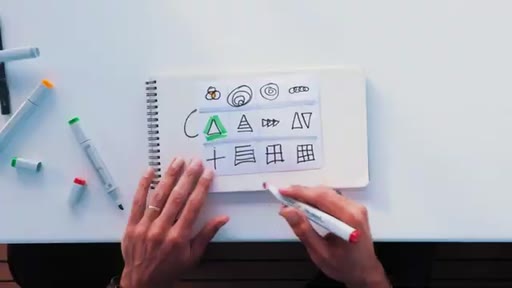
15:33I'm just gonna sketch a few out for you, uh, so you can learn a couple of basic shapes. Here are some of the circles, triangles and squares I use all the time.
15:42Now there's a lot here and there's some advanced moves, but I was just getting started. I'd probably just use these three down the side. We've got a
15:48three circle venn where we've got three things and you need them all, and where they intersect, there's something interesting going on. That's cool. And that's really about the
15:59overlap between idea number one, two, and three. Then we've got a triangle. It's just there's three things you need to know.
16:06This is a super basic shape. You can get fancy and talk about what happens with the corners. But for now, if, like, there's three things you wanna do and you're just getting started, just say these three things.
16:12You can put them in a triangle. It's not it's not the best, but it's a start, and I'm on your team. Extract your basic quadrant model.
16:18There's a bunch of ways to do this, but the most common way I use it is like the result they want is on the top, the thing they don't want is at the bottom, like no sales, lots of sales. And then on the left, we've got the bad way of getting the sales
16:32and the good way of getting the sales. Right? And so that gives us four quadrants.
16:38You know, we've got the ad's always bottom, we've got second bad.
16:44Over here, you don't get a good result. You're doing the right thing, but it's not it's not working out for whatever reason. We've got
16:49getting the great result, but it's hard work. And then we've got the top right green quadrant, which we really love over here. So there's a bunch of different models.
16:56We can talk about them in a future video. If you wanna know that, just comment below and let me know. That'd be useful.
17:01But all we're gonna do is we're gonna get a circle or a triangle or a square to explain your workshop. By the way, if the last couple of minutes went over your head, give it. It's your workshop.
17:10You can do what you want. I was terrified I'd just littered in the Noosa River and I would have been evicted from the Shire. We've just been talking about how to teach your stuff, which is cool, but if all you do is teach your stuff,
17:21you get exhausted and they get overwhelmed. It's like, uh, I think about running a workshop a little bit like breathing between you and the audience. Not mouth to mouth, that'd be weird.
17:31But every time I'm teaching content, feel like I'm blowing my knowledge, inspiration to the audience. And so if all I do for the whole time is and
17:42I never have a chance to breathe back in myself, I run out and gets exhausting. You've probably experienced that. And on the flip side, if you're in the audience and they're like, oh, I can't wait.
17:49They get their pen ready and their notebook and they're like, ready? And then you teach them some stuff and you teach them some more. Teach them some more.
17:56More. It's like, this is really great stuff, but I can't hold it in. We need to let them breathe and let you breathe.
18:02So the whole flow is that you're going to give them a bit and then give them a chance to breathe out, talk about it a little bit. That pause is where the magic happens. All learning happens in the space after you've given a bit of content and maybe open up a great question.
18:15So the fourth key here is to plan spontaneity. After a quick cut, I now know how to spell the word spontaneity
18:27like a pro, I think. Go to plan some spontaneity. This is where you
18:32deliberately put in a few of those pause points, those brief points. So people can like pause, chew a little bit, share a little bit. It resets
18:40their attention and it means that they can consume what you've just given them and they're ready for what comes next. And so what I like to do is every seven or eight minutes, I put in a state change.
18:50Like a question I'll ask or an activity I'll get them to do, somebody to type into the chat or somebody to write down, someone will come off mute and we'll share. It feels spontaneous,
18:59but it's planned. The easiest way to plan a great workshop, which has really good flow between you give them some stuff and then there's a chance to pause and breathe,
19:07is this. So the way I do it is every time we transition from why to what or what to how or how to now, I deliberately install a spontaneous moment.
19:17The easiest way to do this is just to install a question. So you just create a slide with a question on it that they ask. So if you talk why this matters, maybe the question you put on the slide is why do you want to master this?
19:26What's the hardest part about this for you? Or what would be great if you could? A question that gets them to feel why they want it.
19:32If I'm doing what? And I've taught them three key points or five key points. If you implement these, how will it make your life better?
19:38Or which of those is most valuable for you? And then when I teach the how, I'm like, how is this different? How have been doing it?
19:44Each one of these is a question designed to have them pause, chew a little bit and go, oh, that bit was great. They can talk to their friends or they can talk in the chat, they can come off mute or whatever the activity is and then they're ready for the next chunk.
19:55What I'd planned to do was show you on that big builder worksheet exactly how I do that, how I prep for this. But here's the thing, it was raining before,
20:04so the sheet got wet. And then, when we got here, the sun was beaming so high on me that we actually stuck sticky tape on it and put it up to try to block the sun. My beautiful worksheet now looks like a bit tattered.
20:14It looks like a pirate flag, but we're just going go with it. So every one of these interaction points has a spot on the builder. So literally, we do the why,
20:22the frustrations and fears, the wants and aspirations, a little case study, and then right here it's got question. That's a place for me to install a spontaneous plan moment.
20:30And then we teach them the five key points. And guess what? It's got question and there's a chance for me to put in the question.
20:36Every time there's a transition, the worksheet forces you to create a little piece so you know you're not just blabbing at people, but you give them a little bit and they give them a chance to breathe
20:46out and chew and reset. This is actually the perfect metaphor for what happens next because my number one goal when I run a workshop like this is that people don't leave smarter or cleverer.
20:58They don't leave having a go, 'That was really great and I had a good time and I learned some stuff.' I want them to run home like a metaphorical kindergartner with something they've just made to be able to go, 'Mommy, mommy, look what I made!' and stick it on their fridge. If they come to the workshop and they just get smarter, but they don't produce anything, we've wasted each other's time.
21:14The goal of a workshop is to get them to work. So point number five is to send them home with something they can stick on the fridge,
21:20something their hands have actually made. Our job is to get people to do stuff. So if they learn something new,
21:27we need to give them a chance to like practice it and send them home with something done. So I think about a spectrum of like, uh, if this is I just learned something new but I haven't done anything yet and this is I learned something new and I finished it, I mean, that'd be a great goal. But if we can get them started and clear about what the next couple of steps are, think that's a real win.
21:46So my goal is either I get them to here or we get them to here. And the way we do that is with activities that we can do in the workshop and some simple steps to do when they leave. The activities in the workshop depends on what the stuff you're teaching is.
21:58Uh, if we're teaching sales, often it's a role play or we design the script. But role plays are great like in groups of groups of three, you know, a coach, like a salesperson, a prospect, and an observer, and they rotate through the bits. It could be, uh, if we're shooting videos.
22:11Well, the best activity we run when we're teaching people to do short form video is we teach them the structure of a great short like, help them pick a topic. Round one, everyone picks a topic. Great.
22:20Then they type in the chat, got one. Awesome. Then we teach them how to outline the video on these little, uh, banger cards that we've got.
22:25And so they'll outline them. Super cool. Guess what we do then?
22:29Well, I could either go, okay, we'll go home and shoot them. You know as well as I do. They're not going to shoot them because it's scary.
22:35I'd rather them fail, like try something and be a bit rough here with me on Zoom and then crush it out there in the real world.
22:41It's like the Navy SEAL safe, sweat in training so we don't bleed in battle. That's the goal. So if we're doing videos, for example, guess what I'll get them to do next?
22:49Well, it's really easy. I'll just put a timer on the thing for two or three minutes. I'll get them to hold their phone, shoot the Instagram Reel in the four chunks,
22:57yeah, the hook, the bill, the payoff, the invite, and then that's an activity done. If I want them to get even better, I can get them to
23:06get in a breakout group and share the videos. And so we'll get them to play the videos once with the sound off just looking at the the visuals, like, see how it how it looks visually. And then the second time, we'll get them to play the video
23:20with just the audio playing so people just hear it. And then we're all I'm saying is we wanna take them from getting a thing to getting it done live with you, not sending them off with homework. So last night, I was talking to my daughter Araha.
23:32She's 17 now, and she just started a new school. It's going very well.
23:37When she was in year one, sort of six or seven years old, she was a very rule following little kid.
23:47And every week, the teacher would give the kids some homework, just light stuff, that was due on Friday.
23:53Always, like, through the week, you get the stuff. On Friday, it's due. One Thursday night, it's bedtime.
23:57And I'm like, okay, bub. Time for bed. She's like, dad, I haven't done my homework.
24:00I'm like, that's alright. The teacher will understand. No.
24:04No. No. If I don't give it in tomorrow, I'll get in trouble.
24:06And you know what kids are like. They don't wanna get in trouble, little kids. When they're teenagers, it's very different.
24:11I'm like, listen, it's late now. If we get up early, I can help you with it in the morning.
24:16No, no, Dan. I really need to do it now. I tried all of the parenting tricks in the parenting book and none of them worked.
24:22In the end, exasperated, just say, listen, bub, they've got you for eight hours a day. If they can't get the work done in eight hours, that's their problem, not yours.
24:30She goes, Alright, and goes to bed. So next day she gets to school Friday morning and the teacher does roll call and it's alphabetical by first name.
24:38Her name's Aroha, starts with an a, so she's up first. Goes, Aroha, present, miss, and sits back down. Aroha, she stands up again.
24:44Yes, miss. Have you done your homework? No, miss, and sits back down.
24:47Aroha, yes, miss? Three times she stands up.
24:49Yes, miss, Why didn't you do your homework? And Uh-huh just looks her dead in the eye and with a very straight face as an innocent, trusting six or seven year old goes, Well, my dad says, you've got me for eight hours a day. And if you can't get the work done in eight hours, that's your problem, not mine.
25:02And she's back down. The teacher's like, Uh-huh. Anyway, I got a call from the principal, but I firmly believe if a client's going to spend some time in a workshop on Zoom with you, let's get the freaking work done live together and not send people away with homework that they're never going to do anyway.
25:17Our job is to do the work with them live and send them home like a kid being out and go, Mommy, mommy, look what I made. Stick it on the fridge. You know what's crazy?
25:24It actually took longer for me to talk about how to do this than to actually fill one of these things in. If you want a blank one, just grab it. There's a link in the description below.
25:31CTAAs well as I actually filled one of these out for this exact YouTube and you can see the filled out one So you can see, oh, that's what he did, and that's what I just saw. I kinda get it now. Uh, a couple of months ago, I was about to shoot a YouTube video with Sean here.
25:44CTAWe were down in Sydney, and Mike on my team rang me and said, oh, the workshop tomorrow, I need the stuff. I was like, ah. So instead of shooting the video we were gonna shoot, I just built a workshop live using this builder, and you can watch me in action.
25:54CTAThere's a link for that as well. This video has been a hell of an adventure. We've through a lot together, you and I.
25:58CTAWe've been in the wind, in the rain, now we're on a boat. That says something special about you. It's my little connection, so thanks.
26:05CTAIf you wanna see what it'd like to work together, to help grow you to 7 figures with a lifestyle empire that has you help more people, have more fun, make more money, I showed a video about how to do that too. It's called the million dollar plan. There's a link in the description below.
26:16CTAIt'll show you exactly what we do to work with you to grow you to a million bucks and beyond. Check it out. Listen.
26:22CTAThis has been fun. We gotta get off this boat. I appreciate the hell out of you.
— full transcript
§ 05 · For Joe

One structure. Infinite workshops.

Creator playbook

Stop writing new workshops. Write new content inside one repeatable structure, and you'll be faster, calmer, and more consistent than anyone who starts from scratch each time.

  • Use Why/What/How/Now as the spine of every live session — podcast episode, YouTube series, mastermind call, or workshop.
  • Name your content points with 'Verb Your Noun' — it forces active language and makes modules feel like a system.
  • Build one visual model per session using only circles, triangles, or squares — it doesn't need to be art.
  • Engineer pause points every 7–8 minutes. They feel spontaneous to the audience; to you they're planned and on the worksheet.
  • Kill homework. Design activities so participants complete work live with you — then they actually have something.
  • The '22 minutes' hook is a specific-number credibility play — use it in any tutorial: '10-minute landing page,' '3-minute hook formula.'
§ 05 · For You

Run better meetings and workshops.

If you teach, train, or facilitate

Most workshops fail because the presenter knows too much — this framework forces you to cut to what participants actually need to do, and gets them doing it before they leave.

  • Start any session with Why it matters before touching the content — you're giving the audience a salt lick, not just water.
  • Limit any teaching to 3–5 key points. If you can't distill it, you haven't understood it well enough yet.
  • Build in a question or activity every 7–8 minutes — not because the audience is bored, but because that's when learning actually happens.
  • Your goal is output, not comprehension. Design your session so people leave with something they built, not just notes they took.
  • Homework rarely gets done. If it matters, do it live together.
§ 06 · Frame Gallery

Visual moments.