Nate Herk | AI Automation · Youtube · 27:03

The AI Offer You Can Sell Tomorrow Morning

A 27-minute blueprint for dissolving impostor syndrome by starting at rung zero: sell hours, not retainers.

Posted
May 22nd 2026
today
Duration
27:03
Format
Talking Head
educational
Channel
NH
Nate Herk | AI Automation
§ 01 · The Hook

The bait, then the rug-pull.

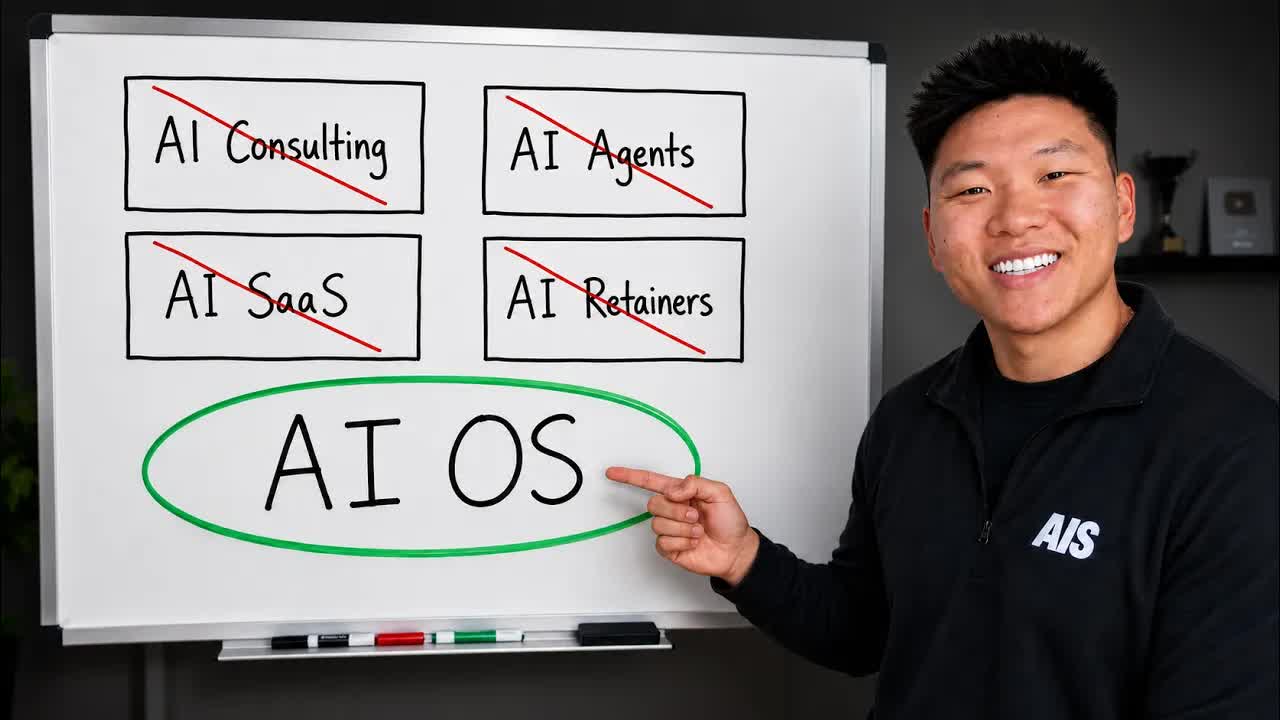
Everyone in the AI space is being told the same thing: pitch audits, land retainers, build a $10k-a-month agency. Nate Herk says that advice is directionally right and practically useless for anyone starting from zero. His solution lives at the bottom of a four-rung ladder nobody is talking about: sell hours.

§ · Stated Promise

What the video promised.

stated at 00:22 "I am gonna give you guys three things: the exact offer I would lead with if I was starting from zero, what the offer actually looks like so you could literally run it tomorrow morning, and a plan to land your first 10 clients." delivered at 21:12
§ · Chapters

Where the time goes.

00:00 – 00:32

01 · Hook: the contrarian bet

If starting from zero, skip retainers. Sell hours. Promise: exact offer, how to run it, plan to land first 10 clients.
00:32 – 03:17

02 · The AI Business Ladder

Four rungs: hours, audit, project, retainer. Most people try to start at rung 2-3 without proof. Impostor syndrome lives in that gap.
03:17 – 05:35

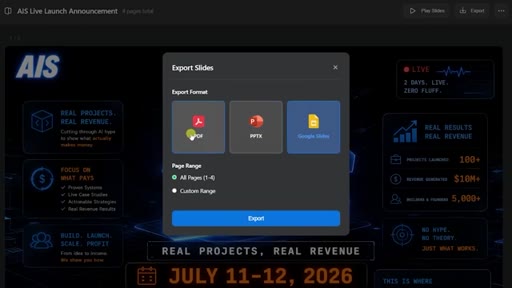
03 · Sponsor: Genspark

Genspark all-in-one AI platform demo. Multi-model chat, AI slides generation. New-user bonus offer.
05:35 – 09:52

04 · Three reasons selling hours works

Mini sales call + paid scoping + switching cost moat. Personal story: early consulting calls he treated as isolated tech support instead of pipeline starters.
09:52 – 11:25

05 · The 2026 market moment

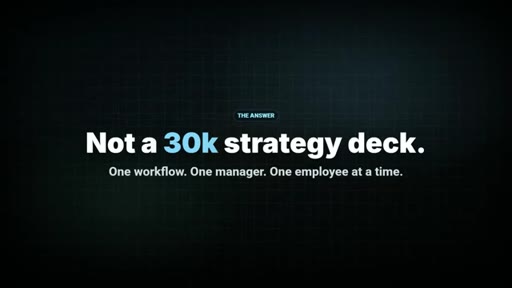
IBM CEO study: 25% vs 85% adoption gap. Every org is staring at this problem. The answer is not a McKinsey deck.
11:25 – 14:19

06 · The AI Operating System offer

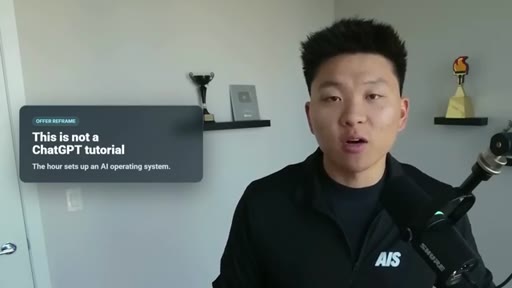
Defines AI OS. Free 2-hour course in Skool community. Exact pitch language. Reframe: not a ChatGPT tutorial, an operating system.
14:19 – 17:43

07 · How to run the hour

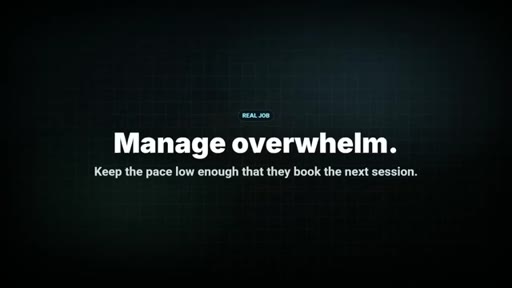
Manage overwhelm, keep pace slow enough to book session 2. It is OK to not know the answer. Tool fluency meets domain fluency.
17:43 – 21:12

08 · 7-step client acquisition plan

Teach friends first through warm owners, communities, public proof, relationship conversion, and finally local outreach.
21:12 – 23:17

09 · Turning hours into projects

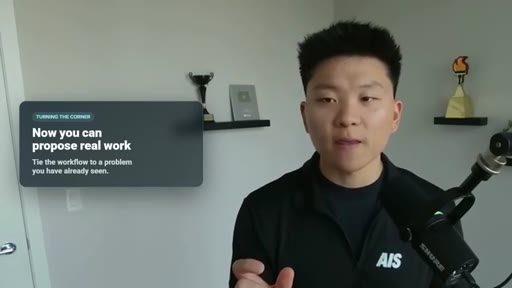
Case study: client asked him for project work after session 3 with no pitch required. How to propose real work once you have seen their operations.
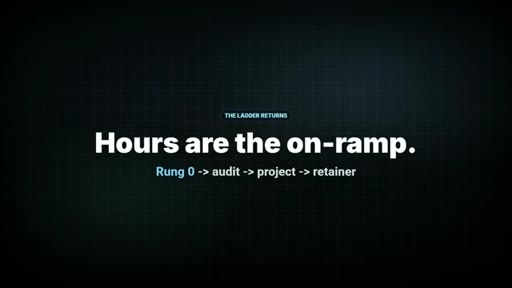
23:17 – 25:00

10 · Fit check and alternative paths

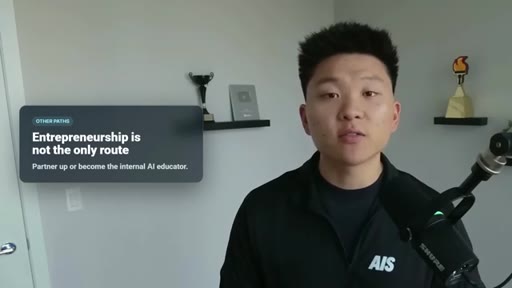
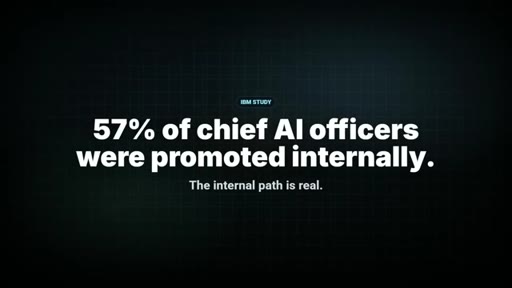
If sales is scary, partner with someone who loves it. Internal AI consultant path is real. 57% of chief AI officers were promoted internally.
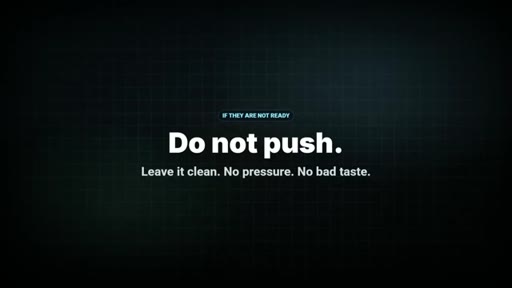
25:00 – 27:03

11 · Final thoughts: the reps mandate

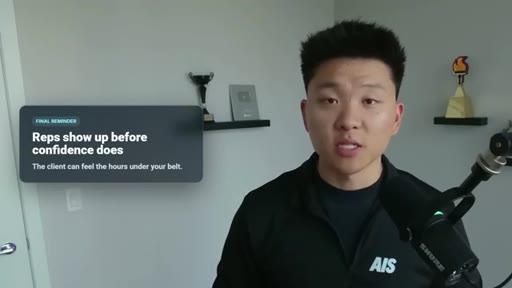
Do not push unconvinced buyers. Leave it clean. Impostor syndrome is a rungs problem. Reps show up before confidence does.

§ · Storyboard

Visual structure at a glance.

hook open
ladder intro
3 reasons
IBM study
AI OS pitch
7 steps
case study
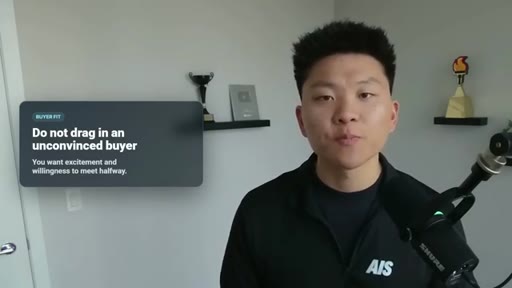
buyer fit
reps close
§ · Frameworks

Named ideas worth stealing.

00:32 list

The AI Business Ladder

  1. Rung 0: Sell hours ($100-500/session)
  2. Rung 1: Audit/scoping ($500-2,500)
  3. Rung 2: First project ($2,500-10,000)
  4. Rung 3: Retainer ($3,000-10,000/mo)

A four-rung progression from no proof to recurring revenue. You must earn each rung by standing on the one below it.

Steal for MCN+ positioning - same ladder applies to any productized service or SaaS-to-ownership play
11:25 concept

The AI Operating System

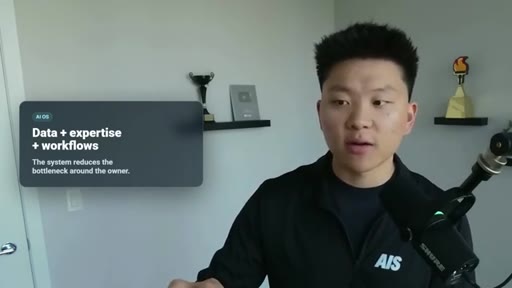
A system that captures business data, subject matter expertise, and workflows so the business stops being bottlenecked by any single person. Built in Claude Code or similar.

Steal for Exact positioning language for MCN+ or JoeFlow - your stack, your data, your system, not bottlenecked by you
11:55 concept

The Offer Reframe

Not I will teach you ChatGPT. Instead: set up your AI Operating System - connect business data, extract subject matter expertise, reduce key-man risk.

Steal for Usable verbatim for MCN+ or JoeFlow sales positioning
17:43 list

7-Step Client Acquisition Ladder

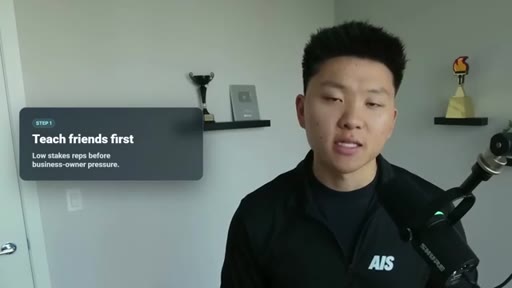
  1. 1. Teach friends first
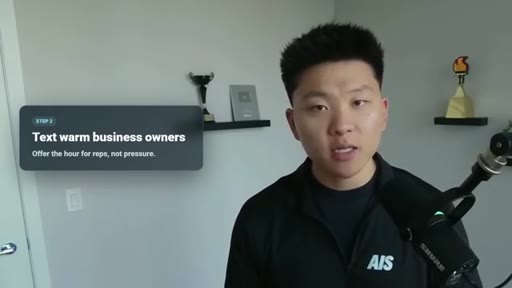
  2. 2. Text warm business owners
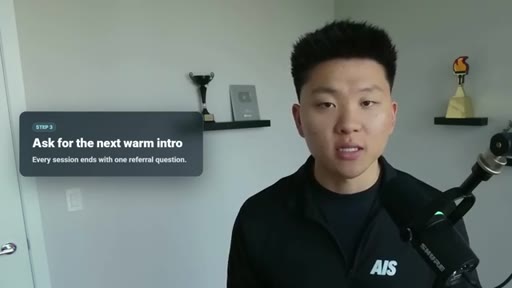
  3. 3. Ask for warm intros
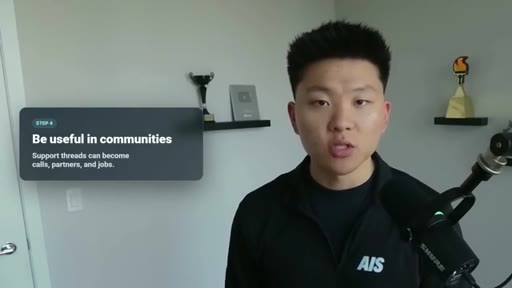
  4. 4. Join communities + help on threads
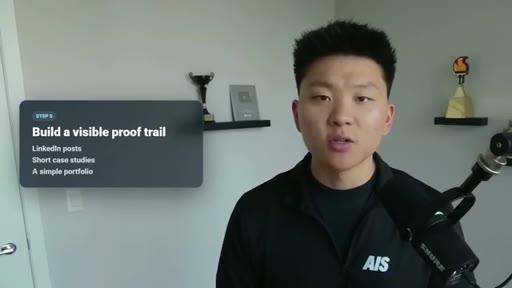
  5. 5. Build in public (LinkedIn, portfolio)
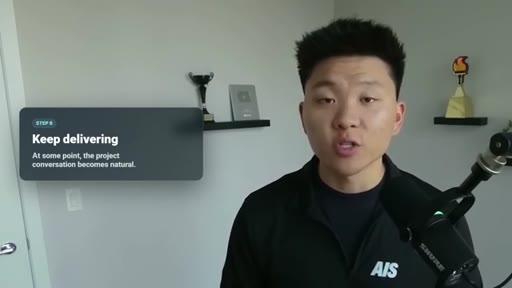
  6. 6. Convert within existing relationships
  7. 7. Local outreach last (after proof)

A sequenced plan that front-loads low-stakes reps before high-stakes sales conversations.

Steal for JoeFlow or LFB Line client acquisition playbook
§ · Quotables

Lines you could clip.

09:49
"The hour is not tech support. It is the first deposit into that long-term partnership that you are trying to build."
Complete thought, no setup needed, visceral reframe → TikTok hook or LinkedIn post opener
26:24
"Impostor syndrome really is not a confidence problem. It is more of a rungs problem."
Tight reframe, universally relatable to any builder audience → IG reel cold open or newsletter pull-quote
14:14
"Your job is to make their existing expertise dangerous with the tool."
Memorable single-line thesis for the whole offer → Twitter/X standalone post
27:00
"Reps show up before confidence does. They will notice even if you cannot tell."
Strong closer, no context required → Short-form clip or quote graphic
§ · Pacing

How they spent the runtime.

Hook length22s
Info densityhigh
Filler8%
Sponsor blocks
  • 03:17 – 05:35 · Genspark
§ · Resources Mentioned

Things they pointed at.

03:17productGenspark ↗
10:06bookIBM 2026 CEO Study
§ · CTA Breakdown

How they asked for the click.

26:20 next-video
"If you guys enjoyed the video or you learned something new, then please give a like."

Soft like/subscribe ask at the very end. Real mid-video CTA is the free Skool course link in description (~12:00 mark), well-integrated into content, not a hard sell.

§ 04 · The Script

Word for word.

HOOK opening / re-engagementCTA the pitch metaphor analogy
00:00HOOKAlright. So if I was starting an AI business from zero today, I wouldn't pitch project work or retainers. I would just sell ours.
00:07HOOKThese are one on one with a business owner, let's just say for a $100, helping them set up their own AI operating system. And honestly, I think that that one offer would dissolve the impostor syndrome that has, like, half of my community frozen right now. So today, I'm gonna give you guys three things.
00:21HOOKThe exact offer I'd lead with if I was starting from zero, what the offer actually looks like so you could literally run it tomorrow morning, and a plan to land your first 10 clients. So let's get into it. Alright.
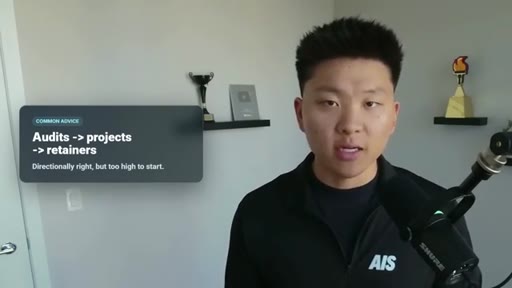
00:29HOOKSo if you have been hanging around the AI space for the past, I don't know, six months to a year, you've probably been told the same thing, which is start an AI business. You should be pitching audits that turn into projects and then, like, $5,000 a month or $10,000 a month retainers.
00:46And these are directionally right. Like, obviously, I agree with that. You know, having a few clients on large retainers is the end goal.
00:52That's where you want to go. But all of those plays, I think, are kind of higher up on this ladder that I'm gonna talk about today. And almost nobody's talking about rung zero of that ladder, like what that actually looks like, which is why I think that so many people just kind of sit there a bit frozen because they can't picture themselves doing what's on rung three or four yet.
01:10So I wanna fix that today by telling you guys, don't start by selling projects or retainers. Just start by selling hours. So let me tell you what I mean by that.
01:18Specifically, selling hours, helping business owners, setting up their own AI operating system, or helping them get comfortable with something like Claude code, and just doing that one piece at a time. And if you've never heard of an AI operating system, just stick with me.
01:29I've got you guys covered. And if you don't know who I am, my name is Nate. I built an AI agency to over a $100,000 a month, and then I exited it.
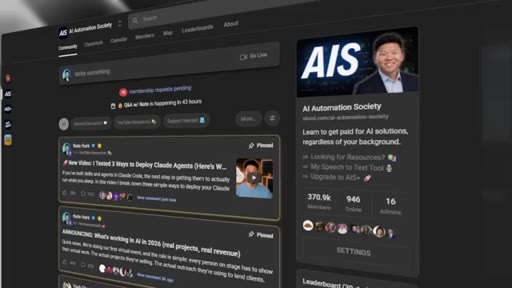
01:35And now I run a free school community of over 375,000 people who are learning AI. So the reason I tell you that is because I kind of get to see this market from two sides.
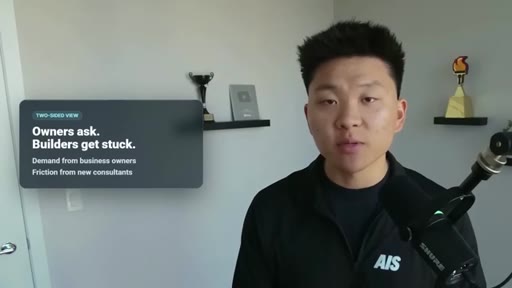
01:44I see what business owners are actually asking for, and I also can see exactly where the people are trying to sell them and where they're getting stuck. Alright. So I want you to think about your business model like a ladder.
01:55Rung zero at the bottom is selling hours. So consulting work. Maybe this could be a 100 to $500 a session, one on one, kind of just like helping a business owner, like I said earlier, with their Claude code setup.
02:05So from there, rung one would be like an audit. Maybe 500 to $2,500 for paid scoping where you go in for, like, an hour or two or maybe even multiple hours and you map their workflows.
02:15You find what is automatable. You put together a proposal for the first real build. Rung two is your first project.
02:22That is, you know, obviously, maybe 2,500 to $10 for one focused scope of work where you ship a single workflow end to end, and you let the numbers there prove the ROI. And then rung three, which is where you wanna be, is retainers.
02:35These can be maybe 3 to $10,000 a month ongoing, and that's a really cool opportunity because you could just work with a few clients and have them on some pretty large retainers and make a lot of income. Now the last two rungs are where almost everyone in the agency space, I'd say, is trying to start.
02:49And eventually, yeah, that's where you end up, but you it's really hard to just start there. You know? You've kind of gotta crawl before you walk, meaning you have to earn each rung by standing on the one below it.
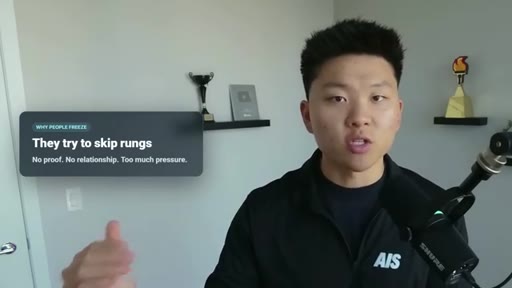
02:59CTAAnd the reason why I think that a lot of people are freezing is because they're entering into this AI space. They've maybe built some really cool stuff, but they've never worked with a client before, and they try to jump to rung two or rung three without having proof or relationships, and they still have that sense of impostor syndrome internally.
03:17CTASo cell hours, that's rung zero. That's where you start. And I've got three reasons that I wanna tell you guys about why I believe in this.
03:23CTABut first, let me quickly tell you how I started crawling before walking in my AI journey with a message from today's sponsor. Alright. So real quick thanks to Genspark for sponsoring this section of the video.
03:32CTAIf you guys haven't heard of Genspark, you will because they went from 0 to $250,000,000 in ARR in just a year.
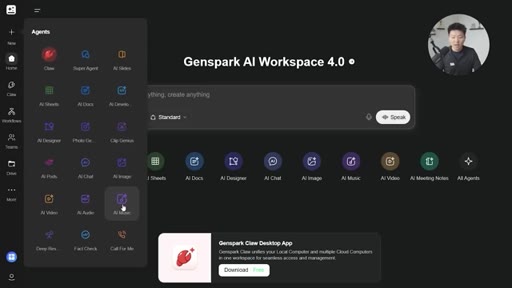
03:39CTAGenspark is a really cool, basically, just like a all in one platform. If I hover over new, what do we have? We have the ability to build custom agents.
03:47CTAWe can do super agents, slides, sheets, docs, developer. There's basically anything you might wanna do with AI you can find inside of Genspark, which also means you have access to all of the different models.
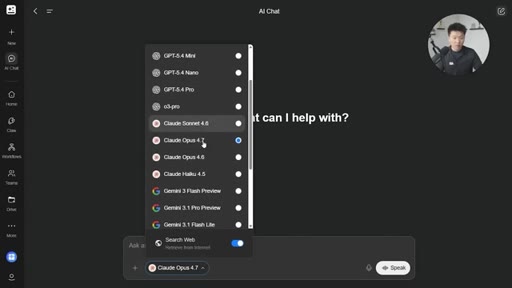
03:58CTASo if I click on AI chat, and this opens up a new chat for me where I could obviously just say, like, you know, hello. I can start to do my back and forth. It can do research.
04:05CTAI can search the web. I can look through all of these different models. You can see here.
04:09CTASo if I click on new chat, now I have access to choose between all the GBT models, all the cloud models, Gemini, all of this. But what's really cool is you can turn on mixture of agents. So if I say,
04:19CTAhey. What does artificial intelligence mean, and what's a voice agent? When I shoot this off, not only is it going to go do research and give me an answer, it's going to use a mixture of agents.
04:30CTAIt's gonna use GPT 5.1 instant here. It chose to also use Sonnet 4.6. It also chose to use Gemini 3.1
04:36CTApro, and there we go. Now you also have access to some of the image models and stuff too.
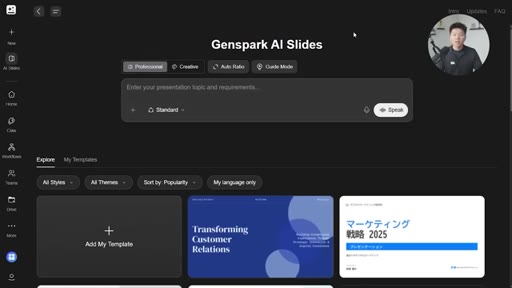
04:42CTASo practical example here, I want to use Genspark AI slides. I'm gonna click on creative, and now I can choose between GPT image two, which I've been loving lately, or Nano Banana Pro. So I'm gonna do GPT image two.
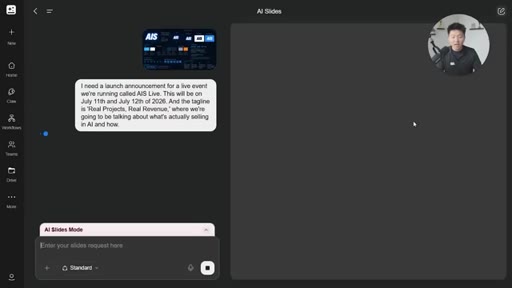
04:52CTAI'm going to upload a brand guideline doc real quick. So I'm asking it to create me a launch announcement for this live event that we're running, which actually is real. And I'm gonna shoot this off, and let me show you what we get back from Genspark.
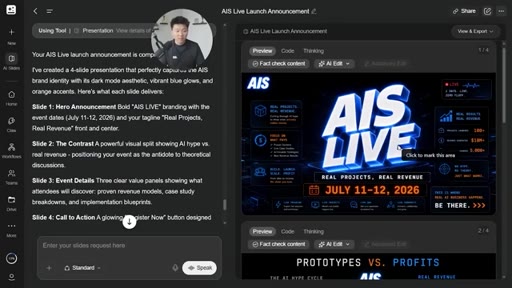
05:03CTAAnd just a few minutes later, I got this four page slide deck back. Now this obviously would take some iteration because I don't love all the wordiness, but it got the brand colors perfect.
05:14CTAIt got the brand guidelines perfect. It made all of this information as you can see, and they look pretty solid. And like I said, I would iterate on this, and it's just as easy now as just typing my iterations right in here.
05:25CTAThen when I'm ready to go, all I have to do is export it, and it's done. Right now, they're also running a get started bonus where new users can try some of the premium features, so definitely check it out while you can. The link is down in the description.
05:36And what's really crazy is Genspark is offering unlimited usage of their AI chat and their AI image for all paid users in 2026. So if you wanna check out those details, come to the documentation here. Now let's get back to the video.
05:47Alright. So the first reason is that consulting or teaching hours are basically a mini sales call and kind of like a mini audit. Because the hardest part of any sale is, you know, especially if you're new to sales and you don't come from a sales background,
06:01is building trust over a call, you know, or a couple calls. But by the time that you've spent sixty minutes inside of someone's business, it could still be on a call, but helping them set up their own AIOS. They're not a cold lead anymore.
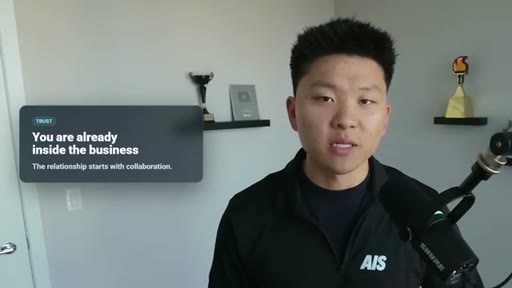
06:13You know, it it feels way more like a working relationship because your guys' relationship kicked off from a place of collaboration. You know?
06:20You guys were literally working together, figuring out things together rather than sort of this weird dance of a negotiation. Right? Like, who might throw out a number first and how do we, like you know, almost like you feel like you're playing mind games on each other trying to bring prices down or up.
06:33And when you're doing that, they're just not ready to drop $5 on a project. Right?
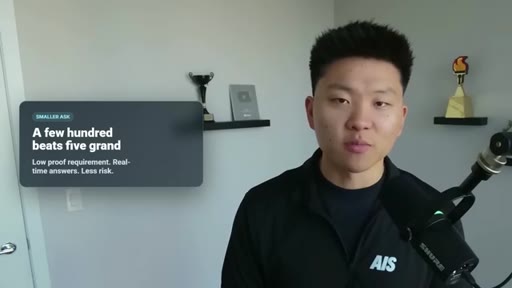
06:38Like, they're not ready to commit to a monthly retainer, but they are going to be more willing to commit to, like, a couple $100 to spend an hour with someone who can show them what AI can actually do in their business, help them avoid the troubleshooting headaches, and answer questions that they have in real time. So the proof requirement on your side is much smaller because you don't need a portfolio or a bunch of testimonials to sell a one hour session.
07:00So the next conversation isn't, you know, will you pay for this project for $5,000? It's basically, okay. Great.
07:05We've set all this up. We've worked together a little bit. Now what's next?
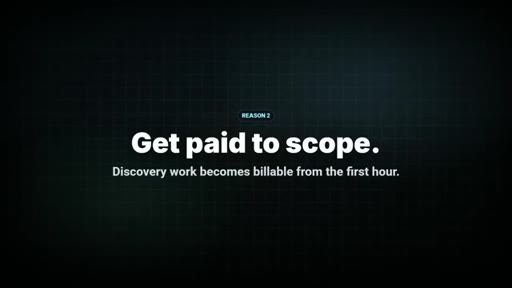
07:09Okay. So reason number two is that you're basically getting paid to scope. You know, a lot of agencies will charge for these discovery calls or for these scoping sessions, but this hour or the couple hours that you're sitting on there learning about their business and their context and their workflows is basically a discovery call, but you're actually getting paid for it.
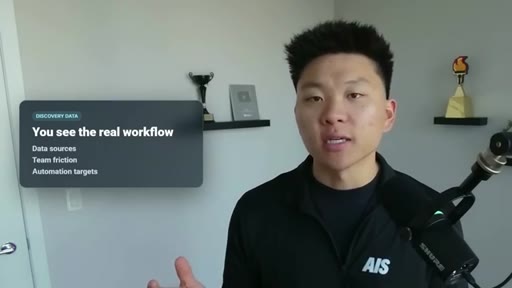
07:26So instead of a one hour Zoom where they describe their business to you, you nod, and you take notes, you're actually, like, inside and you're helping them build stuff out already. You're seeing things like where their data lives. You're seeing things like what their team complains about, what's automatable, what's political, and what their kind of, like, main priorities are.
07:41And it's funny because those are exactly the things that you're looking for when you're running a discovery call. And then reason number three is the longer that you work with them, the harder it gets for them to switch away from you. Because let's say you've done two or three sessions with someone.
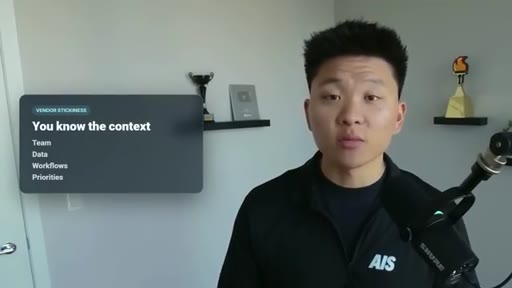
07:54You know their business better than any other AI consultant that they could hire because now you know the team. You know, you spent a few hours with them. You know the data sources.
08:02You know the workflows. You've helped them configure this sort of AI operating system that they already have set up. So if they did wanna, for some reason, work with someone else, it would have, you know, just that pain of switching vendors because they would have to reexplain all of that and get familiarized
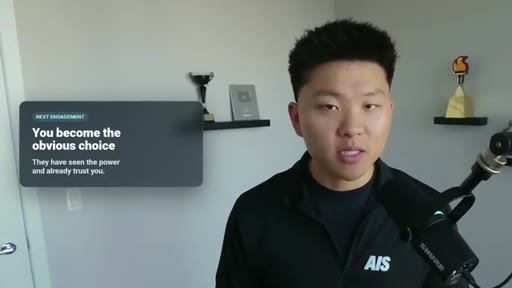
08:15with someone else. And most business owners just don't wanna do that. So you become the obvious choice for the next engagement, and trust me, once they start building stuff and seeing the power, they're going to wanna do more.
08:25And you're the next choice. Like, you're the first person that pops into their brain. And this part's really important because I lived this, and I actually did offer consulting calls in the early days of me starting up my agency.
08:35You know, people could just book in. I'd help them out for an hour, And some of these people I'd never met before actually went on to become some of our longest running clients, which was obviously awesome. But the problem there was that I wasn't really thinking about it in that way at the time, and I really wish that I was.
08:49You know? I was sort of treating those consulting calls as just another way to make some side income, honestly.
08:54And I was thinking about it just as, like, practice and getting more data. I was thinking about it like tech support, really, like troubleshooting. You know?
09:01People would hop on. I'd help them fix the thing. I'd get paid, and then the engagement would be over.
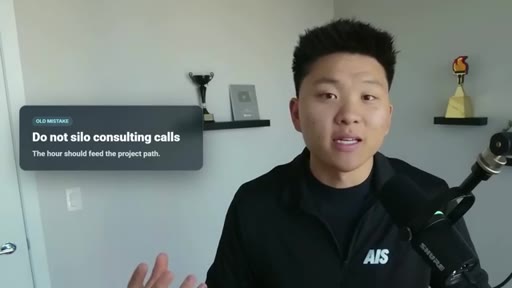
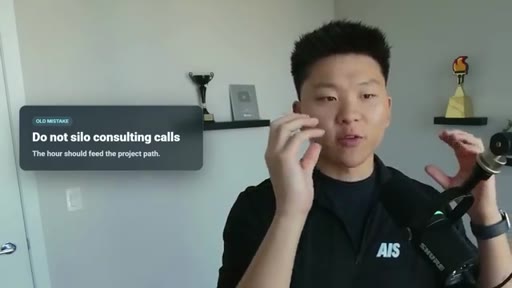
09:06And I just kind of had it, like, siloed in my head as, like, you know, consulting calls over here and my real, like, my real project agency work over there. Two separate, like, totally separate things, but there it really is one where, like, the first piece feeds directly into the next. The first one is the step in the relationship that turns that, you know, consulting call into a project, which gets turned into a retainer.
09:27So, anyways, I'm just trying to say, if I had the mindset of going in like that, of educating them, building alongside them, and earning the right to the next conversation, then I think it would have been way more lucrative because I probably would have gotten so much more business out of those consulting calls. I had run a lot of those, but even though a few of them turned into long term clients, most of them didn't.
09:45And it's probably because I just wasn't looking at it the right way. So think about it like this. The hour is not tech support.
09:50It is the first deposit into that long term partnership that you're trying to build. Okay.
09:55Now I wanna give you guys some macro proof for why this offer works right now in 2026 more than it ever has, and then we're going to get into exactly what happens inside that hour so you know exactly what to do. Because, honestly, if you don't run the hour the right way, then none of the stuff is going to matter.
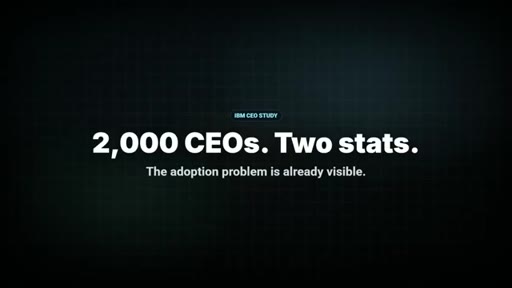
10:09So I've mentioned this study a few times. It's really interesting. But IBM ran their 2026 CEO study on 2,000 CEOs at major companies, and two stats from it kind of tell you everything.
10:19So the first one is that only 25% of employees are using AI regularly, and the second one, which kinda goes right with it, is that 85% of CEOs say that their employees have the skills to use AI. So there's a 61 gap between the people who could be using it and the people who actually are.
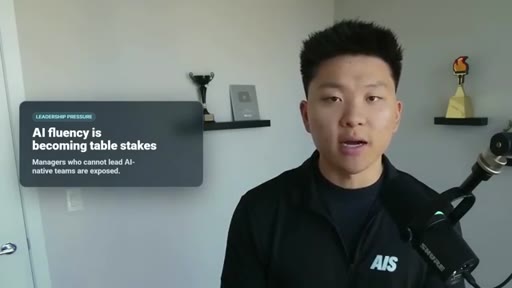
10:36And every CEO is basically just staring at that gap, and they're asking themselves, how do we close it? And it's not just the operators, the employees. The same study basically says that managers and leaders who aren't AI fluent are not going to be leaders much longer.
10:50Like, if you can't lead an AI native team, you can't lead in 2026 and beyond. So now you've got CEOs staring at a workforce that isn't using AI, and you have a layer of managers on top who are about to be replaced if they don't catch up.
11:05So this is kind of a panic moment at every level of the org chart, and the answer is not a $30,000 strategy deck from a big a big firm like McKinsey. The answer is one company at a time, automating one workflow at a time, and upskilling essentially one manager and one employee at a time.
11:22And that is what you are here to do with selling your hours to start. So let me kind of just, like, reframe this for you. The hour isn't, I'm gonna come in and teach you guys ChatGPT.
11:32Like, people had actually printed with that business model. I know some people that have done huge workshops just teaching ChatGPT, and it worked really well.
11:40But I think that the market's evolving a little bit more now, and I think that's a bit too small. So now your hour is so much more than that. It's setting
11:47up the AI operating system. Now I should probably pause here real quick because I keep saying this whole AI operating system thing, and I haven't even told you guys what that actually is yet. So if you've never heard of it, you might be confused.
11:57I'm not gonna teach the entire framework right now in this video, but here's a short version of it. So an AI operating system is basically a system that you operate in. Right?
12:04Like, think Mac. You operate in your MacBook or Windows, whatever it is. And it captures your business data.
12:10It captures your subject matter expertise. It runs your workflow. It helps you operate day to day, kind of like just all in one place.
12:16And that whole point is that your business stops being bottlenecked by you because you now have the system that has all your data and your context, and you can build automations and agents inside of that AI operating system. And you can build that in Cloud Code or Codex or whatever it is, but I have mine right now that I typically am using in Cloud Code.
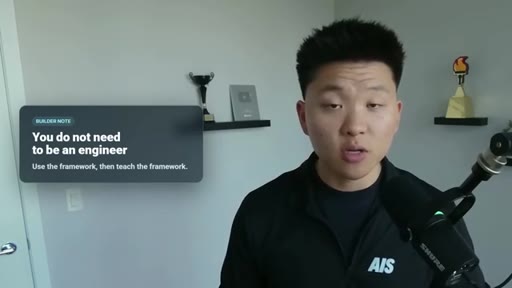
12:32And, obviously, you don't need to be a developer or an engineer to build one of these or to use one of these. So I just launched a completely free two hour course inside of my free school community that walks you through the exact framework and just exactly how I built mine and how you can build yours. I even gave you a free GitHub repo to get started with.
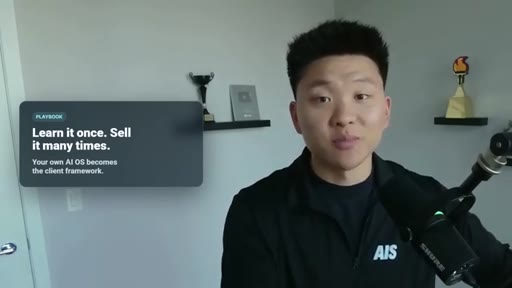
12:48So the link for that is down in the description below. The move here is go take that course, learn the framework yourself, and then once you have your own AI operating system, just turn around and use that exact same framework that I'm teaching you guys with your clients and just teach them that. And that way, instead of staring at a blank screen wondering what you even teach in the hour, you literally have a playbook already.
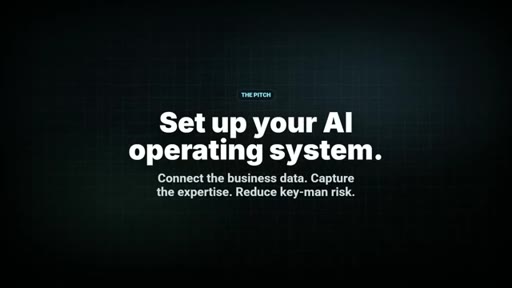
13:07So now that that's out of the way, let me give you basically the exact pitch that I would lead with. I would say something like, what I wanna do here is I wanna help you set up your AI operating system. We're gonna connect your business data, your information, everything that's important about the way that you think day to day, and we're going to extract your subject matter expertise into this AI system so that your business isn't bottlenecked by you anymore, and you can focus on strategy.
13:29You can start working on your business rather than in it. This is going to give you more room to grow. It reduces your key man risk if you ever wanna sell, and that's what I think we should set up for you.
13:39We're offering an operating system. We're not offering an AI tutorial. So the reframe right there is everything.
13:44I think that the part that I really want you guys to, like, stick in your head is that the business owner is the only person who can actually build the right system. Like, you're gonna help them, but you couldn't build it for them because they have their own subject matter expertise. They know the workflows and the customers and their IP better than anyone else does.
14:00So your job is to make their existing expertise dangerous with the tool. You're basically selling them leverage.
14:06So the hour that you're gonna be with them is basically transferring tool fluency to where their domain fluency already lives.
14:13So if you walk into the session with that framing, every consultant suddenly has a product to sell. All of you guys that wanna, you know, call yourself an AI consultant, you now have something tangible to give them. And then practically,
14:24here's kind of how the flow looks like inside of that actual session. So you're going to start to gather their background data. Right?
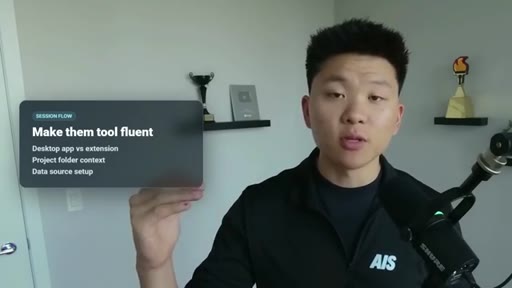
14:30You're gonna walk them through the difference between, you know, using Cloud in the desktop app versus Cloud in something like the Versus Code extension and explain what all that means if they've never used something like that. You make them tool fluent at a high level so that they feel less overwhelmed.
14:44Because as you start extracting their context and their knowledge into a project folder, they're probably gonna feel a little bit overwhelmed, and so you are there to help them out. You're gonna need to connect their data sources. They might be curious about, like, oh, what's MCP or what's an API, and you're just you wanna be able to explain that in a very simple way.
14:59And then after you're doing all this, like, onboarding and setup, it'll break at a natural point, you know, somewhere after about an hour, and then you're gonna schedule your next session so you guys can keep the momentum and keep building this system. Now most people might think that the hour is about showing off AI knowledge, but it's not.
15:13It's really about, like I said, managing overwhelm because every business owner is probably gonna walk in and be super, super excited, but also completely overwhelmed at the same time. Right? Like, I think we've all been there.
15:23So your job is to keep that overwhelm low enough that they wanna book in another session with you, and you have to make sure that you're not making them feel behind or feel stupid.
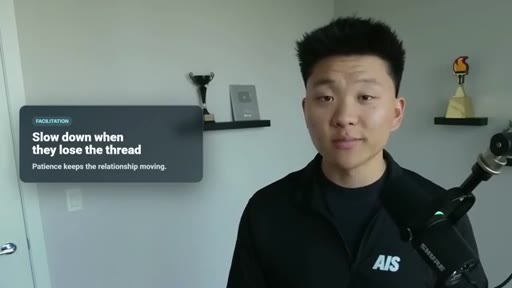
15:32So slow it down when you sense them losing the thread and keep them engaged. You know, constantly asking them, does this all make sense? Do you have any questions?
15:39You know, you can always ask me any questions, as many as you want. I'm here to be a resource for you. Because if you lose them and they feel overwhelmed, then they're probably not gonna book in that second or third sessions and then definitely not gonna wanna book in a project.
15:49So if you respect their pace and you treat them with patience, they're gonna wanna keep working with you. And now now some of you might be thinking, but, Nate, what if they ask me something that I actually don't know the answer to? And that's a great question, and it might happen, and that's fine.
16:02You know? You don't just you basically would just say, honestly, I don't know. Like, let's figure it out together, and I don't think that that's actually a weakness.
16:09That's actually just part of the job. You know? I think that it gives you an opportunity to show that you're confident in your abilities and that you can take that extra step.
16:15You know, I remember a few times on my first couple consulting calls where people would ask me about certain types of, like, maybe a database structure that I hadn't worked with before, and I would tell them, honestly, I don't know. I've never had a use case where I had to deal with that, but what I'll do after this session is I'll do some research.
16:30I'll test it out. And the next time we meet, I'll make sure that I understand if this is something that you actually need in the system or if we can take a different approach. And, yeah, they're really gonna respect that because
16:40you're not supposed to be Google. Right? Like, you don't need to know everything on demand, but you're just supposed to be their problem solver, and you're supposed to be their barrier between really complex stuff and
16:50what they wanna do. And so the fact that it's gonna take more than just one hour for the business owner to set up their AOS is obviously great, but it's great for you and great for them because they get to spread out the cost, you get to spread out the work, you get to deepen the relationship every single session. And I wanna hammer this home as well.
17:05Right now, especially when you're starting out, it's not about the cash. Like, trust me, the cash will come, but right now, you're prioritizing for reps and for experience. You need confidence.
17:14You need to have more conversations with business owners. You need to get good at explaining things. So you go above and beyond on every single one of these hours.
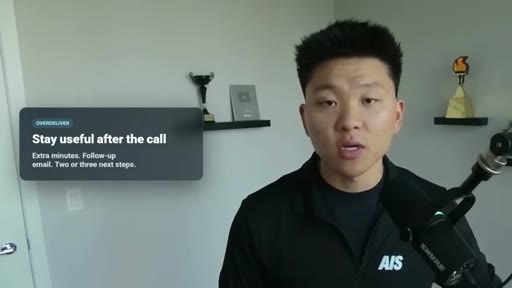
17:22You overdeliver. You stay on an extra ten minutes if you need to. You send a follow-up email afterwards with two or three things that they could try that week.
17:28And maybe that means you don't start off the bat charging $2.50 an hour. Maybe you just start at 50 an hour or, you know, 99. Because once again, you're not optimizing for cash today.
17:35You're optimizing for the cash six months from now, and all of that has to start with reps and experience up front. Where do you find these people in the first place?
17:43Right? Because nobody is going to sell anything if they can't even get a single conversation booked. So this is a layered plan, seven steps.
17:52Each one kinda builds off the next. Step one, before you ever pitch a business owner, just teach your friends. Like, seriously, just your buddies, people that you are very comfortable with, people in your network who don't even own a business.
18:01Text three of them right now and say, hey. I've been getting really into this AI stuff. Can I come over and show you how Cloud Code works or help you set up these AI tools for whatever you're into?
18:10And that's it. Just no pitch, obviously, no payment. You're just teaching your friends something real.
18:15And that's gonna be, like, real raw practice, which is gonna be huge because you're in a low stakes environment. You're with people you're already comfortable around, and you're literally just showing someone a tool that you're passionate about.
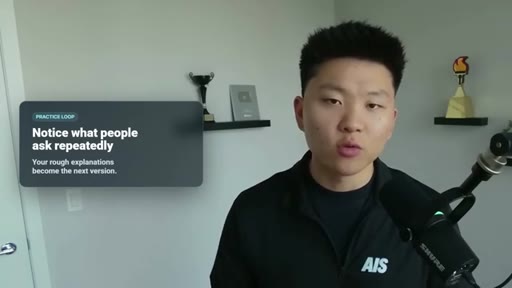
18:26And after you've got through that a few times, you're gonna realize like, wow. I explained this horribly, and all three of them asked me the same questions about this. So I know now next time I teach someone this stuff what I probably need to do a little bit better.
18:39Because if you went from never teaching someone to trying to teach a business owner when the pressure's, like, the pressure's on for real, you're probably gonna mess up, and you're gonna feel very intimidated. And so now you can hop into an actual sort of like a high pressure situation with a real business owner feeling a lot more confident.
18:54So then step two is to text the business owners in your network that you know or ask people if they know any business owners or people who may be interested in learning more about AI. So I would basically send a text that kind of reads like this. I'd say, hey.
19:05I've been getting really good at this AI stuff, and it's been giving me, you know, superhuman productivity. So would you be open to letting me come over for an hour and walk you through setting up your own AI operating system? You know, completely on me.
19:16I just wanna get the reps in. Then step three, after you do a few of those sessions, every one of them gets the same question at the end, which is, hey. If you've got any friends or business owner buddies who'd also wanna learn this kind of stuff, let them know that I would love to help them out.
19:28So now you're kind of even expanding more on your own warm network. And step four, you can also join communities. There's so many different, like, AI or business focused
19:37communities. Mine has over, you know, 370,000 people right now, and that means that there are a lot of support issues being posted every day.
19:44So you can help people out. You can offer to jump on a call. Just you know, some of these people will also pay you or maybe wanna collaborate with you.
19:50Some of them might introduce you to other people. And I've literally watched so many people in my community just partner up or land clients or even get full time jobs just because they were being active and helpful in whatever communities.
20:01Step five is to build in public. Once you start doing these education sessions and you're building these workflows and setting up things, just post them. Like, it doesn't have to be like you're an influencer or you're posting your face or whatever, but post a case study on LinkedIn or write an article about this and just put them somewhere
20:16on your personal website, like make a portfolio. Just have some sort of virtual resume somewhere so that later when people look you up or, you know, when you're reaching out to people, you can send them something to give you a little bit more, you know, trust. Step six, once you've got a handful of people who have booked in some sessions with you consulting hours, you can just start winning more business with them like I talked about earlier.
20:36And the part that I wanted to stress here is don't be pushy and don't pressure them. Just keep delivering. Keep being helpful.
20:40And at some point, the conversation just naturally becomes like, hey. You know, we could build this out together. So here's what I charge for that.
20:46And at that point, it feels so much less like you're pitching them, just more like you're recommending something to someone who already has some trust in you. So then step seven, and only once you've got your proof, then you can start, like, walking into local businesses. You can go to local tech meetups.
20:59You could to local marketing events. You could walk into actual local businesses as well, telling people that you wanna help, and that is the latter. Every single one of those steps is something that you could literally start doing this week.
21:09And once you run a few of these kind of, like, consulting sessions, something kind of awesome happens, which is the hour doesn't pay for just, you know, the 250 or however much you mark it up as. It pays for something a lot more valuable, which obviously is basically just getting your foot in the door for real conversations.
21:26So let me give you guys a quick example. I was running some consulting calls with this client, and we were basically, like, just building out an automation together because he kinda wanted to learn and and and I was helping him out with that. So he would literally just screen share.
21:39We would talk about the automation. We'd build it together. And as he was showing me what he was doing and I was helping him build I would explain what are the different nodes and how to think about prompting and we would you know, how to think about evals and AI models and stuff.
21:49And we were working on this together. And during the third call, I remember he paused and he goes, wow. This is actually gonna take a lot longer than I thought, isn't it?
21:56And And I was like, yeah. I mean, it's it's a pretty big lift, but just probably a few weeks of focused work, but it's gonna add a lot of value. And right after I said that, he was like, you know what?
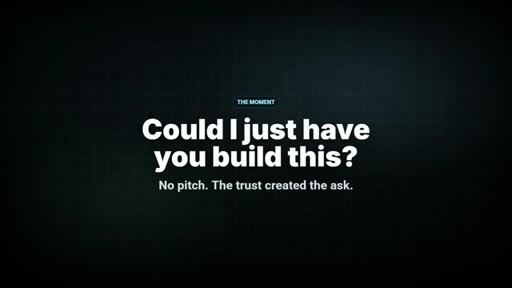
22:03Are you available for project work? Like, could I just have you build this for me instead? And so, like, in that case, I didn't have to pitch him on anything.
22:09You know? All I did was I was just showing up, and I was helping him, and I was making sure he wasn't overwhelmed. And once he had that trust in me and he kind of knew that I wasn't an expert, right, but I knew more than he did.
22:19And that's all he needed to basically pitch me. But, of course, not everyone's gonna come out and say, hey. Can I just pay you to do this for me?
22:25You can still drive that conversation yourself once you've actually seen enough about their operations to have some ideas of workflows that would actually provide value. You know, you don't just wanna throw out random agents and workflows. You wanna say, hey.
22:36I realized you have this problem, and I know a good workflow that we could build together that would actually solve that problem exactly. So if you don't mind, I'd love to, you know, in our next session, just dive into that one a little bit more and talk a little bit more about it, and then I can come back with a full proposal on how I think we should build it and why I think it's gonna impact your business so much.
22:55Because I wanna be honest with you guys. Obviously, you're not gonna build, like, a multimillion dollar business if you're just trading hours for money. I mean, the math doesn't work.
23:02It's really hard to scale. You just need a bigger and bigger team if you're gonna do that. So like I said, selling those hours is the on ramp.
23:08You have to earn your way up the ladder. Audit, the consulting hours is rung zero, and then you've got audit, project, retainer. So there is something else I want you guys to keep in mind, which is basically, like,
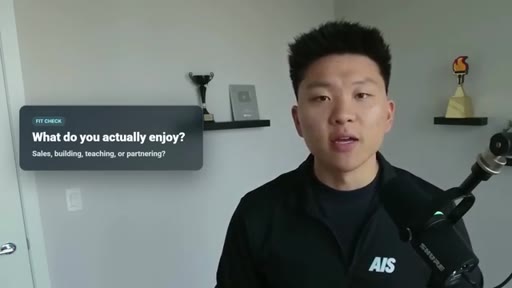
23:17what do you really want to do and what do you enjoy doing? Doing? Because if the idea of texting
23:22three friends or random business owners sounds scary or the idea of hopping on like a consulting call and teaching someone how to do something is also scary, then maybe
23:31being a business owner, like, isn't what you actually want. And that's completely fine because there are other paths. Like, I do think that it's really good to get out of your comfort zone and push yourself a little bit, but there still are other paths, and it's important to at least acknowledge that.
23:43Because you could also partner up with someone who loves that, like, sales part, you know, and you could just be the AI builder or the AI educator. I've seen tons of these sorts of partnerships form just by getting involved in communities. You could also land a job somewhere as, an internal AI consultant inside a company, or maybe you already work at a company.
24:00You can start educating people on your team and educating managers and stuff like that, leading these internal AI workshops, and in that way, get noticed and maybe get a promotion. There was this IBM study that I mentioned earlier, but this one was a different one from IBM.
24:13And it basically said that 57% of chief AI officers right now were actually promoted from inside the company. So the path doesn't always have to be entrepreneurship,
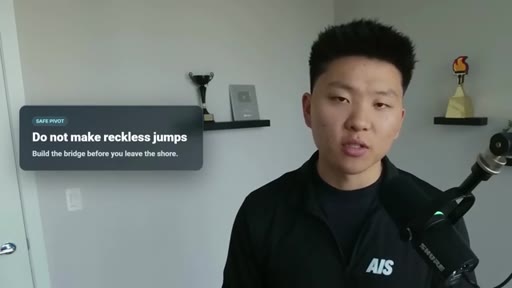
24:21and you always have to think about, like, how do I make a safe pivot? Right? Like, I'm not saying that you should just quit your day job and go start selling these hours.
24:28Like, be safe about what you're doing here. And the final thing that I wanted to talk about is what happens if you're doing these consulting sessions and you're struggling to sort of, like, make that pivot into, like, the next step, the audit or the project.
24:41Don't push. Just say something like, you know what? I hear you.
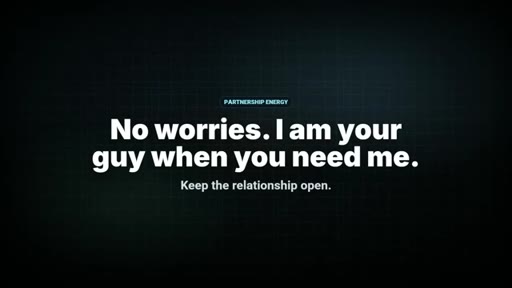
24:43You know, I'm just a text away whenever you need this. I'd love to come back and help you out. And then just leave it clean.
24:48You know? You know, there was no pressure there. There was no bad taste in their mouth.
24:51And this is really the mindset shift you have to have because some business owners are just not ready yet, and it's not your fault. If they haven't felt that ROI, if they haven't fully believed in AI yet, then it's really hard to convince them, especially if you don't have, like, really, really strong specific targeted case studies.
25:07You know, you're not gonna convince an unconvinced buyer to suddenly just be bought in. So that's a much tougher ask than people realize. And the other thing is if you're talking to someone that's not very excited about this stuff and you have to, like, you know, really pull them in, that's probably not even a partnership that you wanna be.
25:22You wanna work with someone who's excited about it and is also willing to meet you halfway. So just do the whole, yeah, no worries, no pressure, but I'm your guy whenever you need me. Alright.
25:31So to bring this whole thing home, I made this video for really one core reason, and I started to go off on these tangents here. But it was basically about the impostor syndrome because that's, like, one of the main patterns and issues I see in these communities. You know?
25:45Really smart people, really capable people just sitting on the sidelines or struggling because they feel like frauds when they try to pitch these projects. They don't know how to price them and all this kind of stuff. So what I want you to take away from this is that impostor syndrome really isn't a confidence problem.
25:59It's more of a a rungs problem. You know? If you feel like a fraud, it's probably because you're trying to sell something that you've just never done before, which, you know, you're probably going to feel like a fraud.
26:08But if you just kind of step down the rungs a little bit and you start with rung zero and you're navigating in an environment that you feel a little bit more comfortable in, then you're going to be able to slowly dissolve that impostor syndrome. And I will say the other brutal truth is that it doesn't fully ever go away.
26:21Like, I still have impostor syndrome almost every single day. So I don't know. Hopefully, that makes you guys feel a little bit more comfortable.
26:26CTAAnd that's why I really think it's important to optimize for reps and experience because even if you don't directly feel it or notice it, if you're talking to a business owner and you've had twenty hours of consulting calls, you know, under your belt already, they will notice that. Like, they will be able to tell even if you can't tell.
26:40CTASo just remember, everything that I walk you guys through assumes the fact that you've already built your own AI operating system. Because if you haven't, then how do you expect to teach someone else to do it? So that free course that I dropped in my free school community is linked down in the description.
26:54CTABut that's gonna do it for today. So if you guys enjoyed the video or you learned something new, then please give a like. Helps me out a ton.
26:58CTAAnd as always, I appreciate you guys making it to the end of the video, and I'll see you on the next one. Thanks, guys.
— full transcript
§ 05 · For Joe

Steal the ladder.

AI Consulting Playbook

The rung-zero positioning is the unlock: every aspirational creator and builder audience is frozen at the same gap, and this framework names it, validates it, and gives them an executable first step.

  • Use the ladder metaphor directly in MCN+ positioning - most tools and memberships pitch the retainer-level outcome without addressing where people actually are.
  • The AI OS offer reframe is verbatim-usable for JoeFlow/MCN+: swap AI Operating System for your own stack and the pitch holds.
  • The get paid to scope framing collapses the free consultation trap - worth building into any LFB Line or done-with-you offer.
  • The 61-point IBM adoption gap stat is a reusable market-timing argument for 2026 content positioning.
  • The case study (client asked HIM for the project, no pitch needed) is the strongest trust-builder in the video - replicate that structure in testimonials.
§ 05 · For You

You do not need to be an expert to start.

If you want to get into AI work

The skill gap between where you are and what the market needs is smaller than the gap between rung zero and where everyone tells you to start.

  • Start by teaching three people you already know - the practice is more valuable than any course.
  • The offer is not I am an AI expert. The offer is I will sit with you for an hour and we will figure out your setup together.
  • Impostor syndrome is a rungs problem: drop down one rung, do the work, then climb.
  • The goal of the first hour is not to impress - it is to make them comfortable enough to book a second hour.
  • You do not need a portfolio, testimonials, or a website to book your first paid session.
§ 06 · Frame Gallery

Visual moments.