Bullet Journal · Youtube · 09:24

How I Run My Entire Life (Using Any Notebook)

Ryder Carroll's five-part Life OS—intention, rapid logging, reflection ritual, action plan, and execution—explained in nine clean minutes.

Posted
May 22nd 2026
yesterday
Duration
09:24
Format
Tutorial
sincere
Channel
BJ
Bullet Journal
§ 01 · The Hook

The bait, then the rug-pull.

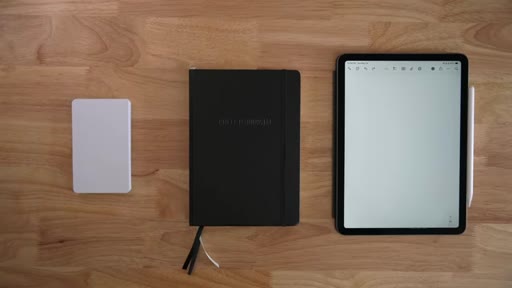
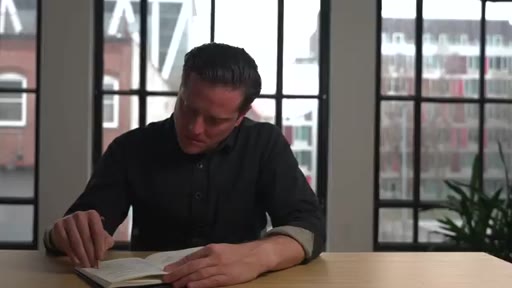
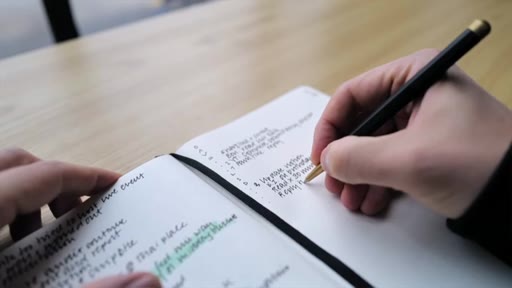
The opening shot says everything before a word is spoken: an index card, a Bullet Journal notebook, and an iPad side-by-side on a wood desk. Ryder Carroll doesn't pitch his product first—he pitches the premise that the container doesn't matter, only the operating system inside it. It's a smart disarm for the audience that already has notebooks they don't use.

§ · Stated Promise

What the video promised.

stated at 00:15 "I'll show you the five parts you need to build your own life operating system, and it can be as simple as using nothing more than pen and paper." delivered at 09:00
§ · Chapters

Where the time goes.

00:00 – 00:30

01 · Hook — any container works

Three tools (card, notebook, iPad) share the same Life OS. Sets the tool-agnostic frame.

00:31 – 01:32

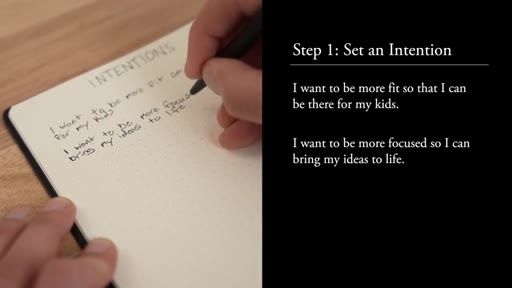
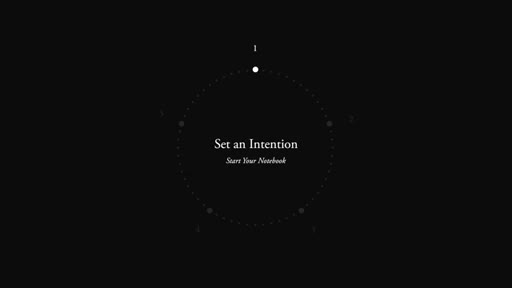
02 · Step 1 — Set an Intention

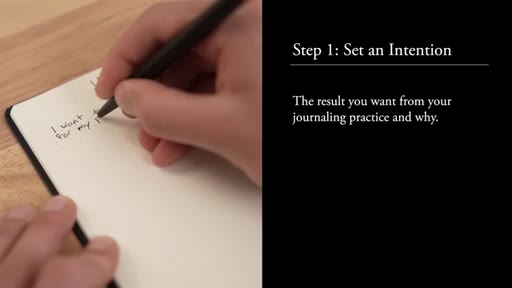
Write what you want the system to produce and why, at the front of your notebook. Forces articulation of direction.
01:33 – 03:23

03 · Step 2 — Rapid Logging

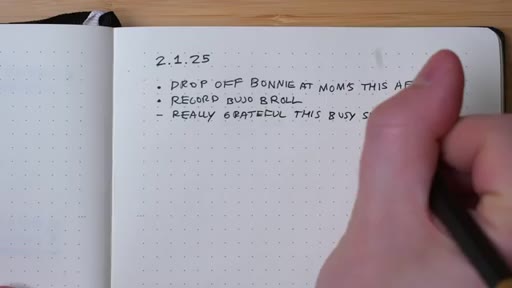
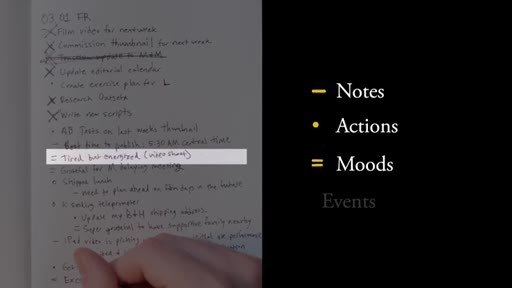
Four bullet types: Notes (—), Actions (•), Moods (=), Events (○). Single-sentence entries. Keep it simple—other people's elaborate systems solve other people's problems.

03:24 – 05:42

04 · Step 3 — Reflection Rituals

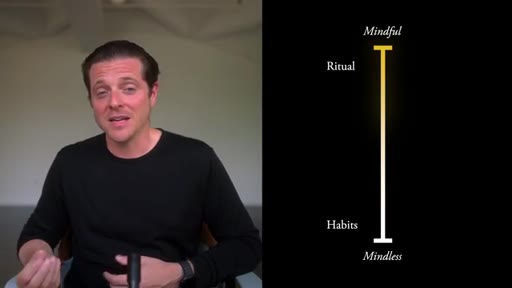
Habit makes behavior mindless; ritual makes it mindful. Weekly ritual: block the time, make it enjoyable (coffee + incense), fill a two-page spread with past three things that moved you toward your intention and three that didn't.
05:43 – 07:43

05 · Step 4 — Weekly Action Plan

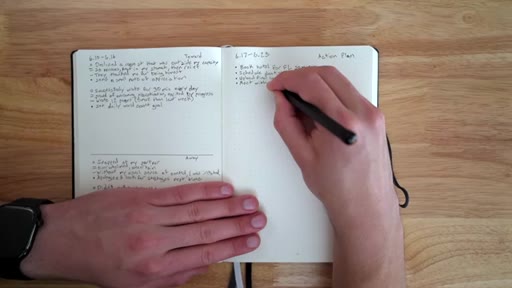
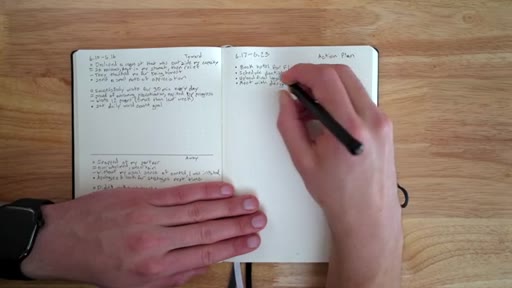
Plan only what you'll actually finish in a week. Rewrite undone actions each week—friction filters out busy work. Everything you say yes to means no to something else.
07:44 – 09:24

06 · Step 5 — Take Action & Refine

The system only works if you work it. Use reflection to identify root causes of missed goals, then run experiments. Notebooks make life visible as a story unfolding page by page.

§ · Storyboard

Visual structure at a glance.

three tools
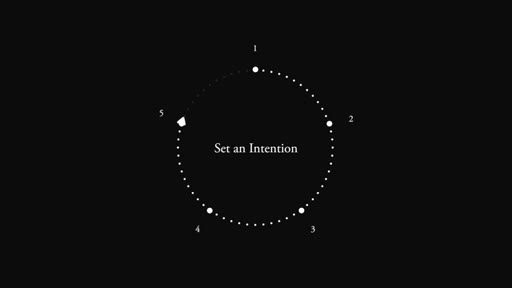
5-part OS circle
Step 1 card
Rapid Logging title
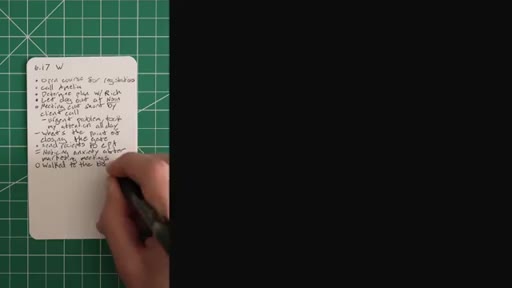
4 bullet types
Reflection Rituals title
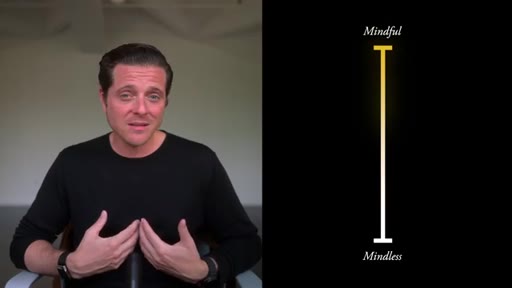
Mindful vs Mindless graphic
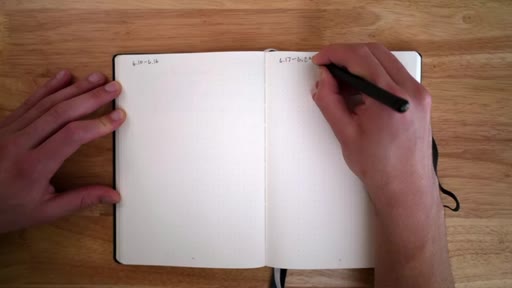
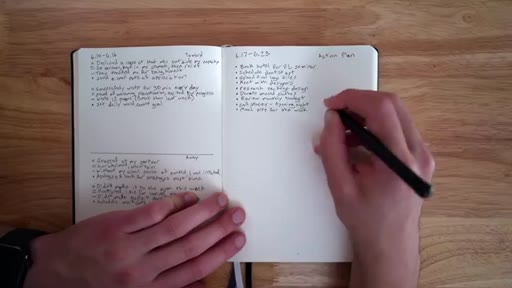
Weekly spread — Toward/Away
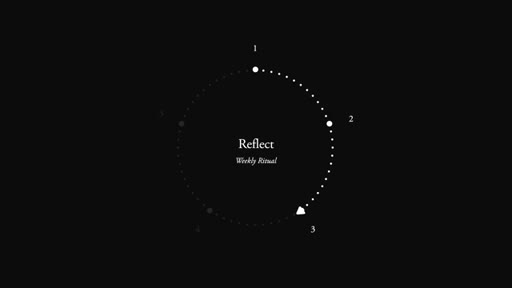
Step 3 circle marker
Step 4 circle marker
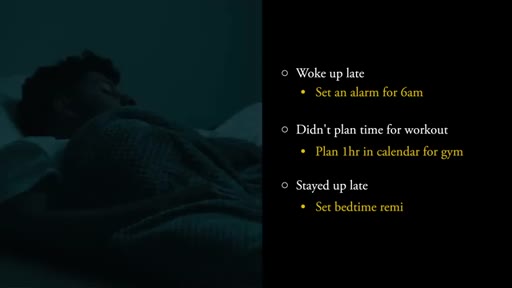
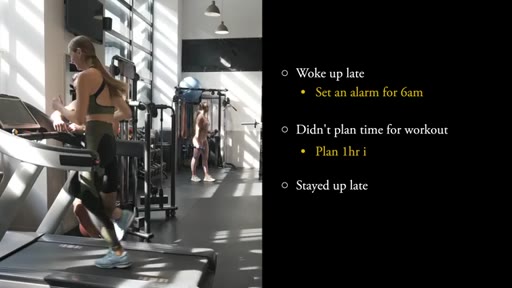
Gym example — refine
Step 5 circle — Set an Intention returns
Foundation CTA + next video
§ · Frameworks

Named ideas worth stealing.

00:15 list

The Five-Part Life OS

  1. Set an Intention
  2. Rapid Logging
  3. Reflection Rituals
  4. Weekly Action Plan
  5. Take Action

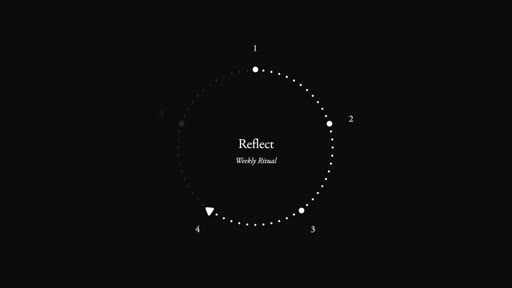
The complete Bullet Journal framework distilled to five steps, each addressed in sequence with on-screen animated chapter markers.

Steal for Any course, workshop, or keynote that teaches a system. The five-point circle navigation graphic is the steal.
01:56 list

Rapid Logging — Four Bullet Types

  1. Notes — record thoughts
  2. Actions • record to-dos
  3. Moods = record feelings
  4. Events ○ record experiences

A minimal capture taxonomy. Four symbols, one sentence each, applied universally.

Steal for Any daily log or morning-pages practice. Replaces the blank-page paralysis problem.
03:47 concept

Habit vs. Ritual distinction

Habits seek to make behavior mindless; rituals seek to make behavior mindful. For life review, you want ritual—full presence, not automation.

Steal for Content about morning routines, weekly reviews, or any recurring practice that benefits from intentionality over automation.
06:30 concept

Friction as filter

Rewriting undone tasks every week is friction by design. If it's too much bother to rewrite, it wasn't worth doing.

Steal for Any productivity talk about saying no, prioritization, or to-do list hygiene.
§ · Quotables

Lines you could clip.

00:31
"You can have the most elegant productivity stack in the world, but if it isn't pointed at something that actually matters to you, it's going to be a distraction."
Standalone thesis sentence, no setup needed. Indicts the entire productivity-tool industry in one line. → TikTok hook
03:47
"I say ritual instead of habit because to me, a habit seeks to make a behavior mindless. A ritual seeks to make a behavior mindful."
Clean conceptual distinction. Quotable as a standalone for journaling / self-improvement audiences. → IG reel cold open
06:31
"Everything we say yes to means we're saying no to something else."
Punchy, universal truth—no BuJo context required. → Newsletter pull-quote
06:47
"That small moment of friction has filtered out so much unnecessary busy work. If it's too much of a bother to rewrite in that moment, then surely it can't be adding a lot of value to your life."
Counter-intuitive productivity insight — friction as feature, not bug. → TikTok hook
08:07
"If your intention was to go to the gym five days a week, and now that you see that you've gone zero times—that means you have the perfect system for going to the gym zero times a week."
Dark-humor reframe that lands hard. Strong punchline energy. → IG reel cold open
§ · Pacing

How they spent the runtime.

Hook length30s
Info densityhigh
Filler5%
Sponsor blocks
  • 03:04 – 03:23 · Bullet Journal Foundation Plan (own product)
§ · Resources Mentioned

Things they pointed at.

09:15linkBullet Journal Method (next video CTA)
§ · CTA Breakdown

How they asked for the click.

09:15 next-video
"If you wanna dig deeper into this life operating system, check out this video next."

Clean end-screen with thumbnail card. Mid-video soft sell for Foundation Plan at t=184 via scan-the-QR-code with no hard pitch language.

§ 04 · The Script

Word for word.

HOOK opening / re-engagementCTA the pitch metaphor analogy story
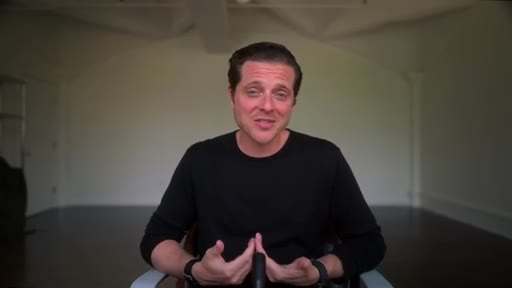
00:00HOOKHere are three things you could use to organize your life. Simple stack of cards, notebook, even something digital.
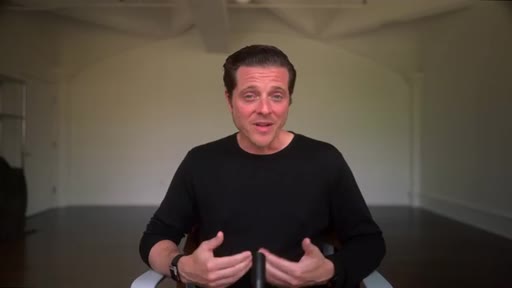
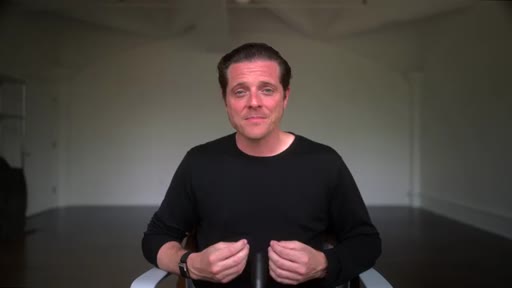
00:07HOOKWhat all three have in common is that they run the same life operating system, a system I've refined together with over a million practitioners around the world. Hi. I'm Ryder and mentor of the Bullet Journal Method.
00:18HOOKIn this video, I'll show you the five parts you need to build your own life operating system, and it can be as simple as using nothing more than pen and paper. Let's dive in.
00:31You can have the most elegant productivity stack in the world, but if it isn't pointed at something that actually matters to you, it's going to be a distraction. So while I'm trying to figure out what the best system is, we wanna start by defining what the system is for. The first thing we're going to do is write out our intention for our LifeOS.
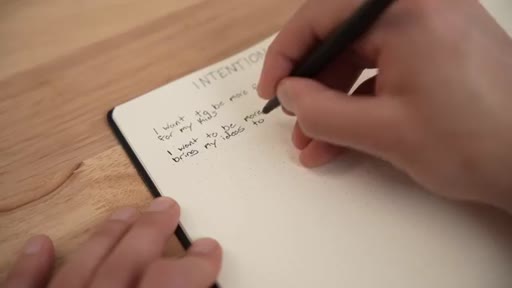
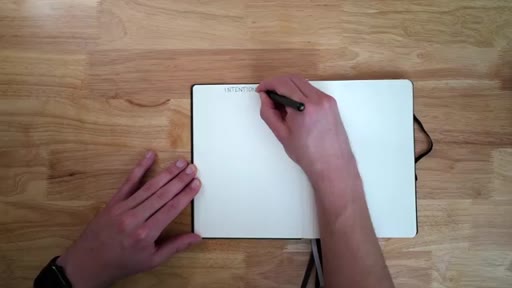
00:51I like to do this at the front of my notebook. Write down what results you want from the system. What do you want it to produce and why?
00:59For example, I wanna be more fit so that I can be there for my kids. I wanna be more focused so I can bring my ideas to life, or I wanna be more intentional with my finances
01:10so that I can invest in exciting experiences. Whatever it is, it's up to you. I think that it's critical that you write this down first because it forces you to actually articulate
01:21what it is that you want. It helps you get clear on the direction that you wanna go. Is this thing moving me towards the life that I want or away from it?
01:29From the person I wanna be or away from the person I wanna be?
01:35With your intention in place, you have your why. Now we wanna move on to what and how you put things into your system. If you don't know what to write down, then you might overwhelm yourself by trying to write down way too much or nothing at all.
01:50And if you don't know how to write things down, then things can get disorganized really quickly. So to solve for both of these problems, I developed a simple technique I call rapid logging.
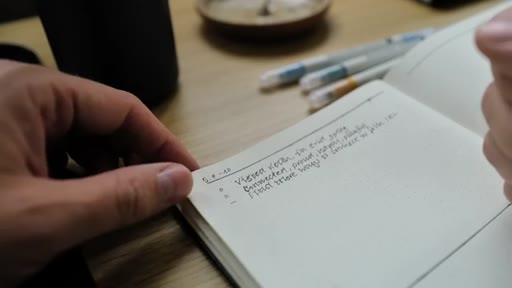
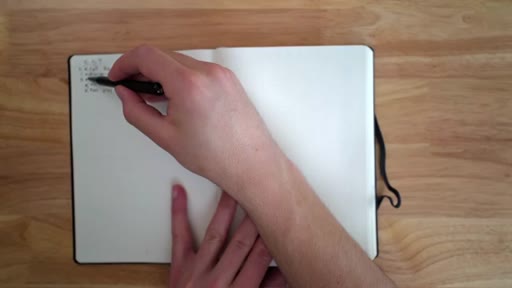
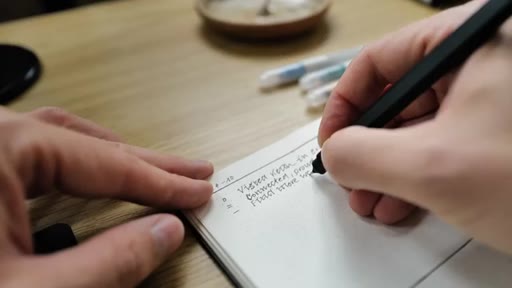
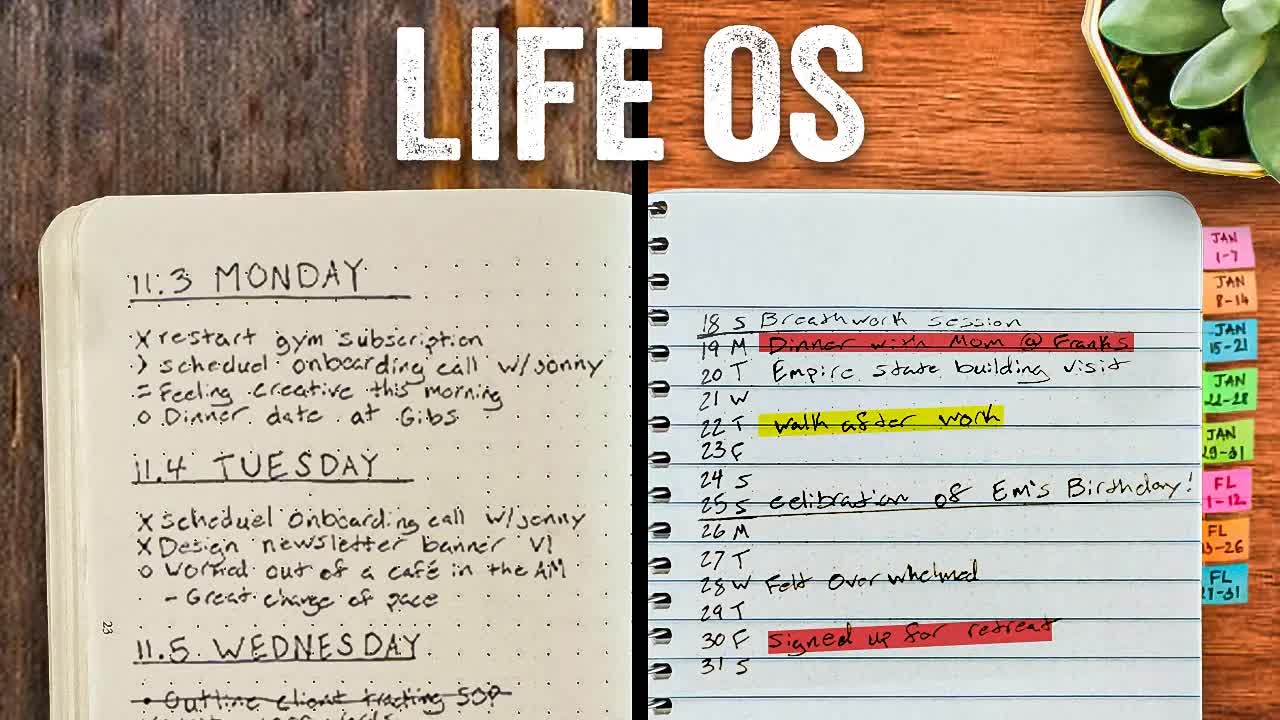
02:00Rapid logging is a simple way to quickly record your life as it unfolds. It uses nothing more than single sentence journal entries paired with a symbol. Those symbols represent one of four categories.
02:12Notes for recording thoughts, actions for recording to dos, moods for recording feelings, both emotional and physical,
02:20and events for recording experiences. That's it. Four bullets, one sentence each.
02:26Use these to turn your notebook into a living record of your days. Now you might be looking at this and thinking, why this seems way too simple? And that's actually the point.
02:36Most people overcomplicate their systems. They copy elaborate spreads or digital setups they found online
02:43without needing most of it or knowing how to actually use it. Other people's systems were designed to solve other people's problems,
02:52not yours. Your system needs to reflect only your needs.
02:57CTAThat's why we start only with what we need and then add only when a need is not being met. Now if you don't know what you need, that's what the next step is for.
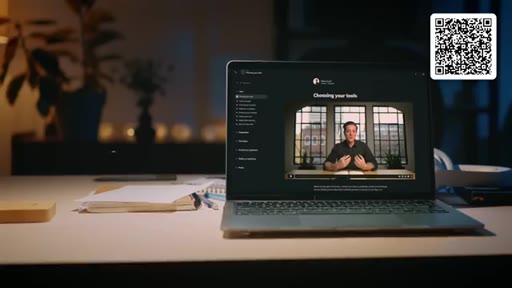
03:07CTANow if you're curious about how to actually do this, consider checking out the bullet journal foundation plan, which I built for this purpose, to help you get your record up and running as fast as possible without over complicating it. You can scan this code or check out the link below. Okay.
03:22CTALet's keep going.
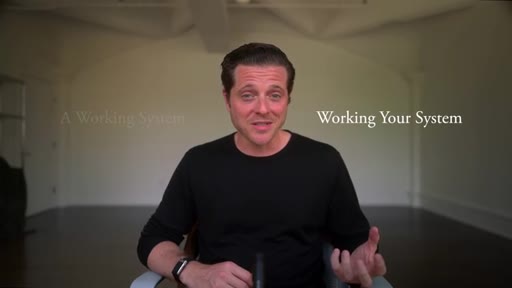
03:27Now there's a major difference between working your system and actually having a system that's working. That's why a key part of any Life OS is regularly reading your record.
03:38That's what reflection rituals are for, to see if our system is supporting our intention. Is our LifeOS actually working?
03:47I say ritual instead of habit because to me, a habit seeks to make a behavior mindless. A ritual seeks to make a behavior mindful. And when it comes to our life, we want to be as present as possible with our behavior.
04:01Let me walk you through part of one of my reflection rituals, my weekly ritual, and the considerations that went into creating it so that you can model your own. The first consideration is taking time. I block off regular times to reflect on my digital calendar.
04:16This way, I don't have to keep wondering about when I'm gonna do these things, and I don't run into any kind of conflicts. Without taking this time, I've learned the hard way that I will never find the time.
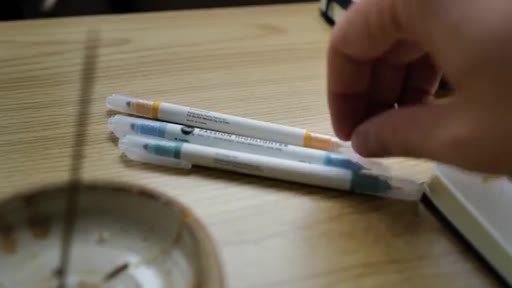
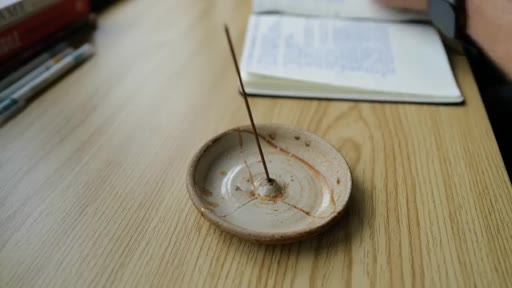
04:27What makes this even easier is making the time you do take feel fun and intentional and meaningful. For example, every Monday morning, I set up my notebook, I put out my thermos of coffee and light some incense. I like the incense because it acts like a timer.
04:42Mine lasts about thirty minutes, which is about how long it takes me to do my weekly ritual. Also, smell of that incense reminds me of the temples that I visited in Japan and it has this queuing effect on my system to slow down, open up, and deepen,
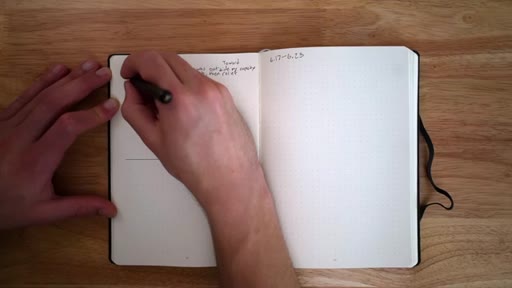
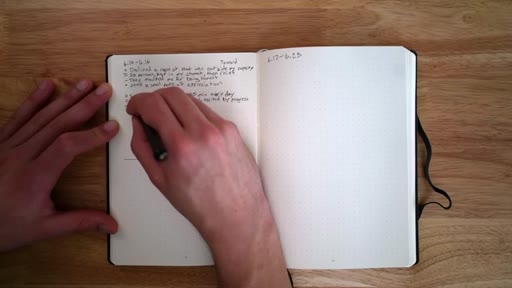
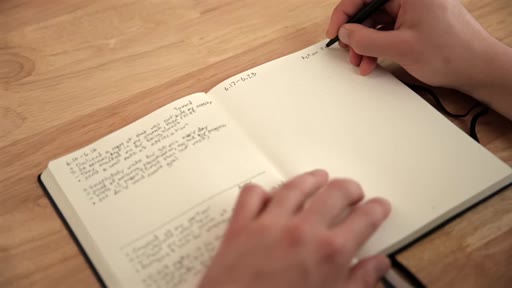
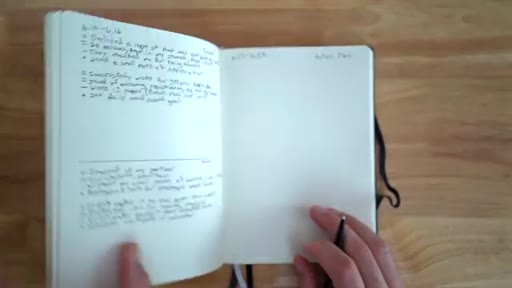
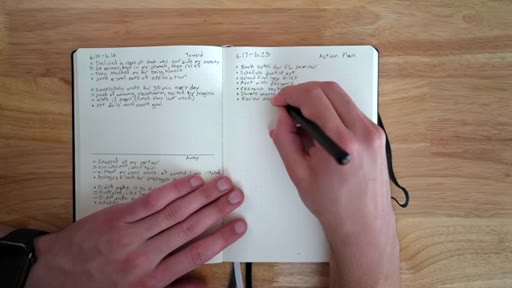
04:57and see what the record of my life reflects back to me. First, I turn to a blank spread. This is gonna be my weekly log.
05:05On the left, I write down the dates of the week gone by. On the right, the dates of the week to come. Then I go back and read through the past few weeks of daily logs.
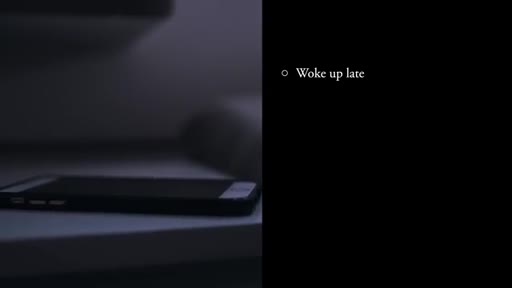
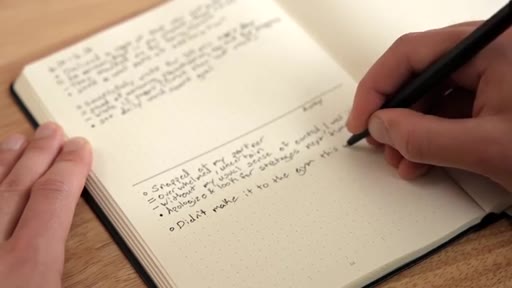
05:16When I'm done, I will use this left page of my weekly log to write down up to three things that moved me towards my intention and up to three things that did not. Again, I keep this short, and often that's more than enough information. Reflection turns that autopilot off so it can become aware of the results of our system.
05:37With that awareness, we can refine our system over time to align our results with our intention, which brings us to the next step.
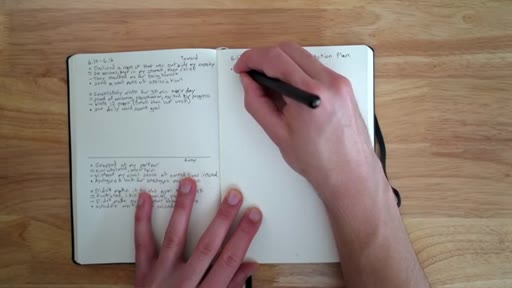
05:48No system, no matter how powerful, will work if you don't work the system. So I think that every Life OS needs to help you plan your work. For example, right after my weekly reflection,
06:01I create my weekly action plan. I've seen a lot of Life OS's collapse under the weight of never ending to do lists. The trick here is to be honest and realistic.
06:12Only write down the things you'll actually get done in a window of time. In this case, a week. If you don't, you risk overwhelming yourself.
06:21One way I prevent myself from getting overwhelmed with my LifeOS and prevent it from getting swamped is to rewrite my undone actions
06:30every week. This may seem like a real headache, but it's proven to be a major feature rather than a bug of the system. That small moment of friction has filtered out so much unnecessary
06:42busy work. If it's too much of a bother to rewrite in that moment, then surely can't be adding a lot of value to your life. Everything we say yes to means we're saying no to something else.
06:53Having some kind of hard filtering system can be a really powerful way to say no to all the things that don't really matter so we have more time for what actually does. Those are the things that we put into our weekly action plan.
07:07The true test of how effective any life operating system is is how the system actually helps you operate in your life. We often get so caught up in the operations and the systems that we never get to the actual living part. As the saying goes, life is what happens while you're busy making other plans.
07:27I would argue that a good life operating system helps you get busy living because of your plans. In my experience, the results of your Life OS are not always obvious at first.
07:38You need a way to record your current results to see if the Life OS is actually helping you align your actions with your values and your intentions.
07:51When you reflect on your new records and the results aren't aligned with your intention, you can now look at what systems you have in place.
08:00If your intention, for example, was to go to the gym five days a week, and now that you see that you've gone zero times, that means that you have the perfect system for going to the gym zero times a week. Through reflection,
08:13we can start to understand the pieces of that system, not setting an alarm clock, not having a plan, going to bed late. Then you can refine that insight into a clear new system
08:25where you set an alarm, commit to a workout, and go to bed on time. Then you run that experiment and see if that works. This is how you start to develop systems that actually align with your intentions over time.
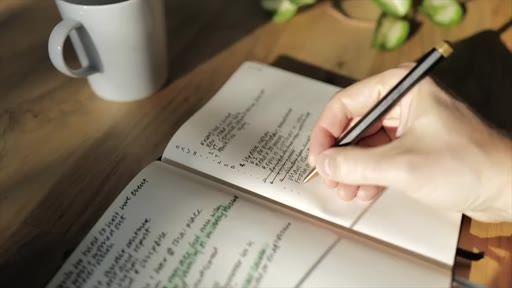
08:39This is why I like using notebooks. It helps you see your life as a story unfolding page by page. And when you've been logging your life for a few weeks, the patterns become visible.
08:50CTAYou can see what's working and what isn't. The life operating system that are described here pretty much summarizes the bullet journal method. You set an intention and then you record,
09:01CTAreflect, refine, and respond. It not only helps you organize the life that you have, but also helps you define and then build
09:09CTAthe life that you want based on your needs, one page at a time. If you wanna dig deeper into this life operating system, check out this video next.
09:20CTAThank you for taking the time, and I'll see you in the next one.
— full transcript
§ 05 · For Joe

The system that designed your failures also designs your wins.

Creator OS playbook

Ryder's whole move is reframing 'I'm not disciplined enough' into 'I built the wrong system'—and that reframe is a product anyone can sell.

  • Open every framework video with the tool-agnostic claim — kill the 'I need a better app' objection in the first ten seconds.
  • Use the habit/ritual distinction: it's a one-sentence script swap that elevates any recurring practice from chore to ceremony.
  • The 'rewrite undone tasks' mechanic is the friction-as-filter play — steal it for any list-based workflow you teach.
  • The circular chapter-navigation graphic (1→2→3→4→5 dotted circle) is more memorable than numbered slides — use it for 5-part frameworks.
  • The 'you have the perfect system for going to the gym zero times' line is a steal-ready hook for any content about broken habits.
  • The weekly spread structure (Toward / Away from intention) is a simple left-page/right-page template any audience can execute on the same day they watch.
§ 05 · For You

You already have a system. The question is whether you designed it.

If you want to try this

Every missed goal isn't a willpower problem — it's a systems problem. The fix is simpler than you think.

  • Before setting up any tracking system, write one sentence at the top of a blank page: what do you want this to produce, and why? That single sentence changes everything downstream.
  • Start with just four log entries per day — one note, one to-do, one feeling, one event. That's it. Don't copy anyone else's elaborate spreads.
  • Once a week, write three things that moved you toward your intention and three that didn't. This one habit replaces most journaling prompts.
  • When you miss a goal (gym, sleep, budget), don't blame yourself — ask 'what system am I currently running that produces this result?' Then change one variable.
  • Rewriting your unfinished to-dos by hand each week feels like friction. It is. That's the feature: anything not worth rewriting isn't worth doing.
§ 06 · Frame Gallery

Visual moments.