
The bait, then the rug-pull.
Most AI agency tutorials stop at 'here is an agent you could build.' This one starts with a revenue number and works backwards: two specific products, specific pricing, and a client acquisition model — none of which require writing a line of code.
Where the time goes.

01 · Cold open + stated promise
Opens with $85K/month claim; sets expectation to cover agent types, pricing, delegation, and client acquisition.

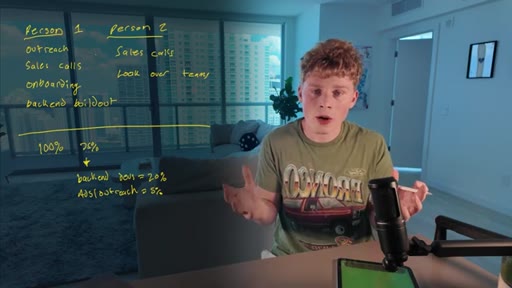
02 · Person 1 vs Person 2 delegation framework
100% margin solo operator caps at 2 clients/month; 75% margin operator with a team scales indefinitely. Glass whiteboard shows outreach, sales calls, onboarding, backend columns.

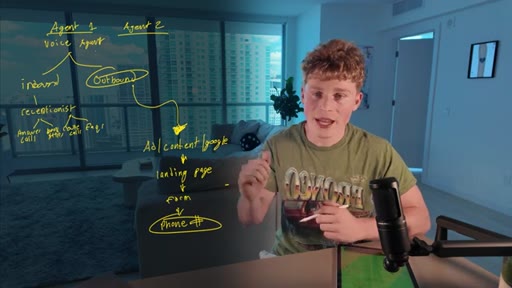
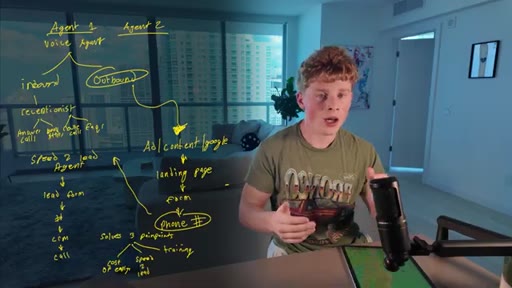
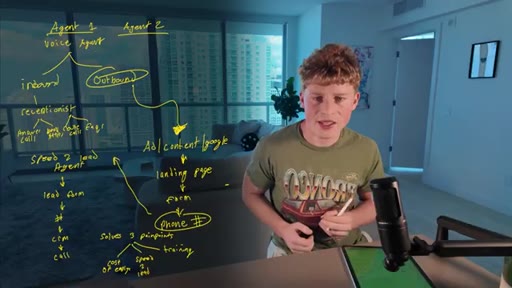
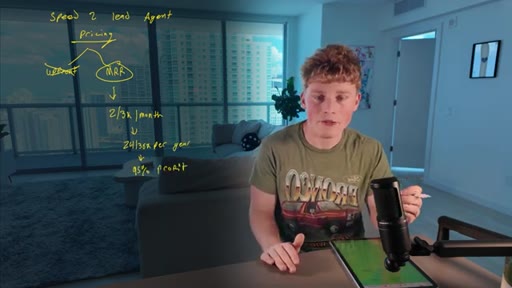
03 · Agent 1: Outbound speed-to-lead voice agent
Form fill triggers AI call within 20 seconds. Solves three pain points: employee cost, speed-to-lead lag, training overhead. Recommended pricing: MRR at $2–3K/month.

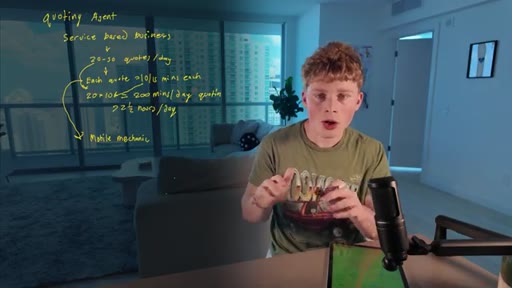
04 · Agent 2: Quoting agent
Service businesses spend 2.5+ hours daily on manual quotes. Agent connects to parts supplier and business SOPs to return itemized quotes in seconds.

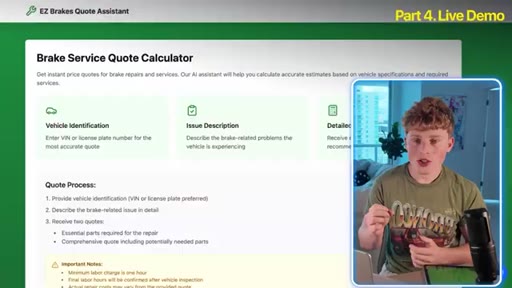
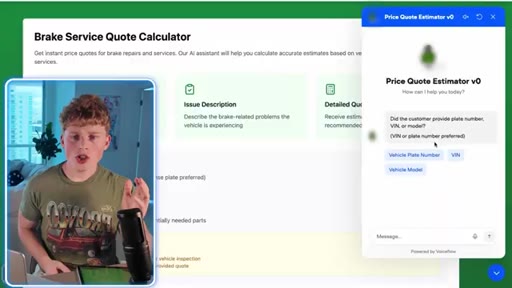
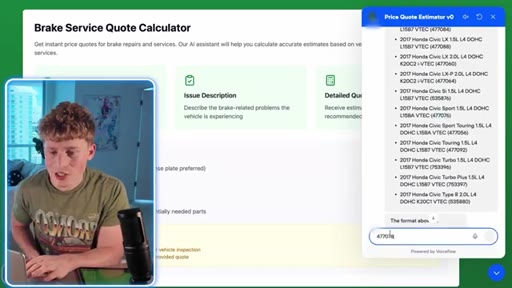
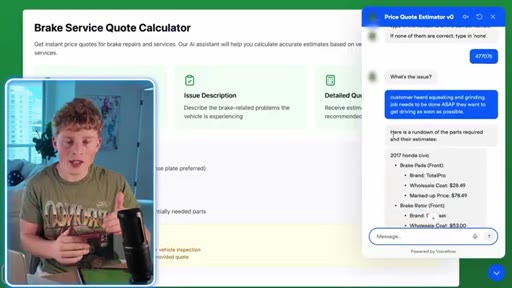
05 · Live demo: Brake Service Quote Calculator
Screen-share of a real quoting chatbot built for a mobile mechanic. Walks through vehicle ID input, issue description, and itemized parts/labor/fee output.

06 · Pricing the quoting agent
Hybrid model: $12–20K upfront setup fee plus $1–2K/month retainer. Setup is high because development is intensive; retainer covers ongoing accuracy maintenance.

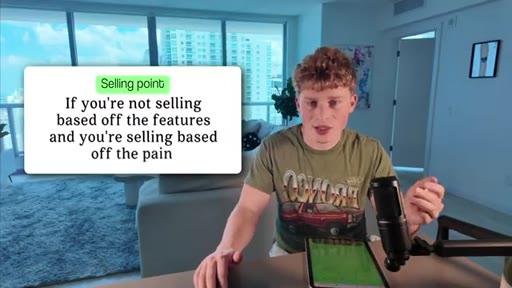
07 · Sell on pain, not features
Never pitch the knowledge base or API connections. Ask what the prospect would do with those 2–3 hours back. Business owners buy relief from a recognized daily problem.

08 · Three client acquisition models
Ads (expensive, takes time), cold calling (low success rate), and the partner model — referral deals with marketing agencies at 20–30% commission — positioned as the best zero-spend option.
Visual structure at a glance.

Named ideas worth stealing.
Person 1 vs Person 2
- Person 1: solo operator, 100% margin, caps at 2 clients/month
- Person 2: team operator, 75% margin, unlimited scale
Illustrates why a lower profit margin with a delegated team produces more absolute income than a 100% margin solo operation due to volume constraints.
Partner Model
Partner with marketing agencies who already have warm clients running lead-gen. Offer 20–30% commission per referred AI client. The agency earns without delivering; the presenter closes without prospecting.
Pain-Based AI Selling
- Never pitch features (knowledge base, API, training)
- Always pitch the specific employee cost or daily time waste being replaced
- Ask: what would you do with X hours back?
A positioning framework for closing business owners on AI agents by grounding the pitch in a recognizable pain point rather than technical capability.
Lines you could clip.
"You can't sign more than two clients a month. It's physically impossible because to deliver a 10 out of 10 product on the back end, you need to spend two to three weeks of eight hours a day developing these agents."
"Wherever the market is headed, head the other way."
"You never wanna sell based off the features... You wanna sell AI based off their pain."
"90% of the time, they're saying yes just to get you off the phone."
How they asked for the click.
"If you guys are interested in working with my team of developers to help you with all your back fulfillment as well as my network of marketing agencies to actually refer you clients, please apply below."
Soft close at the very end; link in description to kirkaiconsulting.com. Low friction — no immediate pitch, positions as a selective intake process.
Word for word.
Why selling the pain beats selling the technology.
The agents that close easiest are the ones that map directly to a recurring daily cost the business owner already recognizes — not the ones with the most impressive feature set.
- Business owners respond to the specific labor cost or time block being eliminated, not descriptions of AI capability — pricing comparisons against existing employee spend close faster than any technical pitch.
- Speed-to-lead is a quantifiable revenue leak: every minute past five minutes after a form fill reduces close probability, giving any agent that calls within 20 seconds a clear before/after case to present.
- Recurring revenue fits the speed-to-lead agent because it replaces a recurring expense — framing the comparison as monthly cost versus monthly cost removes the upfront objection entirely.
- A quoting bot earns a setup fee because the development is intensive and business-specific, but also earns a retainer because parts pricing and labor rates change and the agent must stay accurate to remain valuable.
- The partner model works because marketing agencies have already created the problem the AI solves: they drove more leads than the client can handle without better systems, and they earn a referral fee for connecting the two.
- Delegating fulfillment at 20% creates a compounding quality loop — trusted developers produce better outcomes, which generate referrals, which reduce acquisition cost over time.