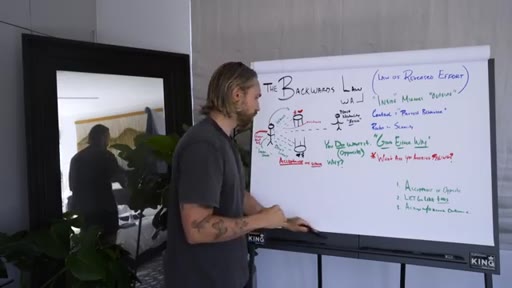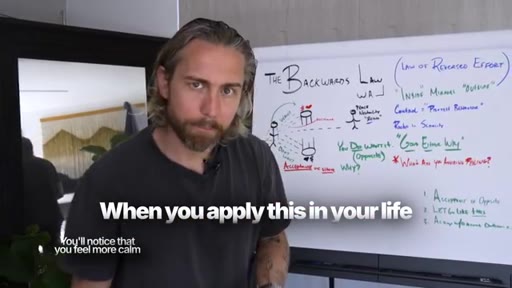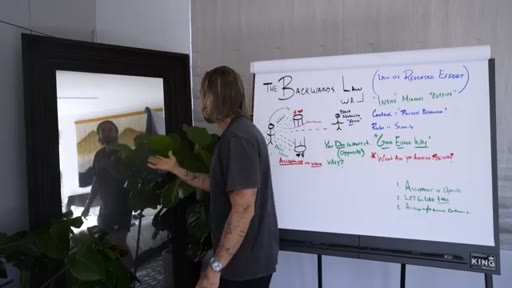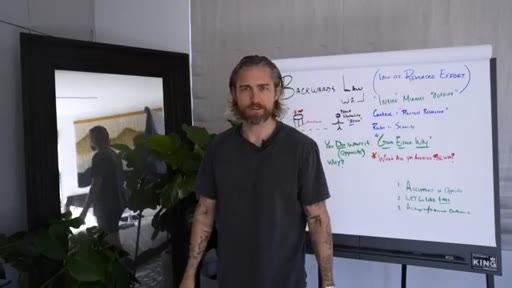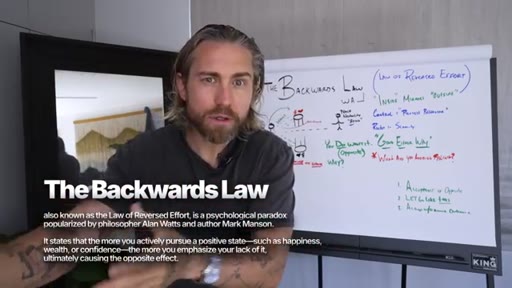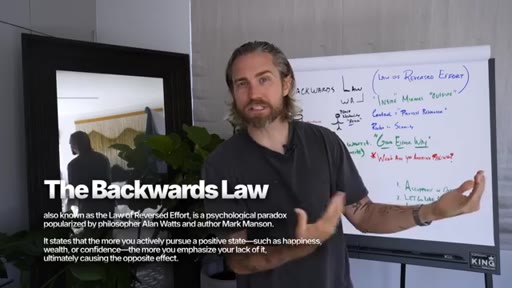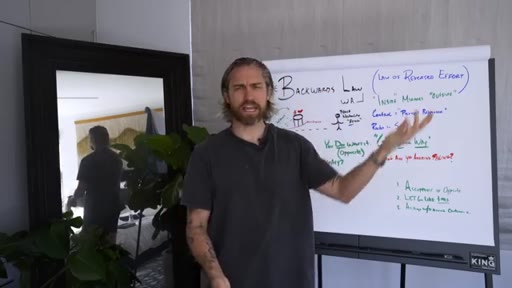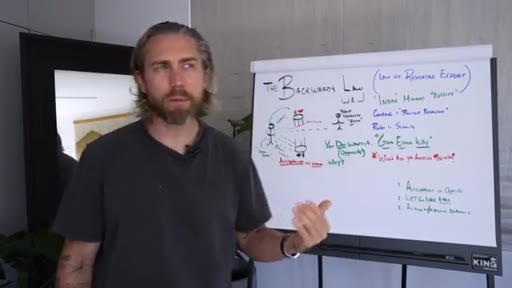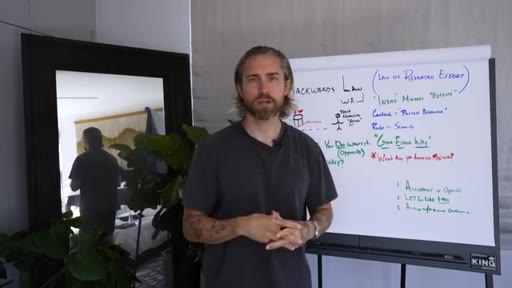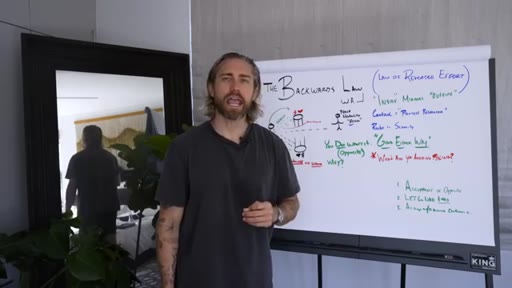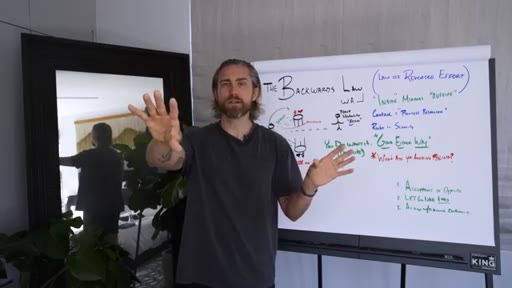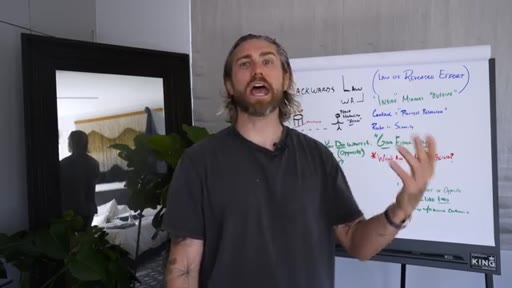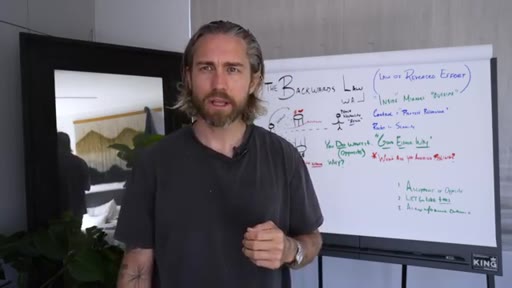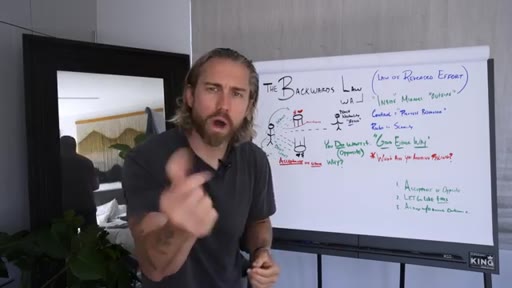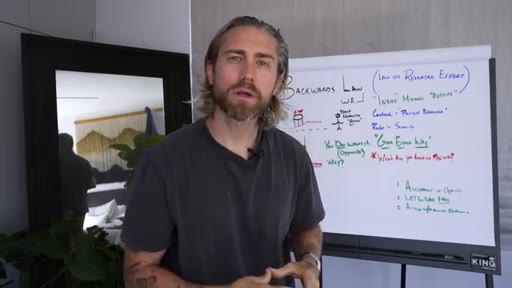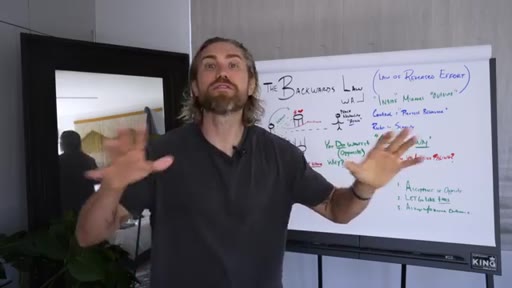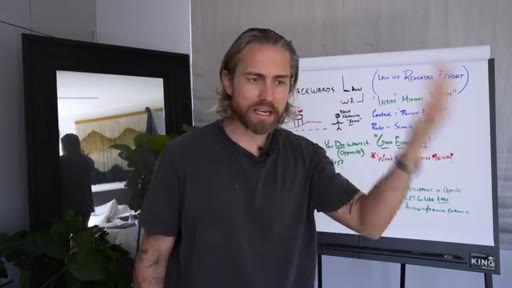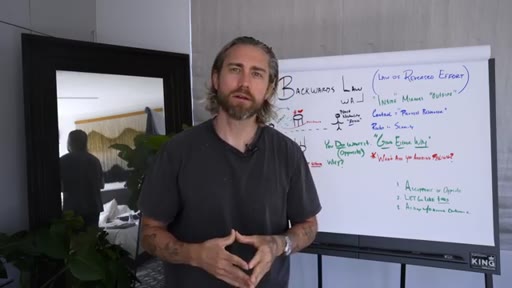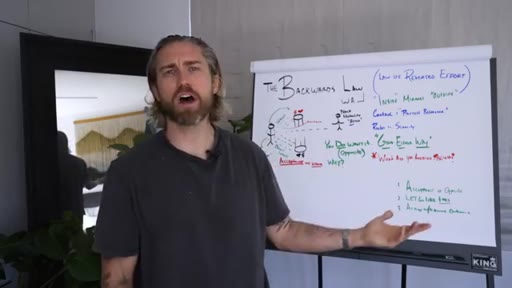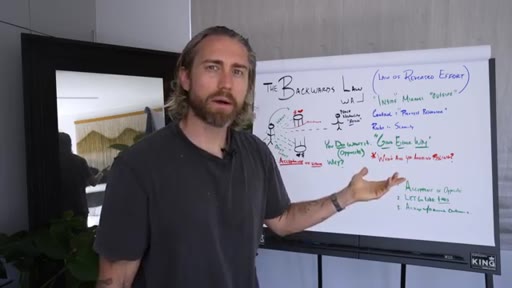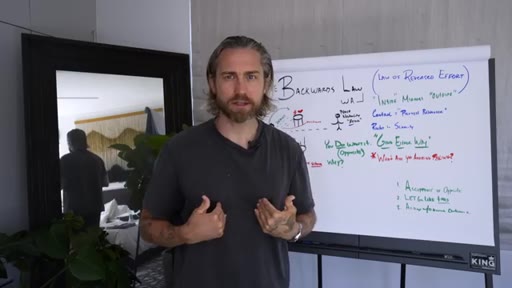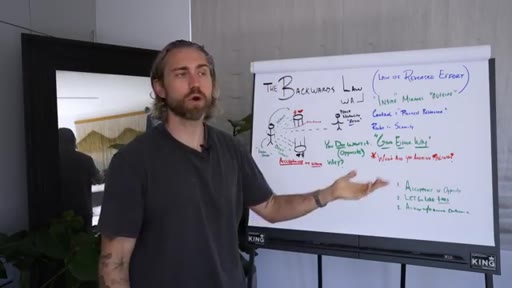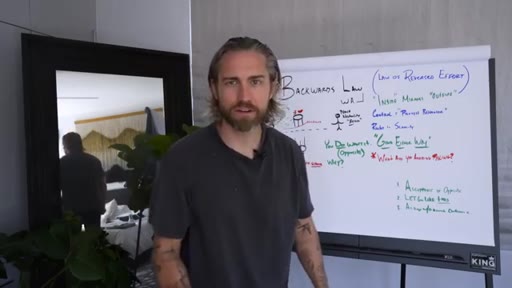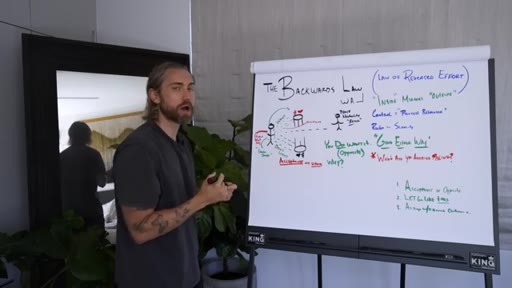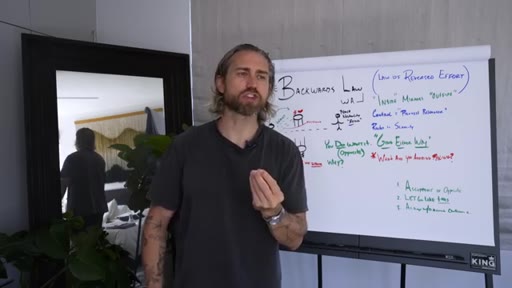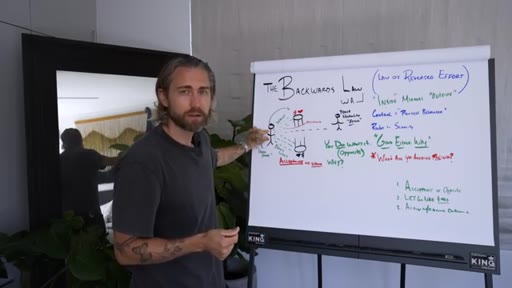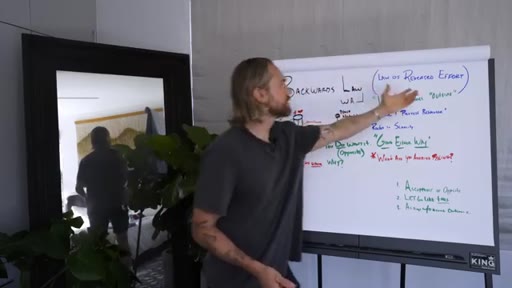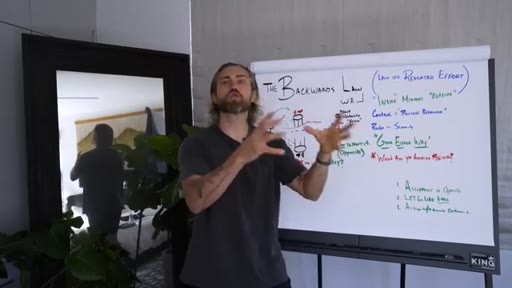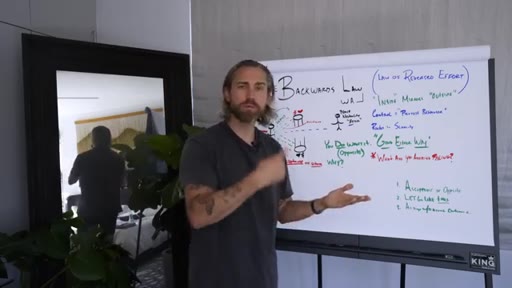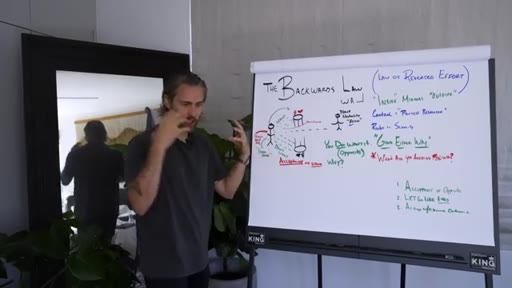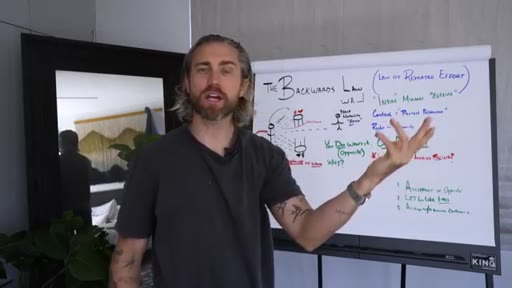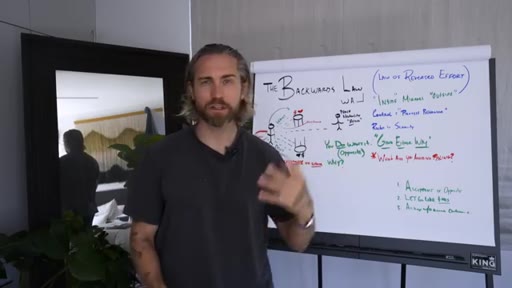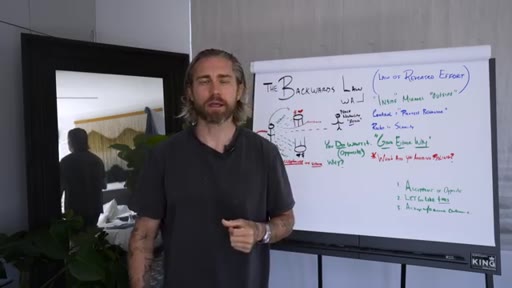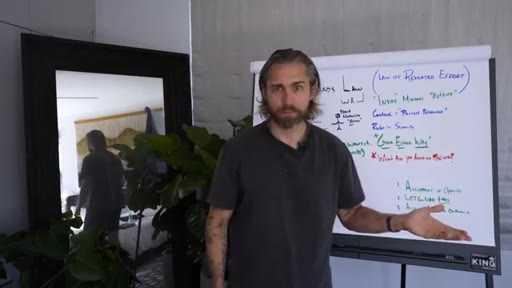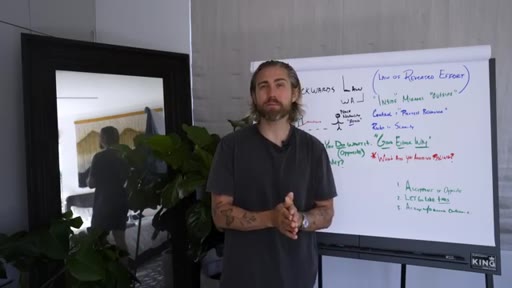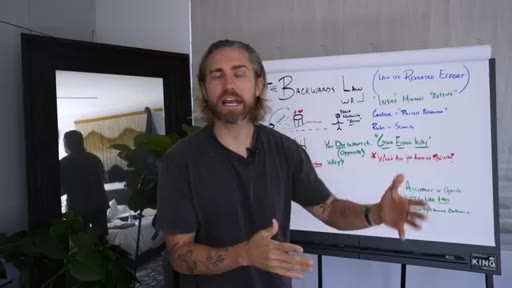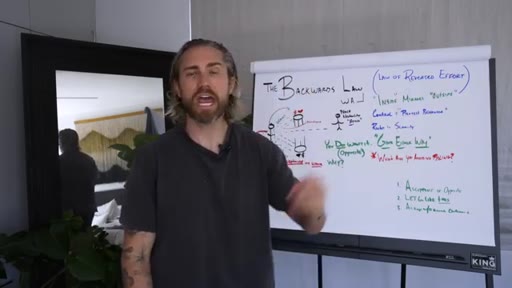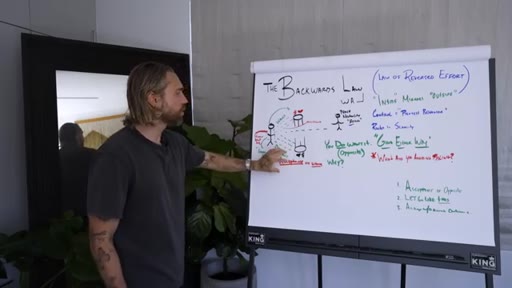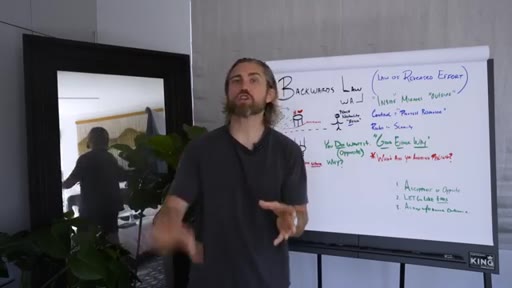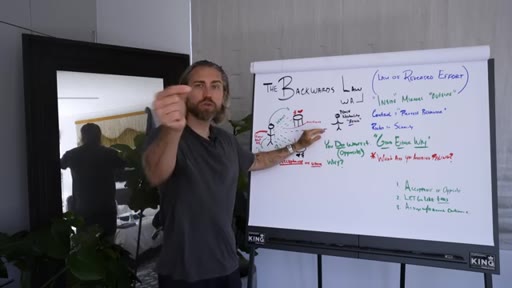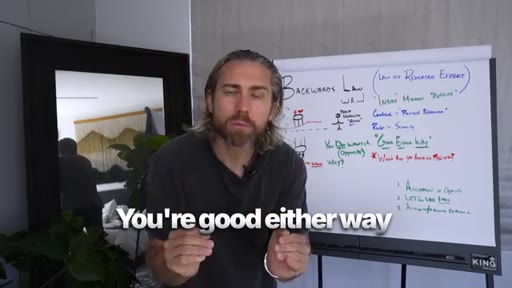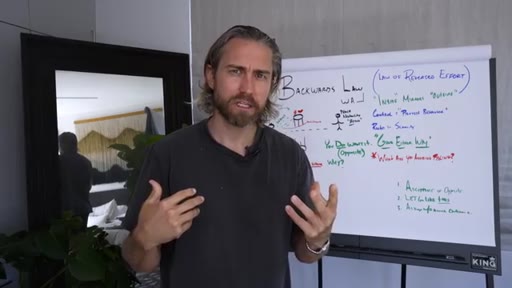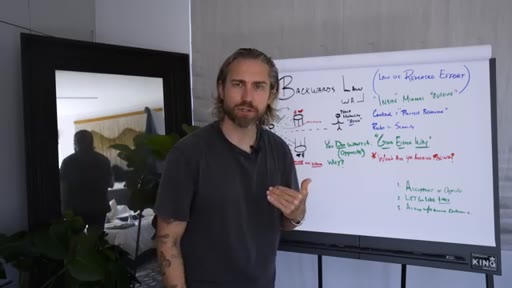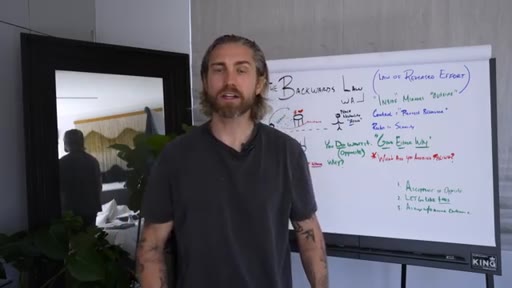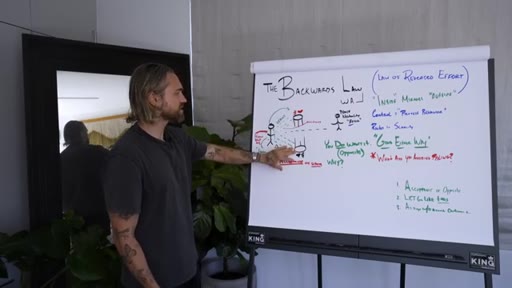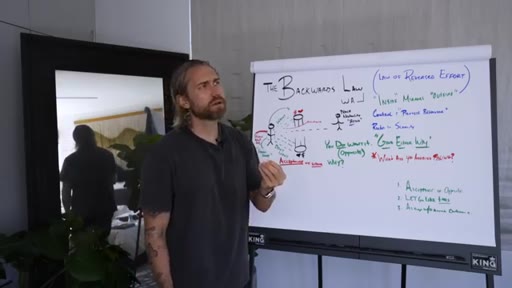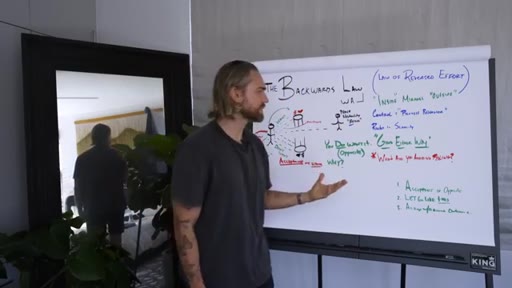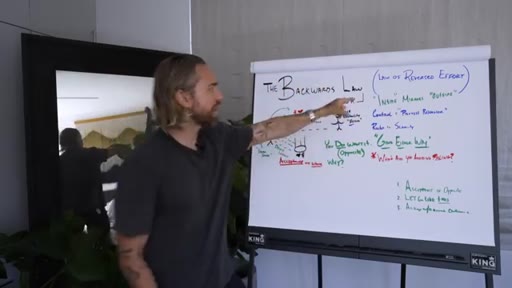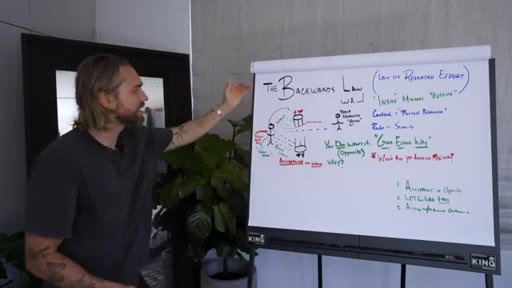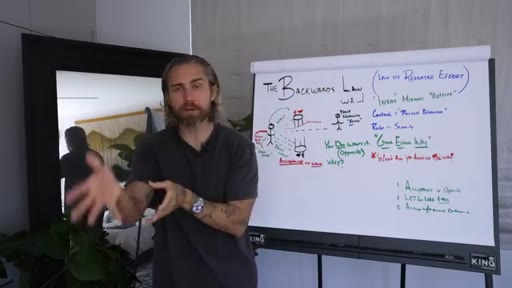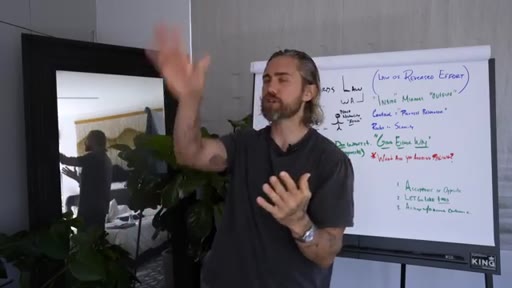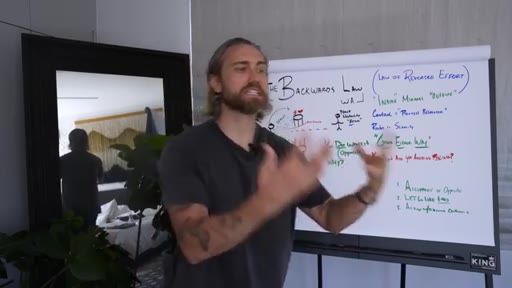
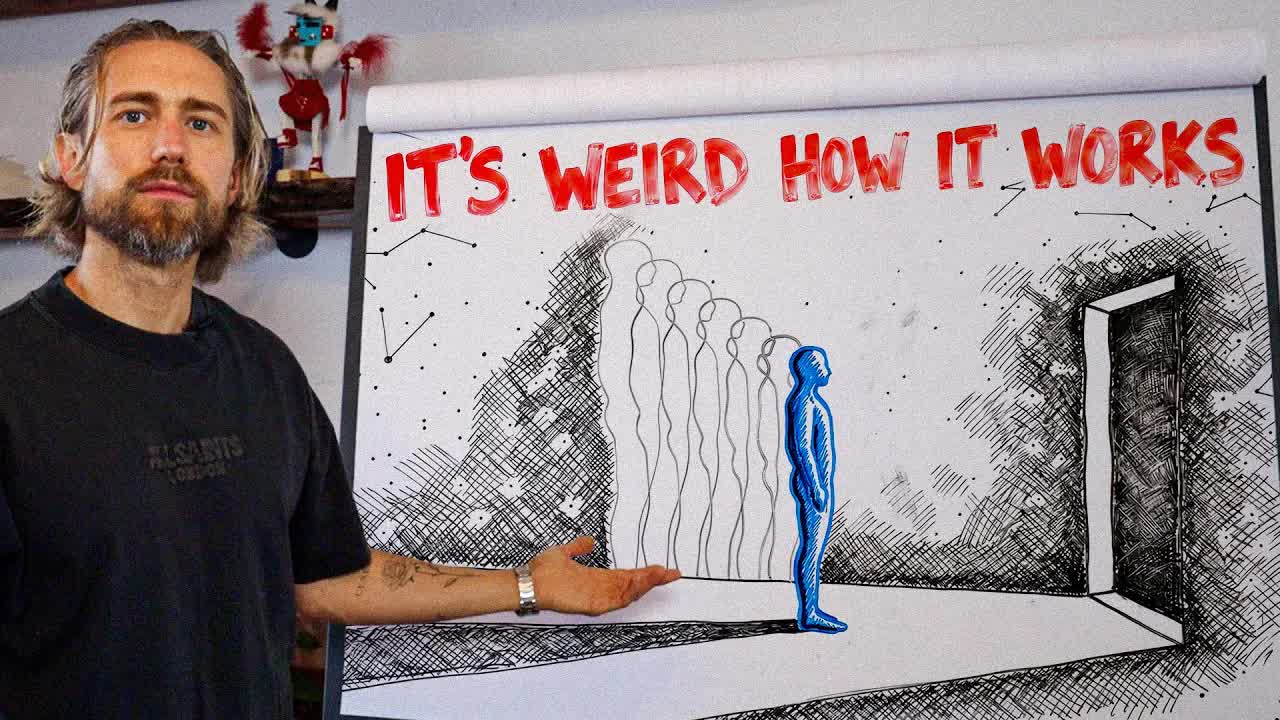
The bait, then the rug-pull.
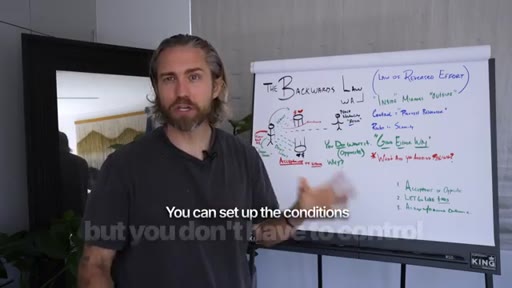
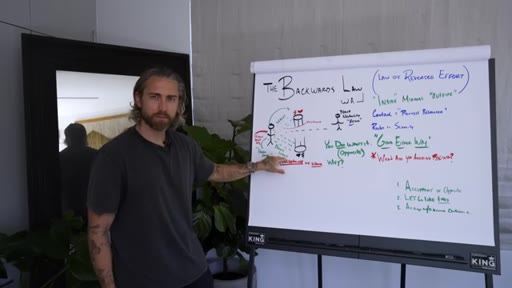
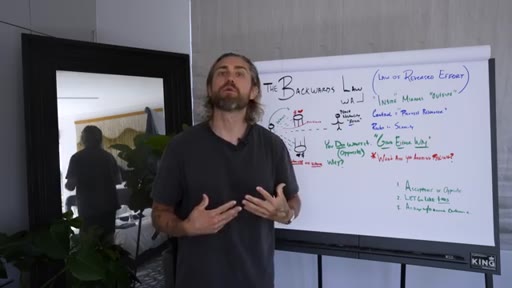
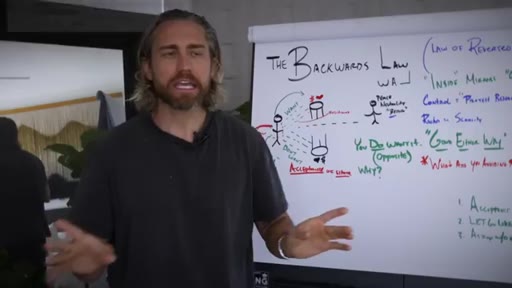
The promise lands before the framework: the most powerful effect he has ever seen is that trying harder is what is blocking you. He opens standing at a whiteboard already filled with diagrams, signaling this will be a teaching session, not a talking-head opinion piece.
Where the time goes.
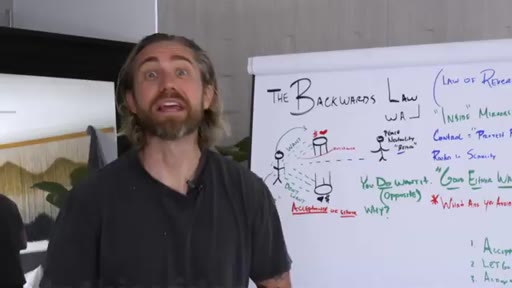
01 · The Backwards Law explained
Hook, promise, and overview — applying this creates calm, reduced need for approval, safety inside the body.
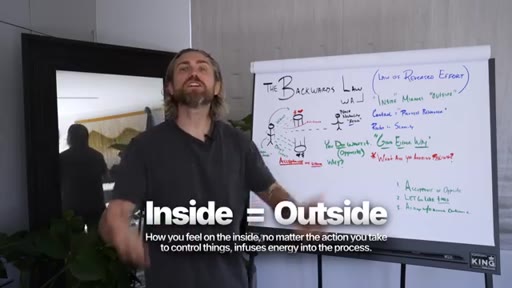
02 · Why the inside mirrors the outside
Mirror analogy: you cannot change the reflection by changing the mirror; internal state must lead.
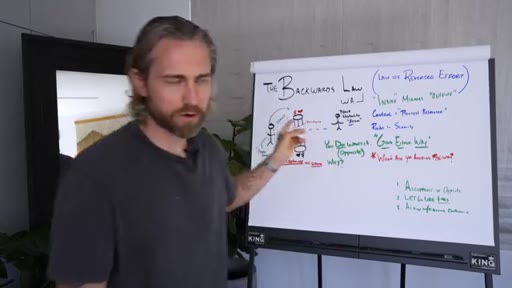
03 · Alan Watts and the Law of Reversed Effort
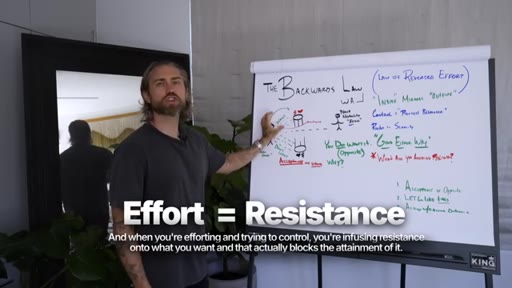
Credit to Watts; effort equals resistance; the more you want people to like you the more your energy is off.
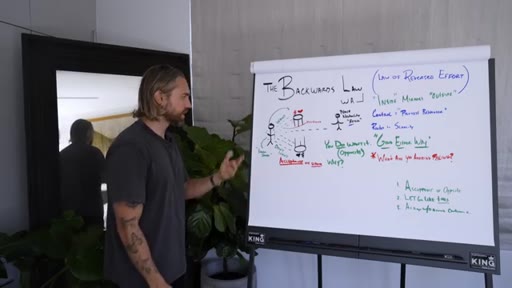
04 · Why letting go makes things come faster
Texting example: you obsess, they do not reply; the moment you let go they respond.
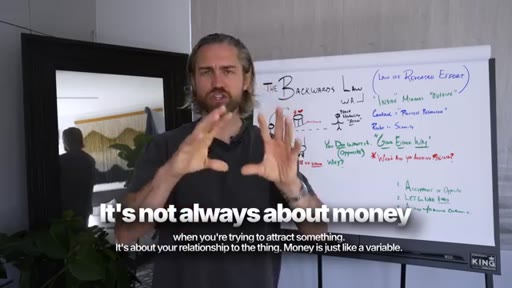
05 · The house story: feeling trapped
Personal story about selling an Austin house. Emotion was burden and trapped. Recognized childhood pattern.
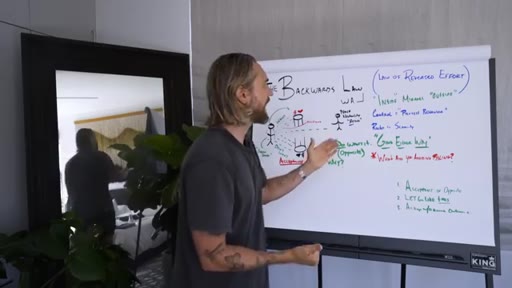
06 · Stop waiting for the outside to change you
Choosing not to be a victim shifted energy; offer appeared within one day of that internal shift.
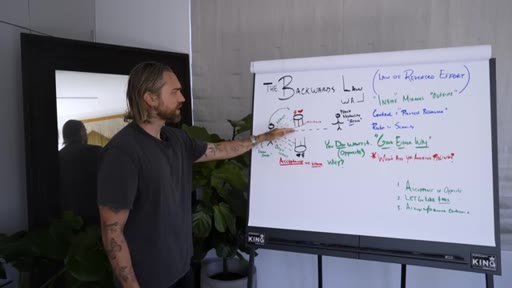
07 · Why the opposite might actually be better
Explores what good could come from the deal NOT going through — market recovery, better tenant, better offer ($50K more in real agent example).
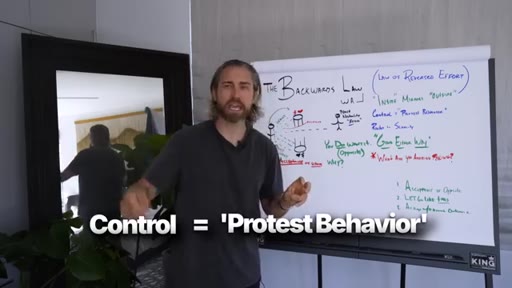
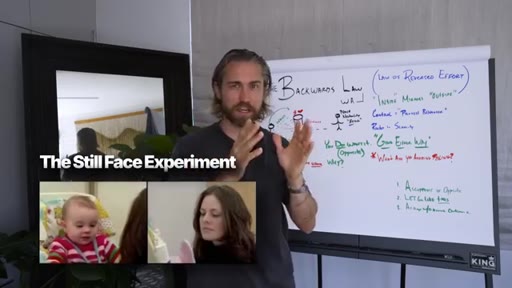
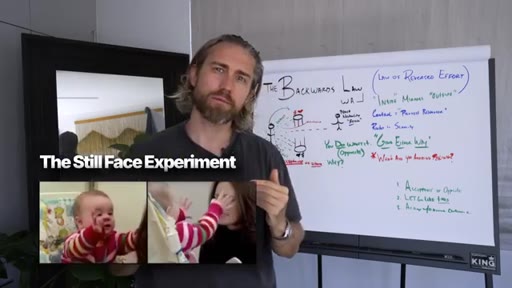
08 · Protest behaviors and the Still Face Experiment
Protest behavior: what emotion are you avoiding? Baby and mom experiment as the template for adult controlling.
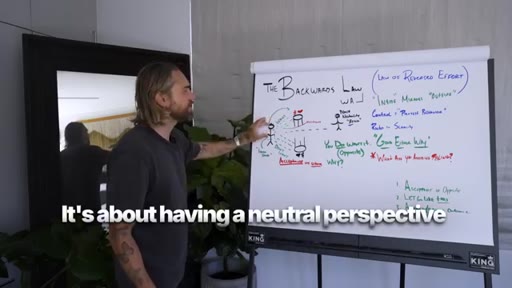
09 · Why people attract love when they stop needing it
Accepting the opposite gives a neutral relationship to the thing; no longer in aversion equals no resistance.
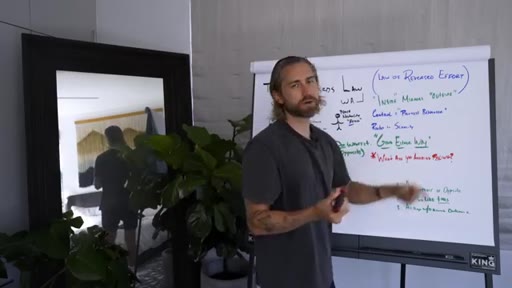
10 · What does this mean about me?
Deeper fear: not getting the thing means I am not enough. Good Will Hunting scene used as illustration.
11 · Scarcity keeps you stuck
Scarcity thinking treats the universe as finite — that is the loop generating urgency-as-resistance.
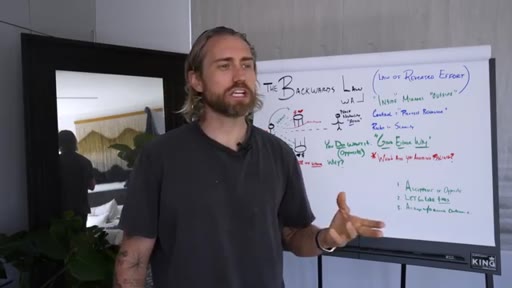
12 · The failed move that became relief
Assistant story: excited to move to Big Bear, deal falls through, feels relief. Relief is a nervous system signal.
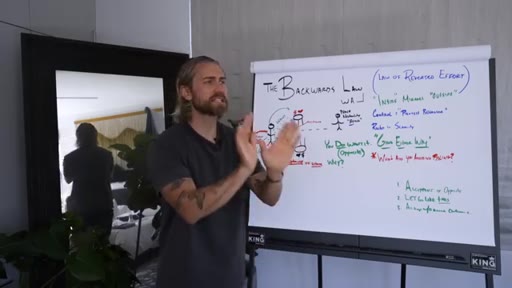
13 · Stop resisting what you do not want
Aversion to a bad outcome is also a form of control that attracts what you fear. Neutrality is the goal.
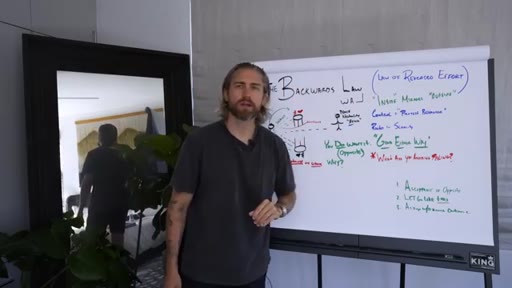
14 · Desire is not the problem
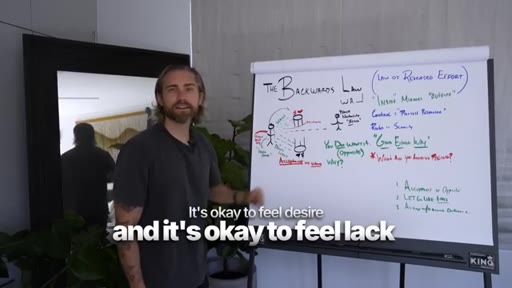
Suppressing desire creates more resistance than feeling it. It is okay to feel desire AND lack simultaneously.
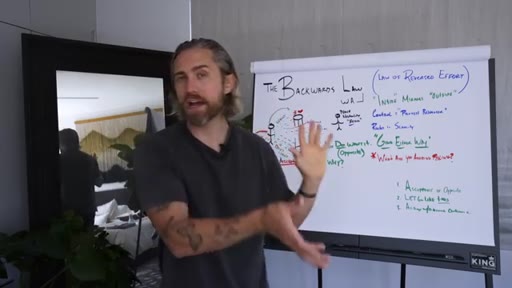
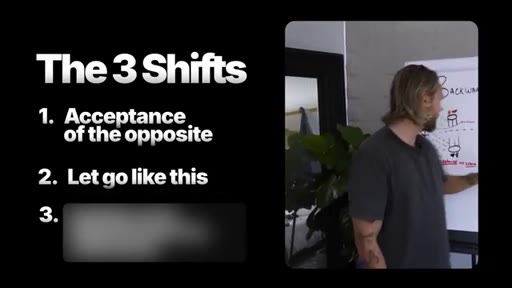
15 · The 3 shifts that change everything
Accept the opposite; feel the suppressed emotion instead of protesting; take action unattached to outcome.
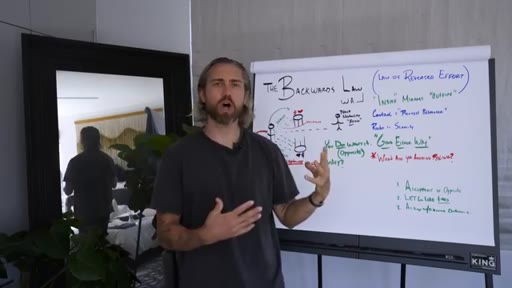
16 · CTA: letting go video
Internal CTA to the 2M-view letting-go video.
Visual structure at a glance.
Named ideas worth stealing.
The Backwards Law / Law of Reversed Effort
The more you try to control, force, or resist an outcome, the more resistance you generate. Popularized by Alan Watts.
Protest Behaviors
Controlling, reassurance-seeking, or forcing behaviors used to avoid feeling an underlying uncomfortable emotion.
The 3 Shifts
- Accept the opposite of what you want
- Feel the suppressed emotion instead of protesting
- Take action without attachment to the outcome
Three-step framework for practically applying the Backwards Law in any area of life.
Lines you could clip.
"The law of reversed effort is that effort equals resistance."
"If you can accept the opposite, you will be more free."
"It's okay to feel desire and it's okay to feel lack."
"By the time you get what you want, it will feel natural to your nervous system."
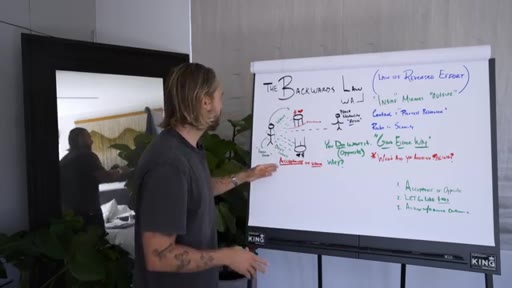
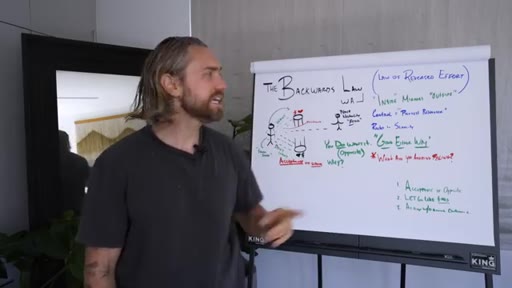
Things they pointed at.
How they asked for the click.
"Here is the most popular video I have on letting go. It has got over 2,000,000 views. Go ahead and watch this video next."
Clean internal retention play — no product push, no sponsor. Logical next-step for a viewer who just consumed 24 minutes of the concept and needs the practice companion.
Word for word.
Resistance is the cost of needing a specific outcome.
The more urgently you require something to happen, the more energetic friction you introduce — and the practical release is not pretending you do not care, but genuinely accepting that the opposite outcome might be okay.
- Effort directed at forcing an outcome creates resistance proportional to the effort — the harder you push, the more friction you generate.
- Your emotional state infuses the situation independent of your actions, which is why the same action lands differently when you are anxious versus neutral.
- Protest behaviors — seeking reassurance, over-checking, controlling — are attempts to avoid feeling an underlying emotion, not strategies for achieving the goal.
- Accepting the opposite of what you want is not resignation; it removes the aversion relationship that was generating resistance.
- Scarcity thinking treats opportunity as finite and time-pressured, which is precisely the mental state that narrows what is actually available to you.
- Feeling relief when a deal falls through is data — the nervous system registered something the conscious mind did not, and that signal is worth taking seriously.
- Desire and lack are both okay to feel openly; suppressing either one creates more energetic resistance than simply experiencing it.
- You can take action, follow through on commitments, and still be unattached to the outcome — these are not contradictory positions.
- The underlying fear driving most protest behaviors is not missing the goal but what missing it would mean about you — addressing that layer directly is more effective than managing symptoms.
- Being good either way is not a passive posture; it is a position of strength because your safety is no longer held hostage by an external result.