The bait, then the rug-pull.
The opening claim is deliberately provocative: Y Combinator just ended AI agencies. What follows is not a eulogy but a pivot — a 13-minute argument that the window for selling AI tools to small businesses is closing, and the window for using AI to deliver services at scale is wide open.
Where the time goes.

01 · Introduction
Hook claim that YC ended AI agencies. Promise to explain what is killing the current model and what the new one is.
02 · The AI Agency Trap
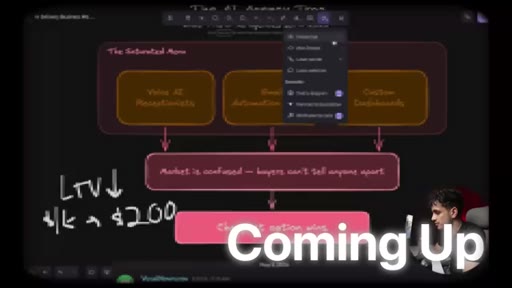
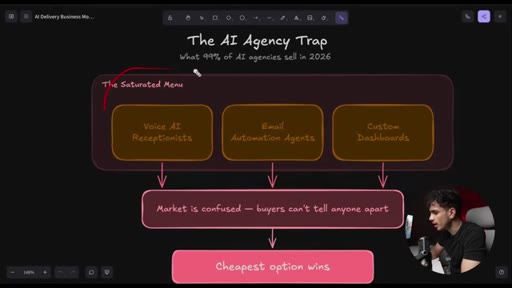
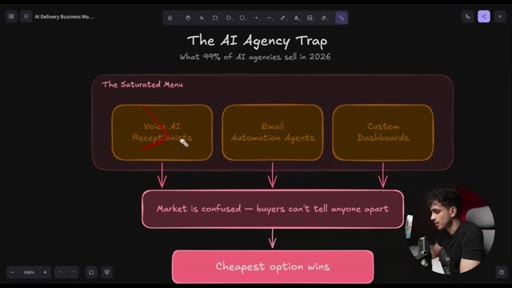
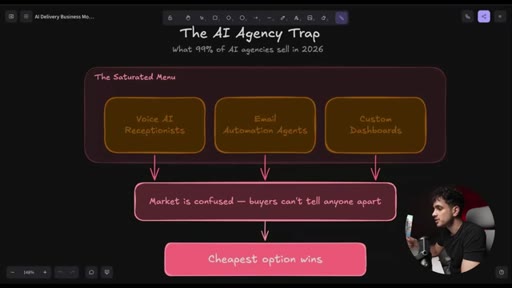
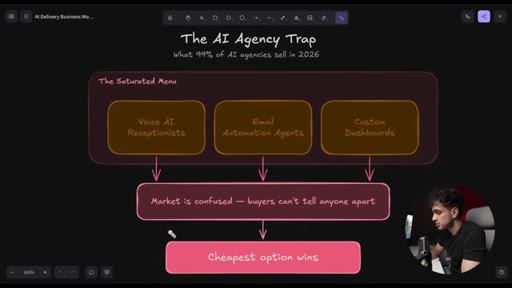
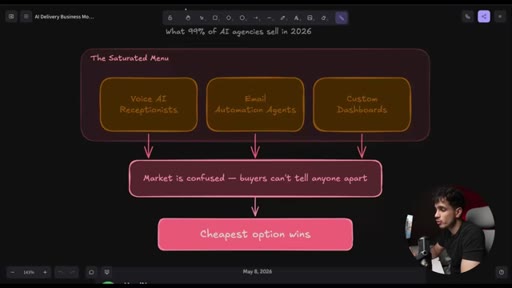
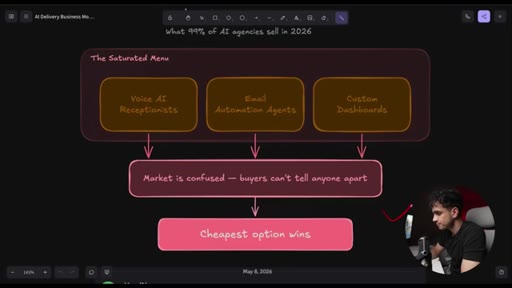
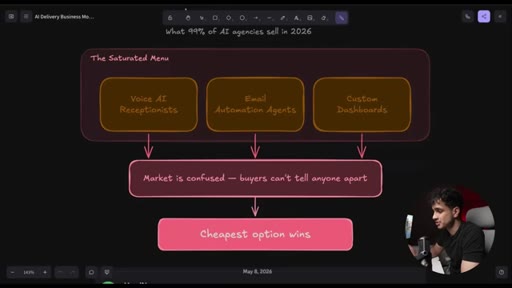
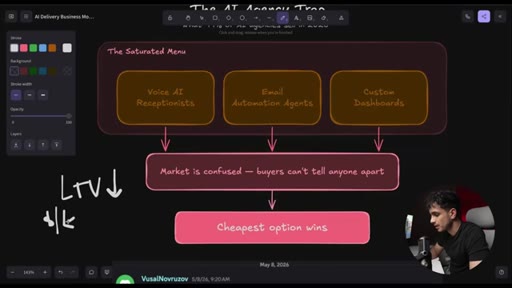
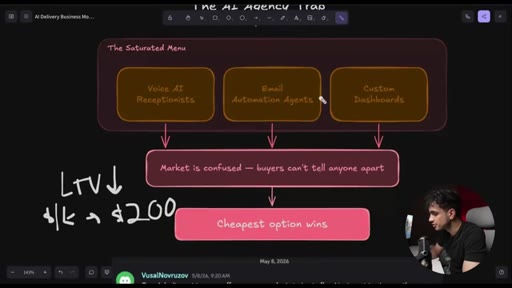
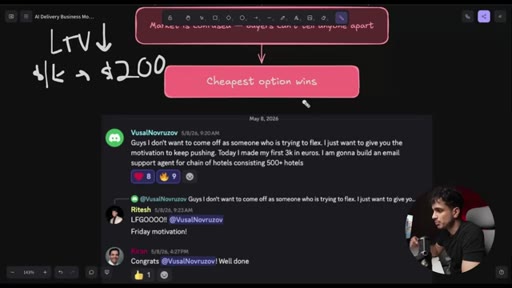
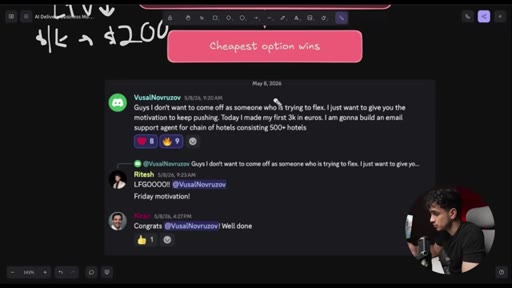
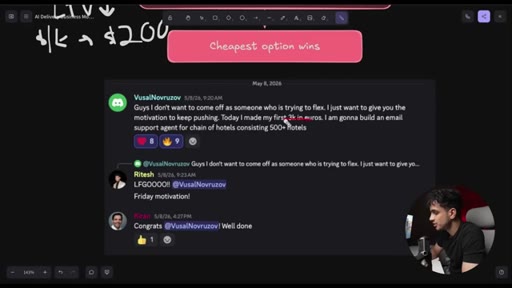
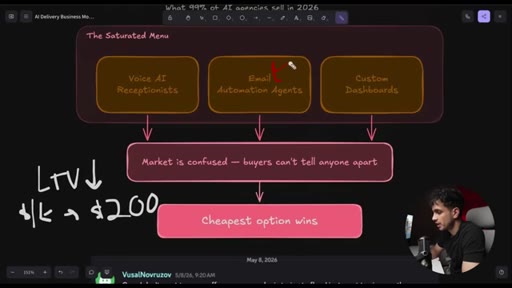
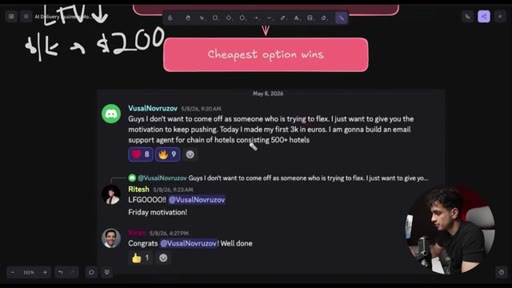
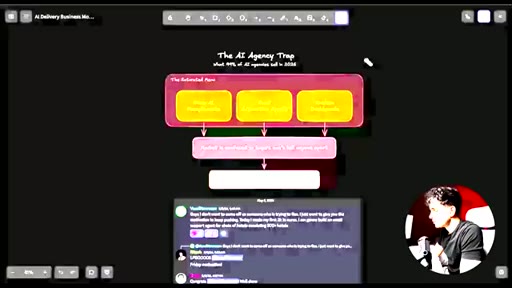
Saturated menu of voice receptionists, email agents, custom dashboards. Buyers cannot differentiate so cheapest wins. LTV compresses from $1K to $200. Student win (3K euro hotel email agent) shows saturation does not mean zero opportunity.
03 · New AI Business Model
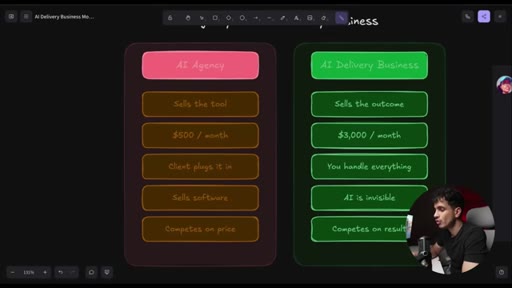
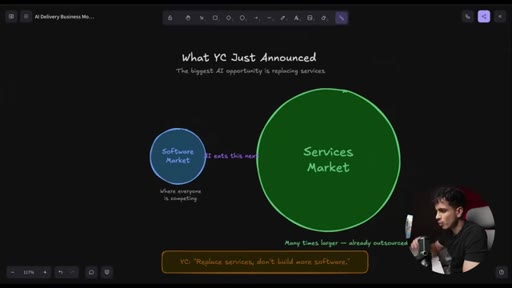
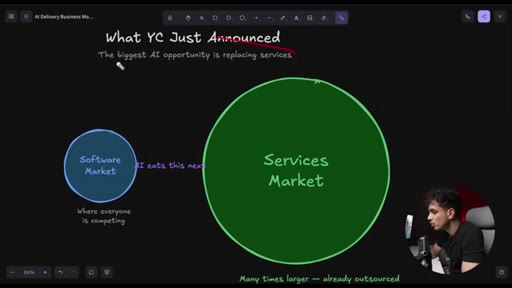
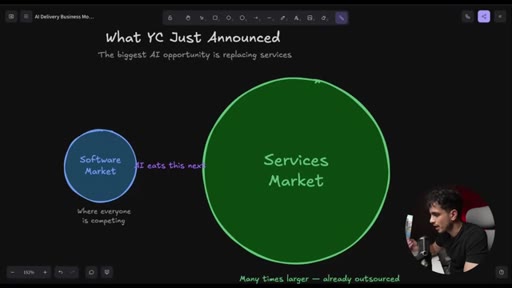
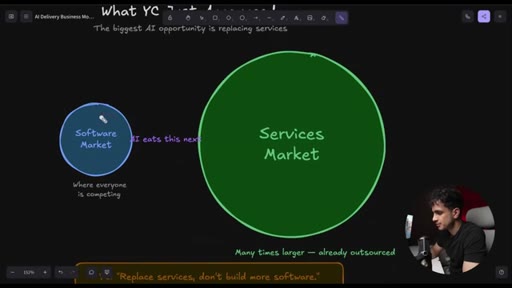
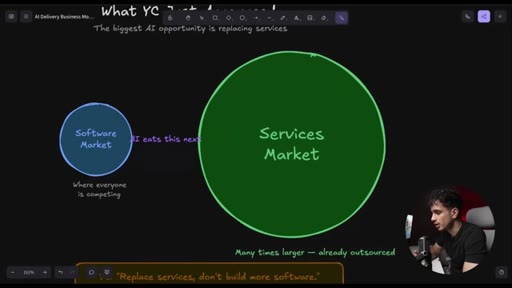
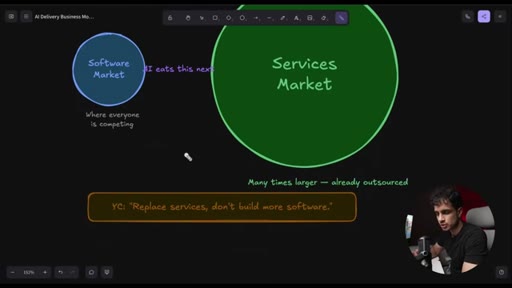
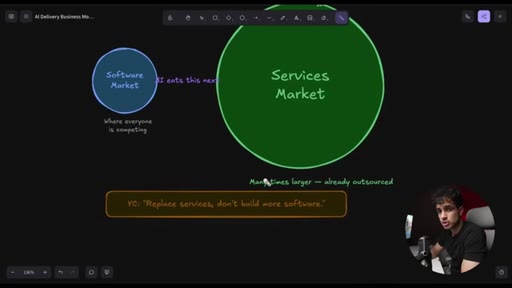
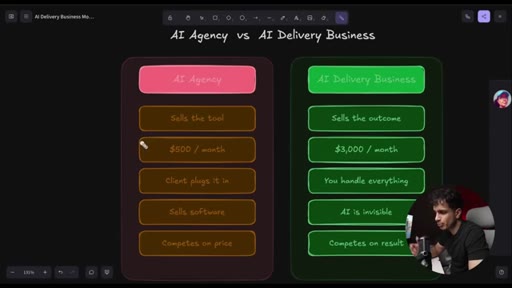
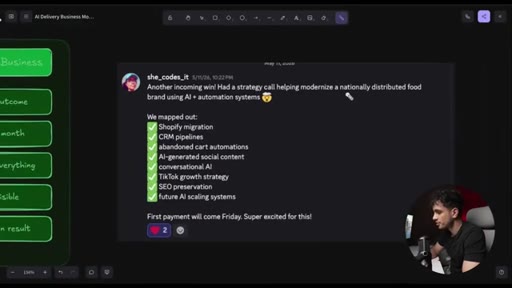
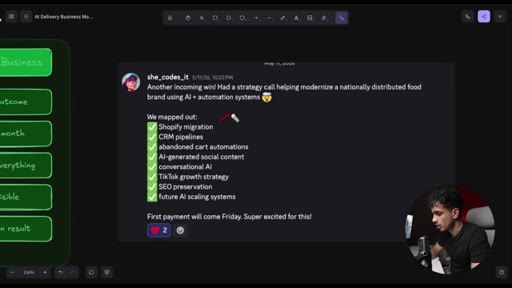
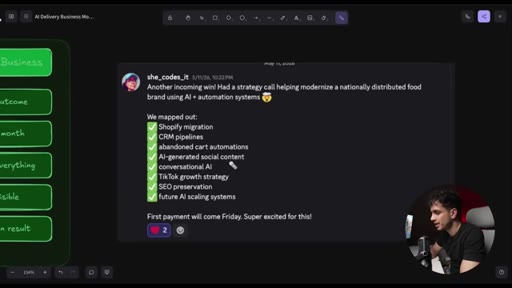
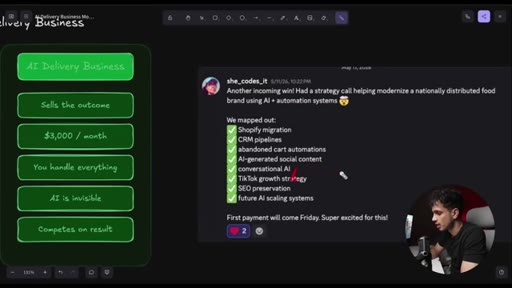
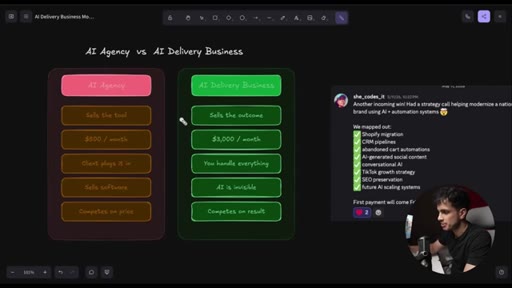
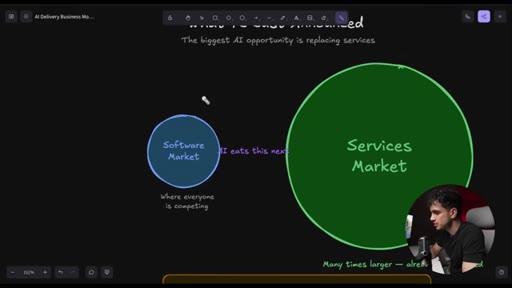
YC thesis: biggest AI opportunity is replacing services not building software. Services market many times larger. AI delivery business comparison: outcome vs tool, $3K/month vs $500, handles everything vs client plugs it in, AI invisible vs AI is the product. Student Tessa example with food brand.
04 · Example: LinkedIn Ghostwriting
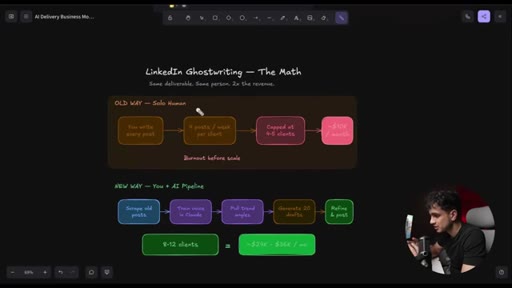
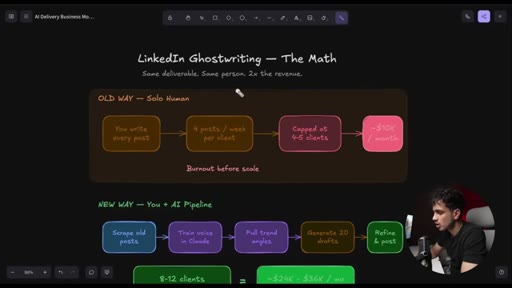
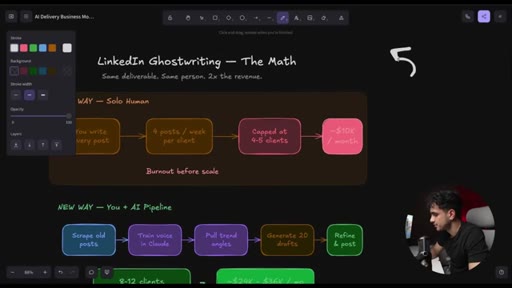
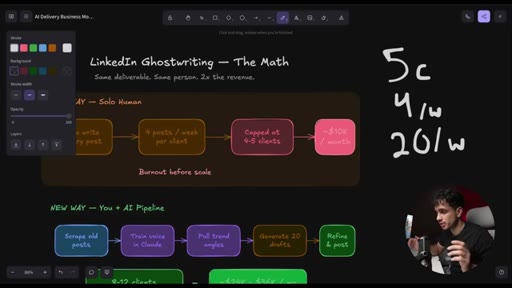
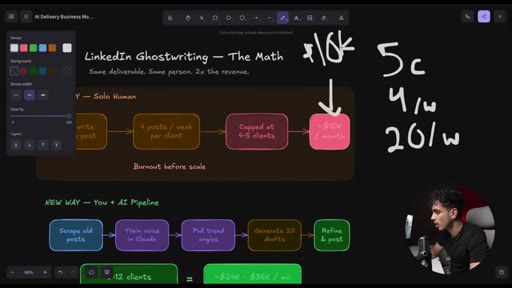
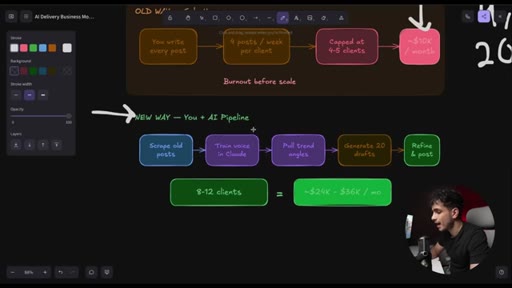
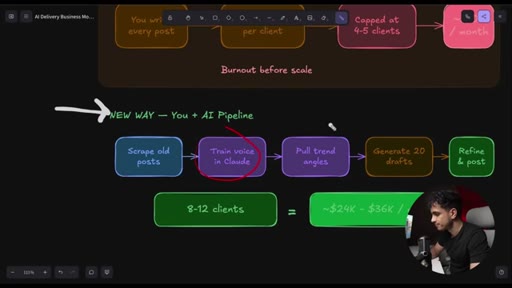
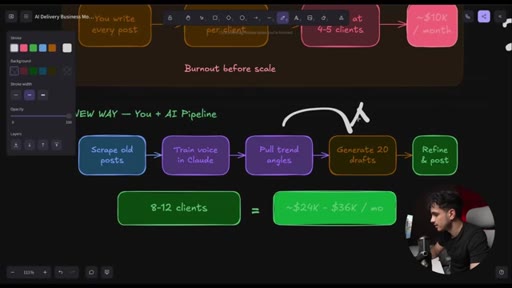
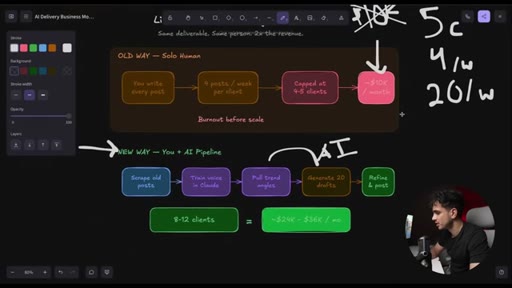
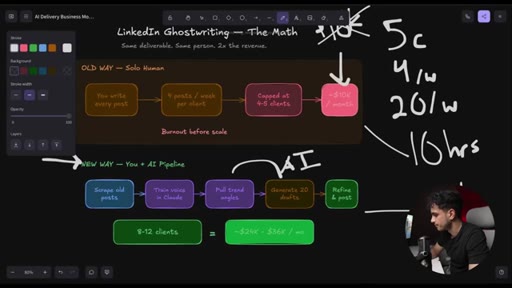
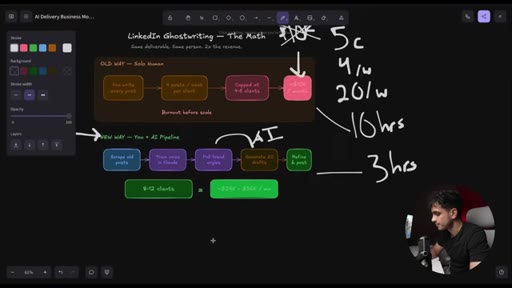
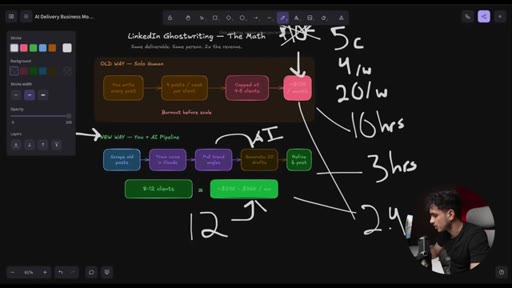
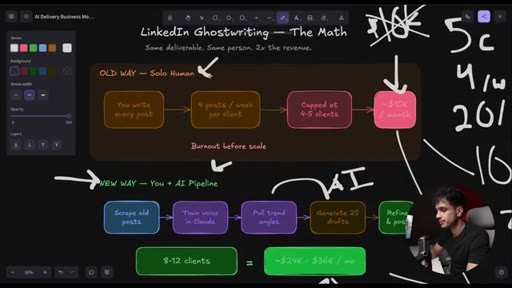
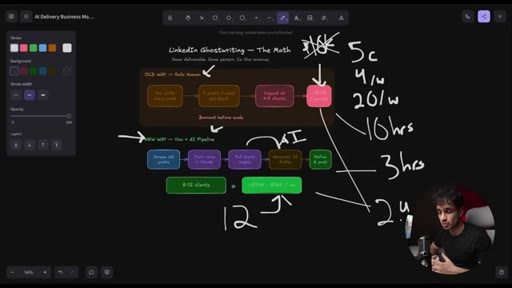
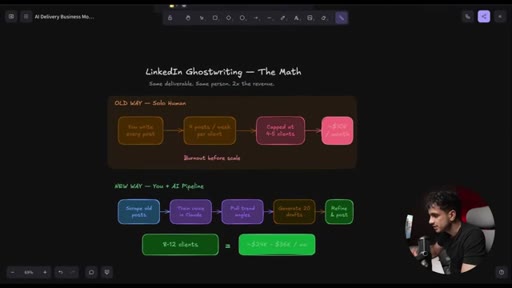
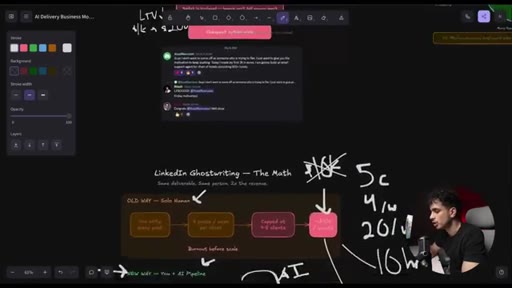
Math of solo human ghostwriter capped at 5 clients, 20 posts/week, $10K ceiling. You + AI pipeline: scrape posts, train voice in Claude, pull trends, generate drafts. Old way 16hrs/week, new way 3hrs/week, scale to 8-12 clients at $24K-$36K/month.
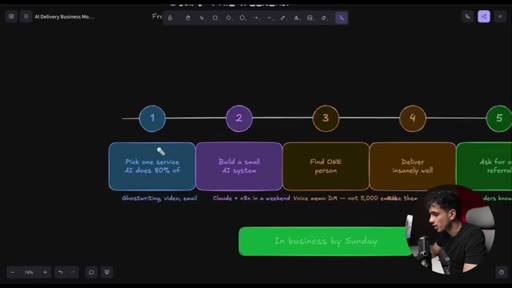
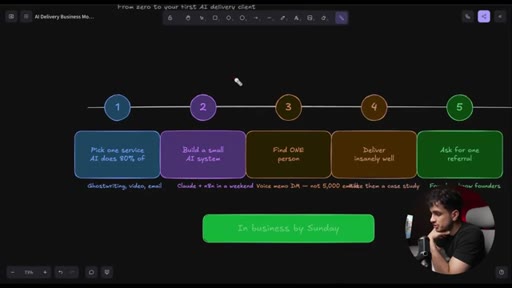
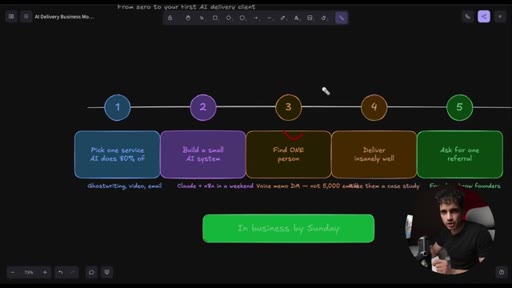
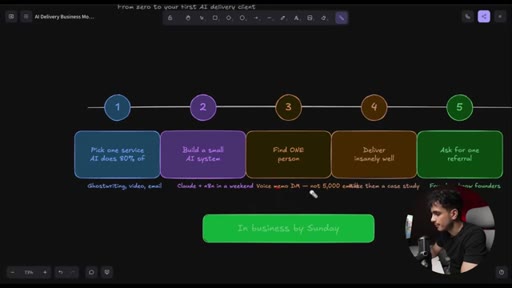
05 · The 5-Step Launch Plan
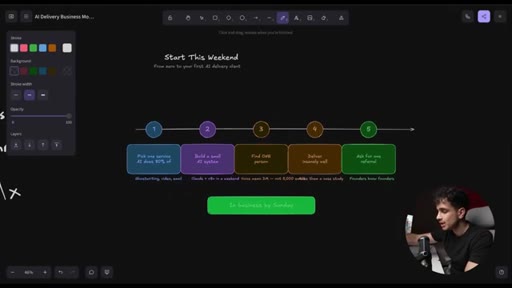
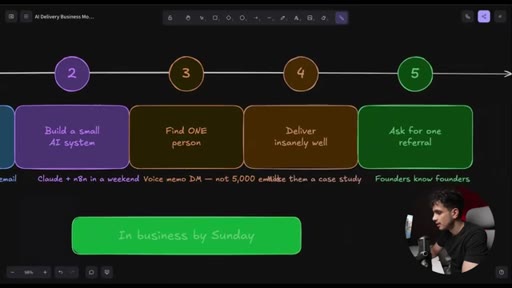
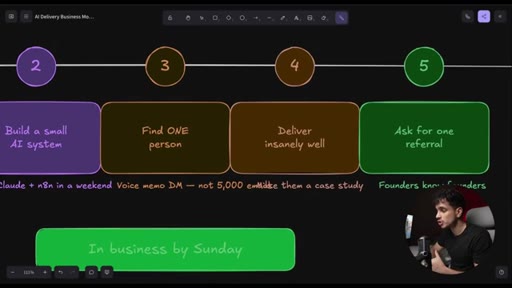
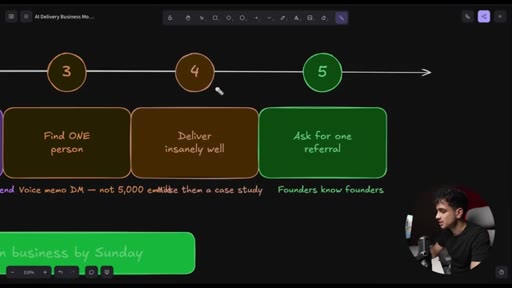
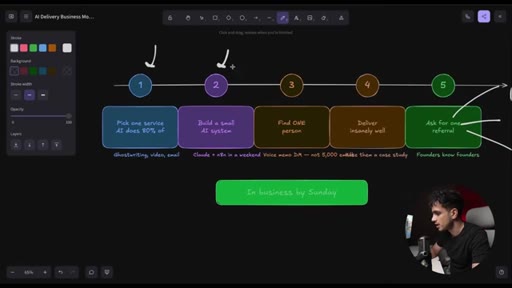
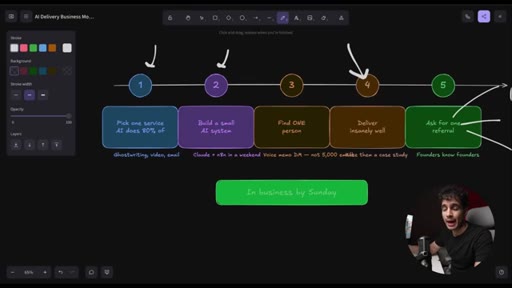
Step 1: pick service where AI does 80% of work. Step 2: build a small AI system. Step 3: find ONE person via voice memo DM. Step 4: deliver insanely well, make them a case study. Step 5: ask for one referral. Founders know founders.
Visual structure at a glance.
Named ideas worth stealing.
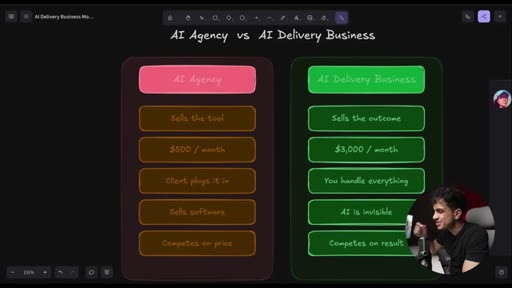
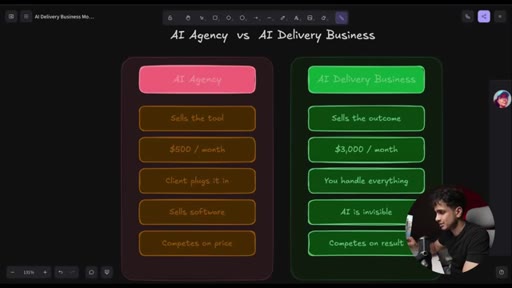
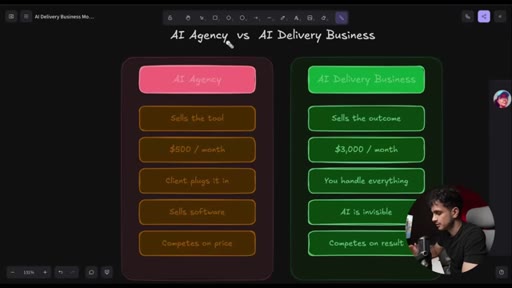
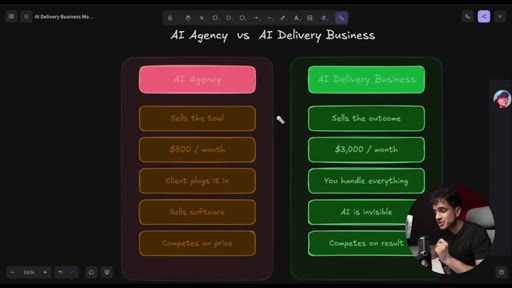
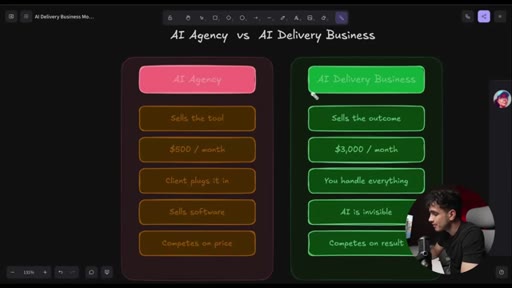
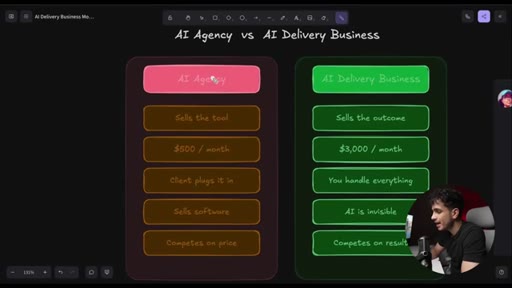
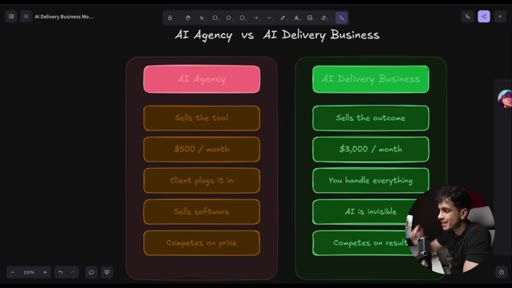
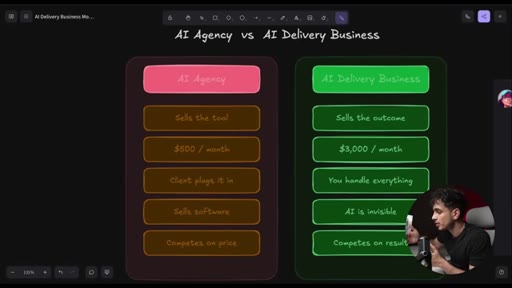
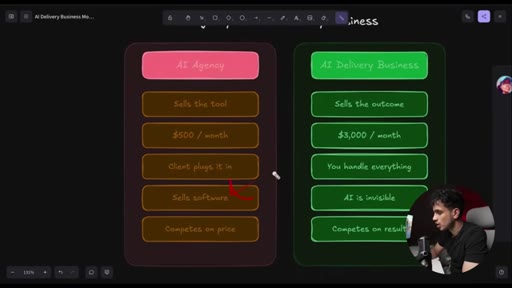
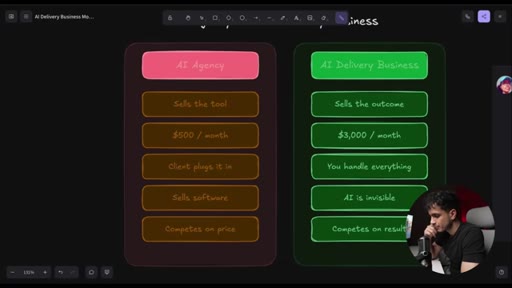
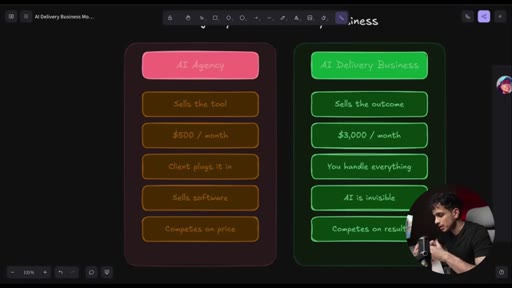
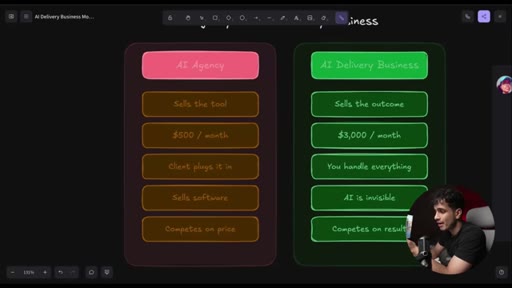
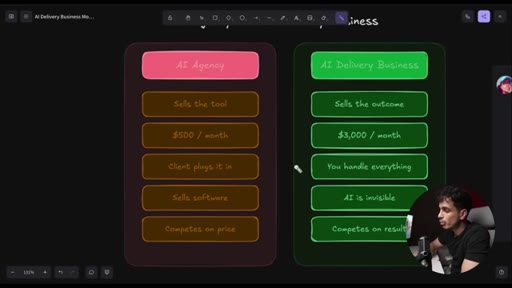
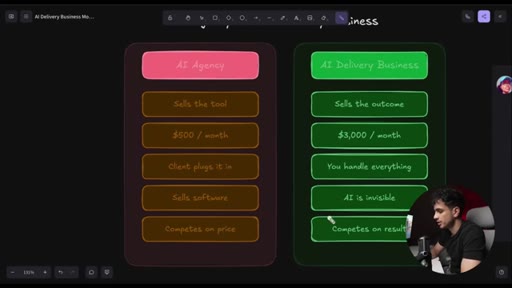
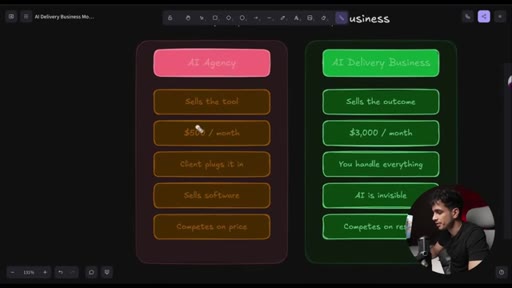
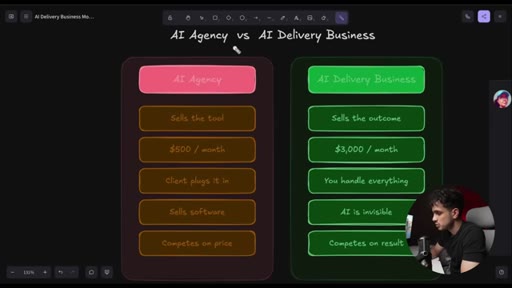
AI Agency vs AI Delivery Business
- AI Agency: sells the tool, $500/month, client plugs it in, sells software, competes on price
- AI Delivery Business: sells the outcome, $3,000/month, you handle everything, AI is invisible, competes on results
Side-by-side framework distinguishing tool-sellers from outcome-sellers, used to argue for the pivot from agency to delivery model.
The 5-Step Launch Plan
- Pick one service where AI does 80% of the work
- Build a small AI system for the core deliverable
- Find ONE person via voice memo DM (not mass email)
- Deliver insanely well and make them a case study
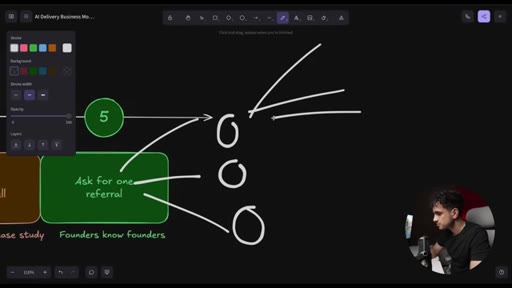
- Ask for one referral — founders know founders
Week-one execution plan for launching an AI delivery business from scratch, ending with a paying client by Sunday.
LinkedIn Ghostwriting Math
- Solo human: 5 clients, 4 posts/week each, 20 posts/week total, 16 hours/week, $10K/month ceiling
- You + AI pipeline: 8-12 clients, same deliverable, 3 hours/week, $24K-$36K/month
Before/after arithmetic showing how a Claude pipeline triples capacity on the same time budget.
Lines you could clip.
"Y Combinator just ended AI agencies."
"At this point, the only differentiator is price. And when that happens, you are basically racing to the bottom."
"The biggest AI opportunity is replacing full on services."
"The client might not even know you're using AI."
"AI delivery businesses are charging $8,000 a month per client."
How they asked for the click.
"click the first link in the description. I'll be more than happy to help you."
Mid-video CTA at 10:19 pointing to agentrise.io coaching program, repeated at close with 16-week one-on-one framing. Heavy on social proof (200+ students, named student wins) but the ask is a single link click.
Word for word.
Sell the outcome, keep the AI invisible.
When every competitor is selling the same tool, the only way out of price competition is to stop selling the tool entirely and sell the result instead.
- Commodity markets form when buyers can no longer distinguish quality between offerings — once voice AI receptionists all sound identical, the market sorts on price alone.
- The services market is structurally larger than the software market and already priced for outsourcing, which means buyers enter with higher budgets and fewer preconceptions about AI tools.
- Charging for an outcome rather than a tool shifts the pricing ceiling: a $500/month voice AI contract is replaced by a $3,000/month managed service contract for the same underlying capability.
- AI used internally to produce a deliverable functions identically to any other internal tool — accountants use spreadsheet software, contractors use power tools, service businesses use Claude.
- The capacity math for a solo operator is the deciding variable: if AI compresses a 16-hour workload to 3 hours, three times as many client relationships become manageable at the same personal cost.
- First-client acquisition in a service business follows a different path than product sales — one hyper-personalized voice memo to a specific person outperforms 5,000 templated cold emails.
- The referral flywheel in professional services is faster than any other growth channel: one founder who trusts you has direct access to three to five other founders with identical problems.
- A single case study with measurable results (posts published, engagement lifted, time saved) is sufficient proof for the next five clients — no ad spend or formal funnel required at the start.