Austin Marchese · Youtube · 11:21

Don't Start ANY Claude Code Project Until You Watch This

Three rules from YC CEO Garry Tan translated into a six-move AI leadership playbook — and the four questions that kill bad projects before they start.

Posted
May 20th 2026
yesterday
Duration
11:21
Format
Tutorial
educational
Channel
AM
Austin Marchese
§ 01 · The Hook

The bait, then the rug-pull.

The title is a gate, not a promise. Austin Marchese opens with a threat: most Claude Code projects are dead on arrival because people build the wrong thing. The first thirty seconds name-drop Y Combinator, Airbnb, Stripe, DoorDash, and a $25M startup COO backstory. By the time the first rule appears, you already believe he has something real.

§ · Stated Promise

What the video promised.

stated at 00:14 "Three rules you need to follow whether you're working on a side project for yourself or a business you want to grow." delivered at 11:11
§ · Chapters

Where the time goes.

00:00 – 00:42

01 · Cold open — the gate

Claude Code logo animation, YC credentialing, three-rule roadmap preview, Austin intro as $25M+ startup COO.

00:42 – 03:11

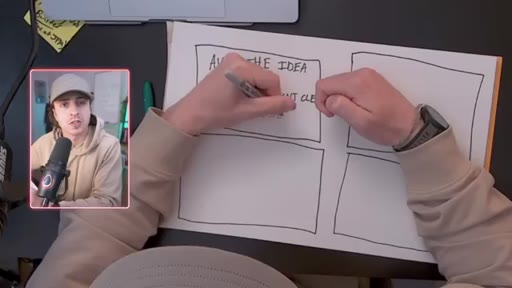
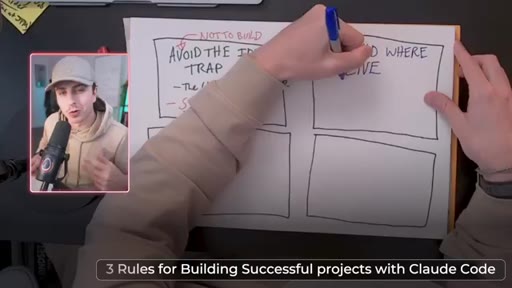
02 · Rule 1 — Avoid the Idea Trap

Two failure modes: unclear user identity and jumping in front of the AI steamroller. Path 1 (only user) vs Path 2 (distribution-first). Self-check questions.
03:11 – 05:52

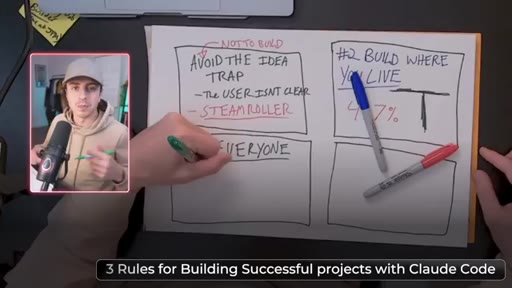
03 · Rule 2 — Build Where You Live

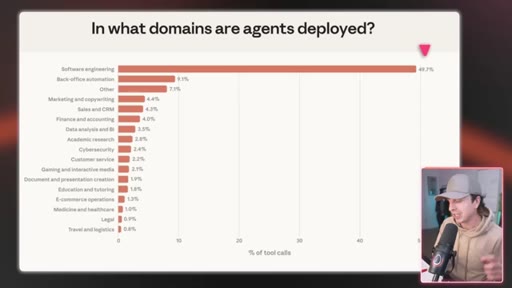
T-shape model. Surface knowledge vs deep vertical. Evals as the real moat. Garry Tan ethnographer clip. 49.7% of AI tools concentrated in one category.
05:52 – 07:32

04 · Anti-SLOP agreement + Rule 3 intro

Subscribe ask framed as mutual agreement. Shift from execution to leadership layer.
07:32 – 11:11

05 · The 6 Moves of an AI Leader

CLAUDE.md onboarding, pre-prompt planning interview, agent permissions, specialized sub-agents, manager review, hooks/scheduled-agents/loops. BuildPartner.ai mention.

11:11 – 11:21

06 · 4-Question pre-project test + outro CTA

Four filters before starting any project. Cross-promotes Andrej Karpathy video.

§ · Storyboard

Visual structure at a glance.

open — Claude Code logo
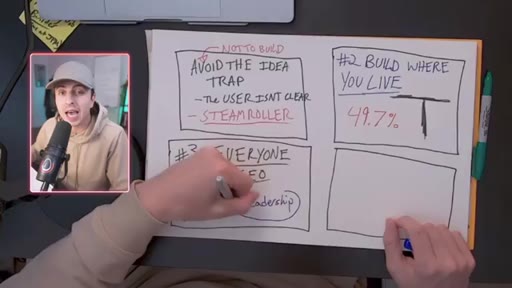
rule 1 — only user path
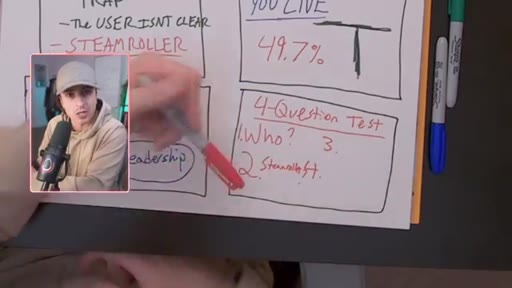
steamroller concept
Garry Tan clip — evals moat
49.7% stat slide
anti-SLOP subscribe CTA
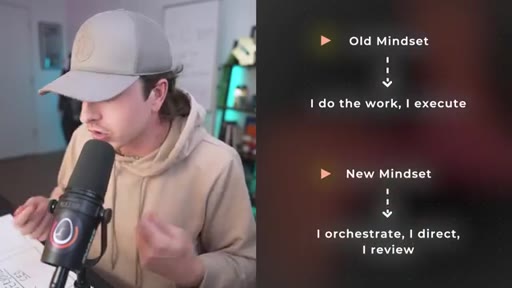
old vs new mindset slide
4-question test
outro CTA — Karpathy cross-promote
§ · Frameworks

Named ideas worth stealing.

00:42 concept

Avoid the Idea Trap

Two failure modes: user not defined, or competing directly against frontier AI labs. Forces a binary: are you the only user (optimize for speed/ugly) or do you need distribution?

Steal for Pre-project filter — kills side-project scope-creep before it starts
03:51 model

The T-Shape Moat

Top of the T = broad surface knowledge anyone can prompt for. Vertical of the T = earned judgment from watching things fail in your domain. The vertical is where you build.

Steal for Positioning argument for why Joe's direct-response depth beats any AI generalist
03:54 concept

Evals as Moat

Knowing what makes good vs. bad AI output is the actual competitive advantage. Garry Tan: 'that's actually turning out to be the moat for many startups.'

Steal for MCN+ positioning, LFB framing — domain experts win the AI era
07:48 list

6 Moves of an AI Leader

  1. Onboard AI like a new hire — write CLAUDE.md first
  2. Write a plan before prompting — have AI interview you
  3. Give AI employee-level permissions (reversible=auto, destructive=ask)
  4. Build a cabinet of specialized sub-agent experts
  5. Review like a manager — AI brings volume, you pick the winner
  6. Remove yourself as bottleneck via hooks, scheduled agents, loops

Steal for Content series: Joe already does 5 of 6 — the 6th maps directly to JoeFlow's morning-batch-launcher
10:23 list

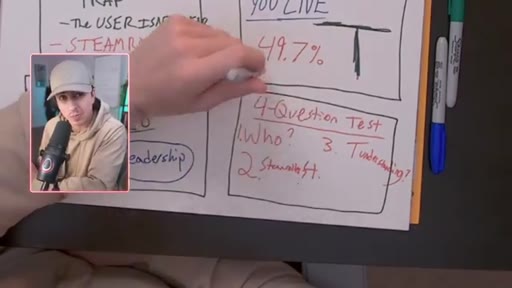
4-Question Pre-Project Test

  1. Who exactly is this for? (specific or kill it)
  2. Is this in front of an AI steamroller?
  3. Do I understand this in practice, not just on paper?
  4. Is this congruent with the rest of my work?

Steal for Any project-scoping conversation with clients or in LFB sessions
§ · Quotables

Lines you could clip.

03:54
"Being able to do evaluations of what models and what prompts are good — that's actually turning out to be the moat for many startups."
Garry Tan says it, not Austin — borrowed authority, tight soundbite → TikTok hook
05:05
"49.7% of all AI tools being built are in one category. The rest is wide open."
Specific number makes the claim land hard. No setup needed. → IG reel cold open
05:52
"In the AI era, you already have a team at your disposal. The question isn't whether you have a team because you do. The question is whether you're actually ready to lead them."
Reframe that hits anyone who feels behind — shifts posture from victim to leader → Newsletter pull-quote
11:11
"Stop waiting for somebody to save you. Stop waiting for permission to do these things. You can just do these things."
Strong motivational close, no jargon, broadly applicable → TikTok hook
§ · Pacing

How they spent the runtime.

Hook length42s
Info densityhigh
Filler8%
§ · Resources Mentioned

Things they pointed at.

00:00channelY Combinator / Garry Tan interviews
11:12channelAndrej Karpathy Claude projects video
§ · CTA Breakdown

How they asked for the click.

06:10 subscribe
"The visuals, the testing, the time I put into this video — that's for humans. It's not for AI robots or data scrapers. So all I ask is you subscribe as part of this agreement."

Framed as a mutual social contract (anti-SLOP agreement) rather than a standard ask. Converts subscribe from obligation to reciprocity.

§ 04 · The Script

Word for word.

HOOK opening / re-engagementCTA the pitch metaphor analogy
00:00HOOKClaude Code lets you build anything you want. Luckily, Y Combinator, the company that helped start Airbnb, Stripe, and DoorDash is very public about what projects you should and what projects you should not start in the age of AI. So after analyzing what their CEO, Gary Tan, has said, I've uncovered three rules you need to follow whether you're working on a side project for yourself or a business you want to grow.
00:20HOOKThe first two rules cover what to build so you save time and money, and the last rule covers how to build it so you're successful. By the way, I'm Austin. I was a COO of a tech startup worth over $25,000,000.
00:30HOOKAnd about a month ago, I used the three rules that I'm gonna cover here to help a nontechnical person use Claude code to build an app that makes over 400,000 a year. So I know with certainty that these rules actually work.
00:42Rule number one is avoid the idea trap. Before we talk about what to build, you have to understand what not to build. Because unfortunately, most projects are dead on arrival because people just build the wrong thing.
00:53And there are two distinct ways that most people fall into this. The first way is that the user isn't clear. Simply put, you need to have a deep understanding of who is actually going to use what you're building.
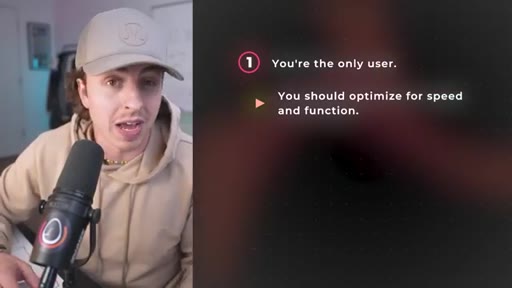
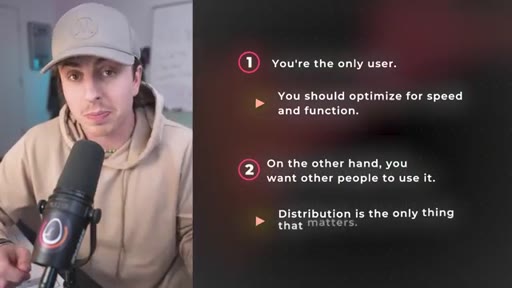
01:03So there are typically two paths. Path one is you're the only user. Let's say it's an internal tool, an automation that saves you three hours a week, a side project where you're just learning.
01:12In this case, you don't have to worry about distribution or getting people to use it because it's only for you. And as a result, you shouldn't worry about making it pretty and you shouldn't worry about scale. You are the only user.
01:25You should optimize for speed and function. You need to build it ugly and fast and stop making it look pretty because that's just a waste of time. And path two on the other hand is you want other people to use it.
01:35And in this case, distribution or getting people to use it is the only thing that matters. To solve this challenge, you have to understand who you're building for and what problems they actually have.
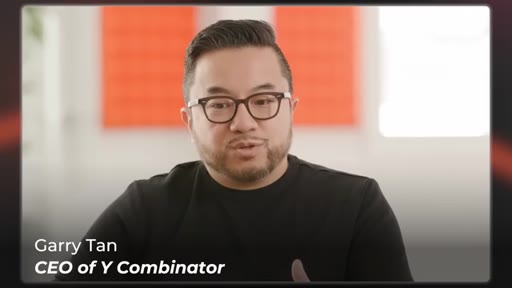
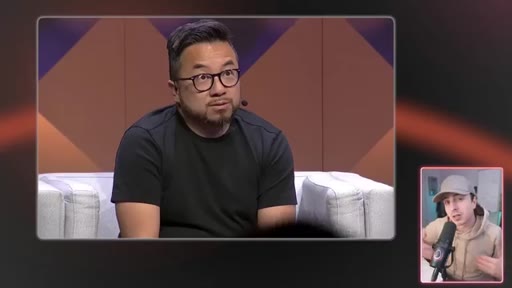
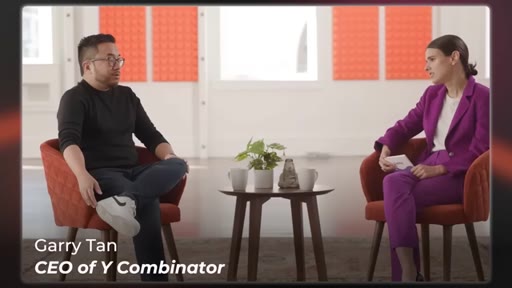
01:45Here's Gary, the CEO of Y Combinator, talking about the importance of tightly scoping whatever you're building. One thing that we're seeing is that if you, like, scope what you're doing and make the thing that is perfect for that set of people, there you can't just take ChatGPT and have it do this type of work yet.
02:03He's essentially saying, you need to know exactly what problems you're solving and solve those problems in an elegant way. The second way people fall into the idea trap is they jump in front of a steamroller. Let me walk you through a simple example of what this means.
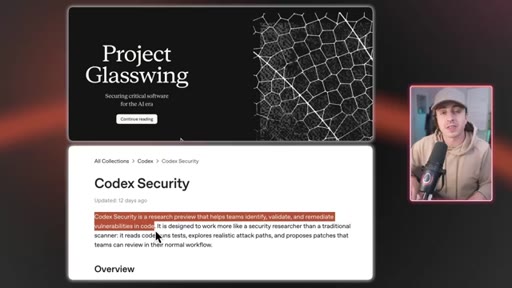
02:16Let's say you wanted to build a cyber security tool to help audit a code base. This is a great idea. Right?
02:22It could work just for you or it could work for thousands of others. It's really valuable. This is exactly what Anthropic,
02:28OpenAI, and all of the Frontier Labs are working on. You're directly in line competing against the biggest and smartest people on the planet. A battle that you will lose.
02:37You're essentially picking up a penny in front of a steamroller that's rolling towards you. So if me and you are David, how do we compete against the Goliaths? Well, the truth is you don't.
02:46You need to ask yourself, how can I build something that as AI models get better, this becomes more valuable, not less? But to help you avoid the idea trap and keep you from building the wrong thing, ask yourself these questions.
02:57Is this just for me? If not, can I name five specific people who'd use this today? Two, is this adjacent to AI progress?
03:05Will it become more valuable, not less over time? That's rule number one, so you know what not to build. But what should you build?
03:11Rule number two is build where you live. We've discussed the importance of knowing who you're building for, but what should you actually focus on? The obvious answer is you should focus on where you have expertise
03:20or the most domain knowledge. And this is correct, don't get me wrong, but not for the reason you think. In today's world, just knowing how to build a website or how to make a Facebook ad isn't valuable.
03:30And why isn't it valuable? Because you can prompt AI to get any of that. That's just surface level understanding.
03:35But what is valuable is the evaluation letter. Knowing what makes a website actually convert versus a website that doesn't or knowing what makes a Facebook ad successful versus not. That's where the deep value lives.
03:47It's the judgment between good and great. A fancy term for this is evals. Evals are basically knowing how to tell what's good and bad output from AI.
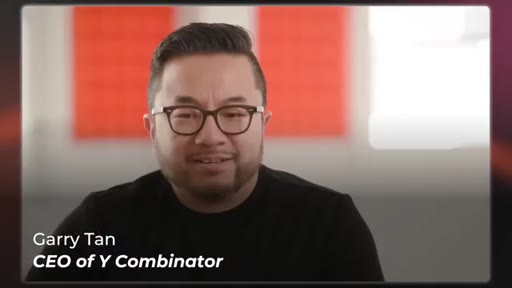
03:55Here's Gary talking about why evals are the real moat, which essentially means the real differentiation. You know, being able to do evaluations of what models and what prompts are good.
04:04It's like that's actually turning out to be the moat for many startups. Yep. Part of design, I think, is actually the empathy for the user.
04:11Like, you sort of have to be like an ethnographer. He said founders as ethnographers, which I had to look up because we both know that I didn't know what that meant.
04:20And here is the definition. A person who studies and describes the culture of a particular society or a group. That is the juice.
04:26So Gary's saying the moat or your unfair advantage isn't the AI itself. The moat is where AI can't replicate. The judgment you've earned from watching things actually work and fail in your domain of expertise.
04:37A mental frame that I use for this is I think of the letter t. The top of the t is your surface knowledge. It's broad.
04:43It covers a lot of width, but it doesn't have a lot of depth. It's shallow. This is essentially the same as anyone who's just asking AI prompts.
04:50The vertical of the t, that is where you've gone deep. That's where you've watched something work, where you've watched it fail, and learned the difference between good and great. That's where you've lived.
05:00The vertical is your moat. That's where you build. And this should really excite you because of this number.
05:0549.7% of all AI tools being built are in one category. Healthcare, 1%.
05:10Legal, less than 1%. Education, less than two percent.
05:14Half the market is fighting over the same slice. The rest is wide open. So an engineer might be a 10 in technical skills, but in your domain, they're a zero.
05:22And you might be a one in technical things, but in your domain, you're a 10. And that's the d part. And that's what's really valuable.
05:29Now, before we get to rule three, which will provide the playbook for you to build something successfully. If this is your first video of mine, welcome to the channel. If this is your second or more, here is our anti SLOP agreement.
05:39The visuals, the testing, the time I put into this video, that's for humans. It's not for AI robots or data scrapers. So all I ask is you subscribe as part of this agreement to help this content reach more people so I can keep making videos like this.
05:52Moving to rule number three where everyone is a CEO now. So you know what not to build and what to build. But how do you actually build something successfully in this new world?
06:00Most people are still operating with the old mindset. I do the work. I execute.
06:04CTAIn the AI era, that's the wrong game. The new mindset is I orchestrate, I direct, I review, much like a CEO. This shift is from the execution layer to the leadership layer.
06:14CTAIn the AI era, you already have a team at your disposal. That's Claude Codes, specialized models, custom skills. They're sitting there waiting.
06:20CTAThe question isn't whether you have a team because you do. The question is whether you're actually ready to lead them. Here's Gary pointing out what the best leaders can do in the AI world.
06:28CTAReally super young teams that basically are starting out with nothing. And they can go from
06:35really 0 to $10,000,000 a year in revenue, sometimes in the course of less than twelve months. And they can do it with less than 10 people.
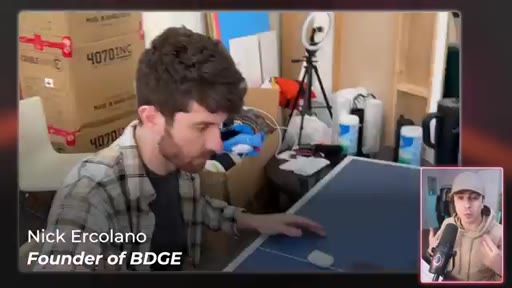
06:45And this point isn't just about startups. Whether you're at your day job, working on a side project, or building a 100 person company, everyone needs to level up to leadership. I actually saw this firsthand with Nick, a nontechnical founder at BDGE, when we were working on launching a Vibe coded app that was entirely built with Claude Coder.
07:02One day he called me and he's like, I'm more productive than my engineering team. I'm building fashion than them. They're way too slow.
07:08And this was a nontechnical founder who was outpacing his own full time engineers. And it wasn't because he was outcoding them. He was outleading them.
07:15He just directed AI better than they did. And after we worked together for about forty five days, we were able to launch an app worth over 400 k. If you're interested in how that actually happened, I do have that link below.
07:26I made a whole YouTube video on it. But with that, what is operating at the leadership leadership layer actually look like day to day? And what do successful leaders do?
07:33Well, there are six things you need to follow. The first is onboard AI like a new hire. Don't just open Claude code and start prompting a cold.
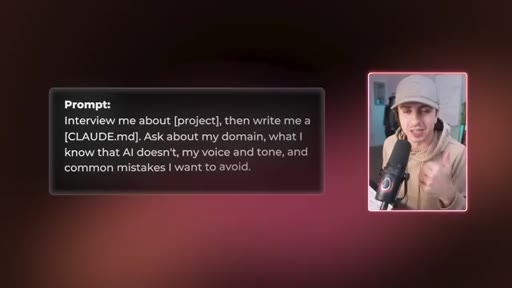
07:39Write a Claude dot m d file first. Think of this file as your AI's onboarding doc. The better context you give it, the less time you spend correcting it later.
07:46It's essentially the same way a manager onboards a new employee. Here's a prompt you can use to help create this. The second move is write a plan before you do any work.
07:55Don't just prompt and hope. Have AI interview you first to figure out exactly what you wanna build. What's the core problem this feature is solving?
08:02What does success look like? What should this not do? Ten minutes of planning could save you hours and hours of time.
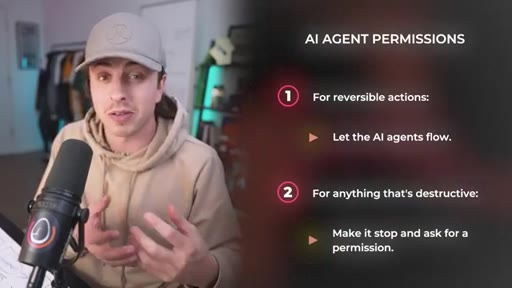
08:07Here's a prompt you can try to help get information out of you to make sure whatever you're building is actually what you wanna build so you can move faster. Moon number three is give AI employee level permissions. Much like when you onboard employee, you have to give them permissions to do things.
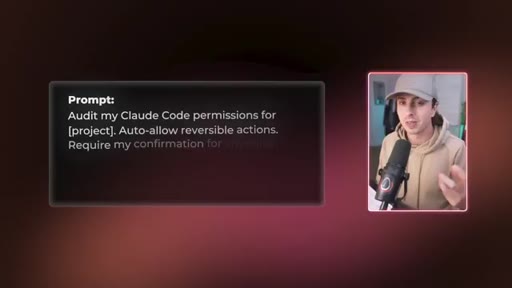
08:21And if you've used Cloud Code, you know how annoying it can be to constantly approve permissions for things that should just have access to. For reversible actions, just let the AI agents flow. For anything that's destructive, make it stop and ask for permission.
08:33This is a lot like how you'd give employees permissions to do things without your approval or not do things. You wanna protect the agent from itself, but you also don't wanna have to approve everything it does, which is very annoying. So try this prompt to give your agents proper permissioning while working on your computer.
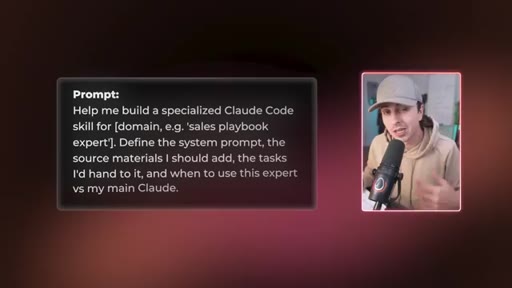
08:49Move number four is build a cabinet of specialized experts. Start thinking about creating your own panel of advisers that specialize in a specific task. One trained on your sales playbook, one on your content, one on your finances.
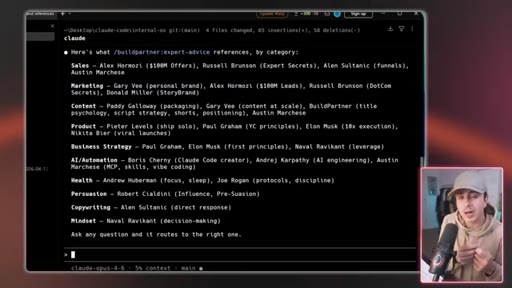
09:01Specialized employees be one generalist every time, much like building a team. Here's a prompt you can try to do exactly this. Now if this does sound complex, I built a tool called buildpartner.ai
09:11that solves this exact problem. You can run a skill called slash b p colon expert advice that will take whatever you're working on and run it through an expert in that field so it gives you specific advice from that expert. I love this tool.
09:23I built it because I ran into this issue all the time, so you can check that out. Move number five is review like a manager. Have AI bring you volume and you pick the winner.
09:31Don't have it do end to end. Have it do tasks that are middle to middle. You want an idea, have it bring you ideas and you approve them.
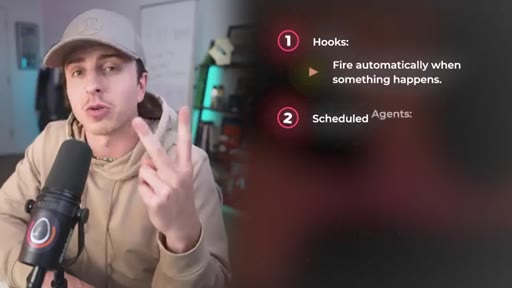
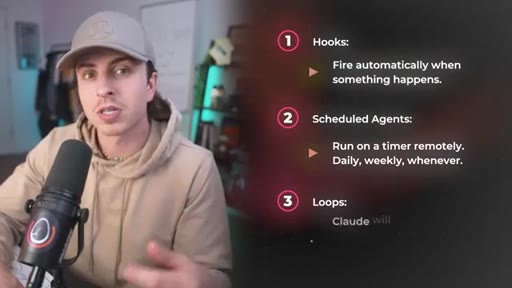
09:37Here's a prompt you can try to help with this. Move six is remove yourself as the bottleneck using Claude's power user features. These are three things I lean on a ton.
09:45Hooks. These fire automatically when something happens. Like, every time you finish a session, Claude will log what works and what doesn't.
09:51Scheduled agents. These run on a timer remotely. Let's say you wanna run something daily or weekly, Claude can do whatever you want, whenever you want using this functionality.
09:59And then loops. These are things that Claude will run automatically on your computer however often you want. This is how you create a system that works while you sleep.
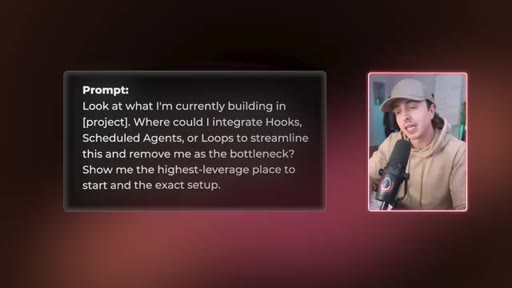
10:06End of the day, the more you're a bottleneck, the less you're leading. Here's a prompt to help integrate these into your system. That's rule number three.
10:12Everyone is a CEO now, which means you're a CEO now. Stop waiting for somebody to save you. Stop waiting for permission to do these things.
10:19HOOKYou can just do these things. So you now know these three rules. But before you start any project, you need to be able to complete this four question test.
10:27HOOKWho exactly is this for? Yourself, your team, your clients, or external users? Be specific or kill it.
10:34HOOKAnyone interested in next isn't an answer. Is this in front of an AI steamroller? Don't pick up a penny in the path of AI disruption.
10:41HOOKBuild adjacent to it. Do I understand this in practice, not just on paper? If you can't tell me what you've watched fail in real world, you're not the expert yet.
10:49HOOKUnderstand your t shape. And the fourth and maybe the most important, is this congruent with the rest of my work? Are you working on something that complements everything else in your life?
10:58HOOKSet up things that compound over time. If your idea is a one off that pulls you sideways, maybe it's not worth doing. Now if you like this video, you'll love this video where I break down the exact system that Andrea Carpathi,
11:10HOOKCTAthe former director of AI at Tesla, uses to 10 x his clawed projects. Once you know what to build and how to build it, this system will optimize your setup. I'll see you over there.
11:20CTAPeace.
— full transcript
§ 05 · For Joe

Steal the framework, own the vertical.

LFB playbook

The moat is not the AI — it is twenty years of watching funnels work and fail that nobody can prompt their way into.

  • Record a 'build where you live' video using direct-response conversion as the domain — it's a story nobody else in the Claude Code tutorial market can tell.
  • Turn the 4-question pre-project test into a one-page PDF lead magnet — immediately usable and brands Joe as the strategist, not the tutorial guy.
  • The CLAUDE.md onboarding angle is content Joe already lives; make a harder, more specific version with real examples from JoeFlow, MCN, and Clip Lab.
  • Rule 3 move 6 (hooks/scheduled agents/loops) maps directly to JoeFlow's morning-batch-launcher thesis — this is a product demo, not just a concept.
  • Use the T-shape model in MCN+ positioning: members get Joe's vertical (evals from 20 years of direct response) plus the tools — not just the tools.
§ 05 · For You

Three questions before you write one line of code.

If you are thinking about building something

Most projects fail before the first prompt because the builder skipped the hardest question: who exactly is this for?

  • Write down the names of five specific people who would use your idea today. If you cannot, the idea is not ready yet.
  • Google what the biggest AI labs are actively building in your space. If OpenAI has a team on it, build adjacent to it instead of against it.
  • Before opening any AI tool, spend ten minutes having it interview you about what you are building — the questions it asks will expose your assumptions faster than any planning session.
  • Ask yourself: does this project compound with everything else I am already doing, or does it pull me sideways? If it pulls sideways, it costs double what you think.
§ 06 · Frame Gallery

Visual moments.