Brock Mesarich | AI for Non Techies · Youtube · 20:52

My Claude Cowork OS Just Changed How I Work Forever

A 21-minute walkthrough of the live-artifact dashboard that replaced twelve browser tabs -- and the three keys that make it actually work.

Posted
May 19th 2026
today
Duration
20:52
Format
Tutorial
educational
Channel
BM
Brock Mesarich | AI for Non Techies
§ 01 · The Hook

The bait, then the rug-pull.

Twenty-six seconds in, Brock Mesarich makes a claim that stops the scroll: he built an operating system inside Claude that gives him real-time updates on his email, YouTube channel, and financial P&L -- all without opening a single other app. Most people using Claude, he says, are only pulling on one of the three levers that make this possible. This video is the tutorial that names all three.

§ · Stated Promise

What the video promised.

stated at 00:22 "I'm gonna break down what a Claude operating system is, go over the three key things that make it possible, and walk you through exactly how you can create your own." delivered at 20:01
§ · Chapters

Where the time goes.

00:00 – 00:43

01 · Hook and promise

Claim-first open: built an AI OS, it changed how he works, three keys most people miss. Promises to show what it is, why it matters, and how to build one.
00:43 – 03:32

02 · Full OS demo tour

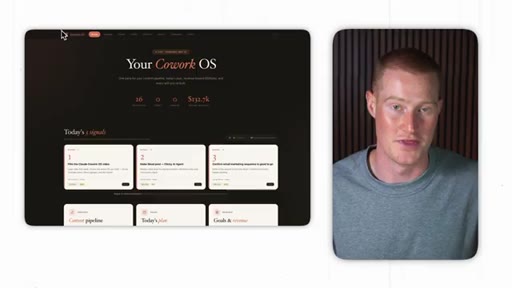
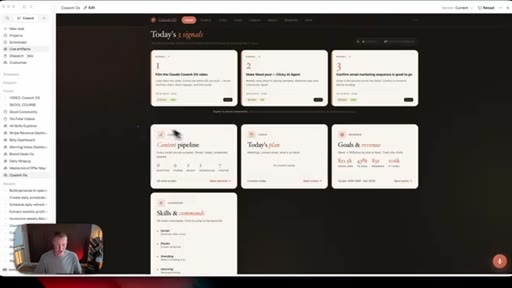
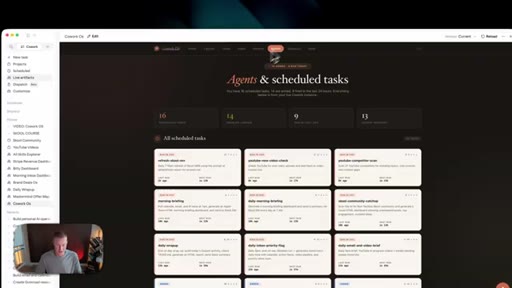
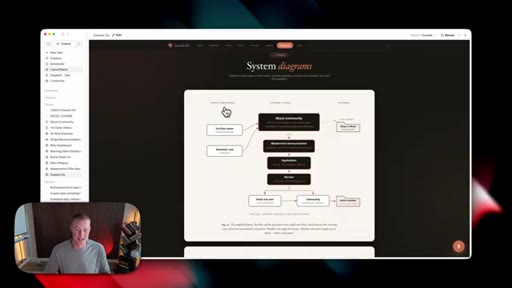
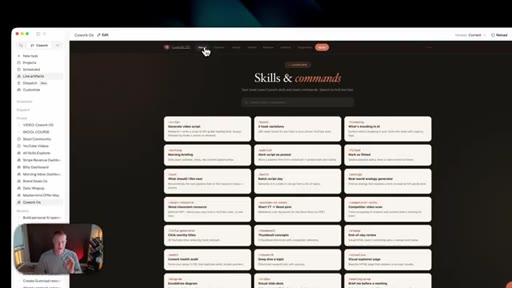
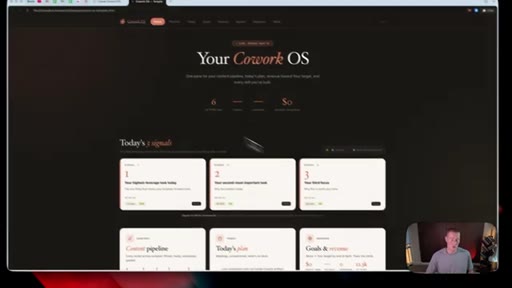
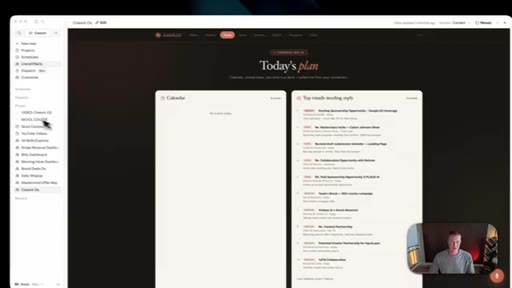
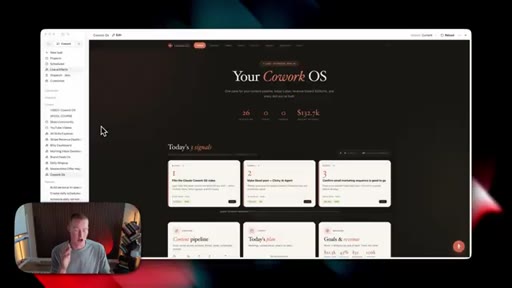
Live walkthrough: Home page with top-3 signals, Today Plan (Calendar + email triage), Goals and Revenue (School metrics + YouTube 28-day trend), Financial P&L (QuickBooks bar chart), Agents and Scheduled Tasks (16 active), System Diagrams, Skills and Commands catalog.
03:32 – 04:27

03 · Template offer

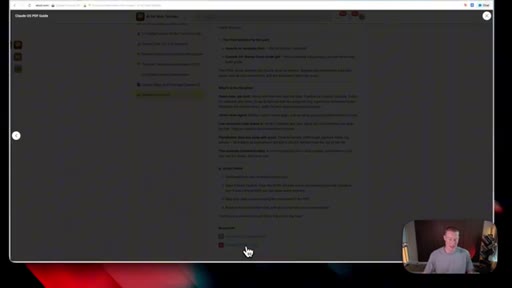
Soft CTA: download HTML template from School community > classroom > community exclusives. Upload to Claude Cowork and customize.
04:27 – 05:30

04 · The problem: 12 apps, 12 tabs

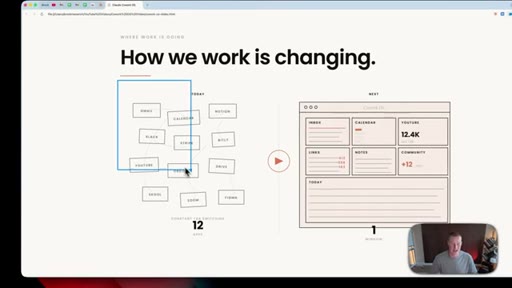
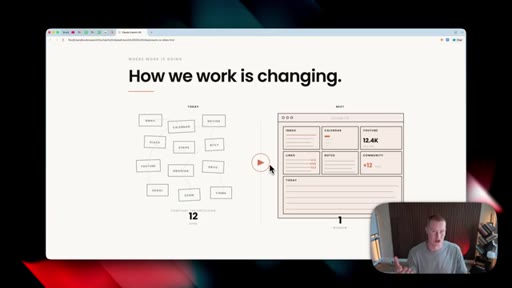
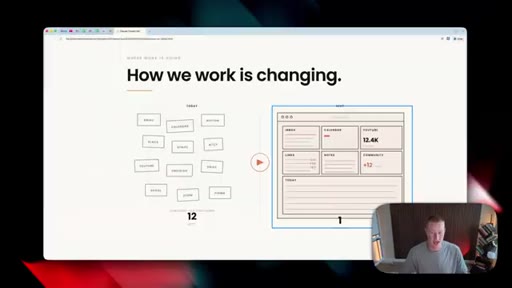
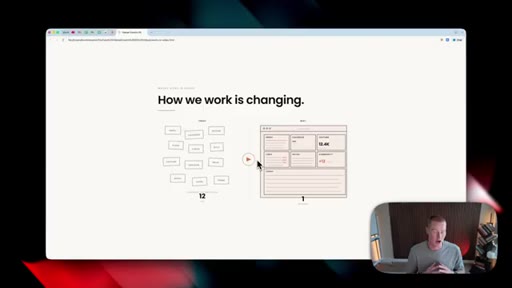
Why build an OS at all -- the current paradigm is tab-hopping between Gmail, Notion, Stripe, Slack. Illustrated with a graphic: 12 fragmented app boxes vs 1 unified dashboard.
05:30 – 06:40

05 · What an OS actually is

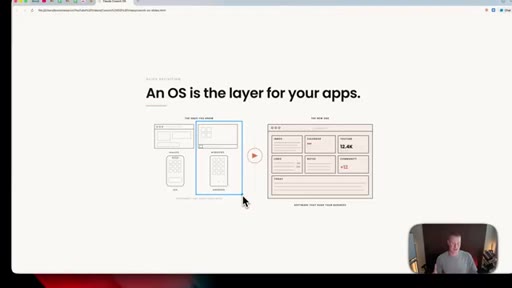
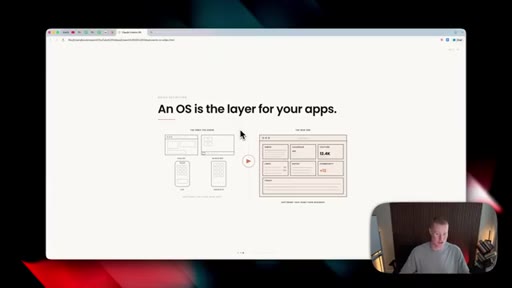
Plain-English OS definition -- a layer for your apps. Mac OS, iOS, Windows, Android as analogies. AI OS = same concept, customizable, built on Claude.
06:40 – 09:17

06 · Why Cowork, not Code

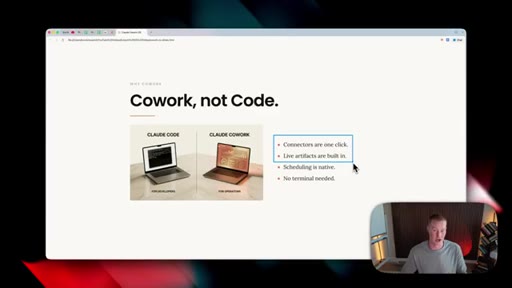
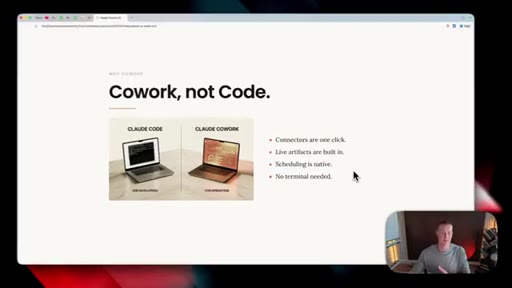
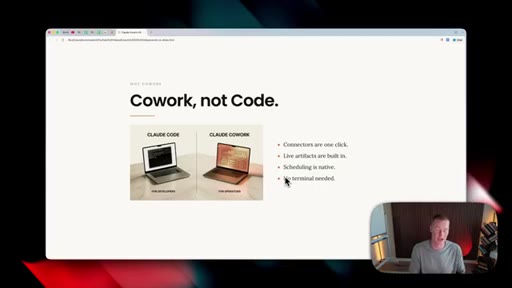
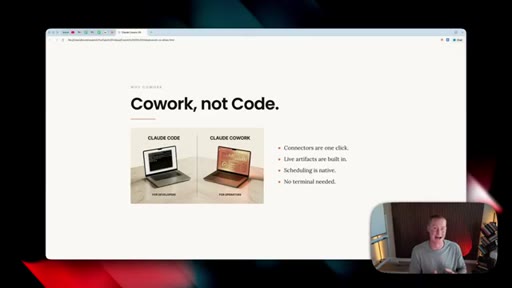
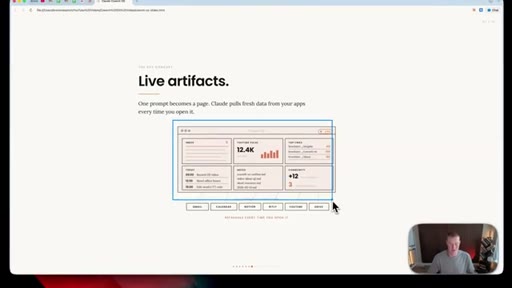
Live artifacts explained. Cowork vs Code comparison slide. Demos Bitly live artifact (19,883 clicks, real-time chart). Addresses the YouTubers-pushing-Code objection head-on.
09:17 – 11:19

07 · Setup: download desktop app and Cowork basics

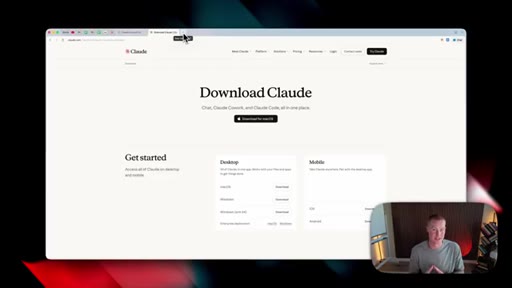
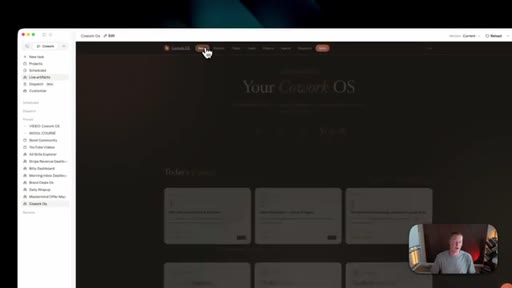
Download Claude desktop app. Navigate to Cowork mode (middle icon in left sidebar). Create a working folder. Shows pinned live artifact in sidebar auto-populating.
11:19 – 14:19

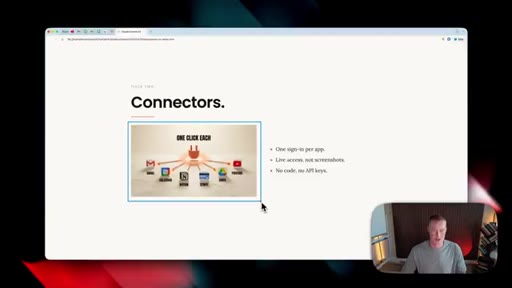
08 · Key 1 -- Connectors

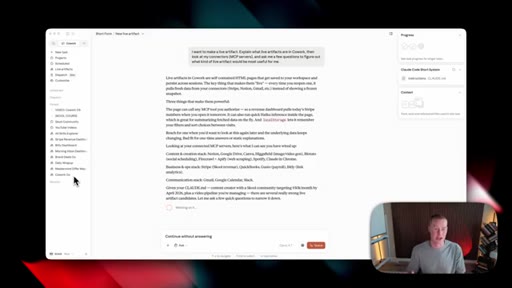
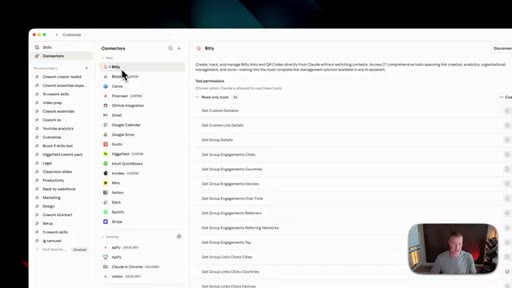
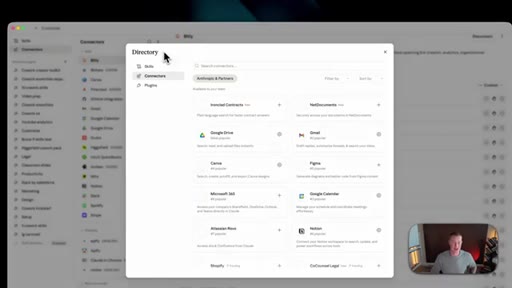
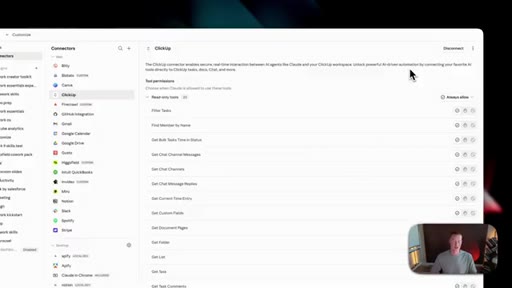
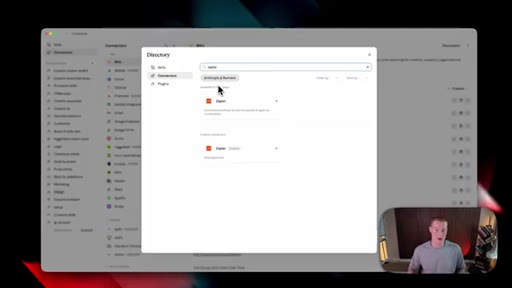
How to add connectors via Customize > Connectors. Browse directory (Gmail, Calendar, Notion, Stripe, YouTube, Google Drive, ClickUp, Canva, Figma, Slack, Spotify, Stripe). Demo: ClickUp connector -- always allow, auto-populates OS.
14:19 – 17:25

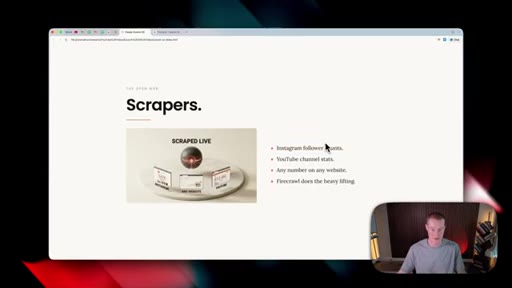
09 · Key 2 -- Scrapers (Firecrawl)

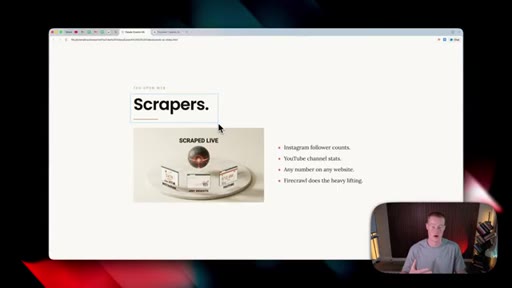
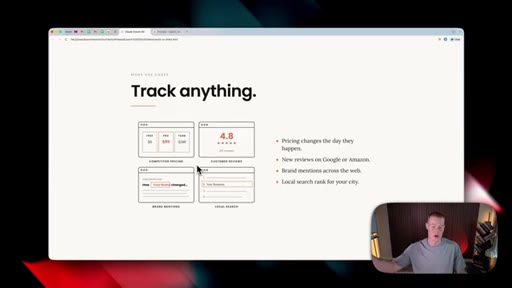
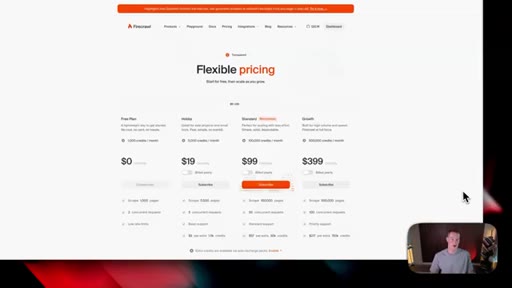
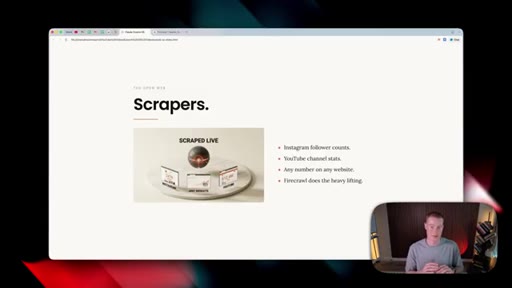
Why scrapers are needed: Instagram, YouTube stats outside connector, competitor pricing, reviews, brand mentions, local search rank. Firecrawl pricing: free (1,000 pages), Hobby $19/mo. Setup demo.
17:25 – 20:01

10 · Key 3 -- Zapier MCP

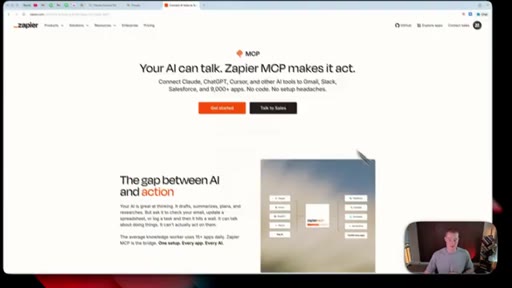
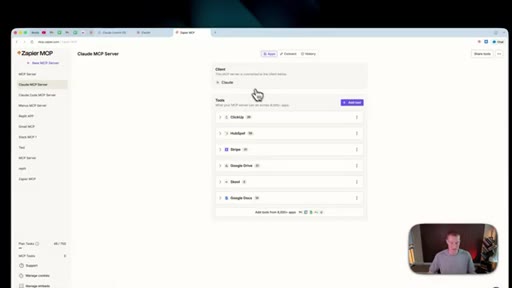
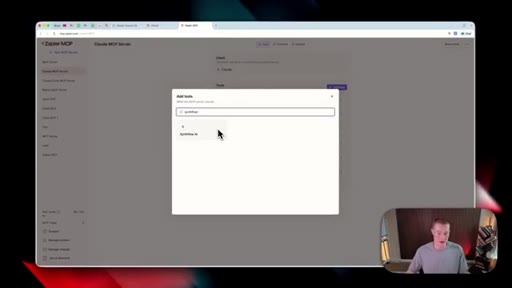
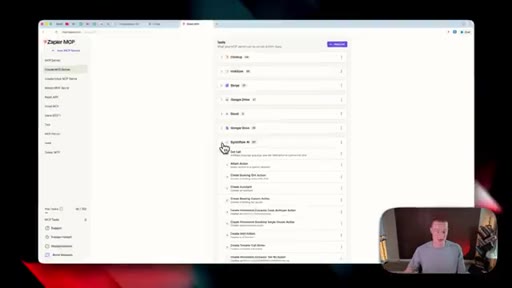
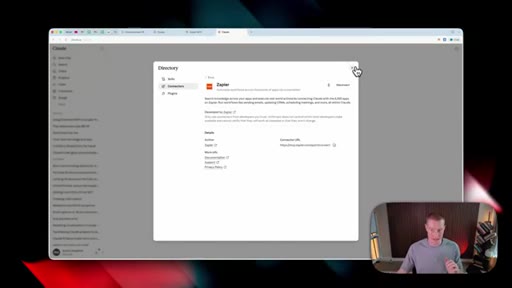
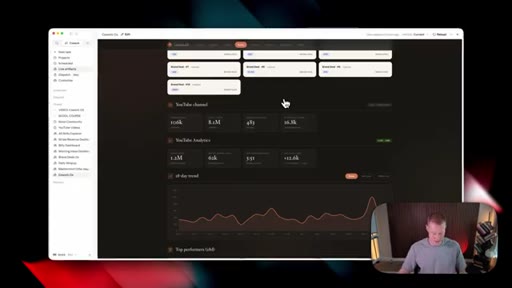
zapier.com/mcp for 9,000+ apps not in Claude native list. Create MCP server, select Claude CoWork as client, add tools (demos SynthFlow AI voice calling). Zapier MCP tagline: Your AI can talk. Zapier MCP makes it act.
20:01 – 20:52

11 · Outro CTA

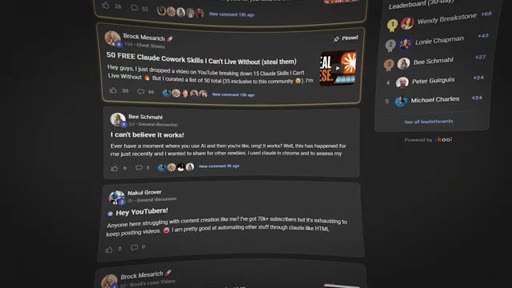
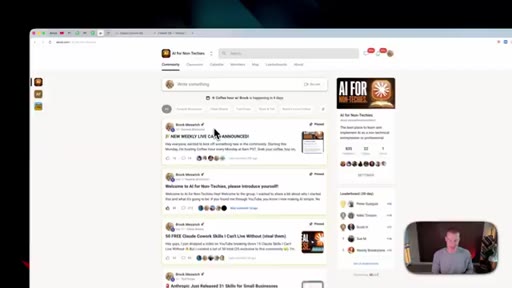
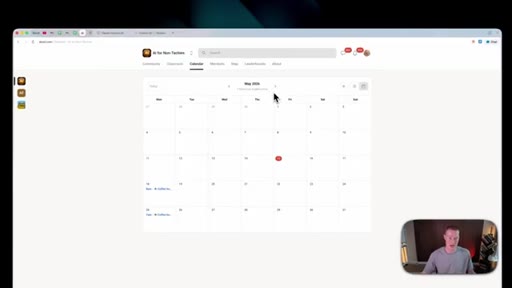
Repeat School community pitch (template + 50+ skills + weekly calls). Subscribe ask for free content. Shows School community feed and calendar.

§ · Storyboard

Visual structure at a glance.

open
OS demo
template CTA
the problem
live artifacts
Cowork not Code
connectors
scrapers
Zapier MCP
outro CTA
§ · Frameworks

Named ideas worth stealing.

06:40 list

The Three Keys of a Cowork OS

  1. Connectors (one-click app OAuth)
  2. Scrapers (Firecrawl for non-connector data)
  3. Zapier MCP (9,000+ app bridge)

The three technical building blocks Brock uses to populate his live-artifact OS with real-time data from any source.

Steal for Any AI workflow video -- three clean pillars, each with a live demo, escalating complexity
07:35 model

Cowork vs Code positioning

  1. Connectors are one click
  2. Live artifacts are built in
  3. Scheduling is native
  4. No terminal needed

Brock argument for why non-technical users should use Claude Cowork instead of Claude Code -- positions Cowork as the 90% solution.

Steal for Any product comparison video where you need to stake out a non-developer audience
05:43 analogy

OS-as-layer analogy

AI OS = same concept as Mac OS, iOS, Windows -- a customizable layer between you and your apps. Makes an abstract AI concept immediately legible to non-techies.

Steal for Explaining any AI infrastructure concept to a non-technical audience
§ · Quotables

Lines you could clip.

00:00
"I built a Claude co-work operating system, and it just changed how I work forever."
Tight claim, no setup needed, classic pattern-interrupt open → TikTok hook / IG reel cold open
08:54
"After teaching tens of thousands of people on how to use Claude, I genuinely do think CoWork is probably the better platform for them because it gets 90% of the things done for you, and it is much simpler."
Authority + clear recommendation + specific number → IG reel cold open / newsletter pull-quote
05:43
"An operating system is a layer for our applications."
Tight definition, reframing moment -- works as standalone insight → TikTok text-overlay clip
19:10
"Your AI can talk. Zapier MCP makes it act. The gap between AI and action."
Punchy contrast structure, Zapier own tagline → Newsletter pull-quote / IG carousel slide
§ · Pacing

How they spent the runtime.

Hook length43s
Info densitymedium
Filler10%
§ · Resources Mentioned

Things they pointed at.

§ · CTA Breakdown

How they asked for the click.

20:01 product
"If you want the exact same template that I use in order to create my Cowork operating system that you saw in this video, make sure to grab it. It is in my School community along with the 50 plus skills that I use every single day."

Soft sell, shown twice (3:32 and 20:01). School community positioned around template + skills + weekly calls, not purely the template.

§ 04 · The Script

Word for word.

HOOK opening / re-engagementCTA the pitch metaphor analogy
00:00HOOKI built a Claude co work operating system, and it just changed how I work forever. Claude is an incredibly powerful tool, and most people don't even realize even half of its capabilities. That's because there are three key things that make a co work operating system actually work, and most people are only using one of them.
00:16HOOKThis AI operating system that I created gives me real time updates across my entire business. It automatically shows me important emails, my social channel statistics, and even my entire business's financial data, all inside of Clot.
00:29HOOKAnd this is a fundamental shift in how we interact with our different applications. So in this video, I'm gonna break down what a Clot operating system is, go over the three key things that make it possible, and walk you through exactly how you can create your own. So without further ado, let's dive in.
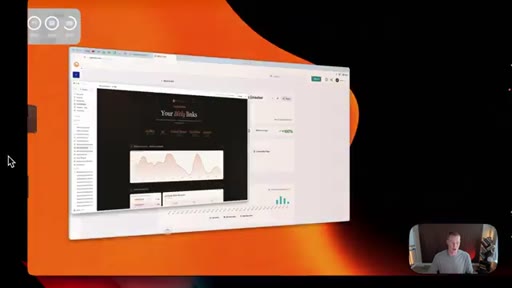
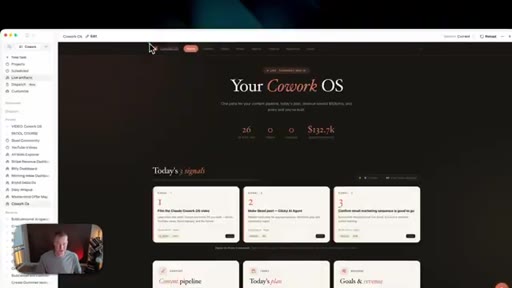
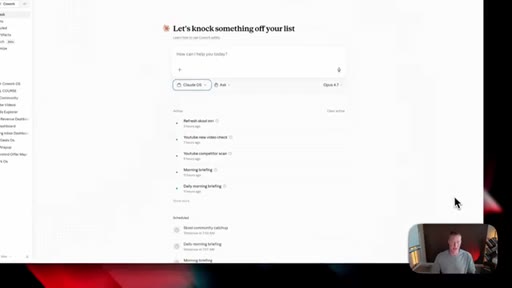
00:43Alright. So to kick things off, I wanna show you my Claude Cowork operating systems so you can get a sense of just how powerful this is when we combine all these different tools I'm gonna show you in this video. So first of all, this is what we see.
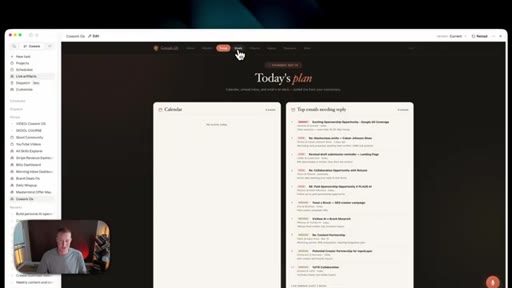
00:55We have a home page. I have my top three signals for the day, which are basically the main tasks that I need to get done that are the most important to me. I can then see everything that's going on inside of my content pipeline, today's plans, my specific revenue goals, and where I'm at compared to those, and it shows all my different skills as well.
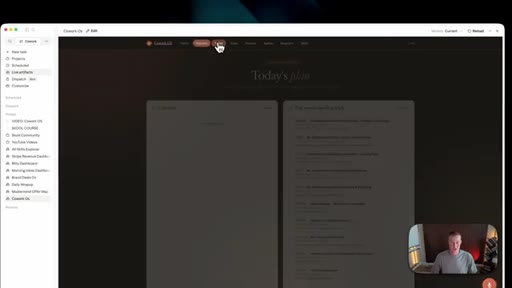
01:12And then at the very bottom, I could even see every single task that Claudette Cowork did for me the past two days. Next, I have a menu bar on the top right here that you can see. If I click on today, I can see my today's plan.
01:24So this pulls from my Google Calendar, and it pulls from my email, and it automatically categorizes which emails are the most urgent for me to reply to. So that way I could get a sense of what's going on inside of my email inbox without me needing to be inside of Gmail.
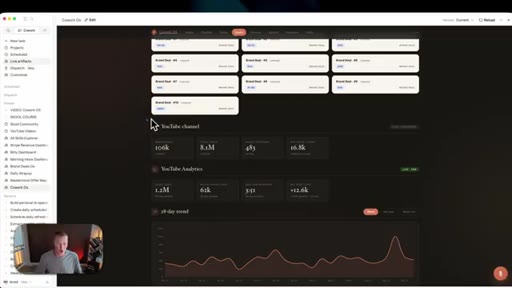
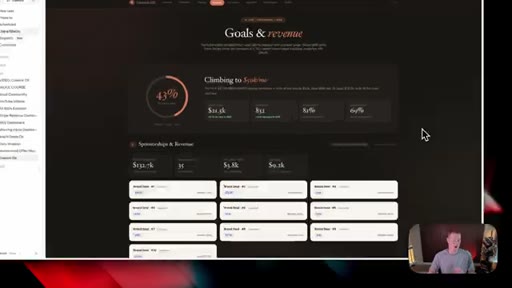
01:37Next, I have a goals and revenues tab that basically breaks down where I am at in terms of my school revenue goals. It shows how many different members I have, my retention and engagement, basically everything school related that I need to see directly right here. On top of that, I could see every single statistic that I need to know about my YouTube channel without me needing to log in the YouTube studio.
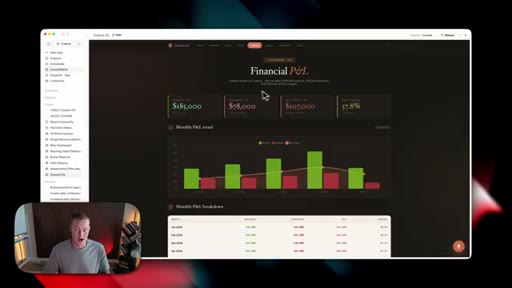
01:58I even get this twenty eight day trend of how many views my channel is getting as well as how many subscribers. I then have this finances tab that automatically pulls from QuickBooks and shows my profit and loss statement that I used to have my accountant send to me.
02:11I do wanna preface that this is not my actual revenue. I did not wanna, you know, share that with you because that is private information, but this could pull directly from QuickBooks and basically give you a profit and loss statement without you needing to log in to QuickBooks. Next, I could see all the agents that I have running across my business with all the scheduled tasks.
02:27It shows when these are running, the last time it ran, etcetera, but it even shows the ones that are disabled. Next, I have this diagrams tab that automatically breaks down some complex things for me to understand. So for example, this breaks down my YouTube to school community funnel.
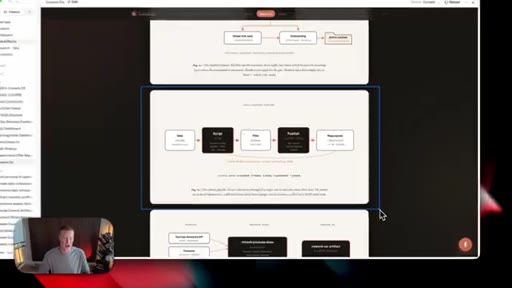
02:42I have another one that shows my daily content pipeline. So this is a chain of different skills that I use inside of Claude, and it's just giving me a visual of what that looks like as well as this is a diagram right here breaking down how exactly my Claude CoWork operating system works. And last of all, I could see every single skill that I have directly inside of Claude right here so I could remember which ones I have in order to use them.
03:03Now this is a very high level overview of my CloudCowork operating system that I'm gonna break down in this video and show you why you need to have one on your own and how to build it from scratch so you could begin stitching these different applications you use and turn it into basically an entire operating system you could run your business through.
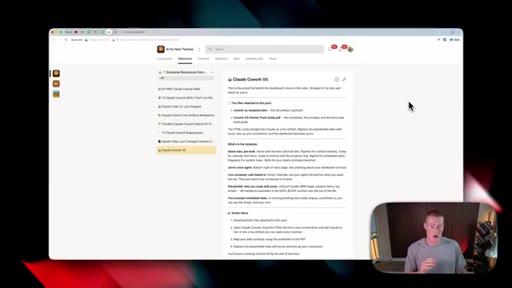
03:19CTAAlright. So if you want the exact template that I use in order to generate my operating system that looks exactly like mine, then the template will be available in my school community. So if you come to classroom, come to community exclusives,
03:32CTAand click on the Claude CoWork OS page right here. You will then see this breakdown along with the actual HTML file and a PDF guide breaking down exactly how to do this.
03:42CTASo in order to do this, you just click download HTML, drag this onto your desktop, and then simply upload this to the Claude CoWork app, and it will begin building this for you. Once you upload it, it's gonna look exactly like this, and you'll just need to customize it for your specific use cases, but it will have all these different pages.
03:58CTAIt'll have this today's plan breakdown, the different goals, and whatnot. It'll have financials right here. You just need to connect your QuickBooks.
04:05CTASo you just need to connect all of your different apps as well as explain what you wanted to populate inside of your operating system, and you'll have all this built directly inside of here for you. And if you'd rather build this from scratch yourself, you could obviously do that. It's just gonna take a little bit more work, and I wanted to give you the option to steal this exact same template that I have.
04:22CTAAlright. So before I dive in and show you exactly how to begin building out your own cloud co work operating system, we need to first talk about why this even matters and why you should begin crafting your own. And the main premise I wanna touch on here is that how we work is changing every single day, and this is only gonna accelerate more and more as AI becomes more prevalent in our lives.
04:42How we're familiar with working on your computer is exactly like this. Today, we are stuck between all of our different applications, whether we're using Gmail, Google Calendar, Notion, Slack, Stripe, any of the different apps we use. We have to hop to and from them in different tabs on our computer.
04:58This has worked up until this point with no problems because that's all we've known. But now with things like Cloud Code, Cloud Cowork, and all of these agentic AI systems, there's a whole new paradigm of how we're gonna interface with these different applications.
05:11And we're going to be doing that with an AI operating system, and this is a little graphic of what this looks like. So we could have all of our main points from our email inbox, everything from our Google Calendar, our social channels, and basically everything we need to do inside of one unified dashboard that we work inside of on our computer.
05:28Alright. So let me break down in simple terms what an operating system is. So literally anybody can understand it.
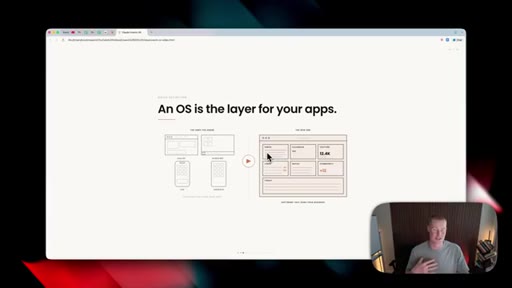
05:34So you can understand why we actually need to build one and why it's actually gonna be helpful for us. So an operating system is a layer for our applications. So on the left hand side, you're probably used to, like, Mac OS or iOS for your iPhone.
05:48This is basically how we interact with applications directly on our devices. Another one is Windows and Android. These are different operating systems that we use in order to interface with technology.
05:58And as AI is becoming more and more prominent inside of our lives, it's gonna completely change the way that we interact with these apps because we don't need to necessarily be inside of them to make changes and to pull up data and information. We can now build our own AI operating system and customize it to however we want it to look.
06:15And this is a fundamental shift in how we use technology in the past. Alright. So I wanna quickly talk to you about why we're doing this inside of Claude Cowork and not inside of Claude Code.
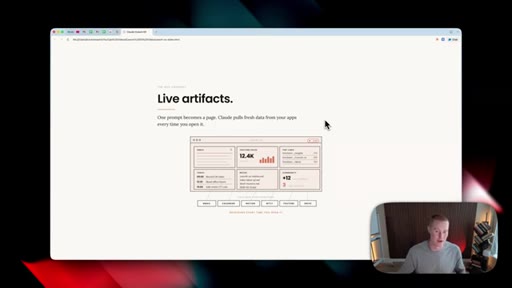
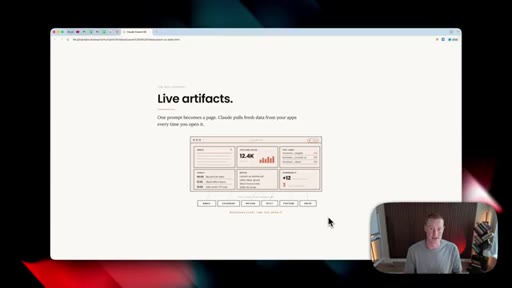
06:25And that is because a new feature that Cloud just released inside of Cowork that honestly is probably one of my favorite features I've ever seen across any Cloud product, and that is live artifacts. If you don't know what a live artifact is, let me break it down right now incredibly simply. This is basically a way that we could create interactive dashboards that pull information from any of the different applications that we use in real time.
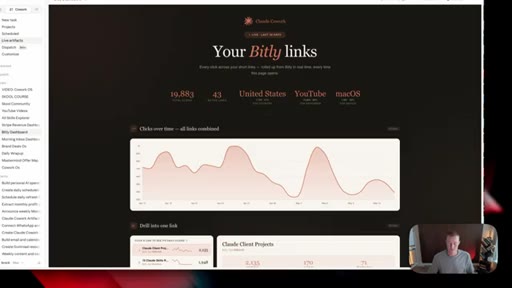
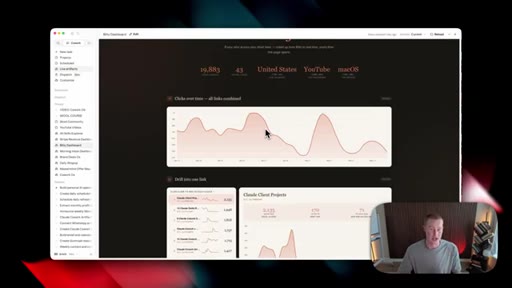
06:50So instead of us building a static HTML page that we have to go and tell Claude to regenerate a new one for, this automatically will pull the data in real time as it's happening from your different applications. For example, let me show you this right here. So this is my Bitly links live artifact that automatically pulls from Bitly, which is a tool and application that I use in order to track how many people are clicking on specific links I add to my videos.
07:16So I could see in real time how many people are clicking on them. This updates without me needing to refresh it. And I can now do this instead of needing to come to bitly.com
07:25and look through every single one of my links and see this information this way, I could just open up inside of Claude my live artifact that automatically lives in my sidebar. I could just click on this where it says Bitly dashboard at any time, and it has live up to date information. This is basically my custom app that I could access at any time.
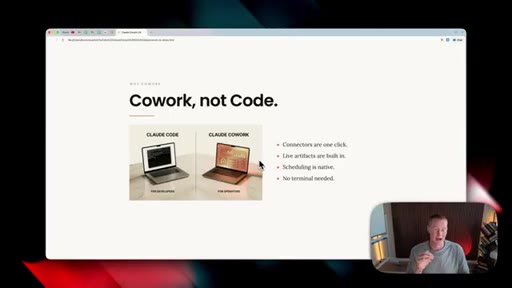
07:43I can almost guarantee some of you are asking this question, and that is, Brock, why are we doing this inside of Claude Cowork and not inside of Claude Code like all the other YouTubers are showing me how to do. And there are a couple of different reasons for that, so let me explain right now. One of the reasons is that connectors are one click.
08:00It literally takes a couple of minutes, and you could connect to all the different apps you wanna use directly to our operating system. We have live artifacts, which I'm gonna talk about later in this video, that make it extremely easy to automatically pull information from all the apps you use and then auto populate it onto a dashboard that we could use directly inside of Claude and access it at any time.
08:19Cowork has a scheduled task feature that is built directly in so we could automatically pull information from different places and run automations on autopilot to then populate our live artifact or our Cowork operating system. And we don't need to use a terminal. There's no complex setup.
08:35This is very simple to do inside of Claude, inside the desktop app. So that is why we are doing this inside of Cowork and not Code. I will say you can do the same thing inside of Claude Code.
08:44It's just a little bit more complex. You can probably do a bit more inside of Claude Code, but it's not for everybody. And after teaching tens of thousands of people on how to use Claude, I genuinely do think CoWork is probably the better platform for them because it gets 90% of the things done for you, and it's much simpler.
09:00Before we can begin building out our operating system, we need to first download the Claude desktop app. So there's gonna be a link in the description to download this. If you haven't done this already, we cannot build this directly inside of the normal Claude chat mode in the browser.
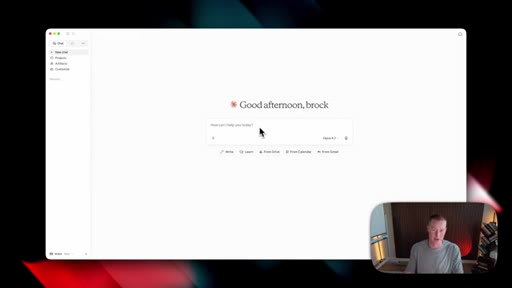
09:13We need to be using the desktop app, so make sure to download that now. Once you have that downloaded, this is what it's gonna look like.
09:19So let me break down the Clawd app for you very simply if you've never used this before. So this right here is our chat mode. It's basically like using normal Clawd or ChatchaPT.
09:28We just go back and forth. They will answer questions, pull from our different applications. That's all great, but we can't use live artifacts in order to generate an operating system.
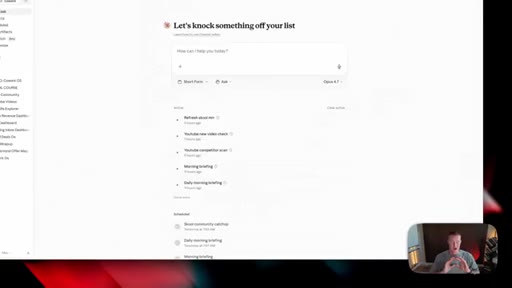
09:35So what we wanna do is we wanna come over to the left hand sidebar right here, and you could see we're on chat mode. We wanna select this middle icon. This is Claude Cowork if you've never used it before, so make sure to open that up now.
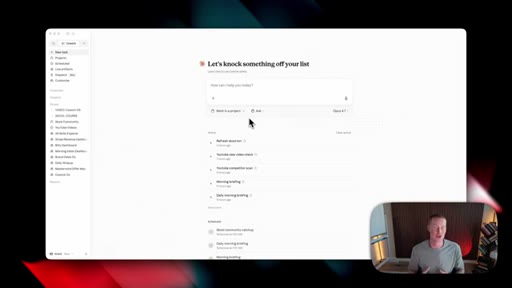
09:46So this is what it looks like when we're inside of Claudette Cowork. And what we need to first of all do is make sure we are selecting a specific folder on our computer to work inside of. If you're unfamiliar with Cowork, let me break it down in, like, 10.
09:59So we can work inside of different folders on our computer. It could create files, add them to those folders, and do a bunch of different work directly on our desktop. So we need to enable a workspace or a folder so it could work inside of that.
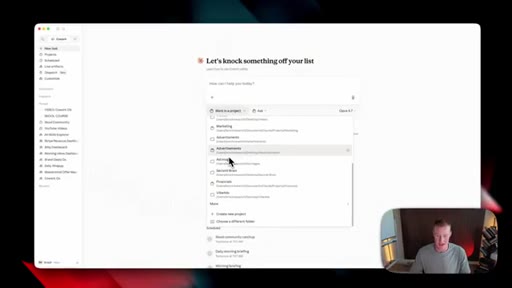
10:11So I'm gonna click on this, and let's say we want to create a new folder to work inside of. We're just gonna click on choose a different folder. From here, we're just gonna name one.
10:19Let's just call this Claude OS. Click open. Click allow so it could generate these different documents and stuff, and now we are working inside of this.
10:28And then what I highly suggest you do is search up on your computer. That folder you just created, you could see that I now have this claud OS folder on my computer. I'm just gonna drag this onto my desktop so that way I could always see this and access it whenever I need.
10:42Any of the files that we generate will live inside of this folder that's living on my desktop, and we could see it at any time. Alright. We got our working folder set up inside of Claude.
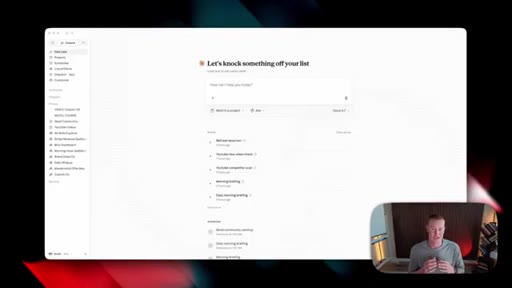
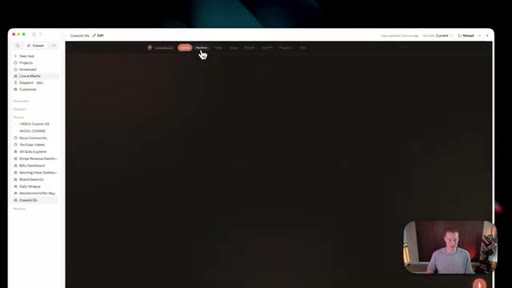
10:50Now what I'm gonna show you is my co work operating system that I have pinned on the left hand side. If you see my little blue rectangle here, you could see exactly where this lives. So it's always pinned on the left hand sidebar.
11:01I could click on co work operating system, pull this up, and this is automatically gonna populate with this information from my different applications. So I could go through. I could see all the emails and stuff that I need to reply to.
11:11I could see my goals updated in real real time. I could see my financials. I could see my agents,
11:17all of my different diagrams and my skills. So let me show you now how we could begin crafting our own operating system. So in order to create your own, there's a couple of ways that you can do this.
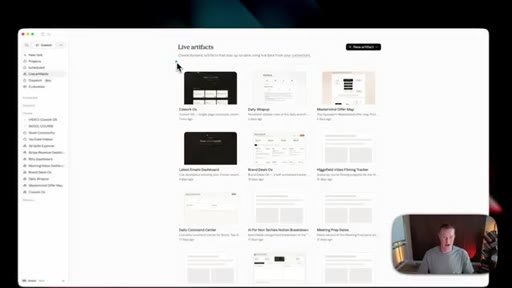
11:27The first one I'm gonna show you is coming to the live artifacts section right here in the left hand sidebar. So if I click on this, you can see we have a couple of different live artifacts that I've created. I have my co work operating system.
11:39I have my daily wrap up. I have my mastermind offer map, brand deal operating system. So just a bunch of different artifacts that I have living inside of here.
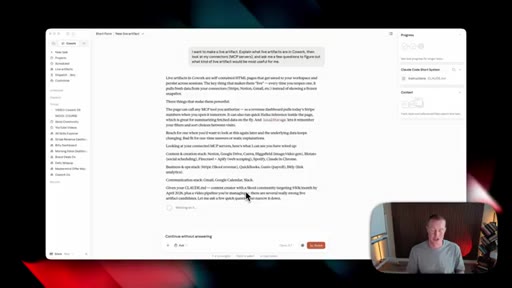
11:46And anytime you create a artifact, it will live right here. You could always access it on the left hand sidebar. So what I'm gonna do is I'm just gonna click on new artifact.
11:55Click create with Claude, and it's now gonna take me to this chat where I'm just gonna explain exactly what it is that I'm trying to build. So I'm not gonna bore you guys going back and forth with Claude in order to create my operating system since I already have mine created. But what I'm gonna do now is show you the key steps you need to do in order to make sure that your operating system is functioning how you want it to.
12:15So the first thing that you need to do is give access to all of the connectors inside of Claude. So that way Claude can pull information from your different applications. So if you don't know what a connector is, basically, this allows you to connect all of your different applications to Claude.
12:29So for example, we could add our Gmail, our calendar, Notion, Stripe, YouTube, Google Drive. Any of these different apps that Claude connects to, we could pull information from and even post information to. To show you inside of my OS, this is how I'm actually pulling emails in real time from my email inbox.
12:46I'm not going and having Claude manually scrape this. It just does this because it has access to it via these connectors. So let me show you now how to set this up for yourself.
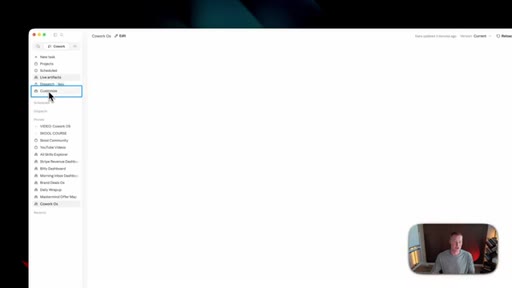
12:55In order to add our different applications, on the left hand sidebar, we're gonna see this customize button. So make sure to click on that. I know a lot of people have a hard time finding that.
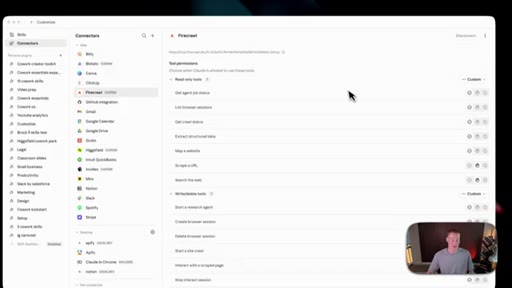
13:03And then on the top left, we're gonna see skills, and we're gonna see connectors. Obviously, click on connectors. Right here, I have a bunch of different ones connected.
13:11I have Bitly. I have Platato, Canva, Firecrawl, GitHub, Gmail, basically, all these different apps that I'm connected to. I could see directly inside of this Claude dashboard.
13:20Now in order to add our different apps, we're just gonna come over here to this plus button, click on browse connectors, and there's tons of different apps that you could connect to directly inside of Claude, Microsoft Learn, Airtable, Zapier, DocuSign, Vercel. Tons and tons of different apps you could use.
13:37So go through here. Odds are you probably can't find the app you connect to. And in order to connect it, all you have to do is just click on plus, click connect.
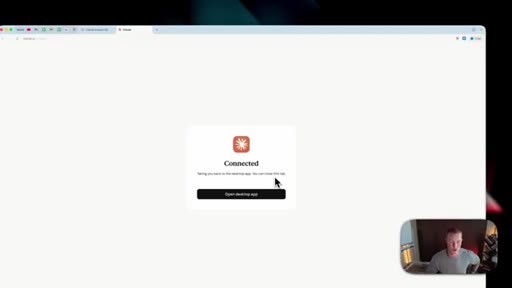
13:43It's gonna pull this up in the browser. You just need to make sure to sign in to your account. And for example, inside of ClickUp, all I had to do is click on connect, and it should pull us back to Claude, and we will have this set up properly.
13:54So now that I have this ClickUp connector selected, it could now do all of these things on my behalf. So it could get different task comments. It can get task time entries.
14:03Basically, anything that you could do inside of ClickUp manually, you could actually do directly inside of this connector. So I'm just gonna select always allow so it doesn't constantly ask me if it's able to go and grab information. However, do that at your own risk, but this is how it's gonna be able to auto populate my live artifact or my, you know, Claude co work operating system.
14:23Alright. So what I'm gonna talk about now really gives Claude superpowers, and believe me, you do not wanna skip this part because this is crucial if we wanna have the best Claude co work operating system that's pulling information from all the different sources that we want to use. So we need to use something called scrapers in order to pull information
14:41from different sources. So for me, my YouTube channel statistics, the way I'm able to pull this information is through a scraper called Firecrawl. Same thing for my Instagram follower account.
14:52It's actually going and scraping Instagram since Claude isn't able to do that manually, and this is all done directly inside of FireCrawl. So those use cases were all content related, and that might only apply to me and maybe not you. But there's a bunch of other things that you need to use a scraper for like FireCrawl, and let me break that down now.
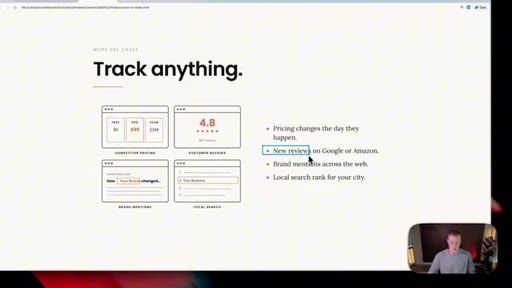
15:10So for example, if you need to track competitor pricing for a software product, for example, you could have FireCrawl automatically scrape a competitor's website and then update you in real time inside of Claude in your operating system that they change their pricing. We can also scrape for new reviews on Google or Amazon, different brand mentions across the web, local search rank for your city.
15:31These are all very small tasks, but you can't do them unless you're using a scraper. So let me show you now how to set this up. Alright.
15:38So personally, I'm using Firecrawl. I've just found it's the easiest and the best to use. Here is the pricing because I know you guys are probably interested in that.
15:45You can use a free plan with the ability to scrape over 1,000 pages. I highly suggest to start here. And if you need to upgrade, upgrade to the hobby plan.
15:53It's $20 a month. But if you guys are running this religiously, then this should probably be enough, or you could upgrade to the other plans later. Alright.
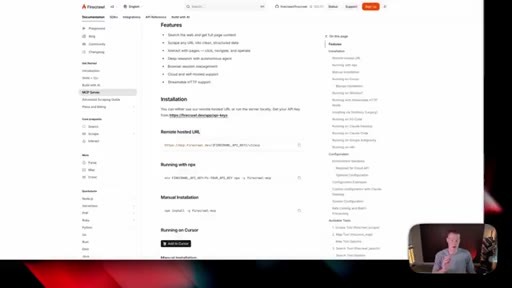
15:59So I'm gonna show you how to set this up in under two minutes. So first of all, go to the link that I have in the description. This is gonna be the documentation.
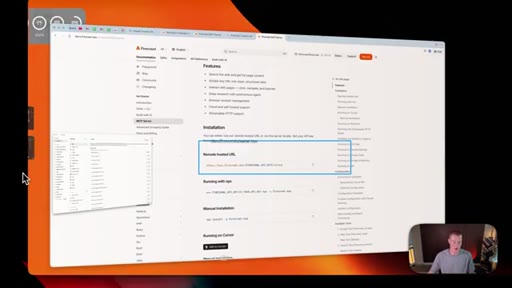
16:06We basically just need to copy this remote hosted URL right here that we can see right here. Then we're gonna come back to Claude. And inside of Claude, we need to come over to customize
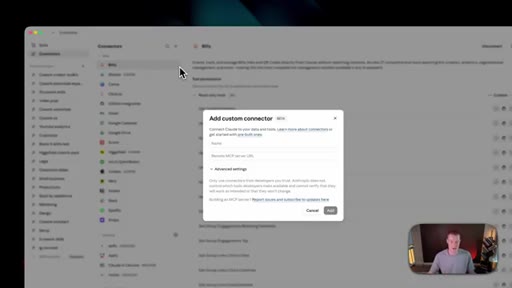
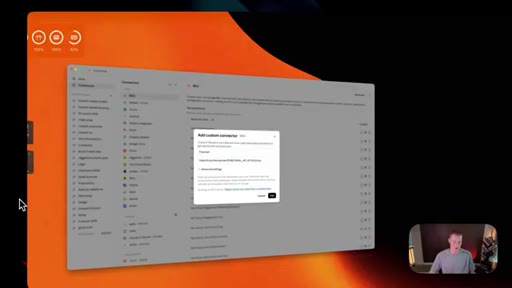
16:17and add a new connector. Once we're inside of connectors, we're gonna click on this plus button and click add custom connector. We're just gonna give this a name.
16:24I'm gonna call it FireCrawl, and then we need to paste in that remote server URL that we just got from the FireCrawl site. Next up, what we need to do is add our custom FireCrawl API key right here. So let me show you how to do that very simply.
16:38So we're gonna come back to the FireCrawl site. We're gonna click on this installation link where it says you could get your API keys. So we're gonna click on that.
16:46And I have mine right here. I'm just gonna copy this. We're gonna come back to Claude.
16:50And simply, inside of this bracket, we're just gonna paste in that API key. So I'm gonna select everything from bracket to bracket, and I'm gonna paste this in. I'm not gonna show you guys this right here because I don't wanna leak my API keys.
17:03And just like that, we now have our FireCrawl integration set up. All I need to do now is come here and click on customize. I'm gonna click always allow so that way it doesn't need to always ask for my permission in order to do things, order to browse and crawl different sites.
17:17Now this is exactly how my operating system is able to go and scrape my YouTube channel to show me live up to date statistics on this because otherwise, Claude would not be able to pull this or would have to use Claude in Chrome, and that is just a hassle. So, yeah, FireCrawl is extremely powerful when you're needing to pull information from different sources on the Internet.
17:37Alright. So since we're on the topic of connectors and giving Claude access to the different apps so we could add this into our operating system, let's say that there's a specific app you wanna use directly inside of Claude and you don't see it in the list that it gives you. Well, I'm gonna show you a quick hack right now that will solve that problem for you.
17:53I personally use something called Zapier, which is an automation platform that's been around forever that connects to 9,000 plus different apps that we could pull directly into Claude. So I'm just gonna click on add here, and what it's gonna do is it's pull up Zapier MCP. Make sure you have an account if you don't have one already.
18:09I mean, you guys, you don't need to use this. You only need to use this if there's apps that you wanna use directly inside of Claude that, you know, don't have natural integrations there. So I can imagine that a lot of you guys are running into this problem, so this will solve that for you.
18:21Next, we need to just come to zapier.com/mcp. There's also gonna be a link in the description to do so. And then we need to set up an MCP server.
18:29I'm gonna show you how to do this in, like, thirty seconds. So we click on new MCP server, and then from here, we need to select our client as Claude CoWork since that is where we're working. And then as you could see, I have a couple of different tools that I've preconfigured here.
18:42So these are apps that I could then use directly inside of Claude. So what I'm gonna do is I'm gonna click on add tools and just search for any of the apps that we use on a day to day basis. Alright.
18:50So let's say we wanna use SynthFlow, which is an AI voice calling platform. I could just select this. Click on select all tools so it's able to perform all these different actions for us.
18:59Click on connect, and it's probably gonna take us over to SynthFlow in order to authenticate this. And just like that, we now have this added. So there would be no other way for us to use SynthFlow inside of Claude unless we are using an MCP server like this.
19:12Next, we just come to connect. Click add to Claude. Connect it.
19:16And then once we do that, we can now use these apps that we have inside of that MCP server. So there we go. Now all the different apps that I personally use and I wanna add to my operating system are connected.
19:26Let's say that you wanna connect your CRM like ClickUp or monday.com or something. You could go ahead and do that and then pull information directly in your operating system. So that way, don't need to log in to ClickUp to see what your team's been working on for the day.
19:39CTAAnd this is why having an operating system going forward in the future is gonna make you that much more productive because you could do all this directly inside of one dashboard now and have an overview of how your entire business is operating. And this is gonna get even more interesting when we could have specific AI agents we build inside of Claude running, and then we could just see what they're doing directly inside of our operating system.
20:01CTAI will say right now inside of Claude Cowork, this can't do every single thing that you want it to, but it's a great way to have a unified dashboard just to kinda see what's going on in your business or your, you know, professional life. Alright, guys. If you want the exact same template that I use in order to create my Cowork operating system that you saw in this video, make sure to grab it.
20:18CTAIt is in my Skrull community along with the 50 plus skills that I use every single day to help me run my business. As well as inside of here, have a ton of high level entrepreneurs and professionals that are using Claude Co work every single day to help them with their business. I also do weekly calls in here where you could ask me any different questions, and we share different use cases we're using Claude for every single week.
20:38CTASo make sure to join the school community. However, if you want free content, make sure subscribe to this YouTube channel. I have tons of content like this coming out almost every single day tailored for nontechnical users.
20:48CTASo with that being said, guys, thank you so much for staying to the end. I hope you have a good day, and I'll see you in the next
— full transcript
§ 05 · For Joe

The OS frame turns a tutorial into a product demo.

Steal this structure

Brock does not teach Claude features -- he shows you an operating system, then reverse-engineers how it was built. That frame change is why this video converts better than a straight tutorial.

  • Lead with the finished product tour (0:43 demo before any explanation) -- show the magic, then explain the mechanics.
  • Name your three keys up front in the hook, then deliver them in order -- creates a promise that holds retention to the end.
  • Address the obvious objection head-on (why not Code?) with a named slide -- it pre-empts the comments and builds trust with your target audience.
  • Gate the template, not the tutorial -- the video is free, the shortcut costs a community subscription.
  • Use a custom slide deck site for concept frames -- it reads as more credible than standard presenter decks.
  • The Connectors, Scrapers, Zapier escalation is a clean complexity ladder -- each key solves the gap the previous one leaves.
§ 05 · For You

You can have one dashboard for your whole business.

For the non-technical builder

You do not need to log into twelve apps to run your day -- Claude can pull all of it into one screen you open every morning.

  • Download the Claude desktop app (free) -- the browser version cannot do this.
  • Connect the apps you already use: Gmail, Google Calendar, Notion, YouTube, QuickBooks -- each takes about two minutes.
  • Ask Claude to build you a Today Plan live artifact that shows your calendar and top emails -- that alone replaces your morning tab routine.
  • Add Firecrawl (free tier) if you need stats from sites Claude cannot connect to directly such as Instagram or competitor websites.
  • Use Zapier MCP only if there is a specific app not in Claude connector list -- it is optional, not required to start.
§ 06 · Frame Gallery

Visual moments.