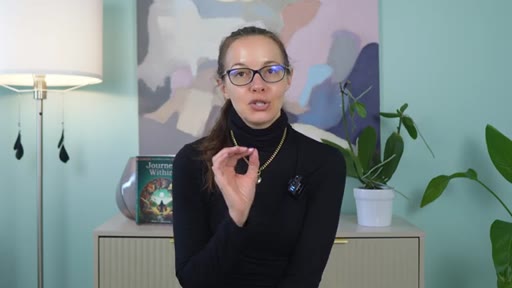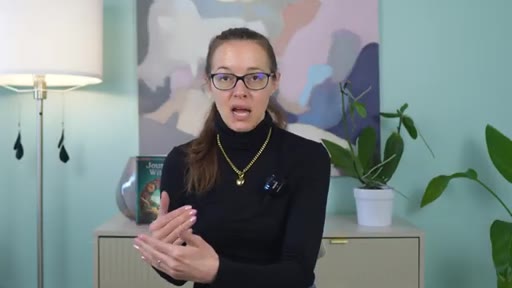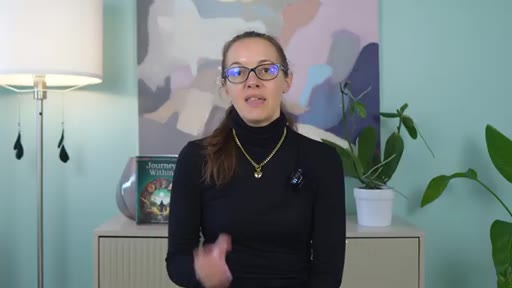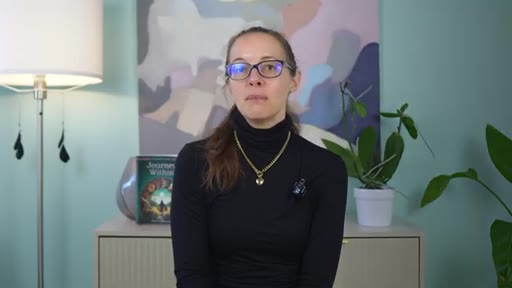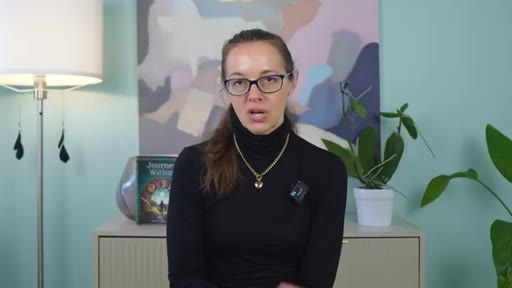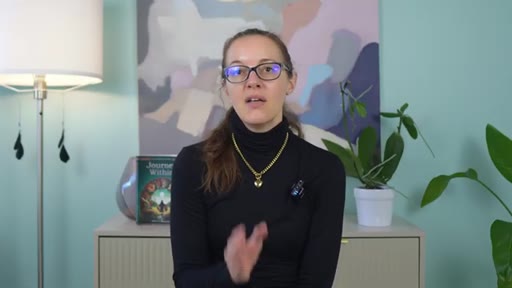
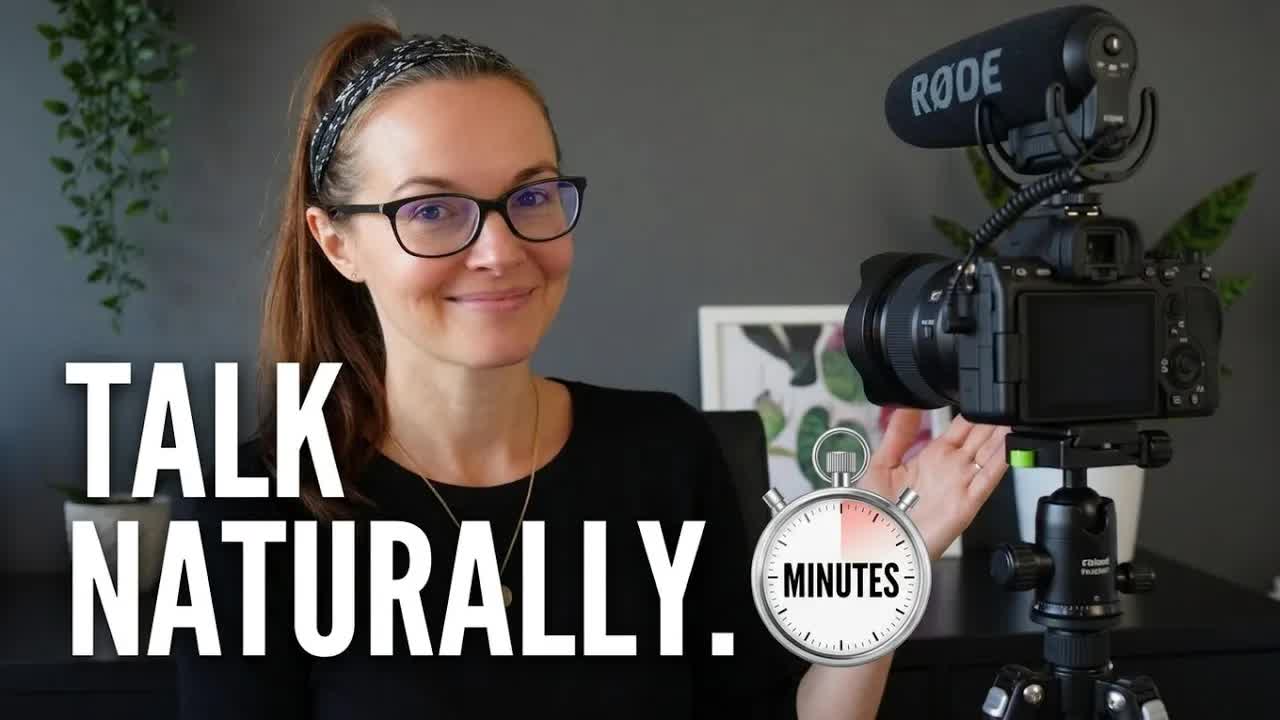
Alexa Saarenoja · Youtube · 11:18

Talk to Camera Naturally in Minutes (WITHOUT Scripting!)

An 11-minute tutorial that replaces the script with an imaginary client, proving that coaches who freeze on camera are solving the wrong problem.

Posted
May 19th 2026
today
Duration
11:18
Format
Tutorial
sincere
Channel
AS
Alexa Saarenoja
§ 01 · The Hook

The bait, then the rug-pull.

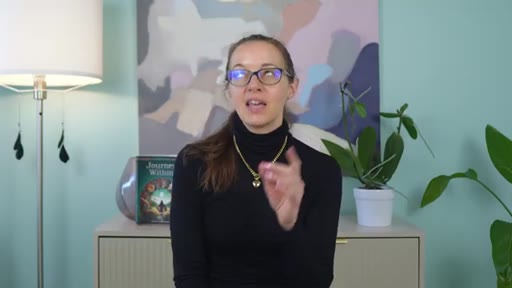
Two coaches, twenty-four hours, one diagnosis. Alexa Saarenoja had heard it enough to make a video. The camera gives you nothing back, and for coaches wired to read the room and follow energy, that silence is paralyzing. Her fix is not a performance trick. It is a reframe: stop trying to talk to a camera, and start coaching the one person whose exact words you can still hear in your head.

§ · Stated Promise

What the video promised.

stated at 00:30 "By the end of this video, you will know how to bring the exact same energy you have with your clients right through the lens." delivered at 09:30
§ · Chapters

Where the time goes.

00:00 – 00:42

01 · Hook + promise

Social proof open (two coaches, same problem), names the root cause, delivers explicit promise.
00:42 – 01:59

02 · Why it matters + credibility

Stakes: awkwardness costs clients because trust cannot form. Credibility twist: she finds camera easier than live conversation because there are no interruptions.
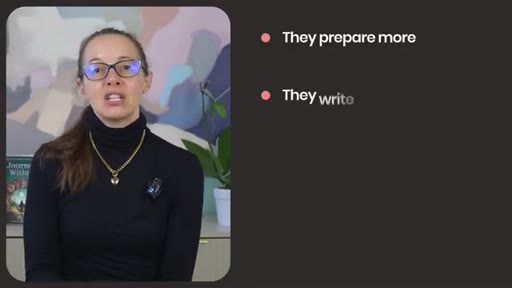
01:59 – 02:42

03 · The wrong fix: scripting

Coaches who freeze over-prepare with scripts and rehearsal. This makes it worse. The problem was never not knowing what to say.
02:42 – 04:01

04 · Root cause diagnosis

You are trying to perform in a vacuum. In a real session the client energy pulls the words out. Reciting feels nothing like you because it is not you.
04:01 – 05:38

05 · The fix: speak to one real person

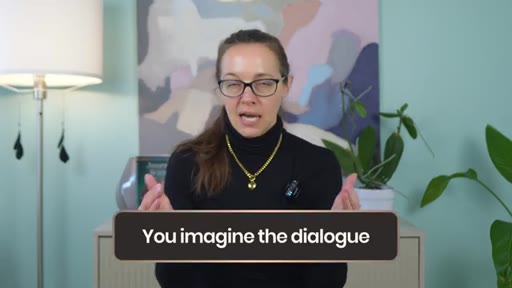
Name a real past client or DM sender. Use their exact words as your opening. The key distinction: imagine the dialogue, do not script it.
05:38 – 08:13

06 · Step-by-step + live relationship coach demo

Hook with exact words, coach through it, pre-name the objection. Demonstrates full loop with Sarah the relationship coach and boundary-setting guilt.
08:13 – 08:35

07 · AI assist for unfamiliar topics

If you do not know what objections arise, ask AI: topic + starting question + most common objections.
08:35 – 09:11

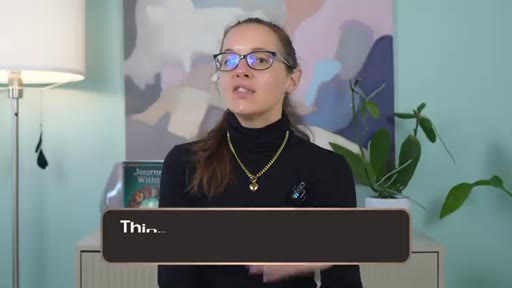
08 · Bobblehead fix: the pause technique

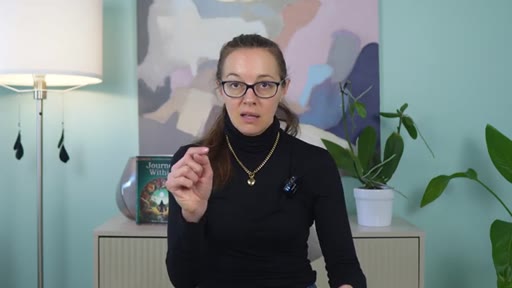
Pause before looking down at notes, pause again before speaking. Eliminates the bobblehead edit problem. Demonstrated live.
09:11 – 11:18

09 · CTA + action step + vision close

YouTube Truth Rebels community pitch, one-action-step CTA, closing vision of what the channel looks like when this works consistently.

§ · Storyboard

Visual structure at a glance.

hook
credibility
wrong fix
the fix
step by step
live demo
bonus tip
CTA
§ · Frameworks

Named ideas worth stealing.

04:01 model

The Imaginary Client Method

  1. Pick a real person (client or DM sender)
  2. Use their exact words as your opening hook
  3. Respond as you would in a session, no script
  4. Pre-name the objection you know is coming
  5. Follow the objection thread to the next question
  6. Repeat until you have a full video

Replace scripting with an imagined real-time coaching session. Each video is structured by objections rather than an outline.

Steal for Any creator-education or coaching content, especially You Rolling Joe or Killing Excuses-style teaching videos
06:59 model

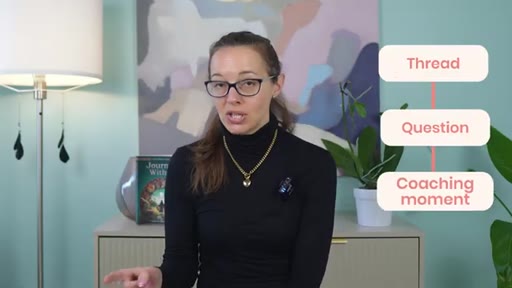
Thread to Question to Coaching Moment

  1. Thread (client objection)
  2. Question (what that objection reveals)
  3. Coaching moment (your answer)

The three-node loop that chains objections into a full-length video naturally.

Steal for Video structure for any tutorial or advice content
08:55 concept

The Pause Technique

  1. Finish your statement
  2. Pause then look down at notes
  3. Get the next question
  4. Look up and pause before speaking

Eliminates the bobblehead editing problem when using a physical question or objection list.

Steal for Any video where Joe uses a cheat sheet or prompt list
§ · Quotables

Lines you could clip.

02:42
"You are not coaching anymore. You are reciting. And reciting feels nothing like you because it is not you."
Perfect diagnosis line, lands the whole argument in two sentences → TikTok hook
04:01
"You imagine the dialogue. You do not script the dialogue."
Memorable contrast, repeatable mantra → IG reel cold open
10:40
"Your future clients do not need a polished presenter. They need to feel what it would be like to work with you."
Strong close that reframes the entire goal of content creation → newsletter pull-quote
05:37
"By directly speaking to her and her situation, I am speaking to all of them."
Explains the specificity paradox cleanly → TikTok hook
§ · Pacing

How they spent the runtime.

Hook length42s
Info densityhigh
Filler5%
§ · Resources Mentioned

Things they pointed at.

09:11productYouTube Truth Rebels
§ · CTA Breakdown

How they asked for the click.

09:11 product
"Come join my School community, the YouTube Truth Rebels. This is where coaches are building real 6-figure businesses and brands through YouTube with direct access to me."

Brief, non-pushy, embedded between two content beats. Immediately returns to value. Works because the community pitch matches the exact audience being addressed.

§ 04 · The Script

Word for word.

HOOK opening / re-engagementCTA the pitch analogy story
00:00HOOKIn the past twenty four hours, two coaches told me the exact same thing. So I'm going to make this video for you. That showing up to YouTube feels nothing like showing up for a client in real life.
00:11HOOKBecause as a coach, you're wired to respond to your client, to read the room, to follow the energy, and the camera gives you absolutely nothing back. So if you've ever pressed record and felt like a completely stiffer, different, more awkward version of yourself, this video is for you. By the end of this video, you'll know how to bring the exact same energy you have with your clients right through the lens.
00:32HOOKBut before we jump into the solution, let's talk about why this matters so much. Your inability to be natural on camera will hinder your growth and specifically as a coach or a consultant. Because in order to coach or mentor someone, there must be that trust, that safe space created.
00:48And if they can't feel your warmth or your energy the way you would show up for them in a coaching call, they will click away. And it's not because you're not good at what you do, but because you haven't successfully communicated that through the lens to your audience. And since your goal is to gain clients, not to lose them, we need to fix this ASAP.
01:05So here's something weird about me. I've never struggled with this per se on camera, and not because I'm some natural born performer. It's actually the opposite.
01:14I am highly empathetic, very sensitive to other people's emotions, their energy, their reactions. So I actually find it easier to talk to a camera than to a person because there's no interruption.
01:24There's no adjusting my thoughts mid sentence based on how they're reacting to my words. I just get to think clearly and say exactly what I mean. So it got me thinking, how can I teach you that skill?
01:36How can I teach you to love to talk to no one, the camera? Because I don't think the camera being silent is the problem or the lack of response you're getting from it because some of us have done coaching on the phone back in the day, right, without seeing the person and had great success.
01:51So there must be another angle we can approach this from. And what I most often see that happens when coaches or mentors or consultants feel awkward on camera, they prepare more.
02:02Right? They write a script. They rehearse it.
02:04They memorize everything. They plan every single sentence so they don't have to freeze. And that makes it worse because the problem was never that you didn't know what to say.
02:13You have an answer or guidance for every question your client asks you. Right? The problem is that you're trying to perform in a vacuum with no person, and your nervous system knows the difference.
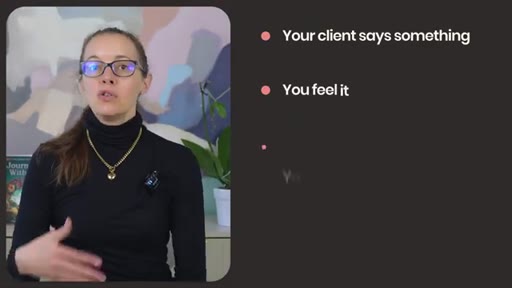
02:23So think about what happens in a coaching session. Your client says something, you feel it, you follow that thread, you respond, and you don't know exactly where you're going, but you trust yourself to get there because they're with you. Their energy is pulling the words out of you.
02:38The camera doesn't do that. There's no nod. There's no mhmm.
02:42There's no sharp intake breath when they finally understand something or have that moment. Nothing. So when you sit down with a script, you're not coaching anymore.
02:51You're reciting. And reciting feels nothing like you because it isn't you. And it's not actually how you do your job even.
02:58So the script isn't the solution for you. I actually would advise you something else. I would say that that's what's keeping you stuck.
03:05So here's what I want you as a coach or consultant or mentor to do instead. And this is exactly what I would tell you if you were sitting across from me in a coaching session right now. Stop talking to the camera.
03:16Start talking to a person. Now before you click away and think I've heard this before, nope.
03:21I'm going to spin it in a new way for you. Speak to an imaginary person, but a specific one. Someone you've actually coached in real life.
03:30Someone who's DM'd you last week. Someone whose exact words you can still hear in your head. This video right now, I'm speaking to Yelena from my community.
03:40But Yelena is not the only person with this struggle. There are hundreds of people experiencing the same thing. But by directly speaking to her and her situation, I'm speaking to all of them.
03:50Does that make sense? So find that person and speak to them. The difference here is that you imagine the dialogue.
03:57You don't script the dialogue. I wanna say that again. You imagine
04:01the dialogue. You don't script the dialogue. So you wanna bring them into the room, hear what they'd say to you, and then respond.
04:09Here's what I mean. Before you press record, I want you to think of one thing that person has said to you. Their exact words, not your polished version of it.
04:17Something like, I just freeze every time I press record. I don't know what's wrong with me. And then your video starts like this.
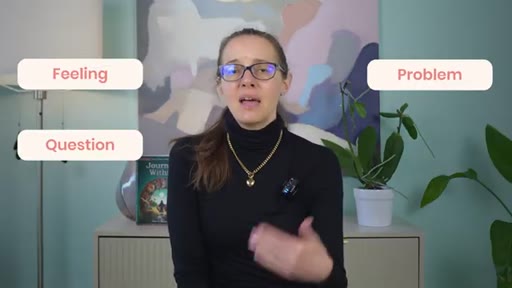
04:24You address that feeling, that question, that problem, that issue head on by saying, maybe you're thinking, I just freeze every time I press record. I don't know what's wrong with me.
04:34Now here's what I would tell you. And then you coach them as you would in person, exactly like you would in person in a session.
04:41No framework, no script, no list, just your honest response to a real feeling they have. Then, this is the part that builds trust faster than anything else, you name the objection afterwards. Because they always come up in a real session.
04:54Right? A client looks at you with that sounds nice, but I'm not sure I could do that, or I'm not sure that would work for my situation. So then after you give your best advice, you then say it out loud before they do in their mind.
05:07Now, for example, like this. Now, the most common thing I hear when I tell people this is x y z. And here's what I would say to that.
05:15Consider a b c. When you do this, two things happen. You stop performing and you start coaching.
05:21So you naturally sound like yourself again. And your viewer doesn't just learn something, they feel genuinely heard, like you made the video just for them, and they see your true energy, your personality, the way you give advice, how you would coach them if they were your client, and that's the difference.
05:38And this difference changes everything. Now you're no longer just talking to a camera. You're coaching a human through the camera even if that human only exists in your mind.
05:48Now, you might be thinking, see, I'm using that tactic here that I just spoke about. How meta is that? We're going to address your objection.
05:56You might be thinking, but that's just one question. And the answer is no. You string a bunch of questions together to create an entire video because objections usually lead to another question in in a session.
06:08Right? So then you continue the process. Let me give you an example.
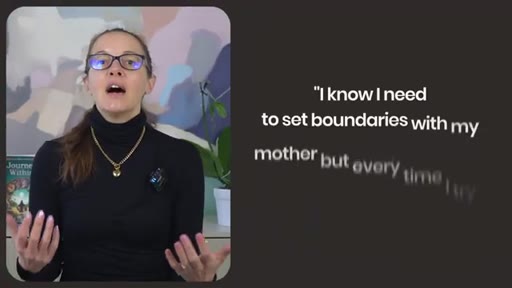
06:12Say you're a relationship coach, and your client Sarah said to you last week, I know I need to set boundaries with my mother, but every time I try, I feel so guilty. I just back down. That's your opening for your video.
06:24Maybe you're thinking, I know what I need to do, but when it comes to actually doing it, the guilt just takes over. Here's what I would tell you. Then you coach her through that moment.
06:33Right? What would you say in a session? Say that in your video.
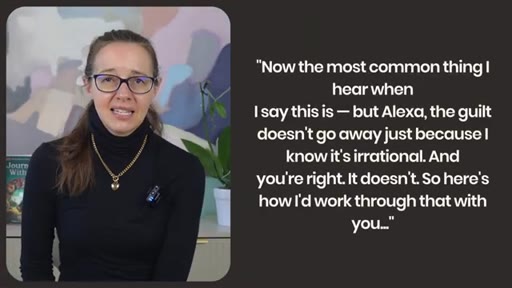
06:37Then after that, you name the objection you know is coming. Now the most common thing I hear when I say this is, but Alexa, the guilt doesn't go away just because I know it's irrational. And you're right.
06:48It doesn't. So here's how I'd walk through that with you. Dot dot dot.
06:52And then you address the objections. And now that objection becomes the next thread, which leads to another question, which leads to another coaching moment. So now you understand the process, but you're probably thinking, well, what about this issue?
07:04How do I handle that? Well, here's what I would recommend for that. Suddenly, you have a ten minute video, and you never once had to think about what to say next because you weren't performing.
07:14You were just coaching Sarah. Now, what if you are new to coaching this topic and you don't really know what other questions would come up? Ask AI.
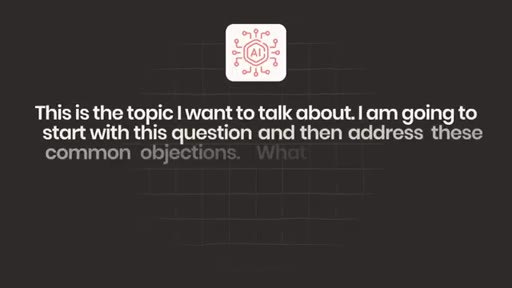
07:21For example, this is the topic I wanna talk about and I'm going to start with this question and then address the most common objections. What other questions do you think would arise from this conversation in a coaching session? And boom, there's your next set of questions.
07:35So in practice, instead of having a script or outline, you have your list of questions in front of you and common objections as your guide while you speak to the camera. It's so much easier for you.
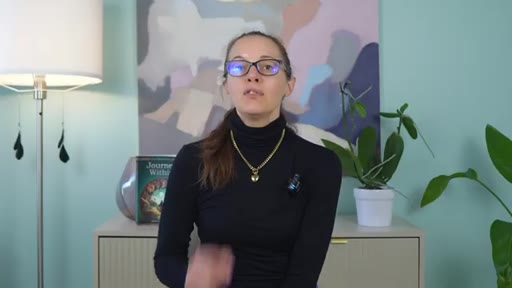
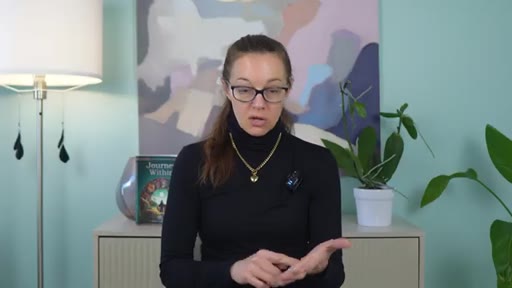
07:47Then you just need to edit out where you look down at the sheet to reference what the next question or the next objection is. And a bonus tip for you to make that process even easier is pause after you finish speaking before looking down. And then when you look back up, pause again before you start speaking.
08:04That way you avoid the bobblehead effect when you edit. Let me show you. So I'm talking about something, something, something.
08:10Then I pause, look down at my notes, read the objections. Okay.
08:14Got it. The objection is this. Look back up at the camera, pause before I speak,
08:18then I speak about the objection. Right? So you're not because what often happens with new YouTubers, new content creators, is they are talking, talking, talking, they're like, oh, I don't know what the next question is.
08:29They look down, and then they're like, oh, then they edit. But then you're seeing this little bobblehead, and we don't want that.
08:36So that's why I'm saying pause, finish your statement, then look down, get the new objection, look up, pause before you speak, and you can eliminate the bobblehead.
08:45It's it's it's a game changer. And if you want more game changing ideas like this and actual support as you build your channels, come join my school community, the YouTube Truth Rebels. This is where coaches are building real 6 figure businesses and brands through YouTube with direct access to me and people who genuinely get what you're going through.
09:03CTAIt's already an amazing community. Of course, I'm biased, but there's amazing people in there, and I'm so excited for it. The link to join is below in the description.
09:11CTAOkay. So here's your one action step before your next video. Think of the last thing a client or follower said to you.
09:17CTATheir exact words, a struggle, a frustration, something they wished was different. Write it down exactly as they said it, not how you'd professionally rephrase it.
09:26CTAThat's really important because you want your hook at the beginning of the video to speak directly to them and that pain point. And that's your opening line. Maybe you're thinking dot dot dot, and use their exact words.
09:39CTAPress record and just respond. Don't script what comes next. Trust yourself the way you trust yourself in a session because it's the same skill.
09:47CTAYou're just finally using it in the same way for YouTube. And when you make this change, something interesting happens. You stop dreading filming, first of all, because you're not performing anymore.
09:56HOOKCTAYou're coaching, and coaching is in your element. Coaching is something you've already mastered and probably love doing. But let me paint you a picture of what your channel actually looks like when you do this consistently.
10:07HOOKCTAYour videos stop feeling like content. They start feeling like coaching calls that anyone can stumble upon. And the people who find them, they don't just watch and leave.
10:16HOOKCTAThey bridge. They go through your whole channel because every single video feels like it was made for them. Like, somehow, you knew exactly what they were going through because you're using their exact words.
10:26HOOKCTAThen the comments change. No longer are they just great video, but deep comments. I felt like you were talking directly to me.
10:33HOOKCTAI've been struggling with this for months, and you just explained it better than anyone. How do I work with you? And when those people get on a call with you, guess what?
10:42CTAThey already trust you. They've already been coached by you through the screen. So you're not starting from zero trying to build rapport.
10:49CTAYou're just continuing a conversation that already started in your videos. And that's the channel that builds a coaching business, not the one with the most views or the best lighting or the most polished editing. The one where people finish a video and think, damn, she gets me.
11:03CTAI need to work with her. Your future clients don't need a polished presenter. They need to feel what it would be like to work with you.
11:10CTAGive them that, and they won't just watch your videos anymore. They'll apply to work with you. Alright.
11:16CTAI'll see you in the next one. Bye for now.
— full transcript
§ 05 · For Joe

Stop scripting. Start coaching.

The Imaginary Client Method

The best camera presence you will ever have is the one you already have in a coaching call. This framework just teaches you to recreate it alone.

  • Name a real person before you press record. Not a persona, a specific human whose exact words you remember.
  • Open with their words verbatim: maybe you are thinking... This is your hook and your coaching entry point.
  • Coach through the camera as you would in a session. No outline, no script, just your honest response.
  • Pre-name the objection before the viewer thinks it. This is the trust accelerator, the moment viewers feel seen.
  • Let each objection become the next question. Thread to question to coaching moment builds a full video without planning.
  • For unfamiliar topics, use AI to generate the objection chain: give it your topic and first question, ask for what comes next.
  • The meta-move worth stealing: demonstrate your technique live while teaching it. She names she is speaking to Yelena, then acknowledges the viewer just watched the objection-naming happen in real time. Teaching by doing inside the video is the format to clone.
§ 05 · For You

How to stop freezing and actually say what you mean.

If you ever go blank on camera

You already know exactly what to say. You just need to stop performing and start responding to someone specific.

  • Before you record anything, think of one real person you have talked to about this topic and the exact words they used.
  • Open with maybe you are thinking... and use their real words. Immediately you are no longer talking into a void.
  • Respond the way you would if they were sitting across from you. No structure required, just your honest answer.
  • When you feel stuck, ask yourself: what objection would they raise right now? Say it out loud, then answer it.
  • The goal is not to sound polished. The goal is to sound like yourself. Those are different things.
§ 06 · Frame Gallery

Visual moments.