Greg Isenberg · Youtube · 68:23

9 AI startup idea niches to make $50K/mo (Data-Backed)

Greg Isenberg and Jonathan Courtney pressure-test nine startup categories live and land on one portable rule: date the product, marry the niche.

Posted
May 18th 2026
today
Duration
68:23
Format
Interview
educational
Channel
GI
Greg Isenberg
§ 01 · The Hook

The bait, then the rug-pull.

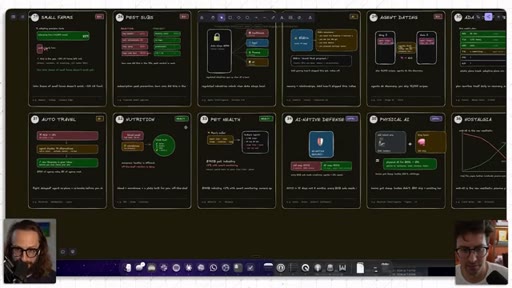
Two operators sit down on a Sunday and draft picks from a list of thirty-plus AI startup opportunities. Greg Isenberg picks six. Jonathan Courtney picks six. By minute three they're showing you the actual Discord, the actual retreat invoice, the actual domain to go grab. The line that ends the episode — 'date the product, marry the niche' — is the only thing you need to remember.

§ · Voices

Who's talking.

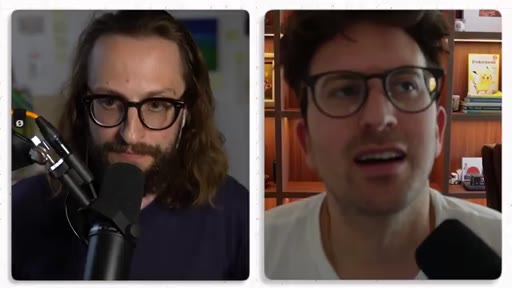
00:00hostGreg Isenberg
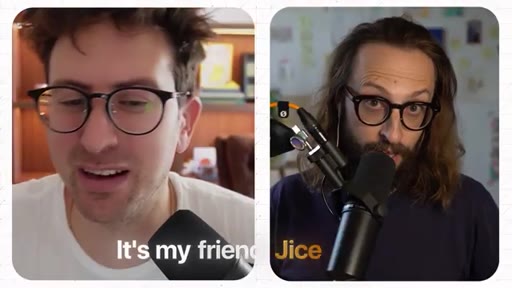
00:27cohostJonathan Courtney (J Ice Cream)
§ · Topics

Where the time goes.

00:00 – 01:14

01 · Intro & the draft format

Greg frames the episode: 30+ viral startup opportunities, each host picks six off the list, pressure-test live.
01:14 – 07:50

02 · Idea 1: Live & unscripted creator shows

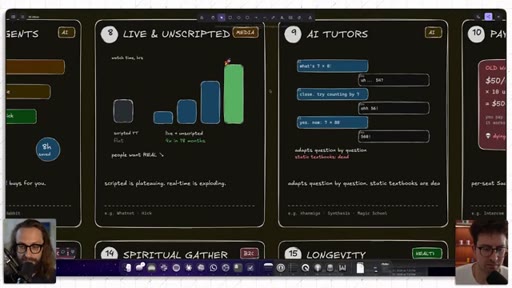
Jonathan's pick — Twitch model applied to business. TBPN sold for $100M+. Anti-AI authenticity is the bet as feeds get sanitized.
07:50 – 16:39

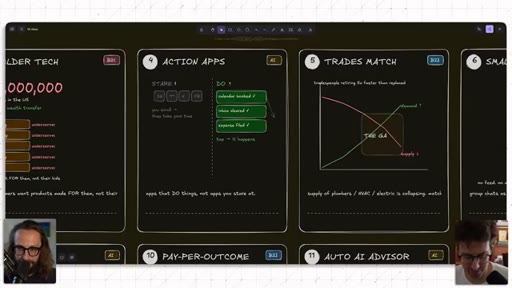
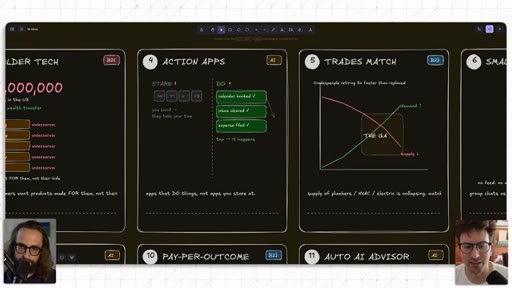
03 · Idea 2: Action apps (agent-first mobile)

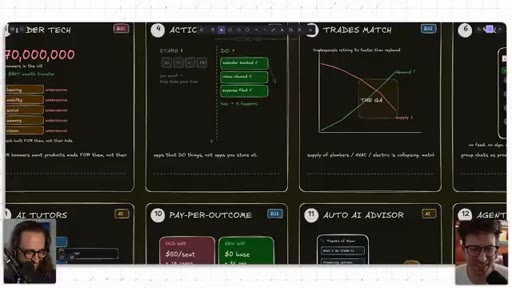
Greg's favorite category. Apps that act on your behalf — inbox, calendar, expenses — instead of apps that wait for taps. Same setup as the mobile-first transition.
16:39 – 26:47

04 · Idea 3: Loneliness + third spaces + niche communities

Jonathan's Dads of Marathon Discord (13,900 members), his $90K painting retreat, two two two (222), Fabric. Membership models around hangout.
26:47 – 33:21

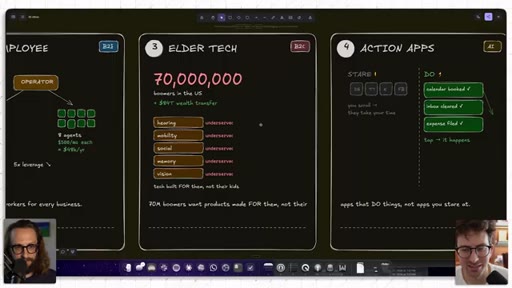
05 · Idea 4: Elder tech (65+)

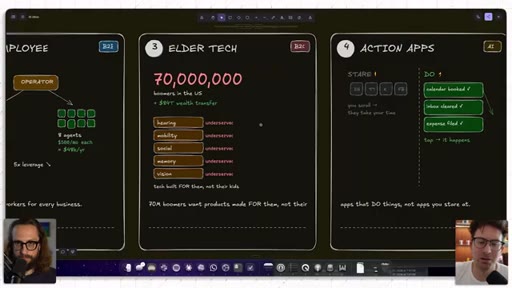
70M boomers, underserved on hearing/mobility/memory/vision. Don't make the landing page look like a retirement home. Facebook ads still work — they're just hitting buyers in their 40-60s.
33:21 – 38:17

06 · Idea 5: Adult hobbies

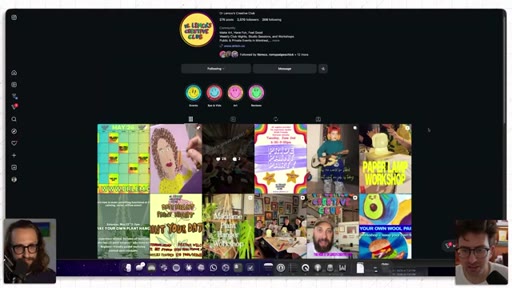
Pottery, woodworking, paper-lamp workshops. People want screen-off joy. Tyler Lemko's Creative Club as template.
38:17 – 45:33

07 · Idea 6: AI employees / Juniors

Pick a vertical, pick a job title, list 50 jobs-to-be-done, ship at 1/10th salary. Brand as 'juniors' not 'senior replacement.' Greg gives away the domain junioremployees.ai live on the pod.
45:33 – 53:08

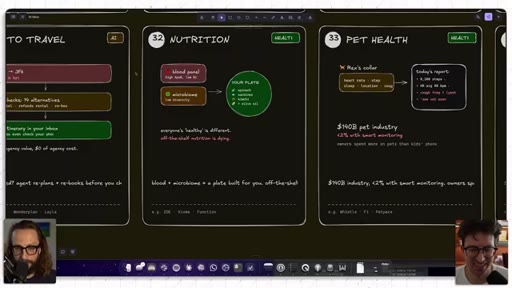
08 · Idea 7: Personalized nutrition by vertical

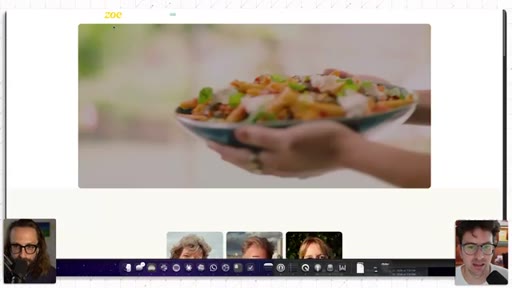
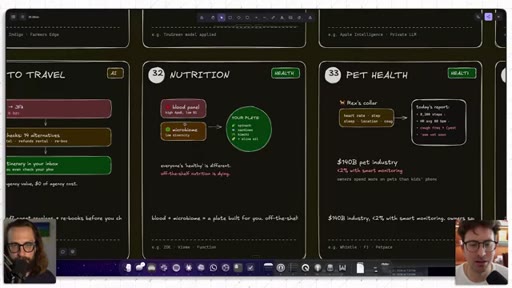
Jonathan has GERD, pays for blood work, gets nothing actionable, built his own Stomach Helper Claude project. 60M Americans with GERD. Zoe + AI + meal delivery, narrowed to one condition.
53:08 – 57:34

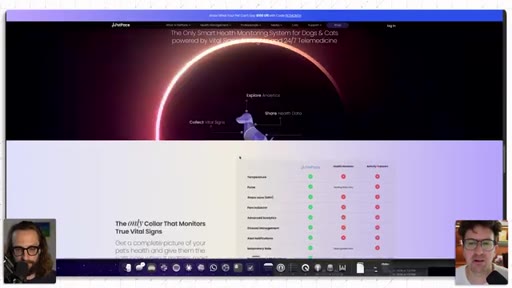
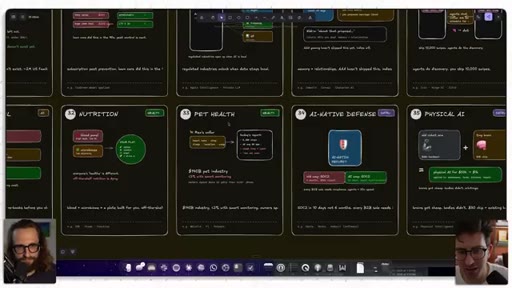
09 · Idea 8: Pet health + AI for animals

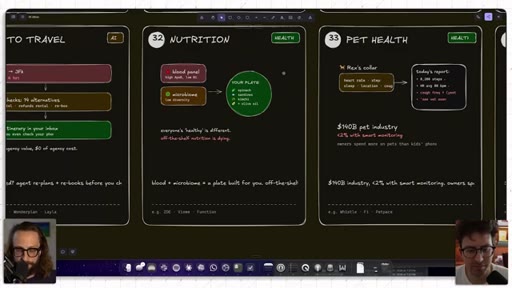
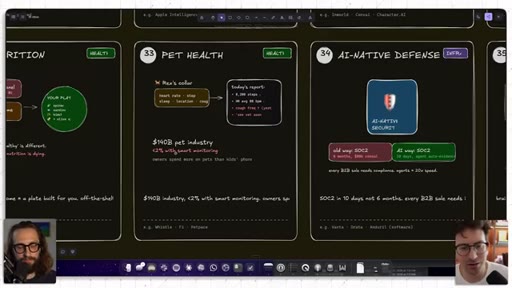
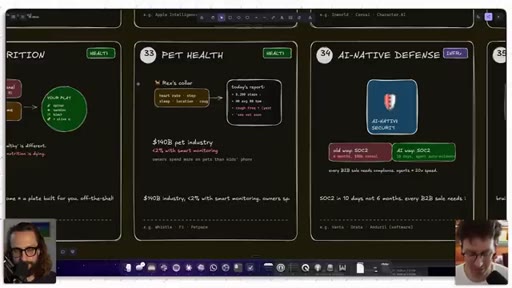
$140-150B pet industry, <2% smart monitoring. PetPace, Whistle. 'Look at who sponsors Huberman, apply to pets.'
57:34 – 63:18

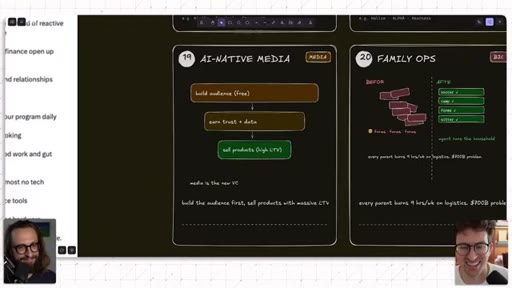
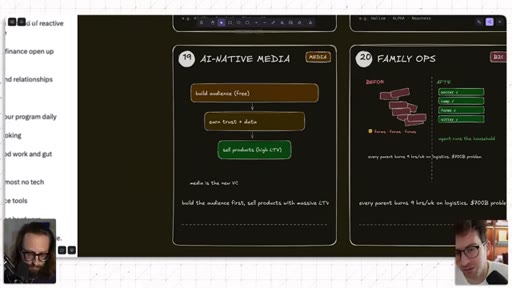
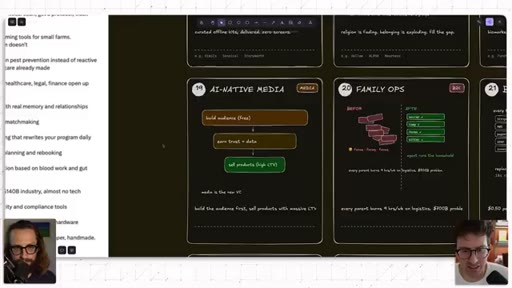
10 · Idea 9: AI-native media (done right)

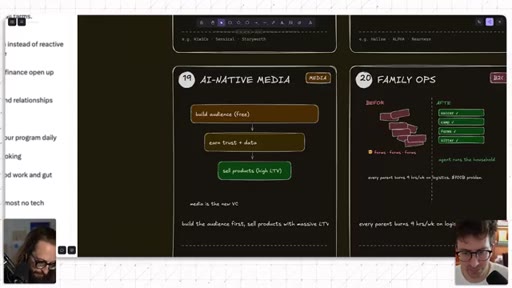
Rowan Chung built 400K followers in 18 months with AI avatar. Slop loses; top-1% AI-assisted media wins, especially with a product to sell.
63:18 – 67:22

11 · Stacking ideas: live show + retreats + entrepreneurs

Jonathan's real play — unscripted live show builds a creative-entrepreneur audience, monetized via high-ticket retreats. Same painting retreat = $5K to general public, $110K to entrepreneurs. Niche selection matters more than category.
67:22 – 68:23

12 · Final thoughts: date the product, marry the niche

Greg's portable rule. Product can change as you learn. Niche, you marry — pick something underserved, with disposable income, and a real pain point.

§ · Quotables

Lines you could clip.

67:35
"Date the product, marry the niche."
The portable rule. Six words. Lands the entire episode. Title-card worthy. → TikTok hook
25:00
"Where are the grandpas of Marathon?"
Visceral, funny, contains the whole elder-tech thesis in seven words. → IG reel cold open
24:50
"Fish where the fish are. Everyone is fishing... where there are no fish."
Reframes the whole '20-something user' default most builders run on. → TikTok hook
41:43
"Brand it as juniors, not senior replacement. Every company needs juniors."
Single sentence that fixes the 'AI is taking my job' positioning problem. → LinkedIn quote-card
42:25
"Someone go grab the domain. junioremployees.ai is available. Go and build this company."
Closest a startup pod ever gets to handing you a literal idea on a plate. → TikTok hook
12:10
"Today's apps assume a human taps and scrolls. The agent-first version just does the work and shows you the exceptions."
Defines action apps in one breath. → newsletter pull-quote
15:53
"Human beings are looking for the path of least resistance. We don't want to cook the steak. We want the steak."
Best counter to 'too-automated apps will have retention problems.' Vivid metaphor. → IG reel cold open
19:00
"I cannot come to this event. I need to be on Claude."
Single line that captures 2026 worker brain rot. Already a meme. → TikTok hook
22:10
"Almost a quarter of Americans have no close friends."
Stat-as-hook. Lands in three seconds. → newsletter pull-quote
58:20
"Slop loses. The top 1% AI-native media wins — especially when paired with a product to sell."
Cleanest sentence anyone has said about the AI-content debate in 2026. → LinkedIn quote-card
64:30
"Same painting retreat is $5,000 to the general public. $110,000 to entrepreneurs. Pick your buyer."
Single most underrated economics lesson in the whole episode. → TikTok hook
§ · Resources Mentioned

Things they pointed at.

06:20channelGiant Bomb ↗
12:00productSuperhuman ↗
14:40productIncogni ↗
18:50linkDads of Marathon (Discord)
25:00productFabric (NYC/Chicago gatherings)
35:50linkTyler Lemko's Creative Club
40:00toolOpusClip ↗
41:50toolHermes / OpenClaw (AI employee instances)
47:00productAware (Berlin blood-testing service)
49:00toolStomach Helper (Claude Project)
50:50productZoe ↗
51:10productCal AI ↗
53:30productPetPace ↗
53:40productWhistle (pet GPS/health)
58:20channelRowan Chung (AI avatar creator)
59:40toolHeyGen ↗
§ 04 · The Script

Word for word.

HOOK opening / re-engagementCTA the pitch metaphor analogy story
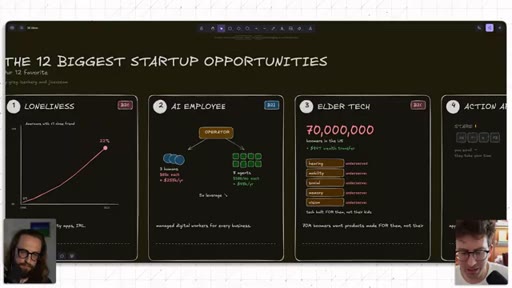
00:00HOOKI have one goal and one goal only today. It's to go through the 12 biggest startup opportunities. So,
00:07HOOKuh, the other day, I tweeted and it went viral. The 30 biz biggest startup opportunities, b to c, AI, mobile,
00:15HOOKand people just wanted more. They they wanted they wanna know more. So in this episode,
00:20HOOKI wanna go through my 12 favorite ones and well, it's not just gonna be me. It's it's my friend, Jay Ice Cream, Jay Jay Ice Cream, Jonathan Courtney on the pod.
00:31HOOKWhat's up? Welcome. And you're gonna pick six and I'm gonna pick six.
00:35HOOKRight? That's it. I'm gonna pick six.
00:37HOOKYou're gonna pick six. Who knows? Maybe one of us will pick seven.
00:40HOOKYou never know what's gonna happen. You never know, so you're gonna wanna stick to the end. I think people who do stick to the end of this episode
00:48HOOKare going to have a good understanding of a bunch of different categories that we are building businesses in. So we're sharing the sauce live.
00:57HOOKWe hope that you actually take these ideas and build with them. And, uh, maybe you wanna start off.
01:04HOOKOh, okay. So
01:15Looking through your list, uh, the very first one that jumped out to me is something I think that's gonna get bigger and bigger and bigger is number eight, which is biggest creator. So what you wrote is that the biggest creator is gonna have this combination of live shows and unscripted content.
01:31And as someone who plays a lot of video games, I'm exposed to a lot of these creators who create who, uh, put out their content on Twitch. And it was interesting to see what is it?
01:42TPBN or TBPN? Whichever way around that is, the tech show that's playing on x, uh, all the time.
01:51It was interesting to see that hit the tech scene because it's been in gaming for a very long time. And I think some of the things that the tech, like, world can learn from gaming is this more unscripted
02:04kind of, you know, off the cuff kind of streams. And I just have a couple of examples if you wanna see because I follow a lot of these streamers, and I try to emulate them in my content. And I think it's it connects with one of the things you said, like, later in your list, which is, like, it's a bit anti AI
02:22because it's live, because it's unscripted, because things can go wrong, people actually wanna watch.
02:29It's very, very human. So I'll just take over the screen for a second and show you Twitch.
02:36So Twitch I think most of you know twitch.tv. It is a place where people
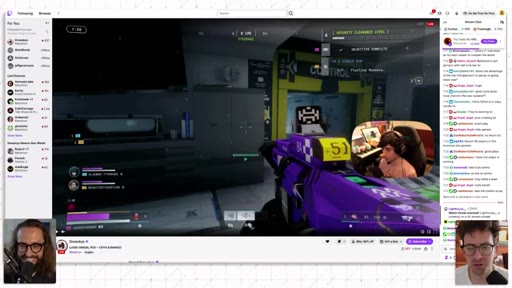
02:43livestream. And this is an example of a livestream. So this is actually a relatively popular streamer,
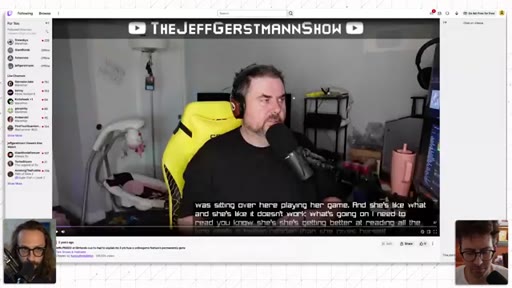
02:51a guy called Jeff Gersman. So he's just one of the people I watch and I pay to watch his channel. And he does these, like, three to four times a week, three to four hour long streams
03:03where he just sits there talking unedited,
03:08like, as messy as it can be, and just chats to his audience and reacts to his audience. And pretty much everyone I follow, this guy is live right now, Druskeys.
03:18He plays a game called Marathon. I can give it to you.
03:21If any of you guys are playing Marathon, it's a great game. You should play it.
03:25But this is a perfect example. So right now, and this is a smaller channel, but right now, you know, 247
03:31people are watching this guy live. People are paying a lot of people are paying to watch this guy live, and he's just sitting here playing a video game that he wants to play anyway, and this is something that also scales up to like, something that's a bit more official,
03:46like let me show you a giant bomb.
03:51So these guys or let me show you the kind of funny guys. So they also stream live every single weekday.
03:58This is more close to what you see with the TVPN. What actually is it? By the way, it's it's hilarious because
04:05you remind me of the people who like, the old older people who would be like, chat GTP. You know? Yeah.
04:11I I still can't remember any of these things. What is it? T It's TVPN.
04:15TVPN. TVPN. Yeah.
04:16And and by the way, if you're listening to this and you're like, well, why do I even care about, you know, streamers, you know, gaming streamers? The reason why you care is TBPN sold for over a $100,000,000.
04:27Yeah. And it was a business show, and,
04:31you know, in terms of viewership, it didn't have a huge viewership, but it had a super high value viewership. So the idea here is what are other
04:39high value audiences that need live shows? Yes. Exactly.
04:44And live, it doesn't have to be hyperscripted like you wrote in your tweet. This guy, Jeff Gersman, again, who's one of my favorite examples, he just turns the stream on, and he has a couple of broad topics, and he'll talk for hours and hours. And I think anyone who has that skill
05:00of just being able to talk long form about anything
05:05is going to have I think I think the ability to make just to go online, just to be able to talk while you're maybe doing something else, especially in the business context, is gonna be huge, and is going to be really differentiated. Like, almost all business content out there is very polished. It's very like, for example, almost every,
05:26like, pure business podcast, like, Diary of a CEO is one of the biggest purely business focused ones. It's hyper polished.
05:34It's all about interviews. What I'm trying to do is I'm trying to take all of this inspiration from the Twitch streaming world and turn that into the very unpolished gamer style
05:45mess, but with the business context. So that's something that I think from your list is gonna be bigger and bigger and bigger as AI
05:54sanitizes a lot of stuff. I think more people are gonna want want to listen to more authentic people speaking long form, unedited,
06:03unscripted, and live. So I think that's a huge one, and it's exactly a bet that I'm making for my own business.
06:10It's what I'm doing personally now every Tuesday, experimenting with it, and
06:17I'm I'm all in on that topic. Cool. I like that one, and I just I know people are gonna be like, okay, but how are you gonna make money if you're just live streaming, vibe coding all day?
06:27And I Yeah. I mean, what Come on. There's
06:32literally a million ways to skin that cat if you have thousands of people tuning into you every stream.
06:40And these are people who, like, have such a high affinity to you that they are begging for ways to to to
06:50give you money. I mean, I can just tell you to like, so I have only one to two one to 2,000 people tuning into me every Tuesday, and that business alone
07:01can make 4 to €500,000 with no ads, with nothing else other than me selling,
07:09like, in person events or, like, even merch around the topic of what I'm talking about. And so it really can be, with a tiny audience,
07:19you can really build something special there. And I think if you look at the Patreon, a lot of the Patreon numbers are public for a lot of these podcasts and a lot of these shows that I'm talking about, and you'll see sometimes they're bringing up to 70,
07:32a 100,000 a month just from people sponsoring their Patreon, or just for people paying for their Patreon, and it's not it doesn't require a huge amount of listeners to make that work. You don't need to be Greg level
07:45to make that work. I have a tiny podcast, and it works. Who is that?
07:50Who's Greg? Alright. I'm gonna I'm gonna go to my my my favorite one here, and it's it's one category that actually has, like, a 100 ideas or more in it.
08:00So it's what I call action apps. So if you think of
08:06mobile apps, I you know, Instagram, TikTok, Uber, DoorDash, you name it, you basically scroll
08:16and and then it, like, feeds you stuff. Or,
08:20you know, if you're logging into a CRM or something like a Salesforce, like, it's it's asking you, the human being, to do thing do things. But with AI,
08:30you can actually create apps that do things on your behalf,
08:36clearing your inbox, booking your calendar, you know, filing expenses. So not not having the human actually do something, but the agents actually do something.
08:49So the opportunity is in they're, you know, basically looking at a bunch of different apps where it's like, if I were to make this agent first, apps that do things for me, not apps I stare at and that rely on human beings, What can I reinvent in mobile
09:05such that, you know, I'm a first mover advantage? So action apps as a category.
09:12J Ice Cream, what do you think? I think it's great. I think I'd love the idea of just having something that just takes action, and I don't have to do anything.
09:21Like, I down or I pay for superhuman male.
09:26I still it's supposed to be, you know, like a super AI optimized inbox thing to get you to inbox zero, but I still have to do everything manually myself. I mean, I don't know exactly how these action apps would work, but I'd love to be able to just plug something like that into my email,
09:43my superhuman, something that somehow learned about the way I wanna do things. Why doesn't that already work? Like, why doesn't it already work that I I've been using Gmail superhuman whatever
09:54for years. Why doesn't it already just know what to do? Why isn't this happening?
09:59This reminds me of, like remember back in the day when mobile first came out, and then a lot of the web companies took a while to become
10:09mobile first. Right?
10:11Remember? Yeah. I mean, I remember Facebook having a very painful transition to mobile.
10:17Exactly. And that's why they bought Instagram. Like, Instagram was basically the mobile first version of Facebook if you think about it.
10:24I think the same thing is happening right now with agent first apps. So it's gonna be hard for companies to
10:34basically do the transition to become agent first. And I think that's the opportunity for people listening right now.
10:42Do you think that from a user experience perspective, if the product is too automated, that it feels like
10:50just just from a pure sense from the user that it might not feel as valuable, that actually me clicking on stuff and doing things is what adds to the sensation that this thing is worth it.
11:02I wonder if there's some element of all of this of, if it's fully set it and forget it,
11:09would there be such low user engagement that people would consider canceling it and wouldn't understand the value? I'm just I'm wondering how that's gonna play out. Like, there's do you know this product called Incogni?
11:22No. So Incogni is, like, in the background, Incogni, like, gets you removed from all of these different lists that, you know,
11:32spam you and send you emails, whatever. And it's like a privacy a piece of privacy software. But you never really hear from this.
11:40You you pay for the product, but you never really you never have to interact with it because it's all happening in the background automatically. And so every year, when I when, like, you know, I get the bill for incogni and it's like, oh, that's still running in the background,
11:54I kind of don't feel the I almost feel it sounds really stupid, but I almost feel if there was some level of me having to interact with it even a little bit,
12:06it might imp or it might increase my engagement with the product and my retention. It's a completely random thought.
12:14I'm just wondering when a product gets so clever that you can fully set and forget it, I'm curious to see how the retention gets hit when these things start happening.
12:26I want it to happen, but I'm curious. My take on that is what you're describing is is, like, a customer going into the kitchen and just cooking themselves their own meal and being like, because they've, like, cooked this meal, they're gonna enjoy the steak way more.
12:42And my perspective is people just want Convenience to the max? Convenience to the max.
12:49You know? And human beings are, like, lazy by definition. Like, we're always looking I shouldn't say lazy.
12:56We're always looking for the path of least resistance. Yeah. And I don't blame us human beings because
13:02life is difficult. Right? So if we're gonna eat a steak, we just want that steak, you know, cooked right.
13:08You know? And I think there's gonna be just this whole suite of apps.
13:13Like, think someone can go and create a studio that just focuses on action apps. And I think those, you know, assuming they're picking the right niche, assuming it's a real pain point, assuming the customer has
13:26willingness to spend on that pain point, there's a huge opportunity to go. And I I actually go and create these apps, and I actually think that those apps end up getting acquired similar to how like the Instagrams got acquired by Facebook.
13:41And you can use you know, you don't need to build the AI from scratch. Right? You can integrate with Claude Agent SDK and other other SDKs in order to build these things.
13:51So you're basically building a layer on top of it. You know when people were talking about GPT wrappers? Mhmm.
13:57Yeah. Well, yeah, now we have, like, agent wrappers.
14:01Right? That's kind of like where we're at here, and I I I'm I'm starting to see people pick up on it, but I think the mobile first version mobile first plus agent plus niche
14:13plus willingness to spend plus warp boring, you know, workflow, plus if you can figure out how to reverse engineer the TikTok or the Instagram Reel to get people actually into the app, that's the workflow. Easier said than done, of course,
14:29but that's an interesting category I'm spending a lot of time thinking about. Alright. What's what's your example?
14:34Sorry. Can just just to get it in into my head properly. Yeah.
14:37An action app. What is what is and, like, for for a specific topic, maybe like email, what would an action app look like to you?
14:47Is it doing one small thing within a main product, or is it a product within itself? Like, how do you imagine it?
14:54Well, using email as an example, that would just be what does the AI first version of superhuman look like? Mhmm.
15:02And when you go or Gmail look like, or whatever email app you're using. So when you go into an email
15:10app today, it really relies on the human being to do things. Yes.
15:15A lot of the Gmails of the world email apps have AI bolted on,
15:23but they don't have it as the core experience. Mhmm. So you have to you know, it's not and it's not easy, but you have to reimagine the the
15:31core UX of email, and and it probably isn't a list of here's all your emails because that's just daunting.
15:41Maybe it's every single day, I'm gonna I'm gonna send you
15:48maybe it's like you you download an app, it learns about how you like to answer certain things, and it basically says, hey, we're gonna answer 80% of your emails via agents.
15:59Like, your your your like, those are our emails now, and we're only you know, keep your Gmail, but those 80% are gonna be automated, and we're gonna give you an interface around just managing how the agents are interacting. Yes.
16:14And we're only gonna show you the one or two emails per day based on the conversation you have what you've had with the agent or whatever that I
16:24don't wanna respond to because it seems too important. But, like, here's what I was going to say. Can I say yes to this?
16:32That's kinda the holy grail of email, basically. Exactly. Alright.
16:36Okay. I understand it. Alright.
16:38So for me, my next one that jumped out for me from your list was just number one. Not not because it's the only one I read. No.
16:46I'm just kidding. It's the loneliness,
16:49solving loneliness, third spaces, community apps, IRL.
16:53So and this connects with a couple of the other things. I think the loneliness thing, especially
16:59since COVID, has just been insane. Like, it's really crazy. I I think, like,
17:05was a time where people used to view, like, my parents' generation and their parents' generation as being very lonely and spending all their time at home watching TV and not interacting with other people and not going out, there was like this people would talk about it.
17:21There was like TV ads for it in Ireland about, you know, older people being lonely, And now I'm seeing that in my generation of people in their mid to late thirties who just stay home all day on the Internet, you know, consuming content, just consuming. And
17:39I think this what what you've put in here, this third space is community apps, IRL. I think it's not just a huge, like, business opportunity.
17:49I think it's also, like, something that needs to happen for the good of humanity.
17:56Mhmm. And I think for me, this is the thing that I'm this is one of the ones that I'm personally chasing and personally experimenting with.
18:05We ran a retreat in February, which was five days off the grid.
18:10So no Internet, no phones, no tech, nothing. I think I invited you you to it.
18:16Oh, you didn't turn off actually. Interesting. I'm too glued to my phone, bro.
18:21Exactly. So no actually, two people pulled out because they got so locked into Claude Code. They were like because Claude Code was just ramping up.
18:29They were like, I cannot come to this event. I need to be on Claude. So
18:33we decided to to create this thing, which was like in the kind of sense of a summer camp where people from all over the world come together, there's no phones, there's nothing, you're completely separated from everything else, and you just hang out, you'd like, do art together, you whatever, you hang out for five days, and it was an amazing experience, and this is something that
18:54I did it. We we basically broke even. It cost like $90,000
19:00to run, we made $90,000, but I did it so that the people who came to it could do their own versions of it. I don't wanna be the person bringing this out to the world.
19:09It's so hard to do it. But if someone could turn that into a business, if some one of those people could turn that into a business, something that brings people together, something that brings people into
19:20the real world, I think it's gonna be totally, like, it's gonna be something that's explosive.
19:26And and what you've put in here is, it doesn't have to be just in person. I'm assuming you haven't heard of the Discord group called Dads of Marathon,
19:37because it's very niche to one video game, but there's how many people are in this right now? So this is an example of, like, a digital environment
19:45community that's exploded, and I'm part of, and it's absolutely amazing, there's 13,898 members.
19:53It's a Discord group of dads or basically casual gamers who don't have time to play video games, who don't have time to play competitive video games,
20:04but because this is a cooperative game where you have to talk to people, and they know you're not gonna find other dads to play with who you know, because, you know, people don't have your hobbies anymore, This Discord group, Dads of Marathon,
20:17has been my, like, central community for the last three months to find other people to play this games game with. And it's the first time I've actually made, like, friends, you know, purely online in a very long time.
20:31And so I think these niche communities
20:35around actually talking to people, actually connecting with people, actually doing stuff together, in this case it's a particular game, is it clear like, that's almost if you look at the amount of players playing Marathon right now,
20:48there's almost more people in this group than actually are playing that game. It's insane.
20:55It just exploded. And that is listen to how niche that is. It's a niche game,
21:01and someone has created a community for dads who are playing that game. Like, it's so insane,
21:08and 13,900 whatever people are in there. It's super active,
21:12and it's an amazing, like, community experience, and I'm so happy people went and did that. But it shows that there's this, like, thirst for connection
21:21both in person and online, and though those are the spaces that I'm looking into at the moment. So here's my quick take
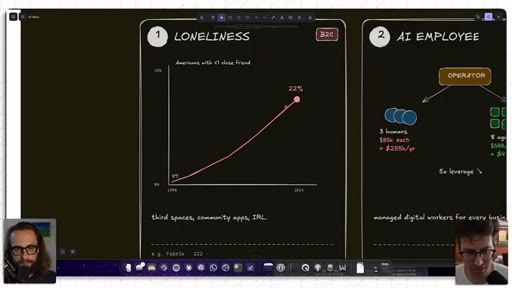
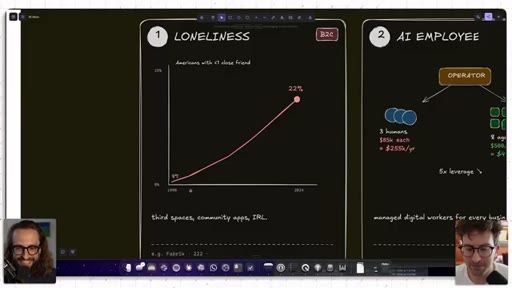
21:29on on loneliness, the opportunity, and the impact. So look at this chart.
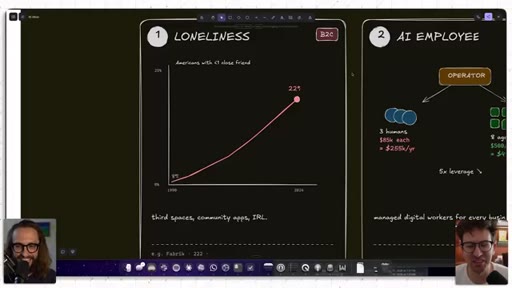
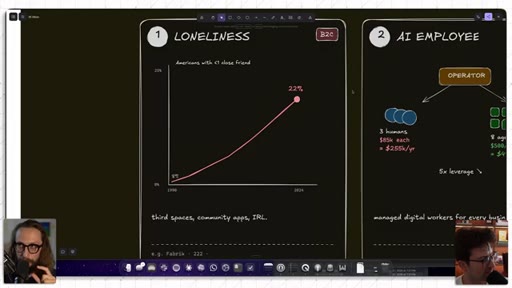
21:36I don't know if you saw this. Americans with less than one close friends is almost at 22%.
21:42It's at 22%. Yeah. That's terrible.
21:45Crazy. Basically Terrible.
21:47Almost a quarter of Americans have no close friends. So
21:54from an impact perspective, I completely agree. Like, we need to do something about this. From a business perspective, I think that you can actually create a bunch of
22:03great businesses that help people with loneliness. You gave such a great example of dads
22:10playing marathon. Dad's a marathon. People
22:13like, I I I bet you would pay a monthly fee. Oh, 100%. 100%.
22:20I don't even I if they sell something, I'm gonna buy it. If they sell some anything. Exactly.
22:25So if we can just if we distill that for a second, you know, you picked a game, a niche game with a niche, dads. There's an opportunity to do dads
22:38play x y z, like Yeah. Games,
22:42hobbies, different niches, and you can go create the dad company. And that's just a huge opportunity solving loneliness for dads.
22:50Right? Yeah. Especially men, we're not good at I mean, I don't know how you are, but I'm
22:56quite like, I have to be reminded to be social. I'm I'm not great at it.
23:02I'm not great at, like, reaching out to my friends and saying, hey, let's do something. And so this Dads of Marathon thing, as an example, is the first time since I was fourteen
23:13first time since I was 14 years old, I'm 38 now, that I actually played, like, a shooter competitive multiplayer game with other people because of this Discord group.
23:26Well, I would I would play with you. But I I I believe.
23:30There's two companies I I wanna highlight that I think are doing well in terms of just to get people's creative juices flowing around building businesses around loneliness. So one is a company called two two two. Have you seen this?
23:43Never heard of it.
23:47I'm a small investor in this, like so small. But basically, you take a personality test. So it says, start by taking our personality test so we can determine your most compatible matches.
23:58Choose an experience, so you decide if you want dinners, or cocktail bars, or salsa nights, or basketball games. And then you meet, you know, five to seven different matches,
24:09and you actually go and do that thing with these people in your city. And they are absolutely crushing it.
24:17So, like, as an example, you know, dinner, cowboy hats, cocktails.
24:24Kinda kinda random, but This is amazing. And you know what?
24:28People listening to this podcast right now are thinking, oh, yeah. But these these guys have already done it. It's already done.
24:34First of all, very few people want to even do this type of business.
24:41This is this is a type of business where you have to be a specific type of person to even create it. Yeah. And so if you happen to be the type of person
24:49who likes to bring people together for experiences, If you happen to be a goddamn someone who enjoys organizing
24:57events, you might be at some sort of crazy advantage right now. Because I can tell you,
25:03I do not like doing those things. I do it because I think it needs to be in the world, but I want other I don't wanna do it. I don't actually find that.
25:13That's not my thing at all. I'm too much of an introvert. But that is that is a killer
25:19business for someone who likes to organize events and be around people. Kill killer business. I wanna go to our next our next category.
25:26But before I do that quickly, if you do wanna create a business like this, you know, a membership model makes sense.
25:34Mhmm. Mhmm. So,
25:37you know, I I'd encourage people to look at memberships. And the beauty about that is you're getting recurring revenue. The other company that's really interesting
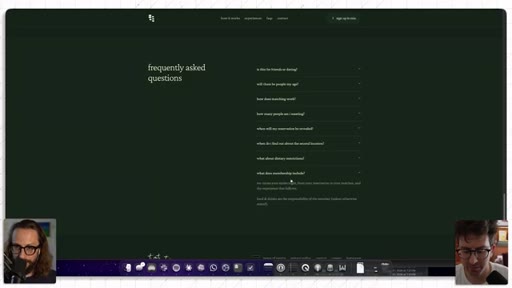
25:46in this space is a company called Fabric. So you can see they do 75 plus gatherings per month month. They're in New York and Chicago.
25:55They've got 500 members. And then they have just a huge wait list of people waiting. It says they have no lengthy wait list, but I'm pretty sure there is a wait list to join.
26:08No affiliation with this at all, but it's people apply. You get access to these spaces. They I think they're like five to 10,000 square feet, and then you participate in these gatherings.
26:18And the gatherings are just these events. So they're basically an event company. You know, you hear about how there's an issue with commercial real estate right now because, you know, office space is is
26:29not, you know, doing so hot. So they've just retooled that into community infrastructure, and I hear they're doing really, really well. So and a great example of,
26:41you know, a business that I think is doing well in terms of traction, but also making impact. Alright.
26:47What's the what's the next one you wanna talk about? Oh, I I think I went that was my one. Oh, that was that's true.
26:56That was your one. Alright. So my turn.
26:58I wanna talk about Eldertech. So
27:03I like the name. Eldertech. Eldertech.
27:07Mysterious. Everyone is creating apps, businesses,
27:13for, like, what we just saw, Gen z and millennials, cowboy hats and dinners,
27:20speakeasies and this. Right? Yeah.
27:23Who is creating apps and companies for older adults?
27:29There's 70 plus million boomers in The US, and there's a ton of underserved niches and pain points that they have.
27:38And AI specifically is one of the greatest ways to help those people with things like hearing, mobility, social, memory, and vision.
27:48And there's this thinking that if you're creating products for older adults, you know, in the positioning,
27:57in the landing pages, you you need to show, like, old people and gray hair and white hair and balding and stuff like that. These people don't wanna don't see themselves as that.
28:08They they just want want products that are gonna make them happier and healthier. And I think there is a ton of businesses to be created in elder tech, which is basically this, you know, the technology
28:22for older people, mobile apps, desktop apps, agents,
28:27AI with some hardware. What do you think? Dude, first of all, what age range are you talking about here in your head?
28:34Like, what are you imagining? 65. 65.
28:38Okay. So my main business, facilitator.com,
28:42originally, our assumption of our audience was it's gonna be people in their twenties working in tech companies.
28:50When we started doing Facebook ads and just stopped trying you know, like, putting them out there generically and seeing who would come in without doing, like, very specific targeting, it actually ended up that the most customers or our most valuable customers are all, like, over 45.
29:09And it completely shocked us because all of our advertising is very silly,
29:15very I mean, I'm in the ads being goofy. If you go to facilitator.com, it's kind of a cool looking website,
29:23but our, like, the people who can spend the most money with us simply because they are the highest earners or have built up the most savings are the people 40, 45, 50.
29:35So just to say the age range thing is such a big thing because we're all told when we're building products, we're all sort of excited to build stuff for people in their twenties because I guess that's the sort of explosive growth range.
29:51But if you're just looking to build something that makes a couple of million, looking to who the who actually has the money, and who's not getting a lot of cool shit made for them.
30:02And again, this falls into the dads of marathon thing. You know, a couple of the people I'm playing with are 50, and they're loving the fact that there's this place now to hang out if you're bad at the stuff.
30:15Again, you know, video games are all all gaming stuff is targeted at kind of a younger, cooler audience. And also, especially with competitive video games, if you're not good at it, if you're not young, you're not gonna be good at it. So older people are sort of left out, and I'm I'm even in that range.
30:31And it's been really cool to see, again, Dads of Marathon, it's almost like a piece of elder tech targeting people who are no longer able to use like, I can't I'm not Twitch like speed anymore,
30:44I can't like be competitive anymore, but you just wanna enjoy yourself. So I think that is a huge even if you expand it, the age range down to, like, the the forties as well,
30:56there's so much scope, there's so much stuff you can do there, and I think it's a shame to only be targeting people, you know,
31:05like, late teens, twenties, thirties, because it's the people in their forties and fifties who have a lot more
31:13also free time, you know, their kids have maybe moved out as well. That's a huge target customer for us at facilitator.com, is people whose kids have already moved out, and they're looking to retrain.
31:24It's a it's an amazing market, and, honestly, sometimes these people are just more enjoyable to deal with. I mean, when you're creating a business, sometimes
31:33you don't need to overthink it. So Yeah. Fish where the fish are.
31:37Yes. And everyone is fishing. Like, everyone is trying to create apps for gamers, let's say.
31:44Right? And the gamers are between, you know, thirteen and twenty five.
31:50Yeah. Like the Roblox range.
31:53You know? Exactly. So what you're saying is, like, the dads of Marathon
31:57is, like, way more way underserved. And what I'm saying is, you're so happy you found dads at Marathon.
32:05Where's the grandpas of Marathon at?
32:08Yeah. You know what I mean? That'll be very relevant in, like, ten years as well when gamers
32:13are graduate. Now that whole audience is getting older and older. It's getting more expensive to game.
32:19Only people who are gonna be gaming are older people. Exactly. So
32:23for you know, in terms of, like, opportunities, I think that just, like, coming up with ideas around 65 is not only a good business
32:33to be in because you're fishing where the fish are, but you're also going back to the loneliness thing Yes.
32:39You can actually make impact, which is so cool and so fun. You know? And and hot tip,
32:45everyone keeps telling me, Jonathan, Facebook ads don't work anymore because no one uses Facebook. You're wrong.
32:51A very large amount of people use Facebook. They're just not in your age range. And we have people, like, buying our product every single day who've just heard about us on Facebook on the same day.
33:03They just happen to be, like, 50 or 55 or 60 years old, and they're not using TikTok. So or YouTube. So I think it's it's just
33:14we're sometimes a little bit out of touch with the market because of our age range. I I definitely know I am. Alright.
33:22Your turn. That's a good one. That's a really good one.
33:25Honestly, that's a really that's really powerful. I think, like,
33:32maybe connected to it, but not a 100%. So number 23 from your list
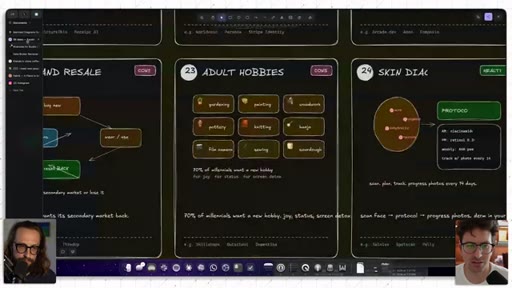
33:37made it into my top six, is biggest hobbies, adults learning for joy, pottery, woodworking, and drawing. And I chose that because
33:49I literally ran a painting essentially a painting retreat, uh, in February
33:55for adults, most of whom were 40 and most of whom were in this,
34:00you know, older range who who had their kids had moved out. Maybe they're they've been working in corporate for a while.
34:06They're looking for a change. They're looking for something different to do.
34:11And so I think the age range of that group was maybe between 35 and 65. And
34:18people just wanted to take time for themselves to not learn, like, some business thing, to not learn some tech thing, but to actually just go and do things that make them feel joyful.
34:31And in this case, it was primarily painting. Um, and this was like something again, I've never run a painting retreat under my brand, but I wanted to try it. And this was something that like sold out essentially instantly,
34:46and I'm a huge huge fan of creating creating,
34:51like, small bit a small business or small communities around these topics. Mine like, painting, music,
34:59like, gardening's a huge thing. I think I just think it's an amazing thing to go into. Again,
35:05there's not a lot of competition because not a lot of people even want to do this. Like, it's kind of seen as, like, a boring thing,
35:14and that's why there's not a lot of competition. Can I show you something real quick? Yeah.
35:19So I have a friend. He's a comedian, and he has, like, a new sort of reinvented himself as someone who helps
35:27people find their inner artist, and he I love this. He has a space called Doctor.
35:33Tyler Lemko's Creative Club, and he hosts these events
35:38where let's see. So I love this, and I wanna go to it already.
35:44Like, I would spend money on this. I don't even need to know more, and I would spend money on this. Okay.
35:49So he hosts these events,
35:53and it's people who don't wanna use their iPhones, who just wanna go and make something. Yeah.
35:59And so, like, here's, you know, the paper lamp workshop. I fucking love this. This this is like
36:08more of this needs to exist in the world, and it's this this shit needs to exist. Yeah.
36:15So you can see here, like, they're making paper lamps, and it's people, like, drinking tea and paper lamps, and he charges for these events. Yeah. Starting to do really well, and he has this space, and it's just, you know, people are going there on their first dates, or they're going there, you know, just because they don't wanna go to a bar and drink.
36:32So I think this is related to a lot of the stuff we're talking about. I think this is a no brainer idea, and
36:40I think you're gonna start seeing more of this. It's it's great. And you see this as well with, like, book clubs as well, even paid book clubs.
36:47There's one in Berlin. One of my neighbors was chatting to me last week, and he said, there's a book club in Berlin every Sunday, and, like, 85 people turn up to it every week and pay for it?
36:59Not saying this is some huge moneymaker or something, I'm just talking about the popularity of a book club because people just wanna find a place to hang out and see other peep see other humans and get away from their computers.
37:11I think the pushing back against screens, pushing back against all of this stuff
37:18is it's creating a lot of space for that. It's creating a lot of space for in person,
37:24for this, you know, helping people with hobbies. Also, by the way, a lot of people, when you get to my age, I can tell you, a lot of us don't have any hobbies, and we need to even see what there is to do.
37:37Like, if you've worked your whole life, if you've been busy your whole life, if you've had kids and you've been locked in on all of that stuff, a lot of people, like, they stop having hobbies when they're like 18 years old, and when they kind of come out of the tunnel of being busy, I'm just talking about this from my own perspective,
37:55like I said, I haven't played video games really properly since I was 14, I'm like, now, like, what do I do? Like, what are the things that someone
38:05does when you actually start having free time again? And I think there's there's a huge this it's it's a it's a really good one.
38:13The list is really fucking good, man. I appreciate it. Alright.
38:16I wanna go I wanna do AI employees.
38:21You're not gonna believe what happens next. I mean, I did a whole episode on this,
38:28how do you sell $5,000 a month AI employees with my friend Nick. And I think it's just there's a huge opportunity
38:35to look at
38:38white collar work, social media marketers, marketing managers,
38:44ops people, and think about how can I go and set up a Hermes instance, an OpenClaw, something, and just go into businesses and set these things up for people and either host it
38:57yourself, host it in the cloud, or or just teach them how to actually go and do these things?
39:03So I think that there's still I mean, it's it's it's one of those again, all these ideas are pretty obvious, but I think this is one of the most obvious ideas that if you go and create and manage digital workers for businesses
39:16and I think you have to figure out what niche you want to play in because there are a lot of people going after this. So maybe, you you know, you focus only on account you know, accountants or law firms
39:27in Germany or whatever. But I think that there's a there's just, you know, thousands and thousands of companies that are gonna come and do this, set this up, and there's opportunity for all of them. So AI employees, what do you think about this business?
39:41So immediately, the first thing that comes to mind is we're myself and the producer of my YouTube channel, we are kind of like, we we don't have enough people, but we also, for that new business, don't have a huge budget for having someone sitting around and waiting around to do the work.
39:57And there are things that we just need to do for that channel that are so not creative,
40:04but just need to be done, but there's also no, like, AI product that solves it yet. And so it would need a workflow, would need an agent.
40:13An example of that, really simple example is when I put out my podcast episode, chapters need to be added to both the video and also the audio version, and also I need to have clips created
40:27so that we can look at the clips and then decide which ones we're gonna do, and we'll do the thumbnails, etcetera. But just that would save us so much time that that would essentially be a junior employee's job
40:39that right now doesn't feel like the right thing to do. But if we were able to dip into that, like, you know, monthly, okay, we can have this junior employee agent
40:49set up for a certain amount of time until we can hire someone to do it maybe and and and scale it up, I think that would be insane.
40:58The problem is actually, I think the problem is the use cases are again, this might be a verticalization
41:06thing. I think people like me who run businesses don't actually know the use cases that agents can actually do. Yep.
41:12And if I opened up you know, we use someone in your comments might now be writing, hey, use OpusClip. It actually clips up the YouTube episodes for you. Yeah.
41:22But then I have to go to OpusClip. I have to type in the I have to put in the YouTube episode. I have to wait for it to finish.
41:27Then I have to check all the clips, and then I have to decide which ones I wanna do. Quit being a bully. You know?
41:32Exactly. So it's not it's it's not solving the problem for me, but I think that the companies who are gonna nail this AI employee thing are gonna be the ones that can show
41:45the use case crystal clear to founders or or managers and say, hey. This employee can do this, this, this, this, and this.
41:53It's it it removes this much work from your day, and it costs a fraction of the price, and we can switch it on right now. There's, like, a one time setup for you, whatever. Yes.
42:04I honestly think if you could if you could make the use cases of that crystal clear, it would be a no brainer. Yeah. I think you're right.
42:13The verticalization is gonna be key. The way to think about this, if anyone's actually serious about going and building something here, is
42:21CTApick the vertical and pick the job title,
42:26CTAand then go and think about all the jobs to be done for that particular job title. So for example, you know, the what you talked about, like a YouTube producer,
42:35CTAlike all the or or YouTube editor or Junior YouTube editor, producer, something like that.
42:42CTAIt's like go and go and ask, you know, ChatGPT or or, you know, Claude or whatever to write out all the jobs to be done of that person.
42:53CTALike, what are the 50 jobs to be done? And then if your agent or you or your set of agents or digital employee can go and do that at a tenth of the cost,
43:03you have a very compelling offer. And then over time, what you do is you just add the jobs to be done.
43:08You know, first you have, like, a few few jobs to be done, two, three jobs to be done. Then then you make five, and then 10. And then all of a sudden, you do have a true digital employee that you could sell.
43:18I think there's a lot of opportunity here. So I really like this idea. Can I give you guys an so the here's the company?
43:25The company is called Juniors, and it's about getting junior employee. Because I think right now, there's not enough,
43:33like, trust in the market for AI for founders like me to say, oh, yeah. It's gonna replace any senior employee. But if the company was coming at me and saying, hey.
43:42We know it's not about replacing or replicating a senior employee. We know it's about more of the junior work,
43:49and but every single company needs junior employees as well. And so that's By the way, someone go grab the domain.
43:57Junioremployees.ai is available. Go and build this company.
44:02And that's why you listen to the podcast, and that's why you like it and comment and you subscribe because we just give away everything. We give it away. I I do think yeah.
44:12I do think that it's a great a great positioning, and I I do think that that
44:17I like that brand, so thank you for that. Because imagine how cute you can make it.
44:23Like, you can make a video of some person trying to like, it's like the skit could be someone saying, hey.
44:30AI is gonna do everything, but then the founder is like, oh, but this sucks. This is not a good output. And so the concept behind Junior's is that
44:37you're still the creator, you're still the company, and you're making all this stuff as a human, but there are just things that slow you down and make you more like, they just get in the way that you probably would love not to do, and believe it or not, agents can actually solve these things now.
44:57And maybe you could even have a brand where where you 100 are against
45:04AI doing any creative work. Yeah. And that would also appeal to everyone in the creative world that I'm in, because everyone in my world hates AI for creative work.
45:15It's like Yeah. Everyone's against it, but is very positive on AI for sort of menial, annoying tasks. So I think that
45:24it could be a really strong branding, just this sort of juniors, we're here to help you get more done, not to replace your creativity, etcetera.
45:34What's your next one? Alright. Here we go.
45:36So we're getting close to the end here. I'm just looking which one I wanna hit.
45:43So for me, per this is like a personal one, number 32 from your original list, which is biggest food. So personalized
45:50nutrition based on blood work and butt gut biome
45:57gut biome. So I pay for a service already in Berlin. It's called Aware.
46:03I don't know how much I pay per year for it, but it's a lot considering the very little that I get. And the idea here is that you get, like, a very extensive blood test multiple times per year, it all gets dumped into the app, and then it gives you fucking no information. So basically, what I do is I export it all and put it into Claude, and I'm building sort of like a brain of my,
46:28you know, for me in particular, I have a lot of stomach problems. And so I have a
46:34literally, one of my Claude projects is called let's just I'll read the exact name of it. Stomach Helper. And Stomach Helper, for me, has all of my blood test results relating to
46:47the the Aware app I'm using, but also all of the results from my gastro doctor whatever.
46:55And this is help this is the thing I go to and ask, hey, like, I'm feeling this thing, I've eaten this thing, could it be related, whatever. And I know it's not perfect, and I I know it can give wrong answers, but it's clear that I'm having to build something
47:10for myself that I'm not able to find on the market, and I'm not able to pay for. And I think when it comes to nutrition, when it comes to this particular one, I think it's all about the verticals.
47:22I don't think it should be generic health. I think if you would do a business just for people with my problem, which is GERD, g e r d.
47:31It's like when you're this, like, valve in your stomach is loose, and the acid sort of comes up, and you get gastritis and all of this. Like, millions and millions like, I I don't know.
47:42It's like 30. There's a huge amount of people in the world who have this. It's a massive amount.
47:47But I can't get help. I have, like, relatively good amount of resources to solve this problem in my life with doctors all over the world, and I can't find any central way to solve this problem.
48:00You know, one doctor sticks a camera down my throat, another doctor gives me a blood test, another doctor says, you know, try this diet, and then another doctor says, take these pills. And there's, again, there's no central point.
48:13So for me, this is if someone would come along to me and say, Jonathan,
48:18this is the one stop shop. We've got the tools. We'll be the central brain.
48:24We'll be like the project manager, we'll help you figure this stuff out. That would There's very little I wouldn't
48:33spend on solving a problem like this, and then I would want the holistic approach.
48:39Yeah. Then I want you guys to send me the food that I can eat, and etcetera etcetera etcetera. So for me,
48:46being able to get personalized, not just personalized nutrition
48:52advice, but also maybe that this company,
48:56you know, sends you the food or recommends a chef that's, like, certified for that specific thing.
49:04Because meal plans, yeah, it's it's it's for me, this is a huge problem, and I'm still not seeing the I'm still not seeing
49:14the vertical the verticalization. Yeah.
49:18You're basically what you're saying is, like, there's a lot of apps and and and offerings for horizontal, but there isn't, like, the verticalization and the specificness
49:28that you'd like to see. Yeah. I don't wanna lose weight.
49:30I don't wanna you know what? There's loads of these things that are all bundled together. Yep.
49:34I want to fix my goddamn leaky valve. Have you seen this?
49:39Have you seen Zoe? No. I've never heard of it.
49:43Maybe Zoe is a really interesting business. So the way it works is you get a test kit. Yeah.
49:51And it tests your, you know, microbiome DNA tests. See?
49:56And then based on that, you download this app and it gives you personalized evidence based nutrition feedback. So it's sort of a mix of, in some ways, like, you know, a test like a 23andMe
50:09meets a AI food tracking app like CalAI, which does 50,000,000 in ARR, and then personalized food advice. I think what's really cool about this is it shows a a new model for how people are gonna create businesses, and then I'll get to your point around making it more specific in a second.
50:28Where I was coming from with this nutrition category is for the first time ever, you have human beings, millions of human beings actually testing the data
50:40for how you're feeling in a in a health environment. Your these tests are now possible. You have, you know, function health, for example.
50:47People going and spending hundreds of dollars, thousands of dollars a year to get and learn everything about, you know, their health markers. So you have these health markers. People are uploading it to the cloud,
50:59and then they're asking AI to help them figure it out, or and or they're asking their doctors. So the opportunity in this category
51:08is to do something like ZOE. But to your point,
51:14go even more specific. So you can do ZOE for x y z issue that you have, ZOE for men,
51:22ZOE for, you know, you you know, ZOE for
51:29people in in Germany. Right? So there's a lot of opportunity to look at where are people gonna be getting more and more data around health markers,
51:37and then how can you create an app or an offering that combines not only insights around those data markers,
51:45not only an app that has AI built into it that helps you, but also speaks to the pain points that someone is feeling in that moment.
51:57Yes. That's Yeah. And that's nutrition.
51:59And look at look at the stats for The US alone. Approximately sixty million Americans, about twenty percent of The US adult population have GERD,
52:10and this is why when you go into, like, a CVS, you have all of these antacids, all like,
52:17rows of them. I think that's the hint of how you find your verticals. Go into a CVS.
52:22What is the over the counter stuff that you're seeing the most of? Well, that's probably the problems people are having. I mean, I can think of a couple off the top of my head.
52:31Obviously, like GERD. Uh, migraines would be a huge one. That these kinds of things are so hard to solve for people, and if you can solve them, you can improve their life by, like, you know, up to 80%
52:44just their well-being, but there's very these things are usually very kind of
52:50holistic, but often I'm not looking for something holistic. And I think what these AI tools can do, they can what they can enable
52:57is this sort of locking in on one topic, and helping people with that. And I would just hey, if someone thinks they can solve this shit for me, call me.
53:08I'm gonna do another one relate not related to humans, sort of the opposite. Pet Opposite of humans. Health pet health.
53:16So I did I did some I did talk about health in some of these in some of my list, but I think what's really underserved is pet health. So, you know, you're starting to see things like, you know, putting on collars on our dogs and stuff that looks at heart rates, step counts, sleep, things like that, and it gives you a report.
53:37Pet industry is massive, 150 $140,000,000,000, but a very small percent of that of of pets have smart monitoring,
53:47have some of these, like, smart AI tools on top of it. So I think there's just a huge opportunity to do a lot of what we talk about on on on the podcast around AI, AI agents,
54:00but applying that to pet health to make pets happier and healthier. And as we know, people spend a lot of money on their pets,
54:10and I think there's just a lot of ideas around helping pets
54:15be more happy and healthy with AI, with AI agents, and then also using hardware. So you can go and look at just pet
54:26devices and think about how can I inject a $30 AI brain to this to make this better
54:35Mhmm? A better product? What do you think of pet health as a category?
54:38I used to have a lot of pets as a kid, but I haven't really had one as an adult. So it's it's something that people
54:46people are obsessed with their pets in a way that they were not. When I was a kid, they were just running around the place. No one gave a shit, to be honest.
54:53Now it's the now it's people's baby. Right? People are obsessed with it.
54:57They wanna give it the right food. They want it to be, like, taken really well care of. It's like a member of the family,
55:04and I can't imagine it going any other way other than pets with their own Eight Sleep mattress covers. So I I can imagine it would be huge.
55:14I've also listened to, you know, the Tim Ferriss podcast. Kevin Rose often talks about his dog
55:21and dog longevity and giving the dog, like, different sort of pills and different things to, like, resveratria
55:30or whatever to to increase its life. And so
55:35I can't imagine this wouldn't be an explosively huge market, but I don't hear any of the animal
55:42owners that I know, like, using this stuff yet. So I think it's still pretty
55:48nascent and young. It's still early. There's some products.
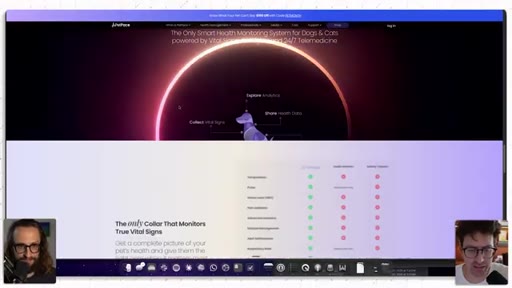
55:52I'm on one right now. Petpace.com, there's Whistle.
55:55Like, a few of these have added AI recently, But I I think it's, again, less than 2%, really, really early.
56:02And for people who are trying to find ideas for their pets, one of the good ways is just look at what people are doing for human beings and then a pet.
56:12You know, one one of the ideas that I had I was on the My First Million podcast, you know, two, three years ago, and I was like, someone should do athletic greens for pets.
56:21Ace One for pets. And, you know, someone took that idea, ended up making hundreds of thousands of dollars a month from that idea,
56:30reached out to me and stuff like that. You're getting a cut. No cut.
56:34Do it for the love of the game. Do it for the love of the game. Goddamn
56:38it. But the the point I the point I'm trying to make is you just look at what what you know, who's sponsoring Huberman's podcast
56:48and then apply that to pets. I think this is a no brainer, I you know, category. And if you love pets Is that a pun category?
56:57Sorry? Was that a pun? Oh, yeah.
56:59It was a pun. It was a Hell, yeah. You know, a little meow meow, you know?
57:03Doggy gory. Yeah. Category.
57:06Doggy gory. So so I like this one. I'm not, like, the biggest pets guy.
57:13Like, I don't wanna be thinking about I thought you were big pet guy. I I mean, I like I like I love animals. I love animals, but I'm not, like I don't wanna spend
57:23$24.07 working on animals, but for people who are obsessed with animals, this is a huge category and something that I think that a lot of people should do.
57:32Alright. What's your what's your So I'm gonna break the system slightly because
57:38I wanna just pull together three of the of the from your list and turn them into one thing just to double down on a point. Yep.
57:47So earlier I mentioned earlier I put I chose as my number one live shows unscripted content. Then we talked about the idea of, hey, the the loneliness,
57:58the third spaces, etcetera, and then we also talked about this idea of adults finding hobbies. What I didn't say, and what I what I just wanna tell you guys, because this is happening, this is what I'm doing right now,
58:11is the missing point from all of this is that there's within all of that,
58:17who you choose and what type of person you choose is gonna have a dramatic different dramatically different outcome and type of business. So for me,
58:25I'm only targeting entrepreneurs who are interested in doing these things. So for example, when I ran that painting retreat and that art retreat,
58:35I was able to make 90,000 doll well, a $110,000 from it, and other people who are running creative retreats were like, what the hell?
58:44Like, these things usually make $5,000. And I'm like, yeah, because I'm doing it for entrepreneurs. I'm doing it for entrepreneurs who are looking for, like, a creative outlet.
58:54And so I think when we're talking about all of these things, you don't so if you're looking for examples on the Internet, you're often gonna find sort of like things that
59:05maybe wouldn't be that scalable or maybe wouldn't be very lucrative because it's for the general public, and I think it's great to have that as a service out there, but for me personally, I just wanna say my stack here is that I have a show that's unscripted,
59:21as you said, it's a show that's unscripted that draws in a certain type of creative entrepreneur. That show is building up an audience, that audience eventually gets pitched something like a retreat, a creative retreat for entrepreneurs, business owners,
59:35and that's where then I monetize the the audience using something that's about in real life and
59:43doing something that's, you know, anti AI and kind of taking them away from their phones, etcetera etcetera. And so for me, the a lot of these things,
59:52a lot of these businesses that we talked about today, you can choose the type of person you're targeting,
59:59and sometimes just targeting the the targeting of the person makes the difference of this being an easy and enjoyable business to run or a grind. And I think for a lot of what we talked about today, actually the older, like, established
60:14business owner, entrepreneur audience is a fantastic target market,
60:20and I find it much harder to sell these things to sort of people who are just starting off. And that's like a really boring piece of business advice that sometimes you wanna create things for people who already have money and already are established.
60:34And then, you know, creative Tim Ferriss says, make the free version of something and then the premium version of something. So maybe you have your free meetups where people can do these creative retreats that look like your friends ones where they're making like the the lamps and everything, or like your low cost ones, and then you have your like high end premium ones like what we did for our one where you're charging up to 7 or $8,000
60:57to go on a creative retreat. And I think the I just wanted to, like, lock that in, that that doesn't have to be a low margin, low revenue business.
61:07This one retreat that we did is was a 100 k. We're running another event next week, that's 60 k, and that's just virtual three hours per day for two days.
61:16And so these these can be still quite large numbers if you're choosing the entrepreneur as your sort of target market, which I think a lot of people listening to this
61:26would probably consider doing anyway. I have a simple saying related
61:33to this, which is date the product, marry the niche. So I'm happy.
61:39I like it, but what does it mean? So what it means is the mistake a lot of people make is they pick the wrong niche.
61:48So they pick a audience that, you know, doesn't have a huge pain point, doesn't have a lot of disposable income, and even though they create a great product,
61:58they're they're struggling. So what I always say is you wanna pick a niche that, you know, you love a lot,
62:07that you have some unfair advantage in, and that you believe have some disposable income. So in your case, entrepreneurship
62:14and entrepreneurs made a lot of sense. I don't think that everyone listening needs to go and build something for entrepreneurs. I do think that they should go and pick a niche that they, one, think is underserved,
62:26two, think has disposable income, and three, has a big pain point. So we talked about pets and pet owners.
62:33You know, pet owners, not not necessarily the the the niche with the most disposable income,
62:39but the thing is they're spending their disposable income on their pets because they care a lot about it. Mhmm.
62:44So I think that as people go through a lot of these different opportunities and
62:50and, like, the whole goal of this really was to get people's, like, brains and creative juices flowing, think about, you know, think about the niche
62:59that you're that you're gonna marry, and and the product might change. And that's what I mean date the product, because you might it might change as you learn and you get to know it more.
63:10So that's that's my feedback to that. And I think we have time for one last startup opportunity.
63:17I'm just gonna go through it quickly. This one so we talked about
63:21live and sort of an anti AI approach
63:25to creating content and building media. This is the complete opposite of this.
63:31I think that there's a huge opportunity, and some people are gonna hate me for saying this, but for some people, you know, this is gonna be exciting. I think there's a huge opportunity to create AI native media companies.
63:43What do I mean by that? I mean using AI to to
63:49to build Instagram pages and other social media
63:57where you're using AI. You're letting the audience know you're using AI, of course, but
64:03to to build these audiences, and then from there, you're building products to sell them. I wanna give you an example. I have a friend,
64:09his name's Rowan Chung, and he grew he's actually been on the pod. He's talked about it before.
64:16He grew his account from like zero to almost 400,000 followers in like the last eighteen, twenty four months. And he does sit via
64:25his AI avatar, and he talks about different, you know, news news items. Right?
64:31And once he's built this audience, then he can go and, you know, build apps, build companies, and sell to that audience. I think that there's gonna be
64:41a lot more of this. And I know some people aren't gonna like it because they're like, oh, it's just AI slop. But, you know, if you actually go through his account, they're really, really high quality posts.
64:53And it it's it's it's really good. So I think that there is going be a lot of slop.
64:58I think that if you can create the top 1% AI native media company in a specific niche, then
65:07you are you're looking good. So I think this is a huge opportunity.
65:14Yeah. This is a play this is a space I just don't know much about, so I'm just gonna have to nod and silently
65:22confirm. Well, the hard part about this is how do you create high quality stuff? Mhmm.
65:27Yeah. And I think one way to do that is to look at how the rowans of the world are doing it and being like, how is he doing this?
65:36What makes his videos really good? And how can I do it for my niche? And what are the tools I need?
65:43Right? And, you know, things like HeyGen and Eleven Labs and putting it together. And
65:50I think I think that's that's what you need to do. I don't I'm not a believer that AI slop is going to work in 2026
65:58and beyond. Like, I think that that's frankly a waste of time, but I do think that using AI to create media companies that are actually high quality, maybe with some with a human in the loop,
66:10is is just a great way to build audiences right now. And
66:15I think, uh, once you have an audience, you can do a lot. Well, I mean, just first thing that comes to my mind, again, back to gut gut health,
66:24if you ended up making a faceless YouTube channel where the research is excellent, and it's pulling together an audience of people who have GERD, even if there's no even if it's kind of a bit soulless or whatever, but then the person who's making it has this audience of people who have this, and then they have enough, like, audience and funding to find an actual expert
66:46who can then create, you know, do livestreams around that topic, that can still actually be good for the world, and it could be an interesting business.
66:54So I think, for me, I don't really care as long as then the output or the monetization of it has, like, a, you know, positive impact.
67:04So I think it I guess it doesn't matter if the audience building aspect of it has this, you know, a like, as in the the the machine is telling the human what to put out there as long as it's still helpful and useful to people or entertaining.
67:21CTAAmen. I love it.
67:25CTAJ Ice Cream. J Ice Cream. Jonathan Courtney, thank you for coming on the pod.
67:29CTAThis has been our favorite startup ideas, the greatest offer startup ideas
67:36CTAthat we think that we think that people should go and explore, go and build. And, yeah, I just wanna thank you for your time, and
67:44CTAhopefully people enjoy this one. Thank you for your time. Yeah.
67:48CTAThank you for your time, man. This is this is honestly like a it's a it's a pleasure. We're recording this on a Sunday,
67:56CTAand there's nothing nothing I'd rather be doing than giving out sauce on a Sunday. Saucy Sunday. So Saucy Sunday.
68:02CTAThanks so much, man. I'm gonna turn my light here to a more depressing blue just to finish off the episode, just to make it look like I'm in some sort of, like, surgery room.
68:13CTAYou look dead. You literally look like you're dead.
68:16CTAIt's late on a Sunday night, man. Thanks, man. I'll catch you later.
68:20CTASee you, dude. Bye. Bye.
— full transcript
§ 05 · For Joe

Steal the format.

Greg-Isenberg-podcast playbook

Two operators draft picks from a public list, give away the domains live, and close on a portable rule the audience can repeat at a dinner party.

  • Publish the master list FIRST (tweet, video, blog) so the episode IS the pressure-test, not the reveal. The viral post pre-sells the watch.
  • Format = draft. Two people, alternating picks, six each. Built-in disagreement, no scripted segments needed.
  • Give away one domain or one brand name live, by minute 40. The 'someone go grab junioremployees.ai' moment is the most-clipped 30 seconds.
  • Land the episode on a six-word rule. 'Date the product, marry the niche' is the line. Make the title-card and thumbnail variant about THAT line, not the listicle count.
  • Cut to screenshare only when the visual adds info (cards, charts, Discord screenshots). Otherwise stay two-cam — the friction is the entertainment.
  • Make the CTA invisible. No newsletter pitch, no sponsor. Just hit subscribe buried in a self-deprecating 'that's why you listen' aside.
  • Stack the offer: live unscripted show > narrow audience (entrepreneurs) > high-ticket retreats. Each lever multiplies the next.
§ 05 · For You

What this could mean for you.

If you're picking your next bet

Most builders fail because they marry the product and date the niche. Flip it.

  • Pick your buyer before you pick your product. Entrepreneurs vs. general public on the same retreat = $5K vs $110K. The price is the buyer, not the offer.
  • If you're building anything with AI agents in it, brand them as juniors. Lower trust bar, more obvious value, no political baggage about replacing seniors.
  • If you have a chronic health condition, build your own helper-project (blood work + symptoms + GPT) before you wait for a SaaS to solve it. Jonathan's Stomach Helper isn't a product yet — it's just a Claude project. That's enough.
  • If you're over 40 and feel under-marketed-to, you're right — and you're also the most valuable customer most companies aren't going after.
  • Loneliness has a Discord-shaped solution. Find the niche game / hobby / chronic-condition group you actually belong to, join the existing community, don't try to build a new one.
  • Don't make AI content. Make AI-assisted content where the human still curates the top 1%. The slop is losing the floor; the top is opening up.
§ 06 · Frame Gallery

Visual moments.