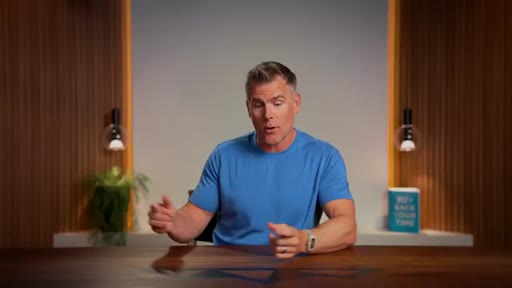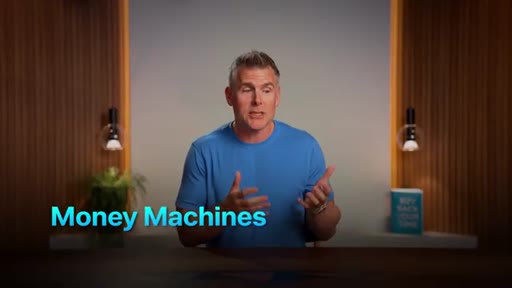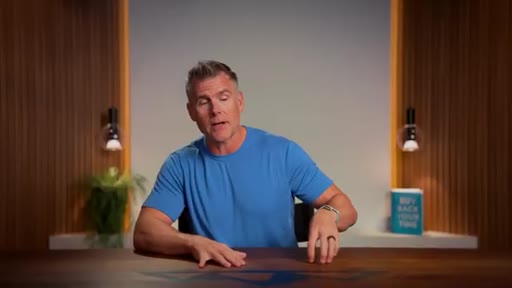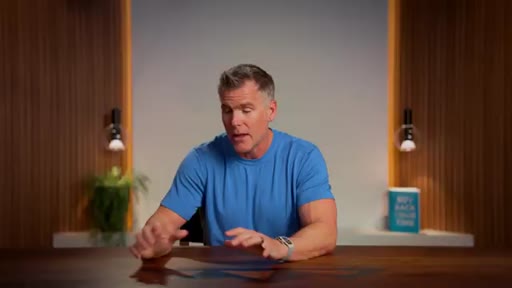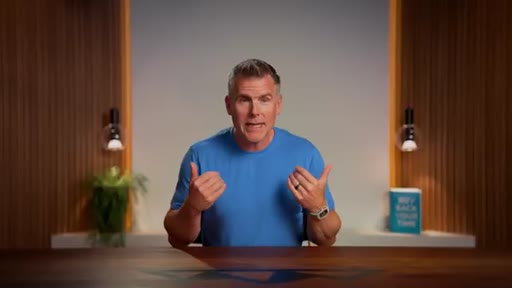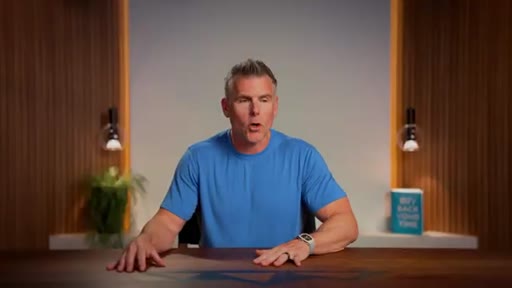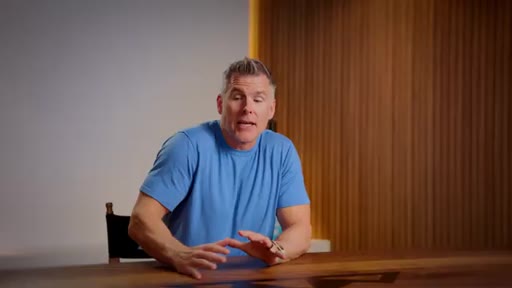
Dan Martell · Youtube · 17:54

If you don't understand these money laws, you'll never be rich

Dan Martell's five immutable laws of wealth — ratio, leverage, equity, unfair advantage, and giving — delivered in 18 minutes from a man who went from broke at 22 to a $100M exit.

Posted
May 18th 2026
2 days ago
Duration
17:54
Format
Listicle
educational
Channel
DM
Dan Martell
§ 01 · The Hook

The bait, then the rug-pull.

Rules are made to be broken — Dan Martell opens with that exact paradox, then spends the next eighteen minutes making the case that what separates the broke from the wealthy isn't discipline or hustle, but a handful of immutable laws most people have never been taught. He ought to know: he went from a broke 22-year-old to a $100 million CEO exit, and this is his playbook.

§ · Stated Promise

What the video promised.

stated at 00:22 "I'm gonna give you five laws of building real wealth" delivered at 17:40
§ · Chapters

Where the time goes.

00:00 – 01:23

01 · Hook + Authority Setup

Pattern interrupt: you can follow all the rules and still end up broke. Authority claim: $100M CEO from broke at 22. Promise: 5 laws, not rules.
01:23 – 02:50

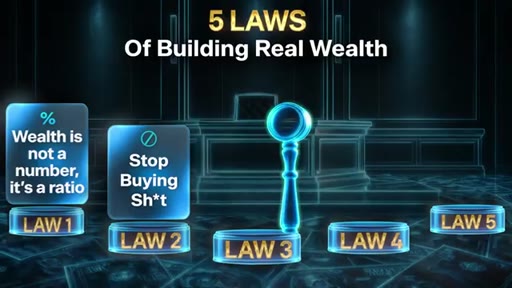
02 · Law 1 — Wealth is a Ratio

Wealth = income minus lifestyle cost. You need a wider gap. 'It's not what you make, it's what you keep.' Front-loading lifestyle is the trap.
02:50 – 04:44

03 · Law 2 — Stop Buying Shit

Buy leverage first, not liabilities. Broke people buy stuff. Rich people buy time. You pay for things with the hours it took to earn the money.
04:44 – 07:45

04 · Law 2 — The Buyback Loop

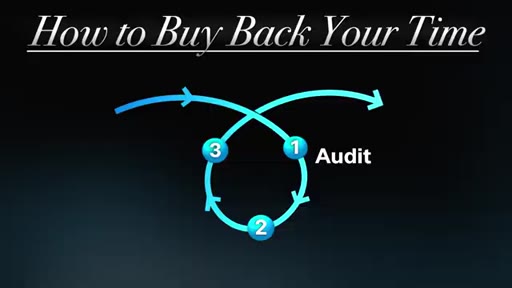
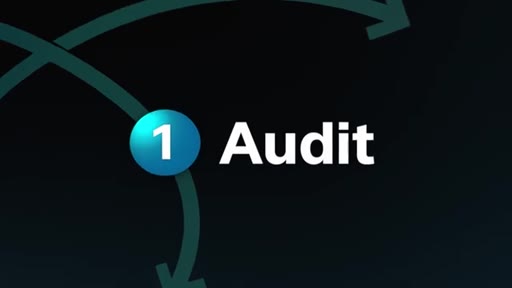
Three steps: audit calendar (green/red), transfer red tasks to others, fill reclaimed hours with revenue activity. Screen-record tasks before handoff. Dan drove a 12-year-old car at $2.3M income.
07:45 – 08:38

05 · Law 3 — Own Money Machines

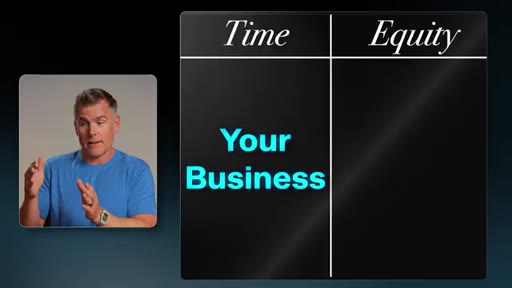
Own equity — assets that pay you whether you show up or not. T-chart exercise: time-dependent vs. equity income. Equity compounds, is liquid, and can be borrowed against.
08:38 – 08:38

06 · Law 3 — T-Chart & Equity Deep Dive

Draw time vs. equity columns. Classify all income sources. Sold his company Spheric instead of taking salary — deferring for equity payoff. No billionaire has a billion in cash.

08:38 – 13:04

07 · Law 4 — Your Unfair Advantage

Invest only in what you deeply understand. Detroit real estate cautionary tale — lost everything trusting without knowing. Two-question filter before any investment.
13:04 – 17:54

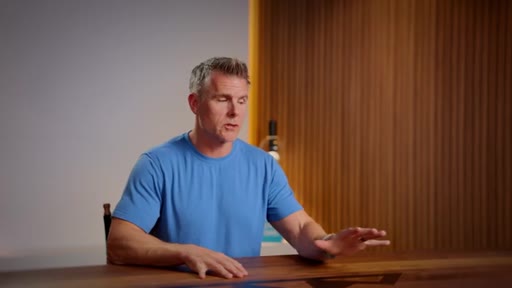
08 · Law 5 — Give Back

Money is a flow, not storage. Hoard it and it stagnates. Give before you're ready. Three steps: pick a charity tied to your own pain, give before you're ready, release scarcity. $50K donation to Boys & Girls Club of Okanagan shown on camera.

§ · Storyboard

Visual structure at a glance.

hook
law 1 — ratio
law 2 — leverage
buyback loop
law 3 — equity
t-chart exercise
law 4 — unfair advantage
law 5 — give back
$50K donation
CTA
§ · Frameworks

Named ideas worth stealing.

01:23 concept

The Wealth Ratio

Wealth is not an absolute number — it's the gap between what you earn and what your life costs. A $50K earner with low overhead is wealthier than a $300K earner bleeding $290K.

Steal for Any financial content, membership pitch on self-hosting vs. SaaS cost-bleed
02:51 model

The Buyback Loop

  1. Audit (green/red calendar)
  2. Transfer (red tasks to others)
  3. Fill (reclaimed time with revenue activity)

Three-step process to systematically buy back your time: audit your calendar, transfer draining tasks, fill the recovered hours with the highest-value work.

Steal for Any 'how I got leverage' video; morning routine content; AI delegation angle
07:12 model

Time vs. Equity T-Chart

  1. Time column: income stops when you stop working
  2. Equity column: income continues regardless

Simple classification exercise: list all income sources, sort them into time-dependent vs. equity-driven. Goal is to migrate income from left to right over time.

Steal for Creator economy angle — your channel is equity, your client work is time
12:24 list

Two-Question Investment Filter

  1. 1. Do I have specific knowledge in this area?
  2. 2. Can I explain the investment in 1-2 sentences to my wife?

Before any investment, pass both gates. If either answer is no, walk away — no matter how big the upside looks.

Steal for Any 'how I make decisions' content; tool/product purchasing decisions for creators
16:16 list

3 Steps to Giving Back

  1. 1. Pick a charity tied to pain you've personally felt
  2. 2. Give before you're ready
  3. 3. Let go of scarcity — money is a flow

Giving is reframed not as charity but as abundance-mindset practice. Tithing (time or money) as a wealth accelerant, not a sacrifice.

Steal for Philanthropy angle; abundance vs. scarcity mindset content; community-building
§ · Quotables

Lines you could clip.

00:00
"You can follow all the money rules and still end up broke."
Strong pattern interrupt, universal pain point, no setup needed → TikTok hook
01:05
"Rules can be broken. Laws can't."
Tight contrast, memorable, works as a standalone line → IG reel cold open
01:05
"It's not what you make, it's what you keep."
Tight, pithy, father's line — emotionally loaded → newsletter pull-quote
02:08
"Broke people buy stuff. Rich people buy time."
Perfect binary contrast, maximum shareability → TikTok hook
06:54
"No billionaire has a billion dollars in cash in a bank account."
Myth-busting, surprising to most audiences → IG reel cold open
10:32
"Stick to your lane, stick to your lane, stick to your unfair advantage."
Repetition makes it punchy; story just ended so it lands clean → TikTok hook
14:16
"Nobody has ever shown up day after day to help other people and ever felt poor."
Universal truth, no context needed → newsletter pull-quote or short hook
§ · Pacing

How they spent the runtime.

Hook length22s
Info densityhigh
Filler5%
§ · Resources Mentioned

Things they pointed at.

04:04productYouTube Workbook (DM on Instagram)
10:59bookThink and Grow Rich (10,000 copies given to community)
§ · CTA Breakdown

How they asked for the click.

04:04 product
"DM me the word YouTube workbook and I'll send it over"

Buried inside Law 2 content — feels like a natural book plug rather than a pitch. Repeated verbatim at the end. Smart placement: audience is already sold on the Buyback Loop concept so the workbook feels like the obvious next step.

§ 04 · The Script

Word for word.

HOOK opening / re-engagementCTA the pitch metaphor analogy story
00:00HOOKYou can follow all the money rules and still end up broke. You can save more, you can invest more, you can work more, but in today's world, that just doesn't cut it anymore. I went from being a broke 22 year old to being a $100,000,000 CEO, and what I've learned is money isn't about rules, but it's about laws.
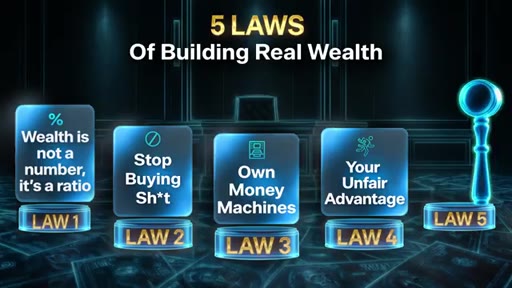
00:16HOOKRules can be broken. Laws can't. So in this video, I'm gonna give you five laws of building real wealth, starting with law number one.
00:25HOOKWealth is not a number, it's a ratio. Wealth isn't about what you own, it's what your life costs. I know a lot of people that got really fancy.
00:34HOOKThey got the boats and the cars and the planes and the pools and all the cool stuff, but their life cost them a lot. Someone making $80 a year, 50 k feels way wealthier than someone who's making 300,
00:46HOOKbut they're spending $2.90. Some people may not wanna hear this because they wanna front load their lives. They wanna YOLO.
00:53HOOKYou only live once. So I'm gonna lease the BMW and buy all the furniture and get the coolest pad. I know this doesn't sound fun and I know it might sound dumb to some people, but I wanna make it crystal clear.
01:05HOOKYou need a bigger gap between what you make and what you spend. If it's not there, you can't outwork the gap. I got this from my incredible dad and he used to say this all the time.
01:15HOOKIt's not what you make, it's what you keep. The first law is just the beginning, but how do we tighten up the wealth ratio? Law number two,
01:24stop buying shit. Now, I want you to spend money on cool things. I have amazing stuff in my life, But you gotta be intentional about it and you need to understand what you're paying for.
01:35See, most people spend money on dumb to make themselves feel good. The worst part is often people buy stuff to impress people they don't even like. They upgrade their lifestyle that they can't afford.
01:46They buy jewelry. They buy cars. They pay for these cool pads.
01:49And look, there's nothing wrong with this stuff, but you need to buy leverage first so you can create real wealth. I don't want you to kinda have some money.
01:57I want you to have a lot of money. The wealthiest people you know default to spending money on leverage first over things because the most valuable thing you can buy, the ultimate flex, is your time.
02:09Broke people buy stuff. Rich people buy time. And the reason why is you never pay for things with money.
02:16You pay for them with the time it took to make the money. And I get it. When you start making money, you wanna start buying things.
02:23When I was 26, I started making $2,300,000 a year, and I'm driving a 12 year old car. People thought I was being cheap.
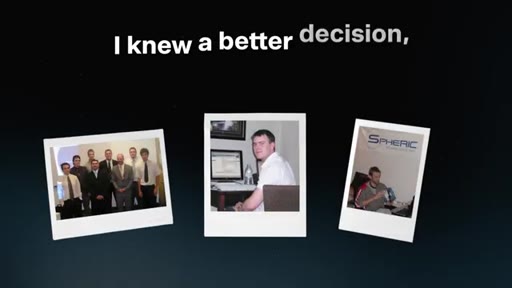
02:29And instead of buying more stuff, and I could have, I knew that a better decision investing in my team, my business, my time, that decision made me 10 times more money later than buying the new car then.
02:43Like, I'm not saying forever. I'm just saying, in the short time, reinvest in getting leverage to make more money, increase the gap. Then you can buy the cool stuff.
02:53So, three things you need to do in order to complete what I call the buyback loop to buy back massive amounts of your time. First thing is we have to audit. Just look at your calendar.
03:03The last two weeks. Highlight the things that give you energy in green. The things that suck your energy in red.
03:09Two, transfer the stuff that's red that you don't wanna do to anybody else. So these are the cheap tasks. These are the repetitive tasks.
03:16These are the simple stuff like meal prep, cleaning, process your inbox, car wash, stuff that you don't have to do that you can pay very little money to somebody else to help you. That's creating leverage.
03:26The more time you got back, the more time you can enjoy life. Better yet, go do things that are gonna make you more money to increase the gap. And my pro tip is record yourself doing the task using any kind of screen recording software like Zoom and then give that recording to the person that's gonna do it for you so that they can learn how you did it so they can do it right the first time.
03:44And in today's world, you can even transfer it to this beautiful thing called AI. The third step is you have to fill. You have to take the hours that you bought back and reinvest them into things that are gonna make you more money to grow that gap.
03:57CTASo I always look at sales activity, strategy, relationships, growth, skills that I got to acquire, hiring and managing people.
04:05CTAThe more people that you can easily hire and manage, the bigger your business will be. The more money you'll make, the bigger the gap gets. It's a super important step because if you don't fill your time back with things that make you more money, all this is a waste.
04:17CTASo instead of buying a Lambo, go buy some time that makes you more money to easily pay for the Lambo. I wrote a whole book on this concept called buying back your time, and I even built an entire workbook to take you through the process step by step. So, you're a busy entrepreneur and you're fighting to buy back some time, just go find me on Instagram and DM me the word YouTube workbook and I'll send it over.
04:38CTASo, now you've stopped buying dumb shit. This next law will teach you how to fuck print money. Law number three,
04:45own money machines. You need to own the machine that makes you money. You have to get in the river of the money.
04:53Some people are scared to jump in the river. If you don't get in the river, how are you supposed to make some Money machines are essentially assets that make money when you're not around. The wealthiest people in the world own assets,
05:05not liabilities. All the cool you wanna flex with, those are liabilities. The things that made me a lot of money, it was assets that I own.
05:13All the wealthiest people don't make money by the work they're doing today. They're making money by the work they did in the past that they bought assets with that pay them today. Think about the real estate folks.
05:23They buy a building, the building property goes up, they make the cash flow, it pays the mortgage. Over time, thirty years, they have an asset that makes them a lot of money every month. Simple question.
05:32Will you make money if you stop working? Most entrepreneurs, the answer is no. I know people that have been in business for thirty two years and still have not figured out the laws.
05:42So if you're here, you're my person. You're the person that wants to learn this. The biggest form of having a lot of assets is owning equity, shares in companies, in entities,
05:52because that's the only way you're gonna get really rich is to own equity. Equity pays you whether you show up or not. Most people, it's the equity in their own business, but that business is tied to them.
06:01Having equity in other businesses buying into the stock market, that's an example of it. So right off the bat, if you have a business that nobody else would ever buy, then the equity in your business isn't worth a lot. When I started my company, Spheric, at 24,
06:13I had the vision somehow, someday, maybe I could sell it. So I built the company in a way that I could sell it. I didn't take a salary because I was deferring what I knew I could get in the future.
06:24Why would I take money out of the business that I could use it to grow knowing the value of the business would be more in the future when I exited? So when I sold the company, the amount of money I made from that equity was way bigger than the salary I could have took combined. That's the power of equity.
06:41Equity is kinda cool for a lot of reasons. Equity compounds. Equity is valuable to others.
06:46In some ways, it's liquid. No billionaire has a billion dollars in cash in a bank account.
06:52Their equity value is worth billions of dollars, and then they can borrow against that equity and not pay taxes and use insurance to cover that loan so that they can live a life off of the equity that just keeps compounding. Now, is not financial advice and that is an advanced move. Let's just start by creating equity.
07:10Here's what I want you to do. Draw a t chart. Essentially, on one side, I want you to put time.
07:15On the other side, you put equity. Now, list everything that you do to make money. It could be a salary.
07:20It could be your business. It could be you lent somebody money. You gotta put it in one of those categories.
07:25Is it dependent on time? Because if you stop working, the money stops. Or is it equity?
07:29Does it pay you whether you show up or not? Does the money keep coming regardless? The goal is to have a lot more things on the equity side.
07:36And what you do is you take the income from the time side, you try to increase how much you make with your time, and then invest it over on the equity side. That could be real estate. That could be investing on their business.
07:47That could be putting in the market. That could be lending your money through other people. Some people think they have assets,
07:52but those assets are tied to their time. No time, no asset. It's like your primary home.
07:57I know people say to put it on the personal network sheet as an asset. It's not an asset because you need to live in a home. Are you paying yourself rent?
08:05Paying for the property tax? You're paying for all the maintenance? You're paying the mortgage?
08:09You're paying whatever you're doing? So this is where a lot of people get this wrong. I think an asset is something that makes me money while I sleep and I bought into it and I've got equity.
08:18Businesses might start off as time bound, but if you do it right, you can get over to equity bound where you actually the value of that asset, if other people want to buy shares in it, is worth a lot more than what you can make from a cash point of view. Okay. So you understand how real money is made when you own assets, but there's something you already have that can make you more money than anything else.
08:38Law number four, your unfair advantage. Every person has this ability to do something that other people admire.
08:48You have specific knowledge. You have different experience in different markets. You have work experience.
08:53You have life experience. You have leverage in the way you look at the world. See, what I think is the best thing for you to figure out is what is your unfair advantage?
09:02What are the things that you've invested in that you understand more than other people? It sounds crazy, but once you figure out what makes you you and what does the world want and value and you figure out how to put yourself into that place and monetize it to create opportunities to not only get paid, but to get equity and have that equity be worth a lot of money, that's how you create wealth.
09:24And my role is I only like to invest in things I understand. My unfair advantage are things that I have deep, deep experience in because that's where I can see opportunity. I can see where other people's luck.
09:35They bring me that luck. I go, is this any good? Most people lose their money when they start investing in things they have no idea about.
09:41Their cousin comes to them with a restaurant idea. They're like, I got money. I wanna invest in a restaurant.
09:46Another guy comes home with a software idea, they're like, I got money. I don't know anything but software. Let me do some software stuff.
09:51And look, I'm speaking from experience. Almost twenty years ago, a guy named Bryce came to me and he's like, hey, I know the banks. The banks are selling homes in Detroit.
10:01I can get them locked and loaded, sealed in deals for $10, and we can buy a 100 at a time. I'm like, a $10,000 home?
10:08How much do you think it'll be worth in a few years? He says, hey, man. Once we get it rented and we get it managed and it's all done, the market's gonna come back up.
10:15Three, four years, we'd probably sell them for, like, 80 to a 100,000 apiece. Take my money, man. This sounds great.
10:20I'll take 10. I'm Canadian. I've never done real estate.
10:24I have no idea what I'm doing. Let me skip to the end. Two years later, my brother, who went in on the deal with me, decides to go visit these homes.
10:32The day he landed, that afternoon, he called me and said, bro, we gotta get out of this as fast as possible. They're boarded up. They're about to burn down.
10:39We're responsible for them. We own these things. I don't even know how the heck they got to this place.
10:43Get out of this deal. So we found somebody that would take them, but we lost all of our money. The good news is we got out of the liability of owning them in the first place, and we moved on.
10:52And I've continued to come back to that lesson. Stick to your lane, stick to your lane, stick to your unfair advantage. You have one.
10:59You know what it is. Double down on it. You will always make more money doing the thing you know how to do more than anybody else.
11:05It's why Warren Buffett says, hey, if you love Dairy Queen, buy a Dairy Queen stock.
11:10If you love Coca Cola, buy Coca Cola stock. You know, I tell my kids all the time, you wanna invest in the market, what are the products you use every day?
11:19Lego, go buy some stock. Because at least now you are interested and you know about the product.
11:26You're reading the news. You're telling your friends about it. So many people literally spend all their money buying products that they don't own the company.
11:33Look at my car collection. You don't think I own stock in the companies that build the cars? Why wouldn't I?
11:39That's the first place you buy. Equity, not the liability. I've invested in 70 plus tech companies, AI companies.
11:48I'm currently working on a billion dollar portfolio of AI software, and all I've done my whole life for thirty years is software, software, software, software. I have an unfair advantage in that space.
11:58I stick to my lane. It's what I do better than everything else. So here's two things I always ask myself before I invest in anything to get equity.
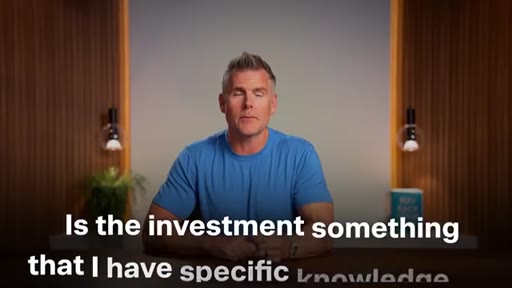
12:06One, is the investment something I have specific knowledge in? Is it something I felt the pain in? Is it something that I'm interested in?
12:13Is it something that I know about? And it's just like the real estate investment. Like, I didn't understand how it would go.
12:18I just trusted it. And I mean, trusting without knowing is not a great way to invest. Even in software, if you came to me with like some deep medical software that have no idea about, I just wouldn't do it.
12:30I don't chase like, oh, you can make a bazillion dollars. It's like, I get it. Let somebody else make that.
12:36There's no lack of opportunities in this world. I gotta be better at saying no to the things I don't understand and saying yes to the things that I know cold. Number two, can I explain the investment in one to two sentences because usually I have to explain it to my beautiful way in one to two sentences?
12:50She needs to understand it. If I try to explain to her quantum mechanics because it took me three years to finally understand qubits, She would probably be like, I don't get it. How can it be in the same place twice?
13:03How is it possible that this is a computing like, I get it. So I don't do it.
13:08If the answer is no to either of those questions, then I just don't invest. Quick recap. So you're spending less than you make, you're buying back your time, you're building some equity, and you're using your unfair advantage to stick with what you know.
13:21Yeah. Now, this last law, most people forget about but is by far the most important. Law number five,
13:28give back. Money is a flow. It's not like a storage place.
13:32I used to do this. I used to save all my points at a coffee shop. I used to hoard them.
13:38My travel points, oh my god. I had a bazillion points. I spent more money trying to optimize my points than I could have made 10 times more actually just focusing that time on my business.
13:47I'm speaking from experience because what happened to me is I realized that if all I do is I hoard and I pull in and I put in the bank account and I like protect it, that it doesn't grow. The more it comes in and you redeploy, it comes in and you invest, it comes in and you give to other people, You start sending the elevator back down.
14:06You start helping other people, your team through growing businesses and equity, but your community by some of the contributions you make. That's when my whole life changed. The moment I stopped making it about myself and I started making about other people, that's when my life expanded 10 x.
14:22Because nobody has ever shown up day after day to help other people and ever felt poor. Making a lot of money, having a lot of stuff is cool, but you know what's even cooler? Giving it away.
14:33Helping other people. When I gave Sam his dream car, that's cool. When I gave away the book, Think and Grow Rich to over 10,000 kids in my local community, that made me feel wealthy.
14:45The more you give, the more you get. It's the law of the universe. It's how it's always been.
14:50And I see so many people focus on making money that they forget that it is a flow. It is a river. It comes in, it goes out.
14:59And I know you want like guaranteed returns on your advice. You know, these tactics that make you lots of money.
15:06You're gonna have to have some faith. And it's why most faith has some component of tithing, which is giving. And it's not just your money.
15:14Tithing is actually time. If you don't have money, give your time. If you have money, give both.
15:20Give your influence. Give your strategies. Give your assets.
15:24Help other people. It's why Renee and I are so big on contributing to our local community through our foundation. It's our favorite day of the year, the giving day, where we go around and we bless people.
15:32We surprise them. And for us, we focus on at risk youth. My biggest mission in the world, my driving purpose in life is to help young people not feel broken.
15:41That is where I give a lot. And it turns out when you do that, you get a lot. Here's how you start this today.
15:48First thing, pick a charity. Find the one that helps the people that solves the problem that you most felt pain around. The person who aligns themselves with helping other people avoid or get through challenging times in their life from whatever they felt, that is why you're called to that charity.
16:07And I know you might be compelled by other people's stories, but if you don't resonate with those stories, it's a different level of connection. So I would truly ask yourself to be honest, and you don't have to tell anybody what you've gone through. But there might be something that was really painful, that you know there's organizations that help people that were like you, and by showing up and giving, that is alignment.
16:26And then you also have to give before you're ready. Don't wait till you got a lot of money. If you don't give when you have a little, you won't give when you got a lot.
16:33Number three, let go of scarcity. The first time you give money away and uncomfortable and it's awkward and you're like, should I tell people I did it? Should I allow them to talk about the fact that I just donated to this?
16:44Do I do it anonymously? That is your scarcity mindset kicking in. The one that says, well, could give them money, but they'll go buy drugs.
16:51Scarcity scarcity mindset. Your job is not to judge. I dare you to just give from a place of pure contribution back to this beautiful world we live in.
17:00Like, I know the first time you give, you might be thinking yourself, but I could use this in my life or like, I don't really have a lot. That's your scarcity showing up. Have that abundance mindset.
17:09If you can flip that from scarcity, I don't have a lot to abundance, I can create more and give more, it'll change your whole relationship with wealth. Now, most people are gonna watch this and they're gonna be like, yeah, that's so good. But then they're gonna do nothing.
17:21CTAThat's not you. The ones that win actually take action, any action right now. The rules are meant to be broken, but the law is we take action.
17:29CTALeave a comment below and let me know out of everything I shared, what's the thing you're gonna double down on? What's the thing you needed to hear today? What's the thing that meant the most?
17:36CTALeave a comment. And remember, DM me the word YouTube workbook if you want my internal playbook for how to audit my time to buy it back to get more leverage. Now, you like this video, you'll love the next video where I talk about why dumb people might be making more money than you and how to fix that.
17:52CTASo click here and I'll see you on the other side.
— full transcript
§ 05 · For Joe

The laws-vs-rules frame is the steal.

Dan Martell playbook

Reframe any numbered-list content as 'laws' not 'tips' — it signals permanence and authority before you've said a word.

  • Use the 'laws vs. rules' opener as a pattern interrupt for any framework video — 'rules can be broken, laws can't' does the positioning work for you.
  • The Buyback Loop (Audit → Transfer → Fill) is a portable 3-step model — borrow the structure for any productivity or delegation angle.
  • Embed your product CTA inside the most relevant content beat, not at the end — Dan drops the workbook mid-Law-2 when the audience is already sold on the concept.
  • The T-chart (time vs. equity) is a visual exercise viewers can do on paper — interactive moments like this drive comment section engagement.
  • Personal financial loss stories (Detroit real estate) are more persuasive than success stories — own your failures, they build trust faster.
  • The giving-as-flow framing is the emotional unlock that separates this from a generic finance video — it gives people permission to want wealth without guilt.
§ 05 · For You

Five moves that actually build wealth.

If you want to apply this today

Wealth is the gap between what you earn and what your life costs — every other move on this list exists to widen that gap.

  • Audit your calendar right now: green = gives energy, red = drains you. Any red task under $50/hour is a candidate to hand off or automate.
  • Before your next purchase, ask: is this an asset (pays you back) or a liability (costs you ongoing)? Buy the asset first.
  • Draw a T-chart: time income on the left, equity income on the right. If everything is on the left, that's your actual financial risk.
  • Only invest in things you understand deeply enough to explain in two sentences to someone who doesn't care about finance. If you can't do that, pass.
  • Find one cause tied to something you personally struggled with and make a small recurring contribution — the abundance mindset shift is the real ROI.
§ 06 · Frame Gallery

Visual moments.