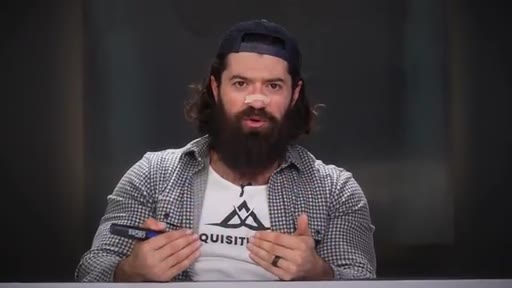
Alex Hormozi · Youtube · 10:48

How to Catch Up In Life (Using Logic)

A 10-minute logic-first argument for why building capacity now is the only rational move when you don't yet know what to pursue.

Posted
May 18th 2026
7 days ago
Duration
10:48
Format
Tutorial
educational
Channel
AH
Alex Hormozi
§ 01 · The Hook

The bait, then the rug-pull.

The title promises logic and the video delivers it: instead of motivational platitudes, the argument opens with a controlled study, builds to a compounding skill model drawn on a whiteboard, and closes with the same baseball analogy it opened with — a rare piece of self-help content that treats its audience as adults who want reasons, not just instructions.

§ · Chapters

Where the time goes.

00:00 – 00:31

01 · Cold open and mission

Six-principle promise framed by a personal credibility statement: $1k on a gym floor to $250M/yr portfolio. Mission stated: help the next generation reach their first $100k.
00:31 – 01:13

02 · Principle 1 — Build capacity

Core thesis: when you do not know what to do, build capacity. Sleep, fitness, and savings as non-directional investments that pay off when a specific opportunity appears.

01:13 – 02:38

03 · The Princeton Good Samaritan study

Seminary students writing papers on morality were separated into early, on-time, and late groups. Lateness (not stated values) determined who stopped to help. 6x difference between ten minutes early and ten minutes late.

02:38 – 03:58

04 · Principle 2 — Save money

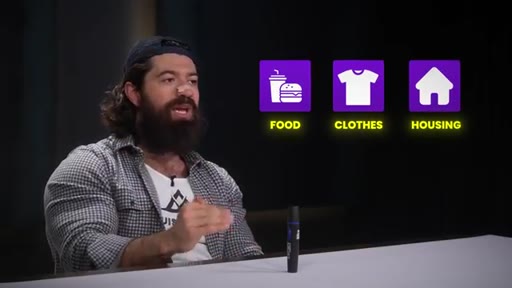
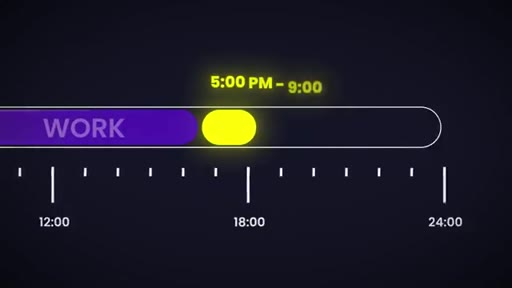
Tactical breakdown: no eating out, discount grocery stores, no new clothes for two years, bunk housing. Goal: drop fixed costs to $300-400/month. Protect the 5-9AM and 5-9PM windows outside work.
03:58 – 05:19

05 · Principle 3 — Add skills and practice them

Spend all excess cash on skills. Skills are inflation-proof. Winners extract learning even from bad investments. The practice component is as important as the acquisition.

05:19 – 07:36

06 · Skill stacking whiteboard

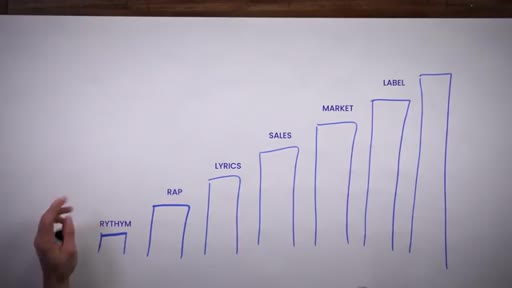
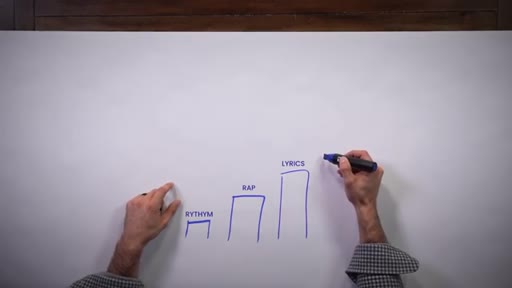
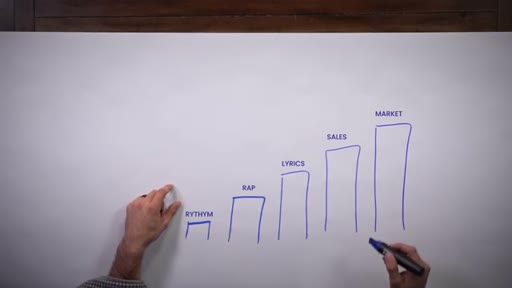
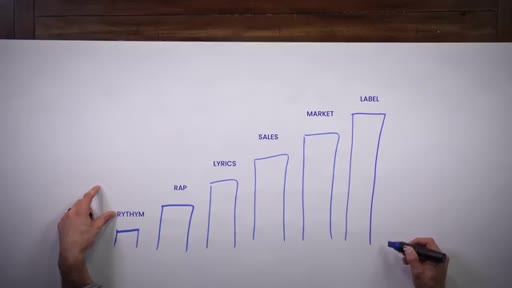
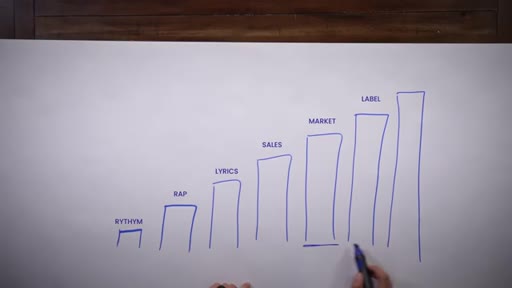
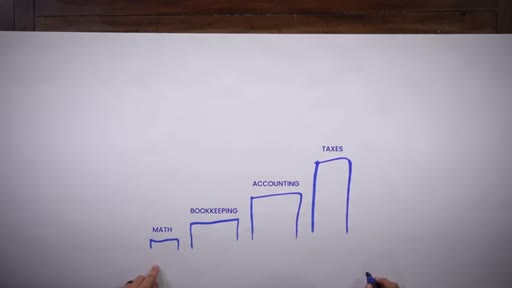
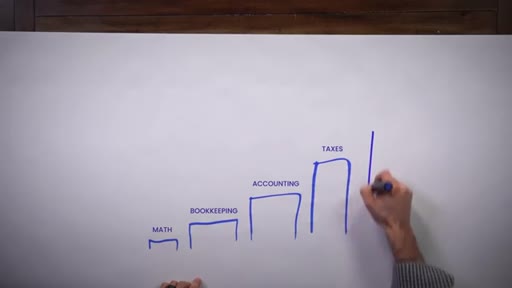
Jay Z staircase: rhythm to rap to lyrics to sell to market to label to Beyonce. Each skill multiplies all prior ones. Parallel accounting example: math to bookkeeping to accounting to taxes to insurance to M&A. Compound value, not additive.
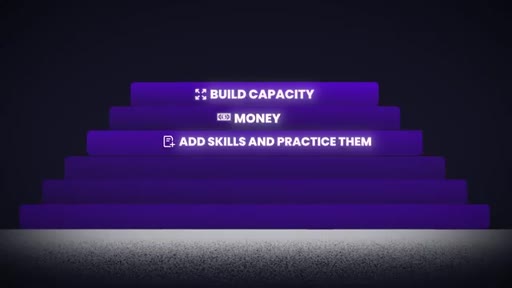
07:36 – 08:44

07 · Principle 4 — Build an audience without a product

Attention equals leverage. You do not need proof to start — epic effort documented publicly works as well as epic proof. Potential energy before kinetic energy.
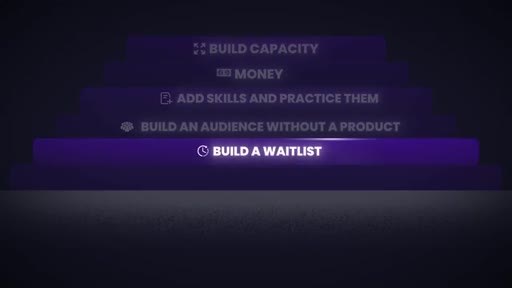
08:44 – 09:09

08 · Principle 5 — Build a waitlist

Build the list of people who want the thing before you build the thing. Time payment now predicts money payment later.

09:09 – 09:50

09 · Principle 6 — Expand your network

Luck surface area expands with physical proximity to people already doing what you want to do. Finance: New York. Film: Hollywood. Hubs concentrate opportunity.

09:50 – 10:48

10 · Close and baseball callback

Full recap of all six principles. Return to the fat pitch metaphor: people who prepared are already lapping the people who waited. Build capacity now so when the pitch comes you smash it.

§ · Storyboard

Visual structure at a glance.

open
good samaritan setup
money principle
skills principle
skill stacking whiteboard
audience principle
waitlist + network
close
§ · Frameworks

Named ideas worth stealing.

05:19 model

Skill Stacking Staircase

  1. Base natural ability
  2. Core craft
  3. Communication
  4. Sales
  5. Marketing
  6. Distribution/Label

Each skill layer multiplies the value of all layers below it rather than simply adding to a list. Illustrated via Jay Z career arc and accounting career arc.

Steal for Any career roadmap, course positioning, or personal brand argument about why breadth compounds
03:38 concept

5-to-9 Framework

The hours between 5-9AM and 5-9PM are the only windows available to build tomorrow while paying for today with the 9-to-5. Protecting these eight hours is the capacity-building lever available to anyone with a job.

Steal for Time management content, daily routine structures, productivity positioning
09:09 concept

Luck Surface Area

The probability of a high-value random encounter is a function of how many people you are physically near and how often. Hubs like New York (finance) or Hollywood (film) concentrate this surface area.

Steal for Networking content, relocation decisions, community-building arguments
§ · Quotables

Lines you could clip.

00:52
"Opportunities present themselves to everyone and only people with capacity can both recognize and capitalize on them."
Core thesis in one sentence, no setup needed → TikTok hook
02:43
"Money buys time and time buys optionality."
Tight aphorism, standalone → IG reel cold open
04:10
"Skills are inflation proof. Whether we are trading in Bitcoin or seashells in the future, if you have got value to give, people will exchange for it."
Contrarian framing with vivid specificity → newsletter pull-quote
08:49
"A person who pays with their time now is more likely to pay with their money later."
Crisp value proposition for audience-building that doubles as a sales principle → TikTok hook
09:40
"The fastest way to change your life is to change the people who are around you who affect your life."
Clean, quotable, widely applicable → IG reel cold open
§ · CTA Breakdown

How they asked for the click.

00:00 link
"Download your free scaling roadmap here: acquisition.com/roadmap-yta503"

Description-only CTA, not spoken in video. No mid-video pitch. Clean content-first approach.

§ 04 · The Script

Word for word.

HOOK opening / re-engagementCTA the pitch metaphor analogy
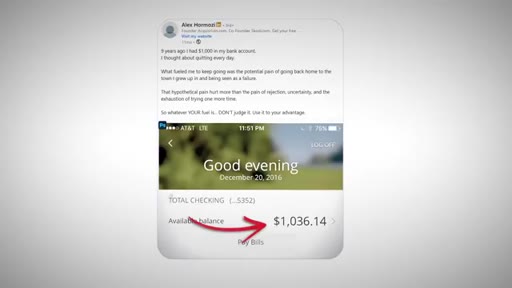
00:00HOOKIf you're ambitious but not sure what to do, I wanna share six principles, really just actions that have helped me get to where I want. And these are the same six things that allowed me to go from having only a thousand bucks to my name and sleeping on a gym floor to now having a portfolio of companies that last year did north of 250,000,000
00:14HOOKa year. And the reason I'm making this video is because I'm on a mission to get the next generation of men and women to make their first 100,000, and there's a lot of reasons for that.
00:22HOOKBut I think that if you can participate in the economy, you will believe in capitalism, and I think that will set up the next generation for much bigger and better things. So let's just start with principle number one, which is build capacity. And so what to do when you're not sure what to do is you build capacity.
00:36So for example, if you don't know what you're going to do tomorrow, should go and bet on time today when you're not sure what you're gonna do. Still, might as well be rested.
00:44That's building capacity. You can get in shape when you don't have dates lined up. Like, you don't have one lined up, but it can help you when the opportunity strikes.
00:52You can save money when you're not sure where you're going to invest because at least you'll have the money so that when the investment comes, you'll have the opportunity to take action. And so the thing about opportunities is that they present themselves to everyone and only people with capacity can both recognize and capitalize on them.
01:07So don't be in the bleachers when the fat pitch comes. You want to be at the plate, You want to have already practiced your swing and you want to be ready to go. And I'll give you a case study that actually can drive this point home.
01:16So there was a study they did at Princeton grad school. It's called like the Good Good Samaritan study, where they had seminary students who saw themselves as moral people. Right?
01:24They were studying to become priests. And they asked them to write a paper on being a good Samaritan and then to present it.
01:33Alright? And so what was interesting about this is that in the study, they separated them into three groups. And so on the way to give the presentation, there was this very narrow hallway into the auditorium.
01:44And in the narrow hallway, they put someone who had fallen and clearly needed help. Group one was people who were ten minutes late. Group two was people who were on time.
01:53And group three was people who were early. Alright? Now,
01:57guess what correlation, how people rated themselves in their essay
02:02had to do with the likelihood that they would stop and help the person. You're right. Fucking zero.
02:08Alright? You know what did have the highest correlation with the likelihood that they stopped and helped the person? How late they were.
02:14And so and let me tell you how big of a difference it was. The difference between the people who were ten minutes early and ten minutes late was a six x difference in who stopped to actually help the person. And the reason I see this is so important is that right now, there are opportunities
02:28that come to you right now that you cannot even recognize because you do not have capacity to do anything about it.
02:34And so here's some of the ways that I recommend building capacity starting with number two, money. So if you don't know what to invest in, save money.
02:43Money buys time and time buys optionality. And so let's go tactical. So how do I go about actually saving money?
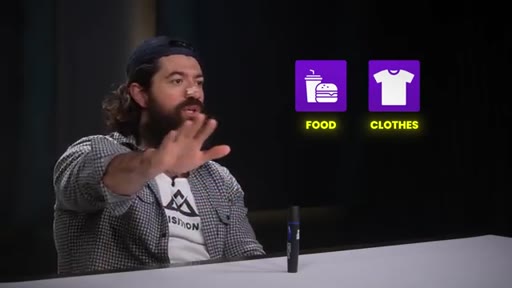
02:49So I'm gonna walk through each category very quickly. So food, that means you just don't eat out for anything. It's very straightforward.
02:54If you're hungry, you deal with it. Right? You only buy from discount grocery stores.
02:57It's not that hard. Clothing. Whatever you have right now is all you need for the next two years.
03:02Zero exceptions. Right? Reuse what you have.
03:05Trade or at the very worst, can go to goodwill. Alright? From a housing perspective, live as cheaply as you can.
03:10Ideally, with your own family or worst case with another family that's also trying to save money. And if you're like younger and you're like, none of us have families and it's fine, then all six of you bunk up in one place, split bedrooms if you have to. And that's what ultimately in the early part of my career, was like 3 or $400 a month for me to just keep the lights on.
03:28Not hard when you're splitting one bedroom in a six bedroom house. Now, all of this stuff, we have the last cost, which is time cost. So think about your time like a financial asset.
03:36Stop doom scrolling and wasting the two to four hour window you have outside of work. So you're five to 9AM and then you're 5PM to 9PM. Those eight hours a day, those are the hours where you're to have to get ahead because you have to you have to basically live for today to pay for today, but you have to plan and prepare for tomorrow, which is what this other eight hours are for.
03:55Number three on this stack here is add skills practice them. And the second part is just as important as the first.
04:02So, now you've got some money. Right? It should be saved up.
04:05Where do you spend that money? So, I recommend spending all excess cash on acquiring skills until you have so much that you can't possibly spend on any more skills. So, your capacity to earn, which increases the value of your highest cash producing asset.
04:19You know what that is? You. Right?
04:21And what's relevant today is that skills are inflation proof. Whether we're trading in Bitcoin or seashells in the future, if you've got value to give, people will exchange for it. So if you're ever worried about all this technology, what am I going to do?
04:33The only thing and the only logical step you can do is double down on skills and make yourself more valuable. Now, understand that learning will never hurt you. Alright?
04:42It's always additive. And even in things that are bad, and listen, I paid for all that stuff that I just said, and not all of it was good. The thing is is that I believe that winners win no matter what.
04:52And so, how can you have something that's bad and then you think that you get better from it? Well, if I learn all the things not to do, then I learned.
05:00And if it changes my behavior in a way that makes me more likely to succeed, then I got better. And so, if you if you look at the world that way, then everything serves you rather than you serving it. And so I'll give you a basic analogy from a skills perspective, from a stacking angle.
05:12I like this example because a lot of people know who he is. So Jay Z is a rapper. Right?
05:15And now he's a businessman. I mean, a businessman. Little little little if you know, you know.
05:21Anyways, in the beginning, maybe he had rhythm. Right?
05:25Maybe that was what he was naturally born with or inclined with. Right? And then he learned how to
05:31rap. And then he learned how to write lyrics. And then he learned how to
05:37market. Or rather, he probably learned how to sell first. And then he learned how to market.
05:42And with each of these, he became more and more successful. And then he learned how to get other artists and market them. So he learned how to make a label.
05:52And then he learned how to get Beyonce. Okay?
05:56But you could see here how with each of these skills, that person who has all of these skills, somebody just has rhythm, not that valuable. Someone who can just rap, a little bit more value than someone has rhythm. Someone who can rap and write lyrics, more valuable.
06:09Somebody who can do that and then sell, they can sell their way into, you know, getting shows, they can sell people on the street. All of sudden, can sell their CDs. Can oh, CDs.
06:16Jesus. They can sell. And so he has this, which makes all of these other things more valuable.
06:21And then he learned how to promote, which made all of these other skills more valuable. Because now he's not just selling out one or two, you know, small venues. He can promote and go national.
06:29But then there's still limit to the amount that he can do here. So that's when he starts recruiting other people to his labels, to his brands, and this is what continues to stack skills. I'll give you a financial example of this.
06:39Maybe in the beginning, you're somebody who's really good at math. Okay. Being good at math is not that valuable of a skill.
06:44Then all of a sudden, you're like, okay. Well, I'll learn how to do bookkeeping. Alright.
06:47Well, that's more valuable than just math. But you need math in order to have bookkeeping. And then you learn how accounting works.
06:53Okay? And then you learn how taxes work. And all of a sudden, you can start saving a business money.
06:57Now, do you need to know math in order to do taxes? Yes. Do you know how to understand how accounting works in order to taxes?
07:02Yes. Right? All of these things stack.
07:04Now let's say that you start learning about insurance and then you start learning about m and a. Right? All of these things, you still need to know math, but these when taken together become significantly more valuable as a person.
07:15About your second grade math teacher as an idiot as soon as you learn calculus, you needed arithmetic in order to learn calculus. And so wherever you're at in this journey right now, it's not like, oh my god, I can't why can't I do this? It's like you still have to move through the steps.
07:27Now, how fast you do that depends on how quickly you change your behavior. And so hopefully, video at least nudges you in that direction to start changing what you do. So the fourth example of kind of building capacity
07:37before you know what to do is to build an audience without a product. Right? So what does that mean?
07:41So you don't need a product to start. You need attention because attention gives you leverage. And so,
07:47if you have a group of people who know, like, trust you, even when you don't have a product, you're basically building potential energy. Right? If you were the number one most followed person on the planet, the day you start, whatever you start, it's going to be a smashing probably $100,000,000
08:01success. Literally, you were the most personal known person on the planet and you charged any amount of money for anything, you could then make basically, you pretty much be set for life.
08:10Alright? And so, from the building of a quote audience is you just talk about the things that you're doing. Because right now you're like, well, I don't have any proof.
08:17Of course, don't have proof. You haven't done anything yet. But what you can do is do work and document the work you do.
08:23And so, what you want to do is like either you have epic proof or epic effort. In the fitness world, there's people who are like, okay, I'm six months out from my first fitness competition. Doesn't matter where you start.
08:33If you do something epic, document all the volume of work you do along the way and people will follow you. Now, a version of this, like the next step here, would be build a wait list. So this is kind of step five.
08:43So in other words, before you build the thing, build the list of people who want the thing. So a person who pays with their time now is more likely to pay with their money later.
08:54And this is what an audience does. You provide value them with your time. They pay back with their time.
08:58They say they're willing to wait for the thing. All of these things are indicators that they're likely or more likely to make a purchase with you. So, number six is
09:09you can build capacity by building your network potential by meeting people. So, think about two people.
09:14One person who stays in and watches Netflix or somebody who goes out to a coffee shop or someone who goes to the gym. In either of those scenarios, your luck surface area expands.
09:26You're more likely for sure in each of those scenarios. And if you do this every single day, you continue to expand that luck exposure. And so, you want to be successful in something, in anything, spend time with the people who are already doing it.
09:37CTABecause the fastest way to change your life is to change the people who are around you who affect your life. And so being willing to move to where the opportunity is is one of the biggest kind of hacks out there. I think Chamath talked about this in a video, but like,
09:51CTAif you want to be in finance, you got to be in New York. Right? If you want to be in film, it's like you probably got to be in Hollywood.
09:57CTAIf you want to be in politics, you got to be in DC. Now, if you don't want to be in those kind of like more traditional paths, there's a lot more places that you could be. But the idea is like there are hubs, and if you want to get into a space, the best way to do it is get to the hub.
10:10CTAAnd so, if you're not sure what to do right now, you should know exactly what to do, which is that you build capacity and you wait for the pitches that you can swing at to come. And so maybe you're getting ball after ball after ball, but what do you do to make sure that when the fat pitch comes, you're ready? It's like you practice your swing.
10:26CTAYou start doing your sprints so that like you can actually get around the bases faster. Right? You start working on coordination drills.
10:32CTAYou start working on your hip and your power. You start going to the gym. Right?
10:35CTALike, all of these things would be things that when that pitch comes, you'll maximize the likelihood that you smashed it out of the park. But so many of you are waiting for this fat pitch to then begin and getting lapped by people who already were prepared. And so the keyword here, in order to build capacity, you build by
— full transcript
§ 05 · For Joe

Build the swing before the pitch arrives.

WHAT TO LEARN

The gap between people who catch up and people who stay behind is not talent or timing — it is whether they spent the waiting period becoming ready to act.

  • Opportunities arrive for everyone; what varies is whether you have the money, fitness, skills, and attention available to act when they do.
  • The Princeton Good Samaritan study showed that lateness — not stated values — determined who helped a stranger in distress, with a 6x difference between those ten minutes early and ten minutes late.
  • Saving money when you have no plan is not aimless — it purchases time, and time purchases the ability to choose between options rather than being forced into one.
  • Skills compound rather than add: each new skill multiplies the value of every skill already acquired, which means the return on learning accelerates the longer you keep going.
  • You do not need a product or proof to begin building an audience — documented effort toward a hard goal works as well as documented results, because both signal commitment.
  • Physical proximity to the people already doing what you want to do expands your luck surface area in a way that remote observation cannot replicate.
  • The eight hours outside a standard workday — 5 to 9 AM and 5 to 9 PM — are the only window in which most people can build tomorrow while paying for today.
  • Treating every experience, including bad ones, as evidence that changes future behavior is the only functional definition of learning that translates into improved outcomes.

§ 06 · Frame Gallery

Visual moments.