Sinem Günel · Youtube · 16:02

How to Make Money on Substack (Full Breakdown)

A 16-minute honest breakdown of the paid subscription model — the fee math, the follower trap, and why the tier that makes you less than 10% of revenue might be your most important business asset.

Posted
May 17th 2026
8 days ago
Duration
16:02
Format
Talking Head
educational
Channel
SG
Sinem Günel
§ 01 · The Hook

The bait, then the rug-pull.

Skepticism about newsletter monetization is the first thing addressed — and that choice is deliberate. By acknowledging the doubt before making any claims, the video earns permission to share the real numbers: publications generating $10,000 to $100,000 a year, some reaching seven figures, all through paid subscriptions alone.

§ · Chapters

Where the time goes.

00:00 – 01:24

01 · Why people are paying for newsletters now

Cultural shift: readers exhausted by algorithmic feeds and AI-generated noise are actively seeking creators they trust enough to pay for.

01:24 – 03:15

02 · The honest version of the model

No overnight results: it is a compounding build — free list first, earn trust, convert gradually. First $1-2K/month is achievable even for new creators.

03:15 – 05:15

03 · Followers vs. subscribers

The critical distinction most creators get wrong: followers are social, subscribers are email. Only subscribers can become paying members.

05:15 – 06:50

04 · Fee mechanics and the math

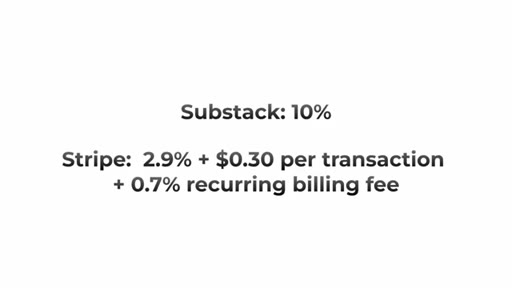
Substack 10% + Stripe ~3-6% = 13-16% total fees. $10/month subscriber nets ~$8.50. 100 paid subscribers = $850/month take-home.

06:50 – 07:50

05 · Retention is everything

Subscription businesses differ from one-time product sales: every paid subscriber makes a monthly renewal decision. High churn blocks growth.

07:50 – 10:08

06 · What goes behind the paywall

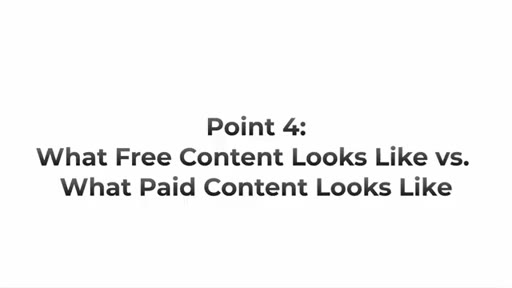
Free content = what and why (perspective, frameworks in broad strokes). Paid content = how (step-by-step guides, templates, prompts ready to apply). Weekly rhythm: free post Monday, live session weekly, paid workshop Friday.

10:08 – 11:30

07 · Pricing strategy

$7-10/month is the right starting range. $5 cuts revenue in half for near-identical conversion. Premium positioning earns the right to charge $20+ over time.

11:30 – 13:38

08 · The full revenue picture

Subscriptions were less than 10% of a $50K/month business — but they were the trust accelerator that fed high-ticket coaching sales. The paid tier is the first dollar, not the last.

13:38 – 16:02

09 · Three-step launch sequence

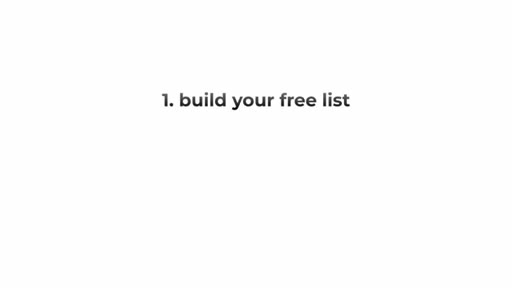
1. Build consistent free publication first. 2. Be specific about what paid members get. 3. Give it time — compounding starts slow.

§ · Storyboard

Visual structure at a glance.

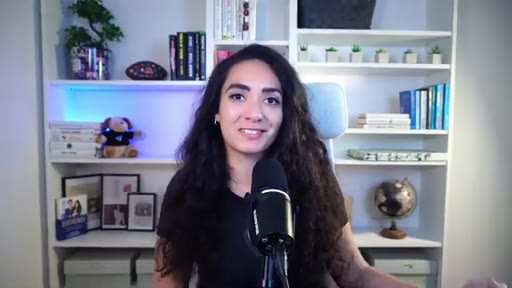
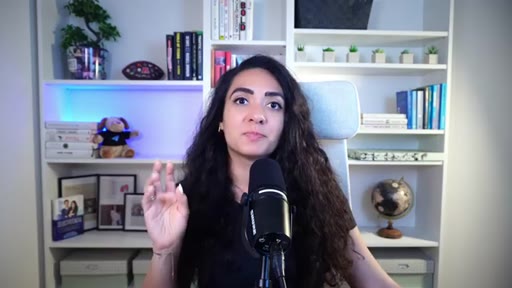
open — skepticism addressed
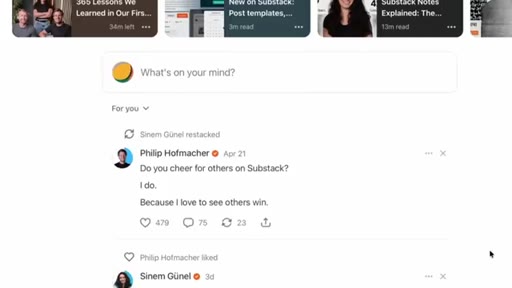
followers vs. subscribers
fee math
pricing section
full revenue picture and trust accelerator
launch sequence
§ · Frameworks

Named ideas worth stealing.

07:50 concept

Free earns trust, paid rewards it

Free content demonstrates thinking and builds credibility (the what and why). Paid content delivers the actionable how — templates, step-by-step guides, immediately applicable resources.

Steal for any subscription or membership business
08:12 model

Weekly content rhythm

  1. Monday: free post (embedded video + written)
  2. Weekly: live session with team or guest
  3. Friday: paid workshop or deep-dive how-to

Two free touch points, one paid piece, one live session per week — keeps free audience engaged while making the paid tier feel like a no-brainer.

Steal for any Substack publication with a coaching or expert angle
13:03 concept

Trust accelerator model

The paid tier functions as the first dollar in a longer relationship — converting paid subscribers into high-ticket coaching clients and course students at dramatically higher rates than cold free subscribers.

Steal for any business with a low-ticket front-end and high-ticket back-end
§ · Quotables

Lines you could clip.

04:49
"Followers are worthless when it comes to building business. They look impressive, but they mean nothing."
Contrarian take on a metric everyone optimizes for → TikTok hook
13:03
"I like to think about the paid tier as a trust accelerator."
Memorable reframe of what subscriptions are actually for → IG reel cold open
10:20
"You don't want to price your paid tier at $5 a month. The conversion rate between five and ten is not dramatically different, and you're cutting your revenue in half."
Specific, counterintuitive, immediately actionable → newsletter pull-quote
§ · CTA Breakdown

How they asked for the click.

11:29 link
"I have put together a free resource called the Substack Bestseller Workbook. You can find the link to download it for free in the description box below."

Mid-video soft CTA for a free lead magnet. Well-placed after the pricing section, before the final strategic arc.

§ 04 · The Script

Word for word.

HOOK opening / re-engagementCTA the pitch metaphor analogy
00:00HOOKYou have probably heard people talking about making money on Substack, and maybe you're not sure if it's real, or maybe you're not sure if it's the right choice for you personally, or you are already on Substack and you are wondering how to finally leverage paid subscriptions. Well, this video is going to give you the honest full picture so you can decide for yourself and map out your action plan.
00:24HOOKBecause here's what I can tell you. There are publications on Substack generating $10.50 50 or even a $100,000
00:31HOOKa year. Some even 7 figures through paid subscriptions alone.
00:36HOOKNo ads, no sponsorships, no complicated product launches. Just readers who choose to pay a monthly fee because they genuinely want to support the creator behind the publication.
00:48HOOKAnd in a world that is completely flooded with AI generated content with recycled takes and shallow newsletters that nobody asks for, people are actively looking for creators they can trust. Creators whose work they want to see in their inbox and creators that are genuinely worth paying for.
01:07HOOKThat is the opportunity you have right now. And in this video, I'm going to break down exactly how the model works, what the math looks like, and how to think about building it from scratch. And I want to start with why people are even paying for newsletters right now because I think the skepticism
01:24around this topic is completely valid, and it's worth addressing directly. Most of us grew up on the Internet believing that content should be free, and for a long time, that was the dominant model. You create, advertisers pay, readers consume.
01:39Nobody pulls out a credit card for a newsletter. Right? But that model is changing right now, and it's changing because readers are exhausted.
01:48We're exhausted by feeds that are engineered to keep us scrolling. We are exhausted by content that exist to capture attention rather than deliver actual value. And we are exhausted by AI generated posts that are technically coherent,
02:04but completely hallow. And when someone finds a creator who's thinking they genuinely trust, whose work actually helps them or makes them feel something, they want to support that. And it's not because they have to, but it's because they genuinely
02:18want to. That's a massive cultural shift driving substance growth right now.
02:24People aren't paying for newsletters because it's a new habit. They are paying because they found something worth paying for, and that is happening on Substack twenty four seven. There are creators with tens of thousands of paid subscribers,
02:37some generating 7 figures purely from the subscription model. These aren't media companies.
02:42They are individual creators with a specific audience and a paid tier that consistently delivers value. And now here's the honest version of that story. You don't launch a paid tier and immediately make $10,000
02:55a month. Well, unless you already have a large established audience that trusts you and is ready to invest in your work right away. But for most people, it's a compounding model.
03:04First, you build your free list, you earn trust, you convert gradually, and over time, your numbers will grow. But making your first 1 to $2,000
03:13a month through paid subscriptions, that's even achievable for new first time creators, and it changes everything about how you think about the value of your own work. And before we talk about how the paid model actually works, there's a distinction I want to make sure you understand because it shapes how you behave on Substack.
03:32On Substack, there are two ways someone can connect with you. They can follow you or they can subscribe to your publication. A follower will see your notes in the Substack feed inside the app.
03:44They might like your content. They might interact with it, but they don't receive your emails. They are not on your email list.
03:52A Substack follower is similar to a social media follower on any other platform. Platform. A subscriber on the other hand is on your email list.
04:00They receive your posts directly in their inboxes. That's your owned audience. That's the asset you are building by showing up on Substack instead instead of investing into social networks right now.
04:13And here's how seriously we take this distinction at right build scale. With our clients, we don't even encourage them to look at their follower count. We ignore it entirely because followers are worthless when it comes to building
04:25business. They look impressive, but they mean nothing. The only number we track and the only number that actually matters is the subscriber count.
04:34It's the email list. The people who have invited you into their inbox and are actively building a relationship with your work because those are the only people who can become paid members and clients beyond Substack.
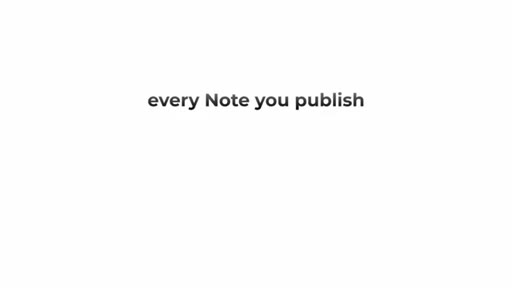
04:47And everything you do on the platform, every note you publish, every post you write, every conversation you start should be pointed at converting one into the other. Now let's talk about the actual mechanics because this is where most people get fuzzy, and I want to make it completely clear for you.
05:04Now Substack is free to use. There's no monthly platform cost, no list size fee, no paying for features. You publish for free until you decide to turn on paid subscriptions.
05:15And what I genuinely love about that model is this. Substack only takes a fee when you actually make money. Their incentives are entirely aligned with yours.
05:25They only win when you win. When you turn on paid subscriptions, here's exactly how the fees break down. Substack takes a 10% cut off your subscription revenue.
05:34Stripe, which handles all payment processing, takes approximately 2.9% plus 30¢ per transaction plus a 0.7% recurring bill fee on top of that.
05:47In total, you're looking at roughly 13 to 16% of your gross revenue to platform and process fees, which means on a $10 per month subscriber, you are taking home around 8 and a half dollars depending on the specifics.
06:02So if you are charging $10 a month and you have a 100 paid subscribers, you are generating a thousand dollars and taking home around 850. This is recurring revenue every month whether you launch anything or not. Now to reach a thousand dollars a month at $10
06:17per month, you need a 100 paid subscribers. At $15 a month, you need around 70. The math is a lot more approachable than most creators assume.
06:26But here's something I really need you to understand about the subscription model, and I say this because I want you to build something that actually lasts. The reality is retention is everything.
06:37A subscription business is fundamentally different from selling a one time product. When someone buys a course, for example, the transaction is done. When someone pays you a monthly subscription,
06:48they are making a decision to stay with you every single month. If you want to grow your income through paid subscriptions, you have to genuinely over deliver.
06:57You have to build something people will love being part of. A high churn rate of subscribers who cancel month after month will make it almost impossible for you to grow because you are not just trying to add new paid subscribers, you're trying to keep the ones you have.
07:13The publications that reach hundreds or thousands of paid subscribers do it by making the paid tier feel irreplaceable, something their readers genuinely can't imagine giving up. It should be a no brainer to be part of the subscription month after month, and that should be the standard.
07:30So if you are a creator who cares about this seriously enough to be watching this video, you are already thinking about it the right way. Now let's get to the question I get more than almost any other. What do I actually put behind the paywall?
07:44The way I think about it is this, your free content earns trust. Your paid content rewards it.
07:51Free content is where you teach the what and the why. It's your stories, your perspective, your frameworks in broad strokes.
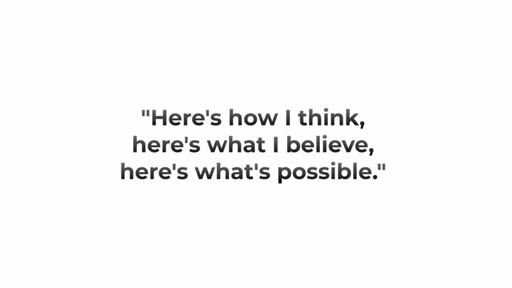
07:59For coaches, consultants, experts, which is a lot of who I am talking to here, your free content is where you demonstrate your thinking, you build credibility, and you give people a genuine reason to stick around. Think of it this way. Your free content says, here's how I think.
08:14Here's what I believe. Here's what's possible. Your paid content says, here's exactly how to do it.
08:20Your paid content is the how. It's the step by step guides, the templates, the frameworks people can actually apply right now. Prompts, tools, resources that would take someone hours to piece together on their own, distilled into something that they can use immediately.
08:37At Writal Scale, our weekly rhythm looks like this. Every Monday, we publish a free podcast episode available to every subscriber, but we also publish a free post each week. Usually, one of our YouTube videos embedded and written out as a full Substack post.
08:53That way subscribers get the value directly into their inbox without having to go anywhere else. We also go live on Substack at least once a week, either a live stream with the whole Ripe Build Scale team with me and my cofounders, Philip and Yari, or one of us is interviewing a guest or one of our students to share their best practices.
09:13And on Fridays, we publish our paid post. This is usually a workshop, a deep dive how to, or something very actionable that paid members can put to work right away. We have two free touch points, one paid only piece, and at least one live session every week.
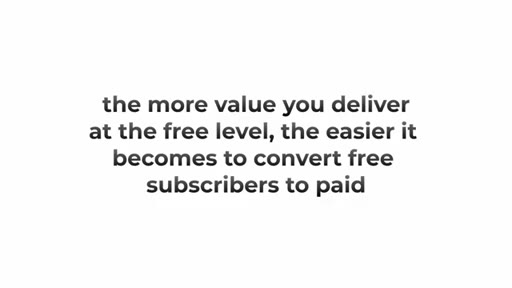
09:30And that rhythm keeps the free audience engaged while making the paid tier feel like a no brainer. And here's the principle behind all of this. The more value you deliver at the free level, the easier it becomes to convert free subscribers into paid ones.
09:44And it's not because you are wearing them down, but because they've seen enough of your work to trust that whatever is behind the paywall will be genuinely worth it. You don't have to sell them on the paid tier anymore because they are seeing the value upfront. Now let's quickly talk about pricing because this is where most new creators either leave money on the table or they overthink themselves into paralysis.
10:08So let's make this simple. For most publications in the early stages, a monthly price in the 7 to $10 range with an annual option at roughly 2 months free is a reasonable starting point. You don't want to price your paid tier at $5 a month.
10:23The conversion rate between five and ten is not dramatically different, and you're cutting your revenue in half. People who are ready to pay for a newsletter are already past the stage where they ask themselves if they're willing to invest money at all. And the jump from 5 to $10 is not the barrier that you might think it is.
10:40Now pricing also reflects your positioning. And as your publication matures and your reputation grows, your price can grow with it.
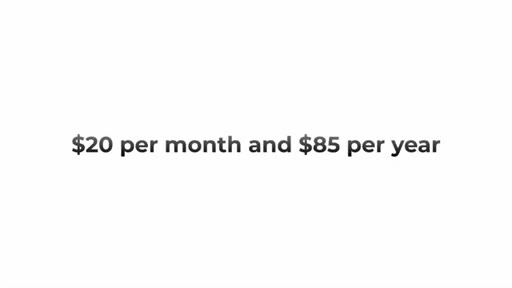
10:49At Rightbill Scale, we intentionally charge $20 per month and $85 per year because we are not competing on price. Our publication has years of consistent publishing behind it, a rich archive of paid resources, and an audience that knows exactly what they are getting.
11:06We have basically earned the right to price at that level by growing to over 45,000 subscribers and more than 1,600 paid members. Our positioning in that sense is deliberate.
11:16CTAWe don't want to have a cheap monthly tier. Now before I get into the bigger picture here, if you want to get your Substack set up the right way and in a way that's actually built to convert free readers into paid subscribers, I have put together a free resource called the Substack Bestseller Workbook.
11:34CTAIt's a PDF guide with setup checklists and the strategy guides to help you launch and grow the right way. You can find the link to download it for free in the description box below. Now let's talk about how paid subscriptions
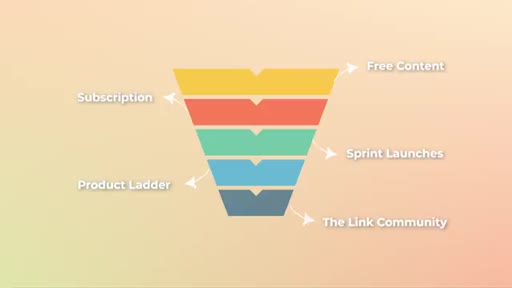
11:46CTAactually fit into the full picture, and I want to be fully transparent here because the most useful thing I can do is give you a real view, not just the exciting one. At Rightbill Scale, less than 10% of our total revenue comes from paid subscriptions. Subscriptions.
12:02We currently generate more than $50,000 a month as a business and subscriptions are a meaningful piece of that, but they are not the whole thing. We also have courses, coaching programs, and digital products that go way beyond our paid tier.
12:15But here's what I want you to understand about why the paid tier still matters enormously even when it's not your primary revenue stream. Our paid subscription is the first step through the door.
12:26A significant number of our high ticket coaching clients and core students started as paid subscribers. They wanted to see what it felt like to work with us before committing to something bigger. They read our posts.
12:39They experienced our live sessions. They got a real taste of what our work looks like at a deeper level. And that made the next step easy because it's much simpler to move someone from a paid subscription to a higher ticket offer than it is to convert a cold subscriber who has only ever seen your free content.
12:58I like to think about the paid tier as a trust accelerator. Once someone has paid you, even a small amount, the relationship is fundamentally different. They have decided that your work is worth investing in, and when you consistently over deliver at that level, moving them deeper into your world becomes a natural next step, not a sales push.
13:19And there are publications that run entirely or primarily on subscription revenue. It's a completely legitimate model. And for the right creator in the right niche, it's a very powerful one.
13:30But I would be doing you a disservice if I didn't tell you that building to 6 or 7 figures through subscriptions alone takes time, real consistency, and a paid tier that earns its renewal every single month. What I would actually recommend, especially early on, is this.
13:45Don't try to build five revenue streams at once. Focus on one or two. Go deep and let them stabilize before you layer anything else on top of them.
13:54If you are starting out with a paid tier, make that the priority. Grow your list, deliver consistent value, and give your paid tier the time it needs to actually compound. So if this has you thinking seriously about launching a paid tier, here's how I would approach it practically.
14:10First, don't launch paid until you have a consistent free publication. If you are publishing regularly and people are actually opening and engaging with your work, that's your signal that there is enough trust to introduce a paid option. Launching paid to a cold or disengaged list is the fastest way to get a disappointing conversion rate that makes you want to give up entirely.
14:32Second, when you do launch, be very specific about what paid members get. Don't say things like exclusive content. This could mean anything.
14:42Be specific. Something like every Friday, paid members get a hands on workshop and prompts can use immediately.
14:50Specificity is what turns a free subscriber into a paying one. And number three, give it time. Paid subscription growth is slow in the beginning and then it compounds.
15:00The publications that quit after a few months of low paid conversion are usually the ones who were just about to see things start to move. The opportunity is real right now.
15:10The model works. The platform works. And the earlier you build it properly with the right content rhythm, the right pricing, and real value behind the paywall, the sooner you will see that compounding growth.
15:21It took us way longer to get our first 500 paid subscribers than it took us to go to 1,600 where we are right now. And now at this stage, the growth just keeps compounding because the trust is there, the fundamentals are there, and our content works in our favor. Now paid subscriptions are genuinely powerful, but as I mentioned, they are just the starting point.
15:42CTAIf you want to see exactly how we have built our substack business infrastructure, the digital products, the courses, the model that takes you well beyond the paid tier, watch this video next where I break down five ways to make money on Substack without relying on paid subscriptions at all.
16:01CTAI'll see you there.
— full transcript
§ 05 · For Joe

The paid tier is a trust filter, not a revenue ceiling

WHAT TO LEARN

Recurring subscription income on Substack compounds slowly then quickly — but only when the paid tier earns its renewal every month and functions as the first financial commitment in a longer relationship.

  • Building a free email list (subscribers, not followers) is the prerequisite — Substack followers in the app feed cannot become paying members until they are also on your list.
  • The fee structure resolves to roughly 84-87 cents per dollar collected — transparent and predictable compared to ad models where revenue moves with platform algorithms.
  • Free content should teach the what and why; paid content should deliver the how — templates, step-by-step guides, and resources that save hours of independent research.
  • Retention determines whether a subscription business grows or stays flat: adding 20 new paid subscribers while losing 18 is near-zero real growth.
  • Specificity in the paywall pitch converts; vague promises like exclusive content could mean anything, but a concrete weekly workshop with immediately usable prompts triggers decisions.
  • The paid tier's highest-leverage function may not be its subscription revenue — it can be the lowest-friction entry point for readers who later become high-ticket clients or course students.
  • Paid subscription growth is front-loaded with slow traction and back-loaded with compounding; most creators who quit do so just before the curve turns.
§ 06 · Frame Gallery

Visual moments.