Jack Roberts · Youtube · 11:56

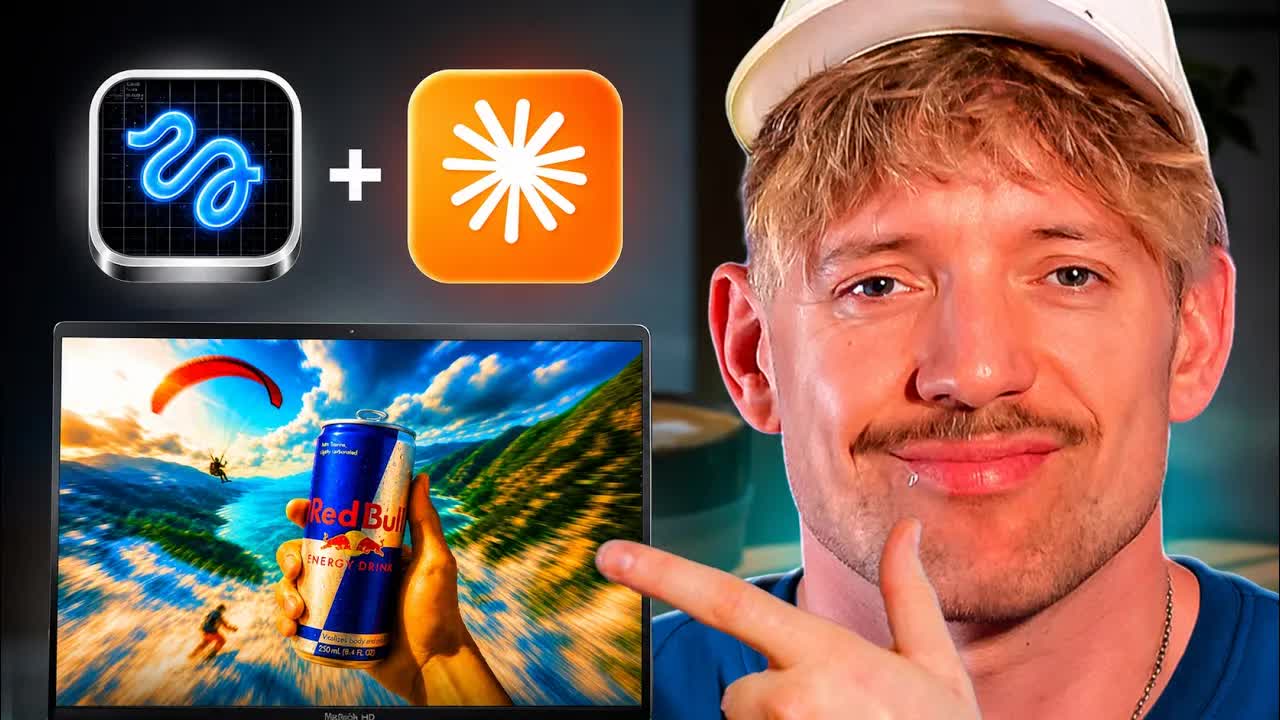
SuperComputer: How to Build Anything

Jack Roberts tests Higgsfield's new marketing AI in real-time — one prompt, every frontier model, the whole production flywheel.

Posted
May 17th 2026
yesterday
Duration
11:56
Format
Tutorial
educational
Channel
JR
Jack Roberts
§ 01 · The Hook

The bait, then the rug-pull.

Before Jack Roberts names the product, he leads with a promise that lands like an agency pitch deck: a supercomputer for your marketing, built in one chat, costing a fraction of a freelancer. Then he opens the browser and actually tests it.

§ · Stated Promise

What the video promised.

stated at 00:50 "By the end of the video, you're gonna understand exactly why that is and so important." delivered at 10:44
§ · Chapters

Where the time goes.

00:00 – 00:33

01 · Cold open + intro

Value promise hook, Jack intro, channel credential.

00:33 – 02:10

02 · What is Higgsfield Supercomputer?

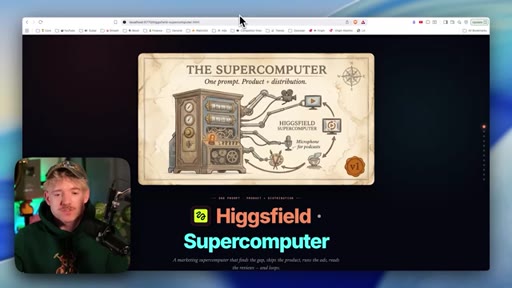
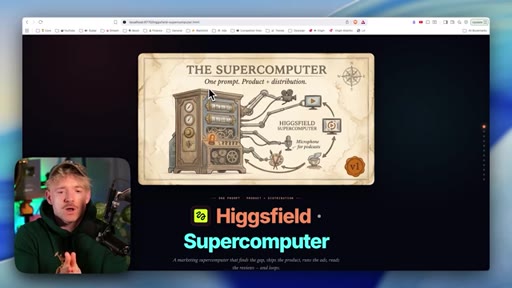
Concept overview: one prompt = product + distribution flywheel. Shows landing page and steampunk marketing diagrams.
02:10 – 03:05

03 · Every tool has a lane

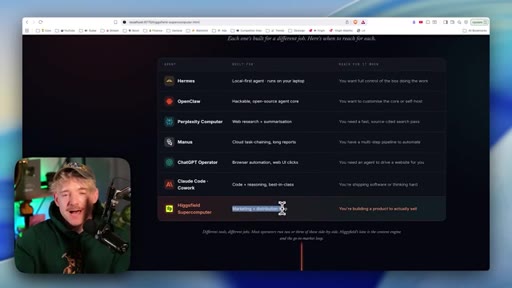
Competitive matrix: Hermes, Perplexity, Manus, ChatGPT Operator, Claude Code vs Higgsfield marketing lane.
03:05 – 04:07

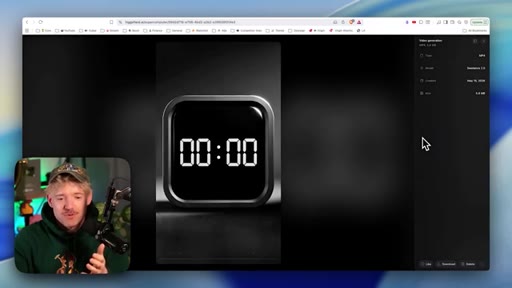
04 · Opening Supercomputer + Pomodoro demo

Live navigation, four categories (UGC/marketing/cinematic/cartoons), shows pre-run Pomodoro timer ad output.
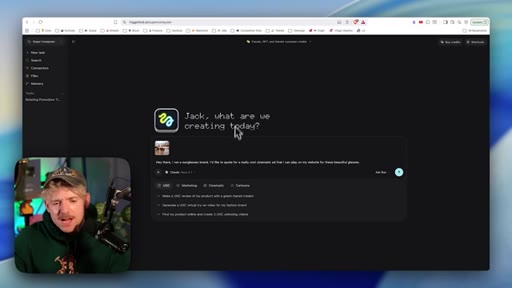
04:07 – 07:00

05 · Building the sunglasses ad (Spellbound)

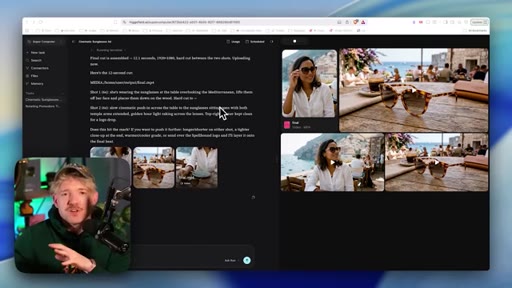
Uploads two reference images, writes brief, selects Opus 4.7, accepts cinematic pipeline, shortens to 12s.
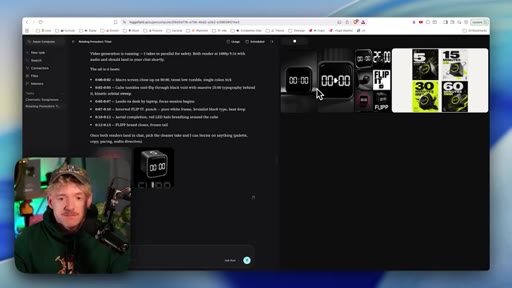
07:00 – 08:22

06 · Generation + content engine

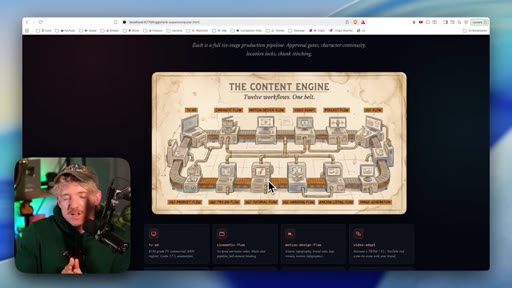
Explains billing (text + video credits), shows the 12-workflow Content Engine factory diagram.
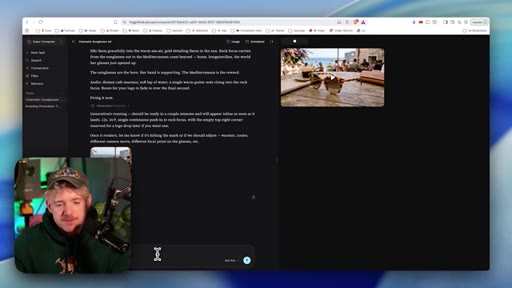
08:22 – 09:20

07 · First output + iteration request

Vibe is right but glasses handle folds. Gives specific two-shot feedback: lady wearing then table slow-zoom.
09:20 – 10:44

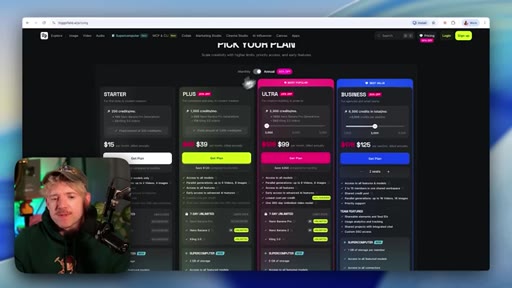
08 · Pricing breakdown

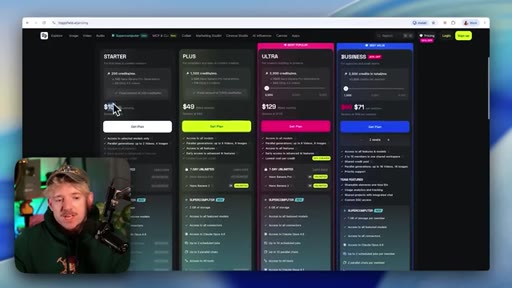
Starter $15, Plus $49/$39 annual, Ultra $129/$99, Business from $71. 107 credits for 12s 1080p video.
10:44 – 11:28

09 · Final iteration + verdict

Second output much better. Notes shot-consistency still needs work. 3-5 iteration budget is realistic.
11:28 – 11:56

10 · Final thoughts + CTA

Agency-replacement framing. First-prompt-is-everything lesson. Pivots to Claude Code video.

§ · Storyboard

Visual structure at a glance.

hook — talking head
higgsfield landing page
flywheel diagram
every gen-AI tool bundled
every tool has a lane
supercomputer UI open
sunglasses reference image
content engine diagram
first output — glasses ad
pricing page
second output — final ad
final thoughts + CTA
§ · Frameworks

Named ideas worth stealing.

01:05 model

Product + Distribution Flywheel

  1. One prompt
  2. Product creative
  3. Distribution assets
  4. The loop

One prompt should generate both the creative asset and the distribution variants needed to run it.

Steal for Any product that wraps AI workflows — position the orchestration layer as the value, not the raw model access.
02:10 model

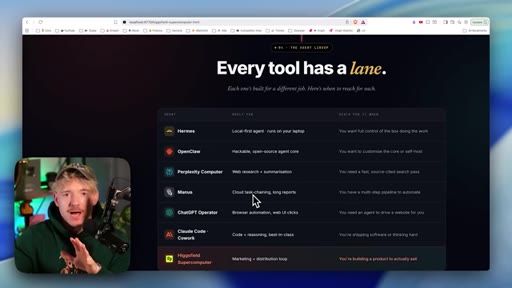
Every Tool Has a Lane

  1. Hermes = local agent
  2. OpenClaw = OSS
  3. Perplexity = research
  4. Manus = task chains
  5. ChatGPT Operator = browser
  6. Claude Code = code+reasoning
  7. Higgsfield = marketing+distribution

Competitive positioning by job-to-be-done: each agent has one lane.

Steal for Positioning any new tool against the ecosystem without attacking competitors directly.
05:40 concept

Storyboard Approval Gate

Before burning credits on generation, show the storyboard and ask for approval. Friction-right-placed UX.

Steal for Any AI product with a costly generation step.
10:17 concept

First Prompt is Everything

The most important prompt in any multi-step AI workflow is the first one. Subsequent iterations are cheaper when the initial brief is explicit.

Steal for Teaching AI workflows — reframe iteration cost as front-loaded prompt investment.
§ · Quotables

Lines you could clip.

00:00
"Imagine a supercomputer that could build you beautiful videos, ads, images to grow your business and save you thousands of dollars."
Pure cold-open hook — no preamble, high-stakes promise → TikTok hook
11:30
"You don't need to fly to Italy to put your products on the table type of cost, or I don't need to hire a big agency."
Vivid price-anchoring metaphor, stands alone as a shareable soundbite → IG reel cold open
10:17
"As with all AI models, the most important prompt is the first one."
Quotable principle, platform-agnostic truth → newsletter pull-quote
02:10
"Every tool has a lane."
Four-word framework, instantly memorable → TikTok hook
§ · Pacing

How they spent the runtime.

Hook length33s
Info densityhigh
Filler8%
Sponsor blocks
  • 00:33 – 00:50 · Higgsfield (sponsored — disclosed lightly)
§ · Resources Mentioned

Things they pointed at.

03:15productPomodoro Flip (Jack's own app)
03:25productClaude Code Masterclass (Jack's course)
§ · CTA Breakdown

How they asked for the click.

11:40 next-video
"The next thing that we need to learn is how to build images and videos inside of CoolCode as part of a system, which we're gonna learn by watching this video right here."

Smooth pivot to a Claude Code video. No subscribe push. Clean retention play.

§ 04 · The Script

Word for word.

HOOK opening / re-engagementCTA the pitch metaphor analogy
00:00HOOKImagine a supercomputer that could build you beautiful videos, ads, images to grow your business and save you thousands of dollars. And in this video, I'm gonna show you exactly what the new Higgs field supercomputer
00:13HOOKis, how to build any creative for your business, and together, we're gonna see if it can actually save you time and help you grow your business. And if you're new, my name's Jack. I built and saw my last tech startup with a gazillion customers.
00:24HOOKNow I build my own AI startups and teach you the stuff that actually works. So if you haven't already, grab that beautiful coffee and let's dive straight in. So this is the supercomputer.
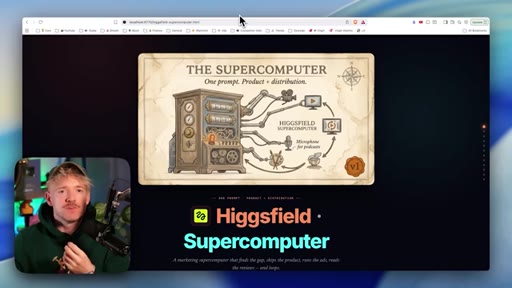
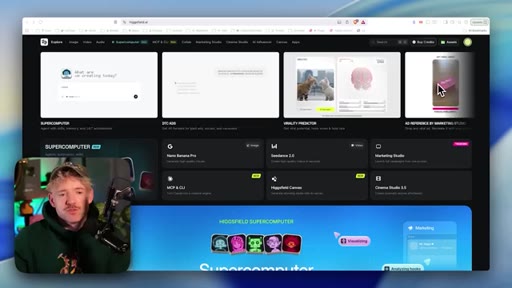
00:33Now, Hicksville reached out to me and said, Jack, we've just released the supercomputer, which is available on hicksville.ai by clicking supercomputer.
00:41And they asked if I do a video sharing my honest thoughts on it. I said I'd go through it together with you on video, and we're gonna see exactly if this hits the hype and what our honest thoughts are of it.
00:50Because the concept is really interesting. By the end of the video, you're gonna understand exactly why that is and so important. The core concept here is that we have one prompt and that gives us a product plus distribution.
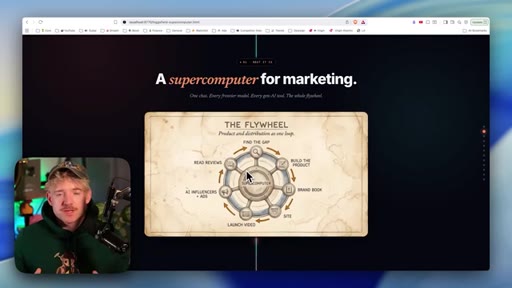
01:01The idea is to build a super computer that can do all of these really interesting creative things because if you think about Hicksville being the place for all image gen, video gen, and now we kinda give it this brain. That's the kind of concept here. So what Hixville are trying to do with this, as I understand it, is build a supercomputer for marketing using the product and distribution
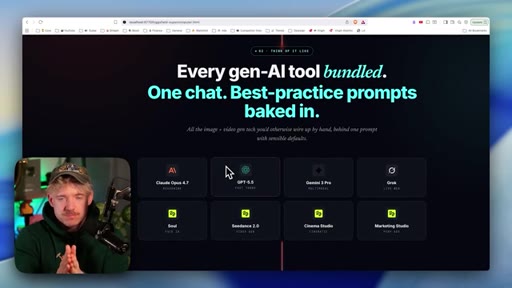
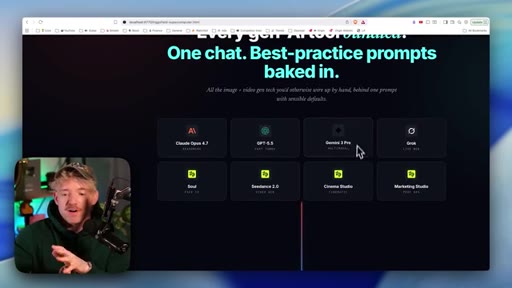
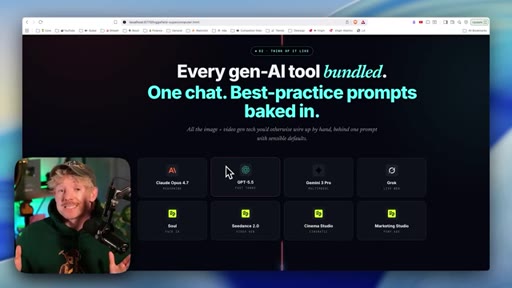
01:21flywheel. Now think about it this. It's essentially every AI gentle, the the good ones at Matterm, bundled in one chat with the best practice and prompts baked in.
01:31So the value matrix this is trying to hit is to save you time by having all the best models, the best prompts that they know of to give you the output as soon as possible. Right? Opus 4.7, we can have a reasoning, CheckDB 5.5.
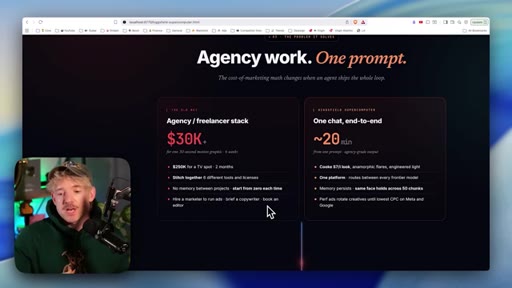
01:43We've got all these different models to generate things so we can access the powerful models. And the problem that it's trying to solve here is that instead of going and paying agencies and freelancers, you might instead be able to use a software like this by paying less money by buying tokens to actually make the stuff happen.
01:58Thought about another way. Every tool has a lane. Right?
02:01Hermes, Open Call Perplex Computer, minus ChatGPT, Claude, Claude CoWork. The lane that Higgsfield Supercomputer's trying to look at here is the marketing and distribution loop.
02:11That's the kind of stake in the ground they want to go to with this. Well, talking about it's one thing, but why don't we actually go ahead and test this ourselves? So to use it, we're gonna come over here and click on supercomputer.
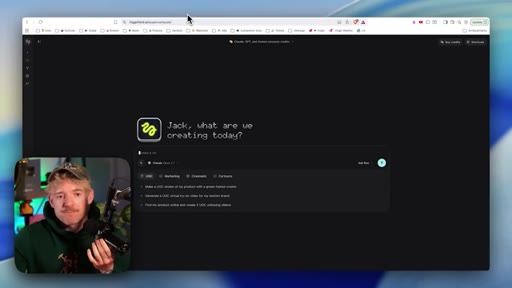
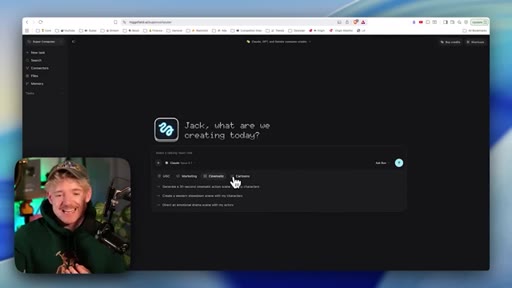
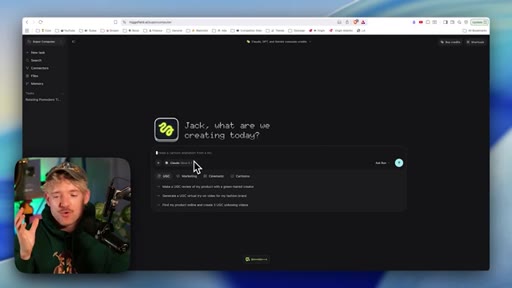
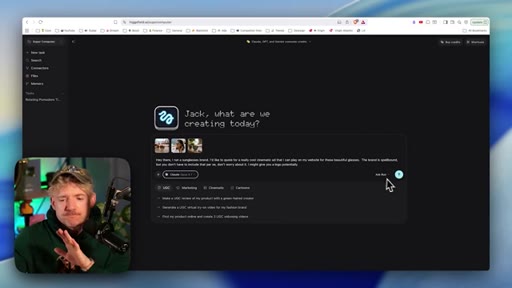
02:20So let's take a look at what we're dealing with on this. So we open up the supercomputer. Now it has four categories it suggests.
02:26UGC, marketing, cinematic, and cartoons.
02:29We can give it any prompt we want to. One cool thing you can do with this, I run one task before, and that is I essentially gave it a URL to what I think is the coolest
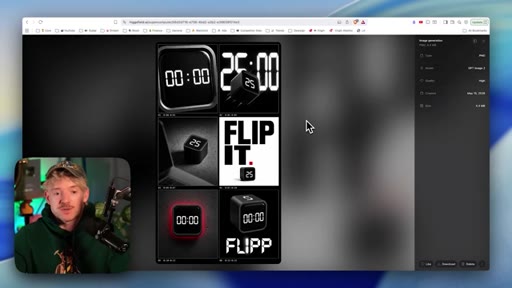
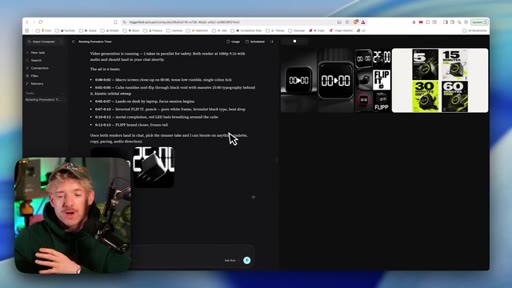
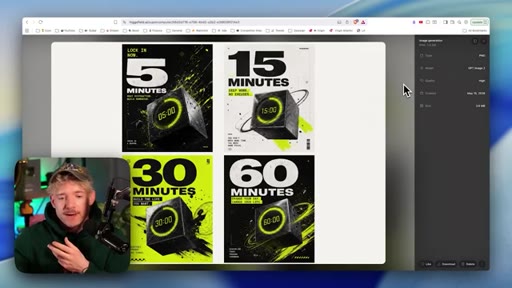
02:38productivity software I built, which is this Pomodoro Flip thing. As you can see, what it'll basically do for you is create, some different vibes and designs that you're gonna sign off on. It'll come through and give you a little bit more detail.
02:48Like, this is the storyboard that it signs off. Then once it's done that, it will essentially then give you the video like this. So look at this.
03:01And it builds up these whole things where I didn't go through. And again, it gives you a few different versions. But effectively,
03:06that's how it works. You have two different options to choose from. So what we're gonna do is come down on new task, and we're gonna give it an idea of to build something.
03:13By the way, if you're thinking about Claudine, wanna go deep on Claudine, I've got a full Claudine masterclass down below that will take you from foundation setup, building a real website, power features, memory systems, Hermes apps, stuff I've never shared on YouTube, full guide all the way down to turn this into dollars.
03:28I'll put a link down below. It is a pretty ferociously cool course. So let's think of something we could do.
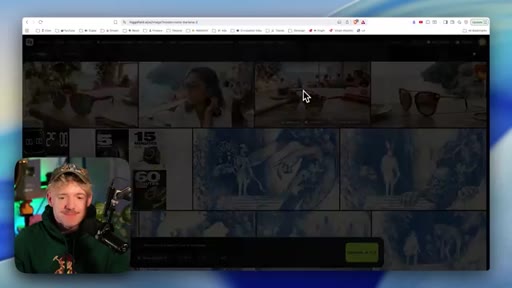
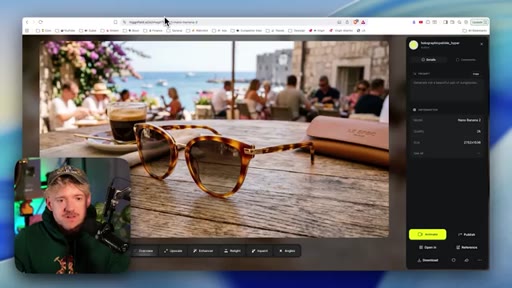
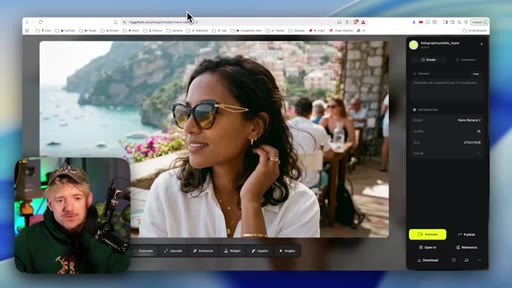
03:32I reckon what we should do is I created earlier an image here for some beautiful sunglasses, which is great. So why don't we go ahead and grab these images.
03:40Right? So what I'm gonna do is let you grab these images. I'm just gonna drop them in.
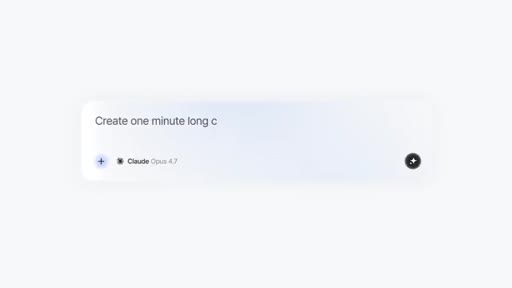
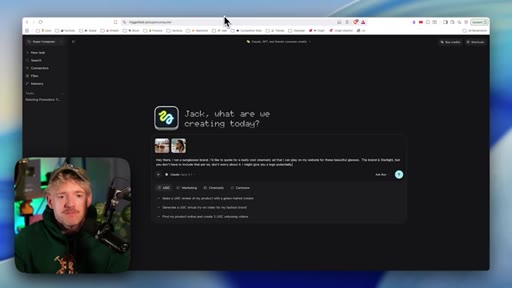
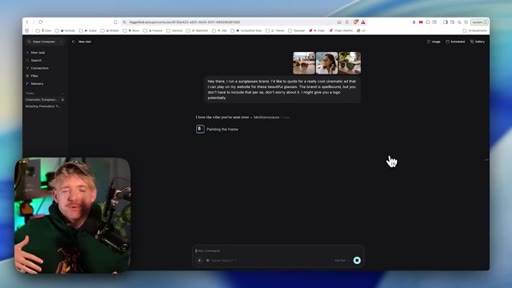
03:43And I'm like, hey there, I run a sunglasses brand. I'd like to create for me a really cool cinematic ad that I can play on my website for these beautiful glasses. Alright?
03:53And then I'm just gonna drop in some images. Let's drop in this as a reference image as a what's it? And then we've got a few more shots.
03:59I think this is a beautiful image too. That's our kind of vibe. We're gonna call these ones I don't know.
04:04Let's call them, you know, I don't know, starlight glasses. The brand is Starlight, but you don't have to include that per se. Don't worry about it.
04:11I might give you a logo potentially. And then what we can do is just add a few different images in there. You can just do one.
04:16As I showed you before, you could literally, if you want to, just have one. Okay. Oh, it's called Spellbound.
04:21Perfect. Let's call it. Let's go with Spellbound.
04:23Spellbound. Now we could just drop an Amazon product listing. That's cool.
04:27And then we've got the model selection. So Opus 4.7, ChatGPT 5.5,
04:32whatever we want to. I'm gonna ahead and use Opus 4.7. I like I say, I like Opus 4.7 because I find it's the best orchestrated agent.
04:40ChatGPT 5.5 is coming up and doing an incredible job, but you can go either way. But we want one of these more powerful models initially. There's anything design related I still edge towards Opus.
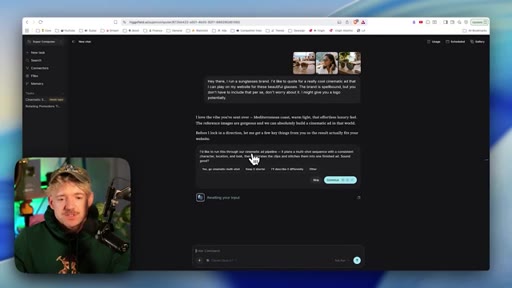
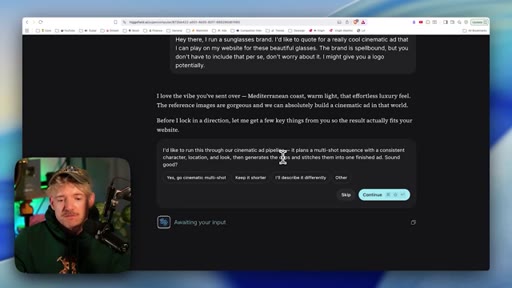
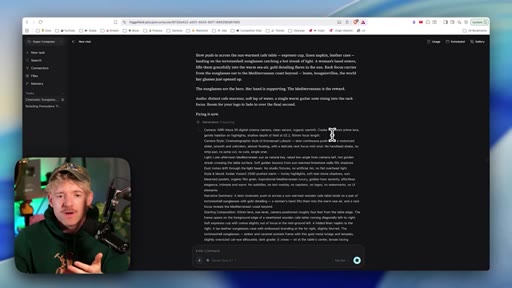
04:49Now, first thing it's asking me to do is I'd like to run this through our cinematic ad pipeline. It plans a multi shot sequence with a consistent character location log, then generates a clips and stitches them into one finished ad. That sounds great.
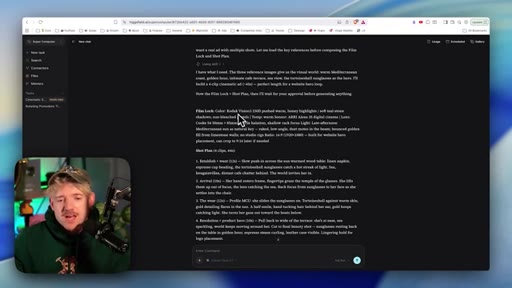
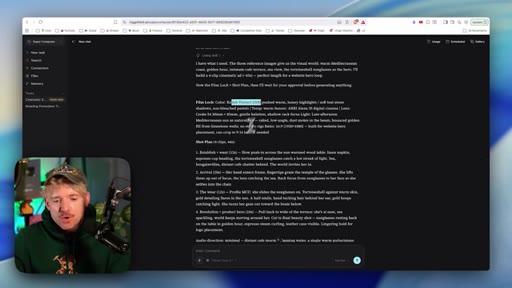
05:01Go for the cinematic multi shot and then click on continue. So this has come back and done a full cinematic shot that's trying to do forty five seconds. Film lock is a Kodak Vision.
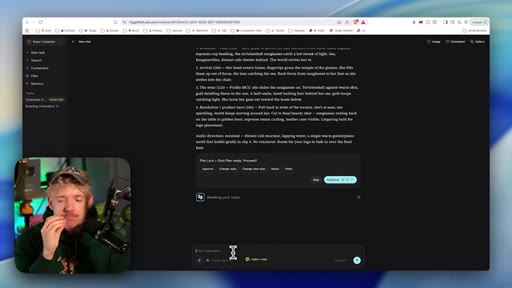
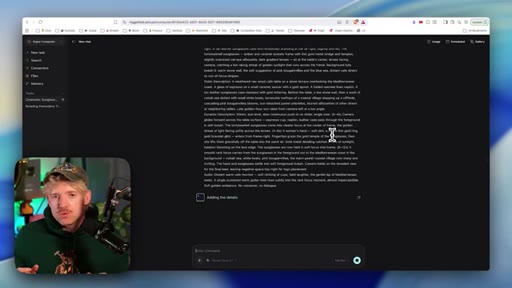
05:10Again, this is the idea of what Higgsville supercomputer is trying to do is bring in the very best prompts to take that off your shoulders. So you've got these different things set. What I might do is come back and say, actually, what I'd quite like to do is make for me a twelve second version of it and and maybe kind of bring those in, you know, just shorten those down massively.
05:29So we don't want only want it be twelve seconds long, please. Okay. Come back over and just send that one off.
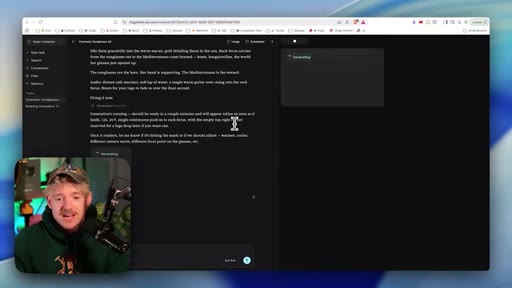
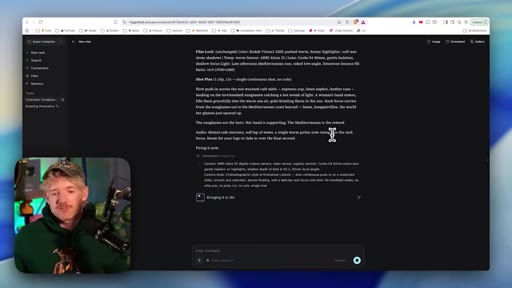
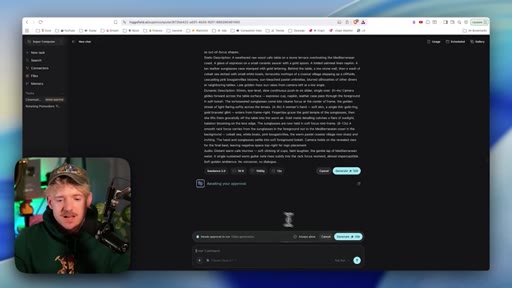
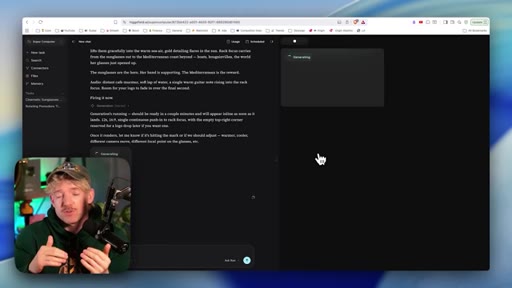
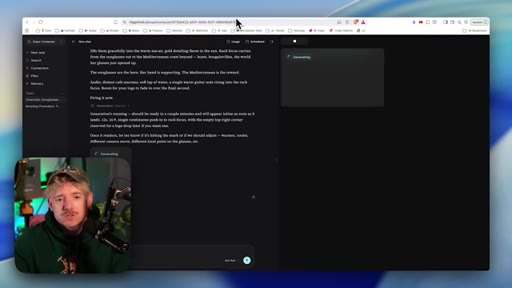
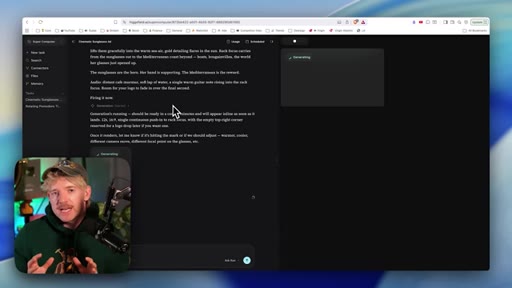
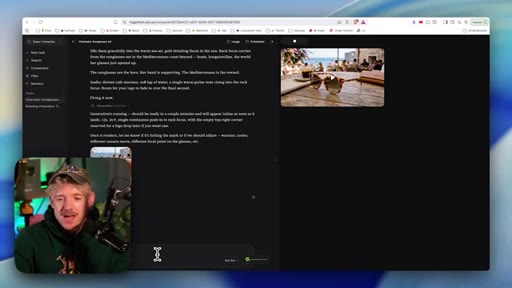
05:33And so the idea here is it's going ahead, it's writing the generation, it's doing the prompt. You're gonna get billed for two things. One is gonna be the text cost, so like using Opus 4.7.
05:42And then second, obviously, is a video and image generation side of things. Like, that's effectively what comes down because Hickfield works on a credit limit. Now, as we all know, making videos, making images is not anything that we couldn't do if we wanted to in Claude Kirk.
05:56Obviously, we could do that. We could use the Hickfield MCP. We could use any APIs.
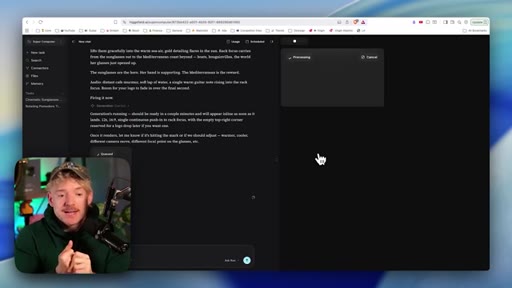
06:00It's not necessarily adding new. What this is doing is trying to build a bit of an expert in one area and make it easier. So a 108 credits, 16 by nine, ten eighty p, twelve seconds, seed dance.
06:11Let's go ahead. I'm gonna go and generate for that one. And so the idea here is, like, okay, let's say that a sunglasses brand and say, hey, I wanna do a beautiful image shot for this,
06:20and I didn't have the time nor inclination to go and build it in Claude code, and I just wanted something that had the best prompt. This is this is competing on speed. It's trying to do better quality because it's using inbuilt stuff, and actually speed by bringing the best models for the right thing.
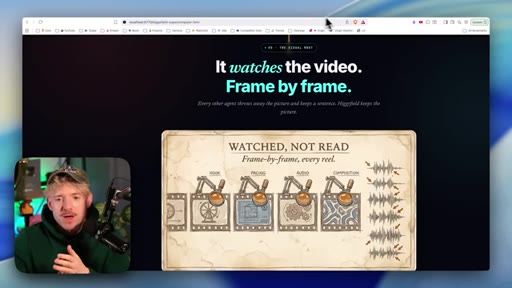
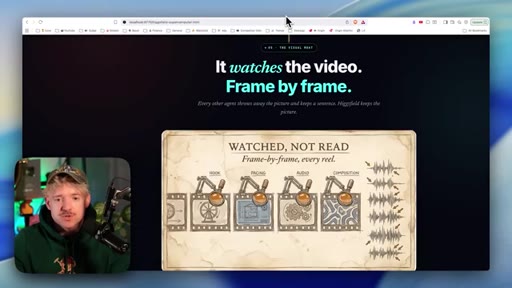
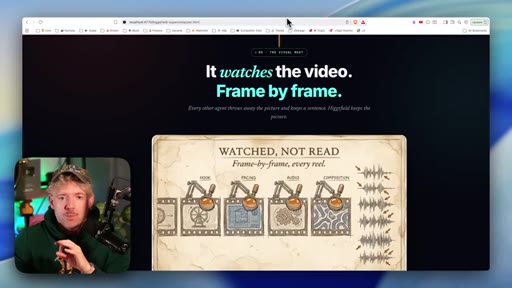
06:34So I think that's interesting. And whilst this is generating for us in the background, I wanna pull up on one interesting thing that's worth knowing about the Higgs filter to computer. The fact that it watches the video frame by frame, that's one of the things it's really looking at doing, specifically when it mood boards, just like I showed you with the rotating pomodoro.
06:51And all I gave the rotating pomodoro was effectively just an Amazon URL link. And I bought it because it was like the most useful thing I've done. And it builds up these storyboards and you can change it, and then it will build basically videos based on those individual sections and run with it that way.
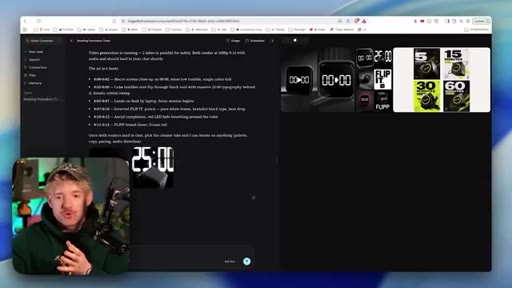
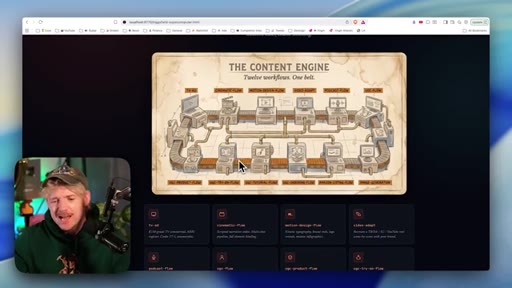
07:04So that's really cool and important to understand. The idea of the Higgs field supercomputer is 12 workflows on one belt. Again, TV ads, cinematic workflows, motion design, video adaptation, podcast,
07:14unboxing, UGC tutorials. It's trying to be the everything in the marketing space. That's effectively how that's all working.
07:21It's focusing on building depth in the actual marketing side of things. That's the direction of travel with this. So this cost a 107
07:29credits. Now, Hicksfield works on a credit basis. And you have to bear in mind that when you're generating videos,
07:34that has a cost to it. So it's not like talking to ChatGPT where you got unlimited cinematic videos at $0. What they're bringing here is the text and videos.
07:44If you look at the pricing on Hicksfield, which is and then it changes by region or not, but where I'm at the moment, it's $15 for starter plan, $49 for the plus, 129 for ultra, and then from 71 for business, and it gets a lot cheaper.
07:58I think if you do annual, it comes down to $39. So a thousand credits for $39. If you're building these three d high d, you know, amazing, gorgeous images and that kind of thing, that would be roughly 10 of those just to give you perspective on what that looks like from a pricing perspective.
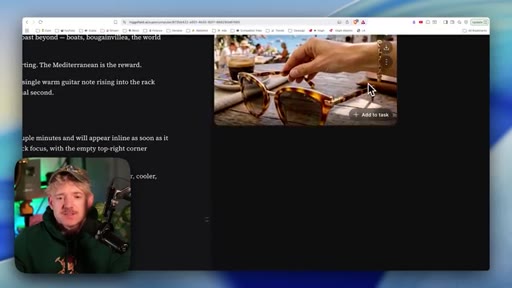
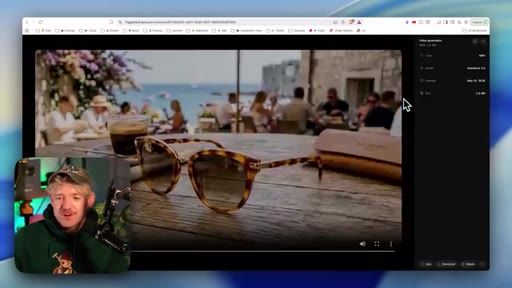
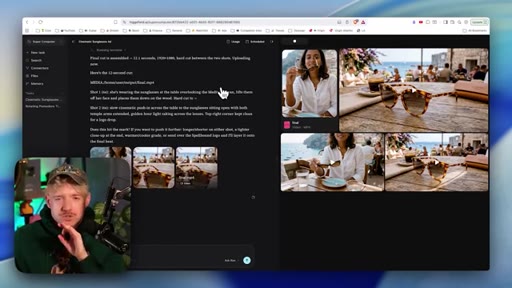
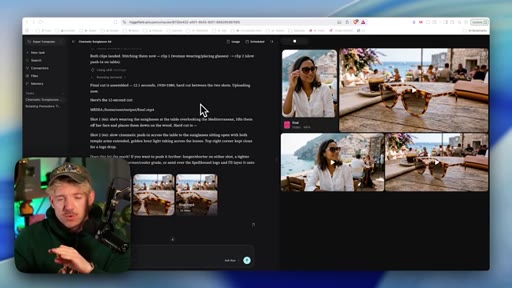
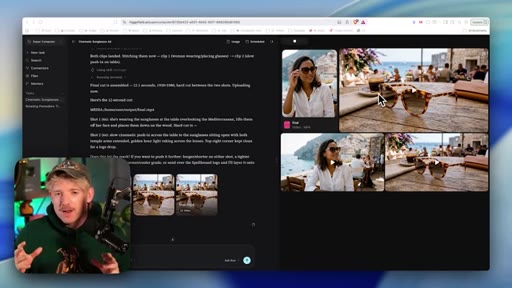
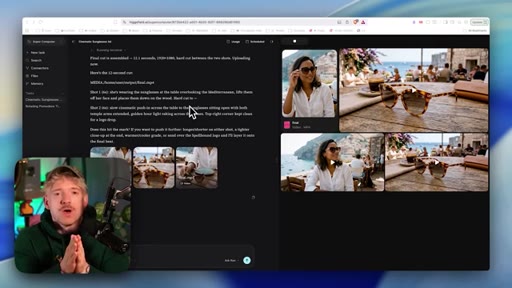
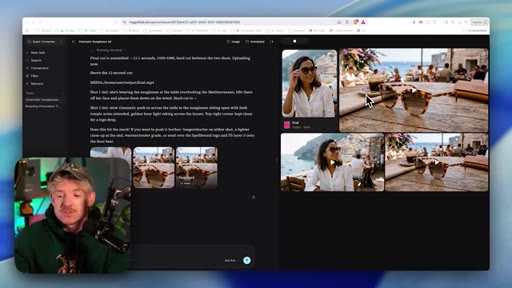
08:13Beautiful. Then we've got the image that comes up and you can see she's zooming into the glasses. She's touching the glasses a little bit now, rotating them.
08:19And I think the vibe is good. The only thing is the glasses kinda fold around a little bit and the kinda handle disappears. So we just need to give that as a bit of feedback.
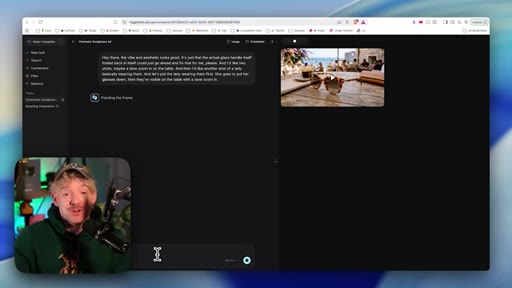
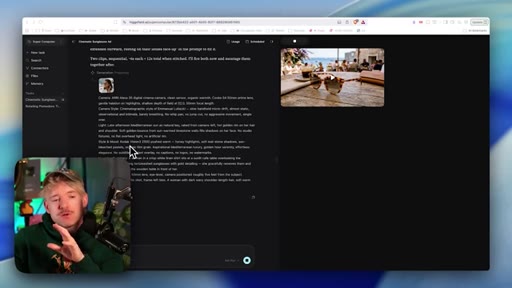
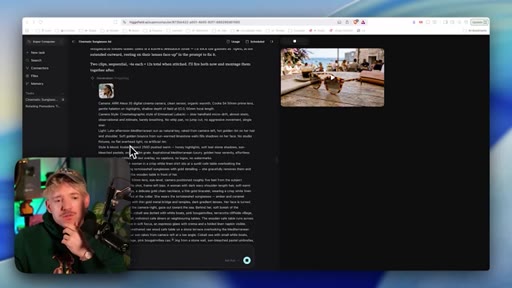
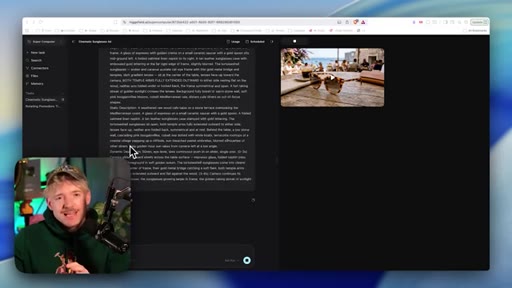
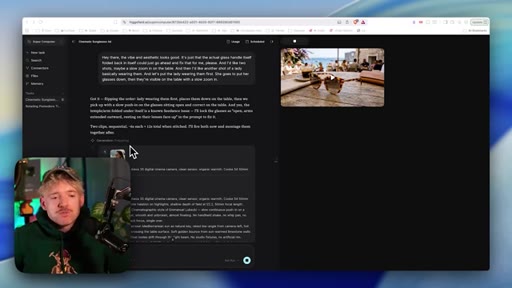
08:26Hey, there. The vibe and aesthetic looks good. It's just that the actual glass handle itself folded back in itself.
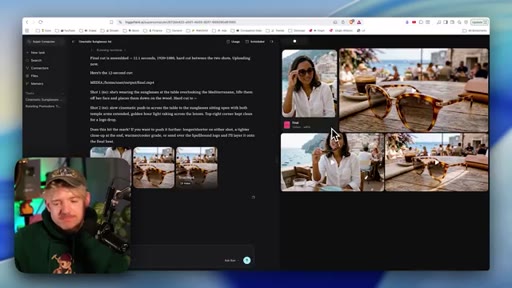
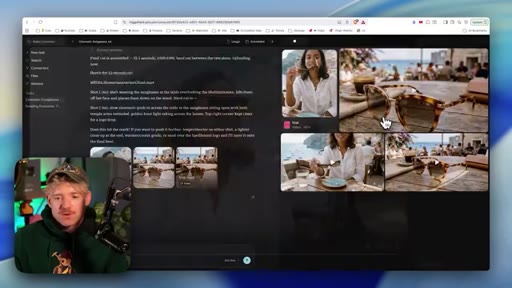
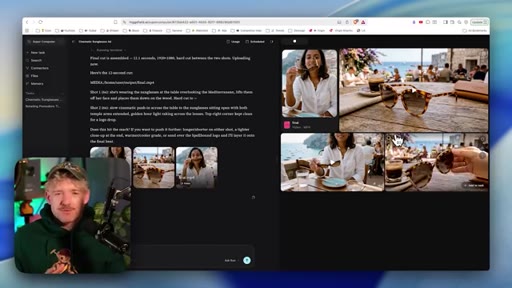
08:32Could you just go ahead and fix that for me, please? And I'd like two shots. Maybe a slow zoom in on the table, and then I'd like another shot of a lady work basically
08:41wearing them. And let's put the lady wearing them first. She goes to put her glasses down, then they're visible on the table with a slow zoom in.
08:49So let's just give it a little bit of guidance and see how this can develop and create something interesting for us. And as I'm using this, what I'm kind of finding is it is handy to just describe what I want in the processes that I want. Like, ordinarily, when you're building this, you then gotta write write me a prompt to do x y z, and you've gotta kinda stitch it together.
09:05So it's quite handy that it will build that kinda system together. I think one thing I'm learning going through this process here is that realistically, when you're using a software like this, you wanna be a little bit more involved in the specific journeys of it.
09:18Like, you like, it's impossible to one shot something perfect. So realistically speaking, you wanna give it just a little bit more detail on all the stuff that you're building out. So take a good look at this, make sure you're happy with it, and then let's see what the second iteration of this one looks like.
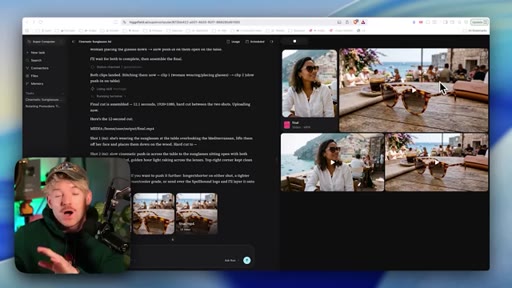
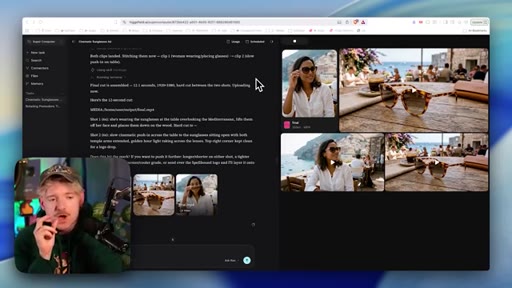
09:31Cool. So now we've got the final version together. So let's take a look at it.
09:33So we've got here the glasses.
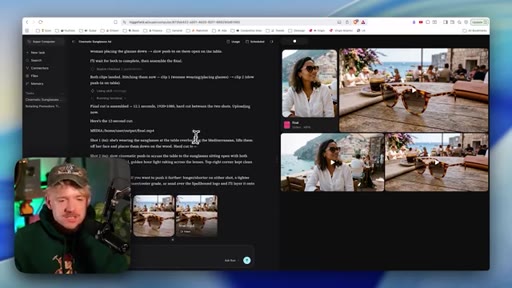
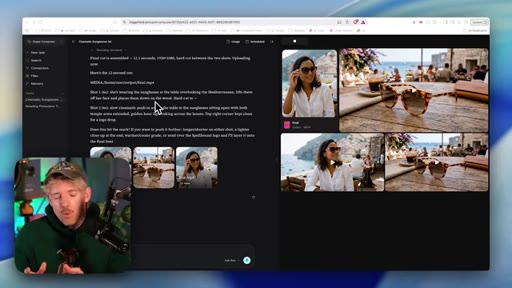
09:39Okay. Nice little zoom in, and then we have our lady using the glasses. Beautiful environment.
09:44She comes down. Sweet. I mean, there's a couple of things that I would change a little bit.
09:49Like, I think we gotta make sure the glasses look exactly the same. But, directionally, you get the idea, then you get the full m p four video you can download and basically stitch together what you're doing. The key thing here though is understanding that you're realistically gonna need to iterate,
10:02I'd say, three to five times to get this perfect. What the most important thing is though is that your first initial prompt is explicit. And even though this is asking you the right questions, make sure that you are super duper clear on what you're asking it to do.
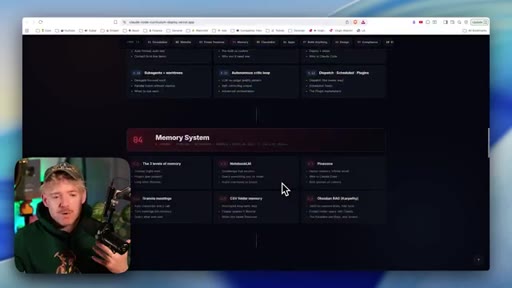
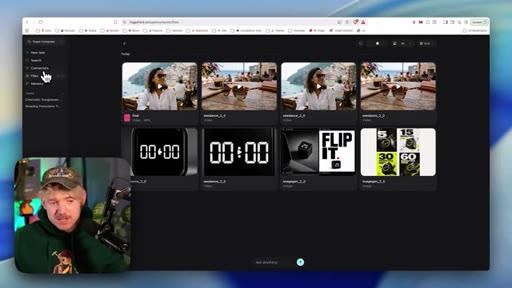
10:15HOOKAnd then you'll see on the left hand side, we have things like memory, where effectively we can add different memories, we can view what we've got. We've got files, which essentially gonna be everything that you track. You can have connectors.
10:23HOOKSo this is your ability to connect to different softwares as you build things up in the supercomputer. And obviously, have a search function to find everything that we like. And one other thing you can find is your usage is gonna be detailed here, which is how much money you spend on video credits and text credits.
10:37HOOKAgain, if you're using Opus 4.7, it's gonna be more costly because it's a more powerful model, but then typically speaking, you should get a better prompt. And so I love the concept of having an agent that's focused specifically on this niche.
10:49One thing I'd say is obviously with the pricing of creating beautiful videos, it does angle more towards the premium side. I wouldn't compare this to, like, chat GPT you're paying $20 a month for. This is more almost like you don't need to fly to Italy to put your products on the table type of cost, or I don't need to hire a big agency.
11:06So I I'd think about it from that lens. And with that in mind, I think what would be really handy is, obviously, the prompts are gonna get way better over time as well, but you wanna make sure that you give it the best prompt possible.
11:17CTAAs with all AI models, the most important prompt is the first one. So I think to limit the number of iterations you do, you always wanna make sure the first one is incredible and you give it all the specifics. All in all, I think this is cool.
11:30CTAAnd, you know, actually, if I had if I was working with a sunglasses brand and they said, dude, go and build something out. Something like this really enables businesses to build up something that looks like actually professional, and it guides you through that. You just wanna make sure your first prompt is incredible, and you are gonna go back a couple of times to get the kind of perfect video for you there.
11:47CTAAnd now we've covered that, the next thing that we need to learn is how to build images and videos inside of CoolCode as part of a system, which we're gonna learn by watching this video right here.
— full transcript
§ 05 · For Joe

The orchestration layer is the product.

Steal this framing

Higgsfield isn't selling AI capability — they're selling pre-loaded expertise and workflow sequencing. The models are commodities; the prompts and pipeline are the moat.

  • Lead with the workflow, not the model. 'Built on Claude' is not a value prop. 'Pre-prompted for your exact use case' is.
  • Steal the storyboard approval gate: show the plan, let the user sign off, THEN execute. Reduces buyer's remorse and makes expensive generation feel safe.
  • Jack's 'every tool has a lane' slide is a reusable positioning format — map your product to a specific job no one else owns.
  • Set the 3-5 iteration expectation upfront in any AI product you ship. Honesty about refinement builds trust.
  • His Claude Masterclass plug at 3:06 is a masterclass in mid-video offer insertion — relevant, not jarring, placed right as attention dips during a UI task.
§ 05 · For You

What this means if you want to try it.

For brand owners and non-technical creators

If you've been putting off building video ads because you don't know how to prompt AI, tools like this exist specifically to remove that barrier.

  • You don't need to understand Opus 4.7 or write prompts from scratch — describe what you want in plain language and the tool handles the rest.
  • Budget for 3-5 attempts to get a video you're happy with. That's normal, not a failure.
  • The more specific your first description (setting, mood, shot style, who's in it), the fewer credits you'll burn on iteration.
  • At ~$39/mo annual, this is significantly cheaper than hiring a videographer for a product shoot — especially for e-commerce.
  • AI video still struggles with product consistency across cuts. Review every frame of the output before approving.
§ 06 · Frame Gallery

Visual moments.