The bait, then the rug-pull.
Every builder who has spent an afternoon prompting Claude and gotten slop back has blamed the model. The presenter argues that the model is almost never the problem — the briefing is. This video is the systems cure for that reflex.
Where the time goes.
01 · Where people get stuck
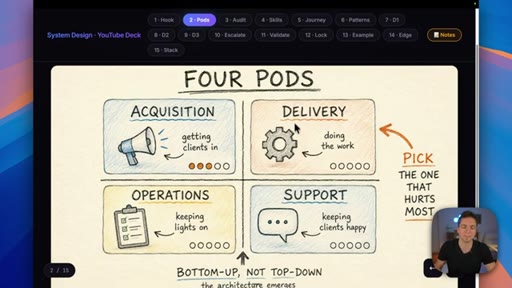
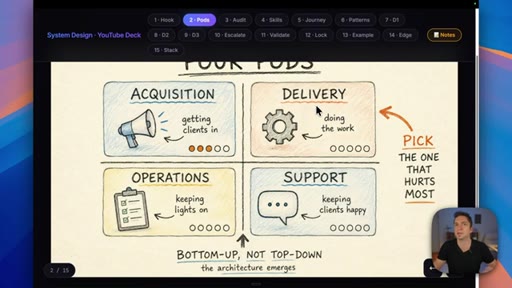
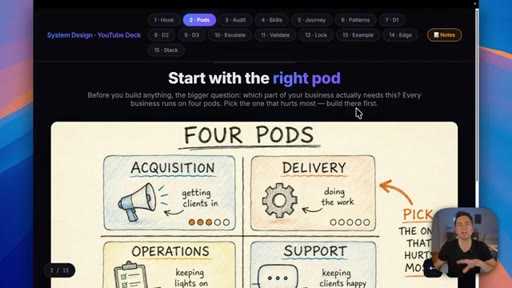
Host names the problem: people dive in without a grounded starting point. Introduces the Four Pods framework as the pre-skill map for any business.
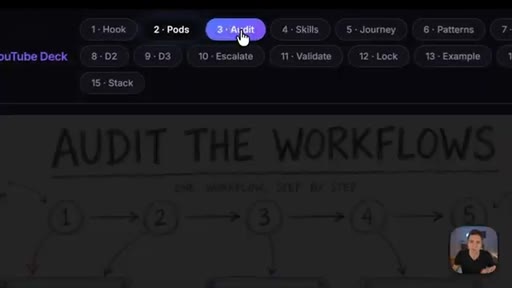
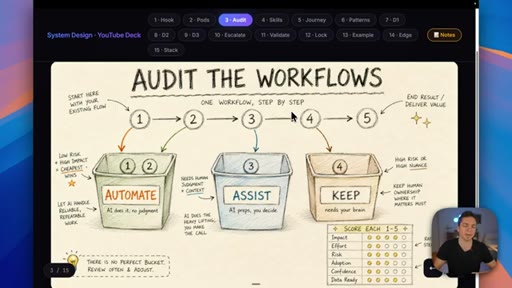
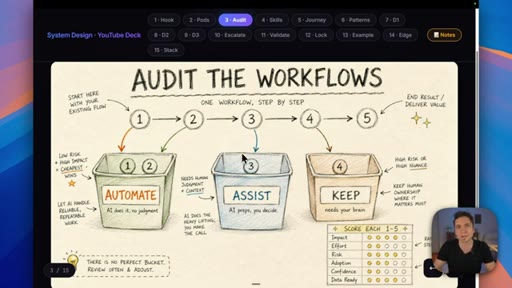
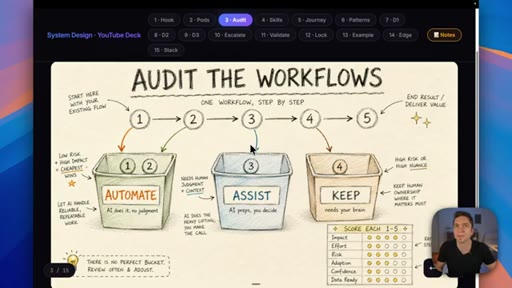
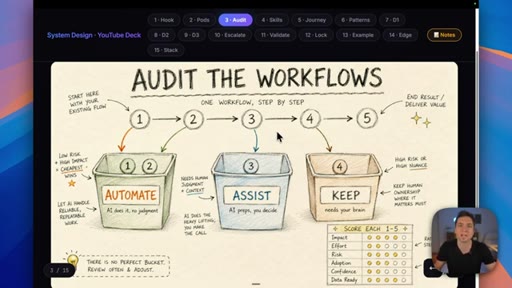
02 · Audit the workflows first
Workflow audit reveals Automate / Assist / Keep buckets, surfaces compliance gaps, and identifies highest-ROI process to tackle first. Argues Operations beats Sales as the starting pod.
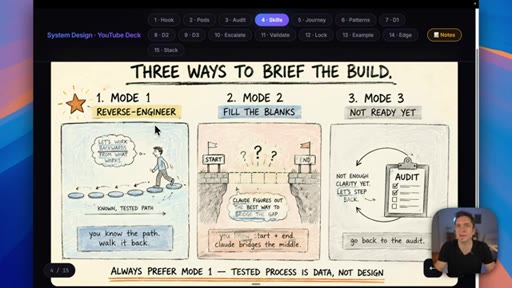
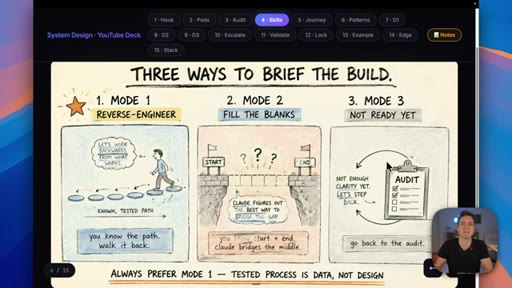
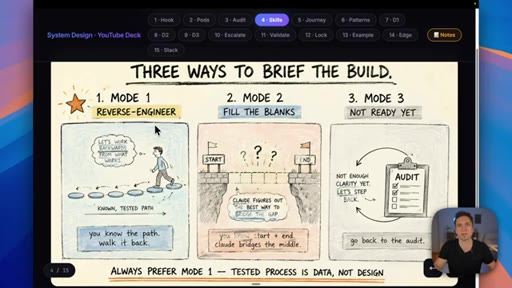
03 · Three briefing modes
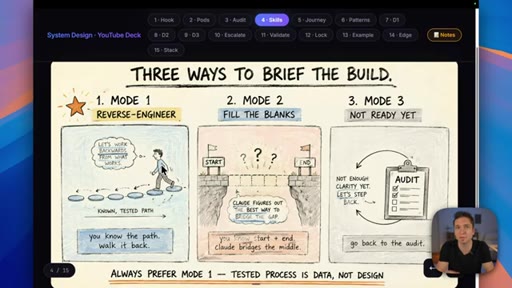
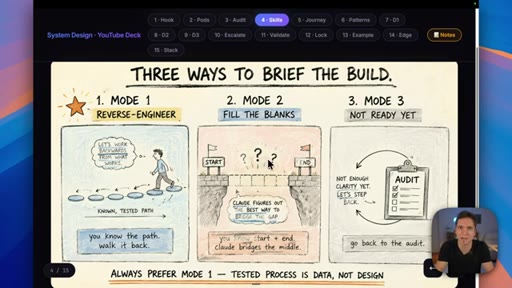
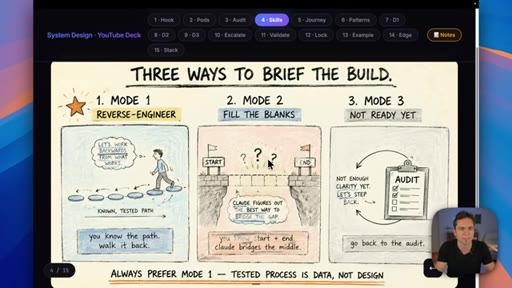
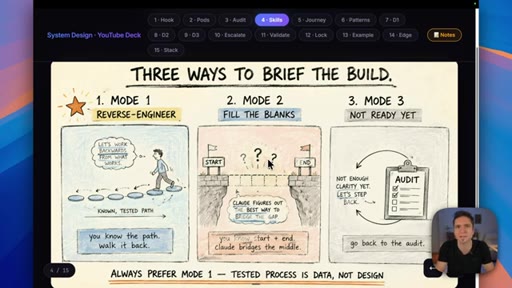
Mode 1: Reverse-engineer (walk backwards from goal). Mode 2: Fill-the-blanks (give what you have, Claude fills gaps). Mode 3: Not ready yet — go back to audit.
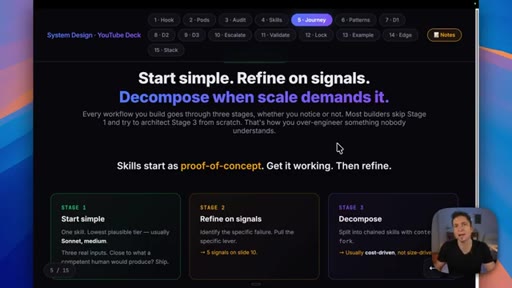
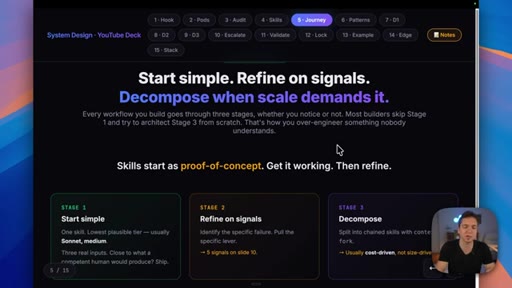
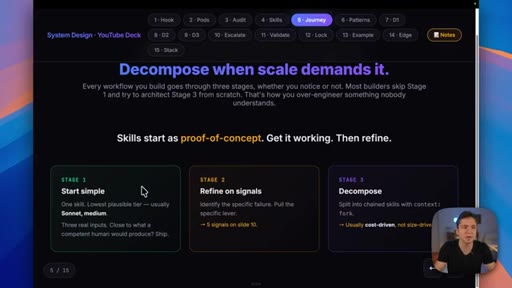
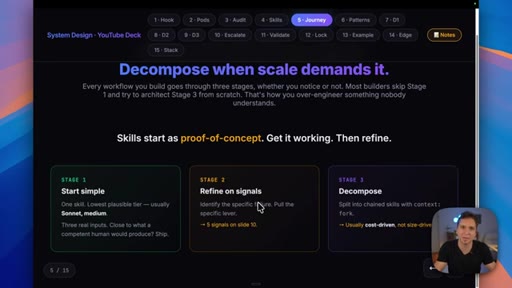
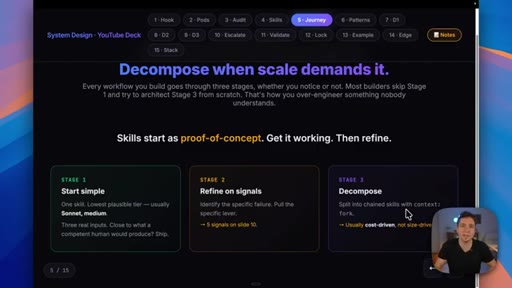
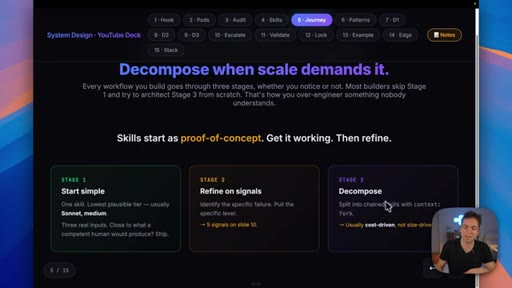
04 · Three stages of skill development
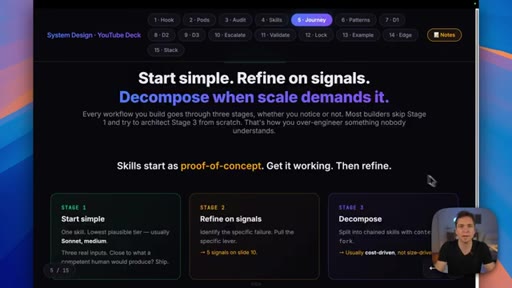
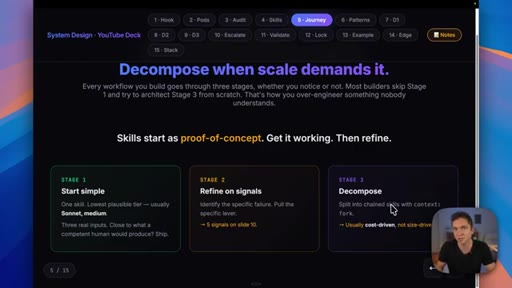
Stage 1: Proof of concept with lowest plausible tier. Stage 2: Refinement via rubric and evaluator. Stage 3: Decompose into skill chains when context overhead climbs.
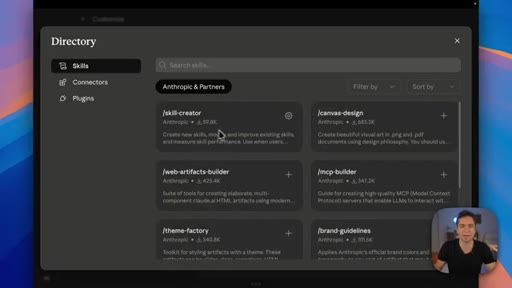
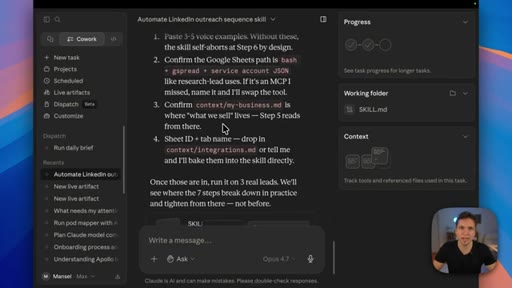
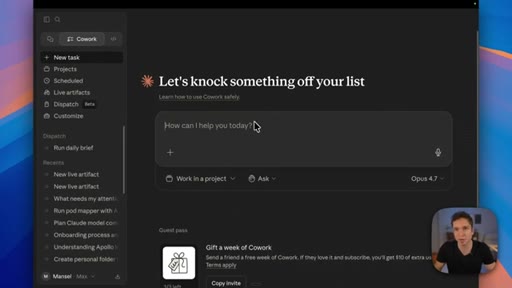
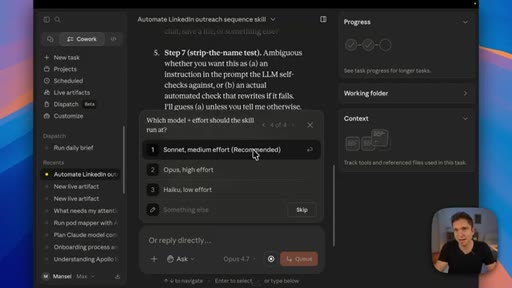
05 · Live demo: Skill Creator in Cowork
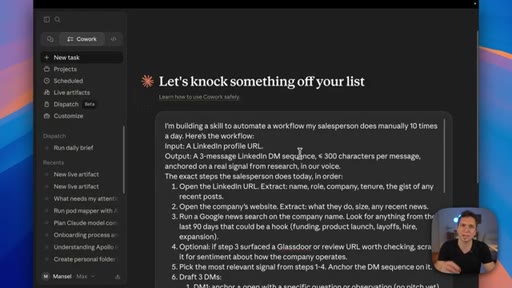
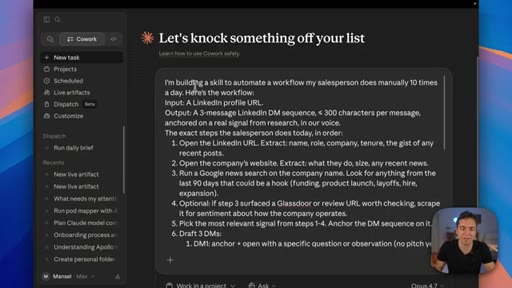
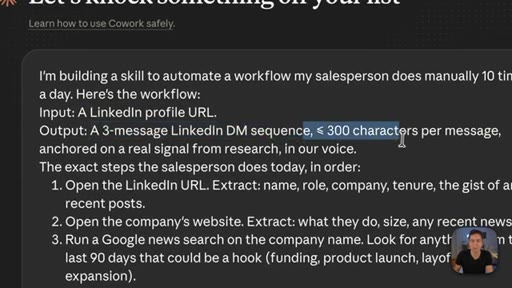
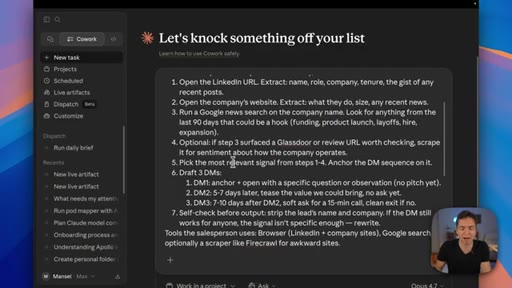
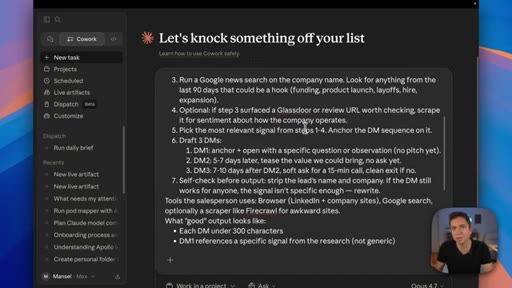
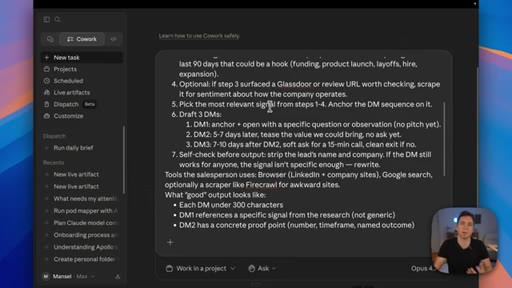
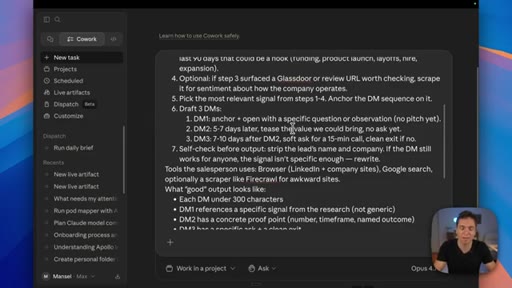
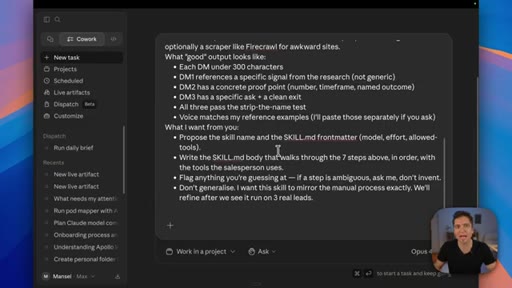
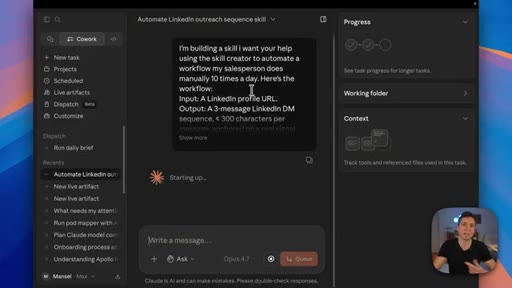
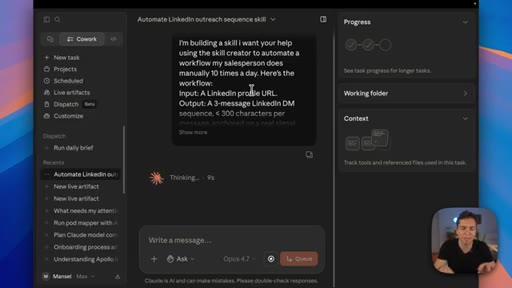
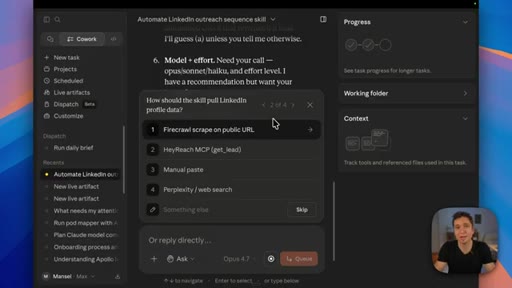
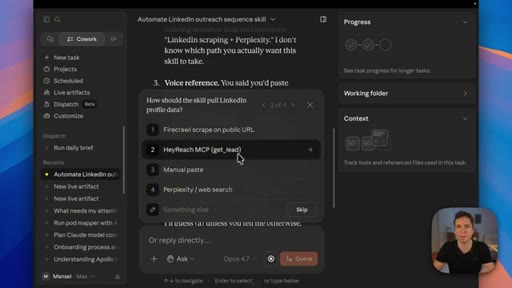
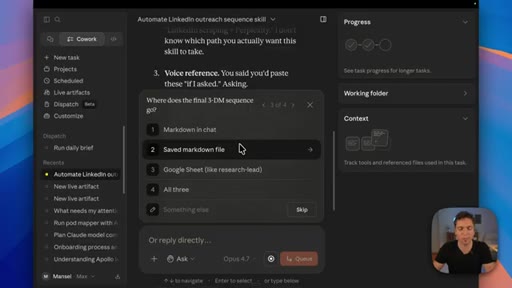
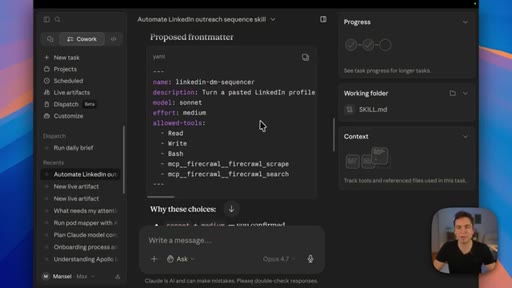
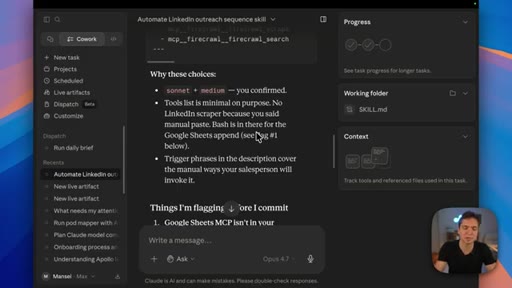
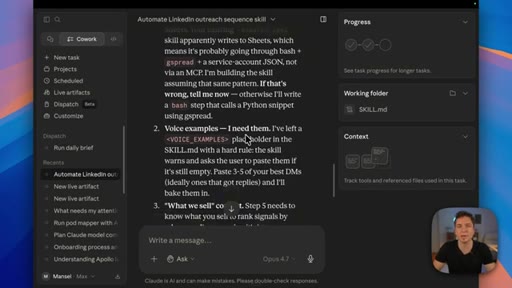
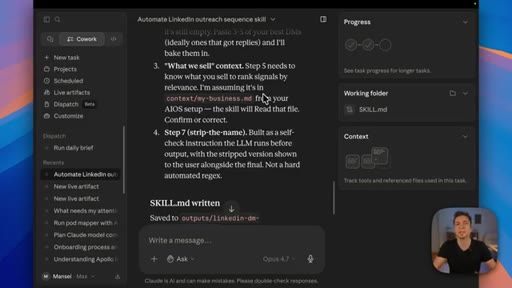
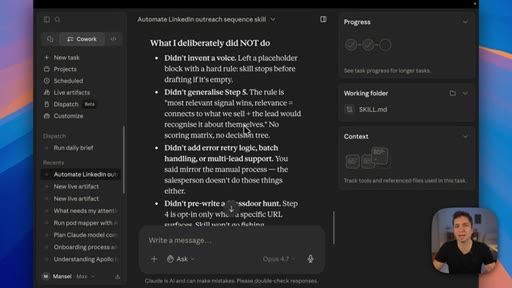
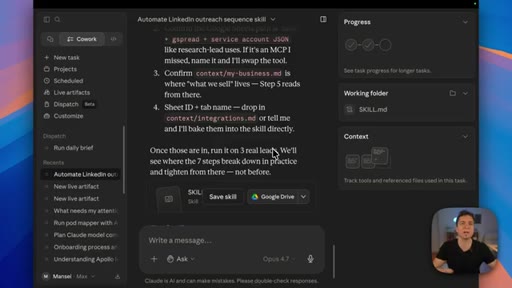
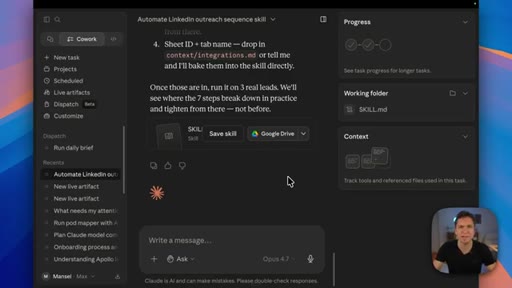
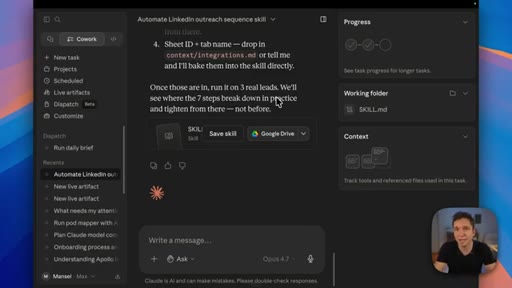
Builds a LinkedIn DM outreach skill live. Shows how to install the skill creator plugin, submit a structured workflow brief, respond to qualifying questions, and review the generated SKILL.md.
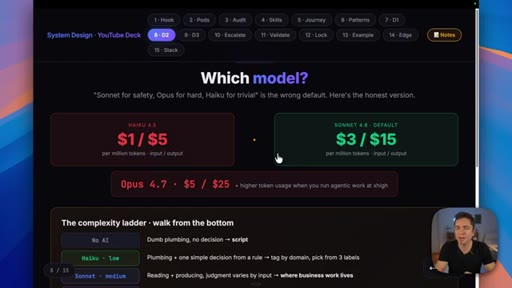
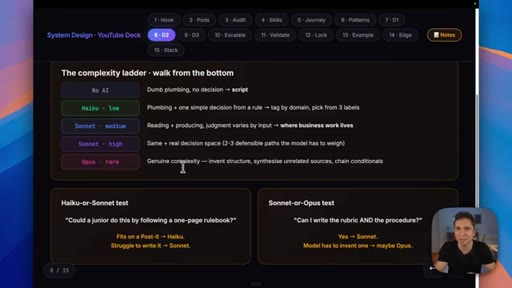
06 · Model and effort level selection
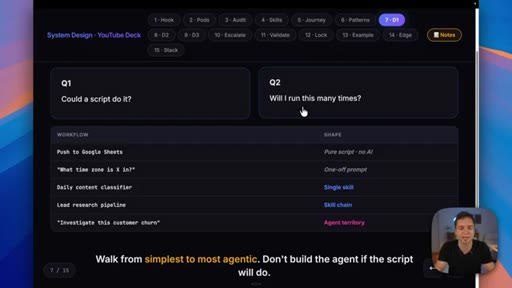
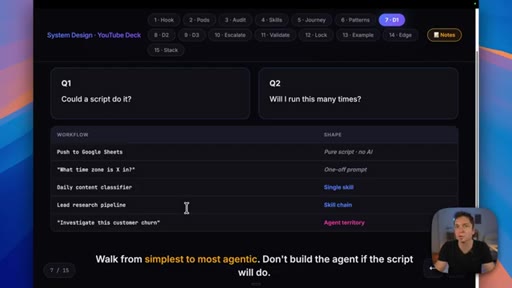
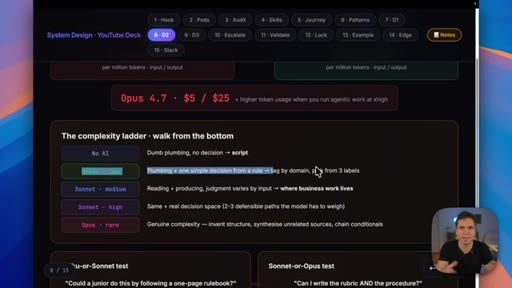
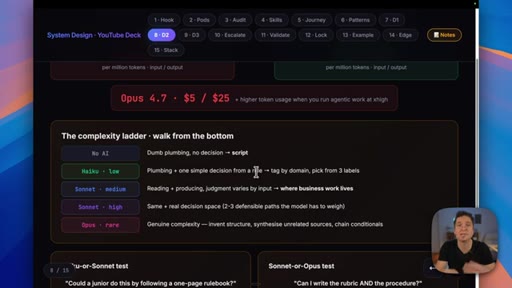
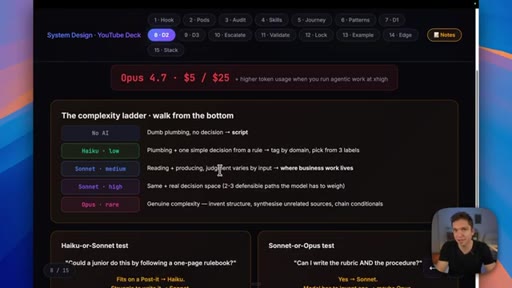
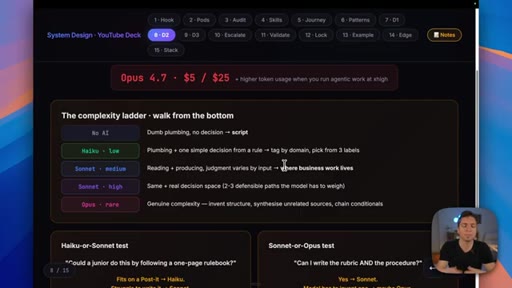
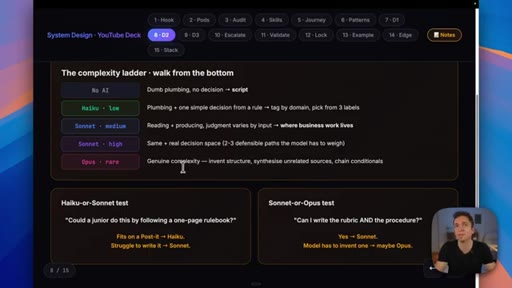
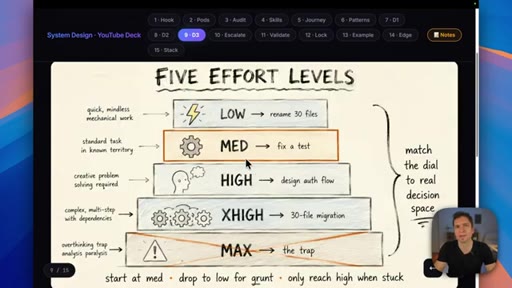
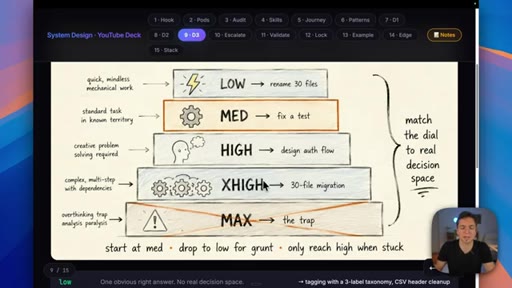
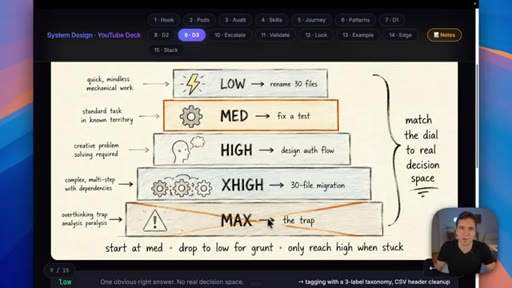
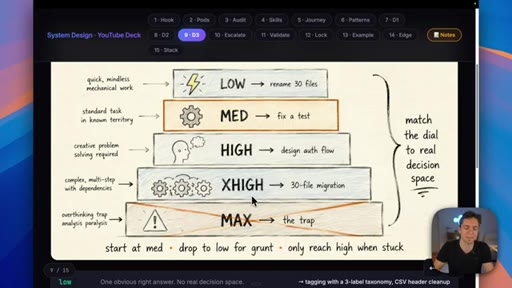
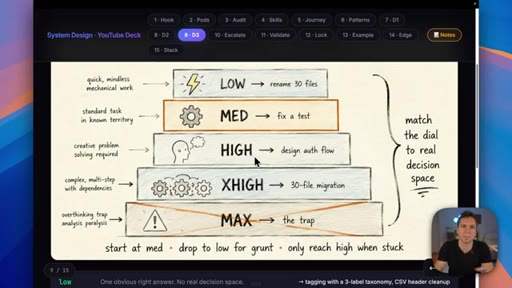
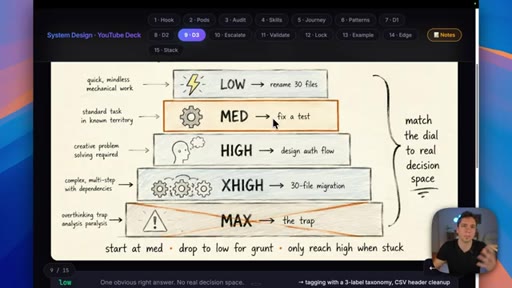
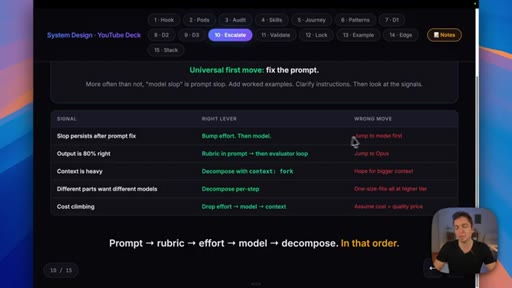
The complexity ladder: No AI to Haiku to Sonnet-medium to Sonnet-high to Opus. Pricing table. Five effort levels with MAX flagged as a trap. Escalation order.
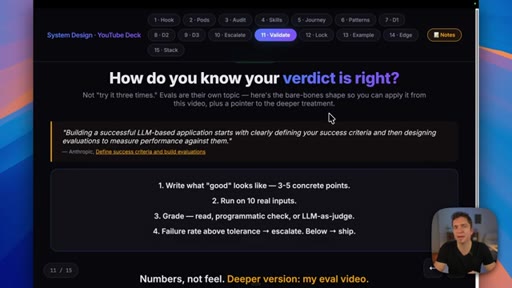
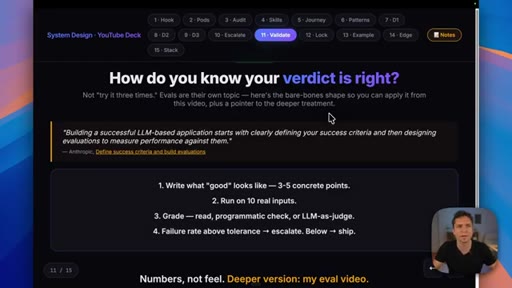
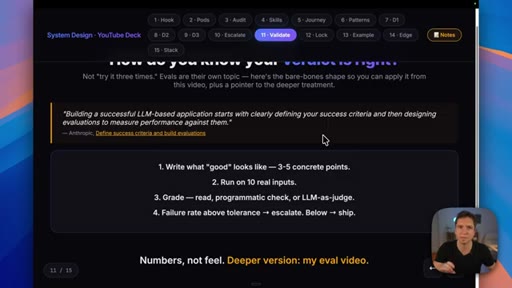
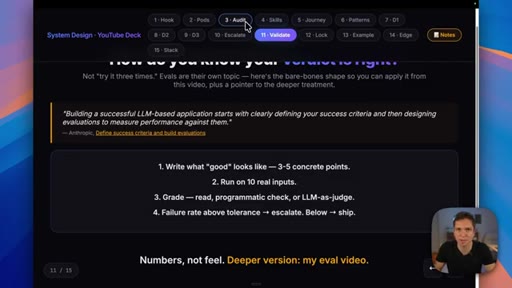
07 · Testing with evals
Write 3-5 concrete success criteria. Run 10 real inputs. Grade programmatically or LLM-as-judge. Failure above tolerance means escalate.
Visual structure at a glance.
Named ideas worth stealing.
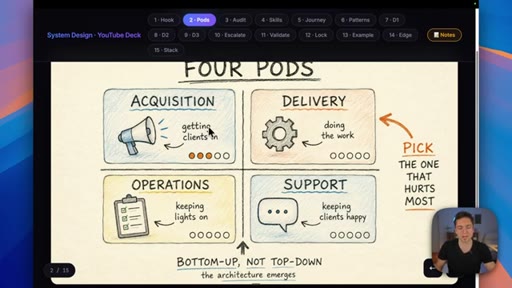
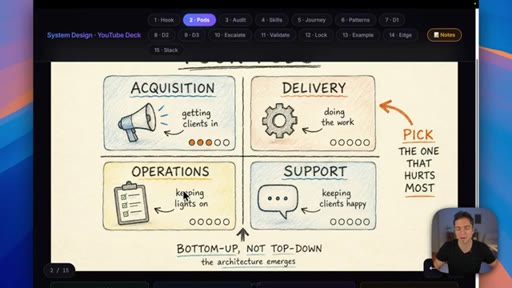
Four Pods
- Acquisition
- Delivery
- Operations
- Support
Maps every business into four functional areas to identify which workflows to audit first.
Automate / Assist / Keep
- Automate (AI does it, no judgment needed)
- Assist (AI helps, human decides)
- Keep (human owns it, needs brain)
Triage framework applied to each workflow step during the audit.
Three Briefing Modes
- Mode 1: Reverse-engineer
- Mode 2: Fill-the-blanks
- Mode 3: Not ready yet
Decision tree for how to approach Claude when building a new skill.
Three Stages of Skill Development
- Stage 1: Proof of concept
- Stage 2: Refinement (rubric + evaluator)
- Stage 3: Decompose into skill chains
Sequential build stages preventing over-engineering.
Complexity Ladder
- No AI: dumb plumbing
- Haiku - Low: one simple decision rule
- Sonnet - Medium: reading + producing
- Sonnet - High: real decision space
- Opus - Rare: genuine complexity
Maps task complexity to model tier. Haiku if a junior can follow a one-page rulebook; Sonnet if they have to write the rulebook; Opus if they have to invent the rubric.
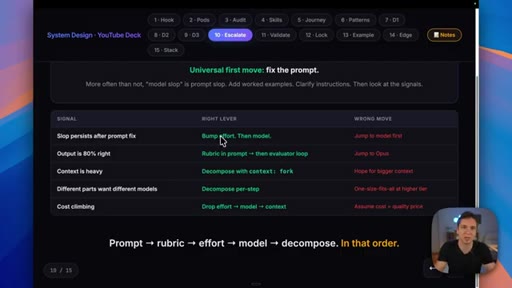
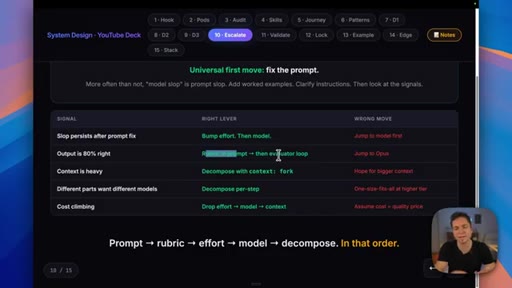
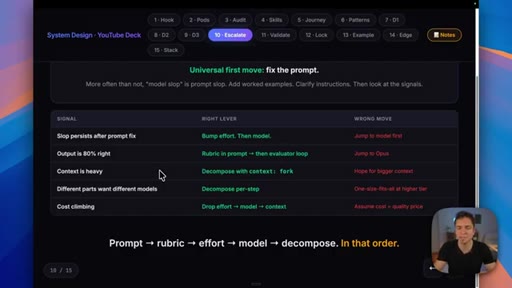
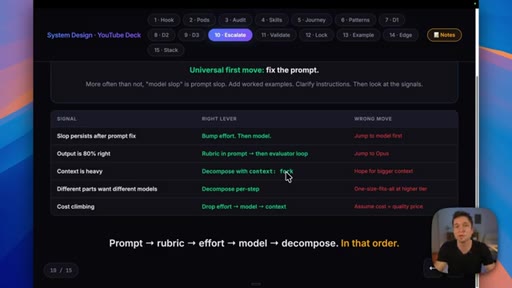
Escalation Order
- 1. Fix the prompt
- 2. Bump effort level
- 3. Add rubric + evaluator loop
- 4. Decompose with skill chaining
- 5. Only then: upgrade the model
The correct sequence when a skill output is not good enough.
Bare-Bones Eval Framework
- 1. Write what good looks like (3-5 points)
- 2. Run on 10 real inputs
- 3. Grade: programmatic or LLM-as-judge
- 4. Failure above tolerance: escalate. Below: ship.
Minimum viable evaluation process for any Claude skill.
Lines you could clip.
"If you cannot explain the behavior or the action that you want AI to take, that means that you do not understand it well enough, and therefore, you should not be automating it."
"You do not just replace a model because you got a bad DM output. That would be ridiculous."
"If the thing is writing AI slop, that means you either have not given it enough guardrails or you have given it bad examples of what good is."
"The clearer we are upfront before we even look at Claude building a skill for us, the better the skill is gonna be from the get go."
Things they pointed at.
How they asked for the click.
"If you do need extra help with this or you wanna build your own AI operating system, you can check out my community."
Soft community-focused CTA at the end. Primary: skool.com/ainative. Description links to multiple deep-dive videos.
Word for word.
The workflow comes before the model.
Every Claude skill that returns slop has a briefing problem upstream — and fixing that problem follows a fixed sequence that never starts with upgrading the model.
- Map your business into four pods (Acquisition, Delivery, Operations, Support) before touching any AI tool — this gives you a logical place to start instead of a blank page.
- Audit the workflows inside those pods to triage each step into Automate, Assist, or Keep; the audit is where you discover the actual process Claude will need to follow.
- If you cannot explain the behavior you want from AI step by step, you do not understand the workflow well enough to automate it yet — the audit is the fix, not a bigger model.
- Start every skill as the simplest possible proof of concept at the lowest plausible model tier; you are proving the idea can work, not building the final version.
- When output quality is insufficient, escalate in this order: fix the prompt with better examples and guardrails first, then bump effort level, then add a rubric with an evaluator loop, then decompose into skill chains, and only then consider a larger model.
- Skill chaining is a cost and context management technique, not a complexity technique — you decompose when the context overhead of a single skill becomes too expensive, not because the task feels hard.
- Testing a skill is not running it three times and eyeballing the result; write 3-5 concrete success criteria, run it on 10 real inputs, grade with a programmatic check or LLM-as-judge, and ship only when the failure rate is below your threshold.
- Use deterministic tools (N8N, Make, plain scripts) for tasks that need no judgment — they are more reliable and cheaper than a Claude skill, and reserving AI for judgment-required tasks makes your entire system more predictable.