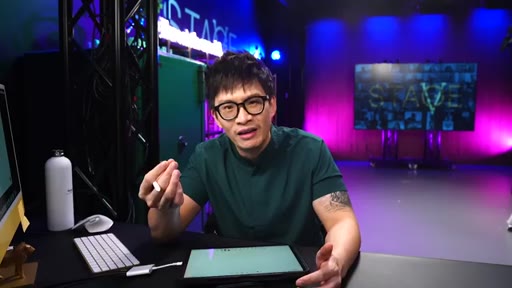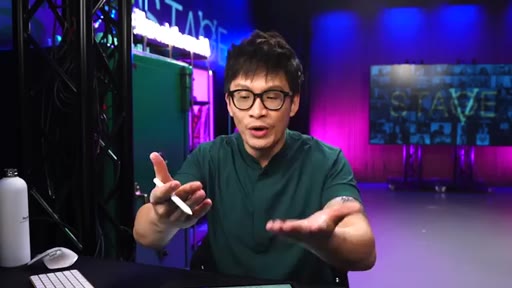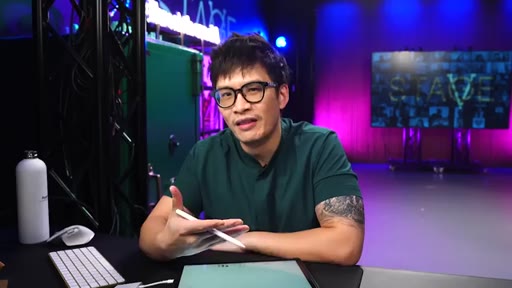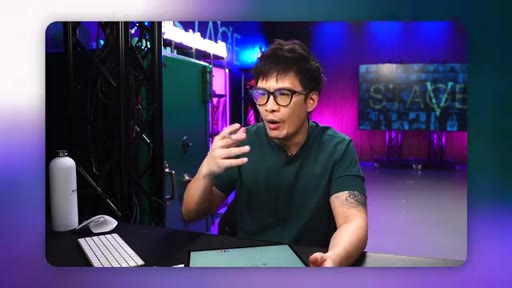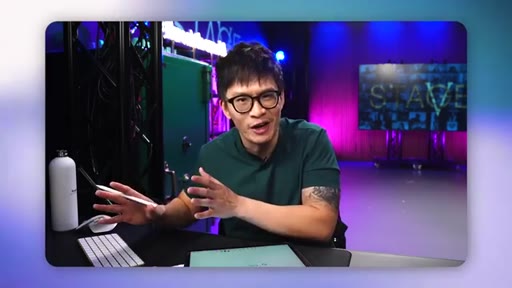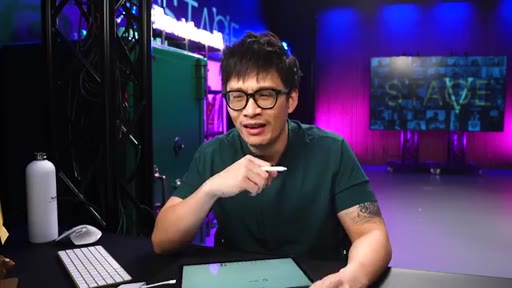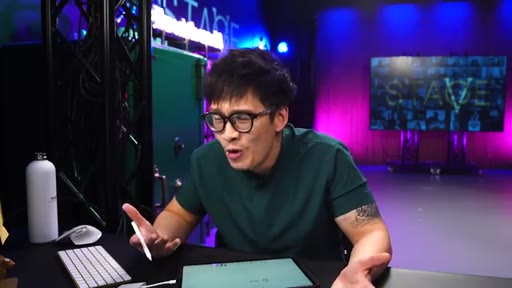
Vinh Giang · Youtube · 07:56

How to Answer ANY Question (Even If You Don't Know The Answer!)

A 3-step framework from communication coach Vinh Giang for answering any high-pressure question on the spot without going blank.

Posted
May 15th 2026
7 days ago
Duration
07:56
Format
Tutorial
educational
Channel
VG
Vinh Giang
§ 01 · The Hook

The bait, then the rug-pull.

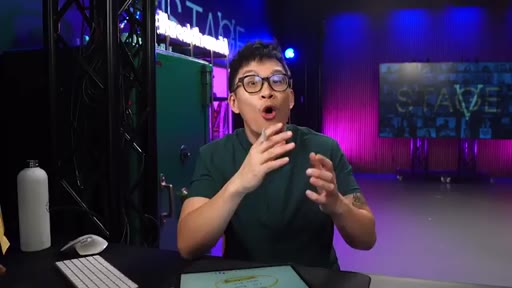
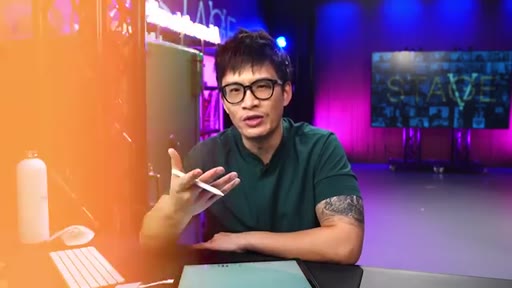
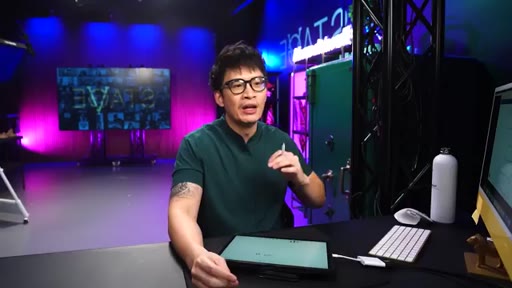
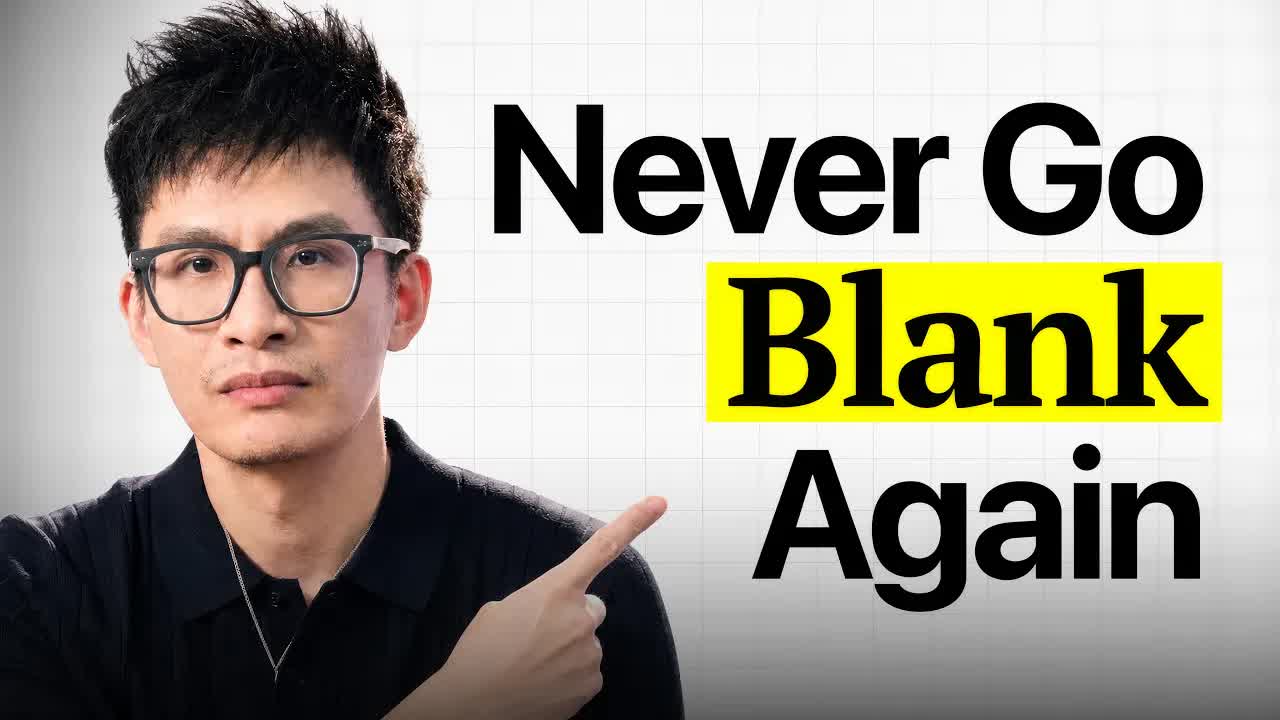
Vinh Giang opens with a promise so direct it almost feels aggressive: three steps and you will never go blank again. He has tested this on stages of ten thousand people. The hook is both spoken and plastered across a full red screen in italic before he has been on camera for six seconds.

§ · Stated Promise

What the video promised.

stated at 00:22 "As long as you follow these exact three steps in this video, you'll never go blank again." delivered at 07:56
§ · Chapters

Where the time goes.

00:00 – 02:56

01 · Step 1 - Pause

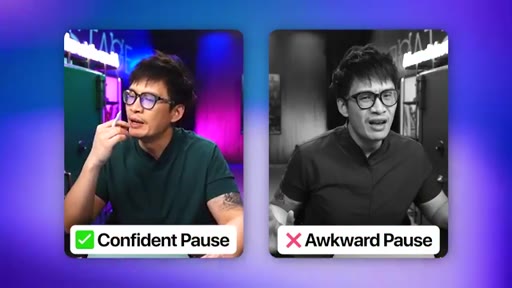
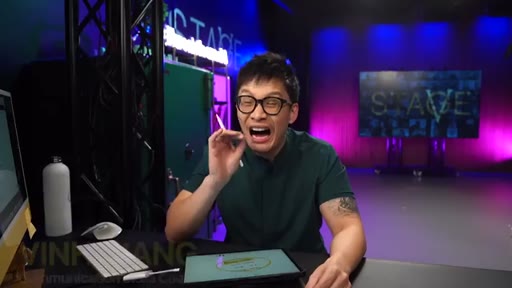
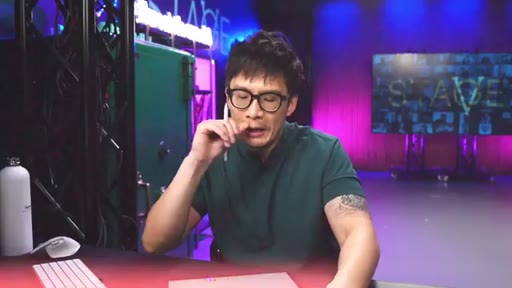
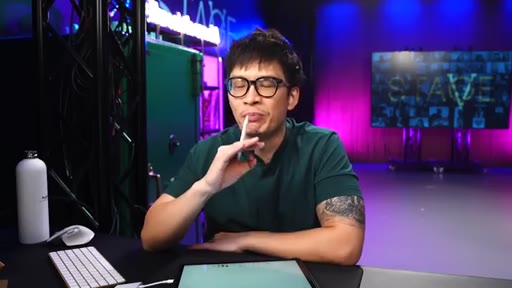
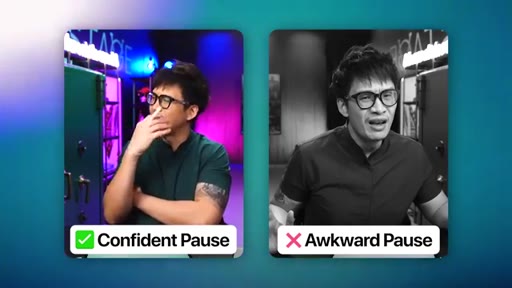
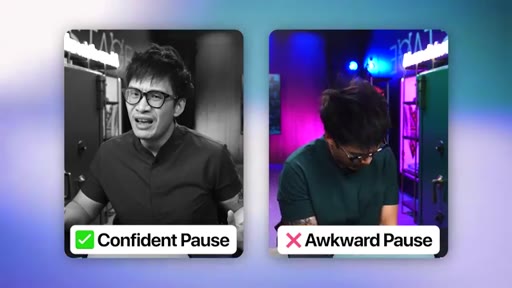
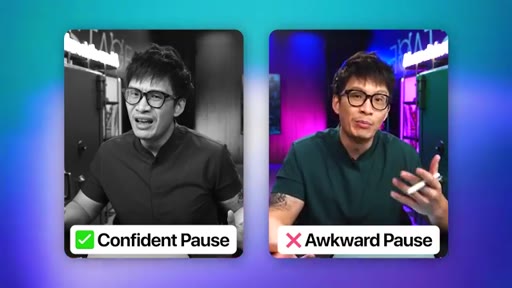
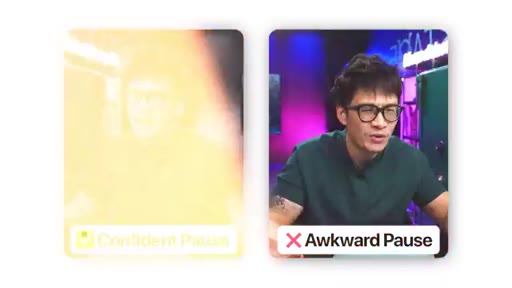
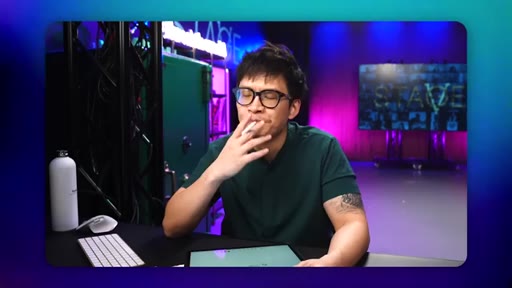
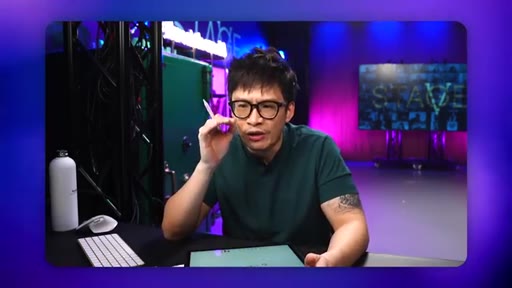
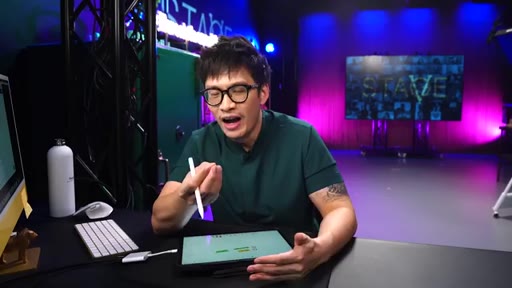
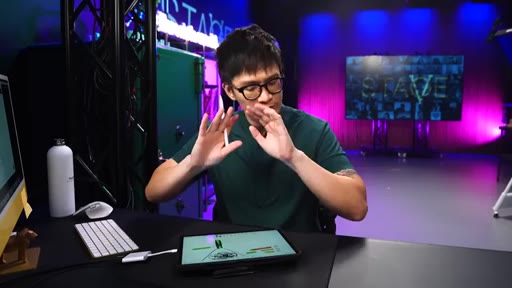
The mental block happens when you try to answer in a millisecond. Fix: intentional pause plus deep breath. Vinh distinguishes Confident Pause (eyes up, composed) from Awkward Pause (eyes down, fidgeting) with a split-screen graphic at 02:13.
02:57 – 06:10

02 · Step 2 - The One Thing Framework

If you still cannot answer after pausing, gracefully defer. When you do answer, use the one thing structure to distill complexity to one focused point. Demonstrated live with a content-creation example. Mid-video CTA for free crash course at 05:27.
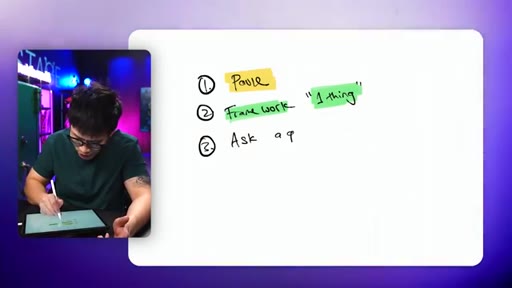
06:11 – 07:56

03 · Step 3 - Ask a Question

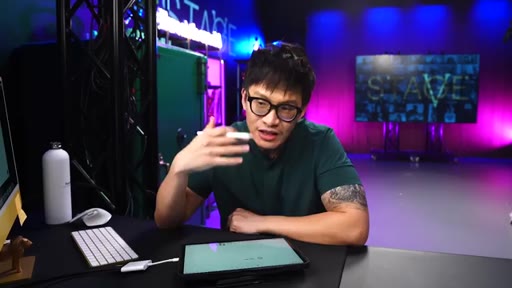
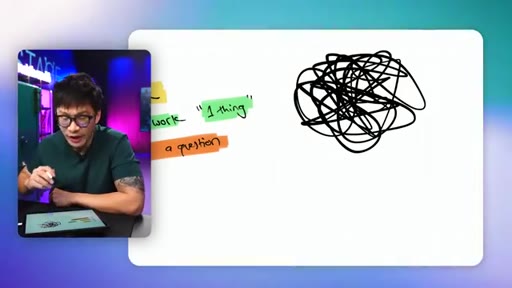
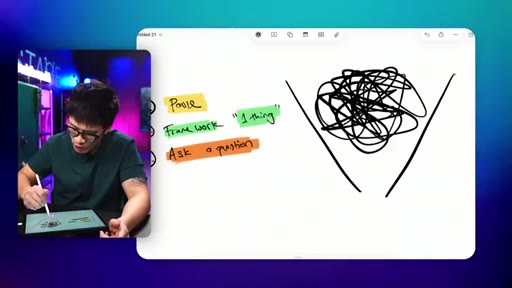
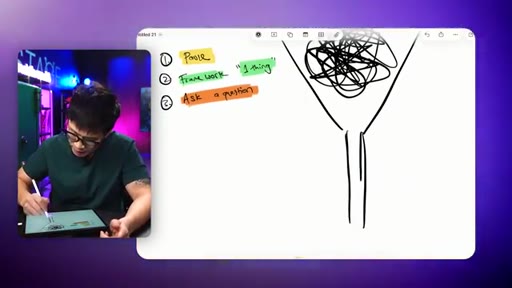
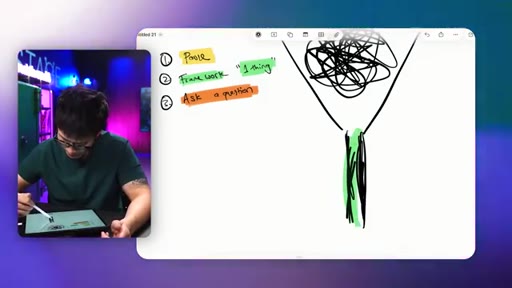
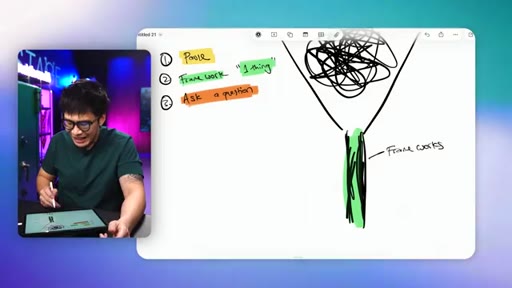
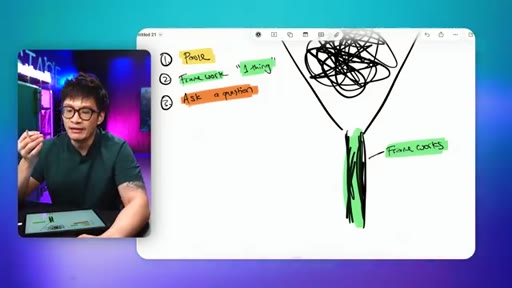
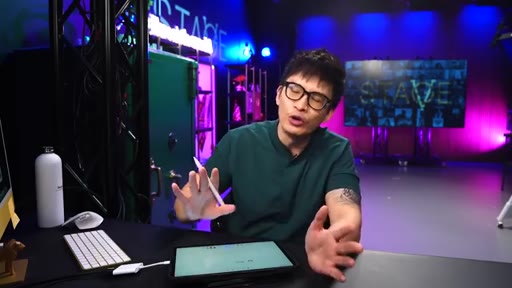
After delivering the one thing, ask: Do you want me to go deeper? The whiteboard builds the full distillation diagram: messy scribble to funnel to single line. Frameworks distill your thinking.

§ · Storyboard

Visual structure at a glance.

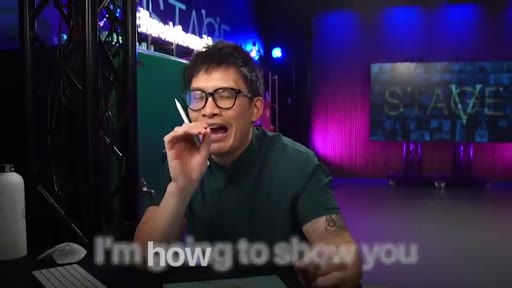
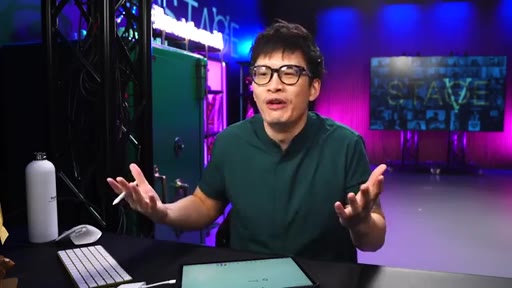
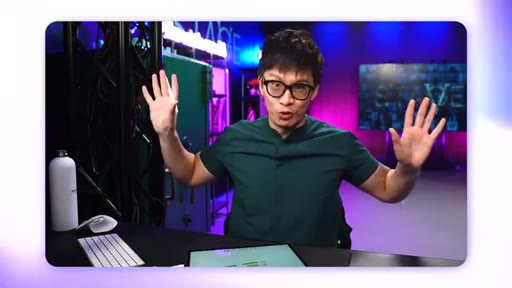
open - talking head hook
without going blank red screen
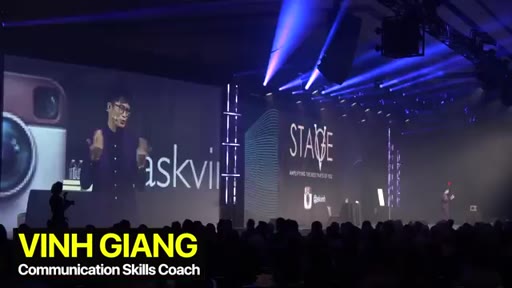
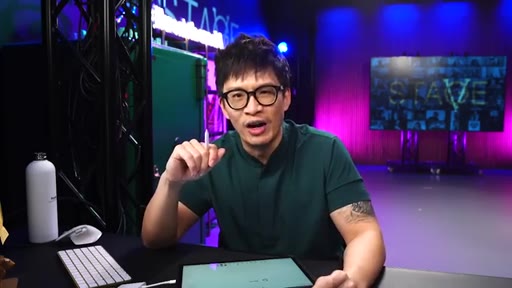
Vinh stage B-roll plus name card
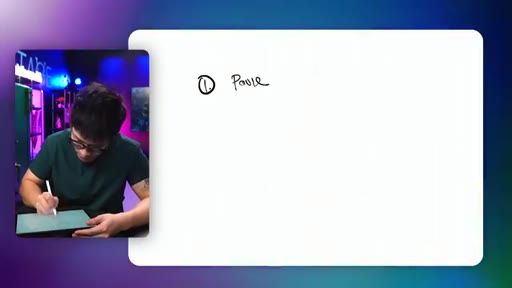
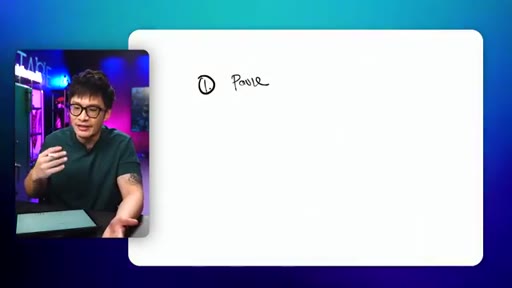
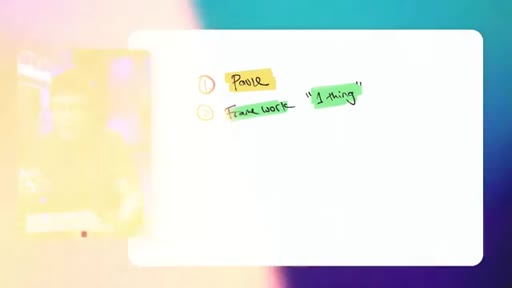
whiteboard: Step 1 Pause
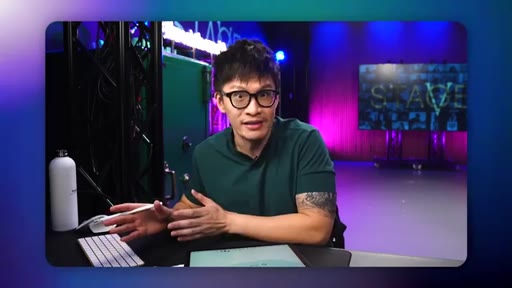
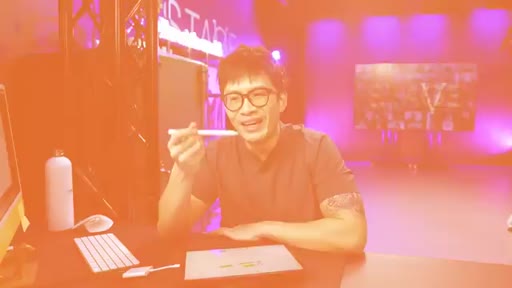
Confident Pause vs Awkward Pause split-screen
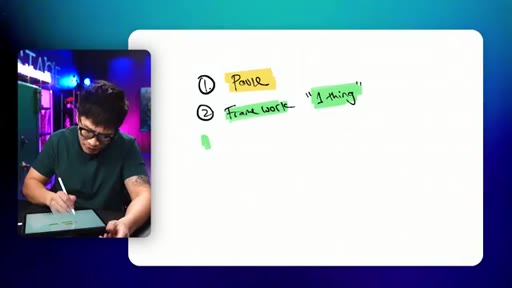
Step 2 intro - framework setup
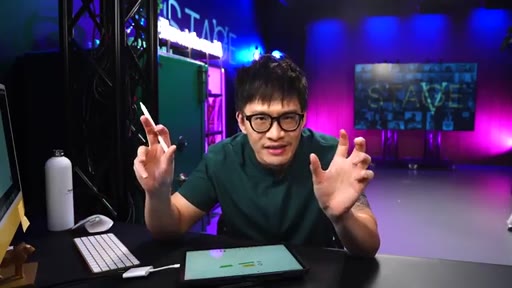
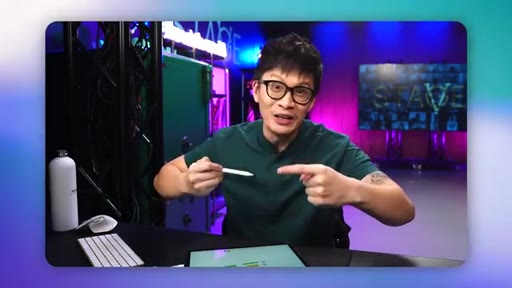
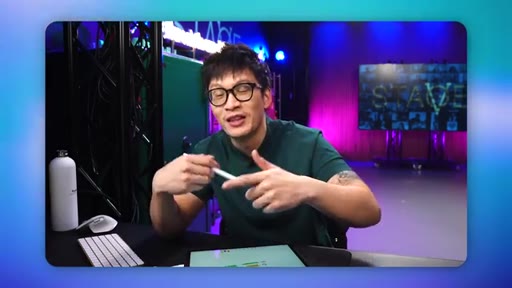
The One Thing live demo
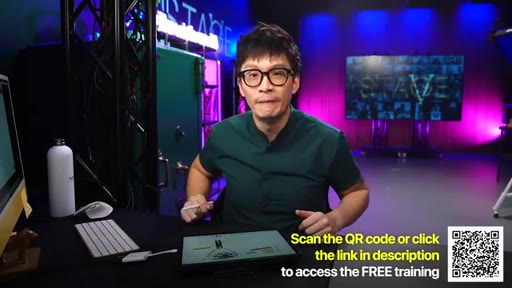
Mid-video CTA - free crash course QR
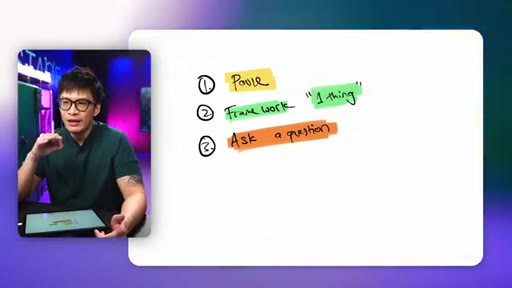
Step 3 - Ask a Question plus distillation diagram
End card QR code
§ · Frameworks

Named ideas worth stealing.

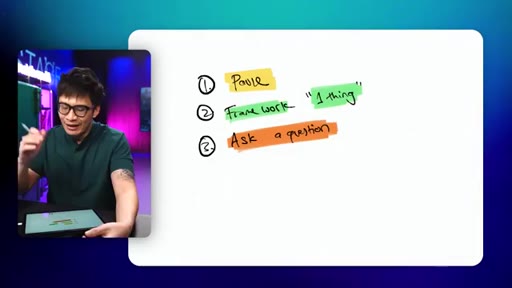
00:00 list

Pause, One Thing, Ask a Question

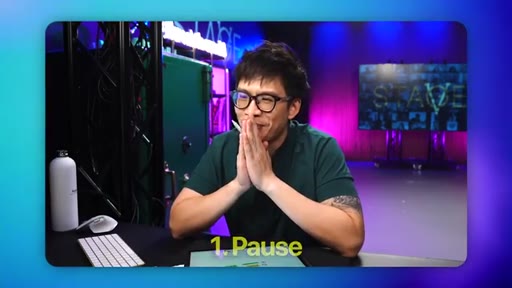
  1. Pause (collect your thoughts, deep breath)
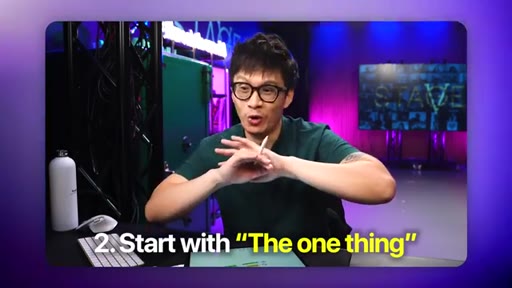
  2. Framework: The one thing I would say is... (distill to one point)
  3. Ask: Do you want me to go deeper?

Three-step model for answering any high-pressure question without panicking or rambling.

Steal for MCN+ coaching content, Creator Hotline call-in format, any live Q&A or interview prep content
02:13 concept

Confident Pause vs Awkward Pause

Same action (pause), two interpretations based on body language. Confident = eyes up, composed. Awkward = eyes down, fidgeting. Visual tells determine how the pause is perceived.

Steal for Split-screen format for any same-action, two-outcomes lesson
07:20 concept

Frameworks Distill Thinking

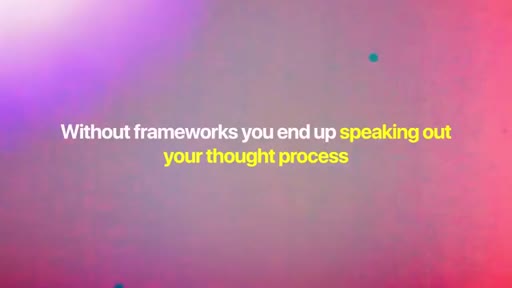
Vinh draws messy thought scribble to funnel to single clean line. Without a framework you speak your raw thought process (rambling). With one, you distill to what matters.

Steal for Any video teaching structure or communication - the visual metaphor is portable
§ · Quotables

Lines you could clip.

00:00
"I'm going to show you how to answer any high pressure question on the spot without going blank."
Clean promise hook, no setup needed → TikTok hook
01:45
"When you answer a question without taking a moment to think about what the person said, it looks as if you don't care."
Counterintuitive - most people think fast = smart, he flips it → IG reel cold open
03:59
"People don't want a rushed answer. They want an answer that adds the most value to their lives, and people are willing to wait for that."
Permission to pause - releases anxiety around silence → newsletter pull-quote
07:20
"A framework distills your thinking."
Mic-drop four-word thesis. Pairs with the whiteboard visual. → IG reel cold open
§ · Pacing

How they spent the runtime.

Hook length30s
Info densityhigh
Filler5%
§ · Resources Mentioned

Things they pointed at.

§ · CTA Breakdown

How they asked for the click.

05:27 link
"I put together a free two hour crash course where I share three powerful communication frameworks - just click the link in the description or scan the QR code."

Clean mid-content delivery - stays in teaching voice, no hard stop. QR stays on screen. Repeated as visual-only at end card without verbal re-ask.

§ 04 · The Script

Word for word.

HOOK opening / re-engagementCTA the pitch analogy story
00:00HOOKI'm going to show you how to answer any high pressure question on the spot without going blank. I'm talking about when your boss puts you on the spot in front of your team or when a client asks you something you don't know the answer to or even when you get asked an interview question that catches you off guard. As long as you follow these exact three steps in this video, you'll never go blank again.
00:22HOOKI've tested this process in high stake meetings to stages of up to 10,000 people, and it works. So here's how to do it. The first thing I would do
00:31is I would pause to collect my thoughts, and I'll give myself as long as of a pause as I need so that I don't start to freak out.
00:40The mental block happens when you're trying to come up with an answer in one second, in half a second, in a millisecond. That's what causes the panic, the anxiety which is then going to inevitably lead to a mental blank.
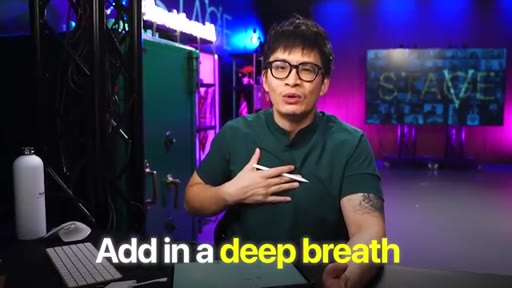
00:52Whereas when you pause, take a deep breath.
00:58As you pause and take a deep breath, that creates mental clarity. That helps you calm your nervous system down. And in that state, you are much more likely to give yourself the best chance to find a good response.
01:10People tend to think that answering a question quickly makes them look good, makes them look smart. When you answer a question really quickly, it doesn't do that.
01:19It makes it seem as if you didn't put any thought into the answer. Because if you asked me a question and you said, hey, Vin. How do you answer a high pressure situation?
01:27Oh, I can I don't know how to do that? The first thing you're gonna do is you're just gonna pause. And then after you pause, you're gonna use a framework.
01:31And after you use a framework, you can deliver it confidently. Most people just speak when they're just winging things, and I think that's gonna help them create a really good career. That's why.
01:39No. It doesn't. When you answer a question without taking a moment to think about what the person said,
01:45it looks as if you don't care. When you ask me this, if I paused
01:56And then now I answer your question. That's a confident pause. That's a pause of me processing what you're saying, carefully considering what I'm gonna say next,
02:06and then sharing my thoughts. Now, there's a few key things I wanna say here. If you look to the side and you think and you raise your hand up and you start to think about something like this or you go into the thinker pose and you start to think,
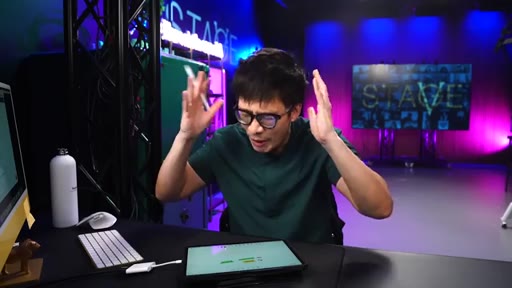
02:18this is a powerful pose to move into because it shows people now I'm processing. Now, that's a good pause. However, if you pause and then you you you slut and then you look down and then you're you're fidgeting with your hands, that's a negative pause because they'll perceive that pause as you being anxious
02:33and you not knowing the answer. So there's two different types of pauses. One where I'm freaking out and I don't know the answer and you caught me out.
02:40One where I'm being really composed and I'm I'm thinking about how to answer this in a way that adds the most value to you. So just notice that within body language cues alone plays a very important part in that. The second thing that I would say is if you pause for a good two to three seconds
02:57and you can't in that moment think about the optimal reply, then be straightforward with the person that's in front of you. Say they ask you a question about marketing, so I'm gonna create a mock scenario.
03:07Vin, how should I use marketing, organic marketing to get more leads for the business that I'm running?
03:17Emily, I'd love to share with you a thoughtful answer. Let me ask you this. Would it be helpful if I met with you later today and I'll give you a comprehensive answer?
03:27Because I've been through content creation for the last fifteen years of my life, and I wanna give you the most meaningful answer. So I want a little more time to think on that. Is that okay for me to take a bit more time to think on it and and give you the most valuable answer possible later today?
03:39Fantastic. I'll I'll set up a time. Let's why don't we set up a time so I can think about it over lunch, and I'll share with you the experience that I have.
03:46Something like that is fine. It's totally fine. I think we panic because we think
03:53we have to prove ourselves by answering them in the moment off the cuff straight away. People don't want a rushed answer. They want an answer that adds the most value to their lives, and people are willing to wait for that.
04:05The next thing I'm gonna say is that what increases your chances of being able to answer on the spot is I would use a framework. Because when someone asks you, Vin, can you teach us how to create organic content that creates leads? Let's say that's the example.
04:19My brain now is freaking out because there is so many different things you can do for content creation that helps generate leads, for example. My brain's going crazy because I'm thinking about all the different things that you can do. Whereas when you use the framework, the one thing so I'll show you this in action.
04:33Someone asked you a question. Hey, Vin. What's something that I can do when it comes to content creation to get more leads organically?
04:43Listen. The one thing I would say about content creation, whether it's for lead generation or
04:49views or building the number of followers, the one thing that I would say is consistency. Consistency is the most important thing. That's the most important strategy that I've discovered as the universal truth.
05:01To become better at generating more content and generating more leads, just keep creating content. And as you create content, you'll get better and better and better through and you'll learn how to get more views, and then you'll learn how to get more leads. But the underlying foundation is consistency.
05:17CTAI'm able to deliver that, and I use the sentence, the one thing. Now beautiful thing about this is that I'm not saying that that that is everything to do with content creation.
05:27CTAI'm saying that that if there was one thing to focus on, that's what I would focus on. And if you haven't been through a framework class with me, I put together a free two hour crash course where I share three powerful communication frameworks help you improve the way you speak while you're under pressure so that you can come across more clear, concise, and coherent in any situation.
05:43CTAJust click the link in the description, or you can scan the QR code that's on screen. Again, it's completely free, and thousands of people have been through it, so go check it out. And by doing this, I now have given myself time
05:55to think more on this topic, talk on the topic in a focused way. So I've talked about consistency. But what you've done there is you've brought yourself time to better answer their question
06:04in the most valuable way possible. The third thing you do at the end of you using the framework, the one thing, the third thing you do is you ask a question.
06:13And the question you ask right at the end is, once again, depending on the context, is did you want me to go deeper on that topic? Did you wanna get more granular in terms of the strategy?
06:22I can look at their facial expressions. If they're smiling and nodding, that's what they're after. And at the end, I check-in.
06:27Do you want more? Do want me to go deeper on this? Do you wanna go to pragmatic strategies on how to create hooks and bodies and CTAs, call to actions, etcetera?
06:35Do you want me to do that? And they might say yes. And if they say yes, then you go down deeper in the rabbit hole.
06:39The danger in not using frameworks and answering questions on the spot is you end up speaking out your thought process. This is scientifically how your thinking process looks.
06:51Yeah. This is a scientific diagram that I'm drawing. And when someone asks you something about content creation and you don't follow a framework, your brain starts to go, oh, of course, can tell you about content creation and doing things organically.
07:03You know, the first thing you gotta understand from a foundational level is you gotta be consistent. The second thing I gotta tell you about too is that you gotta write a really good hook. A lot of people have a really good body And then you're just blah blah blah blah blah blah blah.
07:12No matter how valuable what you're saying is, the value is lost in you rambling. So what a framework does, a framework
07:20distills your thinking. That's what it does. This distillation process here,
07:26that process right here,
07:29that's what frameworks do.
07:34CTABecause it simply distills your thinking into something that is more concise, more coherent, and it's going to be more credible as you communicate to that point in that concise way. Pause.
07:47CTAOnce you learn the frameworks, pick a framework, share just one thought about that topic, ask a question.
07:52CTADo you wanna go deeper? That's the best way for you to navigate that situation.
— full transcript
§ 05 · For Joe

Steal the format, not just the framework.

Creator playbook

The real teaching is structural: Vinh builds the answer live on screen while explaining it, so the viewer watches the framework emerge rather than just being told it exists.

  • Lead with the pain (going blank) not the solution name - it gets the click before you earn credibility.
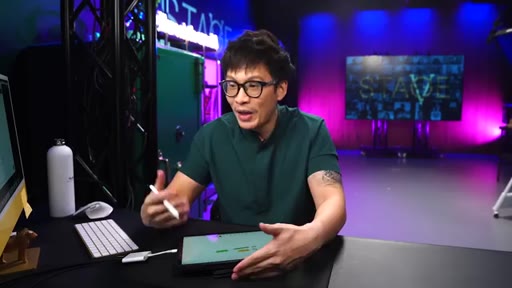
  • Draw your framework in real time on a visible surface (whiteboard, iPad, tablet) - it creates proof of simplicity.
  • Demo the framework in a mock scenario immediately after teaching it - abstract to concrete in the same breath.
  • The one thing structure is a portable content angle: The ONE thing I would tell you about X is... makes any topic feel decisive.
  • Mid-video CTAs work when they stay in teaching voice - Vinh's QR plug at 05:27 does not break the flow because it is framed as more value, not a sales detour.
  • Confident Pause vs Awkward Pause is a ready-made split-screen template for any same-action, two-outcomes lesson - steal this exact format.
§ 05 · For You

What to actually do the next time someone puts you on the spot.

If you freeze under pressure

You do not need to know the answer instantly - you need to look like you are thinking on purpose.

  • When you are asked something you do not know: pause, look up (not down), and take a visible breath. That single move reframes the pause as thoughtfulness instead of panic.
  • If two or three seconds is not enough, it is completely fine to say 'I want to give you a meaningful answer - can I get back to you on that today?' People respect this more than a rushed wrong answer.
  • When you do answer, pick one thing. 'The one thing I would say about this is...' forces you out of rambling and into clarity.
  • After your answer, ask 'Do you want me to go deeper?' It shows confidence and puts you back in control of the conversation.
  • Practicing the pause out loud - literally pausing in low-stakes conversations - makes it automatic under pressure. The skill is learned, not innate.
§ 06 · Frame Gallery

Visual moments.