Jack Roberts · Youtube · 31:08

Hermes Agent just got 10X Better (Agentic OS)

A 31-minute setup walkthrough that bridges Hermes AI agent and Claude Code into one shared operating system — with Pantheon personas, Obsidian memory, Apollo lead scraping, and Zapier-to-Gmail wired in by the end.

Posted
May 15th 2026
4 days ago
Duration
31:08
Format
Tutorial
hype
Channel
JR
Jack Roberts
§ 01 · The Hook

The bait, then the rug-pull.

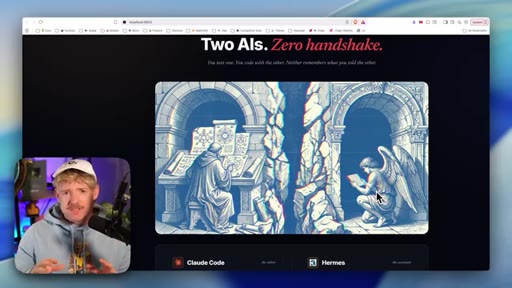
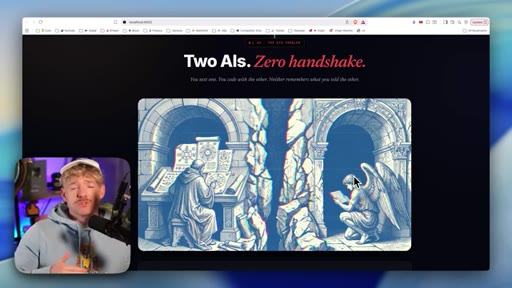
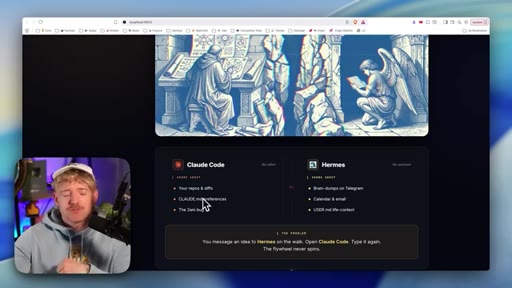
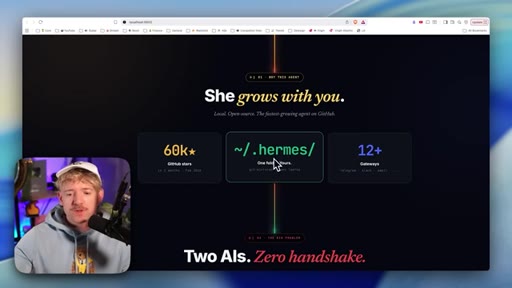
Jack Roberts opens with a promise that sounds inflated until he shows the marketing slide: two AIs, zero handshake. Claude Code knows your repos and 2AM bug fixes. Hermes knows your Telegram brain-dumps. Neither has ever met the other — and every context switch forces you to re-explain your entire world from scratch.

§ · Stated Promise

What the video promised.

stated at 00:13 "I'll show you exactly how to set Hermes up from scratch and how to give it a visual intelligence layer, letting it improve itself based on how you use Claude code and vice versa." delivered at 27:30
§ · Chapters

Where the time goes.

00:00 – 01:30

01 · Hook + problem frame

10X claim plus credibility. Introduces the Two AIs Zero handshake pain point.
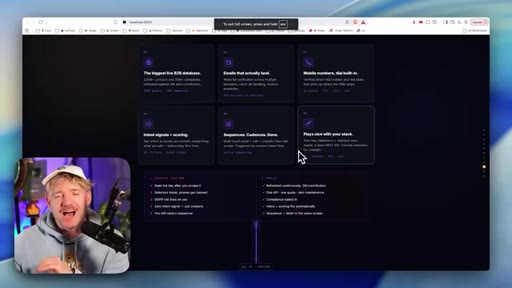
01:30 – 07:42

02 · Visual intelligence layer

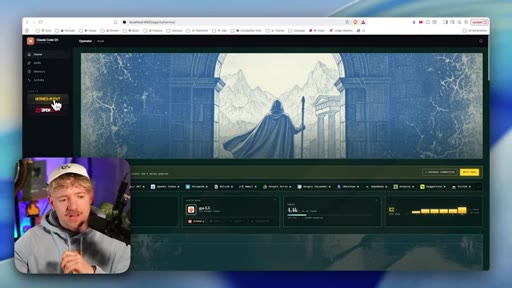
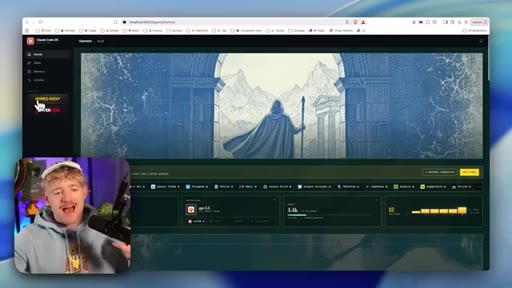
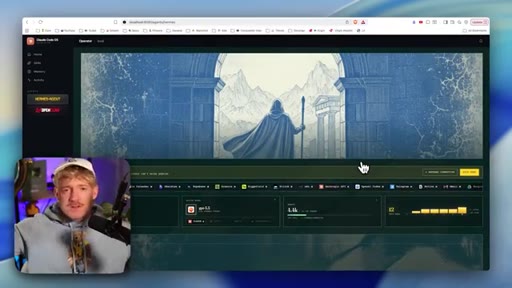
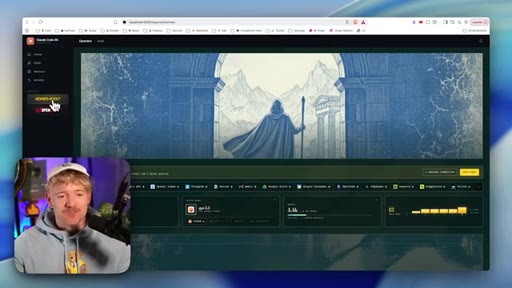
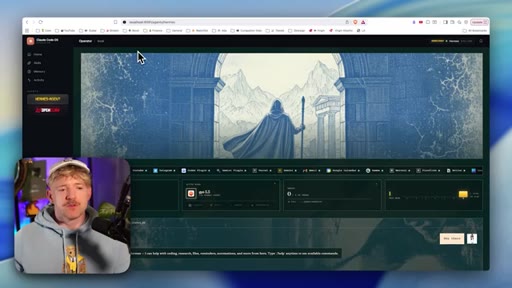
Claude Code OS dashboard tour: AI spend across models, overnight dreams feature, independent memory systems, Pantheon preview.
07:42 – 11:45

03 · Installing Hermes from scratch

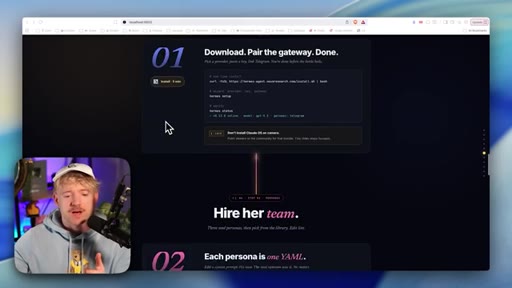
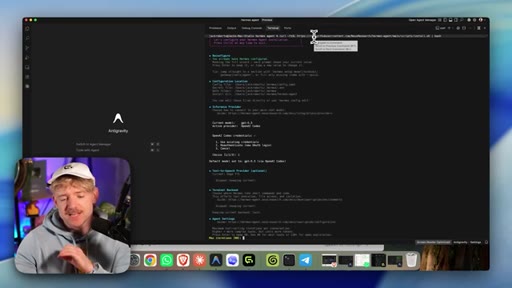
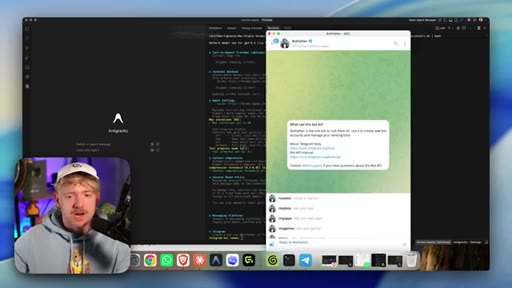
Terminal install command, Telegram bot creation, bot token and allowed user IDs, first confirmed response.
11:45 – 16:48

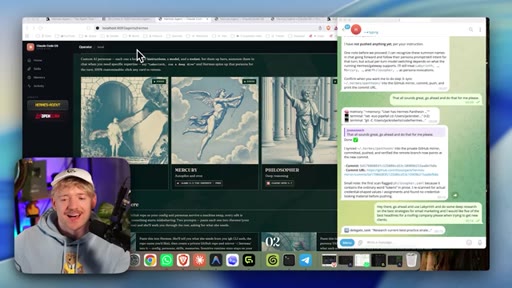
04 · Building and backing up the Pantheon

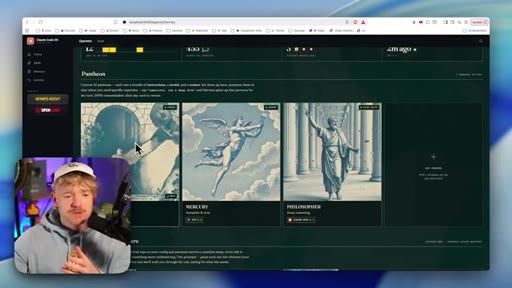
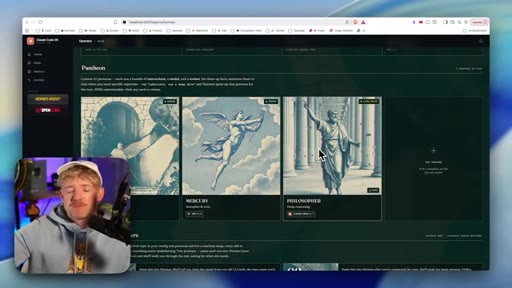
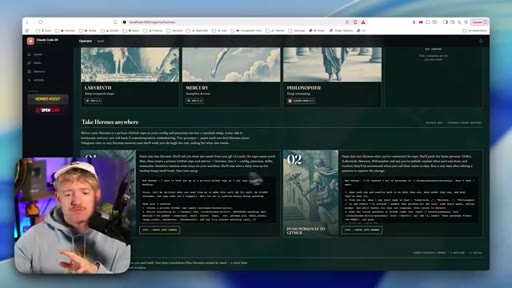
Named personas (Labyrinth/Mercury/Philosopher), GitHub mirror for config persistence, cron backup at 11PM, folder-based auto-discovery architecture.
16:48 – 19:49

05 · Obsidian agentic memory

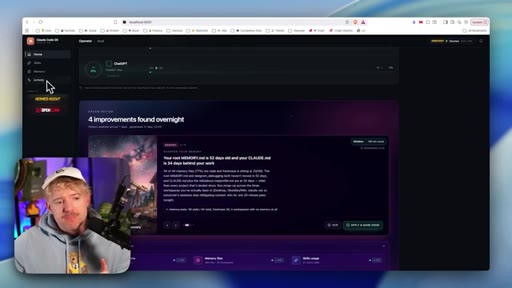
Vault path lookup via Claude Code, memory confirmation in Hermes, real-time memory save demo.
19:49 – 21:33

06 · Claude OS bridge + morning cron

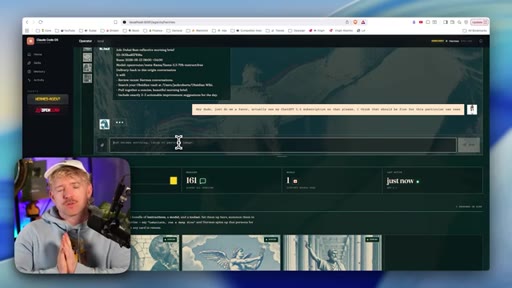
Feeding Hermes access to Claude chat logs, 8AM morning brief cron with GPT 5.5, automated overnight reflection.
21:33 – 27:30

07 · Apollo lead scraping skill

Why Apollo (B2B database, intent signals, sequences built-in), API key setup, live demo: 20 Austin roofing companies with pain-point brief and prioritized outreach list.
27:30 – 31:08

08 · Zapier MCP — Gmail + Calendar

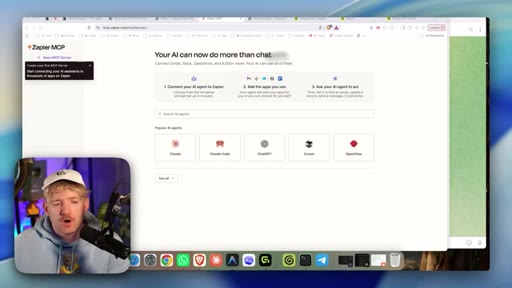
Principle of least access applied to tool selection (draft only, no send), 7 Gmail tools plus calendar, live calendar query demo. CTA to next video.

§ · Storyboard

Visual structure at a glance.

open — host intro
Two AIs. Zero handshake.
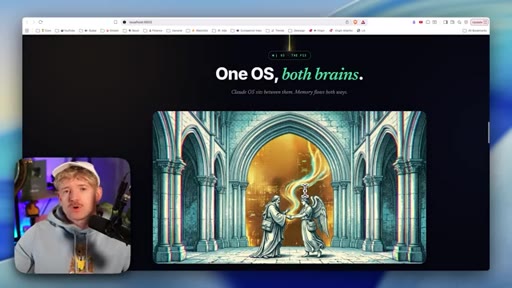
One OS, both brains.
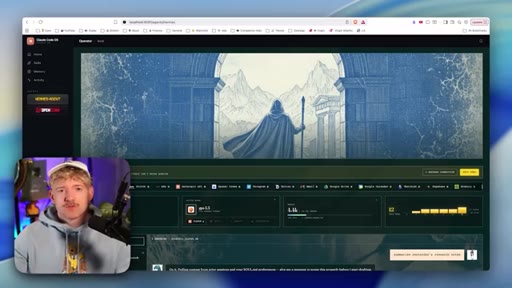
Claude OS dashboard
terminal install
Pantheon personas
Download. Hire her team.
Apollo — 20 Austin roofers
Zapier MCP — add tools
host — CTA to next video
§ · Frameworks

Named ideas worth stealing.

01:21 concept

Two AIs. Zero handshake.

Visual problem frame — any two AI tools you use independently share no memory. The handshake is the product.

Steal for Any integration pitch. Works for JoeFlow positioning (your dictation layer vs your coding layer).
11:45 model

Pantheon architecture

  1. Each persona = one YAML file
  2. Drop file in folder = new agent
  3. Hermes auto-discovers
  4. Model + role + system prompt per persona

Extensible sub-agent routing via filesystem. Add new capability = add a file. No code changes.

Steal for Any multi-model routing system. Pattern for JoeFlow agent dispatch.
28:20 concept

Principle of least access

Only grant a tool connection the minimum permissions needed to do its job. Applied to Zapier MCP tool selection (draft yes, send no).

Steal for Any tutorial about connecting AI to external services. Trust-building frame for skeptical audiences.
19:49 model

Morning brief cron

Cheap model runs overnight, reads all chat logs, delivers 2-3 actionable suggestions at 8AM. Passive intelligence without active prompting.

Steal for Any product with ambient/async AI value — daily digests, usage insights, proactive suggestions.
§ · Quotables

Lines you could clip.

02:42
"There's a Hermes on the walk, you open Claude code, you type it again, it's never seen again."
Pain point crystallized in one sentence. No setup needed. → TikTok hook
14:01
"We don't need Albert Einstein to wash off to mop our floors. We want Albert Einstein scribbling on a whiteboard in a very esoteric area."
Memorable analogy for model-to-task matching. Standalone punchline. → IG reel cold open
22:50
"The delta between idea and average should be small."
Quotable philosophy. Applies broadly to any friction-reduction product. → newsletter pull-quote
28:20
"The principle of least access — any tool connection has the fewest possible tools available to actually do the thing."
Clean named principle. Rare security hygiene moment in an AI tutorial. → IG reel cold open
§ · Pacing

How they spent the runtime.

Hook length30s
Info densitymedium
Filler15%
§ · Resources Mentioned

Things they pointed at.

03:22productClaude Code OS dashboard
17:50toolObsidian ↗
22:30toolApollo.io ↗
30:30toolApify ↗
§ · CTA Breakdown

How they asked for the click.

30:42 next-video
"The next thing we're gonna do is learn how to build this agentic system for Claude, which we're gonna do in this video right here."

Low pressure end-card CTA. No subscribe ask, no newsletter pitch. Clean tunnel to next video in the series.

§ 04 · The Script

Word for word.

HOOK opening / re-engagementCTA the pitch metaphor analogy story
00:00HOOKHermes is the world's most powerful AI agent assistant. But if you combine it with Claude code, you can create a powerful twenty four seven AI employee, solving Hermes and OpenClaw's
00:13HOOKlargest problem. And in this video, I'll show you exactly how to set Hermes up from scratch and how to give it a visual intelligence layer, letting it improve itself based on how you use Claude code and vice versa. Meaning, you have a universal AI intelligence system that will save you time,
00:31make you more money, and will get you light years ahead of your competitors. And if you're new, my name is Jack. I built and sold my life tech startup with a gazillion customers.
00:39Now I'm building my own AI companies, and I just share here the stuff that actually works. So if you haven't already, grab that beautiful coffee, and let's dive straight out. Now the Hermes AI operating system actually connects your Claude code operating system.
00:53HOOKAnd I'll be honest, this is one of the coolest things that I have actually built, and it will blow you away when I show you the detail. But let me just start by explaining why we're using Hermes or Hermes. We have that's we have some dispute on how we actually pronounce this and Claude Code.
01:06HOOKAnd why is this something that everybody who's ever using Hermes actually needs to get their hands on? So first thing about Hermes is that it has gained 60,000 stars, okay, in the last couple of months. It's way over six figures on GitHub, which is just Internet updates.
01:20HOOKWe like this, basically. To unfold it, it's yours, and it's got loads of gateways. It is an agent that dreams, that thinks, that self improves.
01:27HOOKThat's why it's gotten so much hype. But this leads on to the huge problem that we have. And it isn't just Hermes.
01:33It isn't just OpenClaw. Any individual AI system has no handshake.
01:38So the two ways that we do work with AI at the moment that are trailblazingly getting better is we sit down and we use codecs or we use Claude code. That is this guy over here sat at the desk.
01:49Right? He's coding. He's building applications.
01:51He's talking to Claude on his computer. He's talking to anti gravity. Awesome.
01:55Then over here on the right hand side, we have our AI assistant, our AI agents. We're talking to on Telegram. This is Hermes.
02:01This is OpenClaw. This is any different AI assistant.
02:05And whether you're using GravityClaw, OpenClaw, ClawClaw, any of these things, what I'm gonna show you applies to everything. Now the issue is just no handshake.
02:13In other words, the stuff we do over here never connects to the stuff that happens over here and vice versa, which means that you never actually have an AI. Any AI system that has a full overview of your entire world. And that means that you lose complete context everywhere you go, and that's just the beginning of the the issues that we have with this.
02:31So you have Claude that knows about your repos, your ND preferences, bug fixes you run at 2AM, and all the software and thoughts and conversations you have with it. Then you got Hermes that knows your brain dumps in Telegram, your conversation. The problem is that you mess you know, there's a Hermes on the walk, you open Claude code, you type it again, it's never seen again, which is what the idea of the Hermes operating system that actually fully connects
02:52to the Clawd Code operating system actually solves this problem and unlock some capabilities that you cannot actually use otherwise, which is freaking incredible.
03:02And I'll show you why that is. So you think about this, Hermes hears it, ClaudeCode knows it, and vice versa. So Hermes itself will know everything that you've done on ClaudeCode as a shared memory and vice versa, and it also unlocks some really cool capabilities.
03:16And again, the same thing happens whether it's OpenCLAW or any different variation. We're gonna be using Hermes in this video. Now I'm gonna show you exactly how to set up your Hermes in three steps with this beautiful system and all its new capabilities.
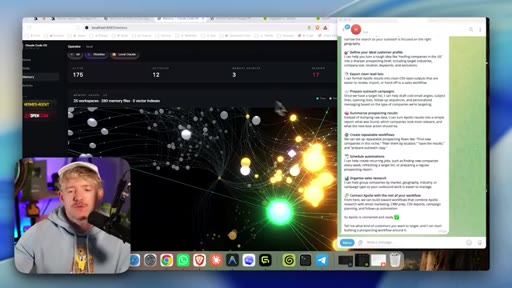
03:28But to do that, we have to understand what this incredible visualization layer is and what that enables us to do that we couldn't really do before.
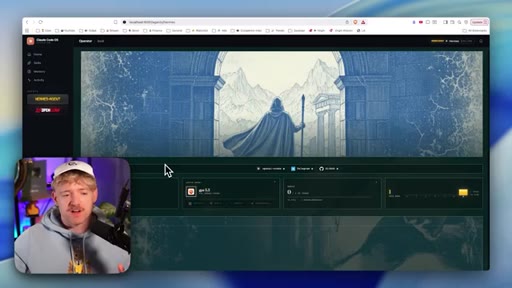
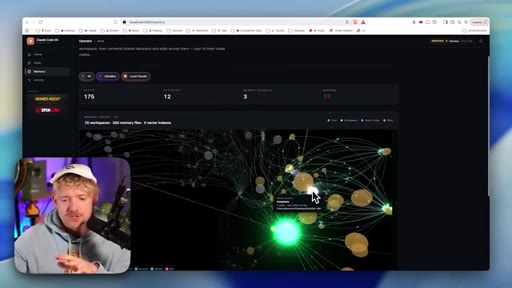
03:36So this is the Hermes operating system. It actually connects to the ClaudeCode operating system.
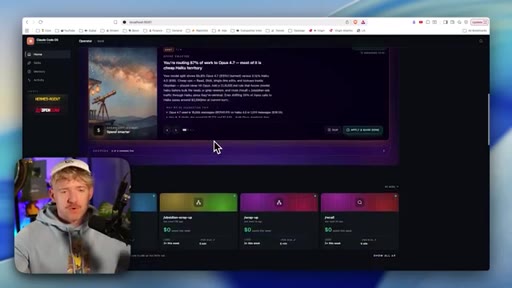
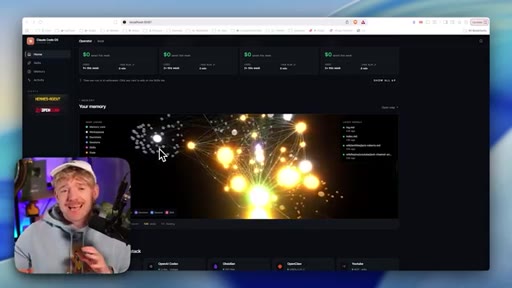
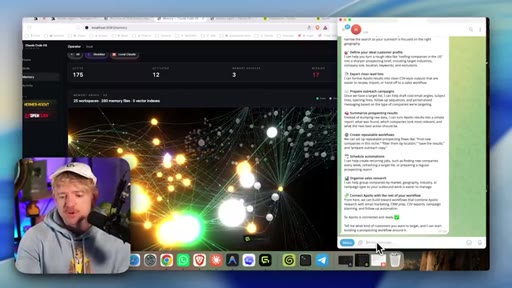
03:41I'll put a link down below so you can check this one out. The Claude code operating system shows your AI spend across every single model, DeepSeek, ChatGPT Claude, gives you a breakdown of your usage.
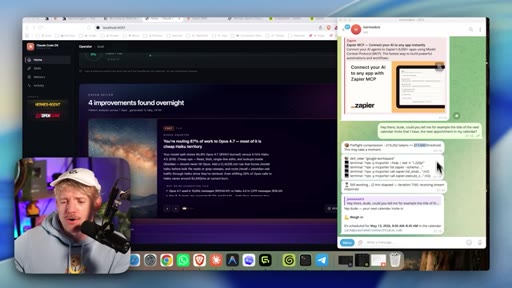
03:51It actually dreams for you overnight. So based on every message you've ever had with Claude, it will give you improvements about, hey, Jack. You're reaching 87%
03:59of the work to OPUS 4.7. Most of it's Hiker territory. So I actually built a system here where Claude will dream for you overnight based on all this information that happened on your computer.
04:09And you'll see why this is so important for Hermes in a second. Because not only does this have every model you're using, all your chat logs from any AI using your computer, it has all that usage data. It has these beautiful
04:19independent memory systems. Okay? They're all connected together, all your connections,
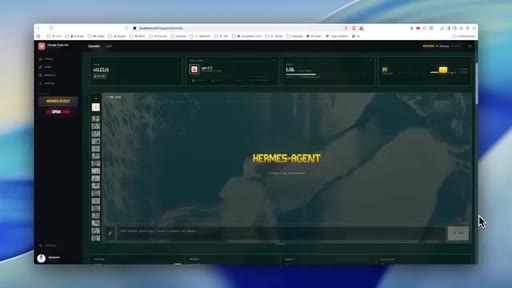
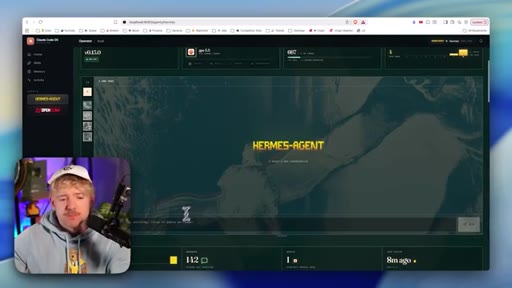
04:25and all this data and your usage. Now what's cool is we can actually leverage that in Hermes. If I go over to Hermes agent on the left hand side here, you can see it shows me all my connections.
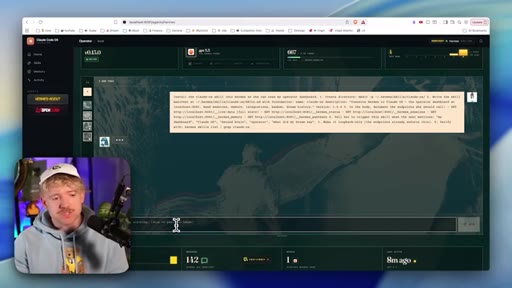
04:34It tells me the version I'm on. It tells me what model I'm currently using, memory, my weekly streak, and I have these wonderful chat windows. So for example, here, I can just chat with Hermes if I want to in the browser.
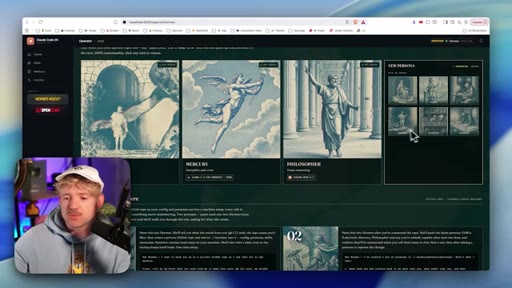
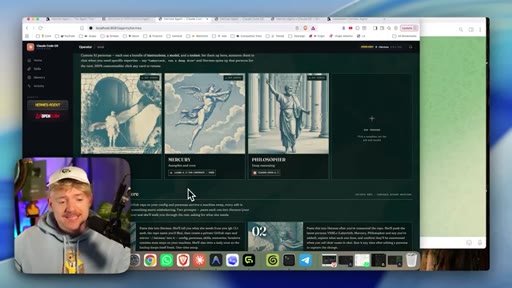
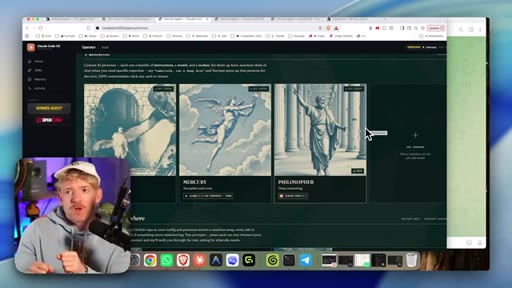
04:45But this is where it gets crazy, is you have this thing here called the Pantheon. Now the Pantheon is essentially these custom AI personas that I actually built with Hermes. It's really freaking cool.
04:54And we'll get more into what these do in the video. But effectively, what they let us do is assign models and roles and personalities.
05:02For example, let's say that you want to do some deep research. Right? And you wanna use a specific model for that.
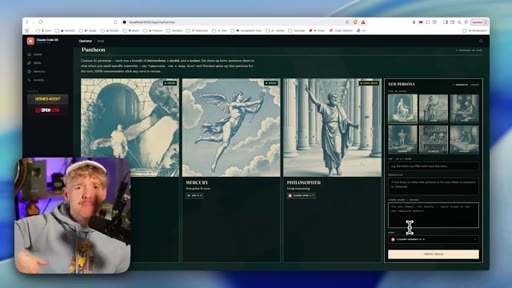
05:08You may wanna use Labyrinth. Or if you want to do some autopilot and cron stuff, or maybe you wanna philosophize and do some deep reasoning, and you wanna pull up a specific model. Well, we can add these and create these here, give it a name, effectively a description, a system prompt, tell them which model you wanna use, and then give it a a name and and brand, basically.
05:25And I can even add these personas by clicking this button here, selecting who I'd want. So let's say, for example, I wanna go with the Oracle. I can describe the name, the description,
05:34assistant prompt, and model. And, you know, let's say that I wanna do loads and loads and loads of deep research overnight. I may wanna use DeepSeek model or a free model.
05:40I can actually specify this, And what I can do is share this then with Hermes agent. And effectively then, if I say, hey, go and do x or use a philosopher or use Mercury or Labyrinth, it will do that for me using the models, the systems, and the prompts without me touching a single thing.
05:56So we build out this pantheon of different characters and and models it can use. And again, this is a real simple system. I'm gonna show you how we run this all the way through in the video.
06:04Now what's really cool here is all the memory from Hermes is reflected here. This is a an example. One, we're gonna set up completely for fresh together.
06:11We have a user profile, what the agent knows about us at its soul. We can connect Obsidian to Hermes as well, which is fantastic.
06:19And then we've got this Claude OS bridge. And, effectively, what this does is gives all of the information that I showed you earlier in this section here, uh, on your computer from all the models using, all your knowledge systems, all this beautiful stuff, and brings it over to Hermes, which is fantastic. So we can bridge them together by using this real simple install prompt.
06:36And at the bottom, you can see effectively all of your skills that exist within Hermes and what that looks like, and then a quick little hacks at the bottom. So this is the idea of visual intelligence, a operating system that combines your entire world of connected
06:51intelligence. And that sounds super fancy, but what it just basically means is you have everything now in one place. Now you can build this with all the knowledge that sits within your computer and Hermes.
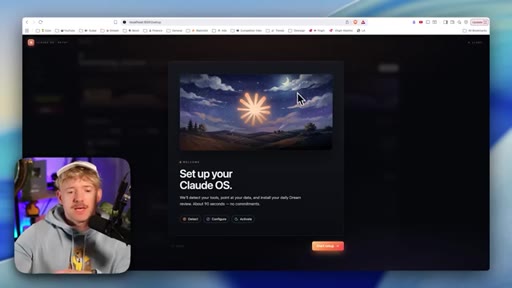
07:00I've also put a link to all of this inside the community, the ClawCode operating system, the Hermes agent. You can literally just go ahead, grab it, and then you're, like, running with it, basically. It even has a really cool setup wizard that runs you through everything, gets your name, gets your profile photo, finds all of the apps that you have.
07:15For example, it will find for you all the things that you've got, And then you can go through the whole setup, and it's all kind of, like, synced up. So it's like plug and play. I actually took me seven hours on the onboarding alone just to get this set up, just to give you an idea of, like, what goes into building this, but you can do all this stuff with everything on your computer.
07:30But the bottom line is you want some kind of beautiful visual information dashboard to connect your worlds together. So now we understand the visual intelligence layer. The next step is to actually install Hermes onto our computer so we can begin connecting
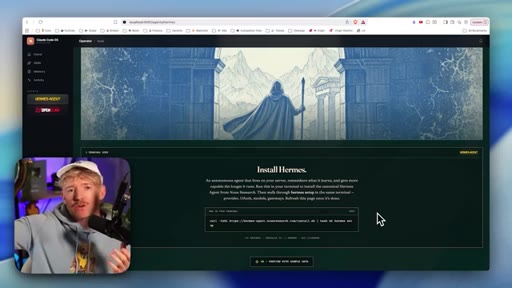
07:43everything together. Now I'm gonna come up here and grab on Hermes. Now the way we get this done, let me just out and exit the demo so I can show you this.
07:49Now I did a video explaining that you can essentially connect everything together while we would leverage bits of Hermes, bits of OpenCLORE, and I do believe that is the best way to get a custom AI agent model. The reality though is that this is the fastest way to go from zero to one, to get a working agent in the system using Homebase, and it's very good.
08:07But if you want the best of the best, you're gonna wanna leverage different aspects from different softwares and build it as you go. I'm do something in the community on cost building up those custom beautiful agents, but just so you understand how this fits inside the matrix. So what we're gonna do is come down and grab this code here.
08:22It's also available on the Hermes website, of course. And you can even just say to Claude, hey. Install this, please.
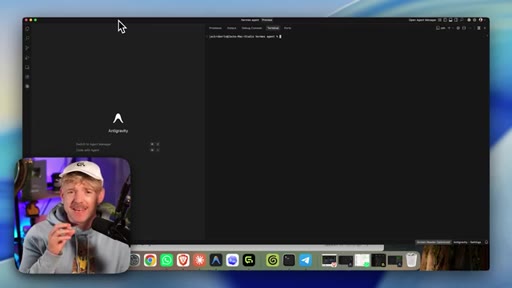
08:27So we're gonna head over to antigravity. And if this sounds like I'm speaking Spanish, check out this master classroom screen. I run through everything, and I won't feel when you come back.
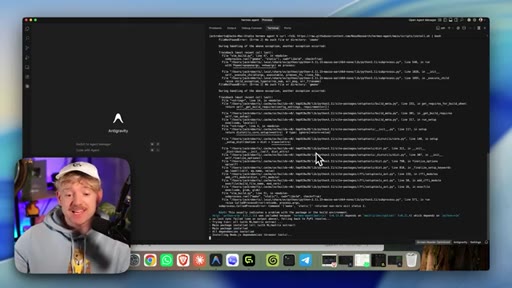
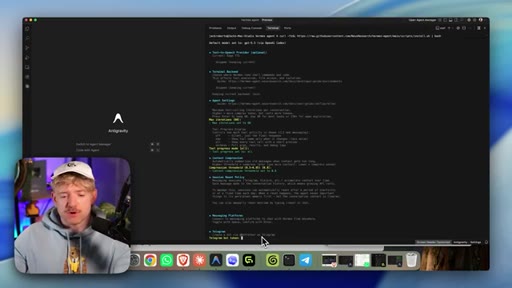
08:34Welcome back. So now we got the terminal. All we're gonna do is come down here and paste in the code, which is fantastic.
08:38Of course, in antigravity or Claude or whatever, terminals at top of the terminal, It's going through and testing everything, which is great. And then literally from this, we can just begin the full setup journey inside this terminal window. Okay.
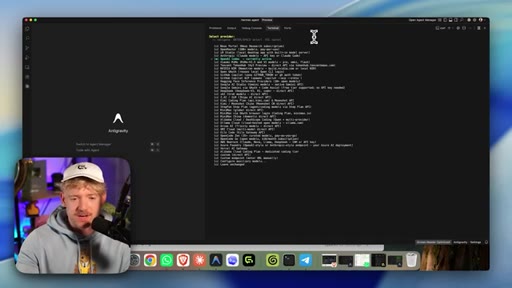
08:50Beautiful. So once we've entered in the code, we can pick everything we want to. I've chosen OpenAI Codex.
08:55If you don't have that, by the way, it'll just open it up and run through. We're happy with this one. So we're gonna have to click enter on that, which is fantastic.
09:01This is good because it's free with your chat GPT subscription. So that's decent. The other one that we wanna have in there is Openreach, obviously, but we'll start with Codex for now.
09:09Click on enter, which is fantastic. Then we decide gonna use our existing credentials, which is great, or we can just re authenticate. So for us, our existing credentials are fine.
09:17GBT 5.5 is awesome. Our text to speech provider, we're happy using the current one for now. Terminal background, we're gonna keep it here and run it on our beautiful home computer.
09:25We're not gonna run this one on a VPS. This is gonna be fine on our home MacBook, which is running all the time. Click on current.
09:31Max iterations is 60. That's fantastic. Then we click on all for this one.
09:35Compression threshold is fine. 0.8 is good. It just means the closer it is to 0.95,
09:41basically, the less often it compresses. If it compresses too much, it can be a little bit more forgetful. So we're happy with the slightly higher rating there.
09:48And then for session reset mode, we're gonna ahead and keep current settings for that. And then platforms to configure, we're gonna select Telegram and click on enter. And it's gonna ask for Telegram bot token.
09:57Now we use Telegram because it is a gorgeous API. It's so easy to use. To do this very quickly, just open up Telegram, download the app, get the bot farther.
10:04I'm gonna do forward slash. I'm gonna bring him over here so you can have a good beautiful look. I'm gonna say new bot.
10:09Click on this guy over here. Great. One new bot.
10:11We're gonna call it Hermes bot. Great. Let's choose a username.
10:14So go ahead and pick a random name for that bot so I could call it something like this. And you see, guys, you'll get a token. All you're gonna do is come back over here and just enter in that token.
10:21Hit enter. And then it's gonna ask you for something really crucial, which is allowed user IDs. What this effectively means is that only the IDs that you give it can message your Hermes bot, which is fantastic, which means unless they have your mobile phone, they're signed in, they can't message your Hermes bot.
10:35To So get that, come back over to Telegram. And you're gonna search for account called user space info, drop it any message you want to or forward slash start, and it'll give you all the information. And you're looking for your ID, and all you're gonna do is literally copy that ID, come back over, and throw it into the terminal.
10:50Then, of course, you can go ahead and confirm your user ID by pressing y. Once you've done that, it will ask you if you want to launch it as a service. Just say yes.
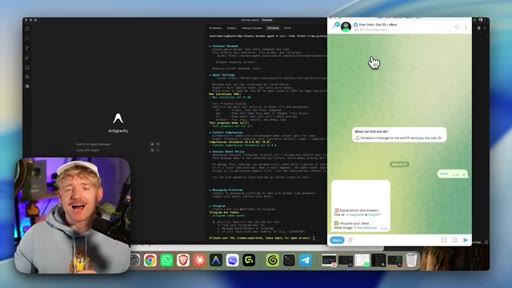
10:57Then you're gonna come all the way down here, for example, hit on done, and then we are finished. Then guys, you can actually come back to the bot further. Click on the link to open a new tab, and you should see your Hermes bot here.
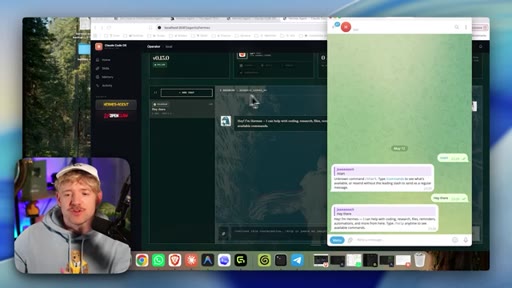
11:06So I can click on start. So now we can actually begin our conversation. I'm gonna say, hey there, like so.
11:11Drop this guy a message and see if he comes back to us. He's typing. He's having a think.
11:15We can have a little a little play around with what he's gonna say, and this should be Hermes bots. And look at this guy as he's come back. Hey there.
11:20I'm Hermes. I can help you with anything. You're fully ready to rock and roll.
11:23And Hermes is officially downloaded on your computer, which means that you can use this on your phone wherever you want to. So we land into the dashboard, which is awesome. We can see all of our connections here and our global universal AI intelligence.
11:36Obviously, if I click on Hermes, I can see all of Hermes integrations, which are looking very lonely right now to be found. We've got the model. We've got the active model that we're using right now, which is gbt 5.5,
11:45and then we've got what we use this week. Now here we've got a chat window, which is very, very cool. And effectively, this shows us all the conversations that we have.
11:52So this shows that, hey. There's a conversation on Telegram. You can just talk to it here if you want to.
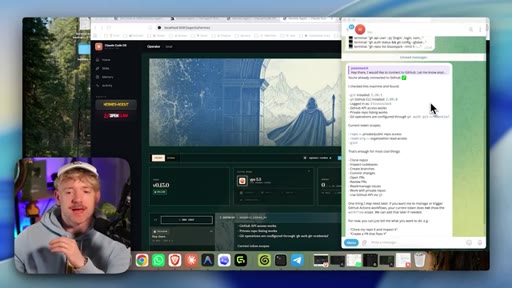
11:57Obviously, it's part of the operating system, or you can talk to directly within basically, you can use it within Telegram if you want to. So you see if I bring Telegram up, for example, and I give that prompt, something like this. Hey there.
12:06I would like you to connect to GitHub. Let me know anything you need from me in order to connect to GitHub just so we can start doing some very cool things. Paste that one off like so.
12:14Send that off. And what you'll see now is this will now appear for us actually within our own our own desktop environment and also of Hermes intelligence system. And interesting, guys, it's come back and it's on a skill view.
12:24Gets it both. It's checked out Hermes agent. It's checked all the different versions.
12:27And because I have this connected at part of the CLI, our command line interface, it's already connected. So I'm actually gonna update the Hermes bar here to include all of your CLIs, uh, as we speak.
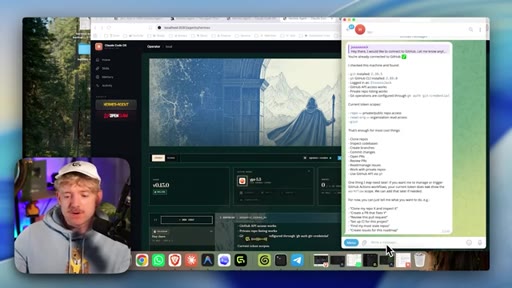
12:37So now we've got this. I might say something like, hey, dude. Create me a brand new repo called
12:41Tango Blast, please, and let me know the link to that repo once that is complete. Send that one off just to validate it's got the skills. Send that one off, and you can see him is working in the background.
12:49And, dude, look at this. It's created the repo for us literally in the chat. I want you to believe, most importantly, we now see GitHub in the terminal, which is in our command center, which is great.
12:57Then we'll click this guy right here and open him up, and we can see this is Tango Blast just been created. Fantastic. So now we're lock down.
13:03The next thing that I want us to do now is take a look at building out persona. So this is really important because if you're doing certain tasks, like, we don't need Albert Einstein to wash off to mop our floors. Right?
13:13We want Albert Einstein scribbling, not making much sense on a whiteboard in a very esoteric area practice that only five people can understand. So to do that, we're gonna come down here and install the Pantheon, is very cool, by clicking on this guy right here. And then it should pop up and we can begin it.
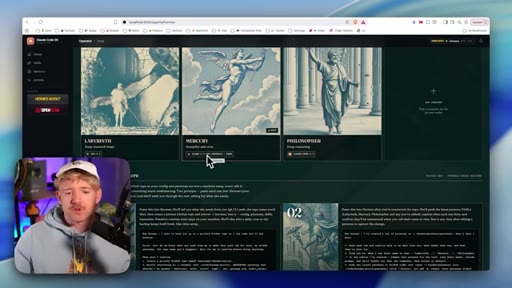
13:26So we've got labyrinth. These are a couple ones I thought were really cool just to get started if you just wanna get an idea of what it's like or you do let's say we got the philosophy here, which is fantastic. We've got a description for wrestling with ambiguous problems, puzzles and threads, questions, premises, etcetera, etcetera.
13:38You are the philosopher. Treat every question as a starting point, not an instruction before answering surface and matter question behind the question. I think that's very, very freaking cool.
13:46We can add a persona here if we want to, of course. Say we like the, you know, Orpheus or whatever. We can add various different things that we like.
13:53We're gonna go ahead and cancel that. Now what we wanna do here as well is back up, Hermes. So to once we built out all the different personas we want to, see maybe one form research,
14:02one for tool calling. So anything that's doing deep research, like for your morning briefs, I want you to delegate that to a free model. Like, absolute like, you don't need your strongest models doing that, which is why, for example, autopilot and cron, I like to use Mercury because it just does a lot of stuff for me in the background.
14:18So what I'm gonna do now is I've got this stuff. The first thing that we need to do to activate the Pantheon is take Hermes anywhere. So look at this.
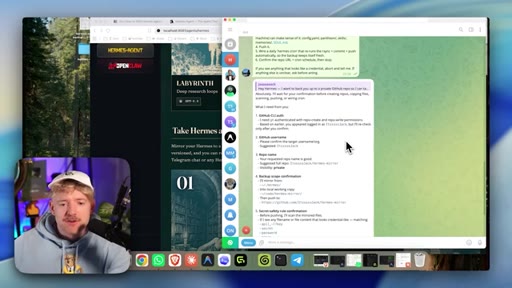
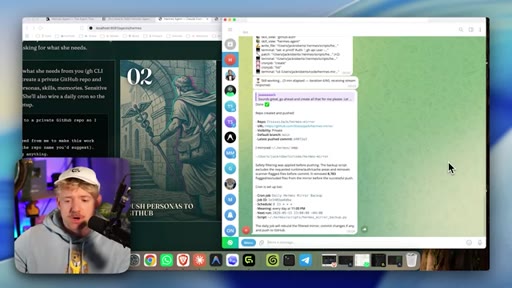
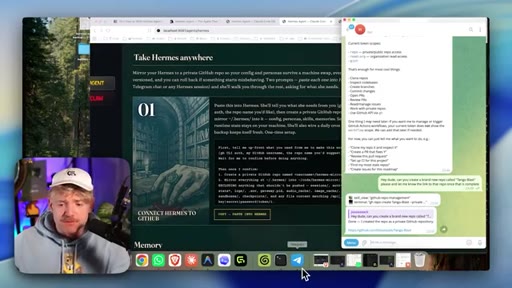
14:25Mirror your Hermes for private GitHub repo, so your config and personas survive a machine swap. Every edit is versioned, and you can roll it back if something starts misbehaving just in case it goes wrong. Two prompts, paste each one into your Hermes telegram chat or any Hermes session, and she'll walk you through the rest asking for what she needs.
14:41Beautiful. So connect the Hermes to GitHub. Again, just copy paste this one.
14:44We can throw it in the chat window above, or we got Telegram here if you want to. Come over here. You can come down and literally drop that bug by in and let it run wild and do its own thing.
14:52Then it'll start to think and effectively just create this GitHub repo for us. And it's really important because one of the things that can happen when you're doing all these different features is it can start to, you know, forget things. And just like that, it's come back.
15:02So absolutely, I went for your confirmation before creating repos and copying files. What I need from you, it's got the Git CLI already. Git username, it's got that.
15:08Repen name is awesome. Backup. I'm gonna say, sounds great.
15:11Go ahead and create all that for me, please, and let me know when that's done. And then I want you to set up a crunch schedule. Let's say, I don't know, 11PM every day.
15:18You're gonna do a full update for me, please. Beautiful. So now we have this thing.
15:22We've created a mirror of this in GitHub, which we can use anytime we want to. The next thing that we need to do then is basically go ahead and recreate everything that we just made in the Pantheon.
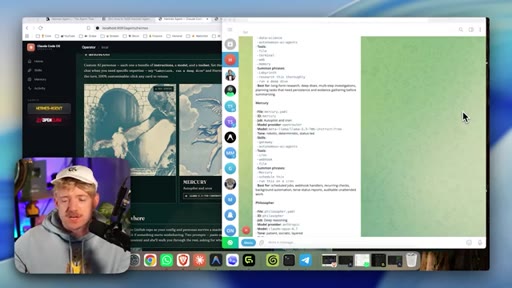
15:31So all we're gonna do here is to paste this into Hermes. After we connected the repo, she'll push the latest persona of animals, labyrinth, mercury, philosopher, and anything we've added. And we're basically explaining where this is, what it looks like, and how everything's sort of connected.
15:43So we're gonna copy and paste this like so. We're gonna copy that, come over, drop that one in, and then we're ready to rock and roll. Beautiful.
15:49And now it's come back. It's actually found everything there. Now here's the cool thing, is the way that I've set this up, guys, is that when you add these and if you build yourself, I recommend you do the same way as well, the effect of what this means is when you build these different personas as when you change them in your operating system, it's automatically changed
16:05within Hermes because the way this works is these all live in a folder. So if I add new files to that folder, Hermes knows where to go in the folder.
16:13So if I change the job of the philosopher, he does a great job, but he already changed the job. Same with Mercury over here. I add new ones.
16:19That's all gonna be updated in the same location, so it just works fine and perfect for us anyway. And what this saves us doing as well is repeating the same thing a gazillion times. So I'm gonna say, that all sounds great.
16:28Go ahead and do that for me, please. Beautiful. And just like that, we're all ready to rock and roll.
16:32And now when we add new different, basically characters and players to our pantheon and gods to our pantheon, they'll be ready to rock and roll. And then for example, guys, let's say I want to invoke Labyrinth.
16:41HOOKI might say something like, hey, that go ahead and use Labyrinth and do some deep research on the best strategies for email marketing, and I would like five of the best headlines for a roofing company, please, when trying to get new clients. Send that one straight out.
16:55HOOKAnd as you can see, guys, as it's now delegated the task, and you can see now are basically Labyrinth, Mercury, and Philosopher are fully synced, which means it's linked and connected now to our new agents. Beautiful. And we've summoned Labyrinth.
17:05HOOKLabyrinth has gone ahead and done this. And, of course, if we're using OPUS 4.7, it would have gone ahead and used a different model to do that for us. And look at this.
17:12HOOKCatch storm water with a dream demand, offer a low friction next step, segment by homeowner situation, lead with trust proof is given us good details, and it's gone ahead and created that for us, which is fantastic. And now we've covered exactly how to connect Hermes to anything.
17:24That's great. But now we need to take this to a completely new level. And if your system doesn't have this information,
17:29if your Hermes agent doesn't get this, it is not performing to its potential. We're gonna give it an incredible memory system to Obsidian, and then I'm gonna show you how you can supercharge it with an incredible skill that most people haven't even heard of. Beautiful.
17:42So the first thing I wanna do now is connect is agentic memory. I covered this in the full course I did inside my community that goes foundation sets up all the way down to power features, memory systems, this system, and loads of other cool stuff like monetization are pulling down below if you'd love to check that one out.
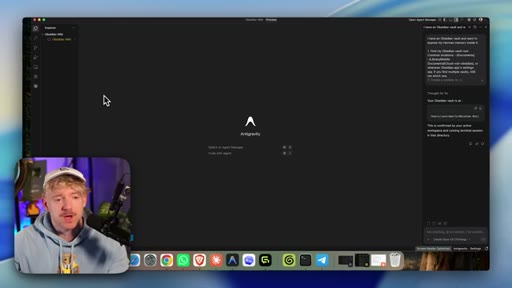
17:57But the cool thing here that we talk about a lot is this Obsidian system run. Now if you have Obsidian installed, it looks a little bit something like this. You can see I've got my memory core here and it shows me everything I've got, my desktop Obsidian.
18:08Really freaking cool. I just get to visualize all my data, which is fantastic. Now what we can do first of all is come into Hermes.
18:13And you can see these are the memories that it's starting to gain for me. I wanted to install this fresh view on a desktop. You could see user has Hermes Pantheon.
18:20As you can see, this is the agent memory. This is the user profile. And then over here is the soul, which we can build out shortly.
18:26Now what we wanna do is just clarify that you have a vault. So come down here and click, I've I've got a vault. Then what we're do is let you come down here and you're gonna copy this code right here.
18:33And if you don't know the exact destination of your vault, you can just ask ClaudeCode by copying this and throwing it into ClaudeCode. So here, for example, I've got it here.
18:41I'm just gonna gonna paste that in and I'll probably just say something like, hey. I was doing a deep YouTube strategy. Just find me the focal location, please.
18:47Just like that and you can send this one off. And then we've got it here. So we just copy this.
18:50It comes straight back over. Throw in the path like that, is fantastic. And say I've run it now, confirm, and said Obsidian is connected.
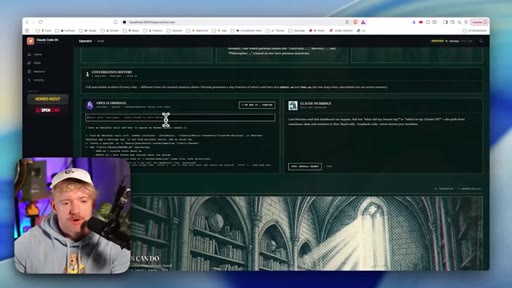
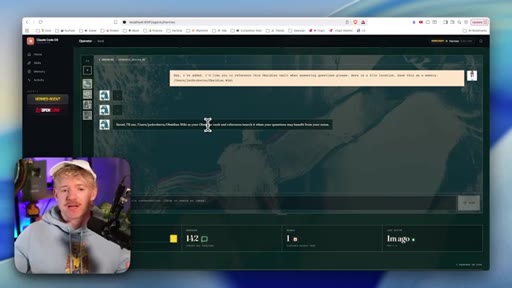
18:57Just to double check this, we can literally come back up and drop a message over to Hermes agent if we want to. And as you can see here, for example, I said, hey. I've added it.
19:04I'd like to reference this Obsidian Vault when answering questions, please. Here is the file location saved. This is memory.
19:08I gave it to it And it's saved. I'll use this wiki as your Obsidian vault and reference search it where my questions may benefit from the notes. So now we've connected Obsidian to Hermes.
19:17Awesome. Next thing we wanna go ahead and do then, guys, is shoot over to the home section. And you come to the home page.
19:23You can see now that all the conversations you have with Hermes are now fed into your main operating system. So if you're using a Claude code operating system, you can actually have all these knowledges when it's giving you these really cool recommendations that has that full level context when it's making decisions, which is really cool.
19:38Then if you come back over to Hermes over here and then you scroll down, well, you can actually see the bottom as this really cool thing. Let me go ahead and grab it for you. It says, it's Claude OS bridge.
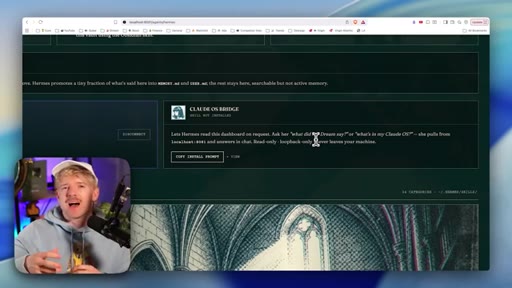
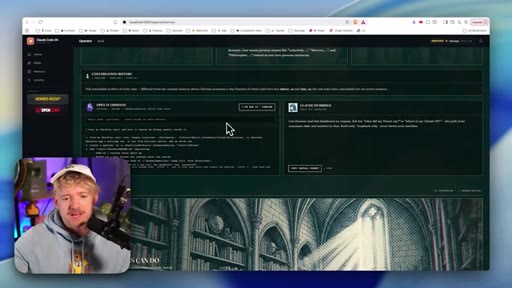
19:48So this lets Hermes read the dashboard on request and ask what did my dream say or what's inside my Claude operating system. It basically helps to understand because if you when you use Claude code in different models, it actually saves your chat logs.
20:00So what this lets it do is query that and think about that and dream and think about, well, actually, Jack's been talking to Claude Code a lot about these kinds of topics. Maybe I should bring this in or there's a really key piece of context over there that it never mentioned to me. So we effectively connect the intelligence together, which is awesome.
20:17Good old full prompt. Basically, tell the oh, you can kind of explain it, like, what you're trying to do if you want to or copy a prompt to complete your call. It just makes it a lot easier to do.
20:25Then effectively come over to the chat. I'm gonna drop this bad boy in right there, send it off, and let it do its work, or basically explain, hey. I want you go through my entire computer.
20:32I'll find all the stuff that's relevant that could be helpful in doing this, and I want you to set up a cron job that every night you're gonna think proactively about ways in which I can improve based on all these different conversations and things like that. That's effectively the next prompt, which is gonna be like this.
20:46Hey, though. Based on all the information that you have in our conversations and also that you glean from
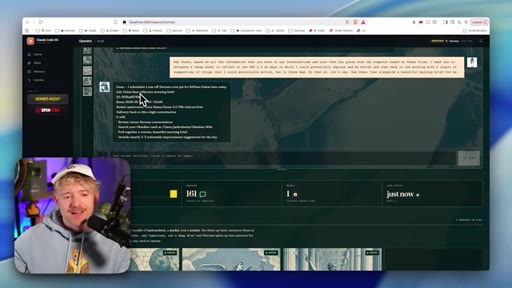
20:51the computer based on these files, I want you to delegate a cheap model to reflect or use GBT 5.5 on ways in which I could potentially improve and be better and come back in the morning with a couple suggestions of that I could potentially action two to three max.
21:06Do that at, let's say, 8AM Dubai time alongside a beautiful morning brief for me. And just like that, it's come back and done it. It's set that cron job for us.
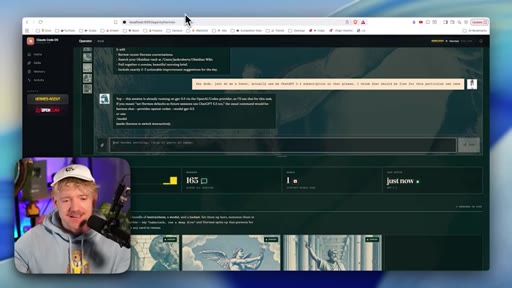
21:14It's gonna use the metal llama model. I don't mind it using the chat g p t model actually because we've got it all in our subscription. Hey, dude.
21:20Just do me a favor. Actually, use my chat g p t 5.5 subscription now, please. I think that should be fine for this particular use case.
21:27Awesome. Send that one off. And just like that, now I'm just every morning, gonna be thinking proactively based on all the conversations across everything,
21:33what we want to do. And this very nicely takes us onto some beautiful use cases. So we know loads of the classic ones like, hey.
21:40Why don't you go ahead and set the morning brief? We get that. But let's talk about something that's gonna grow your business or grow your client's business.
21:46Let's say that we're out and about. We're working with Telegram. Now we have this fantastic connected in Internet ecosystem of things.
21:52Why don't we look about getting leads? And before I double click on what that would look like, I just wanna confirm what we've done here. Right?
21:57We've got Hermes, which is great. We've downloaded that. Second thing we did is we got the Hermes personas.
22:02We connected it. We did loads of beautiful things. And the third thing we did is we built a beautiful skill together.
22:08And one other thing that we can do before we actually build the skills out is to come back over to the Hermes agents and effectively can say, hey there. I would like you to build a soul.md. I'm correct in assuming that your soul dot m d basically is all the key information about me.
22:22So I'm gonna brain dump some information, and I want you to retain that in our conversation so you can give me better results. Is there anything you'd like to know from me?
22:29And then literally just brain dump everything to it, and this will then appear in your Sold. M d, and you can track that. So one of the skills I wanted to take a look at here is gonna be a lead scraper, and we're gonna go ahead and use
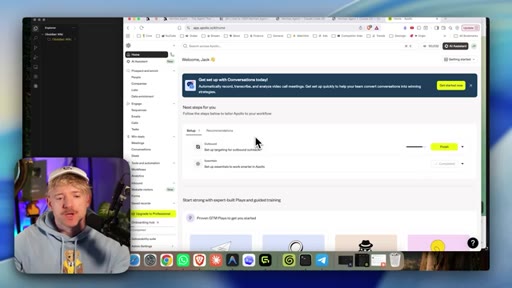
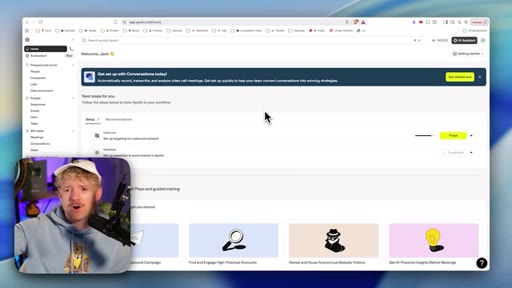
22:40Apollo. Apollo's pretty much the gold standard when it comes to actually finding people. So the best ways to grow your business is to find people that can help you.
22:48This has got a gargantillion features that we could just go and use. But what I'm most interested in here is actually the API because sometimes we just have ideas of you know, you'll find it yourself when you're having coffee.
23:00Right? I wanna target that person, but maybe it's not convenient to have your desktop out and start building campaigns. Maybe we just wanna check to Hermes and say, dude, go and find these email addresses, find out who they are, and, like, set create create a campaign for me and get this business.
23:13And we can now do that. That's one of the coolest features because the delta between idea and average should be small. And when you know how to connect things like Apollo, you can connect anything.
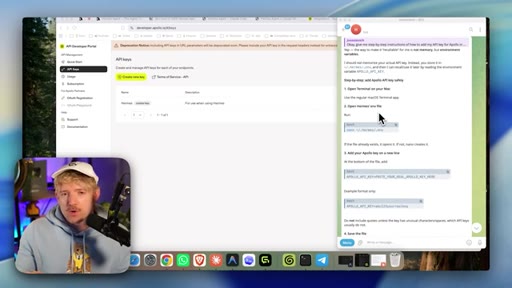
23:21So to grab this, we're gonna have to grab your API key from Apollo. Great. So to find this, come down here to admin settings right at the bottom and then click on integrations.
23:28When you're on integrations, we should be able to find API key, but you can come down here and type in API key. Apollo API. Fantastic.
23:35Come down and click on connect. That'll open a brand new page for developer.apollo.io. Fantastic.
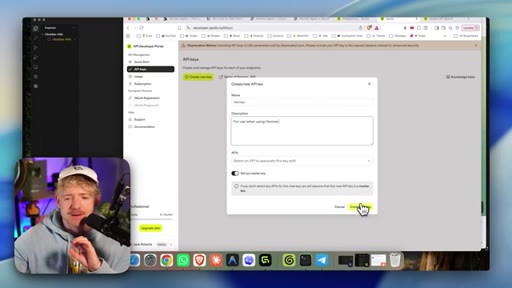
23:40And on the left hand side, click on API keys. Cool. So I've laid my old keys so I can show you a brand new fresh one.
23:45So click on create new key here. I'm gonna call this one something like Hermes. I always like to name the thing that it is.
23:50I'll say, for use when using Hermes, whatever the thing is, come down, select API keys. We're just gonna set this as a master key. Come down and click on create API key.
23:58Beautiful. That's done. I'm gonna copy this one.
24:00Superb. And then what we can do is let you come back over now and connect that with Hermes. If I bring up Telegram, for example, I might come down here and say, hey there, dude.
24:08I would like to do some automations with Apollo. So I've got the API key. Let me know everything you need to do to add this as a connector and a skill, please.
24:16And so the easiest way that this is just to do it, which is freaking cool, is you can literally do a bash command, which is this space your API key. So let's go ahead and run that one together by opening anti gravity. I'm gonna come down here and get a new terminal.
24:28By clicking on terminal, click on new terminal, and you can literally just ask Hermes for step by step instructions of how to add your API key in. And it's good to add it to environmental variables like this because it will be stored in the chat logs, which will be in GitHub and also at other places.
24:43And obviously, model reads it. You can throw in. Of course, you can.
24:46It's up to you if you want to. But if you just wanna be absolutely eyeing cloud, you can add it in using environmental variables if you like. Beautiful.
24:52So once you've gone through that process of connecting it together, we can also do some really cool bits and pieces. But first of why are we using Apollo? What does that make sense?
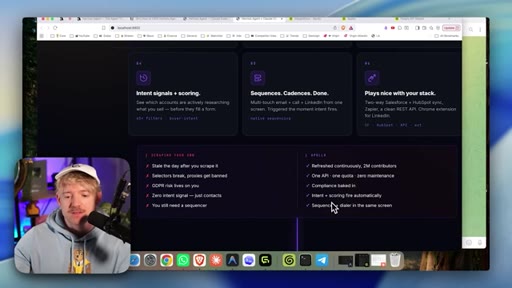
25:00How does this all work together? Well, a couple of things that are good to know about this, why it's worth taking a look at.
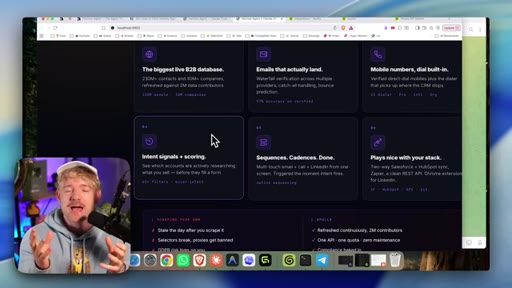
25:05They have the biggest b to b database, which is cool. They have emails that will get delivered. Mobile numbers are pretty decent.
25:11Intense signals and scoring so we can see whether or they wanna buy. Of course, you can go and scrape things using different services. But if there's a reliability factor, there's a size factor, there is actually hit rates.
25:22What people don't appreciate sometimes is that when you scrape a lot of data, that your hit rate can be quite low. Like, you can only hit sometimes, like, you know, x percent of them rather than as many as you can. So we want good reliable databases.
25:33And if you know you've a great product, it's really cool. We can do sequences and cadences all within the platform, which is really cool. So you don't have to buy a second subscription,
25:40which is decent, and it can play nice with your stack, which is good. So but this is continued refreshed. It's one API, one quota.
25:48Compliance is baked into it. Intent and scoring file happen automatically, and we get the sequence and the dialer in the same screen if you wanna take this to a level on the platform.
25:56And then scraping your own obviously has things like GDPR risks, your intent signal. You may still need to get sequences and that kind of stuff.
26:03But let's go ahead and test this together with a good use case because you've seen exactly how to connect to Hermes now. Let's put this puppy to the test. So let's try this one for example.
26:10Hey, the dude. I've been thinking recently that I'd quite like to target roofers because roofers are high margin, and it's a bit of an unsexy business. So I'd like to see for me a bit of a prospecting brief on roofers using the Apollo skill.
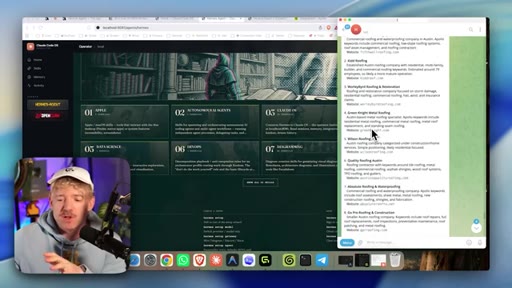
26:23And then on top of that, see if you can find for me, I don't know, 20 different roofing companies in Austin, Texas that I might want to reach out for. Just give me, like, the business name, a little bit of detail about them, and then I can start thinking about whether or not I wanna get contact info and what that looks like.
26:38Thank you. I'm just gonna send that off back up in the voice that that could be anything, And then we can come back and get this beautiful this beautiful information to help us grow our business, basically. And we've got great pain points for roofers here.
26:48Past customers are not being reactivated after storms. Leads come inbound, but they don't get followed fast enough. Really cool.
26:54And we've got a strong offer. Freaking awesome. Then we've got 20 Austin roofing companies down here.
26:59We've got Kidroof. We've got Texas Fifth Wall. All these different guys.
27:02I've not included the email address down here, but you can see we've got all these different messages now using the Apollo API. Look at this. My top average picks, if I were prioritizing first, I'd go with a b c d e f g.
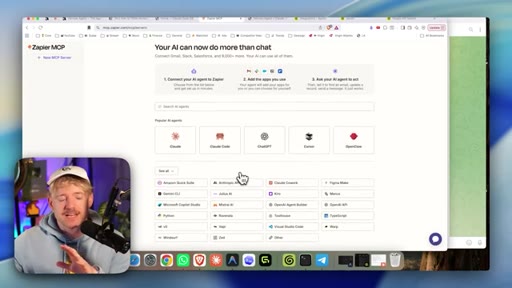
27:12And guys, we can connect this now to Gmail to draft emails and send emails to these people, which is amazing. One of the best ways to do this, by the way, which is just so easy, is something called Zapier. It's like a absolute cheat kit for connecting things.
27:24So you're gonna come up to this website. On this MCP, which is great. Now I would recommend this.
27:28Never give OpenClaw or Hermes the ability to send emails only to draft. I'm still at the point where I would never let them run riot.
27:36I'm a couple of my buddies have done that, and they've been a little bit sorry about that. We're just not quite there yet with writing, but drafting is fine, and you can approve it, which I think is awesome. You So can pick the popular AI agent that you want to.
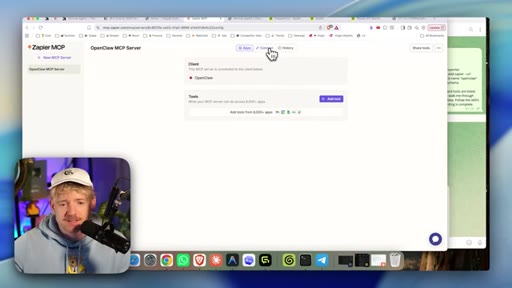
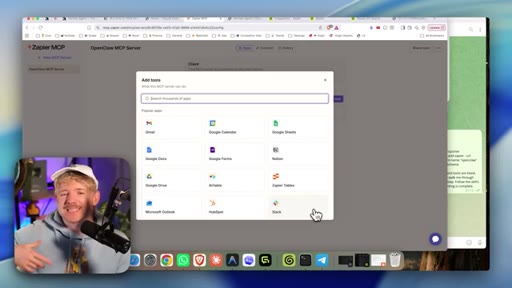
27:48You can come down here, see all of them. It's really freaking cool. We're gonna come down here to the new MCP server.
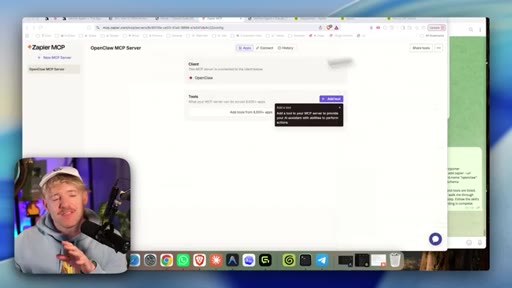
27:52And what you're gonna come down, Clipman, guys, is Open Claw. Don't worry about the fact that it says Open Claw. We're just gonna substitute that for something different.
27:58And instead, you can copy the prompt here and then come back over here, paste this one in, and then instead of Open Claw, just come down and change this one over here to Hermes, and then come down here and just make sure it's fine and then get ready to rock and roll and just send that one off. Now when you click on this on the left hand side, you can see we can now tools.
28:12So what we're gonna do, add a tool. I'm gonna come down here, find Gmail. And crucially, I'm not gonna give it the ability to send emails.
28:18We wanna follow something called the principle of least access, which is that any tool connection has the fewest possible tools available to actually do the thing.
28:27So find emails is fine. Get attachments is fine. Add labels is also fine.
28:31It's even doing it right now as we speak, which is cool. So we're gonna say, hey. That sounds freaking cool.
28:35We're gonna allow that. That's absolutely fantastic. We're already authorized.
28:38Thank you very much. We appreciate your hard work. Archive emails.
28:41Delete. We don't need it to have delete, but I think create draft and draft reply are fine. Create labels is okay.
28:47Send emails is a no right now. Remove labels is also okay. But, again, we're not going too much of that.
28:52Gonna come down and just click on connect. Now this only has access to the stuff that I'm okay with. I say add seven tools.
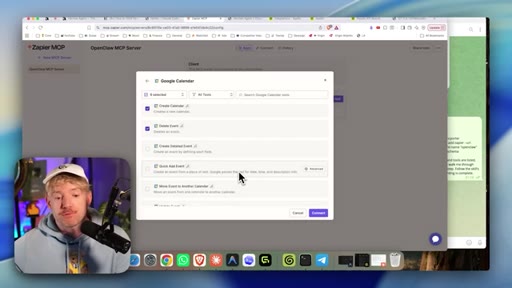
28:58The other one that we're gonna wanna add is calendar access as well. So that's cool. Let's just come down and give my calendar access also.
29:03I'm gonna get it built to define events, retrieve events, find, you know, busy periods in the calendar. That's fine. Find calendars not required.
29:11Add attendee to event. That's also okay. And I'm gonna give it the ability to create a calendar event since that's not necessarily too messy, and I'm gonna kind of okay with it doing that.
29:19And also deleting an event is also cool. So basically, to your own preference, basically, build this one out. This one's on my computer at home, so unless someone comes to the store right here and they're going to they're not gonna be able to actually physically get the stuff.
29:31And so just give it the access that you're happy with. And when you're happy, come down and click on connect. And Zapier is pretty much like the Willy Wonka's Emporium for connectors and stuff like this.
29:38It's very cool. I'm gonna come down and select my account, which is cool, which is this one, then add my eight tools. And when that's done, I click off.
29:44And then basically, you'll see if I come down here onto connect, I know you'll see an apps that is all physically connected together, which is wonderful. And then just like this, guys, it's now confirming that everything's connected, and that's as easy as was. I can say something like, hey there, dude.
29:55Could you tell me, for example, the title of the next calendar invite that I have, the next appointment on my calendar? Now Hermes has got this.
30:02We'll just see what else to say. This is the easiest way to connect to Google. Like, it it that I'm aware of.
30:06It is just super duper easy. It's fantastic. And look at this.
30:09We're even seeing a preflight compression. So these are tuck ins route. This is a threshold.
30:13Now it's gonna compress a little bit, and it gives us a wonderful answer. And whilst we wait for Hermes to come back with the answer for that, just wanna touch on some pricing stuff on the Apollo side if you do wanna go out that one. It is a paid subscription.
30:22There are free alternatives out there, like, can use Apify. This one is paid for a reason because of the quality, obviously. So all the way down from $0 up to a 119 if organization.
30:33CTAObviously, you can pick the one that you like. You can use this API from free, but they basically, there'll be certain things you can't get like emails. So just be aware of that when you're actually going ahead and using it.
30:42CTAAlright, guys. And just like that, it tells me my next calendar invite is way in. It does not know about the beautiful nandos I had tonight.
30:49CTABut now we've connected all this stuff together, it just brings on to a very interesting question. And that's how do we exactly solve the second part of this puzzle? We get the fact that we can use Hermes on our phone, which is fantastic, but it's only half of the knowledge system.
31:02CTAAnd so the next thing we're gonna do is learn how to build this agentic system for Claude, which we're gonna do in this video right here.
— full transcript
§ 05 · For Joe

The handshake is the product.

Creator OS playbook

The next content category is not how to use AI — it's how to make your AIs talk to each other.

  • Jack's Two AIs. Zero handshake. slide is the whole pitch in four words. Build that sentence for whatever fragmentation your audience feels.
  • The Pantheon folder-based architecture (each persona = one YAML file) is a dead-simple extensibility pattern — steal it for any multi-model routing system.
  • Morning brief cron is a product feature, not a tutorial trick. An AI that thinks overnight and brings you 2-3 ideas at 8AM is a different category than a chatbot.
  • The principle of least access is a trust-builder. One sentence in a permissions flow is the difference between this feels sketchy and this person knows what they are doing.
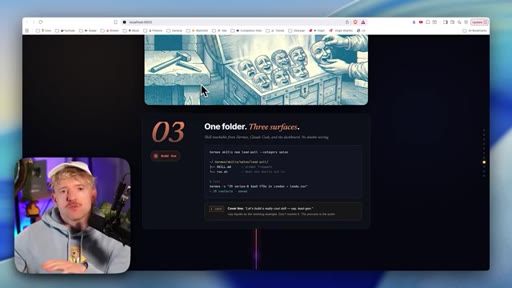
  • Jack's custom marketing page inside the tutorial — the mythology artwork, the bold headlines — elevates a screen-share tutorial into a product reveal moment. Worth replicating in your own demos.
§ 05 · For You

What this could mean for you.

If you're already using Claude Code or any AI assistant

Every AI tool you use is an island — and right now you're the ferry, re-explaining your context every time you switch.

  • Hermes is a free, open-source AI agent you can control from your phone via Telegram — worth installing even before any of the advanced integrations.
  • The Pantheon persona system means you can have a deep research agent using a free model and a quick task agent using a fast model, each with its own instructions, without managing any of it manually.
  • Connecting Obsidian to Hermes means your personal notes become queryable by your AI — your journaling, your ideas, your frameworks, all searchable by conversation.
  • The morning brief cron is genuinely useful: set it up once and your AI reviews everything that happened across your tools and delivers 2-3 actionable suggestions each morning.
§ 06 · Frame Gallery

Visual moments.