
David Heacock · Youtube · 12:22

This Boring AI Niche is SO SIMPLE It Feels Like Cheating

A 12-minute masterclass from a $23M/month operator on why vertical AI software for boring industries is the most defensible business you can build right now.

Posted
May 15th 2026
3 days ago
Duration
12:22
Format
Talking Head
educational
Channel
DH
David Heacock
§ 01 · The Hook

The bait, then the rug-pull.

David Heacock opens against the two noisiest AI-income plays — faceless content and cheap app flipping — then drops his credential in the same breath: Filterbuy, the air filter company doing twenty-three million dollars a month. By the time he says 'boring software for boring industry,' you're already leaning in.

§ · Stated Promise

What the video promised.

stated at 00:26 "I'll show you exactly why, exactly what to build, and exactly how to get started." delivered at 10:01
§ · Chapters

Where the time goes.

00:00 – 00:32

01 · Cold open + thesis

Pattern interrupt against faceless content and cheap apps. Credential drop. Core thesis stated: biggest AI opportunity is boring software for boring industry.
00:32 – 01:28

02 · The mismatch unlock

Every boring business runs software that doesn't fit. That mismatch is your opportunity. Concrete example: $10K/year Stripe-to-QuickBooks connector rebuilt in a weekend.

01:28 – 03:14

03 · Filterbuy as proof

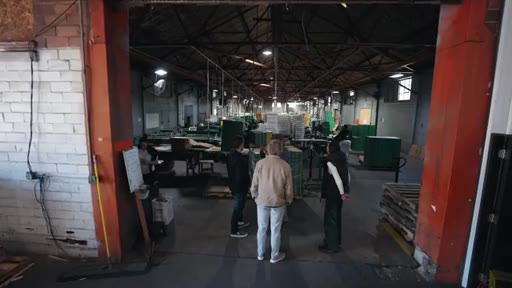
AI made 12 developers do the work of 120. Real-time data warehouse — contribution margin, CAC, ad efficiency across all channels — rebuilt in 6 weeks with AI assistance.
03:14 – 05:16

04 · Why big SaaS can't compete

~50% of big SaaS revenue goes to S&M to sell one-size-fits-all software. That model breaks when custom is 90% cheaper. Vertical players don't need the sales machine.

05:16 – 06:40

05 · Eric Lupton case study

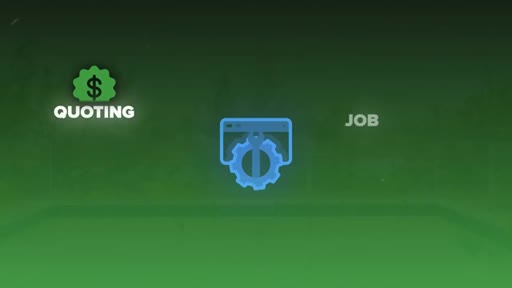
Pool fence franchise operator built custom software (quoting, job tracking, franchisee dashboards) for a fraction of the old $150K-$500K cost, in weeks not months.
06:40 – 08:01

06 · Playbook: skills

Most important skill isn't coding — it's industry knowledge. Understand the problem deeply enough to describe it clearly, then use AI tools to build toward a solution.
08:01 – 09:24

07 · The biggest mistake

Starting with the technology and searching for a problem to attach it to. Leads to generic tools nobody needs. Building horizontally means getting eaten by well-funded competitors.

09:24 – 10:01

08 · The right play

Build vertically. Pick HVAC, pick freight brokerage, pick dental practices. Go so deep into one niche that you understand it better than anyone building software for it.

10:01 – 12:22

09 · Three product ideas

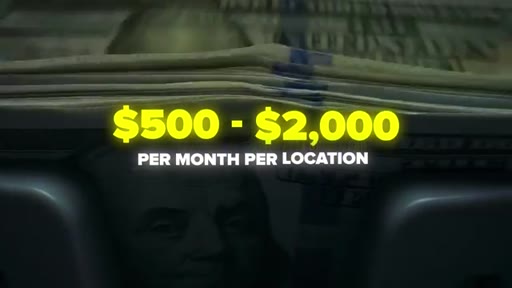
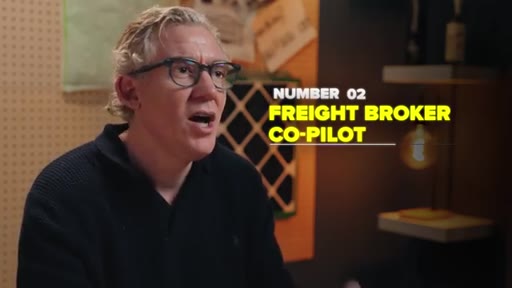
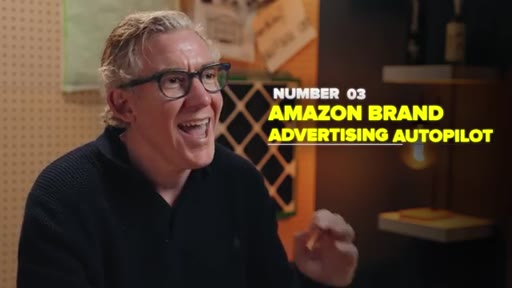
1. HVAC dispatch + sales intelligence ($500-$2K/mo/location). 2. Freight broker copilot ($100-$300/broker/mo). 3. Amazon brand advertising autopilot ($500-$3K/mo). All share one trait: make one person as productive as a team.

§ · Storyboard

Visual structure at a glance.

open
thesis
Filterbuy proof
SaaS crack
case study
3 questions
3 product ideas
CTA
§ · Frameworks

Named ideas worth stealing.

09:34 list

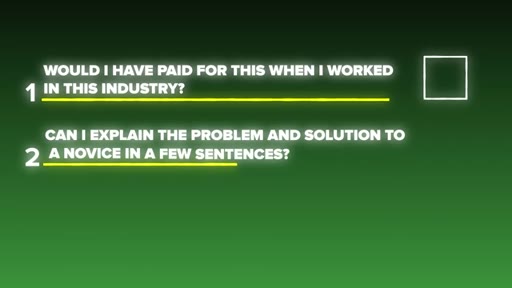
Three Qualifying Questions

  1. Would I have paid for this when I worked in this industry?
  2. Can I explain the problem and solution to a novice in a few sentences?
  3. Is this boring enough that a venture capitalist wouldn't fund it?

Pre-build filter that forces vertical specificity and operator empathy before writing a line of code.

Steal for Any product validation framework — works for Joe's app ideas, client pitches, or MCN+ tool decisions
03:34 model

The Structural Moat Argument

Big SaaS spends ~50% of revenue on S&M to sell generic software to everyone. Custom was $300K so $100K/year SaaS was an easy yes. Now custom is 90% cheaper. Vertical players can undercut on price and depth simultaneously.

Steal for Positioning JoeFlow or any owned-stack tool against SaaS incumbents
01:46 concept

Force Multiplier Frame

AI made 12 developers do the work of 120. Not replacement — multiplication. Defuses fear of AI displacement while selling AI-powered tools.

Steal for Pitching AI tools to operators who fear their team gets replaced
§ · Quotables

Lines you could clip.

03:05
"AI shortens the feedback loop. You have an idea, you test it, you improve it, and then you move on way faster than before. That speed compounds and it becomes your competitive advantage."
Self-contained thesis, no setup needed, lands clean at any cut point → TikTok hook
04:58
"Your industry knowledge is the moat. AI is just the tool."
Eight words. Contrarian to the default 'learn to code' framing. Quote-card ready. → IG reel cold open
09:33
"Is this boring enough that a venture capitalist wouldn't fund it? If the answer to all three is yes, you're in the right place."
Counterintuitive punchline — VC disinterest as validation signal → newsletter pull-quote
12:09
"They're not trying to replace humans. They're trying to make one person as productive as a team, and they're built for one very specific customer, not everybody."
Perfect closer — addresses the AI-fear objection and the niche clarity lesson in one breath → TikTok hook
§ · Pacing

How they spent the runtime.

Hook length32s
Info densityhigh
Filler5%
§ · Resources Mentioned

Things they pointed at.

05:35channelEric Lupton (pool fence franchise guest)
01:05productFilterbuy ↗
01:08toolStripe to QuickBooks connector example
§ · CTA Breakdown

How they asked for the click.

12:09 next-video
"If you wanna understand exactly how I would make my first million dollars, click here."

Clean single CTA at the very end, no sponsor, no newsletter pitch. Invisible sell — the whole video IS the pitch for David's credibility. Effective because the content earns the click.

§ 04 · The Script

Word for word.

HOOK opening / re-engagementCTA the pitch metaphor analogy
00:00HOOKNormal people are making millions of dollars with AI, and they don't need to make faceless content or sell an app that they made for cheap. There's a new niche that's quietly printing millions of dollars that nobody is capitalizing on yet. I know about this niche because I'm one of its customers.
00:16HOOKI'm David. I run Filterbuy, an air filter company doing $23,000,000
00:21HOOKa month. The biggest AI opportunity in the next five years isn't building sexy startups. It's building boring software for boring industry.
00:30HOOKAnd I'll show you exactly why, exactly what to build, and exactly how to get started. Let's start with the biggest unlock.
00:38HOOKEvery boring business you know, whether that be the HVAC company, the local manufacturer, or the freight broker in my examples, is running software that doesn't fit. That mismatch is your opportunity.
00:50The entire tech industry is quietly panicking because they know that AI is about to cannibalize them. I want to give you a concrete example from my own company. We used to pay a software vendor about $10,000
01:03a year for a connector, a tool whose only job was to move transaction data from Stripe over to QuickBooks. That's it. One very boring task.
01:13$10 a year. I actually built the replacement myself. I understand our data structure.
01:18I understand what we need. And with AI tools, I just did it on a weekend. One day, done.
01:23That's $10,000 a year back in our pocket permanently. That price drop doesn't help big companies build better tools.
01:32It blows open an entirely new market. The market of niches that were always too small to justify custom software before. Out of a warehouse in Alabama,
01:42I'm running my own personal tech company. AI didn't replace my team. It made 12 developers do the work of a 120.
01:50Filterbuy is an air filter company. We're not a tech company, but we've always bet on technology as a competitive edge. Here's what AI is doing for us right now.
02:00The biggest one is data. We pull information from a lot of different places, things like Amazon or our Amazon ad platform, Google Ads, Meta,
02:09our website, all of our internal systems, our shipping platforms. Before,
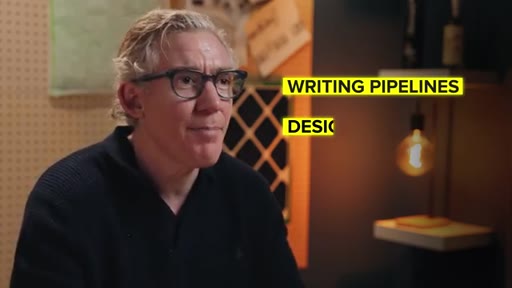
02:14consolidating all of that into one place where you could actually analyze it was a major engineering project. You needed data engineers writing pipelines, designing schemas, cleaning everything up. That kind of build could take months.
02:27We rebuilt most of that stack with heavy AI assistance over the last six weeks. Now we have a real time data warehouse that shows us contribution margin, customer acquisition cost, ad efficiency, and profitability by product across all of our channels at once.
02:44What used to take weeks of engineering time can now be done in a day or two. We're also using AI in customer service, marketing efficiency, pricing decisions, and product development. Every part of the business that touches data
02:57has gotten faster. The way I think about it is this, AI shortens the feedback loop. You have an idea, you test it, you improve it, and then you move on way faster than before.
03:08That speed compounds and it becomes your competitive advantage. It's one of the biggest advantages a smaller, nimbler company can have right now.
03:17If you wanna understand where AI adds the most value in a boring business, start with the data. Every business generates more data than it can process. That's the pain point, and that's where you need to start.
03:29You might be thinking, these big tech companies are huge with billions in resources. Won't they just add AI and crush everyone? I actually don't think HubSpot and Salesforce are going away.
03:40Let me be clear about that. But here's the crack in the wall. Look at the financials of any big SaaS company,
03:46whether it be Salesforce, HubSpot, others like them. Lots of examples. About 50% of their revenue goes to sales and marketing, just getting customers to buy.
03:55That's how expensive it is to sell one size fits all software to everybody. That business model made sense when it was the only game in town. When the alternative was spending $300,000
04:05to build something custom, paying a $100,000 a year for Salesforce was an easy yes, but the alternative just got 90% cheaper. Now a smaller player can come in and offer an HVAC company something better, software built specifically
04:20for how HVAC companies actually work at a fraction of the cost. And they don't need a massive sales team to do it because they're only selling to one type of customer. The big players will feel margin pressure.
04:31They'll add AI features to stay relevant, but they'll struggle to go deep on any single vertical because their whole model is built on going wide. Vertical software for niche industries is the play that's hardest for them to copy.
04:45Someone is going to build the sales force of HVAC companies, the sales force of freight brokers, the sales force of pool fence franchises. That person doesn't need to be a genius, and they definitely don't need outside money. The question to ask yourself is, what industry do I already understand?
05:02Your industry knowledge is the moat. AI is just the tool. I know a guy who built custom software for his franchise business that five years ago would have been completely out of reach.
05:13It changed everything about how his company operates. Once he discovered AI, he started making millions. On my podcast, Boring Money, I talked to a guy named Eric Lupton who runs a pool fence safety business with a number of franchisees across the country.
05:28Pool fence installation is about as unglamorous as it gets, but running a franchise network is operationally complex. You've got franchisees in different states, different jobs, different pricing,
05:41different customer histories. Eric built custom software specifically
05:45for his business, software that was designed from the ground up around how pool fence franchise operations actually work. Things like quoting or job tracking, franchisee dashboards, customer records.
05:57Five years ago, that project would have cost him somewhere between a 150,000 and $500,000, and after that, he would have needed ongoing developers to maintain it.
06:07Because of AI assisted development, the same project today is a fraction of that cost and can be built in weeks, not months.
06:16And here's what I want you to notice. There is almost certainly no venture backed startup that's building software for pool fence franchises. The market is too niche.
06:25It's too boring, and that's exactly why it's an opportunity. If you wanna watch Eric's full episode, subscribe to watch boring money on this YouTube channel. If you have a similar business story and want to come on the show, click in the link in the description.
06:40Now let's get back to the actionable. Here's my exact playbook to capitalize on this. The best skills, the biggest mistakes to avoid, and three product ideas that you can launch this week.
06:52Here's the thing that most people get wrong about building software for boring businesses. You probably don't need to be as technical as you think. The most important skill for building boring AI software isn't coding.
07:05Now I wanna be honest with you about something. I'm not a professional developer, but I personally rebuilt our Stripe to QuickBooks connector myself.
07:14One day, done. The cost of entry into software is coming down fast. You don't need a computer science degree.
07:21What you need is to understand a problem deeply enough to describe it clearly, and then you use AI tools to help you build toward a solution.
07:32That being said, I'm not gonna tell you that coding knowledge doesn't matter. It does. Someone who understands systems can work with a developer, can review what gets built,
07:42and is gonna move faster than someone who doesn't. But the most valuable skill in this space right now isn't coding. It's industry knowledge.
07:51Ask yourself what industry you already know from the inside, and that becomes your starting point. The skill you need to add is enough technical knowledge to build a solution or clarity to direct someone who can.
08:04Before you run off and start building, I want to tell you about the mistake that I see over and over because it's the fastest way to waste a year of your life. The biggest mistake people make is starting with the technology. They see AI tools, they get excited,
08:20and then they start trying to find a problem to attach them to. That almost always leads to building something generic that nobody really needs. I saw a post on x a few weeks ago from someone who had just been to a medical conference, a room full of doctors running independent private practice.
08:36Not one of them had seriously thought about how AI could make their practice more efficient. Nobody in that room even knew what some of the basic development tools were. That's how early we still are.
08:48The opportunity isn't in building another AI chatbot or another generic workflow tool. The opportunity isn't being the person who walks into that room of doctors, understands their specific problems deeply, and builds something that fits exactly that.
09:05So what's the wrong play? It's building horizontally, trying to build AI for marketing or AI for operations or AI for small business.
09:13Those markets get crowded fast because the problem definition is so vague. Big, well funded companies will eat you alive. The right play is building vertically.
09:24Pick HVAC. Pick freight brokerage. Pick dental practices.
09:27Pick Amazon brands. Go so deep into one niche that you understand it better than anyone building software for it. That depth
09:36is your moat. The big players can't replicate it because they're trying to serve everybody. Three questions to ask before you build anything.
09:43Number one, would I have paid for this when I worked in this industry? Two, can I explain the problem and solution to a novice in a few sentences? Three,
09:53is this boring enough that a venture capitalist wouldn't fund it? If the answer to all three is yes, you're in the right place. I said I'd be specific.
10:02Here are three boring AI businesses I would actually build if I were starting today. Number one, HVAC dispatch and sales intelligence. Most HVAC companies with five to 50 trucks are still scheduling jobs on whiteboards or in basic software.
10:17Technicians drive inefficient routes. Upsell opportunities get missed on every call. You could build an AI layer that sits on top of their existing system and does three things, smart dispatching based on geography and skills, automatic transcription and classification of inbound calls,
10:35and sales prompts for technicians based on what they find at each job. The customer is any HVAC company doing 5 to $50,000,000 in revenue. You could charge $500 to $2,000 per month per location.
10:47Improving technician utilization by even a few percent more than covers the cost. Number two, freight broker copilot. Freight brokerage is a massive industry that still runs largely on phone calls and spreadsheets.
11:00A freight broker's job is to match loads from shippers with available carriers, price the load correctly, and then close the deal fast.
11:08AI can automate most of the mechanical parts of that, monitoring incoming loads, matching carriers, predicting price, drafting outreach. You're not replacing the broker. Charge a 100 to $300 per broker per month.
11:20A brokerage with 50 brokers is a $5,000 to $15,000 per month customer. There are thousands of freight brokerages in The US.
11:27Number three, Amazon brand advertising autopilot. There are tens of thousands of brands doing a million dollars to $50,000,000 on Amazon, and almost none of them have sophisticated advertising operations.
11:39They're running campaigns manually, guessing at bids, and leaving money on the table every single day. Build opinionated software specifically for Amazon operators. Not a generic marketing tool, but something that automatically adjusts bids based on margin data, identifies wasted spend, and optimizes pricing against competitors.
11:57Charge $500 to $3,000 per month. The ROI is obvious because you can show them exactly what they're wasting. Notice what all three of these have in common.
12:07CTAThey're not trying to replace humans. They're trying to make one person as productive as a team, and they're built for one very specific customer, not everybody.
12:16CTAIf you wanna understand exactly how I would make my first million dollars, click here.
— full transcript
§ 05 · For Joe

Steal the positioning, not just the niche.

Boring money playbook

David wins because he leads with operator credibility ($23M/month), not creator credentials — every lesson is backed by a number from his own P&L.

  • Open with the anti-hook: name the two over-hyped plays your audience has already tried and sidestep them immediately.
  • Lead with a credential that makes the thesis inarguable — not your follower count, but a business metric.
  • Use the Force Multiplier frame ('12 devs doing the work of 120') when selling AI tools to operators who fear displacement.
  • The Three Qualifying Questions are a ready-made framework for any product validation video — steal the format whole.
  • Close with an invisible CTA: no pitch, no sponsor, just a natural 'click here' after 12 minutes of real value. The content IS the pitch.
§ 05 · For You

The boring niche filter you can run today.

If you're thinking about building something

The industries no one is excited about are the ones where you can actually win — because the software is bad, the problems are specific, and the competition is asleep.

  • Before building anything, ask: would I have paid for this when I worked in this industry? If yes, that's a real problem.
  • Industry knowledge beats coding ability at the start — you can describe the problem better than any outsider, and AI can help you build toward it.
  • Avoid building 'AI for small business' or 'AI for marketing' — the problem definition is too vague and well-funded teams will eat you. Pick one industry and go deep.
  • The $10K/year Stripe-to-QuickBooks connector David rebuilt in a weekend is the model: find one specific, repeatable pain point and solve it completely.
  • If a VC wouldn't fund it because the market seems too small, that's your green light — it means nobody with real resources is building it yet.

§ 06 · Frame Gallery

Visual moments.