Dream Labs AI · Youtube · 17:34

Build Andrej Karpathy's LLM Knowledge Base for Businesses (10x Output!)

A 17-minute live walkthrough of Karpathy's 21-million-view second-brain system — Obsidian + Claude Code building a self-learning business wiki in under 10 minutes.

Posted
May 14th 2026
2 days ago
Duration
17:34
Format
Tutorial
educational
Channel
DL
Dream Labs AI
§ 01 · The Hook

The bait, then the rug-pull.

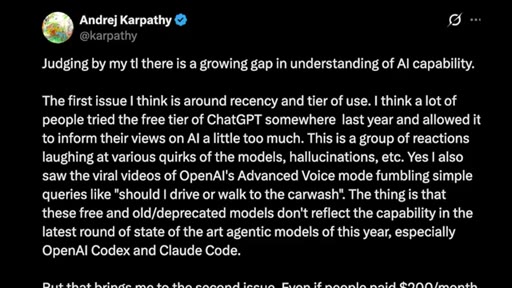
Andrej Karpathy's tweet about his AI second-brain system reached 21 million people — a jaw-dropping number for a post full of technical file paths and markdown schemas. Dream Labs AI opens with a blunt diagnosis: 99% of businesses are feeding Claude the whole internet and getting average slop back. The fix takes under ten minutes to set up, and this video shows every step live.

§ · Stated Promise

What the video promised.

stated at 00:43 "How to set it up personalized to you and your business in the next ten minutes." delivered at 12:36
§ · Chapters

Where the time goes.

00:00 – 01:06

01 · Cold open — credibility hook

Karpathy name-drop (ChatGPT founder, Tesla AI director). Problem: no memory, no context, no business alignment. Promise: collapse a month of work into a single day.
01:07 – 01:49

02 · How most people use AI wrong

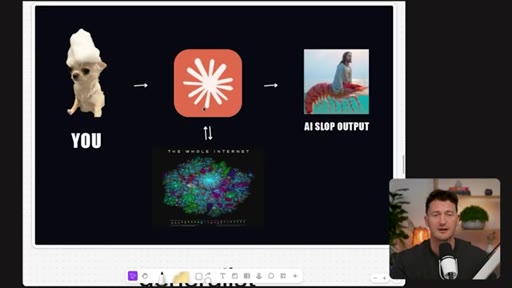
The 'generalist bubble bath' diagram — Claude pulls from the whole internet unfiltered → AI slop output. Identifies the root cause: no business-specific filter layer.

01:50 – 03:26

03 · Karpathy's specialist approach

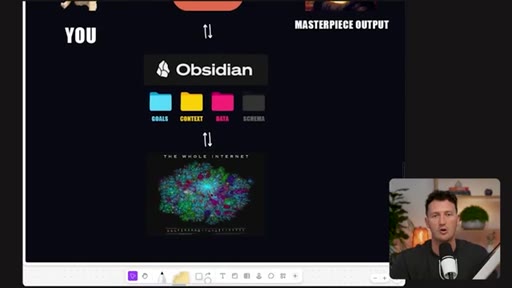
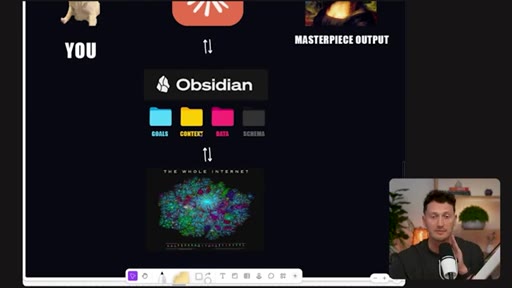
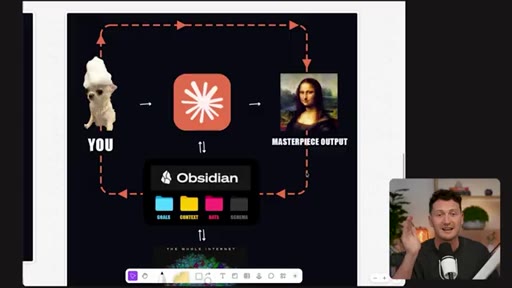
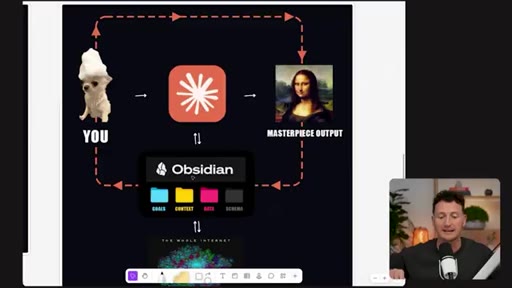
Obsidian as the filter: goals + context + data + schema between you and the LLM. Self-learning loop: every query feeds back into the directory and makes it smarter.
03:27 – 04:12

04 · Anatomy of the second brain

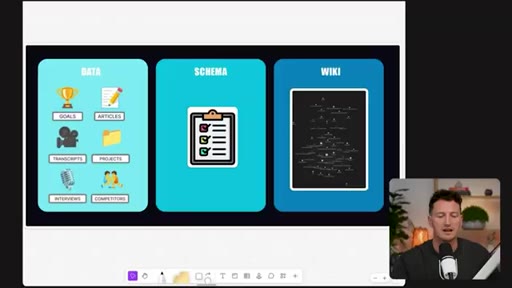
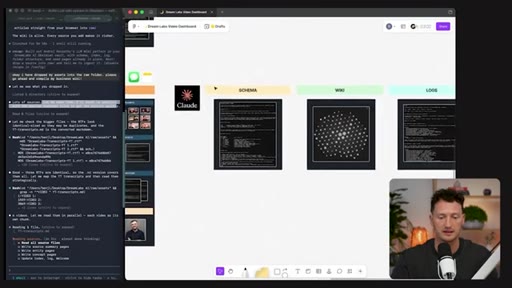
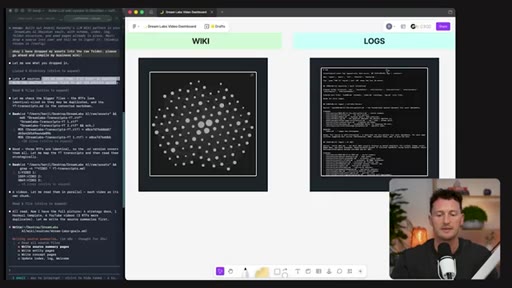
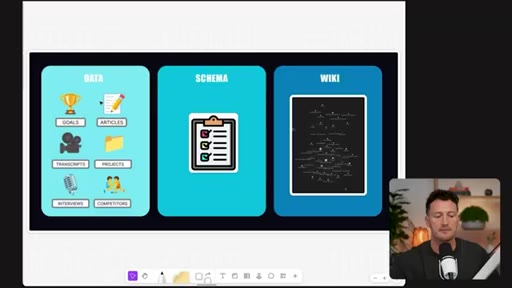
Raw data → Schema rulebook → Wiki (concepts/entities/sources/synthesis). AI handles everything except the initial data drop.
04:13 – 04:50

05 · Setup — Obsidian + Claude Code

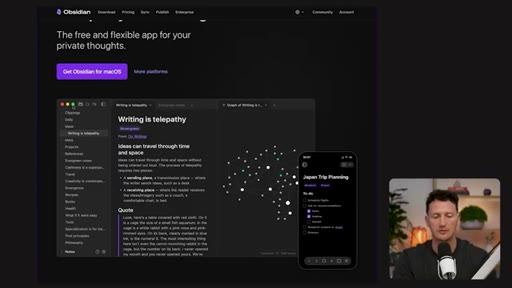
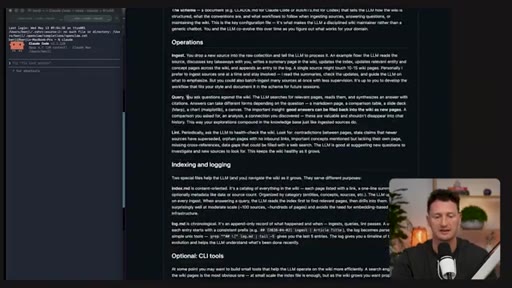
Download Obsidian (Notion-like, neural graph view). Use Claude desktop, terminal, or any IDE.
04:51 – 06:03

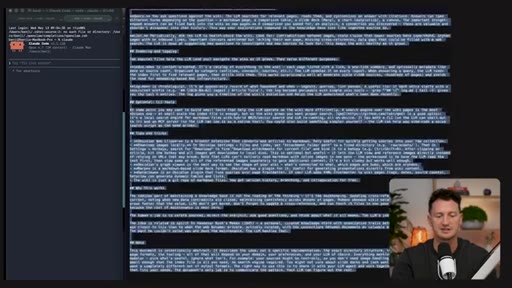
06 · Karpathy's viral tweet + IDEA file

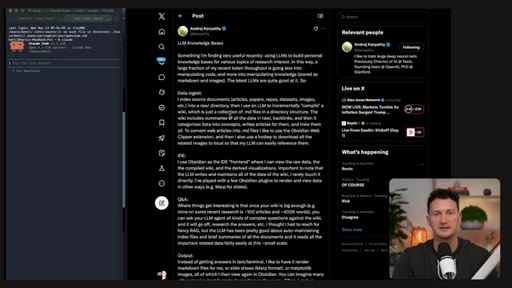
The 21M-view tweet. GitHub gist link. Copy the raw MD. Karpathy improved it post-virality with an updated IDEA file for download.
06:04 – 07:03

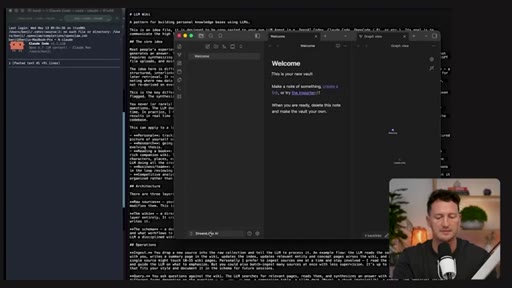
07 · Creating your Obsidian vault

Brand-name the vault (DreamLabs AI). Keep the welcome page — Karpathy's transform function needs it. Paste the 91-line IDEA file.
07:04 – 09:00

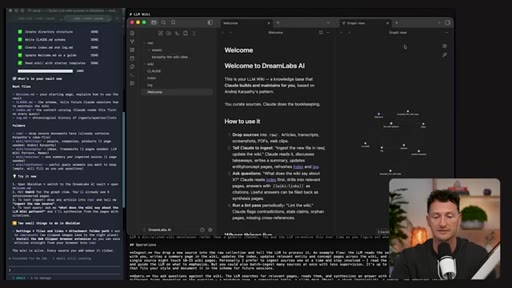
08 · Claude Code builds it out

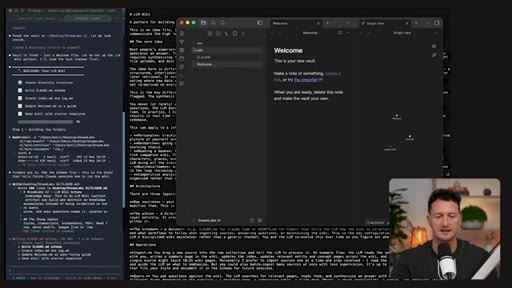
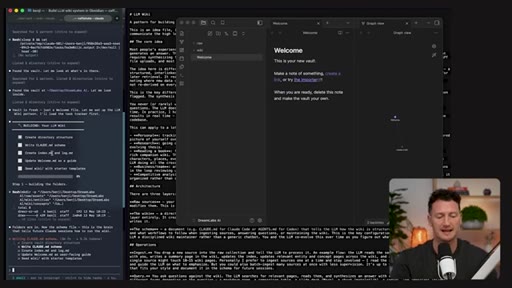
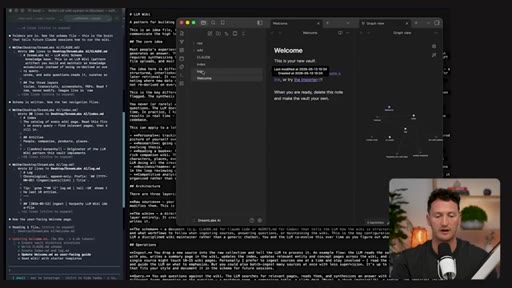
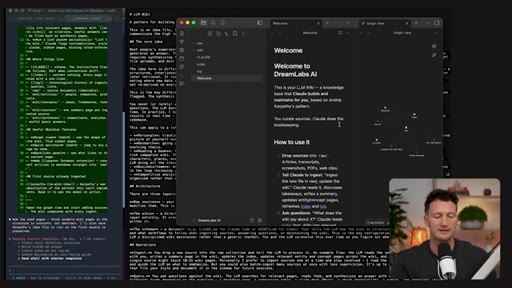
Voice prompt to Claude Code. Five build steps: directory structure, CLAUDE.md schema, index.md, log file, welcome transform. Graph view in Obsidian starts populating in real time.
09:01 – 11:13

09 · What raw data to feed it

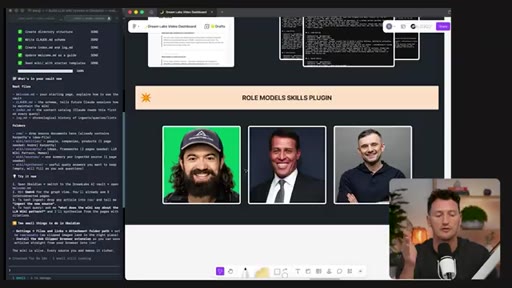
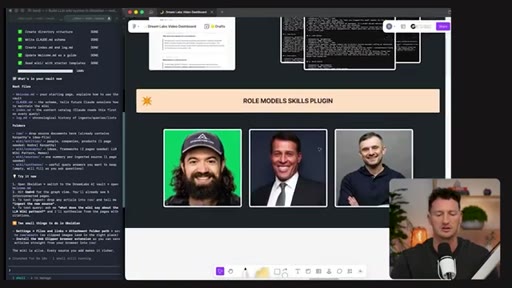
Business goals, content transcripts, directional articles, project files, competitor research, Hormozi 12-question interview, role-model skill plugins (Tony Robbins 'gaming cartridge' analogy).
11:14 – 12:35

10 · Dropping assets in

Drag any file type (PDF, MD, images, notes) into /raw/assets. Claude creates an MD for each. Goals file shown: 'practical not novelty' doctrine.
12:36 – 15:17

11 · Compiling the wiki

Tell Claude: 'compile my business wiki.' It reads sources in parallel, writes summary/entity/concept pages, updates index + log. Took 8m42s for DreamLabs dataset. Obsidian graph builds out neural connections live.
15:17 – 17:34

12 · Querying live + results

Query 1: 'Give me a YouTube video idea based on my business and past videos.' Result: 'I let Alex Hormozi's AI run my business for 30 days — the brutal truth.' Query 2 (mentioned): 'Tell me where the gaps in my knowledge are.' Closes with subscribe CTA.

§ · Storyboard

Visual structure at a glance.

glitch open
Karpathy tweet
AI slop diagram
specialist diagram
Obsidian download
Hormozi interviews
goals doc live
wiki compiling
query results
§ · Frameworks

Named ideas worth stealing.

01:07 concept

Generalist vs. Specialist AI

Generalist: Claude pulls from the whole internet → average output. Specialist: Obsidian filter layer (goals + context + data + schema) sits between you and the LLM, then re-filters internet output back through your business lens.

Steal for JoeFlow / MCN+ positioning: 'stop renting generic AI, own a system trained on your business'
04:51 model

Karpathy's IDEA File / LLM Wiki Schema

  1. Raw data (/raw/assets)
  2. Wiki structure (/wiki/concepts, /entities, /sources, /synthesis)
  3. CLAUDE.md schema (rulebook)
  4. Log file (self-learning tracker)
  5. Index.md (master index)

Open-source GitHub gist. Copy the raw MD, paste into Obsidian vault, Claude Code scaffolds the full directory and transforms the welcome page.

Steal for Build Joe's own second brain with MCN data, JoeFlow transcripts, and profile docs as the raw corpus
09:01 list

Raw Data Taxonomy

  1. Business goals doc
  2. Your own content transcripts
  3. Directional articles (aspirational, not authored)
  4. Project files
  5. Competitor research
  6. Interview answers (e.g. Hormozi 12 Qs)
  7. Role model skill plugins

Any file type works. More data = better outputs. The system is only as smart as what you feed it.

Steal for Content angle: 'Here's every file I fed my second brain and what it produced'
10:40 concept

Role Model Skills Plugin

Take a public figure's publicly available content, synthesize into a skill file ('gaming cartridge'), plug into the wiki. Creates a 'board of directors' of mentors shaping every AI output.

Steal for Immediate Joe use: build a Karpathy skill file, an Alex Hormozi skill file, add them to any project context
§ · Quotables

Lines you could clip.

00:37
"A thousand IQ employee who gets smarter every conversation you have, knows exactly what your business goals are, and even autonomously builds towards them while you sleep."
No setup needed — self-contained value prop → TikTok hook
01:16
"The average IQ, the victim mindset, the stuff you don't believe in — it's all getting jumbled, mixed into your training data, and giving you very average AI slop output."
Visceral, relatable frustration point with a memorable label ('AI slop') → IG reel cold open
03:18
"For the first time ever, it's gonna have compounding knowledge and even be able to show you where the holes in your knowledge around your business and goals and action steps might be."
Compounding knowledge = strong contrast to flat-line generic AI → Newsletter pull-quote
11:55
"We're not using AI for AI's sake. We're not using technology for technology's sake. The core of my AI business is practical, not novelty."
Clean doctrine statement — works as a standalone philosophy reel → IG reel cold open
17:15
"Every video so far teaches setup. None show what happened after."
Tight gap-identification line — useful as a hook pattern for any 'results' video → TikTok hook
§ · Pacing

How they spent the runtime.

Hook length66s
Info densityhigh
Filler8%
§ · Resources Mentioned

Things they pointed at.

04:13toolObsidian ↗
09:57channelAlex Hormozi's 12 Business Questions
§ · CTA Breakdown

How they asked for the click.

15:00 subscribe
"If you've made it this far into the video and haven't hit that subscribe button below, please do. This is a new channel and we wanna grow an amazing audience together."

Mid-video ask, not end — placed at 85% mark while wiki is compiling. Honest and direct, no over-engineering.

§ 04 · The Script

Word for word.

HOOK opening / re-engagementCTA the pitch metaphor analogy story
00:00HOOKAndre Kapathi is the godfather of modern AI. He was one of the founding members of ChatGPT, the director of AI at Tesla, literally the man behind self driving cars.
00:10HOOKAnd he believes that 99% of businesses are using AI completely wrong. There's no memory, no real context, and no alignment or automation towards their actual business goal.
00:21HOOKSo Andre created a game changing system called your AI second brain. This system is so powerful that even his highly technical tweet about it reached over 20,000,000 people.
00:32HOOKAnd that's because Kapathi's simple system is like having a thousand IQ employee who gets smarter every conversation you have, knows exactly what your business goals are, and even autonomously builds towards them while you sleep.
00:45HOOKKapathi's second brain is likely the missing piece to your AI system and is even known to collapse a month of work into a single day. So I made this video to help you understand exactly how it works, how to set it up personalized to you and your business in the next ten minutes. So let's jump in.
01:02HOOKAlright. So we're gonna start with what not to do, which is what most people are actually doing. This is how most people are using AI at the moment.
01:09Here we are. We are in the bubble bath, and we're interacting with our favorite LLM. We're gonna use Claude in this example in order
01:16to use the entire training dataset of the Internet, the average IQ, the victim mindset, the stuff you don't believe in, the stuff you don't want anything to do with, it's all getting jumbled, mixed into your training data, and giving you very average AI slop output, whether that be images, whether that be web pages, whether that be answering emails, doing customer service, planning the day for you, planning your business goals.
01:40It is not catered towards your needs. This is a generalist way of using AI, which most people are stuck in at the moment.
01:47However, Andre Kapathi has come to our rescue with a specialist approach,
01:54which looks way more like this. Here we are. We're still enjoying our bubble bath.
01:58We can run our business from wherever we want these days. We're interacting with Claude who does not go straight to the whole Internet.
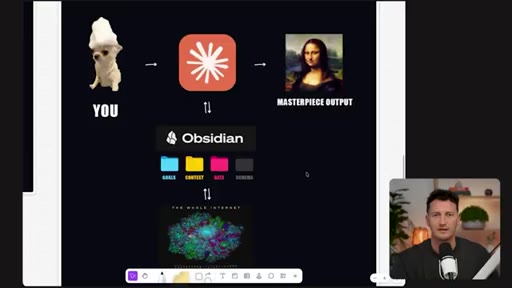
02:05Of course, he still has access to the whole Internet and that whole training set, but we have a filter using Obsidian, using this file structure that will take our prompts and filter them through our goals, our business context, all our business data and history, our schema, our rules, our flow,
02:22everything that we do believe in, everything that is relevant to you and your goals and your needs, then it will access the Internet and refilter it back through that filter before giving you a specific masterpiece output.
02:35And I've only just started using this for my business, which I'm gonna show you in just a second, but guys, the difference in the outputs are insane. And apparently,
02:44because this is the next best thing about this system is it's a self learning system, they're only gonna get better, smarter, and more catered to you and your business needs in the future because every time you make a query, every time you need something done, every time you give feedback on anything, Obsidian and Claude are going to be in a self learning loop where the output and the feedback will get fed back into your directory and make it smarter and smarter over time.
03:09Because Claude will update its own memory and know everything it needs to know about your business needs, so it's not going to be a flat line of knowledge over time. But for the first time ever, it's gonna have compounding knowledge and even be able to show you where the holes in your knowledge around your business and goals and action steps might be.
03:27Okay. So the anatomy of your business second brain looks like this. On the far left, we have all the data, all the raw files,
03:35everything that you could possibly feed an LLM or AI about your business. That is gonna go into this folder right here. We're gonna walk through this together in a second.
03:44Then we have a schema, which is basically a rule book of rules for the AI to follow when handling your data, how to sort it, how to it's basically Andre Kapathi's rule book. You don't need to necessarily create your own, but of course you can. But we're gonna borrow Andre Kapathi's rule book in order to produce a Wikipedia
04:03centered around everything that is going on in your business. And the nice thing about this too is the AI is gonna take care of everything
04:10except the very first step of feeding it all of the data. So let's jump in. I'll show you how to set this up for yourself.
04:18Step one, you're gonna need an app called Obsidian, which is a very simple, software, sorta like a Notion that allows you to visually represent
04:27your notes and the connections to them, sorta like a neural network right here. It's gonna be the best way to actually be viewing our business Wikipedia or our Second AI brain.
04:36Uh, so you come and click get Obsidian for Mac OS or if you're on PC, grab it for PC. And of course, you're going to need to download Claude or Claude Code. I'm personally gonna be using it over here in the terminal, but it's up to you.
04:48If you wanna use it inside the app, like the desktop app, that's totally fine. Or if you wanna use another IDE, that also works.
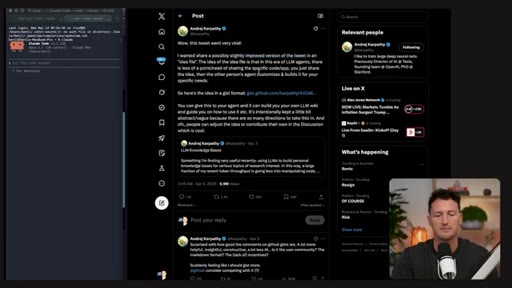
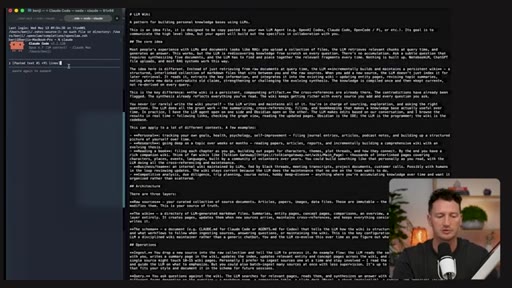
04:54This here is Andre Kapathi's viral tweet. And tell me, how does such a technical tweet about AI and data ingesting and linting
05:04get 21,000,000 views? Well, I honestly, I'm shocked, but it is why that a system like this is so important because it's it's what AI is missing at the moment.
05:12I'm gonna show you when we've run some examples just how good the outputs are when you actually use Andre Kapathi's system. So it went so viral that Andre Kapathi came back and actually improved his, uh, he made an idea file, first of all, for us to simply download and pull into our Claude's, but he also improved it from his original tweet.
05:33So if you come and click on this link in here, I'll link in the description below so you don't have to go fussyking around the Internet for it. You can see it comes to his GitHub gist, and it's an LLM Wiki.
05:44We're gonna be adapting this to business specific, but of course, you can use it for anything. Even Andre Kapathi uses it in a personal fashion as well. So what we wanna do is we wanna come and click on that raw button right there.
05:57It's gonna give us the m d file or just the text file. Gonna command a, command c just to copy all that over. Now I have that copied.
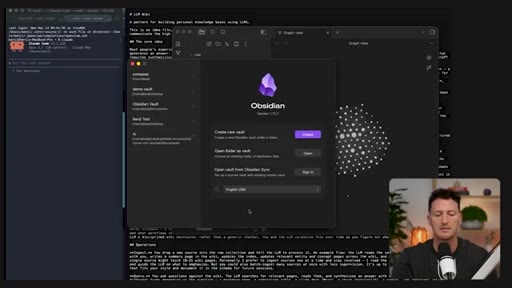
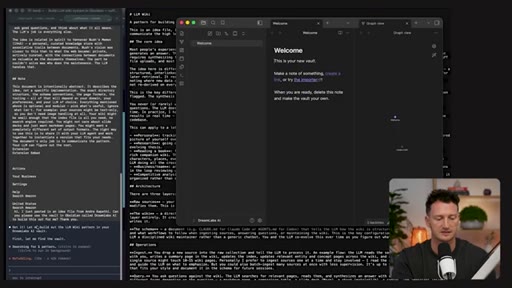
06:05We wanna make our first Obsidian Vault together. Come down to the bottom. If you have a welcome screen, you'll probably just, uh, create new vault there.
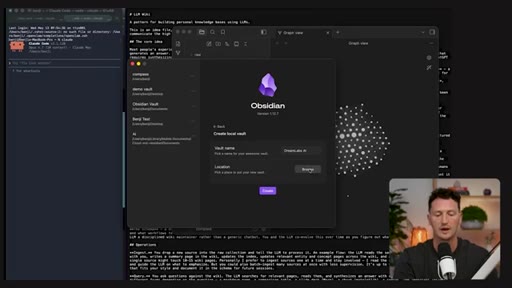
06:13But you wanna come down to manage vaults. Your welcome screen might look something like this. On the create new vault part, you click create.
06:20And our vault name, uh, the name of my brand is Dreamlabs AI. So that's what I'm gonna be calling my vault because it's going to be my second brain for my business.
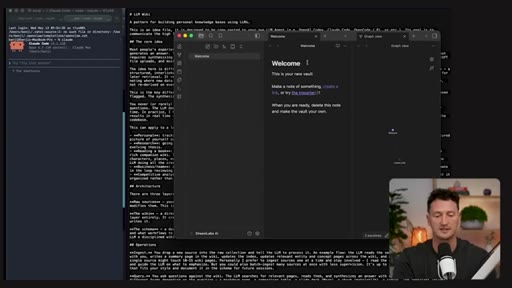
06:28Where do I want to actually put my new vault? I'm just gonna click browse, click on desktop, that's fine, and create it. So you can see this is pulled in a brand new vault, and you can see there's a welcome page right here.
06:39Don't delete this welcome page because Andre Kapathi is a smart man. He's actually got a transform function for this welcome page when you use his idea. So we're gonna go back and paste
06:49our copied text, which was 91 lines of Andre Kapathi's idea file. And then I'm gonna record a little bit in here just giving it some guidance.
06:58So I'm gonna hold down my record button. Hi. I just pasted in an idea file from Andre Kapathi.
07:04Can you please use the vault in Obsidian called Dreamlabs AI to build this out for me?
07:11Thank you. I'm going to stop that right there and just send that over to my Claude. And this is where Claude code will do all of the heavy lifting for us, and and it's going to go and set it up.
07:21So it says, got it. Let me build out the LLM Wiki pattern in your Dreamlabs AI vault. First, let me find the vault.
07:27So it's gonna come over here and actually find the vault that we just set up. Okay. So it took a little bit of time, but it finally found the vault.
07:34Now And it's gonna look at what is in there. So it's find that found that vault folder right here. It says the vault is fresh.
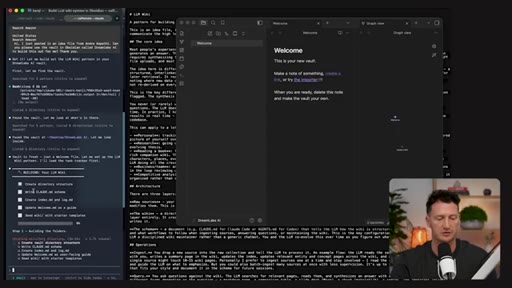
07:40It's just a welcome file. Let me set up the LLM Wiki pattern. So we've got one, two, three, four, five things that it's going to go through.
07:48It's got create the directory structure, which is currently working right now. Then it's gonna write a Claude MD schema. So that's the part two.
07:56The rule book of what your Wiki and your Claude is going to be following. Create an index MD and a log. I'll tell you about that in a second.
08:03Update the welcome m d into a guide. That's how they're gonna transform that. You can already see over here, uh, inside of our Obsidian,
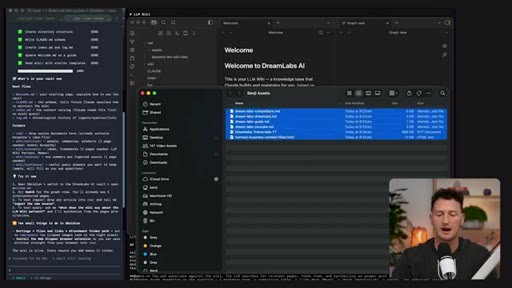
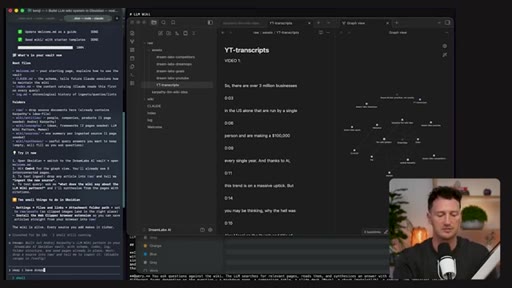
08:11you can see it's got a raw folder. And inside raw, it's got assets. It's got a wiki folder, which has got concepts, entities, sources, and synthesis,
08:18which is following Andrei Kapathi's exact layout. You can also see now it's got a Claude MD file, an index MD file, a log file. Now this log file will actually track every interaction that you're having with your Obsidian vault or with your, uh, second brain.
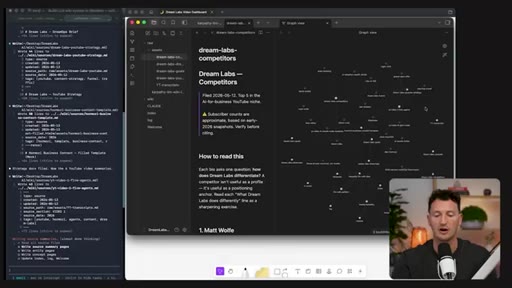
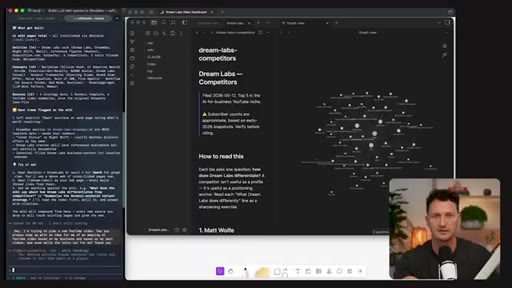
08:33And you can see over here on the right in the graph view, you're already starting to see it actually build out some form of a neural looking network. And you can see it has now transformed this welcome into exactly how to use this, uh, wiki, which you can go through and read if you want, but we're gonna be doing it together on this video, which will be much easier for you.
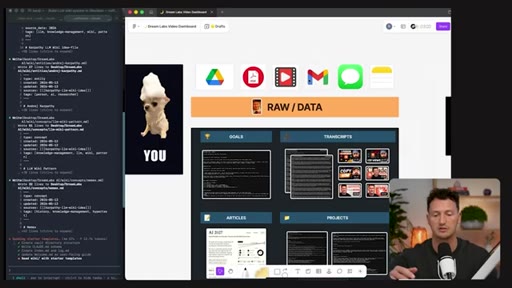
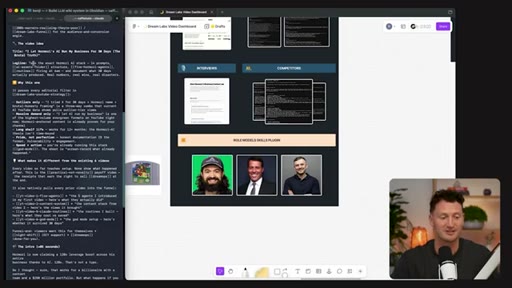
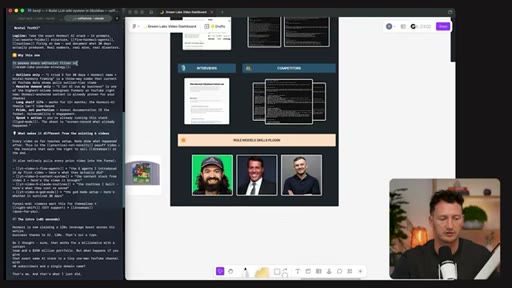
08:52And so while it builds out that last step, I'm gonna come over here and show you exactly what we're going to be doing together to make this personalized to you and your business. So this is the raw In the raw. Data section.
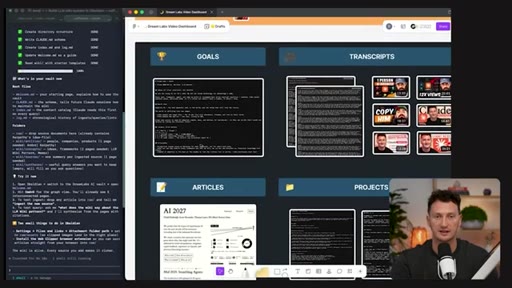
09:03This is what you are in command of. This is basically the only thing that we need to do. So if you've got a Google Drive with your business, if you've PDFs that you have to do with your business, if you've got videos or transcripts from YouTube or even Instagram Reels, whatever you create for your business, anything with your business information or content that you create regularly, uh, if you got emails, if you got messages, if you got notes or files, any raw data,
09:26this system can ingest into your Wikipedia. So for myself, I've got my business goals that are going to go in there.
09:34I've got transcripts from my first six videos on this channel that are gonna go into there. I've also got articles. Now these articles aren't articles that I've personally written, but they're articles that are sort of lighting the path of the direction that my business wants to go.
09:47And I wanna talk to you a little bit more about that in just a second. Then I've got the project. I've got my YouTube channel.
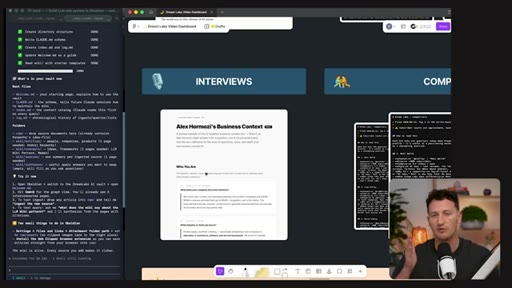
09:51Then I've got my paid community. Then I've got interviews. So this specific interview right here is an Alex Homosey recommended interview.
09:58He asked 12 very specific questions, and you can go watch the video on Alex Homosey here on my channel if you wanna watch exactly what they are. But basically, you can get your Claude to interview you based on these Hormozi questions, based on any questions. So you're feeding your Claude more and more information that's gonna store forever
10:14in this Wikipedia about your business. So I've personally answered Alex Mosi's 12 questions about my Dreamlabs business.
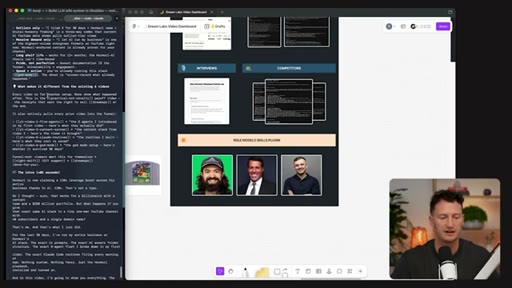
10:21Then I fed it some competitor information. And the last thing I'll talk to you about before I actually show you how I'm gonna drag and drop this straight in, uh, you can actually have like a roles model skills plugin, which is what I'm personally working on for my business. So you take all their publicly available data, and you say may take someone like Tony Robbins, for example, who's an excellent businessman.
10:40You can see everything he's ever said publicly about business, build a skills file, like, sort of like a gaming cartridge that you used to plug into your Nintendo. And you can plug this into your wiki, and when you query it, it's going to actually guide you or have some form of a role model mentor that is gonna guide your next steps and your actions and the outputs of your AIs,
11:00which I thought was phenomenally cool. So that is completely
11:04built by Claude, and you can see we've went through the setup together. It's fully done. Now the next step that we need to do is we just need to add those raw assets into here.
11:14So you can see the assets are basically empty apart from the LLM Wikipedia idea that actually is the foundation of all of this. So I have a folder ready of all of my competitors, my operations, all of my goals, my YouTube transcripts, all of my YouTube competitors, all of my YouTube transcripts, all of my Homosy business context.
11:31I'm gonna highlight those. They don't have to be MD files. Remember, you can put in PDFs, you can put pictures, you can put
11:37text, you can put notes, documents, anything you want. Just drag it into your assets like that, and you can see they're going to be created an MD file for each of these things. These are my goals over here.
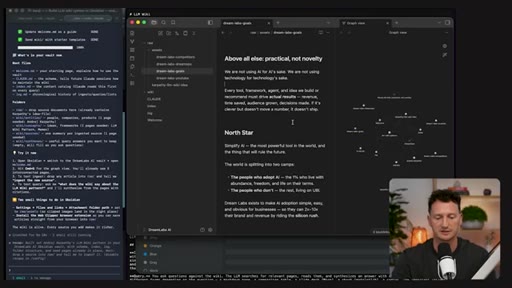
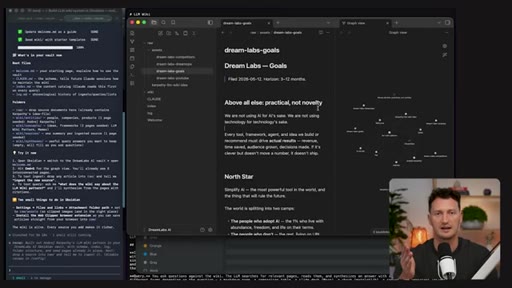
11:49We're not using AI for AI sakes. We're not using technology for technology sakes. The core of my AI business is practical,
11:55not novelty. What's actually moving me and my business forward? Every tool framework, agent, idea we build for recommended much actually drive results, revenue, time saved, audience grown, or decisions made.
12:05It's clever but doesn't move a number, it doesn't ship. So you can see these are all the things that I would actually like my AI to consider every time it gives me an output. I don't get a new breakthrough for technology's sake.
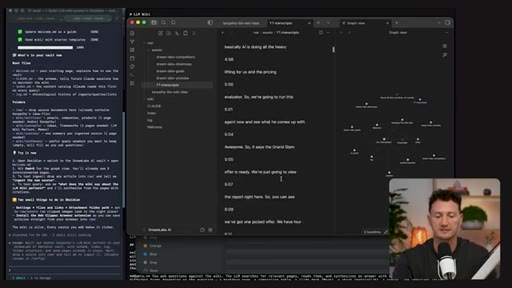
12:16I get how do I improve my business, how do I improve my audience, how do I create more value. You can see I've got the same for YouTube. So I've even got my YouTube transcripts in here for my first six videos so you can see exactly the video structure that I've been making and what I like.
12:28And they are now all in there. You can see it's starting to build it out here. But now all we need to do is go back over to our code and say, okay, I have dropped
12:38my assets into the raw folder. Please
12:43go ahead and compile my business
12:47wiki. So basically, it's gonna read that initial prompt we gave from Andre Kapathi and go ahead and read all these new assets and ingest them and make them into our business second brain. So it says there's lots of sources here.
13:01Let me read them. I'll start in parallel with the smaller markdown files to get the picture quickly. And depending on how many raw files you have and what sort of raw files you're actually dropping in here, uh, this could take upwards of about twenty minutes because it's doing a lot of work actually synthesizing all this data down once so that anytime you try to query it in the future, it's gonna happen really quickly because it's basically building into a structure that is very AI native and extremely
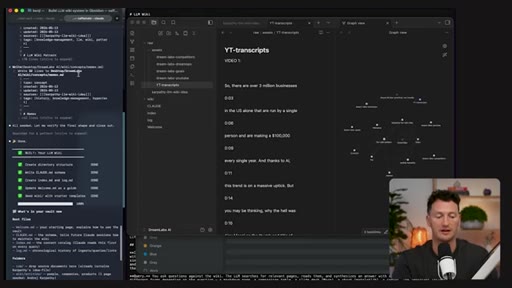
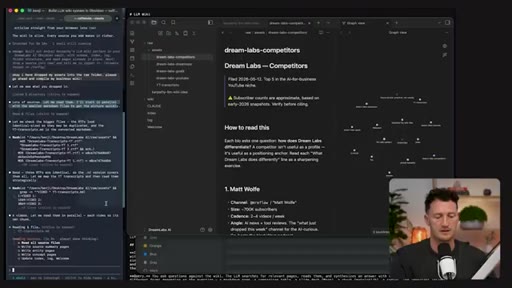
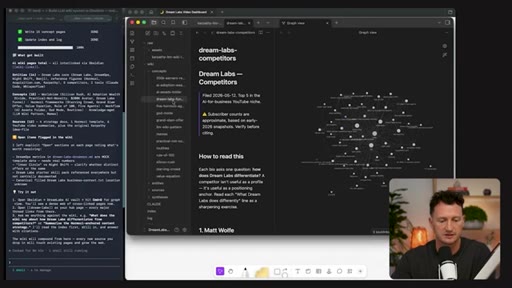
13:26fast to search for things inside there and make links between the concepts so that it can actually start to, and we're gonna run a couple of prompts at the end, show you where you or where I am missing knowledge when it comes to my business. So you can see it's reading all the source files, it's writing the source summary pages, writing the entity pages, writing the concept pages, then it's gonna update the index, index, the log, and the welcome.
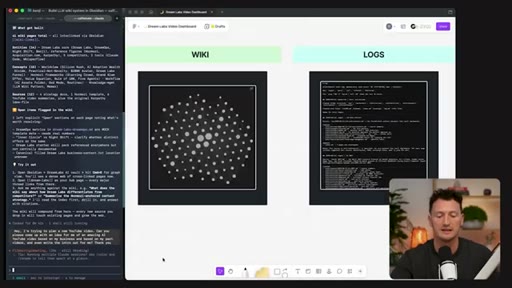
13:46Of which, if we go back to our nice Figma board over here, you can see that the only part that we really are responsible for is this raw data. And the more data we have, obviously, the better it's going to be. Claude now is gonna go ahead and write that schema file for us.
14:00It's going to compile the wiki and the second brain for us, and then it's going to log every time we interact with it. This is the self learning mechanism that's going to make it smarter and smarter and compounding knowledge and specific knowledge to you and your business and your goals every time that you use it. And you can see, if we come back to Obsidian now, it's actually going through all this data and populating
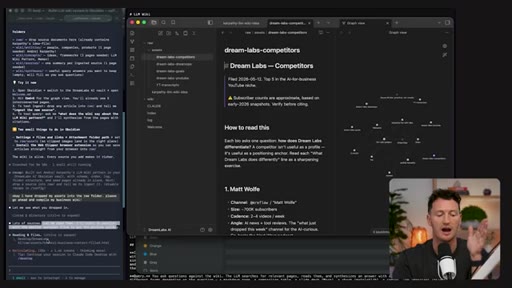
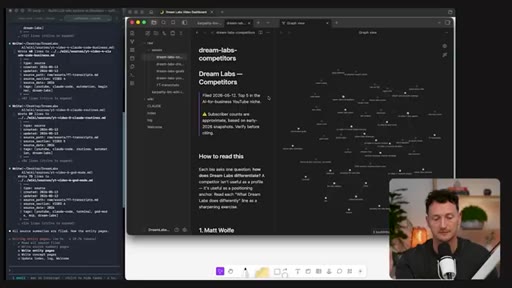
14:20my second brain for my Dreamlabs business, which is pretty exciting. You can see the Dreamlabs YouTube strategy page just got populated. Dreamlabs
14:28funnel over here. You can see there's some floaters out here that currently don't have anything attached to them. They got
14:35above all else practical, not novelty. So this is going to be a concept. Once it gets down to the concepts, it's gonna start linking.
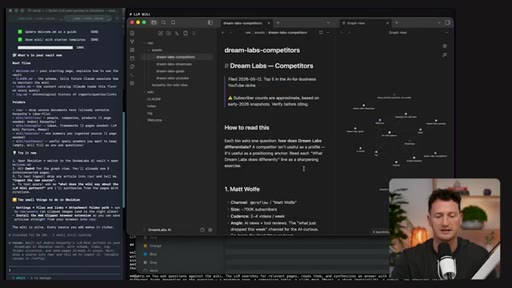
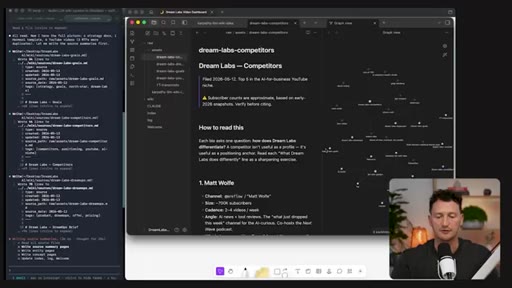
14:42And basically, by the end of it, they are all going to be intricately linked to one another, but not randomly, just very specifically. Mean, here's some competitors here right here, Dreamlab competitors. We've got Greg Eisenberg.
14:52CTASo we've got a file on him and exactly what he's doing for his business that I can get some inspiration from. And so I'm just gonna let that populate now and work its magic. By the way, if you've made it this far into the video and haven't hit that subscribe button below, please do.
15:04CTAThis is a new channel and we wanna grow an amazing audience together. And I'm gonna keep offering you lots of practical business AI tips and tricks in as simple language as possible.
15:17CTASo that took me eight minutes and forty two it didn't take me. It took Claude eight minutes and forty two seconds to get my Dreamlabs AI
15:24second brain. So if I go over here to Wiki, you can see in concepts, it's got all of the things that it thinks are important concepts for itself to search, entities, the sources,
15:35and nothing in the synthesis. But that's okay. This is for the AI to use, not me.
15:40So why I wanna use this is because now it knows all that information about my business. I can come over here and say, hey, I'm trying to plan a new YouTube video.
15:49Can you please come up with an idea for me of an amazing AI YouTube video based on my business and based on my past videos and even write the intro out for me. Thank you. So I'm gonna send that off to Claude.
16:01And since setting up this for my business, I've actually got some phenomenal recommendations, some phenomenal results, and even start to query it.
16:09A popular query that people use say, tell me where the gaps in my knowledge are for my business. You know the goals. You know what I'm currently doing.
16:15What do I have to do better? And if you can plug in other people's expertise by using their publicly available data and creating skill files to plug into your wiki, I can see this being even more powerful, sort of having like a cast of mentors or a board of directors for your business to help decide what the next best action steps are for you.
16:35So you can see we got an idea based on the Wikipedia. So this is what everything that it read. It said the video idea, I let Alex Tomosi's AI run my business for thirty days, the brutal truth, which honestly, that is a strong title.
16:48Logline, take the exact Tomosi AI stack, 14 prompts, uh, five agents firing at 6AM, and document what thirty days actually produced, real numbers, real wins, real disasters. Why this one? It passes every editorial filter.
17:01I ask for outliers only. I ask for things with massive demand. I ask for things with long shelf life, with pride, not perfection, with speed and action.
17:10What makes it different from the existing six videos? Every video so far teaches setup. None show what happened after.
17:17This is a practical, not novelty. You can see that this is an excellent video recommendation compared to if I just went to Claude in a new tab and just said, hey, can you suggest I make a YouTube video?
17:27I believe this system's gonna help you level up with your business. Let me know in the comments down below how you're using it. Thanks for watching, and I'll see you in
— full transcript
§ 05 · For Joe

The second brain format is a content category Joe doesn't own yet.

Steal this system AND this format

The video is half 'here's a powerful system' and half 'watch me build it live for my own business' — and the live-build half is what earns the trust.

  • Build your own Karpathy second brain immediately: MCN data, JoeFlow transcripts, joe-profile.md, and sessions history are the raw corpus. You have more data than this creator does.
  • The 'role model skill plugin = gaming cartridge' angle is a video Joe hasn't made — and it's a banger. 'I built an Alex Hormozi brain for my business, here's what happened.'
  • The framework contrast (generalist slop vs. specialist masterpiece) maps directly onto Joe's 'stop renting, own your stack' positioning — adapt it for MCN+ sales copy.
  • The live-query payoff ('here's the video idea the system generated for me') is a repeatable format: build → query → show results. Joe can do this monthly with new raw data drops.
  • The 'gaps in my knowledge' query is an underused format angle — 'I asked my AI what I'm missing. Here's what it said.' That's a hook Joe should steal.
§ 05 · For You

How to make your AI actually useful for your work.

For anyone who keeps getting mediocre AI answers

The reason AI gives you generic answers is that it's working from the whole internet — not from what you actually care about.

  • Create a simple folder on your computer where you collect everything important to your work: your goals, past projects, key articles, notes from conversations.
  • Karpathy's IDEA file (free on GitHub) gives you a ready-made structure — you don't need to design a system from scratch.
  • Feed Claude Code your folder and tell it to build a wiki. It takes about 10 minutes and the results improve every time you add more context.
  • The 'gaps' query alone is worth setting this up: ask the system 'what am I missing?' and it will tell you things you wouldn't have thought to ask.
  • This is not a SaaS tool — it's files on your computer. You own it, it doesn't expire, and it gets smarter the more you use it.
§ 06 · Frame Gallery

Visual moments.