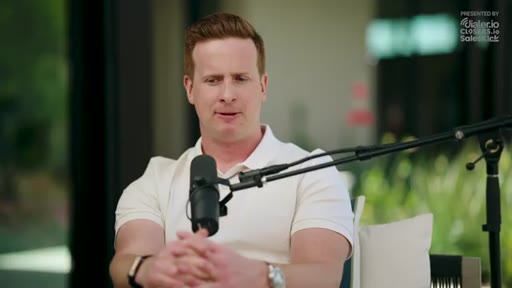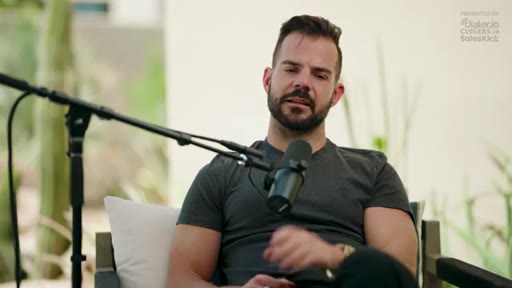

The bait, then the rug-pull.
Josiah Grimes has built, operated, and scaled more businesses than most people have started — and for 87 minutes, he sits across from Cole Gordon and pulls the curtain back on exactly what breaks at each revenue stage, why the 30M plateau is a toolkit problem and not a marketing problem, and why you would almost rather hire someone stable with no skills than someone skilled but emotionally volatile.
Who's talking.
Where the time goes.

01 · Cold open / montage
Rapid-fire clip montage of key quotes from the conversation ahead, then Cole introduces Josiah and his portfolio.

02 · Zero to $1M
Faith as the prerequisite for hard work. Core competency selection (skill closest to value creation — Dharmesh Shah framework). Fail fast, iterate cheap, don't build the whole thing before testing.

03 · $1M to $10M
The content equation — most stall because they don't scale creative output. Structure vs. bureaucracy distinction. Hardest phase: hiring for high-potential with low budget, managing professional maturity gaps, setting core hours vs. bureaucracy pushback. Title inflation trap (CTO/COO at 10 people).

04 · Hiring sidebar: IQ
IQ is the #1 predictor of workplace performance (24-35% of variance). Three proxies: verbal (vocabulary/syntax), spatial (framework thinking), memory (connection of stored knowledge). Bryq tool for cognitive assessment. Memo-writing as verbal IQ filter (Bezos attribution).

05 · Conscientiousness + stability
Conscientiousness (proclivity to work hard) is second predictor. Life-stage motivation detection in interviews. The stability-multiplies principle: instability at director level disrupts 24+ people. 'Specific story when' interview technique. Elon-style detail test for resume verification.

06 · $10M to $30M
Data integrity is the #1 unlock — without clean data, you cannot find the constraint. Task management system adoption. Playbooks and onboarding. Budgeting and first internal audit. LTV expansion: owned audience, affiliate partnerships, software add-ons.

07 · C-suite hiring
CFO needs both accounting (past) and FP&A (future) prowess. CMO mistake: hiring a great marketer who cannot build a management layer underneath them. Age/experience curve: best execs are late-30s to 50s (fluid + crystallized intelligence overlap). Use recruiting firms for C-suite.
08 · $30M to $100M
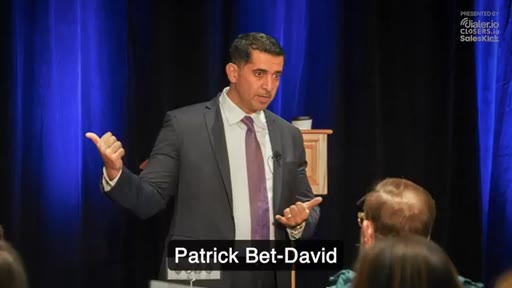
Sub2 case study: network effects where every new member increases community value. The 30M plateau is a toolkit problem — if you got to 30M you can get to 100M, but you need the next-level infrastructure: data, directors, org design. CAGR of ~30% is serviceable; Sub2 grew faster.

09 · Portfolio vs. one company
Unified leadership across brands = synergies. Separate teams = better focus. Rule: go all-in on one unless you have backfilled yourself as CEO on company #1. Signal to diversify: diminishing marginal returns + approaching TAM. Exit calculus: 8x EBITDA vs. continued compounding.
10 · Offer creation (wolf trap)
Tracking 20,000+ education platforms for tailwind signals. Wolf-trap analogy: prospects are wolves — every element of the funnel has to be engineered precisely. Real example: funnel killed by 'in Phoenix, Arizona' reveal at registration after national marketing.
11 · Subject matter experts vs. brand visionaries
SMEs excel at curriculum design, framework building, structured learning paths. Brand visionaries excel at storytelling and audience reach. Compensation model differs: SMEs are salaried hires; front-end faces get affiliate/rev-share structures.

12 · Investing and wealth
Core maxim: concentrated active income creates wealth, diversified passive income preserves it. Portfolio breakdown: ~50% equities (70% US / 30% international/emerging), 12% real estate (multifamily), 10% gold, 10% crypto, 10% private ventures, 15% cash/bonds. India and Japan as interesting emerging market bets.

13 · AI
Mollie (m-a-l-l-i) — AI layer inside NewReach/Sub2 community that facilitates deal flow, connects members, tracks ROI across community interactions. Movable AI platform relaunch in two months. Otherwise: standard operational AI usage across companies.
Lines you could clip.
"Income traces skills over time. Skills are your ability to solve problems. If you have a lot of skills, you could solve problems. People pay you to solve problems."
"Structure is rules that make you more efficient. Bureaucracy is rules that make you less efficient."
"You would almost rather have someone stable with no skills. Stability, consistency, maturity, professionalism — as you climb the hierarchy, the risk profile of the company is almost worse if you are skilled but not stable."
"If you are stuck around 30 million, you are like, shoot, I can't get to the next level — it is probably a toolkit thing. You have already demonstrated you can sell 30 million. You can probably sell more."
"In order to actually trap a wolf, the meat had to look like it was an animal that had just died. You had to boil the trap. You had to cover your tracks. And then, finally, you might catch a wolf. The number one reason offers don't work is because the way you prepared it — you couldn't trap a wolf."
"Create wealth through concentrated active income, then stay wealthy through diversified passive income."
Things they pointed at.
Word for word.
The 30M toolkit problem.
If you sold your way to 30 million, you can get to 100 — but the next level is built on infrastructure, not a better offer.
- Map your scale staircase: zero to one is about faith and a single skill; one to ten is the hardest phase (structure, content volume, professional maturity); ten to thirty is data integrity and task management; thirty to a hundred is toolkit upgrade.
- Hire for IQ first, conscientiousness second, stability third — and weight stability more heavily as you move up the hierarchy. One unstable director disrupts 24 people.
- Use the wolf-trap test on every funnel: walk from ad to checkout as a first-time prospect and find every point where something unexpected stops them. Fix friction before testing creative.
- Build the memo culture early: have candidates and employees write memos. The quality of the memo is the quality of their thinking.
- If you are stuck at a plateau, stop blaming the offer. Ask whether your data is clean, whether your directors are experienced, and whether your task management system has full org adoption.
What this means if you are building anything.
Every plateau you hit is a toolkit problem, not a talent problem — you just need the next set of skills.
- Find the skill closest to value creation in whatever industry you are entering, then get close to the person doing it best.
- When you are hiring, do not award title as a substitute for comp — it creates salary expectations you cannot meet and instability you cannot afford.
- Before you build the whole product, test if anyone will buy it. A landing page and some traffic is a 24-hour answer; nine months of building is not.
- Your wealth creation strategy and your wealth preservation strategy should be different: concentrate to build it, diversify to keep it.
- Structure makes you more efficient; bureaucracy makes you less efficient. Learn to tell the difference before your team does.