The bait, then the rug-pull.
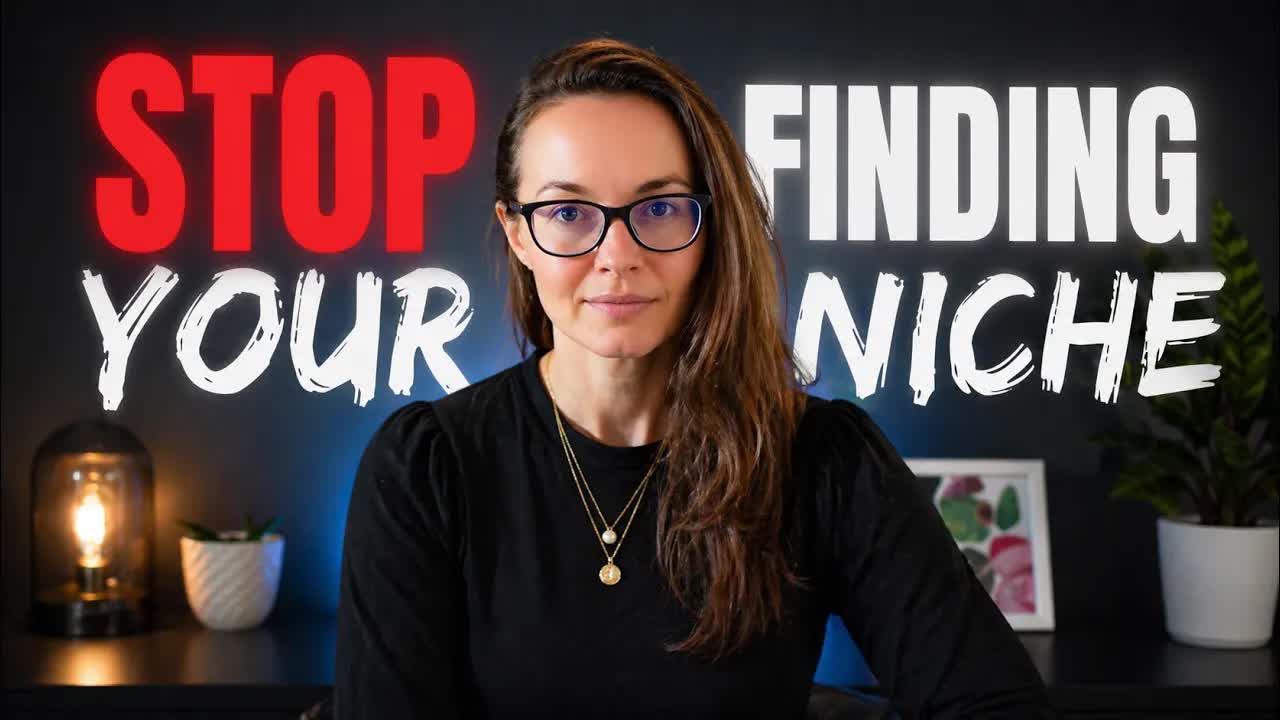
Alexa Saarenoja opens by meeting the viewer in their most specific frustration — the exhausting, circular dread of niche selection — then immediately flips it: the problem that keeps you up at night is not an obstacle to finding your niche. It IS your niche. What follows is seventeen minutes of argument that the standard frameworks select for quitting, and only one thing survives the YouTube tax of slow growth and ignored videos: obsession.
What the video promised.
stated at 00:22 "By the end of this video, you'll know which niche to move forward with without second guessing it." delivered at 14:00
Where the time goes.

01 · Hook
Pattern interrupt — the frustration of niche-finding is itself the signal. States the promise: a method that holds up when things get hard.
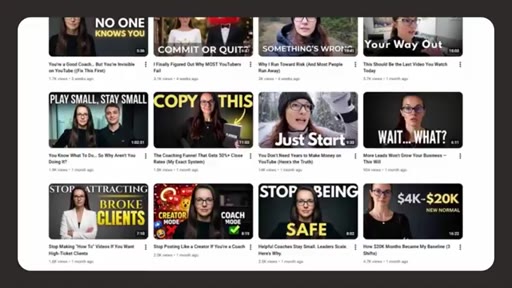
02 · Five failure scenarios
Mirror for the audience: The Pivotter, The Fader, The Wrong-Audience Builder, The Themer (topic vs. niche), The Never-Starter.

03 · Three root mistakes
Too broad, wallet-over-gut, shiny object syndrome. Root cause: all three pick from outside (market/money/trends) not inside.

04 · Personal disclosure + Mark Manson
Alexa reveals her obsession — people don't see their own potential. Anchors in Mark Manson's happiness-as-problem-solving argument.

05 · The reframe
Niche is not a topic, demographic, or content category. It is the problem you cannot stop seeing as broken plus the transformation you believe is possible.

06 · Axel case study
Photography Axel (3 Ps, quits) vs. Daughter Axel (watched his kid vanish into social media, rebuilt her identity, cannot stop thinking about every other parent who does not know what is coming). The emotional spine of the video.
07 · The niche equation
Niche = problem you cannot look away from + transformation you believe is possible + obsession. All three required.
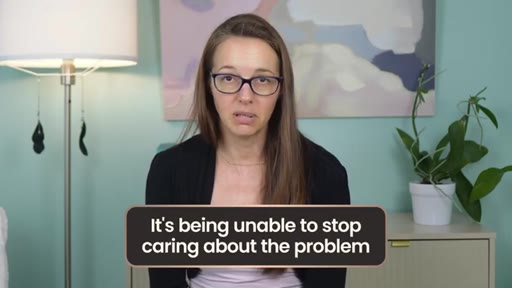
08 · YouTube's tax + Passion vs. Obsession
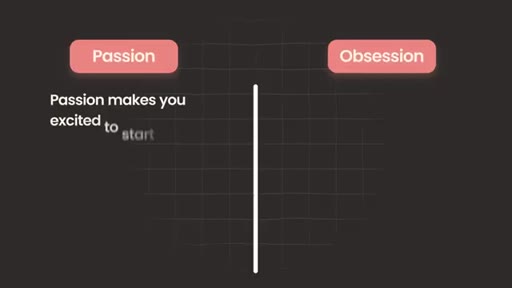
Mark Manson callback — what are you willing to suffer for? Passion makes you excited to start; Obsession makes you unable to stop.

09 · The 3 Filters
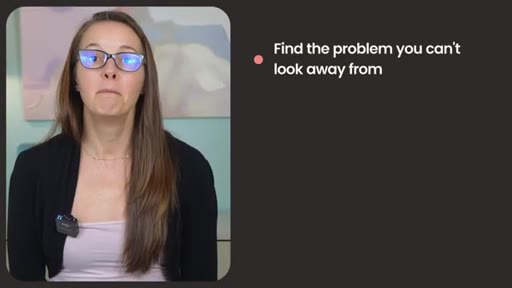
Filter 1: Can't Look Away (visceral not intellectual). Filter 2: Transformation Test (describe the other side specifically). Filter 3: Hard Day Test (still show up at 200 views?). The one that passes all three is the niche.

10 · CTA
Summary restatement + soft next-video plug for engagement/retention tactics. No hard ask, no newsletter.
Visual structure at a glance.






Named ideas worth stealing.
The 3 Ps
- Passion
- Proficiency
- Profitability
Named as the dominant existing framework, then dismantled via the Axel case study — all three boxes checked and the creator still quits.
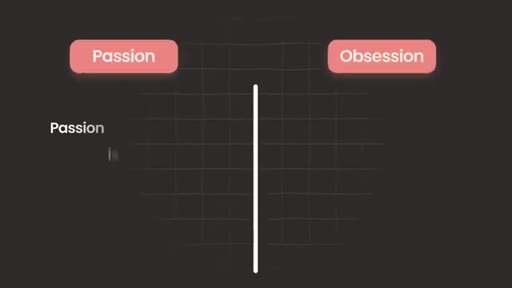
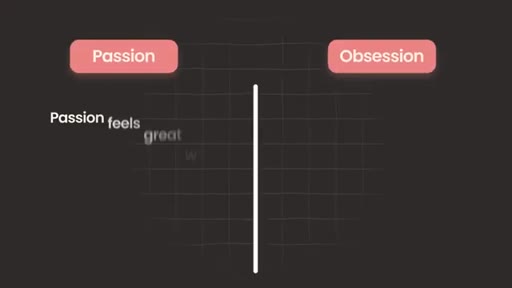
Passion vs. Obsession
- Passion: inside-out, feels good, fades when views drop
- Obsession: outside-in, something in the world is wrong, cannot stop caring about the problem
Central binary of the video. Visualized as branded split-screen graphic appearing three times. Passion selects for quitting; obsession survives the YouTube tax.
The Niche Equation
- Problem you cannot look away from
- Transformation you believe is possible
- Obsession
Three-part formula — all three required. Problem = direction; transformation = audience reason to follow; obsession = keeps you showing up when nobody is watching.
The 3 Filters
- Can't Look Away Test: does the problem bother you viscerally, not just intellectually?
- Transformation Test: can you describe the other side specifically, not vaguely?
- Hard Day Test: at 200 views, six months in, do you still show up because the problem still exists?
Actionable diagnostic. Run every niche idea through all three. The one that passes is the niche; nothing passing = clarity, not failure.
YouTube's Tax
- Slow growth
- Videos that get three views
- Months of consistency with no signal
- Public vulnerability
- Watching others blow up while grinding in obscurity
Derived from Mark Manson's 'what are you willing to suffer for?' — everyone pays this tax; obsession is what keeps you paying it.
Lines you could clip.
"Passion feels great when things are going well. Obsession keeps you going when they're not."
"Passion makes you excited to start. Obsession makes you unable to stop."
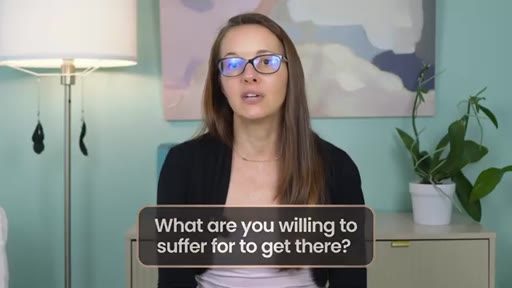
"What are you willing to suffer for to get there? Because YouTube has a tax, and it doesn't care about your passion."
"That's the difference between a position and an obsession. Position is photography because you're good at it. Obsession is because you watched your daughter disappear and you refused to let it happen to anyone else."
How they spent the runtime.
Things they pointed at.
How they asked for the click.
"If you made it to the end of this video, it's probably because of the way I structure my videos. So check out this video next on how to capture and keep your viewers engaged until the end of your video."
Soft and flattering — positions completion as proof of the method's effectiveness, redirects to a complementary video. No hard ask, no newsletter push, no product pitch. MCA: audience walks away with a portable decision rule.
Word for word.
Steal the argument architecture.
Every section earns the next — five mirrors, root cause, case study, formula, filters, CTA — and the Axel story is the spine that makes the whole thing feel instead of just teaching.
- Open with the specific frustration your viewer is already in — not the solution, the pain. Let the pattern interrupt land before you explain anything.
- Name the dominant framework your audience already uses, let them check every box, then show exactly why it still fails. Credibility comes from understanding their current belief, not dismissing it.
- Pick one composite character story and go deep. Axel's photography channel gets one paragraph. Axel's daughter gets three minutes. The emotional investment is asymmetric by design — that is what makes the contrast land.
- End with a tool, not just a mindset shift. The 3 Filters are what makes this shareable. Philosophy converts; a diagnostic converts AND gets bookmarked.
- Use a mid-video re-hook ('what I'm about to say is the main point of this video, so please listen') to signal the highest-value content and pull back anyone who drifted.
- The CTA credits the viewer for watching — flattery that doubles as a proof point for the next video. Worth stealing verbatim.
How to know you have found the right thing to build around.
The reason most people keep switching directions is not lack of discipline — it is that they picked a direction based on what looked good on the outside rather than what actually bothers them on the inside.
- Ask yourself: what problem in the world makes you genuinely angry or sad — not just curious? The thing you find yourself talking about unprompted, even when no one asked.
- You do not need credentials. Axel was not a therapist. He was a dad who figured something out the hard way. That experience is the credential.
- Run the Hard Day Test on anything you are considering: imagine six months in, low results, no feedback. Would you still keep going — not because you think it will eventually work, but because the problem still exists?
- A topic is something you find interesting. A mission is something you find broken. Topics fade; missions do not.
- If nothing passes the test yet, that is clarity, not failure. Now you know exactly what you are looking for.