AI Edge · Youtube · 18:08

How I Turned Claude Into My Personal Assistant

An 18-minute build diary of a custom personal OS: Telegram voice notes, live net worth, habit tracker, CRM, and the Supabase memory layer that ties it all together.

Posted
May 14th 2026
4 days ago
Duration
18:08
Format
Tutorial
educational
Channel
AE
AI Edge
§ 01 · The Hook

The bait, then the rug-pull.

Miles Deutscher opens with a dollar-amount-sized mistake: a missed Anthropic investment round he never acted on because his task management was broken. Two weeks and one custom OS later, he is here to show you the fix he built with Claude Code and a Supabase backend, and to argue that the SaaS era is quietly ending.

§ · Stated Promise

What the video promised.

stated at 01:40 "Today, I'm gonna show you how I built mine and how you can build your very own." delivered at 03:52
§ · Chapters

Where the time goes.

00:00 – 01:58

01 · Cold open, the 1.2M miss

Pain story: disorganization cost him a missed Anthropic investment round. Introduces OS concept and credentials.
01:58 – 03:52

02 · What it does

Voice note to Telegram to Whisper to Claude categorizes to Supabase to dashboard. Finance pulse via Google Sheets API.
03:52 – 07:10

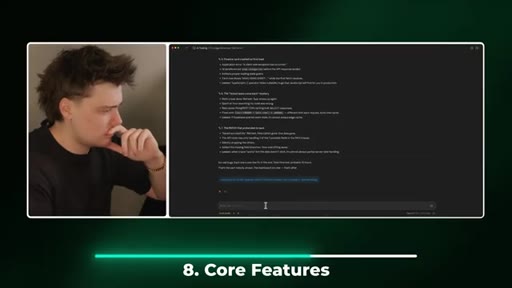
03 · How he built it, 8 steps

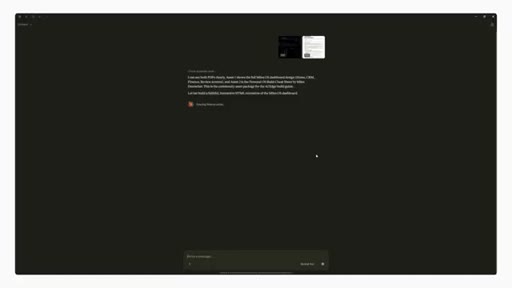
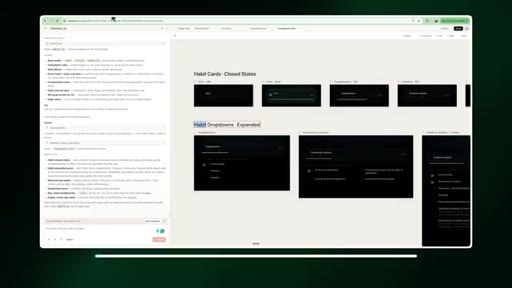
Design mockups in Claude design, export to Claude Code, Supabase memory, Anthropic API key, write schema, Telegram bot via Botfather, security, then components iteratively.
07:10 – 10:35

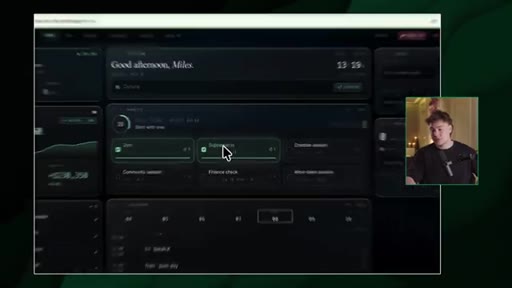
04 · Dashboard walkthrough

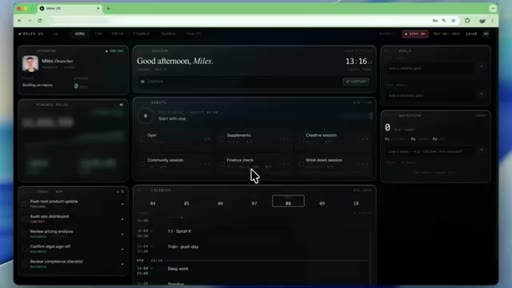
Finance pulse, key tasks (3-5 starred each morning), daily habits with sub-tasks, creative/community/finance/wind-down routines, evening journal via mic.

10:35 – 12:25

05 · The memory layer argument

Dashboard is replaceable; Supabase memory layer is the real asset. Transportable into any LLM. Daily journaling trains the AI on your patterns.
12:25 – 14:06

06 · CRM and Brain sections

CRM: star tasks, drag to archive, Kanban view. Brain: category cards with AI-generated summaries and risk flags.
14:06 – 16:15

07 · Daily use demo

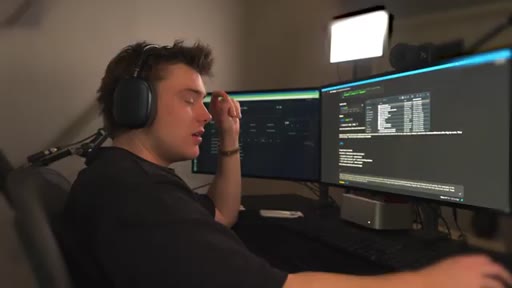
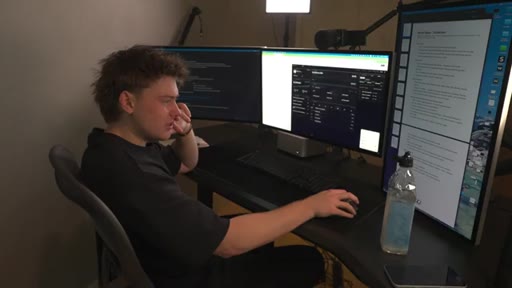
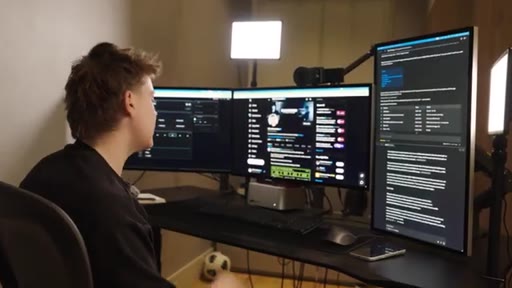
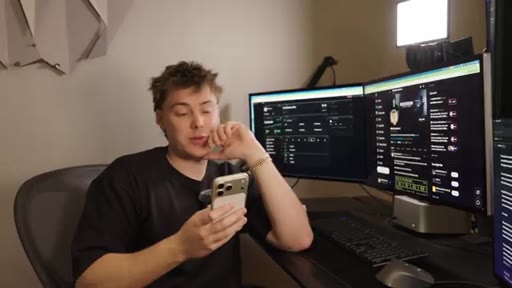
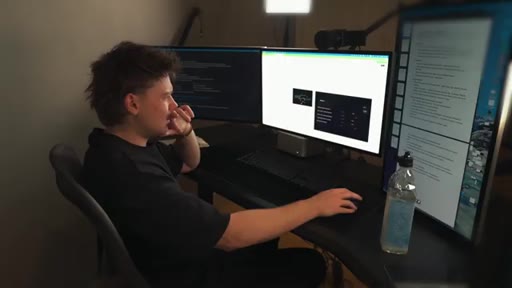
Three-monitor setup. Dashboard left, work center, Claude and GPT right. Voice to Telegram auto-populates CRM. Desktop Whisper and mobile PWA.
16:15 – 18:08

08 · Outro and CTA

Free prompt PDF in newsletter (aiedgehq.co). Subscribe for follow-up on finance section.

§ · Storyboard

Visual structure at a glance.

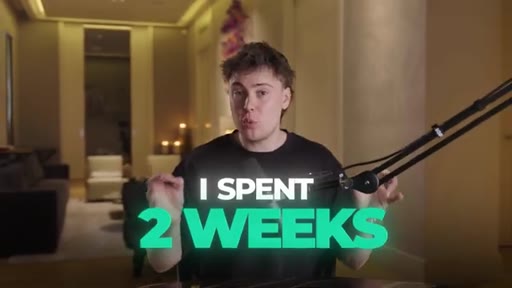
hook, I SPENT 2 WEEKS caption
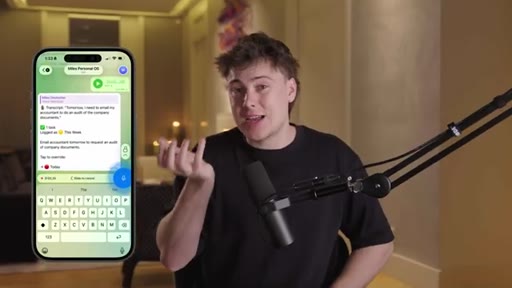
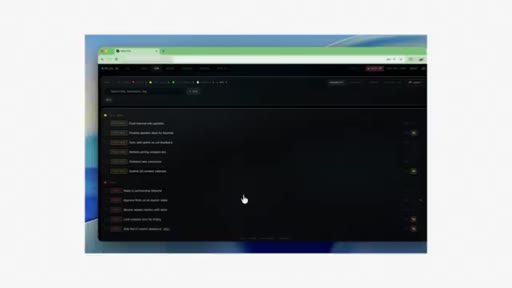
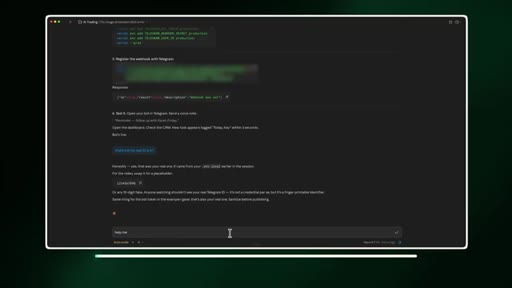
Telegram voice note demo
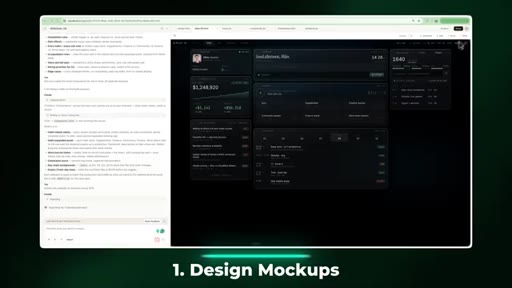
1. Design Mockups lower-third
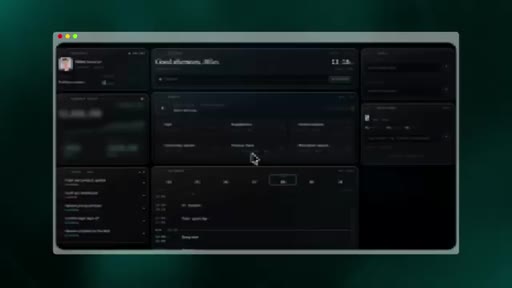
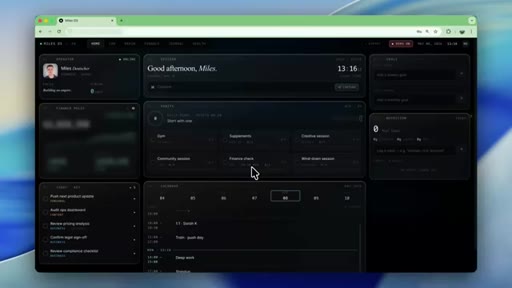
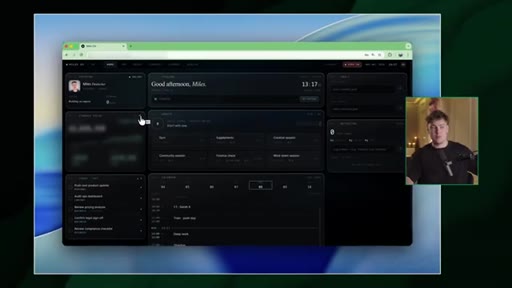
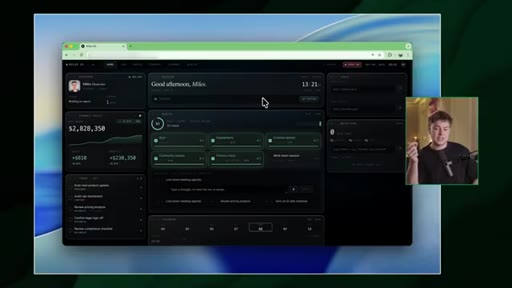
Dashboard, Good afternoon Miles
Memory layer argument
Brain category cards
Outro dashboard final shot
§ · Frameworks

Named ideas worth stealing.

03:52 list

The 8-Step Personal OS Build Stack

  1. Design mockups in Claude design
  2. Export to Claude Code
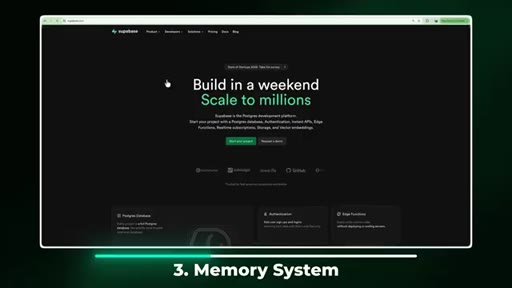
  3. Supabase as memory system
  4. Anthropic API key
  5. Write schema
  6. Telegram bot via Botfather and Vercel webhook
  7. Security layer
  8. Build feature components iteratively

Ordered build sequence from design through deployment for a self-hosted personal OS.

Steal for Any build-in-public video or tutorial. Clean numbered framework audiences can screenshot.
10:54 model

The 3-Layer OS Model

  1. Front end: Dashboard (replaceable)
  2. Memory layer: Supabase (permanent, portable)
  3. Input layer: Telegram and voice and web app

Separates the UI from the data layer. The memory layer is the durable asset; the dashboard is just skin.

Steal for Own-your-stack argument or any product positioning that separates infrastructure from interface.
§ · Quotables

Lines you could clip.

00:36
"I lost over $1,200,000 in opportunity cost because I just wasn't organized."
Specific dollar amount, named company, visceral consequence. Ideal cold open. → TikTok hook
10:54
"The real source here is the back end memory system, and then you can just apply this to any front end you want in the future."
The thesis in one sentence. Works as a standalone insight clip. → IG reel cold open
10:20
"The AI can basically act as a psychologist or a mentor and coach you through solving some of these patterns."
Emotionally resonant claim about AI journaling. No setup needed. → newsletter pull-quote
01:07
"I truly believe we're moving away from the SaaS era into an era of purpose built tools."
Bold macro claim. Good for b-roll narration or short-form. → TikTok hook
§ · Pacing

How they spent the runtime.

Hook length36s
Info densityhigh
Filler8%
§ · Resources Mentioned

Things they pointed at.

04:50toolSupabase ↗
05:36toolVercel ↗
05:36toolOpenAI Whisper
06:20toolGoogle Calendar
03:22toolGoogle Sheets
12:20productAuraRing
12:20productWhoop
12:20productCal AI
§ · CTA Breakdown

How they asked for the click.

16:15 newsletter
"Click the link in the description, become a member of the AI Edge newsletter, join the Instagram community, find the full prompt PDF in the pinned drive."

Soft lead-magnet CTA via newsletter + Instagram community. Prompt PDF is the hook. Mentioned twice (mid-video ~4:00 and outro). No hard sell.

§ 04 · The Script

Word for word.

HOOK opening / re-engagementCTA the pitch metaphor analogy story
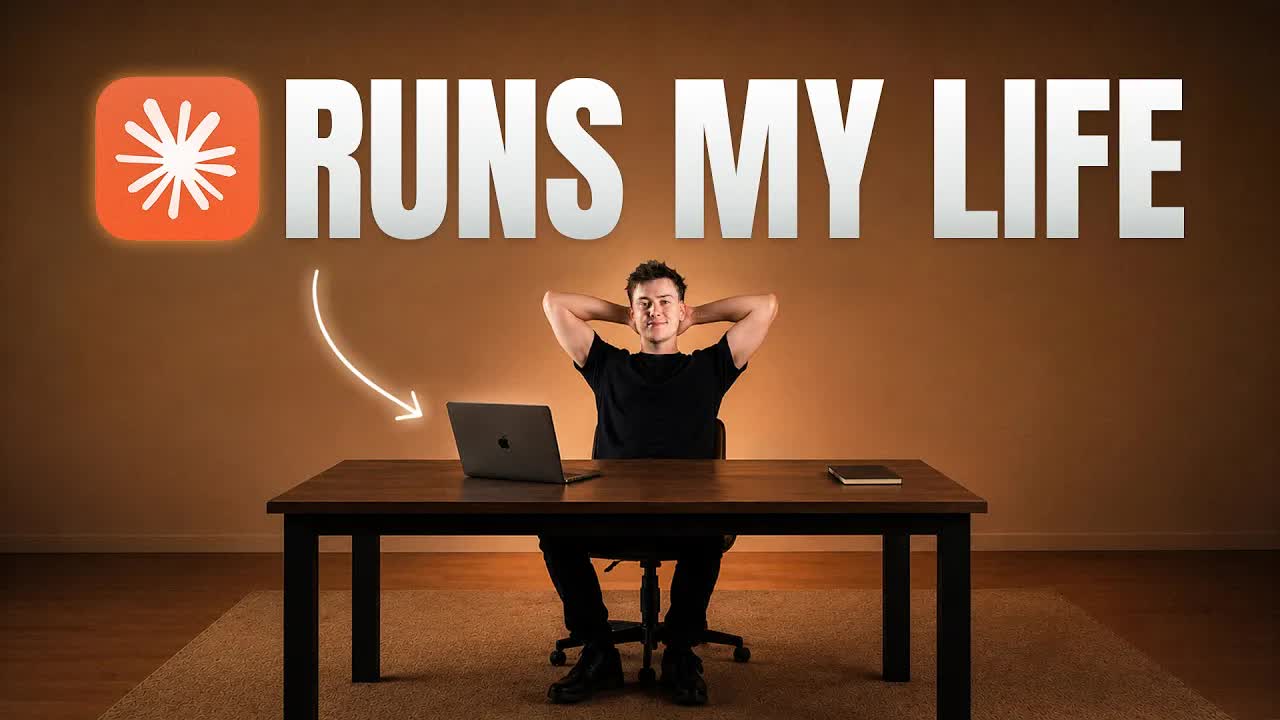
00:00HOOKI spent two weeks building a custom personal operating system which runs my life. It manages all my tasks, finances, calendar,
00:08HOOKand automatically prioritizes my day based on the things that matter. It allows me to send voice notes from anywhere and have AI automatically populate my to do list instead of what I used to do, which was going into Notion and having to manually log everything.
00:22HOOKAnd for me, that system just didn't work. Needing to constantly remember to go into Notion and write something meant that things weren't getting logged, things so were getting missed. I had deals falling through, for example, an opportunity to invest in Anthropic, the creators of Claude, in May 2025,
00:36which ended up costing me over $1,200,000 in opportunity cost because I just wasn't organized. So I knew I needed to do something once and for all.
00:44So over the past couple of weeks, I really spent the time to create the best operating system I could. And I've got to say this has been by far the biggest upgrade that I have ever made to my life using AI. It has a custom cloud memory system, so it remembers everything about me.
00:59HOOKThat memory system can be transported into any LLM, and I can constantly update the front end based on my interests and priorities, whilst the back end stores all the data. I truly believe we're moving away from the SaaS era, the era where you pay a subscription to use a tool which is built for everyone and into an era of purpose built tools, an exact dashboard that matches your specific pain points.
01:21HOOKAnd today, I'm gonna show you how I built mine and how you can build your very own. So if you don't know who I am, my name is Miles Deutcher, the founder of AI Edge. I've scaled my AI agency to over $20,000,000 in revenue.
01:32HOOKI've sold over 5 and a half million dollars of digital products, and I created this channel to help you achieve your goals with AI just as I've been able to achieve some of mine with this incredible new technology. So if you enjoy content like this, make sure you click that subscribe button so you don't miss a single video.
01:47Now before I show you how I built the OS from scratch, let me quickly show you some of the things that it can do. And then at the end of the video, I'll give you a full walkthrough as to how I've laid out my dashboard. Alright.
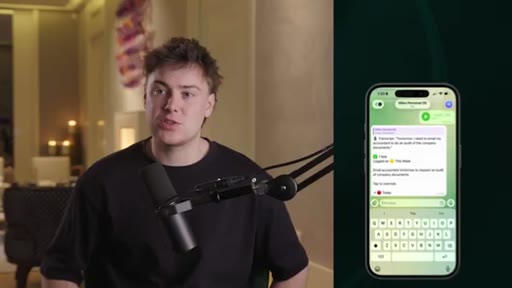
01:58So firstly, and this is probably the coolest part about it, and it solved the biggest pain points that other task management systems like Notion couldn't solve, I can voice note from anywhere. So I have a telegram chat where I can send it a voice note when a new task comes up. So let's say in my head, I remember, oh, I have a new proposal to send a client.
02:15I could simply just open up Telegram, which I've conveniently made the action button on my phone. So I can just click a button, it opens up Telegram, and I just voice note exactly what I want to log into the CRM system. Then I've configured a back end memory system where that is sent to the cloud through Whisper.
02:30It connects to my memory database on Superbase. The AI automatically categorizes it in terms of priority, and it populates it on the dashboard.
02:38So the dashboard is the front end reflecting the memory system in the back end. So whenever I have an idea, a thought, something I need to do, I simply paste it or voice prompt into Telegram, and it automatically updates and prioritizes my task management system. If you don't have a system like this, you're literally reliant on opening up the Notion app or opening up your Apple Notes or wherever you store tasks, writing it in manually, and then you have to click and drag and manually reorder things when you wanna sort by priority.
03:05That wasn't working for me because then my to do list just ended up being a 200 long list that I would never get to because new things would go to the top and then I'd forget other things. This way, things are always organized automatically by the AI. The next thing that was a real pain point for me was finances because I used to have my finances all over the place.
03:22I had bank accounts. I had exchanges. I had other documents all over the place.
03:26So what I did is I created a Google Sheet with an API to pull in the data live that reflects on the dashboard. So on the dashboard, I can see at any moment in time what my exact net worth is.
03:37Now, of course, the data I'm showing you in today's video has been slightly changed, so you don't see the real numbers, but it's exactly how my real dashboard looks. So I'm gonna walk you through the whole thing. But firstly, let's go through step by step how I actually built it, because this is the real source.
03:51HOOKAlright. So the first thing that I did is mock the entire design in Claude design. So before I committed to the full build on Claude code, I wanted to see exactly how it would look.
03:59HOOKCTAI honestly spent way too long on this going through all the mocks for all the different sections, but I think it came out super cool. And my plan is to make it better over time. So once I was happy with the design, I exported it into Claude code.
04:11HOOKCTAThis is how you actually take it from a design into a functional website. And I got Claude code to mock the entire architecture, which will be available for you to claim for free below. If you click the link in the description, become a member of the AIH newsletter.
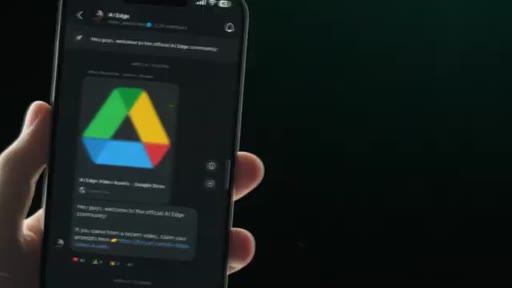
04:24HOOKCTAYou'll get access to our Instagram community, where in the pin drive, you'll be able to find the full architecture, and then you can take that PDF, put it into Claude code yourself, and it will run you through the exact steps because it took me days to figure out the exact architecture of this and many, many mistakes. So, hopefully, it's able to save you time when you build your own.
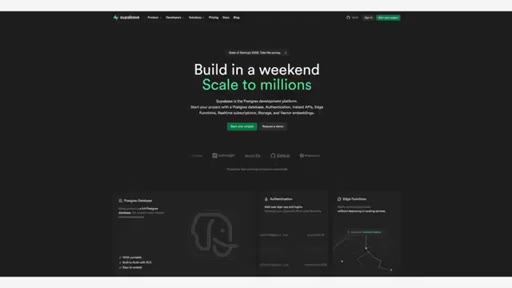
04:40HOOKCTASo the next step for me was to pick a memory system. I decided to go with Superbase. You also have Firebase and other solutions, Supermemory as well, but Superbase was the most sovereign configuration.
04:49HOOKCTALots of big applications use it. It's basically the brain behind everything. So all the data gets stored and logged on super base, and then the interface is how you interact with that memory.
04:58Then I needed to go to Anthropic, get an API key because I built this on Chord. I actually think you could build this on Codex. The only reason I built it on Chord is because I started this build before five point five was released.
05:09But if you're building today, you can do this exact same thing on ChatGPT. And to be honest, I think it would do a better job, and you can still import the Chord design. The next thing I did is I wrote the schema, so exactly what I wanted in there, content products, business ops, business finance, etcetera.
05:23This is gonna be completely custom to you, but my build is what I wanted. Then I wanted a way to log my tasks via voice prompting when I wasn't on my computer. So I decided to connect Telegram, which was really easy because I just set up a Telegram bot through Botfather.
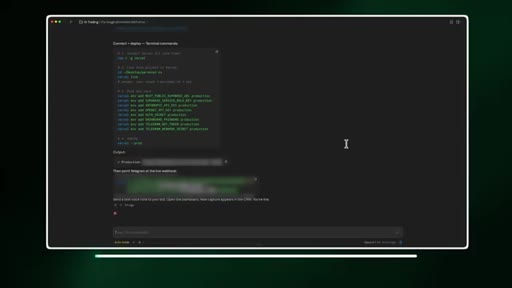
05:36I pointed its webhook at the Versal function through Claude code, and now, basically, all my voice notes get transcribed by OpenAI Whisper. So Claude can read the text and classify it into the corresponding category and log it on Superbase, which is absolutely amazing. Then I worked on some security stuff to make sure it was password protected before I moved on to the actual components.
05:54So first, I did the calendar. I basically connected Google Calendar so it refreshes live. Then I built the habit tracking.
06:00This was pretty simple. Whenever you check all of the boxes under a drop down, it ticks off a task for the day. Then added the journaling function, then added the CRM, which was by far the hardest part because I just had so many glitches, which were honestly really frustrating where, you know, I'd refresh, data wouldn't log, and things were getting lost.
06:16So I had to go through multiple debugging stages to make sure it actually works. So just keep this in mind. If you're gonna build this yourself, you might get some bugs, and I spent hours doing this.
06:24The entire build took me a couple of weeks. So this was over a few different days. And then I added nutrition, which I also had to rebuild a few times because the data wasn't logging properly, but now it's pretty good.
06:34And it's actually connected to a smart AI algorithm, which can estimate the calories of a particular meal. I added the health tab corresponding to the data. I added the goals section so I could see my goals, and then I created the finance section.
06:46The finance section, I had to connect to a Google Sheet, which I'm gonna do a future video on finances more in-depth because it deserves its own video. And then for the last couple of days, I basically just used it. And every single time I noticed a feature that I wanted added, I added it.
06:59And every single time there was an issue with the feature, I got it fixed. So this is really a process of trial and error. The sooner you start using it, the sooner you'll realize things that you wanna tweak.
07:08Alright. So now you know how I built it. Here is the dashboard.
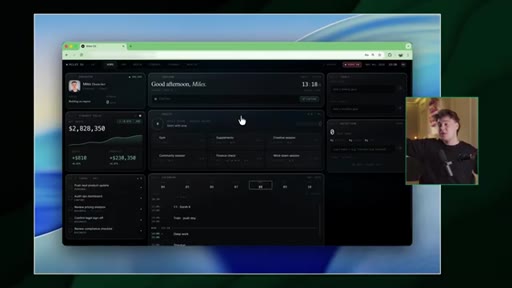
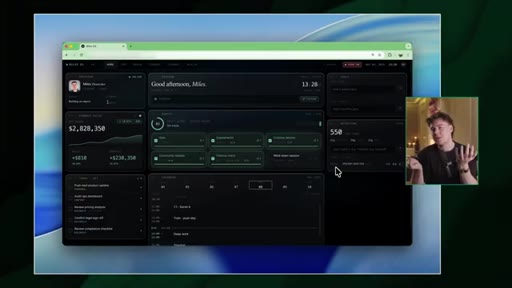
07:11I'm gonna give you a full run through, and then I'm gonna show you some examples of how I use it. In the top left, it's got me. I'm the operator, obviously, for you.
07:17It'll have your own name. One block down, it has a finance pulse. It's actually hidden by default.
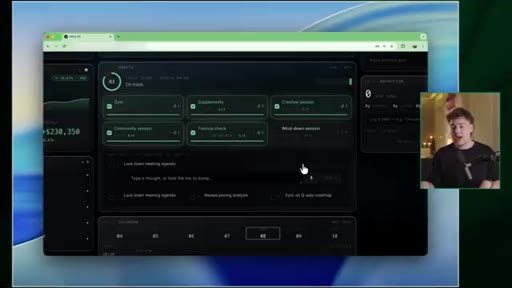
07:21So if you leave your computer open, you're not gonna leak your net worth to someone. But when you wanna review it, you can click reveal. This tracks my net worth over time, how much I've made in the month, how much I've made on the day, and what my current net worth is, and this is connected to all of the data on the back end.
07:35Then down here, I have key tasks. These are the tasks that I've starred and flagged as key priorities for the day. Really, productivity, a lot of the time, just comes down to identifying the top task for the day and making sure you get those tasks done.
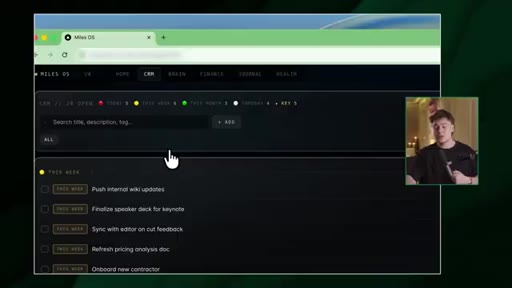
07:48So what I do every morning is I go through the CRM section of the dashboard, and then I simply select, I star, the three to five things I wanna get done every day. And then if you go back into the home section, these are marked down as key items.
08:01So these are the things that I need to complete as priorities every day. And obviously, once I complete them, then I can go and add new tasks in. But this gives me a bit of a pulse on the main things that I need to hit.
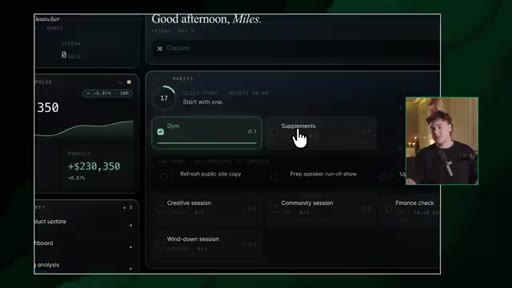
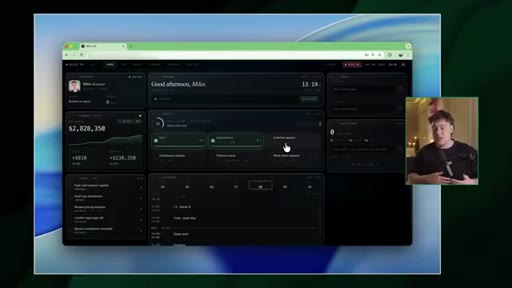
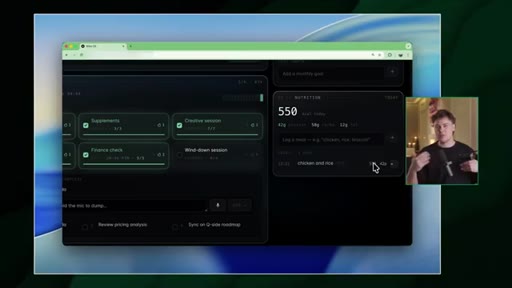
08:11Now in the middle, this is a really powerful system, and maybe you watch my other habit tracker video. This is the next step further from that, I have my daily habits. So these are the things that aside from the main priorities I wanna get done, I need to do every day.
08:23So there are a few habits that I like doing. For example, I need to go to the gym every day to feel good. So once it's done, I tick it off.
08:29Then I need to remember to take my supplements. This just takes the brainpower out of needing to remember to do things. I've actually changed the data because I didn't wanna reveal my personal data, but you'd list basically every single one of your supplements here, and you would tick it off like this one, two, three.
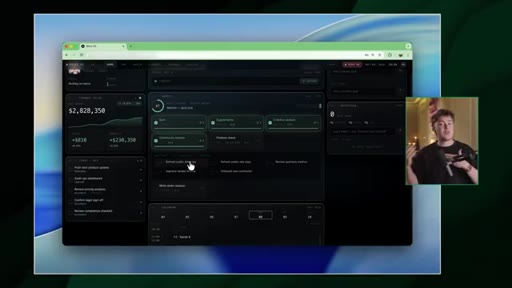
08:42When you tick off all the subtasks, the main task gets completed, and it shows you the percentage of your habits that you've completed for the day. The next thing that's really important for me is my creative session. So I have a process I follow every day in the morning where I go through x, I do market research, and then I come up with ideas.
08:58I find it's really important to be creative in the morning. So once I tick off all the subtasks, then the creative session gets complete.
09:05Then I move on to a community session to engage with my community. Then I move on to a finance check, where I'll have a few things that I tick off, like run through my portfolio, quickly look for risks, go through the finance section of the dashboard, and then finally, I have an evening wind down routine. Now in the wind down routine, this is really cool.
09:21There's actually a journaling feature, and you can do this through the telegram interface as well. But if you click the microphone, you can actually just speak what happened in the day. So I basically say, I had a good day.
09:29I did this, this, and this. This is where I struggled. This is where I did well.
09:33These are the reasons why. This is how the business is going. And this is actually really powerful because remember, all of this data is being saved in the back end.
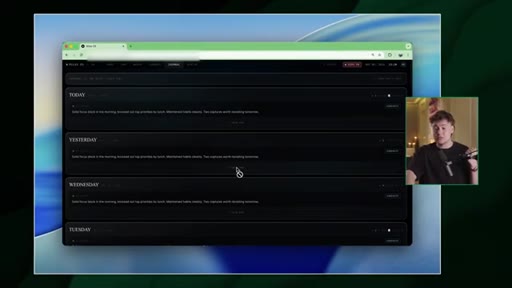
09:40So by doing this, I essentially I'm training the AI every single day on how I think. So if you go to the journaling section where all of this is logged, it has a summary of every single day. And if you click show raw, it shows the full transcript that you left for that day.
09:56So imagine after a year of doing this, you have a year worth of logs. The AI is really smart at pattern recognition. It might be able to say, when you don't get enough sleep, you tend to not be as productive.
10:05So maybe focus on this first so you can solve this. Or it might say, you know, you constantly identify loneliness as an issue in your life. Maybe you should address it through this, this, and this.
10:14Like, just patterns that you might even not realize you're bringing up in your speech. The AI can basically act as a psychologist or a mentor and coach you through solving some of these patterns.
10:24So the journaling process every single day, I think it's so crucial. And it also trains the AI on you, what your days look like, what you get up to, what you do. And because all of this memory is being stored, you actually have a transportable system.
10:35So if you do speak with Chachi BT, if you do speak with Claude, you can plug in this system into Claude code or Codex, and every single time you prompt, ask for personal advice, ask for business strategy. It has your exact context in a memory system that you own versus what happens if you just speak to the chat normally.
10:54Basically, your memory is in a black box. So you don't know what ChatGriffT knows about you. It does remember some stuff, but you don't have control over that memory system.
11:01So this solves the memory system once and for all. Because let's be honest, you can redesign this dashboard. You can always create a new dashboard.
11:07There's probably gonna be better design applications for me to make this even better in the future, but that's not the real source. The real source here is the back end memory system that we've built on Superbase, and then you can just apply this to any front end you want in the future. That's the real real magic here.
11:21And a couple of other things which are specific to me. And remember, in your own custom builds, you can change this. You know, you might not care about nutrition, but for me, I actually like logging my meals.
11:30So when I eat a meal, I log it. It shows me what time I ate that meal, and it shows me the calories of that meal. So chicken and rice, 550 calories.
11:37It's connected to the latest Claude model so it can estimate. You can also give it more details. You can even send a photo into Telegram if you want to actually photograph your meal.
11:45It's basically like having Cal AI built into the dashboard. And then I could see, you know, my protein for the day, my nutrition, how many calories I have left. And this also gets logged under the health section of the dashboard where it shows my daily protein intake, calorie intake every single day, so I can make sure, you know, I'm eating right.
12:01And you can actually go a step further. You could connect this to your wearable, like AuraRing or Whoop, and actually import the data and then have it weighed against other metrics. I haven't done that step yet, but this is the architecture you can build upon.
12:12Like, essentially, the goal here is to build an operating system that controls your life or has your entire life summarized here. Now there are some things that I keep off the app. Like, for example, I still do keep big picture stuff on Notion.
12:23So big picture goals, my compliance setups, my company roster, and just general information that doesn't change much. I'll keep somewhere else because I wanna make sure I have that data.
12:33CTABut basically for anything else, any active task, keep it on the application. I also have a system where things automatically get backed up. So for some reason, Claude deletes all the data.
12:41CTAIt's actually backed up in Superbase and archived and stored. So you don't need to worry about losing data. You can always re export.
12:46CTAThe full guide to this, once again, is gonna be in the description below. It's in my Instagram community. You can access it by signing up to the newsletter, and that's going to have the full prompt that you can take and put into Claude code yourself or Codex, which is, to be honest, probably the better coding model, but I did this on Claude code beforehand.
13:03CTAAnd that's gonna run you step by step through my process. Because honestly, this video would be hours and hours and hours if I went through every single little finicky thing that I had to fix to build this. If you like this video, let me know in the comments below.
13:14CTAI can actually do a follow-up where I go in-depth on specific elements of the dashboard, but I wanted to show you what I've been building and working on in this video and give you an overview. And then it connects to my Google Calendar below. You can actually edit it directly from here.
13:27CTAI still like using Google Calendar though. I just like having this open all day, so I'll have it on a screen on my computer so I can see what upcoming meetings I have. I'm constantly referring back to it.
13:35And then top right hand corner, I have some goals for the week, for the month. They actually store and there's a list here. Usually, I'll just have three to five goals for a month.
13:41So I can say, alright, I wanna ship a product. I wanna get out 20 videos. I wanna go to the gym every day, and then I have all the goals there.
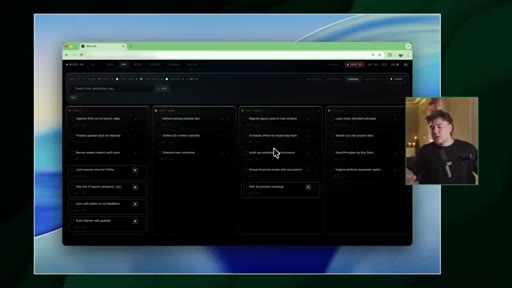
13:47So I'm constantly reminded, and I'm just aware every single day of what I'm actually working towards, which I think is so powerful because if it's not in front of you every day, you're actually just gonna forget. So this way, I'm actually forced to stick to the things that I wanna do. Going into the CRM system, you can actually drag things around in terms of priorities.
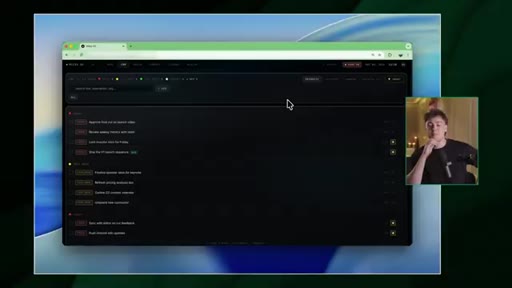
14:03You can tick things off once you do them, and they'll automatically get sent to the archive section. I continuously improve this over time, but it's basically, in my opinion, a better version of the Notion task management system.
14:14I will say there were a lot of glitches. There still are from time to time. But every time there is a bug, I fix it.
14:20And then over the last few days, I've found I've had less and less bugs. You're just gonna have to be aware that if you're gonna build your own OS, because you don't have thousands of engineers like Notion who over time have fixed a lot of their issues, you're gonna run into your own. But because it's custom built, that trade off becomes a pro because you can build it exactly
14:37how you want to build it. I could also switch to the Kanban view just like Notion, I can actually drag things along from this week to today to this month. So I can have an overview of all my tasks.
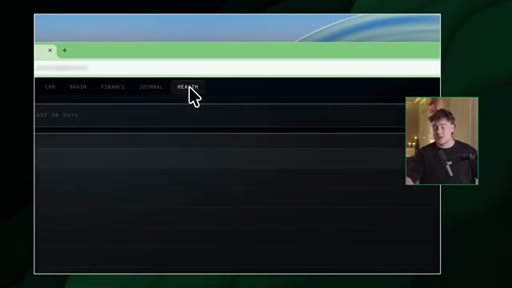
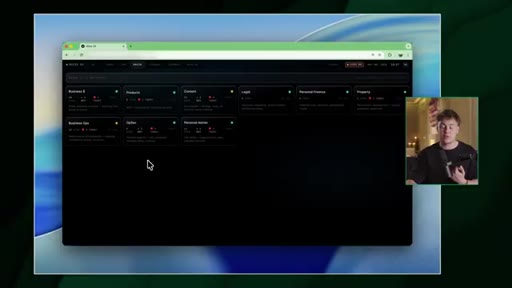
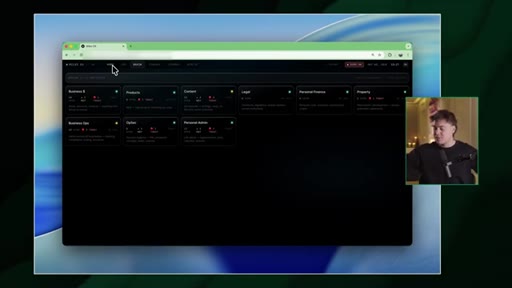
14:46And if you go into the brain section of the application, it actually opens up a view where you can view the current status on different elements of your life. So legal, personal finance, content, products, op sec, business opportunities.
14:58If you click on one, it'll actually bring up all of the tasks underneath this category, and then you can actually leave notes here or links here just like you can in Notion pages so you can easily refer back to it. And it also has a summary of the key things within each category.
15:11Like, there might be some clear security risks that you're taking on. So there might be key life admin things that you need to fix that will be highlighted here in the summary as things that you need to do. And the best part is because you have all of this in a memory system, you can simply prompt the AI and ask, look, what are the top three things right now that if you were a strategic
15:31CEO or consultant, you would recommend that I need to do right now? And we'll actually be able to go through hundreds or thousands of entries and look at the few things which are actually gonna move the needle for you or your business, which I think is really important.
15:44The finance section, not gonna get into in today's video because honestly, it's its own video, and I'm gonna do a follow-up, so make sure you subscribe. But of course, remember, you can tweak this any way that you want. The world is your oyster with AI.
15:55This is just what I found impactful for my v one build, but I'm gonna keep improving this over time as things change. And also I have room to add more things. I just didn't want to clutter my dashboard too much in the early days.
16:05Alright. Now let me give you a quick practical example of how I use this in my daily life. So basically, this is how I use this setup.
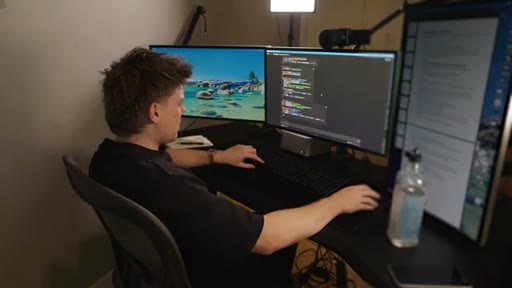
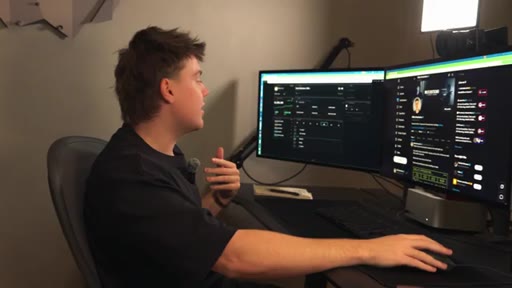
16:12CTASo I have three monitors. You don't need three monitors for this. If you're on your laptop, you can just have three different desktops.
16:18CTASo this is just how I operate in my daily life. On my left hand screen here, I have the dashboard open at all times, then I get to see when my upcoming meetings are, everything that I need to see, and then I work on the middle screen. So I'm doing work, writing tweets, reviewing proposals, taking meetings, whatever I'm doing on the middle screen.
16:33CTAAnd then on the left, I'll just glance over and make sure that my day is in order. Then on the right hand side, I have Claude open. This is Claude code or, you know, the normal Claude app if I'm chatting there.
16:43CTAAnd then I have GPT open as well. I have my two AIs. If I ever need to make tweaks on Claude code to the dashboard, I can just do it up here, and I just have these open all day, you know, in case I need them.
16:53CTAAnd then when I need to enter something, so a new task comes up, let's say get a message from someone, I need to do something, I just add it here so I can quickly capture it. I also have Whisper for my computer so I can use the command and it basically records audio for me if I just wanna speak it. If not, I'll just type it in.
17:08CTAIf I'm on the go or, you know, if I'm just doing something on my phone, then it's actually easier for me to hit the action button and then voice prompt into Telegram. And when I voice prompt, it auto populates in the CRM over here anyway. And the other thing that I do a lot, especially when I'm out, is actually use the web app.
17:22CTASo I've created a mobile version, which I'm optimizing to be even better for mobile. So I can do this on the go, and it's connected to the same memory system. So you don't even need your computer.
17:31CTAThat's basically how I use it in my day to day life. Thank you guys so much for watching this video. This was a really intense build to put together, but I'm so glad I went through this process because I think it's going to be a part of my life for many months and hopefully years to come.
17:44CTAI'm just gonna keep upgrading this over time, and I'm gonna keep making videos on it. So if you enjoyed this, make sure to subscribe. Obviously, the full prompt is available down below to help you build your own.
17:53CTAIt is gonna take a bit of time, but it's definitely worth it. Because I honestly think having a system like this can make me millions of dollars and can make me a 10 x more productive human, because it's custom built for exactly what I need.
18:05CTAThank you guys for watching. I'll see you in the next one. Peace out.
— full transcript
§ 05 · For Joe

Build the memory layer. The dashboard is temporary.

Own Your Stack playbook

The dashboard is just a skin. The Supabase memory layer is the moat, and it goes with you to any LLM forever.

  • The 1.2M hook works because it is hyper-specific: named company, named date, exact dollar figure. Vague pain stories die; precise ones land.
  • The SaaS-is-dead framing mirrors Joe's own stop-renting positioning. Steal this macro claim for any JoeFlow pitch.
  • The Telegram to Whisper to Claude to Supabase pipeline is a low-code voice automation Joe could demo as a JoeFlow-powered productivity use case.
  • Framing Supabase as a portable brain rather than a database is the key repositioning move: infrastructure becomes identity.
  • The 3-layer OS model (front end / memory / input) is a clean framework for any build-in-public video about JoeFlow or MCN.
§ 05 · For You

You already have everything you need to build this.

If you want your own personal OS

The hardest part is starting. The tools are free, the build is learnable, and the result is a system that actually knows you.

  • Voice notes into Telegram is the lowest-friction input method for a task system. No app to open, no typing required.
  • Supabase free tier is enough to run your entire personal OS. You do not need to pay for anything to get started.
  • Daily voice journaling for 5 minutes creates a year of self-data the AI can mine for patterns you cannot see yourself.
  • Build the habit tracker first. It is the simplest component and gives you a working dashboard to show on day one.
  • The memory layer survives any future AI shift. Even if Claude is replaced by something better next year, your data comes with you.

§ 06 · Frame Gallery

Visual moments.