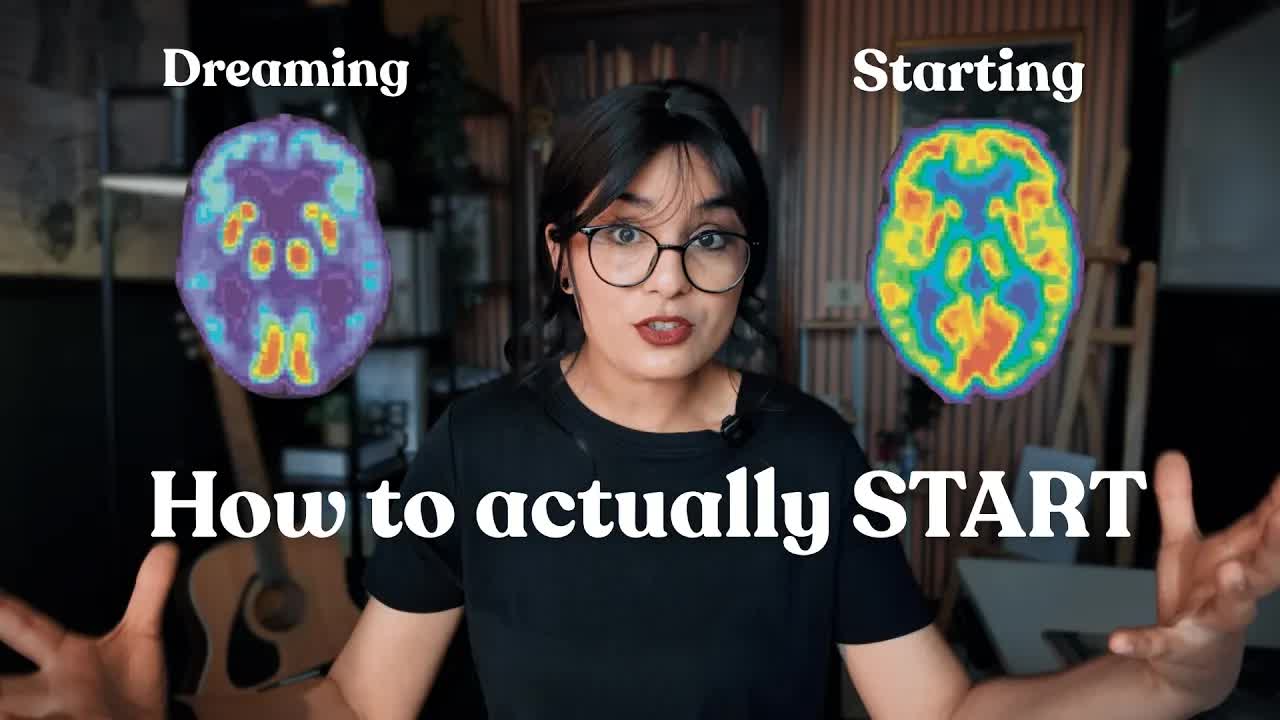
The bait, then the rug-pull.
Six reasons — not opinions, but psychology — explain why the same capable, motivated person can hold the same dream for years without a single step taken. The answer is not laziness, and the fix is not just start.
Where the time goes.

01 · Cold open
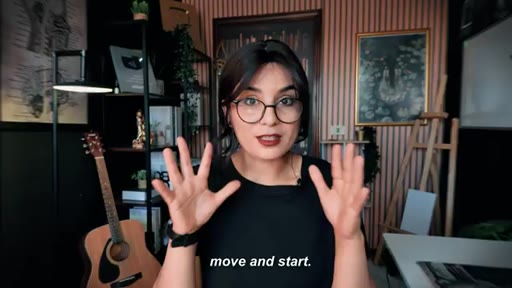
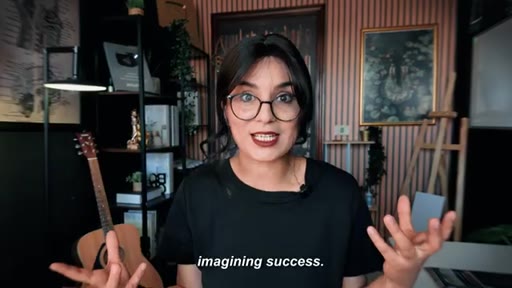
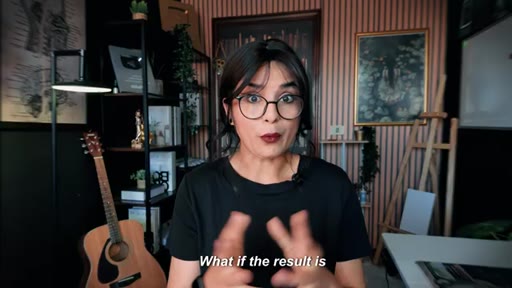
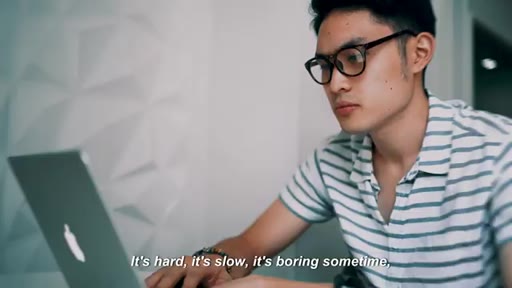
Speaker identifies with the viewer: big dreams, no action. Promises six psychology-backed reasons.

02 · Reason 1 — Thinking feels like doing
Mental rehearsal activates the same partial reward as real achievement, killing urgency.

03 · Reason 2 — The dream is costing you every day
Zeigarnik effect: unfinished goals stay alive in working memory. Waiting costs peace of mind daily.

04 · Reason 3 — The dream is protecting something
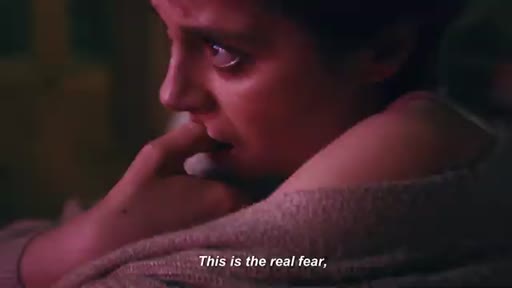
The real fear is not public failure but discovering you are not who you thought. The untested dream preserves the ideal self.

05 · Reason 4 — Overthinking drains you before you begin
Analysis paralysis is real energy depletion. Mental simulation exhausts real cognitive resources.

06 · Reason 5 — Your identity does not match your goals
The brain resists actions that contradict its self-model. Goals feel unnatural when they belong to a future identity not yet adopted.

07 · Reason 6 — In love with potential not effort
Talking about dreams earns social validation the actual early work never will.

08 · The fix — find out not start
Replace commitment framing with curiosity framing. 'Let me find out' lowers stakes and bypasses the brain's protective resistance.

09 · Personal testimony
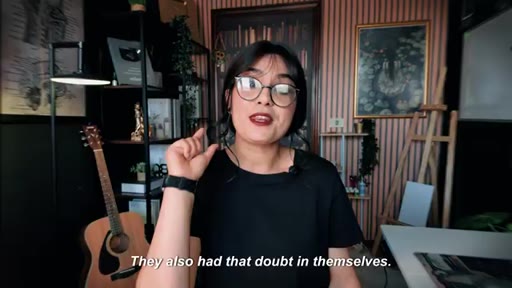
Speaker: shy, introverted, non-native English speaker, couldn't talk to coworkers, started anyway, retired her parents, financially free.

10 · Two futures + CTA
Five-year visualization: version that started imperfectly vs. version that kept planning.
Visual structure at a glance.
Named ideas worth stealing.
Six Reasons You Do Not Act
- Thinking feels like doing (mental rehearsal kills urgency)
- The dream is costing you every day (Zeigarnik effect)
- The dream is protecting something (fear of self-discovery)
- Overthinking drains you before you begin (analysis paralysis)
- Your identity does not match your goals (self-model resistance)
- You are in love with your potential not your effort (social reward substitution)
A diagnostic checklist for chronic inaction, grounded in named psychological phenomena.
Find Out Not Start
Replace commitment framing with curiosity framing. 'Let me find out if this works' drops the stakes because a failed experiment is data, not a verdict on who you are.
Lines you could clip.
"Your brain is not stopping you because it is weak. It is stopping you because it is protecting the best version of you."
"They just got more tired of waiting than they were scared of starting."
"You don't need to be perfect to start. You need to start to be perfect."
"The dream is not a problem, waiting is."
How they asked for the click.
"If this video made you think about one specific thing you have been putting off, put it down in the comment — not as a promise, but just to say it out loud."
Low-friction ask — no subscribe push, no link click. Framing 'not as a promise' removes commitment pressure, which mirrors the exact psychological reframe taught in the video. Elegant callback.
Word for word.
Why doing nothing is not the same as being lazy.
Six named psychological mechanisms — not character flaws — explain why capable, motivated people keep their biggest goals permanently in the planning stage.
- Mental rehearsal activates a partial dopamine reward, which is why spending an hour imagining success makes the urgency to act disappear rather than build.
- Unstarted goals do not go quiet — the Zeigarnik effect keeps them running in the background, extracting cognitive and emotional energy every day you wait.
- The fear beneath procrastination is not failure in front of others; it is the possibility of discovering you are not the capable person you have always believed yourself to be.
- Deep mental planning uses real cognitive resources; by the time you have rehearsed every scenario, you have already spent the energy that action would have required.
- The brain treats new goals as belonging to a stranger when they do not match the current self-concept — starting feels unnatural because the identity that owns the goal has not been built yet.
- Talking about a dream earns social excitement that the quiet, unglamorous early work never will; the conversation becomes a substitute for the building.
- Reframing the first step as a low-stakes experiment — 'let me find out' instead of 'I need to start' — bypasses identity resistance because a failed experiment is data, not a verdict on who you are.
- Confidence does not arrive before action and then enable it; it accumulates as a byproduct of action taken before feeling ready.