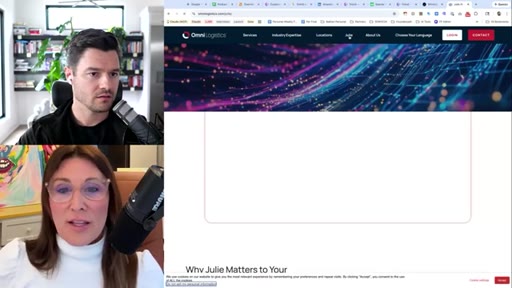

The bait, then the rug-pull.
Amanda Kahlow launched 1Mind and hit $1 million in contracted revenue inside 90 days. The company is now at 600% year-over-year growth with 60 enterprise customers paying between $100K and $400K per agent per year. Nathan Latka did the math live.
Who's talking.
Where the time goes.

01 · Cold open / highlights reel
Key stats teased first: $1M in 3 months, 600% growth, 211% NDR, $400K enterprise customers.
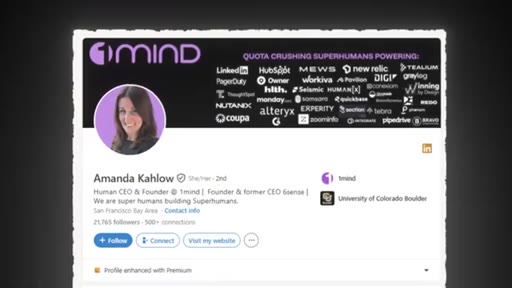
02 · Guest intro and what is emotionally intelligent AI
Amanda reframes the buzzword as go-to-market superhumans; explains replacing all GTM roles from top of funnel through close and CS.
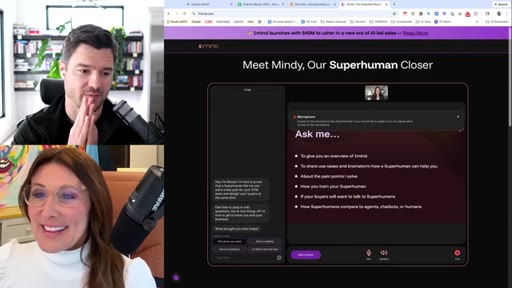
03 · Tech stack and how it works
Multi-vendor face layer (commoditizing), proprietary context graph as the real moat; real enterprise customers confirmed.
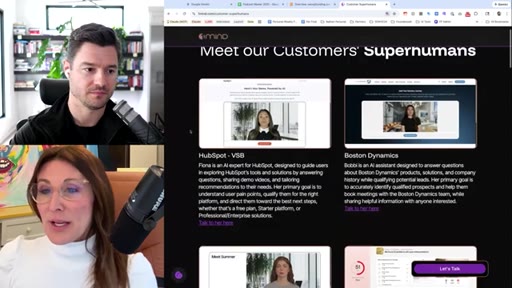
04 · HubSpot case study
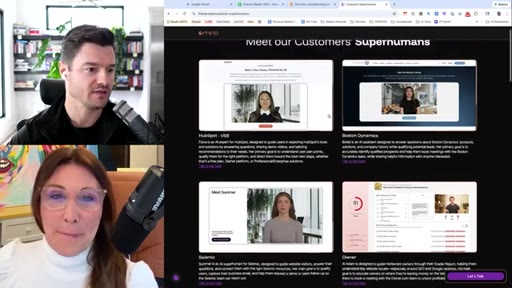
Fiona handles SMB demos end-to-end, qualifies, and closes. Increased HubSpot SMB revenue by 25%. Replaces 89 SDRs and 19 sales engineers.

05 · Why GTM handoffs are broken
Context loss across SDR-AE-SE-CSM is the core buyer-experience problem. AI has no capacity limits and can sell into any vertical.

06 · Pricing model
Annual flat subscription. $100K per agent (cost of a human). Moving away from metered toward bucket-based to give CFOs predictability.

07 · Founderpath sponsor
Nathan pitches founderpath.com capital program.
08 · Revenue milestones confirmed
$1M in 3 months confirmed. 600% YoY growth stated. 18 months in market.

09 · 211% NDR and hallucination track record
90-day expansion to second agent is the norm. Zero hallucination incidents in 18 months -- only issue was outdated customer-provided content.

10 · Nathan back-calculates ARR
Nathan does live math: 600% growth from $1M at month 3 implies north of $6M ARR by month 18. Amanda deflects but does not deny.

11 · The 6sense exit and funding philosophy
Amanda left 6sense around Series C at $380M valuation. Company later hit $5.2B. She took liquidity but retained equity.

12 · Founder liquidity advice
Taking a secondary when you lose control is not shameful. Amanda advocates openly for founders to protect themselves before outcomes materialize.

13 · Eating their own dog food
Mindy sources 78% of pipeline, 8 figures per quarter. Nigel AI SE now handles solution calls. Real 90-minute Alteryx CRO conversation driven entirely by Mindy.

14 · Cloning vs custom personas
Cloned AI Adam at owner.com and Jack at Winning by Design for personal brands. Alteryx used founder wife likeness. Conversation design matters more than the face.

15 · Technical depth and inbound model
Stack of simultaneous agents for latency, cost, accuracy. No outbound -- all inbound via Mindy. 20-40% engagement rate from site visitors vs 2-5% for chatbots.

16 · Margins and cost of goods
Caching as primary margin lever. 80-90% gross margins maintained. Targeting revenue-generating motions not support tickets.

17 · Wrap and CTA
Nathan summarizes metrics. Amanda plugs LinkedIn. Solo host close.
Lines you could clip.
"The handoff from an SDR to an AE to a sales engineer to a CSM is atrocious."
"Humans hallucinate nefariously. Sales reps do it to get the deal done."
"Fiona is doing the job that would have taken 89 SDRs and 19 sales engineers."
"78% of our pipeline has been sourced and created via Mindy, our superhuman."
"If you give up control, take a first bite at the apple."
Things they pointed at.
Word for word.
What enterprise AI agents actually need to work.
Lifelike AI agents can own the full enterprise sales cycle -- but only when priced against human headcount, trained on current data, and designed for conversation depth over surface chat.
- Pricing AI agents at the cost of the human role they replace makes the ROI calculation immediate for enterprise buyers rather than speculative.
- 211% net dollar retention is achievable when the product naturally expands: most customers add a second agent within 90 days after seeing the first one work.
- The real risk with AI agents in sales is not hallucination -- it is deploying them on outdated product documentation; the AI faithfully repeats whatever it was trained on.
- A company that generates 78% of its own pipeline using its own product is the most credible demonstration of that product; the sales motion becomes the proof of concept.
- Moving from metered per-conversation pricing to a bucket model removed CFO budget anxiety and accelerated deal velocity -- predictable spend beats granular billing for enterprise.
- Maintaining 80 to 90 percent gross margins with heavy LLM usage requires caching responses aggressively and routing simple queries to smaller models; the cost structure is a choice, not a given.
- Conversation design -- how the agent guides the buyer, handles objections, and demos the product live -- matters more than whether the agent face is cloned from a real person.
- Founders who hand operational control to a board without first taking personal liquidity leave themselves exposed; taking a secondary when you lose control is financially rational, not disloyal to the company.