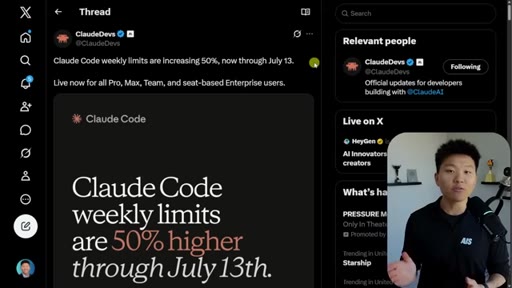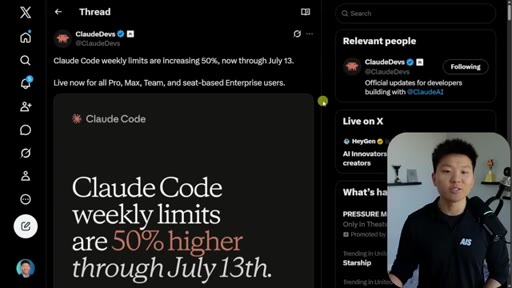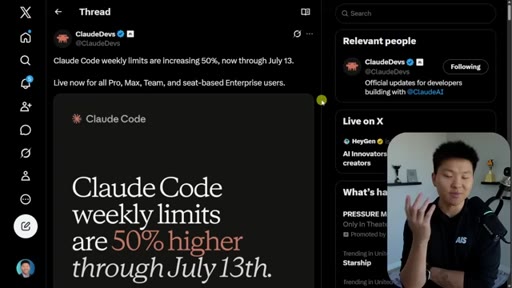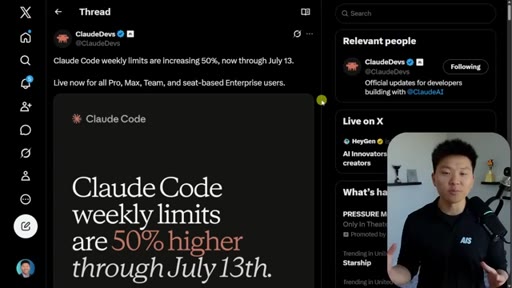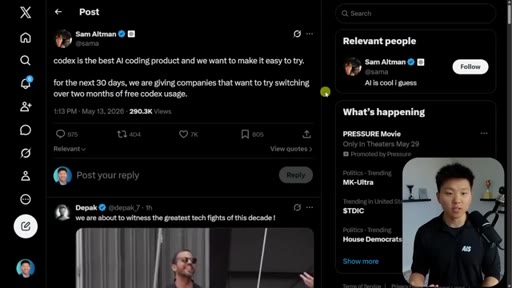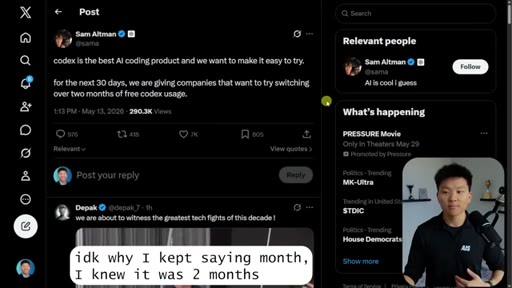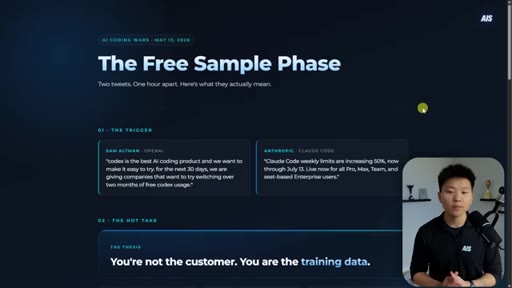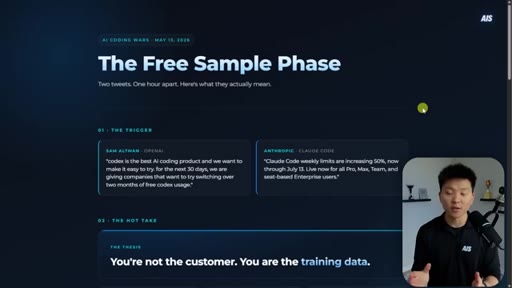
The bait, then the rug-pull.
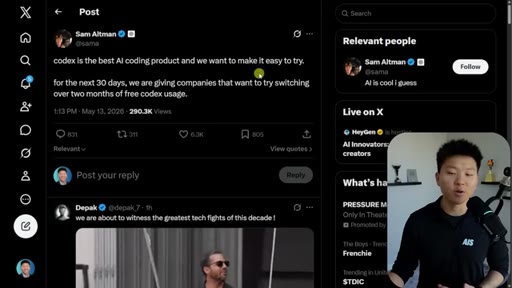
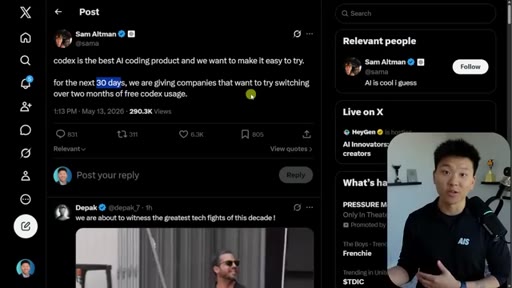
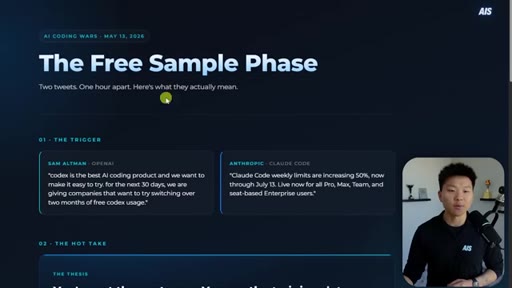
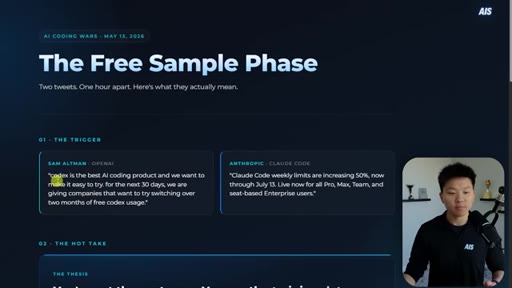
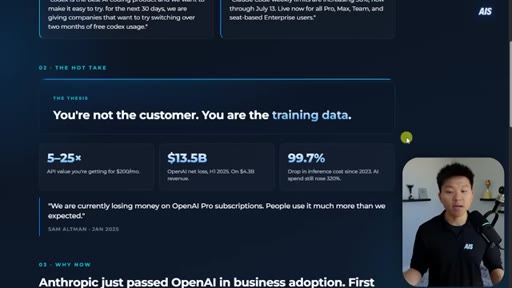
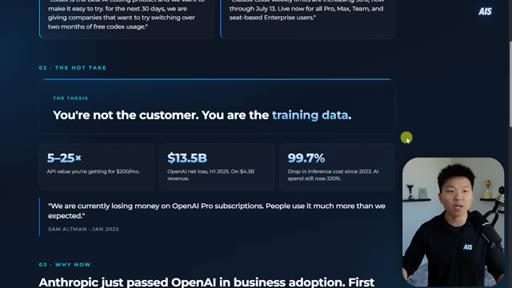
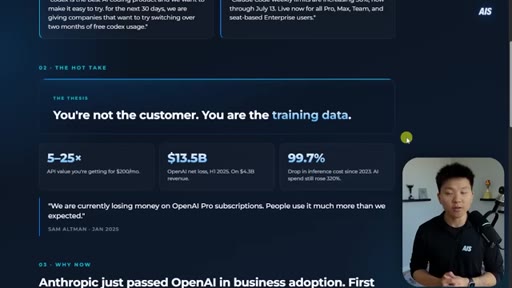
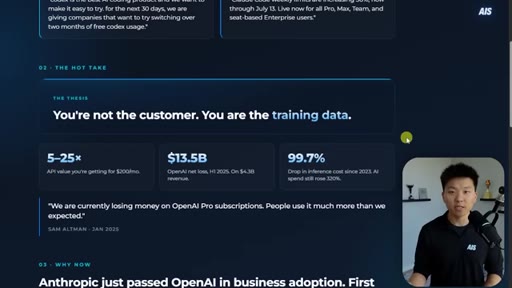
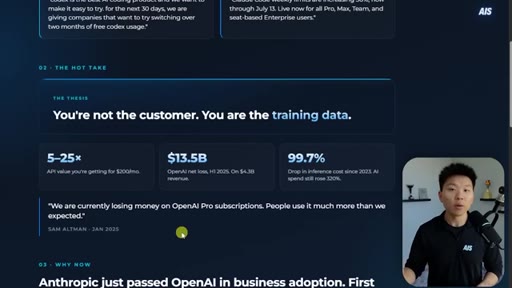
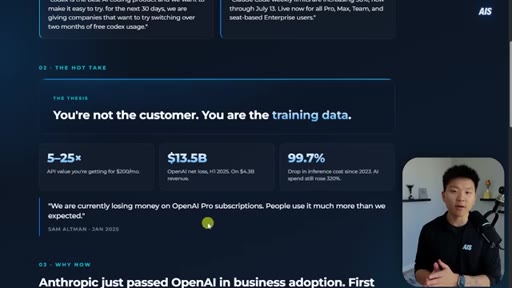
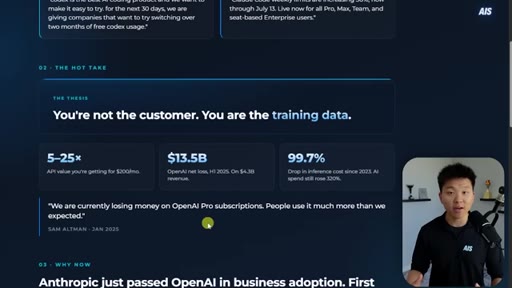
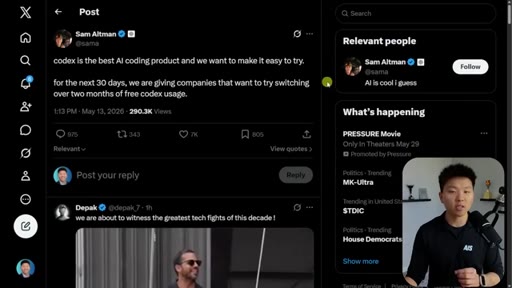
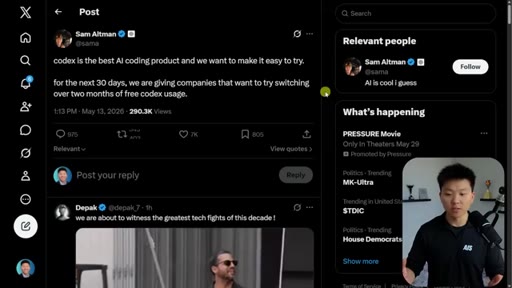
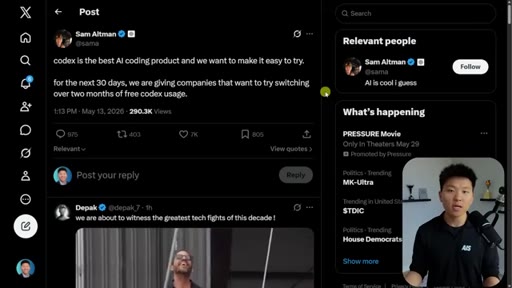
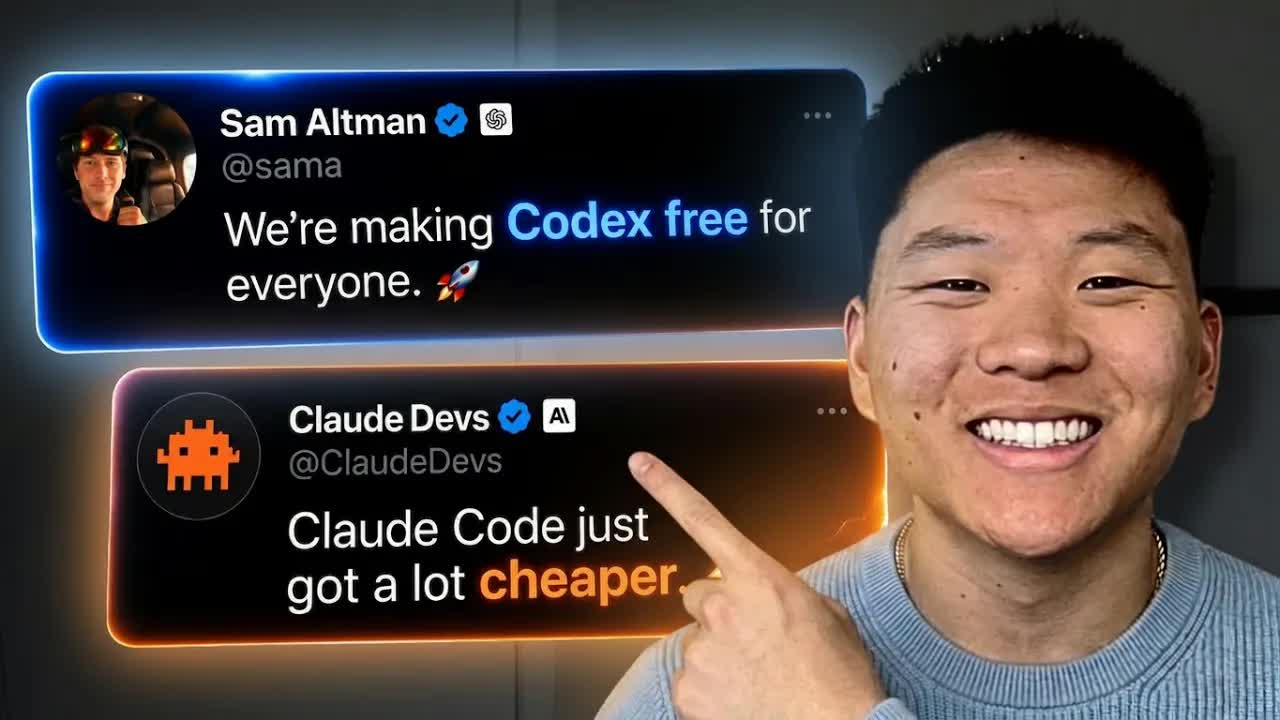
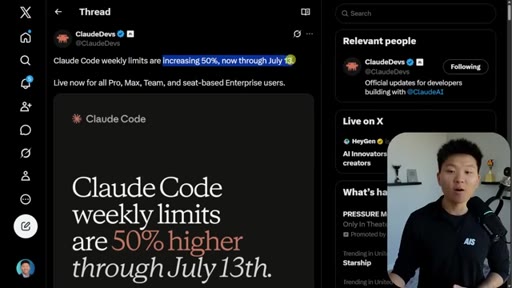
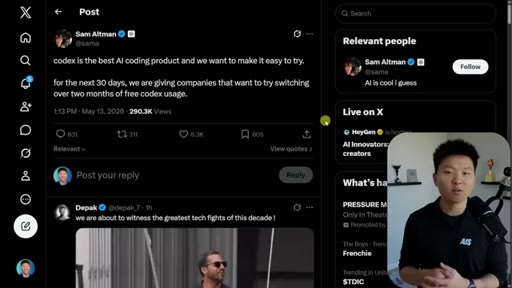
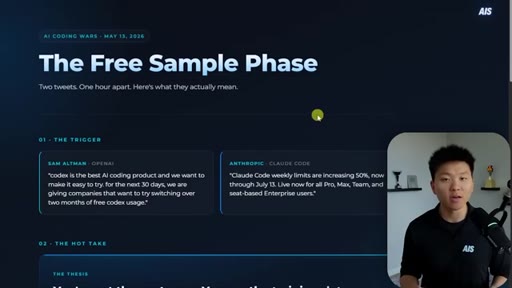
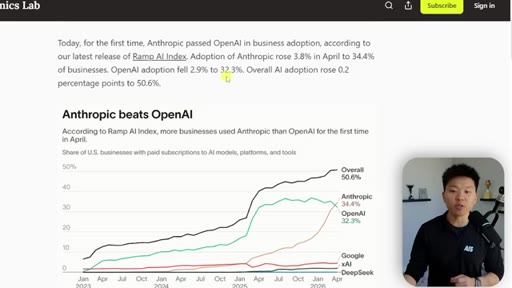
Two tweets, one hour apart. One from Sam Altman offering a free month of Codex, one from Anthropic announcing 50% more Claude Code usage through July 13. Nate Herk saw both land on the same morning Anthropic officially passed OpenAI in business adoption — and instead of reading it as a win, he read it as a warning: you are not the customer, you are the training data.
What the video promised.
stated at 00:34 "That's what I wanna spend some time talking about with you guys today." delivered at 07:00
Where the time goes.
01 · The Trigger
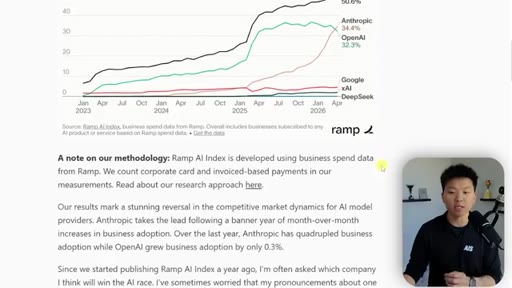
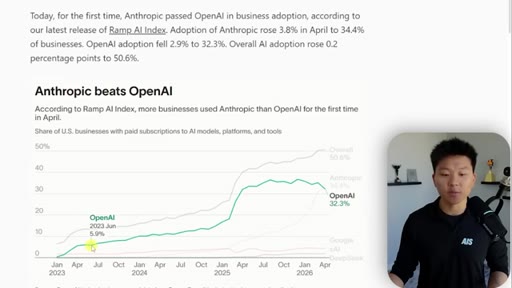
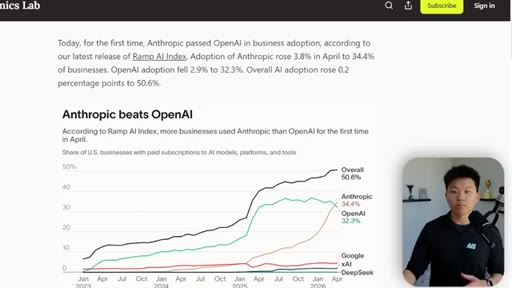
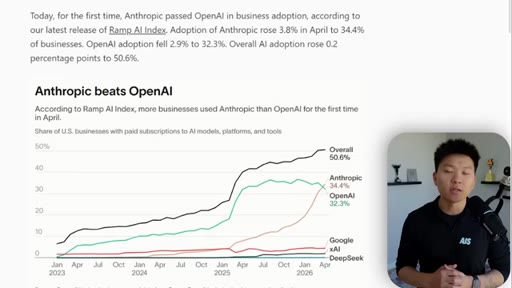
Ramp AI Index article drops: Anthropic at 34.4%, OpenAI at 32.3%. Sam Altman tweets free Codex, Anthropic counters with 50% more Claude Code through July 13.
02 · The Free Sample Frame
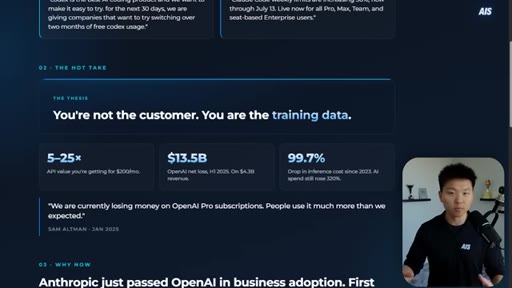
$200/month gets you output comparable to a $5–15k/mo engineer. Companies are deliberately eating cost because adoption and proprietary usage data matter more than subscription revenue right now.
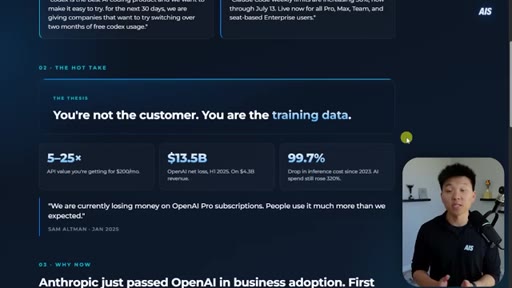
03 · The Data Moat
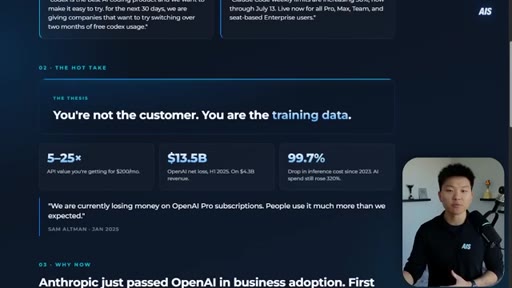
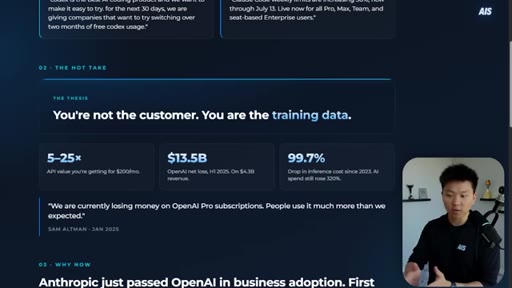
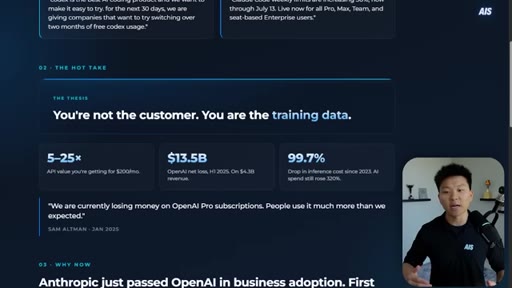
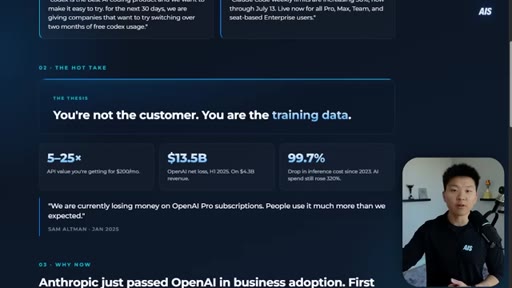
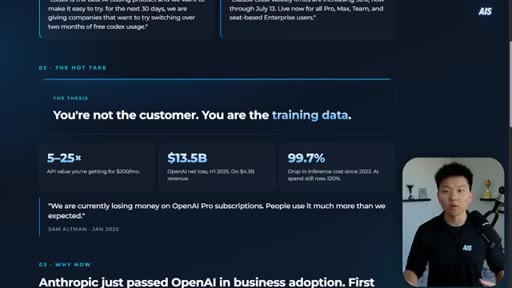
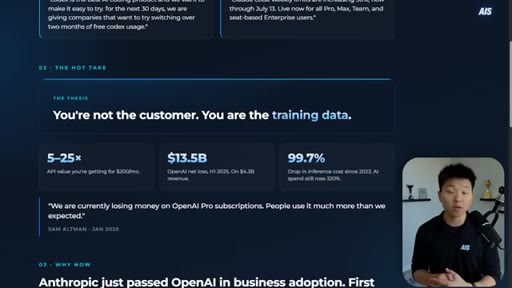
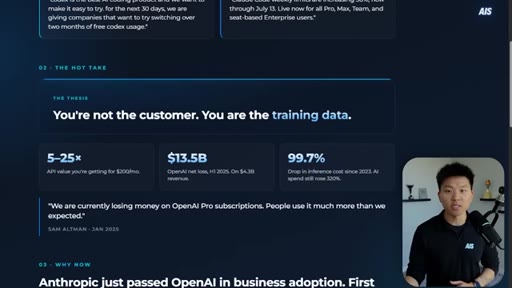
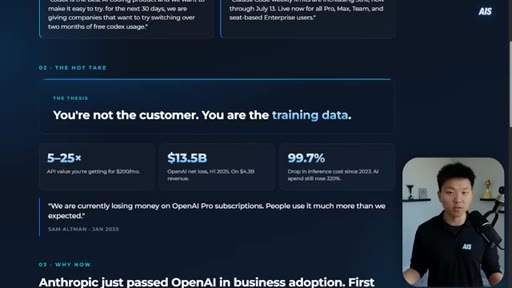
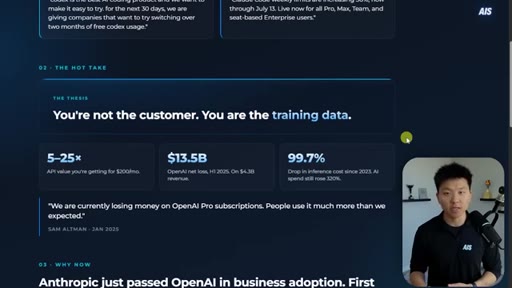
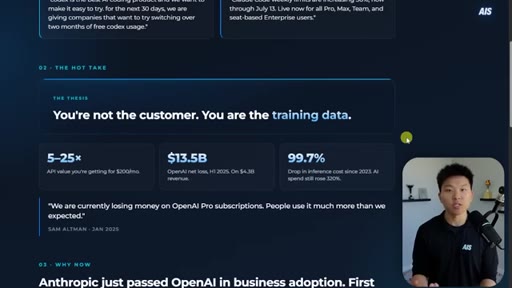
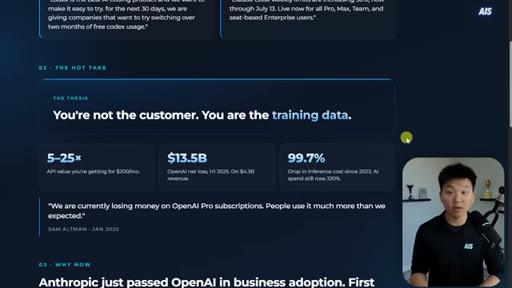
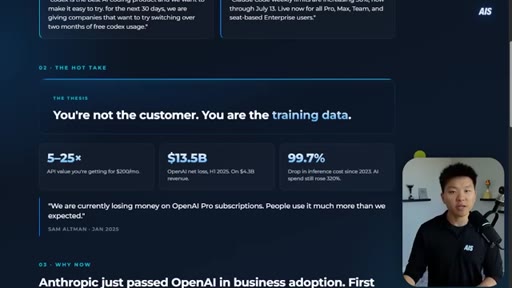
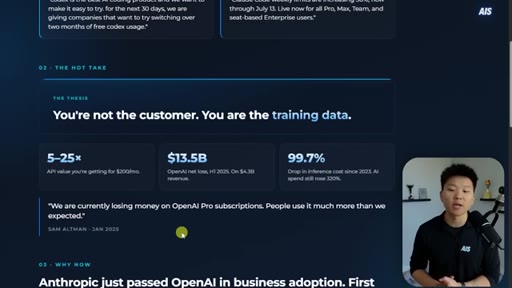
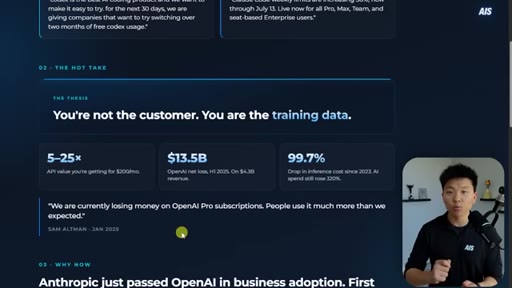
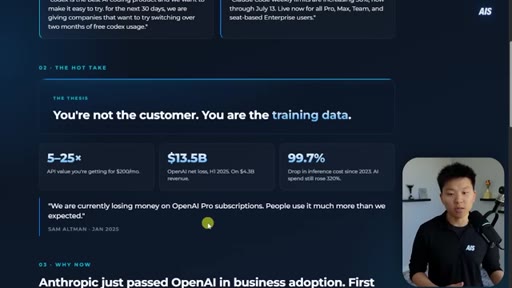
Usage patterns are the biggest moat. Altman admitted OpenAI was losing money on Pro subs. Real API cost is 5–25x what you pay on subscription.
04 · What the Numbers Actually Mean
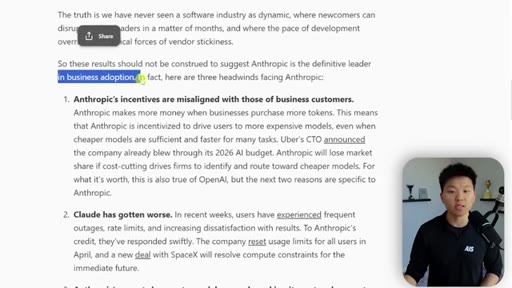
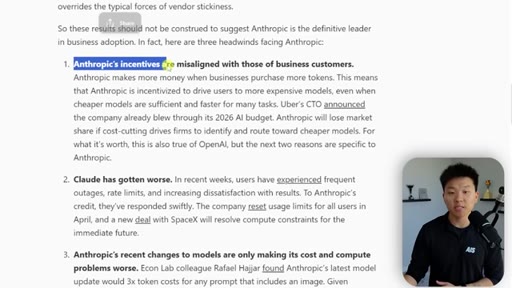
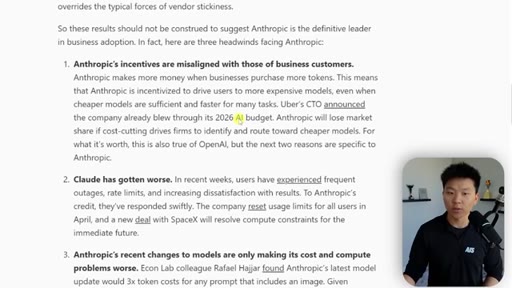
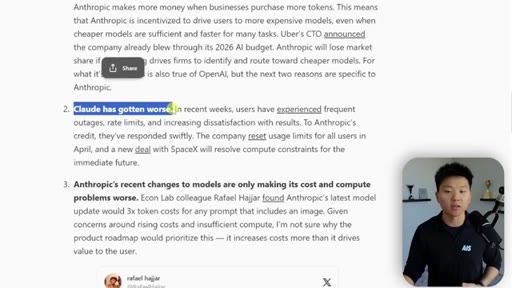
Ramp adoption metric is real but narrow. Three headwinds for Anthropic: misaligned incentives (profit from expensive models), Claude regression reports, compute and cost problems.
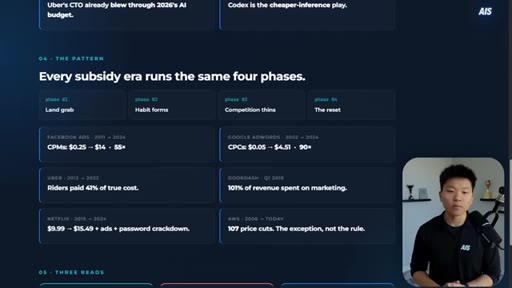
05 · The Historical Pattern
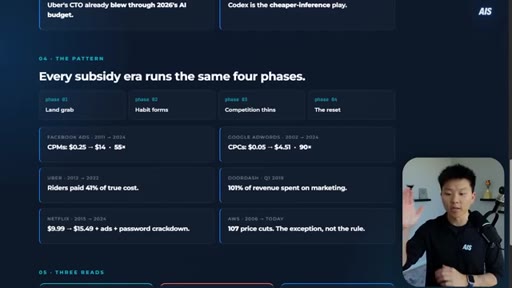
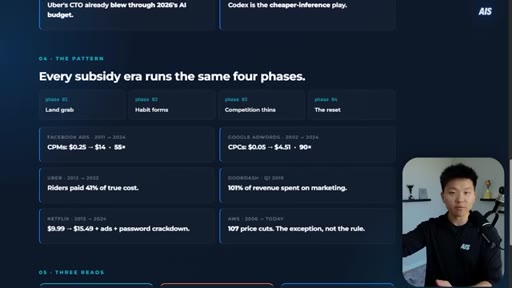
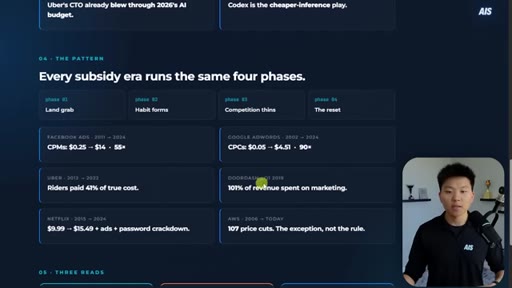
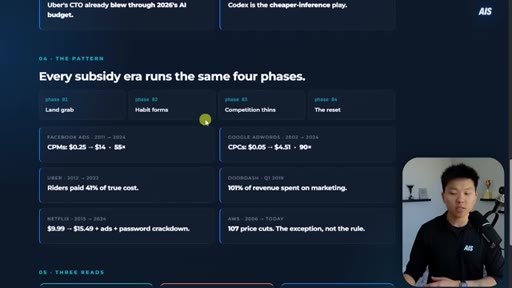
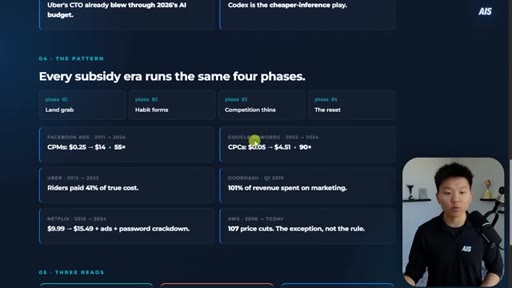
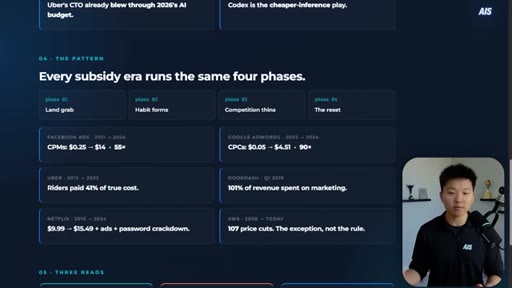
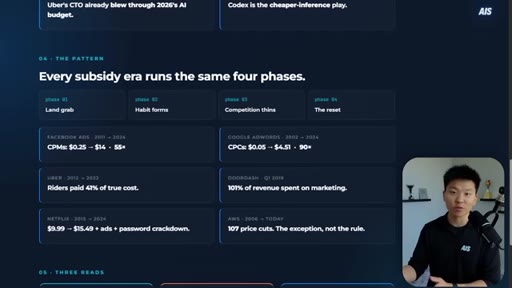
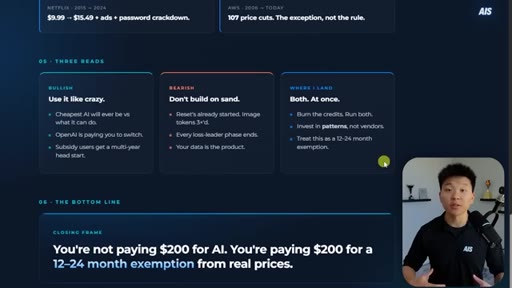
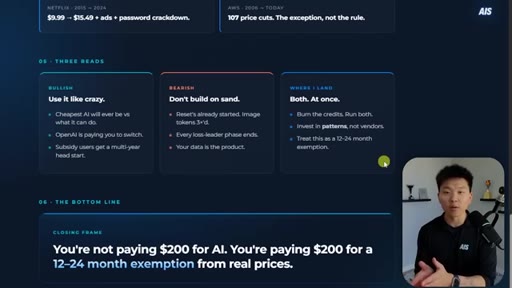
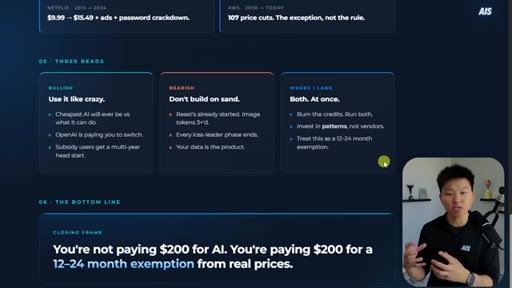
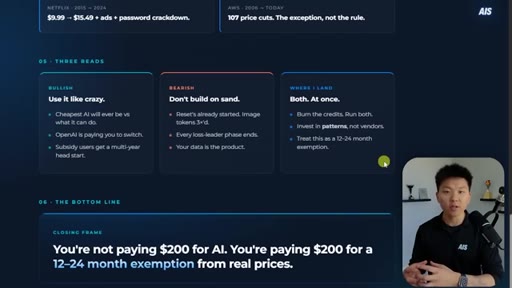
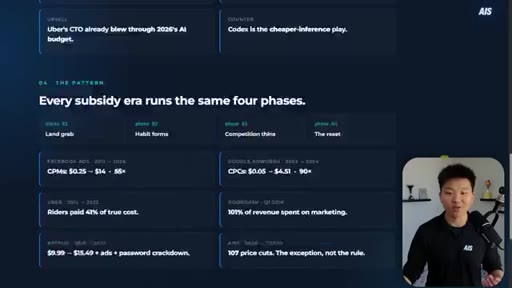
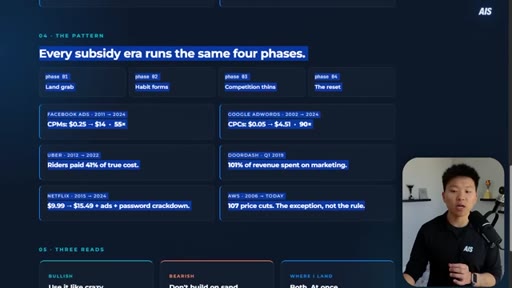
Every subsidy era runs four phases: land grab, habit forms, competition thins, the reset. FB Ads, AdWords, Uber, DoorDash, Netflix, AWS all ran this playbook.
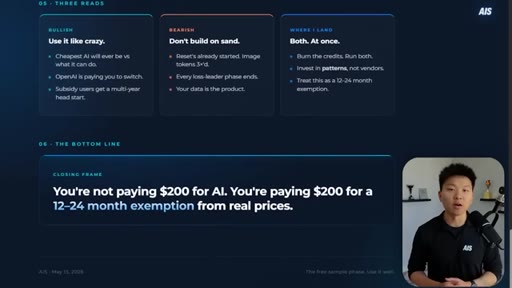
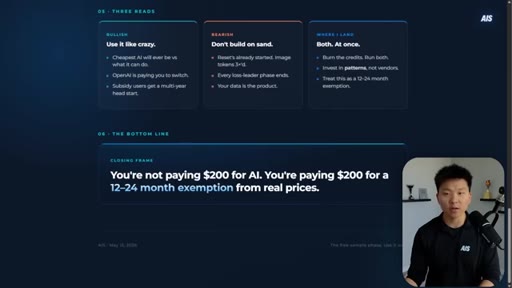
06 · Three Reads
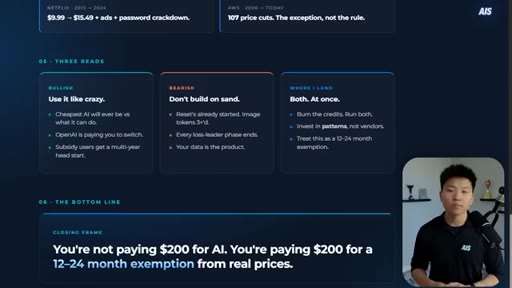
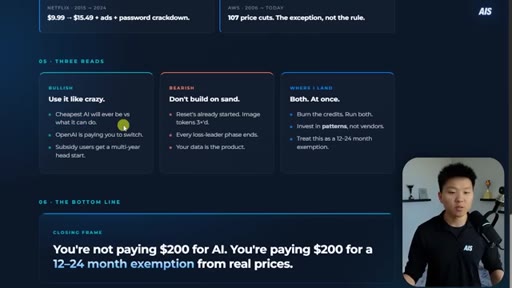
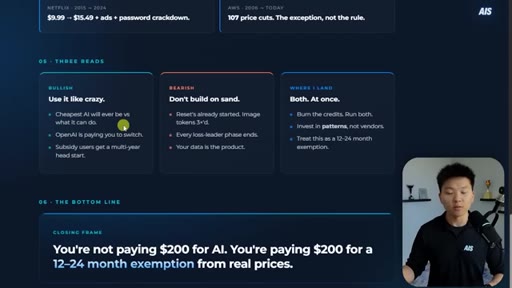
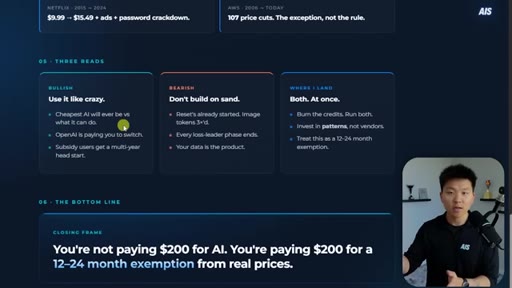
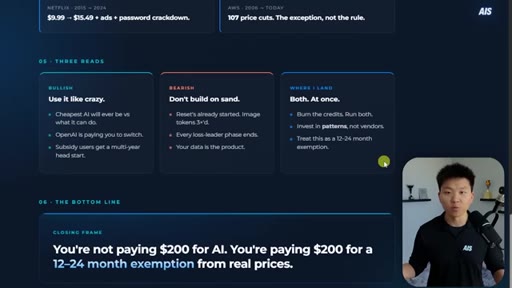
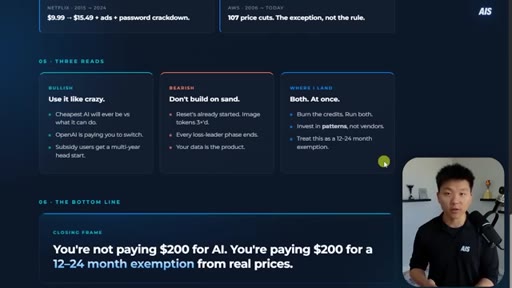
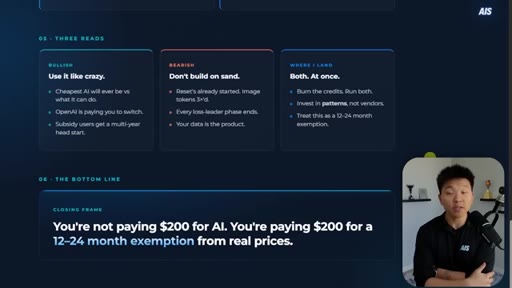
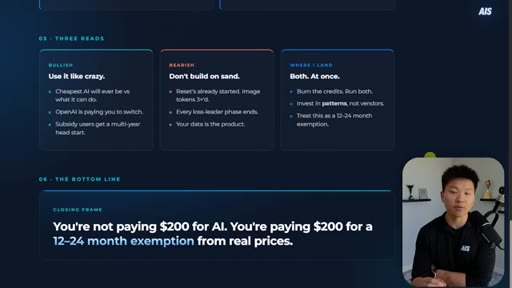
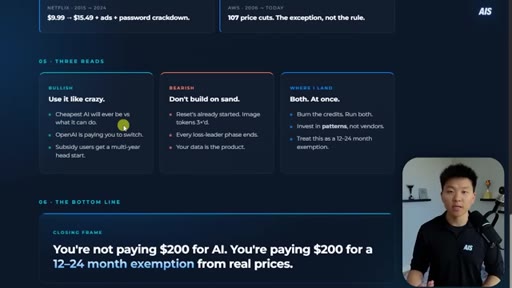
Bullish: use it like crazy. Bearish: don't build on sand, your data is the product. His view: both — burn credits, invest in portable patterns not vendor lock-in.
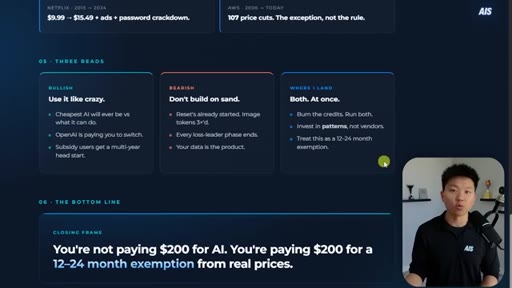
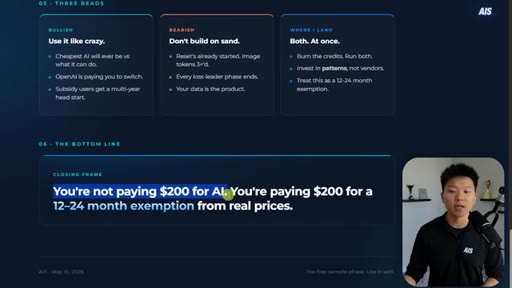
07 · Closing Frame
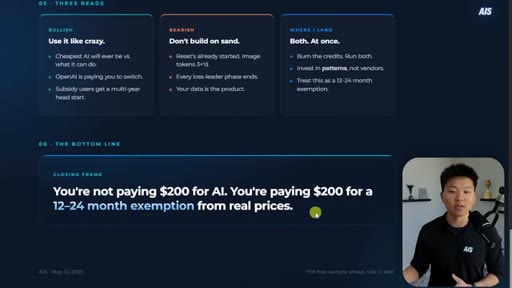
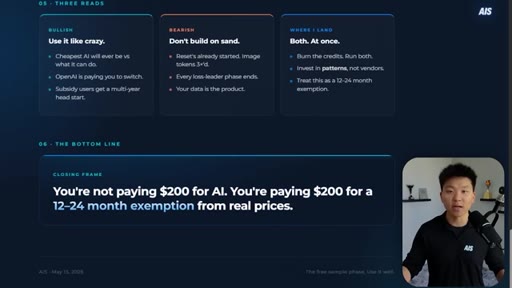
Don't panic at the Twitter war. Build tool-portable projects. The $200 is a 12–24 month exemption from real prices.
Visual structure at a glance.
Named ideas worth stealing.
The Free Sample Phase
AI companies are subsidizing usage because they need adoption and usage data more than revenue right now. The pricing you see today is not the pricing you will see in 12–24 months.
The Four-Phase Subsidy Cycle
- Land grab
- Habit forms
- Competition thins
- The reset
Every platform that subsidized early adoption eventually normalized to real market prices once habit lock-in was achieved. FB Ads, AdWords, Uber, DoorDash, Netflix, AWS all ran this cycle.
Three Reads (Bullish / Bearish / Where I Land)
- Bullish: Use it like crazy — cheapest AI will ever be vs what it can do. OpenAI is paying you to switch. Subsidy users get a multi-year head start.
- Bearish: Don't build on sand — reset has already started, image tokens 3x'd, every loss-leader phase ends, your data is the product.
- Where I Land: Both at once — burn the credits, run both, invest in patterns not vendors, treat this as a 12–24 month exemption.
A clean three-column decision matrix for how to respond to the AI pricing war.
Lines you could clip.
"You are not the customer. You are the training data."
"You would be paying five to 25 x more money on those tokens compared to what you're actually being charged on your subscription."
"If one day Anthropic just disappeared... if you could move everything over to a different tool in the matter of like an hour and the rest of your week is completely unchanged, that's a win."
"You're not paying $200 for AI. You're paying $200 for a twelve to twenty four month exception from real prices."
How they spent the runtime.
Things they pointed at.
How they asked for the click.
"If you guys enjoyed and learned something new, please give it a like."
Soft single ask at the very end. No mid-roll CTA, no product pitch.
Word for word.
Steal the free sample framing.
The $200/month is not a subscription fee — it is a 12–24 month window to build skill and portfolio before real prices kick in.
- The 'free sample phase' concept is a ready-made hook for any 'own your stack' or 'stop renting' video.
- The four-phase subsidy cycle (land grab → habit → competition thins → reset) is a reusable visual framework for any SaaS pricing commentary.
- The six-section deck format (dark bg, stat cards, numbered sections) is clean and executable — lower production cost than B-roll, higher info density.
- The three-reads structure (bullish / bearish / where I land) is a clean opinion-video template that avoids wishy-washy fence-sitting.
- Build the 'move in an hour' benchmark into every stack decision: if switching tools takes more than an hour, you are dependent, not efficient.
- Newsjack the morning something breaks — this video was live within hours of the Ramp article dropping.
What the AI price war means for you.
Current AI pricing is artificially cheap by design — the window to lock in skills and build at low cost is open right now, but it will not stay this way.
- Use both Claude Code and Codex aggressively while the promotions run (through July 13 for Claude Code).
- Build your projects so they are not hard-wired to one provider — if you could switch tools in an hour, you are protected when prices reset.
- The Twitter war between Altman and Anthropic is competition working in your favor. Do not panic — this is a blessing.
- Open source models are improving fast and getting cheaper to run locally — this is your long-term hedge against price resets.
- Treat your $200/month as buying 12–24 months of below-market access, not a permanent price point you can plan a business around.